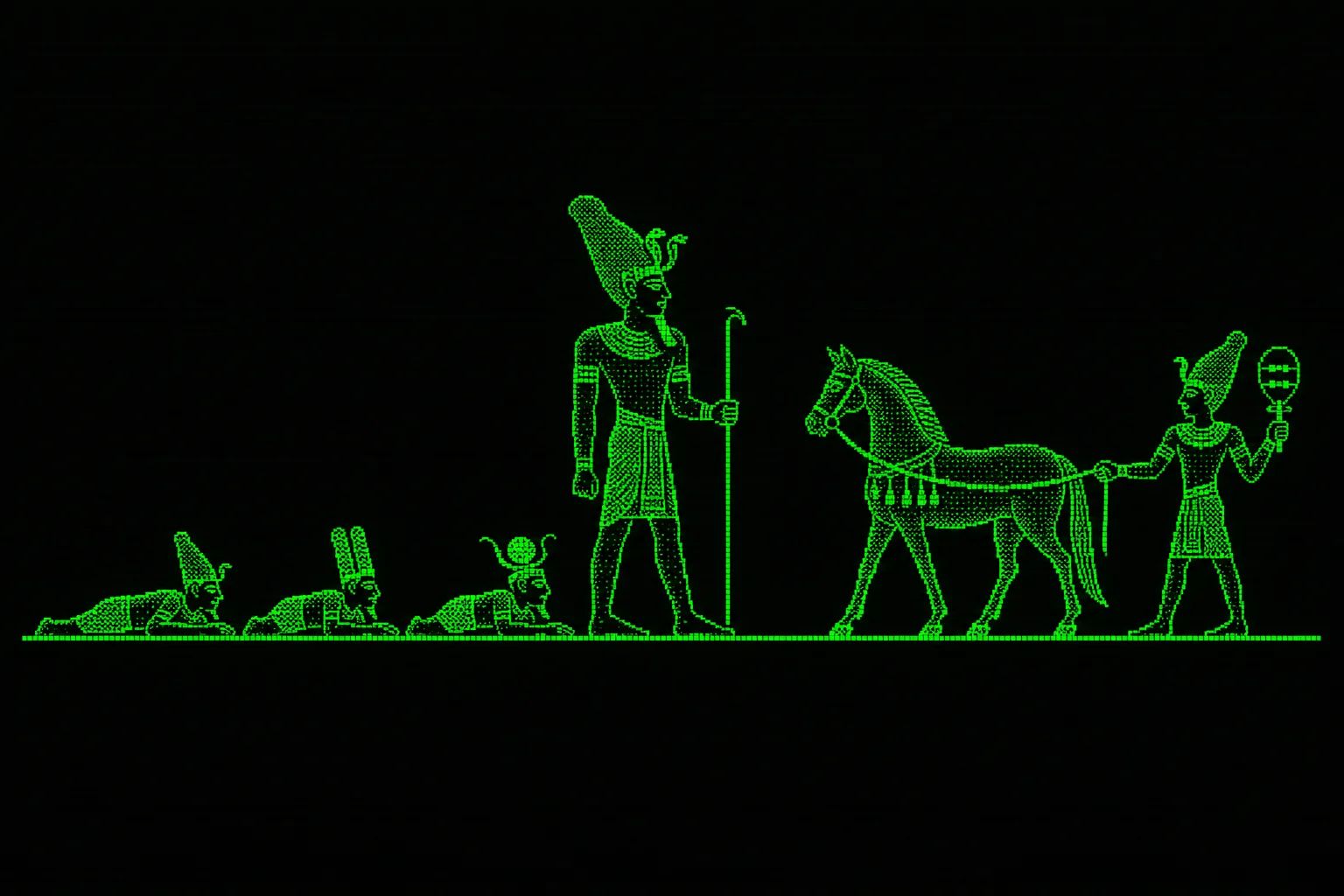
~/sacred-texts/royal-inscriptions-of-the-25th-dynasty
Victory Stela of Piye: You Have Turned Bulls into Women
- Date
- Carved in regnal year 21 of Piye, about 727 BC (25th Dynasty), on a grey granite stela set up in the temple of Amun at Napata
- Found
- Found in 1862 in the temple of Amun at Jebel Barkal (Napata), Sudan; now in the Egyptian Museum, Cairo (JE 48862)
- Language
- Middle Egyptian · Hieroglyphic
Piye, king of Kush, hears that Tefnakht of Sais has seized the west and holds Heracleopolis under siege. He sends his army north with orders to Fight in plain sight, then comes himself, raging like a leopard. Hermopolis rots and surrenders; King Nimlot leads up a horse, and Piye, finding the stables starved, tells him: The god’s semen is in me.
Memphis is taken as if by a cloudburst. Piye alone sees Ra at Heliopolis, and Tefnakht begs: Do not pull the trees up by the roots! The Delta kings arrive with legs like the legs of women, and the fleet sails home to the song You have turned bulls into women!
- 1
𓆳𓏏𓊗 𓎆𓎆𓏤𓏏 𓇹 𓆷𓏏 𓇳 𓐍𓂋 𓍛𓏤 𓈖 𓇓𓏏𓆤𓏏 𓇋𓏠𓈖𓈘𓊪𓋹𓇋𓇋 𓋹 𓆓𓏏𓇿
rnp,t-sp 21.t ꜣbd (1) ꜣḫ,t sw (1) ḫr ḥm n nswt-bj,tj Py-mri̯-Jmn ꜥnḫ ḏ,t
Regnal year 21, first month of the Inundation, day one, under the Majesty of the King of Upper and Lower Egypt, Piye, beloved of Amun, who lives forever.
Note · Line 1
This was the first day of the Egyptian year. - 2
𓎗𓅱𓏝 𓆓𓂧 𓍛 𓀯
wḏ ḏd ḥm =j
The command My Majesty gave:
- 3
𓄔𓅓 𓐝 𓁹𓈖 𓀀 𓅓 𓇉𓅱𓏝 𓂋 𓁶𓏤𓂝𓀻𓏪
sḏm m jri̯.n =j m ḥꜣ,w r tp,j-ꜥ.pl
“Hear what I have done beyond the deeds of my forebears!
- 4
𓏌𓎡 𓇓𓏏𓀲 𓂇𓏏 𓊹 𓊏𓊪𓀾 𓋹 𓈖 𓏏𓍃 𓉐𓂋 𓅓 𓄡𓏏 𓅖𓏏𓈖𓏌𓌪 𓅓 𓋾𓈎𓀯 𓅾 𓈖 𓆑 𓀙𓏥 𓂋 𓆑 𓀀𓋷𓄿𓈖 𓏏𓅐 𓆑 𓇋𓅱 𓆑 𓂋 𓋾𓀯 𓅓 𓋴𓅱𓎛𓏏𓆇 𓊹𓄤 𓈘 𓊹 𓅭𓇳 𓁹𓏏 𓐝 𓂝𓂝 𓆑 𓇋𓏠𓈖𓈘𓊪𓋹𓇋𓇋
jnk nswt tj,t nṯr šsp ꜥnḫ n Tm pri̯ m ẖ,t mtn m ḥqꜣ snḏ n =f wr.pl r =f ⸢rḫ⸣.[n] [jtj] =[f] sjꜣ.n mw,t =f jw =f r ḥqꜣ m swḥ,t nṯr-nfr mri̯ nṯr.pl sꜣ-Rꜥw jri̯.t m ꜥ.du =f Py-mri̯-Jmn
I am the king, the image of the god, the living sphinx of Atum,
who came from the womb already marked out as ruler,
whom even those greater than he fear,
whose father knew and whose mother discerned, while he was still in the egg, that he would rule:
the perfect god whom the gods love,
the Son of Ra who acts with his own two hands,
Piye, beloved of Amun.” - 5
𓂻𓅱𓈖 𓏏𓅱 𓂋 𓆓𓂧 𓈖 𓍛𓏤 𓆑
jwi̯.n =tw r ḏd n ḥm =f
Someone came to tell His Majesty:
- 6
𓇋𓅱 𓃹𓈖 𓀙𓈖𓋀𓏏𓏏𓈉 𓄂𓂝 𓅨𓂋𓅓𓊹𓏏𓂋𓊖 𓏏𓄿𓆑𓂡𓍘𓀀 𓅓 𓅓 E208 𓅓 𓎛𓂝𓊪𓈘 𓅓 … 𓅓 𓂝𓈖𓁽𓈘 𓐝 𓉐𓏤𓋞𓊖 𓅓 𓈠
jw wn wr-n-jmn,t.t ḥꜣ,tj-ꜥ wr-m-Nṯr Tꜣ(y)≡f-nḫt,tj m [Wꜥ-m-ḥww] m Ḫꜣsw,w m Ḥꜥpj m [...] m ꜥn m Pr-nbw m Jnb,w-ḥḏ
“Tefnakht, chief of the West, governor and chief of Netjeru, is in Waemhu, in Khasu, in Hapi, in …, in An, in Pernebu and in Memphis.
Note · Line 6
The list traces the reach of Tefnakht’s power across the Nile Delta as far south as Memphis. - 7
𓎁𓈖 𓆑 𓋀𓏏𓏏𓈉 𓅓𓏇𓐪𓂧𓏌 𓆑 𓅓 𓄖𓏭𓅳𓈘 𓂋 𓎁𓇿𓇿 𓏏𓊝 𓅓 𓀎 𓆈 𓇾𓇿 𓋬𓂧 𓅓𓆱𓐍𓏏 𓆑 𓏏𓄂𓂝𓀀𓏪 𓋾𓋾𓋾 𓅓 𓎀𓊃𓅓𓃡𓏥 𓅓 𓀹𓂾𓂾 𓆑
jṯi̯.n =f jmn,t.t mj-qd =f m pḥ,w.w r Jṯi̯-Tꜣ,du ḫnt m mšꜥ ꜥšꜣ Tꜣ,du dmḏ m-ḫt =f ḥꜣ,tj-ꜥ.pl ḥqꜣ-ḥw,t.pl m ṯsm.pl m jr,j-rd,du =f
He has seized the whole west, from the northern marshes to Itjtawy. He is sailing upstream with a great army, the Two Lands united behind him, the governors and estate stewards at his heels like hounds.
Note · Line 7
Itjtawy means “Seizer of the Two Lands.” The name echoes both Tefnakht’s seizure and the claim that Upper and Lower Egypt stand behind him. - 8
𓂜 𓐍𓏏𓅓𓋩𓉐𓈖 𓋴𓃀𓏏𓏏𓊆 … 𓈈𓈓 𓏌𓏤 𓇗 𓌸𓏏𓍃𓐝𓊖 𓉐𓏤𓇳𓌂𓆣𓊖 𓊹𓉗𓆌𓊖 𓉐𓏤𓅖𓐥𓊖 𓍿𓂓𓏤𓈖𓈙𓊖
n ḫtm.n sbt.t [...] spꜣ,t.pl n.w Šmꜥ,w Mr-Tm Pr-Sḫm-ḫpr-Rꜥw Ḥw,t-nṯr-Sbk Pr-Mḏd Ṯknš
No fortified town stayed shut … in the nomes of Upper Egypt: Meidum, the House of Sekhemkheperre, Crocodilopolis, Oxyrhynchus and Diqnash.
Note · Line 8
A nome was a province. Sekhemkheperre was the throne name of Osorkon I. - 9
𓂧𓏇𓈇𓊖 𓎟𓏏 𓈖 𓋀𓏏𓏏𓈉 𓋴𓈙𓊃𓂡 𓊃𓈖𓏥 𓉿𓉿 𓈖 𓅾 𓆑
dmj nb.t n jmn,t.t sšs =sn ꜥꜣ.du n snḏ =f
Every town in the west opened both leaves of its gate for fear of him.
- 10
𓂝𓈖𓂻 𓆑 𓇓𓅱 𓂋 𓈈𓏏𓏥 𓋁𓏏𓏏𓈉 𓃹𓈖𓉿𓂡 𓊃𓈖𓏥 𓈖 𓆑 𓏇 𓇑𓇑𓈖 𓉗𓏊𓅣 𓏏𓄿𓇋𓇋𓅱𓍑𓇋𓇋𓏏𓊖 𓇓𓏏𓉗𓏏𓊖 𓉐𓎟𓁶𓏥𓃒𓊖
ꜥn =f sw r spꜣ,t.pl jꜣb,t.t wn =sn n =f mj nn Ḥw,t-bn,w Tꜣy≡w-ḏꜣy.t Ḥw,t-nswt Pr-Nb-tp.pl-jḥ
He turned toward the eastern nomes, and they too opened to him: Hutbenu, Teudjoi, Hutnesut and Aphroditopolis.
- 11
𓅓𓂝 𓎡 … 𓎼𓍯𓂡 𓂋 𓇓𓀔𓈖𓈖𓊖 𓁹𓈖 𓆑 𓇓𓅱 𓅓 𓋴𓂧𓄢𓐝𓂋𓏤 𓂜 𓂋𓂞 𓉐𓂋𓂻 𓉐𓂋𓀀𓏪 𓂜 𓂋𓂡 𓂝𓈎𓂻 𓅧𓈎𓀀𓏪 𓁷 𓂚 𓏇 𓇳𓎟
⸢m⸣ =⸢k⸣ [...] gwꜣ r Nn-nswt jri̯.n =f sw m sd-m-rʾ!! n rdi̯ pri̯ pr.pl n rdi̯!! ꜥq ꜥq.pl ḥr ꜥḥꜣ mj rꜥw-nb
Look, … is laying siege to Heracleopolis. He has coiled himself around it, tail in mouth. He lets no one out who would go out, no one in who would come in, and fights day after day.
- 12
𓆼𓇋𓇋𓂷𓂡𓈖 𓆑 𓇓𓅱 𓅓 𓄴 𓊃 𓎟 𓄂𓂝 𓎟 𓂋𓇳 𓋴𓐠𓊆𓉐 𓆑 𓂞 𓆑 𓊃𓏤𓀀𓎟 𓈟𓊨𓀉 𓁷 𓊪𓈙𓏴 𓆑 𓅓 𓄂𓂝𓀀𓏪 𓋾𓋾𓋾
ḫꜣi̯.n =f sw m dbn =s nb ḥꜣ,tj-ꜥ nb rḫ sꜣ =f di =f s-nb ḥmsi̯ ḥr pš =f m ḥꜣ,tj-ꜥ.pl ḥqꜣ-ḥw,t.pl
He has measured the city all the way round. Each governor knows his stretch of wall: Tefnakht has stationed every governor and estate steward at his own allotted stretch.”
- 13
𓊢𓂝𓈖 𓄔𓐝 … 𓅓 𓅨𓂋 𓄣𓏤 𓋴𓃀𓇋𓀁 𓄣 𓆑 𓄫𓏝
ꜥḥꜥ.n sḏm [...] m wr jb sbj jb =f ꜣwi̯
Then … heard the news like a man of great heart, laughing, his heart swelling with joy.
Note · Line 13
It is Piye who hears the report. - 14
𓃹𓈖 𓇑𓇑𓈖 𓀙𓏪 𓄂𓂝𓀀𓏪 𓄓𓀎 𓈖𓏏𓏏 𓐝 𓊖𓏏𓏤 𓋴𓈖 𓉔𓃀𓂻 𓈖 𓍛𓏤 𓆑 𓏇 𓇳𓎟 𓅓𓆓𓂧
wn.〈jn〉 nn wr.pl ḥꜣ,tj-ꜥ.pl jm,j-rʾ-mšꜥ n,t.t m nʾ,t =sn hb n ḥm =f mj rꜥw-nb m-ḏd
Then these princes, governors and army commanders, each in his own city, sent word to His Majesty day after day:
- 15
𓇋𓈖𓇋𓅱 𓎼𓂋𓀁𓈖 𓎡 𓂋 𓋴𓅓𓐍𓂜 𓇿𓏤𓈅𓇗𓏏𓊖 𓈈𓏥𓏏 𓏌𓏤 𓄚𓈖𓐍𓈖𓉐
jn-jw gr.n =k r smḫ Tꜣ-Šmꜥ.t spꜣ,t.pl n.w H̱n-nḫn
“Have you kept silent so as to forget Upper Egypt, the nomes of Khennekhen?
Note · Line 15
Khennekhen is another name for Upper Egypt. - 16
𓏏𓄿𓆑𓂡𓍿𓀀 𓅓 𓎁 𓈖𓁷 𓆑 𓂜 𓅠 𓆑 T42 𓂝𓏤 𓆑
Tꜣ(y)≡f-nḫt,ṯ m jṯi̯ n-ḥr =f n gmi̯ =f ḫsf ꜥ =f
Tefnakht is seizing whatever lies before him. He finds no one to stay his arm.
- 17
𓈖𓌳𓂋𓍿 … 𓄂𓂝 𓈖 O422𓏏𓊖 𓇋𓅱 𓋴𓄡𓈖𓈖𓊈𓈖 𓆑 𓋴𓃀𓏏𓏏𓊈 𓈖 𓄤𓅱𓊃𓊖 𓅱𓉔𓈖𓊊𓂡𓈖 𓆑 𓊖𓏏 𓆑 𓂧𓊃 𓆑 𓅓 𓅾 𓈖 𓎁 𓈖 𓆑 𓇓𓅱 𓂋 𓎼𓍯𓀜 𓂋 𓎡𓏏 𓊖𓏏𓏤
Nmrṯ [...] ḥꜣ,tj-ꜥ n Ḥw,t-wr.t jw sẖnn.n =f sbt.t n Nfr-ws whn.n =f nʾ,t =f ḏs =f m snḏ n jṯi̯ n =f sw r gwꜣ r k,t nʾ,t
Nimlot, …, governor of Hutweret, has torn down the wall of Neferusi. He himself has pulled down his own city for fear of the man who would seize it for himself to lay siege to another city.
- 18
𓅓𓂝 𓎡 𓇓𓅱 𓈝𓐝𓂻 𓂋 𓃹𓈖 𓅓 𓀹𓂾𓂾 𓆑 𓅱𓇋𓄿𓈖𓂢𓂡𓈖 𓆑 𓈗 𓈖 𓍛𓏤 𓆑
m =k sw šmi̯ r wn m jr,j-rd,du =f wjꜣn.n =f mw n ḥm =f
Look, Nimlot is going to join Tefnakht’s retinue. He has spurned His Majesty’s water.
Note · Line 18
To spurn the king’s water is to renounce allegiance to him. - 19
𓊢𓂝𓂻 𓆑 𓎛𓈖 𓆑 𓏇 𓌡 𓐝 … 𓈈 𓈖𓏏 D517 𓏙 𓆑 𓈖 𓆑 𓆑𓈎𓇿𓏥 𓂋 𓏙𓏙 𓄣 𓆑 𓅓 𓐍𓏏 𓎟 𓅠𓈖 𓆑
ꜥḥꜥ =f ḥn =f mj wꜥ m [...] spꜣ,t n.t Wꜣb,du di =f n =f fq.pl r dd jb =f m ḫ,t nb.t gmi̯.n =f
He stands as one with him in … the nome of Wabwi, and gives him gifts to his heart’s content from all that he has found.”
- 20
𓊢𓂝𓈖 𓉔𓃀𓈖 𓍛𓏤 𓆑 𓈖 𓄂𓂝𓀀𓏪 𓄓𓀎𓏥 𓈖𓏏𓏏 𓁷 𓋭𓋴𓀎 𓊪𓍯𓄿𓂋𓌳𓀀 𓎛𓈖𓂝 𓋭𓋴𓀎 𓃭𓂝𓏝𓌻𓊃𓎡𓈖𓇋𓇋𓀀 𓎛𓈖𓂝 𓋭𓏤𓀀 𓎟 𓏌𓏤 𓍛𓏤 𓆑 𓈖𓏏𓏏 𓁷 𓆎𓏏𓊖
ꜥḥꜥ.n hb.n ḥm =f n ḥꜣ,tj-ꜥ.pl jm,j-rʾ-mšꜥ.pl n,t.t ḥr Km,t ṯs Pwrm!! ḥnꜥ ṯs Rꜥmrskny ḥnꜥ ṯs nb n.w ḥm =f n,t.t ḥr Km,t
Then His Majesty sent word to the governors and army commanders in Egypt, to Commander Purma and Commander Lamerskeny, and to all His Majesty’s commanders in Egypt:
Note · Line 20
Piye ruled from Kush, south of Egypt. These orders went to his officers already in Egypt. - 21
𓊄𓏥 𓅓 𓋴V84𓎡𓂡
jsj.pl m sk.pl
“March to battle!
- 22
𓋭𓊃 𓂚
ṯs ꜥḥꜣ
Join the fight!
- 23
pẖr ⸢sn⸣
Encircle them!
- 24
𓂋 𓊃
[g]⸢wꜣ⸣ r =s
Lay siege to the city!
Note · Line 24
The target is Hermopolis, Nimlot’s seat. - 25
𓋾𓈎𓂡 𓂋𓍿𓀀𓏪 𓋴 𓏠𓈖𓏠𓈖𓃒 𓊃 𓊢𓂝𓇋𓇋𓊛 𓊃 𓁷𓁶 𓇋𓏏𓂋𓈘
ḥqꜣ rmṯ =s mnmn =s ꜥḥꜥ.y =s ḥr-tp jtr
Seize its people, its herds and its ships on the river!
- 26
𓅓 𓂋𓏏𓏙 𓉐𓂋𓂻 𓆰𓏏𓏭𓅂𓀀𓏥 𓂋 𓇏𓈅𓏤
m rdi̯.t pri̯ ꜥḥ,tjw.pl r sḫ,t
Do not let the farmers go out to the fields!
- 27
𓅓 𓂋𓏏𓏙 𓋴𓂓𓍁
m rdi̯.t skꜣ skꜣ.pl
Do not let the plowmen plow!
- 28
𓎼𓍯𓄿𓁶𓂡 𓂋 𓏏 𓈖 𓉆
gwꜣ r ḫnt n Wnw
Lay siege to the southern part of the nome of Hermopolis!
- 29
𓂚 𓂋 𓋴 𓏇 𓇳𓎟
ꜥḥꜣ r =s mj rꜥw-nb
Fight against it every day!”
- 30
𓊢𓂝𓈖 𓋴𓈖 𓁹 𓏇𓏏𓏏
ꜥḥꜥ.n =sn jri̯ mj,t.t
And so they did.
- 31
𓊢𓂝𓈖 𓍛𓏤 𓆑 𓊄𓃀𓂻 𓀎 𓂋 𓆎𓊖 𓁷 𓎨𓈖 𓊃𓈖𓏥 𓅨𓂋 𓊗𓏤𓏤
ꜥḥꜥ.n ḥm =f sbi̯ mšꜥ r Km ḥr ḥn =sn wr sp-2
Then His Majesty sent an army to Egypt and charged them in the strongest terms:
Note · Line 31
Piye, king of Kush, is sending troops north to face Tefnakht and his allies. - 32
𓉔𓂻 𓅓 𓎼𓂋𓎛𓇰 𓅓 𓋴𓐍𓂋𓏝 𓈖 𓎛𓃀𓂝𓏝
jm[i̯] hi̯ m grḥ m s!!ḫr n ḥbꜥ
“Do not go down by night as though it were a game.
- 33
𓂚𓂡 𓏏𓈖𓏥 𓐍𓏏𓆑 𓌳𓁹
ꜥḥꜣ ṯn ḫft mꜣ
Fight in plain sight.
- 34
𓋴𓂋𓃱 𓈖 𓆑 𓂚𓂡 𓅓𓍯𓈐𓂻
sr n =f ꜥḥꜣ m-wꜣ,w
Challenge him to battle from afar.
- 35
𓇋𓂋 𓆓𓂧 𓆑 𓋴𓇋𓆛𓈖𓂻 𓈖 𓀎𓏪 𓍿𓂋𓏏𓎛𓏏𓂋𓄛𓏥 𓈖 𓎡𓏏 𓊖𓏏 𓇋𓐍𓏝 𓊨𓀉 𓏏𓈖𓏥 𓂋 𓂻𓅱 𓀎𓏦 𓆑 𓂚𓂡 𓏏𓈖𓏥 𓐍𓏏𓆑 𓆓𓂧 𓆑
jr ḏd =f sjn n mšꜥ.pl ṯ-r,t-ḥtr.pl n k,t nʾ,t jḫ ḥmsi̯ =tn r jwi̯ mšꜥ =f ꜥḥꜣ =tn ḫft ḏd =f
If he says, ‘Wait for the troops and chariots of another town,’ then stay where you are until his army comes, and fight when he says.
- 36
𓇋𓂋 𓃹 𓎼𓂋𓏛 𓈖𓐍𓂡𓀀𓏥 𓆑 𓅓 𓎡𓏏 𓊖𓏏 𓇋𓅓𓅖 𓋴𓇋𓆛𓈖𓂻 𓏏𓅱 𓈖 𓊃𓈖
jr wn gr nḫ.pl =f m k,t nʾ,t jm⸢m⸣ sjn =tw n =sn
And if his warriors are in another town, see that your men wait for them.
- 37
𓄂𓂝𓀀𓏪 𓇑𓇑𓈖 𓏎𓈖 𓆑 𓂋 𓈖𓐍𓅱𓂡 𓆑 𓍘𓎛𓈖𓏌𓏌𓏌𓌙𓀭𓈓 𓀎𓏥 𓈖 𓎔𓄣 𓇋𓅓𓅖 𓋴𓂋𓃱 𓏏𓅱 𓈖 𓊃𓈖 𓂚𓂡 𓅓𓁶𓊪𓂝𓀰 𓆓𓂧
ḥꜣ,tj-ꜥ.pl nn jni̯ =f r nḫ.w =f Ṯḥn,w mšꜥ n mḥ-jb jmm sr =tw n =sn ꜥḥꜣ m-tp-ꜥ ḏd
Have this challenge to battle sent in advance to those governors he brings to join his warriors and to the Libyans, his trusted guard:
- 38
𓂜 𓂋𓐍 𓈖𓏥 𓂝𓈙𓀞 𓈖 𓆑 𓅓 𓋴𓈖𓉔𓀁 𓀎𓏪
n rḫ =n ꜥš n =f m s!!nh mšꜥ
‘We do not know whom to hail at the muster of the troops.
- 39
𓈖𓅘𓎛𓃀𓂡 𓈎𓈖𓏌𓅱𓃗 𓁶𓊪 𓈖 𓇋𓎛𓉐 𓎡
nḥb qn,w tp n jḥ =k
Harness the finest team in your stable.
Note · Line 39
The challenge now addresses each opponent in the singular. - 40
𓇋𓀁𓁹𓏏 𓊃V84𓎡𓂡 𓅓 𓂚
j:jri̯.t sk m ꜥḥꜣ
Draw up the ranks for battle.
- 41
𓂋𓐍𓏛 𓈖 𓎡 𓇋𓏠𓈖𓊹 𓅮 G411 𓎘𓅱𓂻 𓈖𓏥
rḫ n =k Jmn pꜣ nṯr wḏi̯ n
Know this: it is Amun, the god, who sends us.’
- 42
𓇋𓂋 𓇹𓂻 𓍿𓈖𓏥 𓂋𓄚𓏌𓉐𓈖 𓋆𓏏𓊖 𓐍𓏏𓆑𓁷𓈖 𓊓𓏏𓊨𓏥𓊖 𓂝𓈎𓂻 𓍿𓈖𓏥 𓐝 𓈗 𓃂 𓍿𓈖𓏥 𓅓 𓇋𓏏𓂋𓈘 𓃹𓈖𓍼𓐍 𓍿𓈖𓏥 𓅓 𓁶𓏤𓈘
jr spr =ṯn r-ẖnw-n Wꜣs,t ḫft-ḥr-n Jp,t-s,t.pl ꜥq =⸢ṯ⸣n m mw wꜥb =ṯn m ⸢jt⸣r wnḫ =ṯn m tp-mr
When you reach Thebes, opposite Karnak, enter the water, purify yourselves in the river and clothe yourselves in the finest mer-cloth.
Note · Line 42
Karnak was Amun’s great sanctuary at Thebes. The soldiers are to wash in the Nile before approaching him. - 43
𓆷𓂋𓅓𓂡 𓌔𓏏
šrm pḏ,t
Lay down your bows.
- 44
𓋴𓆑𓐍𓍼 𓂚𓌕
sfḫ ꜥḥꜣ
Remove the arrows.
- 45
𓅓 𓂝𓃀𓂝𓏝𓀙 𓅓 𓎟𓄇𓄇𓏏𓏏𓂡
m ꜥbꜥ m nb-pḥ,tj
Let none of you boast that he is lord of strength.
- 46
𓂜𓃹𓈖 𓄇𓏏𓄇𓏏𓂡 𓈖 𓍿𓂋𓂡𓀀 𓅓𓐍𓅓𓂜 𓆑
n-wn pḥ,tj n ṯr m-ḫm =f
Without him no champion has strength.
- 47
𓁹 𓆑 𓀭𓅱𓂝𓏤 𓅓 𓈖𓆱𓏏𓐍𓂡𓏤𓂝 𓇋𓅱 𓆈𓏥 𓏙 𓋴 𓐠 𓈖 𓂝𓈖𓂧𓅪𓀀𓏪 𓇋𓅱 𓌡 𓎁 𓆑 𓊃𓏤𓀀 𓆼
jri̯ =f sꜣw-ꜥ m nḫt-ꜥ jw ꜥšꜣ.pl di =s sꜣ n ꜥnd.pl jw wꜥ jṯi̯ =f s ḫꜣ
He makes the weak arm strong:
the many show their backs to the few,
and one man captures a thousand. - 48
𓈖𓏏𓈙𓁅 𓏏𓈖𓏥 𓅓 𓈗 𓏌𓏤 𓆼𓅱𓎺𓏥 𓆑
ntš =tn m mw n.w ḫꜣw.pl =f
Sprinkle yourselves with water from his altars.
- 49
𓊃𓈖𓂉 𓏏𓈖𓏥 𓇿 𓐍𓏏𓆑𓁷 𓆑
sn =tn tꜣ ḫft-ḥr =f
Kiss the ground before him.
- 50
𓆓𓂧 𓏏𓈖𓏥 𓈖 𓆑
ḏd =tn n =f
Say to him:
- 51
𓇋𓅓𓅖 𓈖 𓈖𓏥 𓈐𓏏 𓂚 𓈖𓏪 𓅓 𓋺𓏏 𓄘 𓎡
jmm n =n wꜣ,t ꜥḥꜣ =n m šwt ḫpš =k
‘Open the way for us,
that we may fight in the shelter of your strong arm. - 52
𓍑𓅓𓀔𓏪 𓎘𓅱𓂻𓈖 𓎡 𓆣𓂋 𓉔𓂧𓂡 𓆑
ḏꜥm.pl wḏi̯.n =k ḫpr hd =f
The recruits you have sent will make their charge;
- 53
𓈖𓉔𓂧𓉔 𓈖 𓆑 𓆈𓏥
nhdh n =f ꜥšꜣ,w
a multitude will tremble before them.’”
- 54
𓊢𓂝𓈖 𓂋𓏙𓏏𓈖 𓊃𓈖 𓁷 𓄡𓏏 𓊃𓈖𓏥 𓅓𓂺 𓍛𓏤 𓆑
ꜥḥꜥ.n rdt.n =sn ḥr ẖ,t =sn m-bꜣḥ ḥm =f
Then they stretched themselves out on their bellies before His Majesty:
- 55
𓇋𓈖 𓂋𓈖 𓎡 𓁹 𓆑 𓈖 𓈖𓏥 𓄘
jn rn =k jri̯ =f n =n ḫpš
“It is your name that will give us strength.
Note · Line 55
In the prayer he has just taught them, they were to address Amun. - 56
𓉲𓀁 𓎢 𓏠𓈖𓊧 𓀎𓏥 𓎡
sḥ =k!! mni̯ mšꜥ =k
Your counsel brings your army safe to shore.
- 57
𓏐𓏏 𓎡 𓅓 𓄡𓏏 𓈖𓏥 𓁷𓏤 𓈐𓏏 𓎟
t(ꜣ) =k m ẖ,t =n ḥr wꜣ,t nb
Your bread is in our bellies on every road.
- 58
𓎛𓈎 𓎡 𓂝𓐍𓅓𓈗 𓍋𓃀𓀁 𓈖𓏥
ḥ(n)q,t =k ꜥḫm ꜣb =n
Your beer quenches our thirst.
- 59
𓇋𓈖 𓈎𓈖𓂡 𓎡 𓏙 𓈖 𓈖𓏥 𓄘
jn qn =k di n =n ḫpš
It is your valor that gives us strength.
- 60
𓈖𓂋𓆂𓂡 𓏏𓅱 𓈖 𓋴𓆼𓀁 𓂋𓈖 𓎡
nr =tw n sḫꜣ rn =k
People tremble at the thought of your name.”
- 61
𓂜 𓆎𓅓𓈖 𓀎𓏪 𓋭𓏤𓀀 𓆑 𓅓 𓅓𓏏𓂸𓀀
n km.n mšꜥ ṯs =f m ḥm,t
“No army succeeds with a coward in command.
Note · Line 61
Piye’s men are addressing their king before they set out. - 62
𓈖𓅖 𓏇𓏏𓏏 𓎡 𓇋𓅓
nm mj,t.t =k jm
Who is your equal in command?
- 63
𓈖𓏏𓎡 𓇓𓏏𓀲𓈖𓆱𓐍𓏏𓂡 𓁹 𓅓 𓂝𓂝 𓆑 𓄓𓀀 𓏌𓏤 𓂓𓏏𓀋 𓂚𓂡
ntk nswt-nḫt jri̯ m ꜥ.du =f jm,j-rʾ n.w kꜣ,t ꜥḥꜣ
You are the mighty king who acts with his own two arms, master of the craft of war.”
- 64
𓈖𓂝𓂻𓊛 𓊪𓅱 𓁹𓏏𓈖 𓋴𓈖𓏥 𓅓𓐍𓂧𓊛
nꜥi̯ pw jri̯.tn =sn m-ḫd
Then they sailed downstream.
Note · Line 64
The Nile flows north. Piye’s army was sailing from Kush toward Egypt. - 65
𓇹𓂋𓂻 𓋴𓈖𓏥 𓂋 𓋆𓏏𓊖
spr =sn r Wꜣs,t
They reached Thebes.
- 66
𓁹𓏏𓈖 𓋴𓈖𓏥 𓏇 𓆓𓂧𓏏𓏥 𓎟 𓈖 𓍛𓏤 𓆑
jri̯.{t}n =sn mj ḏd.wt nb n ḥm =f
They did all that His Majesty had told them to do.
- 67
𓈖𓂝𓂻 𓊪𓅱 𓁹𓈖 𓊃𓈖 𓅓𓐍𓂧𓊛 𓁷𓏤 𓇋𓏏𓂋𓈘
nꜥi̯ pw jri̯.n =sn m-ḫd ḥr jtr,w
Then they sailed on down the river.
- 68
𓅠 𓊃𓈖 𓊣𓊛𓏥 𓈎𓈖𓏝𓏪 𓂻𓅱 𓅓𓏏𓊝 𓎼𓂋 𓀎 𓂙𓈖𓏌𓅱𓀀𓏥 𓋭𓏏𓀀𓏥 𓈎𓈖𓀜𓀀 𓎟 𓈖𓏏 𓇿𓇉𓈅𓊖 𓏙 𓅓 𓈍𓂝𓇋𓇋𓆱𓏥 𓏌𓏤 𓂋𓏤𓂝𓆱 𓂋 𓂚 𓂋 𓀎𓏪 𓍛𓏤 𓆑
gmi̯ =sn ꜥḥꜥ.pl qn,w jwi̯ m-ḫnt ẖr mšꜥ ẖn,w.pl ṯs,t.pl qn nb n.t Tꜣ-Mḥ,w spd!! m ḫꜥ,y.pl n.w rʾ-ꜥ-ḫt r ꜥḥꜣ r mšꜥ ḥm =f
They found many ships coming upstream, carrying an army, rowers and companies drawn from all the brave men of Lower Egypt, armed with weapons of war to fight His Majesty’s army.
- 69
𓊢𓂝𓈖 𓁹 𓆼𓇋𓇋A375 𓉻𓏏 𓇋𓅓 𓊃𓈖𓏥 𓂜 𓂋𓐍 𓍿𓈖𓏌𓅱 𓋾𓈎𓂡 𓀎 𓊃𓈖𓏥 𓎛𓈖𓂝 𓊢𓂝𓅱𓊛 𓊃𓈖 𓏎𓈖 𓅓 𓋴𓈎𓂋𓂝𓀏𓏪𓋹 𓂋 𓃀 𓎾 𓍛𓏤 𓆑
ꜥḥꜥ.n jri̯ ḫꜣ,y ꜥꜣ.t jm =sn n rḫ ṯnw ḥq mšꜥ =sn ḥnꜥ ꜥḥꜥ =sn jni̯ m sqr.pl-ꜥnḫ r b(w) ẖr ḥm =f
A great heap was made of their dead; no one knew their number. Their army was captured along with their ships, and the men were brought as prisoners of war to the place where His Majesty was.
- 70
𓈝𓐝 𓊪𓅱 𓁹𓏏𓈖 𓊃𓈖𓏥 𓂋𓏏 𓈖 𓇓𓀔𓈖𓈖𓊖 𓁷𓏤 𓋴𓂋𓀁 𓂚𓂡
šm pw jri̯.tn =sn r-ḫnt n Nn-nswt ḥr sr ꜥḥꜣ
Then they advanced on Herakleopolis, proclaiming battle as they went.
- 71
𓂋𓏏𓏙 𓂋𓐍𓏝 𓄂𓂝𓀀𓏪 𓎛𓈖𓂝 𓇓𓏏𓇓𓏏𓇓𓏏 𓏌𓏤 𓇿𓇇 𓇋𓋴 𓇓𓏏 𓈖𓌳𓂋𓍿 𓎛𓈖 𓇓𓏏 𓃛𓍯𓊪𓍿 𓈖𓅖𓌙𓀹 𓆷𓆷𓈖𓈎𓌙𓀀 𓈖 𓉐𓊨𓁹𓎟𓊽𓂧𓏏𓊖 𓎛𓈖𓂝 𓉻𓂝𓈖𓅖𓌙𓀭 𓆓𓂧𓇋𓏠𓈖𓇋𓄹𓋹 𓈖 𓉐𓏤𓃝𓎟𓊽𓊽𓂧𓏏𓊖 𓎛𓈖𓂝 𓅭𓏤 𓆑 𓋴𓅓𓋴 𓈖𓏏𓏏 𓐝 𓄓𓀎 𓈖 𓉐𓅝𓄋𓂋𓎛𓎛𓅱𓊖 𓀎𓏥 𓈖 𓂋𓊪𓂝 𓅡𓎡𓈖𓈖𓆑𓏤𓏤𓊡𓀀 𓎛𓈖𓂝 𓅭𓏤 𓆑 𓋴𓅓𓋴 𓈖𓅖𓌙𓀹 𓄓𓊃𓈖𓄿𓉻𓇋𓇋𓀀 𓅓 𓈫 𓎟 𓅷𓂷𓂡 𓎔𓎛𓏏𓆄 𓈖𓏏𓏏 𓐝 𓇿𓇈 𓎛𓈖𓂝 𓇓𓏏 𓍯𓐠𓂋𓎡𓈖 𓈖𓏏𓏏 𓐝 𓉐𓏤𓎯𓏏𓊖 𓎛𓈖𓂝 𓅱𓅱 𓈖 𓇳𓄤𓏏𓊖 𓄂𓂝𓀀 𓎟 𓋾𓋾𓋾 𓁷𓏤 𓋀𓏏𓏏𓈉 𓁷𓏤 𓋁𓏏𓏏𓈉 𓇿𓅳𓏛𓏥 𓁷𓄣𓅱 𓋬𓂧 𓁷 𓈗 𓌡 𓅓 𓀹𓂾𓂾 𓈖 𓉻𓈖𓋀𓏏𓈉 𓋾𓀀𓇿𓇉𓊖 𓊹𓍛𓋋𓏏𓏏𓎟𓊃𓅭𓏏𓊖 𓋴𓅓𓀀𓈖𓊪𓏏𓎛𓊹 𓏏𓄿𓆑𓂡𓍘𓀀
rdi̯.t rḫ ḥꜣ,tj-ꜥ.pl ḥnꜥ nswt.pl n.w Tꜣ-Mḥ,w js nswt Nmrṯ ḥn nswt Jwpṯ wr-n-Mꜥ Ššnq n Pr-Wsjr-nb-Ḏd.t ḥnꜥ wr-ꜥꜣ-n-Mꜥ Ḏd-Jmn-jw≡f-ꜥnḫ n Pr-Bꜣ-nb-Ḏd.t ḥnꜥ sꜣ =f sms!!,w n,t.t m jm,j-rʾ-mšꜥ n Pr-Ḏḥw,tj-wp-rḥḥ,w mšꜥ n jr,j-pꜥ,t Bꜣk-n-nf ḥnꜥ sꜣ =f sms!!,w wr-n-Mꜥ Ns-nꜣ-ꜥꜣj m Ḥsb,w wr nb ṯꜣi̯ mḥ,t n,t.t m Tꜣ-Mḥ,w ḥnꜥ nswt Wsrkn n,t.t m Pr-Bꜣs,t.t ḥnꜥ w.w n Rꜥw-nfr.t ḥꜣ,tj-ꜥ nb ḥqꜣ-ḥw,t.pl ḥr jmn,t.t ḥr jꜣb,t.t jw.wpl ḥr,j-jb.w dmḏ ḥr mw wꜥ m jr,j-rd,du n wr-ꜥꜣ-n-jmn,t.t ḥqꜣ-ḥw,t.pl-Tꜣ-Mḥ,w ḥm-nṯr-Nj,t-nb-Sꜣ.t sm-n-Ptḥ Tꜣ(y)≡f-nḫt.t
Here follows the roll of the mayors and kings of Lower Egypt: King Nimlot and King Iuput; Shoshenq, chief of the Ma at Busiris; Djedamuniuefankh, great chief of the Ma at Mendes, and his eldest son, the army commander at Hermopolis Parva; the army of Prince Bakennef and his eldest son Nesnaisu, chief of the Ma in the Heseb nome; every chief in Lower Egypt who wore the feather; King Osorkon, who was in Bubastis and the districts of Ranefer; every mayor and the town governors in the west, in the east and on the islands between. All were united in allegiance as followers of Tefnakht, great chief of the West, governor of the towns of Lower Egypt, priest of Neith, Lady of Sais, and sem-priest of Ptah.
- 72
𓉐𓂋 𓊪𓅱 𓁹𓈖 𓊃𓈖 𓂋 𓊃𓈖
pri̯ pw jri̯.n =sn r =sn
Then Piye’s troops went out against them.
- 73
𓊢𓂝𓈖 𓋴𓈖𓏥 𓁹 𓆼𓇋𓇋A375 𓉻𓏏 𓇋𓅓 𓊃𓈖𓏥 𓅨𓂋 𓂋 𓐍𓏏 𓎟
ꜥḥꜥ.n =sn jri̯ ḫꜣ,y ꜥꜣ.t jm =sn wr r ḫ,t nb
They made a great heap of the enemy dead, greater than any before.
- 74
𓋾𓈎𓂡 𓊣𓅱𓊛𓏥 𓋴𓈖 𓁷 𓇋𓏏𓂋𓈘
ḥq ꜥḥꜥ.wpl =sn ḥr jtr,w
The enemy’s ships were seized on the river.
- 75
𓍑𓊛 𓊪𓅱 𓁹𓏏𓈖 𓋴𓊪𓊗𓇋𓇋
ḏꜣi̯ pw jri̯.tn sp.y
Then the survivors crossed the river
- 76
𓏠𓈖𓊧𓊝 𓁷 𓋀𓏏𓏏𓈉 𓅓 𓉔𓅱 𓉐𓏤𓊪𓎼𓆀𓊖
mn ḥr jmn,t.t m hw Pr-pg
and landed on the west bank near Per-Pega.
- 77
𓌉𓆓𓇳 𓂋𓆑 𓇿 𓇼𓇳 𓊗𓏤𓏤 𓍑𓊛𓈖 𓀎𓏥 𓈖 𓍛𓏤 𓆑 𓂋 𓊃𓈖
ḥḏ rf tꜣ dwꜣ,w dwꜣ ḏꜣi̯.n mšꜥ n ḥm =f r =sn
When the land grew light and morning dawned, His Majesty’s army crossed over to meet them.
- 78
𓍋𓃀𓐍𓂡 𓀎𓏥 𓈖 𓀎𓏪
ꜣbḫ mšꜥ n mšꜥ
Army closed with army.
- 79
𓊢𓂝𓈖 𓋴𓌳𓌪 𓊃𓈖𓏥 𓂋𓍿𓀀 𓇋𓅓 𓊃𓈖 𓆈 𓋴𓅓𓋴𓅓𓄛𓏥 𓂜 𓂋𓐍 𓏏𓈖𓏌𓅱
ꜥḥꜥ.n smꜣ =sn rmṯ jm =sn ꜥšꜣ sms!!m.pl n rḫ ṯnw
They killed many of the enemy’s men, and horses in numbers no one knew.
- 80
𓈖𓉔𓂧𓉔𓂡 𓆣𓂋 𓅓 𓊃𓊪𓊗𓇋𓇋
nhdh ḫpr m sp.y
Terror spread among the survivors.
- 81
𓅱𓂝𓂋𓂾𓂻 𓋴𓈖𓏥 𓂋 𓇿𓇉𓈅𓊖 𓅓 𓋴𓐍𓏏𓏴𓂡 𓀠𓏏 𓌟𓈖𓅪 𓂋 𓐍𓏏 𓎟
wꜥr =sn r Tꜣ-Mḥ,w m sḫ,t qꜣ.t qsn r ḫ,t nb
They fled to Lower Egypt under a heavy blow, harsher than any before.
- 82
𓂋𓐍𓏝 𓆼𓇋𓇋 𓁹𓂋𓏏𓏥 𓈖𓇋𓅓 𓊃𓈖𓏥 𓂋𓍿𓀀 𓊃𓏤𓀀 …
rḫ ḫꜣ,y jrr.tpl n-jm =sn rmṯ s [...]
Tally of the slain among them: men, …
- 83
𓂝𓂋 … 𓇓𓏏 𓈖𓌳𓂋𓍿 𓅓𓏏𓊝 𓂋 𓇔 𓐍𓏏𓆑 𓆓𓂧 𓏏𓅱 𓈖 𓆑
〈w〉ꜥr [...] nswt Nmrṯ m-ḫnt r rs,j ḫft ḏd =tw n =f
King Nimlot fled … upstream to the south when word reached him:
Note · Line 83
Nimlot ruled Hermopolis. While the other survivors fled north, he turned south toward his own city. - 84
𓏤𓏤𓏤𓏤𓏤𓏤𓏤𓏤𓏌𓊖 𓅓 𓏏𓈖 𓄤𓅱𓇋𓇋𓀐𓏥
Ḫmn,w m ḫnt {nfr}〈ḫr〉w,y
“Hermopolis lies south of the enemy.
- 85
𓅖 𓀎𓏪 𓏌𓏤 𓍛𓅆 𓆑 𓋾𓈎𓂡 𓂋𓍿𓀀𓏥 𓆑 𓏠𓈖𓏠𓈖𓃒 𓆑
m-ꜥ mšꜥ.pl n.w ḥm =f ḥq rmṯ =f mnmn =f
It was His Majesty’s troops who carried off his people and his cattle.”
Note · Line 85
The report speaks of Nimlot in the third person: the people and cattle were his. - 86
𓊢𓂝𓈖 𓅧𓈎𓈖 𓆑 𓂋 𓏏𓈖 𓃹𓏌𓊖 𓀎𓏥 𓏌𓏤 𓍛𓏤 𓆑 𓁷 𓁶 𓇋𓏏𓂋𓈘 𓁷𓏤 𓌻𓇋𓇋𓈇𓏤 𓈖𓏏 𓉆
ꜥḥꜥ.n ꜥq.n =f r ḫnt Wnw mšꜥ.pl n.w ḥm =f ḥr tp jtr,w ḥr mr,y n.t Wn,t
Then he entered the southern part of the Hare nome while His Majesty’s troops were on the river at the embankment of the Hare nome.
Note · Line 86
Hermopolis was the capital of the Hare nome. - 87
𓊢𓂝𓈖 𓄔𓅓 𓊃𓈖𓏥 𓇓 𓍲𓈖𓂡𓈖 𓊃𓈖𓏥 𓉆 𓁷 𓇋𓆑𓂧𓏤𓏤𓏤𓏤 𓋴 𓂜 𓂋𓂞 𓉐𓂋𓂻 𓉐𓂋𓀀𓏪 𓂘 𓂋𓏙𓏏 𓂝𓈎𓂻 𓅧𓈎𓂻𓀀𓏪
ꜥḥꜥ.n sḏm =sn {sw}〈st〉 šni̯.n =sn Wn,t ḥr jfd,w =s n rdi̯ pri̯ pr.wpl n rdi̯.t ꜥq ꜥq.pl
When the troops heard this, they surrounded the Hare nome on all four sides. They let no one out who sought a way out, no one in who sought a way in.
- 88
𓉔𓃀𓂻𓈖 𓋴𓈖𓏥 𓂋 𓋴𓏇𓀁 𓈖 𓍛𓏤 𓈖 𓇓𓏏𓆤𓏏 𓇋𓏠𓈖𓈘𓊪𓋹𓇋𓇋 𓏙 𓋹 𓅓 𓉔𓂧𓂢𓂡 𓎟 𓁹𓏏𓈖 𓋴𓈖𓏥 𓐝 𓈖𓆱𓐍𓏏𓂡𓏥 𓎟 𓈖 𓍛𓏤 𓆑
hb.n =sn r smj n ḥm n nswt-bj,tj Py-mri̯-Jmn di ꜥnḫ m hd nb jri̯.{t}n =sn m nḫt,pl nb n ḥm =f
They sent word to His Majesty, the King of Upper and Lower Egypt, Piye, beloved of Amun, given life, reporting every attack they had made and every victory of His Majesty.
- 89
𓊢𓂝𓈖 𓍛𓏤 𓆑 𓈍𓂝𓂋 𓁷𓏤 𓋴 𓏇 𓃮
ꜥḥꜥ.n ḥm =f ḫꜥr ḥr =s mj ꜣbj
At this His Majesty raged like a leopard:
- 90
𓇋𓈖𓇋𓅱 𓂋𓏏𓏙𓈖 𓊃𓈖 𓊃𓊪𓊗 𓋴𓊪𓊗𓇋𓇋 𓅓 𓀎𓏪 𓏌𓏤 𓇾𓇉𓈅𓊖 𓂋 𓏙𓏏 𓉐𓂋𓂻 𓉐𓂋𓀀 𓇋𓅓 𓊃𓈖 𓂋 𓋴𓆓𓂧𓀁 𓎘𓅱𓇋𓇋𓂻 𓆑 𓏏𓍃 𓂋𓏙𓏏 𓄓𓀐 𓋴𓈖𓏥 𓂋 V84𓎡 𓄖 𓊃𓈖𓏥
jn-jw rdi̯.{t}n =sn spi̯ spy m mšꜥ.pl n.w Tꜣ-Mḥ,w r di.t pri̯ pr.w jm =sn r sḏd wḏ,y =f tm rdi̯.t mwt =sn r ski̯ pḥ =sn
“Did they let a remnant of the armies of Lower Egypt remain, letting one of them get away to tell of his campaign instead of killing them to the last man?”
- 91
𓋹 𓀀 𓌸 𓀀 𓇳𓂋𓂝𓊹 𓎿 𓅱𓀀 𓏏𓆑𓊹 𓀀 𓇋𓏠𓈖𓊹 𓇋𓅱 𓀀 𓂋 𓐍𓂧𓊝 𓂧𓊃 𓀀
ꜥnḫ =j mri̯ wj Rꜥw ḥsi̯ wj jtj =j Jmn jw =j r ḫdi̯ ds =j
“As surely as I live, as Ra loves me and my father Amun praises me, I myself will sail north.
Note · Line 91
Piye, king of Kush, is speaking. From Kush, north was downstream on the Nile, toward Egypt. - 92
𓅱𓉔𓈖𓊊𓂡 𓀀 𓁹𓈖 𓆑
whn =j jri̯.n =f
I will tear down what he has made.
Note · Line 92
Piye means Tefnakht, the ruler in the Nile Delta whose forces he is fighting. - 93
𓏙 𓀀 𓆱𓐍𓏏𓂻𓂽 𓆑 𓂚 𓂋𓆱𓏏𓐍𓂻 𓎛𓇳𓎛
di =j ḫti̯ =f ꜥḥꜣ r-ḫt nḥḥ
I will make him shrink from battle forever.
- 94
𓇋𓂋 𓁷𓐠 𓁹 𓇋𓁹𓀾𓏪 𓏌𓏤 𓄍𓎱 𓅱𓂧𓈖𓆻 𓀀 𓈖 𓏏𓆑𓊹 𓇋𓏠𓈖𓊹 𓅓 𓎳 𓆑 𓄤 𓁹 𓆑 𓈍𓂝𓂝 𓆑 𓄤 𓏌𓏤 𓄍𓎱 𓎘𓅱𓂻 𓆑 𓀀 𓅓 𓊵𓏏𓊪 𓂋 U43 𓇋𓏠𓈖𓊹 𓅓 𓎳 𓄤 𓏌𓏤 𓎱𓇳𓇋𓊪𓏏𓊒𓉐
jr ḥr-sꜣ jri̯ jr,pl n.w Wp-rnp,t wdn =j n jtj Jmn m ḥb =f nfr jri̯ =f ḫꜥꜥ =f nfr n.w wp.t-rnp,t wḏi̯ =f wj m ḥtp r mꜣꜣ Jmn m ḥb nfr n.w Ḥb-Jp,t
Once I have performed the rites of New Year’s Day and made my offering to my father Amun at his beautiful feast, and he has made his beautiful appearance on New Year’s Day, let him send me forth in peace to see Amun at the beautiful feast of Opet.
Note · Line 94
Piye will keep the New Year feast at Napata before sailing to Thebes for Opet, when Amun’s image was carried from Karnak to Luxor Temple. - 95
𓋴𓈍𓂝 𓀀 𓇓𓅱 𓅓 𓌭𓊹 𓆑 𓂋 𓊒𓏏𓇔 𓅓 𓎳 𓆑 𓄤 𓏌𓏤 𓎳𓊒𓏏 𓎼𓂋𓎛𓇰 𓅓 𓎳𓏠𓈖𓇿𓅓𓋆𓏏𓊖𓎳 𓁹 𓈖 𓆑 𓇳𓂋𓂝𓊹 𓅓 𓊗𓌐
sḫꜥi̯ =j sw m sšm =f r Jp,t-rs,j m ḥb =f nfr n.w Ḥb-Jp,t grḥ m Ḥb-mn-m-Wꜣs,t jri̯ n =f Rꜥw m sp-tp,j
I will bring him forth in his sacred image on the way to Luxor Temple at his beautiful feast of Opet, by night at the Feast of Mooring in Thebes, which Ra made for him at the First Time.
Note · Line 95
The First Time is the time of creation. The king is keeping a feast whose founding he traces back to Ra himself. - 96
𓋴𓈍𓂝 𓀀 𓇓𓅱 𓂋 𓉐𓏤 𓆑 𓊵𓏏𓊪 𓁷 𓎼 𓆑 𓉔𓇳 𓋴𓂝𓈎𓂻G411 𓇹𓇹𓇹 𓆷𓏏 𓇳 𓏤𓏤
sḫꜥi̯ =j sw r pr =f ḥtp ḥr ns,t =f h(rw) sꜥq-nṯr ꜣbd 3 ꜣḫ,t sw 2
I will bring him forth on the way back to his temple, resting on his throne, on the day of Bringing the God In: the third month of the Inundation, day two.
Note · Line 96
The temple is Karnak. The Inundation was the first of the Egyptian year’s three seasons. - 97
𓏙 𓀀 𓂧𓊪𓄓 𓇿𓇿𓇉𓈅𓊖 𓂧𓊪𓄓𓏝 𓂭𓂭𓂭 𓀀
di =j dp Tꜣ.du-Mḥ,w dp ḏbꜥ.pl =j
I will make Lower Egypt taste the taste of my fingers.”
Note · Line 97
The threat is to bring the Delta under his hand. - 98
𓊢𓂝𓈖 𓀎𓏪 𓃹𓈖 𓂧𓈐 𓁷𓏤 𓆎𓊖 𓄔𓅓 𓅮 𓈍𓂝𓂋 𓁹𓈖 𓍛𓏤 𓆑 𓂋 𓊃𓈖𓏥
ꜥḥꜥ.n mšꜥ.pl wn dj ḥr Km sḏm pꜣ ḫꜥr jri̯.n ḥm =f r =sn
Then the troops who were there in Egypt heard of the fury His Majesty had shown toward them.
- 99
𓊢𓂝𓈖 𓊃𓈖𓏥 𓂚 𓂋 D517𓊖 𓉐𓏤𓅖𓐥𓊖 𓎁𓂡 𓊃𓈖𓏥 𓇓𓅱 𓏇 𓎼𓊪𓈗 𓈖 𓈗 𓉔𓃀𓂻 𓊃𓈖 𓐍𓂋 𓍛𓏤 𓆑 𓂜 𓊵 𓄣𓏤 𓆑 𓁷 𓋴
ꜥḥꜥ.n =sn ꜥḥꜣ r Wꜣb,wj Pr-mḏd jṯi̯ =sn sw mj gp n mw hb =sn ḫr ḥm =f n ḥtp jb =f ḥr =s
Then they attacked Oxyrhynchus in the district of Wabwi and took it like a cloudburst. They sent word to His Majesty, but his heart was not content with it.
- 100
𓊢𓂝𓈖 𓊃𓈖𓏥 𓂚 𓂋 𓏏𓄿𓏏𓉔𓈖𓁶𓊌𓅨𓂋𓈖𓆱𓐍𓏏𓂡𓏥 𓅠 𓊃𓈖𓏥 𓇓𓅱 𓎔𓏝𓍘 𓅓 𓀎𓏪 𓅓 𓈎𓈖𓂡𓀀 𓎟 𓏌𓏤 𓇿𓇉𓈅𓊖
ꜥḥꜥ.n =sn ꜥḥꜣ r Tꜣ-thn-wr-nḫt,w gmi̯ =sn sw mḥ,tj m mšꜥ.pl m qn nb n.w Tꜣ-Mḥ,w
Then they attacked Ta-dehen-wer-nakhtu and found it filled with troops, with every strong man of Lower Egypt.
- 101
𓊢𓂝𓈖 𓁹𓏏 𓉺𓆱𓈖𓅖𓊄𓂻 𓂋 𓊃 𓋴𓄡𓈖𓈖𓊊𓂡 𓋴𓐠𓅱𓊈𓏥 𓊃 𓁹 𓆼𓄿𓇋𓇋 𓉻𓏏 𓇋𓅓 𓊃𓈖 𓂜 𓂋𓐍𓏝 𓏏𓈖𓏌𓅱𓏪 𓎛𓈖𓂝 𓅭𓏤 𓈖 𓈖𓅖𓌙𓀭 𓏏𓄿𓆑𓂡𓍘𓀀
ꜥḥꜥ.n jri̯.t jwn-n-ms r =s sẖnn sꜣ.wpl =s jri̯ ḫꜣ,y ꜥꜣ.t jm =sn n rḫ tnw.pl ḥnꜥ sꜣ n wr-n-Mꜥ Tꜣ(y)≡f-nḫt
Then a mobile siege tower was brought up against the city, its outer walls were torn down, and the dead were piled in a great heap. No one knew their number. Among them was a son of Tefnakht, chief of the Ma.
Note · Line 101
Ma is short for Meshwesh, a people of Libyan origin whose chiefs held power in the Delta. - 102
𓊢𓂝𓈖 𓉔𓃀𓂻 𓋴𓈖𓏥 𓈖 𓍛𓏤 𓆑 𓁷 𓋴 𓂜 𓊵 𓄣 𓆑 𓂋 𓋴
ꜥḥꜥ.n hb =sn n ḥm =f ḥr =s n ḥtp jb =f r =s
Then they sent word of this to His Majesty, but his heart was not content with it.
- 103
𓊢𓂝𓈖 𓊃𓈖𓏥 𓂚 𓂋 𓉗𓏊𓅣𓊖
ꜥḥꜥ.n =sn ꜥḥꜣ r Ḥw,t-bn,w
Then they attacked Hutbenu.
Note · Line 103
Hutbenu, “House of the Benu Bird,” was another name for Hardai. - 104
𓃹𓉿𓂡 𓏌𓉐 𓋴
wn ẖnw =s
The city’s palace was opened.
- 105
𓅧𓈎 𓀎𓏪 𓏌𓏤 𓍛𓏤 𓆑 𓂋 𓊃
ꜥq mšꜥ.pl n.w ḥm =f r =s
His Majesty’s troops entered the city.
- 106
𓊢𓂝𓈖 𓉔𓃀𓂻 𓋴𓈖𓏥 𓈖 𓍛𓏤 𓆑 𓂜 𓊵𓏏𓊪 𓄣 𓆑 𓂋 𓋴
ꜥḥꜥ.n hb =sn n ḥm =f n ḥtp jb =f r =s
Then they sent word to His Majesty, but his heart was not content with it.
- 107
𓇹 𓆷𓏏 𓇳 𓏥𓏥𓏥 𓇍𓇋𓂻 𓊪𓅱 𓁹𓈖 𓍛𓏤 𓆑 𓅓𓐍𓂧𓊝 𓂋 𓋆𓏏𓊖
ꜣbd (1) ꜣḫ,t sw 9 jy pw jri̯.n ḥm =f m-ḫd r Wꜣs,t
First month of the Inundation, day nine: His Majesty came downstream to Thebes.
- 108
𓎛𓏏𓋴𓋩𓈖 𓆑 𓎳 𓇋𓏠𓈖𓊹𓅓𓎳𓊒𓏏
ḥts.n =f ḥb Jmn-m-ḥb-Jp,t
He celebrated the feast of Amun at Opet.
- 109
𓈖𓂝𓂻 𓊪𓅱 𓁹𓈖 𓍛𓏤 𓆑 𓅓𓐍𓂧𓊛 𓂋 𓂧𓏇𓇋𓈇𓏤 𓈖𓏏 𓉆
nꜥi̯ pw jri̯.n ḥm =f m-ḫd r dmj n.t Wn,t
His Majesty sailed downstream to the port of the Hare district.
- 110
𓉐𓂋 𓍛𓏤 𓆑 𓅓 𓊃𓈖𓇋𓇋𓏏𓉐 𓈖𓏏 𓅱𓇋𓄿𓊛
pri̯ ḥm =f m snyt n.t wjꜣ
His Majesty stepped out of the ship’s cabin.
- 111
𓅘𓏏𓎛𓃀𓏴𓂡 𓅓 𓋴𓅓𓋴𓅓𓄛𓏥
{t}nḥb m smsm.pl
The horses were harnessed,
- 112
𓎀𓊃𓍞𓂻𓐝 𓅓 𓅨𓂋𓇋𓇋𓆱𓏏𓏥 𓈙𓏏𓆑𓄅 𓍛𓏤 𓆑 𓂋 𓄖 𓋫𓏏𓏏𓅂𓌙𓈉𓏥 𓄣 𓎟 𓌨𓂋 𓆑
ṯs {m}m wry,t.pl šf,yt ḥm =f r pḥ Stt,tjw.pl jb nb ẖr sdꜣ,w =f
and the chariots mounted. The awe His Majesty inspired reached even the peoples of Asia; every heart trembled before him.
- 113
𓊢𓂝𓈖 𓍛𓏤 𓆑 𓉐𓂋 𓅓 𓆼𓄿𓂝𓂻 𓂋 𓄟𓋴𓂧𓂧𓅪 𓀎𓏥 𓆑 𓈍𓂝𓂋𓂡 𓂋 𓊃 𓏇 𓍋𓃀𓇋𓇋𓄛
ꜥḥꜥ.n ḥm =f pri̯ m ḫꜣꜥ r msdd mšꜥ.pl =f ḫꜥr r =s〈n〉 mj ꜣby
Then at last His Majesty came forward to rebuke his troops, raging at them like a leopard.
- 114
𓇋𓈖𓇋𓅱 𓏠𓈖𓊃 𓈖 𓂚 𓏏𓈖𓏥 𓇑𓇑𓈖 𓅱𓆓𓆑𓅰𓂻 𓅱𓄋𓊪𓏴𓀁 𓀀
jn-jw mn{s} n ꜥḥꜣ =tn nn wḏfi̯ wpw =j
“Is this how you fight, by putting off the task I gave you?
- 115
𓇋𓈖 𓆳𓏏 𓎛𓏏𓊃𓋩 𓄖𓏭𓅱
jn rnp,t ḥts pḥ,wj
A whole year has run its course
- 116
𓏙𓏙 𓅾𓏏 𓀀 𓅓 𓇿𓇉𓊖 𓁹 𓈖 𓊃𓈖 𓋴𓐍𓏏𓏴𓂡 𓈎𓏏𓀠 𓌟𓈖𓅪 𓅓 𓎛𓀜
dd snḏ =j m Tꜣ-Mḥ,w jri̯ n =sn sḫ,t qꜣi̯.t qsn m ḥwi̯
since fear of me was spread through Lower Egypt and they were struck a mighty blow, a grievous stroke.”
- 117
𓁹𓏏 𓆑 𓈖 𓆑 𓇋𓅓𓆭𓉐 𓂋 𓋀𓏏𓏏𓈉𓇔 Z107𓏌Z107𓊖
jri̯.t =f n =f jmꜣ r jmn,t.t-rs,j Ḫmn,w
He pitched his camp southwest of Hermopolis.
- 118
𓎼𓍯𓄿𓁶𓂡 𓂋 𓊃 𓏇 𓇳𓎟
gwꜣ r =s mj rꜥw-nb
Day after day he laid siege to the city.
- 119
𓁹𓏏 𓍿𓂋𓂋𓇋𓇋𓈇𓏤 𓂋 𓎛𓃀𓋴𓍱𓂡 𓋴𓃀𓏏𓏭𓊈
jri̯.t ṯrry r ḥbs sbtj
An earthwork was thrown up to cover the city wall.
- 120
𓎀𓊃𓍞 𓅡𓎡𓆱 𓂋 𓋴 𓐍𓇋𓇋𓇯
ṯsi̯ bꜣk r =s ḫy
A platform was raised high against the city.
- 121
𓄝𓏏𓏏𓀀𓏪 𓁷 𓄝𓏏𓏏𓂡
sti̯.jw ḥr stj
The archers shot;
- 122
𓆼𓄿𓂝𓂝𓄛𓏥 𓁷 𓆼𓂝𓂻 𓂝𓈖𓏌𓊌𓏥 𓁷 𓋴𓌳𓌫 𓂋𓍿𓀀 𓇋𓅓 𓊃𓈖𓏥 𓏇 𓇳𓎟
ḫꜣꜥꜥ.wpl ḥr ḫꜣꜥ ꜥn,w.pl ḥr smꜣ rmṯ jm =sn mj rꜥw-nb
the slingers slung stones, killing men among the defenders day after day.
- 123
𓆣𓂋𓈖 𓇳𓏥 𓇋𓅱 𓃹𓏌𓊖 𓋴𓎛𓅱𓍯𓐎 𓊃 𓈖 𓂉𓄹 𓎼𓄿𓐎𓅪 𓅓 𓐍𓈖𓇛𓅓𓂉 𓋴
ḫpr.n hrw.pl jw Wnw sḥwꜣ =s n fnḏ gꜣu̯ m ḫnm =s
Days passed. Hermopolis rotted, foul in the nostrils, her fragrance gone.
- 124
𓊢𓂡𓈖 𓃹𓏌𓊖 𓂋𓏙𓏏 𓇓𓅱 𓁷𓏤 𓄡𓏏 𓊃 𓊃𓈖𓐝𓎛𓀃 𓐍𓏏𓆑𓁷𓈖 𓆤𓏏
ꜥḥꜥ.n Wnw rdi̯.t sw ḥr ẖ,t =s snmḥ ḫft-ḥr-n bj,tj
Then Hermopolis threw herself on her belly and pleaded before the King of Lower Egypt.
Note · Line 124
The city takes the posture of surrender before Piye. - 125
𓇋𓄋𓊪𓂾𓂻𓏥 𓉐𓂋 𓉔𓂻 𓎼 𓐍𓏏 𓎟 𓄤
jpw,tj.wpl pri̯ hi̯ ẖ ḫ,t nb nfr
Messengers came out and went down laden with every good thing.
- 126
𓌳𓁹 𓋞𓈓 𓉻𓏏𓏏 𓎟 𓀻 𓎛𓃀𓋴𓍱𓏥 𓅓 𓂾𓋴𓆱 𓈍𓂝 𓃹𓈖 𓁷 𓁶 𓆑 𓇋𓂝𓂋𓂝𓏏𓆗 𓏙𓏙 𓄅𓏏 𓆑 𓂘 𓍋𓃀𓂻 𓈖 𓇳𓏥 𓆈 𓁷 𓋴𓅔𓎛𓀃 𓈖 𓅨𓂋𓂋𓋗 𓆑
mꜣ nbw ꜥꜣ,t nb šps ḥbs.pl m pds ḫꜥ wn ḥr tp =f jꜥrꜥ,t dd šf,yt =f n ꜣb n hrw.pl ꜥšꜣ ḥr smḥ n wrr,t =f
There for inspection were gold, every kind of splendid gemstone, garments in a chest, the crown that had rested on his head, and the uraeus that had made men stand in awe of him. For many days they did not cease to implore his White Crown.
Note · Line 126
The crown and the uraeus, the rearing cobra worn on the royal brow, were Nimlot’s. The White Crown they implored was Piye’s, the crown of Upper Egypt. - 127
𓊢𓂝𓈖 𓂋𓏙 𓏏 𓂻𓅱 𓏏𓁐 𓆑 𓇓𓏏𓁐 𓇓𓅭𓏏 𓄓𓊃𓍿𓈖𓏏𓎔𓊖𓁐 𓂋 𓊃𓈖𓅔𓎛𓀃 𓈖 𓇓𓏏𓁐𓏥 𓇓𓊒𓏏𓁐𓏥 𓇓𓅭𓏏𓁐𓏥 𓇓𓌢𓁐𓏥
ꜥḥꜥ.n rdi̯ =t jwi̯ ḥm,t =f ḥm,t-nswt sꜣ,t-nswt Ns-ṯ-n.t-Mḥ,w r snmḥ n ḥm,t.pl-nswt jp,t-nswt sꜣ,t.pl-nswt sn,t.pl nswt
Then his wife, the king’s wife and king’s daughter Nestanetmehu, was brought to plead with the king’s wives, the women of the royal harem, the king’s daughters and the king’s sisters.
Note · Line 127
Nimlot’s wife turns to the women of Piye’s household to intercede for her. - 128
𓂋𓏙𓏏𓈖 𓊃 𓁷 𓄡𓏏 𓊃 𓐝 𓉐𓏤𓏏𓁐𓏥 𓐍𓆑𓏏𓁷𓈖 𓇓𓏏𓁐𓏥
rdi̯.tn =s ḥr ẖ,t =s m pr ḥm,t.pl ḫft-ḥr-n ḥm,t.pl-nswt
In the women’s quarters she threw herself on her belly before the king’s wives:
- 129
𓅖𓇋𓂻𓈖𓏥 𓈖 𓀭 𓇓𓏏𓏪 𓇓𓅭𓏏𓁐𓏥 𓇓𓌢𓏏𓁐𓏥
mj-n n =j!! ḥm,t.pl-nswt sꜣ,t.pl-nswt sn,t.pl nswt
“Come to me, wives of the king, daughters of the king, sisters of the king!
- 130
𓋴𓊵𓏏𓊪 𓏏𓈖𓏥 𓅃 𓎟𓏏𓉥𓂝𓏏𓉐
sḥtp tn Ḥr,w nb-ꜥḥ
Appease Horus, lord of the palace!
Note · Line 130
Horus here is Piye: the living king embodies the god. - 131
𓅨𓂋 𓅢 𓆑
wr bꜣ,w.pl =f
Great are his powers.
Note · Line 131
These are the powers by which a god or king makes his presence felt. - 132
𓉻𓅱 𓐙𓊤 𓆑
ꜥꜣi̯-wj mꜣꜥ-ḫrw =f
How great is his triumph!
- 133
𓇋𓅓𓅖 𓆑 …
jmi̯ [⸮n?] =f [...]
Give him …
- 134
𓅖 𓎡 … 𓇓𓅱
m =k s[w] [...] sw
Look, he … him.
- 135
𓅖 𓎡 … 𓈖 𓇋𓅱 𓋴 … 𓈖 𓆑
m =k [...] ⸮n? mr jw =s [...] n =f
Look, … for … while she … for him.
- 136
𓂋𓆑 𓈖 𓇼𓀃 … 𓅓 … 𓆓𓆑𓄿 … 𓋹 𓅓 … 𓅓 … 𓈖 𓆑 𓅓 …
pẖr =[f] rf n dwꜣ sw [...] ⸢rꜥw⸣ m [...] ḏfꜣ j[⸮_?] ⸢m⸣ [...] [⸮_?]n[⸮_?] n ꜥnḫ m [...] m j[⸮s?] [...] ⸢⸮ns?⸣ n =f m ꜣḫ,t [...]
He does turn to the one who praises him … daily in … food … in … for life in … in … for him in the horizon …”
- 137
𓇼𓀃 𓆑 … 𓇓𓏏𓁐𓏥 … 𓈖𓏥 𓆑 𓄡𓏏 𓊃𓈖 … 𓋾𓀭 𓈖 O422 … 𓈖𓐍𓏏 𓆑 𓋾𓀯𓏏 … 𓅓 … 𓅓 𓋾𓈎𓂡 … 𓂋 𓃀 𓌨 𓍛
dwꜣ [⸮_?] =f [...] ḥm,t.pl-nswt sn,t.pl nswt [...] [⸮_?]n =⸢f⸣ ẖ,t =sn [...] ḥm,t.[pl]-nswt [...] ḥqꜣ n Ḥw,t-wr [...] n nʾ,t =f ḥqꜣ [...] m [...] m ḥqꜣ [...] ⸮nʾ,t? [...] [š]nj.w [...] [⸮_?]w r b(w) ẖr ḥm =[f]
… praise … him … the king’s wives, the king’s sisters … he … their bellies … the king’s wives … the ruler of Hut-weret … for his city. The ruler … in … while ruling … city … hair … to the place where His Majesty was.
- 138
𓈖 𓆑 𓈖 …
[ḏ]d n =f ḥm n [...]
The Majesty of … said to him:
Note · Line 138
Piye now speaks to Nimlot himself. - 139
… 𓅐𓏏 𓎡
[...] mw,t =k
“… your mother.
- 140
𓋴𓌪 𓏏𓅱 𓊗𓏤𓏤
nm sšmi̯ tw nm sšmi̯ tw
Who led you?
Who led you? - 141
𓈖𓅖 𓇋𓂋𓏤 𓌭𓐝𓂻 𓏏𓅱
nm jr sšmi̯ tw
Who, then, led you?
- 142
𓈖𓅖 𓌭 𓏏𓅱 𓎡 𓈐 𓈖 𓋹
nm sšmi̯ tw [⸮thi̯?].n =k wꜣ,t n ꜥnḫ
Who led you when you strayed from the path of life?
- 143
𓇋𓈖𓇋𓅱 𓇋𓋴 𓎛𓇋𓇋𓈗 𓇯 𓅓 𓍱𓋴𓂋𓌕 𓃹𓈖𓈖 𓀀 …
jn-jw js ḥy p,t m šsr wnn =j [...]
Does the sky rain arrows, then, while I am …?
- 144
𓇔𓈒𓏥 𓐝 𓎟𓊃𓀓
rs,jpl m {nb}〈k〉s
The southerners bow;
- 145
𓎔𓏏𓏥
mḥ,tjpl 〈m〉 〈ḏd〉
the northerners say,
- 146
𓇋𓅓𓅖 𓈖𓏥 𓐝𓐝 𓋺𓏏 𓎡
jmi̯ n m{m} šw,t =k
‘Take us into your shade!’
Note · Line 146
They are asking for the king’s protection. - 147
𓇋𓋴 𓇬𓈖 𓋴𓃀𓇋𓈖𓅪 … 𓌨 𓊵𓏏𓊪𓏒𓏥 𓆑
js wn sbjn [n]sw[t] [...] ẖr ḥtp =f
Is there anyone who speaks ill of the king … yet has the king’s food?
- 148
𓊦 𓊪𓅱 𓄣𓏤 𓋴𓂝𓎼𓊜 𓆑 𓎟𓏤 𓆑 𓈖 𓈖𓏏𓏏 𓐝 𓅢 𓊹
ḥmw pw jb sꜥgꜣ =f nb =f n n,t.t m bꜣ,w nṯr
The heart is a steering oar. It can capsize its master through what lies in the god’s power.
Note · Line 148
For the Egyptians, the heart was where a person thought and made decisions. - 149
U43𓈖 𓆑 𓐍𓏏𓊮 𓐝 𓈎𓃀𓃀𓈇𓈓 𓃀𓄣 …
mꜣꜣ.n =f ḫ,t m qbb.pl b[⸮_?]jb [...]
When it has seen fire in the fields, …
- 150
𓂜 𓀗 𓌳𓂂𓂂 𓅖 𓏏𓆑 𓆑
n jꜣw mꜣꜣ m-ꜥ jtj =f
No father sees his son grow old.”
- 151
𓈈𓏏𓏥 𓎡 𓎔𓍖 𓐝 𓈖𓐍𓈖𓀔𓏥
spꜣ,t.pl =k mḥ.tj m nḫn.pl
“Your provinces are full of children.”
- 152
𓊢𓂝𓈖 𓂋𓂞𓈖 𓆑 𓇓 𓁷𓏤 𓄡𓏏 𓆑 𓐝𓂺 𓍛𓏤 𓆑
ꜥḥꜥ.n rdi̯.n =f sw ḥr ẖ,t =f m-bꜣḥ ḥm =f
Then he stretched himself out on his belly before His Majesty.
Note · Line 152
Nimlot, king of Hermopolis, is submitting to Piye. - 153
… 𓅃 𓎟𓉥
[...] Ḥr,w nb-ꜥḥ
“… Horus, lord of the palace!
Note · Line 153
Horus is the falcon god with whom the living king was identified. Nimlot is addressing Piye. - 154
𓇋𓈖 𓅢 𓎡 𓁹 𓊃 𓂋
jn bꜣ,w =k jri̯ s r
It was your power that did these things to me.
- 155
𓇋𓏌𓎡 𓌡𓏤 𓐝 𓇓𓏏𓍛𓀀𓏥 𓎛𓏏𓂋𓆳 𓐝 𓅡𓎡𓏒𓏥 𓂋 𓉒
jnk wꜥ m ḥm.pl nswt ḥtr m bꜣk.pl r pr-ḥḏ
I am one of the king’s servants, bound to pay dues to the treasury.
- 156
𓅡𓎡𓏒 𓊃𓈖
j[⸮_?].t [⸮_?] [⸮j?]p bꜣk =sn
… their dues are reckoned.
- 157
𓁹𓈖 𓈖 𓎡 𓐝𓇉𓏲𓏝𓂋 𓊃𓈖𓈓
jri̯.n n =k m-ḥꜣ,w-r =sn
I have given you more than they have.”
- 158
𓊢 𓌷𓈖 𓆑 𓌉𓋞𓈓 𓋞𓈓 𓐍𓊃𓃀𓂧𓈓 𓐝𓂝𓆑𓎡𓈓 𓍖𓈔𓈓 𓉻𓏏𓊌 𓎟 𓆈𓏥
ꜥḥꜥ〈.n〉 mꜣꜥ.n =f ḥḏ nbw ḥsbd mfk ḥsmn ꜥꜣ,t nb ꜥšꜣ.pl
Then he presented silver, gold, lapis lazuli, turquoise, bronze, and precious stones of every kind in abundance.
- 159
𓊢𓂝𓈖 𓎔 𓉒 𓐝 𓏎𓈖𓏌𓏲 𓊪𓈖
ꜥḥꜥ.n mḥ pr-ḥḏ m jn,w pn
Then the treasury was filled with this tribute.
- 160
𓏎𓈖𓈖 𓆑 𓃗 𓅓 𓋀 𓏣 𓐝 𓋁 𓊃𓈙𓈙𓏣 𓈖𓏏 𓋞𓈓 𓐍𓊃𓃀𓂧𓈓
jni̯.n =f ssm,t m wnm sšš,t m jꜣb sšš n.t nbw ḫsbd
With his right hand he led up a horse; in his left he carried a sistrum, a sistrum of gold and lapis lazuli.
Note · Line 160
A sistrum was a rattle shaken in worship. - 161
𓊢𓂝𓈖 𓊃𓈍𓂝 𓏤 𓆑 𓐝 𓉥 𓆑
ꜥḥꜥ.n sḫꜥi̯ 〈ḥm〉 =f m ꜥḥ =f
Then His Majesty came forth from his palace.
- 162
𓏲𓍑𓂻 𓂋 𓉐𓅝𓎟𓏤𓏤𓏤𓏤𓏤𓏤𓏤𓏤
wḏꜣ r Pr-Ḏḥw,tj-nb-Ḫmn,w
He proceeded to the temple of Thoth, lord of Hermopolis.
- 163
𓋴U44B𓈖 𓆑 𓇋𓍯𓏥𓃒 𓃔𓏥 𓅬𓏥 𓈖 𓏏𓆑 𓅝 𓎟𓏤𓏤𓏤𓏤𓏤𓏤𓏤𓏤 Z107𓀭Z107𓀭𓐝𓉐𓏤𓏤𓏤𓏤𓏤𓏤𓏤𓏤𓈖𓏌𓏲𓀭𓀭𓏥
smꜣ.n =f jwꜣ.pl wnḏ,w.pl ꜣpd.pl n jtj =f Ḏḥw,tj nb-Ḫmn,w Ḫmn,w.du-m-pr-Ḫmn,w
He slaughtered longhorn cattle, shorthorn cattle, and birds for his father Thoth, lord of Hermopolis, and for the two Ogdoads in the House of the Eight.
Note · Line 163
An Ogdoad is a company of eight gods. Hermopolis took its Egyptian name, “City of the Eight,” from the primeval gods worshipped there. - 164
𓃹𓈖𓇋𓈖 𓀎𓏥 𓏌𓏤 𓉆 𓁷𓏤 𓈖𓉔𓐝𓀁 𓐍𓈖𓏌𓅱𓀁 𓆓𓂧 𓊃𓈖
wn.jn mšꜥ.pl n.w Wn,t ḥr nhm ḫnw ḏd =sn
Then the troops of the Hare Province cheered and danced, saying:
- 165
𓄤𓅱 𓅃 𓊵𓏏𓊪 𓅓 𓊖𓏏 𓆑
nfr-wj Ḥr,w ḥtp m nʾ,t =f
“How fair is Horus at rest in his city!
- 166
𓅭𓇳 𓊪𓋹𓇋𓇋 𓁹 𓎡 𓈖 𓈖𓏪 𓎛𓃀𓋴𓎳 𓏇 𓐍𓂤 𓎡 𓉆
sꜣ-Rꜥw Py jri̯ =k n =n ḥb-s mj ḫwi̯ =k Wn,t
Piye, son of Ra, may you celebrate the Sed festival for us,
as you protect the Hare Province!”Note · Line 166
The Sed festival was a royal jubilee that renewed the king’s power to rule. - 167
𓅱𓍑𓂻 𓊪𓅱 𓁹𓈖 𓍛𓏤 𓆑 𓂋 𓉐𓏤 𓈖 𓇓𓏏 𓈖𓌳𓂋𓍿
wḏꜣ pw jri̯.n ḥm =f r pr n nswt Nmrṯ
His Majesty proceeded to the house of King Nimlot.
- 168
𓈝𓈖 𓆑 𓂝𓏏𓉐 𓎟 𓈖𓏏 𓇓𓏏𓉐 𓉐𓌉𓉐 𓆑 𓅱𓍑𓉐𓏤𓏥 𓆑
šmi̯.n =f ꜥ,t nb n.t pr-nswt pr-ḥḏ =f wḏꜣ.pl =f
He went through every room of the royal house, its treasury and its storehouses.
- 169
𓂋𓏙𓏏𓈖 𓆑 𓍬𓂻𓈖 𓏏𓅱 𓈖 𓆑 𓇓𓏏𓁐𓏥 𓇓𓅭𓏏𓁐𓏥
rdi̯.n =f sṯꜣ.n =tw n =f ḥm,t.pl-nswt sꜣ,t.pl-nswt
He had the king’s wives and daughters brought before him.
- 170
𓃹𓈖𓇋𓈖 𓊃𓈖𓏥 𓋴𓍯𓈙𓀢 𓍛𓏤 𓆑 𓐝 𓐍𓏏 𓈞𓏥𓁐𓏏 𓂜 𓍑𓏴𓈖 𓍛𓏤 𓆑 𓁷 𓆑 𓂋 𓊃𓈖𓏥
wn.jn =sn swꜣš ḥm =f m ḫ.t ḥm,t.pl n ḏꜣi̯.n ḥm =f ḥr =f r =sn
Then they paid homage to His Majesty in the manner of women, but His Majesty did not turn his face toward them.
- 171
𓅱𓍑𓂻 𓊪𓅱 𓁹Z110Z110Z110𓈖 𓍛𓏤 𓆑 𓂋 𓇋𓎛𓉐 𓏌𓏤 𓋴𓐝𓊃𓐝𓄛𓏥 𓅱𓍑𓉐𓏥 𓈖𓏏 𓄤𓄛𓏥
wḏꜣ pw jri̯.n ḥm =f r jḥ n.w smsm.pl wḏꜣ.pl n.t nfr.pl
His Majesty proceeded to the stable for the horses and the stalls for the young horses.
- 172
U43𓈖 𓆑 … 𓋴𓎛𓈎𓂋𓅪 𓊃𓈖𓏥 𓆓𓂧 𓆑
mꜣꜣ.n =f [...] sḥqr =sn ḏd =f
He saw that … was starving them, and he said:
- 173
𓋹 𓀀 𓌻 𓀀 𓁜 𓎛𓃹𓏌𓀔 𓂉𓏏 𓀀 𓐝 𓋹 𓌟𓈖𓅪𓅱 𓇑𓇑𓈖 𓁷 𓄣 𓀀 𓋴𓎛𓈎𓂋𓅪 𓋴𓐝𓊃𓐝𓄛𓏥 𓀀 𓂋 𓃀𓏏𓍔𓅪 𓎟 𓁹𓈖 𓎡 𓐝 𓎡𓆑𓄖𓄣𓏤 𓎟
ꜥnḫ =j mri̯ wj Rꜥw ḥwn fnt =j m ꜥnḫ qsn-wj nn ḥr jb =j sḥqr smsm.pl =j r btꜣ nb jri̯.n =k m kfꜣ-jb nb
“As surely as I live, as Ra loves me, as my nostrils are renewed by the breath of life, how heavily this weighs on my heart, this starving of my horses—more heavily than any crime you have committed, you of all my trusted men!
Note · Line 173
Though he finds the horses in Nimlot’s stables, he already calls them his own. - 174
𓂸𓏏𓂋𓂭𓂭𓀁𓈖 𓀀 𓏏𓅱 𓊃𓈖𓂧𓏭𓏏𓀁 𓈖 𓎟 𓐞𓏤𓀀𓏥 𓎡
mtr.n =j tw sndtı͗!! n ={nb}〈k〉 gs.pl =k
I give you my word: your neighbors will fear you.
- 175
𓇋𓈖𓇋𓅱 𓐍𓅓𓂜𓈖 𓎡 𓋺 𓊹 𓁷 𓀀 𓂜 𓅱𓉔𓅪 𓈖 𓆑 𓊃𓊪𓊗 𓀀
jn-jw ḫm.n =k šw,t nṯr ḥr =j n whj n =f sp =j
Did you not know that the god’s shadow is over me and that, thanks to him, nothing I do goes astray?
- 176
𓇇𓄿𓀁 𓁹𓂋 𓊃 𓈖 𓀀 𓂜 𓂋𓐍 𓀀 𓂜 𓍿𓊃𓍞𓅪 𓀀 𓇑𓅱 𓁷 𓊃
ḥꜣ jri̯ s n =j ⸢k⸣[y] n rḫ =j n ṯsi̯ =j sw ḥr =s
If only someone else had done this to me, someone I did not know! I would not have rebuked him for it.
- 177
𓏌𓎡 𓄟 𓐝 𓄡𓏏 𓊃𓆣𓂋 𓐝 𓊃𓅱𓎛𓏏𓆇 𓊹
jnk msi̯ m ẖ,t sḫpr m swḥ,t nṯr
I was born of the womb, fashioned in the god’s egg.
- 178
𓂸𓏏𓏏𓅱𓂸 𓊹 𓇋𓐝 𓀀
mtw,t nṯr jm =j
The god’s semen is in me.
- 179
𓎝𓎛 𓂓𓏤 𓆑 𓂜 𓁹𓏏 𓀀 𓐝 𓐍𓐝𓂜 𓆑
wꜣḥ kꜣ =f n jri̯.t =j m ḫm =f
As surely as his ka endures, I do nothing without his knowledge.
Note · Line 179
The ka is the life force. Piye swears by the ka of Amun, whom he claims as his divine father. - 180
𓈖𓏏𓆑 𓎘𓅱 𓈖 𓀀 𓁹𓏏
ntf wḏ n =j jri̯.t
It is he who commands me to act.”
- 181
𓊢𓂝𓈖 𓋴𓇋𓊪𓏛 𓐍𓏏𓏛 𓆑 𓂋 𓉐𓌉𓉐 𓆑 𓂋 𓊹𓊵 𓈖𓏏 𓇋𓏠𓈖 𓐝 𓊒𓏏𓊨𓏥𓊖
ꜥḥꜥ.n sjp ḫ,t =f r pr-ḥḏ šnw,t =f r ḥtp-nṯr n.t Jmn m Jp,t-s,t.pl
Then his property was entered in the treasury’s accounts, his granary among the offering assets of Amun at Karnak.
Note · Line 181
The property was Nimlot’s. The ruler of Hermopolis had submitted to Piye, and the produce of his granary now went to Amun’s temple. - 182
𓇍𓂻 𓊪𓅱 𓁹𓈖 𓋾𓈎 𓈖 𓇓𓀔𓈖𓈖𓊖 𓊪𓆑𓊡𓂝𓂝𓎰 𓌨𓂋 𓏎𓈖𓏌𓅱𓏥 𓂋 𓉐𓉻𓊹 𓋞𓈓 𓋢𓈓 𓉻𓏏𓊌 𓎟 𓐝 𓋴𓐝𓊃𓐝𓄛𓏥 𓐝 𓍉 𓈖 𓇋𓎛𓉐
jy pw jri̯.n ḥqꜣ n Nn-nswt P(ꜣy)≡f-ṯꜣw-ꜥ,wj-Bꜣs,t.t ẖr jn,w r pr-ꜥꜣ nbw ḥḏ ꜥꜣ,t nb m smsm.pl m stp n jḥ
Peftjauawybastet, ruler of Herakleopolis, came to Pharaoh bearing tribute: gold, silver, every kind of precious stone, and horses, the pick of the stable.
Note · Line 182
Pharaoh is Piye, the Kushite king. - 183
𓂋𓂞𓈖 𓆑 𓇓𓅱 𓁷𓏤 𓄡 𓆑 𓐝𓂺 𓍛𓏤 𓆑 𓆓𓂧 𓆑
rdi̯.n =f sw ḥr ẖ =f m-bꜣḥ ḥm =f ḏd =f
He laid himself flat on his belly before His Majesty and said:
- 184
𓐩𓏌 𓁷 𓎡 𓅃 𓇑𓏏𓈖𓂡 𓃒 𓉔𓂧𓂢𓂞 𓃒𓏥
j:nḏ ḥr =k Ḥr,w nswt-nḫt kꜣ hd kꜣ.pl
“Hail to you, Horus, mighty king,
bull who charges bulls!Note · Line 184
The reigning king embodied Horus. - 185
𓄞𓂧 𓅱𓀀 𓇼𓏏𓉐
šdi̯ wj dwꜣ,t
The underworld has taken me.
Note · Line 185
Tefnakht’s forces had laid siege to Herakleopolis. Its ruler speaks of the siege as a descent into death and of Piye as the light. - 186
𓎓𓈗𓎡𓅱𓀀 𓐝 𓎡𓎡𓇰
mḏ.kwj m kk,w
I am deep in darkness.
- 187
𓏙𓏙 𓈖 𓀀 𓌉𓆓𓆓𓇶 𓁷 𓆑
dd n =j ḥḏḏ ḥr =f
The light turns its face to me.
- 188
𓂜 𓅠𓈖 𓀀 𓈘𓇋𓀀 𓈖 𓉔𓇳 𓌟𓈖𓅪 𓊢𓂝𓂻𓏏 𓆑 𓐝 𓉔𓇳 𓈖 𓂚 𓄋𓊪 𓈖𓏏𓎡 𓅮 𓇓𓏏𓂞
n gmi̯.n =j mr,j n h(rw) qsn ꜥḥꜥ.t =f m h(rw) n ꜥḥꜣ wpw ntk pꜣ nswt-nḫt
On the day of trouble I find no companion
who will stand by me on the day of battle
but you, mighty king. - 189
𓎡𓆑𓄿𓄖 𓈖 𓎡 𓎟𓎟𓇰 𓁷 𓀀
kfꜣ n =k {nbnb}〈kk〉 ḥr =j
Lift the darkness from me!
- 190
𓇋𓅱 𓀀 𓂋 𓅡𓎡𓇋𓀀 𓎛𓈖 𓌨𓂋𓏏𓏛𓏥 𓀀
jw =j r bꜣk ḥn ẖr,t =j
I will be your servant, I and all I own.
- 191
𓇑𓀔𓈖𓈖𓊖 𓎛𓏏𓂋𓆳𓀁 𓂋 𓂝𓂋𓇋𓇋𓏏𓉐 𓎡
Nn-nswt ḥtr r ꜥr,yt =k
Herakleopolis owes tribute to your gate.
Note · Line 191
The gate stands for the royal administration that received the tribute. - 192
𓏏𓅱𓏏𓀾 𓇋𓋴 𓅃𓈃 𓁷𓁶𓇋𓐍𓐝𓂜𓏥𓋴𓎛𓎡𓇼𓇼𓇼
twt js Ḥr,w-ꜣḫ,tj ḥr,j-tp-Jḫm,w-sk.w.pl
For you are Horakhty, chief of the Imperishable Stars.
Note · Line 192
Horakhty is Horus of the Two Horizons. The Imperishable Stars are those that circle the north celestial pole without ever setting. - 193
𓃹𓈖𓈖 𓆑 𓃹𓈖𓈖 𓎡 𓐝 𓇓𓏏
wnn =f 〈m〉 〈nswt〉 wnn =k m nswt
As long as he is king, you are king.
- 194
𓂘 𓋴V84𓎡𓅪 𓆑 𓂘 𓋴V84𓎡𓅪 𓎡 𓇓𓏏𓆤𓏏 𓊪𓋹𓇋𓇋 𓋹 𓆓𓏏𓇾
n sk =f n sk =k nswt-bj,tj Py ꜥnḫ ḏ,t
He will not perish; you will not perish,
King of Upper and Lower Egypt, Piye, ever living!” - 195
𓐍𓂧𓊛 𓊪𓅱 𓁹𓈖 𓍛𓏤 𓆑 𓂋 𓄋𓏏𓈙𓈇𓏤 𓂋𓐝𓏤 𓂋𓎛𓆰𓈖𓏏𓈗
ḫdi̯ pw jri̯.n ḥm =f r Wp,t-š r-gs Rʾ-ḥn,t
His Majesty sailed downstream to the Opening of the Lake, beside Rehenet.
- 196
𓅠𓈖 𓆑 𓉐𓏤𓇳𓌂𓆣𓊖 𓊃𓐠𓅱𓊈𓏪 𓆑 𓍞 𓐍𓏏𓋩𓉐 𓆑 𓐍𓏏𓋩 𓎖𓏝 𓐝 𓈎𓈖𓂡𓀀 𓎟 𓈖𓏏 𓇿𓇇
gmi̯.n =f Pr-Sḫm-ḫpr-Rꜥw sꜣ.wpl =f ṯsi̯ ḫtm =f ḫtm mḥ m qn nb n.t Tꜣ-Mḥ,w
He found the House of Sekhemkheperre with its outer walls raised, its stronghold sealed and packed with every fighting man of Lower Egypt.
Note · Line 196
The town bore the throne name of King Osorkon I, Sekhemkheperre. - 197
𓊢𓂝𓈖 𓍛𓏤 𓆑 𓉔𓃀𓂻 𓈖 𓊃𓈖 𓐝𓆓𓂧
ꜥḥꜥ.n ḥm =f hb n =sn m-ḏd
Then His Majesty sent word to them:
- 198
𓋹𓏥 𓐝 𓅓𓐎 𓊗 𓏤𓏤 𓎛𓅨𓂋𓀔𓅪𓏥 𓋹𓏪 𓐝 𓄓𓀐 𓇋𓂋 𓊃𓈙𓏴𓂻 𓄿𓏏𓇳 𓂜 𓃹𓉿 𓈖 𓏤 𓅖 𓎡𓏏𓈖𓏥 𓐝 𓇋𓊪𓏝 𓐍𓂋𓀒𓏥
ꜥnḫ,w.pl m mt sp 2 šwꜣ.[wpl] ḥwr.pl ꜥnḫ,pl m mt jr sš ꜣ,t n wn n =j m ={k}tn m jp ḫr.pl
“You who live in death, you who live in death!
You paupers, you wretches, you who live in death!
If the moment passes and you have not opened to me,
mark this: you are on the roll of enemies. - 199
𓌨𓏤𓂭𓂝𓅪 𓊪𓅱 𓈖 𓇓𓏏𓀲
ẖr,j-ḏbꜥ pw n nswt
To a king you are mere runts.
- 200
𓐝 𓍲𓂝𓃭𓂻 𓇼𓉐𓊀𓏥 𓏌𓏤 𓋹 𓏏𓈖𓏥 𓂋 𓄥𓐝 𓏌𓏤 𓇳 𓊪𓈖
m šnꜥ sbꜣ.pl n.w ꜥnḫ =tn r smꜣ nm n.w hrw pn
Do not bar the gates of your life
only to meet the slaughter block today. - 201
𓐝 𓌸 𓄓𓀐 𓂋 𓄟𓂧𓂧𓅪 𓋹
m mri̯ mt r msdd ꜥnḫ
Do not love death more than one who hates life.
- 202
… 𓐍𓆑𓏏𓁷𓈖 𓇿 𓇥 𓆑
ḫt[⸮_?] [...] [ꜥ]nḫ ḫft-ḥr-n tꜣ ḏr =f
… life before the whole land!”
- 203
𓊢𓂝𓈖 𓉔𓃀𓈖 𓊃𓈖 𓈖 𓍛𓏤 𓆑 𓂋𓆓𓂧
ꜥḥꜥ.n hb.n =sn n ḥm =f r-ḏd
Then they sent word back to His Majesty:
- 204
𓅖 𓎡 𓋺𓏏 𓊹 𓁷𓁶 𓎡
m =k šw,t nṯr ḥr-tp =k
“Look, the god’s shadow lies over you!
- 205
𓅭𓏤𓏌𓏏𓁐 𓏙 𓆑 𓈖 𓎡 𓂝𓂝 𓆑
sꜣ-Nw,t di =f n =k ꜥ.du =f
The son of Nut has given you both his arms.
Note · Line 205
The son of Nut here is Seth, a god renowned for his strength. - 206
𓎡𓄿𓀁 𓄣 𓎡 𓆣𓂋 𓁷𓂝 𓏇 𓉐𓂋 𓐝 𓂋𓏤 𓈖 𓊹
kꜣ jb =k ḫpr ḥr-ꜥ mj pri̯ m rʾ n nṯr
What your heart says comes to pass at once,
like a word from the mouth of a god. - 207
𓅖 𓎡 𓇓𓅱 𓄟𓏏𓅱 𓎡 𓈖 𓊹 𓁷 𓌳𓈒𓈒 𓈖𓏥 𓐝 𓂋𓏤𓂝𓂝 𓎡
m =k sw msi̯.tw =k n nṯr ḥr mꜣꜣ =n m rʾ-ꜥ.du =k
See, you were born a god;
we see it in the work of your hands. - 208
𓅖 𓎡 𓊖𓏏 𓎡 𓐍𓏏𓐝𓉐𓏥 𓆑 … 𓎡
m =k nʾ,t =k ḫtm.pl =f [...] [⸮_?]ḫ =k
Look: your city, its fortresses … your …
- 209
𓇋𓅓 𓂝𓈎𓂻 𓅧𓈎𓀀
jmi̯ ꜥq ꜥq
Let those who come in come in!
- 210
𓇋𓅓 𓉐𓂋 𓉐𓂋𓂻𓀀𓏥
jmi̯ pri̯ pr.pl
Let those who go out go out!”
- 211
𓁹𓂋 𓍛𓏤 𓆑 𓌻𓂋𓂋 𓆑
jri̯ ḥm =f 〈m〉 mrr =f
“Let His Majesty do as he wishes!”
Note · Line 211
His Majesty is Piye, the Kushite king. The city yielding to him here is Per-Osorkon, the House of Osorkon. - 212
𓊢𓂝𓈖 𓊃𓈖𓏥 𓉐𓂋𓂻 𓎛𓈖 𓅭 𓈖 𓈖𓅖𓌙𓀭 𓏏𓄿𓆑𓂡𓍿𓀀
ꜥḥꜥ.n =sn pri̯ ḥn sꜣ n wr-n-Mꜥ Tꜣ(y)≡f-nḫṯ
Then they came out with a son of Tefnakht, Great Chief of the Ma.
- 213
𓂝𓈎𓂻 𓊪𓅱 𓁹𓈖 𓀎𓏥 𓏌𓏤 𓍛𓏤 𓆑 𓂋 𓊃
ꜥq pw jri̯.n mšꜥ.pl n.w ḥm =f r =s
Then His Majesty’s troops entered the city.
- 214
𓂜 𓋴𓌳𓌫𓈖 𓆑 𓌡 𓐝 𓂋𓍿𓀀 𓎟 𓅠𓈖 𓆑 …
n smꜣ.n =f wꜥ m rmṯ nb gmi̯.n =f [...]
Of all the people the army found …, it killed not one.
- 215
… 𓎛𓈖 𓋨𓏏𓀀𓏥 𓂋 𓐍𓏏𓐝𓋩 𓇋𓈙𓏝𓏥 𓆑
[...] [⸮_?].pl ḥn ḫtm,w.pl r ḫtm jš.pl =f
… with the sealers, to seal his property.
- 216
𓋴𓇋𓊪𓏛 𓉐𓌉𓉐𓏥 𓆑 𓂋 𓉒 𓏏𓏥 𓆑 𓂋 𓊹𓊵𓏒𓏥 𓈖 𓏏𓆑 𓆑 𓇋𓏠𓈖𓇳 𓎟𓎼𓎼𓎼𓇿𓇿
sjp pr.du-ḥḏ.pl =f r pr-ḥḏ šnw,t.pl =f r ḥtp-nṯr n jtj =f Jmn-Rꜥw nb-ns,t.pl-Tꜣ,du
His treasuries were assigned to the treasury, his granaries to the temple estate of his father Amun-Ra, Lord of the Thrones of the Two Lands.
Note · Line 216
Piye calls Amun-Ra his father. The Two Lands are Upper and Lower Egypt. - 217
𓈖𓂝𓂻 𓊪𓅱 𓁹𓈖 𓍛𓏤 𓆑 𓐝𓐍𓂧𓊛
nꜥi̯ pw jri̯.n ḥm =f m-ḫd
Then His Majesty sailed downstream.
- 218
𓅠𓈖 𓆑 𓌸𓏏𓍃𓊖 𓉐𓏤𓊃𓎡𓂋𓀭𓎟𓋴𓌉𓆓𓇳 𓐍𓏏𓐝𓋩 𓈖 𓊃 𓇋𓅱 𓂘 𓄖𓂻 𓋴 𓂞𓈖 𓊃 𓂚𓂡 𓐝 𓄣 𓊃
gmi̯.n =f Mr-Jtm,w Pr-Skr-nb-Sḥḏ ḫtm n =s jw n pḥ s(j) di.n =s ꜥḥꜣ m jb =s
He found Meidum and the House of Sokar, Lord of Sehedj, shut against his troops. There was no reaching the city: it had set its heart on battle.
- 219
𓊏𓂡 𓊃𓈖𓏥 … 𓊃𓈖𓏥 𓅾𓏏
šsp sn [...] sn snḏ,t
… seized them, and fear … them.
- 220
𓈙𓏏𓆑𓄅 𓐍𓏏𓐝𓋩𓈖 𓊃 𓂋𓏤 𓊃𓈖𓏥
šf,t ḫtm.n =s rʾ =sn
Awe sealed their mouths.
- 221
𓊢𓂝𓈖 𓉔𓃀𓂻 𓈖 𓊃𓈖 𓍛𓏤 𓆑 𓐝𓆓𓂧
ꜥḥꜥ.n hb n =sn ḥm =f m-ḏd
Then His Majesty sent word to them:
- 222
𓅖 𓏏𓈖𓏥 𓈐𓏏𓏤𓏤 𓐝𓁷𓏤 𓏏𓈖𓏥
m =tn wꜣ,t.du m-ḥr =tn
“Look, two roads lie before you.
- 223
𓍉 𓏏𓈖𓏥 𓂋 𓌻𓂋𓂋 𓏏𓈖𓏥
stp =tn r mrr =tn
You may choose as you please.
- 224
𓃹𓉿𓂡 𓋹 𓏏𓈖𓏥
wn ꜥnḫ =tn
Open your gates and you shall live.
- 225
𓐍𓏏𓐝𓋩 𓄓𓀐 𓏏𓈖𓏥
ḫtm mt =tn
Shut them and you shall die.
- 226
𓂘 𓊃𓈙𓏴𓂻 𓍛 𓀭 𓁷 𓊖𓏏 𓐍𓏏𓐝𓋩𓏏𓅱
n sš ḥm =j ḥr nʾ,t ḫtm.tw
My Majesty will not pass by a city that is shut.”
- 227
𓊢𓂝𓈖 𓃹𓉿𓈖 𓊃𓈖𓏥 𓁷𓂝
ꜥḥꜥ.n wn.n =sn ḥr-ꜥ
At that they opened the gates at once.
- 228
𓂝𓈎𓂻𓈖 𓍛𓏤 𓆑 𓂋 𓏌𓉐 𓈖 𓊖𓏏 𓏏𓈖
ꜥq.n ḥm =f r ẖnw n nʾ,t tn
His Majesty entered the residence in that city.
- 229
𓌷𓈖 𓆑 … 𓏏𓋴𓌉𓆓𓇳
mꜣꜥ.n =f ꜥꜣb,t [...] [J]⸢mn⸣ḥ,y ḫnt,j-Sḥḏ
He presented an offering … to Imenhy, foremost in Sehedj.
Note · Line 229
Imenhy’s name means “the Slaughterer.” - 230
𓋴𓇋𓊪𓏝 𓉐𓌉𓉐 𓆑 𓏥 𓆑 𓂋 𓊹𓊵𓏏𓊪𓏒𓏥 𓈖 𓇋𓏠𓈖 𓅓 𓊒𓊨𓏥𓊖
sjp pr.du-ḥḏ =f šn,wt.pl =f r ḥtp-nṯr n Jmn m Jp,t-s,t.pl
His treasuries and his granaries were assigned to the temple estate of Amun at Karnak.
- 231
𓐍𓂧𓊛 𓊪𓅱 𓁹𓈖 𓍛𓏤 𓆑 𓂋 𓎁𓇿𓇿𓏏𓊖
ḫdi̯ pw jri̯.n ḥm =f r Jṯi̯-Tꜣ.du
Then His Majesty sailed downstream to Itjtawy.
- 232
𓅠𓈖 𓆑 𓋴𓃀𓏏𓏏𓊈 𓐍𓏏𓋩 𓇋𓆛𓈖𓃀𓊈𓉐𓏥 𓎔𓏛 𓐝 𓀎𓏪 𓈎𓈖𓂡 𓏌𓏤 𓇿𓇉𓈅𓊖
gmi̯.n =f sbt.t ḫtm jnb.pl mḥ m mšꜥ qn n.w Tꜣ-Mḥ,w
He found the stronghold shut, its walls crowded with troops and warriors from Lower Egypt.
- 233
𓊢𓂝𓈖 𓊃𓈙𓉿𓂡 𓊃𓈖𓏥 𓐍𓏏𓐝𓋩𓉐𓏥 𓂋𓏙𓏏𓈖 𓊃𓈖𓏥 𓁷 𓄡𓏏 𓊃𓈖𓏥 … 𓍛𓏤 𓆑
ꜥḥꜥ.n sš =sn ḫtm.wpl rdi̯.{t}n =sn ḥr ẖ,t =sn ⸢m-bꜣḥ⸣ [...] ḥm =f
Then they opened the fortresses and threw themselves on their bellies before … His Majesty:
- 234
𓎘𓅱𓏝 𓈖 𓎡 𓏏𓆑 𓎡 𓃛𓄯𓂝𓂝 𓆑
wḏ n =k jtj =k jwꜥꜥ =f
“Your father has granted you his inheritance.
- 235
𓈖𓏏𓎡 𓇿𓇿
ntk Tꜣ.du
Yours are the Two Lands.
- 236
𓈖𓏏𓎡 𓏶 𓋴𓈖𓈓
ntk jm,j =sn
Yours are those who dwell in them.
- 237
𓈖𓏏𓎡 𓎟 𓈖𓏏𓏏 𓁷 𓐠 𓇿
ntk nb n,t.t ḥr sꜣ tꜣ
You are lord of all that rests on the earth’s back.”
- 238
𓅱𓍑𓂻 𓊪𓅱 𓁹𓈖 𓍛𓏤 𓆑
wḏꜣ pw jri̯.n ḥm =f
Then His Majesty went forth in procession
- 239
𓂋𓏏𓏙 𓌷𓂝 𓇎 𓉻𓏏 𓈖 𓊹𓊹𓊹 𓏶𓅱 𓊖𓏏 𓏏𓈖 𓐝 𓇋𓍯𓃒𓏥 𓇬𓈋𓃔𓏥 𓅬𓏥 𓐍𓏏 𓎟 𓄤 𓃂
rdi̯.t mꜣꜥ ꜥꜣb,t ꜥꜣ.t n nṯr.pl jm,j.pl nʾ,t tn m jwꜣ.pl wnḏ,w.pl ꜣpd.pl ḫ,t nb nfr wꜥb
to have a great offering presented to the gods of this city: long-horned cattle, short-horned cattle, fowl, and every good and pure thing.
- 240
𓊢𓂝𓈖 𓋴𓇋𓊪𓏛 𓉐𓌉𓉐 𓆑 𓂋 𓉐𓌉𓉐 𓏥 𓆑 𓂋 𓊹𓊵𓏒𓏥 𓈖 𓏏𓆑 𓆑 …
ꜥḥꜥ.n sjp pr.du-ḥḏ =f r pr.du-ḥḏ.pl šnw,t =f r ḥtp-nṯr n jtj =f J⸢mn⸣ [...]
Then his treasury was assigned to the treasuries, his granaries to the temple estate of his father Amun …
- 241
[...] [Jnb,w]-⸢ḥḏ⸣
… the province of Memphis.
Note · Line 241
The city and its province shared the ancient name “White Walls.” - 242
𓊢𓂝𓈖 𓉔𓃀𓂻𓈖 𓆑 𓈖 𓊃𓈖𓏥 𓐝𓆓𓂧
ꜥḥꜥ.n hb.n =f n =sn m-ḏd
Then he sent them word:
Note · Line 242
Piye, the Kushite king, is calling on the people of Memphis to admit him without a fight. - 243
𓇋𓅓𓂜 𓐍𓏏𓋩
jm ḫtm
“Do not seal yourself off!
- 244
𓇋𓅓𓂜 𓂚𓂡 𓄚𓈖𓏌𓉐𓊖 𓆄𓅱𓊹 𓐝 𓊗𓌐
jm ꜥḥꜣ ẖnw Šw m sp-tp,j
Do not fight, you who were Shu’s royal seat at the First Time!
Note · Line 244
Shu is the god of the air. - 245
𓂝𓈎𓂻𓀀 𓂝𓈎𓂻 𓆑 𓉐𓂋 𓉐𓂋 𓆑
ꜥq ꜥq =f pri̯!! pri̯!! =f
Let whoever comes in come in, and whoever goes out go out.
- 246
𓂘 𓍚𓏏𓅱 𓈝𓀀𓏥
n ḫsf.tw šmi̯.pl
Let travelers go their way unhindered.
- 247
𓅱𓂧𓈖𓆻 𓀀 𓇎 𓈖 𓊪𓏏𓎛𓊹 𓈖 𓊹𓏶𓅱O121A
wdn =j ꜥꜣb,t n Ptḥ n nṯr.w-jm,jw-Jnb.w-ḥḏ
I will bring an offering to Ptah and to the gods who dwell in Memphis.
- 248
𓂧𓂋𓊪𓏝 𓀀 𓊃𓎡𓂋𓊹𓅓𓈙𓏏𓍔𓏏𓉐
drp =j Skr-m-štꜣ,t
I will bring gifts to Sokar in the Shetit.
Note · Line 248
The Shetit was the sanctuary of Sokar, god of the Memphite burial grounds. - 249
𓌳𓁹 𓀀 𓇔𓊈𓆑𓊹
mꜣꜣ =j Rs,j-jnb≡f
I will look upon Him Who Is South of His Wall.
- 250
𓐍𓂧𓊛 𓀀 𓐝 𓊵𓏏𓊪 … 𓊈𓌉𓏏𓊖 𓎙𓂧 𓋴𓈖𓃀
ḫdi̯ =j m ḥtp [...] [Jnb],w-ḥḏ ꜥḏ snb
I will sail downstream in peace … Memphis safe and sound.
- 251
𓂘 𓂋𓐝𓁿 𓏏𓅱 𓈖𓐍𓈖𓀔𓏥
n rmi̯ =tw nḫn.pl
No one will weep for children.
- 252
U43 𓅖 𓂋 𓆑 𓏏𓈖𓏥 𓈈𓏏𓏥 𓁶𓇔
mꜣꜣ mj r =f tn spꜣ,t.pl tp-rs,j
Look now, all of you, at the provinces of the Head of the South!
Note · Line 252
The Head of the South is in Upper Egypt, where Piye’s army has already fought. - 253
𓂘 𓊃𓌳𓌫 𓏏𓅱 𓌡𓏤𓎟 𓇋𓅓 𓄋𓊪 𓋴𓃀𓉽𓀐𓏥 𓅱𓉻𓂝𓀁 𓁷 𓊹
n smꜣ =tw wꜥ-nb jm wp(w) sbj.pl wꜥꜣ ḥr nṯr
Not a single person was killed there except the rebels who reviled the god.
- 254
𓁹𓏏 𓌩 𓐝 𓆞𓎡𓄣𓄣𓄣
jri̯.t nm,t m ẖꜣk-jb.pl
The slaughter block was set up among the disloyal.”
- 255
𓊢𓂝𓈖 𓐍𓏏𓋩 𓊃𓈖𓏥 𓐍𓏏𓋩𓉐 𓊃𓈖𓏥
ꜥḥꜥ.n ḫtm =sn ḫtm.pl =sn
Then they sealed their strongholds.
- 256
𓂞 𓊃𓈖𓏥 𓉐𓂋𓂻 𓀎𓏥 𓂋 𓈖𓉔𓅪𓈒𓏥 𓅓 𓀎𓏥 𓏌𓏤 𓍛𓏤 𓆑 𓐝 𓍍𓀀𓏥 𓅓𓂋𓀨𓀀𓏥 𓋴𓐪𓂧𓏏𓊛𓀀𓏥 … 𓌻𓂋𓇋𓇋𓏏𓈇 𓈖𓏏 𓊈𓌉𓏏𓊖
rdi̯ =sn pri̯ mšꜥ r nh.pl m mšꜥ.pl n.w ḥm =f m ḥm,w.pl jm,j-rʾ-qd.pl sqd,t.pl jy [...] mr,yt n.t Jnb,w-ḥḏ
They sent a force out against some of His Majesty’s troops—carpenters, overseers of masons and ships’ crews who had come … the embankment of the province of Memphis.
- 257
𓇋𓋴 𓊪𓆑 𓈖 𓊃𓅭𓊖 𓄭𓂋𓂻 𓂋 𓊈𓌉𓏏𓊖 𓐝 𓅱𓆼𓇰 𓁷 𓎛𓆰𓈖𓎨 𓈖 𓀎𓏥 𓆑 𓂙𓈖𓀀𓏪 𓆑 𓁶𓊪 𓎟 𓈖 𓀎𓏥 𓆑 𓁶𓏤 𓂋𓍿𓀀𓏥 𓆼𓆼𓆼𓆼𓆼𓆼𓆼𓆼 𓁷 𓎛𓎨𓈖 𓊃𓈖𓏥 𓅨𓂋 𓊗𓏤𓏤
js wr pf n Sꜣ spr r Jnb,w-ḥḏ.t m wḫꜣ ḥr ḥn n mšꜥ.pl =f ẖn.pl =f tp,j nb n mšꜥ =f tp rmṯ 8000 ḥr ḥn =sn wr sp-2
Now that prince of Sais reached Memphis by night. With the greatest urgency he charged his troops, his oarsmen and all the best men of his army—eight thousand men in all—with their duties:
Note · Line 257
The prince is Tefnakht, Piye’s rival. - 258
𓅖 𓎡 𓏠𓈖𓄤𓉴𓊖 𓎖𓏝 𓐝 𓀎𓏪 𓐝 𓁶 𓎟 𓏌𓏤 𓇿𓇉𓏏𓊖
m =k Mn-nfr mḥ m mšꜥ m tp nb n.w Tꜣ-Mḥ,w
“Look, Memphis is full of troops, all the finest men of Lower Egypt.
- 259
𓇣𓇠 𓃀𓂧𓇣𓇠 𓉐𓂋 𓎟 𓏏𓉐𓏥 𓁷 𓈖𓐞𓊃𓐞𓊃𓈗
jt bd,t pr nb šnw,t.pl ḥr ngsgs
Barley, emmer, every kind of crop—the granaries overflow.
Note · Line 259
Emmer is a kind of wheat. - 260
𓈍𓂝𓇋𓇋𓆱𓏥 𓎟 𓏌𓏤 …
ḫꜥi̯.ypl nb n.w [rʾ-ꜥ-ḫt] [...] [s]bt.t
Every kind of weapon for battle … the rampart.
- 261
𓀨 𓍿𓊃𓐝𓊋 𓅨𓂋 𓐝 𓁹𓏏𓈖 𓍍𓏏 𓂋𓐍𓏏𓏛
qd ṯsm wr m jri̯.tn ḥmw,t rḫ.t
A high parapet has been built, the work of skilled hands.
- 262
𓇋𓏏𓂋𓈘 𓐝 𓄴𓂻 𓋁𓏏𓏏𓈉 𓂜 𓅠 𓏏𓅱 𓂚𓂡 𓇋𓅓
jtr,w m dbn jꜣb,t.t n gmi̯ =tw ꜥḥꜣ jm
The river bends around the eastern side; no attack can be made there.
- 263
𓎓𓏏𓉐𓏥 𓂧𓈐 𓎖 𓅓 𓇋𓍯𓃒𓏥
mḏ,t.pl dj mḥ m jwꜣ.pl
The pens here are full of longhorn cattle.
- 264
𓉐𓌉𓉐 𓐢𓂋𓏛 𓐝 𓐍𓏏 𓎟 𓋠𓈓 𓋞𓈓 𓈔𓈓 𓎛𓃀𓊃𓋳 𓊹𓌢𓍿𓂋𓈓 𓆤𓏊 𓋴𓆑𓏏𓏊
pr.du-ḥḏ ꜥpr m ḫ,t nb ḥḏ nbw bjꜣ ḥbs snṯr bj,t sft
The two treasuries are stocked with everything: silver, gold, copper, cloth, frankincense, honey and anointing oil.
- 265
𓈝𓐝 𓀀 𓏙 𓀀 𓐍𓏏 𓈖 𓏪 𓇊 𓃹𓉿 𓀀 𓈖 𓊃𓈖𓏥 𓈈𓏏𓏥 𓊃𓈖𓏥
šmi̯ =j di =j ḫ,t n wr.pl Tꜣ-Mḥ,w wn =j n =sn spꜣ,t.pl =sn
I will go and give gifts to the princes of Lower Egypt and open their provinces to them.
- 266
𓆣𓂋 𓀀 𓅓 … 𓉔𓇳𓏥 𓂋 𓇍𓂻 𓀀
ḫpr =j m [...] h(rw).pl r jy =j
I shall be … days before I return.”
- 267
𓈞𓊨𓀉 𓊪𓅱 𓁹𓈖 𓆑 𓁷 𓃗 𓂘 𓅘𓎛𓏏𓏤𓏤𓀁 𓈖 𓆑 𓅨𓂋𓇋𓇋𓆱𓏥 𓆑
ḥmsi̯ pw jri̯.n =f ḥr ssm,t n nḥti̯ n =f wrry.pl =f
Then he mounted a horse, putting no trust in his chariots.
- 268
𓐍𓂧𓊛 𓊪𓅱 𓁹𓈖 𓆑 𓅓 𓅾 𓈖 𓍛𓏤 𓆑
ḫdi̯ pw jri̯.n =f m snḏ n ḥm =f
He went north for fear of His Majesty.
- 269
𓌉𓆓𓇳 𓇿 𓂋 𓆑 𓇼𓇳 𓊗𓏤𓏤 𓄭𓂋𓂻 𓍛𓏤 𓆑 𓂋 𓊈𓌉𓏏𓊖
ḥḏ tꜣ r =f dwꜣ,w dwꜣ.w spr ḥm =f r Jnb,w-ḥḏ.t
When the land grew light and the dawn was hailed, His Majesty reached Memphis.
- 270
𓏠𓈖𓊧𓊛𓈖 𓆑 𓁷 𓎔𓏏 𓋴
mn.n =f ḥr mḥ,t =s
He moored on its northern side.
- 271
𓅠𓈖 𓆑 𓈗 𓂞𓂋𓈐 𓂋 𓋴𓐠𓅱𓊈𓏪 𓊣𓊛𓏥 𓏠𓈖𓊧𓊛 𓂋 … 𓏠𓈖𓄤𓉴𓊖
gmi̯.n =f mw ꜥr!! r sꜣw.pl ꜥḥꜥ.wpl mn r [...] ⸢Mn⸣-nfr
He found that the water had risen to the walls and that ships lay moored at … Memphis.
Note · Line 271
Piye, the Kushite king, has come to take Memphis, on the Nile. - 272
𓊢𓂝𓈖 𓍛𓏤 𓆑 U43 𓊃 𓐝 𓈖𓆱𓐍𓏏𓂡𓏥 𓋴𓃀𓏏𓏏𓊈 𓐍𓇋𓇋𓇯 𓅓 𓀨 𓈖 𓌳𓅱𓏛𓏥 𓎀𓊃𓐝𓉐𓏥 𓐢𓂋𓏛 𓐝 𓈖𓆱𓐍𓏏𓂡
ꜥḥꜥ.n ḥm =f mꜣꜣ s m nḫt sbt.t ḫj m qd n mꜣw ṯsm.pl ꜥpr m nḫt
Then His Majesty saw that she was a stronghold: the newly built wall rose high, and strong men manned the battlements.
- 273
𓂜 𓅠 𓏏𓅱 𓈐 𓈖𓏏 𓂚 𓂋 𓋴
n gmi̯ =tw wꜣ,t n.t ꜥḥꜣ r =s
No one could find a way to attack her.
- 274
𓃹𓈖𓇋𓈖 𓊃𓏤𓀀𓎟 𓁷 𓆓𓂧 𓂋𓏤 𓆑 𓅓 𓀎𓏥 𓏌𓏤 𓍛𓏤 𓆑 𓐝 𓁶𓂾𓏛𓏥 𓎟 𓈖 𓂚
wn.jn s-nb ḥr ḏd rʾ =f m mšꜥ.pl n.w ḥm =f m tp-rd.pl nb n ꜥḥꜣ
Then every man in His Majesty’s army spoke his mind, offering all manner of plans for battle.
- 275
𓊃𓏤𓀀𓎟 𓁷 𓆓𓂧
s-nb ḥr ḏd
Each had his say:
- 276
𓇋𓅓𓅖 𓎼𓍯𓄿𓁶𓂡 𓈖𓏥 …
jmi̯ gwꜣ =n [...]
“Let us lay siege to …!
- 277
𓅓𓂞 𓎡 𓀎 𓊃 𓆈
m =k mšꜥ =s ꜥšꜣ
Look how numerous her troops are!”
- 278
𓎡𓏏𓐍𓏛𓏥 𓁷 𓆓𓂧
ktḫ.w!! ḥr ḏd
Others said:
- 279
𓁹𓂋 𓋴𓏏𓍔𓍬𓂻𓈇𓏤 𓂋 𓊃
jri̯ sṯꜣ r =s
“Build a ramp against her!
- 280
𓋴𓐍𓇋𓇋𓇯 𓈖𓏥 𓅭𓈅𓈇 𓂋 𓋴𓐠𓅱𓊈 𓋴
sḫi̯ =n sꜣṯ r sꜣ.w =s
We will heap earth up to the height of her wall.
- 281
𓊃𓈖𓎛𓂡 𓈖𓏥 𓅡𓎡𓆱
snḥ =n bꜣk
We will lash a platform together.
- 282
𓋴𓊢𓂝𓂻 𓈖𓏥 𓆱𓊡𓆱𓏥
sꜥḥꜥ =n ḫt-ṯꜣw.pl
We will raise masts.
- 283
𓁹 𓈖𓏥 𓎛𓏏𓍔𓍿𓊡𓏪 𓅓 𓇥𓂋𓅱𓈐𓏥 𓂋 𓊃
jri̯ =n ḥtꜣ,ṯ.pl m ḏr.wpl r =s
We will make sail against her from the borders.
- 284
𓊪𓈙𓏴𓏏 𓈖𓏥 𓇓𓅱 𓅓 𓇑𓇑𓈖 𓂋 𓐞𓏤 𓊃 𓎟 𓐝 𓍿𓂋𓍿𓂋𓈇𓏥 𓎛𓈖𓂝 … 𓁷 𓎔𓏏 𓋴 𓂋 𓍿𓊃𓍞 𓅭𓈇𓏏 𓁷 𓋴𓐠𓅱𓊈 𓋴
pš{t} =n sw m(j) nn r gs =s nb m ṯrṯr.w ḥnꜥ [...] ḥr mḥ,t =s r ṯs sꜣt ḥr sꜣw =s
We will divide her up this way on every side, with earthworks and … on her north side, to bring the ground level with the top of her wall.
- 285
𓅠 𓈖𓏥 𓈐 𓈖𓏏 𓂾𓂾 𓈖𓏥
gmi̯ =n wꜣ,t n.t rd,du =n
We will find a way for our feet.”
- 286
𓊢𓂝𓈖 𓍛𓏤 𓆑 𓈍𓂝𓂋 𓂋 𓋴 𓏇 𓃮 𓆓𓂧 𓆑
ꜥḥꜥ.n ḥm =f ẖꜥr r =s〈n〉 mj ꜣbj ḏd =f
Then His Majesty raged at them like a leopard and said:
- 287
𓋹 𓀀 𓌸 𓀀 𓇳𓂋𓂝𓊹 𓎿 𓅱𓀀 𓏏𓆑 𓀀 𓇋𓏠𓈖𓊹 𓌙𓐝𓈖 𓀀 𓆣𓂋 𓇑𓇑𓈖 𓌨𓂋 𓋴 𓅓 𓎘𓅱𓇿 𓈖𓏏 𓇋𓏠𓈖𓊹
ꜥnḫ =j mri̯ wj Rꜥw ḥsi̯ wj jtj =j Jmn gmi̯.n =j ḫpr nn ẖr =s m wḏ n.t Jmn
“As surely as I live, as surely as Ra loves me, as surely as my father Amun praises me, I know that this befalls her by Amun’s command.
- 288
𓇑𓇑𓈖 𓊪𓅱 𓆓𓂧 𓂋𓍿𓀀 … 𓎛𓈖𓂝 𓈈𓏏𓏥 𓇔𓈅𓏥
nn pw ḏd rmṯ [...] ḥnꜥ spꜣ,t.pl rs,j.tpl
This is what the people … and the southern districts say:
- 289
𓃹𓉿𓂡 𓊃𓈖𓏥 𓈖 𓆑 𓅓𓍯𓈐
wn =sn n =f m-wꜣ
‘If only they had opened their gates to him while he was still far off!
Note · Line 289
The speakers wish the defenders of Memphis had admitted Piye before he had to lay siege. - 290
𓂜 𓂋𓏙𓏏𓈖 𓊃𓈖𓏥 𓇋𓏠𓈖𓊹 𓅓 𓄣 𓋴𓈖𓏥
n rdi̯.{t}n =sn Jmn m jb =sn
They did not take Amun to heart.
- 291
𓂜 𓂋𓐍 𓊃𓈖𓏥 𓎘𓅱𓏛𓈖 𓆑
n rḫ =sn wḏ.〈t〉n =f
They did not know what he had commanded.
- 292
𓁹𓈖 𓆑 𓇓𓅱 𓂋 𓂋𓏙𓏏 𓅢𓏥 𓆑 𓂋 𓏙𓏏 U43 𓏏𓅱 𓈙𓏏𓆑𓄅𓏥 𓆑
jri̯.n =f sw r rd.t bꜣ,w =f r di.t mꜣꜣ =tw šf,yt =f
He made him so that his power might be felt and his majesty seen.’
Note · Line 292
Amun is the maker, Piye the man he made. The power the king displays is the god’s. - 293
𓇋𓅱 𓀀 𓂋 𓎁𓂡 𓋴 𓏇 𓎼𓊪𓈗 𓈖 𓈗 𓇋𓅱 𓎘𓅱 𓈖 𓏤 …
jw =j r jṯi̯ =s mj gp n mw jw wḏ n =j [...]
I will take her like a cloudburst, as … commanded me.”
- 294
𓊢𓂝𓈖 𓂋𓏙𓏏𓈖 𓆑 𓎘𓅱𓏏𓂻 𓊣𓇋𓇋𓊛𓏥 𓆑 𓀎𓏥 𓆑 𓂋 𓂚 𓂋 𓌻𓂋𓇋𓇋𓏏𓈇 𓈖𓏏 𓏠𓈖𓄤𓉴𓊖
ꜥḥꜥ.n rdi̯.n =f wḏi̯.t ꜥḥꜥ,w =f mšꜥ =f r ꜥḥꜣ r mr,yt n.t Mn-nfr
Then he sent his fleet and his army to attack the harbor of Memphis.
- 295
𓏎𓈖 𓊃𓈖𓏥 𓈖 𓆑 𓍑𓊛 𓎟 𓅖𓄚𓈖𓊛 𓎟 𓋴𓉔𓂋𓇋𓇋𓊛 𓎟 𓊣𓊛𓏥 𓏇 𓆈 𓊃𓈖 𓃹𓈖 𓏠𓈖𓊧 𓂋 𓌻𓂋𓇋𓇋𓏏𓈇 𓈖𓏏 𓏠𓈖𓄤𓉴𓊖 𓄂𓏏𓍢 𓏠𓈖𓊧𓊛 𓐝 𓉐𓏥 𓋴
jni̯.n =sn n =f ḏꜣ nb mẖn nb shr.y nb ꜥḥꜥ.wpl mj ꜥšꜣ =sn wn mni̯ r mr,yt n.t Mn-nfr 〈r〉-ḥꜣ,t mni̯ m pr.pl =s
They brought him every riverboat, every ferry, every supply ship—all the ships that had moored in the harbor of Memphis before tying up beside the city’s houses.
- 296
… 𓈖𓆓𓊃𓅪𓀀 𓂋𓅓𓁿 𓆑 𓅓 𓀎𓏥 𓎟 𓈖 𓍛𓏤 𓆑
[...] [⸮_?]w nḏs rmi̯ =f m mšꜥ nb n ḥm =f
… a commoner weeping for any soldier of His Majesty.
- 297
𓈖𓂝𓂻 𓍛𓏤 𓆑 𓂋 𓋴V84𓎡𓊛 𓆓𓊃 𓆑 𓊣𓊛𓏥 𓏇 𓆈 𓊃𓈖
nꜥi̯ ḥm =f r sk ḏs =f ꜥḥꜥ.pl mj ꜥšꜣ =sn
His Majesty took to the water to sail the whole fleet himself.
- 298
𓎘𓅱𓏛 𓍛𓏤 𓆑 𓈖 𓀎𓏥 𓆑
wḏ ḥm =f n mšꜥ =f
His Majesty gave his army the order:
- 299
𓈖𓁷 𓏏𓈖𓏥 𓂋 𓊃
n-ḥr =tn r =s
“Forward against her!
- 300
𓋴𓈖𓃀𓊈𓂻 𓊃𓐠𓅱𓊈𓏪
snb sꜣw
Scale the walls!”
- 301
𓂝𓈎𓂻 𓉐𓏥 𓁷𓏤𓁶 𓇋𓏏𓂋𓈘
ꜥq pr.pl ḥr-tp jtr
“Enter the houses that overlook the river!
- 302
𓇋𓂋 𓂝𓈎𓂻 𓌡 𓇋𓅓 𓏏𓈖𓏥 𓁷𓏤 𓊃𓐠𓅱𓊈 𓂘 𓊢𓂝𓂻 𓏏𓅱 𓅓 𓉔𓄿𓈇 𓆑
jr ꜥq wꜥ j:m =tn ḥr sꜣw n ꜥḥꜥ =tw m hꜣw =f
If one of you sets foot on the wall, no one will stand his ground near him.
- 303
… 𓂘 𓍚𓂡 𓏏𓈖𓏥 𓋭𓏏𓏤𓀀
[...] n ḫsf tn ṯs,t.pl
… the troops cannot beat you back.
- 304
𓄡𓊃𓅪 𓊪𓅱 𓎼𓂋𓏝 𓐍𓏏𓐝𓋩𓂡 𓈖𓏥 𓇓𓂝𓊖 𓏠𓈖𓇋𓊧𓊛 𓈖𓏥 𓇊 𓈟𓊨𓀉 𓈖𓏥 𓐝 𓅓𓆼𓇋𓇋𓇿𓇿𓊖
ẖs pw gr ḫtm =n Šmꜥ,w mni̯ =n Tꜣ-Mḥ,w ḥmsi̯ =n m Mḫꜣ,t-Tꜣ,du
What weaklings we would be, to have sealed off Upper Egypt and made land in Lower Egypt, only to sit here in the Balance of the Two Lands!”
Note · Line 304
The Balance of the Two Lands is Memphis, where the Nile Valley of Upper Egypt meets the Delta of Lower Egypt. - 305
𓊢𓂝𓈖 𓎁𓏏𓂡 𓏠𓈖𓄤𓉴𓊖 𓏇 𓎼𓊪𓈗 𓈖 𓈗 𓋴𓌳𓌪 𓂋𓎀𓀀 𓇋𓅓 𓋴 𓆈𓏥 𓎛𓈖𓂝 𓏎𓈖 𓅓 𓋴𓈎𓂋𓀏𓋹 𓂋 𓃀 𓌨 𓍛𓏤 𓆑
ꜥḥꜥ.n jṯi̯ Mn-nfr mj gp n mw smꜣ rmṯ j:m =s ꜥšꜣ ḥnꜥ jni̯ m sqr-ꜥnḫ r b(w) ẖ(r) ḥm =f
Then Memphis was taken as if by a cloudburst. Many people in the city were killed; others were brought as prisoners of war to the place where His Majesty was.
- 306
𓏤𓏤𓏌 𓈖 𓇳 𓆣𓂋 𓂋𓏏𓂞𓈖 𓍛𓏤 𓆑 𓈝𓐝𓂻 𓂋𓍿𓀀 𓂋 𓊃 𓁷𓏤 𓐍𓂤𓅱 𓂋𓉐𓏤𓊖𓏥 𓈖 𓀭
jr-m-[ḫt] [tꜣ] [ḥḏ] sn,nw n hrw ḫpr rdi̯.{t}n ḥm =f šmi̯ rmṯ r =s ḥr ḫwi̯ rʾ-pr.pl n nṯr
When the land grew light and the second day began, His Majesty sent men into the city to guard the temples of the god.
- 307
𓈖𓆑 𓂦𓂋 𓂝𓏤 𓁷𓏤 𓋉𓐍𓏏𓅓𓉐𓊖 𓊹𓊹𓊹
n〈t〉f ḏsr ꜥ ḥr ḫm nṯr.pl
For it is he who holds his arm in consecration over the shrines of the gods.
- 308
𓂧𓂋𓊪𓏂 𓍑𓍑𓏌𓏏𓇑𓀭𓏥 𓊪𓏏𓎛𓉗𓏏𓉐𓂓𓊖
drp ḏꜣḏꜣ,t Ḥw,t-kꜣ-Ptḥ
An offering was presented to the divine council of Hutkaptah.
Note · Line 308
Hutkaptah, “House of the Ka of Ptah,” was Ptah’s chief temple at Memphis. - 309
𓋴𓃂 𓏠𓈖𓄤𓉴𓊖 𓅓 𓎛𓋴𓏠𓈖𓍖𓏬 𓊹𓌣𓊸𓈒
swꜥb Mn-nfr m ḥsmn snṯr
Memphis was purified with natron and frankincense.
Note · Line 309
Natron is a natural mineral salt used in ritual cleansing. - 310
𓂞𓏏 𓀆𓏥 𓂋 𓊨𓏏𓉐𓂾𓂾 𓊃𓈖𓏥
di̯.t wꜥb.pl r s,t-rd,wj =sn
The wab-priests were set at their stations.
Note · Line 310
The title wab means “pure”; these priests had to be ritually clean to serve in the temple. - 311
𓅱𓍑𓂻 𓍛𓅆 𓆑 𓂋
wḏꜣ ḥm =f r pr-[Ptḥ]
His Majesty proceeded to the House of Ptah.
- 312
𓁹𓏏 𓄐𓈗 𓆑 𓅓 𓉐𓇼
jri̯.t ꜥb,w =f m pr-dwꜣ,t
He underwent purification in the House of Morning.
Note · Line 312
The House of Morning was where the king was washed and dressed for worship. - 313
𓁹𓏏 𓈖 𓆑 𓈖𓏏𓂝𓏝𓏥 𓎟 𓁹𓏏𓈓 𓈖 𓇓𓏏𓀲
jri̯.t n =f n,t-ꜥ nb jri̯.t n nswt
Every rite performed for a king was performed for him.
- 314
𓂝𓈎𓂻 𓆑 𓂋 𓉗𓊹
ꜥq =f r ḥw,t-nṯr
He entered the temple.
- 315
𓁹𓏏 𓂝𓃀𓇎𓈀 𓉻𓏏 𓈖 𓏏𓆑 𓆑 𓊪𓏏𓎛 𓇔𓊈𓆑𓀭 𓐝 𓃒𓏥 𓇬𓈋𓃒𓏥 𓅭𓈓 𓐍𓏏 𓎟 𓄤
jri̯.t ꜥꜣb,t ꜥꜣ.t n jtj =f Ptḥ rs,j-jnb≡f m jwꜣ.pl wnḏ.pl ꜣpd.pl ḫ,t nb nfr
He made a great offering to his father Ptah, South of His Wall: longhorn cattle, shorthorn cattle, fowl and every good thing.
Note · Line 315
“South of His Wall” is a title of Ptah at Memphis. - 316
𓅱𓍑𓂻 𓊪𓅱 𓁹𓈖 𓍛𓏤 𓆑 𓂋 𓉐𓏤 𓆑
wḏꜣ pw jri̯.n ḥm =f r pr =f
Then His Majesty went to his palace.
- 317
𓊢𓂝𓈖 𓄔𓅓 𓈈𓏥 𓎟 𓈖𓏏𓏏 𓐝 𓅳𓏴𓈇 𓈖 𓏠𓈖𓄤𓉴𓊖 𓁷𓂋𓇋𓇋𓊪𓂧𓏇𓇋𓇋𓊖 𓊪𓈖𓇋𓇋𓈖𓄿𓃛𓅱𓂝𓂝𓊖 𓊪𓃀𓐍𓈖𓉐𓈖𓃀𓇋𓇋𓅱𓊖 𓏏𓄿𓏲𓎛𓇋𓇋𓐎𓈇𓃀𓇋𓇋𓏏𓊖 𓋴𓈙𓉿𓂡 𓊃𓈖𓏥 𓐍𓏏𓐝𓋩𓉐𓏥 𓅱𓂝𓂋𓂾𓂻 𓊃𓈖𓈓 𓅓 𓅱𓂝𓂋𓂾𓂻 𓂜 𓂋𓐍𓇿 𓏏𓅱 𓃀𓏤 𓈝𓐝𓂻 𓊃𓈖 𓇋𓅓
ꜥḥꜥ.n sḏm spꜣ,t.pl nb n,t.t m w.pl n Mn-nfr Ḥry-p(ꜣ)-dmj Pny-nꜣ-jwꜥꜥ P(ꜣ)-bḫn-n-by,w Tꜣ-wḥ,yt-by,t sš =sn ḫtm.pl wꜥr =sn m wꜥr n rḫ!! =tw b(w) šmi̯ =sn jm
All the districts in the territory of Memphis heard the news: Heripademi, Penynaiwa, Pabekhenenbiu and Tauhitbit. They opened their fortresses and fled headlong. No one knew where they had gone.
- 318
𓇍 𓊪𓅱 𓁹𓈖 𓇓𓏏 𓃛𓍯𓊪𓍿 𓎛𓈖𓂝 𓈖𓅖𓌙𓀭 𓈘𓂓𓈖𓈙𓅱𓌙𓀀 𓎛𓈖𓂝 𓂋𓊪𓂝 𓊪𓂞𓊨𓏏𓏏𓇋 𓎛𓈖𓂝 𓄂𓂝𓀀𓏪 𓎟 𓏌𓏤 𓇿𓇉𓈅𓊖 𓌨𓂋 𓏎𓈖𓏌𓅱𓏝𓏥 𓊃𓈖 𓂋 U43 𓄤𓄤𓄤 𓍛𓏤 𓆑
jy pw jri̯.n nswt Jwpꜣt ḥnꜥ wr-n-Mꜥ Jw~kꜣ~nš ḥnꜥ jr,j-pꜥ,t P(ꜣ)-dj-ꜣs,t ḥnꜥ ḥꜣ,tj-ꜥ.pl nb n Tꜣ-Mḥ,w ẖr jn,w =sn r mꜣꜣ nfr,pl ḥm =f
King Iuput came with Akanosh, chief of the Ma, Prince Padiiset and all the governors of Lower Egypt, bearing their tribute to behold the beauty of His Majesty.
- 319
𓊢𓂝𓈖 𓋴𓇋𓊪𓏝 𓉐𓌉𓉐𓏥 𓎛𓈖𓂝 𓉐𓏥 𓏌𓏤 𓏠𓈖𓄤𓉴𓊖 𓂋 𓊹𓊵𓏒 𓈖 𓇋𓏠𓈖𓀭 𓈖 𓊪𓏏𓎛𓊹 𓈖 𓇸𓏏𓊹𓏶𓅱𓊪𓏏𓎛𓉗𓏏𓉐𓂓𓊖
ꜥḥꜥ.n sjp pr-ḥḏ.pl ḥnꜥ šnw,t.pl n Mn-nfr r ḥtp-nṯr n Jmn n Ptḥ n psḏ,t-jm,jt.pl-Ḥw,t-kꜣ-Ptḥ
Then the treasuries and granaries of Memphis were assigned to provide offerings for Amun, for Ptah and for the Ennead in Hutkaptah.
Note · Line 319
An Ennead is a company of nine gods. - 320
𓌉𓆓𓇳 𓇋𓂋 𓆑 𓇿 𓇼𓊗𓇳 𓊗𓏤𓏤 𓅱𓍑𓂻 𓍛𓏤 𓆑 𓂋 𓋁𓏏𓏏𓈉
ḥḏ jr =f tꜣ dwꜣ,w dwꜣ.w wḏꜣ ḥm =f r jꜣb,t.t
When the land grew light and dawn was breaking, His Majesty set out eastward.
- 321
𓁹 𓄐 𓈖 𓏏𓍃𓀭𓌨𓂋𓂚𓊖 𓇸𓏏𓊹𓐛𓉐𓏤𓇸𓏏𓊹 𓇋𓅓𓎛𓏏𓉐 𓊹 𓏶𓅓 𓋴 𓐝 𓇋𓍯𓃒𓏥 𓇬𓈋𓃒𓏥 𓅭𓏥 𓏙 𓊃𓈖𓏥 𓋹𓍑𓋴 𓈖 𓇓𓏏𓆤𓏏 𓊪𓋹𓇋𓇋 𓋹 𓆓𓏏𓇿
jri̯.t wꜥb,t n Tm-m-H̱r-ꜥḥꜣ psḏ,t-m-pr-psḏ,t jmḥ,t nṯr.pl jm,j =s m jwꜣ.pl wnḏ.pl ꜣpd.pl di =sn ꜥnḫ-wḏꜣ-snb n nswt-bj,tj Py ꜥnḫ ḏ,t
A meat offering of longhorn cattle, shorthorn cattle and fowl was made to Atum in Kheraha, to the Ennead in the House of the Ennead, to the cavern of Imhet and to the gods within it, that they might grant life, prosperity and health to Piye, King of Upper and Lower Egypt, who lives forever.
Note · Line 321
Kheraha was the Egyptian Babylon, near Old Cairo. Imhet was a sacred cavern associated with the source of the Nile. - 322
𓅱𓍑𓂻 𓍛𓏤 𓆑 𓂋 𓉺𓏌𓊖 𓁷 𓈋𓏏 𓊪𓆑 𓈖 𓌨𓂋𓂚𓊖 𓁷 𓅖𓏏𓈖𓏌𓈐 𓈖𓏏 𓋴𓊪𓆨𓀭 𓂋 𓌨𓂋𓂚𓊖
wḏꜣ ḥm =f r Jwn,w ḥr ḏw pf n H̱r-ꜥḥꜣ ḥr mṯn n Spꜣ r H̱r-ꜥḥꜣ
His Majesty proceeded toward Heliopolis, over that mountain of Kheraha, along the road of Sepa leading to Kheraha.
Note · Line 322
Sepa was a god worshipped in the form of a centipede; his road was a processional route. - 323
𓅱𓍑𓂻 𓍛𓏤 𓆑 𓂋 𓇋𓅓𓆭𓉐 𓈖𓏏𓏏 𓁷 𓋀𓏏𓏏𓈉 𓈘𓅘𓈘𓊖
wḏꜣ ḥm =f r jmꜣ n,t.t ḥr jmn,t.t Jtj
His Majesty went on to the camp on the west bank of the Iti Canal.
- 324
𓁹 𓄐 𓆑 𓋴𓃂 𓆑 𓅓𓄣𓏤 𓈙𓈅𓏤𓏁
jri̯ ꜥb,w =f swꜥb =f m〈-ḥr,j〉-jb Š-qbḥ
He performed his ablutions and was purified in the midst of Lake Qebeh.
- 325
D212A𓈗 𓁷 𓆑 𓅓 𓇋𓂋𓏏𓈗 𓈖𓏏 𓏌𓏌𓏌𓈗 𓇋D212A𓈗 𓇳𓂋𓂝𓊹 𓁷 𓆑 𓇋𓅓
jꜥi̯ ḥr =f m jrt!! n.t Nwn jꜥi̯ Rꜥw ḥr =f jm
He washed his face in the canal of Nun, where Ra washed his face.
Note · Line 325
Nun is the primeval water from which the sun god Ra first rose. The king repeats the god’s own act. - 326
𓅱𓍑𓂻 𓂋 𓈙𓂝𓇋𓇋𓈒𓏥𓈎𓀠𓅓𓉺𓏌𓊖
wḏꜣ r Šꜥy-qꜣi̯-m-Jwn,w
He went on to the High Sand in Heliopolis.
Note · Line 326
The High Sand was sacred ground identified with the first mound to rise from the primeval waters. - 327
𓁹𓏏 𓂝𓃀𓇎𓏛 𓉻𓏏 𓁷 𓈙𓂝𓏬𓈎𓀠𓅓𓉺𓏌𓊖 𓐍𓆑𓏏𓁷𓈖 𓇳𓊹 𓅓 𓅱𓃀𓈖𓇳 𓆑 𓅓 𓇋𓎛𓃒𓏥 𓌉𓍼𓏪 𓇋𓂋𓏏𓏈 𓂝𓈖𓏏𓏭𓅂𓈓 𓊹𓋴𓍿𓂋𓈓 𓆼𓅱𓈓 𓎟 𓇛 𓋴𓏏𓎤
jri̯.t ꜥꜣb,t ꜥꜣ.t ḥr Šꜥy-qꜣi̯-m-Jwn,w ḫft-ḥr-n Rꜥw m wbn =f m jḥ.pl ḥḏ.pl jrṯ,t ꜥnt,w snṯr ḫꜣ,w nb nḏm sṯj
On the High Sand in Heliopolis he made a great offering, facing Ra as he rose: white cattle, milk, myrrh, frankincense and every sweet-scented herb.
- 328
𓇍𓇋 𓅓 𓅱𓍑𓂻 𓂋 𓉐𓏤𓇳𓂋𓂝𓊹
jy m wḏꜣ r pr-Rꜥw
He came in procession to the temple precinct of Ra.
- 329
𓅧 𓂋 𓊹𓉗𓏏𓉐 𓅓 𓇋𓏭𓅱𓀢 𓊗𓏭 𓎴𓁷𓁶 𓇼𓀃 𓊹 𓍚 𓋴𓐍𓂧𓇋𓇋𓀐𓈓 𓇓𓏏𓀲 𓂋
ꜥq r ḥw,t-nṯr m jꜣw sp-2 ẖr,j-ḥꜣb,t-ḥr,j-tp dwꜣ nṯr ḫsf sḫd,j nswt r
He entered the temple with praise upon praise, while the chief lector priest worshipped the god and warded off the king’s assailants.
Note · Line 329
The lector priest recited the sacred texts. Warding off the king’s enemies was part of the rite. - 330
𓁹𓏏 𓉐𓇼
jri̯.t pr-dwꜣ,t
The rites of the House of Morning were performed.
- 331
𓋭𓂡 𓋴𓂧𓃀𓍱
ṯs sdb
Tying on the sedeb garment.
Note · Line 331
At Heliopolis, King Piye is being dressed and purified before he enters the sanctuary. - 332
𓋴𓃂 𓆑 𓅓 𓊹𓋴𓍿𓂋𓈓 𓏁𓅖
swꜥb =f m snṯr qbḥ
Purifying him with incense and libations of water.
- 333
𓊄 𓈖 𓆑 𓋹𓏤𓆰𓏥 𓏌𓏤 𓉗𓃀𓈖𓃀𓈖𓏏𓉐𓊹
ms n =f ꜥnḫ n Ḥw,t-bnbn
Presenting him with the ankh-bouquet of the House of the Benben.
Note · Line 333
Ankh also means “life.” The sanctuary took its name from the Benben, the sacred stone of Heliopolis. - 334
𓏎𓈖 𓈖 𓆑 𓄑𓋹𓈖𓐍𓈓
jni̯.t n =f ꜥnḫ.w!!
Fetching the ankhu for him.
- 335
𓍿𓊃𓍞 𓐍𓈖𓂧𓊍 𓂋 𓋴𓄞𓂧𓉐 𓅨𓂋 𓂋 U43 𓇳𓂋𓂝𓊹𓅓𓉗𓃀𓈖𓃀𓈖𓏏𓉐 𓇓 𓆓𓊃 𓆑 𓊢𓂝𓂻𓀙 𓅓 𓌡𓅪
ṯsi̯ ḫnd r sšd wr r mꜣꜣ Rꜥw-m-Ḥw,t-bnbn nswt ḏs =f ꜥḥꜥ m wꜥ
Mounting the steps to the great window to behold Ra in the House of the Benben, the king himself standing alone.
- 336
𓋴𓂧𓈅𓂡 𓊃𓊃𓆱
sḏ s.du
Breaking the two door bolts.
- 337
𓋴𓉿𓂡 𓉿𓉿
sš ꜥꜣ.du
Opening the two leaves of the door.
- 338
𓌳𓁹 𓏏𓆑 𓆑 𓇳𓂋𓂝𓊹𓅓𓉗𓏏𓉐𓃀𓈖𓃀𓈖𓏏𓉐
mꜣꜣ jtj =f Rꜥw-m-Ḥw,t-bnbn.t
Beholding his father Ra in the House of the Benben.
- 339
𓂦 𓅖𓎙𓂧 𓈖 𓇳𓊹 𓋴V84𓏏𓏏𓎡𓊞 𓈖 𓏏𓍃𓊹
ḏsr mꜥnd n Rꜥw skt,t n Jtm,w
Consecrating Ra’s morning barque and Atum’s evening barque.
Note · Line 339
Atum is the sun in its evening aspect. - 340
𓏎𓈖 𓉿𓉿
jni̯ ꜥꜣ.du
Drawing the two leaves of the door shut.
- 341
𓎝𓎛 𓋴𓇋𓆛𓈖𓐎𓈇
wꜣḥ sjn
Laying the sealing clay in place.
- 342
𓆓𓃀𓂝𓏏 𓅓 𓐍𓏏𓋩 𓈖 𓇓𓏏𓈖𓊹 𓂧𓊃 𓆑
ḏbꜥ.t m ḫtm n nswt ḏs =f
Sealing it with the king’s own seal.
Note · Line 342
The impression in the clay would show whether the door had been opened again. - 343
𓆰𓈖𓎨𓈖 𓃂𓀀𓏪
ḥn wꜥb.pl
Instructing the wab-priests:
Note · Line 343
Wab means “pure”; these priests had to be ritually pure to serve in the temple. - 344
𓏌𓎡 𓋴𓇋𓊪𓏛𓈖 𓀀 𓐍𓏏𓋩
jnk sjp.n =j ḫtm
“I myself have inspected the seal.
- 345
𓂘 𓂝𓈎𓂻𓈖 𓎡𓇋𓇋 𓂋 𓊃 𓅓 𓇓𓏏 𓎟 𓊢𓂝𓂻𓏏 𓆑
n ꜥq.n kj r =s m nswt nb ꜥḥꜥ.t(j) =f(j)
No other shall enter it under any king who may arise.”
- 346
𓂋𓏙𓏏𓈖 𓊃𓈖𓏥 𓁷 𓄡𓏏 𓊃𓈖𓏥 𓐝𓂺 𓍛𓏤 𓆑 𓅓𓆓𓂧
rdi̯.n =sn ḥr ẖ,t =sn m-bꜣḥ ḥm =f m-ḏd
They threw themselves on their bellies before His Majesty and said:
- 347
𓂋 𓏠𓈖𓏛 𓎝𓎛𓏛 𓂜 𓋴𓎝𓎡𓅪 𓅃 𓌸𓇋𓇋 𓉺𓏌𓊖
r mn wꜣḥ n ski̯ Ḥr,w mri̯ Jwn,w
“It shall stand and endure, never to perish, O Horus whom Heliopolis loves.”
Note · Line 347
The priests pledge that the seal will hold. They address Piye as Horus, the god embodied by the reigning king. - 348
𓇍𓇋 𓅓 𓂝𓈎𓂻 𓂋 𓉐𓏤𓏏𓍃𓊹
jy m ꜥq r pr-Tm
Coming out and entering the temple of Atum.
- 349
𓌞𓋴𓂻 𓂝𓈖𓏏𓏭𓅘𓀾 𓈖 𓏏 𓆑 𓏏𓍃𓊹𓆣𓇋𓊹 𓀙𓉺𓏌𓊖
šms ꜥnt,w n jtj =f Tm-Ḫpr,j sr-Jwn,w
Presenting myrrh resin to his father Atum-Khepri, prince of Heliopolis.
- 350
𓇍𓂻𓈖 𓇓𓏏𓈖 𓍯𓐠𓂋𓎡𓈖 𓂋 U43 𓄤𓄤𓄤 𓍛𓏤 𓆑
jy.n nswt Wsrkn r mꜣꜣ nfr,w ḥm =f
King Osorkon came to behold the beauty of His Majesty.
Note · Line 350
Osorkon is one of the kings of the Nile Delta; “His Majesty” is Piye. - 351
𓌉𓆓𓇳 𓂋 𓆑 𓇿 𓇼𓇳 𓊗𓏤𓏤 𓅱𓍑𓂻 𓍛𓏤 𓆑 𓂋 𓌻𓂋𓏏𓈇 𓁶 𓊣𓇋𓇋𓊛𓏥 𓆑
ḥḏ r =f tꜣ dwꜣ,w dwꜣ.w wḏꜣ ḥm =f r mr,yt tp ꜥḥꜥ.ypl =f
When the land grew light and the dawn was hailed, His Majesty went to the quay at the head of his fleet.
Note · Line 351
In Egyptian, the words for “morning” and “praise” sound alike. - 352
𓍑𓄿𓊛 𓂋 𓌻𓂋𓇋𓇋𓏏𓈇 𓈖𓏏 𓈪
ḏꜣi̯ r mr,yt n.t Km-wr
Crossing over to the quay of Kem-wer.
Note · Line 352
Kem-wer is Athribis in the Nile Delta. - 353
𓁹𓏏 𓇋𓅓𓆭𓉐 𓈖 𓍛𓏤 𓆑 𓁷 𓇔𓈅𓏤 𓂓𓉔𓈖𓏭𓊖 𓁷 𓋁𓏏𓏏𓈉 𓈖𓏏 𓈪
jri̯.t jm n ḥm =f ḥr rs,j Kꜣhnj ḥr jꜣb,t.t n.t Km-wr
Pitching camp for His Majesty south of Kaheni, east of Kem-wer.
- 354
𓇍 𓊪𓅱 𓁹𓏏𓈖 𓇑𓇑𓈖 𓇓𓏏𓇓𓏏𓇓𓏏 𓄂𓂝𓀀𓏪 𓏌𓏤 𓇿𓇉𓏏𓊖 𓏥 𓎟 𓅷𓂡 𓎔𓎛𓏏𓋽 𓅷𓏤 𓎟 𓏥 𓎟 𓇓𓏏𓂋𓐍 𓎟 𓐝 𓋀𓏏𓏏𓈉 𓅓 𓋁𓏏𓏏𓈉 𓐝 𓇿𓅳𓏝𓏥 𓁷𓄣𓏥 𓂋 𓌵 𓄤𓄤𓄤 𓍛𓏤 𓆑
jy pw jri̯.tn nn nswt.pl ḥꜣ,tj-ꜥ.pl n Tꜣ-Mḥ,w wr.pl nb ṯꜣi̯ mḥ,t ṯꜣ,tj nb wr.pl nb rḫ-nswt nb m jmn,t.t m jꜣb,t.t m w.pl ḥr,j-jb.pl r mꜣꜣ nfr,w ḥm =f
Then came these kings and governors of Lower Egypt, all the chiefs who wore the feather, every vizier, all the chiefs and every acquaintance of the king, from the west, the east and the districts in between, to behold the beauty of His Majesty.
Note · Line 354
The feather was a mark of rank among the Libyan chiefs of the Delta. “Acquaintance of the king” was a court title. - 355
𓃹𓈖𓇋𓈖 𓂋𓊪𓂝 𓅮𓏙𓊨𓏏𓏏𓀀 𓂋𓏙𓏏 𓇓𓅱 𓁷𓏤 𓄡𓏏𓏤 𓆑 𓅓𓂺𓂝𓏤 𓍛𓏤 𓆑 𓆓𓂧 𓆑
wn.jn jr,j-pꜥ,t P(ꜣ)-dj-ꜣs,t rdi̯.t sw ḥr ẖ,t =f m-bꜣḥ-ꜥ ḥm =f ḏd =f
Then the hereditary prince Padiiset threw himself on his belly before His Majesty and said:
- 356
𓅖𓂻 𓂋 𓈪
mj r Km-wr
“Come to Kem-wer!
- 357
U43 𓎡 𓏏𓄡𓏏𓍘𓇋𓇋𓀭
mꜣꜣ =k Ḫnt,j-ẖ,ty
May you behold Khentykhety.
Note · Line 357
Khentykhety is the local form of Horus at Athribis. - 358
𓐍𓐍𓐍𓂤 𓍿𓎡 𓐍𓂤𓇋𓇋𓏏𓀭
ḫwi̯ ṯ≡k Ḫwy,t
May Khuyet protect you.
Note · Line 358
The local goddess’s name means “the Protectress.” - 359
𓋴𓌷 𓎡 𓇎𓏒𓏥 𓈖 𓅃 𓐝 𓉐𓏤 𓆑 𓐝 𓇋𓍯𓃒𓏥 𓇬𓈋𓃒𓏥 𓅭𓏥
smꜣꜥ =k ꜥꜣb,t n Ḥr,w m pr =f m jwꜣ.pl wnḏ.pl ꜣpd.pl
May you present an offering to Horus in his house: longhorn cattle, shorthorn cattle and fowl.
- 360
𓅧𓈎 𓎡 𓂋 𓉐𓏤 𓀀
ꜥq =k r pr =j
May you enter my house.”
- 361
𓊃𓈙𓉿𓂡 𓈖 𓎡 𓉐𓌉𓉐 𓀀
sš n =k pr-ḥḏ =j
“Let my treasury be opened to you.
Note · Line 361
Padiiset, prince of Athribis, is speaking to Piye. - 362
𓂧𓃹𓈖E316 𓏏𓅱 𓐝 𓐍𓏏𓏛 𓏏𓆑𓀀 𓀀
dwn tw m ḫ,t jtj =j
I will give you of my father’s wealth.
- 363
𓏙 𓇋 𓈖 𓎡 𓋞𓈓 𓂋𓇥𓅳𓈐𓏥 𓄣 𓎡 𓅖𓆑𓎡𓈓 𓏏𓅱𓏏𓀾 𓈖𓁷 𓎡 𓃗𓏥 𓈎𓈖𓏌𓅱 𓐝 𓁶𓏤 𓈖 𓇋𓎛𓉐 𓄂𓂝𓏏𓏭 𓈖 𓈙𓅔𓏏𓉐
di =j n =k nbw r-ḏr.w jb =k mfk twt n-ḥr =k ssm,t.pl qn,w m tp n jḥ ḥꜣ,tj m šmm,t
I will give you gold to your heart’s content, turquoise heaped before you, and horses in plenty, the pick of the stable, the finest of the stud.”
- 364
𓅱𓍑𓂻 𓊪𓅱 𓁹𓈖 𓍛𓏤 𓆑 𓂋 𓉐𓏤𓅃𓄡𓏏𓍿𓀭 𓂋 𓏙𓏏 𓌷𓂝 𓇋𓍯𓃒𓏥 𓇬𓈋𓃒𓏥 𓅭𓏥 𓈖 𓏏𓆑 𓆑 𓅃𓄡𓍘𓇋𓇋𓊹 𓎟𓆎𓐝𓅨𓂋𓊖
wḏꜣ pw jri̯.n ḥm =f r Pr-Ḥrw-ḫn,t-ẖ,tṯ r di.t mꜣꜥ jwꜣ.pl wnḏ.pl ꜣpd.pl n jtj =f Ḥr,w-ḫnt,j-ẖ,ty Nb-Km-wr
Then His Majesty went to the temple of Horus Khentykhety to have longhorn cattle, shorthorn cattle and fowl offered to his father Horus Khentykhety, lord of Kemwer.
Note · Line 364
Kemwer was Athribis in the Nile Delta. Piye calls the god of the city his father. - 365
𓅱𓍑𓂻 𓍛𓏤 𓆑 𓂋 𓉐𓏤 𓈖 𓂋𓊪𓂝 𓊪𓂞𓊨𓏏𓀀
wḏꜣ ḥm =f r pr n jr,j-pꜥ,t P(ꜣ)-dj-ꜣs,t
His Majesty went to the house of Prince Padiiset.
- 366
𓂝𓃀𓇎 𓆑 𓈖 𓆑 𓅓 𓌉𓋞𓈓 𓋞𓈓 𓐍𓋴𓃀𓂧𓈓 𓅖𓆑𓎡𓈓 𓊣𓂝𓈎𓇿 𓅨𓂋 𓐝 𓐍𓏏 𓎟 𓎛𓃀𓋴𓍱𓏥 𓇓𓍱𓏤𓍱𓏥 𓐝 𓏏𓈖𓏌𓅱𓏥 𓎟 𓄿𓍘𓇋𓇋𓏏𓈓 𓊃𓎛𓆰𓈖𓏏𓅱 𓅓 𓊪𓎼𓆀𓍱 𓂝𓈖𓏏 𓎺𓌻𓂋𓎛 𓅓 𓐍𓃀𓐍𓃀𓎺 𓎛𓏏𓂋𓃗𓏥 𓐝 𓂺𓏥 𓏏𓏥 𓐝 𓄂𓂝𓏏𓏭𓂻 𓎟 𓈖 𓇋𓎛𓉐 𓆑
ꜥꜣb =f n =f m ḥḏ nbw ḫsbd mfk ꜥḥꜥ{q},w wr m ḫ,t nb ḥbs.pl sšr.pl-nswt m tnw nb ꜣty,t sḥn.tw m pg ꜥnt mrḥ m ḫbḫb ḥtr.pl m ṯꜣ,y.pl ḥm,t.pl m ḥꜣ,wtj nb n jḥ =f
Padiiset gave him silver, gold, lapis lazuli and turquoise, and a great heap of goods of every kind: garments and royal linen in abundance, beds spread with the finest linen, myrrh oil and anointing oil in khebkheb jars, and teams of horses, stallions and mares, all the pick of his stable.
- 367
𓋴𓃂𓈖 𓆑 𓇓𓅱 𓅓 𓋹 𓊹 𓐍𓆑𓏏𓁷 𓇑𓇑𓈖 𓇓𓏏𓇓𓏏𓇓𓏏 𓀙𓏪𓉻𓏥 𓏌𓏤 𓇿𓇉𓈅𓊖
swꜥb.n =f sw m ꜥnḫ nṯr ḫft-ḥr nn nswt.pl wr-ꜥꜣ.pl n.w Tꜣ-Mḥ,w
He cleared himself by swearing an oath by the god before these kings and great chiefs of Lower Egypt:
- 368
𓌡 𓎟 𓇋𓅓 𓇉𓊪𓍱𓂡 𓆑 𓋴𓐝𓊃𓐝𓄛𓏥 𓆑 𓇋𓏠𓈖𓀅𓈖 𓆑 𓆷𓅱𓏝 𓆑 𓎡𓄿𓀁 𓄓𓀐 𓆑 𓈖 𓄓𓀐𓈖 𓏏𓆑 𓆑 𓆑
wꜥ nb jm ḥp =f smsm.pl =f jmn.n =f šꜣw =f kꜣ mwt =f n =〈f〉 mwt jtj =f 〈n〉 =f
“If anyone here hides his horses and has kept back his tribute, he himself shall die, and his father shall die too.
- 369
𓎡𓄿𓀁𓈖 𓀀 𓇑𓇑𓈖 𓂋 𓅱𓆑𓄿𓅭𓀁 𓏏𓈖𓏥 𓅡𓎡𓀀𓇋𓅓 𓅓 𓂋𓐍𓏝 𓏏𓈖𓏥 𓎟 𓅖 𓀀
kꜣ.n =j nn r wfꜣ =tn bꜣk-jm m rḫ =tn nb m-ꜥ =j
I have said this so that you may bear witness against this servant in all that you know of me.
Note · Line 369
“This servant” is Padiiset himself. He challenges the other rulers to name anything he has held back. - 370
𓎡𓄿𓀁 𓆓𓂧 𓏏𓈖𓏥 𓇋𓏠𓈖𓀅𓈖 𓀀 𓂋 𓍛𓏤 𓆑 𓐝 𓐍𓏏 𓎟 𓈖 𓉐𓏤 𓏏𓆑 𓀀 𓋞𓈓 𓇋𓎛𓋞𓈓 𓅓 𓉻𓏏𓊌 𓅓 𓇋𓊪𓏏𓈔𓏥 𓎟 𓏠𓈖𓆑𓇋𓇋𓏬 𓅓 𓀹𓂧𓂧 𓋞𓈓 𓐝 𓀹𓐍𓐍𓄈 𓃀𓃀S188B𓈓 𓋴𓏏𓅱𓂋𓂡 𓅓 𓉻𓏏𓊌 𓎄 𓏌𓏤 𓂝𓏏𓄻 𓎟 𓌳𓎛𓈒𓏥 𓈖 𓁶 𓆷𓈎𓇋𓇋𓈓 𓈖 𓄟𓇥𓂋𓄔𓄻 𓐬𓏬 𓎟 𓈖 𓇓𓏏𓀭 𓎛𓆰𓈖 𓎟 𓏌𓏤 𓃂 𓇓𓏏 𓅓 𓋞𓈓 𓉻𓐍𓏏 𓎟
kꜣ ḏd =tn jmn.n =j r ḥm =f m ḫ,t nb n pr jtj =j nbw jḥ m ꜥꜣ,t m jp,t.pl nb mnfy m jr,j-ḏr,du.pl nbw m jr,j-ḫḫ bb.pl str.w m ꜥꜣ,t sꜣ!! n.w ꜥ,t nb mꜣḥ.pl n tp šq.ypl n msḏr ẖkr.pl nb n nswt ḥn nb n.w wꜥb nswt m nbw ꜥꜣ,t!! nb
Then name whatever I have hidden from His Majesty of all that was in my father’s house: gold ingots, precious stones, vessels of every kind, anklets, gold bracelets, necklaces, collars wrought of precious stones, amulets for every limb, wreaths for the head, rings for the ears, every royal ornament, every vessel for the king’s purification, made of gold and precious stones of every kind.
- 371
𓇑𓇑𓈖 𓂋𓄫𓅱 𓂝𓃀𓇎𓈖 𓀀 𓐝𓂺 𓇓𓏏𓍱𓍱𓏤𓏬 𓎛𓃀𓋴𓍱𓏥 𓅓 𓆼𓏪 𓅓 𓁶𓏤 𓎟 𓈖 𓈖𓄿𓇋𓇋𓏏𓉐 𓀀
nn r-ꜣw ꜥꜣb.n =j m-bꜣḥ sšr.pl-nswt ḥbs.pl m ḫꜣ.pl m tp nb n nꜣy,t =j
All this I have given in his presence, and royal linen and garments by the thousand, the finest work of my looms.
- 372
𓇋𓅱 𓀀 𓂋𓐍𓎡𓅱 𓊵 𓎡 𓁷 𓋴
jw =j rḫ.kw ḥtp =k ḥr =s
I know you are pleased with it.
Note · Line 372
Padiiset now speaks directly to Piye. - 373
𓅱𓍑𓂻 𓂋 𓈙𓅔𓏏𓉐 𓍉 𓎡 𓌸𓂋 𓎡 𓅓 𓋴𓐝𓊃𓐝𓄛𓏥 𓎟 𓍋𓃀𓃀 𓎡
wḏꜣ r šmm,t stp =k mrr =k m smsm.pl nb ꜣbb =k
Go to the stud and choose what you like from all the horses you desire.”
- 374
𓊢𓂝𓈖 𓍛𓏤 𓆑 𓁹𓏏 𓐝𓏇𓏏𓏏
ꜥḥꜥ.n ḥm =f jri̯.t m-mj,t.t
Then His Majesty did just that.
- 375
𓆓𓂧𓇋𓈖 𓇑𓇑𓈖 𓇓𓏏𓇓𓏏𓇓𓏏 𓄂𓂝𓀀𓏪 𓐍𓂋 𓍛𓏤 𓆑
ḏd.jn nn nswt.pl ḥꜣ,tj-ꜥ.pl ḫr ḥm =f
Then these kings and governors said to His Majesty:
- 376
𓎘𓅱𓂻 𓈖𓏥 𓂋 𓊖𓏏 𓈖𓏪
wḏi̯ n r nʾ,t.pl =n
“Send us back to our cities.
- 377
𓃹𓈖𓉿𓂡 𓈖𓈓 𓉒𓏏𓉐 𓈖𓏥
wn =n pr-ḥḏ =n
We will open our treasuries.
- 378
𓍉 𓈖𓏥 𓂋 𓌻𓂋𓂋 𓄣 𓎡
stp =n r mrr jb =k
We will choose what your heart desires.
- 379
𓏎𓈖 𓈖𓏥 𓈖 𓎡 𓁶𓊪𓏝𓏥 𓏌𓏤 𓈙𓅔𓉐 𓈖𓏥 𓄂𓏏𓅱𓏏𓏭𓂻 𓏌𓏤 𓋴𓅓𓋴𓅓𓄛𓏥 𓈖𓏥
jni̯ =n n =k tp.pl n.w šmm,t =n ḥꜣ,wtj n.w smsm.pl =n
We will bring you the pick of our stables, the finest of our horses.”
- 380
𓊢𓂝𓈖 𓍛𓏤 𓆑 𓁹𓏏 𓏇𓏏𓏏
ꜥḥꜥ.n ḥm =f jri̯.t mj,t.t
Then His Majesty did just that.
- 381
𓂋𓐍𓂋𓈖 𓇋𓂋𓏭 𓇓𓏏 𓍯𓐠𓂋𓎡𓈖 𓐝 𓉐𓏤𓎯𓏏𓊖 𓅳𓈇𓏤 𓈖 𓇳𓄤𓊖 𓇓𓏏 𓃛𓍯𓊪𓍿 𓅓 𓍿𓈖𓏏𓂋𓐝𓆝𓏥𓊖 𓏏𓄿𓁻𓇿𓊖 𓄂𓂝 𓆓𓂧𓇋𓏠𓈖𓇋𓋹𓇋𓆑 𓐝 𓉐𓏤𓃝𓎟𓊽𓊽𓂧𓊖 𓏏𓄿O250𓉐𓏤𓇳𓊹 𓅭𓄻 𓋴𓅓𓋴𓅓 𓄓𓀎𓏪 𓐝 𓉐𓏤𓅝𓄋𓂋𓎛𓎛𓊖 𓋹𓅃𓀀 𓄂𓂝 𓈘𓂓𓏤𓈖𓈙𓌙𓀀 𓅓 𓊹𓎀𓃀𓊖 𓐝 𓉐𓏤𓎳𓃀𓇋𓇋𓊖 𓅓 𓄥𓄑𓂧𓊖 𓄂𓂝 𓀙𓈖𓅖𓌙𓀭 𓅮𓎀𓈖𓆑𓀀 𓐝 𓉐𓏤𓏙𓅏𓊖 𓅓 O250𓊪𓈖𓊈𓌉𓏏𓊖 𓄂𓂝 𓀙𓈖𓅖𓌙𓀭 𓊪𓌳𓄛𓀀 𓐝 𓉐𓏤𓊨𓁹𓎟𓊽𓏏𓊖 𓄂𓂝 𓀙𓈖𓅖𓌙𓀭 𓄓𓊃𓈖𓄿𓊧𓇋𓇋𓀀 𓅓 𓈫 𓄂𓂝 𓀙𓈖𓅖𓌙𓀭 𓈖𓆱𓐍𓏏𓂡𓅃𓈖𓄿𓍲𓏏𓈖𓏌𓆭𓏪𓀀 𓐝 𓉐𓎼𓃭𓃭𓊖 𓀙𓈖𓅖𓌙𓀭 𓊪𓈖𓏏𓄿𓅨𓂋𓏏𓊖 𓈖𓅖𓌙𓀭 𓊪𓈖𓍘𓃀𓐍𓈖𓏏𓊖 𓊹𓍛𓅃𓎟𓋉𓐍𓅓𓂜𓉐𓊖 𓊪𓂞𓅃𓄥𓇾𓇾𓀀 𓄂𓂝 𓄑𓏝𓂋𓏤𓅡𓐠𓏤𓄛𓀀 𓐝 𓉐𓏤𓌂𓐍𓏏𓎟𓏏𓅭𓈅𓏤𓊖 𓉐𓏤𓌂𓐍𓏏𓎟𓂋𓎛𓋴𓐠𓏤𓏲𓏭𓊖 𓄂𓂝 𓆓𓂧𓐍𓏭𓇋𓅱𓀔𓀀 𓅓 𓏏𓄤𓊖 𓄂𓂝 𓅮𓅡𓋴𓄛𓀀 𓅓 𓌨𓂋𓂚𓊖 𓅓 𓉐𓏤𓎛𓂝𓊪𓈘𓊖 𓌨𓂋 𓏎𓈖𓏌𓅱𓏪 𓋴𓈖𓏥 𓎟 𓄤𓆑𓂋 … 𓆀𓍱 𓂝𓈖𓏏𓏥𓅂𓎺 𓅓 … 𓐝 𓆷𓄿𓅱 𓄤 𓎛𓏏𓂋𓃗𓏥 …
rḫ rn jr,j nswt Wsrkn m Pr-Bꜣst,t w n Rꜥw-nfr nswt Jwpṯ m Ṯnt-rm.pl Tꜣ-ꜥn ḥꜣ,tj-ꜥ Ḏd-Jmn-jw≡f-ꜥnḫ m Pr-Bꜣ-nb-Ḏd,t Tꜣ-šnw,t-Rꜥw sꜣ =f smsm jm,j-rʾ-mšꜥ m Pr-Ḏḥw,tj-wp-rḥḥ ꜥnḫ-Ḥr,w ḥꜣ,tj-ꜥ Jknš m Ṯb-nṯr m Pr-Ḥby m Smꜣ-bḥd,t ḥꜣ,tj-ꜥ wr-n-Mꜥ Pꜣ-ṯnf m Pr-Spd,w m Šnw,t-n-Jnb-ḥḏ ḥꜣ,tj-ꜥ wr-n-Mꜥ P(ꜣ)-mꜣ m Pr-Wsjr-nb-Ḏd ḥꜣ,tj-ꜥ wr-n-Mꜥ Ns-nꜣ-jzy m Ḥsb,w ḥꜣ,tj-ꜥ wr-n-Mꜥ Nḫt-Ḥr,w-nꜣ-šn,w.pl m Pr-grr wr-n-Mꜥ P(ꜣ)-n-tꜣ-Wr,t wr-n-Mꜥ P(ꜣ)-n-tj-bḫn,t ḥm-nṯr-Ḥr,w-nb-Sḫm P(ꜣ)-dj-Ḥr,w-Smꜣ-Tꜣ,du ḥꜣ,tj-ꜥ Ḥrbs m Pr-Sḫm,t-nb,t-Sꜣtꜣ Pr-Sḫm,t-nb,t-r(ʾ)-ḥsꜣ ḥꜣ,tj-ꜥ Ḏd-ḫjw m Ḫnt-nfr ḥꜣ,tj-ꜥ Pꜣ-bs m H̱r,j-ꜥḥꜣ m Pr-Ḥꜥpj ẖr jn,w =sn nb nfr [...] ⸢nbw⸣ ḥḏ [...] ⸢ꜣ⸣[t],yt.pl sḥ⸢n.tj⸣ m pꜣq,t ꜥnt,w!! m ḫb⸢ḫb⸣ [...] m šꜣ,w nfr ḥtr.pl [...]
The list of their names: King Osorkon of Bubastis and the district of Ranefer; King Iuput of Leontopolis and Ta-anu; Governor Djedamuniufankh of Mendes and Tashenutre; his eldest son Ankhhor, commander of the army at Hermopolis Parva; Governor Akanosh of Sebennytos, Isidopolis and Diospolis Inferior; Governor Patjenef, chief of the Ma, of Per-Sopdu and the Granary of Memphis; Governor Pamiu, chief of the Ma, of Busiris; Governor Nesnaisut, chief of the Ma, of the Hesbu district; Governor Nakht-Hor-nashenu, chief of the Ma, of Per-Gerer; Pentaweret, chief of the Ma; Pentabekhenet, chief of the Ma; Padihorsematawy, priest of Horus, lord of Letopolis; Governor Harbes of the House of Sekhmet, Lady of Sata, and the House of Sekhmet, Lady of Rahesau; Governor Djedkhiu of Khentnefer; and Governor Pabes of Babylon and Per-Hapi—all bearing their fine tribute: … gold, silver … beds spread with fine linen, myrrh in khebkheb jars … of good value, teams of horses …
Note · Line 381
The Babylon named here stood in what is now Cairo. - 382
… 𓇑𓇑𓈖 𓂻𓅱𓈖 𓏏𓅱 𓂋 𓆓𓂧 𓈖 …
[...] [n]n jwi̯.n =tw r ḏd n [...]
… this, someone came to report to …:
- 383
… 𓇓𓅱 𓇋𓆛𓈖𓃀𓊈 …
[...] sw jnb [...]
“… him, a wall …
- 384
𓏙 𓆑 𓐍𓏏𓊮 𓐝 𓉐𓌉𓉐 …
di =f ḫ,t m pr-ḥḏ [...] [ḥr-tp] ⸢jt⸣r,w
He set fire to the treasury … on the river.
- 385
𓋴𓇥𓂋𓂡𓈖 𓆑 𓄟𓋴𓂧𓈐𓊖 𓅓 𓀎𓏪
sḏr.n =f Msd ⸢m⸣ ⸢mšꜥ⸣
He has secured Mesed with troops.
- 386
𓆑 …
s[⸮_?]b =⸢f⸣ [...]
He …”
- 387
𓊢𓂝𓈖 𓂋𓏙𓏏𓈖 𓍛𓏤 𓆑 𓈝𓐝𓂻 𓂚𓀀𓏥 𓄻 𓁷 𓌳𓂂𓂂 𓆣𓂋 𓇋𓅔 𓅖𓈖𓆑𓏭𓂡𓀀 𓈖 𓂋𓊪𓂝 𓊪𓂞𓊨𓏏𓀀
ꜥḥꜥ.n rdt.n ḥm =f šmi̯ ꜥḥꜣ,wtj.pl =f ḥr mꜣꜣ ḫpr jm{m} 〈m〉 mnf n jr,j-pꜥ,t P(ꜣ)-dj-ꜣs,t
Then His Majesty sent his warriors to support Prince Padiiset and see what was happening there.
- 388
𓂻𓅱𓈖 𓅱 𓂋 𓋴𓏇𓀁 𓈖 𓍛𓏤 𓆑 𓐝𓆓𓂧
jwi̯.n =〈t〉w r smj n ḥm =f m-ḏd
They came to report to His Majesty:
- 389
𓋴𓌳𓐝𓌫 𓈖𓏥 𓂋𓍿𓀀 𓎟 𓅠 𓈖𓏥 𓇋𓅓
smꜣ =n rmṯ nb gmi̯ =n jm
“We killed everyone we found there.”
- 390
𓃹𓈖𓇋𓈖 𓍛𓏤 𓆑 𓂋𓏙𓏏 𓇓𓅱 𓈖 𓆑𓈎𓏝𓏥 𓈖 𓂋𓊪𓂝 𓊪𓂞𓊨𓏏𓀀
wn.jn ḥm =f rdi̯.t sw n fq n jr,j-pꜥ,t P(ꜣ)-dj-ꜣs,t
His Majesty then gave the town to Prince Padiiset as a gift.
- 391
𓊢𓂝𓈖 𓄔𓅓 𓇓 𓀙𓈖𓅖𓌙𓀺 𓏏𓄿𓆑𓂡𓍘𓀀
ꜥḥꜥ.n sḏm sw wr-n-Mꜥ Tꜣ(j)≡f-nḫt
Then Tefnakht, chief of the Ma, heard the news.
Note · Line 391
Tefnakht was resisting the Kushite king Piye’s advance through the Nile Delta. - 392
𓂋𓏙 𓂻𓅱 𓇍𓄋𓊪𓂾𓂻𓀀 𓂋 𓃀 𓎼 𓍛𓏤 𓆑 𓐝 𓋴𓃹𓈖𓋴𓃹𓈖𓀃 𓐝𓆓𓂧
rdi̯ jwi̯ jy!!pw,tj r b(w) ẖ(r) ḥm =f m swnswn m-ḏd
He sent a messenger to where His Majesty was, with these flattering words:
Note · Line 392
The messenger speaks for Tefnakht; the “I” of the plea is Tefnakht himself. - 393
𓊵 𓂋 𓎡
ḥtp r =k
“Be at peace!
- 394
𓂜 U43𓈖 𓀀 𓁷 𓎡 𓐝 𓇳𓏥 𓏌 𓈙𓊪𓆡𓅪
n mꜣꜣ.n =j ḥr =k m hrw.pl n šp
I cannot look upon your face in days of wrath.
- 395
𓂜 𓊢𓂝𓂻 𓀀 𓐍𓆑𓏏 𓉔𓉔𓊮 𓎡
n ꜥḥꜥ =j ḫft hh =k
I cannot stand before your fiery breath.
- 396
𓅿𓂡 𓀀 𓈖 𓄅 𓎡
nr =j n šf,yt =k
I tremble at your majesty.
- 397
𓇋𓋴 𓈖𓏏𓎡 𓋟𓏏𓊹 𓏏𓇿𓇔 𓏠𓈖𓍿𓊹 𓃒 𓂡𓂝
js ntk Nbw,t ḫnt,j-Tꜣ-Šmꜥ,w Mnṯ kꜣ nḫt-ꜥ
For you are he of Ombos, foremost in Upper Egypt, and Montu, the strong-armed bull.
Note · Line 397
“He of Ombos” is Seth. Tefnakht likens Piye to two gods famed for their strength in battle. - 398
𓇋𓂋 𓐍𓏏 𓎟 𓏙 𓎡 𓁷 𓎡 𓂋 𓊃 𓂜 𓅠𓈖 𓎡 𓅡𓎡𓇋𓅓 𓂋 𓄖𓂻𓈖 𓀀 𓈀𓅳𓈘 𓏌𓏤 𓇆𓅨𓈘
jr nʾ,t nb di =k ḥr =k r =s n gmi̯.n =k bꜣk-jm r pḥ.n =j jw.pl n.w Wꜣḏ-wr
In all the towns you set your face against, you never found this servant there, not once before I reached the islands of the Great Green.
Note · Line 398
The Great Green here is the Mediterranean. - 399
𓇋𓅱 𓇋 𓅾𓎡𓅱𓀀 𓈖 𓅢 𓎡 𓁷𓏤 𓌃𓂧𓏏
jw =j snḏ.kwj n bꜣ,w =k ḥr md.t
I am in dread of your power, and I say:
- 400
𓊪 𓆑 𓈖𓃀𓇋𓊮 𓁹 𓐍𓏏𓆑𓀐 𓂋 𓀀
p =f nbj jri̯ ḫft,j r =j
‘It is his flame that is my enemy!’
- 401
𓇋𓈖𓇋𓅱 𓂜 𓈎𓃀𓏁 𓄣𓏤 𓈖 𓍛 𓎡 𓐝 𓇑𓇑𓈖 𓁹𓈖 𓎡 𓂋 𓀀
jn-jw n qbḥ jb n ḥm =k m nn jri̯.n =k r =j
Has what you have done to me not cooled Your Majesty’s heart?
- 402
𓏌𓎡 𓇋𓋴 𓌨𓂭𓂝𓅪 𓌷𓂝
jnk js ẖr-ḏbꜥ mꜣꜥ
I am a small man indeed.
- 403
𓂜 𓋴𓐍𓏴𓂡 𓎡 𓏲𓀀 𓂋𓍑𓄿𓂋𓐎 𓃀𓏏𓍔𓅪 𓆼𓂭𓂭 𓐝 𓃛𓏲𓇓𓆱 𓂋𓐍 𓐝 𓐪𓂧𓏏𓊌𓏥
n sḫ =k wj r-ḏꜣr btꜣ ḫꜣi̯ m jws,w rḫ m qd,t
You do not strike me in proportion to my offense,
weighed in the balance, reckoned in kites.Note · Line 403
A kite was a weight of about nine grams. Tefnakht speaks as if his offense could be set on a scale. - 404
𓈎𓃀𓄴 𓎡 𓋴𓏏𓏥 𓈖 𓀀 𓐝 𓐍𓂺𓏏𓂜𓏥
qb =k st n =j m ḫmt
You double it for me, you treble it.
- 405
𓎝𓎛 𓉐𓂋𓈓 𓂝𓎺𓃀 𓎡 𓇓𓅱 𓈖 𓂋𓇋𓆳𓇳
wꜣḥ pr,t ꜥb =k sw n 〈t〉rj
Leave some seed, that you may gather it in season.
Note · Line 405
The seed is also Tefnakht’s offspring: he asks Piye to spare his line. - 406
𓅓 𓅱𓇉𓄿𓌸 𓏠𓈖𓏌𓏲𓆭𓏪 𓂋 𓍯𓃀𓆰𓏤𓏤 𓆑
m wḥꜣ mn,w.pl r wꜣb =f
Do not pull the trees up by the roots!
- 407
𓎝𓎛 𓂓 𓎡 𓁷𓂋𓐡 𓎡 𓐝 𓄡𓏏 𓀀
wꜣḥ kꜣ =k ḥr,y =k m ẖ,t =j
As surely as your ka endures, dread of you is in my belly,
Note · Line 407
Tefnakht swears by Piye’s. - 408
𓅾𓏏 𓎡 𓐝𓂝𓎺𓃀 𓌟 𓀀
snḏ,t =k m-ꜥb qs =j
fear of you is in my bones.
- 409
𓂜 𓊨𓀉𓈖 𓏤 𓐝 𓂝𓉐𓎛𓈎𓏏𓏋
n ḥmsi̯.n =j m ꜥ!!-ḥ(n)q,t
I cannot sit in the beer hall.
- 410
𓂘 𓐝𓊄 𓏏𓅱 𓈖 𓀀 𓃀𓋴𓈖𓏏𓏢
n ms =tw n =j b{s}n,t
No one brings me a harp.
- 411
𓏶𓀁 𓀀 𓇋𓋴 𓏑𓏏 𓈖 𓎛𓈎𓏏𓅪
wnm =j js t(ʾ) n ḥq{t}〈r〉
I have eaten the bread of hunger
- 412
𓋴𓋴𓈗 𓀀 𓈗 𓐝 𓇋𓃀𓈗𓀁 𓇥𓂋 𓇳 𓊪𓆑 𓄔𓅓 𓎡 𓂋𓈖 𓀀
s{s}〈j〉 =j mw m jb ḏr hrw pf sḏm =k!! rn =j
and drunk the water of thirst ever since that day you heard my name.
- 413
𓂧𓁷𓂋𓅪 𓐝 𓌟𓏤𓏥 𓀀
dḥr m qs.pl =j
Bitterness is in my bones.
- 414
𓁶𓏤 𓀀 𓅱𓈙𓂋𓁸
tp =j wšr
My head is bare.
- 415
𓎛𓃀𓋴𓍱𓏥 𓀀 𓎛𓏏𓍔𓁸 𓂋 𓋴𓊵𓏏𓊪𓏏𓅱 𓈖 𓀀 𓋋𓏏𓏏𓁐
ḥbs.pl =j ḥtꜣ r sḥtp.tw n =j N,tt
My clothes are in rags until Neith is appeased on my behalf.
Note · Line 415
Neith was the patron goddess of Sais, Tefnakht’s seat of power. - 416
𓄫𓏝 𓐑𓂻 𓏎𓈖𓈖 𓎡 𓂋 𓀀
ꜣw ḥp jni̯.n =k r =j
Long is the campaign you have waged against me,
- 417
𓁷 𓎡 𓂋 𓀀 𓌨𓂋𓏛
ḥr!! =k r =j gr
and still your face is set against me.
- 418
𓇋𓈖 𓆳𓏏 𓋴𓊪𓐍𓆼𓄿𓍸 𓂓𓏤 𓀀
jn rnp,t spḫꜣ kꜣ =j
This is the year my ka was torn from me.
- 419
𓋴𓃂 𓅡𓎡𓀀 𓐝 𓎀𓊃𓍞𓅪 𓆑
swꜥb bꜣk m ṯs =f
Cleanse your servant of his offenses!
- 420
𓇋𓅓𓅖 𓊏𓍿 𓐍𓏏 𓀀 𓂋 𓉒 𓐝 𓋞𓈓 𓎛𓈖𓂝 𓉻𓏏𓊌 𓎟 𓄂𓏲𓏏𓂻𓏪 𓇋𓋴 𓏌𓏤 𓋴𓐝𓊃𓐝𓄛𓏥 𓌥𓃀𓏲𓏝 𓐝 𓐍𓏏 𓎟
jmi̯ šsp.ṯ ḫ,t =j r pr-ḥḏ m nbw ḥnꜥ ꜥꜣ,t nb ḥꜣ,wt.pl js n.w smsm.pl ḏbꜣ.w m ḫ,t nb
Let my possessions be received into the treasury: gold and every kind of precious stone, and the finest horses too, fully equipped.”
- 421
𓇋𓅓𓅖 𓂻𓅱 𓈖 𓀀𓇋 𓄋𓊪𓂾𓏏𓂻 𓐝 𓊃𓇋𓆛𓈖𓂻 𓂧𓂋 𓆑 𓅾𓏏 𓐝 𓄣𓏤 𓇋
jmi̯ jwi̯ n =j wp,tj m sjn dr =f snḏ,t m jb =j
“Let a messenger hurry to me to drive the fear from my heart.
Note · Line 421
Tefnakht, a ruler in the western Nile Delta, is asking Piye to send a witness to his oath of submission. - 422
𓎡𓄿 𓉐𓂋𓏏 𓀀 𓂋 𓊹𓉗 𓐝𓁷 𓆑 𓋴𓃂 𓀀 𓅓 𓋹𓀁 𓊹
kꜣ pri̯{t} =j r ḥw,t-nṯr m-ḥr =f swꜥb =j m ꜥnḫ nṯr
Then, in his presence, I will go out to the temple and purify myself by an oath before the god.”
- 423
𓂋𓏙𓏏𓈖 𓍛𓏤 𓆑 𓈝𓐝𓂻 𓎴𓁷𓁶 𓊪𓂞𓇋𓏠𓈖𓎼𓏏𓇿𓇿𓀀 𓄓𓀎 𓊪𓍯𓂋𓌳𓀀
rdt.n ḥm =f šmi̯ ẖr,j-ḥb-ḥr,j-tp P(ꜣ)-dj-Jmn-〈nb〉-ns,t.pl-Tꜣ,du jm,j-rʾ-mšꜥ Pwrm
His Majesty sent the chief lector priest Padiamunnebnesuttawy and the general Purem.
Note · Line 423
A lector priest recited the sacred texts at ceremonies. - 424
𓆑𓈎𓈀𓈖 𓆑 𓇓𓅱 𓅓 𓋠𓈓 𓋞𓈓 𓎛𓃀𓋴𓍱𓏥 𓉻𓏏𓊌 𓎟 𓀻
fq.n =f sw m ḥḏ nbw ḥbs.pl ꜥꜣ,t nb špss
Tefnakht presented Piye with silver, gold, garments and every kind of splendid gemstone.
- 425
𓉐𓂋𓂻𓈖 𓆑 𓂋 𓉗𓊹 𓇼𓀢𓈖 𓆑 𓊹
pri̯.n =f r ḥw,t-nṯr dwꜣ.n =f nṯr
He went out to the temple and praised the god.
- 426
𓋴𓃂𓈖 𓆑 𓇓𓅱 𓅓 𓋹 𓊹𓀀 𓐝𓆓𓂧
swꜥb.n =f sw m ꜥnḫ!! nṯr m-ḏd
He purified himself by an oath before the god, saying:
- 427
𓂜 𓏏𓉔𓂿 𓀀 𓎘𓅱𓏝 𓇓𓏏
n th =j wḏ nswt
“I will not break the king’s command.
- 428
𓂜 𓅱𓇋𓆛𓈖𓂻 𓀀 𓆓𓂧𓏏𓏥 𓍛𓏤 𓆑
n wjn =j ḏd.wt ḥm =f
I will not reject what His Majesty says.
- 429
𓂜 𓁹 𓀀 𓃛𓏲𓅪 𓂋 𓄂𓂝𓀀 𓅓 𓐍𓅓𓂜 𓎡
n jri̯ =j jw r ḥꜣ,tj-ꜥ m ḫm =k
I will do no wrong to a governor without your knowledge.
- 430
𓁹𓏏 𓀀 𓅓 𓆓𓂧𓏏𓏥𓈖 𓇓𓏏𓀯
jri̯{t} =j m ḏd.tn nswt
I will do as the king has said.
- 431
𓂜 𓏏𓉔𓂿 𓀀 𓎘𓅱𓏝𓈖 𓆑
n th =j wḏ.n =f
I will not break what he has commanded.”
- 432
𓊢𓂝𓈖 𓍛𓏤 𓆑 𓉔𓂋𓏝𓄣𓏤 𓁷 𓋴
ꜥḥꜥ.n ḥm =f hr ḥr =s
At this His Majesty was content.
- 433
𓇍𓂻𓈖 𓏏𓅱 𓂋 𓆓𓂧 𓈖 𓍛𓏤 𓆑
jy.n =tw r ḏd n ḥm =f
Someone came to tell His Majesty:
- 434
𓊹𓉞𓆊𓊖 𓊃𓈙𓉿𓂡 𓊃𓈖 𓐍𓏏𓋩𓉐 𓋴
Ḥw,t-nṯr-Sbk sš =s{n} ḫtm =s
“Crocodilopolis has opened its fortress.
Note · Line 434
Crocodilopolis was the city of Sobek, the crocodile god, in the Faiyum. - 435
𓅖𓏏𓈖𓏌𓌫𓊖 𓂋𓏙𓏏 𓁷 𓄡𓏏 𓋴
Mtnw rdi̯.t ḥr ẖ,t =s
Medenit has thrown itself on its belly.
Note · Line 435
The province is pictured as a subject lying prostrate before the king. - 436
𓂜 𓃹 𓈈𓏏𓏤 𓐍𓏏𓐝𓋩𓏏𓅱 𓂋 𓍛𓏤 𓆑 𓐝 𓈈𓏏𓏥 𓏌𓏤 𓇉 𓋀 𓋁
n wn spꜣ,t ḫtm.tw r ḥm =f m spꜣ,t.pl n.w rs,j mḥ,tj jmn,t jꜣb,t
Of the provinces of the south and north, the west and east, not one is shut against His Majesty.
- 437
𓈀𓅳𓏝𓈓 𓁷𓄣 𓁷 𓄡𓏏 𓊃𓈖𓏥 𓈖 𓅾 𓆑 𓁷𓏤 𓂋𓏙𓏏 𓌶𓂝 𓐍𓏏𓏝 𓊃𓈖𓏥 𓂋 𓃀 𓌨 𓍛𓏤 𓆑 𓏇 𓈖𓆓𓏏𓏤𓀀𓏥 𓈖𓏏 𓉥𓂝𓏏𓉐
jw.wpl ḥr,j-jb ḥr ẖ,t =sn n snd =f ḥr rdi̯.t mꜣꜥ ḫ,t =sn r b(w) ẖ(r) ḥm =f mj nḏ,t n.t ꜥḥ,t
The islands in their midst lie on their bellies for fear of him. Like dependents of the palace, they are having their goods brought to where His Majesty is.”
Note · Line 437
The islands are the tracts of land between the branches of the Nile in the Delta. - 438
𓌉𓆓𓇳 𓂋 𓆑 𓇿 𓇼𓇳 𓊗𓏤𓏤 𓇍𓂻𓈖 𓇑𓇑𓈖 𓋾𓈎𓀭 𓏤𓏤 𓏌𓏤 𓇔 𓋾𓈎𓀭 𓏤𓏤 𓏌𓏤 M139C 𓐝 𓇋𓂝𓂋𓂝𓏏𓏤𓆗𓏥 𓂋 𓊃𓈖 𓇿 𓈖 𓅢 𓍛𓏤 𓆑
ḥḏ r =f tꜣ dwꜣ dwꜣ.w jy.n nn ḥqꜣ!! 2 n.w rs,j ḥqꜣ 2 n.w Mḥ,tj!! m jꜥrꜥ,t.pl r sn tꜣ n bꜣ,w ḥm =f
When the earth grew light, early in the morning, these two rulers of the south and two rulers of the north came wearing their uraei to kiss the earth before the might of His Majesty.
Note · Line 438
The uraeus was the upright cobra worn on a ruler’s brow. - 439
𓇋𓋴 𓎼𓂋𓏝 𓇑𓇑𓈖 𓇓𓏏𓇓𓏏𓇓𓏏 𓄂𓂝𓀀𓏥 𓏌𓏤 𓇿𓇉𓈅𓊖 𓇍𓂻 𓂋 𓌳𓂂𓂂 𓄤𓄤𓄤 𓍛𓏤 𓆑
js gr nn nswt.pl ḥꜣ,tj-ꜥ.pl n.w Tꜣ-Mḥ,w jy r mꜣꜣ nfr,w ḥm =f
Then these kings and governors of Lower Egypt came to see the beauty of His Majesty.
- 440
𓂾𓂾 𓊃𓈖𓏥 𓐝 𓂾𓂾 𓏏𓁐𓏥
rd,du =sn m rd,du ḥm,t.pl
Their legs were like the legs of women.
Note · Line 440
The taunt marks the defeated rulers’ loss of power. The closing song takes it up again. - 441
𓂘 𓂝𓈎𓂻𓈖 𓊃𓈖𓈓 𓂋 𓇓𓏏𓉐 𓇥𓂋𓈖𓏏𓏏 𓃹𓈖𓈖 𓊃𓈖𓏥 𓅓𓂝𓅓𓂝𓂸𓀀𓏪 𓎛𓈖𓂝 𓈎𓈎𓀁 𓂋𓅓𓆝𓏥
n ꜥq.n =sn r pr-nswt ḏr-n,t.t wnn =sn ꜥmꜥm ḥnꜥ wnm rm.pl
They did not enter the royal palace, for they were ritually unclean and ate fish.
- 442
𓃀𓏏𓆜 𓊪𓅱 𓈖𓍿 𓇓𓏏𓉐
bw,t pw n.ṯ pr-nswt
This was an abomination to the royal palace.
- 443
𓇋𓋴 𓇓𓏏 𓈖𓌳𓂋𓍿 𓂝𓈎𓂻 𓆑 𓂋 𓇓𓏏𓉐 𓇥𓂋𓈖𓏏𓏏 𓃹𓈖𓈖 𓆑 𓅓 𓃂𓀀 𓂜 𓈎𓈎𓀁 𓆑 𓂋𓐝𓆝𓏥
js nswt Nmrṯ ꜥq =f r pr-nswt ḏr-n,t.t wnn =f m wꜥb n wnm =f rm.pl
King Nimlot, however, entered the royal palace, for he was pure and ate no fish.
- 444
𓊢𓂝𓈖 𓏤𓏤𓏤 𓂋 𓂾𓂾 𓊃𓈖𓏥 𓌡 𓐝 𓂝𓈎𓂻 𓇓𓏏𓉐
ꜥḥꜥ.n 3 r rd,du =sn wꜥ m ꜥq pr-nswt
Three stood on their feet while one entered the royal palace.
- 445
𓊢𓂝𓈖 𓄿𓏏𓊪𓀋 𓊣𓊛𓏥 𓅓 𓋢𓈓 𓋞𓈓 𓈔𓈓 𓎛𓃀𓋴𓍱𓏥 𓐍𓏏 𓎟 𓏌𓏤 𓇿𓇉𓈅𓊖 𓌷𓂝𓏝𓏥 𓎟 𓈖 𓆼𓄿𓃭𓈉 𓆼𓅱𓈒𓏥 𓎟 𓈖 𓊹𓇿𓏏𓏏𓈉
ꜥḥꜥ.n ꜣtp {sḫm}〈ꜥḥꜥ〉.pl m ḥḏ nbw bjꜣ ḥbs.pl ḫ,t nb n.w Tꜣ-Mḥ,t mꜣꜥ.pl nb n Ḫꜣrw ḫꜣ,w nb n Tꜣ-nṯr
Then the ships were loaded with silver, gold, copper and garments, all the goods of Lower Egypt, all the treasures of Syria, all the spices of the Land of the God.
Note · Line 445
The Land of the God was an Egyptian name for the incense-producing lands of the Red Sea region. - 446
𓏏𓊝 𓊪𓅱 𓁹𓈖 𓍛𓏤 𓆑 𓄣𓏤 𓆑 𓄫𓏝 𓐝𓐝𓅱 𓆑 𓎟 𓁷𓏤 𓈖𓉔𓐝𓀁
ḫnti̯ pw jri̯.n ḥm =f jb =f ꜣwi̯ gs,w =f nb ḥr nhm
His Majesty sailed upstream, his heart swelling with joy, everyone around him cheering.
Note · Line 446
Upstream on the Nile is south, toward Piye’s homeland of Kush. - 447
𓋀 𓋁 𓊏𓂡 𓊃𓈖𓏥 𓋴𓃱𓂋 𓁷 𓈖𓉔𓐝𓀁 𓅓 𓉔𓅱𓏝 𓍛𓏤 𓆑
jmn,t jꜣb,t šsp =sn sr ḥr nhm m hw ḥm =f
West and east received the news and cheered in His Majesty’s presence.
- 448
𓐍𓈖𓏌𓀁 𓈖𓉔𓐝𓀁 𓆓𓂧 𓊃𓈖𓏥
ḫn nhm ḏd =sn
This was the song of joy they sang:
- 449
𓅮 𓋾𓈎𓀯 𓍿𓂋𓂡 𓊗𓏤𓏤 𓊪𓋹𓇋𓇋 𓅮 𓋾𓈎𓀯 𓍿𓂋𓂡 𓇋𓅱 𓎡 𓇍𓏏𓅱 𓋾𓈎𓂡𓈖 𓎡 𓇿𓇉𓏏𓊖
pꜣ ḥqꜣ ṯ(n)r sp-2 Py pꜣ ḥqꜣ ṯ(n)r jw =k jy.tw ḥqꜣ.n =k Tꜣ-Mḥ,t
“Mighty ruler, mighty ruler,
Piye, mighty ruler!
You have returned with Lower Egypt under your rule. - 450
𓁹 𓎡 𓂓𓂺𓏪 𓅓 𓈞𓏏𓁐𓏥
jri̯ =k kꜣ.pl m ḥm,t.pl
You have turned bulls into women!”
- 451
𓇛 𓄣 𓈖 𓏏𓅐 𓄟 𓍘 𓅷𓂺 𓄝𓏏𓏏 𓇋𓅓 𓎡
nḏm jb n mw,t msi̯ tj ṯꜣj sṯi̯ jm =k
Glad is the heart of the mother who bore you,
and glad the heart of the man who sired you. - 452
𓏶𓅱𓇋𓆛𓈖𓏏𓈀 𓁹𓏏 𓈖 𓊃 𓇋𓏭𓅱𓀢 𓎪𓏏 𓄟 D170
jm,j.w-jn,t jri̯.t n =s j(ꜣ),w jd,t msi̯ kꜣ
The dwellers in the valley give her praise,
the cow who bore the bull.Note · Line 452
The valley is the burial ground, and its dwellers are the dead. The bull is King Piye; the cow is his mother. - 453
𓇋𓅱 𓎡 𓂋 𓅘𓎛𓇳𓎛
jw =k r nḥḥ
You will live forever.
- 454
𓈖𓆱𓐍𓏏𓂡 𓎡 𓏠𓈖𓏝 𓅮 𓋾𓈎𓀯 𓌸 𓋆𓏏𓊖
nḫt =k mn pꜣ ḥqꜣ mri̯ Wꜣs,t
Your strength endures,
O ruler whom Thebes loves.