~/sacred-texts/late-egyptian-stories
The Tale of the Two Brothers: Anubis, Bata and the Heart on the Tree
Translated by AI straight from the Late Egyptian, not from a modern translation, then checked against the editions and studies listed below. How we translate
- Text
- Late Egyptian Stories, Papyrus d'Orbiney (British Museum EA 10183), 1,1–19,9
- Date
- Copied c. 1210 BC (19th Dynasty), under Seti II while he was crown prince
- Found
- Bought by the British Museum from Madame Elizabeth d'Orbiney in 1857; now EA 10183
- Language
- Late Egyptian · Hieratic
The Tale of the Two Brothers is a story copied about 1210 BC by the scribe Inena for a treasury official, and owned, as a note at the end says, by the crown prince Seti-Merenptah, the future Seti II. Its two heroes carry gods’ names: Anubis, the elder, a farmer with a house and a wife, and Bata, the younger, a bull god of Middle Egypt, here the boy who works his brother’s fields and whose cattle speak to him.
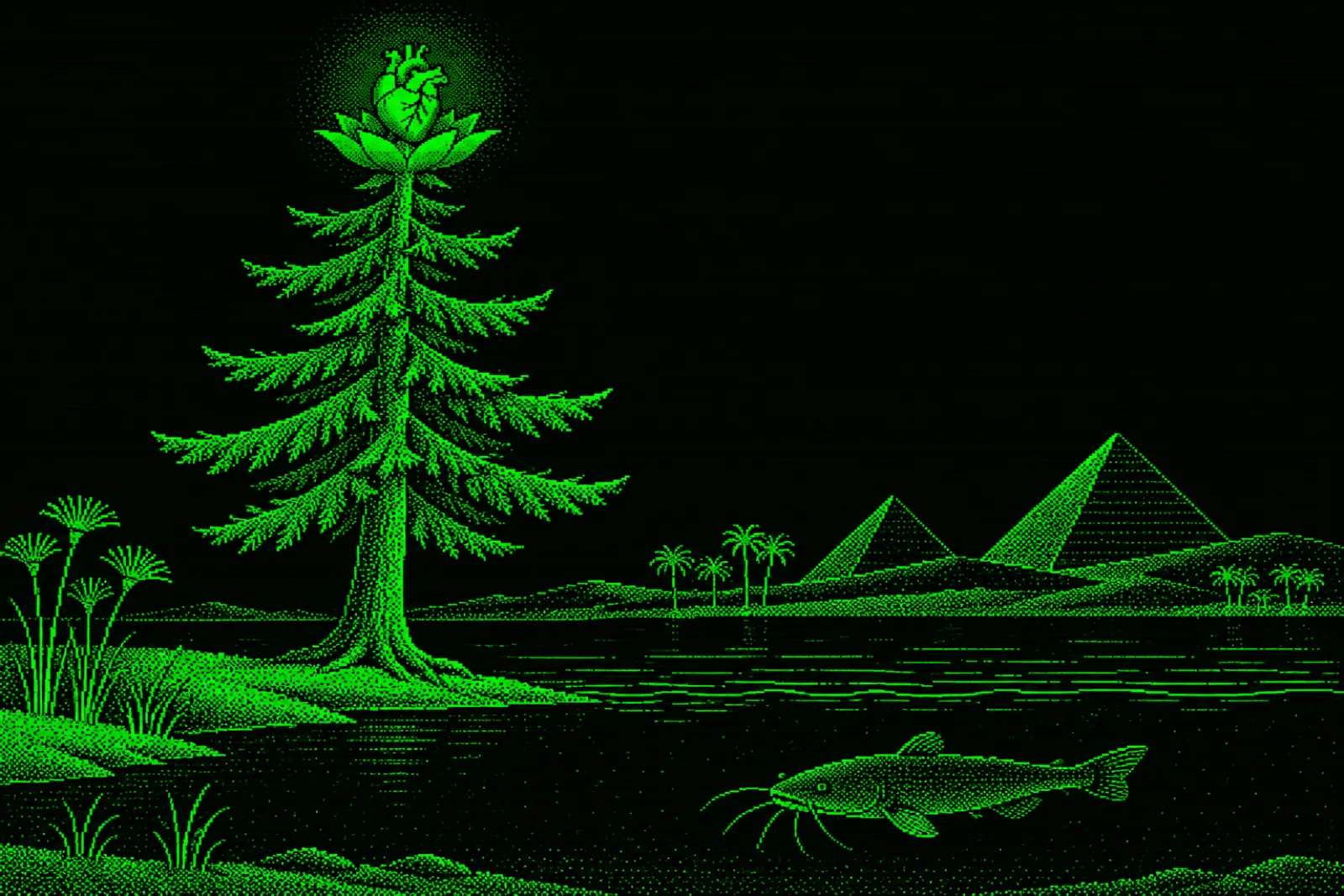
It runs in two halves. In the first, set at home, the elder brother’s wife tries to seduce Bata, and when he refuses she tells her husband he beat her. Anubis waits behind the byre door with a spear; the cows warn Bata, the sun god puts a river of crocodiles between them, and across the water Bata swears his innocence, cuts off his penis and throws it to the fish. He goes to the Valley of the Fir, abroad by the Sea, and puts his heart in the top of a tree. In the second half, set abroad and at court, the gods make him a wife, the Sea steals a lock of her hair, and Pharaoh takes her. She has the tree cut down and Bata dies; Anubis finds his heart, revives him, and Bata comes back as a bull, then as two persea trees, then as the son of his own wife, and ends as king of Egypt.
All 352 sentences are translated here from the Late Egyptian, the whole papyrus from the first line to the colophon. The papyrus is nearly complete. Square brackets in the original mark a few short lacunae and the editor’s restorations, and angle brackets mark words the scribe left out; where a gap or a restoration matters, the note says so. The numbers under each line are the papyrus page and line. For the male god who dies and returns, see Male Dying Gods.
Each numbered line gives the Late Egyptian first: the original script, then the same words in Latin letters. Our English is underneath. Tap a dotted word for its meaning, and Note for our comment on the line; our comments are in the right margin.
The two brothers
- 11,1
𓇋𓂋 𓅓𓈖𓏏𓏲𓆑 𓐍𓂋 𓏏𓏲 𓌢𓀀 𓏻 𓈖 𓌡𓂝𓏤 𓅐𓏏𓏏𓁐 𓈖 𓌡𓂝𓏤 𓇋𓏏𓆑𓀀 𓇋𓈖𓊪𓏲𓅆 𓂋𓈖𓀁 𓅯𓄿 𓉻𓏛 𓇋𓏲 𓅡𓏤𓏏𓏐𓏒𓏥𓅆 𓂋𓈖𓀁 𓅯𓄿 𓈙𓂋𓇋𓏲𓅪
[j]r mntwf ḫru̯ =tw sn 2 n wꜥ mw,t{t} n wꜥ jt Jnp.w Anubis, the jackal god; here the elder brother · TLA rn (n) pꜣ ꜥꜣ jw Bꜣtꜣ Bata, a bull god of the 17th nome of Upper Egypt · TLA rn (n) pꜣ šrjw
They tell of two brothers of one mother and one father. Jnp.w: Anubis, the jackal god; here the elder brother was the name of the elder, and Bꜣtꜣ: Bata, a bull god of the 17th nome of Upper Egypt was the name of the younger.
Note on line 1
The opening is restored at the start ([j]r). Both brothers carry gods’ names: Anubis, the jackal of embalming, and Bata, a bull god worshipped at Saka in Middle Egypt. Pꜣ ꜥꜣ and pꜣ šrj are literally “the big one” and “the little one”. - 21,1
𓐍𓂋𓇋𓂋 𓇓𓏲 𓉐𓏤 𓈞𓏏𓁐 𓆑 𓌢𓀀 𓈙𓂋𓇋𓏲𓅪 𓅓𓂞 𓆑 𓏇𓇋𓋴𓐍𓂋𓏲𓏛𓏥𓈖 𓈙𓂋𓇋𓏲𓅪 𓇋𓅱 𓅓𓈖𓏏𓏲𓆑 𓇋𓀁𓁹𓂋𓏏𓏲 𓈖 𓆑 𓎛𓃀𓋴𓏲𓍱𓏥
ḫr-jr Jnp.w Anubis, the jackal god; here the elder brother · TLA sw [ẖr],j pr ẖr[,j] ḥm,t [jw] [pꜣy] =f sn šrjw m-ḏi̯ =f mj-sḫr,w-n šrjw jw mntwf j:jri̯{.tw} n =f ḥbs.w.pl
Now Anubis had a house and had a wife, and his younger brother was with him like a son. It was he who made the clothes for him.
- 31,2
𓇋𓅱 𓆑 𓁷𓏤 𓈝𓅓𓏏𓂻 𓅓𓐠𓏤 𓈖𓄿𓇋𓇋𓏥 𓆑 𓇋𓄿𓅱𓏏𓊑𓄛𓏤𓏥 𓂋 𓇏𓏏𓈇𓏤𓏫 𓇋𓀁𓁹𓂋𓏏𓏲 𓋴𓂓𓄿𓍁𓌻𓂡
jw =f ḥr šmi̯.t m-sꜣ nꜣy =f jꜣw,t ⸮r? sḫ,t.pl [j]w mnt[w]f j:jri̯{.tw} 〈n〉 =〈f〉 skꜣ
He went behind his herds to the fields, and it was he who did the ploughing for him.
- 41,3
𓅓𓈖𓏏𓏲𓆑 𓂝𓏲𓍯𓄿𓇋𓇋𓏏𓏛𓀜 𓈖 𓆑 𓇋𓅱 𓈖 𓆑 𓄋𓊪𓏲𓏏𓏴𓀁𓏫 𓎟 𓈖𓏏𓏭 𓅓 𓇏𓏏𓈇𓏤𓏫
mntwf ꜥwꜣy{.t} ⸢n⸣ =⸢f⸣ ⸢jw⸣ mnt[wf] [j]:jri̯{.t} n =f wpw,t.pl nb(.wt) n,tj m sḫ,t.pl
It was he who harvested for him, and it was he who did for him all the work there is in the fields.
- 51,3
𓇋𓋴𓏏𓏲 𓆑 𓈙𓂋𓇋𓏲𓅪 𓄤𓆑𓂋
jstw j[w] pꜣy =f [sn] šrjw [m] ꜥḥꜣ.wtj man, male; literally "fighter, warrior" · TLA nfr
And his younger brother was a fine ꜥḥꜣ.wtj: man, male; literally "fighter, warrior":
- 61,4
𓂜𓈖𓃹𓈖 𓐪𓂧𓏌𓏲𓏛 𓆑 𓅓 𓇾𓏤𓈇 𓇥𓂋 𓆑
nn-wn 〈mj-〉qd =f m 〈pꜣ〉 tꜣ 〈r-〉ḏr =f
there was none like him in the whole land.
- 71,4
𓇋𓋴 𓃹𓈖 𓈖 𓊹𓅆 𓇋𓅓 𓆑
js wn pḥ.tj strength, physical might · TLA n nṯr jm =f
The pḥ.tj: strength, physical might of a god was in him.
- 81,4
𓉔𓂋𓏲𓇳𓏤𓏫 𓈎𓈖𓏌𓏲𓏴𓏛𓏫 𓐠𓏤 𓇑𓇑𓈖𓈖 𓆑 𓌢𓀀 𓅪 𓆑 𓇋𓄿𓅱𓏏𓊑𓄛𓏤𓏫 𓅓 𓆑 𓋴𓐍𓂋𓏲𓏛𓏥 𓈖𓏏𓏭 𓅓𓏏𓏲 𓆑 𓂋 𓅯𓄿𓇋𓇋 𓆑 𓉐𓏤 𓂋 𓏏𓈖𓏌𓏲𓌙𓅯𓏛𓏫 𓇋𓏲 𓆑 𓄿𓏏𓊪𓀋𓀜 𓎟 𓈖 𓇏𓏏𓈇𓏤𓏫 𓅓 𓆱𓏏𓏤 𓎟 𓅓𓏏𓏲 𓆑 𓎝𓎛𓏛 𓏥 𓅓𓂺𓏛 𓆑 𓇋𓏲 𓆑 𓈞𓊃𓀕 𓎛𓈖𓂝 𓆑 𓈞𓏏𓁐 𓅓𓏏𓏲 𓆑 𓋴𓅪𓂋𓇋𓈗𓀁 𓅓𓏏𓏲 𓆑 𓅯𓄿𓇋𓇋 𓆑 𓇋𓀁𓉔𓄿𓇋𓇋𓏏𓉐𓏫 𓈖𓄿𓇋𓇋𓏥 𓆑 𓇋𓄿𓏲𓊑𓄛𓏫
[ḫr-jr]-m-ḫt hrw.pl qn,w 〈ḥr-〉sꜣ nn [jw] ⸢pꜣy⸣ =f sn šrj [m-sꜣ] [nꜣ]y =f jꜣw,t m pꜣy =f sḫr,w n,tj [rꜥ]-nb mtw =f [wḥꜥ] r pꜣy =f pr r tnw rwhꜣ jw =f ꜣtp [m] [stj]mw.pl nb(.w) n sḫ,t.pl [m] [j]:jri̯,pl m ḫt [m] [(j)ḫ,t.pl] nb(.wt) [nfr(.wt)] [n] sḫ[,t] mtw =f wꜣḥ =w m-bꜣḥ ⸢pꜣy⸣ =f [sn] [ꜥꜣ] jw =f ḥmsi̯ ḥnꜥ [tꜣy] =f ḥm,t mtw =f zwr to drink · TLA mtw =f wnm{.pl} m[tw] =[f] [pri̯] [r] sḏr to lie down, to sleep; to sleep with · TLA [m] pꜣy =f j~hꜣy,t.pl m-⸢ẖnw⸣ nꜣy =f jꜣw〈,t〉 [⸮wꜥi̯?]
Many days after this, his younger brother was behind his cattle in his daily way, and he came home to his house every evening, loaded with every herb of the field, with milk, with wood, with every good thing of the field. He laid them before his elder brother as he sat with his wife, and he drank and he ate, and he went out to sleep in his byre among his cattle, alone.
Note on line 8
The bracketed words are restored by the editor from the parallel at 4,3; the last word, “alone”, is also his restoration. - 91,8
𓐍𓂋𓇋𓂋𓅓𓆱𓐍𓏏 𓇾𓏤𓈇 𓌉𓆓𓇳 𓏻𓈖 𓉔𓂋𓏲𓇳𓏤𓏫 𓆣𓂋𓏲 𓇋𓅱 𓏥 𓊪𓊃𓋴𓏏𓊮 𓅓𓏏𓏲 𓆑 𓎝𓎛𓏛 𓏥 𓅓𓂺𓏛 𓅯𓄿𓇋𓇋 𓆑 𓌢𓀀 𓉻𓏛 𓂞𓏏 𓈖 𓆑 𓅧𓈎𓏲𓈀𓏥 𓂋 𓇏𓏏𓈇𓏤𓏫 𓅓𓏏𓏲 𓆑 𓏏𓉔𓅓𓏛𓀜 𓆑 𓃒𓏥 𓂋 𓂞𓏏 𓏶𓅓𓏲𓀁 𓏫 𓅓
ḫr-jr-m-ḫt tꜣ ḥḏ 2.n hrw{.pl} ḫpr.w [...] jw =w psst mtw =f wꜣḥ =w m-bꜣḥ pꜣy =f sn ꜥꜣ [mtw] =[f] ḏi̯.t n =f ꜥq,w r sḫ,t.pl mtw =f thm ⸢nꜣy⸣ =f jḥ.pl r ḏi̯.t wnm =w m sḫ[,t].pl
When the land grew bright and a second day came, [...] which had been cooked, and he laid them before his elder brother, and he gave him bread for the fields, and he drove his cattle out to let them graze in the fields.
Note on line 9
A short lacuna in the papyrus. The other translators restore “he cooked food” or similar. - 101,9
𓇋𓏲 𓆑 𓈝𓅓𓏏𓂻 𓅓𓐠𓏤 𓈖𓄿𓇋𓇋𓏥 𓆑 𓃒𓏥
jw =f (ḥr) šmi̯.t m-sꜣ nꜣy =f jḥ.pl
He walked behind his cattle.
- 111,10
𓆓𓂧 𓈖 𓆑 𓄤𓆑𓂋 𓅯𓄿 𓋴𓏏𓏭𓄦𓅓𓏲𓆰𓏫 𓊨𓏏𓉐 𓎛𓏠𓈖𓏏𓏛 𓅓𓏏𓏲 𓆑 𓄔𓅓𓏛 𓅯𓄿 𓆓𓂧 𓋴𓈖𓏥 𓎟 𓅓𓏏𓏲 𓆑 𓏫 𓂋 𓏏𓄿 𓊨𓏏𓉐 𓄤𓆑𓂋𓏏𓏛 𓈖 𓈖𓏏𓏭 𓋴𓏏𓏥 𓋁𓃀𓏲𓀁
[⸮jw?] =[s]n (ḥr) ḏd n =f nfr pꜣ stjmw{.pl} [n] s,t ⸮ḥmn.t? mtw =f sḏm pꜣ ḏd =sn nb mtw =f jṯꜣ[y] =w r tꜣ s,t nfr.t n s[t]jm[w].pl n,t[j] st (ḥr) ꜣbw =s[n]
They would say to him, "The grass is good in such-and-such a place," and he heard all they said and took them to the good place with the grass they wanted.
Note on line 11
The cattle speak to Bata, and he understands them. Ḥmn.t, “such-and-such”, stands for whatever place the cattle name. - 122,1
𓃒𓏥 𓈖𓏏𓏭 𓂋𓄂𓏏𓏤 𓆑 𓁷𓏤 𓄤𓆑𓂋 𓂋𓇋𓈎𓂋𓏝 𓊗𓏻
[jw] ⸢nꜣ⸣ jḥ.pl n,tj r-ḥꜣ,t =f ḥr ḫpr nfr r-jqr zp-2
And the cattle in his care grew very, very fine.
- 132,1
𓈎𓃀𓄳𓏛 𓋴𓈖𓏥 𓄟𓋴𓏲𓏯𓏥 𓋴𓈖𓏥 𓇋𓈎𓂋𓏛 𓊗𓏻
q(ꜣ)b =sn ms.w.pl =sn 〈r-〉jqr zp-2
They bore their calves very, very often.
- 142,2
𓐍𓂋𓇋𓂋 𓁷𓏤 𓈖 𓋴𓂓𓄿𓏲𓍁𓌻𓂡 𓇋𓏲 𓅯𓄿𓇋𓇋 𓆑 𓁷𓏤 𓆓𓂧 𓈖 𓆑
ḫr-jr ḥr [t]rj n skꜣ jw pꜣy =f sn [ꜥꜣ] ḥr ḏd n =f
At the time of ploughing his elder brother said to him:
- 152,2
𓇋𓅓𓅓𓂝 𓎼𓂋𓍅𓏛 𓈖 𓈖𓏥 𓎛𓏏𓂋𓇋𓆵𓄛𓏥 𓂋 𓅯𓄿𓃹𓈖 𓏏𓄿 𓄿𓎛𓏏𓈇𓏫 𓉐𓂋𓂻𓍘𓇋 𓇋𓏲 𓈖 𓋴𓂓𓄿𓏲𓍁𓌻𓂡 𓋴𓏏 𓅓𓏇𓏏𓏏𓏛 𓅓𓏏𓏲 𓎢 𓂋 𓇏𓏏𓈇 𓌨𓂋𓏭𓏛 𓉐𓂋𓏏𓏯𓌾𓏥 𓅯𓄿𓃹𓈖 𓇋𓏲 𓈖𓏥 𓂋 𓎔𓏛 𓇋𓀁𓈖 𓆑 𓆓𓂧 𓈖 𓆑
jmm grg〈.tw〉 n =n ḥtrj,pl [...] r skꜣ pꜣ-wn tꜣ ꜣḥ,t pri̯.tj jw =s[t] nfr.t[j] n skꜣ =st m-mj,tt mtw =k j[y.t] r sḫ,t ẖr,j pr,t pꜣ-wn jw =n r mḥ 〈r〉 skꜣ [m] dwꜣ,w j.n =f (ḥr) ḏd n =f
"Have a team of oxen made ready for us [...] for ploughing, for the field has come out from the flood and is good for ploughing. And come to the field with the seed, for we will start ploughing in the morning." So he said to him.
- 162,4
𓃹𓈖𓇋𓈖 𓌢𓀀 𓅪 𓁷𓏤 𓋴𓐍𓂋𓏲𓏛𓏥 𓎟 𓇋𓀁𓆓𓂧 𓈖 𓆑 𓅯𓄿𓇋𓇋 𓆑 𓌢𓀀 𓉻𓏛 𓋴𓈖𓏥
wn.jn [pꜣy] =[f] sn šrj ḥr jri̯.t sḫr,w.pl nb(.w) j:ḏd n =f pꜣy =f sn ꜥꜣ [j:jri̯{.t}] sn
And his younger brother did everything his elder brother had told him to do.
- 172,5
𓐍𓂋𓇋𓂋𓅓𓆱𓐍𓏏𓂻 𓇾𓏤𓈇 𓉔𓂋𓏲𓇳𓏤 𓆣𓂋𓏲 𓇋𓏲 𓋴𓈖𓏥 𓁷𓏤 𓈝𓅓𓏏𓂻 𓂋 𓇏𓏏𓈇𓏤 𓌨𓂋𓏭𓏛 𓏏𓄿𓇋𓇋 𓋴𓈖𓏥
ḫr-jr-m-ḫt tꜣ ḥḏ [2.n] hrw ḫpr.w jw =sn ḥr šmi̯.t r sḫ,t ẖr,j tꜣy =sn [pr,t]
When the land grew bright and a second day came, they went to the field with their seed.
- 182,6
𓇋𓏲 𓏫 𓎔𓏛 𓋴𓂓𓄿𓏲𓍁𓌻𓂡 𓇛𓅓𓏛 𓂋𓇋𓈎𓂋𓏛 𓊗𓏻 𓁷𓏤 𓅯𓄿𓇋𓇋 𓋴𓈖𓏥 𓂋𓂝𓏤𓅡𓎡𓏲𓏛𓀜 𓅓
jw =w (ḥr) mḥ [r] skꜣ j[w] [jb] =[sn] nḏm r-jqr zp-2 ḥr pꜣy =sn rʾ-ꜥ-bꜣk,w m [pꜣy] =[sn] [š]ꜣꜥ bꜣk[,w]
They set to ploughing, and their hearts were very, very glad at their work from its very start.
- 192,7
𓈎𓈖𓏌𓏲𓏴𓏛𓏫 𓇑𓇑𓈖𓈖 𓇋𓏲 𓋴𓈖𓏥 𓅓 𓇏𓏏𓈇𓏤 𓇋𓏲 𓋴𓈖𓏥 𓊢𓂝 𓈖
ḫr-jr-m-[ḫt] [hrw.pl] qn,w ḥr-sꜣ nn jw =sn m sḫ,t jw =sn (ḥr) ꜥḥꜥ n pr,t
Many days after this, while they were in the field, they ran short of seed.
- 202,8
𓃹𓈖𓇋𓈖 𓆑 𓁷𓏤 𓉔𓄿𓃀𓂻 𓀀 𓆑 𓌢𓀀 𓅪 𓅓𓆓𓂧
wn.jn =f ḥr hꜣb ={j} ⸢pꜣy⸣ =f sn šrj m-ḏd
He sent his younger brother, saying:
- 212,9
𓎛𓆰𓈖𓏌𓏲𓂾𓂻 𓎢 𓏎𓈖 𓈖 𓈖𓏥 𓉐𓂋𓏏𓏯𓌾𓏥 𓅓 𓅯𓄿 𓂧𓏇𓇋𓏏𓈇𓏤𓊖
ḥnw =k jni̯ n =n pr,t m pꜣ dmj{,t}
"Hurry and fetch us seed from the village."
The seduction
- 222,9
𓇋𓏲 𓅯𓄿𓇋𓇋 𓆑 𓌢𓀀 𓅪 𓁷𓏤 𓈟𓏏𓁐 𓈖 𓅯𓄿𓇋𓇋 𓆑 𓌢𓀀 𓉻𓏛 𓇋𓏲 𓏏𓏲 𓈞𓊃𓀕 𓁷𓏤 𓈖𓃀𓂧𓁸 𓋴𓏏
jw pꜣy =f sn šrj ḥr gmi̯ [tꜣ] ḥm,t n pꜣy =f sn ꜥꜣ jw =tw ḥmsi̯ ḥr nbd braided hair, hair-do · TLA =st
His younger brother found the wife of his elder brother sitting while someone did her hair.
Note on line 22
Nbd is to plait or braid hair. She is having her hair done. - 232,10
𓃹𓈖𓇋𓈖 𓆑 𓁷𓏤 𓆓𓂧 𓈖 𓊃𓋴𓏏
wn.jn =f ḥr ḏd n =sst
He said to her:
- 242,10
𓊢𓂝𓂻 𓂞 𓀀 𓈖 𓁐 𓀀 𓂋 𓇏𓏏𓈇𓏤 𓅯𓄿𓃹𓈖 𓇋𓀁𓁹𓂋 𓅯𓄿𓇋𓇋 𓀀 𓌢𓀀 𓋴𓇋𓆛𓈖𓏌𓏲𓂾𓂻𓏥 𓈖 𓀀
ꜥḥꜥ ḏi̯ ={j}〈t〉 n ={t}〈j〉 ⸢pr,t⸣ ḥnw{.pl.n} =j r sḫ,t pꜣ-wn j:jri̯ pꜣy =j sn 〈ꜥꜣ〉 sjni̯ n =j
"Get up and give me seed, so I can hurry back to the field, for my elder brother is waiting for me.
- 253,1
𓅓𓂞𓇋𓇋𓏏𓏛 𓏲𓆓𓆑𓄿𓅯𓏛𓏫
m-ḏy.t wḏfꜣ =〈⸮n?〉
Don't make us late."
- 263,1
𓃹𓈖𓇋𓈖 𓁷𓏤 𓆓𓂧 𓈖 𓆑
wn.jn =ss[t] ḥr ḏd n =f
She said to him:
- 273,1
𓇋𓀀𓈝𓅓𓏏𓂻 𓇋𓀀𓃹𓈖𓉿𓂡 𓅯𓄿 𓅓𓂝𓌨𓂋𓇋𓏏𓉐 𓅓𓏏𓏲 𓎢 𓏎𓈖 𓈖 𓎢 𓅯𓄿 𓈖𓏏𓏭 𓅓 𓄣𓏤 𓎡
j:šmi̯{.t} j:wn pꜣ mꜥ~ẖr{,jt} mtw =k jni̯ n =k pꜣ n,tj m jb =k
"Go, open the granary and take what you want.
Note on line 27
Literally “take what is in your heart”. - 283,2
𓅓𓂞𓇋𓇋𓏏𓏛 𓆼𓄿𓂝𓂻 𓏏𓄿𓇋𓇋 𓁐 𓈖𓈙𓇋𓏲𓁸 𓁷𓏤 𓈐𓏏𓏤
⸢m⸣-ḏy.t ḫꜣꜥ =〈j〉 tꜣy =j nšjw ḥr wꜣ,t
Don't make me leave my hair half done."
- 293,2
𓃹𓈖𓇋𓈖 𓅯𓄿 𓂝𓆓𓂧𓏲𓀔𓅪𓀀 𓁷𓏤 𓅧𓈎𓂻 𓂋 𓅯𓄿𓇋𓇋 𓆑 𓇋𓀀𓉔𓄿𓇋𓇋𓏏𓉐𓏫
wn.jn pꜣ ꜥḏd,w ḥr ꜥq r pꜣy =f j~hꜣy,t.pl
The youth went into his byre.
- 303,3
𓇋𓏲 𓆑 𓏎𓈖 𓌡𓂝𓏤𓈖 𓎛𓆰𓈖𓏌𓏲𓏋 𓉻𓏛 𓇋𓏲 𓄣𓏤 𓆑 𓂋 𓇋𓅷𓄿𓂷𓂡 𓉐𓂋𓏏𓏯𓌾𓏥 𓈎𓈖𓏌𓏲𓏴𓏛𓏫
jw =f (ḥr) jni̯ wꜥ-n ḥn,w ꜥꜣ jw jb =f r jṯꜣ pr,t qn,w
He brought a big jar, because he meant to carry a lot of seed.
- 313,3
𓇋𓏲 𓆑 𓁷𓏤 𓄿𓏏𓊪𓀋𓀜 𓆑 𓅓 𓌾𓏥 𓇣𓏏𓏭𓌾𓏥
jw =f ḥr ꜣtp =f m jt bd,tj
He loaded himself with barley and emmer.
- 323,4
𓇋𓏲 𓆑 𓁷𓏤 𓉐𓂋𓂻 𓌨𓂋𓏭𓏛 𓋴𓈖𓏥
jw =f ḥr pri̯ ẖr,j =sn
And he came out carrying them.
- 333,4
𓃹𓈖𓇋𓈖 𓆓𓂧 𓈖 𓆑
wn.j[n] =ss[t] (ḥr) ḏd n =f
She said to him:
- 343,4
𓆷𓄿𓏲𓏛 𓈖𓏏𓏭 𓁷𓏤 𓎢
[j]ḫ šꜣ,w 〈nꜣ〉 n,tj ḥr ⸢r〈mn〉,t⸣ =k
"What is the weight of what is on your shoulder?"
- 353,4
𓆓𓂧 𓈖 𓊃𓋴𓏏
[jw] =[f] [ḥr] ḏd n =sst
He said to her:
- 363,4
𓇣𓏏𓏭𓌾𓏥 𓎅 𓏼 𓌾𓏥 𓎅 𓏻 𓏛 𓏼𓏻 𓈖𓄿 𓈖𓏏𓏭 𓁷𓏤 𓂋𓏠𓈖𓂢𓏏𓏤𓄹 𓎢 𓇋𓀁𓈖 𓆑 𓁷𓏤 𓆓𓂧 𓈖 𓊃𓋴𓏏
bd,tj ẖꜣr 3 jt ẖꜣr 2 dmḏ 5 ⸢nꜣ⸣ n,tj ḥr rmn{,t} ={k}〈j〉 j.n =f ḥr ḏd n =sst
"Three sacks of emmer and two sacks of barley, five in all, are what is on my shoulder," he said to her.
Note on line 36
Maspero reckons the five measures at 368 litres: a feat of strength, and what she answers next. - 373,5
𓃹𓈖𓇋𓈖 𓆑 𓅓𓆓𓂧 𓃹𓈖 𓄖𓏏𓏭𓏯𓏯𓀜 𓇋𓅓 𓎢 𓐍𓂋 𓏏𓏲𓁐 𓁷𓏤 𓊪𓏏𓂋𓇋𓆵𓁻 𓈖𓄿𓇋𓇋𓏥 𓎢 𓍘𓈖𓏥𓂋𓀜 𓅓𓏠𓈖𓏏𓇳 𓇋𓏲 𓄣𓏤 𓋴𓏏 𓂋𓐍𓏛 𓆑 𓅓 𓂋𓐍𓏛 𓈖
wn.jn =ss[t] [ḥr] [md.t] [m-ḏi̯] =f m-ḏd wn pḥ.tj strength, physical might · TLA [ꜥꜣ] jm =k ḫr tw≡j ḥr ptr bandage, wrapping (TLA "Verband") · TLA nꜣy =k ṯnr strength, vigour · TLA m-mn.t jw jb =st 〈r〉 rḫ to know; also to know sexually · TLA =f m rḫ to know; also to know sexually · TLA n ꜥḥꜣ.wtj man, male; literally "fighter, warrior" · TLA
And she spoke to him, saying, "There is great pḥ.tj: strength, physical might in you. I see your ṯnr: strength, vigour every day." And her heart was set on rḫ: to know; also to know sexually him with the rḫ: to know; also to know sexually of a ꜥḥꜣ.wtj: man, male; literally "fighter, warrior".
Note on line 37
Jw jb=st r rḫ=f m rḫ n ꜥḥꜣwtj: “know” twice, as verb and noun, the fixed Late Egyptian phrase for intercourse; Truth and Falsehood has “he knew her with the knowing of a man”. Here rḫ is written with the papyrus roll only, not with the phallus sign other copies of the phrase use. Maspero (1905) keeps “knew” only in a footnote; Petrie (1895) has “her heart knew him with the knowledge of youth”, Blackman (1927) “her desire was to know him as one knoweth a youth”. All three turn ꜥḥꜣwtj, “man, male, warrior”, into a “youth”, so her wish to have a grown man’s sex becomes a fondness for a boy. Popko (TLA) has “a man”. - 383,6
𓊃𓋴𓏏 𓁷𓏤 𓊢𓂝𓂻
wn.[j]n =sst ḥr ꜥḥꜥ
She stood up.
- 393,7
𓇋𓏲 𓋴𓏏 𓎔𓏛 𓇋𓅓 𓆑
jw =st (ḥr) mḥ jm =f
She took hold of him.
- 403,7
𓇋𓏲 𓋴𓏏 𓆓𓂧 𓈖 𓆑
jw =st (ḥr) ḏd n =f
She said to him:
- 413,7
𓅓𓂝𓇋𓏭𓂻 𓁹𓇋𓇋 𓈖𓏥 𓈖 𓈖𓏥 𓋴𓇥𓂋𓁀 𓏲𓏫
mꜥ~j jry =n n =n wnw.t hour · TLA sḏr to lie down, to sleep; to sleep with · TLA ={w}〈n〉
"Come, let us make ourselves an wnw.t: hour: let us sḏr: to lie down, to sleep; to sleep with.
Note on line 41
Sḏr “to lie down, sleep” is written with the sign of a man lying on a bed. Petrie’s “Come, stay with me” drops the lying down; Blackman has “Come, we will take our pleasure and sleep”, Maspero “reposons ensemble, une heure durant”. The TLA: “let us make ourselves a (shepherd’s) hour, let us sleep together”. - 423,7
𓅜𓐍𓏛 𓈖 𓎢
ꜣḫ n =k p[ꜣ]j
It will be good for you:
- 433,7
𓎢𓄿𓀀 𓁹𓇋𓇋 𓁐 𓈖 𓎢 𓎛𓃀𓋴𓏲𓍱𓏥
kꜣ bull · TLA jry =j ⸢n⸣ =⸢k⸣ ḥbs.w.pl nfr[.w].pl
I will make you fine clothes."
Note on line 43
Her bribe answers 1,1: it was Bata who made the clothes for the household. - 443,8
𓃹𓈖𓇋𓈖 𓅯𓄿 𓂝𓆓𓂧𓏲𓀔𓅪 𓁷𓏤 𓏇𓇋 𓋁𓃀𓏲𓄛𓏤𓏫𓇗𓂝𓏏𓏯𓄛𓏤𓏫 𓅓 𓈎𓈖𓂧𓏏𓏯𓀜 𓁷𓏤 𓅯𓄿 𓋴𓏇𓇋𓇋𓀁 𓃀𓇋𓈖𓅪 𓇋𓀁𓆓𓂧𓈖 𓈖 𓆑 𓇋𓏲 𓋴𓏏 𓋴𓈖𓂧𓏲𓅾𓀁𓏫 𓂋𓇋𓈎𓂋𓏛 𓊗𓏻
wn.jn pꜣ ꜥḏd,w ḥr [ḫp]r mj ꜣbj-šmꜥ leopard, literally "southern panther" · TLA m qnd,t [...] ḥr pꜣ sm⸢y⸣ bjn j:ḏd.n =ss[t] n =f jw =st snd r-jqr zp-2
And the youth became like a ꜣbj-šmꜥ: leopard, literally "southern panther" in rage [...] at the vile thing she had said to him, and she was very, very afraid.
- 453,9
𓃹𓈖𓇋𓈖 𓆑 𓁷𓏤 𓂧𓏏𓏯𓀁𓏫 𓅓𓂞 𓊃𓋴𓏏 𓅓𓆓𓂧
wn.jn =f ḥr 〈m〉d.t m-ḏi̯ =sst m-ḏd
He spoke to her, saying:
- 463,9
𓐍𓂋 𓅓𓂝 𓎢𓏭𓏛 𓏏𓏲𓁐 𓅓𓂞 𓀀 𓅓 𓋴𓐍𓂋𓏲𓏛𓏥 𓈖 𓅐𓏏𓏏𓁐
ḫr m =kj tw≡t m-ḏi̯ =j m sḫr,w n mw,t{t}
"Look, you are like a mother to me,
- 473,10
𓐍𓂋 𓅯𓄿𓇋𓇋 𓁐 𓉔𓄿𓇋𓇋𓂺𓏛 𓅓𓂞 𓀀 𓅓 𓋴𓐍𓂋𓏲𓏛 𓈖 𓇋𓏏𓆑𓀀
ḫr pꜣy =t hꜣy m-ḏi̯ =j m sḫr,w n jt
and your husband is like a father to me,
- 483,10
𓐍𓂋 𓅯𓄿 𓉻𓏛 𓂋 𓀀 𓅓𓈖𓏏𓏲𓆑 𓀀
ḫr pꜣ ꜥꜣ r =j mntwf sḫpr 〈w〉j
for he who is older than I is the one who raised me.
- 493,10
𓇋𓐍𓏛 𓅯𓄿𓏭 𓃀𓏏𓍔𓄿𓏲𓏴𓅪 𓉻𓏛 𓇋𓀀𓆓𓂧 𓈖 𓀀
jḫ pꜣj btꜣ.w crime, wrong, offence · TLA ꜥꜣ j:ḏd =〈t〉 n =j
What is this great btꜣ.w: crime, wrong, offence you have said to me?
- 504,1
𓅓𓁹 𓆓𓂧𓏏𓏲 𓆑 𓈖 𓀀 𓂝𓈖𓂻
m-jri̯ ḏd.ṱ =f n =j ꜥn
Don't say it to me again,
- 514,1
𓐍𓂋 𓂜𓈖 𓇋𓏲 𓀀 𓂋 𓆓𓂧𓏏𓏲 𓆑 𓈖 𓌡𓂝𓏤
ḫr nn jw =j r ḏd.ṱ =f n wꜥ
and I will not tell it to anyone,
- 524,1
𓐍𓂋 𓃀𓈖 𓂋 𓂞𓏏 𓉐𓂋𓂻 𓆑 𓅓 𓂋𓏤 𓀀 𓈖 𓂋𓍿𓀀𓁐𓏥 𓎟𓏏
ḫr bn jw =[j] r ḏi̯.t pri̯ =f m rʾ mouth · TLA =j n r(m)ṯ nb{.t}
and I will not let it come out of my mouth to any man."
- 534,2
𓇋𓏲 𓆑 𓁷𓏤 𓆑𓄿𓀋𓀜 𓏏𓄿𓇋𓇋 𓆑 𓄿𓏏𓊪𓀋𓀜
jw =f ḥr fꜣi̯ tꜣy =f ꜣtp(,t)
He lifted his load.
- 544,2
𓇋𓏲 𓆑 𓁷𓏤 𓈝𓅓𓏏𓂻 𓈖 𓆑 𓂋 𓇏𓏏𓈇𓏤
jw =f ḥr šmi̯.t n =f r sḫ,t
He went off to the field.
- 554,2
𓃹𓈖𓇋𓈖 𓆑 𓁷𓏤 𓄭𓂋𓂻 𓂋 𓅯𓄿𓇋𓇋 𓆑 𓌢𓀀 𓉻𓏛
wn.jn =f ḥr spr r pꜣy =f sn ꜥꜣ
He reached his elder brother.
- 564,2
𓇋𓏲 𓋴𓈖𓏥 𓎔𓏛 𓂋 𓅡𓎡𓏲𓏛𓀜 𓅯𓄿𓇋𓇋 𓋴𓈖𓏥 𓂋𓂝𓏤𓅡𓎡𓏲𓏛𓀜
jw =sn (ḥr) mḥ r bꜣk 〈m〉 pꜣy =sn rʾ-ꜥ-bꜣk,w
And they set to work at their task.
The lie
- 574,3
𓐍𓂋𓇋𓂋𓅓𓆱𓐍𓏏𓂻 𓁷 𓈖 𓂋𓏲𓉔𓄿𓇱𓇳𓏤 𓃹𓈖𓇋𓈖 𓅯𓄿𓇋𓇋 𓆑 𓌢𓀀 𓊠𓂝𓏲𓏛𓀜𓀀𓏥 𓉐𓏤 𓇋𓏲 𓅯𓄿𓇋𓇋 𓆑 𓌢𓀀 𓅪 𓅓𓐠𓏤 𓈖𓄿𓇋𓇋𓏥 𓆑 𓇋𓄿𓏲𓏏𓊑𓄛𓏫 𓆑 𓅓 𓐍𓏏𓏛𓏥 𓎟 𓈖 𓇏𓏏𓈇𓏤 𓅓𓏏𓏲 𓆑 𓏎𓈖 𓈖𓄿𓇋𓇋𓏥 𓆑 𓇋𓄿𓅱𓏏𓊑𓄛𓏫 𓂋𓄂𓏏𓏤 𓆑 𓂋 𓂞𓏏 𓋴𓇥𓂋𓁀 𓏲𓏫 𓅯𓄿𓇋𓇋 𓋴𓈖𓏥 𓅓 𓅯𓄿
ḫr-jr-m-ḫt ḥr ⸢trj⸣ n rwhꜣ wn.jn pꜣy =f sn ⸢ꜥꜣ⸣ (ḥr) wḥꜥ [r] [pꜣy] =[f] pr jw pꜣy =f sn šrj m-sꜣ nꜣy =f jꜣw,t m[tw] =[f] ꜣtp.ṱ =f m (j)ḫ,t.pl nb(.wt) n sḫ,t mtw =f jni̯ nꜣy =f jꜣw,t r-ḥꜣ,t =f r ḏi̯.t sḏr to lie down, to sleep; to sleep with · TLA =w 〈m〉 pꜣy =sn j~hꜣ[y{,t.pl}] [n],tj m pꜣ ⸢dmj{,t}⸣
And later, at evening time, his elder brother came home to his house, while his younger brother was behind his cattle; he loaded himself with every thing of the field and drove his cattle before him to let them sleep in their byre in the village.
- 584,5
𓇋𓋴 𓏏𓄿 𓈞𓏏𓁐 𓈖 𓅯𓄿𓇋𓇋 𓆑 𓌢𓀀 𓉻𓏛 𓋴𓈖𓂧𓏲𓅾𓀀𓍘𓇋 𓅯𓄿 𓇋𓀁𓆓𓂧𓈖 𓊃𓋴𓏏
js tꜣ ḥm,t n pꜣy =f sn ꜥꜣ snd.tj 〈⸮ḥr?〉 pꜣ smy j:ḏd.n =sst
But the wife of his elder brother was afraid because of what she had said.
- 594,6
𓃹𓈖𓇋𓈖 𓊃𓋴𓏏 𓁷𓏤 𓏎𓈖 𓎚𓂧𓏲𓐎𓏥 𓊪𓂧𓏭𓂋𓏤𓍱
wn.jn =sst ḥr jni̯ [ꜥ]d,w ptr bandage, wrapping (TLA "Verband") · TLA
She fetched fat and a ptr: bandage, wrapping (TLA "Verband").
Note on line 59
ꜥḏ is animal fat; the second word the TLA glosses “bandage”. Maspero has “de la graisse, un chiffon”, Petrie “a parcel of fat”, Blackman “fat and …”. Maspero reads it as grease rubbed on to fake the shine of bruises. - 604,6
𓇋𓏲 𓋴𓏏 𓁷𓏤 𓆣𓂋𓏲 𓏇𓇋 𓈖𓏏𓏭 𓈎𓈖𓈎𓈖𓏴𓂡𓍘𓇋 𓈖 𓂝𓍑𓄿𓏲𓏛𓀜 𓀀 𓈖𓋁𓃀𓏲𓀁 𓆓𓂧 𓈖 𓅯𓄿𓇋𓇋 𓋴𓏏 𓉔𓄿𓇋𓇋𓂺𓏛
jw =st ḥr ḫpr mj n,tj qnqn.tj n ꜥḏꜣ,w ={j} n-ꜣb,w ḏd n pꜣy =st hꜣy
And she became like one who has been beaten wrongfully, meaning to say to her husband:
- 614,7
𓅓 𓅯𓄿𓇋𓇋 𓎢 𓌢𓀀 𓅪 𓇋𓀁𓁹𓂋
m pꜣy =k sn šrj j:jri̯ qnqn
"It was your younger brother who beat me."
- 624,7
𓇋𓏲 𓅯𓄿𓇋𓇋 𓋴𓏏 𓉔𓄿𓇋𓇋𓂺𓏛 𓁷𓏤 𓊠𓂝𓏲𓏛𓀜𓀀𓏥 𓅓 𓂋𓏲𓉔𓄿𓇱𓇳𓏤 𓅓 𓅯𓄿𓇋𓇋 𓆑 𓋴𓐍𓂋𓏲𓏛𓏥 𓈖𓏏𓏭 𓇳𓏤𓎟
jw pꜣy =st hꜣy ḥr wḥꜥ m rwhꜣ m pꜣy =f sḫr,w n,tj rꜥ-nb
Her husband came home in the evening in his daily way.
- 634,8
𓇋𓏲 𓆑 𓁷𓏤 𓄭𓂋𓂻 𓂋 𓅯𓄿𓇋𓇋 𓆑 𓉐𓏤
jw =f ḥr spr r pꜣy =f pr
He reached his house.
- 644,8
𓇋𓏲 𓆑 𓁷𓏤 𓅠𓅓𓏛 𓏏𓄿𓇋𓇋 𓆑 𓈞𓏏𓁐 𓋴𓇥𓂋𓁀𓍘𓇋 𓍋𓅓𓂋𓅪𓍘𓇋 𓈖
jw =f ḥr gmi̯ tꜣy =f ḥm,t sḏr to lie down, to sleep; to sleep with · TLA mḥr.tj n ꜥḏꜣ,w
He found his wife lying down, ill with a lie.
Note on line 64
Mḥr.tj n ꜥḏꜣ: literally “ill in falsehood”, that is, pretending to be ill. ꜥḏꜣ is the same word as “the wrongdoer” whom Bata asks Re to judge at 6,5. - 654,8
𓇋𓏲 𓋴𓏏 𓁷𓏤 𓏏𓍃𓅓𓏏 𓂞𓏏 𓈗 𓁷𓏤 𓂧𓏏𓏤 𓆑 𓅓 𓅯𓄿𓇋𓇋 𓆑 𓋴𓐍𓂋𓏲𓏛𓏥 𓇋𓏲 𓃀𓏲𓊪𓏲𓇋𓇋 𓋴𓏏 𓂋𓄂𓏏𓏤 𓆑 𓇋𓏲 𓅯𓄿𓇋𓇋 𓆑 𓉐𓏤 𓅓 𓎡𓎡𓏲𓏭𓇱𓇳𓏤 𓇋𓏲 𓋴𓏏 𓋴𓇥𓂋𓁀𓍘𓇋 𓃀𓈙𓂐𓏫
jw =st ḥr tm.t ḏi̯.t mw water; also seed, semen · TLA ḥr ḏr,t =f m pꜣy =f sḫr,w 〈n,tj〉 〈rꜥ-nb〉 jw bw-pwy =st s[t]ꜣ r-ḥꜣ,t =f jw pꜣy =f pr m kk,wj jw =st sḏr to lie down, to sleep; to sleep with · TLA 〈ḥr〉 bši̯ to vomit, to spew · TLA
She did not pour water on his hands in his daily way, and she had not lit a lamp before him, so his house was in the dark, and she lay there bši̯: to vomit, to spew.
Note on line 65
Bši̯ is “to vomit, spew out”. Blackman has “there she lay and vomited”; Petrie “she was lying very sick”; the TLA “spitting (in feigned contempt for Bata)”. We keep the plain sense. - 664,10
𓇋𓏲 𓅯𓄿𓇋𓇋 𓋴𓏏 𓉔𓄿𓇋𓇋𓂺𓏛 𓁷𓏤 𓆓𓂧 𓈖 𓊃𓋴𓏏
jw pꜣy =st hꜣy ḥr ḏd n =sst
Her husband said to her:
- 674,10
𓅓 𓈖𓏭𓅓𓂝𓀁 𓅓𓂞 𓁐
m nj~mꜥ md{.t} m-ḏi̯ =t
"Who has had words with you?"
- 684,10
𓊢𓂝𓂻 𓆓𓂧 𓋴𓏏 𓈖 𓆑
ꜥḥꜥ〈.n〉 ḏd =st n =f
She said to him:
- 694,10
𓃀𓏲𓊪𓏲 𓌡𓂝𓏤 𓌃𓂧𓏏𓏯𓀁 𓅓𓂞 𓁐 𓁷𓂋𓏲𓈐 𓅯𓄿𓇋𓇋 𓎢 𓌢𓀀 𓅪
bw-pw wꜥ md.t m-ḏi̯ =j ḥr,w pꜣy =k sn šrj
"No one has had words with me but your younger brother.
- 705,1
𓇋𓂋 𓈖𓇥𓂋𓏏𓏭 𓈖 𓎢 𓉐𓂋𓏏𓏯𓌾𓏥 𓇋𓏲 𓆑 𓅠𓅓𓏛 𓁐 𓈞𓊃𓀕𓎢𓏲𓁐 𓌡𓂝𓏤𓅪 𓁐
jr {n}〈m〉-ḏr{,tj} jwi̯[.t] =[f] [r] [j]ṯꜣ n =k pr,t jw =f (ḥr) gmi̯ =j ḥmsi̯.kwj wꜥi̯ =j
When he came to fetch seed for you, he found me sitting alone.
- 715,1
𓇋𓏲 𓆑 𓁷𓏤 𓆓𓂧 𓈖 𓁐
jw =f ḥr ḏd n =j
He said to me:
- 725,1
𓅓𓂝𓇋𓏏𓂻𓁐 𓁹𓇋𓇋 𓈖𓏥 𓃹𓈖𓏌𓏏𓇼𓇳𓏤 𓋴𓇥𓂋𓁀 𓈖𓏥
mꜥ~j{.t} jry =n wnw.t hour · TLA sḏr to lie down, to sleep; to sleep with · TLA =n
'Come, let us make ourselves an wnw.t: hour: let us sḏr: to lie down, to sleep; to sleep with.
- 735,2
𓃹𓈖𓐍𓏲𓍼𓍱 𓁐 𓅯𓄿𓇋𓇋 𓁐 𓇋𓀁𓈖 𓆑 𓁷𓏤 𓆓𓂧 𓈖
wnḫ to loosen, undo; also to put on (clothes) · TLA =t pꜣy =t nbd braided hair, hair-do · TLA j.n =f ḥr ḏd n =j
wnḫ: to loosen, undo; also to put on (clothes) your nbd: braided hair, hair-do!' he said to me.
Note on line 73
Wnḫ is “to clothe, put on” and also “to loosen”. Blackman reads “Put on thy ringlets” (the great wig); Petrie “tie up thy hair”. Here it is “loosen”, the hair let down for sex. In her lie she puts her own words in his mouth and adds this. - 745,2
𓇋𓏲 𓁐 𓁷𓏤 𓏏𓍃𓅓𓏏 𓄔𓅓𓏛 𓈖 𓆑
jw =j ḥr tm.t sḏm n =f
I did not listen to him.
- 755,2
𓇋𓋴 𓃀𓈖 𓇋𓏌𓎡𓀀 𓏏𓄿𓇋𓇋 𓎢 𓅐𓏏𓁐
js bn jnk tꜣy =k mw,t
'Am I not your mother?
- 765,2
𓐍𓂋 𓅯𓄿𓇋𓇋 𓎢 𓌢𓀀 𓉻𓏛 𓅓𓂞 𓎢 𓅓 𓋴𓐍𓂋𓏲𓏛𓏥 𓈖 𓇋𓏏𓆑𓀀 𓇋𓀁𓈖 𓁐 𓁷𓏤 𓆓𓂧 𓈖 𓆑
ḫr pꜣy =k sn ꜥꜣ m-ḏi̯ =k m sḫr,w n jt j.n =j ḥr ḏd n =f
And your elder brother is like a father to you!' I said to him.
- 775,3
𓇋𓏲 𓆑 𓁷𓏤
jw =f ḥr 〈s〉[nd]{.pl}
And he was afraid.
- 785,3
𓇋𓏲 𓆑 𓁷𓏤 𓈎𓈖𓈎𓈖𓏴𓂡 𓂋 𓏏𓍃𓅓𓏏 𓂞𓏏 𓁹𓇋𓇋 𓁐 𓈖 𓎢 𓄋𓊪𓏲𓏏𓏴𓀁
jw =f ḥr qnqn =〈j〉 r tm.t ḏi̯.t jry =j n =k wpw,t
He beat me, so that I would not report it to you.
- 795,3
𓐍𓂋 𓇋𓂋 𓂞 𓎢 𓋹𓈖𓐍 𓆑 𓇋𓏲 𓁐 𓂋 𓅓𓏏𓏱 𓈖 𓁐
ḫr jr ḏi̯ =k ꜥnḫ =f jw =j r mt n =j
Now if you let him live, I will kill myself!
Note on line 79
Literally “I will die for myself”. - 805,3
𓊪𓏏𓂋𓇋𓆵𓁻 𓃹𓈖𓈖 𓆑 𓇍𓇋𓇋𓏏𓂻 𓅓 𓅯𓄿𓃹𓈖 𓏏𓏲𓁐 V49𓈖𓏌𓏲𓀁 𓅯𓄿𓏭 𓋴𓏇𓇋𓇋𓀁𓏫 𓃀𓇋𓈖𓅪 𓃹𓈖𓏲 𓇋𓏲 𓆑 𓂋 𓁹𓂋 𓆑 𓅓 𓋴𓆓𓇳
ptr bandage, wrapping (TLA "Verband") · TLA wnn =f jy.t m [...] pꜣ-wn tw≡j (ḥr) šnw pꜣj smy bjn wn jw =f r jri̯ =f m ⸮s{ḏ}〈f〉?
Look, when he comes [...], for I am pained by this vile thing he meant to do yesterday."
- 815,4
𓃹𓈖𓇋𓈖 𓅯𓄿𓇋𓇋 𓆑 𓌢𓀀 𓉻𓏛 𓁷𓏤 𓆣𓂋𓏲 𓏇𓇋 𓋁𓃀𓏲𓄛𓏫𓇗𓂝𓏏𓏯𓄛𓏫
wn.jn pꜣy =f sn ꜥꜣ ḥr ḫpr mj ꜣbj-šmꜥ leopard, literally "southern panther" · TLA
And his elder brother became like a ꜣbj-šmꜥ: leopard, literally "southern panther".
- 825,5
𓇋𓏲 𓆑 𓁷𓏤 𓂞𓏏 𓂧𓅓𓏲𓌫𓂡𓏏𓏲 𓅯𓄿𓇋𓇋 𓆑 𓈖𓂢𓏲𓇋𓇋𓈔
jw =f ḥr ḏi̯.t dmw.tw pꜣy =f njw.y spear, lance · TLA
He had his njw.y: spear, lance sharpened.
- 835,5
𓇋𓏲 𓆑 𓁷𓏤 𓂞𓏏𓏲 𓆑 𓅓 𓂧𓏏𓏤 𓆑
jw =f ḥr ḏi̯.t =f m ḏr,t =f
He put it in his hand.
- 845,5
𓃹𓈖𓇋𓈖 𓅯𓄿𓇋𓇋 𓆑 𓉻𓏛 𓊢𓂝𓂻 𓈖𓇉𓄿𓁶 𓅯𓄿 𓋴𓃀𓇼𓄿𓇋𓇋𓆱𓉐 𓅯𓄿𓇋𓇋 𓆑 𓇋𓀁𓉔𓄿𓇋𓇋𓏏𓉐𓏫 𓂋 𓄡𓂧𓃀𓏲𓌫𓂡 𓅯𓄿𓇋𓇋 𓆑 𓌢𓀀 𓅪 𓅓 𓅯𓄿𓇋𓇋 𓆑 𓇍𓇋𓇋𓏏𓂻 𓅓 𓂋𓏲𓉔𓄿𓇱𓇳𓏤 𓂋 𓂞𓏏 𓅧𓈎𓂻 𓈖𓄿𓇋𓇋𓏥 𓆑 𓇋𓄿𓅱𓏏𓄛𓏤𓏫 𓂋 𓅯𓄿 𓇋𓀁𓉔𓄿𓇋𓇋𓏏𓉐𓏫
wn.jn pꜣy =f 〈sn〉 ꜥꜣ (ḥr) ꜥḥꜥ n-ḥꜣ pꜣ sbꜣ,y (n) pꜣy =f j~hꜣy{,t.pl} r ẖdb pꜣy =f sn šrj m pꜣy =f jy.t m rwhꜣ r ḏi̯.t ꜥq nꜣy =f jꜣw,t r pꜣ j~hꜣy{,t.pl}
His elder brother stood behind the door of his byre to kill his younger brother when he came in the evening to bring his cattle into the byre.
The flight
- 855,7
𓅯𓄿 𓆄𓏲𓇳𓅆 𓁷𓏤 𓊵𓏏𓊪𓅆 𓇋𓏲 𓆑 𓄿𓏏𓊪𓀋𓀜 𓆑 𓋴𓏏𓏭𓄦𓅓𓏲𓆰𓏫 𓎟 𓈖 𓇏𓏏𓈇𓏤𓏫 𓅓 𓅯𓄿𓇋𓇋 𓆑 𓋴𓐍𓂋𓏲𓏛𓏥 𓈖𓏏𓏭 𓇳𓏤𓎟
ḫr-[jr] pꜣ šw ḥr ḥtp jw =f (ḥr) ꜣtp =f 〈m〉 stjmw.pl nb(.w) n sḫ,t.pl m pꜣy =f sḫr,w n,tj rꜥ-nb
When the sun set he loaded himself with every herb of the fields in his daily way.
- 865,7
𓇋𓏲 𓆑 𓁷𓏤 𓇍𓇋𓇋𓏏𓂻
jw =f ḥr jy.t
He came.
- 875,8
𓇋𓏲 𓏏𓄿 𓃒𓏥 𓄂𓏲𓏏𓏭𓏴𓂻 𓁷𓏤 𓅧𓈎𓂻 𓂋 𓅯𓄿 𓇋𓀁𓉔𓄿𓇋𓇋𓏏𓉐𓏫
jw ⸢tꜣ⸣ jḥ(,t){.pl} ḥꜣ,wtj(.t) ḥr ꜥq r pꜣ j~hꜣy{,t.pl}
The lead cow went into the byre.
- 885,8
𓇋𓏲 𓋴 𓁷𓏤 𓆓𓂧 𓈖 𓅯𓄿𓇋𓇋 𓋴𓏏 𓀦𓇋𓏲𓀜
jw =((s))[[t]] ḥr ḏd n pꜣy =st mnj,w
She said to her herdsman:
- 895,8
𓅓 𓎡𓏲𓀀 𓅯𓄿𓇋𓇋 𓎢 𓌢𓀀 𓉻𓏛 𓊢𓂝𓂻 𓂋𓄂𓏏𓏤𓏏𓏲 𓎢 𓌨𓂋𓏭𓏛 𓅯𓄿𓇋𓇋 𓆑 𓈖𓂢𓏲𓇋𓇋𓈔 𓂋 𓄡𓂧𓏲𓃀𓏲𓌫𓂡 𓎢
m =kw pꜣy =k sn ꜥꜣ ꜥḥꜥ r-ḥꜣ,t.ṱ =k ẖr,j pꜣy =f njw.y spear, lance · TLA r ẖd{w}b =k
"Look, your elder brother is standing before you with his spear to kill you.
- 905,9
𓂋𓏲𓇋𓂻 𓎢 𓏏𓏲 𓂋𓄂𓏏𓏤 𓆑
rwj =k tw r-ḥꜣ,t =f
Run away from him!"
- 915,9
𓃹𓈖𓇋𓈖 𓆑 𓁷𓏤 𓄔𓅓𓏛 𓅯𓄿 𓆓𓂧 𓏏𓄿𓇋𓇋 𓆑 𓇋𓎛𓃒𓏥 𓄂𓏲𓏏𓏭𓏴𓂻
wn.jn =f ḥr sḏm pꜣ ḏd tꜣy =f jḥ(,t){.pl} ḥꜣ,wtj(.t)
He heard what his lead cow said.
- 925,9
𓇋𓅱 𓏏𓄿 𓎡𓏏𓍘𓇋 𓁷𓏤 𓅧𓈎𓂻
jw tꜣ k.tj ḥr ꜥq
The next one went in.
- 936,1
𓇋𓏲 𓋴𓏏 𓁷𓏤 𓆓𓂧𓍘𓇋 𓆑 𓅓𓏇𓏏𓏏𓏛
jw =st ḥr ḏd.ṱ =f m-mj,tt
She said it too.
- 946,1
𓇋𓏲 𓆑 𓁷𓏤 𓈖𓍇𓏌𓏲𓁻 𓌨𓂋𓏭𓏛 𓅯𓄿 𓋴𓃀𓇼𓄿𓀜𓆱𓉐 𓈖 𓅯𓄿𓇋𓇋 𓆑 𓇋𓀁𓉔𓄿𓇋𓇋𓏏𓉐𓏫
jw =f ḥr nw(ꜣ) ẖr,j pꜣ sbꜣ n pꜣy =f j~hꜣy{,t.pl}
He looked under the door of his byre.
- 956,2
𓇋𓏲 𓆑 𓁷𓏤 𓊪𓏏𓂋𓇋𓆵𓁻 𓂋𓂧𓂾𓂾𓄹 𓈖 𓅯𓄿𓇋𓇋 𓉻𓏛 𓇋𓏲 𓆑 𓊢𓂝𓂻 𓈖𓇉𓄿𓁶 𓅯𓄿 𓋴𓃀𓇼𓄿𓀜𓆱𓉐 𓇋𓏲 𓅯𓄿𓇋𓇋 𓆑 𓆑
jw =f ḥr ptr bandage, wrapping (TLA "Verband") · TLA rd.du n pꜣy =[f] [sn] ꜥꜣ jw =f ꜥḥꜥ n-ḥꜣ pꜣ sbꜣ jw pꜣy =f njw.y spear, lance · TLA [m] ḏr[,t] =f
He saw the two feet of his elder brother, standing behind the door with his spear in his hand.
- 966,3
𓇋𓏲 𓆑 𓁷𓏤 𓎝𓎛𓏛 𓏏𓄿𓇋𓇋 𓆑 𓄿𓏏𓊪𓀋𓀜 𓂋 𓅯𓄿 𓃛𓏲𓂧𓈖𓏏𓈇𓏤
jw =f ḥr wꜣḥ tꜣy =f ꜣtp(,t) r pꜣ jwdn{,t}
He put his load down on the ground.
- 976,3
𓇋𓏲 𓆑 𓁷𓏤 𓆑𓄿𓀋𓀜 𓆑 𓂋 𓋴𓐍𓋴𓐍𓂾𓂻𓏥 𓂋 𓂝𓏲𓂾𓂻𓏥
jw =f ḥr fꜣi̯ =f r sḫsḫ r 〈w〉ꜥ{w}〈r〉
He took off at a run to flee.
- 986,3
𓇋𓏲 𓅯𓄿𓇋𓇋 𓆑 𓌢𓀀 𓉻𓏝 𓁷𓏤 𓈝𓅓𓏏𓂻 𓅓𓐠𓏤 𓆑 𓌨𓂋𓏭𓏛 𓅯𓄿𓇋𓇋 𓆑 𓈖𓂢𓏲𓇋𓇋 𓆑
jw pꜣy =f sn ꜥꜣ ḥr šmi̯.t m-sꜣ =f ẖr,j pꜣy =f njw.y spear, lance · TLA ={f}
And his elder brother went after him with his spear.
- 996,4
𓃹𓈖𓇋𓈖 𓅯𓄿𓇋𓇋 𓆑 𓌢𓀀 𓅪 𓁷𓏤 𓋴𓌷𓂝𓏏𓀁𓏫 𓈖 𓅯𓄿 𓇳𓅆𓅃𓈃𓅆 𓂋𓆓𓂧
wn.jn pꜣy =f sn šrj ḥr smꜣꜥ.t{.pl} n pꜣ Rꜥw-Ḥr.w-ꜣḫ.tj Re-Harakhti, "Re, Horus of the Horizon", the sun god · TLA r-ḏd
His younger brother called on Rꜥw-Ḥr.w-ꜣḫ.tj: Re-Harakhti, "Re, Horus of the Horizon", the sun god, saying:
- 1006,5
𓅯𓄿𓇋𓇋 𓀀 𓎟𓅆 𓄤𓆑𓂋𓅆 𓅓𓈖𓏏𓎡𓈖𓂻 𓅯𓄿 𓈖𓏏𓏭 𓁷𓏤 𓄋𓊪𓏲𓏏𓏴𓀁 𓅯𓄿 𓂝𓍑𓄿𓏲𓏛𓀜 𓂋 𓌷𓂝𓏏𓆄𓏛𓏥
pꜣy =j nb nfr mntk{n} pꜣ n,tj ḥr wpi̯ to open; also to judge, to part · TLA pꜣ ꜥḏꜣ,w r 〈pꜣ〉 mꜣꜥ,t〈j〉{,pl}
"My good lord, you are the one who judges the wrongdoer from the righteous!"
- 1016,5
𓊢𓂝𓂻 𓅯𓄿𓇳𓅆 𓁷𓏤 𓄔𓅓𓏛 𓄭𓂋𓏲𓀁𓏥 𓆑 𓎟
ꜥḥꜥ〈.n〉 Rꜥw Re, the sun god · TLA ḥr sḏm spr,w.pl =f nb(.w)
And Rꜥw: Re, the sun god heard all his pleas.
- 1026,6
𓇋𓅱 𓅯𓄿𓇳𓅆 𓁷𓏤 𓂞𓏏 𓆣𓂋𓏲 𓌡𓂝𓏤𓈖 𓈗 𓉻𓏛 𓂋𓃛𓏲𓂧𓂻 𓆑𓏭 𓂋𓃛𓏲𓂧𓂻 𓅯𓄿𓇋𓇋 𓆑 𓉻𓏛 𓇋𓏲 𓆑 𓎔𓏛 𓅓𓋴𓎛𓏲𓆊𓏥
jw Rꜥw Re, the sun god · TLA ḥr ḏi̯.t ḫpr wꜥ-n mw water; also seed, semen · TLA ꜥꜣ r-jwd =f{j} r-jwd pꜣy =f 〈sn〉 ꜥꜣ jw =f mḥ 〈m〉 mzḥ crocodile · TLA
Pre made a great water come between him and his elder brother, full of mzḥ: crocodile.
- 1036,7
𓇋𓅱 𓅯𓄿 𓌡𓂝𓏤𓀀 𓇋𓅓 𓋴𓈖𓏥 𓁷𓏤 𓆣𓂋𓏲 𓁷𓏤 𓌡𓂝𓏤𓈖 𓃭𓏤𓇋𓄿𓏭𓂢 𓇋𓅱 𓅯𓄿 𓎡𓇋𓇋𓀀 𓁷𓏤 𓎡𓏏𓍘𓇋
jw pꜣ wꜥ jm =sn ḥr ḫpr ḥr wꜥ-n rw~jꜣ,j jw pꜣ ky ḥr k.tj
One of them was on one side and the other on the other.
- 1046,7
𓇋𓅱 𓅯𓄿𓇋𓇋 𓆑 𓌢𓀀 𓉻𓏝 𓁷𓏤 𓁹𓂋𓏏 𓊃𓊪𓊗 𓏻 𓈖 𓎛𓀒𓂡 𓁷𓏤 𓂧𓏏𓏤 𓆑 𓈖 𓅯𓄿 𓏏𓍃𓅓𓏏 𓄡𓂧𓃀𓏲𓌫𓂻 𓆑 𓇋𓀁𓁹𓂋 𓆑
jw pꜣy =f sn ꜥꜣ ḥr jri̯.t sp 2 n ḥwi̯ ḥr ḏr,t =f n pꜣ tm.t ẖdb =f j:jri̯ =f
His elder brother struck his hand twice, because he had not killed him.
Note on line 104
Literally “did two acts of striking on his hand, for the not-killing-him that he had done”: a gesture of frustration. - 1056,8
𓃹𓈖𓇋𓈖 𓅯𓄿𓇋𓇋 𓆑 𓌢𓀀 𓅪 𓁷𓏤 𓂝𓈙𓀁 𓈖 𓆑 𓁷𓏤 𓏏𓄿 𓃭𓏤𓇋𓄿𓏭𓂢 𓅓𓆓𓂧
wn.jn pꜣy =f sn šrj ḥr ꜥš a conifer of the Lebanon, fir or cedar (TLA "Lebanese fir") · TLA n =f ḥr tꜣ rw~jꜣ,j m-ḏd
His younger brother called to him from the bank, saying:
- 1066,9
𓊢𓂝𓂻 𓂧𓏭𓈐 𓂋 𓌉𓆓𓇳𓇾𓏤𓈇
ꜥḥꜥ dj r ḥḏ-tꜣ
"Stay there till dawn.
- 1076,9
𓃹𓈖𓈖 𓅯𓄿 𓇋𓏏𓈖𓇳𓅆 𓁷𓏤 𓅱𓃀𓈖𓇳𓅆 𓇋𓏲 𓀀 𓁷𓏤 𓄋𓊪𓏲𓏏𓏴𓀁 𓎛𓈖𓂝 𓎢 𓅓𓂺𓏛 𓆑 𓂞𓏏 𓅯𓄿 𓈖 𓅯𓄿 𓌷𓂝𓏏𓆄𓏛𓏥 𓅯𓄿𓃹𓈖 𓂜𓈖 𓇋𓏲 𓀀 𓆣𓂋𓏲 𓅓𓂞 𓎢 𓂋𓈖𓅘𓎛𓇳𓎛
wnn pꜣ Jtn the Aten, the sun disc · TLA ḥr wbn jw =j ḥr wpi̯ to open; also to judge, to part · TLA ḥnꜥ =k m-bꜣḥ =f m[tw] =[f] ḏi̯.t pꜣ [ꜥḏꜣ],w n pꜣ mꜣꜥ,t〈j〉{,pl} pꜣ-wn nn jw =j (r) ḫpr m-ḏi̯ =k [...] r-nḥḥ
When the Jtn: the Aten, the sun disc rises I will be judged with you before him, and he will give the wrongdoer to the righteous, for I will not be with you [...] ever.
- 1087,2
𓂜𓈖 𓇋𓏲 𓀀 𓂋 𓆣𓂋𓏲 𓅓 𓊨𓏏𓉐 𓇋𓅱 𓎢 𓇋𓅓 𓋴𓈖𓏥
nn jw =j r ḫpr m s,t jw =k jm =s{n}〈t〉
I will not be in a place where you are.
- 1097,2
𓇋𓏲 𓀀 𓂋 𓈝𓅓𓏏𓂻 𓂋 𓏏𓄿 𓇋𓆛𓈖𓏏𓊌 𓅯𓄿 𓂝𓈙𓐎𓆮𓆱𓏥
jw =j r šmi̯.t r tꜣ jn.t valley · TLA (n) pꜣ ꜥš a conifer of the Lebanon, fir or cedar (TLA "Lebanese fir") · TLA
I will go to the jn.t: valley."
Note on line 109
Tꜣ jn.t n pꜣ ꜥš. ꜥš is a conifer of the Lebanon, cedar or fir (TLA “Lebanese fir”); Maspero and Petrie made it “acacia”, Blackman “the Valley of the Cedar”. The valley is usually placed abroad, on the Lebanese coast of the Sea; Maspero placed it by the Nile. - 1107,2
𓐍𓂋𓇋𓂋𓅓𓆱𓐍𓏏𓂻 𓇾𓈇𓏤 𓌉𓆓𓇳 𓏻𓈖 𓉔𓂋𓏲𓇳𓏤 𓆣𓂋𓏲 𓇋𓏲 𓅯𓄿 𓇳𓅆𓅃𓈃𓅆 𓁷𓏤 𓏲𓃀𓈖𓇳𓅆
ḫr-jr-m-ḫt tꜣ ḥḏ 2.n hrw ḫpr.w jw pꜣ Rꜥw-Ḥr.w-ꜣḫ.tj Re-Harakhti, "Re, Horus of the Horizon", the sun god · TLA ḥr wbn
When the land grew bright and a second day came, Re-Harakhti rose.
- 1117,3
𓇋𓏲 𓌡𓂝𓏤 𓊪𓏏𓂋𓇋𓆵𓁻 𓌡𓂝𓏤 𓇋𓅓 𓋴𓈖𓏥
jw wꜥ [ḥr] ptr bandage, wrapping (TLA "Verband") · TLA wꜥ jm =sn
And each of them saw the other.
- 1127,3
𓃹𓈖𓇋𓈖 𓅯𓄿 𓂝𓆓𓂧𓏲𓀔𓅪𓀀 𓁷𓏤 𓌃𓂧𓏲𓀁𓏫 𓅓𓂞 𓅯𓄿𓇋𓇋 𓆑 𓌢𓀀 𓉻𓏛 𓅓𓆓𓂧
wn.jn pꜣ ꜥḏd,w ḥr mdw{.pl} m-ḏi̯ pꜣy =f sn ꜥꜣ m-ḏd
The youth spoke with his elder brother, saying:
- 1137,4
𓇋𓐍𓏛 𓅯𓄿𓇋𓇋 𓎢 𓇍𓇋𓇋𓏏𓂻 𓅓𓐠𓏤 𓀀 𓂋 𓄡𓂧𓃀𓏲𓌫𓂞 𓅓𓎼𓂋𓍅𓏛𓅪𓏥 𓇋𓅱 𓂜𓈖 𓄔𓅓𓏛 𓎢 𓂋𓏤 𓀀 𓁷𓏤 𓌃𓂧𓏏𓏯𓀁
jḫ pꜣy =k jy.t m-sꜣ =j r ẖdb =〈j〉 m-grg{.pl} jw nn sḏm =k rʾ mouth · TLA =j ḥr md.t
"Why do you come after me to kill me wrongfully, without hearing my mouth speak?
- 1147,4
𓐍𓂋 𓇋𓏌𓎡𓀀 𓅯𓄿𓇋𓇋 𓎢 𓌢𓀀 𓅪 𓅓𓂋𓂝𓏤
ḫr jnk pꜣy =k sn šrj m-rʾ-ꜥ
I am still your younger brother!
- 1157,4
𓐍𓂋 𓏏𓏲𓎡 𓅓𓂞 𓀀 𓅓 𓋴𓐍𓂋𓏲𓏛𓏥 𓈖 𓇋𓏏𓆑𓀀
ḫr tw≡k m-ḏi̯ =j m sḫr,w n jt
You are like a father to me,
- 1167,5
𓐍𓂋 𓏏𓄿𓇋𓇋 𓎢 𓈞𓏏𓁐 𓅓𓂞 𓀀 𓅓 𓋴𓐍𓂋𓏲𓏛 𓈖 𓅐𓏏𓏏𓁐
ḫr tꜣy =k ḥm,t m-ḏi̯ =j m sḫr,w n mw,t{t}
and your wife is like a mother to me.
- 1177,5
𓇋𓋴 𓃀𓈖
js bn
Isn't it so?
- 1187,5
𓇋𓂋 𓅓𓈖𓇥𓂋𓏲 𓀀 𓉔𓄿𓃀𓂻 𓎢 𓂋 𓏎𓈖 𓈖 𓈖𓏥 𓉐𓂋𓏏𓏯𓌾𓏥 𓇋𓅱 𓏏𓄿𓇋𓇋 𓎢 𓈟𓏏𓁐 𓁷𓏤 𓆓𓂧 𓈖 𓀀
jr m-{n}ḏr{w} ={j} hꜣb =k r jni̯ n =n pr,t jw tꜣy =k ḥm,t ḥr ḏd n =j
When you sent me to fetch seed for us, your wife said to me:
- 1197,6
𓅓𓂝𓇋𓏭𓂻 𓁹𓇋𓇋 𓈖𓏥 𓃹𓈖𓏌𓏏𓇼𓇳𓏤 𓋴𓇥𓂋𓁀 𓈖𓏥
mꜥ~j jry =n wnw.t hour · TLA sḏr to lie down, to sleep; to sleep with · TLA =n
'Come, let us make ourselves an wnw.t: hour: let us sḏr: to lie down, to sleep; to sleep with.'
- 1207,6
𓐍𓂋 𓊪𓏏𓂋𓇋𓆵𓁻 𓊪𓈖𓂝𓊜𓀜 𓇓𓏲 𓈖 𓎢 𓅓 𓎢𓏏𓐍𓏴𓏛𓏫
ḫr ptr bandage, wrapping (TLA "Verband") · TLA pnꜥ =〈st〉 sw n =k m ktḫ
And look, she has twisted it for you into something else."
- 1217,6
𓃹𓈖𓇋𓈖 𓆑 𓁷𓏤 𓂞𓏏 𓂝𓌴𓄿𓅓𓏲𓁻 𓆑 𓅓 𓅯𓄿 𓆣𓂋𓏲 𓎟𓏏 𓅓𓂞 𓆑 𓎛𓈖𓂝 𓏏𓄿𓇋𓇋 𓆑 𓈞𓏏𓁐
wn.jn =f ḥr ḏi̯.t ꜥm to swallow; to come to know · TLA =f m pꜣ ḫpr nb{.t} m-ḏi̯ =f ḥnꜥ tꜣy =f ḥm,t
And he let him ꜥm: to swallow; to come to know all that had happened between him and his wife.
Note on line 121
The verb for “let him know” here and through the tale is ꜥmꜣm, the late spelling of ꜥm, “to swallow”. Swallowing stands for learning, taking a thing in. Ritner (1993, p. 105 n. 513) calls the pun on this tale “legitimate”. The same verb is used of the catfish swallowing Bata’s penis (7,9), and of his heart drinking the water (13,9); the editor restores it for the woman swallowing the splinter (18,4). The castration
- 1227,7
𓃹𓈖𓇋𓈖 𓆑 𓁷𓏤 𓂝𓂋𓈎𓏲𓍼𓂡 𓆑 𓈖 𓅯𓄿 𓇳𓅆𓅃𓅆𓈌𓏏𓉐𓉐𓅆𓅆 𓅓𓆓𓂧
wn.jn =f ḥr ꜥrq =f n pꜣ Rꜥw-Ḥr.w-ꜣḫ.tj Re-Harakhti, "Re, Horus of the Horizon", the sun god · TLA m-ḏd
And he swore an oath to Re-Harakhti, saying:
- 1237,7
𓇋𓂋 𓅯𓄿𓅯𓄿𓇋𓇋 𓎢 𓂋 𓄡𓂧𓃀𓏲𓌫𓂡 𓎢 𓅓𓎼𓂋𓍅𓏛𓏥 𓇋𓅱 𓎢 𓌨𓂋𓏭𓏛 𓅯𓄿𓇋𓇋 𓎢 𓈖𓂢𓏲𓇋𓇋𓈔 𓌨𓂋𓏭𓏛𓊨𓏏𓉐𓂋𓏤𓏲𓏭𓈖 𓂓𓏏𓏯𓁸 𓏏𓄿𓎛𓅱𓏏𓐎𓏥
jr pꜣ{pꜣ}y =k 〈jy.t〉 r ẖdb ={k}〈j〉 m-grg{.pl} jw =k ẖr,j pꜣy =k njw.y spear, lance · TLA ẖr,j-s,t-rʾ{.wj}-n kꜣ.t vulva, cunt · TLA tꜣ-ḥwꜣ.t a term of abuse for a woman, "stinking one", from ḥwꜣ, "to rot, to stink" · TLA
"As for your coming to kill me wrongfully: you carry your njw.y: spear, lance on the word of a kꜣ.t: vulva, cunt, a tꜣ-ḥwꜣ.t: a term of abuse for a woman, "stinking one", from ḥwꜣ, "to rot, to stink"!"
Note on line 123
ẖr-s.t-rʾ-n kꜣ.t tꜣ-ḥwꜣ.t: “under the say of a vulva, a stinking one”. Kꜣ.t is written with the hair determinative; the abuse word tꜣ-ḥwꜣ.t (TLA: “[insult for a woman]”) with the pustule sign of rot and stench, as in ḥwꜣ “to rot”: the “stinking one”. Popko (TLA) prints “for the sake of the cunt, the old one”. Maspero (1905) erases the woman (“en trahison, quelle infamie !”); Petrie (1895) has “was an abomination”; Blackman (1927) “on the word of a dirty (?) strumpet”, with a footnote that “the expression is still coarser”. - 1247,8
𓇋𓏲 𓆑 𓁷𓏤 𓏎𓈖 𓌡𓂝𓏤𓈖 𓋴𓆑𓈖𓂧𓌫𓂡𓎼𓈙𓇋T19B
jw =f ḥr jni̯ wꜥ-n zf.t-gꜣš knife of reed, a reed-blade · TLA
He took a zf.t-gꜣš: knife of reed, a reed-blade.
- 1257,9
𓇋𓏲 𓆑 𓁷𓏤 𓈙𓂝𓂧𓄦𓌫𓂡 𓎛𓈖𓏌𓏲T19B𓄹 𓆑
jw =f ḥr šꜥd to cut off, to cut down; also to fell a tree · TLA ḥnn penis · TLA =f
He šꜥd: to cut off, to cut down; also to fell a tree his ḥnn: penis.
Note on line 125
Ḥnn, “penis”, is written with the flesh sign. Petrie (1895): “cut off of his flesh”; Blackman: “privy member”; Maspero: “il se trancha le membre”. The same verb šꜥd is used for felling the fir that holds his heart (12,4–12,6). - 1267,9
𓇋𓏲 𓆑 𓁷𓏤 𓆼𓄿𓂝𓂻 𓆑 𓂋 𓅯𓄿 𓈗
jw =f ḥr ḫꜣꜥ =f r pꜣ mw water; also seed, semen · TLA
He threw it into the water.
- 1277,9
𓇋𓏲 𓅯𓄿 𓈖𓂝𓂧𓏲𓆝𓏥 𓁷𓏤 𓂝𓌴𓄿𓅓𓏲F11A𓄹𓏭
jw pꜣ nꜥr catfish (Clarias or Synodontis) · TLA ḥr ꜥm to swallow; to come to know · TLA =〈f〉
And the nꜥr: catfish (Clarias or Synodontis) ꜥm: to swallow; to come to know it.
Note on line 127
Maspero (1905) noted that in the Osiris myth the oxyrhynchus fish swallowed the god’s member, and thought the scribe had changed the fish out of respect. Blackman has “shad”. Nꜥr is the catfish; the verb is ꜥmꜣm, “to swallow”. - 1287,9
𓇋𓏲 𓆑 𓁷𓏤 𓎼𓈖𓈖𓀉𓏴𓅪
jw =f ḥr gnn
And he grew weak.
- 1298,1
𓇋𓏲 𓆑 𓁷𓏤 𓆣𓂋𓏲 𓇓𓏲
jw =f (ḥr) ḫpr ẖs[j] ⸮sw?
He became wretched.
- 1308,1
𓇋𓏲 𓅯𓄿𓇋𓇋 𓎢 𓌢𓀀 𓉻𓏛 𓁷𓏤 V49𓏌𓏲𓏱 𓄂𓏏𓏭𓄣 𓆑 𓂋𓇋𓈎𓂋𓏛 𓊗𓏻
jw pꜣy ={k}〈f〉 sn ꜥꜣ ḥr šnw ḥꜣ.tj heart; the seat of the self and of thought · TLA =f r-jqr zp-2
His elder brother's heart grieved for him very, very much.
- 1318,1
𓇋𓏲 𓆑 𓁷𓏤 𓊢𓂝𓂻 𓁷𓏤 𓂋𓅓𓇋𓇋𓏏𓁻𓏥 𓈖 𓆑 𓈎𓄿𓀠𓏛 𓆑
jw =f ḥr ꜥḥꜥ ḥr rmy.t n =f qꜣi̯ ={f}
He stood weeping aloud for him.
- 1328,1
𓂜𓈖 𓂋𓐍𓏛 𓆑 𓍑𓄿𓇋𓇋𓊛 𓂋 𓅯𓄿 𓈖𓏏𓏭 𓅯𓄿𓇋𓇋 𓆑 𓌢𓀀 𓅪 𓇋𓅓 𓅓𓇥𓂋 𓈖𓄿𓈖 𓅓𓋴𓎛𓅱𓆊𓏥
nn rḫ to know; also to know sexually · TLA =f ḏꜣy r pꜣ n,tj pꜣy =f sn šrj jm m-ḏr nꜣ-n mzḥ crocodile · TLA
He could not cross over to where his younger brother was, because of the crocodiles.
- 1338,2
𓃹𓈖𓇋𓈖 𓅯𓄿𓇋𓇋 𓆑 𓌢𓀀 𓅪 𓁷𓏤 𓂝𓈙𓀁 𓈖 𓆑 𓅓𓆓𓂧
wn.jn pꜣy =f sn šrj ḥr ꜥš a conifer of the Lebanon, fir or cedar (TLA "Lebanese fir") · TLA n =f m-ḏd
His younger brother called to him, saying:
- 1348,2
𓇋𓋴𓏏𓏲 𓇋𓂋 𓋴𓆼𓄿𓇋𓇋𓀁 𓎢 𓌡𓂝𓏤𓈖 𓃀𓇋𓈖𓅪 𓇋𓋴𓏏𓏲 𓃀𓏲 𓁹𓂋𓏲 𓎢 𓋴𓆼𓄿𓇋𓇋𓀁 𓌡𓂝𓏤𓈖 𓄤𓆑𓂋 𓅓𓂋𓏤𓊪𓏲𓏛 𓌡𓂝𓏤𓈖 𓈖𓎢𓏏𓏴𓏛𓏥 𓇋𓏲 𓁹𓇋𓇋 𓀀 𓇓𓏲 𓈖 𓎢
jstw jr sḫꜣy =k wꜥ-n bjn jstw bw jri̯ =k sḫꜣy wꜥ-n nfr m-rʾ-pw wꜥ-n nkt jw jry =j sw n =k
"If you remember one bad thing, can you not remember one good thing, or anything I have done for you?
- 1358,2
𓇋𓐍𓏛 𓈝𓅓𓏏𓂻 𓎢 𓂋 𓅯𓄿𓇋𓇋 𓎢 𓉐𓏤 𓅓𓏏𓏲 𓎢 𓈖𓍇𓏌𓏲𓇋𓇋𓏏𓏛𓀜𓀀𓏥 𓈖𓄿𓇋𓇋𓏥 𓎢 𓇋𓄿𓏲𓏏𓊑𓄛𓏤𓏫 𓅯𓄿𓃹𓈖 𓂜𓈖 𓇋𓏲 𓀀 𓊢𓂝𓂻 𓅓 𓊨𓏏𓉐 𓇋𓅱 𓎢 𓇋𓅓 𓋴𓏏
jḫ šmi̯{.t} =k r pꜣy =k pr mtw =k nwy.t{.pl} nꜣy =k jꜣw,t.pl pꜣ-wn nn jw =j (r) ꜥḥꜥ m s,t jw =k jm =st
Go to your house and look after your cattle, for I will not stay in a place where you are.
- 1368,3
𓇋𓏲 𓀀 𓂋 𓈝𓅓𓏏𓂻 𓈖 𓀀 𓂋 𓏏𓄿 𓇋𓆛𓈖𓏏𓊌 𓅯𓄿 𓂝𓈙𓐎𓆮
jw =j r šmi̯.t n =j r tꜣ jn.t valley · TLA (n) pꜣ ꜥš a conifer of the Lebanon, fir or cedar (TLA "Lebanese fir") · TLA
I will go off to the jn.t: valley.
The heart on the fir
- 1378,3
𓐍𓂋 𓇋𓂋 𓅯𓄿 𓈖𓏏𓏭 𓇋𓅱 𓎢 𓂋 𓁹𓂋 𓆑 𓈖 𓀀 𓅯𓄿𓇋𓇋 𓎢 𓇍𓇋𓇋𓏏𓂻 𓂋 𓈖𓍇𓏌𓏲𓇋𓇋𓏏𓏛𓀜𓏏𓏲 𓀀 𓇋𓂋 𓂝𓌴𓄿𓏲𓁻 𓂋𓆓𓂧 𓃹𓈖𓏲 𓈖𓎡𓏏𓏴𓏛𓏥 𓆣𓂋𓏲 𓂋 𓀀
ḫr jr pꜣ n,tj jw =k r jri̯ =f n =j pꜣy =k jy.t r nwy.t.ṱ =j jr ꜥm to swallow; to come to know · TLA =〈k〉 r-ḏd wn nkt ḫpr.w r =j
And what you will do for me is to come and look after me, if you ꜥm: to swallow; to come to know that something has happened to me.
- 1388,4
𓅯𓄿𓇋𓇋 𓀀 𓄂𓏏𓏭𓄣 𓀀 𓅓𓏏𓏲 𓀀 𓎝𓎛𓏛 𓆑 𓁷𓏤 𓍑𓄿𓍑𓄿𓁶 𓈖 𓏏𓄿 𓄑𓏛𓃭𓏤𓃭𓏤𓆰𓏫 𓅯𓄿 𓂝𓈙𓐎𓆮
pꜣy =j šdi̯ to take out, to remove · TLA ḥꜣ.tj heart; the seat of the self and of thought · TLA =j mtw =j wꜣḥ =f ḥr ḏꜣḏꜣ n tꜣ ḥrr.t flower, blossom; here the crown or cone of the tree · TLA (n) pꜣ ꜥš a conifer of the Lebanon, fir or cedar (TLA "Lebanese fir") · TLA
I will šdi̯: to take out, to remove my ḥꜣ.tj: heart; the seat of the self and of thought and place it on the top of the ḥrr.t: flower, blossom; here the crown or cone of the tree of the ꜥš: a conifer of the Lebanon, fir or cedar (TLA "Lebanese fir").
Note on line 138
Ḥrr.t, written with the flower sign, is “flower, blossom”, here the crown at the tip of the tree. Petrie keeps the sense: “the top of the flowers of the acacia”. The verb šdi̯ “take out” is supplied by the editor. The ḥꜣ.tj-heart is the seat of the person, and Bata goes on living with it outside his body. - 1398,4
𓐍𓂋 𓇋𓂋 𓈙𓂝𓂧𓄦𓌫𓂡 𓏏𓏲 𓅯𓄿 𓂝𓈙𓐎𓆮 𓅓𓏏𓏲 𓆑 𓉔𓄿𓇋𓇋𓏏𓂻 𓂋 𓃛𓏲𓂧𓈖𓏏𓈇𓏤 𓅓𓏏𓏲 𓎢 𓇍𓇋𓇋𓏏𓂻 𓂋 𓏲𓆼𓄿𓐍𓂻 𓆑 𓇋𓂋 𓁹𓇋𓇋 𓎢 𓏽𓏼 𓆳𓏏𓏤𓏥 𓈖 𓏲𓆼𓄿𓐍𓂻 𓆑 𓅓𓂞𓇋𓇋𓏏𓏛 𓆑𓏭𓀁 𓄂𓏏𓏭𓄣 𓎢
ḫr jr šꜥd to cut off, to cut down; also to fell a tree · TLA =tw pꜣ ꜥš a conifer of the Lebanon, fir or cedar (TLA "Lebanese fir") · TLA mtw =f hꜣy.t r jwdn{,t} mtw =k jy.t r wḫꜣḫ =f jr jry =k 7 rnp,t.pl n wḫꜣḫ =f m-ḏy.t f{j}〈t〉 ḥꜣ.tj heart; the seat of the self and of thought · TLA =k
If the fir is cut down and falls to the ground, and you come to look for it, even if you spend seven years looking for it, let your heart not grow weary.
- 1408,5
𓐍𓂋 𓇋𓂋 𓇋𓅱 𓎢 𓅠𓅓𓏛 𓆑 𓅓𓏏𓏲 𓎢 𓂞𓏏𓏲 𓆑 𓂋 𓌡𓂝𓏤𓈖 𓎼𓄿𓇋𓇋𓏋𓏫 𓈖 𓈗 𓈎𓃀𓎛𓏁𓈗𓏛 𓎢𓄿𓀁 𓋹𓈖𓐍 𓀀 𓂝𓈖𓂽 𓏲𓃀𓈙𓃀𓏏𓏴𓀁 𓀀 𓈖 𓅯𓄿 𓏏𓉔𓄿𓂾𓂻𓏏𓏲
ḫr jr jw =k (ḥr) gmi̯ =f mtw =k ḏi̯.ṱ =f r wꜥ-n gꜣy{.pl} n mw water; also seed, semen · TLA qbḥ kꜣ bull · TLA ꜥnḫ =j ⸮ꜥn? w{b}šb{.t} =j n pꜣ thꜣ.ṱ =(j)
And if you find it and put it in a bowl of cool water, I will live again, and I will answer the harm done to me.
- 1418,6
𓐍𓂋 𓇋𓅱 𓎢 𓂝𓌴𓄿𓅓𓏲𓁻 𓂋𓆓𓂧 𓃹𓈖𓏲 𓈖𓎡𓏏𓏴𓏛𓏥 𓂋 𓀀 𓅓𓏏𓏲 𓏏𓏲 𓂞𓏏 𓈖 𓎡 𓌡𓂝𓏤𓈖 𓍿𓃀𓏲𓏋𓏫 𓈖 𓎛𓈎𓏏𓏋𓏫 𓁷𓏤 𓂧𓏏𓏤 𓎢 𓅓𓏏𓏲 𓆑 𓁹𓂋 𓊃𓏏𓆑𓂐𓏥
ḫr jw =k (r) ꜥm to swallow; to come to know · TLA r-ḏd wn nkt 〈ḫpr.w〉 r =j mtw =tw ḏi̯.t n =k wꜥ-n ṯbw{.pl} n ḥ(n)q,t ḥr ḏr,t =k mtw =f jri̯ stf
And you will ꜥm: to swallow; to come to know that something has happened to me when a jug of beer is put in your hand and it froths over.
- 1428,6
𓅓𓁹 𓊢𓂝𓂻 𓐍𓂋𓂋𓂝𓏤 𓇋𓏲 𓆑 𓁷𓏤 𓆣𓂋𓏲 𓅓𓂞 𓎢
m-jri̯ ꜥḥꜥ ḫr-rʾ-ꜥ jw =f ḥr ḫpr m-ḏi̯ =k
Don't stay standing about when it happens to you!"
- 1438,6
𓃹𓈖𓇋𓈖 𓆑 𓁷𓏤 𓈝𓅓𓏏𓂻 𓈖 𓆑 𓂋 𓏏𓄿 𓇋𓆛𓏏𓏏𓊌 𓅯𓄿 𓂝𓈙𓐎𓆮 𓇋𓏲 𓅯𓄿𓇋𓇋 𓆑 𓌢𓀀 𓉻𓏛 𓁷𓏤 𓈝𓅓𓏏𓂻 𓈖 𓆑 𓂋 𓅯𓄿𓇋𓇋 𓆑 𓉐𓏤 𓇋𓅱 𓂧𓏏𓏤 𓆑 𓎝𓎛𓏛 𓁷𓏤 𓍑𓄿𓍑𓄿𓁶𓄹 𓆑 𓇋𓏲 𓆑 𓅨𓂋𓎛𓏲𓏋𓏫 𓈖 𓃛𓏲𓂧𓈖𓏏𓈇𓏤
wn.jn =f ḥr šmi̯.t n =f r tꜣ jn.t valley · TLA (n) pꜣ ꜥš a conifer of the Lebanon, fir or cedar (TLA "Lebanese fir") · TLA jw pꜣy =f sn ꜥꜣ ḥr šmi̯.t n =f r pꜣy =f pr jw ḏr,t =f wꜣḥ ḥr ḏꜣḏꜣ =f jw =f wrḥ.w n jwdn{,t}
And he went off to the Valley of the Fir, while his elder brother went off to his house with his hand on his head, smeared with dirt.
Note on line 143
The hand on the head and earth on the head are the gestures of Egyptian mourning. - 1448,7
𓄭𓂋𓂻 𓊪𓏲 𓁹𓈖 𓆑 𓂋 𓅯𓄿𓇋𓇋 𓆑 𓉐𓏤
spr pw jri̯.n =f r pꜣy =f pr
He reached his house.
- 1458,7
𓇋𓏲 𓆑 𓁷𓏤 𓄡𓂧𓃀𓏲𓌫𓂡 𓏏𓄿𓇋𓇋 𓆑 𓈞𓏏𓁐
jw =f ḥr ẖdb tꜣy =f ḥm,t
He killed his wife.
- 1468,8
𓇋𓏲 𓆑 𓁷𓏤 𓆼𓄿𓂝𓂻 𓋴𓏏 𓈖𓄿𓈖 𓃛𓏲𓄛𓏤𓏫
jw =f ḥr ḫꜣꜥ =st 〈n〉 nꜣ-n jw.pl
He threw her to the dogs.
- 1478,8
𓇋𓏲 𓆑 𓈞𓊃𓀕 𓅓 𓎼𓄿𓐠𓏤𓁸 𓈖 𓅯𓄿𓇋𓇋 𓆑 𓌢𓀀 𓅪
jw =f (ḥr) ḥmsi̯ m gꜣ~sꜣ n pꜣy =f sn šrj
And he sat in mourning for his younger brother.
- 1488,8
𓐍𓂋𓇋𓂋𓅓𓆱𓐍𓏏𓂻 𓉔𓂋𓏲𓇳𓏤𓏫 𓈎𓈖𓏌𓏲𓏴𓏛𓏫 𓁷𓏤𓐠𓏤 𓇑𓇑𓈖𓈖 𓇋𓏲 𓅯𓄿𓇋𓇋 𓆑 𓌢𓀀 𓅪 𓅓 𓏏𓄿 𓇋𓆛𓈖𓏏𓊌 𓅯𓄿 𓂝𓈙𓐎𓆮 𓂜𓈖 𓌡𓂝𓏤 𓎛𓈖𓂝 𓆑 𓇋𓅱 𓅨𓂋𓏲𓈙𓇳𓏤 𓆑 𓃀𓎛𓏲𓌫𓂡 𓈖 𓈉𓏏𓏤
ḫr-jr-m-ḫt hrw.pl qn,w ḥr-sꜣ nn jw pꜣy =f sn šrj m tꜣ jn.t valley · TLA (n) pꜣ ꜥš a conifer of the Lebanon, fir or cedar (TLA "Lebanese fir") · TLA [j]w nn wꜥ ḥnꜥ =f jw wr{w}šu̯ =f 〈ḥr〉 bḥ〈s〉 jꜣw,t.pl n ḫꜣs,t
Many days after this, his younger brother was in the Valley of the Fir with no one with him, and he spent his days hunting the game of the desert.
- 1498,9
𓂻𓅱𓏏𓂻 𓆑 𓂋 𓋴𓇥𓂋𓁀𓀜 𓌨𓂋𓏭𓏛 𓅯𓄿 𓂝𓈙𓐎𓆮 𓈖𓏏𓏭 𓄂𓏏𓏭𓄣 𓆑 𓁷𓏤 𓍑𓄿𓍑𓄿𓁶𓏤 𓈖 𓏏𓄿𓇋𓇋 𓆑 𓄑𓏛𓃭𓏤𓃭𓏤𓆰𓏫 𓅓 𓂋𓏲𓉔𓄿𓇱𓇳𓏤
jwi̯.t =f r sḏr to lie down, to sleep; to sleep with · TLA ẖr,j pꜣ ꜥš a conifer of the Lebanon, fir or cedar (TLA "Lebanese fir") · TLA n,tj ḥꜣ.tj heart; the seat of the self and of thought · TLA =f ḥr ḏꜣḏꜣ n tꜣy =f ḥrr.t flower, blossom; here the crown or cone of the tree · TLA m rwhꜣ
He came in the evening to sleep under the fir on whose topmost ḥrr.t: flower, blossom; here the crown or cone of the tree his heart was.
- 1508,9
𓐍𓂋𓇋𓂋𓅓𓆱𓐍𓏏 𓉔𓂋𓏲𓇳𓏤𓏫 𓈎𓈖𓏌𓏲𓏴𓏛𓏫 𓁷𓏤𓐠𓏤 𓇑𓇑𓈖𓈖 𓃹𓈖𓇋𓈖 𓆑 𓁷𓏤 𓀨𓀜 𓈖 𓆑 𓌡𓂝𓏤𓈖 𓃀𓐍𓈖𓏌𓏲𓉐 𓅓𓂧𓏏𓏤 𓆑 𓏏𓄿 𓇋𓆛𓈖𓏏𓊌 𓅯𓄿 𓂝𓈙𓐎𓆮 𓇋𓏲 𓆑 𓎔𓏛 𓅓 𓐍𓏏𓏛𓏥 𓎟 𓄤𓆑𓂋 𓈖𓋁𓃀𓏲𓀁 𓎼𓂋𓍅𓏛 𓈖 𓆑 𓉐𓏤
ḫr-jr-m-ḫt hrw.pl qn,w ḥr-sꜣ nn wn.jn =f ḥr qd n =f wꜥ-n bḫn,w m-ḏr,t =f 〈m〉 tꜣ jn.t valley · TLA (n) pꜣ ꜥš a conifer of the Lebanon, fir or cedar (TLA "Lebanese fir") · TLA jw =f mḥ m (j)ḫ,t.pl nb(.wt) nfr(.wt) n-ꜣb,w grg n =f pr
Many days after this, he built himself a fortress with his own hand in the Valley of the Fir, filled with every good thing, because he wanted to set up a house.
- 1519,2
𓉐𓂋𓂻 𓊪𓏲 𓁹𓈖 𓆑 𓅓 𓅯𓄿𓇋𓇋 𓆑 𓃀𓐍𓈖𓏌𓏲𓉐
pri̯ pw jri̯.n =f m pꜣy =f bḫn,w
He came out of his fortress.
- 1529,2
𓇋𓏲 𓆑 𓁷𓏤 𓍿𓎛𓈖𓂻 𓏏𓄿 𓇸𓏏R8A𓅆𓏫 𓇋𓏲 𓋴𓈖𓏥 𓁷𓏤 𓈝𓅓𓏏𓂻 𓁷𓏤 𓁹𓂋𓏏 𓋴𓐍𓂋𓏲𓏛𓏥 𓈖 𓅯𓄿𓇋𓇋 𓋴𓏏 𓇾𓏤𓈇 𓇥𓂋 𓆑
jw =f ḥr ṯḥn tꜣ Psḏ.t the Ennead, the Nine Gods · TLA jw =sn ḥr šmi̯.t ḥr jri̯.t sḫr,w n pꜣy =st tꜣ (r-)ḏr =f
He met the Psḏ.t: the Ennead, the Nine Gods as they were walking about, taking care of their whole land.
- 1539,3
𓃹𓈖𓇋𓈖 𓏏𓄿 𓇸𓏏R8A𓅆𓏫 𓁷𓏤 𓆓𓂧 𓈖 𓌡𓂝𓏤 𓇋𓅓 𓋴𓈖𓏥 𓁷𓏤 𓆓𓂧 𓈖 𓆑
wn.jn tꜣ Psḏ.t the Ennead, the Nine Gods · TLA ḥr ḏd n wꜥ jm =sn ḥr ḏd n =f
And the Ennead said, one of them speaking to him:
- 1549,4
𓉔𓄿𓏲𓀁 𓅡𓏤𓏏𓏐𓏒𓏥𓅆 𓂓𓂸𓃒 𓈖 𓏏𓄿 𓇸𓏏R8A𓅆𓏪 𓇋𓈖𓇋𓅱 𓎢 𓂧𓏭𓈐 𓌡𓂝𓏤𓅪𓍘𓇋 𓇋𓏲 𓆼𓄿𓂝𓂻 𓎢 𓊖𓏏𓏤 𓎢 𓂋𓄂𓏏𓏤 𓏏𓄿 𓈞𓏏𓁐 𓈖 𓇋𓈖𓊪𓏲𓅆 𓅯𓄿𓇋𓇋 𓎢 𓌢𓀀 𓉻𓏛
hꜣw Bꜣtꜣ Bata, a bull god of the 17th nome of Upper Egypt · TLA kꜣ bull · TLA n tꜣ Psḏ.t the Ennead, the Nine Gods · TLA jn-jw =k dj wꜥi̯.tj jw ḫꜣꜥ =k nʾ,t =k r-ḥꜣ,t tꜣ ḥm,t n Jnp.w Anubis, the jackal god; here the elder brother · TLA pꜣy =k sn ꜥꜣ
"Ho, Bata, kꜣ: bull! Are you here alone, after you left your town because of the wife of Anubis your elder brother?
- 1559,5
𓊪𓏏𓂋𓇋𓆵𓁻 𓄡𓂧𓃀𓏲𓌫𓂡 𓏏𓄿𓇋𓇋 𓆑 𓈞𓏏𓁐
ptr bandage, wrapping (TLA "Verband") · TLA ẖdb tꜣy =f ḥm,t
Look, his wife is killed.
- 1569,5
𓐍𓂋 𓇋𓅱 𓎢 𓂝𓈖𓂽 𓈖 𓆑 𓅱𓈙𓃀𓏏𓏴𓀁𓏫 𓏏𓉔𓄿𓂾𓂻𓏥 𓎟𓏏 𓂋 𓎢
ḫr jw =k ꜥn n =f wšb{,t} 〈⸮n?〉 thꜣ{.pl} nb{.t} r =k
And so you will call him to account for every wrong done against you."
- 1579,5
𓇋𓏲 𓄂𓏏𓏭𓄣 𓋴𓈖𓏥 𓍋𓅓𓂋𓅪 𓈖 𓆑 𓂋𓇋𓈎𓂋𓏛 𓊗𓏻
jw ḥꜣ.tj heart; the seat of the self and of thought · TLA =sn (ḥr) mḥr n =f r-jqr zp-2
And their hearts were very, very sore for him.
The wife made by Khnum
- 1589,6
𓇋𓅱 𓅯𓄿 𓇳𓅆𓅃𓈌𓏏𓉐𓉐𓅆𓅆 𓁷𓏤 𓆓𓂧 𓈖 𓎸𓅓𓏲𓅆
jw pꜣ Rꜥw-Ḥr.w-ꜣḫ.tj Re-Harakhti, "Re, Horus of the Horizon", the sun god · TLA ḥr ḏd n H̱nm.w Khnum, the ram god who shapes people on the potter's wheel · TLA
Re-Harakhti said to H̱nm.w: Khnum, the ram god who shapes people on the potter's wheel:
- 1599,6
𓇋𓐍𓏛 𓀨𓀜 𓎢 𓌡𓂝𓏤𓈖 𓊃𓏏𓁐𓈞𓏏𓁐 𓈖 𓅡𓏤𓏏𓏐𓏒𓏥𓅆 𓏏𓍃𓅓𓏛 𓎢 𓈞𓊃𓀕 𓌡𓂝𓏤𓅪
jḫ qd =k wꜥ-n z.t-ḥm.t woman · TLA n Bꜣtꜣ Bata, a bull god of the 17th nome of Upper Egypt · TLA tm ={k}〈f〉 ḥmsi̯ wꜥi̯
"Oh, build a z.t-ḥm.t: woman for Bata, so that he does not live alone."
Note on line 159
The verb is qd, “to build”, used of the potter-god forming bodies. - 1609,7
𓃹𓈖𓇋𓈖 𓎸𓅓𓏲𓅆 𓁷𓏤 𓁹𓂋𓏏 𓈖 𓆑 𓇋𓂋𓏭𓀹𓏛𓁐𓈞𓊃𓀕 𓇓𓏲 𓇋𓏲 𓋴𓏏 𓄤𓆑𓂋 𓅓 𓎛𓂝𓏏𓄹𓏥𓁐 𓋴𓏏 𓂋 𓊃𓏏𓁐𓈞𓏏𓁐 𓎟𓏏 𓈖𓏏𓏭 𓅓 𓅯𓄿 𓇾𓏤𓈇 𓇥𓂋 𓇋𓅱 𓊹𓅆 𓎟𓏏 𓇋𓅓 𓋴𓏏
wn.jn H̱nm.w Khnum, the ram god who shapes people on the potter's wheel · TLA ḥr jri̯.t n =f jr,j-(n-)ḥmsi̯ ={sw} jw =st nfr〈.tj〉 m ḥꜥ,t =st r z.t-ḥm.t woman · TLA nb.t n,tj m pꜣ tꜣ (r-)ḏr =〈f〉 jw nṯr nb{.t} jm =st
And Khnum made him a companion to live with, more beautiful in her body than any woman in the whole land, for every god was in her.
Note on line 160
Jw nṯr nb jm=st, “every god being in her”. At 11,4 the scholars say the same of her lock of hair with mw, “water, seed”, in place of “god”. - 1619,8
𓃹𓈖𓇋𓈖 𓏏𓄿 𓏽𓏼 𓉗𓏏𓉐𓁷𓂋𓏏𓊪𓆗𓏥 𓁷𓏤 𓇍𓇋𓇋𓏏𓂻 𓊪𓏏𓂋𓇋𓆵𓁻 𓋴𓏏
wn.jn tꜣ 7 Ḥw.t-Ḥr.w Hathor, goddess of love; as the Seven Hathors, the fates at a birth · TLA ḥr jy.t 〈r〉 ptr bandage, wrapping (TLA "Verband") · TLA =st
And the Seven Ḥw.t-Ḥr.w: Hathor, goddess of love; as the Seven Hathors, the fates at a birth came to see her.
- 1629,8
𓇋𓏲 𓋴𓈖𓏥 𓁷𓏤 𓆓𓂧 𓂋𓏤𓏲𓏭 𓌡𓂝𓏤
jw =sn ḥr ḏd 〈m〉 rʾ mouth · TLA wꜥ
They said with one mouth:
- 1639,9
𓇋𓀁𓁹𓂋𓏏 𓋴𓏏 𓅓𓏏𓏱 𓂧𓅓𓏏𓌫𓂡
j:jri̯{.t} =st mt 〈m〉 dm,t
"She will die by a knife."
Note on line 163
The Seven Hathors decree a newborn’s fate. Dm.t is a knife; Blackman softens it to “She will die a violent death”. The papyrus never narrates the knife: at 19,5 Bata, now king, judges her before his officials, and they agree. - 1649,9
𓃹𓈖𓇋𓈖 𓆑 𓁷𓏤 𓋁𓃀𓏲𓀁 𓋴𓏏 𓂋𓇋𓈎𓂋𓏛 𓊗𓏻
wn.jn =f ḥr ꜣbi̯ =st r-jqr zp-2
And he desired her very, very much.
- 1659,9
𓇋𓏲 𓋴𓏏 𓈞𓊃𓀕 𓁐 𓅓 𓅯𓄿𓇋𓇋 𓆑 𓉐𓏤 𓇋𓅱 𓅨𓂋𓈙𓇳𓏤 𓆑 𓁷𓏤 𓃀𓎛𓋴𓌫𓂡 𓇋𓄿𓅱𓏏𓊑𓄛𓏫 𓈖 𓈉𓏏𓏤 𓁷𓏤 𓏎𓈖 𓎝𓎛𓏛 𓅓𓂺𓏛 𓋴𓏏
jw =st (ḥr) ḥmsi̯ ={t} m pꜣy =f pr jw wršu̯ =f ḥr bḥs jꜣw,t.pl n ḫꜣs,t ḥr jni̯ (ḥr) wꜣḥ m-bꜣḥ =st
She sat at home while he spent the day hunting desert game, bringing it and laying it before her.
- 16610,1
𓇋𓏲 𓆑 𓆓𓂧 𓈖 𓊃𓋴𓏏
jw =f (ḥr) ḏd n =sst
He said to her:
- 16710,1
𓅓𓁹 𓉐𓂋𓂻 𓂋𓃀𓏲𓈖𓏥𓂋𓏤𓈐𓂻 𓏏𓍃𓅓𓏏 𓅯𓄿 𓇋𓇋𓅓𓂝𓏏𓈗𓈘𓈇 𓇋𓅷𓄿𓂷𓂡 𓁐
m-jri̯ pri̯ r-bw~n~rʾ tm{.t} pꜣ ym the sea; here the Sea as a god, Yam · TLA jṯꜣ =t
"Don't go outside, or the ym: the sea; here the Sea as a god, Yam will take you.
Note on line 167
Pꜣ ym, written with a Semitic loanword, is the sea and the sea-god Yam (TLA “Meeresgott Jam”). - 16810,2
𓐍𓂋 𓂜𓈖 𓇋𓏲 𓀀 𓂋𓐍𓏛 𓀀 𓈖𓈞𓅓𓏲𓏛𓀜 𓁐 𓅓𓂞 𓆑 𓅯𓄿𓃹𓈖 𓏏𓏲𓀀 𓊃𓏏𓁐𓈞𓏏𓁐 𓏇𓇋𓐪𓂧𓏌𓏲𓏛 𓁐
ḫr nn jw =j (r) rḫ to know; also to know sexually · TLA ={j} nḥm =t m-ḏi̯ =f pꜣ-wn tw≡j 〈m〉 z.t-ḥm.t woman · TLA mj-qd =t
For I cannot save you from him, because I am a z.t-ḥm.t: woman like you.
Note on line 168
Tw=j m z.t-ḥm.t mj-qd=t. The castrated Bata calls himself a woman; z.t-ḥm.t is written with the seated-woman sign twice. The TLA adds “(because of the castration)”. Petrie: “for I am a woman like thee”; Blackman: “because I am a woman even as thou”. - 16910,2
𓐍𓂋 𓄂𓏏𓏭𓄣 𓀀 𓎝𓎛𓏛 𓁷𓏤 𓍑𓄿𓍑𓄿𓁶𓏤 𓈖 𓏏𓄿 𓄑𓏛𓃭𓏤𓃭𓏤𓆰 𓅯𓄿 𓂝𓈙𓐎𓆮
ḫr ḥꜣ.tj heart; the seat of the self and of thought · TLA =j wꜣḥ ḥr ḏꜣḏꜣ n tꜣ ḥrr.t flower, blossom; here the crown or cone of the tree · TLA (n) pꜣ ꜥš a conifer of the Lebanon, fir or cedar (TLA "Lebanese fir") · TLA
And my ḥꜣ.tj: heart; the seat of the self and of thought is placed on the top of the ḥrr.t: flower, blossom; here the crown or cone of the tree of the ꜥš: a conifer of the Lebanon, fir or cedar (TLA "Lebanese fir").
- 17010,3
𓐍𓂋 𓇋𓂋 𓅠𓅓𓏛 𓇓𓏲 𓎢𓇋𓇋𓀀 𓇋𓏲 𓀀 𓂚𓄿𓀜 𓅓𓂝 𓆑
ḫr jr gmi̯ sw ky jw =j (r) ꜥḥꜣ m-{ꜥ}〈ḏi̯〉 =f
If another finds it, I will fight with him."
- 17110,3
𓃹𓈖𓇋𓈖 𓆑 𓁷𓏤 𓄋𓊪𓏲𓏏𓏴𓀁 𓈖 𓊃𓋴𓏏 𓄂𓏏𓏭𓄣 𓆑 𓅓𓈎𓄿𓇋𓀾𓏛 𓆑 𓎟𓏏
wn.jn =f ḥr wpi̯ to open; also to judge, to part · TLA n =sst ḥꜣ.tj heart; the seat of the self and of thought · TLA =f m(j)-qꜣj =f nb{.t}
And he wpi̯: to open; also to judge, to part to her completely.
Note on line 171
Wpi̯ n=st ḥꜣ.tj=f: “he opened to her his heart”, the idiom for telling everything. He has just told her where his heart is; she will use it. The Sea and the lock of hair
- 17210,4
𓐍𓂋𓇋𓂋𓅓𓆱𓐍𓏏𓂻 𓉔𓂋𓏲𓇳𓏤𓏫 𓈎𓈖𓏌𓏲𓏴𓏛𓏫 𓁷𓏤𓐠𓏤 𓇑𓇑𓈖𓈖 𓇋𓅱 𓅡𓏤𓏏𓏐𓏒𓏥𓅆 𓁷𓏤 𓈝𓅓𓏏𓂻 𓂋 𓃀𓎛𓋴𓌫𓂡 𓅓 𓅯𓄿𓇋𓇋 𓆑 𓋴𓐍𓂋𓏲𓏛𓏥 𓈖𓏏𓏭 𓇳𓏤𓎟
ḫr-jr-m-ḫt hrw.pl qn,w ḥr-sꜣ nn jw Bꜣtꜣ Bata, a bull god of the 17th nome of Upper Egypt · TLA ḥr šmi̯.t r bḥs m pꜣy =f sḫr,w n,tj rꜥ-nb
Many days after this, Bata went off to hunt in his daily way.
- 17310,5
𓉐𓂋𓂻 𓊪𓏲 𓁹𓈖 𓏏𓄿 𓂝𓆓𓂧𓏲𓀔𓁐 𓂋 𓐪𓂧𓏌𓏲𓂾𓂻𓏥 𓌨𓂋𓏭𓏛 𓅯𓄿 𓂝𓈙𓐎𓆮 𓈖𓏏𓏭 𓂋𓐛𓏤 𓅯𓄿𓇋𓇋 𓋴𓏏 𓉐𓏤
pri̯ pw jri̯.n tꜣ ꜥḏd,w(t) r qdi̯{.pl} ẖr,j pꜣ ꜥš a conifer of the Lebanon, fir or cedar (TLA "Lebanese fir") · TLA n,tj r-gs pꜣy =st pr
The girl went out to walk under the fir beside her house.
- 17410,5
𓊢𓂝𓈖 𓊪𓏏𓂋𓇋𓆵𓁻 𓋴𓏏 𓅯𓄿 𓇋𓇋𓅓𓂝𓏏𓈗𓈘𓈇 𓁷𓏤 𓎛𓀜𓏷𓀜𓈗 𓅓𓐠𓏤 𓋴𓏏
ꜥḥꜥ.n ptr bandage, wrapping (TLA "Verband") · TLA st pꜣ ym the sea; here the Sea as a god, Yam · TLA ḥr ḥwi̯ m-sꜣ =st
And the Sea saw her and surged after her.
- 17510,6
𓇋𓏲 𓋴𓏏 𓁷𓏤 𓆑𓄿𓀋𓀜 𓋴𓏏 𓂋 𓋴𓐍𓋴𓐍𓂾𓂻𓏥 𓂋𓄂𓏏𓏤𓏏𓏲 𓆑
jw =st ḥr fꜣi̯ =st r sḫsḫ r-ḥꜣ,t.ṱ =f
She took off at a run before him.
- 17610,6
𓇋𓏲 𓋴𓏏 𓁷𓏤 𓅧𓈎𓂻 𓅯𓄿𓇋𓇋 𓋴𓏏 𓉐𓏤
jw =st ḥr ꜥq 〈r〉 pꜣy =st pr
She went into her house.
- 17710,6
𓃹𓈖𓇋𓈖 𓅯𓄿 𓇋𓇋𓅓𓂝𓈗𓈘𓈇 𓁷𓏤 𓂝𓈙𓀁𓏥 𓈖 𓅯𓄿 𓂝𓈙𓐎𓆮 𓅓𓆓𓂧
wn.jn pꜣ ym the sea; here the Sea as a god, Yam · TLA ḥr ꜥš a conifer of the Lebanon, fir or cedar (TLA "Lebanese fir") · TLA n pꜣ ꜥš a conifer of the Lebanon, fir or cedar (TLA "Lebanese fir") · TLA m-ḏd
And the Sea called to the fir, saying:
- 17810,7
𓇋𓀁𓎔𓏛 𓈖 𓀀 𓇋𓅓 𓋴𓏏
j:mḥ n =j jm =st
"Catch her for me!"
- 17910,7
𓇋𓅱 𓅯𓄿 𓂝𓈙𓐎𓆮 𓁷𓏤 𓏎𓈖 𓌡𓂝𓏤 𓈖𓃀𓂧𓂷𓁸 𓅓 V49𓏏𓏭𓁸 𓋴𓏏
jw pꜣ ꜥš a conifer of the Lebanon, fir or cedar (TLA "Lebanese fir") · TLA ḥr jni̯ wꜥ(-n) nbd.t lock or tress of hair · TLA m šn,tj =st
And the fir brought a nbd.t: lock or tress of hair of her hair.
- 18010,7
𓃹𓈖𓇋𓈖 𓅯𓄿 𓇋𓇋𓅓𓂝𓏏𓈗𓈘𓈇 𓁷𓏤 𓏎𓈖 𓋴𓏏 𓂋 𓆎𓅓𓏏𓊖
wn.jn pꜣ ym the sea; here the Sea as a god, Yam · TLA ḥr jni̯ =st r Km,t
And the Sea carried it to Egypt.
- 18110,8
𓇋𓏲 𓆑 𓎝𓎛𓏛 𓋴𓏏 𓅓 𓏏𓄿 𓊨𓏏𓉐 𓈖𓄿 𓅺𓏏𓏭𓅂𓀜𓀀𓏥𓈖𓉻𓉐𓉐𓅆𓋹𓍑𓋴
jw =f (ḥr) wꜣḥ =st m tꜣ s,t (n) nꜣ rḫt,j.w.pl-n-pr-ꜥꜣ-ꜥnḫ-(w)ḏꜣ-s(nb)
It set it down at the place of the washermen of Pharaoh, life, prosperity, health.
Note on line 181
“Life, prosperity, health” (ꜥnḫ wḏꜣ snb) follows every mention of Pharaoh and His Majesty. - 18210,8
𓃹𓈖𓇋𓈖 𓅯𓄿 𓋴𓏏𓏭𓐎𓏥 𓈖 𓏏𓄿 𓈖𓃀𓂧𓂷𓁸 V49𓏏𓏭𓁸 𓁷𓏤 𓆣𓂋𓏲 𓅓 𓈖𓄿𓈖 𓎛𓃀𓋴𓏲𓍱𓏥 𓈖 𓉻𓉐𓉐𓅆 𓋹𓍑𓋴
wn.jn pꜣ sṯj scent, smell · TLA n tꜣ nbd.t lock or tress of hair · TLA šn,tj ḥr ḫpr m nꜣ-n ḥbs.w.pl n pr-ꜥꜣ ꜥnḫ-(w)ḏꜣ-s(nb)
And the sṯj: scent, smell of the lock of hair got into the clothes of Pharaoh, l.p.h.
- 18310,9
𓇋𓏲 𓏏𓏲𓅆 𓂚𓄿𓏲𓏏𓏭𓀜 𓅓𓅪 𓈖𓄿𓈖 𓅺𓏏𓏭𓅂𓀜𓀀𓏥𓈖𓉻𓉐𓉐𓅆𓋹𓍑𓋴 𓅓𓆓𓂧
jw =tw (ḥr) ꜥḥꜣ.wtj man, male; literally "fighter, warrior" · TLA m-ḏi̯ nꜣ-n rḫt,j.w.pl-n-pr-ꜥꜣ-ꜥnḫ-(w)ḏꜣ-s(nb) m-ḏd
And Pharaoh quarrelled with the washermen of Pharaoh, l.p.h., saying:
Note on line 183
Literally “one quarrelled”: =tw, “one”, here names Pharaoh without naming him, as the TLA reads it. - 18410,10
𓋴𓏏𓏭𓐎𓏥 𓋴𓎼𓈖𓈖𓏋𓏫 𓅓 𓈖𓄿𓈖 𓎛𓃀𓋴𓏲𓍱𓏥 𓈖 𓉻𓉐𓉐𓅆 𓋹𓍑𓋴
sṯj scent, smell · TLA sgnn ointment, perfumed oil · TLA m nꜣ-n ḥbs.w.pl n pr-ꜥꜣ ꜥnḫ-(w)ḏꜣ-s(nb)
"There is a scent of sgnn: ointment, perfumed oil in the clothes of Pharaoh, l.p.h.!"
- 18510,10
𓇋𓏲 𓏏𓏲 𓁷𓏤 𓆣𓂋𓏲 𓂚𓄿𓏲𓏏𓏭𓀜 𓅓𓂞 𓊃𓋴𓈖𓏥 𓅓𓏠𓈖𓏏𓇳 𓇋𓅱 𓂜𓈖 𓂋𓐍𓏛 𓋴𓈖𓏥 𓅯𓄿 𓈖𓏏𓏭 𓇋𓏲 𓋴𓈖𓏥 𓁹𓂋𓏏 𓆑
jw =tw ḥr ḫpr (ḥr) ꜥḥꜣ.wtj man, male; literally "fighter, warrior" · TLA m-ḏi̯ =ssn m-mn,t jw nn rḫ to know; also to know sexually · TLA =sn pꜣ n,tj jw =sn (r) jri̯.t =f
And he quarrelled with them every day, and they did not know what to do.
- 18611,1
𓇋𓅱 𓅯𓄿 𓇯𓅺𓏏𓏭𓅂𓀜𓀀𓏥𓈖𓉻𓉐𓉐𓅆𓋹𓍑𓋴 𓁷𓏤 𓈝𓅓𓏏𓂻 𓂋 𓌻𓂋𓇋𓇋𓏏𓈇𓏤 𓇋𓅱 𓄂𓏏𓏭𓄣 𓆑 𓎛𓍯𓄿𓏲𓏏𓐎𓏥 𓂋𓇋𓈎𓂋𓏛 𓊗𓏻 𓅓𓐠𓏤 𓈖𓄿 𓂚𓄿𓏲𓏏𓏭𓀜 𓅓𓂞𓏏𓏲 𓆑 𓅓𓏠𓈖𓏏𓇳
jw pꜣ ḥr,j-rḫt,j,w,pl-n-pr-ꜥꜣ-ꜥnḫ-(w)ḏꜣ-s(nb) ḥr šmi̯.t r mr,yt jw ḥꜣ.tj heart; the seat of the self and of thought · TLA =f ḥwꜣ to rot, to stink; of the heart, to be vexed · TLA r-jqr zp-2 m-sꜣ nꜣ ꜥḥꜣ.wtj man, male; literally "fighter, warrior" · TLA m-ḏi̯{.tw} =f m-mn,t
The chief of the washermen of Pharaoh, l.p.h., went to the bank, his heart very, very ḥwꜣ: to rot, to stink; of the heart, to be vexed from the daily quarrels with him.
Note on line 186
The verb is ḥwꜣ, “to rot, stink”, used of a vexed heart; it is the root of the insult at 7,7 and of the wine that stinks at 12,10. - 18711,2
𓃹𓈖𓇋𓈖 𓁷𓏤 𓋴𓏠𓈖𓍖𓏛 𓈖 𓆑 𓇋𓏲 𓆑 𓁷𓏤 𓊢𓂝𓂻 𓁷𓏤 𓈉𓏏𓏤 𓂋𓂝𓈎𓂭𓂭𓏛 𓏏𓄿 𓈖𓃀𓂧𓂷𓁸 V49𓏏𓏭𓁸 𓈖𓏏𓏭 𓅓 𓅯𓄿 𓈗
wn.jn =〈f〉 ḥr smn n =f jw =f ḥr ꜥḥꜥ ḥr ḫꜣs,t r-ꜥq(ꜣ) tꜣ nbd.t lock or tress of hair · TLA šn,tj n,tj m pꜣ mw water; also seed, semen · TLA
He stopped, standing on a sandbank opposite the lock of hair that was in the water.
- 18811,3
𓇋𓏲 𓆑 𓁷𓏤 𓂞𓏏 𓉔𓄿𓇋𓇋𓏏𓂻 𓍘𓇋
jw =f ḥr ḏi̯.t hꜣy{.t} =tj
He had someone go down.
- 18911,3
𓇋𓏲 𓏏𓏲 𓁷𓏤 𓏎𓈖 𓋴𓏏 𓈖 𓆑
jw =tw ḥr jni̯ =st n =f
They brought it to him.
- 19011,3
𓅠𓅓𓏛 𓋴𓏏𓏭𓐎𓏥 𓇛𓅓𓏛 𓂋𓇋𓈎𓂋𓏛 𓊗𓏻
gmi̯ 〈pꜣy〉 =〈st〉 sṯj scent, smell · TLA nḏm r-jqr zp-2
Its scent was found very, very sweet.
- 19111,3
𓇋𓏲 𓆑 𓁷𓏤 𓇋𓅷𓄿𓂷𓂡 𓋴𓏏 𓈖 𓉻𓉐𓉐𓅆 𓋹𓍑𓋴
jw =f ḥr jṯꜣ =st n pr-ꜥꜣ ꜥnḫ-(w)ḏꜣ-s(nb)
He took it to Pharaoh, l.p.h.
- 19211,4
𓃹𓈖𓇋𓈖 𓏏𓏲 𓁷𓏤 𓏎𓈖 𓈖𓄿 𓂋𓐍𓇋𓇋𓏛𓏥𓐍𓏏𓏛𓏥 𓈖 𓉻𓉐𓉐𓅆 𓋹𓍑𓋴
wn.jn =tw ḥr jni̯ nꜣ 〈zẖꜣ.w.pl〉 rḫ.y.pl-(j)ḫ,t.pl n pr-ꜥꜣ ꜥnḫ-(w)ḏꜣ-s(nb)
And the scribes and the learned men of Pharaoh, l.p.h., were brought.
Note on line 192
Rḫ.w-jḫ.t, “those who know things”: the court’s sages and magicians. “Scribes” is the editor’s correction; the papyrus has “writings”. - 19311,4
𓃹𓈖𓇋𓈖 𓋴𓈖𓏥 𓁷𓏤 𓆓𓂧 𓈖 𓉻𓉐𓉐𓅆 𓋹𓍑𓋴
wn.jn =sn ḥr ḏd n pr-ꜥꜣ ꜥnḫ-(w)ḏꜣ-s(nb)
They said to Pharaoh, l.p.h.:
- 19411,4
𓇋𓂋 𓏏𓄿𓏭 𓈖𓃀𓂧𓂷𓁸 V49𓏏𓏭𓁸 𓈖𓄓𓊃𓏭𓏛 𓌡𓂝𓏤 𓈙𓂋𓇋𓅱𓅪𓁐 𓈖 𓅯𓄿 𓇳𓅆𓅃𓈃𓅆 𓇋𓏲 𓈗 𓈖 𓊹𓅆 𓎟𓏏 𓇋𓅓 𓋴𓏏
jr tꜣj nbd.t lock or tress of hair · TLA šn,tj ns〈-st〉 wꜥ(-n) šrj.t daughter, girl · TLA n pꜣ Rꜥw-Ḥr.w-ꜣḫ.tj Re-Harakhti, "Re, Horus of the Horizon", the sun god · TLA jw mw water; also seed, semen · TLA n nṯr nb{.t} jm =st
"This lock of hair belongs to a šrj.t: daughter, girl of Re-Harakhti, in whom is the mw: water; also seed, semen of every god.
Note on line 194
Jw mw n nṯr nb jm=st. Mw is “water”, written with the water sign, and also the god’s seed; the TLA has “in whom the seed (Same) of every god is”. Maspero has “l’essence de tous les dieux”, Petrie and Blackman “the essence of every god”, which shuts out the sexual sense. Compare 9,7: “every god was in her”. - 19511,5
𓐍𓂋 𓇓𓏲 𓅓 𓐩𓏌𓆓𓏛𓁷𓂋𓏤 𓎢 𓎢𓏲𓀀𓍘𓇋 𓈉𓏏𓏤
ḫr sw m nḏ(,t)-ḥr ={k} 〈m〉 k{wj}.tj ḫꜣs,t
And she is a gift to you from another land.
- 19611,5
𓇋𓅓𓅓𓂝 𓈝𓅓𓏏𓂻 𓄋𓊪𓏲𓏏𓏴𓂾𓂻𓏥 𓂋 𓈉𓏏𓏤 𓎟 𓂋 𓏲𓆼𓄿𓐍𓂻 𓋴𓏏
jmm šmi̯{.t} wpw,t(j).pl r ḫꜣs,t nb(.t) r wḫꜣḫ =st
Let envoys go to every foreign land to look for her.
- 19711,6
𓐍𓂋 𓇋𓂋 𓅯𓄿 𓄋𓊪𓏲𓏏𓏴𓂾𓂻 𓈖𓏏𓏭 𓇋𓏲 𓆑 𓂋 𓏏𓄿 𓇋𓆛𓈖𓏏𓊌 𓅯𓄿 𓂝𓈙𓐎𓆮 𓇋𓅓𓅓𓂝 𓈝𓅓𓂻 𓂋𓍿𓀀𓁐𓏥 𓈎𓈖𓏌𓏲𓏴𓏛𓏫 𓎛𓈖𓂝 𓂋 𓏎𓈖𓏏𓏲 𓋴𓏏
ḫr jr pꜣ wpw,t(j) n,tj jw =f r tꜣ jn.t valley · TLA (n) pꜣ ꜥš a conifer of the Lebanon, fir or cedar (TLA "Lebanese fir") · TLA jmm šmi̯ r(m)ṯ.pl qn,w ḥnꜥ =〈f〉 r jni̯.ṱ =st
And as for the envoy who will go to the Valley of the Fir, let many men go with him to bring her."
- 19811,7
𓊢𓂝𓈖 𓆓𓂧 𓍛𓏤𓅆 𓆑 𓋹𓍑𓋴
ꜥḥꜥ.n ḏd ḥm =f ꜥnḫ-(w)ḏꜣ-s(nb)
His Majesty, l.p.h., said:
- 19911,7
𓄤𓆑𓂋 𓂋𓇋𓈎𓂋𓏛 𓊗𓏻 𓅯𓄿 𓇋𓀀𓆓𓂧 𓈖𓈖𓏥
nfr r-jqr zp-2 pꜣ j:ḏd ={n}〈t〉n
"What you have said is very, very good."
- 20011,7
𓇋𓏲 𓏏𓏲 𓁷𓏤 𓂞𓏏 𓎛𓆰𓈖𓏌𓏲𓂾𓂻
jw =tw ḥr ḏi̯.t ḥnw =〈sn〉
And they were sent off.
- 20111,7
𓐍𓂋𓇋𓂋𓅓𓆱𓐍𓏏𓂻 𓉔𓂋𓏲𓇳𓏤𓏫 𓈎𓈖𓏌𓏲𓏴𓏛𓏫 𓁷𓏤𓐠𓏤 𓇑𓇑𓈖𓈖 𓇋𓅱 𓈖𓄿 𓂋𓍿𓀀𓁐𓏥 𓇋𓀁𓈝𓅓𓂻 𓂋 𓈉𓏏𓏤 𓁷𓏤 𓇍𓇋𓇋𓏏𓂻 𓂋 𓆓𓂧 𓋴𓏇𓇋𓇋𓀁 𓈖 𓍛𓏤𓅆 𓆑 𓋹𓍑𓋴 𓇋𓅱 𓃀𓏲 𓇍𓇋𓇋𓏏𓂻 𓈖𓄿 𓈝𓅓𓏏𓂻 𓂋 𓏏𓄿 𓆛𓈖𓏏𓊌 𓅯𓄿 𓂝𓈙𓐎𓆮 𓇋𓏲 𓄡𓂧𓃀𓏲𓌫𓂡 𓋴𓈖𓏥 𓅡𓏤𓏏𓏐𓏒𓏥 𓇋𓅱 𓆑 𓎝𓎛𓏛 𓌡𓂝𓏤 𓇋𓅓 𓋴𓈖𓏥 𓂋 𓆓𓂧 𓋴𓏇𓇋𓇋𓀁𓏥 𓈖 𓍛𓏤𓅆 𓆑 𓋹𓍑𓋴
ḫr-jr-m-ḫt hrw.pl qn,w ḥr-sꜣ nn jw nꜣ r(m)ṯ.pl j:šmi̯ r ḫꜣs,t ḥr jy.t r ḏd smy n ḥm =f ꜥnḫ-(w)ḏꜣ-s(nb) jw bw jy{.t} nꜣ šmi̯{.t} r tꜣ jn.t valley · TLA (n) pꜣ ꜥš a conifer of the Lebanon, fir or cedar (TLA "Lebanese fir") · TLA jw ẖdb sn Bꜣtꜣ Bata, a bull god of the 17th nome of Upper Egypt · TLA jw =f (ḥr) wꜣḥ wꜥ jm =sn r ḏd smy,pl n ḥm =f ꜥnḫ-(w)ḏꜣ-s(nb)
Many days after this, the men who had gone abroad came to make report to His Majesty, l.p.h. But those who went to the Valley of the Fir did not come, for Bata had killed them; he left one of them to make report to His Majesty, l.p.h.
- 20211,10
𓃹𓈖𓇋𓈖 𓍛𓏤𓅆 𓆑 𓋹𓍑𓋴 𓁷𓏤 𓂞𓏏 𓈝𓅓𓏏𓂻 𓂋𓍿𓀀𓁐𓏥𓀎𓀀𓏫 𓈎𓈖𓏌𓏲𓏴𓏛𓏫 𓅓𓏇𓏏𓏏𓏛 𓍘𓈖𓏏𓎛𓏏𓂋𓇋𓆵𓄛𓏫 𓂋 𓏎𓈖𓏏𓏲 𓋴 𓂝𓈖𓂽 𓇋𓏲 𓊃𓏏𓁐𓈞𓏏𓁐 𓇋𓅓 𓋴𓈖𓏥 𓇋𓅱 𓁷𓏤 𓂞𓏏 𓈖 𓊃𓋴𓏏 𓋴𓂝𓃀𓌂𓏤𓏛𓏥 𓎟𓏏 𓄤𓆑𓂋 𓈖 𓊃𓏏𓁐𓈞𓏏𓁐 𓅓 𓂧𓏏𓏤 𓋴𓏏
wn.jn ḥm =f ꜥnḫ-(w)ḏꜣ-s(nb) ḥr ḏi̯.t šmi̯{.t} r(m)ṯ.pl-mšꜥ qn,w m-mj,tt tj-n.t-ḥtrj,pl r jni̯.ṱ =s ꜥn jw z.t-ḥm.t woman · TLA jm =sn jw =〈tw〉 ḥr ḏi̯.t n =sst sꜥb nb{.t} nfr n z.t-ḥm.t woman · TLA m ḏr,t =st
His Majesty, l.p.h., sent many soldiers again, and chariotry as well, to bring her, and there was a woman with them, into whose hand they had given every fine ornament of a woman.
- 20312,1
𓃹𓈖𓇋𓈖 𓏏𓄿 𓊃𓏏𓁐𓈞𓏏𓁐 𓁷𓏤 𓇍𓇋𓇋𓏏𓂻 𓂋 𓆎𓅓𓏏𓊖 𓇋𓀁𓏭𓂋𓏤𓅓𓂝𓏲 𓋴𓏏
wn.jn tꜣ z.t-ḥm.t woman · TLA ḥr jy.t r Km,t j~jrʾ~mꜥw =st
And Bata's wife came to Egypt with her.
Note on line 203
The ornaments do what the soldiers could not: Bata’s wife leaves with the woman. - 20412,2
𓇋𓏲 𓏏𓏲 𓈖𓉔𓄿𓅓𓏲𓀁𓁐𓏥 𓈖 𓊃𓋴𓏏 𓅓 𓅯𓄿 𓇾𓏤𓈇 𓇥𓂋 𓆑
jw =tw (ḥr) nhꜣm{.pl} n =sst m pꜣ tꜣ (r-)ḏr =f
And there was rejoicing for her in the whole land.
- 20512,2
𓃹𓈖𓇋𓈖 𓍛𓏤𓅆 𓆑 𓋹𓍑𓋴 𓁷𓏤 𓌻𓂋𓅱𓏏𓀁 𓋴𓏏 𓂋𓇋𓈎𓂋𓏛 𓊗𓏻
wn.jn ḥm =f ꜥnḫ-(w)ḏꜣ-s(nb) ḥr mrw.t =st r-jqr zp-2
His Majesty, l.p.h., loved her very, very much.
- 20612,3
𓇋𓏲 𓏏𓏲𓅆 𓁷𓏤 𓏏𓉔𓄿𓈖𓂢𓀜 𓋴𓏏 𓂋 𓀼𓋴𓏭𓁐𓉻𓏏𓏛
jw =tw ḥr {t}〈d〉hꜣn =st r šps.t-ꜥꜣ.t Great Noblewoman, the king's chief favourite · TLA
He made her šps.t-ꜥꜣ.t: Great Noblewoman, the king's chief favourite.
- 20712,3
𓃹𓈖𓇋𓈖 𓏏𓏲 𓁷𓏤 𓌃𓂧𓏏𓏯𓀁 𓅓𓂞 𓊃𓋴𓏏 𓂋 𓂞𓏏 𓆓𓂧 𓋴𓏏 𓅯𓄿 𓋴𓐍𓂋𓏲𓏛𓏥 𓈖 𓅯𓄿𓇋𓇋 𓋴𓏏 𓉔𓄿𓇋𓇋𓂺𓏛
wn.jn =tw ḥr md.t m-ḏi̯ =sst r ḏi̯.t ḏd =st pꜣ sḫr,w n pꜣy =st hꜣy
And he talked with her to make her tell the ways of her husband.
- 20812,4
𓇋𓏲 𓋴𓏏 𓁷𓏤 𓆓𓂧 𓀀 𓈖 𓍛𓏤𓅆 𓆑 𓋹𓍑𓋴
jw =st ḥr ḏd ={j} n ḥm =f ꜥnḫ-(w)ḏꜣ-s(nb)
She said to His Majesty, l.p.h.:
- 20912,4
𓇋𓅓𓅓𓂝 𓈙𓂝𓂧𓄦𓌫𓂡 𓅯𓄿 𓂝𓈙𓐎𓆮 𓅓𓏏𓏲 𓏏𓏲 𓋴𓎝𓎡𓎝𓎡𓏴𓂡 𓆑
jmm šꜥd to cut off, to cut down; also to fell a tree · TLA pꜣ ꜥš a conifer of the Lebanon, fir or cedar (TLA "Lebanese fir") · TLA mtw =tw sksk =f
"Have the fir šꜥd: to cut off, to cut down; also to fell a tree and chopped up."
- 21012,4
𓇋𓏲 𓏏𓏲 𓁷𓏤 𓂞𓏏 𓈝𓅓𓂻 𓂋𓍿𓀀𓁐𓏥𓀎𓀀𓏫 𓌨𓂋𓏭𓏛 𓈖𓄿𓇋𓇋 𓋴𓈖𓏥 𓈔𓏤𓈒𓏥 𓂋 𓈙𓂝𓂧𓄦𓌫𓂡 𓅯𓄿 𓂝𓈙𓐎𓆮
jw =tw ḥr ḏi̯.t šmi̯ r(m)ṯ.pl-mšꜥ ẖr,j nꜣy =sn ⸮ḥmt? r šꜥd to cut off, to cut down; also to fell a tree · TLA pꜣ ꜥš a conifer of the Lebanon, fir or cedar (TLA "Lebanese fir") · TLA
Soldiers with their tools were sent to cut down the fir.
- 21112,5
𓇋𓏲 𓋴𓈖𓏥 𓄭𓂋𓂻 𓂋 𓅯𓄿 𓂝𓈙𓐎𓆮
jw =sn (ḥr) spr r pꜣ ꜥš a conifer of the Lebanon, fir or cedar (TLA "Lebanese fir") · TLA
They reached the fir.
The death and the heart found
- 21212,6
𓇋𓏲 𓋴𓈖𓏥 𓁷𓏤 𓈙𓄿𓂧𓄦𓌫𓂞 𓏏𓄿 𓄑𓏛𓃭𓏤𓃭𓏤𓆰 𓈖𓏏𓏭 𓄂𓏏𓏭𓄣 𓀀 𓈖 𓅡𓏤𓏏𓏐𓏒𓏥 𓁷𓏤𓂋 𓊃𓋴𓏏
jw =sn ḥr šꜥd to cut off, to cut down; also to fell a tree · TLA tꜣ ḥrr.t flower, blossom; here the crown or cone of the tree · TLA n,tj ḥꜣ.tj heart; the seat of the self and of thought · TLA ={j} n Bꜣtꜣ Bata, a bull god of the 17th nome of Upper Egypt · TLA ḥr-r =sst
They cut off the ḥrr.t: flower, blossom; here the crown or cone of the tree on which was the heart of Bata.
- 21312,7
𓇋𓏲 𓆑 𓉔𓄿𓇋𓇋𓏏𓂻 𓅓𓏏𓏱 𓅓 𓏏𓄿 𓃹𓈖𓏌𓏏𓇼𓇳𓏤 𓅪𓏏𓏛
jw =f (ḥr) hꜣy.t mt m tꜣ wnw.t hour · TLA šr.t
And he fell down dead in that moment.
- 21412,7
𓐍𓂋𓇋𓂋𓅓𓆱𓐍𓏏𓂻 𓇾𓏤𓈇 𓌉𓆓𓇳𓇶 𓏻𓈖 𓉔𓂋𓏲𓇳 𓆣𓂋𓏲 𓇋𓏲 𓈙𓂝𓂧𓄦𓌫𓂞 𓅯𓄿 𓂝𓈙𓐎𓆮 𓇋𓏲 𓈖𓊪𓏲𓅆 𓅯𓄿 𓌢𓀀 𓉻𓏛 𓈖 𓅡𓏤𓏏𓏐𓏒𓏥𓅆 𓁷𓏤 𓅧𓈎𓂻 𓂋 𓅯𓄿𓇋𓇋 𓆑 𓉐𓏤
ḫr-jr-m-ḫt tꜣ ḥḏ 2.n hrw ḫpr.w jw šꜥd to cut off, to cut down; also to fell a tree · TLA pꜣ ꜥš a conifer of the Lebanon, fir or cedar (TLA "Lebanese fir") · TLA jw Jnp.w Anubis, the jackal god; here the elder brother · TLA pꜣ sn ꜥꜣ n Bꜣtꜣ Bata, a bull god of the 17th nome of Upper Egypt · TLA ḥr ꜥq r pꜣy =f pr
When the land grew bright and a second day came, after the fir had been cut down, Anubis, the elder brother of Bata, went into his house.
- 21512,8
𓇋𓏲 𓆑 𓁷𓏤 𓈞𓊃𓀕 𓇋𓂝𓈗 𓂧𓏏𓏤 𓆑
jw =f ḥr ḥmsi̯ 〈ḥr〉 jꜥi̯ ḏr,t =f
He sat down to wash his hands.
- 21612,9
𓇋𓏲 𓏏𓏲 𓁷𓏤 𓂞𓏏 𓈖 𓆑 𓌡𓂝𓏤𓈖 𓍿𓃀𓏲𓏋𓏥 𓈖 𓎛𓈎𓏏𓏋𓏫
jw =tw ḥr ḏi̯.t n =f wꜥ-n ṯbw{.pl} n ḥ(n)q,t
He was given a jug of beer.
- 21712,9
𓇋𓏲 𓆑 𓁷𓏤 𓁹𓂋 𓊃𓏏𓆑𓂐𓏥
jw =f ḥr jri̯ stf
It frothed over.
- 21812,10
𓇋𓏲 𓏏𓏲 𓁷𓏤 𓂞𓏏 𓈖 𓆑 𓎡𓇋𓇋 𓈖 𓇋𓂋𓊪𓏲𓏋
jw =tw ḥr ḏi̯.t n =f ky n jrp
He was given another, of wine.
- 21912,10
𓇋𓏲 𓆑 𓁷𓏤 𓁹𓂋 𓎛𓍯𓄿𓅱𓏏𓐎𓏥
jw =f ḥr jri̯ ḥwꜣ.w rot, stench, putrefaction · TLA
It ḥwꜣ.w: rot, stench, putrefaction.
- 22012,10
𓃹𓈖𓇋𓈖 𓆑 𓁷𓏤 𓇋𓅷𓄿𓂷𓂡 𓅯𓄿𓇋𓇋 𓆑 𓎛𓂝𓏲𓆱𓏫 𓎛𓈖𓂝 𓈖𓄿𓇋𓇋𓏥 𓆑 𓍘𓏲𓏏𓋸𓋸𓄛𓏫 𓅓𓏇𓏏𓏏𓏛 𓈖𓄿𓇋𓇋𓏥 𓆑 𓎛𓃀𓋴𓏲𓍱𓏥 𓎛𓈖𓂝 𓈖𓄿𓇋𓇋𓏥 𓆑 𓈍𓂝𓏲𓆱𓏥 𓏌𓏤 𓂋𓂝𓏤𓆱𓏥
wn.jn =f ḥr jṯꜣ pꜣy =f ḥꜥw,pl ḥnꜥ nꜣy =f tjw,t.du m-mj,tt nꜣy =f ḥbs.w.pl ḥnꜥ nꜣy =f ḫꜥ,w.pl n.w rʾ-ꜥ-ḫt
He took up his staff and his sandals, and his clothes too, and his weapons of war.
- 22113,1
𓇋𓏲 𓆑 𓁷𓏤 𓆑𓄿𓀋𓀜𓏏𓏲 𓆑 𓂋 𓅓𓂝𓈙𓂝𓂾𓂻𓏥 𓂋 𓏏𓄿 𓇋𓆛𓈖𓏏𓊌 𓅯𓄿 𓂝𓈙𓐎𓆮
jw =f ḥr fꜣi̯.ṱ =f r mꜥ~šꜥ{.pl} r tꜣ jn.t valley · TLA (n) pꜣ ꜥš a conifer of the Lebanon, fir or cedar (TLA "Lebanese fir") · TLA
He set out to march to the Valley of the Fir.
- 22213,2
𓇋𓏲 𓆑 𓁷𓏤 𓅧𓈎𓂻 𓂋 𓅯𓄿 𓃀𓐍𓈖𓏌𓏲𓉐 𓈖 𓅯𓄿𓇋𓇋 𓆑 𓌢𓀀 𓅪
jw =f ḥr ꜥq r pꜣ bḫn,w n pꜣy =f sn šrj
He went into the fortress of his younger brother.
- 22313,2
𓇋𓏲 𓆑 𓁷𓏤 𓅠𓅓𓏛 𓅯𓄿𓇋𓇋 𓆑 𓌢𓀀 𓅪 𓋴𓇥𓂋𓁀𓀜 𓁷𓏤 𓅯𓄿𓇋𓇋 𓆑 𓎛𓂝𓍘𓇋𓆱𓏥 𓇋𓏲 𓆑 𓅓𓏏𓏱
jw =f ḥr gmi̯ pꜣy =f sn šrj sḏr to lie down, to sleep; to sleep with · TLA ḥr pꜣy =f ḥꜥtj{.pl} jw =f mt
He found his younger brother lying on his bed, dead.
- 22413,3
𓇋𓏲 𓆑 𓂋𓅓𓇋𓇋𓁿𓏫 𓅓𓇥𓂋𓏏𓏭 𓊪𓏏𓂋𓇋𓆵𓁻 𓌢𓀀 𓅪 𓋴𓇥𓂋𓁀𓀜 𓅓 𓂋𓂝𓏤 𓅓𓏏𓏱
jw =f (ḥr) rmy{.pl} m-ḏr{.tj} ptr bandage, wrapping (TLA "Verband") · TLA =〈f〉 〈pꜣy〉 =〈f〉 sn šrj sḏr to lie down, to sleep; to sleep with · TLA m rʾ-ꜥ mt
He wept when he saw his younger brother lying in the state of death.
- 22513,3
𓇋𓏲 𓆑 𓁷𓏤 𓈝𓅓𓏏𓂻 𓂋 𓅱𓆼𓄿𓐍𓂻 𓄂𓏏𓏭𓄣 𓀀 𓈖 𓅯𓄿𓇋𓇋 𓆑 𓌢 𓅪 𓌨𓂋𓏭𓏛 𓅯𓄿 𓂝𓈙𓐎𓆮 𓈖𓏏𓏭 𓅯𓄿𓇋𓇋 𓆑 𓌢𓀀 𓅪 𓋴𓇥𓂋𓁀𓀜 𓌨𓂋𓏭𓏛 𓆑 𓅓 𓂋𓅱𓉔𓄿𓇱𓇳𓏤
jw =f ḥr šmi̯.t r wḫꜣḫ ḥꜣ.tj heart; the seat of the self and of thought · TLA ={j} n pꜣy =f sn šrj ẖr,j pꜣ ꜥš a conifer of the Lebanon, fir or cedar (TLA "Lebanese fir") · TLA n,tj pꜣy =f sn šrj (ḥr) sḏr to lie down, to sleep; to sleep with · TLA ẖr,j =f m rwhꜣ
He went to look for the heart of his younger brother under the fir under which his younger brother slept in the evening.
- 22613,5
𓇋𓏲 𓆑 𓁹𓂋 𓏼 𓆳𓏏𓏤𓏥 𓈖 𓅱𓆼𓄿𓐍𓂻 𓆑
jw =f (ḥr) jri̯ 3 rnp,t.pl n wḫꜣḫ =f
He spent three years looking for it,
- 22713,5
𓂜𓈖 𓅠𓅓𓏛 𓆑
nn gmi̯ =f
and did not find it.
- 22813,5
𓐍𓂋 𓇋𓂋 𓊏𓊪𓀜 𓈖 𓆑 𓏏𓄿 𓈖𓏏𓏭 𓏽 𓆳𓏏𓏤𓏫 𓇋𓅱 𓄂𓏏𓏭𓄣 𓆑 𓋁𓃀𓏲𓀁 𓇍𓇋𓇋𓏏𓂻 𓂋 𓆎𓅓𓏏𓊖
ḫr jr šzp n =f tꜣ n,tj (r) (mḥ) 4 rnp,t.pl jw ḥꜣ.tj heart; the seat of the self and of thought · TLA =f (ḥr) ꜣbi̯ jy.t r Km,t
And when the fourth year began, his heart longed to come back to Egypt.
- 22913,6
𓇋𓏲 𓆑 𓁷𓏤 𓆓𓂧
jw =f ḥr ḏd
He said:
- 23013,6
𓇋𓏲 𓀀 𓈝𓅓𓂻 𓈖 𓀀 𓅓 𓇼𓄿𓏲𓇳𓏤 𓇋𓀁𓈖 𓆑 𓅓 𓄂𓏏𓏭𓄣 𓆑
jw =j (r) šmi̯(.t) n =j m dwꜣ,w j.n =f m ḥꜣ.tj heart; the seat of the self and of thought · TLA =f
"I will go away in the morning," he said in his heart.
- 23113,6
𓐍𓂋𓇋𓂋𓅓𓆱𓐍𓏏𓂻 𓇾𓏤𓈇 𓌉𓆓𓇳 𓏻𓈖 𓉔𓂋𓏲𓇳𓏤 𓆣𓂋𓏲 𓃹𓈖𓇋𓈖 𓆑 𓁷𓏤 𓆣𓂋𓏲 𓁷𓏤 𓈝𓅓𓏏𓂻 𓌨𓂋𓏭𓏛 𓅯𓄿 𓂝𓈙𓐎𓆮
ḫr-jr-m-ḫt tꜣ ḥḏ 2.n hrw ḫpr.w wn.jn =f ḥr ḫpr ḥr šmi̯.t ẖr,j pꜣ ꜥš a conifer of the Lebanon, fir or cedar (TLA "Lebanese fir") · TLA
When the land grew bright and a second day came, he went walking under the fir.
- 23213,7
𓇋𓏲 𓆑 𓅨𓂋𓈙𓏲𓇳𓏤 𓁷𓏤 𓅱𓆼𓄿𓐍𓂻 𓆑
jw =f (ḥr) wršu̯ ḥr wḫꜣḫ =f
He spent the day looking for it.
- 23313,7
𓇋𓏲 𓆑 𓁷𓏤 𓊠𓂝𓏲𓏛𓀜 𓅓 𓂋𓏲𓉔𓄿𓇱𓇳𓏤
jw =f ḥr wḥꜥ m rwhꜣ
He came back in the evening.
- 23413,7
𓇋𓏲 𓆑 𓈖𓍇𓏌𓏲𓇳 𓂋 𓅱𓆼𓄿𓐍𓂻 𓆑 𓂝𓈖𓂽
jw =f (ḥr) nw r wḫꜣḫ =f ꜥn
He spent time looking for it again.
- 23513,8
𓇋𓏲 𓆑 𓁷𓏤 𓅠𓅓𓏛 𓌡𓂝𓏤 𓇋𓄿𓁹𓂋𓏯𓈒𓏥
jw =f ḥr gmi̯ wꜥ(-n) jꜣrr.wt grapes; a grape, a berry · TLA
He found a jꜣrr.wt: grapes; a grape, a berry.
Note on line 235
Jꜣrr.wt is “grapes” in the dictionary (TLA “Weintraube”, a grape). Petrie has “seed”, Maspero “une graine”, Blackman “a fruit”. A conifer bears cones, not grapes; here the word means any small round fruit. - 23613,8
𓇋𓏲 𓆑 𓁷𓏤 𓊠𓂝𓏲𓏛𓀜 𓈖 𓆑 𓌨𓂋𓏭𓏛 𓋴𓏏
jw =f ḥr wḥꜥ n =f ẖr,j =st
He came back with it.
- 23713,8
𓇋𓋴 𓄂𓏏𓏭𓄣 𓀀 𓈖 𓅯𓄿𓇋𓇋 𓆑 𓌢𓀀 𓅪 𓅯𓄿𓏭
js ḥꜣ.tj heart; the seat of the self and of thought · TLA ={j} n pꜣy =f sn šrj pꜣj
And this was the heart of his younger brother.
- 23813,8
𓇋𓏲 𓆑 𓁷𓏤 𓏎𓈖 𓌡𓂝𓏤𓈖 𓎼𓄿𓇋𓇋𓏋 𓈖 𓈗 𓈎𓃀𓏁𓈗𓏛
jw =f ḥr jni̯ wꜥ-n gꜣy n mw water; also seed, semen · TLA qb
He fetched a bowl of cool water.
- 23913,9
𓇋𓏲 𓆑 𓁷𓏤 𓆼𓄿𓂝𓂻 𓆑 𓂋 𓆑
jw =f ḥr ḫꜣꜥ =f r =f
He put it into it.
- 24013,9
𓇋𓏲 𓆑 𓈞𓊃𓀕 𓅓 𓅯𓄿𓇋𓇋 𓆑 𓈖𓏏𓏭 𓇳𓏤𓎟
jw =f (ḥr) ḥmsi̯ m pꜣy =f 〈sḫr,w〉 n,tj rꜥ-nb
And he sat down in his daily way.
- 24113,9
𓐍𓂋𓇋𓂋𓅓𓆱𓐍𓏏𓂻 𓎼𓂋𓎛𓇱𓇳𓏤 𓆣𓂋𓏲 𓇋𓏲 𓄂𓏏𓏭𓄣 𓆑 𓂝𓌴𓄿𓅓𓏲𓄈𓄹 𓈖𓄿 𓈗
ḫr-jr-m-ḫt grḥ ḫpr.w jw ḥꜣ.tj heart; the seat of the self and of thought · TLA =f (ḥr) ꜥm to swallow; to come to know · TLA nꜣ mw water; also seed, semen · TLA
When night came, his ḥꜣ.tj: heart; the seat of the self and of thought ꜥm: to swallow; to come to know the water.
Note on line 241
Ḥꜣ.tj=f ḥr ꜥmꜣm nꜣ mw: the heart swallows the water, with the verb used for the catfish swallowing his penis at 7,9. Blackman: “his heart had sucked up the water”. - 24214,1
𓇋𓅱 𓅡𓏤𓏏𓏐𓏒𓏥𓅆 𓁷𓏤 𓈖𓈙𓅯𓏥 𓅓 𓎛𓂝𓏏𓏤𓄹 𓆑 𓎟𓏏
jw Bꜣtꜣ Bata, a bull god of the 17th nome of Upper Egypt · TLA ḥr nš{.pl} m ḥꜥ,t =f nb{.t}
And Bata shook in all his body.
- 24314,1
𓆑 𓁷𓏤 𓆣𓂋𓏲 𓁷𓏤 𓈖𓍇𓏌𓏲𓁻 𓂋 𓅯𓄿𓇋𓇋 𓆑 𓌢𓀀 𓉻𓏛 𓇋𓏲 𓄂𓏏𓏭𓄣 𓆑 𓅓 𓅯𓄿
jw =f ḥr ḫpr ḥr nw(ꜣ) r pꜣy =f sn ꜥꜣ jw ḥꜣ.tj heart; the seat of the self and of thought · TLA =f m pꜣ 〈gꜣy〉
He began looking at his elder brother, while his heart was still in the bowl.
- 24414,2
𓇋𓏲 𓇋𓈖𓊪𓏲𓅆 𓅯𓄿𓇋𓇋 𓆑 𓌢𓀀 𓉻𓏛 𓁷𓏤 𓇋𓅷𓄿𓂷𓂡 𓅯𓄿 𓎼𓄿𓇋𓇋𓏋𓏥 𓈖 𓈗 𓈎𓃀𓏁𓈗𓏛 𓈖𓏏𓏭 𓄂𓏏𓏭𓄣 𓈖 𓅯𓄿𓇋𓇋 𓆑 𓌢𓀀 𓅪 𓇋𓅓 𓆑
jw Jnp.w Anubis, the jackal god; here the elder brother · TLA pꜣy =f sn ꜥꜣ ḥr jṯꜣ pꜣ gꜣy n mw water; also seed, semen · TLA qb n,tj ḥꜣ.tj heart; the seat of the self and of thought · TLA n pꜣy =f sn šrj jm =f
Anubis his elder brother took the bowl of cool water in which was the heart of his younger brother.
- 24514,3
𓇋𓏲 𓆑 𓋴𓅨𓂋𓇋𓈗𓀁 𓆑 𓇓𓏲
jw =f 〈ḥr〉 〈ḏi̯.t〉 zwr to drink · TLA =f sw
He had him zwr: to drink it.
Note on line 245
The words “had” (ḏi̯.t) and the particle ḥr are supplied by the editor. Bata drinks back his own heart from the bowl. - 24614,3
𓇋𓏲 𓄂𓏏𓏭𓄣 𓆑 𓊢𓂝𓂻 𓂋 𓊨𓏏𓉐𓏏𓏲 𓆑
jw ḥꜣ.tj heart; the seat of the self and of thought · TLA =f (ḥr) ꜥḥꜥ r s,t.ṱ =f
And his heart stood in its place.
- 24714,3
𓇋𓏲 𓆑 𓁷𓏤 𓆣𓂋𓏲 𓏇𓇋 𓃹𓈖𓈖 𓆑
jw =f ḥr ḫpr mj wnn =f
And he became as he had been.
- 24814,3
𓃹𓈖𓇋𓈖 𓌡𓂝𓏤 𓈎𓈖𓇋𓏲𓂘𓂡 𓌡𓂝𓏤 𓇋𓅓 𓋴𓈖𓏥
wn.jn wꜥ (ḥr) qnjw wꜥ jm =sn
And they embraced each other.
The bull
- 24914,4
𓇋𓅱 𓌡𓂝𓏤 𓁷𓏤 𓌃𓂧𓏏𓏯𓀁𓏫 𓅓𓂞 𓅯𓄿𓇋𓇋 𓆑 𓇋𓂋𓏭𓀹𓏛𓀀 𓅓𓇋 𓋴𓈖𓏥
jw wꜥ ḥr md.t m-ḏi̯ pꜣy =f jr,j m-j〈m〉 =sn
And each spoke with his fellow.
- 25014,4
𓃹𓈖𓇋𓈖 𓅡𓏤𓏏𓏐𓏒𓏥𓅆 𓁷𓏤 𓆓𓂧 𓈖 𓅯𓄿𓇋𓇋 𓆑 𓌢𓀀 𓉻𓏛
wn.jn Bꜣtꜣ Bata, a bull god of the 17th nome of Upper Egypt · TLA ḥr ḏd n pꜣy =f sn ꜥꜣ
And Bata said to his elder brother:
- 25114,5
𓊪𓏏𓂋𓇋𓆵𓁻 𓇋𓏲 𓀀 𓆣𓂋𓏲 𓅓 𓌡𓂝𓏤𓀀𓈖 𓂓𓂸𓃒 𓉻𓏛 𓇋𓏲 𓆑 𓅓 𓇋𓆛𓈖𓏌𓏲𓁸 𓎟𓏏 𓄤𓆑𓂋 𓇋𓅱 𓂜𓈖 𓂋𓐍𓏛 𓏏𓏲 𓅯𓄿𓇋𓇋 𓆑 𓋴𓐍𓂋𓏛𓏥 𓅓𓏏𓏲 𓎢 𓈞𓊃𓀕 𓎢𓏲𓀀 𓁷𓏤 𓊪𓊃𓂧𓄦𓌫𓂡 𓇋𓀁𓁹𓂋𓏏 𓅯𓄿 𓆄𓏲𓇳𓅆 𓏲𓃀𓈖𓇳𓅆 𓇋𓏲 𓈖𓏥 𓅓 𓅯𓄿 𓈖𓏏𓏭 𓏏𓄿𓇋𓇋 𓀀 𓈞𓏏𓁐 𓇋𓅓 𓂝𓈖𓂽 𓈖 𓀀 𓏲𓈙𓃀𓏏𓏴𓀁𓏫 𓅓𓏏𓏲 𓎢 𓇋𓅷𓄿𓂷𓂡 𓀀 𓂋 𓅯𓄿 𓈖𓏏𓏭 𓏏𓏲𓏏𓏲𓅆 𓇋𓅓𓅆 𓅯𓄿𓃹𓈖 𓇋𓏲 𓏏𓏲 𓁹𓂋𓏏 𓈖 𓎢 𓈖𓎢𓏏𓏴𓏛𓏥 𓎟𓏏 𓄤𓆑𓂋
ptr bandage, wrapping (TLA "Verband") · TLA jw =j 〈r〉 ḫpr m wꜥ-n kꜣ bull · TLA ꜥꜣ jw =f m j(w)n,w nb{.t} nfr jw nn rḫ to know; also to know sexually · TLA =tw pꜣy =f sḫr mtw =k ḥmsi̯ ={kwj} ḥr psd =〈j〉 j:jri̯.t{{w}} pꜣ šw wbn jw =n m pꜣ n,tj tꜣy =j ḥm,t jm ꜥn =〈j〉 n =j wšb{,t} mtw =k jṯꜣ =j r pꜣ n,tj tw≡tw jm pꜣ-wn jw =tw (r) jri̯.t n =k nkt nb{.t} nfr
"Look, I will become a great kꜣ: bull of every fine colour, and no one will rḫ: to know; also to know sexually his nature. You will sit on my back until the sun rises, and we will be where my wife is, so I can plead my case for myself. And you will take me to where Pharaoh is, for he will do every good thing for you.
Note on line 251
Nn rḫ=tw pꜣy=f sḫr, “whose nature no one knows”. The bull of “every fine colour” is a sacred bull known by its markings, like the Apis. ꜥn=j n=j wšb, “I will make answer for myself” (TLA: “that I may stand up for myself”), takes up the reckoning the Ennead promised at 9,5. - 25214,7
𓐍𓂋 𓇋𓏲 𓏏𓏲 𓆑𓄿𓀋𓀜𓏏𓏲 𓎢 𓅓 𓌉𓋞 𓋞 𓁷𓏤 𓅯𓄿𓇋𓇋 𓎢 𓇋𓅷𓄿𓂷𓂡 𓀀 𓈖 𓉻𓉐𓉐𓅆 𓋹𓍑𓋴 𓅯𓄿𓃹𓈖 𓇋𓏲 𓀀 𓆣𓂋𓏲 𓅓 𓃀𓇋𓄿𓏏𓎺𓄑 𓉻𓏛 𓅓𓏏𓏲 𓏏𓏲 𓈖𓉔𓄿𓅓𓏲𓀁𓀀𓁐𓏥 𓈖 𓀀 𓅓 𓅯𓄿 𓇾𓏤𓈇 𓇥𓂋 𓆑 𓅓𓏏𓏲 𓎢 𓈝𓅓𓏏𓂻 𓈖 𓎡 𓂋 𓅯𓄿𓇋𓇋 𓎢 𓂧𓏇𓇋𓏏𓈇𓏤𓊖
ḫr jw =tw 〈r〉 fꜣi̯.ṱ =k m ḥḏ nbw ḥr pꜣy =k jṯꜣ =j n pr-ꜥꜣ ꜥnḫ-(w)ḏꜣ-s(nb) pꜣ-wn jw =j 〈r〉 ḫpr m bjꜣ.yt wonder, marvel · TLA ꜥꜣ(.t) mtw =tw nhꜣm{.pl} n =j m pꜣ tꜣ (r-)ḏr =f mtw =k šmi̯.t n =k r pꜣy =k dmj{,t}
And you will be weighed in silver and gold for bringing me to Pharaoh, l.p.h., for I will become a great bjꜣ.yt: wonder, marvel, and there will be rejoicing for me in the whole land. Then you will go off to your town."
- 25314,9
𓐍𓂋𓇋𓂋𓅓𓆱𓐍𓏏𓂻 𓇾𓏤𓈇 𓌉𓆓𓇳 𓏻𓈖 𓉔𓂋𓏲𓇳𓏤 𓆣𓂋𓏲 𓃹𓈖𓇋𓈖 𓅡𓏤𓏏𓏐𓏒𓏥𓅆 𓁷𓏤 𓆣𓂋𓏲 𓅓 𓅯𓄿 𓆣𓂋𓏲𓇋𓀾𓏛𓏥 𓇋𓀁𓆓𓂧 𓆑 𓈖 𓅯𓄿𓇋𓇋 𓆑 𓌢𓀀 𓉻𓏛
ḫr-jr-m-ḫt tꜣ ḥḏ 2.n hrw ḫpr.w wn.jn Bꜣtꜣ Bata, a bull god of the 17th nome of Upper Egypt · TLA ḥr ḫpr m pꜣ ḫpr,wj j:ḏd =f n pꜣy =f sn ꜥꜣ
When the land grew bright and a second day came, Bata changed into the form he had told his elder brother.
- 25415,1
𓃹𓈖𓇋𓈖 𓇋𓈖𓊪𓏲𓅆 𓅯𓄿𓇋𓇋 𓆑 𓌢𓀀 𓉻𓏛 𓁷𓏤 𓈞𓊃𓀕 𓁷𓏤 𓊪𓊃𓂧𓄦𓌫𓂡 𓆑 𓂋 𓌉𓆓𓇳𓇾𓏤𓈇
wn.jn Jnp.w Anubis, the jackal god; here the elder brother · TLA pꜣy =f sn ꜥꜣ ḥr ḥmsi̯ ḥr psd =f r ḥḏ-tꜣ
And Anubis his elder brother sat on his back until dawn.
- 25515,2
𓇋𓏲 𓆑 𓁷𓏤 𓄭𓂋𓂻 𓂋 𓅯𓄿 𓈖𓏏𓏭 𓏏𓏲𓏏𓏲𓅆 𓇋𓅓𓅆
jw =f ḥr spr r pꜣ n,tj tw≡tw jm
He reached the place where Pharaoh was.
- 25615,2
𓇋𓏲 𓏏𓏲 𓁷𓏤 𓂞𓏏 𓂝𓌴𓄿𓅓𓅱𓁻 𓍛𓏤𓅆 𓆑 𓋹𓍑𓋴 𓅓𓇋𓅓 𓆑
jw =tw ḥr ḏi̯.t ꜥm to swallow; to come to know · TLA ḥm =f ꜥnḫ-(w)ḏꜣ-s(nb) m-jm =f
His Majesty, l.p.h., was made to ꜥm: to swallow; to come to know of him.
- 25715,3
𓇋𓏲 𓆑 𓁷𓏤 𓊪𓏏𓂋𓇋𓆵𓁻 𓆑
jw =f ḥr ptr bandage, wrapping (TLA "Verband") · TLA =f
He saw him.
- 25815,3
𓇋𓏲 𓆑 𓁷𓏤 𓆣𓂋𓏲 𓂋𓈙𓅱𓏏𓂉𓏛𓏥 𓈖 𓆑 𓂋𓇋𓈎𓂋𓏛 𓊗𓏻
jw =f ḥr ḫpr (ḥr) ršw.t{.pl} n =f r-jqr zp-2
He rejoiced over him very, very much.
- 25915,3
𓇋𓏲 𓆑 𓁷𓏤 𓁹𓂋𓏏 𓈖 𓆑 𓂝𓃀𓏏𓏯𓎱𓇳𓏫 𓉻𓏏𓏛 𓂋𓆓𓂧
jw =f ḥr jri̯.t n =f ꜥ(ꜣ)b,t ꜥꜣ.t r-ḏd
He made a great offering for him, saying:
- 26015,4
𓃀𓏲𓇋𓄿𓇋𓇋𓏏𓏯𓏛𓏥 𓉻𓏏𓏛 𓏏𓄿𓏭 𓆣𓂋𓏲𓍘𓇋
bjꜣ.yt wonder, marvel · TLA ꜥꜣ.t tꜣj ḫpr.tj
"It is a great bjꜣ.yt: wonder, marvel that has happened!"
- 26115,4
𓇋𓏲 𓏏𓏲 𓈖𓉔𓄿𓅓𓏲𓀀𓀀𓁐𓏥 𓈖 𓆑 𓅓 𓅯𓄿 𓇾𓏤𓈇 𓇥𓂋 𓆑
jw =tw (ḥr) nhꜣm{.pl} n =f m pꜣ tꜣ (r-)ḏr =f
And there was rejoicing for him in the whole land.
- 26215,4
𓃹𓈖𓇋𓈖 𓏏𓏲 𓁷𓏤 𓆑𓄿𓀋𓀜𓏏𓏲 𓆑 𓅓 𓌉𓋞 𓋞 𓈖 𓅯𓄿𓇋𓇋 𓆑 𓌢𓀀 𓉻𓏛
wn.jn =tw ḥr fꜣi̯.ṱ =f m ḥḏ nbw n pꜣy =f sn ꜥꜣ
And he was weighed in silver and gold for his elder brother.
- 26315,5
𓇋𓏲 𓆑 𓈞𓊃𓀕 𓆑 𓅓 𓅯𓄿𓇋𓇋 𓆑 𓂧𓏇𓇋𓏏𓈇𓏤𓊖
jw =f (ḥr) ḥmsi̯ [n] =⸢f⸣ m pꜣy =f dmj{,t}
He settled in his town.
- 26415,5
𓇋𓏲 𓏏𓏲𓅆 𓁷𓏤 𓂞𓏏 𓈖 𓆑 𓂋𓍿𓁐𓏥 𓈎𓈖𓏌𓏲𓏴𓏛𓏫 𓐍𓏏𓏛𓏥 𓈎𓈖𓏌𓏲𓏴𓏛𓏫
jw =tw ḥr ḏi̯.t n =f r(m)ṯ.pl qn,w (j)ḫ,t.pl qn,w
He was given many people and many things.
- 26515,6
𓇋𓅱 𓉻𓉐𓉐𓅆 𓋹𓍑𓋴 𓁷𓏤 𓌻𓂋𓏲𓏏𓀁 𓆑 𓂋𓇋𓈎𓂋𓏛 𓊗𓏻 𓂋 𓂋𓍿𓀀𓁐𓏥 𓎟 𓈖𓏏𓏭 𓅓 𓅯𓄿 𓇾𓏤𓈇 𓂋𓇥𓂋 𓆑
jw pr-ꜥꜣ ꜥnḫ-(w)ḏꜣ-s(nb) ḥr mrw.t =((f)) r-jqr zp-2 r r(m)ṯ.pl nb(.w) n,tj m pꜣ tꜣ r-ḏr =f
And Pharaoh, l.p.h., loved him very, very much, more than any man in the whole land.
- 26615,7
𓐍𓂋𓇋𓂋𓅓𓆱𓐍𓏏𓂻 𓉔𓂋𓏲𓇳𓏤𓏫 𓈎𓈖𓏌𓏲𓏴𓏛𓏫 𓁷𓏤𓐠𓏤 𓇑𓇑𓈖𓈖 𓇋𓏲 𓆑 𓁷𓏤 𓅧𓈎𓂻 𓂋 𓏏𓄿 𓃂𓈗𓏏𓉐
ḫr-jr-m-ḫt hrw.pl qn,w ḥr-sꜣ nn jw =f ḥr ꜥq r tꜣ wꜥb.t "the pure place": a place of purification; here the temple slaughter-yard · TLA
Many days after this, he went into the wꜥb.t: "the pure place": a place of purification; here the temple slaughter-yard.
Note on line 266
Wꜥb.t, “the pure place”, names places of purification, among them the embalming workshop; here it is the temple slaughter-yard where the bull is kept. - 26715,7
𓇋𓏲 𓆑 𓊢𓂝𓂻 𓅓 𓅯𓄿 𓈖𓏏𓏭 𓏏𓄿 𓀼𓋴𓏭𓁐 𓇋𓅓
jw =f (ḥr) ꜥḥꜥ m pꜣ n,tj tꜣ šps,j(t) jm
He stood where the Noblewoman was.
- 26815,8
𓇋𓏲 𓆑 𓁷𓏤 𓆣𓂋𓏲 𓁷𓏤 𓌃𓂧𓏏𓏯𓀁𓏫 𓅓𓂞 𓊃𓋴𓏏 𓅓𓆓𓂧
jw =f ḥr ḫpr ḥr md.t m-ḏi̯ =sst m-ḏd
He began to speak with her, saying:
- 26915,8
𓊪𓏏𓂋𓇋𓆵𓁻 𓏏𓏲𓀀 𓋹𓈖𓐍𓎢𓏲𓀀 𓅓𓂋𓂝𓏤
ptr bandage, wrapping (TLA "Verband") · TLA tw≡j ꜥnḫ.kwj m-rʾ-ꜥ
"Look, I am still alive!"
- 27015,8
𓇋𓏲 𓋴𓏏 𓁷𓏤 𓆓𓂧 𓈖 𓆑
jw =st ḥr ḏd n =f
She said to him:
- 27115,9
𓅓𓈖𓏏𓎡𓈖𓂻 𓈖𓏭𓅓𓂝𓀁
mntk{n} nj~mꜥ 〈trj〉
"Who are you?"
- 27215,9
𓇋𓏲 𓆑 𓁷𓏤 𓆓𓂧 𓈖 𓊃𓋴𓏏
jw =f ḥr ḏd n =sst
He said to her:
- 27315,9
𓇋𓏌𓎡𓀀 𓅡𓏤𓏏𓏐𓏒𓏥𓅆
jnk Bꜣtꜣ Bata, a bull god of the 17th nome of Upper Egypt · TLA
"I am Bata.
- 27415,9
𓁷𓏤 𓂝𓌴𓄿𓅓𓏲𓁻 𓅓𓇥𓂋𓏏𓏭 𓂞𓏏 𓁐 𓁹𓇋𓇋 𓏏𓏲 𓋴𓎝𓎡𓋴𓎝𓎡𓏴𓂡 𓅯𓄿 𓂝𓈙𓐎𓆮 𓈖 𓉻𓉐𓉐𓅆 𓋹𓍑𓋴 𓊨𓏏𓉐𓂋 𓀀𓅆 𓏏𓍃𓅓 𓂞𓏏 𓋹𓈖𓐍 𓎢𓏲𓀀
〈⸮tw≡j?〉 ḥr ꜥm to swallow; to come to know · TLA 〈jr〉 m-ḏr{.tj} ḏi̯{.t} =t jry =tw sksk pꜣ ꜥš a conifer of the Lebanon, fir or cedar (TLA "Lebanese fir") · TLA n pr-ꜥꜣ ꜥnḫ-(w)ḏꜣ-s(nb) 〈sw〉 〈ẖr-〉s,t-rʾ =j 〈r〉 tm ((ḏi̯.t)) ꜥnḫ ={kwj}〈j〉
I ꜥm: to swallow; to come to know that when you had the fir chopped down for Pharaoh, l.p.h., it was because of me, so that I would not live.
- 27515,10
𓊪𓏏𓂋𓇋𓆵𓁻 𓏏𓏲𓀀 𓋹𓈖𓐍𓎢𓏲𓀀 𓅓𓂋𓂝𓏤 𓇋𓏲 𓀀 𓅓 𓃒
ptr bandage, wrapping (TLA "Verband") · TLA tw≡j ꜥnḫ.kwj m-rʾ-ꜥ jw =j m kꜣ bull · TLA
Look, I am still alive, and I am a kꜣ: bull."
- 27616,1
𓃹𓈖𓇋𓈖 𓏏𓄿 𓀼𓋴𓏭𓁐 𓁷𓏤 𓋴𓈖𓂧𓏲𓅾𓀁 𓂋𓇋𓈎𓂋𓏛 𓊗𓏻 𓈖 𓅯𓄿 𓏇𓇋𓇋𓀁 𓇋𓀁𓆓𓂧 𓋴𓏏 𓅯𓄿𓇋𓇋 𓋴𓏏 𓉔𓄿𓇋𓇋𓂺𓏛
wn.jn tꜣ šps,j(t) ḥr snd r-jqr zp-2 n pꜣ smy j:ḏd 〈n〉 =〈s〉st pꜣy =st hꜣy
And the Noblewoman was very, very afraid at the words her husband had said to her.
- 27716,2
𓃹𓈖𓇋𓈖 𓆑 𓁷𓏤 𓉐𓂋𓂻 𓅓 𓏏𓄿 𓃂𓈗𓏏𓉐
wn.jn =f ḥr pri̯ m tꜣ wꜥb.t "the pure place": a place of purification; here the temple slaughter-yard · TLA
He went out of the Pure Place.
- 27816,2
𓇋𓅱 𓍛𓏤𓅆 𓆑 𓋹𓍑𓋴 𓁷𓏤 𓈞𓊃𓀕 𓁷𓏤 𓁹𓂋𓏏 𓉔𓂋𓏲𓇳𓏤𓄤𓆑𓂋 𓂋𓎛𓈖𓂝 𓋴𓏏
jw ḥm =f ꜥnḫ-(w)ḏꜣ-s(nb) ḥr ḥmsi̯ ḥr jri̯.t hrw-nfr r-ḥnꜥ =st
His Majesty, l.p.h., sat making holiday with her.
- 27916,2
𓇋𓏲 𓋴𓏏 𓁷𓏤 𓎗𓎛𓏲𓏋𓏥 𓈖 𓍛𓏤𓅆 𓆑 𓋹𓍑𓋴
jw =st ḥr wḏḥ{.pl} n ḥm =f ꜥnḫ-(w)ḏꜣ-s(nb)
She poured drink for His Majesty, l.p.h.
- 28016,3
𓇋𓏲 𓏏𓏲𓅆 𓄤𓆑𓂋 𓅓𓂞 𓊃𓋴𓏏 𓂋𓇋𓈎𓂋𓏛 𓊗𓏻
jw =tw (ḥr) nfr m-ḏi̯ =sst r-jqr zp-2
He was very, very happy with her.
- 28116,3
𓃹𓈖𓇋𓈖 𓁷𓏤 𓆓𓂧 𓈖 𓍛𓏤𓅆 𓆑 𓋹𓍑𓋴
wn.jn =s[st] ḥr ḏd n ḥm =f ꜥnḫ-(w)ḏꜣ-s(nb)
And she said to His Majesty, l.p.h.:
- 28216,3
𓇋𓅓𓅓𓂝 𓂝𓂋𓈎𓏲𓍼𓏤 𓈖 𓀀 𓈖 𓊹𓅆 𓅓𓆓𓂧
jmm ꜥrq n =j ⸢n⸣ nṯr m-ḏd
"Swear to me by god, saying:
- 28316,3
𓇋𓂋 𓅯𓄿 𓈖𓏏𓏭 𓇋𓏲 𓀀 𓂋 𓆓𓂧 𓆑 𓇋𓏲 𓀀 𓂋 𓄔𓅓𓏛 𓆑 𓈖 𓊃𓋴𓏏
jr pꜣ n,tj jw ={j}〈t〉 r ḏd =f jw =j r sḏm =f n =sst
'Whatever you say, I will listen to it for you.'"
Note on line 283
The editor corrects the pronouns (“she” to “you”, “I”); the papyrus mixes her oath and his reply. - 28416,4
𓇋𓏲 𓆑 𓁷𓏤 𓄔𓅓𓏛 𓇋𓀁𓆓𓂧 𓋴𓏏 𓎟𓏏
jw =f ḥr sḏm j:ḏd =st nb{.t}
He listened to all she said.
- 28516,4
𓇋𓅓𓅓𓂝𓏏𓏲 𓏶𓅓𓏲𓀁 𓁐 𓈖 𓏏𓄿 𓈘𓋴𓏏𓄹 𓈖 𓅯𓄿𓏭 𓃒 𓅯𓄿𓃹𓈖 𓂜𓈖 𓇋𓏲 𓆑 𓂋 𓁹𓂋𓏏 𓈖𓎢𓏏𓏴𓏛𓏥 𓇋𓀁𓈖 𓊃𓋴𓏏 𓁷𓏤 𓆓𓂧 𓈖 𓆑
jmm.tw wnm =j n [t]ꜣ mjz.t liver · TLA n pꜣj kꜣ bull · TLA pꜣ-wn nn jw =f r jri̯.t nkt j.n =sst ḥr ḏd n =f
"Let me eat the mjz.t: liver of this bull, for he will be good for nothing," she said to him.
Note on line 285
Mjz.t is the liver. “He will do nothing”, that is, he is useless. She asks to eat her husband. - 28616,5
𓇋𓏲 𓏏𓏲𓅆 𓁷𓏤 𓈖 𓅯𓄿 𓇋𓀁𓈖 𓊃𓋴𓏏 𓂋𓇋𓈎𓂋𓏛 𓊗𓏻
jw =tw ḥr 〈šni̯〉 n pꜣ j:〈ḏd〉.n =sst r-jqr zp-2
He was very, very grieved at what she had said,
- 28716,5
𓇋𓅱 𓄂𓏏𓏭𓄣 𓈖 𓉻𓉐𓉐𓅆 𓋹𓍑𓋴 𓍋𓅓𓂋𓅪 𓈖 𓆑 𓂋𓇋𓈎𓂋𓏛 𓊗𓏻
jw ḥꜣ.tj heart; the seat of the self and of thought · TLA n pr-ꜥꜣ ꜥnḫ-(w)ḏꜣ-s(nb) (ḥr) mḥr n =f r-jqr zp-2
and the heart of Pharaoh, l.p.h., was very, very sore for him.
- 28816,6
𓐍𓂋𓇋𓂋𓅓𓆱𓐍𓏏 𓇾𓏤𓈇 𓌉𓆓𓇳 𓏻𓈖 𓉔𓂋𓏲𓇳 𓆣𓂋𓏲 𓇋𓏲 𓏏𓏲 𓁷𓏤 𓈖𓇋𓋴𓀞𓀁 𓂝𓃀𓏏𓏯𓎱𓇳𓏫 𓉻𓏏𓏛 𓅓 𓏲𓂧𓈖𓏌𓏲𓍖𓈀𓏥 𓈖 𓅯𓄿 𓃒
ḫr-jr-m-ḫt tꜣ ḥḏ 2.n hrw ḫpr.w jw =tw ḥr njs ꜥ(ꜣ)b,t ꜥꜣ.t m wdn n pꜣ kꜣ bull · TLA
When the land grew bright and a second day came, a great feast of offering was proclaimed, with the bull as the offering.
- 28916,7
𓇋𓏲 𓏏𓏲𓅆 𓁷𓏤 𓂞𓏏 𓈝𓅓𓏏𓂻 𓌡𓂝𓏤𓈖 𓇓𓏏𓈖𓏌𓏲𓏛𓀜𓁶𓊪𓏭 𓈖 𓍛𓏤𓅆 𓆑 𓋹𓍑𓋴 𓂋 𓂞𓏏 𓌷𓂝𓌫𓂡 𓅯𓄿 𓃒
jw =tw ḥr ḏi̯.t šmi̯{.t} wꜥ-n ⸮nsw?-tp,j n ḥm =f ꜥnḫ-(w)ḏꜣ-s(nb) r ḏi̯.t mꜣꜥ to offer up; to slaughter as an offering · TLA pꜣ kꜣ bull · TLA
A chief butcher of His Majesty, l.p.h., was sent to have the bull mꜣꜥ: to offer up; to slaughter as an offering.
- 29016,7
𓐍𓂋𓇋𓂋 𓁷𓏤𓐠𓏤 𓇋𓏲 𓏏𓏲 𓁷𓏤 𓂞𓏏 𓌷𓂝𓏏𓌫𓂡 𓆑
ḫr-jr ḥr-sꜣ jw =tw ḥr ḏi̯.t mꜣꜥ to offer up; to slaughter as an offering · TLA =f
And after that it was slaughtered.
- 29116,8
𓐍𓂋 𓇋𓂋 𓇓𓏲 𓁷𓏤 𓂋𓏠𓈖𓏭𓂢 𓈖𓄿𓈖 𓂋𓍿𓀀𓁐𓏥 𓇋𓏲 𓆑 𓁷𓏤 𓎢𓏏𓎢𓏏𓏴𓂡 𓅓 𓅘𓎛𓃀𓏏𓄹 𓆑
ḫr jr sw ḥr rmn,j(.pl) (n) nꜣ-n r(m)ṯ.pl jw =f ḥr ktkt m nḥb,t =f
While he was on the shoulders of the men, he shook his neck.
- 29216,8
𓇋𓏲 𓆑 𓁷𓏤 𓂞𓏏 𓆼𓄿𓂝𓂻 𓈖 𓆑 𓆓𓆑𓊗𓏻 𓏻 𓈖 𓊃𓈖𓂐𓏥 𓂋𓐛 𓅯𓄿 𓀗𓈖𓈙𓏲𓆱𓏥𓉐 𓏻 𓈖 𓍛𓏤𓅆 𓆑 𓋹𓍑𓋴
jw =f ḥr ḏi̯.t ḫꜣꜥ〈.tw〉 n =f ḏfḏf.t drop · TLA 2 n znf blood · TLA r-gs pꜣ {wr}〈bꜣ~〉nš{.w.pl} 2 n ḥm =f ꜥnḫ-(w)ḏꜣ-s(nb)
And he let fall two ḏfḏf.t: drop of znf: blood beside the two doorposts of His Majesty, l.p.h.
- 29316,9
𓇋𓅱 𓏏𓄿 𓌡𓂝𓏤 𓁷𓏤 𓆣𓂋𓏲 𓏏𓄿 𓃭𓏤𓇋𓄿𓏭𓂢 𓈖 𓅯𓄿 𓍘𓇋𓏭𓂋𓏤𓇋𓄿𓉐 𓉻𓏛 𓈖 𓉻𓉐𓉐𓅆 𓋹𓍑𓋴 𓇋𓏲 𓏏𓄿 𓎢𓏏𓍘𓇋 𓁷𓏤 𓎢𓏏𓍘𓇋 𓃭𓏤𓇋𓄿𓏭𓂢
jw tꜣ wꜥ ḥr ḫpr 〈ḥr〉 tꜣ 〈wꜥ〉 rw~jꜣ,j n pꜣ tj~jrʾ~jꜣ ꜥꜣ n pr-ꜥꜣ ꜥnḫ-(w)ḏꜣ-s(nb) jw tꜣ k.tj ḥr k.tj rw~jꜣ,j
One fell on one side of the great gate of Pharaoh, l.p.h., and the other on the other side.
The persea trees
- 29416,10
𓇋𓏲 𓋴𓈖𓏥 𓁷𓏤 𓂋𓂧𓌗𓏛 𓅓 𓆷𓄿𓍯𓄿𓃀𓏲𓆮 𓏻 𓉻𓂝𓄿𓇋𓇋𓏲𓏛𓏥 𓇋𓅱 𓌡𓂝𓏤 𓎟𓏏 𓇋𓅓 𓋴𓈖𓏥 𓁶𓊪𓏏𓏭
jw =sn ḥr rd m šwb persea (Mimusops), a sacred tree · TLA 2 ꜥꜣy.w.pl jw wꜥ nb{.t} jm =sn 〈m〉 tp,tj
They grew into two great šwb: persea (Mimusops), a sacred tree, each of them of the finest.
Note on line 294
Šwb is the persea (Mimusops), a sacred tree in Egypt. The drops of blood fall at the two doorposts of the palace gate, and the trees grow there in one night. - 29517,1
𓃹𓈖𓇋𓈖 𓏏𓏲 𓁷𓏤 𓈝𓅓𓏏𓂻 𓂋 𓆓𓂧 𓈖 𓍛𓏤𓅆 𓆑 𓋹𓍑𓋴
wn.jn =tw ḥr šmi̯.t r ḏd n ḥm =f ꜥnḫ-(w)ḏꜣ-s(nb)
And someone went to tell His Majesty, l.p.h.:
- 29617,1
𓆷𓄿𓍯𓄿𓃀𓏲𓆮 𓏻 𓌡𓂝𓄿𓇋𓇋𓏲𓏛𓏥 𓂋𓂧𓌗𓏛 𓅓 𓃀𓇋𓄿𓇋𓇋𓏲𓏛𓏥 𓉻𓏏𓏛 𓈖 𓍛𓏤𓅆 𓆑 𓋹𓍑𓋴 𓅓 𓅯𓄿 𓎼𓂋𓎛𓇱𓇳𓏤 𓂋𓐛𓏤 𓅯𓄿 𓍘𓇋𓏭𓂋𓇋𓄿𓉐 𓉻𓏛 𓈖 𓍛𓏤𓅆 𓆑 𓋹𓍑𓋴
šwb persea (Mimusops), a sacred tree · TLA 2 {wꜥ}〈ꜥꜣ〉y.w.pl rd m bjꜣ.yt wonder, marvel · TLA ꜥꜣ.t n ḥm =f ꜥnḫ-(w)ḏꜣ-s(nb) m pꜣ grḥ r-gs pꜣ tj~jrʾ~jꜣ ꜥꜣ n ḥm =f ꜥnḫ-(w)ḏꜣ-s(nb)
"Two great persea trees have grown in the night as a great bjꜣ.yt: wonder, marvel for His Majesty, l.p.h., beside the great gate of His Majesty, l.p.h."
- 29717,2
𓇋𓏲 𓈖𓉔𓄿𓅓𓏲𓀁𓁐𓏥 𓈖 𓋴𓈖𓏥 𓅓 𓅯𓄿 𓇾𓏤𓈇 𓆑
jw =[t]w (ḥr) nhꜣm{.pl} n =sn m pꜣ tꜣ (r-)ḏ[r] =f
And there was rejoicing for them in the whole land.
- 29817,3
𓇋𓏲 𓏏𓏲𓅆 𓏲𓂧𓈖𓏌𓏲𓍖𓈀𓏥 𓈖 𓋴𓈖𓏥
jw =tw (ḥr) wdn{.pl} n =sn
And offerings were made to them.
- 29917,3
𓐍𓂋𓇋𓂋𓅓𓆱𓐍𓏏 𓉔𓂋𓏲𓇳𓏤𓏫 𓈎𓈖𓏌𓏲𓏴𓏛𓏫 𓁷𓏤𓐠𓏤 𓇑𓇑𓈖𓈖 𓃹𓈖𓇋𓈖 𓍛𓏤𓅆 𓆑 𓋹𓍑𓋴 𓁷𓏤 𓈍𓂝𓏛𓅆 𓅓 𓅯𓄿 𓋴𓄞𓂧𓍼𓉐 𓈖 𓐍𓊃𓃀𓂧𓏏𓈒𓏫 𓎘𓏲𓆰 𓄑𓏛𓃭𓏤𓃭𓏤𓆰𓏫 𓎟𓏏 𓂋 𓐍𓐍𓏲𓏭𓄈𓄹𓏥 𓅓𓏏𓏲 𓆑 𓁷𓏤 𓅨𓂋𓏭𓂋𓏤𓏏𓆱𓏥 𓈖 𓌁𓅓𓏲𓋞
ḫr-jr-m-ḫ〈t〉 hrw.pl qn,w ḥr-sꜣ nn wn.jn ḥm =f ꜥnḫ-(w)ḏꜣ-s(nb) ḥr ḫꜥi̯ m pꜣ sšd n ḫsbd{,t} 〈mꜣḥ〉 {w}〈ḥ〉ḏ,w ḥrr.t flower, blossom; here the crown or cone of the tree · TLA nb.(w)t r ḫḫwj =〈f〉 mtw =f 〈___〉 ḥr wr~jrʾ,t{.pl} n ḏꜥm,w
Many days after this, His Majesty, l.p.h., appeared at the window of lapis lazuli, with a garland of onions and every kind of flower at his neck, and he [mounted] a chariot of electrum.
Note on line 299
The verb is missing in the papyrus. The garland is of onions (ḥḏ.w), worn at festivals. - 30017,5
𓇋𓏲 𓆑 𓁷𓏤 𓉐𓂋𓂻 𓅓 𓇓𓏏𓈖𓅆𓉐𓏤𓅆 𓋹𓍑𓋴 𓂋 𓊪𓏏𓂋𓇋𓆵𓁻 𓈖𓄿 𓆷𓄿𓍯𓄿𓃀𓏲𓆮
jw =f ḥr pri̯ m pr-nsw ꜥnḫ-(w)ḏꜣ-s(nb) r ptr bandage, wrapping (TLA "Verband") · TLA nꜣ šwb persea (Mimusops), a sacred tree · TLA
He went out of the palace, l.p.h., to look at the persea trees.
- 30117,5
𓃹𓈖𓇋𓈖 𓏏𓄿 𓀼𓋴𓏭𓁐 𓁷𓏤 𓉐𓂋𓂻 𓁷𓏤 𓎛𓏏𓂋𓇋𓆵𓄛𓏫 𓅓𓐠𓏤 𓉻𓉐𓉐 𓋹𓍑𓋴
wn.jn tꜣ šps,j(t) ḥr pri̯ ḥr ḥtrj m-sꜣ pr-ꜥꜣ ꜥnḫ-(w)ḏꜣ-s(nb)
And the Noblewoman went out on a span of horses behind Pharaoh, l.p.h.
- 30217,6
𓃹𓈖𓇋𓈖 𓍛𓏤𓅆 𓆑 𓋹𓍑𓋴 𓁷𓏤 𓈞𓊃𓀕 𓌨𓂋𓏭𓏛 𓌡𓂝𓏤𓈖 𓆷𓄿𓍯𓄿𓃀𓏲𓆮
wn.jn ḥm =f ꜥnḫ-(w)ḏꜣ-s(nb) ḥr ḥmsi̯ ẖr,j wꜥ-n šwb persea (Mimusops), a sacred tree · TLA 〈jw〉 〈tꜣ〉 〈šps,j(t)〉 〈ẖr,j〉 〈pꜣ〉 〈ky〉 šwb persea (Mimusops), a sacred tree · TLA
His Majesty, l.p.h., sat under one persea, and the Noblewoman under the other.
Note on line 302
The second half, from “and the Noblewoman”, is missing in the papyrus and supplied by the editor. - 30317,6
𓁷𓏤 𓌃𓂧𓏏𓏯𓀁 𓅓𓂞 𓏏𓄿𓇋𓇋 𓆑 𓈞𓏏𓁐
〈wn.jn〉 Bꜣtꜣ Bata, a bull god of the 17th nome of Upper Egypt · TLA ḥr md.t m-ḏi̯ tꜣy =f ḥm,t
And Bata spoke with his wife:
Note on line 303
“And Bata” is supplied by the editor. - 30417,6
𓉔𓄿𓀁 𓏏𓄿 𓎼𓂋𓍅𓏛𓅪𓏥
hꜣ tꜣ grg.t liar (feminine) · TLA
"Ha, you grg.t: liar (feminine)!
- 30517,6
𓇋𓏌𓎡𓀀 𓅡𓏤𓏏𓏐𓏒𓏥𓅆
jnk Bꜣtꜣ Bata, a bull god of the 17th nome of Upper Egypt · TLA
I am Bata!
- 30617,7
𓏏𓏲𓀀 𓋹𓈖𓐍𓎢𓏲𓀀 𓐍𓃀𓅯𓄿𓐎𓂡𓏏𓏲 𓂋 𓁐
tw≡j ꜥnḫ.kwj ḫ~bꜣ,tw r =t
I am alive in spite of you.
- 30717,7
𓁷𓏤 𓂝𓌴𓄿𓅓𓏲𓁻 𓅯𓄿 𓂞𓏏 𓇋𓀀𓁹𓂋𓏏 𓈙𓂝𓂧𓄦𓌫𓂡 𓏥 𓈖 𓉻𓉐𓉐𓅆 𓋹𓍑𓋴 𓊨𓉐𓂋 𓀀
〈⸮tw≡j?〉 ḥr ꜥm to swallow; to come to know · TLA pꜣ ḏi̯.t j:jri̯{.t} =〈t〉 šꜥd to cut off, to cut down; also to fell a tree · TLA =⸮w? 〈pꜣ〉 ꜥš a conifer of the Lebanon, fir or cedar (TLA "Lebanese fir") · TLA n pr-ꜥꜣ ꜥnḫ-(w)ḏꜣ-s(nb) 〈sw〉 〈ẖr-〉s,t-rʾ =j
I ꜥm: to swallow; to come to know that you had the fir cut down for Pharaoh, l.p.h., because of me.
- 30817,8
𓇋𓏲 𓀀 𓁷𓏤 𓆣𓂋𓏲 𓅓 𓃒
jw =j ḥr ḫpr m kꜣ bull · TLA
And I became a bull.
- 30917,8
𓇋𓏲 𓁐 𓁷𓏤 𓂞𓏏 𓄡𓂧𓃀𓏲𓌫𓂡𓏏𓏲 𓀀
jw =t ḥr ḏi̯.t ẖdb.tw =j
And you had me killed."
- 31017,8
𓐍𓂋𓇋𓂋𓅓𓆱𓐍𓏏𓂻 𓉔𓂋𓏲𓇳𓏤𓏫 𓈎𓈖𓏌𓏲𓏴𓏛𓏫 𓁷𓏤𓐠𓏤 𓇑𓇑𓈖𓈖 𓃹𓈖𓇋𓈖 𓏏𓄿 𓀼𓋴𓏭𓁐 𓁷𓏤 𓊢𓂝𓂻 𓁷𓏤 𓎘𓎛𓏲𓏋𓏥 𓈖 𓍛𓏤𓅆 𓆑 𓋹𓍑𓋴
ḫr-jr-m-ḫt hrw.pl qn,w ḥr-sꜣ nn wn.jn tꜣ šps,j(t) ḥr ꜥḥꜥ ḥr wḏḥ{.pl} n ḥm =f ꜥnḫ-(w)ḏꜣ-s(nb)
Many days after this, the Noblewoman stood pouring drink for His Majesty, l.p.h.
- 31117,9
𓇋𓏲 𓏏𓏲𓅆 𓄤𓆑𓂋𓅆 𓅓𓂞 𓊃𓋴𓏏
jw =tw (ḥr) nfr m-ḏi̯ =sst
And he was happy with her.
- 31217,9
𓇋𓏲 𓋴𓏏 𓁷𓏤 𓆓𓂧 𓈖 𓍛𓏤𓅆 𓆑 𓋹𓍑𓋴
jw =st ḥr ḏd n ḥm =f ꜥnḫ-(w)ḏꜣ-s(nb)
She said to His Majesty, l.p.h.:
- 31317,9
𓇋𓅓𓅓𓂝 𓂝𓂋𓈎𓏲𓍼𓏤 𓈖 𓁐 𓈖 𓊹𓅆 𓅓𓆓𓂧
jmm ꜥrq n =j n nṯr m-ḏd
"Swear me an oath by god, saying:
- 31417,10
𓇋𓂋 𓅯𓄿 𓈖𓏏𓏭 𓇋𓀁𓁹𓂋𓏏 𓏏𓄿 𓀻𓋴𓏭𓁐 𓇋𓀁𓆓𓂧 𓈖 𓁐 𓇋𓏲 𓀀 𓂋 𓄔𓅓𓏛 𓆑 𓈖 𓊃𓋴𓏏 𓎡𓄿𓀁 𓎡
jr pꜣ n,tj {j:}jri̯{.t} tꜣ šps,j(t) 〈r〉 {j:}ḏd =〈f〉 n =j jw =j r sḏm =f n =sst kꜣ bull · TLA =k
'Whatever the Noblewoman says to me, I will listen to it for her.' Say it!"
- 31517,10
𓇋𓏲 𓆑 𓁷𓏤 𓄔𓅓𓏛 𓇋𓀁𓆓𓂧 𓋴𓏏 𓎟𓏏
jw =f ḥr sḏm j:ḏd =st nb{.t}
He listened to all she said,
- 31618,1
𓇋𓅱 𓋴𓏏 𓆓𓂧
jw =st (ḥr) ḏd
and she said:
- 31718,1
𓇋𓅓𓅓𓂝 𓈙𓂝𓂧𓄦𓌫𓂡𓏏𓏲 𓅯𓄿𓏭 𓆷𓄿𓍯𓄿𓃀𓏲𓆮 𓏻 𓅓𓏏𓏲 𓏏𓏲 𓇋𓀀𓁹𓂋 𓏲𓏫 𓅓 𓇋𓊪𓂧𓏲𓆱𓏥 𓄤𓆑𓂋𓏲𓏛𓏥
jmm šꜥd to cut off, to cut down; also to fell a tree · TLA pꜣj šwb persea (Mimusops), a sacred tree · TLA 2 mtw =tw {j:}jri̯ =w m jpd,w.pl nfr.w.pl
"Have these two persea trees cut down and made into fine furniture."
- 31818,2
𓃹𓈖𓇋𓈖 𓏏𓏲 𓁷𓏤 𓄔𓅓𓏛 𓇋𓀀𓆓𓂧 𓋴𓏏𓏥 𓎟𓏏
wn.jn =tw ḥr sḏm j:ḏd =st nb{.t}
And he listened to all she said.
- 31918,2
𓐍𓂋𓇋𓂋𓅓𓆱𓐍𓏏𓂻 𓃹𓈖𓇋𓈖 𓍛𓏤𓅆 𓆑 𓋹𓍑𓋴 𓁷𓏤 𓂞𓏏 𓈝𓅓𓏏𓂻 𓍎𓏲𓏲𓏛𓀜𓀀𓏥 𓂋𓐍𓇋𓇋𓏛𓏥
ḫr-jr-m-ḫt ḥr [wꜥ]-n jꜣd,t [šr.t] wn.jn ḥm =f ꜥnḫ-(w)ḏꜣ-s(nb) ḥr ḏi̯.t šmi̯{.t} ḥmw,w.pl rḫ to know; also to know sexually · TLA
And in a short moment His Majesty, l.p.h., sent skilled craftsmen.
- 32018,3
𓇋𓏲 𓏏𓏲 𓁷𓏤 𓈙𓂝𓂧𓄦𓌫𓂡 𓈖𓄿𓈖 𓆷𓄿𓍯𓄿𓃀𓏲𓆮 𓈖 𓉻𓉐𓉐𓅆 𓋹𓍑𓋴
jw =tw ḥr šꜥd to cut off, to cut down; also to fell a tree · TLA nꜣ-n šwb persea (Mimusops), a sacred tree · TLA n pr-ꜥꜣ ꜥnḫ-(w)ḏꜣ-s(nb)
The persea trees of Pharaoh, l.p.h., were cut down.
- 32118,3
𓊢𓂝𓂻 𓊪𓏏𓂋𓇋𓆵𓁻 𓇓𓏲 𓇓𓏏𓈖𓅆𓈞𓏏𓁐𓅆 𓏏𓄿 𓀻𓋴𓏭𓁐
ꜥḥꜥ〈.n〉 ptr bandage, wrapping (TLA "Verband") · TLA sw ḥm,t-nsw tꜣ šps,j(t)
And the King's Wife, the Noblewoman, was watching.
The splinter
- 32218,4
𓃹𓈖𓇋𓈖 𓌡𓂝𓏤 𓈖𓄿𓍑𓄿𓆱 𓁷𓏤 𓊪𓏲𓇋𓇋𓆃
wn.jn wꜥ(-n) nḏr splinter, chip of wood · TLA ḥr pwy
And a nḏr: splinter, chip of wood flew up.
- 32318,4
𓇋𓏲 𓆑 𓁷𓏤 𓅧𓈎 𓅓 𓂋𓏤 𓈖 𓏏𓄿 𓀻𓋴𓏭𓁐𓅆
jw =f ḥr ꜥq m rʾ mouth · TLA n tꜣ šps,j(t)
It went into the rʾ: mouth of the Noblewoman.
- 32418,4
𓃹𓈖𓇋𓈖 𓋴𓏏 𓁷𓏤
wn[.jn] =st ḥr ꜥm to swallow; to come to know · TLA =〈f〉
And she ꜥm: to swallow; to come to know it.
Note on line 324
“Swallowed it” is supplied by the editor from the sense; the papyrus has only wn.jn=st ḥr. The verb would be the one used of the catfish and the heart. - 32518,5
𓇋𓏲 𓋴𓏏 𓁷𓏤 𓊏𓊪𓀜 𓃛𓏲𓅨𓂋𓁑𓁐𓏥 𓅓 𓆎𓅓𓏛 𓈖 𓇋𓄿𓂧𓏏𓏯𓏏𓈇𓏤 𓅪𓀀
jw =st ḥr šzp jwr to be pregnant, to conceive · TLA m km n jꜣd,t{t} šrj(.t)
And she jwr: to be pregnant, to conceive in the space of a short moment.
Note on line 325
Literally “she received pregnancy in completing a short moment”. Bata, castrated, re-enters the woman who killed him by her mouth, as wood from the trees that grew from his blood. - 32618,5
𓇋𓏲 𓏏𓏲𓅆 𓁷𓏤 𓁹𓂋 𓅯𓄿 𓈖𓏏𓏭 𓎟𓏏 𓅓 𓄣𓏤 𓋴𓏏 𓇋𓅓 𓋴𓈖𓏥
jw =tw ḥr jri̯ pꜣ n,tj nb{.t} m jb =st jm =sn
And everything she wanted was made from them.
- 32718,6
𓐍𓂋𓇋𓂋𓅓𓆱𓐍𓏏𓂻 𓉔𓂋𓏲𓇳𓏤𓏫 𓈎𓈖𓏌𓏲𓏴𓏛𓏫 𓁷𓏤𓐠𓏤 𓇑𓇑𓈖𓈖 𓃹𓈖𓇋𓈖 𓋴𓏏 𓁷𓏤 𓄟𓋴𓇋𓇋𓏏𓁑𓁐𓏥 𓌡𓂝𓏤𓈖 𓅭𓏤𓅷𓄿𓇋𓇋𓂺𓏛
ḫr-jr-m-ḫt hrw.pl qn,w ḥr-sꜣ nn wn.jn =st ḥr msy((.t)){.pl} wꜥ-n zꜣ-ṯꜣ.y son, male child · TLA
Many days after this, she bore a zꜣ-ṯꜣ.y: son, male child.
- 32818,7
𓇋𓏲 𓏏𓏲 𓁷𓏤 𓈝𓅓𓏏𓂻 𓂋 𓆓𓂧 𓈖 𓍛𓏤𓅆 𓆑 𓋹𓍑𓋴
jw =tw ḥr šmi̯.t r ḏd n ḥm =f ꜥnḫ-(w)ḏꜣ-s(nb)
And someone went to tell His Majesty, l.p.h.:
- 32918,7
𓄟𓋴𓇋𓇋𓁑 𓏏𓏲 𓈖 𓎢 𓌡𓂝𓏥𓈖 𓅭𓏤𓅷𓄿𓇋𓇋𓂺𓏛
msy =tw n =k wꜥ-n zꜣ-ṯꜣ.y son, male child · TLA
"A male child has been born to you."
- 33018,8
𓃹𓈖𓇋𓈖 𓏏𓏲 𓁷𓏤 𓏎𓈖𓏏𓏲 𓆑
wn.jn =tw ḥr jni̯.ṱ =f
He was brought.
- 33118,8
𓇋𓏲 𓏏𓏲 𓁷𓏤 𓂞𓏏 𓈖 𓆑 𓏠𓈖𓂝𓏏𓁐 𓐍𓈖𓌰𓅓𓂉𓁐𓏥
jw =tw ḥr ḏi̯.t n =f mnꜥ,t ḫnm(,t).pl
He was given a wet-nurse and nursemaids.
- 33218,8
𓇋𓏲 𓏏𓏲𓅆 𓁷𓏤 𓈖𓉔𓄿𓅓𓏲𓀁𓀀𓁐𓏥 𓅓 𓅯𓄿 𓇾𓏤𓈇 𓇥𓂋 𓆑
jw =tw ḥr nhꜣm{.pl} 〈n〉 =〈f〉 m pꜣ tꜣ (r-)ḏr =f
And there was rejoicing for him in the whole land.
- 33318,9
𓇋𓏲 𓏏𓏲𓅆 𓈞𓊃𓀕 𓁷𓏤 𓁹𓂋𓏏 𓉔𓂋𓏲𓇳𓏤𓄤𓆑𓂋𓅆
jw =tw (ḥr) ḥmsi̯ ḥr jri̯.t hrw-nfr
They sat making holiday.
- 33418,9
𓇋𓏲 𓏏𓏲 𓁷𓏤 𓆣𓂋𓏲 𓅓 𓂋𓈖𓈖 𓆑
jw =tw ḥr ḫpr m rnn =f
He began to dandle him.
- 33518,10
𓇋𓏲 𓍛𓏤𓅆 𓆑 𓋹𓍑𓋴 𓁷𓏤 𓌻𓂋𓅱𓏏𓀁𓈖 𓆑 𓂋𓇋𓈎𓂋𓏛 𓊗𓏻 𓅓 𓏏𓄿 𓃹𓈖𓏌𓏏𓇼𓇳𓏤
jw ḥm =f ꜥnḫ-(w)ḏꜣ-s(nb) ḥr mrw.t{.n} =f r-jqr zp-2 m tꜣ wnw.t hour · TLA
His Majesty, l.p.h., loved him very, very much from that hour.
- 33618,10
𓇋𓏲 𓏏𓏲𓅆 𓁷𓏤 𓂧𓉔𓄿𓂧𓂢𓀜 𓆑 𓇓𓏏𓈖𓅭𓏤𓀼𓀀𓈖𓎢𓈙𓏏𓌙𓈉
jw =tw ḥr dhꜣ{d}〈n〉 =f 〈r〉 zꜣ-nsw-n-Kš{,t}
He was appointed King's Son of Kush.
Note on line 336
The viceroy of Nubia, one of the highest offices of the New Kingdom. Bata king
- 33719,1
𓐍𓂋𓇋𓂋𓅓𓆱𓐍𓏏𓂻 𓉔𓂋𓏲𓇳𓏤𓏫 𓈎𓈖𓏌𓏲𓏴𓏛𓏫 𓁷𓏤𓐠𓏤 𓇑𓇑𓈖𓈖 𓃹𓈖𓇋𓈖 𓍛𓏤𓅆 𓆑 𓋹𓍑𓋴 𓁷𓏤 𓂞𓏏𓏲 𓆑 𓂋𓊪𓂝𓏏𓆇𓀼𓈖𓅯𓄿𓇾𓏤𓈇𓇥𓂋
ḫr-jr-m-ḫt hrw.pl qn,w ḥr-sꜣ nn wn.jn ḥm =f ꜥnḫ-(w)ḏꜣ-s(nb) ḥr ḏi̯.ṱ =f 〈r〉 (j)r(,j)-pꜥ,t-n-pꜣ-tꜣ-(r-)ḏr≡〈f〉
Many days after this, His Majesty, l.p.h., made him crown prince of the whole land.
- 33819,2
𓇋𓅱 𓋴𓆎𓅓𓏛 𓆑 𓅓 𓃹𓈖𓇋𓈖 𓍛𓏤𓅆 𓆑 𓋹𓍑𓋴 𓁷𓏤 𓊪𓏲𓇋𓇋𓆃 𓂋 𓏏𓄿 𓊪𓏏𓇯
[ḫr-jr-m-ḫt] [hrw.pl] [qn,w] [ḥr-sꜣ] [nn] jw skm =f [rnp,t.pl] [qn,w] m (j)r(,j)-pꜥ,t-⸢m-⸮pꜣ?-tꜣ-(r-)ḏr≡f⸣ wn.jn ḥm =f ꜥnḫ-(w)ḏꜣ-s(nb) ḥr pwy r tꜣ p,t
Many days after this, when he had spent many years as crown prince of the whole land, His Majesty, l.p.h., flew up to the sky.
Note on line 338
“Flew up to the sky” is the formula for a king’s death. - 33919,3
𓃹𓈖𓇋𓈖 𓏏𓏲𓅆 𓁷𓏤 𓆓𓂧
⸢wn.jn⸣ =⸢tw⸣ ḥr ḏd
And he said:
- 34019,4
𓇋𓅓𓅓𓂝 𓏎𓈖𓏏𓏲 𓈖 𓀀 𓈖𓄿𓇋𓇋𓏥 𓀀 𓀙𓅱𓀀𓏥 𓉻𓂝𓄿𓇋𓇋𓏲𓏛𓏥 𓈖 𓍛𓏤𓅆 𓆑 𓋹𓍑𓋴
jmm jni̯.tw n =j nꜣ{y} ={j} sr.w.pl ꜥꜣy.w.pl n ḥm =f ꜥnḫ-(w)ḏꜣ-s(nb)
"Have the great officials of His Majesty, l.p.h., brought to me,
- 34119,4
𓂞 𓀀 𓂝𓌴𓄿𓅓𓏲𓁻 𓏥 𓅓 𓋴𓐍𓂋𓏲𓏛𓏥 𓎟𓏏 𓆣𓂋𓏲 𓅓𓂞 𓀀
ḏi̯ =j ꜥm to swallow; to come to know · TLA =⸮w? m sḫr.w.pl nb{.t}(.w) ḫpr.w m-ḏi̯ =j
so that I may make them ꜥm: to swallow; to come to know all the things that have happened to me."
- 34219,5
𓏎𓈖 𓈖 𓆑 𓏏𓄿𓇋𓇋 𓆑 𓈞𓏏𓁐
[⸮wn.jn?] =[tw] (⸮ḥr?) jni̯ n =f tꜣy =f ḥm,t
And his wife was brought to him.
- 34319,5
𓇋𓏲 𓆑 𓁷𓏤 𓄋𓊪𓏲𓏏𓏴𓀁 𓎛𓈖𓂝 𓋴𓏏 𓅓𓂺𓏛 𓋴𓈖𓏥
jw =f ḥr wpi̯ to open; also to judge, to part · TLA ḥnꜥ =st m-bꜣḥ =sn
He wpi̯: to open; also to judge, to part with her before them.
Note on line 343
Wpi̯ “to judge, go to law” is the verb of 6,5, where Bata called on Re as the one who “judges the wrongdoer from the righteous”, and of 10,3, where he “opened” his heart to her. - 34419,5
𓇋𓏲 𓏏𓏲 𓁷𓏤 𓁹𓂋 𓍘𓏲𓀁 𓇋𓅓 𓋴𓈖𓏥
jw =tw ḥr jri̯ tjw jm =sn
And they said "yes" among them.
Note on line 344
Literally “they made ‘yes’ among them”: they assented to the judgment. The tale does not say what was done to her; the Seven Hathors decreed at 9,9 that she would die by a knife. - 34519,6
𓇋𓏲 𓏏𓏲 𓁷𓏤 𓏎𓈖 𓈖 𓆑 𓅯𓄿𓇋𓇋 𓆑 𓌢𓀀 𓉻𓏛
jw =tw ḥr jni̯ n =f pꜣy =f sn ꜥꜣ
His elder brother was brought to him.
- 34619,6
𓇋𓏲 𓆑 𓁷𓏤 𓂞𓏏𓏲 𓆑 𓂋𓊪𓂝𓏏𓆇𓀼𓅓𓅯𓄿𓇋𓇋𓆑𓇾𓏤𓈇𓇥𓂋𓆑
jw =f ḥr ḏi̯.ṱ =f 〈r〉 (j)r(,j)-pꜥ,t-m-pꜣ{y≡f}-tꜣ-(r-)ḏr≡f
He made him crown prince of the whole land.
- 34719,6
𓇋𓏲 𓆑 𓎆𓎆𓎆 𓈖 𓆳𓏏𓏤 𓅓 𓇓𓏏𓈖𓅆 𓏌𓏤 𓆎𓅓𓏏𓊖
jw =f 〈ḥr〉 〈jri̯.t〉 30 n rnp,t m nsw n{.w} Km,t
And he spent 30 years as King of Egypt.
- 34819,7
𓇋𓏲 𓆑 𓅱𓍑𓄿𓇋𓇋 𓈖 𓋹𓈖𓐍
jw =f (ḥr) wḏꜣy n ꜥnḫ
He departed from life.
- 34919,7
𓇋𓅱 𓅯𓄿𓇋𓇋 𓆑 𓌢𓀀 𓉻𓏛 𓊢𓂝𓂻 𓂋 𓊨𓏏𓉐𓏏𓏲 𓆑 𓉔𓂋𓏲𓇳𓏤 𓈖
jw pꜣy =f sn ꜥꜣ (ḥr) ꜥḥꜥ r s,t.ṱ =f hrw n mjni̯ to moor, to land; of a person, to die · TLA
And his elder brother stood in his place on the day of mjni̯: to moor, to land; of a person, to die.
Note on line 349
ꜥḥꜥ r s.t=f, “stood in his place”, is the phrase used at 14,3 when Bata’s heart “stood in its place”. Mjni̯, “to moor”, is the euphemism for dying. Colophon
- 35019,7
𓄤𓆑𓂋 𓅓𓊵𓏏𓊪𓏲𓏛 𓀀 𓇋𓈖 𓂓𓏤 𓈖 𓏞𓉐𓌉𓉐 𓈎𓄿𓀠𓏛𓎼𓄿𓃀𓏲𓂢𓏏𓏤𓀀 𓈖 𓉐𓌉𓉐 𓈖 𓉻𓉐𓉐𓅆 𓋹𓍑𓋴 𓏞 𓅃𓇋𓀀 𓏞 𓌻𓂋𓀁𓅓𓇋𓊪𓏏𓉐𓀀 𓁹 𓈖 𓏞 𓏎𓈖𓈖𓄿𓄹𓀀 𓅯𓄿 𓎟 𓈖 𓅯𓄿𓏭 𓏞𓏲𓍼𓏥
[jwi̯≡s-pw] nfr m-ḥtp ={j} jn kꜣ bull · TLA n zẖꜣ,w-pr-ḥḏ Qꜣi̯-gꜣ~bw{,t} n pr-ḥḏ n pr-ꜥꜣ ꜥnḫ-(w)ḏꜣ-s(nb) zẖꜣ,w Ḥrw,j zẖꜣ,w Mri̯-m-jp,t jri̯ n zẖꜣ,w Jni̯~nꜣ pꜣ nb n pꜣj zẖꜣ,w
It has come to a good and peaceful end. For the ka of the treasury scribe of the treasury of Pharaoh, l.p.h., Kagab, the scribe Hori, and the scribe Meremipet. Made by the scribe Inena, the owner of this writing.
- 35119,9
𓇋𓂋 𓅯𓄿 𓈖𓏏𓏭 𓇋𓏲 𓆑 𓌃𓂧𓏯𓀁𓏫 𓅓 𓅯𓄿𓏭 𓏞𓏲𓍼𓏥 𓁹 𓈖 𓆑 G26B𓅆 𓇋𓂋𓏭𓀹𓏛𓀀𓂚𓄿𓏲𓏏𓏭𓀜
jr pꜣ n,tj jw =f 〈r〉 mdw m pꜣj zẖꜣ,w jri̯ n =f Ḏḥw.tj Thoth, god of writing · TLA 〈r〉 jr,j-ꜥḥꜣ,wtj
As for him who speaks against this writing, Ḏḥw.tj: Thoth, god of writing will be his adversary.
- 35220,1
𓇓𓏞 𓇓𓏏𓈖𓅭𓏤𓀼
ṯꜣy-ḫw,y-[ḥr]-wnm-[n-]nsw [(j)r(,j)]-pꜥ,t ⸢zẖꜣ,w-nsw⸣ [(j)m(,j)-rʾ]-mšꜥ-wr zꜣ-nsw Stẖ,y-Mri̯(-n)-[Ptḥ]
The fan-bearer on the right of the king, the crown prince, the royal scribe, the great general, the King's Son Seti-Merenptah.
Note on line 352
An owner’s note: the crown prince Seti-Merenptah, later Seti II (c. 1200 BC).