~/sacred-texts/amarna-tomb-inscriptions
Tomb of Mahu at Amarna: A Police Chief Praises the Aten
- Date
- Carved late in the reign of Akhenaten (c. 1345–1336 BC) in columns on the left jamb of the doorway of Mahu's rock tomb at Akhetaten (Amarna)
- Found
- Tomb of Mahu (Tomb 9), Southern Tombs, Amarna, Egypt; still in place in the tomb
- Language
- Egyptian · Hieroglyphic
- 1
𓋹 𓏏𓆑𓀭 𓀭 𓋹𓇳𓈌𓋾𓈌𓎛𓂝𓏮𓐝𓈌 𓐝𓂋𓈖𓆑𓐝𓐍𓏏𓇋𓇍𓐝𓇋𓏏𓈖𓇳 𓏙 𓋹 𓆓𓏏𓇿 𓎛𓇳𓎛
ꜥnḫ ⸢(j)t(j)⸣ =⸢j⸣ Rꜥw-ḥqꜣ-ꜣḫ,tj-ḥꜥi̯-m-ꜣḫ,t M-rn≡f-m-Rꜥw-jtj-jy-m-Jtn ḏi̯ ꜥnḫ ḏ,t ⸢nḥḥ⸣
Long live my father, Ra, Ruler of the Horizon, who rejoices in the horizon in his name of Ra the Father, who has come as the Aten, giver of life for ever and ever!
Note · Line 1
These columns are carved on the left jamb of a tomb doorway at Amarna, the capital founded by Akhenaten. - 2
𓇓𓏏𓆤𓏏 𓎟𓇿𓇿
nzw-bjt nb-tꜣ.du Nfr-⸢ḫpr,pl⸣-Rꜥw-wꜥ-n-Rꜥw
The King of Upper and Lower Egypt, Lord of the Two Lands, Neferkheperure Waenre,
Note · Line 2
Neferkheperure Waenre is Akhenaten’s throne name, meaning “Perfect are the forms of Ra, the unique one of Ra.” - 3
𓅭𓇳 𓇋𓏏𓈖𓇳𓅜𓐍𓈖𓏛 𓉻𓊢𓐝𓂝𓇳𓏤𓆑
zꜣ-Rꜥw nb-ḫꜥ,pl Ꜣḫ-n-Jtn ꜥꜣ-m-ꜥḥꜥ(,w)≡f
the Son of Ra, Lord of Crowns, Akhenaten, great in his lifetime;
- 4
𓇓𓈞𓏏𓅨𓂋 𓇋𓏏𓈖𓇳𓄤𓄤𓄤𓄤𓄤𓏏𓌈𓇍𓍘𓁐 𓋹𓏏 𓆓𓏏𓇿 𓎛𓎛
ḥm,t-nzw-wr,t Nfr-nfr,pl-Jtn-Nfr,t-jy,tj ꜥnḫ.t ḏ,t nḥḥ
the Great Royal Wife Neferneferuaten Nefertiti, may she live for ever and ever.
- 5
𓂓𓏤 𓎡 𓅮 𓇋𓏏𓈖𓇳 𓋹 𓎟𓄜𓏏𓅱𓏏𓇳𓏥 𓊃𓎘𓆓𓇳 𓇿𓇿𓈅𓈅 𓈖 𓄜𓅱𓏏 𓎡 𓈖 𓇿𓏤𓈅 𓎟
⸢jꜣ,w⸣ ⸢n⸣ ⸢kꜣ⸣ =k pꜣ Jtn ꜥnḫ nb-stw,t sḥḏ Tꜣ.du n stw,t =k n tꜣ nb
Praise to your ka, O living Aten, Lord of Rays, who lights the Two Lands with your rays for every land!
Note · Line 5
The ka is a being’s life force, its vital double; offerings and praise were addressed to it. The “Two Lands” are Upper and Lower Egypt, meaning Egypt as a whole. - 6
𓊵𓏏𓊪 𓎡 𓐝 𓂋𓈌𓉐𓏏 𓏏𓏏𓈉𓋀 𓊃𓇥𓂋𓁀 𓊃𓈖𓏥
ḥtp =k m ꜣḫ,t jmn,t.t sḏr =sn
When you set in the western horizon, they sleep.
Note · Line 6
“They” are all living things. The thought matches Akhenaten’s great hymns to the Aten: when the sun sets, the world lies still as if dead. - 7
𓈖 𓂓𓏤 𓈖 𓇯𓐝𓂝𓏛𓍑𓅱𓏥𓈖𓈌𓇋𓏏𓈖𓇳 𓐝𓄑𓏛𓀽 𓇉𓐙
n kꜣ n ḥr,j-mḏꜣ,w-n-Ꜣḫ,t-Jtn Mḥ mꜣꜥ-ḫrw
For the ka of the Chief of Police of Akhetaten, Mahu, true of voice.
Note · Line 7
Mahu commanded the Medjay, the desert police who patrolled the city and its boundaries. - 8
𓇋𓏮𓀢 𓈖 𓎡 𓅮𓇋𓇋 𓊹𓀰
jꜣ,w n ⸢kꜣ⸣ =k [pꜣ] [⸮nzw-bjt?] ꜥnḫ-[m-Mꜣꜥ,t] ⸢Nfr-ḫpr,pl-Rꜥw-wꜥ-n-Rꜥw⸣ pꜣy =(j) nṯr
Praise to your ka, O King of Upper and Lower Egypt, who lives on Maat, Neferkheperure Waenre, my god!
Note · Line 8
Maat is truth and right order, and the king is said to live on it as on food. - 9
𓄔𓐝𓀁 𓊤𓅱𓏮 𓇓𓏏𓈖 𓁹 𓆑 𓎿𓋴𓋴𓏏𓏥𓈖 𓇋𓏏𓆑𓀱 𓆑 𓅮 𓇋𓏏𓈖𓇳
⸢sḏm⸣ =⸢j⸣ ḫrw nzw jri̯ =f ḥss.t.n jt(j) =f pꜣ Jtn
May I hear the voice of the king as he does what his father the Aten has praised.
- 10
𓈖 𓂓𓏤 𓈖 𓇯𓐝𓏛𓂝𓍑𓅱𓏥𓈖𓈌𓇋𓏏𓈖𓇳 𓐝𓄑𓏛𓀽 𓇉𓐙
n kꜣ n ḥr,j-mḏꜣ,w-n-Ꜣḫ,t-Jtn Mḥ mꜣꜥ-ḫrw
For the ka of the Chief of Police of Akhetaten, Mahu, true of voice.
- 11
𓇋𓏮𓀢 𓈖 𓂓𓏤 𓎡 𓈖 𓎡
⸢jꜣ,w⸣ ⸢n⸣ kꜣ =k n stw,t =k
Praise to your ka and to your rays!
- 12
𓅱𓃀𓈖𓇳 𓎡 𓐝 𓈌𓏏𓉐 𓋁𓃀𓏏 𓈖𓏏 𓇯 𓂝𓏤𓂝𓅱𓏮 𓊃𓈖𓏥 𓐝 𓇋𓏥𓀢 𓈖 𓂓𓏤 𓎡 𓋹𓈖𓐍 𓄂𓅱𓄣𓏥 𓐝
wbn =k m ꜣḫ,t jꜣb,t.t ⸢n.t⸣ p,t ꜥ.wj =⸢sn⸣ m jꜣ,w n kꜣ =k ꜥnḫ ḥꜣ,tj.pl (j)m
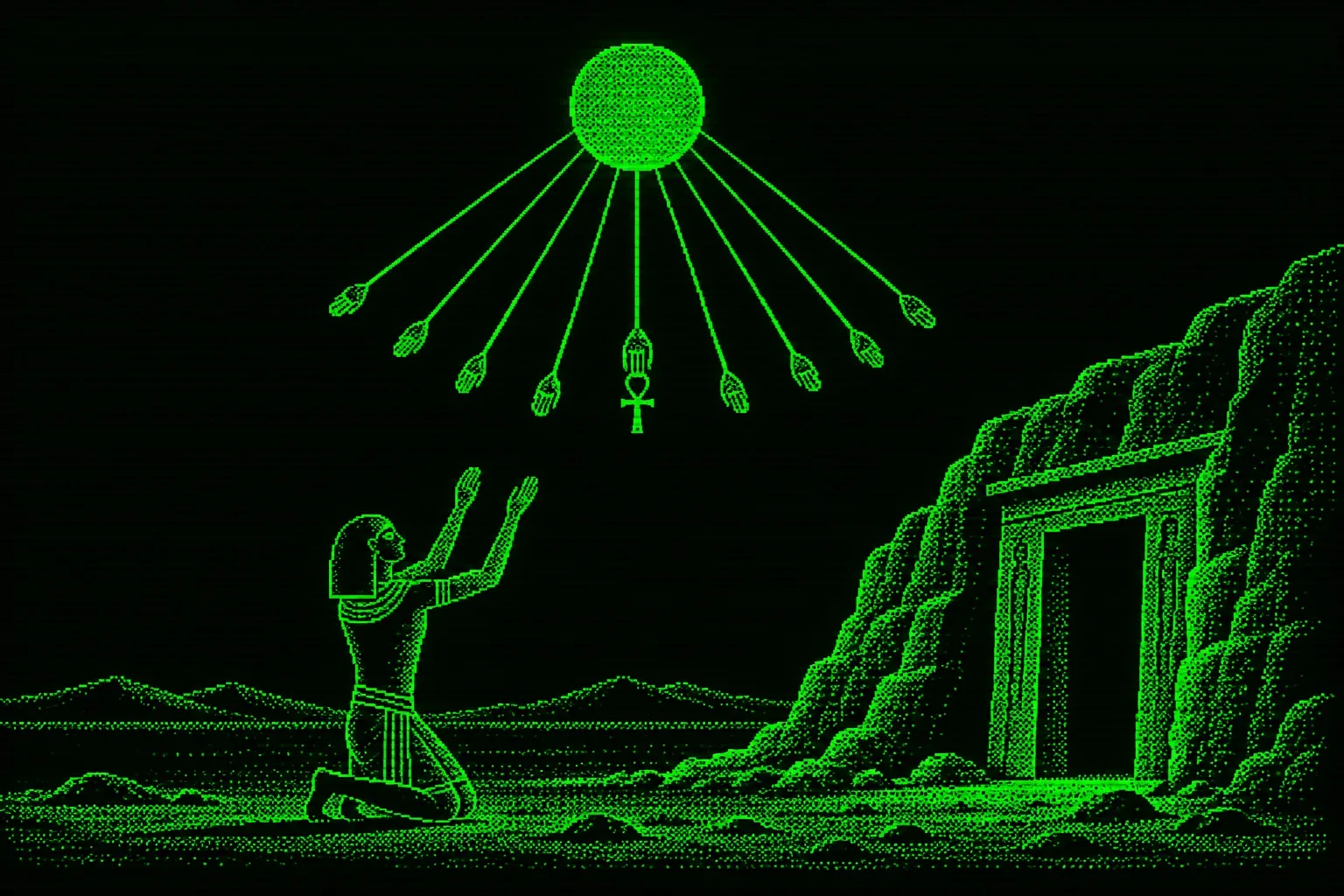
When you rise in the eastern horizon of the sky, their arms are raised in praise of your ka, and hearts live by it.
- 13
𓈖 𓂓𓏤 𓈖 𓇯𓏛𓍑𓅱𓏥𓈖𓈌𓇋𓏏𓈖𓇳 𓐝𓄑𓏛𓀽 𓇉𓐙𓊤
n kꜣ n ḥr,j-mḏꜣ,w-n-Ꜣḫ,t-Jtn Mḥ mꜣꜥ-ḫrw
For the ka of the Chief of Police of Akhetaten, Mahu, true of voice.