~/sacred-texts/royal-inscriptions-of-the-middle-kingdom
The Tod Inscription of Senusret I: Enemies Burned on the Brazier
- Date
- Carved in the reign of Senusret I, 12th Dynasty (about 1961–1917 BC), on the west outer wall of the temple of Montu at Tod
- Found
- Tod (ancient Djerty), south of Luxor, Upper Egypt; the wall still stands on the site
- Language
- Middle Egyptian · Hieroglyphic
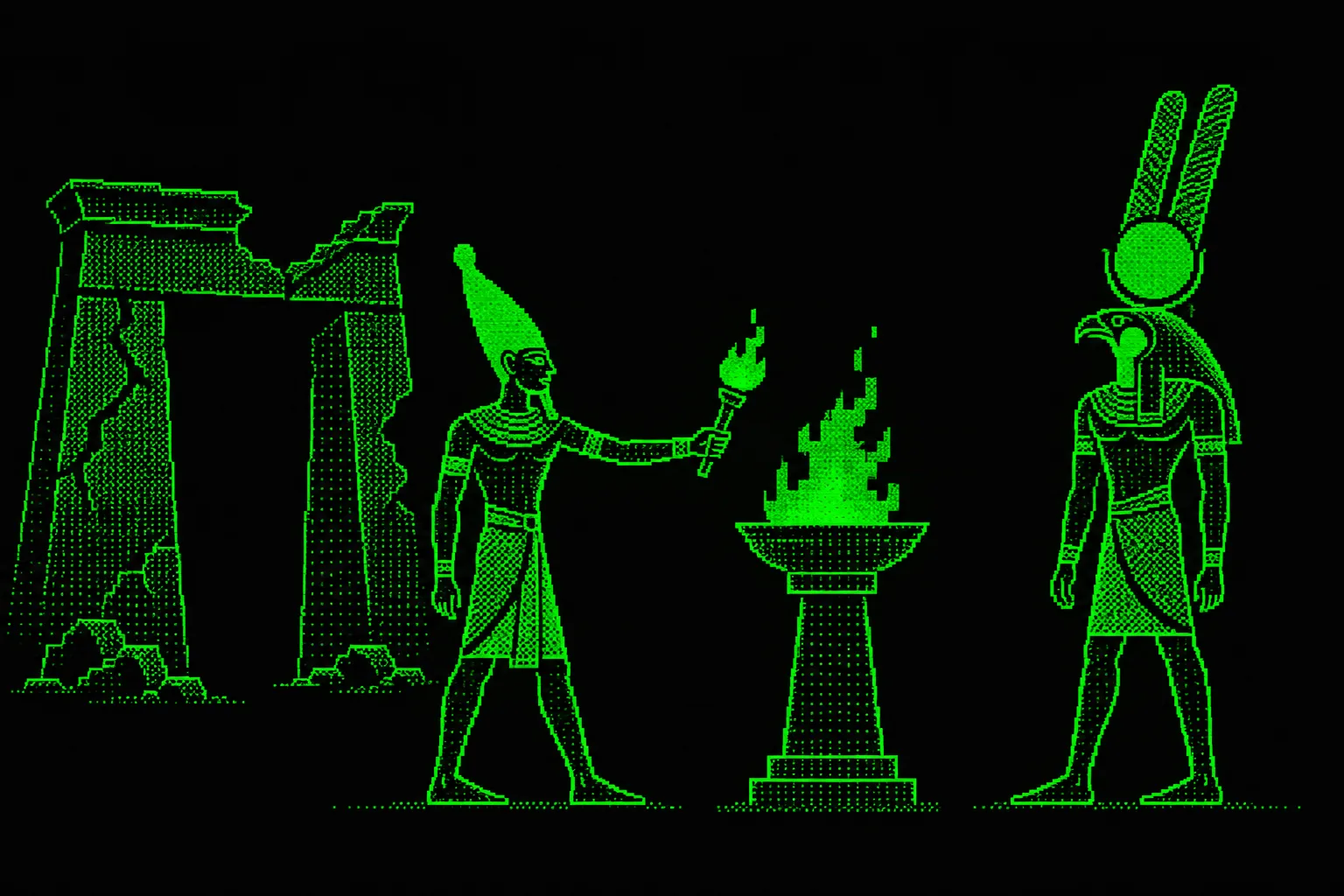
The opening is broken: a throne session, the king’s names proclaimed, the royal fleet in formation on the flood. Senusret I lands at Tod, burns incense and gives Montu offering stands of silver, gold and lapis lazuli. Then the king speaks himself. The temple is a ruin: Every one of its chambers was full of rubble. Priests, rogues and paupers had looted and burned it. I made prey of them. I did not lift my hand from man or woman.
The culprits go onto the brazier: It was a devouring fire, and in it they burned. Then: Her slaughter block was laden with the enemies’ children. The king rebuilds the temple in white Tura stone, its doors overlaid with gold.
- 1
[...] [⸮ḫpr?] [⸮ḥms,t?] ⸢m⸣ ꜥḥ =f n(,j) ꜥnḫ [(w)ḏꜣ] s(nb) ⸮sr? ⸮〈n〉ḫb,t? [...] jrr[⸮.t?] [...] n(,j).t [...]
… A throne session is held in his palace of life, prosperity and health; the royal titulary is proclaimed … which is made … of …
Note · Line 1
The titulary is the formal series of five names borne by an Egyptian king. - 2
[...] ⸮⸢w⸣hb? Tꜣ,wj.du [s-nb] [...] sm[⸮ꜣ?] [...] jwn,[tj.w.pl] [...]
… who pierces the Two Lands; everyone … who slaughters … the Iuntiu nomads …
Note · Line 2
The Two Lands are Upper and Lower Egypt. Iuntiu was an Egyptian name for nomads on Egypt’s desert frontiers. - 3
[...] ⸮n? sḫr =j m [...]
… concerning my plan in …
- 4
dr.n =(j) wn [...]
I drove out the one who was …
- 5
[...] r =sn [...] [ws]ḫ.tj [...]
… against them … while they are wide …
- 6
n [...] ⸮nni̯.y? [...] ⸮wꜣ[,t]? [...]
Not … weary … the road …
- 7
[...] zꜣ =sn [...] [j:ḫ]m.w ski̯ [...] psš,t.j n(,j.tj) [...] P Dp [...]
… their son … the stars that know no perishing … the two portions of … Pe and Dep …
Note · Line 7
These are the northern stars that never set below the horizon. Pe and Dep were the twin settlements of Buto in the Nile Delta. - 8
[...] ḫnt [...] ḥr mri̯.t wbn m sbꜣ wꜥ,tj ḫr =s[n] [...] ḥr wn(n) ẖr nw,t tꜣ pn
… before … loving him who rises among them as a lone star … full of care for this land.
- 9
šw,t nṯr [...]
The shadow of the god …
- 10
[...] n Km,t [...] r(m)[ṯ.pl] [...]
… for Egypt … people …
- 11
ẖ,t-nb ⸢nḏ⸣ =[sn] [ḥm] =[f]
The people, one and all, greet His Majesty.
- 12
ḥnmm,t [...]
The people of the sun …
- 13
[...] n,tj.t m [...]
… what is in …
- 14
[...] wn [...] ḫpr.w [...]
… to be … those that have come into being …
- 15
ꜥnḫ.w gr,t [...] r ḥḥ [...]
The living, moreover, … more than a million …
- 16
[...] j[t]n [...] __.n =f nb [...]
… the sun disk … all that he has …
- 17
[...] m-bꜣḥ ḥm =k [...]
… in the presence of Your Majesty …
- 18
[...] m-ḫt [...] [⸮m?]ri̯.t.n nṯr,pl ⸮jri̯? [...] __.w pri̯ m rʾ =k
… after … what the gods desired, they who made … the … that come from your mouth.
- 19
ḫnti̯ [...] mj rḏi̯.t =sn
Sailing upstream … as they give.
Note · Line 19
On the Nile, upstream is south. - 20
[...] pw mꜣꜥ
He is a true …
- 21
ḫru̯ =sn [ṯ]w
So they call you.
- 22
jqr nḏ jt =f
Worthy is he who guards his father.
Note · Line 22
The title recalls Horus, who defended his father Osiris. The living king was identified with Horus. - 23
⸢šdi̯⸣.n =sn ṯw jw =k m sḏ,t(j) [p]n ḥr [...]
They reared you when you were this foster child on …
- 24
[...] s[q]dw.t
… sailing.
- 25
[Ḥꜥp]y bꜥḥi̯ =[f]
Hapy overflows.
Note · Line 25
Hapy is the Nile’s annual flood personified as a god. - 26
s[k],tj.w ḥꜥw nswt m sbꜣ[,t]
The sekti boats and the royal fleet are in formation.
- 27
jtr[,w] [...]
The river …
- 28
jmꜣ jb =s [...] __j.t 6 =f rmni̯[.n] =[sn] [...]
Her heart is glad at … his six …; they carried …
- 29
[...] [ḫr] Pḏ,wt-9 n šꜥ,wt [...] [ḥꜣ,w]-nb,wt pri̯ [...]
… the Nine Bows fall to the slaughter … the Haunebut islanders who come forth …
Note · Line 29
The Nine Bows stand for the traditional enemies of Egypt. - 30
[...] [⸮wḏ?]b ḥr =k ⸮ꜣtf? [...] m [...]
… turning against you … in …
- 31
[...] ḥr [...] jb
… upon … heart
- 32
dwn [...]
It stretches out …
- 33
[...] [pḥ]rr nmt,t.pl [...]
… with running strides …
- 34
[...] [⸮ẖnm?] wr,tj-ḥkꜣ.w [...] nṯr,pl mj⸢,t⸣[jt] [...] pꜣw,t tp(,j).t Ḫpr,j [...] ꜥnḫ.w m __ =f twꜣ [...]
… who joins with the Two Great in Magic … the gods likewise … the first age, Khepri … the living in his …, who upholds …
Note · Line 34
The Two Great in Magic are the pair of rearing cobras that protect the king. Khepri is the rising sun, figured as a scarab. - 35
[...] jri̯.w n ⸮rḫ,yt? dmd n [...]
… made for the common people, joined together for …
- 36
nṯr,pl ḥꜥi̯[.w] n qmꜣ ḫpr jm
The gods rejoice at the form that came into being there.
- 37
stw,t.pl Šw [...]
The rays of Shu …
Note · Line 37
Shu is the god of the air between earth and sky. - 38
rn =f js ḫpr sp tp(,j)
It is his very name that came into being at the First Time.
Note · Line 38
The First Time is the moment of creation. The word for coming into being echoes the name Khepri. - 39
[...] =f ḫpr jm [...]
His … came into being there …
- 40
[...] ⸮rn.pl? n(,j.w) nswt[.y.pl] bj,tj[.w.pl] ꜣwi̯ ꜥ =f r [...] pn m s[ḫ]r.pl =f sj__ [...]
… the names of the kings of Upper Egypt and the kings of Lower Egypt, his arm outstretched toward this … in keeping with his plans …
- 41
[...] m wrr.w.pl kꜣ =f [...] [zẖꜣ,w].pl [ḫtm,w]-bj,tj [...] ḫnt =f [...]
… among the great ones of his ka … documents, the seal-bearer of the king of Lower Egypt … before him …
Note · Line 41
The ka is the vital power of a person or a god. - 42
ḏi̯.n =f [s]ḥꜣi̯ nꜣ [...]
He had those … uncovered.
- 43
[...] [⸮ꜣ?]ḫ.w.pl n-jb-n ḥtp ḥm =f jm sḥḏ =f tꜣ n-mrw[,t] [ḏꜣi̯] =[f] ḥr,t n jb =f ꜥq =f jri̯ =f sḫn
… the fields, so that His Majesty might be content there as he lit the earth, so that he might cross the sky as his heart desired, enter and take his rest.
- 44
gmm st ḥm =f n dwꜣ,w ꜥšm nṯr rs ḥr ẖr,t.pl =f [⸮twt.pl?] =f nb ꜥnḫ m ⸢snm,w⸣ =f
In the morning His Majesty found it so: the god’s image was awake for its daily service, each of his statues living on the food set before it.
Note · Line 44
The image was tended as the god’s living presence: each morning it was awakened, dressed and given food. - 45
⸢dr⸣ ⸢nšn(,j)⸣ [...] [m] ḥtp wsḥ n =f ḫbḫb,t.pl nswt-bj,tj zꜣ-Rꜥ Z-n-wsr,t [ḏi̯].w ꜥnḫ ḏd wꜣs ꜣw,t-jb nb ḏ,t
Fury was driven out … in peace. Cut short for him were the ravages of the King of Upper and Lower Egypt, Son of Ra, Senusret, granted all life, stability, dominion and joy of heart forever.
- 46
di̯-r-tꜣ ḥm =f r s,t 〈t〉n
His Majesty’s landing at this place;
Note · Line 46
The king is Senusret I. The temple he visits at Tod in Upper Egypt belongs to Montu, the local falcon god. - 47
ḫꜥi̯.t r ḥw,t-nṯr
coming forth in procession to the temple;
- 48
jri̯.t (j)ḫ,t
performing the rite;
- 49
snṯr ḥr sḏ,t
incense on the flame;
- 50
ḥtp m ẖnw
resting within;
- 51
mꜣꜥ wḏḥ,w.pl m ḥḏ nbw ḥmt ḥsmn bjꜣ,tj m ḫsbḏ mfkꜣ,t m ꜥꜣ,t.pl nb.t dmd.t nfr nfr ꜥšꜣ ꜥšꜣ r (j)ḫ,t-nb(.t) mꜣ m tꜣ pn ḏr-bꜣḥ m bꜣk,t ḫꜣs,tj.w.pl smn,tj.w.pl ḫns.w.pl tꜣ,pl ḫr ḥm =〈j〉 Ḥr
presenting offering stands of silver, gold, copper, amethyst and copper ore, of lapis lazuli and turquoise, of every kind of precious stone combined—far finer and far more numerous than anything seen before in this land as tribute from the people of foreign lands and the prospectors who range through the lands under My Majesty as Horus.
Note · Line 51
Here the king begins to speak in his own voice. The living king embodied Horus on earth. - 52
wn.k(j) r =j ḥr mꜣꜣ s,t tn rʾ-pr pn jw =f ḫft-ḥr ḫm n(,j) nṯr nb nṯr,pl wꜣi̯ r wnn m 〈m〉ṯwn,w m mw
Now I looked at this place, this temple facing the shrine of the god, lord of the gods. It had all but become a place for bulls to fight in the water.
- 53
ꜥ,t =f nb.t mḥ.t(j) m ḫmꜥ,w.pl qꜣw.pl n(,j).w tꜣ m jmn,tj.du =f m sẖn,w n(,j) jri̯.yt jm
Every one of its chambers was full of rubble. In its two hidden rooms lay mounds of earth, the wreckage of what had been built there.
- 54
ḏfi̯.y ḥbs.{j}n =f mr.pl =f ḏbꜣ.n =[f] mẖnm,t =f
What had settled there had covered its canals and choked its basin.
- 55
ḥw ḫpr r rʾ n(,j) mr =f pḥ.n jꜣ,t =f mꜣꜥ.w.pl =f
A marsh had formed at the mouth of its canal; its mound of rubble had reached its banks.
- 56
ḥw,t-[nṯr] tn rd.t(j) m šꜣb,t.pl s,t ḏsr.t n(n) rḫ bw rʾ-ssj
This temple was overgrown with shabet plants. There was no telling where the holy place was.
- 57
tp-šw pw mꜣꜣ.t =j jm =s
What I saw in it was ruin:
- 58
jnb =s nb m ns(r) n(,j) sḏ,t ḫt[m.pl] [sḏ] [jm]
every wall of it in flames, the seals there broken.
Note · Line 58
Clay seals secured doors and stores; a broken seal showed that someone had gained entry. - 59
wꜥb.pl =f j:ḫm.w.pl jꜣ(,w) bsk.w-jb.pl wꜣi̯.w.pl r jṯi̯.t nf n(,j) rs,t(j)[.pl] ḫti̯.pl tꜣ pn ršu̯.w.pl r ḥꜣꜥ,yt.pl šwꜣ,w.pl jpf jw,tj.w.pl wn n =sn wꜥ nb m jṯi̯ n =f ḏs =f wdi̯.w.pl sḏ,t wꜣi̯ r ḥw,t-nṯr snb.w.pl pr pn jri̯.n =(j) rsfy.pl jm =sn
Its wab-priests who knew nothing of praise, rogues bent on plunder, those foes who roamed this land and rejoiced in revolt, those paupers who had nothing, each a thief on his own account, who set fire right by the temple and brought this house down—I made prey of them.
Note · Line 59
Wab means “pure”: these priests had to be ritually clean to serve in the temple. The praise they neglected was part of that service. - 60
n fḫ =(j) ꜥ =(j) m ṯꜣ,y ḥr ḥm,t
I did not lift my hand from man or woman.
- 61
jn,t.pl m srḥ.pl ḏw.pl m pḥ,wt.pl ḫry.pl m ḫtj.w ḏi̯ m ꜥḫ
The valleys were streams,
the mountains marshes,
the enemies terraces as they lay on the brazier.Note · Line 61
The streams suggest blood; the bodies of the enemy rise in tiers. - 62
tkꜣ pw n(,j) jrr =sn stj.n =j sw r =s
It was a torch they made, once I had lit the brazier for that purpose.
Note · Line 62
The enemies themselves burn as a torch for the god. - 63
ḫ,t pw šdi̯.t n(,j.t) wbḏ.n =s[n] [j]m =s
It was a devouring fire, and in it they burned.
- 64
ḏi̯ m jb pw n(,j) nṯr jrr.y sḫr.pl
It was what had been set in the heart of the god who lays the plans.
- 65
[...] n =(j) pw ḫpr
What came to pass was … for me.
- 66
wḏ.n =f n =(j) jri̯ n pꜣu̯ =(j)
He had commanded me, “Act!” I had not acted.
- 67
pꜣu̯.n =(j) jri̯.t m mri̯.t.n =f
Before then I had acted as he wished.
- 68
wpi̯.n =(j) ꜥ.wj =j m nḏ ḥr jw =j m ḥw[n] sḏ,t[j] jt =f
I spread both arms in greeting when I was still a youth, a boy in his father’s care.
- 69
šꜣꜥ[.n] =(j) m dndn ḫr(w),y jsṯ sw ḥm Ḥr [...] [⸮d?]⸢šr⸣[.pl] =f n(,j) ẖ,t dšr ḥꜣ,tj m nḫn,t{t} =f
I began by cutting down the enemy when he, the Majesty of Horus, … the blood of his body, red-hearted in his youth.
Note · Line 69
The word for blood here means “the red”; a red heart is a heart in a rage. - 70
nm,t =[s] m ms,w.pl ḫr(w),y.pl jmny,t.pl m [ꜥꜣ]m.pl
Her slaughter block was laden with the enemies’ children;
Asiatics were the livestock for sacrifice.Note · Line 70
“Asiatics” here means people of western Asia. - 71
[...] jri̯ ꜥḏ,t n(,j).t tkk [...]
… who slaughtered the attackers …
- 72
[...] jṯi̯.w.pl m ḥwtf ḫr [...] n =s sḫm,w.pl =s r ⸮twt.pl? ⸮Wꜣḏ,t? [...] rḏi̯ sp pr,t
… those who took by force have fallen … for her, her images of power more than the statues of Wadjet … who gave what was left of the grain.
Note · Line 72
Wadjet is the cobra goddess of Lower Egypt. - 73
j⸢r⸣ ⸮__? [...]
As for those who …
- 74
[...] mꜣ ṯ(ꜣ)z.pl nn hꜣi̯.y ḥr =sn [...] ḥḏw,t =s rḏi̯ nš[⸮ni̯?] [...] n nḏ jt.pl =f ḫpr [⸮m-bꜣḥ?] [...]
… who sees the commanders whose faces will not fall … her light, who roused to fury … for the protector of his fathers, who lived before …
- 75
[...] __,tj.w n =sn wḥm.n =(j) msw,t m-mꜣwj [...]
… for them. I repeated the birth anew …
- 76
[...] [⸮nḥs,j?] ⸢⸮ꜥꜣm?⸣ ḥr wbḏ ꜥꜣ [...]
… the Nubian and the Asiatic burning here …
- 77
[...] m ḥr(,j).w [...] =f mrr [...]
… as chiefs … him, one who loves …
- 78
[...] ⸮ḫr.t? n ⸮Sṯ,t? [...]
… has fallen for Asia …
- 79
[nḥs],yt ꜥꜣm,t ḥr (ḏd)
The Nubian woman and the Asiatic woman say:
- 80
s,t n(,j).t nb [...]
“The wife of the lord of …”
- 81
[...] __.y ḥr jṯi̯.t nḥs(,y) mḏꜣ,y ḥr [s]hꜣ [...] [⸮Km?],t ⸮m-ꜥ? [...] ⸮__yḥꜣ? ḥr sksk tp ḏw wn [...]
… is plundering; the Nubian and the Medjay draw back … Egypt through … the nomad roams the mountain while he is …
Note · Line 81
The Medjay were a people of the desert east of the Nile in Nubia. - 82
n sḫm.n =f jm
He can gain no power there.
- 83
snḏ,w =j ḫr [...]
Dread of me has fallen …
- 84
[...] jwi̯ nṯr pn rḏi̯.n =f sḫꜣ =f wḏ [n] =[f] [n] [ḥn],t[j] ḫr ẖ,t tp(,j).t [...]
… this god comes, having made him recall the command given him for all time in the days of the first generation …
- 85
[...] nn ḏi̯.t tp ꜥnn =sn sr.n ḥm =f
… without yielding the head as they turned back, after His Majesty had proclaimed:
- 86
jri̯ [⸮ꜥꜣb,t?] [⸮ꜥꜣ.t?] m stp,t [...]
“Make a great offering of choice cuts of meat …”
- 87
[...] jm(,j).w.pl ⸢ẖr,t-nṯr⸣ smy,t tn nḏ〈,t〉 tn ḥr =s ẖr [...]
… those who dwell in the necropolis, this burial ground, and extend this protection over it under …
- 88
[jw] =⸢j⸣ r jri̯.t ḫft-ḥr wnn [...]
I shall act before the one who is …
- 89
[...] m rʾ ḥṯ,t
… at the mouth of the quarry.
- 90
ḏḏ mr,wt [...]
The bondservants give …
- 91
[...] wnn =j [...]
… I shall …
Note · Line 91
The king speaking here is Senusret I. The inscription comes from the temple of Montu at Tod. - 92
[...] wḏ.n =(j) ḥr-tp [...]
… I gave orders on behalf of …
- 93
[...] sp =j nn [...]
… my time, without …
- 94
[...] ꜥḥꜥ,w pr-ḥḏ [...] n mn sṯz.w.pl =f
… heaps, the treasury … for its foundations stand firm.
- 95
jri̯.n =j n =f ḫwsi̯ ḥw,t-nṯr [...] [ḫ]pr,pl ꜣḫ,tj zp-2 [...]
I built a temple for him … “Forms of the Horizon-Dweller” (twice) …
Note · Line 95
“Horizon-Dweller” is a divine title. - 96
[...] [m] [jnr] [ḥḏ] [nfr] [n(,j)] [ꜥ]nw ꜥꜣ.pl =s m [...] bꜣk m nbw [...]
… of fine white stone from Tura, its door leaves of … overlaid with gold …
Note · Line 96
Tura, near modern Cairo, was quarried for its fine white limestone. - 97
[...] j:ḫm.w [...] j:ḫm.w [...]
… those who do not know … those who do not know …
- 98
[...] [mr],yt ḥꜣ,t r mw [...] ꜥ.w.pl =f w__ [...] [mn],w n ⸮__? pn sn,t.pl =f [...]
… the quay facing the water … its edges … a monument for this … its flagstaffs …
- 99
[...] n =k [...] m wꜣ,t.pl [...]
… for you … on the roads …
- 100
[...] msi̯ =j nṯr,pl jri̯ =[j] [...] n ḥnmm,t [...]
… that I may fashion the gods, that I may make … for the sun folk …
Note · Line 100
The gods being fashioned are their cult images. “Sun folk” is a name for humankind. - 101
[...] __.n =(j) n =f p,t ⸮dꜣ[,t]? [...]
… I have … for him the sky and the underworld …
- 102
[...] jr,tj.du =f r nṯr nb
… his two eyes toward every god.
- 103
jnk [...] jri̯ =tn [...] n =ṯn [...]
I … that you may make … for yourselves …
- 104
[...] n swḏ [...]
… for the transfer of …
- 105
[...] sḫꜣ nfr m pr pn [...] r rwd [...]
… a good remembrance in this temple … to the stairway …
- 106
[...] ḥ(ꜣ)b.pl =f [...] ẖr,t-hrw n(,j).t rꜥ-nb
… his festivals … the daily provision for each day.
- 107
⸮swꜣḥ[.n]? =⸮[j]? [...] [Mn]ṯ,w nb [Ḏr,tj] [...] Dd,t [...]
I gave permanence to … Montu, lord of Tod … Dedet …
- 108
rn =ṯn rwḏ m-ꜥ =ṯn mj [...]
Your names endure with you like …
- 109
[...] __hb wḏ.t.n =(j) n =k [...]
… what I commanded you …
- 110
[...] =f jy mꜣ(wi̯) n ṯnw tr
… he has come, renewed at every season.
- 111
nn-n mw mḥḥ [...] pn bss [...] sḥḏ Tꜣ,wj [...] [n]n ḏr =f ḥr wꜣ[,t] nb[.t] [...]
These waters that spread … this one who wells up … who lights the Two Lands … no path sets a limit to him …
Note · Line 111
The waters are those of the Nile flood. - 112
[...] wꜣb =f ḫt-n-ꜥnḫ bsi̯ r tr.pl =f ḏḏ.t ⸢p,t⸣ ⸢qmꜣ⸣ [tꜣ] [...] jm =f n msḏn [...] ḫti̯ Šmꜥ,w r =ṯ[⸮n?] [...]
… his wab-plant, the tree of life, presented in his seasons, what the sky gives and the earth fashions … through him for the mesden … who crosses Upper Egypt to reach you …
Note · Line 112
“Tree of life” can also denote grain. What “mesden” names is unknown. - 113
[...] m dwꜣ Rꜥ [...]
… in worship of Ra …