~/sacred-texts/late-egyptian-stories
Thutmose III in Asia: Three Montus in a Gust of Wind
- Date
- Copied in hieratic on papyrus in the 20th Dynasty (about 1190–1070 BC); the story is set three centuries earlier, in the reign of Thutmose III (1479–1425 BC)
- Found
- Museo Egizio, Turin (Papyrus Cat. 1940+1941)
- Language
- Late Egyptian · Hieratic
A war story about Thutmose III in Syria, told in the first person and broken at both ends. The opening survives in scraps: seven days, hay for the chariot horses, the Apiru, a man caught like a bird in a fowler’s hand, its wings bound. Then Paser speaks to the king: Look, Amun-Ra, king of the gods, your perfect father, has come to you!
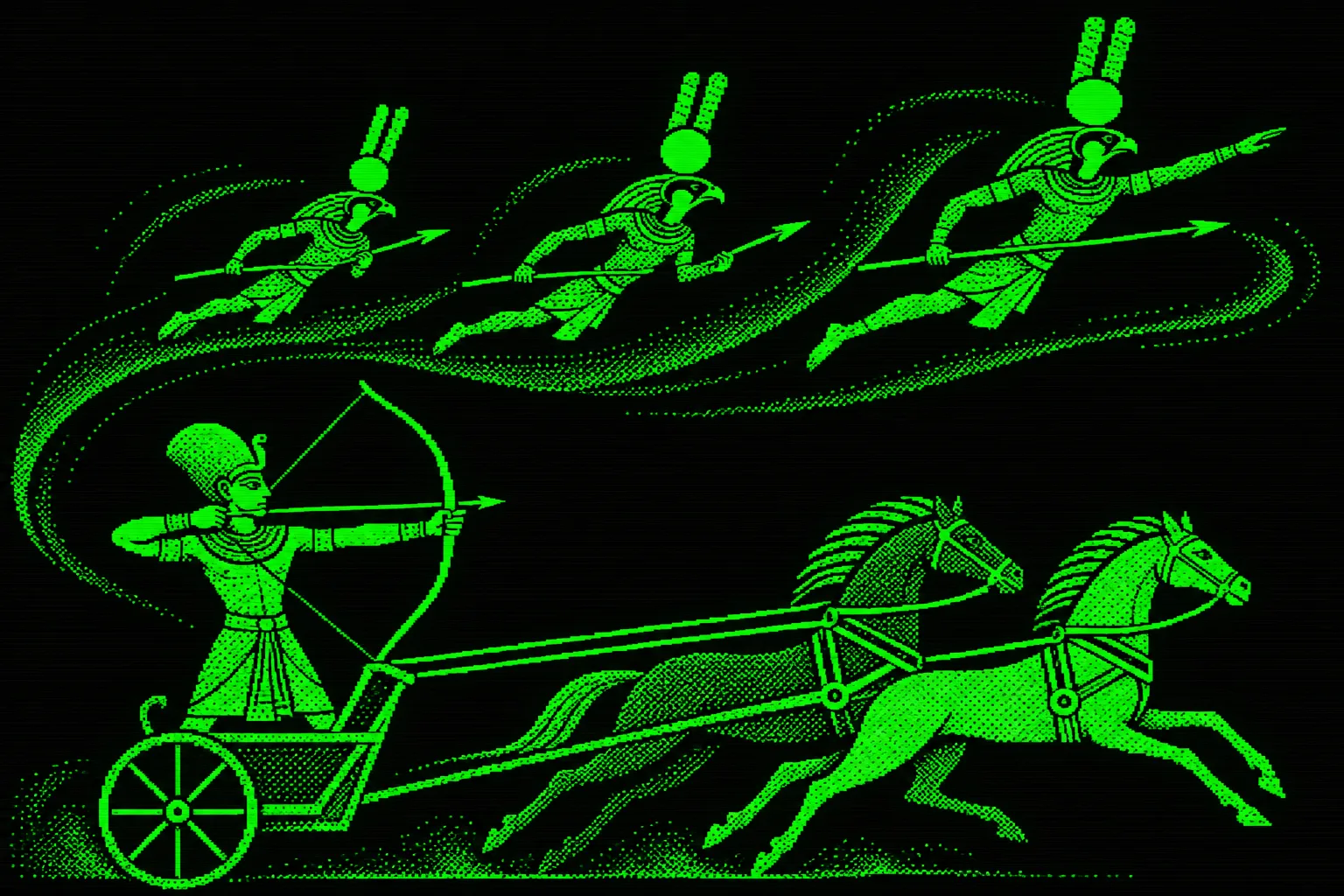
The king takes heart: My mind found a rampart. He says, I shot to the right and took plunder on the left, signals south to Amun and asks for a gust of contrary wind with three Montus in it. An enemy lies struck down along with their chariots, and the Syrian prince lies beaten. The last scraps count women and rebel lands.
- 1
… 𓇳𓏠𓈖𓆣𓅆 𓋹𓍑𓋴 …
[...] Mn-ḫpr-⸢Rꜥ⸣ ꜥnḫ-(w)ḏꜣ-s(nb) [...]
… Menkheperre—life, prosperity, and health!—…
Note · Line 1
Menkheperre was the throne name of Thutmose III. The words after the name are a customary wish for the king’s well-being. - 2
… 𓇳𓏠𓈖𓆣𓅆 𓋹𓍑𓋴 …
[...] Mn-ḫpr-⸢Rꜥ⸣ ꜥnḫ-(w)ḏꜣ-s(nb) [...]
… Menkheperre—life, prosperity, and health!—…
- 3
… 𓆰𓈖𓏌𓏲𓂾𓂻 𓈖𓏥 …
[...] ⸢ḥn⸣ =n [...]
… we hurried …
- 4
… 𓈖 𓅯𓄿𓇋𓇋 𓀀 …
[...] n pꜣy =⸢j⸣ [...]
… to my …
- 5
… 𓇋𓏲 𓂋𓏤 …
[...] _ jw rʾ [...]
… while the mouth …
- 6
𓇓𓏲 𓏇𓇋 𓇋𓐍𓏛
⸢sw⸣ mj jḫ
What is he like?
- 7
… 𓆑 𓅯𓄿 …
[...] [__] =f pꜣ[_] [...]
… his …
- 8
… 𓄭𓂋𓏲𓀁𓏫 …
[...] ⸢n,tj⸣ spr,w.pl j[:__] [...]
… petitions that …
- 9
… 𓉔𓂋𓏲𓇳 …
[...] 7 hrw [...]
… seven days …
- 10
… 𓋹𓍑𓋴 …
[...] Mn-ḫpr-[Rꜥ] ꜥnḫ-(w)ḏꜣ-s(nb) [...]
… Menkheperre—life, prosperity, and health!—…
- 11
… 𓏏𓄿𓇋𓇋 𓋴𓈖𓏥 …
[...] ⸢tꜣy⸣ =⸢sn⸣ [...]
… their …
- 12
… 𓏏𓈖𓏥 𓅯𓄿𓇋𓇋 𓀀 …
[...] ⸢ḥꜣ,tj⸣ =tn pꜣy =j [...]
… your hearts, my …
- 13
… 𓈖 𓀀
[...] ⸢jwi̯⸣ n =j
… came to me.
- 14
𓐍𓂋 𓄔𓅓𓏛 𓆑 𓅯𓄿 …
ḫr sḏm =f pꜣ [...]
Then he heard the …
- 15
… 𓅓 𓆓𓂧𓏏 𓏲𓏫 𓈖 𓀀
[...] ⸢m⸣ ḏd.t =w n =j
… as the words they spoke to me.
- 16
𓄤𓆑𓂋 …
nfr [...]
Beautiful is …
- 17
… 𓏲𓈙𓃀𓏏𓏴𓀁
[...] ⸢wšb.t⸣
… answered.
- 18
𓇋𓏲 𓀀 𓁷𓏤 …
jw =j ḥr _ [...]
Then I …
- 19
… 𓁷𓂋𓏤𓂋 𓆑
[...] ḥr-r =f
… on him.
- 20
𓂞 𓀀 𓁹𓇋𓇋 𓀀 …
⸢ḏi̯⸣ =j jry =j [...]
I will let myself do …
- 21
… 𓈖 𓂋𓏤 𓈖 𓅯𓄿𓇋𓇋 𓀀 𓎛𓏏𓂋 …
[...] [šw,w] n rʾ n pꜣy =j ḥtr [...]
… hay for the mouths of my chariot horses …
- 22
… 𓅷𓄿𓇋𓇋𓂷𓂡 𓈍𓂝𓏲𓆱𓏥
[...] ṯꜣy ḫꜥ,w
… took up arms.
- 23
[...] [Tꜣ-]ꜥꜣ,t-jꜣ
… Ta-aat-ya.
- 24
𓇋𓏲 𓀀 𓁷𓂋𓏤 …
jw =j ḥr _ [...]
Then I …
- 25
… 𓂝𓊪𓏲𓏭𓂋𓌙𓀀𓏥
[...] [__].pl ꜥ~pw~jrʾ
… and the Apiru.
Note · Line 25
Apiru was a name used in the ancient Near East for people living outside established communities. Some served as hired soldiers; others lived by raiding. - 26
𓐍𓂋𓇋𓂋 …
ḫr-jr [...]
And then …
- 27
… 𓎛𓏲𓏛𓀜 𓎢 𓅓 𓆼 𓈖 𓏭𓂋𓏤 …
[...] ḥwi̯ =k m 1⸮630? n ⸮jrʾ?[___] [...]
… you strike with 1,630 …
- 28
… 𓆣𓊪𓂋𓏲 𓅓 𓁷𓂋𓏤 𓀀
[...] [__]w kk⸢,wj⸣ ḫpr.w m ḥr =j
… darkness has come over my face.
- 29
𓏇𓇋 𓄿𓊪𓂧𓏲𓅯𓏥 𓂧𓈖𓎛𓏲𓆃 𓅓 𓂧𓏏𓏤 𓊠𓂝𓏲𓏛𓀜
gm[i̯] =[j] [sw] [m]j ꜣpd{w.pl} [d]nḥ.w m ḏr,t wḥꜥ
I found him like a bird in a fowler’s hand, its wings bound.
- 30
𓂋𓐍𓏛 𓆑 𓊃𓈙𓏏𓍔𓄿𓏲𓏴𓏛𓏫𓏏𓏲 𓆑 … 𓊃𓈙𓏏𓍔𓄿𓏲𓏴𓏛𓏫𓏏𓏲 𓆑
[b]w rḫ =f ⸢sš⸣tꜣ.ṱ =f [...] sš{tꜣ.ṱ} =f
He cannot hide himself … spread his wings.
- 31
𓐍𓂋𓇋𓂋 𓁷𓏤𓐠𓏤 𓇋𓄿𓂧𓏏𓏯𓇳𓏪 𓉻𓏏𓏛𓇋𓇋𓏲𓏛𓏥 𓇋𓏲 𓅯𓄿𓀙𓏲𓀀 𓅯𓄿 𓏏𓄿𓉻𓏏𓏛𓇋𓄿𓁐 𓁷𓏤 𓏲𓈙𓃀𓏏𓏴𓀁
ḫr-jr ⸢ḥr⸣-sꜣ jꜣd,t ꜥꜣ.ywt jw Pꜣ-sr,w pꜣ(-n) Tꜣ-ꜥꜣ,t-jꜣ ḥr wšb.t
Then, after a long while, Paser son of Ta-aat-ia answered:
- 32
𓆓𓂧𓈖 𓀀
j⸢mm⸣ ḏd{.n} =j
“Let me say this:
- 33
𓇋𓐍𓏛 𓋴𓏠𓈖𓍖𓏛 𓎢 𓄣𓏤 𓎢 𓇓𓏤𓅆 𓇳𓏠𓈖𓆣𓅆 𓋹𓍑𓋴
jḫ smn =k jb =k nsw ⸢Mn⸣-ḫpr-Rꜥ ꜥnḫ-(w)ḏꜣ-s(nb)
‘May you steady your heart, King Menkheperre—life, prosperity, and health!
Note · Line 33
The words after his name are a customary blessing for the king. - 34
𓅓𓂝 𓎢𓏭𓏛 𓇋𓏠𓈖𓅆𓇳𓅆 𓇓𓏤𓅆𓊹𓅆𓏫 𓅯𓄿𓇋𓇋 𓎢 𓇋𓏏𓆑𓅆 𓄤𓏤𓅆 𓂻𓏲𓂻 𓈖 𓎢
m =kj Jmn-Rꜥ nsw-nṯr,pl pꜣy =k jt nfr jwi̯ n =k
Look, Amun-Ra, king of the gods, your perfect father, has come to you!
- 35
𓁹𓇋𓇋 𓆑 𓈖 𓎢 𓐍𓂋𓏏𓏛𓏫 𓎟 𓈖𓏏𓏭 𓅓 𓄣𓏤 𓎢
jry =f ((n)) =((k)) ḫr,t nb(.t) ⸢n,tj⸣ m jb =k
He will do for you all that is in your heart.’”
- 36
𓅠𓅓𓏛 𓄣𓏤 𓀀 𓅱𓂸𓏏𓏯𓊅𓈇𓏤
gmi̯ jb =j wmt
My mind found a rampart;
Note · Line 36
The king now takes up the story in his own voice. Paser’s words have given him a wall to stand behind. - 37
𓄂𓏏𓏭𓄣𓏤 𓀀 𓅓 𓂋𓈙𓏲𓏏𓂉𓏛𓏥
ḥꜣ,tj =j m rš,⸢w⸣t
my heart was full of joy.
- 38
𓎟 𓆣𓂋𓏲 𓏇𓇋 𓏠𓈖𓍘𓏲𓅆 𓇋𓏲 𓈖𓄿𓇋𓇋 𓆣𓂋 𓅓 𓇓𓏲𓏏𓐍𓁣𓅆 𓉻𓏛𓄖𓏲𓏭𓏯𓏯𓀜 𓃀𓂝𓏭𓂋𓏤𓁣𓀜 𓅓 𓃹𓈖𓏌𓏏𓇼𓇳𓏤𓏏𓏲
⸢pꜣ⸣ [j]:jri̯{.t} =(j) ⸢nb⸣ (ḥr) ḫpr 〈jw〉 =〈j〉 mj Mntj,w jw nꜣy =sn [ḥtr]j ⸢ḫpr⸣ ⸢m⸣ Swtḫ ꜥꜣ-pḥ,tj Bꜥ~jrʾ m wnw,t.ṱ =f
Everything I undertook succeeded. I was like Montu, and their chariot teams had become Seth, great in strength, and Baal in his hour.
Note · Line 38
Montu was an Egyptian war god. Seth and the Syrian storm god Baal were both famed for their fury in battle. - 39
𓁷𓏤 𓄝𓏏𓏭𓅂𓏴𓀜 𓁷𓏤 𓁷𓏤 𓁷𓏤
[jw] =[⸮j?] ḥr stjw ḥr ⸢wnm,j⸣ ⸢ḥr⸣ kf{ꜣ}〈ꜥ〉w [ḥr] smḥ,[j]
I shot to the right and took plunder on the left.
- 40
𓀀 𓁷𓏤 𓁹𓂋𓏏 𓅓 𓂧𓏏𓏤𓄹 𓀀 𓂋 𓇔𓏭𓈇𓏤 𓈖 𓇋𓏠𓈖𓅆𓇳𓅆
[j]w =j ḥr jri̯.t m ḏr,t =j r rs,j n Jmn-Rꜥ nsw-nṯr,pl
I motioned southward with my hand to Amun-Ra, king of the gods:
- 41
… 𓂞 𓎢 𓂻𓏲𓂻 𓈖 𓀀 𓌡𓂝𓏤𓈖 𓋴𓃀𓇋𓏲𓊡𓏲𓏫 𓈖 𓇋𓏲 𓇋𓅓 𓋴𓏏 𓇋𓏲 𓋴𓈖𓏥 𓈙𓏏𓍔𓄿𓏲𓏴𓏛 … 𓋞 𓇋𓏲 𓏠𓈖𓍘 𓎟𓉺𓏌𓊖𓅆 𓋀𓏹𓏹𓏭𓂢 𓇋𓏲 𓏠𓈖𓍘𓏲𓅆 𓎟𓇥𓂋𓏏𓏭𓊖 𓁷𓏤 𓅯𓄿𓇋𓇋 𓀀 𓎟𓌀𓏏𓊖𓅆 𓁷𓏤 𓋴𓈖𓏥 𓂋𓄂𓏏𓏤 𓇓𓏤𓅆 𓇳𓏠𓈖𓆣𓅆 𓋹𓍑𓋴
[...] ⸢ḏi̯⸣ =⸢k⸣ jwi̯ n =j wꜥ-n sbj,⸢w⸣(t) n ṯꜣw ⸢jw⸣ 3 Mn[tj,w].y.pl jm =st jw =⸢sn⸣ štꜣ.w [...] nbw jw Mntj nb-Jwn,w 〈ḥr〉 pꜣy =[j] [gꜣb]{,t} wnm,j jw Mntj,w nb-Ḏr,tj ḥr pꜣy =j g[ꜣb] [smḥ,j] [jw] [Mntj,w] ⸢nb⸣-Wꜣs,t ḥr sksky =sn r-ḥꜣ[,t] nsw Mn-ḫpr-Rꜥ ꜥnḫ-(w)ḏꜣ-s(nb)
“… May you send me a gust of contrary wind with three Montus in it, hidden … gold. May Montu, lord of Armant, be on my right arm and Montu, lord of Tod, on my left arm, while Montu, lord of Thebes, hews them down before King Menkheperre—life, prosperity, and health!”
Note · Line 41
The three Montus are local forms of the same god, each named for a city where he was worshipped. - 42
𓅠𓅓 𓁹𓇋𓇋𓏲 𓇋𓏠𓈖 … 𓈖 𓌳𓄿𓇋𓏲𓄛𓏫 𓉻𓏛 … 𓇋𓏲 𓆑 𓎼𓄿𓃀𓏲𓎼𓄿𓃀𓏲𓇋𓇋𓅪 𓎛𓈖𓂝𓄿 𓈖𓄿𓇋𓇋 𓋴𓈖𓏥 …
gmi̯ =〈j〉 jry.w J⸢mn⸣[-Rꜥ] [⸮nsw-nṯr,pl?] [...] [__],t n mꜣj.w.pl ꜥꜣ [...] hꜣ[_] [...] jw =f gꜣ~bw~gꜣ~bw~.y ḥnꜥ nꜣy =sn mꜥ~jrʾ~kꜣ~bw~⸢tj⸣[.pl] [...]
I found that Amun-Ra, king of the gods, had acted … of the great lions … He lay struck down along with their chariots …
- 43
… 𓋹𓍑𓋴 𓁷𓏤 𓋴𓐍𓂋𓏲𓏱𓂡 𓈖 𓏏𓄿 𓉻𓂸𓏏𓏯𓄛𓏫 𓈖 𓅯𓄿 𓀗𓏲𓀀 𓈖 𓆼𓄿𓃭𓏤𓌙𓈉 𓇋𓏲 𓆑 𓎛𓀝𓀜 …
[...] ⸢Mn⸣-ḫpr-[Rꜥ] ꜥnḫ-(w)ḏꜣ-s(nb) ḥr sḫr ⸢pꜣ⸣ _ n tꜣ ꜥꜣ,t{.pl} n pꜣ wr n Ḫꜣrw jw =f ḥwi̯ [...]
… Menkheperre—life, prosperity, and health!—struck down the … of the Syrian prince’s she-ass. He lay beaten …
- 44
… 𓂝𓏤𓈖𓎛𓏏𓂋𓇋𓆵𓏏𓏛𓏫
[...] ꜥ-n-ḥtrj,t
… a team of horses.
- 45
p[__] [...]
[gap in the text]
- 46
… 𓉻𓏛 𓈖 …
[...] [__] ꜥꜣ n Ḫꜣ⸢rw⸣ [...]
… the great … of Syria …
- 47
… 𓀎𓀁𓏫
[...] mšꜥ,w
… the army.
- 48
𓇋𓏲 𓏲 …
jw =w [...]
Then they …
- 49
… 𓇓𓏤𓅆 … 𓀎𓀁𓏫 …
[...] nsw [Mn-ḫpr-Rꜥ] [...] [__] mšꜥ,w [...]
… King Menkheperre … the army …
- 50
… 𓈞𓏏𓁐𓏫 … 𓏛 𓈉𓏥 …
[...] ḥm,t.pl j[__] [...] dmḏ ḫꜣs,t.pl ⸮bš[ṯ]? [...]
… women … Total of foreign lands in revolt: …
- 51
… 𓇋𓀁𓁹𓂋𓏲𓈖 𓀀 … 𓇋𓀁𓁹𓂋𓏲 𓈖 𓀀 …
[ptr]j [...] j:jri̯.n =j [...] j:jri̯.w n =j [...]
Look! … what I did … what was done for me …
- 52
… 𓇋𓏠𓈖𓅆 … 𓇋𓀁𓂞 𓎢 …
[...] Jmn ⸢pꜣ⸣ [...] [__]w j:⸢ḏi̯⸣ =k [...]
… Amun, the … that you gave …
- 53
… 𓁹 … 𓇓𓅆𓊹𓅆𓏫 𓅯𓄿 𓅷𓏏𓏤𓅆 𓄋𓊪𓏲 …
[...] ⸮jri̯? [...] [Jmn]-Rꜥ nsw-nṯr,pl pꜣ ṯꜣ,tj wp[i̯] [...]
… make … Amun-Ra, king of the gods, the vizier who judges …
Note · Line 53
The vizier was the king’s highest official and heard cases as a judge. Here the title belongs to the god. - 54
[...] [Jmn-Rꜥ] [nsw]-nṯr,pl
… Amun-Ra, king of the gods:
- 55
𓇋𓅓𓅓𓂝 …
jmm [...]
“Give …!”
- 56
… 𓇳𓇓𓏤𓅆 …
[...] [__] nsw Mn-[ḫpr]-Rꜥ [...]
… King Menkheperre …
- 57
… 𓈖 𓂝𓂋𓈎𓏲𓍼 𓎢 …
[...] ⸮[hrw]? n ꜥrq =k [...]
… the day of your oath …
- 58
… 𓀀 𓊢𓂝𓏲𓇳𓏤 𓇋𓏲 …
[...] [pꜣj]j =j ꜥḥꜥ,w jw [...]
… my lifetime, while …
- 59
… 𓉐𓂋𓇋𓇋𓂻 …
[...] [__] pri̯.y [...]
… has gone out …
- 60
𓇋𓏲 𓁐 𓆓𓂧
jw =j (ḥr) ⸢ḏd⸣
I said:
Note · Line 60
Here the scribe writes “I” with the sign of a seated woman. No name survives to identify her. - 61
[...] ⸢⸮ꜥḥꜥ,w?⸣ [...]
… lifetime …
- 62
… 𓇓𓏤𓅆 …
[...] ⸢nsw⸣ Mn-ḫpr-Rꜥ [...]
… King Menkheperre …
- 63
… 𓅓𓏇𓏏𓏏𓏛𓏥 …
[...] m-mj,tt pꜣ [...]
… likewise the …