~/sacred-texts/papyrus-chester-beatty-ii-british-museum-ea-10682
The Tale of Truth and Falsehood: Who Was It That Blinded You?
- Date
- Copied in the 19th Dynasty (c. 1292–1189 BC) in hieratic on Papyrus Chester Beatty II at Thebes
- Found
- Found in 1928 at Deir el-Medina, Thebes, among the Chester Beatty papyri; now in the British Museum, London (EA 10682)
- Language
- Late Egyptian · Hieratic
Falsehood accuses his elder brother Truth of losing a knife of impossible size, and the Ennead, nine gods sitting as judges, grants his demand: “Have Truth brought in, blinded in both eyes, and made doorkeeper of my house.” Later he orders Truth thrown to lions. The servants report him eaten, but a woman finds him at the foot of a hill, and That night she conceived a little boy.
Mocked at school as fatherless, the boy learns that the blind doorkeeper is his father. He traps Falsehood with a bull as impossible as the knife, then tells the gods: “Judge between Truth and Falsehood!” Truth is found alive, and Falsehood takes his own sentence: They blinded him in both eyes and made him doorkeeper in Truth’s house.
- 1
[...] ⸢ḥr⸣ šmi̯[.t] [...] [tꜣ] [psd(,t)]
… went … the Ennead.
Note · Line 1
The Ennead is a company of nine gods, sitting here in judgment. - 2
… 𓈖 𓏏𓄿 𓐍𓂋𓏲𓉐 𓅯𓄿 𓊹𓏤 𓇋𓅓 𓆑 𓇋𓏲 𓂓𓏤𓏭𓂋𓏤𓐎𓊌 𓇋𓅓 𓆑 𓇋𓋴𓏏𓈖𓏌𓏲𓄛𓏤
[...] [jw] [pꜣ] [ḏww] n J:[jrʾ] [jm] =[f] [m] [ḥmt] [jw] [nꜣ] _ [(n)] [Gbtjw] [jm] =[f] [m] [šꜣ~tj] [jw] tꜣ ḫrw(,t) (n) pꜣ nṯr ⸢jm⸣ =f 〈m〉 mꜣy[,t] jw [nꜣ] [mnmn,t] [n] ⸢Kꜣ⸣~jrʾ jm =f 〈m〉 jstn,w
“… with the mountain of Yal for the copper of its blade, the … trees of Coptos for its hilt, the god’s tomb for its sheath, and the herds of Kar for its belt.”
Note · Line 2
Falsehood is describing the knife he accuses Truth of losing. In his telling, even the leather for its belt takes whole herds. - 3
𓃹𓈖𓇋𓈖 𓎼𓂋𓍅𓏛𓅪𓀀 𓁷𓏤 𓆓𓂧 𓈖 𓏏𓄿 𓇴𓂧𓊹𓅆𓏫
wn.jn Grg(,j) ḥr ḏd n tꜣ psd(,t)
Then Falsehood said to the Ennead:
- 4
𓇋𓅓𓅓𓂝 𓎢𓄿𓏠𓈖𓁻 𓆑 𓏏𓄿𓇋𓇋 𓆑 𓁹𓏏𓏤𓄹 𓅓𓏏𓏲 𓏏𓏲 𓂞𓏏𓏲 𓆑 𓂋 𓇋𓂋𓏭𓀹𓉿𓂡𓀀 𓈖 𓅯𓄿𓇋𓇋 𓉐𓏤
jmm [jni̯] =[tw] [Mꜣꜥ,t](j) m[tw] =[tw] kꜣmn =f 〈m〉 tꜣy =f jr,t 2 mtw =tw ḏi̯.ṱ =f r jr,j-ꜥꜣ n pꜣy =[j] pr
“Have Truth brought in, blinded in both eyes, and made doorkeeper of my house.”
- 5
𓇷𓂧𓊹𓅆𓏫 𓁹𓂋𓏏 𓏇𓇋 𓇋𓀁𓆓𓂧 𓆑
wn[.jn] [tꜣ] psd(,t) [ḥr] jri̯.t mj j:ḏd =⸢f⸣ ⸢nb{.t}⸣
The Ennead did everything he had said.
- 6
𓐍𓂋𓇋𓂋𓅓𓆱𓐍𓏏𓂻 𓉔𓂋𓏲𓇳𓏤𓏫 𓈎𓈖𓏌𓏲𓏴𓏛𓏫 𓁷𓏤𓐠𓏤 𓇑𓇑𓈖𓈖 𓃹𓈖𓇋𓈖 𓎼𓂋𓍅𓏛𓅪𓀀 𓁷𓏤 𓆑𓄿𓀋𓀜 𓁹𓏏𓏤𓄹 𓆑 𓂋
ḫr-jr-m-ḫt hrw.pl qn,w ⸢ḥr-sꜣ⸣ ⸢nn⸣ wn.jn Grg(,j) ḥr ⸢fꜣi̯⸣ jr,t(.du) =f r nw(ꜣ)
Many days later Falsehood raised his eyes to look around
- 7
𓇋𓏲 𓆑 𓃀𓇋𓏏𓄑 𓌷𓂝𓏏𓆄𓏛𓀀 𓅯𓄿𓇋𓇋 𓆑 𓌢𓈖𓀀 𓉻𓏛
jw =f (ḥr) ptr[j] bj(ꜣ),t (n) Mꜣꜥ,t(j) pꜣy =f sn ꜥꜣ
and saw what kind of man his elder brother Truth was.
- 8
𓃹𓈖𓇋𓈖 𓎼𓂋𓍅𓏛𓅪𓀀 𓁷𓏤 𓆓𓂧 𓈖 𓍛𓏤𓀀 𓈖 𓌷𓂝𓏏𓆄𓏛𓀀
wn.jn Grg(,j) ḥr ḏd n ḥm 2 n Mꜣꜥ,t(j)
Then Falsehood said to two of Truth’s servants:
- 9
𓇋𓐍𓏛 𓅯𓄿𓇋𓇋 𓏏𓈖𓏥 𓎟 𓅓𓏏𓏲 𓏏𓈖𓏥 𓆑 𓌡𓂝𓏤 𓌳𓄿𓇋𓏲𓄛𓏤 𓃀𓇋𓈖𓅪 𓂋𓃀𓏲𓇋𓇋𓄛𓏤𓏫 𓆈𓏏𓏥 … 𓆑 𓅓𓏏𓏲 𓏫
jḫ jṯꜣ[y] =[tn] pꜣy =tn nb mtw =tn [ḫꜣꜥ] =f [n] wꜥ mꜣj,w bjn rby.pl ꜥšꜣ.t.pl [...] _ =f mtw =⸮w? ⸮[wnm]? =⸮[f]?
“Take your master away and throw him to a savage lion and a host of lionesses … Let them devour him!”
- 10
𓁷𓏤 𓇋𓅷𓄿𓇋𓇋𓂷𓂡 𓆑
[⸮wn.jn?] =[⸮sn?] ḥr jṯꜣy =f
So they took him away.
- 11
𓐍𓂋𓇋𓂋 𓋴𓏏𓏥 𓅓 𓍿𓊃𓇋𓇋𓍞𓏭𓂻 𓌨𓂋𓏭𓏛𓂋 𓆑 𓇋𓏲 𓌷𓂝𓏏𓆄𓏛𓀀
ḫr-jr st m ⸢ṯs⸣y ẖrj-r =f jw Mꜣꜥ,t(j) [ḥr] [ḏd] [n] [nꜣy] =[f] [ḥm].y.pl
But as they climbed with him, Truth said to his servants:
- 12
𓅓𓁹 … 𓂞𓏏 𓎢𓇋𓇋𓀀 …
m-jri̯ jṯꜣy =[j] [...] ḏi̯.t ⸮[k]y? [...] _
“Don’t take me away! … give someone else …
- 13
𓅠𓅓𓏛 𓈖 𓀀 𓈖𓎢𓏏𓏴𓏛 …
gmi̯ n =j nkt ꜥq[,w] [...]
Find me some bread …”
- 14
𓈝𓅓𓏏𓂻 𓆓𓂧 𓈖 𓆑 𓎼𓂋𓍅𓏛𓅪𓀀
[⸮wn.jn?] =[⸮w?] [ḥr] šmi̯.t 〈⸮r?〉 ḏd n ={f} Grg(,j)
Then they went to tell Falsehood:
- 15
𓇋𓂋 𓅓𓇥𓂋 … 𓉐𓂋𓂻 𓅓 𓅯𓄿
⸢j⸣r m-ḏr ⸢ḫ⸣ꜣꜥ =[n] [...] =[f] [ḥr] pri̯ m pꜣ [pr]
“When we threw …, the lion came out of its den
- 16
𓇋𓏲 𓆑 𓁷𓏤 𓈙𓂝𓄑𓀁 𓆑 𓅓 𓏏𓄿 …
jw =⸢f⸣ ⸢ḥr⸣ ⸮〈w〉šꜥ? =f m tꜣ _ [...]
and devoured him on the spot …”
Note · Line 16
The servants are telling Falsehood what he wants to hear. Truth is still alive. - 17
𓁷𓏤𓐠𓏤 𓇑𓇑𓈖𓈖 𓁷𓏤 … 𓋴𓏏 𓉐𓏤
[ḫ]r-[jr-m-ḫt] [hrw.pl] [qn,w] ḥr-sꜣ nn wn[.jn] -PN- ḥr {r}pri̯ [...] [m] [pꜣy] =st pr
Many days later a woman came out … from her house.
- 18
[...] ⸮wnḫ? [...]
… clothed …
- 19
… 𓆑 𓇋𓏲 𓆑 …
[...] ⸢ptrj⸣ =f jw =f [sḏr] [ẖr,j] [tꜣ] [bwꜣ],t jw [⸮nfr?] [...]
… she saw him lying at the foot of the hill. He was handsome …
- 20
𓂋𓇥𓂋 𓆑
⸢nn-wn⸣ [mj-]qd =[f] [m] [pꜣ] [tꜣ] r-ḏr =f
There was no one like him in all the land.
- 21
𓁷𓏤 𓇋𓅓
wn.j[n] =[tw] ḥr šmi̯[.t] [r] [pꜣ] [n,tj] -PN- jm ḥr [ḏd]
Then they went to where the woman was and said:
- 22
𓈖𓏥
[mꜥ~]j ⸢j~jrʾ~mꜥ⸣ =n
“Come with us.
- 23
… 𓆼𓄿𓂝𓂻 𓏏𓄿 𓃀𓏲𓍯𓄿𓏏𓈇𓏤 𓅓𓏏𓏲 𓏎𓈖𓏏𓏲 𓆑 𓁷𓏤 𓂞𓏏𓏲 𓆑 𓂋 𓇋𓂋𓏭𓀹𓉿𓂡𓀀 𓈖 𓅯𓄿𓇋𓇋 𓈖𓈖𓏥 𓉐𓏤
p[trj] =[⸮t?] [...] ḫꜣꜥ ẖr[,j] tꜣ ⸢b⸣wꜣ,t mt⸢w⸣ =⸢tw⸣ jni̯.ṱ =f ḥr ḏi̯.ṱ =f r jr,j-ꜥꜣ n pꜣy =nn pr
You should see … left at the foot of the hill. Let him be brought here and made doorkeeper of our house.”
- 24
𓁷𓏤 𓆓𓂧 𓊃𓋴𓏏
[wn.jn] -PN- ḥr ḏd 〈n〉 =sst
The woman said to her:
- 25
𓎛𓈖𓏌𓏲𓂾𓂻 𓁐 𓂋 𓆑 𓊪𓏏𓂋𓇋𓆵𓁻 𓀀 𓇓𓏲
ḥnw =t ⸢r⸣ =⸢f⸣ ptrj =j sw
“Hurry to him so I can see him.”
- 26
𓇋𓏲 𓋴𓏏 𓁷𓏤 𓈝𓅓𓏏𓂻
jw =st ḥr šmi̯.t
So she went
- 27
𓇋𓏲 𓋴𓏏 𓏎𓈖𓏏𓏲 𓆑
jw =st (ḥr) jni̯.ṱ =f
and brought him back.
- 28
𓁷𓏤 𓊪𓏏𓂋𓇋𓆵𓁻 𓆑
[⸮wn.jn?] -PN- ḥr ptrj =[f]
Then the woman looked at him.
- 29
𓇋𓏲 𓁷𓏤 𓋁𓃀𓏲𓇋𓇋𓀁𓏏𓏲 𓆑 𓂋𓇋𓈎𓂋𓏛 𓊗 𓇥𓂋 𓊪𓏏𓂋𓇋𓆵𓁻 𓊃 𓇋𓏲 𓆑 𓅓 𓆑 𓎟𓏏
jw =[s]t ḥr ꜣbwy.ṱ =f r-jqr zp-2 〈m-〉ḏr [p]trj =s jw =f _ ⸢m⸣ 〈ḥ〉[ꜥ],t =f ⸢nb.t⸣
She wanted him desperately when she saw how handsome he was from head to foot.
- 30
𓇋𓏲 𓆑 𓁷𓏤 𓇋𓀁𓏭𓂋𓏤𓅓𓂝 𓋴𓏏 𓅓 𓅯𓄿 𓎼𓂋𓎛𓏏𓇳𓏤
jw =f ḥr [s]ḏr j:jrʾ~mꜥ =st m pꜣ grḥ{,t}
That night he slept with her.
- 31
𓇋𓏲 𓆑 𓂋𓐍𓏛𓂺𓏛 𓋴𓏏 𓅓 𓂋𓐍𓏛𓂺𓏛 𓈖
jw =f (ḥr) rḫ =st m rḫ n ⸢ꜥḥꜣ,wtj⸣
He knew her as a man knows a woman.
Note · Line 31
The man is Truth, whom his younger brother Falsehood had blinded. To “know” her here is to have sex with her. - 32
𓇋𓏲 𓋴𓏏 𓃛𓏲𓅪𓂋𓁑𓍘𓇋 𓅯𓄿𓏭 𓎼𓂋𓎛𓏏𓇳𓏤 𓅓 𓌡𓂝𓏤 𓂝𓆓𓂧𓏲𓀔𓅪 𓈙𓂋𓇋𓏲𓅪𓀀
jw =st (ḥr) ꜥḥꜥ jwr.ṱ 〈m〉 pꜣj grḥ{,t} m wꜥ ꜥḏd,w šrjw
That night she conceived a little boy.
- 33
𓐍𓂋𓇋𓂋𓅓𓆱𓐍𓂻 𓁷𓏤𓐠𓏤 𓃹𓈖𓇋𓈖 𓄟𓋴𓏯𓏛 𓌡𓂝𓏤 𓅭𓏤𓅷𓄿𓇋𓇋𓏯 𓇋𓏲 𓂜𓈖𓃹𓈖𓏲 𓏇𓇋𓐪𓂧𓏌𓏲𓏛 𓆑 𓅓 𓅯𓄿𓏭 𓇾𓏤𓈇 𓉻𓂝𓄿𓏛 𓅓 𓈐 𓈖 … 𓌡𓂝𓏤 𓍘𓇋𓈒𓏥 𓇋𓏲 𓆑 𓄟𓋴𓏯𓏛 𓊹𓅆
ḫr-jr-m-ḫt [hrw.pl] qn[,w] ḥr-sꜣ nn wn.jn =[sst] [ḥr] msi̯ wꜥ zꜣ-ṯꜣy jw nn-wn mj-qd =f m pꜣj tꜣ r-[ḏr] =[f] [jw] =[f] ꜥꜣi̯ m ⸮wꜣ? ⸮n? [...] wꜥ ⸮[_]tj? jw =f [mj] sḫr[,w] [n] ms nṯr(,j)
Many days later she gave birth to a son. There was no one like him in all this land. He was tall as … and had the bearing of a divine child.
- 34
𓇋𓏲 𓏏𓏲 𓁷𓏤 𓂞𓏏𓏲 𓆑 𓂋 𓏏𓄿 𓂝𓈖𓂝𓏏𓉐𓋴𓃀𓇼𓄿𓀜𓉐
jw =tw ḥr ḏi̯.ṱ =f r tꜣ ꜥ((,t))-n-sbꜣ
They sent him to school.
- 35
𓇋𓏲 𓆑 𓂋𓐍𓏛 𓏞𓏲𓍼𓏤 𓂋𓇋𓈎𓂋 𓊗
jw =f (ḥr) rḫ zẖꜣ r-jqr zp-2
He learned to write very, very well.
- 36
𓇋𓏲 𓆑 𓁷𓏤 𓁹𓂋𓏏 𓂓𓏏𓏲𓏛𓏥 𓎟𓏏 𓈖 𓂚𓄿𓏲𓏛𓀜
jw =f ḥr jri̯.t kꜣ,wt.pl nb.(w)t n ꜥḥꜣ,w
He went through all the drills of a warrior.
- 37
𓇋𓏲 𓆑 𓁷𓏤 𓅷𓄿𓇋𓇋𓂷𓂡 𓅓 𓈖𓄿𓇋𓇋𓏥 𓆑 𓇋𓂋𓏭𓀹𓏛𓀀𓏫 𓈖𓏏𓏭 𓅓 𓏏𓄿 𓂝𓈖𓏏𓉐𓋴𓃀𓇼𓄿𓀜𓉐 𓇋𓀁𓏭𓂋𓏤𓅓𓂝𓏲 𓆑
jw =f ḥr ṯꜣy m nꜣy =f jr,j.pl 〈ꜥꜣy.pl〉 n,tj m tꜣ ꜥ((,t))-n-sbꜣ j:jrʾ~mꜥw =f
He got the better of the older boys at school with him.
- 38
𓃹𓈖𓇋𓈖 𓈖𓄿𓇋𓇋𓏥 𓆑 𓇋𓂋𓏭𓀹𓏛𓀀𓏫 𓁷𓏤 𓆓𓂧 𓈖 𓆑 𓅓𓈖𓏏𓎢 𓈙𓂋𓇋𓏲𓅪 𓈖𓏭𓅓𓂝𓀁 𓅓𓂝𓈖𓏥𓂜𓁹 𓅓𓂞𓏲 𓎢 𓇋𓏏𓆑𓀀 𓅓𓏏𓏲 𓏥 𓋴𓎛𓅨𓂋𓌟𓀁𓏥 𓎢 𓅓𓏏𓏲 𓏥 𓇋𓄿𓂧𓏏𓏯𓅪 𓎢
wn.jn nꜣy =f jr,j((.pl)) ḥr ḏd n =f mntk šrjw nj~mꜥ mꜥ~n m-ḏi̯ =k jt mtw =w sḥwr ={k}〈f〉 mtw =w jꜣd.t ={k}〈f〉
Then his schoolmates said to him, “Whose son are you? You have no father!” They mocked him and tormented him:
- 39
𓇋𓇋𓄿 𓅓𓂝𓈖𓏭𓂜𓁹 𓅓𓂞𓏲 𓎢 𓇋𓏏𓆑𓀀
yꜣ mꜥ~nj m-ḏi̯ =k jt
“You really have no father!”
- 40
𓃹𓈖𓇋𓈖 𓅯𓄿 𓂝𓆓𓂧𓏲𓀔𓅪𓀀 𓁷𓏤 𓆓𓂧 𓈖 𓏏𓄿𓇋𓇋 𓆑 𓅐𓏏𓁐
wn.jn pꜣ ꜥḏd,w ḥr ḏd n tꜣy =f mw,t
Then the boy said to his mother:
- 41
𓈖𓏭𓅓𓂝𓀁 𓂋𓈖𓀁 𓈖 𓅯𓄿𓇋𓇋 𓀀 𓇋𓏏𓆑𓀀 𓆓𓂧 𓇓𓏲 𓈖𓄿𓇋𓇋𓏥 𓀀 𓇋𓂋𓏭𓀹𓏛𓀀𓏫
nj~mꜥ rn n pꜣy =j jt ḏd =〈j〉 sw 〈n〉 nꜣy =j jr,j.pl
“What’s my father’s name, so I can tell my schoolmates?
- 42
𓇋𓇋𓄿 𓇋𓂋 𓇋𓏲 𓏫 𓁷𓏤 𓌃𓂧𓏏𓏯𓀁 𓅓𓂞 𓀀 𓅯𓄿𓇋𓇋 𓎢 𓇋𓏏𓆑𓀀 𓐍𓂋𓏲 𓏫 𓈖 𓀀 𓅓𓏏𓏲 𓏫 𓇋𓄿𓂧𓏏𓏯𓅪 𓀀
yꜣ jr jw =w ḥr md.t m-ḏi̯ =j 〈sw〉 〈tnj〉 pꜣy =k jt ḫru̯ =w n =j mtw =w jꜣd.t =j
Really, whenever they talk to me, they say, ‘Where’s your father?’ and they torment me!”
- 43
𓃹𓈖𓇋𓈖 𓏏𓄿𓇋𓇋 𓆑 𓅐𓏏𓁐 𓁷𓏤 𓆓𓂧 𓈖 𓆑
wn.jn tꜣy =f mw,t ḥr ḏd n =f
His mother said to him:
- 44
𓏏𓏲𓎢 𓊪𓏏𓂋𓇋𓆵𓁻 𓅯𓄿𓏭 𓎢𓄿𓏠𓈖𓁻𓀀 𓈖𓏏𓏭 𓈞𓊃𓀔 𓂋𓏤𓐛 𓅯𓄿 𓋴𓃀𓇼𓄿𓀜𓆱𓉐
tw≡k (ḥr) ptrj pꜣj kꜣmn n,tj ḥmsi̯ r-gs pꜣ sbꜣ
“Do you see that blind man sitting beside the gate?
- 45
𓅯𓄿𓇋𓇋 𓎢 𓇋𓏏𓆑𓀀 𓅯𓄿𓏭 𓇋𓀁𓈖 𓊃𓋴𓏏 𓁷𓏤 𓆓𓂧 𓈖 𓆑
pꜣy =k jt pꜣj j.n =sst ḥr ḏd n =f
That’s your father,” she told him.
- 46
𓃹𓈖𓇋𓈖 𓆑 𓁷𓏤 𓆓𓂧 𓈖 𓊃𓋴𓏏
wn.jn =f ḥr ḏd n =[[s]]st
Then he said to her:
- 47
𓆷𓄿𓏲𓏛 𓍇𓏌𓏲𓇋𓇋𓏏𓏛𓀜 𓏏𓄿𓇋𓇋 𓁐 𓅓𓂝𓉔𓄿𓇋𓀀𓁐𓏥 𓈖 𓂋𓎀𓀀𓁐𓏥 𓅓𓏏𓏲 𓏏𓏲 𓂞𓏏𓏲 𓂝𓈙𓄑𓀁 𓏲𓏫 𓌡𓂝𓏤 𓅓𓋴𓎛𓏲𓆊𓏥
šꜣw nwy.t tꜣy =t mꜥ~hꜣj(,t) n r(m)ṯ.pl mtw =tw ḏi̯.t{w} ꜥš =w wꜥ msḥ,w
“Someone ought to gather your kin together and have them call a crocodile!”
Note · Line 47
The boy is reproaching his mother for the way his father has been treated. The crocodile is a threat; he does not say whom it is to take. - 48
𓇋𓏲 𓅯𓄿 𓂝𓆓𓂧𓏲𓀔𓅪𓀀 𓁷𓏤 𓏎𓈖 𓅯𓄿𓇋𓇋 𓆑 𓇋𓏏𓆑𓀀
jw pꜣ ꜥḏd,w ḥr jni̯ pꜣy =f jt
The boy fetched his father.
- 49
𓇋𓏲 𓆑 𓁷𓏤 𓂞𓏏 𓈞𓊃𓀕 𓆑
jw =f ḥr ḏi̯.t ḥmsi̯ =f
He seated him
- 50
𓌡𓂝𓏤 𓈎𓈖𓇋𓏲𓆱 𓌨𓂋𓏭𓏛 𓆑
wꜥ qnjw ((ẖr,j)) =((f))
in a carrying chair.
- 51
𓇋𓏲 𓆑 𓁷𓏤 𓂞𓏏 𓌡𓂝𓏤 𓉔𓄿𓂧𓅓𓏲𓆱 𓂋𓂧𓂾𓂾𓄹𓏥 𓆑 𓌨𓂋𓏭𓏛 𓂋𓂧𓂾𓂾 𓆑
jw =f ḥr ḏi̯.t wꜥ hꜣdmw (n) rd.du ={f} ẖr,j rd.du =f
He put a footstool under both his feet.
- 52
𓇋𓏲 𓆑 𓁷𓏤 𓂞𓏏 𓅧𓈎𓏲𓏒𓏥 𓅓𓂺 𓆑
jw =f ḥr ḏi̯.t ꜥq,w m-bꜣḥ =f
He set bread before him.
- 53
𓇋𓏲 𓆑 𓂞𓏏 𓏶𓅓𓏭𓏲𓀁 𓆑
jw =f (ḥr) ḏi̯.t wnmj =f
He let him eat.
- 54
𓇋𓏲 𓆑 𓁷𓏤 𓂞𓏏 𓋴𓅨𓂋𓇋𓈗𓀁 𓆑
jw =f ḥr ḏi̯.t swrj =f
He let him drink.
- 55
𓃹𓈖𓇋𓈖 𓅯𓄿 𓂝𓆓𓂧𓏲𓀔𓅪𓀀 𓁷𓏤 𓆓𓂧 𓈖 𓅯𓄿𓇋𓇋 𓆑 𓇋𓏏𓆑𓀀
wn.jn pꜣ ꜥḏd,w ḥr ḏd n pꜣy =f jt
Then the boy said to his father:
- 56
𓈖𓏭𓅓𓂝𓀁 𓇋𓀁𓂋𓏭𓎢𓄿𓏠𓈖𓁻𓀀 𓏏𓏲
nj~mꜥ j:{rj}kꜣmn tw
“Who was it that blinded you?
- 57
𓂝𓈖𓂽 𓈖 𓎢 𓏲𓈙𓃀𓏏𓏴𓀁
ꜥn =〈j〉 n =k wšb{,t}
I’ll take up your case.”
- 58
𓇋𓏲 𓆑 𓁷𓏤 𓆓𓂧 𓈖 𓆑
jw =f ḥr ḏd n =f
His father said to him:
- 59
𓅯𓄿𓇋𓇋 𓀀 𓌢𓈖𓀀 𓈙𓂋𓇋𓏲𓅪𓀀 𓇋𓀁𓎢𓄿𓏠𓈖𓁻 𓀀
〈m〉 pꜣy =j sn šrjw j:kꜣmn =j
“It was my younger brother who blinded me.”
- 60
𓇋𓏲 𓆑 𓁷𓏤 𓆓𓂧 𓈖 𓆑 𓅯𓄿𓏭 𓆣𓂋𓏲 𓎟𓏏 𓅓𓂞 𓆑
jw =f ḥr ḏd n =f pꜣj ḫpr.w nb{.t} m-ḏi̯ =f
Then he told his son all that had happened to him.
- 61
𓇋𓏲 𓆑 𓁷𓏤 𓈝𓅓𓏏𓂻 𓂝𓈖𓂽 𓏲𓈙𓃀𓏏𓏴𓀁𓏥 𓈖 𓅯𓄿𓇋𓇋 𓆑 𓇋𓏏𓆑𓀀
jw =f ḥr šmi̯.t 〈r〉 ꜥn wšb{,t.pl} n pꜣy =f jt
Then he went to plead his father’s case.
Note · Line 61
The young man is the son of Truth. Falsehood had accused Truth of losing his knife and had him blinded. - 62
𓇋𓏲 𓆑 𓁷𓏤 𓅷𓄿𓇋𓇋𓂷𓂡 𓎆 𓈖 𓅧𓈎𓏲𓏒𓏥 𓌡𓂝𓏤 𓎜𓏲𓆱 𓌡𓂝𓏤 𓂋𓂧𓂾𓂾𓄹𓏭 𓍘𓏲𓏏𓋸𓋸𓄛𓏤 𓌡𓂝𓏤 𓄚𓈖𓏭𓄛𓏤 𓌡𓂝𓏤 𓋴𓆑𓂧𓌫𓂡𓈔
jw =f ḥr ṯꜣy 10 n ꜥq,w wꜥ ḥꜥw wꜥ rd.du tjw,t.du wꜥ ẖnj(,t) wꜥ sf{d}〈,t〉
He took ten loaves, a staff, a pair of sandals, a waterskin and a knife.
- 63
𓇋𓏲 𓆑 𓁷𓏤 𓏎𓈖 𓌡𓂝𓏤 𓃒 𓄤𓆑𓂋 𓊗 𓇋𓆛𓈖𓏌𓏲𓁸
jw =f ḥr jni̯ wꜥ ⸮jḥ? nfr zp-2 j(w)n
He fetched a bull with wonderfully fine markings.
- 64
𓇋𓏲 𓆑 𓁷𓏤 𓈝𓅓𓏏𓂻 𓅯𓄿 𓈖𓏏𓏭 𓅯𓄿 𓀦𓄿𓏲𓏲𓏛𓀜𓀀 𓈖 𓎼𓂋𓍅𓏛𓀀 𓇋𓅓
jw =f ḥr šmi̯.t 〈r〉 pꜣ n,tj pꜣ mnj{ꜣ},w n Grg(,j) jm
He went to where Falsehood’s herdsman was.
- 65
𓇋𓏲 𓆑 𓁷𓏤 𓆓𓂧 𓈖 𓆑
jw =f ḥr ḏd n =f
He said to him:
- 66
𓇋𓐍𓏛 𓎁𓏏𓏏𓇋𓇋𓏏𓏛𓀜 𓈖 𓎢 𓅯𓄿 𓎆 𓈖 𓅧𓈎𓏲𓏒𓏥 𓎛𓈖𓂝 𓅯𓄿𓏭 𓎜𓏲𓆱 𓏏𓄿 𓄚𓈖𓏭𓄛𓏤 𓏏𓄿 𓋴𓆑𓂧𓌫𓂡𓈔 𓅯𓄿𓏭 𓂋𓂧𓂾𓂾𓄹𓏭 𓏲𓏏𓋸𓋸𓄛𓏤 𓅓𓏏𓏲 𓎢 𓀸𓄿𓏲𓏛𓀜 𓈖 𓀀 𓅯𓏭 𓃒 𓇋𓀁𓁹𓂋𓏏 𓇍𓄿𓇋𓇋𓏏𓂻 𓅓 𓅯𓄿 𓂧𓏇𓇋𓇋𓏏𓈇𓏤
jḫ jṯy{.t} =〈⸮k?〉 n =k ((pꜣ)) 10 n ꜥq,w ḥnꜥ pꜣj ḥꜥw tꜣ ẖnj(,t) tꜣ sf{d}〈,t〉 pꜣj rd.du 〈tj〉w,t.du mtw =k zꜣw n =j pꜣj ⸮jḥ? j:jri̯.t =〈j〉 jꜣy.t m pꜣ dmy{,t}
“Please take the ten loaves for yourself, along with this staff, the waterskin, the knife and this pair of sandals, and watch this bull for me until I get back from town.”
- 67
𓐍𓂋𓇋𓂋𓅓𓆱𓐍𓏏𓂻 𓇳𓏤𓏫 𓈎𓈖𓏌𓏲𓏴𓏛𓏫 𓅓𓐠𓏤 𓇑𓇑𓈖 𓃹𓈖𓇋𓈖 𓅯𓄿𓇋𓇋 𓆑 𓃒 𓋴𓆎𓅓𓏛 𓇹𓇼𓂧𓇳𓏤 𓅓𓂞 𓅯𓄿 𓀦𓄿𓇋𓏲𓏛𓀜𓃒 𓈖 𓎼𓂋𓍅𓏛𓅪𓀀
ḫr-jr-m-ḫt hrw.pl qn,w {m}〈ḥr〉-sꜣ nn wn.jn pꜣy =f ⸮jḥ? skm ꜣbd(.pl) qn,w m-ḏi̯ pꜣ mnj{ꜣ}j,w-jḥ n Grg(,j)
Now, many days later, his bull had spent many months with Falsehood’s cattle herder.
- 68
𓃹𓈖𓇋𓈖 𓎼𓂋𓍅𓏛𓅪𓀀 … 𓈝𓅓𓏏𓂻 𓂋 𓇏𓏏𓈇𓏤𓏫 𓂋 𓊪𓏏𓂋𓇋𓆵𓁻 𓈖𓄿𓇋𓇋𓏥 𓆑 𓃒𓏫
wn.jn Grg(,j) ḥr [...] šmi̯.t r sḫ,t{.pl} r ptrj nꜣy =f ⸮jḥ?.pl
Then Falsehood … went out to the pasture to look at his cattle.
- 69
𓃹𓈖𓇋𓈖 𓆑 𓁷𓏤 𓊪𓏏𓂋𓇋𓆵𓁻 𓅯𓏭 𓃒 𓈖 𓅯𓄿 𓂝𓆓𓂧𓏲𓀔𓅪𓀀 𓇋𓏲 𓆑 𓄤𓆑𓂋 𓊗 𓂋𓈎𓂋𓏛 𓅓 𓇋𓆛𓈖𓏌𓏲𓁸𓏫
wn.jn =f ḥr ptrj pꜣj ⸮jḥ? n pꜣ ꜥḏd,w jw =f nfr zp-2 r-〈j〉qr m j(wn)
There he saw that bull of the young man’s, with its exceptionally beautiful markings.
- 70
𓃹𓈖𓇋𓈖 𓆑 𓁷𓏤 𓆓𓂧 𓈖 𓅯𓄿𓇋𓇋 𓆑 𓀦𓄿𓏲𓏛𓀜
wn.jn =f ḥr ḏd n pꜣy =f mnj{ꜣ},w
He said to his herdsman:
- 71
𓇋𓅓𓅓𓂝𓏲𓏏 𓈖 𓀀 𓅯𓏭 𓃒 𓏶𓅓𓏭𓏲𓀁 𓇓𓏲
jmm.tw n =j pꜣj ⸮jḥ? wnmj =〈j〉 sw
“Give me this bull so I can eat it.”
- 72
𓇋𓏲 𓅯𓄿 𓀦𓄿𓏲𓏛𓀜 𓁷𓏤 𓆓𓂧 𓈖 𓆑
jw pꜣ mnj{ꜣ},w ḥr ḏd n =f
The herdsman said to him:
- 73
𓃀𓈖 𓇋𓏌𓀀𓎢 𓇓𓏲
bn jnk sw
“It’s not mine.
- 74
𓆑 𓃀𓈖 𓇋𓏲 𓀀 𓂋𓐍𓏛 𓂞 𓊃 𓈖 𓎢
={((⸮f?))} ((bn)) jw =j (r) rḫ ḏi̯〈.ṱ〉 ={s}〈f〉 n =k
I won’t be able to give it to you.”
- 75
𓃹𓈖𓇋𓈖 𓎼𓂋𓍅𓏛𓅪𓀀 𓁷𓏤 𓆓𓂧 𓈖 𓆑
wn.jn Grg(,j) ḥr ḏd n =f
Falsehood said to him:
- 76
𓊪𓏏𓂋𓇋𓆵𓁻 𓈖𓄿𓇋𓇋𓏥 𓀀 𓃒𓏫 𓅓𓂞𓏲 𓎢 𓂋𓇥𓂋𓏲𓏛𓏥 𓊗
ptrj nꜣy =j ⸮jḥ?.pl m-ḏi̯ =k r-ḏr,w zp-2
“Look, my cattle are yours, every last one of them.
- 77
𓇋𓅓𓅓𓂝 𓌡𓂝𓏤 𓇋𓅓 𓏲𓏫 𓈖 𓅯𓄿𓇋𓇋 𓆑 𓎟𓀀
jmm wꜥ jm =w n pꜣy =f nb
Give one of them to the owner of this bull.”
- 78
𓃹𓈖𓇋𓈖 𓅯𓄿 𓂝𓆓𓂧𓏲𓀔𓅪𓀀 𓄔𓅓𓏛 𓀀 𓂋𓆓𓂧 𓇋𓅷𓄿𓇋𓇋𓂷𓂡 𓎼𓂋𓍅𓏛𓅪𓀀 𓅯𓄿𓇋𓇋 𓆑 𓃒
wn.jn pꜣ ꜥḏd,w (ḥr) sḏm ={j} r-ḏd jṯꜣy Grg(,j) pꜣy =f ⸮jḥ?
Then the young man heard that Falsehood had taken his bull away.
- 79
𓇋𓏲 𓆑 𓆑 𓇍𓄿𓇋𓇋𓏭𓂻 𓂋 𓅯𓄿 𓈖𓏏𓏭 𓅯𓄿 𓀦𓄿𓏲𓏛𓀜𓀀 𓈖 𓎼𓂋𓍅𓏛𓅪𓀀 𓇋𓅓
jw =f ={f} (ḥr) jꜣy r pꜣ n,tj pꜣ mnj{ꜣ},w n Grg(,j) jm
He came to where Falsehood’s herdsman was.
- 80
𓇋𓏲 𓆑 𓁷𓏤 𓆓𓂧 𓈖 𓆑
jw =f ḥr ḏd n =f
He said to him:
- 81
𓅯𓄿𓇋𓇋 𓀀 𓃒
〈sw〉 〈tnj〉 pꜣy =j ⸮jḥ?
“Where’s my bull?
- 82
𓃀𓏲 𓁹𓂋𓏲 𓀀 𓊪𓏏𓂋𓇋𓆵𓁻 𓆑 𓅓𓄚𓈖𓉐 𓈖𓄿𓇋𓇋𓏥 𓎢 𓃒𓏫
bw jri̯ =j ptrj =f m-ẖn(w) nꜣy =k ⸮jḥ?.pl
I don’t see it among your cattle.”
- 83
𓃹𓈖𓇋𓈖 𓅯𓄿 𓀦𓄿𓏲𓏛𓀜𓀀 𓁷𓏤 𓆓𓂧 𓈖 𓆑
wn.jn pꜣ mnj{ꜣ},w ḥr ḏd n =f
The herdsman said to him:
- 84
𓈖 𓃒𓏫 𓅓𓂞𓏲 𓎢 𓇥𓂋𓏲𓏛𓏥 𓊗
n〈ꜣ〉 ⸮jḥ?.pl m-ḏi̯ =k 〈r-〉ḏr,w zp-2
“The cattle are yours, every last one of them.
- 85
𓅷𓄿𓇋𓇋𓂷𓂡 𓈖 𓀀𓎢 𓅯𓄿 𓈖𓏏𓏭 𓄣𓏤 𓎢 𓂋 𓆑
ṯꜣy n ={j}k pꜣ n,tj jb =k r =f
Take whichever one you have your heart set on.”
- 86
𓃹𓈖𓇋𓈖 𓅯𓄿 𓂝𓆓𓂧𓏲𓀔𓅪𓀀 𓁷𓏤 𓆓𓂧 𓈖 𓆑
wn.jn pꜣ ꜥḏd,w ḥr ḏd n =f
The young man said to him:
- 87
𓇋𓋴𓏏𓏲 𓃹𓈖𓏲 𓃒 𓏇𓇋 𓉻𓂝𓄿𓏛 𓅯𓄿𓇋𓇋 𓀀 𓃒 𓇋𓏌𓀀𓎢
jstw wn ⸮jḥ? mj ꜥꜣ (n) pꜣy =j ⸮jḥ? jnk
“But is there a bull as big as mine?
- 88
Ff301 𓃹𓈖𓈖 𓆑 𓊢𓂝𓂻 𓅓 𓅯𓄿𓈘𓈇𓏤𓇋𓏠𓈖𓅆 𓇋𓏲 𓏏𓄿 𓃀𓅯𓄿𓏭𓂋𓏤𓁸 𓈖 𓋴𓂧𓏏𓈅 𓆑 𓎝𓎛𓏛𓍘𓇋 𓅯𓄿 𓍿𓏲𓆑𓏭𓆰𓏫 𓇋𓏲 𓅯𓄿𓇋𓇋 𓆑 𓌡𓂝𓏤 𓂧𓃀𓏲𓊦 𓁷𓏤 𓅯𓄿 𓈋𓏲𓏲𓊌 𓈖 𓋀𓏏𓏏𓏤𓈇𓈉 𓇋𓏲 𓅯𓄿𓇋𓇋 𓆑 𓎢𓇋𓇋𓀀 𓁷𓏤 𓅯𓄿 𓈋𓏲𓏲𓊌 𓋁𓃀𓏏𓏏𓈇𓏤𓈉 𓇋𓏲 𓇋𓏏𓏲𓂋𓈗𓈘𓈇𓉻𓏛 𓏏𓄿𓇋𓇋 𓆑 𓊨𓏏𓉐 𓋴𓇥𓂋𓁀𓀜 𓇋𓏲 𓏏𓏲 𓄟𓋴𓏯𓏛 𓈖 𓆑 𓎆𓎆𓎆𓎆𓎆𓎆 𓄑𓊃𓃒 𓅓𓅓𓏠𓈖𓏏𓇳
jr wnn =f ꜥḥꜥ m Pꜣ-jw-(n-)Jmn ⸢jw⸣ tꜣ bꜣ~jrʾ n sd,t =f wꜣḥ⸢.ṱ⸣ 〈ḥr〉 pꜣ ṯwfj jw pꜣy =f wꜥ db,w ḥr pꜣ ḏww n jmn,tt jw pꜣy =f ky ḥr pꜣ ḏww 〈n〉 jꜣb,tt jw jtr,w-ꜥꜣ tꜣ⸢y⸣ =f s,t sḏr jw =tw (ḥr) msi̯ n =f 60 bḥs m{m}-mn,t
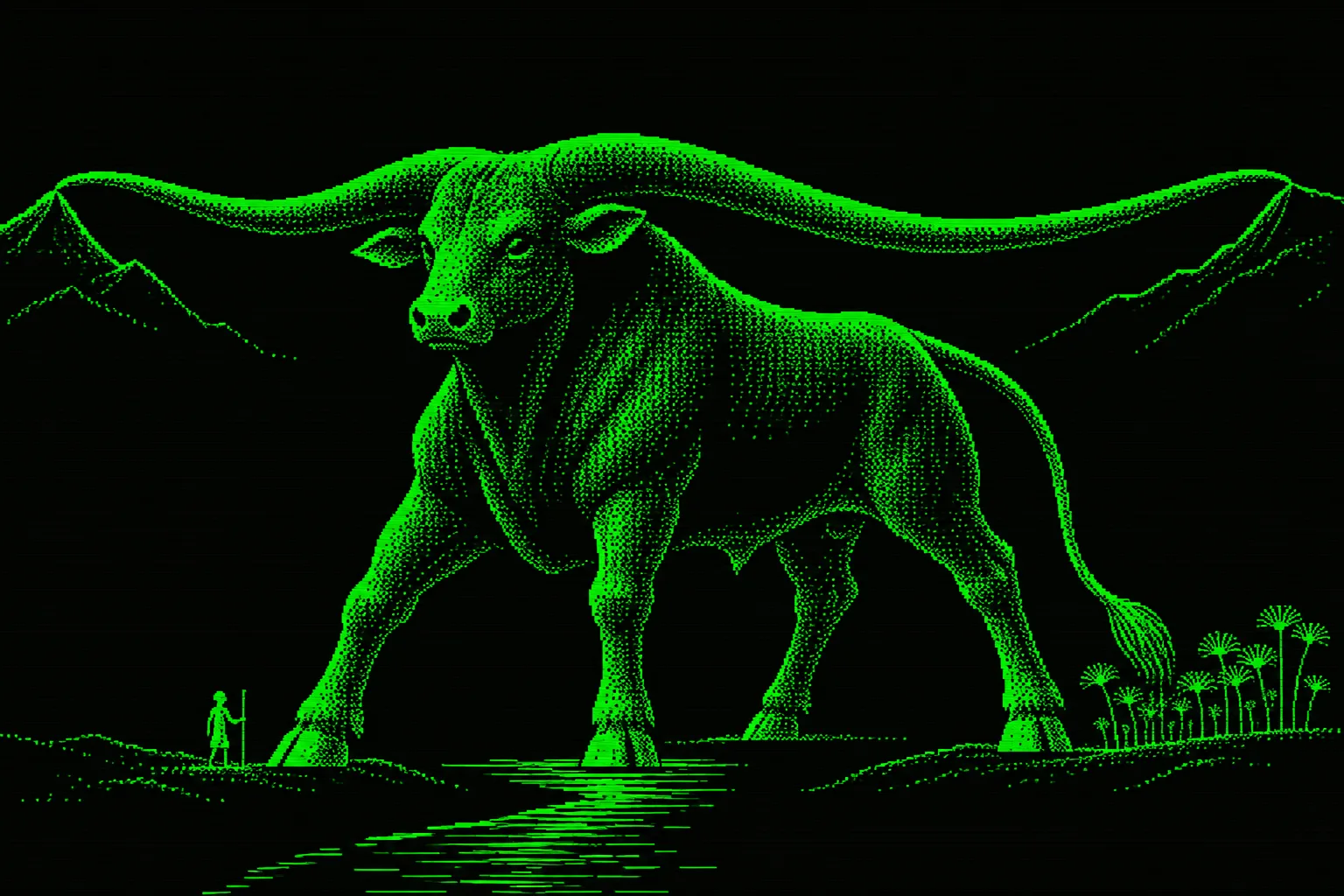
When he stands on the Island of Amun, the tuft of his tail rests on the papyrus thicket. One horn rests on the western mountains, the other on the eastern mountains. The great river is his bed, and sixty calves are born to him every day.”
Note · Line 88
The Island of Amun was in the northern Nile Delta; the great river is the Nile. The son’s boast answers Falsehood’s own claim that his lost knife was of impossible size. - 89
𓃹𓈖𓇋𓈖 𓅯𓄿 𓀦𓄿𓏲𓏛𓀜 𓁷𓏤 𓆓𓂧 𓈖 𓆑
wn.jn pꜣ mnj{ꜣ},w ḥr ḏd [n] =f
The herdsman said to him:
- 90
𓇋𓋴𓏏𓏲 𓃹𓈖𓏲 𓃒 𓏇𓇋 𓉻𓂝𓄿𓏛 𓅯𓄿 𓆓𓂧 𓀀 𓎢
⸢j⸣stw wn ⸮jḥ? mj ꜥꜣ (n) pꜣ ḏd ={j}〈k〉 ={k}
“Is there really a bull as big as you say?”
- 91
𓇋𓏲 𓅯𓄿 𓂝𓆓𓂧𓏲𓀔𓅪𓀀 𓁷𓏤 𓎔𓏛 𓇋𓅓 𓆑
jw pꜣ ꜥḏd,w ḥr mḥ jm =f
The young man seized him
Note · Line 91
The man he seizes is the herdsman with whom he had left his ox. - 92
𓇋𓏲 𓆑 𓇋𓅷𓄿𓇋𓇋𓂷𓂡 𓆑 𓅯𓄿 𓈖𓏏𓏭 𓎼𓂋𓍅𓏛𓀀 𓇋𓅓
jw =f (ḥr) jṯꜣy =f 〈r〉 pꜣ n,tj Grg(,j) jm
and hauled him off to where Falsehood was.
- 93
𓇋𓏲 𓆑 𓇋𓅷𓄿𓇋𓇋𓂷𓂡 𓎼𓂋𓍅𓏛𓀀 𓂋 𓏏𓄿 𓊋𓏏𓏯𓀀𓏥 𓅓𓂺𓏛 𓏏𓄿 𓇴𓂧𓊹𓅆𓏫
jw =f (ḥr) jṯꜣy Grg(,j) r tꜣ qnb,t m-bꜣḥ tꜣ psd(,t)
Then he hauled Falsehood into court before the Ennead.
- 94
𓃹𓈖𓇋𓈖 𓁷𓏤 𓆓𓂧 𓈖 𓅯𓄿 𓂝𓆓𓂧𓏲𓀔𓅪𓀀
wn.jn =〈w〉 ḥr ḏd n ⸢pꜣ⸣ ꜥḏd,w
They said to the young man,
- 95
ꜥḏꜣ,y [...]
“… is false!
- 96
𓏏𓈖𓏥 𓊪𓏏𓂋𓇋𓆵𓁻 𓃒 𓏇𓇋 𓉻𓂝𓄿𓏲𓏛 𓅯𓄿 𓆓𓂧 𓎢
[bw]-pwy.t ={t}n ptrj ⸮jḥ? mj ꜥꜣ,w (n) pꜣ ḏd =k
We have seen no ox the size of the one you described.”
- 97
𓅯𓄿 𓂝𓆓𓂧𓏲𓀔𓅪𓀀
wn.[j]n pꜣ ꜥḏd,w ḥr [ḏd] [n] [tꜣ] [psd(,t)]
The young man said to the Ennead,
- 98
𓇋𓋴𓏏𓏲 𓃹𓈖𓏲 𓈔𓏤𓈒𓏥 𓏇𓇋 𓉻𓂝𓄿𓏲𓏛 𓅯𓄿 𓇋𓀁𓆓𓂧 𓏏𓈖𓏥 𓇋𓏲 𓅯𓄿 𓈖 𓇋𓀁𓏭𓂋𓏤𓌙𓈉 𓇋𓅓 𓆑 𓅓 𓌗𓃀𓏏𓏭𓅂𓊖 𓇋𓅓 𓆑 𓅓 𓆷𓄿𓍘𓇋𓆱 𓐍𓂋𓉐 𓅯𓄿 𓊹𓅆 𓇋𓅓 𓆑 𓌳𓄿𓇋𓇋𓍬𓏏𓆱𓏤 𓇋𓏲 𓈖𓄿 𓇋𓅓 𓆑 𓅓
jstw wn ḥmt mj ꜥꜣ,w (n) pꜣ j:ḏd =tn jw pꜣ ḏ[w]w n J:jrʾ jm =f m ḥmt [jw] [nꜣ] _ (n) Gbtjw jm =f m šꜣ~tj [j]w ḫr(,t) (n) pꜣ nṯr jm =f 〈m〉 mꜣy,t jw nꜣ mnmn(,t) [n] Kꜣ~jrʾ jm =f ⸢m⸣ ⸢js⸣[tn,w]
“And is there a copper knife the size of the one you described, with the mountain of Yal for its blade, the … trees of Coptos for its hilt, the god’s tomb for its sheath and the herds of Kar for its belt?”
Note · Line 98
Falsehood had accused his brother Truth of losing just such a knife, and the gods had believed him. The young man asks why his ox is any harder to believe in. - 99
𓃹𓈖𓇋𓈖 𓁷𓏤 𓆓𓂧 𓈖 𓏏𓄿 𓇷𓂧𓊹𓅆𓏫
wn.jn =〈f〉 ḥr ḏd n tꜣ psd(,t)
Then he said to the Ennead,
- 100
𓄋𓊪𓏲𓏏𓏴𓀁 𓌷𓂝𓏏𓆄𓏛𓀀 𓎛𓈖𓂝 𓎼𓂋𓍅𓏛𓀀
wpw{.t} Mꜣꜥ,t(j) ḥnꜥ Grg(,j)
“Judge between Truth and Falsehood!
- 101
𓇋𓏌𓎢𓀀 𓅯𓄿𓇋𓇋 𓆑 𓈙𓂋𓇋𓏲𓀔𓅪𓀀
jnk pꜣy =⸢f⸣ šrjw
I am Truth’s son.
- 102
𓇋𓀀𓁹𓂋 𓇍𓄿𓇋𓇋𓏏𓂻 𓂋 𓂝𓈖𓂽 𓈖 𓆑 𓅱𓈙𓃀𓏏𓏴𓀁
j:jri̯ =[j] jꜣy.t r ꜥn n =f wšb{,t}
I have come to demand a reckoning on his behalf.”
- 103
𓃹𓈖𓇋𓈖 𓎼𓂋𓍅𓏛𓀀 𓁷𓏤 𓁹𓂋𓏏 𓋹𓈖𓐍 𓈖 𓍑 𓌢 𓂋𓆓𓂧
wn.jn Grg(,j) ḥr jri̯.t ꜥnḫ n nb [ꜥnḫ] (w)ḏꜣ s(nb) r-ḏd
Then Falsehood swore an oath by the lord—life, prosperity and health to him:
- 104
𓎝𓎛𓏛 𓅯𓄿 𓋾𓈎𓏹𓏹 𓅠𓅓𓏛 𓌷𓂝𓏏𓆄𓏛𓀀 𓇋𓏲 𓆑 𓋹𓈖𓐍 𓇋𓏲 𓏏𓏲 𓎢𓄿𓏠𓈖𓁻 𓆑 𓆑 𓁹𓏏𓏤𓄹 𓅓𓏏𓏲 𓏏𓏲 𓂞𓏏𓏲 𓆑 𓅓
⸢wꜣḥ⸣ [Jmn] wꜣḥ ⸢pꜣ⸣ ⸢Ḥqꜣ⸣ mt[w] =[tw] gmi̯ Mꜣꜥ,t(j) jw =f ꜥnḫ jw =tw (r) kꜣmn =f 〈m〉 [tꜣ]y =f jr,t 2 mtw =tw ḏi̯.ṱ =f [r] [jr,j]-ꜥꜣ m [pr] [(n)] [Mꜣꜥ,t](j)
“As surely as Amun endures, as surely as the ruler endures, if they find Truth alive, they shall blind him in both eyes and make him doorkeeper in Truth’s house.”
Note · Line 104
Falsehood speaks of himself as “him”: he stakes his own eyes and freedom on Truth being dead. These are the very terms he once imposed on Truth. - 105
𓅯𓄿 𓂝𓆓𓂧𓏲𓀔𓅪𓀀
wn.j[n] pꜣ ꜥḏd,w ḥr [⸮ḏi̯.t?] [⸮jni̯.tw?] [⸮pꜣy?] =[⸮f?] [⸮jt?] [⸮r?] [⸮tꜣ?] [⸮qnb,t?] [⸮m-bꜣḥ?] [⸮tꜣ?] [⸮psd(,t)?]
Then the young man had his father brought into court before the Ennead.
- 106
𓏏𓏲 𓁷𓏤 𓆑 𓇋𓏲 𓆑 𓋹𓈖𓐍
[j]w =tw ḥr gmi̯.ṱ =f jw =f ꜥnḫ
They found him alive.
- 107
𓏏𓏲 𓁷𓏤
⸢jw⸣ =tw ḥr ⸢jri̯⸣[.t] [⸮tꜣy?] =[⸮f?] [⸮sbꜣ,yt?] [⸮n?] [⸮Grg(,j)?]
Then they carried out Falsehood’s sentence.
- 108
𓆑 𓅓 𓍢 𓋴𓐍𓏏𓏴𓀜 𓃀𓈖𓂐𓏥
[jw] =[tw] [ḥr] [ḥwi̯].ṱ =f m 100 sḫ,t 5 〈w〉bn,pl
They gave him a hundred blows and five wounds.
- 109
𓁷𓏤 𓆑
j[w] =[tw] ḥr k[ꜣ]mn =f 〈m〉 [t]ꜣ[y] =[f] [jr,t] [2]
They blinded him in both eyes
- 110
𓉐𓏤
[jw] =[tw] [ḥr] [ḏi̯.ṱ] =[f] [r] [jr,j-ꜥꜣ] [m] pr (n) Mꜣ[ꜥ,t](j)
and made him doorkeeper in Truth’s house.
- 111
𓆑 … 𓈖 … 𓌷𓂝𓏏𓆄𓏛𓀀 𓎛𓈖𓂝 𓎼𓂋𓍅𓏛𓅪𓀀 …
j[w] =⸢f⸣ [⸮ḥr?] _ [...] [⸮pꜣ?] [⸮ꜥḏd,w?] ꜥn [⸮wšb{,t}?] n ⸮pꜣ[y]? =[⸮f?] [⸮jt?] [...] [smn] Mꜣꜥ,t(j) ḥnꜥ Grg(,j) [...] pꜣ [...]
Then he … the young man who demanded a reckoning on his father’s behalf … the case between Truth and Falsehood was settled … the …
- 112
⸮jw[i̯≡s-pw]? [...]
It has come to its end …
Note · Line 112
This is a scribe’s closing formula. Only fragments of what follows survive. - 113
𓇋𓏲 𓆑 … 𓉗𓏏𓉐 𓃂𓈗𓂝𓂝𓏤𓏲𓏛 𓇋𓏠𓈖𓅆 … 𓉗𓏏𓉐 … 𓏞𓏤
jw =f [...] ḥw,t ⸮wꜥb-ꜥ.du{.w}? Jmn [...] ḥw,t nsw [...] ⸮zẖꜣ,w? ⸮[J]mn? [...] ⸮[_]n~rʾ~nꜣ? ⸢zẖꜣ,w⸣ ⸮[_]d[_]y?
He … temple, pure in both hands, Amun … the king’s house … scribe of Amun … the scribe …
- 114
… 𓌡𓂝𓏤𓅪 …
[...] wꜥi̯ [...]
… to be alone …
- 115
[...] [_]m[_]s[_] [...]
[gap in the text]
- 116
… 𓃀𓏲𓊪𓏲 …
[...] bw-pw [...]
… not …
- 117
[...] [_]ꜥ[_] pꜣ [...]
… the …