~/sacred-texts/middle-kingdom-literature
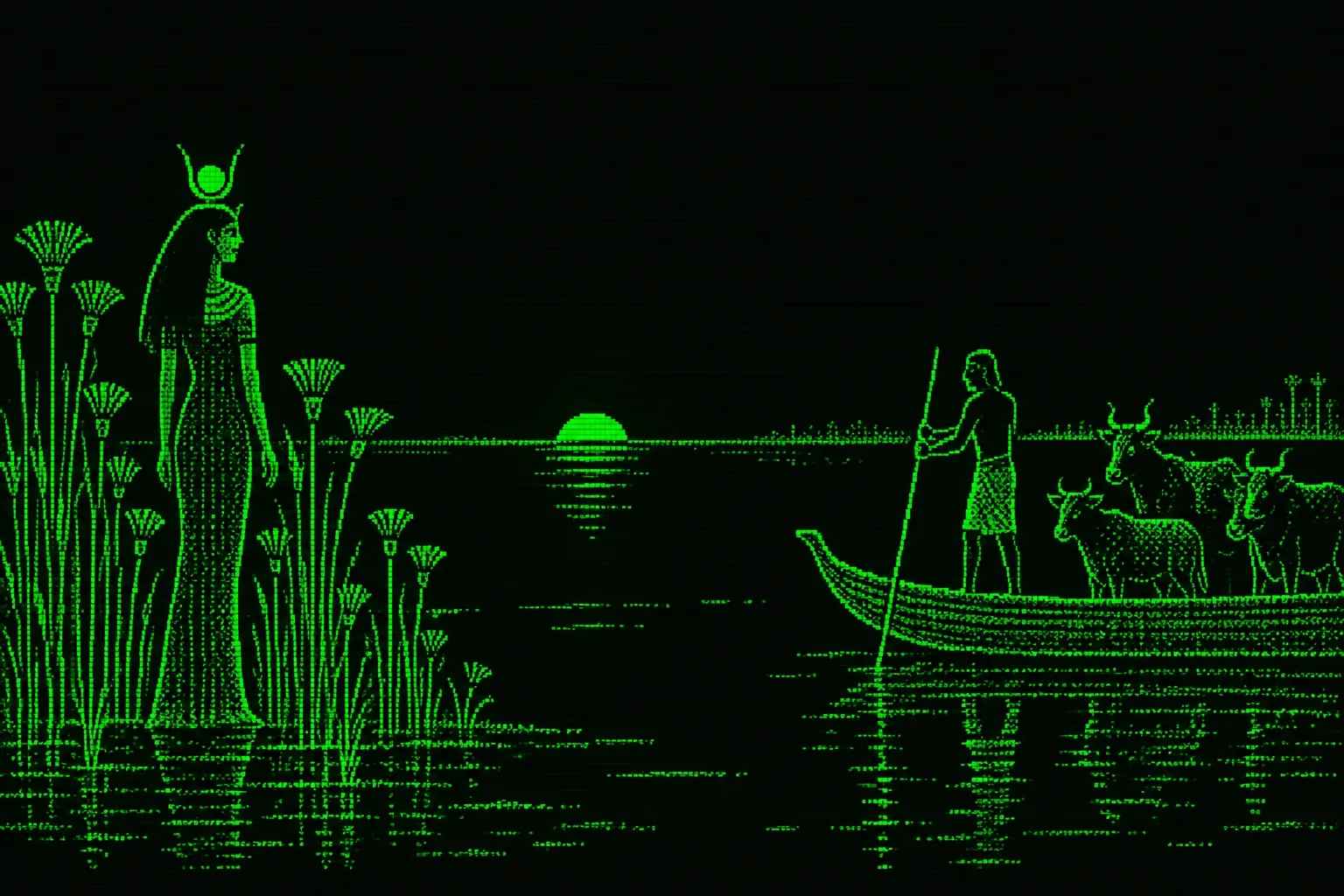
Egyptian Tale of the Herdsman: A Naked Goddess in the Marsh
- Date
- Copied in the late 12th or early 13th Dynasty (c. 1850–1750 BC) in hieratic on Papyrus Berlin 3024, the same roll that carries the Dispute between a Man and his Ba
- Found
- Now in the Egyptian Museum and Papyrus Collection, Berlin (P. 3024)
- Language
- Middle Egyptian · Hieratic
- 1
𓅓𓂝 𓏏𓈖𓏥 𓅱𓀀 𓉔𓄿𓂻𓎢𓏲𓀁 𓅹𓈇𓏤
m =tn wj hꜣi̯.kwj [r] zš
“Look, I have been down to the marsh.
Note · Line 1
A herdsman is speaking to his companions. - 2
𓇋𓏲 𓆑 𓏏𓎢𓈖𓂻 𓅓 𓅓𓂝𓌨𓂋𓈇𓏤 𓊪𓈖
jw =f tkn m mẖr pn
It lies near this low pasture.
- 3
𓇋𓏲 𓌳𓁹𓄿𓈖 𓀀 𓊃𓏏𓁐𓈞𓏏𓁐 𓇋𓅓 𓆑
jw mꜣ.n =j z,t-ḥm,t jm =f
I saw a woman there.
- 4
𓂜𓈖 𓋴 𓅓 𓍛𓏤 𓈖 𓂋𓍿𓀀𓁐𓏥
nn s(j) m ⸮ḥm? ⸮n? r(m)ṯ.pl
Her form was not human.
- 5
𓍲𓈖𓏌𓏲𓇋𓇋𓁸𓏥 𓀀 𓆓𓂧𓆑𓏛 𓌳𓁹𓄿𓄿 𓀀 𓋴𓂋𓅱𓁸𓏥 𓋴 𓈖 𓈖𓂝𓂝𓏞𓏛 𓈖 𓇋𓃹𓈖𓁸 𓋴
šn,wy =j ḏdf mꜣꜣ =j sr.w =s n nꜥꜥ n jwn =s
My hair stood on end at the sight of her tresses, at the smoothness of her skin.
- 6
𓂜𓈖𓊃𓊪𓊗 𓁹𓇋𓇋 𓀀 𓆓𓂧𓏏𓈖 𓋴
nn-sp jri̯.y =j ḏd.t.n =s
Never will I do what she said.
- 7
𓈙𓆑𓈙𓆑𓏏𓄅𓀜 𓋴 𓆱𓐍𓏏𓂻 𓎛𓂝𓄛𓏥 𓀀
šfšf,t =s ḫt ḥꜥ.pl =j
Awe of her runs through every limb of mine.
- 8
𓆓𓂧 𓀀 𓈖 𓏏𓈖𓏥
ḏd =j n =tn
Let me say this to you:
- 9
𓇋𓐍𓏛 𓂸𓃒𓏥 𓇉𓄿𓊛 𓈖𓏥
jḫ kꜣ.pl ḥꜣ =n
Bulls, let us go ashore!
- 10
𓇋𓐍𓏛 𓍑𓄿𓏴𓊛 𓄑𓊃𓅱𓃒𓏥 𓊃𓇥𓂋𓁀 𓋿𓅱𓏏𓃒𓏥 𓂋 𓈖 𓌳𓄿𓎛𓈇𓏤 𓀸𓏲𓀀𓏥 𓅓𓐟𓏤 𓇋𓂋𓏭
jḫ ḏꜣi̯ bḥs.w.pl sḏr ꜥw,t r 〈rʾ〉 n mꜣḥ mnj.w.pl m-sꜣ jr,j
Let the calves cross over and the flocks bed down for the night at the edge of the marsh, with the herdsmen behind them.
- 11
𓊃𓎔𓎛𓊛 𓈖𓏥 𓈖 𓇉𓄿𓊛 𓂸𓃒𓏥 𓅓𓂝𓈎𓃀 𓂋𓂝 𓂋 𓄖 𓆑𓏭
smḥ =n n ḥꜣ kꜣ.pl m-ꜥb ⸮jḥ?.pl rḏi̯ r pḥ,(wj) =fj
On our papyrus boat for the landing, the bulls have been set at the stern along with the cows.”
- 12
𓂋𓐍𓅱𓏛𓏥𓐍𓏏𓏛𓏥𓀀𓏥 𓏌𓏤 𓀸𓏲𓀀𓏥 𓁷𓏤 𓄞𓂧𓏏𓀁 𓎛𓎿𓊃𓅱𓊛𓈗 𓅓 𓆓𓂧 𓂋 𓆑 𓊪𓈖
rḫ.w.pl-ḫ,t.pl n.w mnj.w.pl ḥr šdi̯.t ḥs.w-mw m ḏd r〈ʾ〉 =f pn
The wise men among the herdsmen recite a water charm, speaking these words:
Note · Line 12
The charm protects the herd from crocodiles during the crossing. - 13
𓎛𓂝𓀠 𓂓𓏤𓏥 𓀀 𓀸𓏲𓀀𓏥 𓅷𓄿𓇋𓇋𓂺𓏲𓀀𓏥
ḥꜥ kꜣ.pl =j mnj.w.pl ṯꜣ,y.w.pl
“My spirits rejoice, you herdsmen, you men!
Note · Line 13
The spirits are the speaker’s kas, his vital powers. In Egyptian, “kas” sounds like “bulls.” - 14
𓂜𓈖𓃹𓈖 𓊃𓂋𓅱𓇋𓇋𓂻 𓀀 𓅓 𓆷𓈇 𓊪𓈖 𓆳𓏏𓏤 𓎛𓂝𓊪𓈗𓉻𓅆 𓎗𓅱𓏛 𓎗𓏏𓅱𓏛 𓈖 𓐟𓏤𓏥 𓇾𓈇𓏤 𓂜 𓏏𓈖𓌙𓅯𓏛 𓈙𓈇 𓂋 𓇋𓏏𓂋𓅱𓈙
nn-wn srw.y =j m šꜣ pn rnp,t Ḥꜥp(j)-ꜥꜣ wḏ wḏ,t n sꜣ.pl tꜣ n tni̯ š r jtr,w
There is no driving me from this flood meadow
in the year of Hapy the Great,
who lays his command on the ridges of the land,
when lake cannot be told from river.Note · Line 14
Hapy personifies the Nile flood. In a year of high water, even the ridges that usually stand dry are under his command. - 15
𓂋 𓎢 𓂋 𓄚𓈖𓏌𓏲𓉐 𓈖 𓉐𓏤 𓎢
〈wḏꜣ〉 r =k r ẖnw n pr =k
Go, then, into your house!
- 16
𓇋𓏲 𓏠𓈖𓏛 𓅓 𓊨𓏏𓉐 𓋴𓈖𓏥
jw ⸮jḥ?.pl mn m s,t =sn
The cows stay where they are.
- 17
𓇍𓇋𓇋𓂻 𓇋𓅱 𓅾𓀁 𓎢 𓄿𓈎𓅪 𓈙𓆑𓈙𓆑𓏏𓄅𓀜 𓎢 𓂋𓅱𓏏𓂻 𓂋 𓄿𓈎𓏏𓅪 𓈖𓈙𓈖𓏭𓃩𓀜 𓈖 𓄊𓋴𓂋𓏏𓆗 𓅾𓅱𓀁𓏥 𓈖 𓎟𓏏𓇾𓇾𓈇𓈇𓆗
jyi̯.y jw snḏ =k ꜣq šfšf,t =k rwi̯.t(j) r ꜣq.t nšnj n Wsr,t snḏ,w n Nb,t-tꜣ.du
You who have come, dread of you has died,
and awe of you has fled,
until the rage of Wosret dies,
and with it the terrors of the Lady of the Two Lands.”Note · Line 17
Wosret means “the Mighty One.” The Two Lands are Upper and Lower Egypt. - 18
𓌉𓆓𓇳𓈖 𓂋 𓆑 𓇾𓈇𓏤 𓇼𓄿𓇳 𓊗 𓇋𓏲 𓁹 𓏇𓇋 𓆓𓂧 𓆑 𓐍𓊪𓂻 𓂋 𓆑 𓇓𓏲 𓊹𓏏𓂋𓏏𓆗 𓏏𓈖
ḥḏ.n r =f tꜣ dwꜣ zp-2 jw jri̯ mj ḏd =f ḫpi̯ r =f sw ntr,t tn
At first light the land grew bright. It was done as he had said, and this goddess came to meet him.
- 19
𓇋𓏲 𓆑 𓂞 𓆑 𓄂𓏏𓏤 𓈖 𓈙𓈇
jw =f ḏi̯ =f ḥꜣ,t n š
It was his habit to turn toward the lake.
- 20
𓇍𓇋𓂻𓈖 𓋴 𓇉𓄿𓋳 𓋴 𓅓 𓎛𓃀𓋴𓏲𓋳𓏥 𓋴 𓏏𓐍𓏏𓐍𓂻 𓋴 𓍲𓈖𓏌𓏲𓁸 𓋴 …
jyi̯.n =s ḥꜣi̯ =s m ḥbs.w.pl =s tḫtḫ =s šn,w =⸢s⸣ [...]
She came, stripping off her clothes and tousling her hair …