~/sacred-texts/middle-kingdom-tales
The Eloquent Peasant: To Do Justice Is Breath to the Nostrils
- Date
- Composed in the 12th Dynasty, about 1850 BC; this copy was written in hieratic on papyrus at Thebes in the late 12th Dynasty, about 1800 BC
- Found
- From Thebes, sold in London in 1843; now Papyrus Berlin P 3023 in the Ägyptisches Museum und Papyrussammlung, Berlin, with fragments (Papyrus Amherst I) in the Morgan Library, New York
- Language
- Middle Egyptian · Hieratic
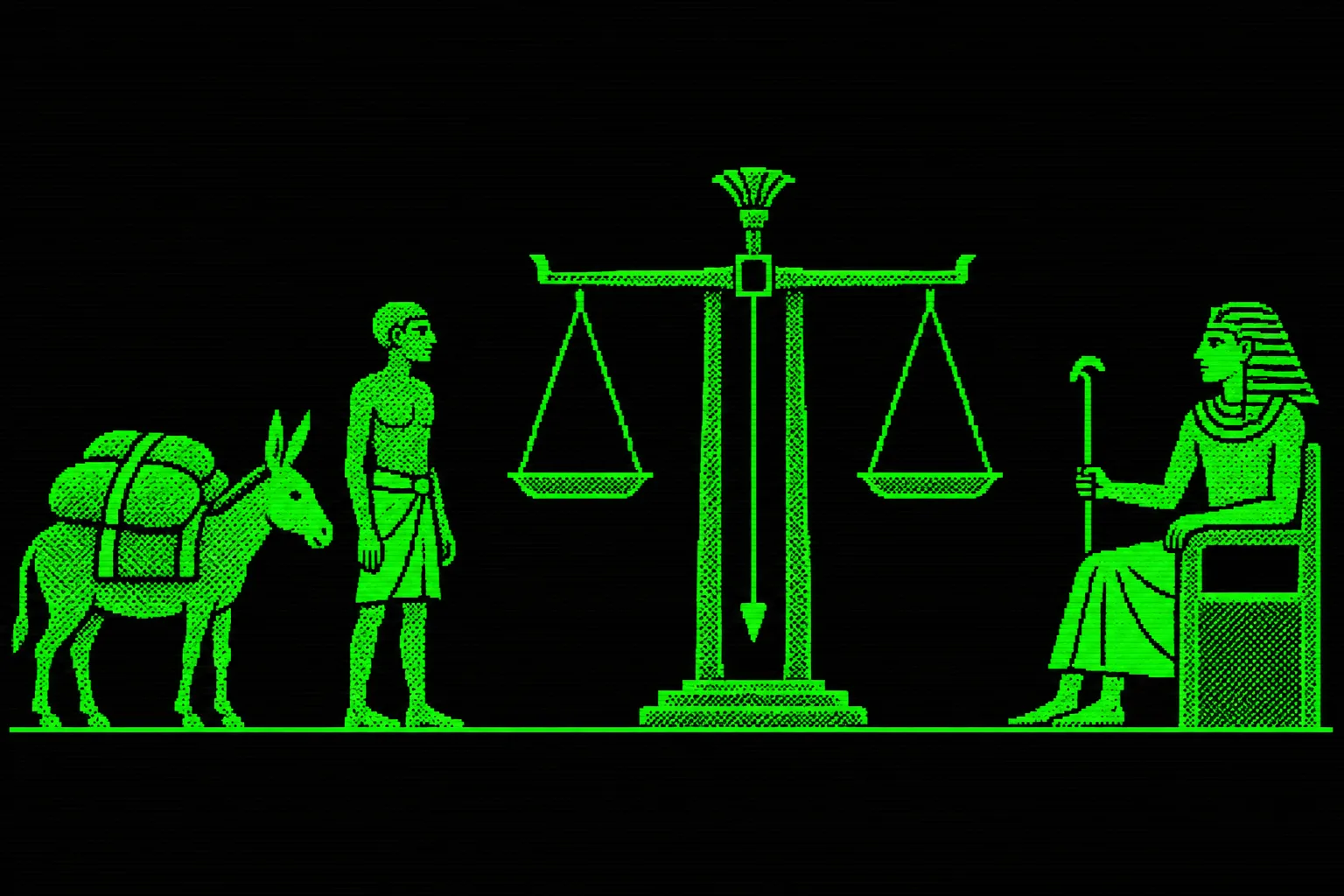
A peasant from the Wadi Natrun leads his donkeys toward Heracleopolis. Nemtynakht, a dependent of the high steward Rensi, blocks the path with linen, seizes the donkeys when one eats a tuft of narrow barley, and beats him. The peasant petitions Rensi. The king, told that he speaks truly well, orders: Keep silent so that he will go on speaking.
Eight petitions follow, each angrier. Rensi is the Steering oar of heaven, then a bird of prey to the lapwing people; after the third he has the peasant whipped. The plea holds: To do justice is breath to the nostrils. Papyrus Berlin 3023 stops with the eighth petition; the ninth and the verdict survive on another roll.
- 1
… 𓅓 𓏎𓏌𓏥 𓎟 𓄤𓆑𓂋 𓈖 𓇏𓏏𓈇𓎛𓌴𓄿𓏏𓍖𓈒𓏥𓈉
[...] [m] [jꜣꜣ] [rdm,t] [ḥsmn] [ḥmꜣ,t] [ḫt.pl] [n.w] [___tyw] [ꜥwn,wt] [n.t] [Tꜣ-jḥw] [ḫn,wt] [n.t] [bꜣ,w] [ḫꜣw,wt] [n.t] [wnš,w] [___] [___] [___] [___] [___] [___] m jn,w nb nfr n Sḫ,t-ḥmꜣ,t
… with rushes, branches of the redemet palm, grains of natron, grains of salt, wood from …tyu, poles from Farafra, leopard skins, jackal pelts, … stone, … stone, …, …, … and …—with all the fine produce of the Wadi Natrun.
Note · Line 1
The peasant has loaded his donkeys for the journey to the Nile Valley. The Wadi Natrun, which the Egyptians called the Salt Field, yielded natron, a natural soda salt. - 2
𓊪𓏲 𓁹𓈖 𓇏𓏏𓏭𓀀 𓊪𓈖 𓂋 𓇓𓏏𓈖𓀔𓈖𓈖𓊖
[šmi̯.t] pw jri̯.n sḫ,tj pn m-ḫnt.[y]t r Nn-nswt
Then the peasant set out south for Heracleopolis Magna.
- 3
𓄭𓂋𓂻 𓊪𓏲 𓁹𓈖 𓆑 𓂋 𓅱𓈇𓏤 𓈖 𓉐𓆑𓆑𓇋𓀀 𓁷𓏤 𓎔𓏏𓏭𓈇𓏤
spr pw jri̯.n =f r w n Pr-Ffj ḥr mḥ,tj 〈Mdnj,t〉
He came to the district of Per-Fefi, north of Medenit.
- 4
𓅠𓅓𓈖 𓆑 𓊃𓀀 𓇋𓅓 𓊢𓂝𓂻 𓅈𓏏𓏭𓀜𓀀 𓂋𓈖 𓆑
gmi̯.n =f z jm ꜥḥꜥ [ḥr] [mr],yt Nm,tj-nḫt rn =f
There he found a man standing on the embankment. His name was Nemtynakht.
- 5
𓅭𓀀 𓂋𓈖 𓆑
zꜣ z [pw] [Jsr,y] rn =f
He was the son of a man named Isery.
- 6
𓆓𓏏𓇿𓀀𓁐𓏥 𓊪𓏲 𓈖𓏏 𓅓𓂋𓉐𓀗 𓌻𓂋𓅱 𓆇
ḏ,t pw n.t (j)m,(j)-rʾ-pr-wr Mr,w zꜣ Rn[sj]
He was a dependent of the high steward Rensi, son of Meru.
- 7
𓅈𓏏𓏭𓀜𓀀 𓊪𓈖 𓌳𓁹𓄿𓄿 𓆑 𓉻𓂸𓃘𓏥 𓈖 𓉻𓂝𓄿𓃀𓇋𓇋𓅱𓇭𓏛𓏥 𓁷𓏤 𓄣𓏤 𓆑 𓆓𓂧 𓆑
[ḏd.jn] Nm,tj-nḫt pn mꜣꜣ =f ꜥꜣ.pl n sḫ,tj [pn] ꜥꜣb.yw ḥr jb =f ḏd =f
When Nemtynakht saw the peasant’s donkeys, they pleased his heart, and he said:
- 8
𓇉𓄿𓀁 𓏠𓈖𓐍𓍊𓏛 𓂝𓍯𓄿𓂝 𓀀 𓇋𓅓 𓆑
ḥꜣ [n] =[j] [šzp] [nb] mnḫ ꜥwꜣi̯ =j ḥ[n,w.pl] [n] [sḫ,tj] [pn] jm =f
“If only I had some magic figure I could use to steal this peasant’s goods!”
- 9
𓇋𓋴𓏏 𓂋 𓆑 𓇋𓂋 𓉐 𓅈𓏏𓏭𓀜𓀀 𓊪𓈖 𓁷𓏤
jst r =f jr pr Nm,tj-nḫt pn ḥr zmꜣ-tꜣ [n] [rʾ]-wꜣ,t
Now Nemtynakht’s house stood right by the landing at the end of the road.
- 10
𓎛𓆰𓈖𓋴𓅪 𓊪𓏲
ḥns pw
It was a narrow landing,
- 11
𓂜 𓅱𓊃𓐍𓎺𓏛 𓇋𓋴 𓊪𓏲
n wsḫ js pw
not a wide one.
- 12
𓈎𓈖𓀜 𓂋 𓊃𓐍𓅱𓎺𓏛 𓈖 𓈀𓏤𓋳
qn〈n〉 =[f] r sḫ,w n dꜣj,w
At its widest it measured the breadth of a linen wrap.
- 13
𓇋𓏲 𓈐𓏏𓏤 𓆑 𓌡𓂝𓏏𓏤 𓌨𓂋 𓈗 𓆑 𓈐𓏏𓏤 𓆑 𓇗𓌾𓏥
jw wꜣ,t =f wꜥ.t ẖr mw [k.ty] =f wꜣ,t ={f} 〈ẖr〉 šmꜥ
One side was under water, the other under barley.
Note · Line 13
The grain was a variety known as Upper Egyptian barley. - 14
𓆓𓂧𓇋𓈖 𓅈𓏏𓏭𓀜𓀀
ḏd.jn Nm,tj-nḫt p[n] [n] [šms,w] =[f]
Then Nemtynakht said to his servant:
- 15
𓀀
[jz] [jni̯] [n] =[j] [jfd] [m] ⸢pr,w⸣ =j
“Go and fetch me a square of linen from my house.”
- 16
𓆑
[jni̯.jn.tw] =f [n] =[f] [ḥr-ꜥ]
It was brought to him at once.
- 17
𓄥𓏛𓇾𓈇𓏤 𓈖 𓂋𓏤𓈐𓏏𓏤
[ꜥḥꜥ.n] [sš.n] =[f] [pꜣ] [j]f[d] [ḥr] [p]ꜣ zmꜣ-tꜣ n rʾ-wꜣ,t
Then he spread the linen on the landing at the end of the road.
- 18
𓃹𓈖𓇋𓈖 𓐍𓈖𓈖𓅯𓂻 𓈗 𓇗𓌾𓏥
wn.jn ḫnn [sdb] =[f] ḥr mw npnp,t =[f] [ḥr] šmꜥ
Its fringe settled on the water, its smooth edge on the barley.
Note · Line 18
The linen now barred the public way. To skirt it on dry ground, the peasant would have to walk through Nemtynakht’s crop. - 19
𓂻𓏲𓇋𓈖 𓁷𓏤 𓈐𓏏𓏤 𓈖𓏏 𓎟𓏏
jwi̯.jn [sḫ,tj] [pn] ḥr wꜣ,t n.t r(m)ṯ.pl nb.t
Then the peasant came along the road everyone used.
- 20
𓆓𓂧𓇋𓈖 𓅈𓏏𓏭𓀜𓀀 𓊪𓈖
ḏd.jn Nm,tj-nḫt pn
Nemtynakht said:
- 21
𓁹
jri̯ [hrw] [sḫ,tj]
“Be so kind, peasant.
- 22
𓂜 𓐍𓈖𓂧𓂾𓂻 𓎢 𓁷𓏤 𓎛𓃀𓋴𓏲𓋳𓏥 𓀀
n ḫnd =k ḥr ḥbs.w.pl =j
You haven’t stepped on my clothes, have you?”
- 23
𓆓𓂧𓇋𓈖 𓊪𓈖
ḏd.jn sḫ,tj pn
The peasant said:
- 24
𓁹𓇋𓇋 𓀀 𓎛𓎿𓊃𓏏𓀁 𓎢
jri̯.y =j ḥsi̯.t =k
“Let me do what will please you.
- 25
𓄤𓆑𓂋 𓅓𓂝𓏏𓈖𓌙𓅯𓈐𓏥 𓀀
nfr mtn =j
May my path be a good one.”
- 26
𓉐𓂋𓏏𓂻 𓊪𓏲 𓁹𓈖 𓆑 𓂋𓁷𓂋𓏲𓇯
pri̯.t pw jri̯.n =f r-ḥr.w
So he turned uphill.
- 27
𓆓𓂧𓇋𓈖 𓅈𓏏𓏭𓀜𓀀 𓊪𓈖
ḏd.jn Nm,tj-nḫt pn
Nemtynakht said:
- 28
𓈖 𓎢 𓇗𓌾𓏥 𓀀 𓂋 𓈐𓏏𓏤
⸢j⸣[n] ⸢j⸣[w] ⸢n⸣ =k šmꜥ =j r wꜣ,t
“Is my barley to be a road for you?”
- 29
𓆓𓂧𓇋𓈖 𓇏𓏏𓏭𓀀 𓊪𓈖
ḏd.jn sḫ,tj pn
The peasant said:
- 30
𓄤𓆑𓂋 𓀀
nfr [m]tn =j
“May my path be a good one.”
- 31
𓇋𓐍𓅐𓏏𓈇𓏤 𓈎𓄿𓏏𓀠
jḫm,t qꜣi̯.t(j)
“The bank rises steep and high,
- 32
𓅓𓂝𓏏𓈖𓌙𓅯𓈐𓏥 𓌨𓂋 𓇗𓌾𓏥
mtn ẖr šmꜥ
the path lies under narrow barley,
Note · Line 32
“Narrow barley” is a name for Upper Egyptian barley. - 33
𓎛𓆰𓈖𓎨 𓎢 𓂋 𓆑 𓍯𓄿𓏏𓈐𓏏 𓈖𓏥 𓅓 𓎛𓃀𓋴𓏲𓋳𓏥 𓎢
ḥn =k r =f wꜣ,t{t} =n m ḥbs.w.pl =k
and now you block our way with your clothes.
Note · Line 33
Nemtynakht has spread a garment across the strip of ground between the water and the barley, leaving the peasant and his donkeys no clear way through. - 34
𓇋𓈖 𓂜𓈖 𓂋 𓆑 𓂝 𓎢 𓋴𓍯𓄿𓏴𓈐 𓈖𓏥 𓁷𓏤 𓈐𓏏𓏤
jn nn r =f ḏi̯ =k swꜣ =((n)) ḥr wꜣ,t
Won’t you let us pass along the road, then?”
- 35
𓊢𓂝𓈖 𓎔𓏛𓈖 𓌡𓂝𓏤 𓅓 𓈖𓄿 𓈖 𓉻𓂸𓃘 𓂋𓏤 𓆑 𓅓 𓃀𓅡𓄿𓏏𓆰 𓈖𓏏 𓇗𓌾𓏥
ꜥḥꜥ.n mḥ.n wꜥ m nꜣ n ꜥꜣ rʾ =f m bꜣ,t n.t šmꜥ
Then one of the donkeys filled his mouth with a tuft of narrow barley.
- 36
𓆓𓂧𓇋𓈖 𓅈𓏏𓏭𓀜𓀀 𓊪𓈖
ḏd.jn Nm,tj-nḫt pn
Then this Nemtynakht said,
- 37
𓅓𓂝 𓎢 𓅱𓀀 𓂋 𓈖𓈞𓅓𓂝 𓉻𓂸𓃘 𓎢 𓇏𓏏𓏭𓀀 𓁷𓏤 𓏶𓀁 𓆑 𓇗𓌾𓏥 𓀀
m =k wj r nḥm ꜥꜣ =k sḫ,tj ḥr wn(m) =f šmꜥ =j
“Look, peasant, I’ll take your donkey away for eating my narrow barley.
- 38
𓅓𓂝 𓎢 𓇓𓏲 𓂋 𓉔𓃀𓏏𓍁𓂻 𓁷𓏤 𓈎𓈖𓏴 𓆑
m =k sw r hbi̯.t ḥr qn =f
Look, he’ll tread out grain for his crime.”
Note · Line 38
Donkeys were driven over cut grain on the threshing floor to loosen the kernels. - 39
𓆓𓂧𓇋𓈖 𓇏𓏏𓏭𓀀 𓊪𓈖
ḏd.jn sḫ,tj pn
Then this peasant said,
- 40
𓄤𓆑𓂋 𓅓𓂝𓏏𓈖𓌙𓅯𓈐𓏥 𓀀
nfr mtn =j
“May my path be good!
- 41
𓌡𓂝𓏏𓏤 𓌉𓆓𓏏𓏴 𓎆
wꜥ.t ḥḏi̯.t 10
One tuft that ruins ten!
- 42
𓏎𓈖𓈖 𓀀 𓉻𓂸𓃘 𓀀 𓁷𓏤 𓈙𓈖𓂝𓎩𓏛 𓎆
jni̯.n =j ꜥꜣ =j ḥr šnꜥ 10
I bought my donkey for ten shena,
Note · Line 42
The shena was a unit of value. One tuft of barley stands to cost the peasant all ten shena he paid for the donkey. - 43
𓎁𓏏𓂝 𓎢 𓇓𓏲 𓁷𓏤 𓎔𓎛𓏲𓏛 𓈖 𓂋𓏤 𓆑 𓅓 𓃀𓅡𓄿𓏏𓆰 𓈖𓏏 𓇗𓌾𓏥
jti̯ =k sw ḥr mḥ.w n rʾ =f m bꜣ,t n.t šmꜥ
and you’ll take him away for filling his mouth with a tuft of narrow barley.
- 44
𓇋𓅱 𓀀 𓎼𓂋𓏏 𓂋𓐍𓏛𓎢𓅱𓀀 𓎟 𓈖 𓐖𓏏𓊖 𓏏𓈖
jw =j gr.t rḫ.kwj nb n ⸮ḏꜣt,t? tn
But I know the lord of this estate.
- 45
𓈖𓄓𓋴 𓅓𓂋𓉐𓀗 𓌻𓂋𓏲 𓆇 𓂋𓈖𓋴𓏭𓀀
n,(j)-s(j) (j)m,(j)-rʾ-pr-wr Mr,w zꜣ Rnsj
It belongs to the chief steward Rensi, son of Meru.
- 46
𓈖𓏏𓆑 𓎼𓂋𓏏 𓍚𓀜 𓂝𓍯𓄿𓂝𓀀 𓎟 𓅓 𓇾𓈇𓏤 𓊪𓈖 𓂋𓇥𓂋 𓆑
ntf gr.t ḫsf ꜥwꜣ nb m tꜣ pn r-ḏr =f
He’s the one who punishes every robber in this whole land.
- 47
𓇋𓈖 𓂝𓍯𓄿𓂝𓏏𓏲 𓀀 𓂋 𓆑 𓅓 𓐖𓏏𓊖 𓆑
jn ꜥwꜣi̯.tw =j r =f m ⸮ḏꜣt,t? =f
Am I to be robbed, then, on his own estate?”
- 48
𓆓𓂧𓇋𓈖 𓅈𓏏𓏭𓀜𓀀 𓊪𓈖
ḏd.jn Nm,tj-nḫt pn
Then this Nemtynakht said,
- 49
𓇋𓈖 𓅯𓄿 𓊪𓅱 𓐍𓈖𓅯𓀁 𓈖 𓌃𓂧𓏏𓀁 𓆓𓂧𓅱 𓂋𓍿𓀀𓁐𓏥
jn pꜣ pw ḫn n md,t ḏd.w r(m)ṯ.pl
“Is this the saying people use:
- 50
𓂧𓅓𓌪𓀁𓏏𓏲 𓂋𓈖 𓈖 𓎛𓅨𓂋𓅱𓅪𓀀 𓁷𓏤 𓎟𓀀 𓆑
dm.tw rn n ḥwr,w ḥr nb =f
‘A wretch’s name is spoken on account of his master’?
- 51
𓏌𓎢𓀀 𓊪𓏲 𓌃𓂧𓅱𓀁 𓈖 𓎢
jnk pw mdwi̯ n =k
I’m the one speaking to you,
- 52
𓅓𓂋𓉐𓀗𓀀 𓊪𓏲 𓋴𓆼𓄿𓇋𓇋𓀁 𓎢
(j)m,(j)-rʾ-pr-wr pw sḫꜣ.y =k
but it’s the chief steward you’ve brought up.”
- 53
𓊢𓂝𓈖 𓅷𓄿𓂝𓈖 𓆑 𓈖 𓆑 𓇋𓄿𓄿𓇋𓇋𓏏𓆰 𓈖𓏏 𓇋𓋴𓂋𓆭𓆱 𓇆 𓂋 𓆑
ꜥḥꜥ.n ṯꜣi̯.n =f n =f jꜣꜣ,yt n.t jsr wꜣḏ r =f
Then he took up a rod of green tamarisk to use against him.
- 54
𓊢𓂝𓈖 𓉻𓂝𓄿𓂝 𓆑 𓂝𓏏𓄹 𓆑 𓎟 𓇋𓅓 𓋴
ꜥḥꜥ.n ꜥꜣ〈g.n〉 =f ꜥ,t =f nb jm =s
With it he pounded every limb of the peasant’s body.
- 55
𓈖𓈞𓅓𓂝 𓉻𓂸𓃘𓏥 𓆑 𓊃𓅧𓈎𓂻 𓂋 𓐖𓏏𓊖 𓆑
nḥm ꜥꜣ((.pl)) =f sꜥq r ⸮ḏꜣt,t? =f
The peasant’s donkeys were taken away and driven onto Nemtynakht’s estate.
- 56
𓃹𓈖𓇋𓈖 𓇏𓏏𓏭𓀀 𓊪𓈖 𓁷𓏤 𓂋𓅓𓇋𓇋𓏏𓁹 𓉻𓂝𓄿𓅱𓏛 𓅨𓂋𓏏𓏯 𓈖 𓍋𓅓𓂋𓅪 𓈖 𓁹𓂋𓇋𓇋𓏏 𓂋 𓆑
wn.jn sḫ,tj pn ḥr rmi̯.yt ꜥꜣw wrt n mr n jri̯.yt r =f
Then this peasant began to weep bitterly from the pain of what had been done to him.
- 57
𓆓𓂧𓇋𓈖 𓅈𓏏𓏭𓀜𓀀 𓊪𓈖
ḏd.jn Nm,tj-nḫt pn
Then this Nemtynakht said,
- 58
𓅓 𓈎𓄿𓀠 𓊤𓏲𓀁 𓎢 𓇏𓏏𓏭𓀀
m qꜣi̯ ḫrw =k sḫ,tj
“Don’t raise your voice, peasant.
- 59
𓅓𓂝 𓎢 𓏏𓏲 𓂋 𓂧𓏇𓇋𓈇𓏤 𓈖 𓎟𓋴𓎼𓂋𓀁𓅆
m =k tw r dmj n nb-sgr
Look, you’re close to the landing place of the Lord of Silence.”
Note · Line 59
The Lord of Silence is a god of the dead. To say his landing place is near is more than a warning to keep quiet. - 60
𓆓𓂧𓇋𓈖 𓇏𓏏𓏭𓀀 𓊪𓈖
ḏd.jn sḫ,tj pn
Then this peasant said:
- 61
𓎛𓀝𓂝 𓎢 𓅱𓀀 𓂝𓍯𓄿𓂝 𓎢 𓎛𓆰𓈖𓏌𓏲𓏛𓏥 𓀀
ḥ(w)i̯ =k wj ꜥwꜣi̯ =k ḥn,w.pl =j
“You beat me to rob me of my goods.
- 62
𓈖𓈞𓅓𓂝 𓎡 𓂋 𓆑 𓈖𓐍𓅱𓏏𓀁 𓅓 𓂋𓏤 𓀀
nḥm =k r =f nḫ,wt m rʾ =j
Now you would take even the cry of protest from my mouth!
- 63
𓎟𓋴𓎼𓂋𓀁𓅆 𓂝 𓎢 𓂋 𓎢 𓈖 𓀀 𓐍𓏏𓏛𓏥 𓀀
nb-sgr ḏi̯ =k r =k n =j ḫ,t =j
O Lord of Silence, give me back what is mine!
Note · Line 63
Nemtynakht has just told the peasant to stop crying out after beating and robbing him. - 64
𓇋𓐍𓏛 𓍃𓅓 𓀀 𓊃𓃀𓎛𓄑𓀁 𓈖𓂋𓅐𓂡 𓎢
jḫ tm =j sbḥ 〈n〉 nr,(w) =k
Then I shall not cry out for fear of you.”
- 65
𓁹𓇋𓈖 𓇏𓏏𓏭𓀀 𓊪𓈖 𓊢𓂝𓅱𓇳 𓂋 𓉔𓂋𓅱𓇳 𓎆 𓁷𓏤 𓄭𓂋𓀁 𓈖 𓅈𓏏𓏭𓀜𓀀 𓊪𓈖 𓂜 𓂋𓂝𓈖 𓆑 𓌳𓐙𓂝𓆀 𓆑 𓂋 𓋴
jri̯.jn sḫ,tj pn ꜥḥꜥ,w r hrw 10 ḥr spr n Nm,tj-nḫt pn n rḏi̯.n =f mꜣꜥ =f r =s
For ten days this peasant pleaded with Nemtynakht, but Nemtynakht never turned his head to listen.
- 66
𓈝𓅓𓏏𓂻 𓊪𓏲 𓁹𓈖 𓇏𓏏𓏭𓀀 𓊪𓈖 𓂋 𓇓𓏏𓈖𓀔𓈖𓈖𓊖 𓂋 𓄭𓂋𓀁 𓈖 𓅓𓂋𓉐𓀗 𓌻𓂋𓅱 𓆇 𓂋𓈖𓋴𓏭𓀀
šmi̯.t pw jri̯.n sḫ,tj pn r Nn-nswt r spr n (j)m,(j)-rʾ-pr-wr Mr,w zꜣ Rnsj
Then the peasant went to Heracleopolis Magna to petition the high steward Rensi, son of Meru.
- 67
𓅠𓅓𓈖 𓆑 𓇓𓅱 𓁷𓏤 𓉐𓂋𓏏𓂻 𓅓 𓋴𓃀𓇼𓄿𓉐 𓈖 𓉐 𓆑 𓂋 𓉔𓄿𓏏𓂻 𓂋 𓈎𓄿𓈎𓄿𓅱𓊛𓆑𓈖𓂝𓂋𓂋𓇋𓇋𓏏𓉐
gmi̯.n =f sw ḥr pri̯.t m sbꜣ n pr =f r hꜣi̯.t r qꜣqꜣ,w≡f-n-ꜥrr,yt
He found him coming out through the gate of his house to go down to his official barge.
- 68
𓆓𓂧𓇋𓈖 𓇏𓏏𓏭𓀀 𓊪𓈖
ḏd.jn sḫ,tj pn
The peasant said:
- 69
𓇉𓄿𓀁 𓂋𓂝𓏏 𓋴𓍓𓄿𓏛 𓀀 𓄣𓏤 𓎢 𓁷𓏤 𓅯𓄿 𓐍𓈖𓅯𓀁 𓈖 𓌃𓂧𓏏𓀁
ḥꜣ rḏi̯.t(w) swḏꜣ =j jb =k ḥr pꜣ ḫn n md,t
“If only I might lay this grievance before you!
- 70
𓊃𓊪𓊗 𓊪𓏲 𓂋𓂝𓏏 𓂻𓏲𓏏 𓈖 𓀀 𓌞𓏲𓂻𓀀 𓎢 𓈖 𓐍𓂋𓏏𓏛𓄣𓏤 𓎢 𓉔𓄿𓃀𓂻 𓀀 𓈖 𓎢 𓇓𓏲 𓁷𓂋 𓋴
sp pw rḏi̯.t(w) jwi̯.t n =j šms,w =k n ḫr,t-jb =k hꜣb =j n =k sw ḥr =s
What I ask is that your trusted attendant be sent to me, so that I may send him back to you with word of it.”
- 71
𓂋𓂝𓇋𓈖 𓅓𓂋𓉐𓀗 𓌻𓂋𓅱 𓆇 𓂋𓈖𓋴𓏭𓀀 𓈝𓅓𓂻 𓌞𓏲𓂻 𓆑 𓈖 𓐍𓂋𓏏𓏛𓄣𓏤 𓆑 𓁶𓏤𓇋𓅓 𓆑 𓉔𓄿𓃀𓂻 𓇓𓅱 𓇏𓏏𓏭𓀀 𓊪𓈖 𓁷𓏤 𓌃𓂧𓏏𓀁 𓏏𓈖 𓏇𓇋𓈎𓇋𓀾𓏛 𓋴 𓎟
rḏi̯.jn (j)m,(j)-rʾ-pr-wr Mr,w zꜣ Rnsj šmi̯ šms,w =f n ḫr,t-jb =f tp-jm =f hꜣb sw sḫ,tj pn ḥr md,t tn mj-qj =s nb
Then the high steward Rensi, son of Meru, sent his trusted attendant to the peasant so that the peasant could send him back with a full account of the matter.
- 72
𓃹𓈖𓇋𓈖 𓅓𓂋𓉐𓀗 𓌻𓂋𓅱 𓆇 𓂋𓈖𓋴𓏭𓀀 𓁷𓏤 𓋴𓂋𓐍𓏏𓀁 𓅈𓏏𓏭𓀜𓀀 𓊪𓈖 𓈖 𓋴𓂋𓅱𓀔𓀀𓏥 𓈖𓏏𓏭 𓂋𓐛𓏤 𓆑
wn.jn (j)m,(j)-rʾ-pr-wr Mr,w zꜣ Rnsj ḥr srḫ.t Nm,tj-nḫt pn n sr.w.pl n,tj r-gs =f
Then the high steward Rensi, son of Meru, accused this Nemtynakht before the high officials at his side.
- 73
𓆓𓂧𓇋𓈖 𓋴𓈖𓏥 𓈖 𓆑
ḏd.jn =sn n =f
They said to him:
- 74
𓊃𓅓𓃹𓈖𓀁 𓇏𓏏𓏭𓀀 𓆑 𓊪𓏲 𓂻𓏲 𓈖 𓎢𓇋𓇋𓀀 𓂋𓐛𓏤 𓆑
smwn sḫ,tj =f pw jwi̯ n ky r-gs =f
“Surely this is his own peasant, who has gone to another master nearby.
Note · Line 74
The officials assume the peasant owes Nemtynakht service and has taken it elsewhere. - 75
𓅓𓂝 𓎢 𓁹𓂋𓏏 𓋴𓈖𓏥 𓊪𓏲 𓂋 𓇏𓏏𓅂𓀀𓏥 𓋴𓈖𓏥 𓂻𓏲𓅱𓀀𓏥 𓈖 𓎢𓏏𓐍𓏏𓏛𓀀𓏥 𓂋𓐛𓏤 𓋴𓈖𓏥
m =k jrr.t =sn pw r sḫ,tj.pl =sn jwi̯.w n kt-ḫ,t r-gs =sn
Look, this is what they do to their peasants who go to others nearby.
- 76
𓅓𓂝 𓎢 𓁹𓂋𓏏 𓋴𓈖𓏥 𓊪𓏲
m =k jrr.t =sn pw
Look, this is what they do.
- 77
𓊃𓊪𓊗 𓊪𓏲 𓈖 𓍚𓀜 𓏏𓏲 𓈖 𓅈𓏏𓏭𓀜𓀀 𓊪𓈖 𓁷𓏤 𓈖𓉔𓅪𓈒𓏥 𓈖 𓎛𓋴𓏠𓈖𓍖𓈒𓏥 𓎛𓈖𓂝 𓈖𓉔𓅪𓈒𓏥 𓈖 𓎛𓌳𓄿𓏏𓍖𓈒𓏥
sp pw n ḫsf =tw n Nm,tj-nḫt pn ḥr nh n ḥsmn ḥnꜥ nh n ḥmꜣ,t
Is this Nemtynakht to be punished over a little natron and a little salt?
Note · Line 77
Natron is a naturally occurring alkaline salt, used among other things for washing. - 78
𓎗𓏲𓏛 𓏏𓏲 𓈖 𓆑 𓂧𓃀𓅡𓄿𓌥𓏛 𓋴𓏏 𓂧𓃀𓅡𓄿𓌥𓏛 𓆑 𓋴𓏏
wḏ =tw n =f dbꜣ st dbꜣ =f st
Let him be told to repay it, and he will repay it.”
- 79
𓎼𓂋𓀁 𓊪𓏲 𓁹𓈖 𓅓𓂋𓉐𓀗 𓌻𓂋𓅱 𓆇 𓂋𓈖𓋴𓏭𓀀
gr pw jri̯.n (j)m,(j)-rʾ-pr-wr Mr,w zꜣ Rnsj
The high steward Rensi, son of Meru, kept silent.
- 80
𓂜 𓅱𓈙𓃀𓏴𓀁 𓆑 𓈖 𓇑𓇑 𓈖 𓋴𓂋𓅱𓀔𓀀𓏥
n wšb =f n nn n sr.w.pl
He gave these high officials no answer.
- 81
𓅱𓈙𓃀𓏴𓀁 𓆑 𓈖 𓇏𓏏𓏭𓀀 𓊪𓈖
〈n〉 wšb =f n sḫ,tj pn
He gave this peasant no answer.
- 82
𓂻𓏲𓇋𓈖 𓂋 𓆑 𓇏𓏏𓏭𓀀 𓊪𓈖 𓂋 𓄭𓂋𓀁 𓈖 𓅓𓂋𓉐𓀗 𓌻𓂋𓅱 𓆇 𓂋𓈖𓋴𓏭𓀀 𓆓𓂧 𓆑
jwi̯.jn r =f sḫ,tj pn r spr n (j)m,(j)-rʾ-pr-wr Mr,w zꜣ Rnsj ḏd =f
Then the peasant came to petition the high steward Rensi, son of Meru. He said:
- 83
𓅓𓂋𓉐𓀗 𓎟𓀀 𓀀 𓅨𓂋𓀀 𓈖 𓅨𓂋𓅱𓀀𓏥 𓋴𓌫𓅓𓅱𓂻 𓈖 𓂜𓏏𓏏𓅪 𓇋𓂋 𓉔𓄿𓂻 𓎢 𓂋 𓈙𓈇 𓈖 𓌳𓐙𓂝𓏏𓏯𓏛 𓋴𓐪𓂧𓈒𓊛 𓎢 𓇋𓅓 𓆑 𓅓 𓌳𓐙𓂝𓅱𓆀𓊡
(j)m,(j)-rʾ-pr-wr nb =j wr n wr.w.pl sšm,w n jw,tt 〈n,tt〉 jr hꜣi̯ =k r š n mꜣꜥ,t sqd =k jm =f m mꜣꜥ,w
“High steward, my lord,
greatest of the great,
guide of what is not and what is!
If you go down to the Lake of Truth,
you will sail it with a fair wind. - 84
𓂜𓈖 𓎢𓆑𓋳 𓈖𓂧𓃀𓇋𓇋𓏏𓋳 𓎛𓏏𓍔𓄿𓊡 𓎢
nn kfi̯ ndb,yt ḥtꜣ =k
No squall will strip away your sail.
- 85
𓂜𓈖 𓇋𓉔𓅓 𓂧𓊪𓏲𓏏𓊛 𓎢
nn jhm dp,wt =k
Your boat will not lag.
- 86
𓂜𓈖 𓂻𓅱𓏏 𓇍𓇋𓇋𓏏𓅪𓏥 𓅓 𓆱𓏏𓏤 𓎢
nn jwi̯.t jy,t m ḫt =k
No harm will come to your mast.
- 87
𓂜𓈖 𓏴𓌪𓂝 𓋴𓎼𓂋𓍅𓆱𓏥 𓎢
nn zwꜣ sgrg.pl =k
Your yards will not snap.
Note · Line 87
The yards are the spars that hold the sail spread. - 88
𓂜𓈖 𓌂𓅓𓂻 𓎢 𓇉𓄿𓂝𓂝𓂻 𓎢 𓁷𓏤 𓇾𓈇𓏤
nn sḫm =k ḥꜣꜥꜥ =k ḥr tꜣ
You will not break up when you run aground.
- 89
𓂜𓈖 𓎁𓏏𓀜 𓏏𓏲 𓈖𓍇𓏌𓏲𓏏𓈗
nn jti̯ tw nw,(y)t
No flood will sweep you away.
- 90
𓂜𓈖 𓂧𓊪𓄓𓀁 𓎢 𓈋𓅱𓏏𓅪𓏥 𓈖𓏏 𓇋𓏏𓂋𓅱𓈘
nn dp =k ḏw,t n.t jtr,w
You will not taste the evils of the river.
- 91
𓂜𓈖 𓌳𓁹𓄿 𓎢 𓁷𓏤 𓅾𓀁
nn mꜣ =k ḥr snḏ
“You will not see the face of fear.
Note · Line 91
The peasant pictures the high steward on the water. The “face of fear” may be a crocodile’s. - 92
𓂻𓏲 𓈖 𓎢 𓂋𓅓𓅱𓆟𓏥 𓍲𓈖𓂝𓇋𓇋𓏲𓂻𓏥 𓄖𓂻 𓎢 𓅓 𓄿𓊪𓅭 𓆓𓂧𓄿𓐎 𓁷𓏤𓈖𓏏𓏏 𓈖𓏏𓎢 𓇋𓏏𓆑𓀀 𓈖 𓌰𓈖𓅓𓎛𓀔𓅪𓀀 𓉔𓇋𓂺𓀀 𓈖 𓆼𓄿𓂋𓏏𓅪𓁐 𓌢𓈖𓀀 𓈖 𓐣𓏏𓏛𓁐 𓍲𓈖𓂧𓇋𓇋𓏏𓋳 𓈖𓏏 𓂜𓏏𓏲𓅪 𓅓𓏏𓁐 𓆑
jwi̯ n =k rm.w.pl šnꜥ.yw pḥ =k m ꜣp〈d〉 ḏdꜣ ḥr-n,tt ntk jt n nmḥ hj n ḫꜣr,t sn n wḏꜥ,t šnd,yt n.t jw,tw mw,t =f
The shy fish will come to you,
and you will catch fat fowl,
for you are a father to the orphan,
a husband to the widow,
a brother to the divorced woman,
a loincloth for the motherless. - 93
𓇋𓐝𓅓𓂝 𓁹𓇋𓇋 𓀀 𓂋𓈖 𓎢 𓅓 𓇾𓈇𓏤 𓊪𓈖 𓂋 𓉔𓊪𓏛 𓎟 𓄤𓆑𓂋 𓋴𓌫𓅓𓅱𓂻𓀀 𓆄𓏲𓅪 𓅓 𓂝𓃹𓈖𓂝𓄣𓏤 𓅨𓂋𓀀 𓆄𓏲𓅪 𓅓 𓈖𓆓𓇋𓇋𓏏𓅪 𓋴𓎛𓍃𓅓𓅯𓅪 𓎼𓂋𓍅𓏛 𓋴𓆣𓂋 𓌳𓐙𓂝𓏏𓏯𓏛
jmi̯ jri̯.y =j rn =k m tꜣ pn r hp nb nfr sšm,w šwi̯ m ꜥwn-jb wr šwi̯ m nḏ,yt sḥtm grg sḫpr mꜣꜥ,t
Let me make a name for you in this land
according to every good rule:
a leader free of greed,
a great man free of meanness,
one who destroys falsehood
and brings truth into being. - 94
𓇍𓇋𓂻 𓁷𓏤 𓊤𓏲𓀁 𓂝𓂝𓂋𓏤𓀀
jyi̯ ḥr ḫrw ḏḏ-rʾ
Come at the call of one who pleads!
- 95
𓆓𓂧 𓀀 𓄔𓅓 𓎢
ḏd =((j)) sḏm =k
I speak so that you may hear:
- 96
𓁹 𓌳𓐙𓂝𓏏𓏯𓏛 𓎛𓎿𓊃𓇋𓇋𓀁𓀀 𓎛𓎿𓊃𓊃𓀁 𓎛𓎿𓊃𓇋𓇋𓏲𓀁𓀀𓏥
jri̯ mꜣꜥ,t ḥsi̯.y ḥss ḥsi̯.yw.pl
Do justice, O praised one, praised by the praised!
- 97
𓂧𓂋𓀜 𓋴𓐟𓄿𓇋𓂋𓌗𓅪𓏥
dr sꜣjr =(j)
Relieve my distress!
- 98
𓅓𓂝 𓎢 𓅱𓀀 𓀋𓂝𓎢𓅱
m =k wj ꜣṯp.kw(j)
Look at me: I am weighed down.
- 99
𓇋𓊪𓏛 𓅱𓀀
jp wj
Examine me!
- 100
𓅓𓂝 𓎢 𓅱𓀀 𓅓 𓈖𓉔𓅱𓅪
m =k wj m nh,w
Look at me: I have suffered a loss.”
Note · Line 100
The peasant’s donkeys and the goods they carried have been taken from him. - 101
𓇋𓋴𓏏 𓂋 𓆑 𓆓𓂧𓈖 𓇏𓏏𓏭𓀀 𓊪𓈖 𓌃𓂧𓏏𓀁 𓏏𓈖 𓅓 𓂋𓎢𓇳 𓍛𓏤 𓈖 𓇓𓏏𓆤𓏏 𓇳𓎟𓂓𓏤𓏥 𓌳𓐙𓊤
jst r =f ḏd.n sḫ,tj pn md,t tn m rk ḥm n nswt-bj,tj Nb-kꜣ.pl-Rꜥ mꜣꜥ-ḫrw
Now this peasant made this speech in the reign of His Majesty Nebkaure, King of Upper and Lower Egypt, the justified.
Note · Line 101
“The justified” is a title given to the dead: they have been found in the right before the gods. - 102
𓈝𓅓𓏏𓂻 𓊪𓏲 𓁹𓈖 𓅓𓂋𓉐𓀗 𓌻𓂋𓅱 𓆇 𓂋𓈖𓋴𓏭𓀀 𓁶𓏤𓅓 𓍛𓏤 𓆑 𓆓𓂧 𓆑
šmi̯.t pw jri̯.n (j)m,(j)-rʾ-pr-wr Mr,w zꜣ Rnsj tp-m ḥm =f ḏd =f
Then the high steward Rensi, son of Meru, went before His Majesty and said:
- 103
𓎟𓅆 𓀀 𓇋𓏲 𓅠𓅓𓈖 𓀀 𓌡𓂝𓏤 𓅓 𓇑𓇑 𓈖 𓇏𓏏𓏭𓀀 𓄤𓆑𓂋 𓌃𓂧𓅱𓀁 𓈖𓃹𓈖𓌳𓐙𓂝𓆀𓏛 𓂝𓍯𓄿𓂝 𓎛𓆰𓈖𓏌𓏲𓏛𓏥 𓆑
nb =j jw gmi̯.n =j wꜥ m nn n sḫ,tj nfr mdw n-wn-mꜣꜥ ꜥwꜣi̯ ḥn,w.pl =f
“My lord, I have found one of these peasants who speaks truly well. His goods have been stolen.
- 104
𓅓𓂝 𓎢 𓇓𓏲 𓂻𓏲 𓂋 𓄭𓂋𓀁 𓈖 𓀀 𓁷𓂋 𓋴
m =k sw jwi̯ r spr n =j ḥr =s
See, he has come to petition me about it.”
- 105
𓆓𓂧𓇋𓈖 𓍛𓏤 𓆑
ḏd.jn ḥm =f
Then His Majesty said:
- 106
𓅓 𓌻𓂋𓂋𓀁 𓎢 𓌴𓁹𓄿 𓀀 𓋴𓈖𓃀𓏛𓎢𓏲𓀀 𓋴𓏲𓂧𓂻 𓆑𓎢 𓇓𓏲 𓉻𓂝𓄿𓈐 𓂜𓈖 𓅱𓈙𓃀𓏴𓀁 𓂋 𓆓𓂧𓏏 𓆑 𓎟𓏏
m mrr =k mꜣ =j snb.kwj swd〈f〉 ={f}k sw ꜥꜣ nn wšb r ḏd.t =f nb.t
“If you wish to see me in good health, keep him waiting here without answering a word he says.
- 107
𓇋𓈖𓌻𓂋𓅱𓏏𓀁 𓃹𓈖 𓆑 𓁷𓏤 𓆓𓂧 𓎼𓂋𓀁
jn-mr,wt wn =f ḥr ḏd gr
Keep silent so that he will go on speaking.
- 108
𓇋𓐍𓏛 𓏎𓈖𓏏 𓈖 𓈖𓏥 𓅓𓏟𓏛 𓄔𓅓 𓈖𓏥 𓋴𓏏
jḫ jni̯t.(tw) n =n m-zẖꜣ,w sḏm =n st
Then let his words be brought to us in writing, so that we may hear them.
- 109
𓁹 𓇓𓅱𓏏 𓋹𓈖𓐍 𓈞𓏏𓁐 𓆑 𓎛𓈖𓂝 𓄡𓂋𓂧𓏲𓀔𓀀𓁑𓏥 𓆑
jri̯ swt ꜥnḫ ḥm,t =f ḥnꜥ ẖrd.w.pl =f
But provide for his wife and children.
- 110
𓅓𓂝 𓎢 𓂻𓏲 𓌡𓂝 𓅓 𓈖𓄿 𓈖 𓇏𓏏𓏭𓀀 𓂋 𓆄𓅱𓏏𓅪𓏥 𓉐𓏤 𓆑 𓂋 𓇾𓈇𓏤
m =k jwi̯ wꜥ m nꜣ n sḫ,tj r šw,t pr =f r tꜣ
You see, when one of these peasants comes, it is because his house is bare to the very floor.
- 111
𓁹 𓎼𓂋𓏏𓀁 𓋹𓈖𓐍 𓇏𓏏𓏭𓀀 𓊪𓈖 𓅓𓎛𓂝𓄹𓏥 𓆑
jri̯ gr.t ꜥnḫ sḫ,tj pn m-ḥꜥ.pl =f
Provide for this peasant himself as well.
- 112
𓃹𓈖𓈖 𓎢 𓁷𓏤 𓂋𓂝𓏏 𓂝𓏏𓏲 𓈖 𓆑 𓅧𓏲𓏒𓏥 𓂜𓈖 𓂋𓂝𓏏 𓂋𓐍𓏛 𓆑 𓈖𓏏𓏏 𓈖𓏏𓎢 𓂋𓂝 𓈖 𓆑 𓋴𓏏
wnn =k ḥr rḏi̯.t ḏi̯.tw n =f ꜥq,w nn rḏi̯.t rḫ =f n,tt ntk rḏi̯ n =f st
See that he is given food, without letting him know that it is you who give it to him.”
- 113
𓃹𓈖𓇋𓈖 𓏏𓏲 𓁷𓏤 𓂋𓂝𓏏 𓈖 𓆑 𓏏𓏐𓏒𓏥 𓎆 𓎛𓈎𓏏𓏊 𓂧𓊃𓏌 𓂋𓂝𓎟𓇳
wn.jn =tw ḥr rḏi̯.t n =f tʾ 10 ḥ(n)q,t ds 2 rꜥ-nb
So he was given ten loaves and two jars of beer every day.
- 114
𓂝𓂝 𓋴𓏏 𓅓𓂋𓉐𓀗 𓌻𓂋𓏲 𓆇 𓂋𓈖𓋴𓏭𓀀 𓂝𓂝 𓆑 𓋴𓏏 𓈖 𓐍𓈖𓌰𓅓𓋴𓀗 𓆑
ḏḏ st (j)m,(j)-rʾ-pr-wr Mr,w zꜣ Rnsj ḏḏ =f st n ḫnms =f
Whenever the high steward Rensi, son of Meru, gave out the rations, he gave them to a friend of his.
- 115
𓈖𓏏𓆑 𓂝𓂝 𓈖 𓆑 𓋴𓏏
ntf ḏḏ n =f st
It was the friend who gave them to the peasant.
- 116
𓊢𓂝𓈖 𓉔𓄿𓃀𓂻𓈖 𓅓𓂋𓉐𓀗 𓌻𓂋𓏲 𓆇 𓂋𓈖𓋴𓏭𓀀 𓈖 𓋾𓉗𓊖𓀀 𓈖 𓇏𓏏𓈇𓎛𓌳𓄿𓏏𓍖𓈒𓏥𓈉 𓁷𓏤 𓁹𓏏 𓅧𓏲𓏒𓏥 𓈖 𓈞𓏏𓁐 𓇏𓏏𓏭𓀀 𓊪𓈖 𓅓 𓇢𓇢𓇢 𓋾𓌾 𓂋𓂝𓎟𓇳
ꜥḥꜥ.n hꜣb.n (j)m,(j)-rʾ-pr-wr Mr,w zꜣ Rnsj n ḥqꜣ-ḥw,t n Sḫ,t-ḥmꜣ,t ḥr jri̯.t ꜥq,w n ḥm,t sḫ,tj pn m jt ḥqꜣ,t 3 rꜥ-nb
Then the high steward Rensi, son of Meru, sent word to the estate governor of the Salt Field to provide this peasant’s wife with three heqats of barley a day.
Note · Line 116
The Salt Field is the Wadi Natrun, west of the Nile Delta. Three heqats amount to about fourteen litres. - 117
𓂻𓏲𓇋𓈖 𓂋 𓆑 𓇏𓏏𓏭𓀀 𓊪𓈖 𓂋 𓄭𓂋𓀁 𓈖 𓆑 𓊃𓊪𓊗 𓆓𓂧 𓆑
jwi̯.jn r =f sḫ,tj pn r spr n =f sp 2.〈nw〉 ḏd =f
Then this peasant came to petition him a second time and said:
- 118
𓅓𓂋𓉐𓀗𓀀 𓎟 𓀀 𓅨𓂋𓀀 𓈖 𓅨𓂋𓏲𓀀𓏥 𓐍𓏲𓂧𓐗𓏛 𓈖 𓐍𓏲𓂧𓏲𓏛 𓈖𓏏𓏭 𓃹𓈖 𓅨𓂋𓀀 𓈖 𓅨𓂋𓀀𓏥 𓆑 𓐍𓏲𓂧𓐗𓏛𓀀 𓈖 𓐍𓏲𓂧𓏲𓐗𓏛𓀀𓏥 𓆑
(j)m,(j)-rʾ-pr-wr nb =(j) wr n wr.w.pl ḫwd n ḫwd.w n,tj wn wr n wr.pl =f ḫwd n ḫwd.w.pl =f
“High steward, my lord,
greatest of the great, richest of the rich,
in you your great men have a great man,
and your rich men a rich man! - 119
𓈞𓅓𓏲𓊦 𓈖 𓊪𓏏𓇯 𓊃𓅭𓄿𓏲𓆱 𓈖 𓇾𓈇𓏤 𓆼𓄿𓇋𓇋𓂭𓂭𓍢 𓀋𓀜 𓏲𓂧𓈖𓏌𓏲𓍖𓏛𓏥
ḥmw n p,t sꜣw n tꜣ ḫꜣy fꜣi̯ wdn,w
Steering oar of heaven,
bearing beam of earth,
plumb line that bears the weight! - 120
𓈞𓅓𓏲𓊦 𓅓 𓋴𓃀𓈖𓂻
ḥmw m sbn
Steering oar, do not stray off course!
- 121
𓋴𓐟𓄿𓏲𓆱 𓅓 𓎼𓋴𓐟𓄿𓊊
sꜣw m gsꜣ
“Crossbeam, do not tilt!
Note · Line 121
The peasant is pleading with the high steward for the return of his stolen goods. He addresses the steward as a beam that must hold steady if the weighing is to be fair. - 122
𓆼𓄿𓇋𓇋𓍢 𓅓 𓁹 𓈖𓍇𓏌𓏲𓂧𓅱𓂻𓏥
ḫꜣy m jri̯ nwd,w
Plumb line, do not sway!
- 123
𓎟𓀀 𓅨𓂋 𓁷𓏤 𓎁𓏏𓏏𓀜 𓅓 𓂜𓏏𓏏𓅪 𓎟𓀀 𓋴 𓁷𓏤 𓎛𓂝𓍑𓄿𓀜 𓁷𓏤 𓌡𓏲𓂝
nb wr ḥr jti̯.t m jw,t.t nb =s ḥr ḥꜥḏꜣ ḥr wꜥ
A great lord takes from what has no lord
and robs the man who stands alone. - 124
𓌨𓂋𓏏𓏛𓏥 𓎢 𓅓 𓉐𓏤 𓎢 𓎛𓈎𓏏𓏊 𓉔𓈖𓏌𓏲𓏊 𓏤 𓎛𓈖𓂝 𓏏𓏐𓏒𓏥
ẖr,t =k m pr =k ḥ(n)q,t hnw 1 ḥnꜥ tʾ 3
Your ration is in your house: one hin of beer and three loaves.
Note · Line 124
A hin is a measure of about half a liter. - 125
𓊪𓏏𓂋𓆵 𓊪𓈖𓈎𓏏𓀜 𓎢 𓅓 𓋴𓋴𓐟𓄿𓏏𓀁 𓏏𓍯𓄿𓏲𓀢𓀀𓏥 𓎢
p(w)-tr pnq.t =k m ssꜣi̯.t twꜣ.w.pl =k
What do you draw out to give your petitioners their fill?
- 126
𓇋𓈖 𓅓𓏏𓀐 𓅓𓏏𓀐 𓎛𓈖𓂝 𓌨𓂋𓀀𓁐𓏥 𓆑
jn m(w)t m(w)t ḥnꜥ ẖr.pl =f
A mortal dies, and his household with him.
- 127
𓇋𓈖 𓇋𓏲 𓎢 𓂋 𓊃𓀀𓏤 𓈖 𓈖𓅘𓎛𓎛𓇳
jn jw =k r z n nḥḥ
Will you be a man for all eternity?
- 128
𓂜 𓃛𓏲𓅪 𓇋𓋴 𓊪𓏲 𓃛𓏲𓇓𓏲𓆱 𓎼𓋴𓐟𓄿𓏲𓊊 𓏏𓐍𓏊 𓈖𓈖𓌰𓅓𓅪 𓂸𓏏𓂭𓂭𓏛 𓌳𓐙𓂝𓆀𓏛 𓆣𓂋 𓅓 𓏏𓈖𓃀𓄡𓃟
n jw js pw jws,w gsꜣ.w tḫ nnm mt(j) mꜣꜥ ḫpr m tnbẖ
Is it no evil that the balance tilts,
that the plummet strays,
that a man once straight and true has lost his bearings? - 129
𓅓𓂝 𓎢 𓌳𓐙𓂝𓏏𓏯𓏛 𓏏𓅱𓐍𓂻 𓋴 𓌨𓂋 𓎢 𓈖𓈙𓏏𓂻 𓅓 𓊨𓏏𓉐 𓋴
m =k mꜣꜥ,t twḫ =s ẖr =k nš.t(j) m s,t =s
Look! Justice flees from beneath you,
driven from her place.Note · Line 129
Justice is Maat: truth and the right order of things, personified as a goddess. - 130
𓋴𓂋𓏲𓀔𓀀𓏥 𓁷𓏤 𓁹𓏏 𓇍𓇋𓇋𓏏𓅪𓏥
sr.w.pl ḥr jri̯.t jy,t
The high officials do wrong.
- 131
𓁶𓏤𓎛𓋴𓃀𓐎𓏛 𓈖 𓌃𓂧𓏏𓀁 𓁷𓏤 𓂋𓂝𓏏 𓁷𓏤 𓐞𓏤
tp-ḥsb n md,t ḥr rḏi̯.t ḥr gs
The very standard of speech takes sides.
Note · Line 131
The standard is the high steward himself, by whose words the other judges are guided. - 132
𓄔𓅓𓇋𓇋𓏲𓀀𓏥 𓁷𓏤 𓐍𓈖𓊪𓂝 𓎁𓏏𓂝 𓆑
sḏm,y.w.pl ḥr ḫnp jti̯ =f
The judges steal when he takes.
- 133
𓂿𓏏𓏭𓀀 𓊪𓏲 𓈖 𓌃𓂧𓏏𓀁 𓅓 𓂝𓈎𓄿𓂭𓂭𓏛 𓋴 𓁷𓏤 𓁹𓏏 𓂋 𓆑 𓈖𓍇𓏌𓏲𓂧𓏲𓂻 𓇋𓅓 𓋴
sjꜣt,j pw n md,t m ꜥqꜣ =s ḥr jri̯.t r =f nwd,w jm =s
The man who mangles straight speech
uses that very speech to deal crookedly. - 134
𓂋𓂝 𓊡𓏲 𓁷𓏤 𓎼𓄿𓏏𓎣𓅪 𓁷𓏤 𓇾𓈇𓏤
rḏi̯ ṯꜣw ḥr gꜣu̯.t ḥr tꜣ
The giver of breath leaves those on earth short of breath.
- 135
𓋴𓂋𓆑𓏲𓂉𓀁 𓁷𓏤 𓂋𓂝𓏏 𓈖𓈙𓊪𓂉𓀁 𓏏𓏲
srf.w ḥr rḏi̯.t nšp =tw
He who breathes at ease makes others pant.
- 136
𓊪𓊃𓈙𓏲𓏴𓏛 𓅓 𓂝𓃹𓏲𓀜
psš.w m ꜥwn.w
The giver of shares is a robber.
- 137
𓂧𓂋𓀜 𓋴𓐟𓄿𓇋𓂋𓂋𓌗𓅪 𓅓 𓎗𓏲𓏛 𓁹𓏏 𓆑
dr sꜣjr{r} m wḏ jri̯.t =f
He who should drive out want gives orders to bring it on.
- 138
𓂧𓏇𓇋𓈇𓏤 𓅓 𓅱𓆓𓈖𓏌𓏲𓈗 𓆑
dmj m wḏn,w =f
The landing place is its own flood.
- 139
𓍚𓀜 𓃛𓏲𓅪 𓁷𓏤 𓁹𓏏 𓇍𓇋𓇋𓏏𓅪𓏥
ḫsf jw ḥr jri̯.t jy,t
He who should ward off evil does wrong.”
- 140
𓆓𓂧𓇋𓈖 𓅓𓂋𓉐𓀗 𓌻𓂋𓏲 𓆇 𓂋𓈖𓋴𓏭𓀀
ḏd.jn (j)m,(j)-rʾ-pr-wr Mr,w zꜣ Rnsj
Then the high steward Rensi, son of Meru, said:
- 141
𓇋𓈖 𓉻𓂝𓄿𓏏𓏛 𓊪𓅱 𓈖 𓎢 𓇋𓅓𓇋𓇋 𓁷𓏤 𓄣𓏤 𓎢 𓂋 𓎁𓏏𓀜 𓏏𓏲 𓌞𓏲𓂻𓀀
jn ꜥꜣ,t pw n =k jm.y ḥr jb =k r jti̯ tw šms,w =(j)
“Does what you own matter more to you than whether my retainer seizes you?”
- 142
𓆓𓂧𓇋𓈖 𓇏𓏏𓏭𓀀 𓊪𓈖
ḏd.jn sḫ,tj pn
Then this peasant said:
- 143
𓆼𓄿𓏲𓌽𓂝𓀀 𓈖 𓊢𓂝𓇤𓏛𓏥 𓁷𓏤 𓂿 𓈖 𓆑
ḫꜣ,w n ꜥḥꜥ ḥr sjꜣṯ n =f
“The measurer at the grain heap skims off grain for himself.
- 144
𓎔𓏛 𓈖 𓎢𓇋𓇋𓀀 𓁷𓏤 𓉔𓈎𓋴𓅪 𓉔𓄿𓏲𓏛𓏥 𓆑
mḥ n ky ḥr hqs hꜣw =f
He who fills the measure for another cheats his neighbors.
- 145
𓋴𓌫𓅓𓂻𓀀 𓂋 𓉔𓊪𓏲𓏛𓏥 𓁷𓏤 𓎗𓏲𓏛 𓂝𓍯𓄿𓏏𓂝
sšmi̯ r hp.w.pl ḥr wḏ ꜥwꜣi̯.t
He who should guide others by the laws gives orders to rob.
- 146
𓈖𓅓𓂝 𓇋𓂋 𓆑 𓍚𓀜 𓆑 𓃀𓅱𓎛𓅨𓂋𓏲𓅪
nm jr =f ḫsf =f bw-ḥwr,w
Who, then, will punish wrongdoing?
- 147
𓂧𓂋𓂝 𓈖𓍇𓏌𓏲𓅪𓏥 𓁷𓏤 𓁹𓏏 𓈖𓍇𓏌𓏲𓂧𓏲𓂻𓏥
dr nw ḥr jri̯.t nwd.w
He who should put an end to weakness deals crookedly.
- 148
𓂝𓈎𓄿𓂭𓂭𓏛 𓎡𓇋𓇋𓀀 𓁷𓏤 𓆼𓄿𓃀𓃀𓌴𓌴 𓏲𓆑𓄿𓅬𓀁 𓎢𓇋𓇋𓀀 𓁹 𓇍𓇋𓇋𓏏𓅪𓏥
ꜥqꜣ ky ḥr ḫꜣbb wfꜣ ky jri̯ jy,t
He who sets another straight is crooked in his dealings;
he who speaks for another does wrong. - 149
𓇋 𓏏𓂋𓆵 𓅠𓅓 𓎢 𓂋 𓎢 𓈖 𓎢
j〈n〉 tr gmi̯ =k r =k n =k
Do you find anything there for yourself, then?
- 150
𓎛𓂝𓅪 𓍚𓀜 𓄫𓏲 𓇍𓇋𓇋𓏏𓅪𓏥
ḥ〈w〉ꜥ ḫsf ꜣw jy,t
Short is the punishment, long the wrong.”
- 151
𓂻𓏲 𓃀𓇋𓈞𓄑𓀁 𓂋 𓊨𓏏𓉐 𓆑 𓈖𓏏 𓋵𓇳𓏤
jwi̯ bj(ꜣ) r s,t =f n.t sf
A good deed returns to where it was yesterday.
Note · Line 151
The peasant Khunanup is speaking to Rensi, the high steward. Rensi has heard his complaint about stolen goods but given him no ruling. - 152
𓎗𓏲𓏛 𓂋 𓆑 𓊪𓏲 𓁹 𓈖 𓁹𓂋 𓂋 𓂋𓂝𓏏 𓁹 𓆑
wḏ r =f pw jri̯ n jrr r rḏi̯.t jri̯ =f
This, then, is the command:
Act for the one who acts, to make him act again. - 153
𓇼𓄿𓀢 𓊹 𓈖 𓆑 𓊪𓏲 𓁷𓏤 𓁹𓂋𓏏 𓆑
dwꜣ nṯr n =f pw ḥr jrr.t =f
It is praising the god on his behalf for what he does.
Note · Line 153
To praise the god on someone’s behalf was to thank that person. - 154
𓈖𓇋𓏏𓂢 𓐍𓏏𓏛𓏥 𓊪𓏲 𓁶𓏤𓂝𓏤 𓋴𓄝𓏏𓀜
nj.t ḫ,t pw tp-ꜥ sti̯.〈t〉
It is warding off an arrow before it is shot.
- 155
𓎗𓏲𓏛 𓐍𓏏𓏛𓏥 𓊪𓏲 𓈖 𓎟𓎛𓆰𓈖𓏏𓎨𓏛𓀀
wḏ ḫ,t pw n nb-ḥn,t
It is assigning a task to the man in charge of it.
- 156
𓇉𓄿𓀁 𓄿 𓄿𓏏𓇳𓏯 𓋴𓎛𓍃𓅓𓅬𓅪 𓋴 𓊪𓈖𓂝𓊛 𓅓 𓂋𓏲𓇋𓇭 𓎢 𓂝𓈖𓂧𓅪 𓅓 𓄿𓊪𓂧𓏲𓅬𓏥 𓎢 𓐍𓃀𓅡𓄿𓌼𓂝 𓅓 𓈎𓃀𓎛𓏲𓏁𓈗𓅬𓏥 𓎢
ḥꜣ ꜣ ꜣ,t sḥtm =s pnꜥ m rwj =k ꜥnd m ꜣpd.w.pl =k ḫbꜣ m qbḥ,w =k
If only a moment would wreak havoc:
your net overturned,
your birds grown scarce,
your waterfowl dwindling! - 157
𓉐𓂋𓂻 𓌳𓁹𓄿𓏲𓀀 𓈙𓊪𓏲𓁹𓏏 𓄔𓅓𓏲𓀀 𓊃𓐍𓏲𓄔 𓋴𓌫𓅓𓏲𓂻𓀀 𓆣𓂋 𓅓 𓋴𓏏𓈖𓌰𓅓𓏲𓂻𓀀
pri̯ mꜣ.w šp.w{t} sḏm.w sḫ.w sšm.w ḫpr m stnm.w
The man who sees proves blind,
the man who hears, deaf;
the leader has become one who leads astray. - 158
𓂝𓈖𓃀𓂋𓅱𓎅𓏤 𓇋𓈖 𓏏𓂋𓆵 𓊃𓈖𓃀𓂝𓈖 𓎢
ꜥnbr,w jn tr snb.n =k
Keeper, have you really fallen?
- 159
𓁹𓂋 𓎢 𓂋 𓎢 𓇋𓂋 𓆑 𓂋𓅓𓂝
jrr =k r =k jr =f r-m
Why, then, do you act against yourself?
- 160
𓅓𓂝 𓎢 𓏏𓏲 𓈖𓆱𓐍𓏏𓀜 𓄊𓋴𓂋𓏏𓂝 𓂝𓏤 𓎢 𓉐𓂋𓂻 𓄣𓏤 𓎢 𓂝𓃹𓈖𓂝 𓊃𓆑𓂉𓀁 𓋴𓍯𓄿𓏴𓈐 𓁷𓏤 𓎢
m =k tw nḫt.(tj) wsr.t(j) ꜥ =k pri̯ jb =k ꜥwn sf swꜣ ḥr =k
Look at you, strong and mighty!
Your arm strikes out, your heart is greedy,
and gentleness has passed you by. - 161
𓈖𓐍𓀁𓅱𓏭 𓌳𓄿𓇋𓂋𓌗𓅪𓀀 𓋴𓎝𓎢𓇋𓇋𓅪 𓎢 𓏏𓅱𓏏𓀾𓏛 𓎢 𓈖 𓄋𓊪𓅱𓏏𓏭𓂻𓀀 𓈖 𓏃𓈖𓏏𓆊𓅆
nḫ.wj mꜣjr ski̯.y =k twt =k n wpw,tj n Ḫnt,(j)
How pitiable the poor man you ruin!
You are the very image of Khenty’s messenger.Note · Line 161
Khenty is a crocodile deity. - 162
𓅓𓂝 𓎢 𓏏𓏲 𓏴𓏏𓈐 𓎟𓏏𓇋𓂧𓅱𓇯𓆗
m =k tw swꜣ.t(j) ḥr Nb,t-jdw
Look, you have outdone the Lady of Pestilence!
- 163
𓂜𓈖 𓈖 𓎢 𓂜𓈖 𓈖 𓋴
nn n =k nn n =s
If not for you, then not for her.
- 164
𓂜𓈖 𓋴 𓂜𓈖 𓂋 𓎢
nn 〈r〉 =s nn r =k
If not against her, then not against you.
- 165
𓂜 𓁹𓂋 𓎢 𓋴𓏏 𓂜 𓁹𓂋 𓋴 𓏏
n jr{r} =k st n jr{r} =s 〈s〉t
You have not done it, nor has she.
- 166
𓊃𓆑𓂉𓀁 𓎟 𓏏𓏐𓏒𓏥𓀀 𓈖𓆱𓐍𓏏𓀜 𓈖 𓐍𓈖𓂋𓍕𓀁𓀀
sf nb tʾ nḫt n ḫnr
Let the man who has bread be gentle
when power is in the prisoner’s hands. - 167
𓏏𓏏𓀾𓏛 𓅷𓄿𓅱𓏏𓀜𓏥 𓈖 𓂜𓏏𓏲𓅪 𓐍𓏏𓏛𓏥 𓆑 𓐍𓈖𓊪𓀜 𓐍𓏏𓏛𓏥 𓇋𓈖 𓐍𓈖𓍕𓀁
t(w)t ṯꜣw.t n jw,tw ḫ,t =f ḫnp ḫ,t jn ḫnj
Theft befits the man who owns nothing
once the goods have been snatched away by a prisoner. - 168
𓊃𓊪𓊗 𓃀𓇋𓈖𓅪 𓂜𓏏𓏭 𓆄𓏲𓇋𓏲𓅪 𓂜𓈖 𓂋 𓆑 𓎀𓋴𓍞𓏛 𓏏𓏲 𓇋𓅓 𓆑
sp bjn 〈n〉 jw,tj šw.jw nn r =f ṯs =tw jm =f
But a wrong done by one who is not empty-handed—
will no one reproach him for it? - 169
𓎛𓎛𓂻 𓈖 𓆑 𓊪𓏲
ḥḥ n =f pw
It is his own gain he seeks.
- 170
𓇋𓏲 𓎢 𓇓𓅱𓏏 𓋴𓐟𓄿𓏏𓀁 𓅓 𓏏𓏐𓏒 𓎢 𓏏𓐍𓏏𓏊 𓅓 𓎛𓈎𓏏𓏊 𓎢
jw =k swt sꜣi̯.t(j) m tʾ =k tḫi̯.t(j) m ḥ(n)q,t =k
Yet you are full of your bread,
drunk on your beer. - 171
𓇋𓏲 𓎢 𓐍𓅱𓂧𓏏𓐗𓏛 𓍱𓋳𓏛𓏥 𓎟𓏥
jw =k ḫwd.t(j) [m] ⸮sšr.pl? nb.pl
You are rich in goods of every kind.
- 172
𓇋𓅱 𓁷𓏤 𓈖 𓈞𓅓𓇋𓇋𓊦𓀀 𓂋𓄂𓏏𓏤 𓋴𓃀𓈖𓆟 𓂧𓊪𓏏𓊛 𓂋 𓌻𓂋𓂋𓀁 𓋴
jw ḥr n ḥmy r-ḥꜣ,t sbn dp,t r mrr =s
The helmsman faces forward,
yet the ship slips off course wherever it pleases. - 173
𓇋𓏲 𓇓𓏏𓈖𓅆 𓅓 𓏃𓈖𓏏𓂉𓉐
jw nswt m ḫnt(j)
The king is in the palace entrance hall,
- 174
𓇋𓏲 𓈞𓅓𓏲𓊦 𓂝 𓎢 𓂋𓂝𓏏𓏲 𓇍𓇋𓇋𓏏𓅪 𓅓𓉔𓄿𓏲𓏛𓏥 𓎢
jw ḥmw [m] ꜥ =k rḏi̯.tw jy,t m-hꜣ,w =k
the steering oar is in your hand,
yet wrong is done all around you. - 175
𓄫𓏲 𓄭𓂋𓏲𓀁𓀀 𓏲𓂧𓈖𓍖𓈒𓏥 𓆑𓂧𓈎𓏴
ꜣw spr,w wdn fdq
Long is the petitioner’s wait:
the plumb weight has been cut away.Note · Line 175
The plumb line showed when the scales stood level. Without its weight, the peasant cannot have his case fairly weighed. - 176
𓇋𓍱𓋴𓏏𓀁 𓊪𓏲 𓈖𓏏𓏭 𓇋𓅓 𓎢𓄿𓀁 𓏏𓏲
jšs.t pw ((n,tj)) ((jm)) kꜣ =tw
“What sort of man is that over there?” people will say.
- 177
𓁹 𓇋𓃀𓃚𓏲𓉐𓏤𓏥 𓋴𓈖𓃀𓏛 𓌻𓂋𓇋𓇋𓏏𓏏𓈇𓏤 𓎢
jri̯ jb,w snb mr,yt =k
Make a place of refuge,
that your embankment may stand sound. - 178
𓅓𓂝 𓎡 𓂧𓏇𓇋𓈇𓏤 𓎢 𓍲𓈖𓏌𓏲𓆊
m =k dmj =k šn.w
Look, crocodiles ring your landing place.
- 179
𓂝𓈎𓄿𓂭𓂭𓏛 𓈖𓄓𓄹 𓎢 𓏶𓅓𓂜 𓎢 𓏏𓈖𓌰𓅓𓏲𓂻
ꜥqꜣ ns =k jmi̯ =k tnm.w
Keep your tongue straight,
lest you go astray. - 180
𓏏𓍔𓄿𓅓𓏲𓆙 𓊪𓏲 𓈖 𓊃𓀀𓏤 𓂝𓏏𓄹 𓇋𓅓 𓆑
tꜣm,w pw n z ꜥ,t jm =f
What makes a man rot is part of his own body.
- 181
𓅓 𓆓𓂧 𓎼𓂋𓍅𓀁
m ḏd grg
Tell no lie.
- 182
𓊃𓅭𓄿𓏲𓀸𓀜 𓋴𓂋𓏲𓀙𓀀𓏥
sꜣw sr.w.pl
Keep watch on the high officials.
- 183
𓏠𓈖𓆓𓇛𓅓𓎅𓏤 𓊪𓏲 𓎙𓆓𓇋𓇋𓏲𓀜 𓄔𓅓𓇋𓇋𓏲𓀀𓏥
mnḏm pw ꜥḏ.yw sḏm,y.w.pl
That is the basket that sifts the judges.
- 184
𓄧𓋴𓅓𓆰𓏤𓏥 𓋴𓈖𓏥 𓊪𓏲 𓆓𓂧 𓎼𓂋𓍅𓀁 𓃹𓈖 𓆑 𓇋𓇩𓋴𓏲𓆰 𓁷𓏤 𓄣𓏤 𓋴𓈖𓏥
sm =sn pw ḏd grg wn =f js.w ḥr jb =sn
Telling lies is their dish of greens;
it sits lightly on their hearts. - 185
𓂋𓐍𓏛𓐍𓏏𓏛𓏥 𓈖 𓂋𓍿𓀀𓁐𓏥 𓎟𓏏 𓇋𓈖 𓐍𓅓𓂜 𓎢 𓅓 𓉔𓄿𓏲𓏛𓏥 𓀀
rḫ-ḫ,t n r(m)ṯ.pl nb.t jn ḫm =k m hꜣw =j
Wisest of all men,
do you know nothing of my plight? - 186
𓂧𓂋𓀜 𓋴𓐟𓄿𓇋𓂋𓌗𓀜𓈖𓈗𓅪 𓎟 𓅓𓂝 𓎢 𓏲𓀀 𓌨𓂋 𓅓𓂝𓏏𓈖𓏌𓏲𓌙𓅬𓈐𓏥 𓃛𓏲𓏴
dr sꜣjr-n-mw nb m =k wj ẖr mtnw jw
You who clear every danger from the water,
look at me, my way cut off! - 187
𓏠𓈖𓇋𓊧𓊛 𓎔𓎛𓈗 𓎟 𓄞𓂧𓂝 𓃀𓎼𓄿𓏲𓈗𓀀
mnj mḥ nb šd bgꜣ,w
You who bring every drowning man to shore,
save a shipwrecked man - 188
𓄡𓂧𓂋𓂝 𓎢 𓏲𓀀 𓅓 𓉔𓄿𓏲𓏛𓏥 𓇋𓂋 𓇥𓂋 𓎢
ẖdr =k wj m hꜣw jr.〈j〉 ḏr,(w) =k
by drawing me out of a plight that is yours to settle.
- 189
𓂻𓏲𓇋𓈖 𓂋 𓆑 𓇏𓏏𓏭𓀀 𓊪𓈖 𓂋 𓄭𓂋𓀁 𓈖 𓆑 𓏌 𓊃𓊪𓊗 𓆓𓂧 𓆑
jwi̯.jn r =f sḫ,tj pn r spr n =f 3.nw sp ḏd =f
Then this peasant came to petition him a third time. He said:
- 190
𓅓𓂋𓉐𓀗𓀀 𓎟𓀀 𓈖𓏏𓎢 𓂋𓂝𓇳𓏤𓅆 𓎟 𓊪𓏏𓇯 𓎛𓈖𓂝 𓍲𓈖𓏌𓏲𓏏𓀙𓀀𓏥 𓎢
(j)m,(j)-rʾ-pr-wr nb =(j) ntk Rꜥ nb p,t ḥnꜥ šnw,t =k
High Steward, my lord,
you are Ra, lord of the sky, with your court about you. - 191
𓇋𓏲 𓌨𓂋𓏏𓏛𓏥 𓃀𓏲𓎟𓀀𓁐𓏥 𓇋𓅓 𓎢 𓏇𓇋 𓈖𓍇𓏌𓏲𓇋𓇋𓈗
jw ẖr,t bw-nb jm =k mj nw,y
All find in you what they need, as in the flood.
- 192
𓈖𓏏𓎢 𓎛𓂝𓊪𓈗𓅆 𓋴𓇆𓏛 𓆷𓈇𓏤𓏥 𓎼𓂋𓍅𓏛 𓇋𓄿𓅱𓏏𓈀𓈇𓏤𓏤𓏥 𓐍𓃀𓅡𓄿𓏏𓌼𓂝𓏥
ntk Ḥꜥp(j) swꜣḏ šꜣ.pl grg jꜣ,wt.pl ḫbꜣ.t
You are Hapi, who makes the marshes green,
through whom the ravaged mounds are restored.Note · Line 192
Hapi is the Nile flood personified. The annual rise of the river sustained the land; the peasant warns that a flood can also sweep a man away. - 193
𓍚𓀜 𓂝𓍯𓄿𓀜 𓈖𓆓𓐩𓏌𓀁 𓁷𓏤 𓌳𓄿𓇋𓂋𓌗𓅪𓀀 𓅓 𓆣𓂋 𓅓 𓅱𓆓𓈖𓏌𓏲𓈗 𓂋 𓋴𓄭𓂋𓏲𓀁
ḫsf ꜥwꜣi̯ nḏ ḥr mꜣjr m ḫpr m wḏn,w r spr.w
You who fend off the robber and defend the poor,
do not turn into a flood against the man who petitions you. - 194
𓊃𓅭𓄿𓏲𓀸𓀜 𓏏𓎢𓈖𓂻 𓈖𓅘𓎛𓎛𓇳
sꜣw tkn nḥḥ
Take heed: eternity draws near.
- 195
𓌻𓂋𓀁 𓎝𓎛𓏛 𓏇𓇋 𓆓𓂧 𓊡𓏲 𓊪𓏲 𓈖 𓆑𓈖𓂧𓂉 𓁹𓏏 𓌴𓐙𓂝𓏏𓏯𓏛
mri̯ wꜣḥ mj ḏd ṯꜣw pw n fnd jri̯.t mꜣꜥ,t
Desire to endure. As the saying goes,
“To do justice is breath to the nostrils.” - 196
𓁹 𓐍𓋴𓆑𓏏𓍚 𓂋 𓍚𓏲𓀜 𓈖 𓆑
jri̯ ḫsf,t r ḫsf.w n =f
Punish the man who deserves punishment.
- 197
𓂜𓈖 𓋴𓈖𓏕𓏛 𓏏𓏲 𓂋 𓁶𓏤𓐎𓏛 𓎢
nn sn =tw r tp-ḥsb =k
No one will match your standard.
- 198
𓇋𓈖 𓇋𓏲 𓃛𓏲𓇓𓏲𓆱 𓈖𓈖𓌰𓅓𓅪 𓆑
jn jw jws,w nnm =f
Does the hand balance go astray?
- 199
𓇋𓈖 𓇋𓏲 𓅓𓂝𓆼𓄿𓏏𓍸𓆱 𓁷𓏤 𓂋𓂝𓏏 𓁷𓏤 𓐞
jn jw mḫꜣ,t ḥr rḏi̯.t ḥr gs
Does the standing balance lean to one side?
- 200
𓇋𓈖 𓇋𓏲 𓂋 𓆑 𓅝𓏏𓏭𓅆 𓊃𓆑𓈖𓂉𓀁 𓆑
jn jw r =f Ḏḥwtj sfn =f
Is Thoth, then, lenient?
Note · Line 200
Thoth is the god of reckoning. He and the two balances are the three that the steward is to take as his peers. - 201
𓇋𓐍 𓁹 𓎢 𓇍𓇋𓇋𓏏𓅪𓏥
jḫ jri̯ =k jy,t
Then you might do wrong!
- 202
𓂋𓂝 𓎡 𓏏𓏲 𓏌 𓈖 𓊪𓈖
⸢rḏi̯⸣ =k tw 〈m〉 2.nw n 3 pn
You will make yourself a companion to these three.
- 203
𓇋𓂋 𓋴𓆑𓈖𓂉𓀁 𓐍𓂋 𓎢 𓋴𓆑𓈖𓂉𓀁 𓎢
jr sfn 3 ḫr =k sfn =k
If the three are lenient, then you too must be lenient.
- 204
𓅓 𓏲𓈙𓃀𓏴𓀁 𓄤𓆑𓂋𓏏 𓅓 𓃀𓇋𓈖𓏏𓅪
m wšb nfr,t m bjn,t
Do not answer good with evil.
- 205
𓅓 𓂋𓂝 𓎢𓏏 𓅓 𓊨𓏏𓉐 𓎢𓏏
m rḏi̯ k.t m s,t k.t
Do not put one thing in place of another.
- 206
𓂋𓂧𓏲𓇟𓏛 𓌃𓂧𓏏𓀁 𓂋 𓋴𓈖𓌰𓅓𓇋𓇋𓏏𓆰𓏤𓏥 𓂋 𓂧𓏇𓇋 𓈖 𓐍𓈖𓌰𓅓𓂉𓀁 𓅓 𓏲𓈙𓃀𓏴𓀁 𓋴 𓈖𓏏𓆑𓈗 𓇍𓇋𓇋𓏏𓂻 𓂋 𓂋𓂝𓏏 𓂋𓂧𓇟𓏛 𓎛𓃀𓋴𓏲𓋳𓏤𓏥
rd.w md,t r snm,yt r dmj n ḫnm m wšb =s ntf jy,t r rḏi̯.t rd ḥbs,w
Speech grows faster than the senemyt vine,
reaching out with its answer to touch the man who breathes its scent,
once wrong has been watered to make a covering grow.Note · Line 206
The last image suggests that wrong, if tended like a plant, can grow its own concealment. - 207
𓋴𓊪𓏲𓊗 𓊪𓏲 𓂋 𓂋𓂝𓏏 𓁹 𓆑
sp.w 3 pw r rḏi̯.t jri̯ =f
That makes three times now, to get him to act.
- 208
𓁹 𓂋 𓎢 𓈞𓅓𓏲𓊦 𓂋 𓈖𓂧𓃀𓇋𓇋𓏏𓋳
jri̯ r =k ḥmw r ndb,yt
Set the steering oar to suit the wind in the sail.
- 209
𓄞𓂧𓂝 𓏲𓆓𓈖𓏌𓏲𓈗 𓂋 𓁹𓏏
šdi̯ wḏn,w r jri̯.t mꜣꜥ,[t]
Turn the flood aside to do justice.
- 210
𓊃𓅭𓄿𓏲𓀸𓀜 𓇉𓄿𓊛 𓎢 𓂋 𓎢 𓁷𓏤 𓄤𓆑𓂋𓇋𓇋𓏏𓍢𓏤
sꜣw ḥꜣ =k r =k ḥr nfry,t
Take care you do not run aground with the steering rope in hand.
- 211
𓈖𓏏 𓇾𓈇𓏤 𓁹𓏏 𓌳𓐙𓂝𓏏𓏲𓏛
ꜥqꜣ,yt n.t tꜣ jri̯.t mꜣꜥ,t{w}
The land’s balance lies in doing justice.
Note · Line 211
The peasant, who has been robbed, is appealing to Rensi, the high steward. Justice here is maat: truth and the right order of things. - 212
𓅓 𓆓𓂧 𓎼𓂋𓍅𓀁
m ḏd grg
Speak no lie:
- 213
𓇋𓏲 𓎢 𓅨𓂋𓏏
jw =k wr.t(j)
you are great.
- 214
𓅓 𓇋𓇩𓊃𓆰
m js
Do not act lightly:
- 215
𓇋𓅱 𓎢 𓂧𓈖𓋴𓏏𓍖𓏛
jw =k dns.t(j)
you carry weight.
- 216
𓅓 𓆓𓂧 𓎼𓂋𓍅𓀁
m ḏd grg
Speak no lie:
- 217
𓈖𓏏𓎢 𓃛𓏲𓇓𓏲𓆱
ntk jws,w
you are the balance.
- 218
𓅓 𓏏𓈖𓃀𓄡𓏲𓃟
m tnbẖ.w
Do not waver:
- 219
𓈖𓏏𓎢 𓁶𓏤𓐎𓏛
ntk tp-ḥsb
you are the standard.
- 220
𓅓𓂝 𓎢 𓏏𓏲 𓅓 𓁶𓏤 𓌡𓂝𓏤 𓎛𓈖𓂝 𓃛𓏲𓋴𓏲𓆱
m =k tw m tp wꜥ ḥnꜥ jws,w
Look, you and the balance are one.
- 221
𓇋𓂋 𓎼𓄿𓋴𓐟𓊊 𓆑 𓐍𓂋 𓎢 𓎼𓏲𓋴𓐟𓄿𓊊 𓎢
jr gꜣsꜣ =f ḫr =k gwsꜣ =k
If it tilts, you too must tilt.
- 222
𓅓 𓋴𓃀𓈖𓂻 𓁹 𓂋 𓎢 𓈞𓅓𓏲𓊦
m sbn jri̯ r =k ḥmw
Do not drift. Take the steering oar;
- 223
𓄞𓂧𓀜 𓁷𓏤 𓄤𓆑𓂋𓇋𓇋𓏏𓍢𓏤
šdi̯ ḥr nfry,t
pull on the steering rope.
- 224
𓅓 𓎁𓏏𓀜 𓁹 𓂋 𓎢 𓂋 𓎁𓏏𓏲𓀜𓀀
m jti̯ jri̯ r =k r jt,w
Do not steal. Stand against the thief.
- 225
𓂜 𓅨𓂋 𓇋𓋴 𓊪𓏲 𓅨𓂋 𓇋𓅓 𓂝𓃹𓈖𓂝 𓄣𓏤
n wr js pw wr jm ꜥwn jb
That great man with the greedy heart is no great man.
- 226
𓏏𓐍𓍠 𓊪𓏲 𓈖𓄓𓋴𓄹 𓎢
tḫ pw ns =k
Your tongue is the plummet,
Note · Line 226
The plummet hangs straight down and shows whether the arms of the balance are level. - 227
𓂧𓃀𓈖𓄶𓊌 𓊪𓏲 𓄣𓏤 𓎢
dbn pw jb =k
your heart the deben weight,
Note · Line 227
A deben was a standard unit of weight. Here it is the weight set in one pan against the goods in the other. - 228
𓂋𓏠𓈖𓏌𓏲𓏛 𓆑 𓊪𓏲 𓋴𓊪𓏏𓂎 𓎢𓏮
rmn.w =f pw sp,t =kj
your two lips the arms of the balance.
- 229
𓇋𓂋 𓎛𓃀𓋳 𓎢 𓁷𓏤 𓎢 𓂋 𓈖𓆱𓐍𓏏𓏤𓀜 𓁷𓏤 𓈖𓅓𓂝 𓇋𓂋 𓆑 𓍚𓀜 𓆑 𓃀𓏲𓎛𓅨𓂋𓏲𓅪
jr ḥb〈s〉 =k ḥr =k r nḫt ḥr n-m jr =f ḫsf =f bw-ḥwr,w
If you hide your face before the hard-faced bully,
who then will ward off wrong? - 230
𓅓𓂝 𓎢 𓏏𓏲 𓅓 𓎛𓅨𓂋𓏲𓅪𓀀 𓈖 𓅺𓏏𓏭𓀜𓀀 𓂝𓃹𓈖𓂝 𓄣𓏤 𓁷𓏤 𓌉𓆓𓏏𓏴 𓐍𓈖𓌰𓅓𓋴𓀙 𓃀𓍔𓏏𓈖𓀜 𓅓𓂝𓎛𓆰𓈖𓎢𓀀 𓆑 𓈖 𓏏𓍯𓄿𓀢𓀀 𓆑
m =k tw m ḥwr,w n rḫt,j ꜥwn jb ḥr ḥḏi̯.t ḫnms btꜣ{n} mḥnk =f n twꜣ =f
Look, you are a wretch of a washerman,
a greedy man who ruins friendship,
who forsakes his trusted friend for his petitioner. - 231
𓌢𓈖𓀀 𓆑 𓊪𓏲 𓇍𓇋𓇋𓂻 𓏎𓈖 𓈖 𓆑
sn =f pw jyi̯.y jni̯ n =f
Whoever comes with something for him is his brother.
- 232
𓅓𓂝 𓎢 𓏏𓏲 𓅓𓂝𓄚𓈖𓏏𓏭𓊛𓀀 𓍑𓄿𓏴𓊛 𓎟 𓉔𓅓𓏏𓏛𓀀 𓂝𓈎𓄿𓇋𓇋𓂭𓂭𓏛 𓂝𓈎𓄿𓂭𓂭𓏛 𓆑 𓆑𓂧𓈎𓏲𓏴
m =k tw 〈m〉 mẖn,tj ḏꜣi̯ nb hm,t ꜥqꜣ.y ꜥqꜣ =f fdq.w
Look, you are a ferryman who takes across the man who has the fare,
an upright man whose uprightness lies in pieces. - 233
𓅓𓂝 𓎢 𓏏𓏲 𓅓 𓁷𓂋𓇯𓍲𓈖𓂝𓏲𓍁𓉐 𓂜 𓂋𓂝𓈖 𓆑 𓋴𓍯𓄿𓏴𓈐 𓆄𓏲𓅪𓀀 𓁷𓏤𓂝𓏤
m =k tw m ḥr,(j)-šnꜥ,w n rḏi̯.n =f swꜣ šw ḥr-ꜥ
Look, you are a storehouse keeper who will not let a poor man pass without a wait.
- 234
𓅓𓂝 𓎢 𓏏𓏲 𓍿𓈖𓁷𓂋𓏊𓅬 𓈖 𓂋𓐍𓇋𓇋𓏏𓅚𓀀𓁐𓏥 𓋹𓈖𓐍 𓅓 𓎛𓅨𓂋𓏲𓅪𓏥 𓏌𓏤 𓄿𓊪𓂧𓏲𓅬𓏥
m =k tw 〈m〉 ṯnḥr n rḫ,yt ꜥnḫ m ḥwr,w.pl n.w ꜣpd.w.pl
Look, you are a bird of prey to the lapwing people,
living on the weakest of birds.Note · Line 234
The lapwing, a small crested bird, was an emblem of the common people. Here the official who should protect them feeds on them instead. - 235
𓅓𓂝 𓎢 𓏏𓏲 𓏋𓏲𓀀
m =k tw 〈m〉 wdp,w
Look, you are a serving man.
- 236
𓂋𓈙𓂉𓀁 𓆑 𓊪𓏲 𓂋𓐍𓋴𓌪𓂝 𓂜𓈖 𓇋𓄿𓏏𓅂𓂿 𓇋𓂋𓏭 𓂋 𓆑
ršu̯ =f pw rḫs nn jꜣtjw jr,j r =f
Butchering is his delight;
it is not his flesh that feels the cuts. - 237
𓅓𓂝 𓎢 𓏏𓏲 𓅓 𓀸𓏲𓀀
m =k tw m mnj,w
Look, you are a herdsman.
- 238
𓂜 𓈋𓏲𓅪 𓋴 𓇋𓋴 𓂋 𓀀 𓂜 𓇋𓊪𓏛𓈖 𓎢
n ḏwi̯ =s js r =j n jp.n =k
It is not I who suffer when you fail to count.
- 239
𓇋𓐍𓏛 𓁹 𓎢 𓈖𓉔𓏲𓅪 𓅓 𓅓𓋴𓎛𓆊 𓋴𓎢𓈖𓆊 𓇋𓃀𓃚𓏲𓉐𓏥 𓏏𓈙𓂾𓂻 𓂋 𓂧𓏇𓇋𓈇𓏤 𓈖 𓇾𓈇𓏤 𓂋𓇥𓂋 𓆑
jḫ jri̯ =k nh,w m msḥ skn jb,w tši̯ r dmj n tꜣ r-ḏr =f
Then may you suffer loss to a ravenous crocodile,
for the refuge is gone from the landing place of the whole land. - 240
𓄔𓅓𓏲 𓂜 𓄿 𓄔𓅓𓈖 𓎢
sḏm.w n ꜣ sḏm.n =k
You whose task it is to listen—you do not listen!
- 241
𓍃𓅓 𓎢 𓏏𓂋𓆵 𓄔𓅓 𓁷𓏤𓅓𓂝
tm =k tr sḏm ḥr-m
“Why, then, do you not listen?
Note · Line 241
Rensi has heard his pleas but given him no answer. - 242
𓇋𓏲 𓏇𓈖𓇳 𓄿 𓍚𓀜𓈖 𓀀 𓄿𓂧𓏲𓆊
jw mjn ꜣ ḫsf.n =j ꜣd,w
Have I really driven back the raging one today?
Note · Line 242
The word for the raging attacker is written with a crocodile sign. The next line names the animal outright. - 243
𓇋𓏲 𓅓𓋴𓎛𓆊 𓆱𓐍𓏏𓂻 𓆑
jw msḥ ḫti̯ =f
Does a crocodile give ground?
- 244
𓊪𓏏𓂋𓆵 𓂋 𓆑 𓆎𓅓𓏛 𓇋𓂋𓏭 𓈖 𓎢
ptr r =f km jr,j n =k
What do you gain by it, then?
- 245
𓅠𓅓𓏏𓏲 𓇋𓏠𓈖𓏌𓏲𓀃𓏛 𓌴𓐙𓂝𓏏𓏯𓏛 𓂋𓂝𓏏 𓐟𓏤 𓎼𓂋𓍅𓀁 𓂋 𓇾𓈇𓏤
gmi̯.tw jmn,w mꜣꜥ,t rḏi̯.t(w) sꜣ grg r tꜣ
When the secret of truth is found,
falsehood will be flung to the ground on its back.Note · Line 245
Truth here is also justice. Falsehood goes down like a wrestler thrown on his back. - 246
𓅓 𓎼𓂋𓍅𓏛 𓇼𓄿𓇳 𓂜 𓇍𓇋𓏏𓂻 𓆑
m grg dwꜣ n jyi̯.t =f
Do not lay plans for tomorrow before it comes.
- 247
𓂜 𓂋𓐍𓏛𓈖𓏏𓏲 𓇍𓇋𓇋𓏏𓅪𓏥 𓇋𓅓 𓆑
n rḫ.n.tw jy,t jm =f
No one knows what ill it may bring.”
- 248
𓇋𓋴𓏏 𓂋 𓆑 𓆓𓂧𓈖 𓇏𓏏𓏭𓀀 𓊪𓈖 𓌃𓂧𓏏𓀁 𓏏𓈖 𓅓𓂋𓉐𓀗 𓌻𓂋𓏲 𓆇 𓂋𓈖𓋴𓏭𓀀 𓂋 𓊪𓎼𓄿𓂘 𓈖 𓂝𓂋𓂋𓇋𓇋𓏏𓉐
jst r =f ḏd.n sḫ,tj pn md,t tn 〈n〉 (j)m,(j)-rʾ-pr-wr Mr,w sꜣ Rnsj r pgꜣ n ꜥrr,yt
Now this peasant spoke these words to the high steward Rensi, son of Meru, at the entrance to the gatehouse.
- 249
𓊢𓂝𓈖 𓂋𓂝𓈖 𓆑 𓊢𓂝𓂻 𓏶𓎃𓀀 𓂋 𓆑 𓌨𓂋 𓋴𓏇𓇋𓏲𓄛𓏤𓏥
ꜥḥꜥ.n rḏi̯.n =f ꜥḥꜥ jm,(j)-sꜣ 2 r =f ẖr smj.w.pl
Then Rensi had two guards stand facing the peasant, whips in hand.
- 250
𓊢𓂝𓈖 𓋴𓈖𓏥 𓂝𓏏𓄹 𓆑 𓎟𓏏 𓇋𓅓
ꜥḥꜥ.n ꜥꜣg.〈n〉 =sn ꜥ,t =f nb.t jm
With those whips they battered every limb of his body.
- 251
𓆓𓂧𓇋𓈖 𓇏𓏏𓏭𓀀 𓊪𓈖
ḏd.jn sḫ,tj pn
Then this peasant said:
- 252
𓅭𓀀 𓌻𓂋𓅱𓀀 𓏏𓈖𓌰𓅓𓂻𓐍𓂋 𓆑
sꜣ Mr,w tnm.ḫr =f
“So Meru’s son goes astray!
- 253
𓁷𓏤 𓆑 𓈙𓊪𓁹 𓂋 𓌳𓁹𓄿𓄿𓏏 𓆑 𓊃𓐍𓄔 𓂋 𓄔𓅓𓏏 𓆑 𓏏𓉔𓂾𓂻 𓄣𓏤 𓁷𓏤 𓋴𓆼𓄿𓇋𓇋𓏏𓀁 𓈖 𓆑
ḥr =f šp r mꜣꜣ.t =f sḫ r sḏm.t =f thi̯ jb ḥr sḫꜣ.y.t n =f
His face is blind to what he sees,
deaf to what he hears;
his mind strays from what he is reminded of. - 254
𓅓𓂝 𓎢 𓏏𓏲 𓅓 𓊖𓏏𓏤 𓂜𓈖 𓋾𓉗𓏏𓊖𓀀 𓋴 𓏇𓇋 𓄡𓏏𓏤𓀀𓁐𓏥 𓂜𓈖 𓅨𓂋𓀀 𓋴 𓏇𓇋 𓂧𓊪𓏏𓊛 𓂜𓈖 𓋴𓐍𓂋𓇋𓇋𓏛𓀀 𓇋𓅓 𓋴𓄥𓅓𓇋𓇋𓏏𓀜𓀀𓏥 𓂜𓈖 𓋴𓌫𓅓𓏲𓂻𓀀 𓋴
m =k tw m nʾ,t nn ḥqꜣ-ḥw,t =s mj ẖ,t nn wr =s mj dp,t nn sḫry jm 〈mj〉 smꜣy,t nn sšm,w =s
Look at you: a town without its steward,
like a clan without its elder,
like a ship with no captain aboard,
like a troop without its leader. - 255
𓅓𓂝 𓎢 𓏏𓏲 𓅓 𓍢𓏏𓂝 𓇋𓅷𓄿𓀜𓀀 𓋾𓉗𓏏𓊖𓀀 𓊏𓊪𓅱𓂝 𓅓𓂋𓅱𓈇𓏤𓀀 𓍚𓀜 𓎛𓂝𓍑𓄿𓀜 𓆣𓂋 𓅓 𓏶𓅓𓄂𓏏𓏤 𓈖 𓁹𓂋𓀀
m =k tw m šnt jṯꜣ ḥqꜣ-ḥw,t šsp.w (j)m,(j)-rʾ-w ḫsf ḥꜥḏꜣ ḫpr m jm,(j)-ḥꜣ,t n jrr
Look at you: a constable who steals,
an estate steward who takes bribes,
a district overseer charged with stopping plunder
who now leads the very man who plunders.” - 256
𓂻𓏲𓇋𓈖 𓂋 𓆑 𓇏𓏏𓏭𓀀 𓊪𓈖 𓂋 𓄭𓂋𓀁 𓈖 𓆑 𓏌 𓊃𓊪𓊗
jwi̯.jn r =f sḫ,tj pn r spr n =f 4.nw sp
Then this peasant came to petition him a fourth time.
- 257
𓅠𓅓𓈖 𓇓𓏲 𓁷𓏤 𓉐𓂋𓏏𓂻 𓅓 𓋴𓃀𓇼𓄿𓉐 𓈖 𓊹𓉗𓏏𓉐 𓈖𓏏 𓁷𓂋𓇯𓈙𓈇𓆑𓅆 𓆓𓂧 𓆑
gmi̯.n =〈f〉 sw ḥr pri̯.t m sbꜣ n ḥw,t-nṯr n.t Ḥr,(j)-š≡f ḏd =f
He found Rensi coming out through the gate of the temple of Heryshef, and said:
Note · Line 257
Heryshef was the ram god of Herakleopolis. His temple is the “house” in the peasant’s greeting. - 258
𓎛𓎿𓊃𓅱𓀁 𓎛𓎿𓊃𓀁 𓏏𓏲 𓁷𓂋𓇯𓈙𓈇𓆑𓅆 𓇍𓇋𓂻𓈖 𓎢 𓅓 𓉐 𓆑
ḥs,w ḥsi̯ tw Ḥr,(j)-š≡f jyi̯.n =k m pr =f
“Favored one, may Heryshef, from whose house you have come, show you favor!
- 259
𓌉𓆓𓏴 𓃀𓏲𓄤𓆑𓂋 𓂜𓈖 𓂝𓃀𓏏𓄏𓏛 𓆑 𓊪𓏏𓐍𓂻 𓐟𓏤 𓈖 𓎼𓂋𓍅𓀁𓏥 𓂋 𓇾𓈇𓏤
ḥḏi̯ bw-nfr nn ꜥb.t =f ptḫ sꜣ n grg r tꜣ
Goodness lies shattered. There is no gathering it together,
no throwing falsehood to the ground on its back. - 260
𓇋𓈖 𓇋𓏲 𓏏𓄿 𓅓𓂝𓄚𓈖𓏏𓊛 𓋴
jn jw tꜣ mẖn,t ={s} 〈sꜥq.t(j)〉
Has the ferry been hauled ashore?
Note · Line 260
The ferry figures the steward’s office: the boat should get a traveler across, just as the steward should see a petitioner through to justice. - 261
𓍑𓄿𓏴𓊛 𓏏𓏲 𓇋𓂋 𓆑 𓅓𓂝 𓊃𓆣𓂋 𓊃𓊪𓊗 𓅓 𓄟𓊃𓂧𓂧𓀁
ḏꜣi̯ =tw jr =f 〈m〉-m sḫpr sp m ⸢msdd⸣
What, then, is one to cross in,
when the crossing itself has been made hateful? - 262
𓇋𓏏𓂋𓅱𓈘 𓅓𓐟𓏤 𓏏𓃀𓏲𓏏𓏭𓋸𓋸 𓍑𓄿𓏏𓏴𓊛 𓄤𓆑𓂋
[ḏ]ꜣi̯.t jtr,w m-sꜣ tbw,tj ḏꜣi̯.t nfr
To cross the river on your own two sandals—
is that a fine crossing? - 263
𓂜𓈖
nn
No!
- 264
𓈖𓅓𓈖 𓏏𓂋𓆵 𓋴𓇥𓂋𓁀 𓂋 𓊏𓊪𓇳𓏤
n-m tr sḏr r sšp
Who, then, sleeps till daybreak?
- 265
𓌉𓆓𓏴 𓈝𓅓𓏏𓂻 𓅓 𓎼𓂋𓎛 𓊄𓃀𓏭𓂻 𓅓 𓉔𓂋𓅱𓇳𓏤 𓂋𓂝𓏏 𓊢𓂝𓂻 𓊃𓀀𓏤 𓂋 𓊃𓊪𓊗 𓆑 𓄤𓆑𓂋 𓈖𓃹𓈖𓌳𓐙𓂝𓏏𓏯𓏛
ḥḏi̯ šmi̯.t m grḥ sbi̯.j m hrw rḏi̯.t ꜥḥꜥ s r sp =f nfr n-wn-mꜣꜥ,{t}
To walk by night, to travel by day,
to let a man stand up for his own truly just cause—
all that is gone. - 266
𓅓𓂝 𓎢 𓂜𓈖 𓆎𓅓𓏛 𓈖 𓆓𓂧 𓈖 𓎢 𓋴𓏏
m =k nn km n ḏd n =k st
Look, nothing is gained by telling you this:
- 267
𓋴𓆑𓂉𓀁 𓋴𓍯𓄿𓏴𓈐 𓁷𓂋𓏤 𓎢
sf swꜣ ḥr =k
‘Mercy has passed you by.
- 268
𓈖𓐍𓀁𓅱𓏭 𓌳𓄿𓇋𓂋𓌗𓅪𓀀 𓋴𓎝𓎢𓇋𓇋𓅪 𓎢
nḫ.wj mꜣjr ski̯.y =k
How pitiful the man in need whom you have brought to ruin!’
- 269
𓅓𓂝 𓎢 𓏏𓏲 𓅓 𓎔𓎛𓏲𓊛𓆟𓀀 𓇋𓂝𓈗 𓄣𓏤 𓆑 𓅱𓂧𓂧𓏴 𓂋 𓁹𓏏 𓌻𓂋𓏏𓀁 𓆑 𓆼𓄿𓂝𓀜 𓂧𓃀𓏲𓃯𓏥 𓋴𓄝𓏏𓂝 𓋴𓌳𓄿𓅓𓅱𓃓𓏥 𓄖𓂻 𓂋𓅓𓅱𓆟𓏥 𓊃𓐍𓏏𓌦𓂝 𓄿𓊪𓂧𓅱𓅬𓏥
m =k tw m mḥ,w jꜥi̯ jb =f wdd r jri̯.t mri̯.t =f ḫꜣꜥ db.w.pl sti̯ smꜣm.w.pl pḥ rm.w.pl sḫt ꜣpd.w.pl
Look at you: a marsh hunter indulging his heart,
bent on doing as he pleases,
harpooning hippos, shooting wild bulls,
taking fish and netting birds.Note · Line 269
The hunter is said to “wash his heart,” an expression for taking his pleasure. - 270
𓂜𓈖 𓆼𓄿𓐍𓂻𓂋𓏤𓀀 𓆄𓏲𓅪 𓅓 𓅱𓂝𓂋𓏲𓂾𓀁
nn ḫꜣḫ-rʾ šwi̯ m wꜥr,w
No one quick of tongue is free of haste.”
- 271
𓂜𓈖 𓇋𓇩𓊃𓆰𓄣𓏤𓀀 𓂧𓈖𓋴𓍖𓏛 𓊃𓐍𓂋𓏛 𓄡𓏏𓏤
nn js-jb dns sḫr ẖ,t
No man light of heart carries weighty plans in his belly.
- 272
𓍯𓄿𓎛𓎝𓏛 𓄣𓏤 𓎢 𓂋𓐍𓏛 𓎢 𓌳𓐙𓂝𓏏𓏯𓏛
wꜣḥ jb =k rḫ =k mꜣꜥ,t
Steady your heart, that you may know the truth.
- 273
𓂧𓄿𓇋𓂋𓌗𓂝 𓍉𓏏𓏛 𓎢 𓂋 𓄤𓆑𓂋 𓃀𓋴𓋴𓆟𓂻 𓎼𓂋𓅱𓀁𓀀
dꜣjr stp.t =k r nfr bss gr.w
Rein in your preferences, that the man who comes forward in silence may fare well.
- 274
𓂜𓈖 𓊃𓄡𓅓𓅱𓂻𓀀 𓅓𓂝𓆓𓂧𓐥𓂝 𓃀𓏲𓇋𓈎𓂋𓏛
nn sẖm,w mḏd bw-jqr
No one who rushes in follows the path of excellence.
- 275
𓂜𓈖𓃹𓈖 𓐍𓆼𓄿𓐍𓂻𓄣𓏤𓀀 𓏎𓈖𓏏𓏲 𓂝
nn-wn ḫꜣḫ-jb jni̯.tw ꜥ
No one looks to an impatient man for a helping hand.
- 276
𓊃𓅠𓅓𓎛𓁹 𓁹𓁹 𓋴𓏲𓍑𓄿𓏛𓏏𓏲 𓄣𓏤
sgmḥ jr,t.du swḏꜣ.tw jb
Let both eyes see, that the heart may know.
- 277
𓅓 𓎢𓄿𓉔𓋴𓏲𓀁 𓐍𓏏𓆑 𓄊𓋴𓂋𓂝 𓎢 𓍃𓅓 𓄭𓂋𓂻 𓃀𓏲𓈋𓅱𓅪 𓂋 𓎢
m kꜣhs.w ḫft wsr =k tm spr bw-ḏw r =k
Do not be harsh because you are powerful, lest evil reach you.
- 278
𓊃𓍯𓄿𓏴𓈐 𓁷𓏤 𓊃𓊪𓊗
swꜣ ḥr sp
Pass over one case,
- 279
𓇋𓏲 𓆑 𓂋 𓌢𓈖𓏌𓏲
jw =f r sn.w
and it will become two.
- 280
𓇋𓈖 𓏶𓀁𓀀 𓂧𓊪𓄓𓀁
jn wnm dp
It is the eater who tastes;
- 281
𓇋𓏲 𓅱𓄞𓂧𓅱𓀁 𓅱𓈙𓃀𓏴𓀁 𓆑
jw wšd.w wšb =f
the man who is asked answers;
- 282
𓇋𓈖 𓊃𓇥𓂋𓂋𓏲𓁀𓀀 𓌳𓁹𓄿𓄿 𓂋𓋴𓅱𓏏𓌘𓁹
jn sḏr,w mꜣꜣ rs,wt
it is the sleeper who sees a dream.
- 283
𓇋𓂋 𓅱𓆓𓂝𓐣𓏛 𓂋𓅱𓏏𓇯 𓅓 𓍚𓏲𓀜 𓈖 𓆑 𓇋𓏲 𓆑 𓅓 𓏶𓅓𓄂𓏏𓏤 𓈖 𓁹𓂋𓀀
jr wḏꜥ rw,t m ḫsf.w n =f jw =f m jm,(j)-ḥꜣ,t n jrr
The judge at the gate who himself deserves punishment
leads the way for the wrongdoer.Note · Line 283
The gate was a place where cases were heard. - 284
𓅱𓆼𓄿𓅪𓀀 𓅓𓂝 𓎢 𓏏𓏲 𓊪𓎛𓏏𓄖𓂻
wḫꜣ m =k tw pḥ.t(j)
Fool, look: you have been caught!
- 285
𓐍𓅓𓂜𓐍𓏏𓏛𓏥𓀀 𓅓𓂝 𓎢 𓏏𓏲 𓅱𓄞𓂧𓀀𓏏
ḫm-ḫ,t m =k tw wšd.t(j)
Know-nothing, look: you have been questioned!
- 286
𓊪𓈖𓈎𓂝𓀀 𓈗𓇋𓇋𓈗 𓅓𓂝 𓎢 𓏏𓏲 𓅧𓈎𓏏𓂻
pnq mw,y m =k tw ꜥq.t(j)
Bailer of piss, look: you’re in it!
- 287
𓈞𓅓𓇋𓇋𓊦𓀀 𓅓 𓋴𓃀𓈖𓆟𓂻 𓂧𓊪𓅱𓏏𓊛 𓎢
ḥmy m sbn dp,wt =k
Helmsman, do not let your ship slip off course!
- 288
𓋴𓋹𓈖𓐍𓅱𓀀 𓅓𓂋𓂝 𓅓𓏏𓏱 𓏏𓏲
sꜥnḫ,w m-rḏi̯ m(w)t =tw
Keeper of life, let no one die!
- 289
𓋴𓎛𓍃𓅓𓅱𓅯𓅪𓀀 𓅓𓂋𓂝 𓎛𓍃𓅓𓅯𓅪 𓏏𓏲
sḥtm,w m-rḏi̯ ḥtm =tw
Destroyer, let no one be destroyed!
- 290
𓆄𓅱𓇋𓇋𓏏𓇳𓏤 𓅓 𓁹 𓅓 𓆄𓏲𓇳
šw,yt m jri̯ m šw
Shade, do not play the sun!
Note · Line 290
The Egyptian words for shade and sunlight are almost the same in sound. - 291
𓃀𓇋𓃚𓅱𓉐𓏥 𓅓𓂋𓂝 𓎁𓏏𓂝 𓆊
{b}jb,w m-rḏi̯ jti̯ msḥ
Refuge, do not let the crocodile take hold!
- 292
𓏌 𓊃𓊪𓊗 𓄿 𓅓 𓄭𓂋𓀁 𓈖 𓎢
4.nw sp ꜣ m spr n =k
This is the fourth time now I have petitioned you!
- 293
𓇋𓈖 𓂋 𓆑 𓅨𓂋𓈙𓇳 𓀀 𓂋 𓆑
jn r =f wrš =j r =f
Am I to spend the whole day at it?
- 294
𓂻𓏲𓇋𓈖 𓂋 𓆑 𓇏𓏏𓏭𓀀 𓊪𓈖 𓂋 𓄭𓂋𓀁 𓈖 𓆑 𓏌 𓊃𓊪𓊗 𓆓𓂧 𓆑
jwi̯.jn r =f sḫ,tj pn r spr n =f 5.nw sp ḏd =f
Then this peasant came to petition him a fifth time. He said:
- 295
𓅓𓂋𓉐𓀗 𓎟𓀀 𓀀 𓇋𓏲 𓐍𓂝𓅱𓂧𓅱𓂝𓀀 … 𓁷𓏤 𓋴𓌳𓄿𓅓𓌪𓂝 𓇍𓇋𓇋𓂻𓆟 𓋴𓄝𓂝𓂋𓅓𓅱𓆟𓏥𓀀 𓁷𓏤 𓆼𓄿𓐍𓂝𓂝 𓅱𓃀𓃀𓅱𓆟𓏥 𓍑𓄿𓃀𓎛𓅱𓂝𓀀 𓂋 𓅯𓄿𓈎𓂋𓅱𓆟𓏥
(j)m,(j)-rʾ-pr-wr nb =j jw ḫwd,w ḥr [...] [__]y,w ḥr smꜣm jy sti̯-rm.w.pl ḥr ḫꜣ{ḫ}ꜥ wbb.w.pl ḏꜣbḥ,w r pꜣqr.w.pl
High Steward, my lord,
the hand-net fisherman catches …,
the … fisherman kills the iy-fish,
the fish-spearer strikes down the webeb-fish,
and the djebeh-net fisherman goes after the paqer-fish. - 296
𓇋𓏲 𓊠𓂝𓆟𓏥𓀀 𓐍𓃀𓅡𓌼𓂝 𓆑 𓇋𓏏𓂋𓅱𓈘
jw wḥꜥ ḫbꜣ =f jtr,w
The net fisherman hacks the river to pieces.
- 297
𓅓𓂝 𓎢 𓏏𓏲 𓅓 𓏠𓈖𓏏𓏛 𓇋𓂋𓏭
m =k tw m mn,t jr,j
Look, you are just like them.
- 298
𓅓 𓂝𓃹𓈖𓂝 𓎛𓅨𓂋𓅱𓅪𓀀 𓁷𓏤 𓐍𓏏𓏛𓏥 𓆑
m ꜥwn ḥwr,w ḥr ḫ,t =f
Do not rob a poor man of what he owns.
- 299
𓆑𓈖𓅪 𓂋𓐍𓏛𓈖 𓎢 𓇓𓏲
fn rḫ.n =k sw
The weak man—you have come to know him.
- 300
𓊡𓏲 𓊪𓏲 𓈖 𓌳𓄿𓇋𓂋𓌗𓅪𓀀 𓐍𓏏𓏛𓏥 𓆑
ṯꜣw pw n mꜣjr ḫ,t =f
What a needy man owns is the air he breathes.
- 301
𓂧𓃀𓃀𓂝 𓆑𓈖𓂧𓂉 𓆑 𓊪𓏲 𓈖𓈞𓅓𓂝 𓋴𓏏
dbb fnd =f pw nḥm st
“To take it from him is to stop up his nose.
- 302
𓂋𓂝𓈖𓏏𓏲 𓎢 𓂋 𓄔𓅓 𓌃𓂧𓏏𓀁 𓂋 𓅱𓆓𓂝𓐣𓏛 𓌢𓈖𓏌𓏲𓀀 𓂋 𓍚𓀜 𓂝𓍯𓄿𓂝 𓁹𓂋 𓆑
rḏi̯.n.tw =k r sḏm md,t r wḏꜥ sn.wj r ḫsf ꜥwꜣi̯ jr{r} =f
You were appointed to hear a case,
to judge between the two parties,
to punish the robber when he acts. - 303
𓅓𓂝 𓎢 𓀋𓂝 𓊪𓅱 𓈖 𓇋𓅷𓄿𓀜𓀀 𓁹𓂋𓇋𓇋 𓎢
m =k ⸮fꜣi̯? pw n jṯꜣ jr{r}.y =k
Yet look what you have done: you have lent the thief a hand.
- 304
𓇋𓏲 𓎔𓏛𓏏𓏲 𓄣𓏤 𓇋𓅓 𓎢
jw mḥ.tw jb jm =k
You are trusted,
- 305
𓇋𓅱 𓎢 𓆣𓂋𓏏 𓅓 𓏏𓉔𓅱𓂾𓂻𓀀
jw =k ḫpr.t(j) m th,w
yet you have become a lawbreaker.
- 306
𓂋𓂝𓈖𓏏 𓎢 𓂋 𓂧𓈖𓇋𓏏𓍸𓈇𓏤 𓈖 𓌳𓄿𓇋𓂋𓌗𓅪𓀀
rḏi̯.n.t(w) =k r dnj,t n mꜣjr
You were appointed to be a dike for the man in distress.
- 307
𓊃𓅭𓄿𓏲𓀸𓀜 𓎔𓎛𓈗 𓆑
sꜣw mḥi̯ =f
See that he does not drown!
- 308
𓅓𓂝 𓎢 𓏏𓏲 𓅓 𓈙𓈇 𓆑 𓋴𓏏𓄝𓄿𓏲𓍬𓂻𓀀
m =k tw m š =f stꜣ,w
Look, you are his lake, you who drag him under!”
- 309
𓂻𓅱𓇋𓈖 𓂋 𓆑 𓇏𓏏𓏭𓀀 𓊪𓈖 𓂋 𓄭𓂋𓀁 𓈖 𓆑 𓏌 𓊃𓊪𓊗 𓆓𓂧 𓆑
jwi̯.jn r =f sḫ,tj pn r spr n =f 6.nw sp ḏd =f
Then this peasant came to petition him a sixth time. He said:
- 310
𓅓𓂋𓉐𓀗 𓎟𓀀 𓀀 𓎟 𓋴𓇋𓊃𓅪 𓆑 𓎼𓂋𓍅𓀁 𓋴𓆣𓂋 𓌳𓐙𓂝𓏏𓏯𓏛
(j)m,(j)-rʾ-pr-wr nb =j nb sjs =f grg sḫpr mꜣꜥ,t
“High Steward, my lord!
A lord who lessens falsehood brings justice into being. - 311
𓋴𓆣𓂋 𓃀𓏲𓎟𓄤𓆑𓂋 𓋴𓎛𓍃𓅓𓅬𓅪 𓃀𓏲
sḫpr bw-nb-nfr sḥtm bw 〈⸮ḏw?〉
Whoever brings all good things into being puts an end to evil,
- 312
𓏇𓇋 𓂻𓏲 𓋴𓐟𓄿𓅱𓀁 𓇥𓂋𓀜 𓆑 𓎛𓈎𓂋𓅪 𓎛𓃀𓋴𓏲𓋳𓏥 𓇥𓂋𓀜 𓆑 𓇉𓄿𓅱𓏏𓋳 𓏇𓇋 𓊵𓏏𓊪 𓊪𓏏𓇯 𓂋𓐟𓏤 𓆓𓂧𓂝𓊡 𓈎𓄿𓀠 𓊃𓈙𓅓𓅓𓊮 𓋴 𓎛𓎿𓋴𓅱𓊡𓀀𓏥 𓎟 𓏇𓇋 𓐍𓏏𓊮 𓊪𓊃𓆑𓏏𓊮 𓇆𓅱𓏏𓏛𓏥 𓏇𓇋 𓈗 𓂝𓐍𓅓𓈗 𓇋𓃀𓃚𓏏𓀁
mj jwi̯ sꜣw ḏr =f ḥqr ḥbs,w ḏr =f ḥꜣ,wt mj ḥtp p,t r-sꜣ ḏ{d}ꜥ qꜣi̯ sšmm =s ḥs,w.pl nb mj ḫ,t psf.t wꜣḏ,wt mj mw ꜥḫm jb,t
as plenty comes and puts an end to hunger,
as clothing puts an end to nakedness,
as the sky grows calm after a fierce storm
and warms all who shiver,
as fire cooks what is raw,
as water quenches thirst. - 313
𓌳𓁹𓄿𓄿 𓅓 𓁷𓂋𓏤 𓎢
mꜣꜣ m ḥr =k
See with your own eyes!
- 314
𓊪𓊃𓈙𓅱𓏴𓏛𓏥𓀀 𓅓 𓂝𓃹𓈖𓏌𓏲𓀜
psš,w m ꜥwn,w
The man who allots the shares is a swindler.
- 315
𓊃𓉔𓂋𓂋𓏛𓀀 𓅓 𓁹 𓄿𓉔𓅱𓅪𓀀
shrr m jri̯ ꜣh,w
The man who soothes gives pain.
- 316
𓋴𓏏𓅱𓏏𓀾𓏛 𓅓 𓁹 𓏠𓈖𓏏𓅪𓏥
stwt m jri̯ mn,t
The man who sets things even brings suffering.
- 317
𓇋𓏲 𓋴𓇋𓄿𓏏𓂿 𓊃𓈙𓂋𓂋𓅪 𓆑 𓌳𓐙𓂝𓏏𓏯𓏛
jw sjꜣt sšrr =f mꜣꜥ,t
To cheat is to diminish justice.
- 318
𓎔𓏛 𓄤𓆑𓂋 𓂜 𓉔𓈎𓋴𓅪 𓂜 𓅱𓃀𓈖𓇳 𓌳𓐙𓂝𓏏𓏯𓏛
mḥ nfr n hqs n wbn mꜣꜥ,t
Fill the measure true: justice neither falls short nor runs over.
- 319
𓇋𓂋 𓏎𓈖 𓎢 𓇋𓅓𓐝𓂝 𓈖 𓌢𓈖𓏌𓏲𓀀 𓎢
jr jni̯ =k jmi̯ n sn,w =k
If you gain something, give to your brother.
- 320
𓅱𓎼𓇋𓇋𓏏𓄑𓀁 𓆄𓅱𓏏𓅪 𓅓 𓂝𓈎𓄿𓂭𓂭𓏛
wg,yt šwi̯.t(j) m ꜥqꜣ
There is no fairness in what is gulped down.
- 321
𓇋𓏲 𓄿𓉔𓅱𓅪𓀀 𓋴𓌫𓅓𓂻 𓆑 𓂋 𓃛𓅱𓂧𓏏𓂻
jw ꜣh,w sšm =f r jwd,t
Pain leads to division;
- 322
𓇋𓏲 𓏎𓈖𓈖 𓆑 𓂋𓅱𓅱𓏏𓂻𓏥
jw 〈srḫ,y〉 jni̯{.n} =f rww,t
the accuser brings about a parting.
- 323
𓂜 𓂋𓐍𓏛𓈖𓏏𓏲 𓃹𓈖𓈖𓏏 𓅓 𓄣𓏤
n rḫ.n.tw wnn.t m jb
No one knows what is in the heart.
- 324
𓅓 𓏲𓋴𓆑𓅯𓂻
m wsf
Do not delay.
- 325
𓁹 𓂋 𓎢 𓂋 𓋴𓏇𓇋𓏏𓀁
jri̯ r =k r smj,t
Act, then, on the charge!
- 326
𓆑𓂧𓈎𓏴 𓎢 𓈖𓅓𓂝 𓋭𓊃𓍢𓂝 𓆑
fdq =k n-m ṯs =f
If you cut apart, who will bind together?
- 327
𓂚𓀜𓈗𓆱 𓅓 𓂝 𓎢 𓏇𓇋 𓆱 𓃹𓈖𓉿𓂝 𓊃𓊪𓐍𓈖𓈗𓇋𓇋𓈗 𓆣𓂋
ꜥḥꜣ-mw m ꜥ =k mj ḫt wn sp-n-mw,y ḫpr
The boat pole is in your hand like a sounding rod when there is trouble on the water.
Note · Line 327
A boatman feels for the riverbed with a pole to find out how much water lies beneath him. - 328
𓇋𓂋 𓅧𓈎𓂻 𓂧𓊪𓏏𓊛 𓇋𓏲 𓄞𓂧𓏏𓂝 𓋴 𓄿𓈎𓅪 𓀋𓊪𓏲𓏛𓏥 𓋴 𓈖 𓇾𓈇𓏤 𓁷𓏤 𓌻𓂋𓇋𓇋𓏏𓈇𓏤𓏥 𓎟𓏏
jr ꜥq dp,t jw šd.t(w) =s ꜣq ꜣṯp,w =s n tꜣ ḥr mr,yt nb.t
If a ship goes down, it is salvaged,
but its cargo is lost on land, strewn along every bank.Note · Line 328
The Egyptian words for the ship’s going down and the cargo’s being lost sound almost alike. - 329
𓇋𓏲 𓎢 𓋴𓃀𓇼𓏏𓀜
jw =k sbꜣ.t(j)
You are trained;
- 330
𓇋𓏲 𓎢 𓍍𓅱𓏏𓏛
jw =k ḥmw.t(j)
you are skilled.
- 331
𓇋𓏲 𓎢 𓏏𓏏𓀾𓏛 𓂜𓇋𓋴 𓈖 𓂝𓃹𓈖𓂝
jw =k t(w)t.(tj) n-js n ꜥwn
“You are well fitted, but not for plunder.
- 332
𓇋𓏲 𓎢 𓁹𓂋 𓎢 𓏏𓏲𓏏𓏲𓀾𓏛𓏥 𓃀𓏲𓎟𓀀𓁐𓏥
jw =k jr{r} =k twt,w bw-nb
Yet you do just what everyone does,
- 333
𓇋𓏲 𓉔𓄿𓏲𓏛𓏥 𓎢 𓅓 𓈖𓍇𓏌𓏲𓂧𓏲𓂻
jw hꜣw =k m nwd,w
and those about you waver.
- 334
𓂝𓈎𓄿𓂭𓂭𓏛 𓂿𓏏𓏭𓀀 𓈖 𓇾𓈇𓏤 𓂋𓇥 𓆑
ꜥqꜣ sjꜣt,j n tꜣ r-ḏr =f
The man who should deal straight cheats the whole land.
- 335
𓂓𓏤𓈖𓇋𓇋𓇭𓀀 𓈖 𓃀𓏲𓎛𓅨𓂋𓏲𓅪 𓁷𓏤 𓈖𓏏𓆑𓈗𓀜 𓎛𓋴𓊪𓈇𓏤 𓆑 𓅓 𓃛𓏲𓇋𓇋𓏏𓅪𓏥 𓂋 𓋴𓆣𓂋 𓆑 𓅓 𓎼𓂋𓍅𓀁 𓂋 𓈖𓏏𓆑𓈗𓀁 𓇍𓇋𓇋𓏏𓅪𓏥 𓈖 𓆓𓏏𓊖
kꜣn,y n bw-ḥwr,w ḥr ntf ḥsp =f m jw,yt r sḫpr [ḥ]sp =f m grg r ntf jy,t n ḏ,t
The gardener of evil waters his plot with wrongdoing,
to make his plot flourish on lies,
to water the ruin that awaits the funerary estate.”Note · Line 335
A funerary estate supplied offerings for the dead from the produce of its land. - 336
𓂻𓏲𓇋𓈖 𓂋 𓆑 𓇏𓏏𓏭𓀀 𓊪𓈖 𓂋 𓄭𓂋𓀁 𓈖 𓆑 𓏌 𓊃𓊪𓊗 𓆓𓂧 𓆑
jwi̯.jn r =f sḫ,tj pn r spr n =f 7.nw sp ḏd =f
Then this peasant came to petition him for the seventh time. He said:
Note · Line 336
The peasant does not know that the king, delighted by his eloquence, has told Rensi to give him no answer and to have his words written down. - 337
𓅓𓂋𓉐𓀗 𓎟𓀀 𓀀 𓈖𓏏𓎢 𓈞𓅓𓏲𓊦 𓈖 𓇾𓈇𓏤 𓂋𓇥 𓆑
(j)m,(j)-rʾ-pr-wr nb =j ntk ḥmw n tꜣ r-ḏr =f
“High Steward, my lord, you are the steering oar of the whole land.
- 338
𓋴𓐪𓂧𓂧𓈒𓊛 𓇾𓈇𓏤 𓐍𓏏𓆑 𓎗𓏲𓏛 𓎢
sqdd tꜣ ḫft wḏ =k
The land sails at your command.
- 339
𓈖𓏏𓎢 𓌢𓈖𓏌𓏲𓀀 𓈖 𓅝𓅆 𓐣𓏛 𓂜𓈖 𓂋𓂝𓏏 𓁷𓏤 𓐞𓏤
ntk sn.nw n Ḏḥwtj wḏꜥ nn rḏi̯.t ḥr gs
You are Thoth’s fellow,
a judge who takes no sides.Note · Line 339
Thoth, the god of writing and reckoning, also judged disputes among the gods. - 340
𓎟𓀀 𓎛𓎝𓏛 𓎢 𓈖𓇋𓋴𓀁𓏏𓏲 𓊃𓀀𓏤 𓂋 𓊃𓊪𓊗 𓆑 𓈖 𓃹𓈖𓌳𓐙𓂝𓆀
nb wꜣḥ =k njs.tw s r sp =f n wn-mꜣꜥ
Lord, may you stand firm,
so that a man may be called to plead his just cause. - 341
𓅓 𓍲𓈖𓏏𓍢𓀜 𓄣𓏤 𓎢
m šnt jb =k
Do not be quarrelsome at heart.
- 342
𓂜𓈖 𓎢 𓋴𓏏 𓆣𓂋 𓄫𓏲𓁷𓏤𓀀 𓅓 𓎛𓅱𓂝𓅪𓄣𓏤𓀀
nn 〈n〉 =k st ḫpr ꜣw-ḥr m ḥwꜥ-jb
It does you no credit when a man of good cheer loses heart.
Note · Line 342
The Egyptian contrasts a man “long of face” with one “short of heart.” - 343
𓅓 𓍯𓄿𓀁 𓂜 𓈖𓏏𓏏 𓂜 𓇍𓇋𓏏𓂻
m wꜣ n n,tt n jyi̯.t
Do not brood over what has not yet come.
- 344
𓅓 𓎛𓂝𓅱𓀢 𓂜 𓈖𓏏𓏏 𓂜 𓆣𓂋𓏏
m ḥꜥ.w n n,tt n ḫpr.t
Do not rejoice over what has not yet happened.
- 345
𓇋𓏲 𓅱𓐍𓂧𓐗𓏛 𓋴𓄫𓏲 𓆑 𓅓 𓐍𓈖𓌰𓅓𓋴𓀙 𓋴𓎛𓍃𓅓𓅬𓅪 𓊃𓊪𓊗 𓆣𓂋
jw wḫd sꜣw =f m ḫnms sḥtm =〈f〉 sp ḫpr
A patient man makes friendship last
and wipes away a wrong once done. - 346
𓂜 𓂋𓐍𓏛𓈖𓏏𓏲 𓃹𓈖𓈖𓏏 𓅓 𓄣𓏤
n rḫ.n.tw wnn.t m jb
No one knows what is in the heart.
- 347
𓐍𓃀𓅡𓄿𓌻𓂝 𓉔𓊪𓏛 𓌉𓆓𓏴 𓁶𓏤𓐎𓏛 𓂜𓈖 𓌳𓄿𓇋𓂋𓌗𓅪𓀀 𓋹𓈖𓐍 𓎛𓂝𓍑𓄿𓏲𓀜 𓆑 𓂜 𓏲𓄞𓂧𓀁 𓇓𓏲 𓌳𓐙𓂝𓏏𓏯𓏛
ḫbꜣ hp ḥḏi̯ tp-ḥsb nn mꜣjr ꜥnḫ ḥꜥḏꜣ.w =f n wšd sw mꜣꜥ,t
When a man hacks the law to pieces and wrecks the rule,
no poor man he has robbed lives on
unless Justice speaks to him. - 348
𓇋𓏲 𓎼𓂋𓏏 𓄡𓏏𓏤 𓀀 𓎔𓏏𓏛 𓄣𓏤 𓀀 𓀋𓀜 𓉐𓂋𓂻 𓇋𓋴 𓅓 𓄡𓏏𓏤 𓀀 𓈖 𓂝𓏤 𓇋𓂋𓏭
jw gr.t ẖ,t =j mḥ.t(j) jb =j ꜣṯp pri̯ js m ẖ,t =j n ꜥ jr,j
But now my belly is full, my heart is heavy;
that is why it all comes pouring out of my belly. - 349
𓈖𓎼𓏏𓏴𓀜 𓊪𓏲 𓅓 𓈗 𓋴 𓄿𓋴𓏲𓍬𓂻 𓃹𓈖𓉿𓂝 𓂋𓏤 𓀀 𓂋 𓌃𓂧𓏏𓀁
ng.t pw m dn[j],t mw =s ꜣs.w wn rʾ =j r md(w)i̯.t
It is a breach in a dam, its water rushing out,
when my mouth opens to speak. - 350
𓊢𓂝𓂻 𓄿 𓂚𓀜𓈖 𓀀 𓌻𓂋𓇋𓆱 𓀀 𓊪𓈖𓈎𓈗𓂝𓈖 𓀀 𓈗𓇋𓇋𓈗 𓀀 𓊃𓈖𓆑𓊡𓀜𓈖 𓀀 𓈖𓏏𓏏 𓅓 𓄡𓏏𓏤 𓀀 𓇋𓂝𓈗𓈖 𓀀 𓆷𓄿𓅓𓏲𓋳𓏤𓏥 𓀀
ꜥḥꜥ ⸢ꜣ⸣ ꜥḥꜣ.n =j mrj =j pnq.n =j mw,y =j snf.n =j n,tt m ẖ,t =j jꜥi̯.n =j šꜣm,w =j
Well then, I have plied my pole,
I have bailed out my urine,
I have given what was in my belly air,
I have washed my dirty linen. - 351
𓐍𓈖𓅯𓀁 𓀀 𓆣𓂋
ḫn =j ḫpr
My plea is made.
- 352
𓌳𓄿𓇋𓂋𓌗𓅪𓏥 𓀀 𓇥𓂋𓀜 𓐍𓏏𓆑𓁷𓏤 𓎢
mꜣjr =j ḏr ḫft-ḥr =k
Here before you my misery is at an end.
- 353
𓊪𓏏𓂋𓆵 𓍑𓄿𓂋𓏲𓎣𓀁 𓎢
ptr ḏꜣr,w =k
What do you need?
- 354
𓇋𓏲 𓋴𓏲𓆑𓅬𓂻 𓎢 𓂋 𓏏𓉔𓏏𓂾𓂻 𓎢
jw 〈w〉s{w}f =k r thi̯.t =k
Your delay will do you harm.
- 355
𓇋𓏲 𓂝𓃹𓈖𓂝𓄣𓏤 𓎢 𓂋 𓊃𓏲𓆼𓄿𓅪 𓎢
jw ꜥwn-jb =k r swḫꜣ =k
Your greed will make a fool of you.
- 356
𓇋𓏲 𓊃𓈖𓌰𓅓𓂉𓀁 𓎢 𓂋 𓋴𓆣𓂋 𓐍𓂋𓃭𓏲𓇋𓇋𓏲𓀜𓀀𓏥 𓎢
jw snm =k r sḫpr ḫrw,y.w.pl =k
Your gluttony will make you enemies.
- 357
𓇋𓈖 𓇋𓏲 𓎢 𓇓𓅱𓏏 𓂋 𓅠𓅓𓏏 𓎢𓇋𓇋 𓇏𓏏𓏭𓀀 𓏇𓏏𓅱𓏛 𓀀
jn jw =k swt r gmi̯.t ky sḫ,tj mj,tw =j
But will you find another peasant like me?
- 358
𓇋𓈖 𓇋𓏲 𓅱𓋴𓆑𓏲𓅬𓂻𓀀 𓄭𓂋𓇋𓇋𓀁𓀀 𓂋 𓊢𓂝𓂻 𓂋 𓂋𓏤 𓈖 𓉐𓏤 𓆑
jn jw wsf,w spr,y r ꜥḥꜥ r rʾ n pr =f
Will a man who dawdles when he has a plea stand at his own door?
- 359
𓂜𓈖 𓎼𓂋𓀁 𓂋𓂝𓈖 𓎢 𓌃𓂧𓏲𓀁 𓆑
nn gr rḏi̯.n =k mdwi̯ =f
No one you have made to speak is silent.
- 360
𓂜𓈖 𓋴𓇥𓂋𓁀 𓂋𓂝𓈖 𓎢 𓂋𓋴𓌘𓁹 𓆑
nn sḏr rḏi̯.n =k rs =f
No one you have woken is asleep.”
- 361
𓂜𓈖 𓐍𓃀𓅡𓄿𓌻𓅪 𓁷𓏤𓏥 𓊃𓋴𓊪𓂧𓇮𓏛𓌒𓈖 𓎢
nn ḫbꜣ ḥr.pl sspd.n =k
No one whose wits you have sharpened stays dull.
- 362
𓂜𓈖 𓍃𓅓𓀁 𓂋𓏤 𓃹𓈖𓉿𓂝𓈖 𓎢
nn tm rʾ wn.n =k
No mouth you have opened stays shut.
- 363
𓂜𓈖 𓐍𓅓𓂜 𓂋𓂧𓈖 𓎢 𓂋𓐍𓏛 𓆑
nn ḫm rḏi̯.n =k rḫ =f
No one you have given understanding stays ignorant.
- 364
𓂜𓈖 𓏲𓆼𓄿𓅪 𓋴𓃀𓇼𓀜𓈖 𓎢
nn wḫꜣ sbꜣ.n =k
No one you have taught stays a fool.
- 365
𓄡𓊃𓂋𓏲𓎝𓀜𓀀𓏥 𓈋𓅱𓏏𓅪𓏥 𓊪𓏲 𓋴𓂋𓏲𓀔𓀀𓏥
ẖsr.w.pl ḏw,t pw sr.w.pl
High officials are the ones who drive out evil.
- 366
𓎟𓏲𓏥 𓃀𓏲𓄤𓆑𓂋 𓊪𓏲
nb.w.pl bw-nfr pw
They are the lords of good.
- 367
𓍍𓅱𓏏𓀀𓏥 𓊪𓏲 𓈖𓏏 𓋴𓆣𓂋 𓈖𓏏𓏏 𓋭𓊃𓍢𓂝𓀀𓏥 𓁶𓏤 𓎛𓋴𓈎𓌪𓀜
ḥmw,t pw n.t sḫpr n,tt ṯs.pl tp ḥsq
They are the craftsmen who bring what is into being,
who set a severed head back in place. - 368
𓂻𓏲𓇋𓈖 𓂋 𓆑 𓇏𓏏𓏭𓀀 𓊪𓈖 𓂋 𓄭𓂋𓀁 𓈖 𓆑 𓏌 𓊃𓊪𓊗 𓆓𓂧 𓆑
jwi̯.jn r =f sḫ,tj pn r spr n =f 8.nw sp ḏd =f
Then this peasant came to petition him an eighth time and said:
- 369
𓅓𓂋𓉐𓀗 𓎟𓀀 𓀀 𓇋𓏲 𓐍𓂋𓀒 𓏏𓏲 𓈖 𓎛𓆰𓈖𓏏𓆊 𓍯𓄿𓈐
(j)m,(j)-rʾ-pr-wr nb =j jw ḫr =tw n ḥnt wꜣ
High Steward, my lord, a man falls far through greed.
- 370
𓇋𓏲 𓂝𓃹𓈖𓂝𓄣𓏤𓀀 𓆄𓏲𓅪 𓆑 𓅓 𓊃𓊪𓊗
jw ꜥwn-jb šwi̯ =f m sp
The greedy man has no success;
- 371
𓇋𓏲 𓃹𓈖 𓊃𓊪𓊗 𓆑 𓈖 𓅱𓉔𓏏𓅪
jw wn sp =f n wh,t
his only success is failure.
- 372
𓇋𓏲 𓂝𓃹𓈖𓀜 𓄣𓏤 𓎢
jw ꜥwn jb =k
Your heart is greedy,
- 373
𓂜𓈖 𓈖 𓎢 𓋴𓏏
nn n =k st
yet greed does not become you.
- 374
𓇋𓏲 𓂝𓍯𓄿𓀜 𓎢
jw ꜥwꜣi̯ =k
You rob,
- 375
𓂜𓈖 𓅜𓏛 𓈖 𓎢
nn ꜣḫ n =k
yet it does you no good.
- 376
𓂋𓂝 𓄿 𓊢𓂝𓂻 𓊃𓀀𓏤 𓂋 𓊃𓊪𓊗 𓆑 𓄤𓆑𓂋 𓈖𓃹𓈖𓌳𓐙𓂝𓆀
rḏi̯ ꜣ ꜥḥꜥ s r sp =f nfr n-wn-mꜣꜥ
Let a man stand up for what is truly his by right!
- 377
𓌨𓂋𓏏𓏛𓏥 𓎢 𓊪𓏲 𓅓 𓉐𓏤 𓎢
ẖr,t =k pw m pr =k
What you need is in your own house.
- 378
𓄡𓏏𓏤 𓎢 𓎔𓏏𓏛
ẖ,t =k mḥ.t(j)
Your belly is full.
- 379
𓏲𓃀𓈖𓇳 𓌽𓏏𓏤 𓎀𓏏𓆑𓂻 𓋴 𓄿𓈎𓅪 𓉐𓂋𓅱𓏛𓏥 𓋴 𓈖 𓇾𓈇𓏤
wbn ḥqꜣ.t ṯtf =s ꜣq pr,w =s n tꜣ
The hekat measure is heaped so high it spills over,
and the surplus goes to waste on the ground.Note · Line 379
A hekat was a grain measure holding about 4. 8 litres. - 380
𓎁𓏏𓏲𓀜 𓂝𓍯𓄿𓀜𓀀 𓈖𓈞𓅓𓏲𓀜 𓋴𓂋𓅱𓀙𓀀𓏥 𓁹𓈖 𓏏𓏲 𓂋 𓍚𓀜 𓂋 𓇍𓇋𓇋𓏏𓅪𓏥 𓇋𓃀𓏲𓃚𓉐𓏤𓏥 𓊪𓏲 𓈖 𓄿𓂧𓏲𓆊𓀀 𓋴𓂋𓅱𓀙𓀀𓏥 𓁹𓈖 𓏏𓏲 𓂋 𓍚𓀜 𓂋 𓎼𓂋𓍅𓀁
jti̯.w ꜥwꜣ nḥm.w sr.w.pl jri̯.n =tw r ḫsf r jy,t jb,w pw n ꜣd,w sr.w.pl jri̯.n =tw r ḫsf r grg
You who should seize the robber and rescue his victim!
The high officials appointed to ward off coming evil—
they are a refuge for the violent man,
those high officials appointed to ward off lies. - 381
𓂜 𓂋𓂝𓈖 𓅾𓀁 𓎢 𓄭𓂋𓀁 𓈖 𓎢
n rḏi̯.n snḏ =k spr =(j) n =k
It is not fear of you that moves me to petition you.
- 382
𓂜 𓋷𓀁𓈖 𓎢 𓄣𓏤 𓀀
⸢n⸣ sjꜣ.n =k jb =j
You do not know my heart.
- 383
𓎼𓂋𓀁𓀀 𓂝𓈖𓈖𓂽 𓇓𓏲 𓂋 𓁹𓏏 𓎀𓋴𓏏𓍞𓏛𓏥 𓈖 𓎢 𓂜 𓅾𓀁𓈖 𓆑 𓈖 𓏏𓍯𓄿𓀁 𓈖 𓆑 𓋴𓏏 𓂜 𓏎𓈖 𓌢𓈖𓀀 𓆑 𓂋 𓎢 𓅓𓄚𓈖𓏌𓏲𓉐 𓌻𓂋𓂋𓏏𓊋𓉐
gr ꜥnn sw r jri̯.t ṯs.t n =k n snḏ.n =f n twꜣ n =f st n jni̯ sn =f r =k m-ẖnw mrr,t
The quiet man who turns to lay a complaint before you
does not fear the man he petitions
so long as his brother has not been brought before you from the street.Note · Line 383
No brother has been seized in the story. - 384
𓇋𓏲 𓄿 𓄞𓂧𓏲𓎢𓏥 𓎢 𓅓 𓇏𓏏𓈇
jw ⸮ꜣ? šd.w{k}.pl =k m sḫ,t
Surely your plots lie out in the fields,
- 385
𓇋𓏲 𓆑𓈎𓄿𓏕 𓎢 𓅓 𓐖𓏏𓊖
jw fqꜣ =k m ⸮ḏꜣt,t?
your reward is on the district estate,
- 386
𓇋𓏲 𓅧𓈎𓏲𓏛𓏥 𓎢 𓅓 𓍁𓂝𓉐
jw ꜥq,w =k m šnꜥ
and your provisions are in the storehouse.
- 387
𓇋𓏲 𓋴𓂋𓅱𓀙𓀀𓏥 𓁷𓏤 𓂋𓂝𓏏 𓈖 𓎢
jw sr.w.pl ḥr rḏi̯.t n =k
The high officials keep giving to you,
- 388
𓇋𓏲 𓎢 𓁷𓏤 𓎁𓏏𓏏𓀜
jw =k ḥr jti̯.t
and you keep taking.
- 389
𓇋𓈖 𓇋𓏲 𓎢 𓅓 𓂝𓍯𓄿𓇋𓇋𓀜𓀀
jn jw =k m ꜥwꜣ,y
Are you a robber?
- 390
𓇋𓏲 𓈖 𓎢 𓋴𓎝𓎢𓏲𓀜𓀀𓏥 𓎛𓈖𓂝 𓎢 𓂋 𓊪𓊃𓈙𓏏𓏴𓏛𓏥 𓄞𓂧𓅱𓏏𓈇𓏤𓏥
jw stꜣ.tw n =k sk,w ḥnꜥ =k r psš,t šd,wt
A troop is brought to you to divide up the fields under your command.
- 391
𓁹 𓌳𓐙𓂝𓏏𓏯𓏛 𓈖 𓎟𓅆 𓌳𓐙𓂝𓏏𓏯𓏛 𓈖𓏏𓏭 𓃹𓈖 𓌳𓐙𓂝𓏏𓏯 𓈖𓏏 𓌳𓐙𓂝𓏏𓏯𓏛 𓆑
jri̯ mꜣꜥ,t n nb mꜣꜥ,t n,tj wn mꜣꜥ,t n.t mꜣꜥ,t =f
Do justice for the lord of justice,
whose justice is justice indeed.Note · Line 391
The Egyptian word for justice, maat, also means truth and right order. - 392
𓂝𓂋𓆰 𓈙𓆑𓂧𓅱𓍼 𓐞𓏤𓍘𓇋𓆱 𓅝𓅆 𓁷𓂋𓏏𓐡𓈐 𓂋 𓁹𓏏 𓇍𓇋𓇋𓏏𓅪𓏥
ꜥr šfd,w gstj Ḏḥwtj ḥr.t(j) r jri̯.t jy,t
Reed pen, papyrus scroll and palette of Thoth,
keep far from wrongdoing!Note · Line 392
The peasant addresses the steward as the very tools with which Thoth writes. - 393
𓄤𓆑𓂋 𓄤𓆑𓂋𓏏 𓄤𓆑𓂋 𓂋 𓆑
nfr nfr,t nfr r =f
The good a good man does is better than the man himself.
- 394
𓇋𓏲 𓇓𓅱𓏏 𓌳𓐙𓂝𓏏𓏯𓏛 𓂋 𓈖𓅘𓎛𓎛𓇳
jw swt mꜣꜥ,t r nḥḥ
But justice lasts forever.
- 395
𓉔𓄿𓄿𓂻 𓋴 𓅓𓂝 𓁹𓂋 𓋴 𓂋 𓊻𓏏𓈉
hꜣꜣ =s m-ꜥ jrr s(j) r ẖr,t-nṯr
It goes down to the realm of the dead in the hand of the man who does it.
- 396
𓇋𓏲 𓈎𓂋𓋴𓏏𓌟𓀜 𓆑 𓋴𓌳𓄿𓅓𓄥𓂝 𓇾𓈇𓏤 𓇋𓅓 𓆑 𓂜 𓊃𓇋𓆛𓈖𓂝𓏏𓏲 𓂋𓈖 𓆑 𓁶𓏤 𓇾𓈇𓏤
jw qrs.t(w) =f smꜣm tꜣ jm =f n sjn.〈n〉.tw rn =f tp tꜣ
He is buried, and the earth becomes one with him,
yet his name is not wiped from the face of the earth. - 397
𓆑 𓇋𓏲 𓋴𓆼𓄿𓀁𓏏𓏲 𓆑 𓁷𓏤 𓃀𓏲𓄤𓆑𓂋
={f} jw sḫꜣ.tw =f ḥr bw-nfr
He is remembered for the good he did.
- 398
𓁶𓏤𓐎𓏛 𓊪𓏲 𓈖 𓊹𓌃𓂧𓅱𓀁
tp-ḥsb pw n mdw-nṯr
Such is the rule of the god’s words.
Note · Line 398
“The god’s words” is also the Egyptian name for hieroglyphic writing. - 399
𓇋𓈖 𓃛𓅱𓇓𓏲𓆱 𓊪𓏲
jn jws,w pw
Is it a hand balance?
- 400
𓂜 𓎼𓂋𓋴𓐟𓄿𓊊𓈖 𓆑
n g{r}sꜣ.n =f
It does not hang crooked.
- 401
𓇋𓈖 𓅓𓂝𓆼𓄿𓏏𓍸 𓊪𓅱
jn mḫꜣ,t pw
Is it a standing balance?
- 402
𓂜 𓂋𓂝𓈖 𓋴 𓁷𓏤 𓐞𓏤
n rḏi̯.n =s ḥr gs
It does not lean to one side.
- 403
𓅓𓂝 𓎢 𓅱𓀀 𓂋 𓂻𓅱𓏏 𓅓𓂝 𓎢 𓇋𓇋𓀀 𓂋 𓂻𓅱𓏏 𓅱𓄞𓂧𓀁 𓎢
m =k wj r jwi̯.t m =k 〈k〉y r jwi̯.t wšd =k
Look, I shall come;
look, another will come.
May you question the one who comes. - 404
𓅓 𓅱𓈙𓃀𓏲𓏴𓀁 𓅓 𓅱𓄞𓂧𓀁𓀀 𓎼𓂋𓅱𓀁𓀀 𓅓 𓊪𓎛𓄖𓂻 𓈖𓏏𓏭 𓂜 𓄖𓂻𓈖𓏏𓏲 𓆑
m wšb.w m wšd gr,w m pḥ n,tj n pḥ.n.{{tw}} =f
Do not answer like one who questions a quiet man,
like one who attacks a man who attacks no one. - 405
𓂜 𓊃𓆑𓂉𓀁𓈖 𓎢 𓂜 𓏠𓈖𓅪𓈖 𓎢 𓂜 𓋴𓎝𓎢𓋴𓎝𓅪𓎢𓈖 𓎢
n sf.n =k n mn.n =k n sksk{k}.n =k
You show no mercy,
you feel no pain,
you bring no one to ruin. - 406
𓂜 𓂋𓂝𓈖 𓎢 𓈖 𓀀 𓂧𓃀𓅡𓄿𓏲𓌥𓏛𓏥 𓈖 𓌃𓂧𓏏𓀁 𓏏𓈖 𓄤𓆑𓂋𓏏 𓉐𓂋𓂋𓏏𓂻 𓅓 𓂋𓏤 𓈖 𓂋𓂝𓇳𓅆 𓆓𓊃 𓆑
n rḏi̯.n =k n =j dbꜣ,w n md,t tn nfr.t prr.t m rʾ n Rꜥ ḏs =f
You give me no recompense for this fine speech
that comes again and again from the mouth of Ra himself. - 407
𓆓𓂧 𓌳𓐙𓂝𓏏𓏯𓏛
ḏd mꜣꜥ,t
Speak what is right!
- 408
𓁹 𓌳𓐙𓂝𓏏𓏯𓏛 𓇥𓂋𓈖𓏏𓏏 𓅨𓂋 𓋴 𓉻𓂝𓄿𓏛 𓋴 𓎛𓎝𓏛 𓋴
jri̯ mꜣꜥ,t ḏr-n,tt wr s(j) ꜥꜣ s(j) wꜣḥ s(j)
Do what is right!
For it is great, it is mighty, it endures. - 409
𓅠𓅓𓅱𓏏𓏲 𓎡𓆑𓏏𓀁𓏛 𓋴 𓊄𓃀𓏲𓂻 𓋴 𓂋
gmi̯.w.tw kf,t =s sbi̯.w =s r jmꜣḫ
When what it reveals is found,
it will lead to honor.Note · Line 409
The honor in view extends beyond death: the honored dead were remembered and received offerings. - 410
𓇋𓈖 𓎼𓋴𓐟𓄿𓊊 𓃛𓅱𓇓𓏲𓆱
jn gsꜣ jws,w
Does the hand balance hang crooked?
- 411
𓎛𓆰𓈖𓎢𓅱𓄛𓏤𓏥 𓆑 𓊪𓏲 𓆑𓄿𓇋𓇋𓏲𓀋𓀜𓏥 𓐍𓏏𓏛𓏥
ḥnkw.pl =f pw fꜣi̯.yw ḫ,t
It is the pans that bore the load.
- 412
𓂜 𓆣𓂋𓈖 𓉐𓂋𓅱𓏛𓏥 𓈖 𓁶𓏤𓐎𓏛
n ḫpr.n pr,w n tp-ḥsb
The true measure admits no excess.
- 413
𓂜 𓄭𓂋𓂻𓈖 𓊃𓊪𓊗 𓄡𓊃𓅪 𓂋 𓂧𓏇𓇋𓈇𓏤 𓌨𓂋𓐟𓏤𓀀 𓂋 𓋴𓐟𓄿𓎛𓃃𓂻 𓇾𓈇𓏤
n spr.n sp ẖsi̯ r dmj ẖr,(j)-sꜣ r sꜣḥ tꜣ
No base deed reaches port,
but the hindmost man will set foot on land.