~/sacred-texts/royal-stelae-of-the-25th-dynasty
Taharqa’s Stelae of Tanis and Kawa: The Two Cobras Clasped My Head
- Date
- Carved in the reign of Taharqa, 25th Dynasty: the Tanis stela after the great flood of year 6 (about 685 BC), the Kawa stela on New Year's Day of year 10 (about 681 BC)
- Found
- Tanis stela: found at Tanis in the eastern Delta, now in the Egyptian Museum, Cairo (JE 37488). Kawa stela (Kawa VII): found in the first court of Temple T at Kawa, Sudan, now in the Ny Carlsberg Glyptotek, Copenhagen (ÆIN 1713).
- Language
- Egyptian · Hieroglyphic
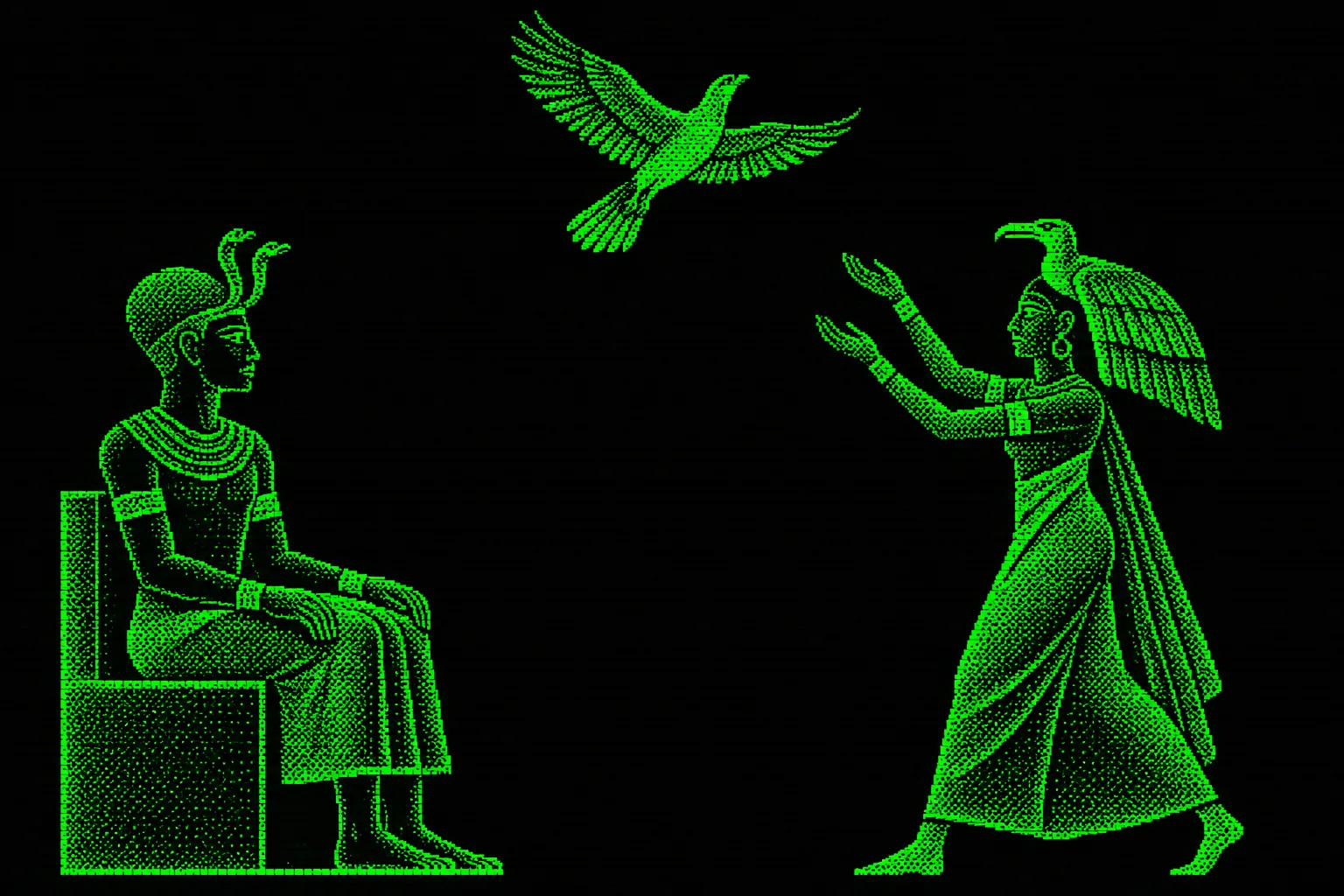
Two stelae of the Nubian pharaoh Taharqa. On the stela from Tanis the king speaks. The Nile flood of his sixth year killed the rodents and the earth-dwellers that lived there and filled the granaries. He recalls leaving Nubia at twenty, being crowned at Memphis after the falcon had departed for the sky, and his mother Abar sailing north after many years: She found me in glory on the throne of Horus. The crowd hails her as a second Isis.
The Kawa stela, dated New Year’s Day of year 10, records the stone temple Taharqa built for Amun at Gem-Aten in Nubia, with true cedar of Lebanon shipped upriver for its flagstaffs.
The Tanis Stela: The Great Flood and the Queen Mother’s Journey
- 1
[...] [zꜣ-J]⸢mn⸣{t} tj,t ⸢ꜣḫ.t⸣ [...] ⸢wꜥ-nṯr,j⸣ [...]
… son of Amun, glorious image … the divine one without equal …
- 2
[...] [j]tj =⸢j⸣
… my father
- 3
[rḏi̯.t]⸢n⸣ =⸢f⸣ n =j sḫ,t nfr.t⸢ṯ⸣ ⸢r⸣-ꜣ⸢w⸣ =st
It left me farmland in perfect condition from end to end.
Note · Line 3
“It” is the Nile flood. King Taharqa is describing the land it left ready for sowing when the waters receded. - 4
⸢zmꜣ⸣.[n] =[f] [ḥdqq.pl] [jm],⸢j⸣-⸢tꜣ⸣.pl [wn] ⸢m⸣-qb =st
It killed the rodents and the earth-dwellers that lived there.
Note · Line 4
“Earth-dwellers” is a name for snakes. - 5
ḫsf.⸢n⸣ =⸢f⸣ wnm.⸢n⸣ ⸢sꜣn⸣ḥ[m.pl] [r] =[st]
It kept the locusts from devouring it.
- 6
nn rḏi̯.t⸢n⸣ =⸢f⸣ ꜥwꜣi̯ st rs,⸢w⸣.pl
It did not let the south winds carry it off.
- 7
ꜥ⸢wꜣi̯.n⸣ =⸢j⸣ šmm r šn⸢w,t.pl⸣
I carried the harvest into the granaries.
- 8
[nn] rḫ ṯn⸢w⸣ jr,⸢y⸣ ⸢m⸣ šmꜥ mḥ,w pr,t nb.t rwḏ.[t] [ḥr] [sꜣ] [tꜣ]
No one knew its measure: Upper Egyptian barley, Lower Egyptian grain, and every fruit that grew on the back of the earth.
- 9
⸢j⸣[y.n] =(j) ⸢js⸣ ⸢m⸣ ⸢Tꜣ⸣-[Ztj] m-qꜣb sn.pl-⸢nswt⸣ ṯ⸢zi̯.n⸣ [ḥm] =[f] [jm]
Now I had come from Nubia among the royal brothers whom His Majesty had mustered there.
Note · Line 9
Taharqa looks back to the time before he became king. The “royal brothers” were princes eligible for the throne. - 10
[wnn] =[j] [ḥnꜥ] =[f]
I was with him.
- 11
⸢mri̯⸣.n =f wj r ⸢sn.w⸣ =⸢f⸣ ⸢nb⸣ r m⸢s⸣.[wpl] =[f] [nb]
He loved me more than all his brothers, more than all his children.
- 12
[ṯni̯.kw] ⸢r⸣ =⸢s⸣n ⸢ḫr⸣ ⸢ḥm⸣ =⸢f⸣
In His Majesty’s eyes I stood above them.
- 13
⸢pẖ⸣r n =⸢j⸣ jb.⸢pl⸣ ⸢n.w⸣ [pꜥ,t.pl]
The hearts of the nobles turned to me.
- 14
[mr,t] =[j] [ḫr] [ḥr-nb].pl
Everyone loved me.
- 15
šz[p] =⸢j⸣ ⸢ḫꜥ⸣,w [m] [Jnb,w-ḥḏ] [m-ḫt] ⸢ḥr⸣i̯ ⸢bjk⸣ ⸢r⸣ ⸢p,t⸣
I received the crowns at Memphis after the falcon had departed for the sky.
Note · Line 15
The falcon is the king who died. The living king embodied Horus, the falcon god. - 16
⸢wḏ⸣ ⸢n⸣ =j j[t]j =j J⸢m⸣n ⸢rḏi̯.t⸣ tꜣ.pl nb.pl ẖr ṯbw,t.du =⸢j⸣ [rs,j]-⸢r⸣ ⸢Rtḥ⸣-Qb,t m⸢ḥ⸣,t.⸢t⸣-r ⸢Qbḥ⸣ m [jꜣb],⸢t.t⸣-r wbn Rꜥw jmn,t.t-⸢r⸣ [ḥtp] =⸢f⸣
My father Amun commanded me to put all lands beneath my two sandals: south as far as Reteh-Qebu, north as far as Qebehu, east as far as the rising of Ra, west as far as his setting.
- 17
jst ⸢mw⸣,[t] =⸢j⸣ m Tꜣ-⸢Ztj⸣ m sn,t-nswt bnj mrw,t mw,t-nswt [Jb]rt ꜥnḫ.[tj]
My mother, meanwhile, was in Nubia: the King’s Sister, whose love is sweet, the King’s Mother Abar, may she live!
- 18
⸢js⸣ṯ ⸢gr⸣ ḥri̯.n =j ḥr =s m ḥwn n rnp,t 20 ⸢m⸣ [j]wi̯.n =j ḥ⸢nꜥ⸣ ḥm =f r Tꜣ-⸢Mḥ⸣,w
I had left her as a young man of twenty, when I came with His Majesty to Lower Egypt.
- 19
ꜥḥꜥ,n jwi̯.n =s m ḫdi̯ r ⸢mꜣꜣ⸣ =[j] m-ḫt ḥn,tj rnp,t.pl
Then, after many years, she came downriver to see me.
- 20
gmi̯.⸢n⸣ =s wj ḫꜥi̯.k[w] ḥr s,t-Ḥr,w
She found me in glory on the throne of Horus.
- 21
šzp.n =j ḫꜥ,w n Rꜥw
I had received the crowns of Ra.
- 22
ẖnm.n Wꜣḏ,tj m [tp] =[j]
The two cobras had clasped my head.
Note · Line 22
The kings of Taharqa’s dynasty wore a pair of rearing cobras on the brow as divine protectors. - 23
nṯr.pl ⸢nb⸣.pl ⸢m⸣-sꜣ ḥꜥ,w =j
All the gods stood guard over my body.
- 24
wnn =⸢s⸣ ⸢ḥ⸣ꜥꜥ.ṯ r ꜥꜣ,w ⸢wr⸣ m-ḫ⸢t⸣ ⸢mꜣꜣ⸣ ⸢n⸣fr,w ḥm =f mj mꜣꜣ ꜣs,t{t} ⸢zꜣ⸣ =s Ḥr,w ḫꜥi̯ ḥr s,t [j]⸢tj⸣ =⸢f⸣ Wsjr ⸢m-ḫ⸣t ⸢wnn⸣ =f m ḥwn m-⸢ẖnw⸣ zš ⸢n⸣ ⸢ꜣḫ⸣-bj,t
Great indeed was her joy when she saw the beauty of His Majesty, as when Isis saw her son Horus appear in glory on the throne of his father Osiris after his boyhood in the nest at Chemmis.
Note · Line 24
Chemmis was the marsh refuge where Isis raised Horus in secret. - 25
wnn ⸢Šmꜥ,w⸣ [Mḥ,w] ⸢ḫꜣs,t.pl⸣ ⸢nb⸣ dhn =sn tꜣ n mw,t-nswt tn jw =s[n] ⸢m⸣ ḥꜣb ⸢r⸣ ⸢ꜥꜣ⸣ wr
Upper Egypt, Lower Egypt, and every foreign land touched their foreheads to the ground before this king’s mother. Great indeed was their celebration.
- 26
wr.pl =sn m-ꜥb šr⸢j⸣ =s⸢n⸣ [nhm] =[sn]{n} [n] mw,t-[ns]wt ⸢tn⸣ ⸢m⸣-ḏd
Their great and their small together hailed this king’s mother, saying:
- 27
jw ꜣs,t{t} šzp.⸢n⸣ =s [Ḥr,w] [mj] [mw,t-nswt] [ẖn]⸢m⸣.n =s zꜣ =s
“Isis, when she welcomed Horus, was like the king’s mother when she embraced her son.”
- 28
nswt-bj,t Thr-qꜣ ꜥnḫ ⸢ḏ,t⸣ [mri̯] [...] ⸢wn⸣n =k ꜥnḫ.⸢tj⸣w ⸢r⸣ ⸢nḥḥ⸣ ⸢m⸣ ⸢wḏ⸣.[n] [jtj] =[k] [Jmn] [nṯr-mnḫ] ⸢mri̯⸣ mri̯ sw ⸢rḫ⸣ n,tt ḥr ⸢mw⸣ =⸢f⸣ r⸢ḏi̯.t⸣ ⸢ẖnm⸣ [tw] [mw,t] =[k] [m] [ḥtp] [mꜣ] =⸢s⸣ nfr.pl jri̯.n =f n =k
“O Taharqa, King of Upper and Lower Egypt, living forever, beloved of …, you shall live for all eternity, as your father Amun decreed. He is the excellent god who loves the one who loves him, who knows the one who is on his water, who granted that your mother should embrace you in peace and see the beauty he has made for you.
Note · Line 28
To be “on his water” is to be loyal to him. - 29
⸢n⸣swt-⸢nḫt⸣ [ꜥnḫ.tjw] [snb.tjw] [mj] [ꜥnḫ] [Ḥr,w] n mw,t =f ꜣs,t{t}
O mighty king, may you live and be well, as Horus lives for his mother Isis.
- 30
⸢wn⸣n =k ḫꜥi̯.ṯ ⸢ḥr⸣ ⸢s,t⸣-[Ḥr,w]
You shall appear in glory on the throne of Horus!”
Kawa Stela VII: The Temple of Amun Dedicated in Year 10
- 31
𓆳𓏏𓊗 𓎆𓏏 𓌐 𓆷𓏏 𓇳 𓏤 𓐍𓂋 𓍛𓏤 𓈖 𓅃 𓈎𓈍𓅱 𓅒 𓈎𓈍𓅱 𓅉 𓐍𓂤𓇿𓇿 𓇓𓏏𓆤𓏏 𓐍F134𓇳𓅱 𓅭𓇳 … 𓋴𓊢 𓄋𓈙 𓂋𓏙 𓉐𓏤 𓈖 𓎟 𓆑
rnp,t-sp mḏ.t tp,j ꜣḫ,t sw 1 ḫr ḥm n Ḥr,w Qꜣ-ḫꜥ,w Nb,tj Qꜣ-ḫꜥ,w Ḥr,w-nbw Ḫw-Tꜣ.du nswt-bj,t Ḫwi̯-Nfr-tm-Rꜥw sꜣ-Rꜥw T⸢h⸣[r-qꜣ] [...] sꜥḥꜥ wpš rḏi̯ pr n nb =f
Regnal year 10, first month of the Inundation, day 1, under the Majesty of Horus, High of Crowns; the Two Ladies, High of Crowns; the Golden Horus, Protector of the Two Lands; the King of Upper and Lower Egypt, Khunefertumre; the Son of Ra, Taharqa … Raising the building, plastering its walls, and presenting the temple to its lord.
Note · Line 31
The date is Egyptian New Year’s Day. The five royal titles all belong to Taharqa. The Two Ladies are Nekhbet and Wadjet, the patron goddesses of Upper and Lower Egypt. - 32
𓇓𓏏𓆤𓏏 𓇿𓉔𓃭𓈎 𓋹 𓆓𓏏𓇿 𓁹𓈖 𓆑 𓅓 𓏠𓏌𓏌𓏌 𓆑 𓊹𓉗 𓈖𓏏 𓏏𓆑 𓆑 𓇋𓏠𓈖𓅨𓂋 𓁷𓄣𓈌𓏏 𓐍𓅱𓋴𓀧𓏏𓏲 𓅓 𓇋𓈖𓊌 𓅓 𓏠𓏌𓏌𓏌 𓈖 𓆓𓏏𓇿 𓐪𓊈 𓇋𓆛𓈖𓃀𓊈𓏥 𓋴𓊢 𓅱𓐍𓏥 𓏠𓈖𓏛 𓌗 𓂋 𓎛𓇳𓎛
nswt-bj,t Thr-qꜣ ꜥnḫ ḏ,t jri̯.n =f m mn,w =f ḥw,t-nṯr n.t jtj =f Jmn-wr ḥr,j-jb-Gm-Jtn ḫws.tw m jn(r) m mn,w n ḏ,t qd jnb.pl sꜥḥꜥ wḫꜣ.pl mn rwḏ r nḥḥ
The King of Upper and Lower Egypt, Taharqa, who lives forever, made as his monument the temple of his father Amun the Great, who dwells in Gem-Aten. It is built of stone, a monument for eternity. Its walls were built, its columns raised; they stand firm and endure forever.
Note · Line 32
Gem-Aten is Kawa, on the Nile in what is now Sudan. - 33
𓇋𓅱 𓎼𓂋 𓎘𓏏𓅱𓏛𓈖 𓍛𓏤𓀭 𓆑 𓂋𓂝 𓂝𓈙𓆭 𓌶𓂝 𓈖 𓏅𓈙𓏏𓈉 𓂋 𓋴𓊢 𓌢𓌢𓌢𓆱 𓆑 𓅓 𓊹𓉞 𓏏𓈖 𓁹𓏏𓈖 𓍛𓏤𓀰 𓆑 𓈖 𓏏𓆑𓀭 𓆑 𓇋𓏠𓈖𓀭 𓂋𓂞𓏏 𓂋 𓁹𓏏𓈖 𓍛𓀰 𓆑
jw gr wḏ.tn ḥm =f rḏi̯ ḫnti̯[.t] ꜥš mꜣꜥ n Ḫnt,j-Š r sꜥḥꜥ sn.pl =f m ḥw,t-nṯr tn jri̯.tn ḥm =f n jtj =f Jmn rḏi̯.t r bḫn.[pl] [n] [ḥw,t-nṯr] jri̯.tn ḥm =f
His Majesty also ordered true cedar of Lebanon to be shipped upriver to raise Amun’s flagstaffs in this temple that His Majesty had made for his father Amun. The flagstaffs were set at the pylons of the temple His Majesty had built.
Note · Line 33
A pylon was a monumental gateway with a tower on either side. The flagstaffs stood against the towers. - 34
𓈖𓏏𓆑 𓄞𓂧𓌸𓂡 𓈗 𓈎𓃀𓎛𓏁 𓊰𓏥 𓋴𓊵𓏏 𓄣𓏤 𓈖 𓇋𓏠𓈖𓅨𓂋 𓁹 𓈖 𓆑 𓃭𓂝𓏏𓉐 𓈖 𓊹𓊵𓏏𓏐𓏖𓏒 𓁹𓏏𓈖 𓍛𓏤𓀰 𓆑 𓈖 𓏏𓆑𓀭 𓆑 𓅓 … 𓂝𓈎𓏒𓏥 𓆑
ntf šd mw qbḥ 〈n〉 ḫꜣw,t.pl sḥtp jb n Jmn-wr jri̯ n =f šnꜥ,t n ḥtp-nṯr jri̯.tn ḥm =f n jtj =f ⸢m⸣ [...] ꜥq.pl =f
It was he who dug for cool water for the altars, who gladdened the heart of Amun the Great, who built him a storehouse for the divine offerings His Majesty provided for his father, consisting of … his provisions.
- 35
𓇋𓋴 𓎡 𓂋 𓆑 𓇋𓂋 𓍛𓏤𓀭 𓆑 𓇓𓏏𓈖 𓊪𓅱 𓈎𓈖𓏴𓂡 𓄤 𓋴𓐍𓂋𓏛𓏥 𓇟 𓊃𓊪𓊗𓏥
js =k r =f jr ḥm =f nswt pw qn nfr sḫr.pl mꜥr zp.pl
His Majesty, then, is a valiant king: his plans are sound, his deeds succeed.
- 36
𓊃𓏏𓊪𓍉𓈖 𓇓𓅱 𓏏𓆑 𓆑 𓅓 𓅓 𓂋𓐍𓈖 𓆑 𓄣𓏤 𓆑 𓂋 𓐪𓊈 𓊹𓉞 𓂋 𓋴𓏠𓈖𓐍𓏏𓍋𓏛 𓂋𓏤𓉐𓊖𓏥
ztp.n sw jtj =f Jmn m [___] m rḫ.n =f jb =f r qd ḥw,t-nṯr r smnḫ rʾ-pr.pl
His father Amun chose him from among …, for he knew the king’s heart was set on building a temple and making the sanctuaries splendid.
- 37
𓊃 𓎡 𓍛𓏤𓀭 𓆑 𓂋 … 𓆑
z =k ḥm =f r d[mj] [...] ⸢J⸣⸢mn⸣ [...] [smr.pl] =f
Now when His Majesty was in the town … Amun … his courtiers:
- 38
𓇋𓂋 𓈖𓆑 𓂋𓐍𓈖 𓍛𓏤𓀭 𓅓 𓊹𓉗𓏏 𓈖𓏏 𓏏𓆑 𓀰 …
jr nf rḫ.n ḥm =〈j〉 m ḥw,t-nṯr n.t jtj =j Jmn-Rꜥw-Gm-J[tn] [...]
“As for what My Majesty knows of the temple of my father Amun-Ra of Gem-Aten, …
- 39
𓇋𓅱 𓁹𓏏𓈖 𓍛𓏤𓀭 𓉐𓏤 𓏏𓆑 𓀰 𓇋𓏠𓈖𓅨𓂋 𓐪𓊈 𓅓 …
jw jri̯.tn ḥm =〈j〉 pr jtj =j Jmn-wr qd ⸢m⸣ [...]
My Majesty made the house of my father Amun the Great. It was built of …”
- 40
… 𓐍𓂋 𓍛𓏤𓀭 𓆑 𓂋 𓏠𓈖 𓂋 𓎝𓎛𓏛 𓌸 𓊪𓏏𓎛
[...] ḫr ḥm =f r mn r wꜣḥ mri̯ Ptḥ
… under His Majesty, to last and to endure, beloved of Ptah.
- 41
𓇋𓅱 … 𓊃𓈖 𓂋 𓁹𓏏 𓏇 𓆷𓂝𓈖 … 𓋞 … 𓂋 𓏏𓂝 𓊵𓏏𓊪 𓊹𓀭 𓇋𓅓 … 𓆓𓏏𓇿 𓐪𓊈 𓅓 𓅙𓏏𓊌 … 𓂋 𓐛𓏤 𓃹𓈖 𓅓 𓅙𓏏𓊌 𓈖 …
jw [...] ⸢w⸣[_]⸢ḥ⸣ [...] [_] =sn r jr.t mj šꜣꜥ.n ḥm =[f] [...] ⸮nbw? [...] r ḏi̯.t ḥtp nṯr jm [...] ḏ,t qd m ḏb,t [...] ⸢n⸣[t].t r gs wn m ḏb,t n [...]
… they … to do as His Majesty had begun … gold … so that the god might rest there … forever, built of brick … which stood beside what was built of brick for …
- 42
𓈖 𓅭𓐩𓏌𓁷𓏤𓏏𓆑𓆑𓀭 𓁹𓈖 𓆑 𓈖 𓁹 𓈖 𓆑 … 𓈍 𓅓 𓇓𓏏𓆤𓏏 𓁷 𓆓𓏏𓇿
n sꜣ-nḏ-ḥr-jtj≡f jri̯.n =f n jri̯ n =f [...] [_].pl ḫꜥi̯ m nswt-bj,t ḥr ⸢s,t⸣-⸢Ḥr,w⸣ ⸢ḏ,t⸣
for the Son Who Defends His Father, after he had acted for the one who acted for him … appearing as King of Upper and Lower Egypt on the throne of Horus forever.
Note · Line 42
The title likens Taharqa to Horus, who defended his father Osiris. Here it is Amun who acted for the king, and the king who acted for Amun.