~/sacred-texts/royal-stelae-of-the-25th-dynasty
Taharqa’s Nile Flood Stelae: The Land Was Nun, It Was Neni
- Date
- Carved in regnal year six of Taharqa, 25th Dynasty (about 685 BC), on two stelae set up at Coptos and at Matana in Upper Egypt
- Found
- One stela was found at Coptos and is now in the Egyptian Museum, Cairo (JE 48400); the other, dedicated to Hemen of Hefat, was found at Matana south of Thebes and is also in Cairo
- Language
- Egyptian · Hieroglyphic
A narrator speaks throughout, in praise of King Taharqa in his sixth year. After the king’s names he tells how Taharqa spent day and night rebuilding temples, until Right was established along the riverbanks. Then the king asked Amun-Ra for a flood, and got it: Whatever passed His Majesty’s lips, his father Amun brought to pass at once.
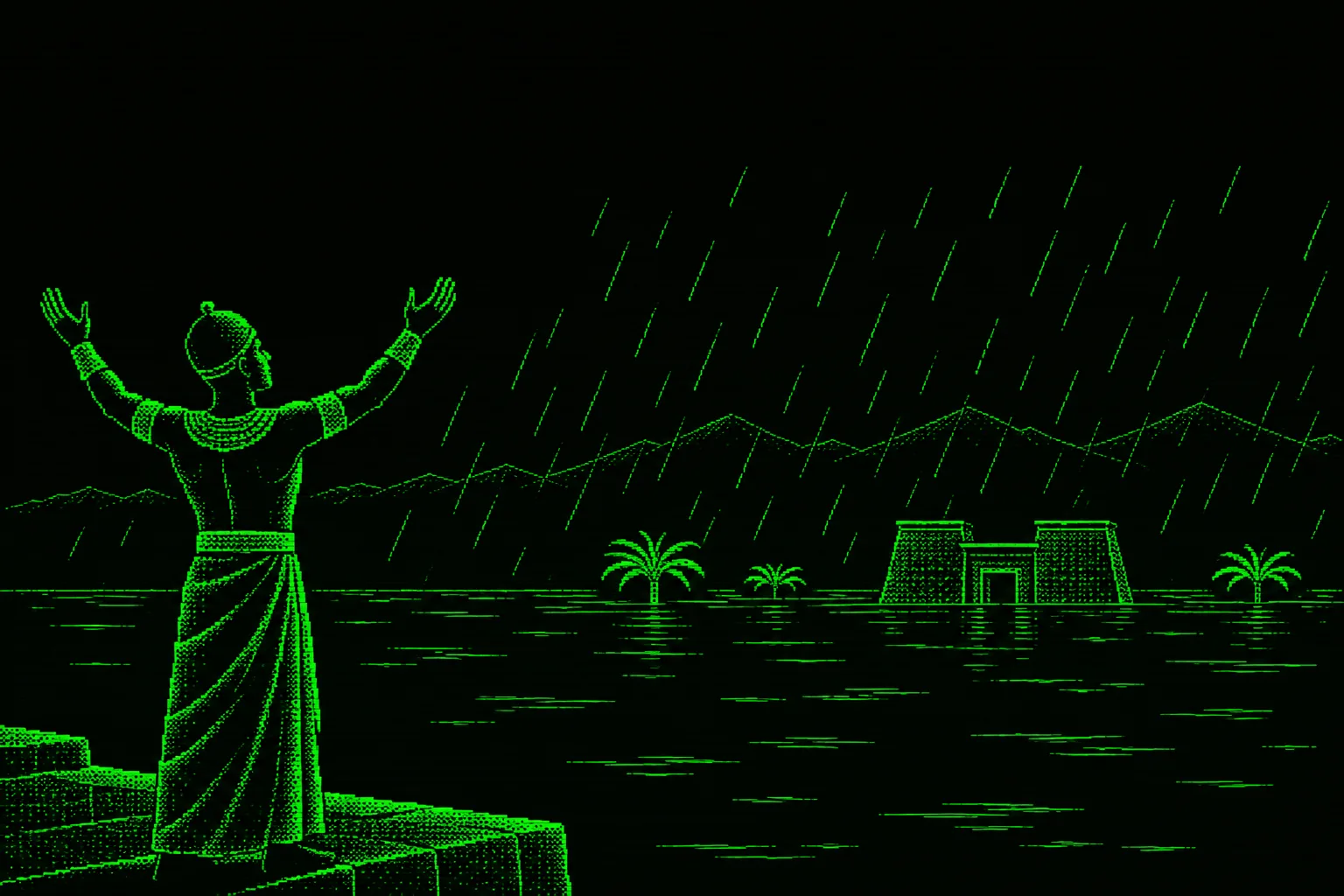
For many days it rose a cubit a day. The water covered Upper and Lower Egypt: The land was Nun, it was Neni; there was no telling the new land from the river. Taharqa sent for the annals of earlier kings: Nothing like it was found there. Rain fell on Nubia too. The same text stands on both stelae.
Coptos stela (Cairo JE 48400)
- 1
𓆳𓇹𓊗 𓏤𓏤𓏤𓏤𓏤𓏤 𓐍𓂋 𓍛𓏤 𓈖 𓅃 𓊹𓄤 𓅭𓏤𓇋𓏠𓈖𓇳𓏤 𓏏𓇋𓏏𓂇 𓅜𓐍𓏏𓏛 𓈖𓏏 𓏏𓍃𓀼 𓉐𓂋𓏏𓍁𓈒𓏥 𓃂 𓅐𓏏 𓎟𓏏𓇯 𓌡𓂝𓏤𓊹𓂋𓏏𓏭 𓉐𓂋 𓅓 𓊹𓄹𓄹𓄹 𓆤𓏏𓏭𓀶 𓂜𓈖 𓆣𓂋𓏛 𓎁𓏏𓂡 𓇿𓇿𓇿𓈅𓈅𓈅 𓅱𓂝𓆑𓅱𓁃 𓌔𓏏 𓏤𓏤𓏤𓏤𓏤𓏤𓏤𓏤𓏤 𓇓𓏏𓆤𓏏 𓅃 𓍿𓌷𓂝 𓎟𓇿𓇿 𓎟𓁹𓐍𓏏 𓌸 𓋹 𓆓𓏏𓇿
rnp,t-⸢zp⸣ ⸢6⸣ ḫr ḥm n ⸢Ḥr,w⸣ [Qꜣ-ḫꜥ.w] [Nb,tj] [Qꜣ-ḫꜥ.w] [Ḥr,w-nbw] [Ḫw-Tꜣ.wj] [nswt-bj,t] [Ḫwi̯-nfr-tm-Rꜥw] nṯr-nfr zꜣ-Jmn-Rꜥw tj,t ꜣ⸢ḫ⸣.t n.t Tm ⸢pr,t⸣ ⸢wꜥb⸣.[t] [pri̯.t] [ḫnt] =[f] [qmꜣ.n] [Rs,j-jnb≡f] [nfr.pl] =[f] ⸢msi̯⸣.n Mw,t nb,t-p,t wꜥ-nṯr,j pri̯ m ḥꜥ,w-nṯr bj,tj nn ḫpr mj,[tj] =[f] [dmḏ.n] [Psḏ,t] [r] [rnn] =[f] [r] [snq] =[f] [r] [ḫnm] =[f] ⸢jṯi̯⸣ tꜣ.pl wꜥf.w pḏ,t 9 nswt-bj.t Ḥr,w ṯmꜣ-ꜥ nb-Tꜣ,wj nb-jr,t-jḫ,t [Thr-qꜣ] ⸢mri̯⸣ [Mnw] [nb{t}-Gbt] ⸢ꜥnḫ⸣ ⸢ḏ,t⸣
Regnal year six under the Majesty of Horus, Lofty of Crowns; the Two Ladies, Lofty of Crowns; the Golden Horus, Protector of the Two Lands; the King of Upper and Lower Egypt, Khunefertumre; the perfect god, son of Amun-Ra, glorious image of Atum, pure seed sprung from him, whose perfections He Who Is South of His Wall fashioned, whom Mut, Lady of Heaven, bore; the unique and divine one, sprung from the god’s body; the King of Lower Egypt, whose like will never come to be, around whom the Ennead gathered to rear him, to suckle him, to tend him; he who seizes the lands and lays low the Nine Bows; the King of Upper and Lower Egypt, Horus of the mighty arm, Lord of the Two Lands, Lord of Ritual, Taharqa, beloved of Min, Lord of Coptos, living forever.
Note · Line 1
The opening names and titles all belong to Taharqa. - 2
𓇋𓋴𓎡 𓂋 𓆑 𓅓 𓇳𓏤 𓋴𓇥𓂋 𓆑 𓅓 𓎼𓂋𓎛𓇱 𓁷𓏤 𓎛𓎛𓂻 𓅜𓐍𓏏𓏛𓏥 𓈖 𓊹 𓁷𓏤 𓀨 𓂋𓉐𓏤𓊖𓏥 𓋴𓈖𓏥 𓈐 𓂋 𓁷𓏤 𓍁𓂝𓉐𓏥 𓋴𓈖𓏥 𓁷𓏤 𓋴𓆓𓆑𓄿𓏛𓏥 𓋴𓈖 𓁷𓏤 𓋴𓌷𓂝𓏛 𓈖 𓋴𓈖 𓅓 𓐍𓏏 𓎟 𓁷𓏤 𓁹𓏏 𓋴𓈖𓏥 𓅓 𓌀𓅓𓋞𓈓 𓌉𓋞𓈓 𓈔𓈓
⸢jsk⸣ r =[f] [ḥm] =[f] [mri̯] [nṯr] [pw] [wr]š =f m hrw ⸢sḏr⸣ =⸢f⸣ ⸢m⸣ ⸢g⸣r⸢ḥ⸣ ⸢ḥr⸣ ḥḥj ꜣḫ,t.pl n ⸢nṯr.pl⸣ ⸢ḥr⸣ qd rʾ-pr.pl =sn ⸢wꜣi̯⸣ ⸢r⸣ [mrḥ] ḥr ⸢msi̯⸣ [sšm.pl] =[sn] [mj] [zp-tp,j] [ḥr] [qd] šnꜥ.pl =sn ⸢ḥr⸣ ⸢sḏf⸣ꜣ ḫꜣw,t.pl =sn ḥr smꜣꜥ n =sn ⸢ḥtp,t⸣-nṯr ⸢m⸣ ⸢ḫ,t⸣ ⸢nb⸣ ⸢ḥr⸣ ⸢jri̯.t⸣ ⸢wd⸣[ḥ].wpl =sn m ⸢ḏꜥm⸣ ḥḏ ḥmt
Now His Majesty is one who loves the god. He spends his days and his nights seeking what will benefit the gods: rebuilding their temples as they near ruin, fashioning their sacred images as at the First Time, building their storehouses, stocking their altars, duly presenting them with offerings of every kind, and making their offering stands of electrum, silver and copper.
Note · Line 2
The First Time is the time of creation. Electrum is an alloy of gold and silver. - 3
j⸢sk⸣ gr ḥtp jb n ḥm =f m jri̯.t ⸢n⸣ =⸢sn⸣ ꜣḫ,t.⸢pl⸣ ⸢rꜥw-nb⸣
And His Majesty’s heart was content to do them good each day.
- 4
⸢wnn⸣ tꜣ ⸢p⸣[n] [ḥr] ⸢bꜥḥi̯.w⸣ ⸢m⸣ ⸢rk⸣ =⸢f⸣ ⸢mj⸣ ⸢wn⸣ =⸢f⸣ m-hꜣ,w nb-r-ḏr
In his time this land was flooded as it had been in the days of the Lord of All.
Note · Line 4
The Lord of All is the creator. The Nile’s yearly flood watered the fields on which Egypt depended. - 5
z-nb{t} sḏr r sšp ⸢n⸣n ḏd
Everyone slept until daybreak without saying
- 6
⸢ḥw⸣ n =j ⸢r⸣ ⸢ḫ,t⸣ ⸢nb⸣
of anything, “If only I had it!”
- 7
⸢Mꜣꜥ,t⸣ [bzi̯.tw] ⸢m-ḫt⸣ ⸢jdb.pl⸣
Right was established along the riverbanks.
Note · Line 7
Right is Maat, the just order of the world; its opposite is Isfet, Wrong. - 8
⸢jsf⸣,t ḏdm m ⸢sꜣ⸣t.t
Wrong was driven into the ground.
- 9
wnn b〈j〉ꜣ,t.pl ḫpr m rk [ḥm] =f ⸢m⸣ ⸢rnp⸣,[t] ⸢6⸣ ⸢n.t⸣ [ḫꜥi̯] =[f]
Wonders came to pass in His Majesty’s time, in the sixth year of his appearing as king.
- 10
[n] [pꜣu̯] =⸢tw⸣ ⸢mꜣꜣ⸣ ⸢mj,tt-jr,j⸣ [ḏr] ⸢rk⸣ jm,jw-ḥꜣ,⸢t⸣.pl ⸢n-ꜥꜣ⸣-n mri̯ s⸢w⸣ jtj =f Jmn-Rꜥw
Not since the days of the ancestors had anyone seen their like, so dearly did his father Amun-Ra love him.
- 11
wnn ḥm =f [ḥr] dbḥ ḥꜥpj ⸢m-ꜥ⸣ ⸢jtj⸣ =⸢f⸣ ⸢Jmn-Rꜥw⸣ ⸢nb-ns,wt-Tꜣ,wj⸣ ⸢ḥr⸣ ⸢tm⸣ r⸢ḏi̯⸣ ⸢ḫp⸣r šwꜣ m rk =f
His Majesty asked his father Amun-Ra, Lord of the Thrones of the Two Lands, for a Nile flood, so that want would not come upon the land in his reign.
- 12
⸢js⸣ ⸢g⸣r ḫ,t nb pri̯ ḥr sp,tj ḥm =f ḏḏ jtj =f ⸢Jmn⸣ ⸢ḫpr⸣ =⸢sn⸣ ⸢ḥr-ꜥ,w⸣
Indeed, whatever passed His Majesty’s lips, his father Amun brought to pass at once.
- 13
⸢ḫpr.n⸣ ⸢tr⸣ ⸢n⸣ ⸢ḥwi̯.t⸣ ⸢ḥꜥp⸣j wnn =f ḥr ḥwi̯.t m b(w) wr rꜥw-nb
When the time came for the Nile to rise, it rose mightily day after day.
- 14
jri̯.n =f hrw.pl ꜥšꜣ.tpl ḥr ḥwi̯.t ⸢m⸣ ⸢mḥ⸣ [1] rꜥw-nb
For many days it rose a cubit a day.
Note · Line 14
A royal cubit was about 52 centimetres, or 20½ inches. - 15
⸢ꜥq.n⸣ =f ḏw.wpl ⸢Tꜣ-Šmꜥ,w⸣
It swept into the mountains of Upper Egypt;
- 16
[ḥr-tp].n =f jꜣ,t.pl Tꜣ-Mḥ,w
it held sway over the mounds of Lower Egypt.
- 17
wnn Tꜣ m Nwn m nn nn tni̯ mꜣ⸢w,t⸣ ⸢r⸣ ⸢jtr,w⸣
The land was Nun, it was Neni; there was no telling the new land from the river.
Note · Line 17
Nun is the expanse of water before creation; Neni is the Weary One, whose name echoes Nun. Even the new ground laid down by the river had vanished beneath the flood. - 18
⸢ḥwi̯.tn⸣ =⸢f⸣ ⸢mꜥr⸣ ⸢r⸣ ⸢dmj,t⸣ ⸢n⸣ Wꜣs,t
It rose high at the quay of Thebes.
- 19
rḏi̯.tn ḥm =f jni̯.n =tw n =f gn,wt.pl n.ṯ tp,j-ꜥ,w.pl ḥr mꜣꜣ ḥꜥpj ḫpr ⸢m-hꜣ,w⸣ =⸢sn⸣
His Majesty had the annals of his predecessors brought to him to see how high the flood had risen in their days.
- 20
⸢nn⸣ ⸢gmi̯⸣ =tw mj,tt-jr,j ⸢j⸣m
Nothing like it was found there.
- 21
⸢j⸣s gr ḥwi̯.t p,t m Tꜣ-Ztj sṯḥn.n =s ḏw.wpl r-ḏr =sn
The sky poured rain over Nubia, too, and made every mountain shine.
- 22
⸢wnn⸣ ⸢z-nb⸣ ⸢n.w⸣ ⸢Tꜣ-Ztj⸣ ⸢bꜥḥi̯⸣ m ḫ,t nb
Everyone in Nubia had everything in overflowing measure.
- 23
wnn Km,t ⸢m⸣ [ḥ]⸢ꜣb.pl⸣ ⸢nb⸣ ⸢mj⸣ [...] ⸢nb⸣
Egypt kept every feast, like every …
- 24
dwꜣ =sn nṯr n nswt
They praised the god for the king.
- 25
⸢wnn⸣ jb n ḥm =f nfr r ḫ,t nb m jri̯ n =f jtj =f J⸢mn⸣ ⸢ḥr⸣ rḏi̯ mꜣꜥ ⸢ḥtp⸣-nṯr ⸢n⸣ ⸢nṯr.pl⸣ nb.pl
Nothing gladdened His Majesty’s heart more than what his father Amun had done for him, and he had offerings presented to all the gods.
- 26
jb =f ꜣwi̯ m jri̯ n =f jtj =f jri̯ =f rḏi̯ ꜥnḫ 〈〈nb〉〉 ḏd 〈〈nb〉〉 wꜣs nb.t ḫꜥi̯.w ḥr s,t-Ḥr,w mj Rꜥw ḏ,t
His heart swelled with joy at what his father had done for him. May he act, endowed with all life, all stability and all well-being, shining forth on the throne of Horus like Ra forever.
Matana stela
- 27
𓅐𓏏
⸢rnp,t⸣-zp 6 ḫr ḥm n Ḥr,w Qꜣ-ḫꜥ.w Nb,tj ⸢Qꜣ⸣-ḫꜥ.w Ḥr,w-nbw Ḫw-[Tꜣ.wj] ⸢nswt-bj,t⸣ ⸢Ḫwi̯⸣-[Nfr-tm-Rꜥw] ⸢nṯr-nfr⸣ zꜣ-⸢Jm⸣n-Rꜥw tj,t ꜣ⸢ḫ.t⸣ n.t Tm pr,t wꜥb.t pri̯.t ⸢ḫ⸣nt =f ⸢qmꜣ⸣.n ⸢Rs,j⸣-jnb≡⸢f⸣ nfr,w =f [msi̯].n Mw,t ⸢nb-p,t⸣ ⸢wꜥ⸣-nṯr,j pri̯ m ḥꜥ,w-nṯr bj,tj nn ḫpr mj,tj =f dmḏ.n Psḏ,t r rnn =[f] ⸢r⸣ s⸢nq⸣ =[f] [r] ḫn⸢m⸣ =[f] ⸢jṯi̯⸣ ⸢tꜣ.pl⸣ wꜥ[f] pḏ,wt-9 nswt-bj.t ⸢Ḥr,w⸣ ⸢ṯm⸣ꜣ-ꜥ nb-Tꜣ,wj nb-jr,t-jḫ,t zꜣ-Rꜥw [Thr-qꜣ] mri̯ Ḥmn ⸢nb⸣{t}-Ḥfꜣ,[t] ꜥnḫ ḏ,t
Regnal year six, under the majesty of the Horus Qakhau, the Two Ladies Qakhau, the Golden Horus Khutawy, the King of Upper and Lower Egypt Khunefertumre: the perfect god, son of Amun-Ra, glorious image of Atum, pure seed sprung from him. He Who Is South of His Wall fashioned his beauty; Mut, Lady of Heaven, bore him. He is the divine one without peer, sprung from the body of a god; the King of Lower Egypt, whose like has never come into being, whom the Ennead came together to rear, to suckle, and to tend; he who seizes lands and bends the Nine Bows; the King of Upper and Lower Egypt, Horus strong of arm, lord of the Two Lands, lord of ritual, son of Ra, Taharqa, beloved of Hemen, lord of Hefat, living forever.
- 28
jsk [r] =f ḥm =f mri̯ ⸢nṯr⸣ pw wršu̯ =f m [hrw] [s]⸢ḏr⸣ =f ⸢m⸣ g⸢rḥ⸣ ⸢ḥr⸣ ḥḥj ꜣḫ,t.pl n nṯr.pl ⸢ḥr⸣ qd rʾ-pr.pl =s⸢n⸣ wꜣi̯ r mr⸢ḥ⸣ ⸢ḥr⸣ ⸢m⸣si̯ sš[m.pl] =sn [mj] [zp-tp,j] [ḥr] [qd] šnꜥ.pl =⸢sn⸣ ⸢ḥr⸣ ⸢sḏfꜣ⸣ ḫꜣw,t.pl =sn ⸢ḥr⸣ smꜣꜥ n =sn ḥtp,t-⸢nṯr⸣ ⸢m⸣ ḫ,t nb ⸢ḥr⸣ ⸢jri̯.t⸣{t} wdḥ.[pl] =⸢sn⸣ ⸢m⸣ [ḏꜥm] [ḥḏ] ḥmt
Now His Majesty was one who loved the god. He spent his days and nights seeking what would benefit the gods: rebuilding their temples that were falling into ruin, fashioning their sacred images as at the First Time, building their storehouses, provisioning their altars, furnishing them with divine offerings of every kind, and making their offering stands of electrum, silver, and copper.
- 29
j⸢s⸣ =⸢k⸣ gr ḥ⸢t⸣p jb n ḥm =f m jri̯.t ⸢n⸣ =⸢sn⸣ ⸢ꜣḫ,t.pl⸣ rꜥw-⸢nb⸣
His Majesty’s heart took pleasure in doing them good every day.
- 30
⸢wnn⸣ ⸢tꜣ⸣ ⸢pn⸣ ḥr ⸢bꜥḥ⸣[i̯] ⸢m⸣ [rk] =[f] [mj] [wn] =[f] [m-hꜣ,w] Nb-⸢r-ḏr⸣
In his time this land was flooded as it had been in the days of the Lord of All.
Note · Line 30
The annual Nile flood watered the fields on which Egypt depended. - 31
z-nb{t} sḏ⸢r⸣ r sšp ⸢nn⸣ ⸢ḏd⸣
Everyone slept till dawn without saying
- 32
⸢ḥw⸣ [n] =[j] [r] ḫ,t nb
of anything, “If only I had it!”
- 33
⸢Mꜣ⸣[ꜥ,t] [bz.tw] [m]-⸢ḫt⸣ ⸢jdb.pl⸣
Right was established along the riverbanks;
Note · Line 33
Right and wrong here are Maat and Isfet: the just order of the world and the disorder that threatens it. - 34
[jzf,t] [ḏd]⸢m⸣ m sꜣt.t
wrong was driven into the ground.
- 35
wnn bjꜣ,⸢t.pl⸣ [ḫp]r m rk [ḥm] =[f] [m] [rnp,t] [6] [n.t] [ḫꜥi̯] =[f]
Wonders came to pass in His Majesty’s time, in the sixth year of his appearing as king.
- 36
[n] [pꜣu̯] =[tw] ⸢mꜣꜣ⸣ [mj,tt-jr,]j ⸢m⸣ rk jm,jw-ḥꜣ,t.pl ⸢n-ꜥꜣ-n⸣ [mri̯] [s]w [jtj] =[f] [Jmn-Rꜥw]
No one had seen their like in the days of the ancestors, so dearly did his father Amun-Ra love him.
- 37
[wnn] ḥm =f [ḥr] [d]⸢bḥ⸣ [ḥ]ꜥpj [m-ꜥ] [jtj] =[f] [Jm]n-Rꜥw ⸢nb-ns,wt⸣-Tꜣ,wj ḥr tm rḏi̯ ḫpr šwꜣ ⸢m⸣ ⸢rk⸣ =[f]
His Majesty asked his father Amun-Ra, lord of the thrones of the Two Lands, for a Nile flood, so as not to let want arise in his time.
- 38
[js] g[r] [ḫ,t] nb [p]ri̯ [ḥr] ⸢sp,t.j⸣ ḥm =[f] [ḏḏ] [jtj] =[f] J⸢mn⸣ ḫpr =[sn] [ḥr]-ꜥ,w
Whatever passed His Majesty’s lips, his father Amun brought to pass at once.
- 39
ḫpr.n tr n ḥwi̯.t ⸢ḥꜥpj⸣ wnn =f ḥr ḥwi̯.t ⸢m⸣ [b(w)] [w]r rꜥw-nb
When the time came for the Nile to rise, it rose mightily day after day.
- 40
jri̯.n =[f] [hrw].⸢pl⸣ [ꜥšꜣ.tpl] [ḥr] [ḥwi̯].t ⸢m⸣ ⸢mḥ⸣ [1] [rꜥw-nb]
For many days it rose a cubit a day.
- 41
⸢ꜥq.n⸣ =⸢f⸣ ḏw.wpl Tꜣ-Šmꜥ,w
It entered the mountains of Upper Egypt;
- 42
[ḥr-tp].n =⸢f⸣ ⸢jꜣ,t.pl⸣ Tꜣ-⸢Mḥ⸣,w
it held sway over the mounds of Lower Egypt.
- 43
[wnn] [tꜣ] [m] [Nwn] [m] [nn] [nn] [tni̯] [m]ꜣw,t r jtr,w
The land was Nun, it was Neni; no one could tell the new land from the river.
Note · Line 43
Neni, “the inert one,” is a name for the flood. The new land is ground formed by silt from the river. - 44
ḥwi̯.tn =f m mꜥr r dmj,t n Wꜣs,t
It rose to a great height at the quay of Thebes.
- 45
[rḏi̯.tn] [ḥm] =[f] [jni̯.n] =[tw] ⸢n⸣ =⸢f⸣ [gn,wt] [n.ṯ] [tp,j-ꜥ,w.pl] [ḥr] mꜣ ḥꜥpj ḫpr [m-h]ꜣ,w =[sn]
His Majesty had the annals of his forebears brought to him to see how high the Nile had risen in their day.
- 46
[nn] [gmi̯] =[tw] [mj,tt-jr,j] [jm]
Nothing like it was found there.
- 47
[js] [gr] [ḥ]wi̯.[t] [p,t] [m] Tꜣ-Ztj [sṯḥ]n.n =s ḏw.wpl r-ḏr =s[n]
The sky poured rain over Nubia too, and made all the mountains gleam.
- 48
[wnn] [z-nb] [n.w] [Tꜣ-Ztj] [bꜥḥi̯] [m] [ḫ,t] [nb]
Everyone in Nubia had everything in overflowing measure,
- 49
[wnn] [Km,t] [m] [ḥb] [nfr]
and Egypt kept a joyous feast.
- 50
[dwꜣ] =[sn] [nṯr] [n] nswt
They praised the god for the king.
- 51
wnn [jb] n ḥm =[f] [nfr] [r] [ḫ,t] [nb] [m] [jri̯] [n] =[f] [jtj] =[f] [Jmn] [ḥr] [rḏi̯] [mꜣꜥ] [ḥtp-nṯr] [n] [nṯr.pl] [nb.pl]
Nothing gladdened His Majesty’s heart more than what his father Amun had done for him. He had sacred offerings presented to all the gods.
- 52
[jb] =[f] [ꜣwi̯] [m] [jri̯] [n] =[f] jt[j] =[f] jri̯ n =f Jmn
His heart swelled with joy at what his father had done for him, what Amun had done for him.
- 53
[...] m zꜣ =f [...] nb.t ḫr =f [...] nb.[t] ḫr =f wꜣs nb.[t] [...] [ḫ]ꜥi̯ ⸢m⸣ ⸢nswt-bj,t⸣ [...] ⸢ḏ,t⸣
… as his son, every … from him, every … from him, all prosperity … appearing as King of Upper and Lower Egypt … forever.