~/sacred-texts/tübingen-stelae
Egyptian Stela of Samenekh: Asking Passersby for Offerings
- Date
- Carved in the late Middle Kingdom or Second Intermediate Period (c. 1850–1650 BC)
- Found
- Egyptian Collection of the University of Tübingen, Inv. 479
- Language
- Middle Egyptian · Hieroglyphic
- 1
𓇓𓏏𓊵𓏙 𓊪𓏏𓎛𓊃𓎡𓂋𓊨𓁹 𓎟𓍋𓈋𓃀 𓄋𓏏𓈐𓏥
ḥtp-ḏi̯-nswt Ptḥ-Zkr-Wsjr nb-ꜣbḏ,w Wp-wꜣ,wt
An offering given by the king, by Ptah-Sokar-Osiris, lord of Abydos, and by Wepwawet.
Note · Line 1
Ptah-Sokar-Osiris unites three gods in one. Wepwawet’s name means “Opener of the Ways.” - 2
𓂞 𓆑 𓏐 𓏋 𓃾 𓅿𓏥 𓍱 𓋲 𓐍𓏏 𓎟𓏏 𓄤 D384 𓋹𓍘 𓊹 𓇋𓅓 𓈖 𓂓 𓈖 𓏋𓅱𓀺𓇹 𓏠𓈖𓐍𓍊𓅭 𓐙𓊤 𓁹𓈖 𓁷𓆏 𓐙𓊤 𓄟𓋴𓈖 𓎟𓏏𓉐𓏤 𓇋𓆛𓈖 𓐙𓏏𓊤 𓁹𓏏𓈖 𓎟𓏏𓉐𓏤 𓇋𓀁𓈖𓏭 𓐙𓏏𓊤
rḏi̯ =f pr,t-ḫrw tʾ ḥ(n)q,t jḥ〈〈.pl〉〉 ꜣpd.pl šs mnḫ,t (j)ḫ,t nb.t nfr〈.t〉 wꜥb.t ꜥnḫ.t(j) nṯr jm n kꜣ n(,j) wdp,w-jr,j-Jꜥḥ Zꜣ-mnḫ mꜣꜥ-ḫrw jri̯.n Ḥr-ḥq,t mꜣꜥ-ḫrw msi̯.n nb,t-pr Jnj〈,t〉 mꜣꜥ,t-ḫrw jri̯.t.n nb,t-pr Jn,j mꜣꜥ,t-ḫrw
May he give an invocation offering of bread and beer, cattle and fowl, alabaster and linen, and every good and pure thing on which a god lives, for the ka of Samenekh, cupbearer of Iah, true of voice, whom Herhenqet, true of voice, begot and whom Inet, mistress of the house, true of voice, bore. Inet herself was the child of Iny, mistress of the house, true of voice.
Note · Line 2
The ka is the life force that receives offerings after death. “True of voice” declares that the deceased has been vindicated. Iah is the moon god. - 3
𓎟𓏏𓉐𓏤 𓇋𓆛𓈖𓇋 𓐙𓏏𓊤
nb,t-pr Jnj〈,t〉 mꜣꜥ,t-ḫrw
Inet, mistress of the house, true of voice.
- 4
𓆼 𓅓 𓏐 𓏋 𓃾 𓅿 𓐍𓏏 𓎟𓏏 𓈖 𓂓 𓈖 𓁷𓆏
ḫꜣ m tʾ ḥ(n)q,t jḥ ꜣpd (j)ḫ,t nb.t n kꜣ n(,j) Ḥr-ḥq,t
A thousand each of bread, beer, cattle, fowl and every other thing for the ka of Herhenqet,
- 5
𓄟𓈖 𓅭𓏏𓇏𓏏 𓐙𓏏𓊤
msi̯.n Zꜣ,t-sḫ,t mꜣꜥ,t-ḫrw
whom Satsekhet, true of voice, bore.
- 6
𓎟𓏏𓉐𓏤 𓇅𓏏𓏹𓅭 𓐙𓏏𓊤 𓄟𓋴 𓎟𓏏𓉐𓏤 𓇋𓆛𓈖 𓐙𓏏𓊤
nb,t-pr Zꜣ(,t)-Wꜣḏ,t mꜣꜥ,t-ḫrw msi̯〈.t.n〉 nb,t-pr Jn〈j,t〉 mꜣꜥ,t-ḫrw
Satwadjet, mistress of the house, true of voice, born to Inet, mistress of the house, true of voice.
- 7
𓎟𓏏𓉐𓏤 𓇋𓀁𓈖𓏭 𓐙𓏏𓊤 𓄟𓋴𓏏𓈖 𓇅𓆘𓅭𓏏 𓐙𓏏𓊤
nb,t-pr Jn,y mꜣꜥ,t-ḫrw msi̯.t.n Zꜣ,t-Wꜣḏ,t mꜣꜥ,t-ḫrw
Iny, mistress of the house, true of voice, born to Satwadjet, true of voice.
- 8
𓄓𓊩 𓇋𓀁𓇋𓇋 𓐙𓊤 𓅨𓎟𓏤 𓐙𓊤 𓄟𓋴𓈖 𓇋𓆛𓈖 𓐙𓏏𓊤
jm,j-rʾ-s,t Jy mꜣꜥ-ḫrw Wr-nb mꜣꜥ-ḫrw msi̯.n Jn〈j,t〉 mꜣꜥ,t-ḫrw
Iy, overseer of the place, true of voice; Werneb, true of voice, born to Inet, true of voice.
- 9
𓄓𓊩 𓅭𓎟𓀀 𓐙𓊤 𓏋𓀺𓇹 𓇋𓐝𓅓𓇋 𓐙𓊤
jm,j-rʾ-s,t Zꜣ-nb mꜣꜥ-ḫrw wdp,w-jr,j-Jꜥḥ Jm,j mꜣꜥ-ḫrw
Saneb, overseer of the place, true of voice; Imi, cupbearer of Iah, true of voice.
- 10
𓏋𓏲𓀺𓇹 𓊪𓊃𓈙𓏴𓏛𓏥 𓐙𓊤 𓀺𓏏𓏮𓉐𓏤𓉦𓉐𓏤 𓇋𓐝𓅓𓊪𓊪𓅱
wdp,w-jr,j-Jꜥḥ Pzš.pl mꜣꜥ-ḫrw jr,j-〈ꜥ〉,t-n(,j)-ꜥḥ Jm-ppw
Peseshu, cupbearer of Iah, true of voice; Impepu, chamberlain of the palace.
- 11
𓇋𓀁 𓋹𓐍𓅱𓏥 𓁶𓏤𓈓 𓇾𓈅𓈇 𓎛𓌨𓃀 𓎟 𓏞 𓎟 𓃂 𓎟 𓅱𓏏𓐎 𓎟 𓊑 𓎟 𓋴𓌗𓄿𓈐𓏏𓏭 𓆑𓏭 𓁷𓏤 𓎘𓅱𓏛 𓊪𓈖 𓅓 𓅓𓊝 𓅓 𓌸𓂋𓏏 𓍿𓈖 𓎛𓎿 𓍿𓈖 𓊹 𓍿𓈖 𓊖𓊖 𓋴𓎘𓆓𓏛 𓊑𓏥 𓍿𓈖 𓈖 𓀔𓏥 𓍿𓈖 𓅓 𓆓𓂧 𓍿𓈖
j ꜥnḫ.w.pl tp,j.pl tꜣ ẖr,j-ḥ(ꜣ)b(,t) nb zẖꜣ,w nb wꜥb nb wt(,j) nb jꜣw,t(j) nb s{rwḏ}〈wꜣ〉.t.j 〈=fy〉 ḥr wḏ pn m-ḫd m-ḫnt m mri̯.t =ṯn ḥz(z) ṯn nṯr.pl =ṯn nʾ,t.du swḏ jꜣw,t.pl =ṯn n ẖrd.pl =ṯn m ḏd =ṯn
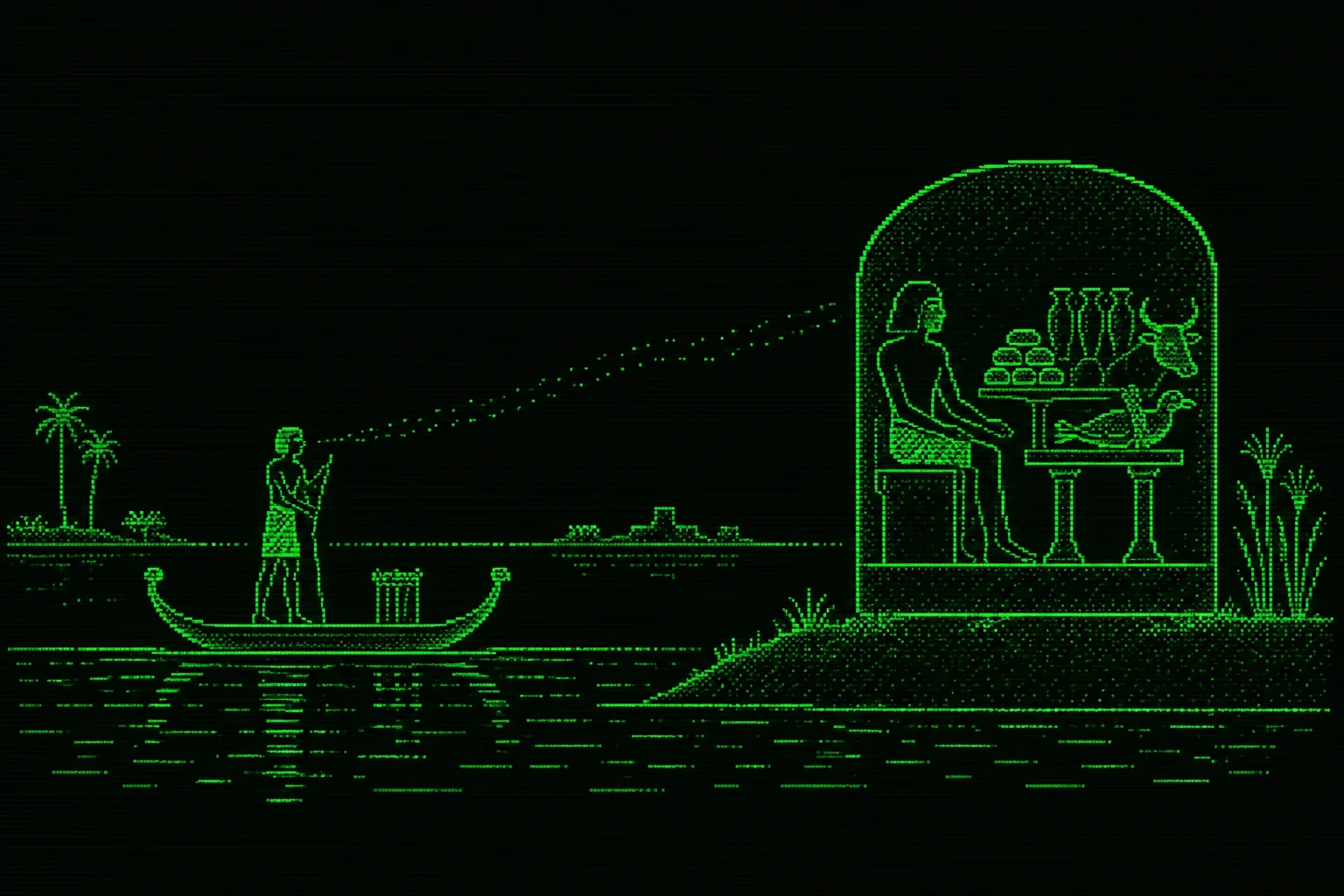
O you who live on earth, every lector priest, every scribe, every wab priest, every embalmer, every officeholder who will pass this stela going downstream or upstream: as you wish your town gods to praise you and your offices to pass to your children, say:
Note · Line 11
A lector priest recited the ritual texts. A wab priest was a “pure priest,” ritually purified for temple service. - 12
𓇓𓏏𓊵𓏙 𓊨𓁹 𓆼 𓅓 𓏐 𓏋𓈀 𓃾 𓅿𓏬 𓈖 𓂓 𓈖 𓏋𓅱𓀺𓇹 𓏠𓈖𓐍𓍊𓅭
ḥtp-ḏi̯-nswt Wsjr ḫꜣ m tʾ ḥ(n)q,t jḥ〈〈.pl〉〉 ꜣpd.pl n kꜣ n(,j) wdp,w-jr,j-Jꜥḥ Zꜣ-mnḫ
“An offering given by the king and by Osiris: a thousand each of bread, beer, cattle and fowl for the ka of Samenekh, cupbearer of Iah.”
Note · Line 12
By speaking the offering aloud, a passerby could give the dead man what the words named. - 13
𓊡 𓈖 𓂋𓏤 𓅜𓏛 𓈖 𓃶 𓂜 𓍇𓏌𓅱 𓅓 𓀉 𓌨 𓊃
ṯꜣw n(,j) rʾ ꜣḫ n sꜥḥ n〈n〉 nw m wrḏ ẖr =s
Breath from the mouth sustains the honored dead; no one is the wearier for it.