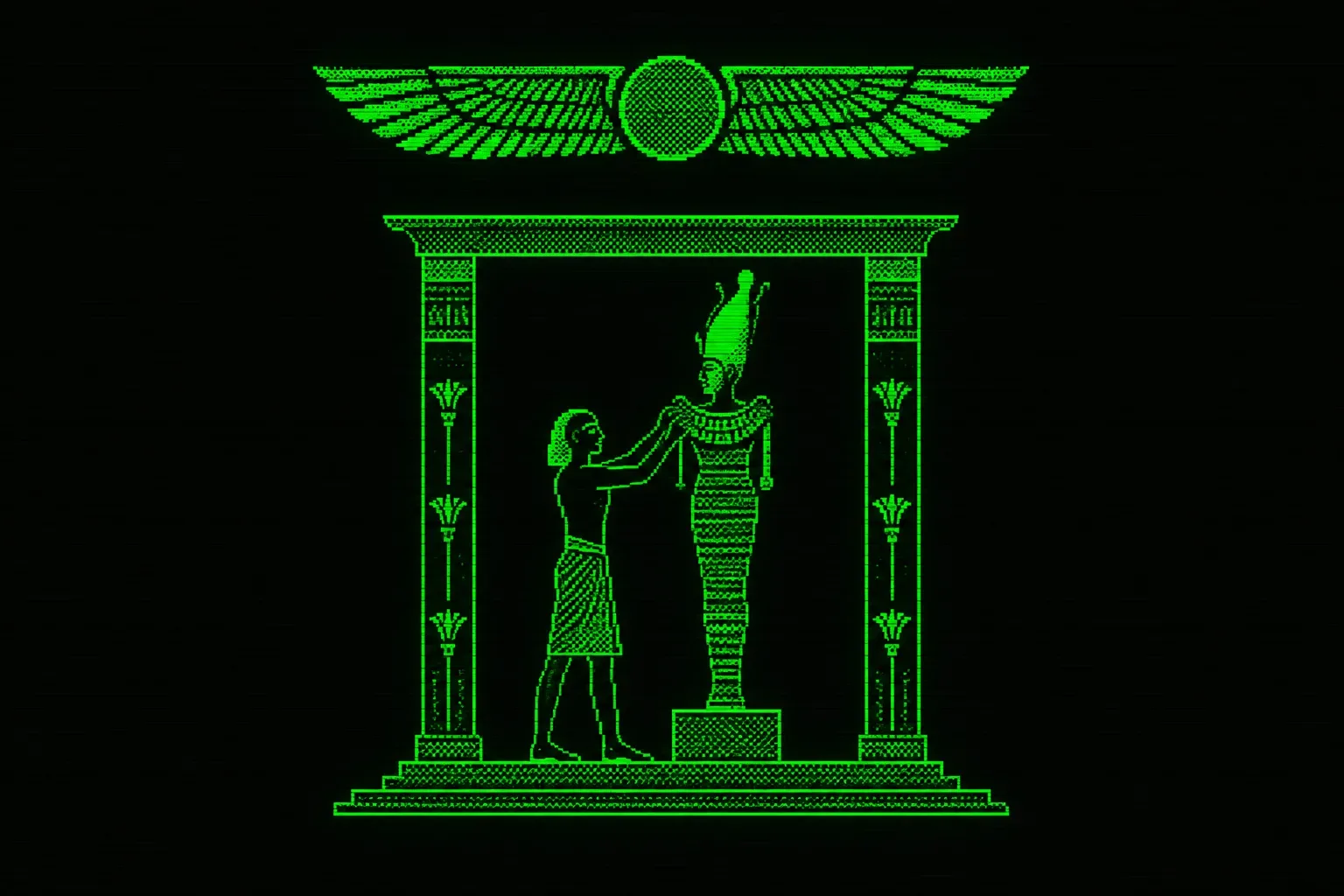
~/sacred-texts/middle-kingdom-stelae-from-abydos
Stela of Mentuhotep: Senusret I’s Treasurer Serves Osiris
- Date
- Carved in the reign of Senusret I (12th Dynasty, about 1971–1926 BC) on the stela of the treasurer and vizier Mentuhotep at Abydos
- Found
- Found at Abydos; now in the Egyptian Museum, Cairo (CG 20539)
- Language
- Middle Egyptian · Hieroglyphic
The stela opens with a royal order from Senusret I granting his treasurer Mentuhotep a memorial chapel at Abydos. Mentuhotep then speaks. He built the temple of Tura stone, rigged the Neshmet barque of Osiris, led the procession of Wepwawet, and arrayed the god in his regalia.
A long run of epithets praises him as the king’s confidant, truer than a plumb line, the equal of the scales, a man who knows what lies in every belly. He calls on every passing priest and citizen to recite the offering of bread and beer by the thousand. In return he promises: whoever remembers my good name, I shall be his protector.
- 1
𓄑𓂧𓏏𓊖 𓊹𓉻 𓎟𓇯𓏏𓊪 𓄑𓂧𓏏𓊖 𓊹𓉻 𓎟𓊪𓏏𓇯
Bḥd,tj nṯr-ꜥꜣ nb-p,t Bḥd,tj nṯr-ꜥꜣ nb-p,t
The Behdite, great god, lord of the sky. The Behdite, great god, lord of the sky.
Note · Line 1
The name belongs to Horus of Behdet in his form as the winged sun disk. The caption is repeated on either side of the disk. - 2
𓊹𓄤 𓎟𓇿𓇿 𓄫 𓄣 𓏙 𓋹 𓊽 𓏇 𓇳 𓆓𓏏𓇿
Ḥr(,w) ꜥnḫ-ms,w[t] nṯr-nfr nb-tꜣ,du nb-[jri̯].t-(j)ḫ,t [Ḫpr-kꜣ]-Rꜥw ꜣwi̯ jb ḏi̯(.w) ꜥnḫ ḏd mj Rꜥw ḏ,t
Horus Ankhmesut, the perfect god, lord of the Two Lands, lord of ritual, Kheperkare, glad of heart, given life and stability like Ra forever.
Note · Line 2
Ankhmesut is the Horus name of Senusret I; Kheperkare is his throne name. - 3
𓏅𓈖𓅂𓏏𓊿 𓎟𓍋𓃀𓈋𓊖 𓏙 𓆑 𓋹 𓊽 𓌀 𓏇 𓇳
Wsjr ḫnt(,j)-jmn,t(,j).pl nb-ꜣbḏw ḏi̯ =f ꜥnḫ ḏd wꜣs mj Rꜥw
Osiris, foremost of the Westerners, lord of Abydos: may he grant life, stability and dominion like Ra.
Note · Line 3
The Westerners are the dead. The west, where the sun sets, was their realm. - 4
𓅃 𓋹𓄟𓏏𓅱 𓅒 𓋹𓄟𓏏𓅱 𓏇𓇋 𓇳 𓆓𓏏𓇿 𓂋 𓈖𓅘𓎛𓎛𓇳
Ḥr(,w) ꜥnḫ-ms,wt Nb,tj ꜥnḫ-ms,wt [nswt-bj,tj] Ḫpr-[kꜣ]-Rꜥw [nṯr-nfr] [nb-tꜣ.du] [zꜣ-Rꜥw] [Z(j)-n-wsr,t] [ḏi̯] [ꜥnḫ] mj Rꜥw ḏ,t r nḥḥ
Horus Ankhmesut, Two Ladies Ankhmesut, King of Upper and Lower Egypt Kheperkare, the perfect god, lord of the Two Lands, Son of Ra Senusret, given life like Ra forever and ever.
Note · Line 4
The Two Ladies are Nekhbet, the vulture goddess of Upper Egypt, and Wadjet, the cobra goddess of Lower Egypt. Together they protect the king. - 5
𓎗𓅱𓏛 𓇓𓏏𓈖 𓈖 𓂋𓊪𓂝 …
wḏ,w nswt n (j)r(,j)-pꜥ(,t) [ḥꜣ,tj-ꜥ] [...] [jm,j-rʾ]-[ḫtm,t] [Mnṯ,w-ḥtp(.w)]
Royal order for the hereditary noble and governor, … the overseer of sealed things, Mentuhotep:
Note · Line 5
The sealed things were the valuables in the royal treasury. Mentuhotep was its chief officer. - 6
𓎡 𓅓𓊣𓏏𓉬 𓂋 𓂋𓂧𓌗𓊍 𓈖 𓊹𓉻 𓎟𓍋𓃀𓈋𓊖 𓋴𓏠𓈖𓏛 𓊑𓏏𓏥 𓎡 𓎟𓏏 𓎛𓎿𓅱𓏏𓏛 𓎟 𓁹𓏏 𓈖 𓎡
[jw] [wḏ.n] [nswt] [rḏi̯.t] [jri̯.t(w)] [n] =k mꜥḥꜥ,t r r(w)d n(,j) nṯr-ꜥꜣ nb-ꜣbḏw smn jꜣw,t.pl =k nb.t ḥzw,t nb(.t) jri̯.t n =k
The king has commanded that a memorial chapel be built for you at the terrace of the great god, lord of Abydos, to perpetuate all your offices and every honor bestowed on you,
Note · Line 6
The terrace lay along the processional route of Osiris. A chapel there gave Mentuhotep a place in the god’s festivals after death. - 7
𓏏𓅱𓏏𓀚𓀙 𓎡 𓅓 𓅓 𓈖 𓊹𓉻 𓋴𓈖 𓅓
twt.pl =⸮k? m [ḥw],t-[nṯr] m šms,w n(,j) nṯr-ꜥꜣ [smn.w] [n] =[sn] [wꜥb],t smn[ḫ.w] [pꜣw,t] =sn m zẖꜣ[,w]
with your statues in the temple among the followers of the great god, meat offerings assigned to them and their offering loaves secured in writing,
- 8
… 𓈖 𓎡 𓇓𓏏𓊵𓏙 𓅓 𓁹 𓈖 𓌸𓂋𓈖 𓆑
[m] [...] [n.t] [ḫr] [nswt] [jri̯] n =k ḥtp-ḏi̯-nswt m jri̯ nswt n mri̯.n =f
from … that is before the king, who grants you a royal offering, as the king does for one he loves—
- 9
𓈖 𓂋𓊪𓂝 𓄂𓂝 𓊹𓏏 𓌸 𓄣𓏤 𓌡𓏤𓂝 𓈖 𓆤𓏏𓀶 𓋴𓂸𓏏𓂭𓂭𓈖 𓆑
n (j)r(,j)-pꜥ(,t) ḥꜣ,tj-ꜥ ⸮jt-nṯr? mri̯(.y) 〈〈nṯr〉〉 jb wꜥ n bj,tj smt(r.w).n =f
for the hereditary noble and governor, the god’s father, beloved of the god, whose heart is undivided in the service of the King of Lower Egypt, who has put him to the test;
Note · Line 9
“God’s father” is a priestly title. - 10
𓉺𓇗𓈖O64𓏏 𓌞𓂻 𓎟𓏤 𓆑 𓂋 𓂻𓂻𓂻 𓆑
jwn-Šmꜥ(,w)-n-pr-nswt šms nb =f r nmt,t.pl =f
the royal house’s pillar in Upper Egypt, who follows in his lord’s footsteps;
- 11
𓅧𓂻𓄣 𓆑 𓏅𓏏 𓇉𓄿 𓎟𓏤 𓆑 𓅓 𓌡𓂝𓂝𓅱
ꜥq-jb =f ḫnt [š]n(y),t ḥꜣ(,j) nb =f m wꜥꜥ,w
his confidant before the court, at his lord’s side in private;
- 12
𓅃 𓏶𓅓𓄣 𓈖 𓎟𓏤 𓆑 𓌳𓐙
[⸮smr?] ⸮Ḥr,w? [m] [s,t] [ꜥḥ] jm(,j)-jb n(,j) nb =f mꜣꜥ
companion of Horus in the palace precincts, a man his lord truly trusts,
Note · Line 12
Horus here is the living king. - 13
𓆓𓂧𓅱 𓈖 𓆑 𓌃𓂧𓏏𓀀 𓎛𓇉𓄿𓊪𓏏𓋳
ḏd.w n =f md(w),t ḥꜣp.t
to whom secrets are told;
- 14
𓅧𓈎𓂻𓄣 𓆑 𓏅𓏏 𓈆𓈆
ꜥq-jb =f ḫnt jdb.du
his confidant before the Two Banks,
Note · Line 14
The Two Banks of the Nile stand for Egypt as a whole. - 15
𓋴𓂝𓂋𓂻 𓌃𓂧𓏏𓀀 𓂋𓄚𓏌 𓎡𓄿𓂋𓉬𓏤𓉐
sꜥr md(w),t r-ẖnw kꜣr
who carries a report into the shrine,
- 16
𓅠𓅓 𓋭𓏤𓏛 𓋴𓇛𓅓 𓈎𓋴𓌟𓈖𓅪𓏏
gmi̯ ṯꜣz snḏm qsn,t
who finds the right phrase and eases hardship,
- 17
𓊢𓂝𓅱 𓎟𓏤 𓆑 𓁷 𓊤𓅱𓀁
ꜥḥꜥ.w nb =f ḥr ḫrw =[f]
on whose voice his lord relies;
- 18
𓏏𓎡𓈖𓂻 𓐙𓌴𓂝 𓂋𓐍𓏛 𓐍𓂋𓏏𓄣𓏤
tkn(.w) mꜣꜥ rḫ ḫr,t-jb
one truly close to him, who knows his heart’s desire,
- 19
𓐍𓅜𓏛 𓆓𓂧 𓁷 𓄣 𓈖 𓎟𓏤 𓆑
ꜣḫ ḏd ḥr jb n(,j) nb =f
whose words have force in his lord’s judgment,
- 20
𓅨 𓋴𓈖𓆓𓅾 𓅓𓄚𓏌𓏤 O64
wr snḏ m-ẖnw pr-nswt
who inspires great awe within the royal palace;
- 21
𓆓𓈖𓋴𓍖 𓅓𓉔𓏏𓅱𓀀𓏪 𓏠𓈖𓐍𓍊 𓆓𓂧
ḏns mhw,t mnḫ ḏd
weighty in counsel, excellent in speech,
- 22
𓎛𓇉𓄿𓊪𓋳 𓄡𓏏𓏤 𓁷 𓋴𓌬𓏛 𓉦
ḥꜣp ẖ,t ḥr sšm ꜥḥ
who keeps the affairs of the palace to himself,
- 23
𓐍𓏏𓅓𓋩 𓂋𓏤 𓆑 𓁷 𓋴𓄕𓏏 𓆑
ḫtm rʾ =f ḥr sḏm.t =f
who seals his mouth on what he hears;
- 24
𓋴𓂋𓀙 𓊠𓂝 𓋭𓊃𓊃𓏏
sr wḥꜥ ṯzz.t
a high official who unties what is knotted;
- 25
𓅓𓂋𓌉𓌉𓋞 𓅓𓂋𓋨 𓆓𓂧 𓆑
(j)m(,j)-r(ʾ)-pr,du-ḥḏ-pr,du-nbw (j)m(,j)-r(ʾ)-ḫtm,t Mn[ṯ],w-ḥtp(.w) ḏd =f
overseer of the Two Houses of Silver and the Two Houses of Gold, overseer of sealed things, Mentuhotep. He says:
- 26
𓁹𓈖 𓀀 𓎼𓂋𓏏 𓅓𓊢𓏏𓂝𓉬𓏏𓉐 𓏏𓈖 𓋴𓐍𓅜𓏏𓏛 𓋴𓏠𓈖𓐍𓍊 𓊨𓏏𓉐 𓋴
jri̯.n =j gr,t mꜥḥꜥ,t{t} tn sꜣḫ.t(j) smnḫ(.w) s,t =s
Now I built this memorial chapel, duly consecrated, its site finely appointed,
- 27
𓂋𓂞𓈖 𓀀 𓐍𓏏𓅓𓏏𓏛𓏪 𓌥𓅱𓏛𓏥 𓈖 𓊹𓍛𓀀𓏪 𓈖 𓍋𓃀𓈋𓊖
rḏi̯.n =j ḫtm,t.pl ḏbꜣ,w.pl n ḥm.pl-nṯr n(.w) ꜣbḏ,w
after I had given the priests of Abydos contracts for their payment.
- 28
𓐍𓂋𓊪𓂤𓈖 𓀀 𓂓𓏏𓀋 𓅓 𓊹𓉞𓏏𓉐 𓐍𓊃𓅱𓏏𓀧 𓅓 𓇋𓈖O230 𓈖 𓂝𓏌𓁽
ḫrp.n =j kꜣ,t m ḥw,t-nṯr ḫws.t m jn(r) n(,j) ꜥnw
I directed the work in the temple built of Tura stone.
Note · Line 28
Tura, near modern Cairo, was prized for its fine white limestone. - 29
𓇋𓅱 𓁹𓈖 𓀀 𓅭𓌻𓂋𓆑𓀀 𓅓 𓅓 𓈖 𓎟𓍋𓃀𓈋𓊖
jw jri̯.n =j zꜣ-mr(,y)≡f m [sšm] [n(,j)] [ḥw,t-nbw] m sš[tꜣ] n(,j) nb-ꜣbḏw
I served as “the son whom he loves” in the rites of the House of Gold, in the mystery of the lord of Abydos.
Note · Line 29
Mentuhotep took the priestly role of a son serving his father, Osiris. The House of Gold was the sacred workshop where divine images were made and tended. - 30
𓇋𓅱 𓐍𓂋𓊪𓂤𓈖 𓀀 𓂓𓏏𓀋 𓅓 𓈖𓈙𓅓𓏏P47A 𓄟𓈖 𓇋𓆛𓈖𓇋𓄦𓏥 𓋴
jw ḫrp.n =j kꜣ,t m nšm,t msi̯.n =(j) jnj =s
I directed the work on the Neshmet barque; I fashioned her rigging.
Note · Line 30
The Neshmet was the sacred boat that carried the image of Osiris in procession at Abydos. - 31
𓁹𓈖 𓀀 𓉔𓄿𓎡𓂋𓎱 𓈖 𓎟𓏤 𓆑 𓉐𓂋𓏏𓎱 𓄋𓈐𓏥𓃧
jri̯.n =j hꜣkr n nb =f pr.t Wpi̯-wꜣ,t.pl
I celebrated the Haker festival for its lord and conducted the procession of Wepwawet,
Note · Line 31
The Haker was a night festival of Osiris at Abydos. Wepwawet, the jackal god whose name means “Opener of the Ways,” led the way in procession. - 32
𓁹 𓈖 𓆑 𓎛𓃀𓏏𓏛𓏥 𓎟𓏏 𓄞𓂧𓈖 𓊹𓍛𓀀𓏪
jri̯(.w) n =f ḥ(ꜣ)b,t.pl nb.t(.pl) šdi̯.n ḥm.pl-nṯr
once all the festival offerings had been made to him and the priests had recited the rites.
- 33
𓇋𓅱 𓏙𓈖 𓀀 …
jw ḏi̯.n =j zb[__] [...] rp[__] [...] [n] =⸮s[n]?
I sent … the nobles … for them:
- 34
𓎗𓅱𓎛𓅱𓊲 𓅓 𓐍𓋴𓃀𓏬𓂧 𓅓 𓎛𓊃𓏠𓈖𓈓 𓅓 𓌀𓅓𓋞 𓌉𓋞𓈓 𓅨𓂋 𓈔𓏥 𓂜𓈖 𓇥𓂋 𓆑 𓍖𓈔𓏥 𓂜𓈖 𓇥𓂋𓂝𓏤 𓆑
wḏḥ,w m ḫsbd m ḥsmn m ḏꜥm ḥḏ wr ḥmtj nn ḏr(,w) =f ḥzmn nn ḏr-ꜥ =f
an offering table with lapis lazuli, natron and electrum, silver in abundance, copper without limit, bronze without end;
Note · Line 34
Natron is a mineral salt used in purification; electrum is an alloy of gold and silver. The Egyptian words for natron and bronze sound much alike. - 35
𓅱𓋴𓐍𓎺𓋝𓏥 𓅓𓆑𓂓𓏏𓏬 𓌳𓏏𓏛 𓏠𓈖𓄤𓂋𓏏𓏦 𓅓 … 𓅓𓅓 𓋴𓍉𓊪𓅱 𓈖 𓐍𓏏
wsḫ.pl mfkꜣ,t mꜣ.t mnfr,t.pl m ⸮[ꜥꜣ(,t)].pl? nb(.t) [...] m stp,w n(,j) (j)ḫ,t nb.t
broad collars, fresh turquoise, armlets of every kind of precious stone, … the choicest of all things.
- 36
𓂋𓂞𓈖 𓊹𓀭 𓅓 𓈍𓂝 𓆑 𓅓 𓊑𓏏𓏤 𓀀 𓈖𓏏 𓇋𓂋𓏏
⸮rḏi̯?.n =(j) nṯr m ḫꜥ =f m jꜣw,t =j n.t [ḥr(,j)]-sštꜣ jr,t =[j] [n.t] [smꜣ]
In my office as keeper of secrets and in my service as robing priest, I arrayed the god in his regalia.
Note · Line 36
The priest dressed the god’s sacred image in the sanctuary. As keeper of secrets, he had access to rites others could not witness. - 37
𓂢𓏭 𓅓 𓋴𓄡𓎡𓂋𓐬 𓊹𓀭 𓋴𓅓𓀀 𓅱𓃂𓃀𓈗 𓂭𓂭𓂭 𓊹𓊵𓏏𓊪𓏐𓏊𓏒
[jnk] [ꜥ]bꜣ ꜥ.du m sẖkr nṯr s(t)m wꜥb ḏbꜥ.pl [s]mn ḥtp-nṯr
I was one who held out both hands to adorn the god, a sem-priest with pure fingers, one who set out the god’s offerings.
Note · Line 37
A sem-priest officiated at rites for gods and for the dead, among them the Opening of the Mouth. - 38
𓂋𓂞𓈖 𓀀 𓈖 𓊹𓀭 𓎟 … 𓄞𓂧 𓈖 𓋴𓈖
rḏi̯.n =j [__],t n nṯr nb [...] šdi̯ n =sn nṯr-ꜥꜣ
I gave … to every god, … the great god allotted to them.
- 39
𓂋𓂞𓈖 𓀀 𓂋𓐍𓏛 𓊃𓀀𓏤 𓎟 𓆑 𓅓 𓊹 𓅓𓌻𓂋𓏏 𓁹𓏏 𓈖 𓆑 𓌳𓐙𓂝𓏏𓆄
rḏi̯.n =j rḫ z nb [j]r,t =f m [ḥw,t]-nṯr [n.t] nṯr p[n] m-mr(w),t jri̯.t n =f mꜣꜥ,t
I saw to it that every man knew his duty in this god’s temple, so that what was right might be done for him.
Note · Line 39
“What was right” is maat: truth, justice and the proper order of things, upheld here by the service of the temple. - 40
𓇋𓐍𓏛 𓃹𓈖 𓀀 𓅓 𓌞𓂻 𓊹𓀭
jḫ wn =j m šms(,w) nṯr n-mr[w,t] [ꜣḫ] =[j] [wsr] =[j] [r] [rwd] [n(,j)] [nb-ꜣbḏw]
May I be among the god’s followers, that I may be transfigured and strong on the terrace of the Lord of Abydos!
Note · Line 40
Mentuhotep asks for a place in Osiris’s company after death, as a spirit with power to act. - 41
… 𓇿𓇿 𓅓𓌸𓂋𓏏 𓃹𓈖𓈖 𓅓 𓌞𓂻 𓆑
[...] ⸮tꜣ.du? (J)tm(,w) m-mrw,t wnn m šms(,w) =f
… the Two Lands of Atum, that I may be among his followers.
Note · Line 41
The Two Lands are Upper and Lower Egypt. - 42
𓃹𓈖𓈖 𓀀 𓅓 …
wnn =j m [...]
I shall be in …
- 43
… 𓈖 𓉑 𓄤 𓂢𓂢 𓅓 𓋴𓄡𓎡𓂋𓐬 𓂭𓂭𓂭 𓁷𓏤 𓋴𓏠𓈖𓐍𓍊 𓄡𓎡𓂋𓐬𓏥
[...] n(,j) pr-ꜥnḫ nfr ⸮ꜥ?.du m sẖkr [⸮nṯr?] ⸮m[n]? ḏbꜥ.pl ḥr smnḫ ẖkr.pl
… of the House of Life, both hands skilled in adorning the god, fingers steady in perfecting the ornaments,
Note · Line 43
The House of Life was a temple institution where scribes kept, copied and studied sacred writings. - 44
𓌡𓏤𓂝 𓐍𓐍𓐍𓀀 𓄤 𓂧𓏏𓏤 𓆓𓂧 𓆑
wꜥ ⸮ḫ.w? ⸮nfr? ⸮ḏr,t? [(j)m(,j)-r(ʾ)-ḫtm,t] [Mnṯ,w-ḥtp(.w)] ḏd =f
singular in character, masterly of hand, the overseer of the treasury Mentuhotep says:
- 45
𓇋𓅱 𓌳𓁹𓈖 𓀀 …
jw mꜣ.n =j [...] Swꜣḥ,t
I inspected … Sewahet,
- 46
𓇋𓋴𓍿 𓀀 𓍛𓏤 𓈖 𓎟𓏤𓅆 𓀀 𓈍𓂝𓏏 𓆑 𓁷𓏤 𓂋 𓇋𓅱𓌉 𓅓 𓅓 𓉔𓃀𓈖𓈖𓊇 𓋴𓍯𓎛𓏏𓊇 𓂋 𓂋𓎛𓌤𓂋
jsṯ (w)j m-ḫt ḥm n(,j) nb =j ḫꜥi̯.t [__] =f ḥr [__] r jw sḫ,tjw[.pl] m [___] m Hbnn Swꜣḥ,t r ⸮rḥ?
and I was following the Majesty of my lord when his … appeared upon … for … the farmers in …, in Hebenen and Sewahet, to …
- 47
𓇋𓅱 𓋴𓌳𓏛𓂸𓃓𓏝 𓂋 𓋴𓐍𓂋𓏏𓀒 𓐍𓏏𓆑𓏬 𓏌𓏤 𓍛𓏤 𓆑 𓅓 … 𓅱𓐍 𓇋𓅓 … 𓅓𓍿𓈖𓌙𓅱𓈐𓏥 𓅓 𓎛𓃀𓎳 𓐍𓆼𓋴𓏏𓈉𓏥 𓅓 𓊃𓍿 𓈖𓍇𓇋𓇋
jw smꜣ r sḫr.t ḫft(,j).pl n.w ḥm =f m [...] ⸮wḫ? jm [...] ⸮4? mṯn.w.pl m ḥ(ꜣ)b ḫꜣs,t.pl m z(ꜣ)ṯ nw,y
A wild bull shall strike down His Majesty’s enemies in … there … four; the roads are in festival, the hill countries pour libations of water.
- 48
𓂋𓂞 𓁷𓁶 𓈖 𓈋 𓊵𓏏𓊪𓏏𓏒𓏥 𓎟𓏏 𓅓𓆱𓐍𓏏 … 𓎸𓅓𓏏𓈗 𓈖 … 𓆣 𓈖 𓍛𓏤 𓆑 𓋴𓋹 𓅚𓏏 𓇋𓅓
rḏi̯ ḥr(,j)-tp n(,j) ḏw ḥtp,t.pl nb.t(.pl) m-ḫt [...] ẖnm,t [__]w n [__] [...] ḫpr n ḥm =f sꜥnḫ rḫ,yt jm
The chief of the mountain gave all the offerings after … the well … came into being for His Majesty, who sustained the people with it.
- 49
𓅓𓂋𓋨 𓏠𓈖𓍿𓅱𓊵𓏏𓊪𓀻 𓆓𓂧 𓆑
(j)m(,j)-r(ʾ)-ḫtm,t Mnṯ,w-ḥtp(.w) ḏd =f
The overseer of the treasury Mentuhotep says:
- 50
𓏌𓎡 … 𓆑 𓈖 𓈖
jnk [___] [...] [zꜣi̯] [j]w[i̯.t] =f n šny,t ⸮zmꜣ.y? n ḥꜥ,pl-[nṯr]
I was …, one whose coming the courtiers awaited, one united with the god’s body,
- 51
… 𓈖 𓐍𓏏 𓎟 𓁷𓏤 𓅓𓂋𓄓 𓎟 𓅓𓂋𓏤 𓐍𓏏 𓎟
[...] n(,j) (j)ḫ,t nb(.t) ḥr ⸮(j)m(,j)-r(ʾ)? ___ nb (j)m(,j)-r(ʾ) (j)ḫ,t nb(.t)
… of all things, above the overseer of every …, overseer of all things,
- 52
… 𓇿 𓂋𓇥 𓆑
[...] tꜣ r-ḏr =f
… the whole land.
- 53
[...] [___] [...]
[gap in the text]
- 54
… 𓆓𓂧 𓆑
[...] [Mnṯ,w]-ḥtp(.w) ḏd =f
… Mentuhotep says:
- 55
𓇋𓀞 𓄂𓂝𓀀 𓎟 𓊹𓍛𓉻𓀀 𓎟 𓎛𓌨𓃀 𓊹𓋨𓀀 𓎟 𓊹𓍛𓆈𓀀 𓎟 𓂺𓅂𓈖𓎂𓀀𓀀𓀀 𓎟 𓋹𓈖𓐍𓈖𓎟𓊖𓏏𓀀 𓎟
j ḥꜣ,tj-ꜥ nb ḥm-nṯr-ꜥꜣ nb ẖr(,j)-ḥ(ꜣ)b(,t) ḫtm,w-nṯr wt(,j)-Jnp,w nb ḥm-nṯr-ꜥšꜣ nb mt(j).pl-n(,j)-zꜣ nb(.pl) ꜥnḫ-n-{nb-}nʾ,t nb
O every local prince and every high priest, lector priests and seal-bearers of the god, every embalmer of Anubis, every ordinary priest, all heads of priestly divisions and every citizen,
- 56
𓆣𓂋𓏏 𓆑 𓅓 𓊹𓉗𓏏𓉐 𓏏𓈖 𓋴𓈖 𓁷 𓏏𓈖 𓄞𓂧𓏏 𓋴𓈖 𓎗𓅱𓆓𓏛 𓊪𓈖
ḫpr.t(j) =f(j) m ḥw,t-nṯr tn sw[ꜣi̯].t(j) =sn ḥr mꜥḥꜥ,t tn šdi̯.t(j) =sn wḏ pn
whoever shall find himself in this temple, all who shall pass this tomb-chapel and read this stela:
- 57
𓅓 𓍿𓈖 𓁹𓊨𓀭 𓎟𓍋𓃀𓈋𓊖 𓄙𓅓𓏛 𓍿𓈖 𓁹𓏏 𓎳𓏥
m [mr]r =ṯn Wsjr ḫnt(,j)-[jmn,tjw] nb-ꜣbḏw wḥm =ṯn jri̯.t ḥ(ꜣ)b.pl =[f]
as you love Osiris, Foremost of the Westerners, Lord of Abydos, and celebrate his festivals time and again,
- 58
𓅓 𓌻𓂋𓂋 𓍿𓈖 𓇜𓃀 𓌻𓂋𓅱𓏏𓏛
m mrr =ṯ[n] [Wpi̯-wꜣ,t.pl] [nṯr] =ṯn bnr mrw,t
as you love Wepwawet, your god, whose love is sweet,
- 59
𓈖𓇛𓆓𓅓 𓅓 𓇓𓏏𓀲 𓋹𓈖𓐍 𓋴𓅓𓐍𓅱𓅪 𓍿𓈖 𓋴𓈖𓃀 𓐍𓂋
nḏm [jb] =[ṯ]n m nswt [r] [nḥḥ] [mrr] =[ṯn] ꜥnḫ smḫ.w =ṯn mwt snb ḫr =〈ṯn〉 ẖr[d.pl] =[ṯn] [ḏd] =[ṯn] [m] [tp,t]-[rʾ] =[ṯn]
as your hearts rejoice in the king forever, as you love life and forget death, as your children thrive beside you, say with your own lips:
- 60
𓇓𓏏𓊵𓏙 𓆼 𓏐 𓏊 𓆼 𓃾 𓅿 𓆼 𓍱 𓆼 𓋲 𓆼 𓐍𓏏 𓎟 𓇛𓏏 𓋹𓈖𓐍𓏏 𓊹𓀭 𓇋𓅓
ḥtp-ḏi̯-nswt ḫꜣ tʾ ḥnq,t ḫꜣ kꜣ ꜣpd ḫꜣ šs ḫꜣ mnḫ,t ḫꜣ (j)ḫ,t nb(.t) nḏm.t ꜥnḫ.t nṯr jm
“An offering the king gives: bread and beer by the thousand, bulls and fowl by the thousand, a thousand alabaster vessels, a thousand linen garments, a thousand of every sweet thing on which the god lives.”
Note · Line 60
By speaking the offering formula aloud, a visitor could provide the dead with the very things it names. - 61
𓈖 𓂓 𓇋𓄪𓐍 𓂋𓊪𓂝 𓄂𓂝𓌳𓐙 𓁷𓏤𓂋𓋴𓈙𓏏𓍔𓄿𓏛𓈖𓇓𓏏𓈖𓅓𓊨𓏏𓉐𓆑𓎟 𓅓𓂋𓋞𓈓 𓎛𓌨𓃀𓁷𓁶 𓐙𓂝 … 𓏠𓈖𓍿𓅱𓊵𓏏𓊪 𓌳𓂝𓐙𓊤
n kꜣ jmꜣḫ(,w) (j)r(,j)-pꜥ(,t) ḥꜣ,tj-ꜥ-mꜣꜥ ḥr(,j)-sštꜣ-n(,j)-nswt-m-s,t≡f-nb(.t) (j)m(,j)-r(ʾ)-[pr,du-ḥḏ] (j)m(,j)-r(ʾ)-pr,du-nbw ẖr(,j)-ḥ(ꜣ)b(,t)-ḥr(,j)-tp mꜣꜥ [...] (j)m(,j)-r(ʾ)-[ḫtm,t] Mnṯ,w-ḥtp(.w) mꜣꜥ-ḫrw
For the ka of the honored hereditary noble and true local prince, keeper of the king’s secrets wherever the king is, overseer of the two houses of silver, overseer of the two houses of gold, true chief lector priest, …, overseer of the treasury, Mentuhotep, true of voice.
Note · Line 61
The ka was the life force that received offerings after death. A lector priest recited the ritual texts aloud. “True of voice” marks the dead man as one who has passed judgment before the gods. - 62
𓆤𓋨𓏏 …
[rpꜥ] [ḥꜣ,tj]-ꜥ ḫtm,tj-bj,tj smr-[wꜥ,tj] ḥr(,j)-sš[tꜣ-n]-⸮wꜣḏ.tj? (j)m(,j)-r(ʾ)-[___] [...] [Mnṯ,w-ḥtp]
The hereditary noble and local prince, seal-bearer of the king of Lower Egypt, sole companion, keeper of the secrets of the two cobras, overseer of …, Mentuhotep.
Note · Line 62
“Sole companion” was a court rank marking closeness to the king. - 63
𓄑𓂧𓏏𓊖 𓎟𓎣 𓄑𓂧𓏏𓊖 𓎟𓎣
Bḥd,tj nb-Msn Bḥd,tj nb-Msn
The Behdite, lord of Mesen. The Behdite, lord of Mesen.
Note · Line 63
The Behdite is Horus of Edfu, often shown as a winged sun disk. - 64
𓋹𓄟𓏏𓅱 𓅭𓇳 𓄊𓋴𓂋𓏏𓊃𓈖 𓊹𓄤 𓎟𓇿𓇿 𓏙 𓋹 𓊽 𓌀 𓋴𓈖𓃀 𓏇 𓇳 𓆓𓏏𓇿
Ḥr(,w) ꜥnḫ-ms,wt zꜣ-Rꜥ(w) Z-n-wsr,t nṯr-nfr nb-tꜣ,du ḏi̯ ꜥnḫ ḏd wꜣs snb mj Rꜥ ḏ,t
Horus Ankhmesut, son of Ra, Senusret, the good god, lord of the Two Lands, given life, stability, power and health like Ra forever.
- 65
𓏅𓈖𓏏𓊿𓏏𓅂 𓎟𓍋𓃀𓈋𓊖 𓂞 𓆑 𓋹 𓌀 𓆓𓏏𓇿
Wsjr ḫnt(,j)-jmn,t(,j).pl nb-ꜣbḏw ḏi̯ =f ꜥnḫ wꜣs ḏ,t
Osiris, foremost of the Westerners, lord of Abydos: may he grant life and power forever.
- 66
𓋹 𓅃 𓋹𓄟𓏏𓅱 𓅒 𓋹𓄟𓏏𓅱 𓇓𓏏𓆤𓏏 𓇳𓆣𓂓 𓊹𓄤 𓎟𓇿𓇿 𓅭𓇳 𓄊𓋴𓂋𓏏𓊃𓈖 𓏙 𓋹 𓊽 𓌀 𓋴𓈖𓃀 𓄫𓏤 𓄣 𓆑 𓏇 𓇳 𓆓𓏏𓇿
ꜥnḫ Ḥr(,w) ꜥnḫ-ms,wt Nb,tj ꜥnḫ-ms,wt nswt-bj,tj Ḫpr-kꜣ-Rꜥ(w) nṯr-nfr nb-tꜣ,du zꜣ-Rꜥ(w) Z-n-wsr,t ḏi̯ ꜥnḫ ḏd wꜣs snb ꜣwi̯ jb =f mj Rꜥ(w) ḏ,t
Long live Horus Ankhmesut, the Two Ladies Ankhmesut, the king of Upper and Lower Egypt Kheperkare, the good god, lord of the Two Lands, the son of Ra, Senusret, given life, stability, power and health. May his heart rejoice like Ra’s forever!
Note · Line 66
Kheperkare is Senusret’s throne name. - 67
𓂋𓊪𓂝 𓅷 𓃥 𓉫 𓂋𓊕𓊖 𓌳𓐙𓏏𓂝𓁦𓊹𓍛 𓏙𓏙 𓉔𓊪𓏛𓏪 𓋴𓏅𓈖𓏏 𓊑𓊑𓊑 𓋴𓏠𓈖𓏛 𓇋𓇩𓇩𓇩 𓏏𓍔𓈙𓄿
(j)r(,j)-pꜥ(,t) ṯꜣ,tj zꜣb tꜣ,tj r(ʾ)-Nḫn ḥm-nṯr-Mꜣꜥ,t ḏḏ hp.pl sḫnti̯ jꜣw,t.pl smn jz〈,t〉.pl tꜣš
Hereditary noble, dignitary of the curtain, judge and vizier, spokesman of Nekhen, priest of Maat, who lays down laws, raises offices in rank and sets the boundary stones firmly in place,
Note · Line 67
Maat personifies truth, justice and right order. The vizier was the king’s chief official. - 68
𓄋𓊪𓊪𓂡 𓌂𓐖 𓂋 𓌢𓈖𓏌𓅱 𓆑 𓇋𓏶𓁹𓁹 𓏏𓇶𓀀𓁐 𓋴𓉔𓂋𓂋𓀁 𓇾 𓂋𓇥𓂋 𓆑
wpp w r sn,nw =f jm(,j)-jr,t.du ḥnmm,t shrr tꜣ r-ḏr =f
who divides one district from the next, captain of the sun folk, who brings peace to the whole land,
Note · Line 68
The “sun folk” are humankind, the people of the sun god. - 69
𓊃𓏤𓀀 𓈖 𓌳𓐙𓏏𓂝 𓏅𓈖𓏏 𓇿𓇿
z n(,j) mꜣꜥ,t ḫnt tꜣ,du
a man of justice before the Two Lands,
- 70
𓂸𓏏𓂭𓂭 𓌳𓐙𓂝 𓏇𓇋 𓅝𓀭 𓌢𓈖𓏌𓅱 𓆑 𓅓 𓋴𓉔𓂋𓏏𓏛𓀁 𓇿𓇿
mt(j) mꜣꜥ mj Ḏḥw,tj sn,nw =f m shr.t tꜣ,du
truly exact, like Thoth, his second in bringing peace to the Two Lands,
Note · Line 70
Thoth, the divine scribe, was the god of writing and reckoning. - 71
𓂋𓊪𓂝 𓅓 𓅱𓄋𓊪𓏏𓀁 𓎟
(j)r(,j)-pꜥ(,t) m wpw,t nb.du
hereditary noble on the errand of the Two Lords,
Note · Line 71
The Two Lords are Horus and Seth, rivals for the kingship. - 72
𓁷𓁶 𓈖 𓐤𓌃𓂧𓏏𓀁 𓏙𓏙 𓐍𓏏𓏛 𓂋 𓊨 𓇋𓂋𓏏𓀸
ḥr(,j)-tp n(,j) wḏꜥ-md(w),t ḏḏ (j)ḫ,t r s,t jr(,j).t
chief in judgment, who puts each thing in its proper place,
- 73
𓆤𓏏𓋨 𓅓𓂋𓋨 𓏠𓈖𓍿𓅱𓊵𓏏𓊪
ḫtm,tj-bj,tj (j)m(,j)-r(ʾ)-ḫtm,t Mnṯ,w-ḥtp(.w)
seal-bearer of the king of Lower Egypt, overseer of the treasury, Mentuhotep.
- 74
𓂋𓊪𓂝 𓄂𓂝 𓅓𓂋𓂓𓀋𓏥𓎟𓈖𓇓𓏏𓈖𓀴
(j)r(,j)-pꜥ(,t) ḥꜣ,tj-ꜥ (j)m(,j)-r(ʾ)-kꜣ,t.pl-nb(.t.pl)-n(.t)-nswt
Hereditary noble and local prince, overseer of all the king’s works,
- 75
𓋴𓂋𓂋𓎗𓆓𓌗𓏛 𓊪𓅮𓅱𓏏𓏖𓏥 𓊹 𓏙𓏙 𓇿 𓊪𓈖 𓁷 𓅓𓂞𓂋𓐍𓅱𓏛𓏥 𓆑 𓏇𓇋 𓎗𓅱𓏛 𓊹𓀭 𓁹 𓇓𓅱
sr{r}wḏ pꜣw,t nṯr.pl ḏḏ tꜣ pn ḥr mrḫ,w =f mj wḏ nṯr jri̯ sw
who secures the gods’ offerings of bread and puts this land before his own needs, as the god who made him commanded,
- 76
𓈖𓐍𓈇𓀁 𓌳𓄿𓂋𓌗𓅪𓀀 𓈖𓈞𓏤𓅓𓀜 𓂜𓏏 𓇓𓅱
〈nḫ(.w)〉 mꜣr nḥm(.w) jw,tj sw
who protected the afflicted and rescued the man who counted for nothing,
- 77
𓏙𓏙 𓉐𓂋𓂻 𓌢𓈖𓏌𓅱𓀀𓀀 𓊵𓏏𓊪 𓅓 𓉐𓂋𓅱𓏛𓏥𓈖𓂋 𓆑
ḏḏ pri̯ sn.w(j).du ḥtp m pr,w.pl-n(,j)-r(ʾ) =f
who lets both parties go forth content with the words that come forth from his mouth,
- 78
𓏟𓏛 𓈖 𓅝𓏏𓀭 𓁷 𓄓𓄹𓏤 𓆑
zẖꜣ(,w) n(,j) Ḏḥw,tj ḥr ns =f
with the writing of Thoth on his tongue,
- 79
𓂝𓈎𓄿𓂭 𓂋 𓏏𓄡𓍠𓍢 𓏇𓇋𓏏𓏭 𓅓𓐍𓄿𓏏U92
ꜥqꜣ r tẖ mj,tj mḫꜣ,t
truer than a plumb line, the equal of the scales,
- 80
𓌢𓈖𓏌𓅱 𓈖 𓇓𓏏𓈖𓀴 𓅓 𓈖𓆓𓐩𓀁 𓁷𓏤 𓂋𓈖
sn,nw n(,j) nswt m nḏ ḥr rn
second only to the king in being greeted by name,
- 81
𓍯𓎛𓎝𓄣 𓂋 𓋴𓄔𓏏 𓌃𓂧𓏏𓀁𓏪
wꜣḥ-jb r sḏm.t md(w),t.pl
patient until the cases have been heard,
- 82
𓏇𓇋𓏏𓏭 𓊹𓀭 𓅓 𓃹𓈖𓏌𓏏𓇼𓏛 𓆑
mj,tj nṯr m wnw,t =f
the equal of a god in his hour,
- 83
𓏠𓈖𓐍 𓄣 𓍎𓅱𓅱 𓅓 𓂭𓂭𓂭 𓆑
mnḫ jb ḥmw,w m ḏbꜥ.pl =f
keen of mind, deft of finger,
- 84
𓁹 𓊑𓏏𓏤𓏛 𓏇 𓇋𓂋𓏏𓀸𓀀 𓋴
jri̯ jꜣw,t mj jr(,j) =s
who does the work of an office as its own holder would,
- 85
𓅓𓎔𓄣𓏛 𓈖 𓇓𓏏𓈖 𓏅𓈖𓏏 𓇾𓇾𓈇𓏤
mḥ-jb n(,j) nswt ḫnt tꜣ.du
the king’s confidant at the head of the Two Lands,
- 86
𓌸𓇋𓇋 𓆑 𓅓𓅓 𓋴𓍋𓀻𓏪
mr,y =f m-m smr.pl
his beloved among the courtiers,
- 87
𓋴𓌂𓐍𓅓𓁹𓆑 𓅓𓅓 𓋴𓂋𓅱𓀚𓀙𓀙
sḫm-jri̯≡f m-m sr.pl
a man of power among the high officials,
- 88
𓏅𓈖𓏏 𓊨𓏏𓉐 𓂋 𓄥 𓊨𓏏𓉐
ḫnt(,j) s,t r zmꜣ s,t
first in place when seats are taken,
- 89
𓊃𓀀 𓈖 𓌡𓂝𓇋𓇋𓅱𓏛𓏥 𓍏𓅡𓅱 𓈖 𓆑 𓄣
z n(,j) wꜥ,yw.pl wbꜣ.w n =f jb
a man admitted in private, to whom the heart is laid open,
- 90
𓂋𓊪𓂝 𓂋 𓈆𓈆𓈆 O105𓏏𓉐
(j)r(,j)-pꜥ(,t) r ḏnb.pl wsḫ,t
hereditary noble at the boundary markers of the broad court,
- 91
𓅠𓅓 𓌃𓂧𓏏 𓈖𓏏 𓉦𓊪
gmi̯ md(w),t n.t ꜥḥ{p}
One who finds the words of the palace,
Note · Line 91
The opening lines describe Mentuhotep, a high official at the royal court. His name comes at the end of the string of titles. - 92
𓂋𓐍 𓇋𓏶 𓄡𓏏𓏤 𓎟𓏏
rḫ jm(,j) ẖ,t nb.t
who knows what lies in every belly,
Note · Line 92
The belly is where a person’s unspoken thoughts are hidden. - 93
𓏙𓏙 𓊃𓏤𓀀 𓂋 𓃹𓈖 𓆑 𓌳𓐙𓂝
ḏḏ z r wn =f mꜣꜥ
who appoints a man according to his true worth,
- 94
𓅠𓅓 𓐍𓏏𓏛𓏪 𓎼𓄿𓄿𓅱𓎣𓅪 𓂋 𓋴
gmi̯ (j)ḫ,t.pl gꜣꜣ.w r =s(n)
who finds the things that are lacking,
- 95
𓂋𓂞 𓎼𓂋𓍆 𓂜 𓆓𓂧 𓇓𓅱 𓌳𓐙𓏏𓂝𓆄 𓂘𓏤 𓇍𓇋𓇋 𓌨𓂋 𓋴
rḏi̯ grg n ḏd sw mꜣꜥ,t n jy.y ẖr =s
who gives the lie back to the one who told it, and truth to the one who came bearing it,
- 96
𓍯𓄿𓎛𓎝𓄣𓏤 𓂜𓏏𓅱 𓌢𓈖𓏌𓅱𓀀𓀀
wꜣḥ-jb jw,tj sn,nw.du =(f)
a patient man without a peer,
- 97
𓄤𓆑𓂋 𓋴𓄔𓅓 𓇋𓈎𓂋𓏛 𓆓𓂧
nfr sḏm jqr ḏd
good at listening, excellent in speech,
- 98
𓋴𓂋𓅱𓀚 𓊠𓂝𓍢 𓋭𓊃𓊃𓏏𓍢
sr,w wḥꜥ ṯss.t
a magistrate who unties what is knotted,
- 99
𓍿𓈖𓈖 𓊹𓀭 𓏅𓈖𓏏 𓁏𓁏𓁏 𓅓 𓊃𓏤𓀀 𓏠𓈖𓐍𓍊𓏛 𓂋𓐍𓈖 𓆑 𓂋𓈖 𓆑
ṯni̯.n nṯr ḫnt ḥḥ.pl m z mnḫ rḫ.n =f rn =f
whom the god raised above millions as a man of worth whose name he knew,
- 100
𓅱𓏏 𓌳𓐙𓂝 𓈖 𓌻𓂋𓏏𓅱
〈t〉wt mꜣꜥ n(,j) mrw,t
the true image of love,
- 101
𓆄𓅱𓇋𓇋 𓅓 𓁹𓏏 𓇋𓊃𓆑𓏏𓅪
šwi̯.y m jri̯.t jsf,t
free of wrongdoing,
- 102
𓊃𓅭𓄿𓇋𓂻 𓂻𓅱𓏏 𓆑 𓈖 𓍲𓇋𓇋𓏏𓀀𓀀𓀀
zꜣi̯ jwi̯.t =f n šny,t
whose coming the courtiers await,
- 103
𓋴𓇋𓂧𓂧𓇋𓇋𓀜 𓋴𓃀𓌙𓀐 𓁷 𓇓𓏏𓈖𓀴
sjdd.y sbj ḥr nswt
who subdues the rebel against the king,
- 104
𓋴𓄔𓅓 𓅓𓎆𓎆𓎆𓏏𓉐
sḏm ⸮〈m〉? mꜥbꜣ,yt
who hears cases in the Tribunal of Thirty,
- 105
𓏙𓏙 𓄿𓅱𓌗𓂋𓀜 𓆑 𓅓 𓈉𓏏𓏤𓅂𓌙𓀺𓀺𓀺 𓋴𓎼𓂋𓎛𓀜 𓈖 𓆑 𓁷𓂋𓅱𓈙𓂝𓈉𓈉𓈉𓀺𓀺𓀺
ḏḏ ꜣwr =f m ḫꜣs,t(,j).pl sgrḥ n =f ḥr(,j)w,pl-šꜥ
who makes foreigners tremble at the king and pacifies the Bedouin for him,
- 106
𓋴𓊵𓏏𓊪𓀁 𓋴𓌙𓏏𓀏𓀏𓀏 𓁷 𓇋𓁹𓏏𓏪 𓋴𓈖
sḥtp ⸮st,〈t〉(j).pl? ḥr jr(w),t.pl =sn
who pacifies the Asiatics on account of their deeds,
Note · Line 106
“Asiatics” here means peoples of western Asia, to Egypt’s northeast. - 107
𓋴𓌂𓐍𓅓𓁹𓇋𓇋𓆑 𓅓 𓇋𓂧𓃀𓈆𓈆
sḫm-jri̯,y≡f m jdb,du
one who holds sway on the Two Banks,
Note · Line 107
The two banks of the Nile stand for Egypt. - 108
𓁷𓁶 𓈖 𓆎𓏏𓊖𓊖𓊖 𓅟𓂋𓏏𓈉𓈉𓈉
ḥr(,j)-tp n(,j) km,t.pl dšr,t.pl
chief of the black lands and the red lands,
Note · Line 108
The black lands are the dark, fertile soil of the floodplain; the red lands are the desert. - 109
𓂞𓂞 𓎗𓅱𓏛𓏛𓏛 𓈖 𓇗𓅱𓊖𓏏𓏤 𓇋𓊪𓏛 𓂋𓏤 𓇋𓂧𓎩 𓈖 𓇾𓏤𓈇𓎔𓇇
ḏḏ wḏ.pl n Šmꜥ,w jp rʾ jd(r) n(,j) Tꜣ-mḥ,w
who issues decrees to Upper Egypt and takes stock of the herds of Lower Egypt,
- 110
𓈝𓅓𓅱𓂻 𓃀𓅱𓎟 𓅓 𓆄𓅱𓇶 𓆑
šm.w bw-nb m šw =f
in whose light everyone walks,
- 111
𓇋𓏶𓅓𓁹𓁹 𓈖 𓂋𓐍𓏏𓅚𓀀𓁐𓏪
jm(,j)-jr,t.du n(,j) rḫ,yt
captain of the common people,
- 112
𓂞𓂞 𓂓𓂓𓂓 𓋴𓏅 𓊑𓊑𓊑𓏛𓏥
ḏḏ kꜣ.pl sḫnti̯ jꜣw,t.pl
who gives food and raises offices in rank,
- 113
𓎟 𓋴𓐍𓂋𓏛𓏪 𓉻𓂝𓄿 𓌸𓂋𓏏𓅱
nb sḫr.pl ꜥꜣi̯ mrw,t
master of counsel, great in love,
- 114
𓌢𓈖𓏌𓅱 𓈖 𓇓𓏏𓈖𓀷 𓅓 O105 𓉻𓏏𓉐
sn,nw n(,j) nswt m wsḫ,t ꜥꜣ.t
second to the king in the Great Broad Hall,
- 115
𓂋𓊪𓂝 𓄂𓂝 𓅓𓂋𓋨𓏏 𓏠𓈖𓍿𓅱𓊵𓏏𓊪 𓆓𓂧 𓆑
(j)r(,j)-pꜥ(,t) ḥꜣ,tj-ꜥ (j)m(,j)-r(ʾ)-ḫtm,t Mnṯ,w-ḥtp(.w) ḏd =f
the hereditary noble and local prince, the overseer of the treasury, Mentuhotep, says:
- 116
𓏌𓎡 𓋴𓍋𓀻 𓌸𓇋𓇋 𓎟𓏤 𓆑 𓁹𓂋 𓎛𓎿𓊃𓊃𓏏𓏛 𓊹𓏤𓏏 𓆑 𓅓 𓌨𓏏𓉔𓂋𓅱𓇳𓏤 𓈖𓏏 𓇳𓏤𓎟
jnk smr mr,y nb =f jri̯ ḥzz.t nṯr,t =f m ẖr,t-hrw n.t rꜥ-nb
I am a courtier beloved of his lord, one who does what his goddess praises in the work of every day,
- 117
𓂋𓊪𓂝 𓄂𓂝 𓋴𓅓 𓌂𓋯𓏏𓎟 𓅃𓃣𓏅𓏏𓉐𓌞𓊹𓍛 𓁷𓈆 𓏠𓈖𓍿𓅱𓊵𓏏𓊪
(j)r(,j)-pꜥ(,t) ḥꜣ,tj-ꜥ sm ḫrp-šnḏ,t-nb(,t) ḥm-nṯr-Ḥr(,w)-Jnp,w-ḫnt(,j)-pr-šms(,t) ḥr(,j)-wḏb Mnṯ,w-ḥtp(.w)
the hereditary noble and local prince, sem-priest and master of all kilts, priest of Horus and of Anubis who presides over the House of the Retinue, master of largesse, Mentuhotep.
Note · Line 117
The sem-priest officiated in temple and funerary rites. The kilts belong to the king’s ceremonial dress. - 118
𓂋𓊪𓂝 𓅓 𓊨𓊨𓊨 𓂦𓂋𓅱𓉐𓏤
(j)r(,j)-pꜥ(,t) m s,t.pl ḏsr,w
A hereditary noble in the sacred places,
- 119
𓌃𓂧𓅱𓀁 𓂋 𓐍𓂋𓊤 𓆑 𓅓 𓉐𓏤 𓆤𓀷 𓁷𓂋 𓋴𓎼𓂋𓀁 𓈖 𓍲𓈖𓏌𓏏𓅱𓀀𓀀𓀀
mdwi̯ r ḫrw =f m pr bj,tj ḥr(,j) sgr n(,j) šny,t
who speaks in his own voice in the house of the king of Lower Egypt and commands silence among the courtiers,
- 120
𓌡𓏤𓂝 𓈖 𓇓𓏏𓈖𓀴 𓂜𓏏𓅱 𓌢𓈖𓏌 𓆑
wꜥ n(,j) nswt jw,tj sn,nw =f
the king’s one man, who has no second,
- 121
𓋴𓂝𓂋𓈐𓂻 𓌳𓐙𓂝𓆄 𓂋 𓉦𓉐𓏤
sꜥr mꜣꜥ,t r ꜥḥ
who brings truth up to the palace,
- 122
𓄙𓅓𓅱𓀁 𓉻𓂝 𓈖 𓃀𓅱𓄤𓆑𓂋
wḥm,w ꜥꜣ n(,j) bw-nfr
great herald of goodness,
- 123
𓌡𓂝 𓅨𓂋 𓋴𓋹𓈖𓐍 𓂋𓐍𓏏𓅚𓀀𓏪
wꜥ wr sꜥnḫ rḫ,yt
the one great man who sustains the common people,
- 124
𓇍𓇋𓇋𓅱 𓈖 𓆑 𓅨𓂋𓅱𓀀 𓅓 𓎡𓋴𓅱𓀓𓏪 𓂋 𓂋𓅱𓏏𓏭𓊀𓊀 𓉐𓏤𓇓𓏏𓈖𓀴
jy.yw n =f wr.w(pl) m ks,w r rw,t.du pr-nswt
to whom the great come bowing at the double gate of the royal palace,
- 125
𓂋𓊕𓊖 𓌳𓐙𓏏𓂝𓁦𓊹𓍛
r(ʾ)-Nḫn ḥm-nṯr-Mꜣꜥ,t
mouth of Nekhen, priest of Maat,
Note · Line 125
The “mouth” was a spokesman; Nekhen was an ancient city in Upper Egypt. Maat personifies the truth and right order that Mentuhotep brings before the king. - 126
𓉺𓄔𓏏𓅟𓏏𓈉 𓅓𓂋𓊃𓏏𓈉𓈉𓈉𓊿𓏏𓏏𓈉
jwn-sḏm,t-dšr,t (j)m(,j)-r(ʾ)-z(mj),t.pl-jmn,tt
pillar of judgment in the desert, overseer of the western deserts,
- 127
𓌂𓅨𓅨𓅨𓇗𓇉
ḫrp-wr,pl-Šmꜥ,w-Mḥ,w
leader of the great men of Upper and Lower Egypt,
- 128
𓌃𓅚 𓉺𓎡𓈖𓅐𓏏𓄛
mdw-rḫ,yt jwn-knm,t
staff of the common people, pillar of the leopard skin,
Note · Line 128
The leopard skin was a priestly garment. Like the staff, the pillar figures Mentuhotep as a support. - 129
𓊹𓏏 𓌸 𓊹 𓅃𓀔𓀔𓊹𓍛
(j)t-nṯr mr(,y) 〈〈nṯr〉〉 ḥm-nṯr-ḫ(y).du-Ḥr(,w)
god’s father, beloved of the god, priest of the two children of Horus,
- 130
𓈖 𓉑
ḥr(,j) štꜣ n(,j) pr-ꜥnḫ
keeper of the secrets of the House of Life,
- 131
𓈍𓂝𓐮𓏏𓈀 𓅓𓂋O106B𓏏𓉐
⸮ḫꜥ?-Ztj (j)m(,j)-r(ʾ)-wsḫ,t
Kha-priest of Nubia, overseer of the broad court,
- 132
𓅃𓎡𓆑𓍘𓀭𓊹𓍛
ḥm-nṯr-Ḥr(,w)-Kft,j
priest of Horus Keftiu,
- 133
𓁷𓁶 𓉻𓂝 𓈖 𓇓𓏏𓐬
ḥr(,j)-tp ꜥꜣ n(,j) ẖkr-nswt
great chief of the royal regalia,
- 134
𓋴𓄥𓇋𓇋 𓈖 𓎛𓂝𓄹 𓊹𓀭 𓅨𓂋𓈖𓊪𓏏 𓌡𓏤𓅨𓈙𓈖𓊪𓅂𓀀𓀀𓀀
smꜣ.y n(,j) ḥꜥ(,w) nṯr wr-Np,t wꜥ-wr-šnp,tjw.pl
companion of the god’s body, great one of Nepet, peerless among the great men of the Shenepet people,
- 135
𓅇𓂝 𓎛𓈎𓏏𓍼
ꜥ-Nmt,j 〈〈ꜥ〉〉-ḥqꜣ,t
arm of Nemty, arm of the crook,
Note · Line 135
Nemty was a falcon god; the crook was an emblem of rule. - 136
𓅓𓂋𓍲𓏌𓏏𓊚𓊚 𓅓𓂋𓌉𓌉 𓅓𓂋𓋞𓈓 𓅓𓂋𓏤𓏟𓏛𓈖𓇓𓏏𓈖 𓈖𓐍𓏏𓆑𓁷 𓆤𓏏𓋨 𓋴𓍋𓌡𓂝 𓁷𓂋𓊃𓈙𓇾𓈖𓏛𓊹𓌃𓏛 𓆓𓂧 𓆑
(j)m(,j)-r(ʾ)-šnw,t.du (j)m(,j)-r(ʾ)-pr.du-ḥḏ (j)m(,j)-r(ʾ)-pr.du-nbw (j)m(,j)-rʾ-zẖꜣ-n(,j)-nswt n-ḫft-ḥr ḫtm,tj-bj,tj smr-wꜥ〈,tj〉 ḥr(,j)-sštꜣ-n(,j)-mdw-nṯr (j)m(,j)-r(ʾ)-[ḫtm,t] Mnṯ,w-ḥtp(.w) ḏd =f
overseer of the two granaries, overseer of the two houses of silver, overseer of the two houses of gold, overseer of the royal scribes in the king’s presence, seal-bearer of the king of Lower Egypt, sole companion, keeper of the secrets of the god’s words, overseer of the treasury, Mentuhotep, says:
Note · Line 136
“The god’s words” was an Egyptian name for hieroglyphic writing. - 137
𓇋𓀞 𓄂𓂝𓀀 𓎟 𓇋𓀞 𓄋𓊪𓏏𓇓𓏏𓈖𓀀 𓎟 𓌂𓐍𓅓𓁹𓆑 𓎟 𓋴𓍋𓀀 𓎟 𓈖 𓅓 𓌸𓂋𓂋 𓆑 … 𓍛𓏤 𓆑 𓅓 𓊹𓉗𓏏𓉐 𓊹 𓊪𓈖
j ḥꜣ,tj-ꜥ nb j wp(w),t(,j)-nswt nb sḫm-jri̯≡f nb smr nb n(,j) pr-nswt hꜣ[b.w] nswt m mrr =f [...] ḥm =f m ḥw,t-nṯr 〈n.t〉 nṯr pn
O every count, O every royal messenger, every man of power, every courtier of the royal palace whom the king has sent as he wishes … His Majesty in the temple of this god,
- 138
𓅓 𓌸𓂋𓂋 𓍿𓈖 𓍯𓄿𓎛𓎝 𓁶 𓇾 𓎛𓎿𓊃𓏏 𓍿𓈖 𓁷𓏤 𓈖𓄓𓎼𓎼𓎼 𓍿𓈖
m mrr =ṯn wꜣḥ tp tꜣ ḥzi̯.t(w) =ṯ[n] mn[_] [m] [pr]-nswt [ẖ]rd.pl =ṯn ḥr ns(,t).pl =ṯn
as you wish to endure on earth and to be praised … in the royal palace, with your children in your seats,
- 139
𓆓𓂧 𓋴𓂋𓅱𓂡 𓍿𓈖 𓅓𓊢𓂝𓏏𓇤 𓍿𓈖 𓅓 𓊨𓏏𓉐 𓋴 𓏏𓈖 𓂋
ḏd srw〈ḏ〉 =ṯn mꜥḥꜥ,t ṯn m s,t =s tn r nḥḥ
speak, that you may make this tomb-chapel stand firm here in its place forever!
Note · Line 139
Mentuhotep asks visitors to speak: their words will help preserve his chapel, and in return he promises to protect those who remember his name. - 140
𓅜𓀀 𓇋𓈎𓂋𓏛 𓂋𓐍 𓂋𓏤 𓆑
[jn]k ꜣḫ jqr rḫ rʾ =f
I am a worthy, transfigured spirit who knows what to say.
- 141
𓇋𓅱 𓂋𓐍 𓀀 𓅜𓐍𓏏 𓅓 𓊹𓈉𓌨𓈉
jw rḫ =j ꜣḫ,t m ẖr,t-nṯr
I know what is of use in the necropolis.
- 142
𓇋𓂋 𓎼𓂋𓏏 𓋴𓆼𓄿𓀁𓏏 𓆑 𓂋𓈖 𓀀 𓄤𓆑𓂋 𓃹𓈖𓈖 𓀀 𓅓 𓆑 𓂋𓐝 𓊹𓉻 𓎟𓊪𓏏𓇯 𓂋𓐝 𓊹𓉻 𓎟𓍋𓃀𓈋𓊖
jr gr,t sḫꜣ.t(j) =f(j) rn =j nfr wnn =j m š[d].w =f r-gs nṯr-ꜥꜣ nb-p,t r-gs nṯr-ꜥꜣ nb-ꜣbḏw
And whoever remembers my good name, I shall be his protector beside the great god, lord of heaven, beside the great god, lord of Abydos.
Note · Line 142
Osiris, lord of the dead, had a principal sanctuary at Abydos. - 143
𓏌𓎡 𓐍𓂋𓊪𓂝 𓂓𓏏𓀋 𓅓 𓊹𓉗𓏏𓉐
jnk ḫrp kꜣ,t m ḥw,t-nṯr
I was the one who directed the work in the temple,
- 144
𓐪𓂧𓏌𓀨 𓉐 𓆑 𓆷𓂧𓄿𓂡 𓈙𓈇𓏤 𓐍𓋴𓀧𓈖 𓎸𓅓𓈗𓏏 𓅓 𓎗𓆓𓏛 𓍛𓏤 𓈖 𓎟𓅃
qd pr =f šꜣd š ḫ(w)zi̯{.n} ẖnm,t m wḏ(,w) ḥm n(,j) nb
who built his house, dug a lake and fashioned a well at the command of the lord’s majesty.
- 145
𓂋𓊪𓂝 𓄂𓂝 𓆤𓏏𓋨 𓋴𓍋𓌡𓏤𓏏𓂝 𓅓𓂋𓐝𓐝𓐝𓉐 𓅓𓂋𓅹𓅹𓈇𓈖𓊃𓐍𓅓𓐍𓄣 𓅓𓂋𓋞𓈓 𓅓𓂋𓌉𓌉𓋞 𓅓𓂋𓋨 𓏠𓈖𓍿𓅱𓊵𓏏𓊪 𓄟𓈖 𓂝𓏤𓋴𓈖𓂓𓁐 𓌳𓐙𓂝𓐍𓂋𓊤
(j)r(,j)-pꜥ(,t) ḥꜣ,tj-ꜥ ḫtm,tj-bj,tj smr-wꜥ,t(j) (j)m(,j)-r(ʾ)-gs,pl-pr,pl (j)m(,j)-r(ʾ)-zš.du-n(,j)-sḫmḫ-jb (j)m(,j)-r(ʾ)-pr.du-nbw (j)m(,j)-r(ʾ)-pr.du-ḥḏ (j)m(,j)-r(ʾ)-ḫtm,t Mnṯ,w-ḥtp(.w) msi̯.n ꜥ≡s-n-kꜣ mꜣꜥ-ḫrw
Hereditary noble and count, seal-bearer of the king of Lower Egypt, sole companion, overseer of the shrines, overseer of the two pools of pleasure, overseer of the two houses of gold, overseer of the two houses of silver, overseer of the treasury: Mentuhotep, born of Asenka, true of voice.
Note · Line 145
“True of voice” is the verdict of the divine court: the deceased has been judged to be in the right. - 146
𓂋𓊪𓂝 𓄂𓂝 𓆤𓏏𓋨 𓋴𓍋𓌡𓏤𓏏𓂝 𓅓𓂋𓋨𓏏 𓏠𓈖𓍿𓅱𓊵𓏏𓊪
rpꜥ ḥꜣ,tj-ꜥ ḫtm,tj-bj,tj smr-wꜥ,tj (j)m(,j)-r(ʾ)-ḫtm,t Mnṯ,w-ḥtp
The hereditary noble and count, seal-bearer of the king of Lower Egypt, sole companion, overseer of the treasury, Mentuhotep.
- 147
𓂋𓊪𓂝 𓄂𓂝 𓆤𓏏𓋨 𓋴𓍋𓌡𓏤𓏏𓂝 𓅓𓂋𓋨𓏏 𓏠𓈖𓍿𓅱𓊵𓏏𓊪
rpꜥ ḥꜣ,tj-ꜥ ḫtm,tj-bj,tj smr-wꜥ,tj (j)m(,j)-r(ʾ)-ḫtm,t Mnṯ,w-ḥtp
The hereditary noble and count, seal-bearer of the king of Lower Egypt, sole companion, overseer of the treasury, Mentuhotep.