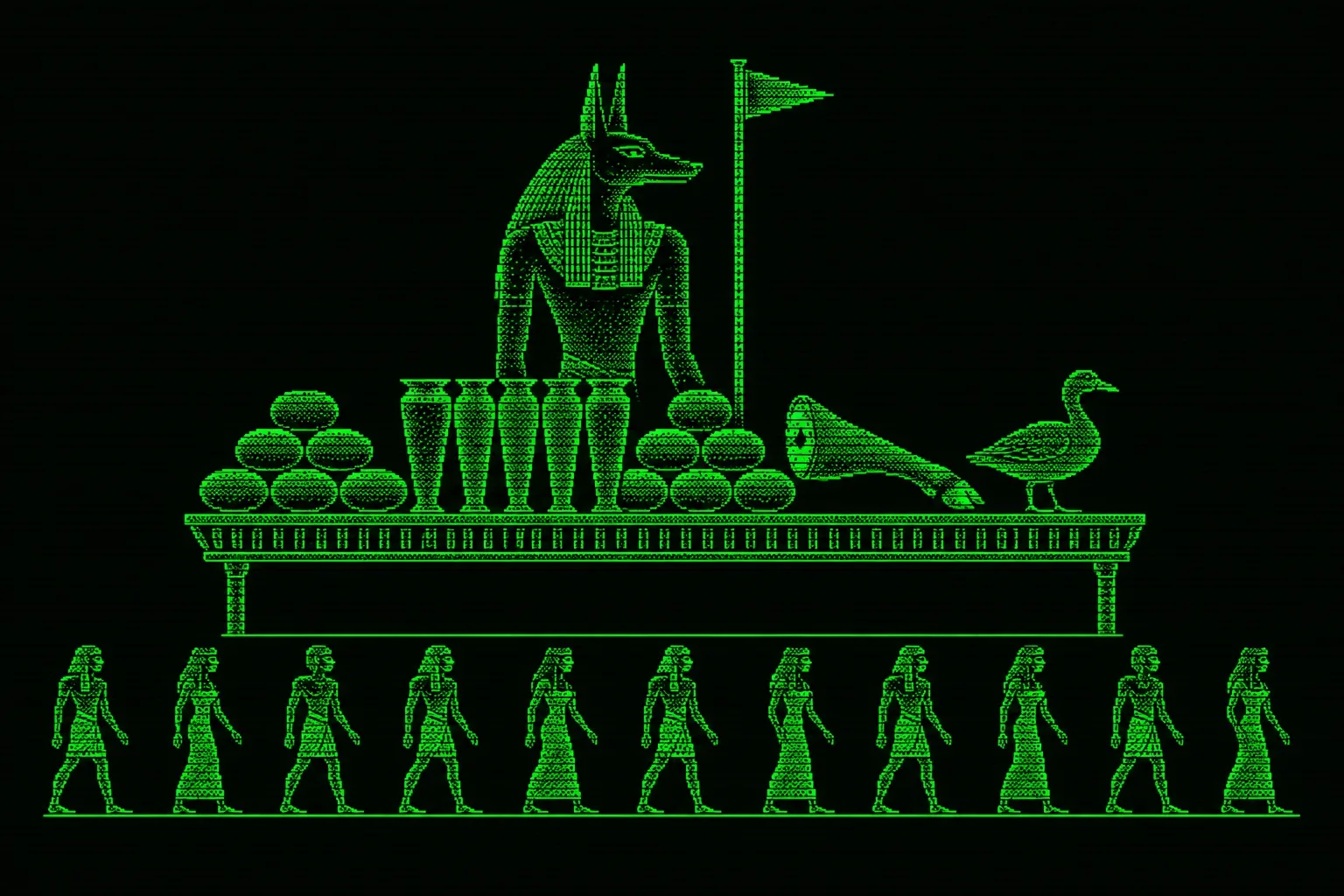
~/sacred-texts/stelae-of-the-egyptian-collection-university-of-tübingen
Egyptian Stela of Iti: A Barley Official and His Household
- Date
- Carved in the late Middle Kingdom (12th–13th Dynasty, about 1850–1700 BC)
- Found
- Egyptian Collection of the University of Tübingen, Inv. 462
- Language
- Middle Egyptian · Hieroglyphic
The stela opens with Wepwawet-Ra, lord of Abydos. Osiris is asked to give bread and beer, cattle and fowl, alabaster, cloth and linen, for the ka of the overseer of the counting of barley, Iti, true of voice. His son Iyib, scribe of the Great Enclosure, set it up for Iti and for his mother Senebetsi.
Then the household follows, one name to a line: judges, a lector priest, Bowman Dedusobek, wab-priests, two retainers both called Dedi, the Younger and the Elder, a long row of ladies of the house, and The nurse, Senaaib. with her son. One woman bears the king’s name Senwosret. The list ends with a brewer and five bare names.
- 1
𓄋𓈐𓏏𓏥𓇳𓏤 𓎟𓍋𓈋𓊖
Wp-wꜣ,t.pl-Rꜥ(w) nb-ꜣbḏ,w
Wepwawet-Ra, lord of Abydos.
Note · Line 1
Wepwawet, the “Opener of the Ways,” is a jackal god who led processions at Abydos, the cult centre of Osiris. Here he is joined with the sun god Ra. - 2
𓄋𓈐𓈐𓈐 𓎟𓇾𓈉
Wp-wꜣ,t.pl nb-tꜣ-ḏsr
Wepwawet, lord of the Sacred Land.
Note · Line 2
The “Sacred Land” is the cemetery, the realm of the dead. - 3
𓇓𓏏𓏙𓊵 𓊩𓁹 𓏄𓈖𓋀𓅂𓏏 𓊹𓉻𓂝 𓎟𓍋𓈋𓃀𓊖𓏤
ḥtp-ḏi̯-nswt Wsjr Ḫnt,j-jmn,tjw nṯr-ꜥꜣ nb-ꜣbḏ,w
An offering which the king gives, and Osiris, Foremost of the Westerners, the great god, lord of Abydos,
Note · Line 3
This is the standard offering formula of Egyptian tombs and stelae. Gifts nominally pass from the king and the gods to the dead. “Westerners” are the dead, buried on the desert edge in the west. - 4
𓂞𓏤 𓆑 𓏥 𓏐 𓏊 𓃿𓊕 𓅿𓏥 𓍵 𓈀𓏤 𓋲 𓈖 𓂓 𓈖 𓄓𓏤𓉐𓏤𓐎𓏛𓌾 𓇋𓏏𓆑𓀽 𓐙𓊤𓅱
ḏi̯ =f pr,t-ḫrw tʾ〈〈.pl〉〉 ḥ(n)q,t.pl jḥ〈〈.pl〉〉 ꜣpd.pl šs dꜣj,w mnḫ,t n kꜣ n(,j) jm,j-rʾ-ḥsb-jt Jt mꜣꜥ-ḫrw
that he may give an invocation offering of bread and beer, cattle and fowl, alabaster, cloth and linen, for the ka of the overseer of the counting of barley, Iti, true of voice.
Note · Line 4
The “invocation offering” is food called into being for the dead when the living recite the formula. - 5
𓈟𓏏 𓆑 𓇓𓏏𓈖𓐬𓅱𓌡𓏏𓏏 𓊃𓈖𓏏𓃀𓋴𓏭 𓐙𓏏𓊤
ḥm,t =f ẖkr{w}〈,t〉-nswt-wꜥ,t(j)t Znb.t(j)-sy mꜣꜥ,t-ḫrw
His wife, the sole ornament of the king, Senebetsi, true of voice.
Note · Line 5
“Sole ornament of the king” is an honorific title borne by women of standing. - 6
𓁹𓏏 𓇓𓏏𓏙𓊵 𓇋𓋔 𓏞𓈖𓍕𓉐𓏏𓅨 𓇋𓇍𓂻𓄣𓏤 𓐙𓊤 𓄟𓋴𓈖 𓇓𓏏𓈖𓐬𓅱𓌡𓂝𓏏𓏏 𓋴𓈖𓃀𓏏𓊃𓏭
jr.t ḥtp-ḏi̯-nswt jn zẖꜣ(,w)-n(,j)-ḫnrt-wr Jy-jb mꜣꜥ-ḫrw msi̯.n ẖkr{w}〈,t〉-nswt-wꜥ,t(j)t Snb.t(j)-zy
The offering was made by the scribe of the Great Enclosure, Iyib, true of voice, whom the sole ornament of the king Senebetsi bore.
Note · Line 6
Iyib is the son of Iti and Senebetsi, and he set up the stela for his parents. The Great Enclosure was a state institution that held conscripted and forced labourers. - 7
𓈟𓏏 𓆑 𓎟𓏏𓉐𓏤 𓊃𓂋𓅱𓐍𓏛𓄣𓏤𓁐
ḥm,t =f nb,t-pr Zrwḫ-jb
His wife, the mistress of the house, Serukhib.
- 8
𓌢𓈖 𓆑 𓈖 𓅐𓏏 𓆑 𓅨𓂋𓇓𓎆𓏥 𓇋𓏠𓈖𓉻𓂝𓄿𓏛
sn =f n(,j) mw,t =f wr-mḏ-šmꜥ(,w) Jmn-ꜥꜣ
His brother by his mother, great one of the Tens of Upper Egypt, Amenaa.
Note · Line 8
“Great one of the Tens of Upper Egypt” is a title held by officials of the administration and the law courts. - 9
𓃥𓂋𓊕 𓋴𓈖𓃀𓅱 𓐙𓊤 𓎟𓄪𓏤
zꜣb-rʾ-Nḫn Snb mꜣꜥ-ḫrw nb-jmꜣḫ
Judge and mouth of Nekhen, Seneb, true of voice, lord of honour.
Note · Line 9
“Judge and mouth of Nekhen” is an old title of legal officials. Nekhen, called Hierakonpolis in Greek, was an ancient royal town. “Lord of honour” means one who is honoured and provided for after death. - 10
𓅨𓂋𓇗𓎆𓏥 𓄤𓊵𓏏𓊪 𓐙𓂝𓊤
wr-mḏ-šmꜥ(,w) Nfr-ḥtp mꜣꜥ-ḫrw
Great one of the Tens of Upper Egypt, Neferhotep, true of voice.
- 11
𓎴 𓄊𓂋𓏏𓊃𓈖𓀀 𓐙𓊤
ẖr,j-ḥ(ꜣ)b(,t) Z-n-wsr,t mꜣꜥ-ḫrw
Lector priest Senwosret, true of voice.
Note · Line 11
The lector priest read the sacred texts aloud during rituals. - 12
𓀸𓌔𓏏𓏤 𓆊𓂞𓂞𓅱
jr,j-pḏ,t Ḏḏ.w-Sbk
Bowman Dedusobek.
- 13
𓄓𓉐 𓅘𓎛𓇋𓀁
jm,j-rʾ-pr Nḥj
Steward Nehi.
- 14
𓅨𓇙𓏪 𓂋𓂞𓇋 𓐙𓊤
wr-mḏ-šmꜥ(,w) Rḏj mꜣꜥ-ḫrw
Great one of the Tens of Upper Egypt, Redji, true of voice.
- 15
𓃂𓈗 𓏠𓈖𓍿𓅱𓅓𓎂𓆑𓏥 𓐙𓊤
wꜥb Mnṯ,w-m-sꜣ=f mꜣꜥ-ḫrw
Wab-priest Montuemsaf, true of voice.
Note · Line 15
The wab, or “pure one,” was an ordinary priest who served in the temple in a state of ritual purity. - 16
𓋴𓌋𓌞𓅱𓏥 𓂞𓂞𓅱𓏏𓋴𓈖𓃀 𓐙𓊤
sḥḏ-šms.w.pl Ḏḏ.tw-snb mꜣꜥ-ḫrw
Overseer of retainers, Djedtuseneb, true of voice.
- 17
𓎟𓏏𓉐𓏤 𓊃𓂋𓅱𓐍𓏛𓄣𓏤 𓐙𓏏𓊤
nb,t-pr Zrwḫ-jb mꜣꜥ,t-ḫrw
The lady of the house, Serukhib, true of voice.
Note · Line 17
This passage lists members of the household of Iti, whose stela this is. - 18
𓄓𓂝𓄚𓈖𓏏𓏌𓏭 𓎡𓇋𓇋 𓐙𓊤
jm,j-rʾ-ꜥ-ẖn,wtj Ky mꜣꜥ-ḫrw
The overseer of the cabinet, Ky, true of voice.
Note · Line 18
The “overseer of the cabinet” ran a private chamber or storeroom of a great household, where valuables and personal belongings were kept. It was a kind of chamberlain or steward. - 19
𓃂𓈗 𓇋𓅱𓇋𓇋 𓐙𓊤
wꜥb Jwy mꜣꜥ-ḫrw
The wab-priest, Iuy, true of voice.
Note · Line 19
A wab-priest, literally a “pure one,” was a priest of the lower ranks. He served in the temple in turns and had to keep himself ritually clean. - 20
𓌞𓅱 𓂧𓂧𓇋 𓀔 𓐙𓂝𓊤
šms,w Ddj šrj mꜣꜥ-ḫrw
The retainer, Dedi the Younger, true of voice.
Note · Line 20
A retainer was a personal attendant who followed his master. Two men in the household both bore the name Dedi, so they are told apart as “the Younger” and “the Elder.” - 21
𓌞𓅱 𓂧𓂧𓇋 𓉻 𓐙𓊤
šms,w Ddj ꜥꜣ mꜣꜥ-ḫrw
The retainer, Dedi the Elder, true of voice.
- 22
𓎟𓏏𓉐𓏤 𓉡𓅭𓏏 𓐙𓏏𓊤
nb,t-pr Zꜣ,t-Ḥw,t-ḥr(,w) mꜣꜥ,t-ḫrw
The lady of the house, Sathathor, true of voice.
Note · Line 22
The name means “Daughter of Hathor.” - 23
𓎟𓏏𓉐𓏤 𓋴𓈖𓃀𓏛 𓐙𓏏𓊤
nb,t-pr Snb mꜣꜥ,t-ḫrw
The lady of the house, Seneb, true of voice.
- 24
𓎟𓏏𓉐𓏤 𓇋𓂝𓈗𓅱𓉻𓏏 𓐙𓏏𓊤
nb,t-pr Jꜥ.w-ꜥꜣ.t mꜣꜥ,t-ḫrw
The lady of the house, Iau the Elder, true of voice.
- 25
𓎟𓏏𓉐𓏤 𓇋𓂝𓈗𓅱𓀔𓏏 𓐙𓏏𓊤
nb,t-pr Jꜥ.w-šrj,t mꜣꜥ,t-ḫrw
The lady of the house, Iau the Younger, true of voice.
- 26
𓎟𓏏𓉐𓏤 𓂞𓋴𓅓𓂋𓇋𓆵 𓐙𓏏𓊤
nb,t-pr Ḏi̯=s-mrj mꜣꜥ,t-ḫrw
The lady of the house, Djesmeri, true of voice.
- 27
𓏠𓈖𓂝𓏏𓂑 𓊃𓈖𓂝𓂝𓏛𓄣𓏤
Mnꜥ,t Znꜥꜥ-jb
The nurse, Senaaib.
Note · Line 27
She was a wet-nurse in the household. - 28
𓅭𓏤 𓊃 𓎟𓇓𓅱𓌇 𓐙𓊤
zꜣ =z Nb-sw-mnw mꜣꜥ-ḫrw
Her son, Nebsumenu, true of voice.
Note · Line 28
The name means “Min is his lord.” Min was the god of fertility worshipped at Koptos and Akhmim. The son of the household’s wet-nurse is honoured here alongside the family. - 29
𓎟𓏏𓉐𓏤 𓎛𓏌𓏏𓎺𓁐 𓐙𓏏𓊤
nb,t-pr Ḥnw,t mꜣꜥ,t-ḫrw
The lady of the house, Henut, true of voice.
- 30
𓎟𓏏𓉐𓏤 𓋴𓈖𓃀𓅱𓏭 𓐙𓏏𓊤
nb,t-pr Snb-wy mꜣꜥ,t-ḫrw
The lady of the house, Senebuy, true of voice.
- 31
𓎟𓏏𓉐𓏤 𓊵𓏏𓊪𓍘𓇋 𓐙𓏏𓊤
nb,t-pr Ḥtp,tj mꜣꜥ,t-ḫrw
The lady of the house, Hetepti, true of voice.
- 32
𓎟𓏏𓉐𓏤 𓃀𓃀𓇋 𓀔 𓐙𓏏𓊤
nb,t-pr Bbj šrj(,t) mꜣꜥ,t-ḫrw
The lady of the house, Bebi the Younger, true of voice.
- 33
𓎟𓏏𓉐𓏤 𓎟𓏏𓁶𓏤𓃒𓏥 𓐙𓏏𓊤
nb,t-pr nb,t-tp-jḥ.pl mꜣꜥ,t-ḫrw
Lady of the house Nebettepihu, true of voice.
Note · Line 33
“Lady of the house” was the standard title of a married woman in the Middle Kingdom. - 34
𓎟𓏏𓉐𓏤 𓄊𓋴𓂋𓏏𓊃𓈖 𓐙𓏏𓊤
nb,t-pr Z-n-wsr,t mꜣꜥ,t-ḫrw
Lady of the house Senwosret, true of voice.
Note · Line 34
Senwosret was the name of several Middle Kingdom kings and is usually a man’s name; here a woman bears it. - 35
𓎟𓏏𓉐𓏤 𓇋𓏠𓈖𓅭𓏏 𓐙𓏏𓊤
nb,t-pr Zꜣ,t-Jmn mꜣꜥ,t-ḫrw
Lady of the house Satamun, true of voice.
- 36
𓎟𓏏𓉐𓏤 𓇋𓃀𓏏𓃙 𓐙𓏏𓊤
nb,t-pr Jb,t mꜣꜥ,t-ḫrw
Lady of the house Ibet, true of voice.
- 37
𓌢𓈖 𓊃 𓏶𓎃 𓏠𓈖𓍿𓅱𓏤𓇓𓅱
sn =z jm,j-sꜣ Mnṯ,w-sw
Her brother, the phyle-member Montusu.
Note · Line 37
A phyle was one of the rotating crews that served a temple in turn, each for a set period, usually a month. “Her” refers to the woman named just before. - 38
𓀪𓏏𓏭 𓋴𓈖𓃀 𓇍𓂻𓄣𓏤
ꜥf,ty Snb Jy-jb
The brewer Seneb; Iyib.
- 39
𓈀𓇋𓇋𓊮𓋹𓈖𓐍 𓇍𓂻𓄣𓏤 𓇅𓇯𓏏 𓂝𓈙𓅓 𓅐𓏏
Jwy-ꜥnḫ Jy-jb Wꜣḏ,t ꜥšm Mw,t
Iuyankh, Iyib, Wadjet, Ashem, Mut.