~/sacred-texts/royal-inscriptions-of-the-second-intermediate-period
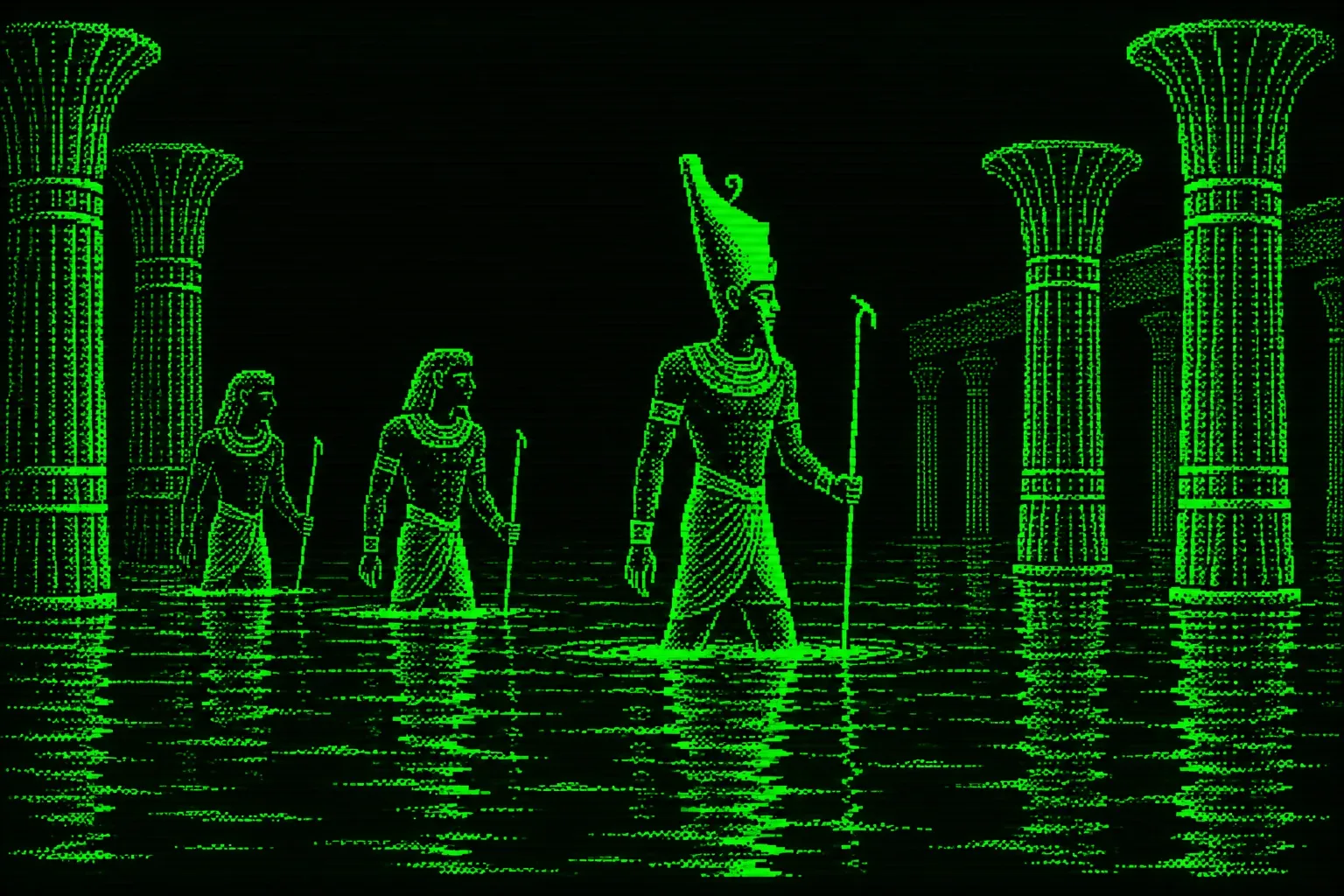
Sobekhotep VIII Flood Stela: King Wades a Flooded Temple
- Date
- Carved after Year 4 of Sobekhotep VIII (Second Intermediate Period, c. 1640 BC). It records a high Nile flood during the five extra days at the end of the year, on a stela set up in the temple of Amun at Karnak.
- Found
- Temple of Amun at Karnak, Thebes; found reused as fill in the Third Pylon.
- Language
- Middle Egyptian · Hieroglyphic
- 1
Zꜣ-Rꜥ n(,j) ẖ,t =f Sbk-ḥtp mr.y Jmn-Rꜥ nb-ns,wt-tꜣ,wj ḏi̯ ꜥnḫ ḏ,t
Sobekhotep, son of Ra’s own body, beloved of Amun-Ra, Lord of the Thrones of the Two Lands, given life forever.
Note · Line 1
The Two Lands are Upper and Lower Egypt. - 2
nṯr-nfr nb-tꜣ,wj nb-jr,t-(j)ḫ,t Sḫm-Rꜥ-Swsr-tꜣ,wj mr.y Ḥꜥp(j) ꜥꜣ ḏ,t ḏi̯ ꜥnḫ ḏd wꜣs mj Rꜥ ḏ,t
The perfect god, Lord of the Two Lands, Lord of Ritual, Sekhemre Seusertawy, forever beloved of Hapi the Great, given life, stability, and power like Ra forever.
Note · Line 2
Sekhemre Seusertawy is Sobekhotep’s throne name. Hapi is the annual Nile flood in divine form. - 3
rnp,t-zp ⸢4⸣ [ꜣbd] 4 šm,w [5] [ḥr.w-rnp,t] [ḫr] [ḥm] [n(,j)] [nṯr] [pn] [ꜥnḫ] [ḏ,t]
Regnal year four, fourth month of the harvest season, during the five days beyond the year, under the Majesty of this god, living forever.
Note · Line 3
The Egyptian civil year had twelve months of thirty days each. Five extra days followed the last month of the harvest season, just before the new year. - 4
wꜥ m nn-n hrw(.w) ⸢ḫpr⸣ [⸮wn.jn?] [⸮ḥm?] =[⸮f?] [⸮ḥr?] [⸮wḏꜣ?] [⸮r?] [⸮pr?] n(,j) Jmn
When one of those days dawned, His Majesty went to the house of Amun.
- 5
gmi̯.n ḥm =f Ḥꜥp(j) wr
His Majesty found the Nile in high flood.
- 6
jy.n [⸮ḥm?] =[⸮f?] [⸮r?] [⸮mꜣ?] [⸮Ḥꜥp(j)?] [⸮wr?] n,tj m wsḫ,t n(,j).t ḥw,t-nṯr n(,j).t rʾ-pr pn
His Majesty came to see the high flood in the broad court of the temple building within this precinct.
- 7
wn.jn [ḥm] =[f] [ḥr] [⸮rhni̯.t?] [⸮m?] [⸮mw?] [m]-ẖnw wsḫ,t n(,j).t ḥw,t-nṯr ḥnꜥ ⸢s⸣[mr.pl] [...] ___ =sn [...]
Then His Majesty waded through the water in the broad court of the temple building with the courtiers … they …
- 8
ꜥnḫ Zꜣ-Rꜥ Sbk-ḥtp mr.y Ḥꜥp(j) ꜥꜣ ḏi̯ ꜥnḫ ḏ,t
Long live the Son of Ra, Sobekhotep, beloved of Hapi the Great, given life forever.
- 9
rnp,t-zp 4 ꜣbd 4 šm,w 5 ḥr,w-rnp,t ḫr ḥm n(,j) nṯr pn ꜥnḫ ḏ,t
Regnal year four, fourth month of the harvest season, during the five days beyond the year, under the Majesty of this god, living forever.
Note · Line 9
The inscription begins a second account of the same visit. - 10
wḏꜣ ḥm =f r wsḫ,t n(,j).t rʾ-pr pn 〈r〉 mꜣ Ḥꜥp(j) wr
His Majesty proceeding to the broad court of this temple to see the high flood.
- 11
jy.n ḥm =f wsḫ,t n(,j).t rʾ-pr pn mḥ.tj m mw
When His Majesty arrived, the broad court of this temple was full of water.
- 12
wn.jn ḥm =f ⸢ḥr⸣ rhni̯.t jm =s ḥnꜥ ⸢qnb,t⸣
Then His Majesty waded through it with the council.
- 13
ḏd.jn ḥm n(,j) nswt [...] rn-wr n(,j) 〈ḥm〉 =j ꜥnḫ-(w)ḏꜣ-s(nb)
Then the King’s Majesty said: … the great name of My Majesty—life, prosperity, health!
Note · Line 13
The three wishes are a customary blessing for the king, even when he speaks of himself. - 14
jy.n [...] Ḥꜥp(j) ꜥꜣ
There came … Hapi the Great.
- 15
jy.n ḥm =j ꜥnḫ-(w)ḏꜣ-s(nb) [...]
My Majesty—life, prosperity, health!—came …
- 16
[...] sḏm wḏ,t [...]
… the command was heard …
- 17
[...] Zꜣ-Rꜥ ⸢Sbk-ḥtp⸣
… the Son of Ra, Sobekhotep.
- 18
ꜥnḫ Nswt-bj,tj nṯr-nfr nb-tꜣ,wj Sḫm-Rꜥ-Swsr-tꜣ,wj
Long live the King of Upper and Lower Egypt, the perfect god, Lord of the Two Lands, Sekhemre Seusertawy,
- 19
ḏi̯ ꜥnḫ mj Rꜥ
given life like Ra.