~/sacred-texts/middle-kingdom-tales
The Shipwrecked Sailor: The Serpent of the Island of the Ka
Translated by AI straight from the Middle Egyptian, not from a modern translation, then checked against the editions and studies listed below. How we translate
- Text
- Middle Kingdom tales, The Shipwrecked Sailor (P. Hermitage 1115)
- Date
- Copied c. 1900 BC (12th Dynasty)
- Found
- Papyrus 1115 of the Hermitage, St Petersburg; unrolled in 1881, findspot unknown
- Language
- Middle Egyptian · Hieratic
The Shipwrecked Sailor is one of the oldest stories in the world told for its own sake, copied on a single papyrus about 1900 BC and kept since the nineteenth century in the Hermitage in St Petersburg. Nothing is known of where it was found. The papyrus is whole, and this page gives the whole tale, from its first line to the scribe’s signature.
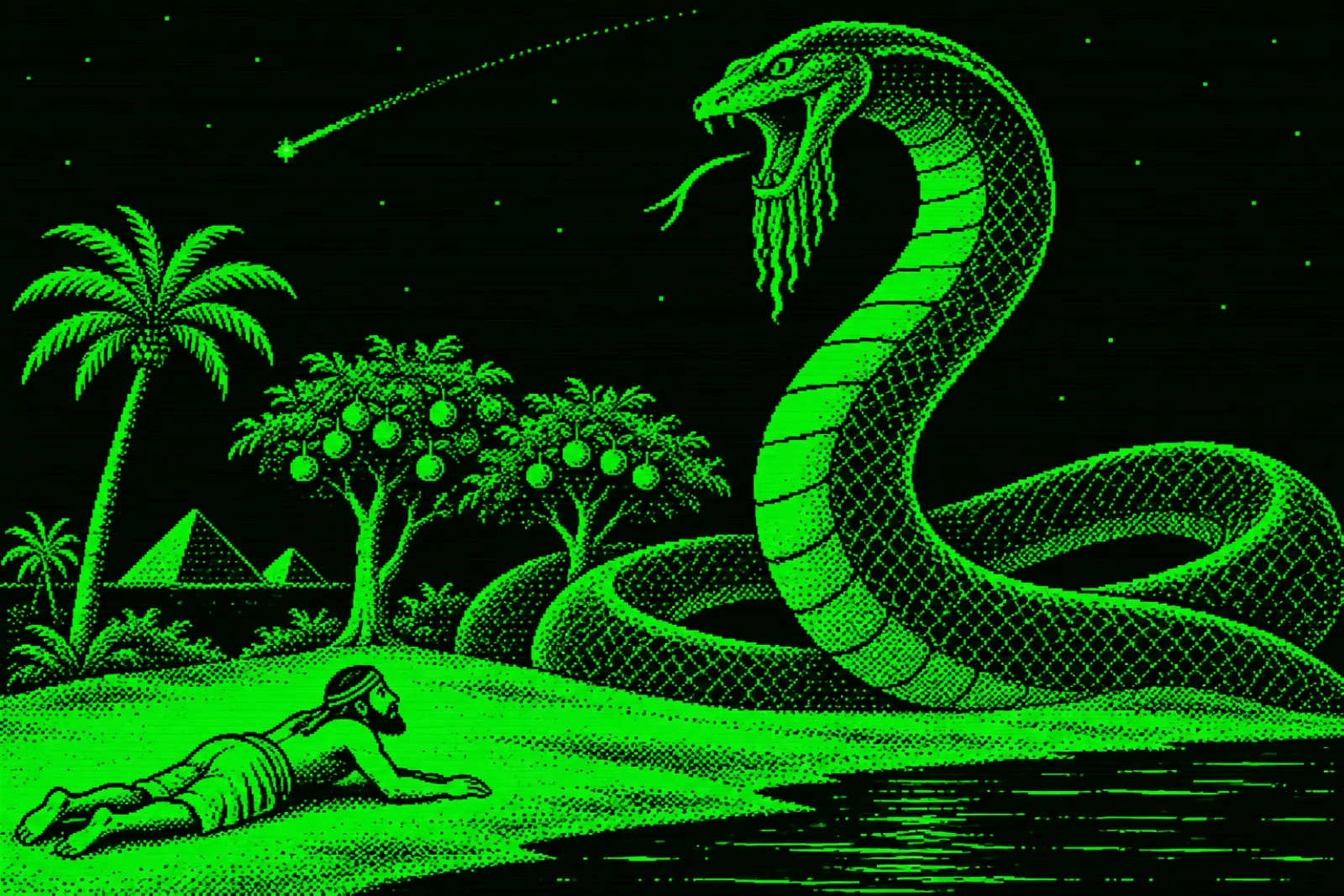
It is a story inside a story inside a story. An expedition leader comes home from Nubia and must report to the king, and one of his followers tries to cheer him with his own adventure. Sailing to the mines, the follower was wrecked; every other man drowned, and a wave threw him onto an island full of food. There a giant serpent found him, carried him in his mouth to his home, and asked who had brought him. The serpent told him he would be rescued in four months, and told his own story in turn: he had lived on the island with seventy-five serpents of his family until a star fell and burned them all. The ship came as foretold, the serpent loaded it with the riches of Punt, the island sank behind him, and the sailor was rewarded at court. The leader is not consoled.
The tale repeats itself on purpose: the sailor tells the voyage once to his lord and again, word for word, to the serpent. Its key words return as well: the heart, “knowing”, the “second”, the ka. They are marked in the English where they fall. A few places are damaged or corrected by the edition, among them the mast in the storm and the girl brought to the serpent; the notes say what is restored. For the Egyptian serpent who gives out the ka, see Neheb-Ka, Binder of Souls.
Each numbered line gives the Middle Egyptian first: the original script, then the same words in Latin letters. Our English is underneath. Tap a dotted word for its meaning, and Note for our comment on the line; our comments are in the right margin.
The follower speaks to his lord
- 11
Then the šms.w: follower, retainer; a court title said:
- 21
“Let your heart be glad, ḥꜣ.tj-ꜥ: governor, count; a nobleman's title!
- 32
𓅓𓂝 𓎢 𓄖𓂻𓈖 𓈖𓏥 𓄚𓈖𓏌𓅱𓉐
m =k pḥ.n =n ẖnw the Residence, the royal capital · TLA
Look, we have reached ẖnw: the Residence, the royal capital.
Note on line 3
Erman (tr. Blackman 1927) takes this as a local residence, in his view Elephantine, the leader’s own seat: at line 154 the ship must still sail north to the Residence of the sovereign. - 43
𓊏𓊪𓂝 𓐍𓂋𓊪𓏲𓆱
šzp ḫrpw
The mallet has been taken up,
- 54
𓎛𓀝𓀜 𓏠𓈖𓇋𓏏𓊧𓆱
ḥwi̯ mnj,t
the mooring post driven in,
- 64
𓄂𓏏𓏏𓍢 𓂋𓂝𓏏 𓁷𓏤 𓇾𓈇𓏤
ḥꜣ,tt rdi̯.t(j) ḥr tꜣ
the prow rope set on land.
- 75
𓂋𓂝 𓎛𓎢𓈖𓏌𓏲𓀁
rḏi̯ ḥkn.w hekenu, a sacred oil · TLA
Praise has been given,
- 85
𓇼𓄿𓀢𓀁 𓊹
dwꜣ nṯr god · TLA
god has been thanked,
- 96
𓊃𓀀𓏤 𓎟 𓁷𓏤 𓎛𓊪𓏏𓂘𓂝 𓌢𓈖𓏌𓅱𓀀𓏻 𓆑
z nb lord, owner; also “every, all” · TLA ḥr ḥpt sn.nw second; companion (written with the numeral two) · TLA =f
every man is embracing sn.nw: “second”, written with the numeral two; the ordinary word for a companion.
Note on line 9
Sn.nw, here and wherever the tale uses it, is spelled with the numeral two: “the second (one)”. The TLA and the older versions we checked (Erman–Blackman, Maspero, Petrie) say “companion”, which is the word’s ordinary sense. We keep “second” so that the reader can hear it again at line 40, where the sailor’s only companion is his own heart. - 107
𓇩𓅱𓏏𓀀𓏥𓏏 𓈖𓏥 𓇍𓇋𓏏𓂻 𓎙𓂧𓏏𓏛
jz,wt{t} =n jy.t(j) ꜥd.t(j)
Our crew has come back safe;
- 117
𓂜𓈖 𓈖𓉔𓅱𓅪 𓈖 𓀎𓀀𓏥 𓈖𓏥
nn nhw n(,j) mšꜥ =n
there is no loss to our troop.
- 128
𓄖𓂻𓈖 𓈖𓏥 𓄖𓅱𓏭 𓍯𓍯𓏏𓈉 𓊃𓈖𓏕𓂻𓈖 𓈖𓏥 𓊃𓈖𓅐𓏏𓈉
pḥ.n =n pḥ,wj Wꜣwꜣ.t Wawat, Lower Nubia · TLA sni̯.n =n Snm.t Senmut, the island of Biga at the First Cataract · TLA
We have reached the end of Wꜣwꜣ.t: Wawat, Lower Nubia, we have passed Snm.t: Senmut, the island of Biga at the First Cataract.
Note on line 12
Wawat is Lower Nubia; Senmut is Biga, at the First Cataract, the southern gate of Egypt. The expedition is coming home downstream. - 1310
𓅓𓂝 𓎢 𓂋 𓆑 𓈖𓏥 𓇍𓇋𓂻 𓈖𓏥 𓅓𓊵𓏏𓊪𓏛
m =k r =f n jy =((n)) m-ḥtp
Look, we have come back in peace;
- 1411
𓇾𓈇𓏤 𓈖𓏥 𓄖𓂻 𓈖𓏥 𓇓𓏲
tꜣ =n pḥ =n sw
our land, we have reached it.
- 1512
𓄔𓅓 𓂋 𓎢 𓈖 𓀀 𓄂𓂝𓀀
sḏm r =k n =j ḥꜣ.tj-ꜥ governor, count · TLA
Listen to me, governor.
- 1612
𓏌𓎢𓀀 𓆄𓏲𓅪 𓇉𓄿𓅱𓏛𓏥
jnk šwi̯ 〈m〉 ḥꜣw
I am one free of exaggeration.
- 1713
𓇋𓂝𓈗𓂝 𓏏𓏲
jꜥi̯ ṯw you (dependent pronoun): with rḫ, “know yourself” · TLA
Wash yourself,
- 1813
𓇋𓐝𓅓𓂝 𓈗 𓁷𓏤 𓂭𓏥 𓎢
jmi̯ mw ḥr ḏbꜥ.pl =k
put water on your fingers.
- 1914
𓇋𓐍𓏛 𓅱𓈙𓃀𓀁 𓎢 𓅱𓄞𓂧𓏏𓀁 𓎢
jḫ wšb =k wšd.t(w) =k
Then you may answer when you are addressed,
- 2015
𓌃𓂧𓅱𓀁 𓎢 𓈖 𓇓𓏏𓈖𓅆 𓄣𓏤 𓎢 𓅓𓂝 𓎢
mdwi̯ =k n nswt jb heart, mind; as a verb, to think · TLA =k m-ꜥ =k
you may speak to the king with jb m-ꜥ: the heart in one's hand, self-possessed,
Note on line 20
“Your heart in your hand” is an idiom for self-possession; the TLA glosses it “courageously”. The tale turns on the heart: here the lord must hold his own, at line 40 the sailor’s heart is his only second, and at line 66 he stands before the serpent and does not know himself. - 2116
𓅱𓈙𓃀𓀁 𓎢 𓂜𓈖 𓈖𓇋𓏏𓇋𓏏𓀁
wšb =k nn njtjt
you may answer without stammering.
- 2217
𓇋𓅱 𓂋𓏤 𓈖 𓊃𓀀𓏤 𓈖𓈞𓅓𓂝 𓆑 𓇓𓅱
jw rʾ n(,j) z(ʾ) nḥm =f sw
A man's mouth saves him;
- 2318
𓇋𓅱 𓌃𓂧𓅱𓀁 𓆑 𓂝 𓆑 𓅷𓄿𓅓𓋳 𓈖 𓆑 𓁷𓏤
jw mdw =f ḏi̯ =f ṯꜣm n =f ḥr
his speech makes the face be veiled for him.
Note on line 23
The veiled face is the listener’s: anger covered up, indulgence granted. - 2420
𓁹𓂋 𓎢 𓅓 𓐍𓂋𓏏𓏛𓏥𓄣𓏤 𓎢
jrr =k m ḫr,t-jb =k
But you do as you please.
- 2520
𓋴𓅨𓂋𓂧𓅪 𓊪𓏲 𓆓𓂧 𓈖 𓎢
swrd pw ḏd n =k
It is tiring to talk to you.
- 2621
𓋴𓆓𓂧 𓀀 𓂋 𓆑 𓈖 𓎢 𓏇𓇋𓏏𓏏𓏛𓇋𓂋𓏭 𓆣𓂋 𓅓𓂝 𓀀 𓆓𓊃 𓀀
sḏd =j r =f n =k mj,tt-jr,j ḫpr m-ꜥ =j ḏs =j
Still, I will tell you something like it, which happened to me myself.
The voyage and the wreck
- 2723
𓈝𓅓𓂻𓎢𓅱𓀀 𓂋 𓃀𓇋𓈞𓄑𓈉 𓈖 𓆊𓆊𓅆
šm.kw r bjꜣ n(,j) jty sovereign, the king · TLA
I had gone to the mines of jty: sovereign, the king.
Note on line 27
Bjꜣ is the mining country; elsewhere it names the turquoise and copper mines of Sinai, reached by ship down the Red Sea. - 2824
𓉔𓄿𓂻𓎢𓅱𓀀 𓂋 𓇆𓅨𓂋𓈘 𓅓 𓂧𓊪𓏏𓊛 𓈖𓏏 𓎔𓂝 𓍢𓎆𓎆 𓅓 𓄫𓏲 𓋴 𓎔𓂝 𓎆𓎆𓎆𓎆 𓅓 𓋴𓐍𓅱𓎺 𓋴
hꜣi̯.kw r wꜣḏ-wr “the Great Green”, the sea · TLA m dp,t n.t mḥ 120 m ꜣw =s mḥ 40 m sḫw =s
I went down to wꜣḏ-wr: “the Great Green”, the sea in a ship one hundred and twenty cubits in its length and forty cubits in its width.
Note on line 28
About 63 by 21 metres, far larger than any Egyptian ship we know of: the scale is the tale’s. - 2927
𓋴𓐪𓂧A83𓀀 𓍢𓎆𓎆 𓇋𓅓 𓋴 𓅓 𓍉𓏛 𓈖 𓆎𓅓𓏏𓊖
sqd 120 jm =s m stp n(,j) Km,t
One hundred and twenty sailors were in it, of the choicest of Egypt.
- 3028
𓌳𓁹𓄿 𓋴𓈖𓏥 𓊪𓏏𓇯 𓌳𓁹𓄿 𓋴𓈖𓏥 𓇾𓈇𓏤 𓅓𓂝𓎢𓄿𓂝 𓄣𓏤 𓋴𓈖𓏥 𓂋 𓌳𓁹𓄿𓅱𓄛𓏥
mꜣ =sn p,t mꜣ =sn tꜣ mꜥkꜣ jb heart, mind; as a verb, to think · TLA =sn r mꜣ(j).w.pl
Whether they looked at the sky or looked at the land, their hearts were bolder than lions'.
- 3130-31
𓊃𓂋𓃩𓀁 𓋴𓈖𓏥 𓆓𓂝𓊡 𓂜 𓇍𓇋𓏏𓂻 𓈖𓈙𓈖𓏭𓃩𓀜 𓂜 𓆣𓂋𓏏 𓆑
sr =sn ḏꜥ n jj.t nšnj n ḫpr.t =f
They could foretell a storm before it came, a tempest before it happened.
- 3232
𓆓𓂝𓊡 𓉐𓂋𓂻 𓇋𓅱 𓈖𓏥 𓅓 𓇆𓅨𓂋𓈘 𓁶𓏤𓂝𓏤 𓃃𓏛 𓈖𓏥 𓇾𓈇𓏤
ḏꜥ pri̯ jw =n m wꜣḏ-wr “the Great Green”, the sea · TLA tp-ꜥ sꜣḥ =n tꜣ
A storm broke while we were on the Great Green, before we could touch land.
- 3334
𓆑𓄿𓏏𓀋𓂝 𓊡𓅱 𓁹 𓆑 𓄙𓅓𓇋𓇋𓏏𓀁
fꜣi̯.t ṯꜣw jri̯ =f wḥmy,t
The wind rose, and it made a repetition.
Note on line 33
“It made a repetition”: it blew again and again, gust upon gust. - 3435
𓈖𓍇𓏌𓏲𓇋𓇋𓏏𓈗 𓇋𓅓 𓆑 𓈖𓏏 𓎔𓂝 𓏽𓏽
nwy,t jm =f n.t mḥ 8
There was a wave in it of eight cubits.
Note on line 34
Eight cubits is about four metres. - 3536
𓇋𓈖 𓆱𓏏𓏤 𓎛𓎛𓀝𓀜 𓈖 𓀀 𓋴
jn ḫt ⸮ḥ{ḥ}〈wi̯〉? n =j ⸮s(j)?
It was the mast that struck it for me.
Note on line 35
A damaged line. The verb is ḥwi̯ “to strike”, and “it” is the wave: the mast broke the wave before him. - 3637
𓊢𓂝𓈖 𓂧𓊪𓏏𓊛 𓅓𓏏𓏱
ꜥḥꜥ.n dp,t mwt to die; of a ship, to founder · TLA
Then the ship mwt: to die; said of a ship, to founder.
Note on line 36
The verb is mwt, “to die”, written as for a man’s death. The TLA glosses it “to sink (of a ship)”. We keep “died”: the ship dies like its crew. - 3738
𓈖𓏏𓅂𓏥 𓇋𓅓 𓋴 𓂜 𓊃𓊪𓊗 𓌡𓏲𓂝𓀀𓏤 𓇋𓅓
ntj.w jm =s n spi̯ wꜥ jm
Of those who were in it, not one was left.
- 3839
𓊢𓂝𓈖 𓀀 𓂋𓂝𓎢𓅱𓀀 𓂋 𓈀𓈇𓏤 𓇋𓈖 𓍯𓄿𓅱𓈗 𓈖 𓇆𓅨𓂋𓈘
ꜥḥꜥ.n =j rḏi̯.kw r jw jn wꜣw n(,j) wꜣḏ-wr “the Great Green”, the sea · TLA
Then I was put on an island by a wave of the Great Green.
Alone on the island
- 3941
𓁹𓈖 𓀀 𓉔𓂋𓅱𓇳 𓏼 𓌡𓏲𓂝𓏤𓅪𓎢𓏲𓀀
jri̯.n =j hrw 3 wꜥi̯ to be alone, to be one · TLA
I spent three days wꜥi̯: to be alone, to be one,
- 4042
𓄣𓏤 𓀀 𓅓 𓌢𓈖𓏌𓅱𓀀𓏻 𓀀
jb heart, mind; as a verb, to think · TLA =j m sn.nw second; companion (written with the numeral two) · TLA =j
sn.nw: “second”, written with the numeral two; companion.
Note on line 40
Literally “my heart as my second”, and the word is spelled with the sign for two. The TLA, and every older version, say “my heart was my companion”, which is right for the word. The literal sense matters here: a man with no one left has his own heart for the second of a pair. Compare line 9, where the crew home again embrace their seconds. - 4142
𓊃𓇥𓂋𓁀𓎢𓅱𓀀 𓅓𓄚𓈖𓏌𓏲𓉐𓈖 𓎢𓄿𓊪𓐡𓉐 𓈖 𓆱𓏏𓏤 𓈎𓈖𓇋𓂘𓂝𓈖 𓀀 𓆄𓏲𓇋𓇋𓏏𓇳
sḏr.kw m-ẖnw-n kꜣp n(,j) ḫt qnj to embrace · TLA =j šw.t shade, shadow; a person's shadow, part of the self · TLA
I lay inside a shelter of trees, and I qnj šw.t: to embrace the shade, the shadow.
Note on line 41
The sailor is the subject of qnj “to embrace”, and šw.t is shade and shadow both: the same word names a person’s shadow, one of the parts of the self. Older translations reverse it (“the shadow covered me”) or shrink it (Erman, tr. Blackman 1927: embraced the shade, “i.e. probably only: I sought it”). The words are plain: alone, with his heart for his second, he embraced the shadow. - 4245
𓊢𓂝𓈖 𓂧𓃹𓈖𓂻𓈖 𓀀 𓂋𓂧𓂾𓂾 𓀀 𓂋 𓂋𓐍𓏛 𓂝𓏏 𓀀 𓅓 𓂋𓏤 𓀀
ꜥḥꜥ.n dwn.n =j rd.du =j r rḫ to know, to learn · TLA ḏi̯.t =j m rʾ =j
Then I stretched out my legs to rḫ: to know, to learn what I might put in my mouth.
Note on line 42
“Stretched out my legs”: got up. - 4347
𓅠𓅓𓈖 𓀀 𓂧𓄿𓃀𓇭𓈒𓏥 𓇋𓄿𓂋𓂋𓏏𓁺𓈒𓏥 𓇋𓅓 𓇋𓄿𓈎𓏏𓆰𓏫 𓎟𓏏 𓀻𓋴𓏏𓏛
gmi̯.n =j dꜣb.pl jꜣrr,t.pl jm jꜣq,t nb lord, owner; also “every, all” · TLA šps.t
I found figs and grapes there, and every fine vegetable.
- 4449
𓎢𓄿𓅱𓈒𓏥 𓇋𓅓 𓎛𓈖𓂝 𓈖𓈎𓅱𓏏𓈒𓏥 𓊏𓊪𓏏𓈒𓏥 𓏇𓇋 𓁹𓏏 𓋴
kꜣ.w.pl jm ḥnꜥ nq,wt.pl sšp,t.pl mj jri̯.t(w) =s
Sycamore figs were there, unnotched and notched, and cucumbers as if they were planted.
Note on line 44
Sycamore figs were notched on the tree to ripen them; the island has both kinds, and its cucumbers grow like a farmed crop where no one farms. - 4550
𓂋𓅓𓏲𓆟𓏥 𓇋𓅓 𓎛𓈖𓂝 𓄿𓊪𓂧𓅱𓅯𓏥
rm.w.pl jm ḥnꜥ ꜣpd.w.pl
Fish were there, and birds.
- 4651
𓂜𓈖 𓈖𓏏𓏏 𓂜𓈖 𓋴𓏏 𓅓𓄚𓈖𓏌𓅱𓉐 𓆑
nn n,t.t nn st m-ẖnw =f
There was nothing that was not in it.
- 4752
𓊢𓂝𓈖 𓋴𓋴𓐟𓄿𓀁𓈖 𓅱𓀀 𓂋𓂝𓈖 𓀀 𓂋 𓇾𓈇𓏤 𓈖 𓅨𓂋 𓁷𓏤 𓂝𓏤𓅱𓏭 𓀀
ꜥḥꜥ.n ssꜣi̯.n =(j) wj me (dependent pronoun) · TLA rḏi̯.n =j r tꜣ n wr ḥr ꜥ.wj =j
Then I filled myself, and put some down on the ground, because there was too much on my arms.
- 4854
𓄞𓂧𓏏𓂝 𓀀 𓍑𓄿𓏴𓆱
šd.t =j ḏꜣ fire drill · TLA
I took out the ḏꜣ: fire drill.
- 4955
𓋴𓆣𓂋𓈖 𓀀 𓐍𓏏𓊮 𓁹𓈖 𓀀 𓊄𓅪𓈖𓏴𓏏𓊮 𓈖 𓊹𓏤𓏥
sḫpr.n =j ḫ.t fire, flame · TLA jri̯.n =j zb-n-sḏ.t burnt offering · TLA n nṯr god · TLA
I made a fire, and I made a zb-n-sḏ.t: burnt offering, “what is sent to the fire” to the gods.
- 5056
𓊢𓂝𓈖 𓄔𓅓𓈖 𓀀 𓐍𓂋𓊤𓃭𓅱𓀁 𓈎𓂋𓇋𓃩𓀜
ꜥḥꜥ.n sḏm.n =j ḫrw qrr thunderstorm, thunder · TLA
Then I heard a sound of qrr: thunderstorm, thunder.
- 5157
𓇋𓃀𓃙𓎢𓅱𓀀 𓍯𓄿𓅱𓈗 𓊪𓏲 𓈖 𓇆𓅨𓂋𓈘
jb heart, mind; as a verb, to think · TLA wꜣw pw n(,j) wꜣḏ-wr “the Great Green”, the sea · TLA
I thought it was a wave of the Great Green.
- 5259
𓆱𓏏𓏤𓏥 𓁷𓏤 𓅠𓅓𓅠𓅓𓏴
ḫt.pl ḥr gmgm
The trees were splintering,
- 5360
𓇾𓈇𓏤 𓁷𓏤 𓏠𓈖𓏠𓈖𓂻
tꜣ ḥr mnmn
the earth was quaking.
The serpent
- 5460
𓎢𓆑𓋳𓈖 𓀀 𓁷𓏤 𓀀 𓅠𓅓𓈖 𓀀 𓎛𓆑𓄿𓅱𓆙 𓊪𓅱 𓇋𓅱 𓆑 𓅓 𓇍𓇋𓏏𓂻
kfi̯.n =j ḥr =j gmi̯.n =j ḥfꜣ.w snake, serpent · TLA pw jw =f m jy.t
I uncovered my face, and I found it was a ḥfꜣ.w: snake, serpent coming.
Note on line 54
Ḥfꜣw is the ordinary word for a snake, and it is masculine: the Egyptian calls the serpent “he” throughout (the TLA’s German says “sie” because Schlange is feminine). He has a beard, children and brothers, and calls himself ruler of Punt, so we keep “he”. - 5562
𓈖𓄓𓇓𓏲 𓎔𓂝 𓎆𓎆𓎆
n(,j)-sw mḥ 30
He was thirty cubits long;
Note on line 55
About sixteen metres. - 5663
𓐍𓃀𓊃𓅱𓏏𓁸 𓆑 𓅨𓂋 𓋴 𓂋 𓎔𓂝 𓏻
ḫbz.wt beard, the plaited beard of gods · TLA =f wr s(j) r mḥ 2
his ḫbz.wt: beard, the plaited beard of gods was more than two cubits;
Note on line 56
The ḫbz.wt is the long beard of a god, the beard worn by divine statues and by the king as a god. - 5764
𓎛𓂝𓄹𓏥 𓆑 𓊃𓐍𓂋𓅱𓌕𓀜 𓅓 𓋞𓈒𓏥
ḥꜥ.pl =f sḫr.w m nbw gold · TLA
his limbs were overlaid with nbw: gold;
Note on line 57
Gold for skin and lapis lazuli for hair are the flesh and hair of gods in Egyptian texts (the Book of the Heavenly Cow says it of the old sun god). The snake is drawn as a god before he speaks; Erman (tr. Blackman 1927) likens him to a divine image of gilded bronze with coloured inlay. - 5865
𓇋𓆛𓈖𓂃𓏭 𓆑𓏭 𓅓 𓐍𓋴𓃀𓂧𓈒𓏥 𓌳𓐙𓂝𓆀𓏛
jn〈ḥ〉.du =fj m ḫsbḏ lapis lazuli · TLA mꜣꜥ
his eyebrows were of real ḫsbḏ: lapis lazuli;
- 5966
𓂝𓂋𓈎𓍼𓏛 𓇓𓅱 𓂋𓏃𓈖𓏏
ꜥrq to bend, to coil; to rear up · TLA sw r-ḫnt
and he was ꜥrq: to bend, to coil; to rear up in front.
Note on line 59
Ꜥrq is “to bend, to curl”, and also “to rear up” (TLA “sich aufrichten”); the coiled body lifts its front. - 6067
𓇋𓅱 𓄋𓊪𓏴𓈖 𓆑 𓂋𓏤 𓆑 𓂋 𓀀 𓇋𓏲 𓀀 𓁷𓏤 𓄡𓏏𓏤 𓀀 𓅓𓃀𓅡𓄿𓎛𓂺𓏛 𓆑 𓆓𓂧 𓆑 𓈖 𓀀
jw wpi̯.n =f rʾ =f r =j jw =j ḥr ẖ,t =j m-bꜣḥ =f ḏd =f n =j
He opened his mouth to me, while I was on my belly before him, and he said to me:
- 6169
𓈖𓅓𓂝 𓏎𓈖 𓏏𓅱 𓊗𓏻 𓈖𓆓𓊃𓅪𓀀
(j)n-m jni̯ ṯw you (dependent pronoun): with rḫ, “know yourself” · TLA zp-2 nḏs little one, a small or common man · TLA
“Who brought you, who brought you, nḏs: little one, a small or common man?
Note on line 61
The papyrus writes the question once with the sign for “twice”, zp 2. - 6270
𓈖𓅓𓂝 𓏎𓈖 𓏏𓅱
(j)n-m jni̯ ṯw you (dependent pronoun): with rḫ, “know yourself” · TLA
Who brought you?
- 6370
𓇋𓂋 𓅱𓂧𓆑𓅯𓂻 𓎢 𓅓 𓆓𓂧 𓈖 𓀀 𓏎𓈖 𓏏𓅱 𓂋 𓈀𓈇𓏤 𓊪𓈖 𓂋𓂝 𓀀 𓂋𓐍𓏛 𓎢 𓏏𓅱 𓇋𓅱 𓎢 𓅓 𓊃𓊃𓊮 𓆣𓂋𓏏 𓅓 𓈖𓏏𓏭 𓂜 𓌳𓁹𓄿𓏏 𓆑
jr wdf =k m ḏd n =j jni̯ ṯw you (dependent pronoun): with rḫ, “know yourself” · TLA r jw pn rḏi̯ =j rḫ to know, to learn · TLA =k ṯw you (dependent pronoun): with rḫ, “know yourself” · TLA jw =k m ssf ashes · TLA ḫpr.t(j) m n,tj n mꜣ.t(w) =f
If you delay in telling me who brought you to this island, I will make rḫ ṯw: to know yourself as ssf: ashes, become one who is not seen.”
Note on line 63
The threat is a reflexive verb of knowing, rḫ=k ṯw, “that you know yourself”, with rḫ written with the book-roll sign of abstract knowledge. Golénischeff (1912) and Maspero (1905) translate “I will make you know yourself” and then explain it as an idiom for learning one’s powerlessness, or for “your life is at stake”; Erman (tr. Blackman 1927) keeps “know thyself to be but ashes”. We keep the words: the serpent offers self-knowledge, and the self he would show is ash. - 6473
𓇋𓅱 𓌃𓂧𓅱𓀁 𓎢 𓈖 𓀀
jw mdwi̯ =k n =j
“You speak to me,
Note on line 64
The sailor answers; the text has no speech-introducer here. - 6574
𓂜𓈖 𓅱𓀀 𓁷𓏤 𓄔𓅓 𓀀 𓋴𓏏
nn wj me (dependent pronoun) · TLA ḥr sḏm ={j} st
but I do not hear it.
- 6675
𓇋𓅱 𓀀 𓅓𓃀𓅡𓄿𓎛𓂺𓏛 𓎢 𓐍𓅓𓂜𓈖 𓅱𓀀
jw =j m-bꜣḥ =k ḫm to not know, to be ignorant of · TLA =(j) wj me (dependent pronoun) · TLA
I am before you, and ḫm wj: to not know myself.”
Note on line 66
Ḫm is the verb of not-knowing, written with the arms of negation inside it, and wj is “me” (the papyrus has ḫm.n wj; the edition restores the suffix “I”). It answers the serpent’s rḫ=k ṯw “you will know yourself” with the opposite verb and the matching reflexive. Golénischeff (1912) emended wj away and gave the line to the serpent (“what I did not know before you”), followed by Maspero (1905) and Petrie (1895), so in the first translations the sailor’s sentence does not exist; Erman (tr. Blackman 1927) restores it as an idiom of fright, “my wits have gone”. The TLA’s German keeps it: “I am before you, and I do not know myself.” - 6776
𓊢𓂝𓈖 𓂋𓂝 𓆑 𓅱𓀀 𓅓 𓂋𓏤 𓆑 𓎁𓏏𓀜 𓆑 𓅱𓀀 𓂋 𓊨𓏏𓉐 𓆑 𓈖𓏏 𓋴𓇛𓅓𓀔
ꜥḥꜥ.n rḏi̯〈.⸮n?〉 =f wj me (dependent pronoun) · TLA m rʾ =f jṯi̯ =f wj me (dependent pronoun) · TLA r s,t =f n.t snḏm to sit at ease, to rest · TLA
Then he put me in his mouth and carried me to his snḏm: to sit at ease, to rest; s.t snḏm, the place of comfort.
Note on line 67
The serpent’s mouth carries; it does not kill. S.t snḏm is his “place of sweetness”, his dwelling. - 6878
𓍯𓄿𓎛𓎝𓀜 𓆑 𓅱𓀀 𓂜𓈖 𓂧𓏇𓇋𓏏𓂝 𓀀
wꜣḥ =f wj me (dependent pronoun) · TLA nn dmj.t =j
He set me down without my being touched.
- 6979
𓅱𓍑𓄿𓏛𓎢𓅱𓀀 𓂜𓈖 𓎁𓏏𓏏𓀜 𓇋𓅓 𓀀
wḏꜣ.kw nn jṯi̯.t jm =j
I was whole; nothing had been taken from me.
- 7081
𓇋𓅱 𓄋𓊪𓏴𓈖 𓆑 𓂋𓏤 𓆑 𓂋 𓀀 𓇋𓅱 𓀀 𓁷𓏤 𓄡𓏏𓏤 𓀀 𓅓𓃀𓅡𓄿𓎛𓂺𓏛 𓆑
jw wpi̯.n =f rʾ =f r =j jw =j ḥr ẖ,t =j m-bꜣḥ =f
He opened his mouth to me, while I was on my belly before him.
- 7183
𓊢𓂝𓈖 𓆓𓂧𓈖 𓆑 𓈖 𓀀
ꜥḥꜥ.n ḏd.n =f n =j
Then he said to me:
- 7283
𓈖𓅓𓂝 𓏎𓈖 𓏏𓏲 𓊗𓏻 𓈖𓆓𓊃𓅪𓀀
(j)n-m jni̯ ṯw you (dependent pronoun): with rḫ, “know yourself” · TLA zp-2 nḏs little one, a small or common man · TLA
“Who brought you, who brought you, little one?
- 7384
𓈖𓅓𓂝 𓏎𓈖 𓏏𓅱 𓂋 𓈀𓈇𓏤 𓊪𓈖 𓈖 𓇆𓅨𓂋𓈘 𓈖𓏏𓏭 𓐞𓏤 𓆑𓏭 𓅓 𓈖𓍇𓏌𓏲𓇋𓇋𓈗
(j)n-m jni̯ ṯw you (dependent pronoun): with rḫ, “know yourself” · TLA r jw pn n(,j) wꜣḏ-wr “the Great Green”, the sea · TLA n,tj gs(.wj) =fj m nw.y water; the primeval waters · TLA
Who brought you to this island of the Great Green, whose two sides are in the nw.y: water?”
The sailor tells his story
- 7486
𓊢𓂝𓈖 𓅱𓈙𓃀𓏴𓀁𓈖 𓀀 𓈖 𓆑 𓋴𓏏
ꜥḥꜥ.n wšb.n =j n =f st
Then I answered him this,
- 7587
𓂝𓏤𓅱𓏭𓇋𓇋 𓀀 𓐍𓆼𓄿𓅓𓂢 𓅓𓃀𓅡𓄿𓎛𓂺𓏛 𓆑 𓆓𓂧 𓀀 𓈖 𓆑
ꜥ.wj =y ḫꜣm m-bꜣḥ =f ḏd =j n =f
my arms bent in his presence, and I said to him:
- 7689
𓏌𓎢𓀀 𓊪𓅱 𓉔𓄿𓂻𓎢𓅱𓀀 𓂋 𓃀𓇋𓈞𓄑𓈉 𓅓 𓄋𓊪𓅱𓏏𓂻 𓆊𓆊𓅆 𓅓 𓂧𓊪𓏏𓊛 𓈖𓏏 𓎔𓂝 𓍢𓎆𓎆 𓅓 𓄫𓏲 𓋴 𓎔𓂝 𓎆𓎆𓎆𓎆 𓅓 𓋴𓐍𓅱𓎺𓏛 𓋴
jnk pw hꜣi̯.kw r bjꜣ m wpw,t jty sovereign, the king · TLA m dp,t n.t mḥ 120 m ꜣw =s mḥ 40 m sḫw =s
“It was like this: I had gone down to the mines on a mission of the sovereign, in a ship one hundred and twenty cubits in its length and forty cubits in its width.
- 7793
𓋴𓐪𓂧A83𓀀 𓍢𓎆𓎆 𓇋𓅓 𓋴 𓅓 𓋴𓏏𓊪𓅱𓍉𓏛 𓈖 𓆎𓅓𓏏𓊖
sqd 120 jm =s m stp,w n(,j) Km,t
One hundred and twenty sailors were in it, of the choicest of Egypt.
- 7895
𓌳𓁹𓄿 𓋴𓈖𓏥 𓊪𓏏𓇯 𓌳𓁹𓄿 𓋴𓈖𓏥 𓇾𓈇𓏤 𓅓𓂝𓎢𓄿𓀜 𓄣𓏤 𓋴𓈖𓏥 𓂋 𓌳𓁹𓄿𓅱𓄛𓏥
mꜣ =sn p,t mꜣ =sn tꜣ mꜥkꜣ jb heart, mind; as a verb, to think · TLA =sn r mꜣ(j).w.pl
Whether they looked at the sky or looked at the land, their hearts were bolder than lions'.
- 7997
𓊃𓂋𓃩𓀁 𓋴𓈖𓏥 𓆓𓂝𓊡 𓂜 𓇍𓇋𓏏𓂻 𓆑 𓈖𓈙𓈖𓏭𓃩 𓂜𓂜 𓆣𓂋𓏏 𓆑
sr =sn ḏꜥ n jy.t =f nšnj n ḫpr.t =f
They could foretell a storm before it came, a tempest before it happened.
- 8099
𓌡𓏲𓂝𓀀𓏤 𓇋𓅓 𓎟 𓅓𓂝𓎢𓄿𓀜 𓄣𓏤 𓆑 𓈖𓆱𓐍𓏏𓀜 𓂝𓏤 𓆑 𓂋 𓌢𓈖𓏌𓅱𓀀𓏻 𓆑
wꜥ jm nb lord, owner; also “every, all” · TLA mꜥkꜣ jb heart, mind; as a verb, to think · TLA =f nḫt ꜥ =f r sn.nw second; companion (written with the numeral two) · TLA =f
Each one of them, his heart was bolder and his arm stronger than sn.nw: “second”, written with the numeral two; the ordinary word for a companion.
- 81100
𓂜𓈖 𓅱𓐍𓆼𓄿𓅪𓀀 𓅓𓁷𓂋𓄣 𓋴𓈖𓏥
nn wḫꜣ m-ḥr(,j)-jb =sn
There was no fool among them.
- 82101
𓆓𓂝𓊡 𓉐𓂋𓂻 𓇋𓅱 𓈖𓏥 𓅓 𓇆𓅨𓂋𓈘 𓁶𓏤𓂝𓏤 𓃃𓂻 𓈖𓏥 𓇾𓈇𓏤
ḏꜥ pri̯ jw =n m wꜣḏ-wr “the Great Green”, the sea · TLA tp-ꜥ sꜣḥ =n tꜣ
A storm broke while we were on the Great Green, before we could touch land.
- 83103
𓆑𓄿𓏏𓀋𓂝 𓊡𓅱 𓁹 𓆑 𓄙𓅓𓇋𓇋𓏏𓀁
fꜣi̯.t ṯꜣw jri̯ =f wḥmj,t
The wind rose, and it made a repetition.
- 84104
𓈖𓍇𓏌𓅱𓇋𓇋𓏏𓈗 𓇋𓅓 𓆑 𓈖𓏏 𓎔𓂝 𓏽𓏽
nwy,t jm =f n.t mḥ 8
There was a wave in it of eight cubits.
- 85105
𓇋𓈖 𓆱𓏏𓏤 𓎛𓎛𓀝𓂝 𓈖 𓀀 𓋴
jn ḫt ⸮ḥ{ḥ}〈wi̯〉? n =j s(j)
It was the mast that struck it for me.
- 86106
𓊢𓂝𓈖 𓂧𓊪𓏏𓊛 𓅓𓏏𓏱𓏏
ꜥḥꜥ.n dp,t mwt to die; of a ship, to founder · TLA
Then the ship died.
- 87107
𓈖𓏏𓅂𓏥 𓇋𓅓 𓋴 𓂜 𓊃𓊪𓊗 𓌡𓏲𓂝𓀀𓏤 𓇋𓅓 𓁷𓏤 𓐍𓐍𓐍 𓀀
n,tj.w jm =s n spi̯ wꜥ jm ḥr ḫw uniqueness, particular nature · TLA =j
Of those who were in it, not one was left, except me.
Note on line 87
“Except me” is ḥr ḫ.w=j, literally “apart from my particular nature”, with a word the TLA glosses “uniqueness, particular nature” (its German: “not one of my kind”). - 88108
𓅓𓂝 𓎢 𓅱𓀀 𓂋𓐞𓏤 𓎢
m =k wj me (dependent pronoun) · TLA r-gs =k
Look, I am beside you.
- 89109
𓊢𓂝𓈖 𓏎𓈖𓎢𓅱𓀀 𓂋 𓈀𓈇𓏤 𓊪𓈖 𓇋𓈖 𓍯𓄿𓅱𓈗 𓏤 𓈖 𓇆𓅨𓂋𓈘
ꜥḥꜥ.n jni̯.kwj r jw pn jn wꜣw wꜥ n(,j) wꜣḏ-wr “the Great Green”, the sea · TLA
Then I was brought to this island by a wave of the Great Green.”
The island of the ka
- 90111
𓆓𓂧𓇋𓈖 𓆑 𓈖 𓀀
ḏd.jn =f n =j
Then he said to me:
- 91111
𓅓 𓅾𓀁 𓅓 𓊗𓏻 𓈖𓆓𓊃𓅪𓀀
m snḏ(.w) ⸮m(j)? zp-2 nḏs little one, a small or common man · TLA
“Do not fear, do not fear, little one!
- 92112
𓅓 𓄿𓏏𓅱𓀜 𓁷𓏤 𓎢 𓊪𓎛𓄖𓈖 𓎢 𓅱𓀀
m ꜣ(j)t.w ḥr =k pḥ.n =k wj me (dependent pronoun) · TLA
Do not let your face go pale, now that you have reached me.
- 93113
𓅓𓂝 𓎢 𓊹𓏤 𓂋𓂝𓈖 𓆑 𓋹𓈖𓐍 𓎢 𓏎𓈖 𓆑 𓏏𓅱 𓂋 𓈀𓈇𓏤 𓊪𓈖 𓈖 𓂓𓏤
m =k nṯr god · TLA rḏi̯.n =f ꜥnḫ =k jni̯ =f ṯw you (dependent pronoun): with rḫ, “know yourself” · TLA r jw pn n(,j) kꜣ the ka, the life-force, the double · TLA
Look, god has let you live: he has brought you to this kꜣ: the ka, the life-force, the double.
Note on line 93
Jw n kꜣ: the ka is the life-force that is born with a person as a double, receives the offerings of food, and goes on after death. Maspero read “the island of the Double”, an island of blessed souls; Erman (tr. Blackman 1927) thought it “probably only means an island in which there is food to live on”. It is the island of the ka, as the words say, and it lacks nothing. - 94115
𓂜𓈖 𓈖𓏏𓏏 𓂜𓈖 𓋴𓏏 𓅓𓄚𓈖𓏌𓅱𓉐 𓆑
nn n,tt nn st m-ẖnw =f
There is nothing that is not in it;
- 95116
𓇋𓅱 𓆑 𓎔𓏛 𓌨𓂋 𓄤𓆑𓂋𓏏𓏛𓏥 𓎟𓏏
jw =f mḥ ẖr nfr,t nb lord, owner; also “every, all” · TLA
it is full of every good thing.
- 96117
𓅓𓂝 𓎢 𓏏𓅱 𓂋 𓁹𓏏 𓇹𓇼𓂧𓇳𓏤 𓁷𓏤 𓇹𓇼𓂧𓇳𓏤 𓂋 𓆎𓅓𓏏𓏛 𓎡 𓇹𓇼𓂧𓇳 𓏽 𓅓𓄚𓈖𓏌𓅱𓉐𓈖 𓈀𓈇𓏤 𓊪𓈖
m =k ṯw you (dependent pronoun): with rḫ, “know yourself” · TLA r jri̯.t ꜣbd ḥr ꜣbd r km.t =k ꜣbd 4 m-ẖnw-n jw pn
Look, you will spend month upon month until you complete four months inside this island.
- 97119
𓇋𓅱 𓂧𓊪𓏏𓊛 𓂋 𓇍𓇋𓏏𓂻 𓅓 𓄚𓈖𓏌𓅱𓉐
jw dp,t r jy.t m ẖnw the Residence, the royal capital · TLA
A ship will come from the Residence,
- 98121
𓋴𓐪𓂧𓅱A83𓀀𓏥 𓇋𓅓 𓋴 𓂋𓐍𓏛𓈖 𓎢
sqd.w.pl jm =s rḫ to know, to learn · TLA =k
with sailors in it whom you know.
- 99122
𓈝𓅓𓂻 𓎢 𓎛𓈖𓂝 𓋴𓈖𓏥 𓂋 𓄚𓈖𓏌𓅱𓉐
šm =k ḥnꜥ =sn r ẖnw the Residence, the royal capital · TLA
You will go with them to the Residence,
- 100123
𓅓𓏏𓏱 𓎢 𓅓 𓊖𓏏𓏤 𓎢
mwt to die; of a ship, to founder · TLA =k m nʾ,t =k
and you will die in your own town.
- 101124
𓂋𓈙𓂉𓀁𓅱𓏭 𓋴𓆓𓂧𓀁 𓂧𓊪𓏏𓄓𓀁𓈖 𓆑 𓊃𓈖𓏕𓂻 𓐍𓏏𓏛𓏥 𓍋𓅓𓂋𓅪
rš.wj sḏd dp to taste; to experience · TLA =f zni̯〈.⸮n?〉 (j)ḫ,t m(ḥ)r
How happy is one who dp: to taste; to experience when the painful thing has passed!
Note on line 101
Dp is “to taste”: experience is something tasted. The same verb closes the tale at line 159. The serpent’s story: the falling star
- 102125
𓋴𓆓𓂧𓀁 𓀀 𓂋 𓆑 𓈖 𓎢 𓏇𓇋𓏏𓏏𓏛𓇋𓂋𓏭 𓆣𓂋𓅱 𓅓 𓈀𓈇𓏤 𓊪𓈖 𓃹𓈖 𓀀 𓇋𓅓 𓆑 𓎛𓈖𓂝 𓌢𓈖𓏌𓅱𓀀𓁐𓏥 𓀀 𓄡𓂋𓂧𓅱𓀔𓀀𓁐𓏥 𓅓𓈎𓄿𓃀𓄲 𓋴𓈖𓏥
sḏd =j r =f n =k mj,tt-jr,j ḫpr.w m jw pn wn =j jm =f ḥnꜥ sn.w.pl =j ẖrd.w.pl m-qꜣb =sn
I will tell you something like it, which happened on this island, when I was on it with my brothers, and there were children among them.
- 103127
𓆎𓅓𓏛𓈖 𓈖𓏥 𓎛𓆑𓄿𓏲𓆙 𓎆𓎆𓎆𓎆𓎆𓎆𓎆𓏼𓏻 𓅓 𓄟𓋴𓅱𓀀𓁐𓏥 𓀀 𓎛𓈖𓂝 𓌢𓈖𓏌𓅱𓀀𓁐𓏥 𓀀
km.n =n ḥfꜣ.w snake, serpent · TLA 75 m ms.w.pl =j ḥnꜥ sn.w.pl =j
We were ḥfꜣ.w: snake, serpent in all, my children and my brothers,
- 104128
𓂜𓈖 𓋴𓐍𓆼𓄿𓀁 𓀀 𓈖 𓎢 𓅭𓏏𓁐 𓎢𓏏𓏏𓅪𓁐 𓏎𓈖𓏏 𓈖 𓀀 𓅓 𓊃𓆷𓄿𓄃𓏛
nn sḫꜣ =j n =k zꜣ,t kt.t jni̯.t n =j m šsꜣ.w wisdom, foresight; knowing · TLA
I will not mention to you a little daughter, who was brought to me through šsꜣ: to be skilled, to know; šsꜣ.w, wisdom.
Note on line 104
Šsꜣ “knowing” is the root of the verb the sailor uses at line 119 (“I will make him know your greatness”): the girl came to the serpent through knowledge. Maspero gave “by magic”, and Erman (tr. Blackman 1927) made her a human child cast up on the island. Whether she burned with the rest the text does not say. - 105129
𓊢𓂝𓈖 𓋴𓃀𓄿𓇼𓇳 𓉔𓄿𓏲𓂻
ꜥḥꜥ.n sbꜣ star · TLA hꜣi̯.w
Then a sbꜣ: star fell,
- 106130
𓉐𓂋𓂻𓈖 𓈖𓄿 𓅓 𓐍𓏏𓊮 𓅓𓂝 𓆑
pri̯.n nꜣ m ḫ.t fire, flame · TLA m-ꜥ =f
and they went up in ḫ.t: fire, flame because of it.
- 107130
𓆣𓂋𓈖 𓂋 𓋴 𓂜𓈖 𓅱𓀀 𓎛𓈖𓂝
ḫpr.n r =s nn wj me (dependent pronoun) · TLA ḥnꜥ
It happened when I was not with them.
- 108131
They ꜣm: to burn when I was not among them.
- 109131
𓊢𓂝𓈖 𓀀 𓅓𓏏𓏱𓎢𓏲𓀀 𓈖 𓋴𓈖𓏥 𓅠𓅓𓈖 𓀀 𓋴𓏏 𓅓 𓆞𓄿𓇋𓇋𓏏𓐎𓏥 𓌡𓏲𓂝𓏏𓏤
ꜥḥꜥ.n =j mwt to die; of a ship, to founder · TLA n =sn gmi̯.n =j st m ẖꜣ.yt heap of corpses · TLA wꜥ.t
Then I was dead for them, when I found them as a single ẖꜣ.yt: heap of corpses.
Note on line 109
Literally “I was dead because of them”, m(w)t.kw, the plain verb “to die”. The TLA’s German supplies “dead (with grief)”. Erman (tr. Blackman 1927) remarks that the serpent too has lost all his companions: the survivor of his kind tells the survivor of his crew. - 110132
𓇋𓂋 𓈎𓈖𓀜𓈖 𓎢 𓌗𓀜 𓄣𓏤 𓎢 𓎔𓏛 𓎢 𓈎𓈖𓇋𓂘 𓎢 𓅓 𓀔𓀀𓁐𓏥 𓎢
jr qni̯{.n} =k rwḏ jb heart, mind; as a verb, to think · TLA =k mḥ =k qnj to embrace · TLA =k m ẖrd.w.pl =k
If you are brave and your heart is firm, you will fill your embrace with your children,
- 111133
𓋴𓈖𓂉𓀁 𓎢 𓈞𓏏𓁐 𓎢
sn =k ḥm,t =k
you will kiss your wife,
- 112134
𓌳𓁹𓄿 𓎢 𓉐𓏤 𓎢
mꜣ =k pr =k
you will see your house.
- 113134
𓄤𓆑𓂋 𓋴𓏏 𓂋 𓐍𓏏𓏛𓏥 𓎟𓏏
nfr st r (j)ḫ,t nb lord, owner; also “every, all” · TLA
That is better than anything.
- 114135
𓊪𓎛𓄖𓂻 𓎢 𓄚𓈖𓏌𓅱𓉐
pḥ =k ẖnw the Residence, the royal capital · TLA
You will reach the Residence,
- 115135
𓃹𓈖 𓎢 𓇋𓅓 𓆑 𓅓𓈎𓄿𓃀𓄲𓂻𓈖 𓌢𓈖𓏌𓅱𓀀𓁐𓏥 𓎢
wn =k jm =f m-qꜣb-n sn.w.pl =k
and you will be in it among your brothers.”
The sailor’s vows
- 116136
𓃹𓈖𓎢 𓂋 𓆑 𓂧𓌳𓄿𓍖𓏛𓎢𓏲𓀀 𓁷𓏤 𓄡𓏏𓏤 𓀀 𓂧𓏇𓇋𓂢𓈖 𓀀 𓊃𓅭𓄿𓏏𓅱𓈇𓏥 𓅓𓃀𓅡𓄿𓎛𓂺𓏛 𓆑
wn.k〈w〉 r =f dmꜣ.kw ḥr ẖ,t =j dmj.n =j zꜣtw.pl m-bꜣḥ =f
Then I was stretched out on my belly, and I touched the ground before him.
- 117138
𓆓𓂧 𓀀 𓂋 𓆑 𓈖 𓎢
ḏd =j r =f n =k
“I say to you:
- 118139
𓋴𓆓𓂧𓀁 𓀀 𓅢𓏛𓏥 𓎢 𓈖 𓆊𓆊𓅆
sḏd =j bꜣ.w ba-power, the manifest might of a god · TLA =k n jty sovereign, the king · TLA
I will tell your bꜣ.w: ba-power, the manifest might of a god to the sovereign,
Note on line 118
Bꜣ.w is the visible power of a god, the plural of bꜣ, the ba-soul. Maspero translated “I will describe your souls”. - 119139
𓂝 𓀀 𓊃𓈙𓄿𓏛 𓆑 𓅓 𓉻𓂝𓄿𓏛 𓎢
ḏi̯ =j šsꜣ to be skilled, to know · TLA =f m ꜥꜣ =k
I will make him šsꜣ: to be skilled, to know your greatness.
- 120140
𓂝 𓀀 𓏎𓈖𓏏 𓈖 𓎢 𓇋𓃀𓃙𓇋W89 𓎛𓎢𓈖𓏌𓏲𓈒𓏥 𓂻𓅱𓂧𓈖𓃀𓈒𓏥 𓄡𓊃𓄿𓇋𓇋𓏏𓈒𓏥 𓌢𓈖𓏏𓂋𓆵𓈒𓏥 𓈖 𓐞𓏤𓏥𓉐𓏥 𓋴𓊵𓏏𓊪𓅱𓏛 𓊹𓏤 𓎟 𓇋𓅓 𓆑
ḏi̯ =j jni̯(.t).t(w) n =k jbr laudanum, a resin · TLA ḥkn.w hekenu, a sacred oil · TLA jwdnb an aromatic · TLA ẖsꜣ.yt a resin, balsam · TLA snṯr incense · TLA n gs.pl-pr.pl sḥtp.w nṯr god · TLA nb lord, owner; also “every, all” · TLA jm =f
I will have brought to you jbr: laudanum, a resin, ḥkn.w: hekenu, a sacred oil, jwdnb: an aromatic, ẖsꜣ.yt: a resin, balsam, and snṯr: incense for the temples, with which every god is satisfied.
- 121142
𓋴𓆓𓂧𓀁 𓂋 𓆑 𓆣𓂋𓏏𓏛𓏥 𓁷𓏤 𓀀 𓅓 𓌳𓁹𓄿𓏏𓏥𓈖 𓀀 𓅓 𓅢𓏛 𓆑
sḏd =〈j〉 r =f ḫpr.t.pl ḥr =j m mꜣ.t.pl.n =j m bꜣ.w ba-power, the manifest might of a god · TLA ={f}〈k〉
I will tell what happened to me, what I have seen of your power.
Note on line 121
The papyrus writes “his power”; the edition corrects it to “your power”. - 122143
𓇼𓄿𓀢 𓏏𓅱 𓈖 𓎢 𓊹 𓅓 𓊖𓏏𓏤 𓐍𓏏𓆑𓁷𓏤 𓈎𓈖𓃀𓏏𓊋𓀀𓏥 𓇾𓈇𓏤 𓂋𓇥𓂋 𓆑
dwꜣ =tw n =k nṯr god · TLA m nʾ,t ḫft-ḥr qnb,t.pl tꜣ r-ḏr =f
God will be thanked for you in the town, before the council of the whole land.
- 123144
𓊃𓆑𓏏𓌪𓀜 𓀀 𓈖 𓎢 𓂸𓃒𓏤𓏥 𓅓 𓊄𓅪𓈖𓏴𓏏𓊮 𓅱𓈙𓈖𓅿𓂝𓈖 𓀀 𓈖 𓎢 𓄿𓊪𓂧𓅱𓅯𓏥
sft =j n =k kꜣ the ka, the life-force, the double · TLA m zb-n-sḏ.t burnt offering · TLA wšn.n =j n =k ꜣpd.w.pl
I will slaughter bulls for you as a burnt offering, and wring the necks of birds for you.
- 124146
𓂝 𓀀 𓏎𓈖𓏏 𓈖 𓎢 𓎛𓂝𓅱𓊛𓏥 𓄿𓏏𓊪𓅱𓀁𓀜 𓌨𓂋 𓀻𓋴𓋴𓏛𓏥 𓎟 𓈖 𓆎𓅓𓏏𓊖𓏏𓏤 𓏇𓇋 𓁹𓂋𓏏 𓈖 𓊹𓏤 𓌻𓂋𓂋𓀁 𓂋𓍿𓀀𓁐𓏥 𓅓 𓇾𓈇𓏤 𓍯𓄿𓈐 𓂜 𓂋𓐍𓏛 𓇓𓏲 𓂋𓍿𓀀𓁐𓏥
ḏi̯ =j jni̯(.t).t(w) n =k ḥꜥ.w.pl ꜣtp.w ẖr špss.pl nb lord, owner; also “every, all” · TLA n(,j) Km,t mj jrr.t n nṯr god · TLA mrr r(m)ṯ.pl m tꜣ wꜣi̯ n rḫ to know, to learn · TLA sw r(m)ṯ.pl
I will have ships brought to you, loaded with all the costly things of Egypt, as is done for a god who loves people, in a far land that people do not know.”
The ruler of Punt
- 125149
𓊢𓂝𓈖 𓋴𓃀𓏏𓄑𓀁𓈖 𓆑 𓇋𓅓 𓀀 𓅓 𓇑𓇑 𓆓𓂧𓈖 𓀀 𓅓 𓈖𓆑𓅪 𓅓 𓄣𓏤 𓆑
ꜥḥꜥ.n sbt.n =f jm =j m nn ḏd.n =j m nf m jb heart, mind; as a verb, to think · TLA =f
Then he laughed at me, at what I had said, as foolishness in his heart.
- 126150
𓆓𓂧 𓆑 𓈖 𓀀
ḏd =f n =j
He said to me:
- 127150
𓂜 𓅨𓂋 𓈖 𓎢 𓂝𓈖𓅂𓏋𓏥 𓆣𓂋𓏏 𓎟 𓊹𓌢𓈖𓏏𓂋𓆵𓈒𓏥
n wr n =k ꜥnt.w myrrh · TLA ḫpr.⸮t(j)? nb lord, owner; also “every, all” · TLA snṯr incense · TLA
“You do not have much ꜥnt.w: myrrh, though you have become a lord of incense.
Note on line 127
The serpent mocks him: a castaway with nothing promises perfume to the owner of the land that grows it. - 128151
𓏌𓎢𓀀 𓇋𓋴 𓋾𓈎𓄿𓅆 𓊪𓃹𓈖𓏏𓈉
jnk js ḥqꜣ Pwn.t Punt, the land of incense · TLA
But I am the ruler of Pwn.t: Punt, the land of incense on the southern Red Sea:
- 129151
𓂝𓈖𓅂𓏋𓏥 𓈖 𓀀 𓇋𓅓 𓇓𓅱
ꜥnt.w myrrh · TLA n =j jm,(j) sw
the myrrh, it is mine.
- 130152
𓎛𓎢𓈖𓏌𓏲𓈒𓏥 𓊪𓆑 𓆓𓂧𓈖 𓎢 𓏎𓈖𓏏 𓆑 𓃀𓅱 𓊪𓏲 𓅨𓂋 𓈖 𓈀𓈇𓏤 𓊪𓈖
ḥkn.w hekenu, a sacred oil · TLA pf ḏd.n =k jni̯.t =f bw pw wr n(,j) jw pn
That hekenu-oil you spoke of bringing, it is the chief thing of this island.
- 131153
𓆣𓂋 𓇋𓋴 𓃛𓅱𓂧𓂻 𓎢 𓏏𓅱 𓂋 𓊨𓏏𓉐 𓏏𓈖 𓂜𓊃𓊪𓊗 𓌳𓁹𓄿 𓎢 𓈀𓈇𓏤 𓊪𓈖 𓆣𓂋 𓅓 𓈖𓍇𓏌𓏲𓇋𓇋𓈗
ḫpr js jwd =k ṯw you (dependent pronoun): with rḫ, “know yourself” · TLA r s,t tn n-sp mꜣ =k jw pn ḫpr(.w) m nw.y water; the primeval waters · TLA
And it will happen that when you part yourself from this place, you will never see this island again: it will have become nw.y: water; the primeval waters.”
Note on line 131
Nw.y is water and also the primeval waters: the island of the ka goes back under them. The ship comes
- 132154
𓊢𓂝𓈖 𓂧𓊪𓏏𓊛 𓏏𓆑 𓇍𓇋𓏏𓂻 𓏇𓇋 𓊃𓂋𓏏𓃩𓀁𓈖 𓆑 𓏃𓈖𓏏
ꜥḥꜥ.n dp,t tf jy.t(j) mj sr.t.n =f ḫnt(,w)
Then that ship came, as he had foretold before.
- 133155
𓊢𓂝𓈖 𓀀 𓈝𓅓𓂻𓎢𓏲𓀀
ꜥḥꜥ.n =j šm.kw
I went,
- 134156
𓂋𓂝𓈖 𓅱𓀀 𓁷𓏤 𓆱𓏏𓏤 𓈎𓄿𓀠 𓋷𓀁𓈖 𓀀 𓈖𓏏𓅂𓀀𓏥 𓅓𓄚𓈖𓏌𓏲𓉐 𓋴
rḏi̯.n =〈j〉 wj me (dependent pronoun) · TLA ḥr ḫt qꜣi̯ sjꜣ to recognize, to perceive · TLA =j n,tj.pl m-ẖnw =s
I set myself up in a tall tree, and I sjꜣ: to recognize, to perceive those who were in it.
- 135157
𓊢𓂝𓈖 𓈝𓅓𓂻𓎢𓅱𓀀 𓂋 𓋴𓏇𓇋𓏏𓀁 𓋴𓏏
ꜥḥꜥ.n =〈j〉 šm.kw r smj.t st
Then I went to report it,
- 136157
𓅠𓅓𓈖 𓀀 𓇓𓅱 𓂋𓐍𓏛 𓋴𓏏
gmi̯.n =j sw rḫ to know, to learn · TLA st
and I found that he rḫ: to know it.
Note on line 136
The serpent already knows. Rḫ again: the one who threatened to make the sailor know is himself the one who knows everything first. - 137158
𓊢𓂝𓈖 𓆓𓂧𓈖 𓆑 𓈖 𓀀
ꜥḥꜥ.n ḏd.n =f n =j
Then he said to me:
- 138158
𓋴𓈖𓃀𓏏 𓊗𓏻 𓈖𓆓𓊃𓅪𓀀 𓂋 𓉐𓏤 𓎢
snb.t(j) zp-2 nḏs little one, a small or common man · TLA r pr =k
“Be well, be well, little one, all the way to your house!
- 139158
𓌳𓁹𓄿 𓎢 𓄡𓂋𓂧𓀔𓀀𓁐𓏥 𓎢
mꜣ =k ẖrd.pl =k
You will see your children.
- 140159
𓇋𓐛𓅓𓂝 𓂋𓈖 𓀀 𓄤𓆑𓂋 𓅓 𓊖𓏏𓏤 𓎢
jmi̯ rn name · TLA =j nfr m nʾ,t =k
Put my good rn: name in your town:
- 141159
𓅓𓂝 𓎢 𓌨𓂋𓏏𓏛𓏥 𓀀 𓊪𓏲 𓇋𓅓 𓎢
m =k ẖr,t.pl =j pw jm =k
look, that is what I am owed by you.”
- 142161
𓊢𓂝𓈖 𓂋𓂝𓈖 𓅱𓀀 𓁷𓏤 𓄡𓏏𓏤 𓀀
ꜥḥꜥ.n rḏi̯.n =(j) wj me (dependent pronoun) · TLA ḥr ẖ,t =j
Then I put myself on my belly,
- 143161
𓂝𓏤𓅱𓏭 𓀀 𓆼𓄿𓅓𓀜 𓅓𓃀𓅡𓄿𓎛𓂺𓏛 𓆑
ꜥ.wj =j ḫꜣm(.w) m-bꜣḥ =f
my arms bent in his presence.
- 144162
𓊢𓂝𓈖 𓂋𓂝𓈖 𓆑 𓈖 𓀀 𓊄𓃀𓏏𓏛𓏥 𓅓 𓂝𓈖𓅂𓏋𓏥 𓎛𓎢𓈖𓏌𓏲𓈒𓏥 𓂻𓅱𓂧𓈖𓃀𓈒𓏥 𓄡𓊃𓐟𓄿𓇋𓇋𓏏𓈒𓏥 𓍘𓀻𓋴𓈒𓏥 𓆷𓄿𓂝𓊃𓐍 𓄟𓋴𓂧𓅓𓏏𓈒𓏥 𓋴𓂧𓅱𓄢𓏥 𓏌𓏤 𓅓𓂝𓅓𓂝𓄛 𓌻𓂋𓂋𓇋𓇋𓏏𓏳𓏥 𓉻𓂝𓄿𓏏𓏛 𓈖𓏏 𓊹𓌢𓈖𓏏𓂋𓆵𓈒𓏥 𓈖𓆓𓎛𓇋𓇋𓏏𓄑𓏥 𓈖𓏏 𓍋𓃀𓅱𓌟 𓎀𓊃𓅓𓏲E14A𓏥 𓎼𓅱𓆑𓃷𓏫 𓎢𓇋𓇋𓅱𓃷𓏫 𓀻𓋴𓋴𓏛𓏥 𓎟 𓄤𓆑𓂋
ꜥḥꜥ.n rḏi̯.n =f n =j zb,t.pl m ꜥnt.w myrrh · TLA ḥkn.w hekenu, a sacred oil · TLA jwdnb an aromatic · TLA ẖsꜣ.yt a resin, balsam · TLA tjšps.pl šꜣꜥzḫ an aromatic from Punt · TLA msdm,t.pl sd.w.pl n.w mꜥmꜥ(j) mrry,t.pl ꜥꜣ.t n.t snṯr incense · TLA nḏḥy.t.pl n.t ꜣbw ṯzm.w.pl gwf.pl ky.w.pl špss.pl nb lord, owner; also “every, all” · TLA nfr
Then he gave me a cargo of myrrh, hekenu-oil, iudeneb, khesayt-balsam, tishepes-wood, šꜣꜥzḫ: an aromatic from Punt, black eye-paint, giraffes' tails, great lumps of incense, elephants' tusks, hounds, long-tailed and short-tailed monkeys, and all good, costly things.
Note on line 144
The gifts of Punt as Egyptian expeditions listed them: aromatics, eye-paint, ivory, animal tails, dogs and monkeys. - 145166
𓊢𓂝𓈖 𓄿𓏏𓊪𓀋𓂝𓈖 𓀀 𓋴𓏏 𓂋 𓂧𓊪𓏏𓊛 𓏏𓈖
ꜥḥꜥ.n ꜣtp.n =j st r dp,t tn
Then I loaded them onto this ship.
- 146166
𓆣𓂋𓈖 𓂋𓂝𓏏𓅱 𓀀 𓁷𓏤 𓄡𓏏𓏤 𓀀 𓂋 𓇼𓄿𓀢 𓈖 𓆑 𓊹
ḫpr.n rḏi̯.tw =j ḥr ẖ,t =j r dwꜣ n =f nṯr god · TLA
And I found myself put on my belly, to thank god for him.
- 147167
𓊢𓂝𓈖 𓆓𓂧𓈖 𓆑 𓈖 𓀀
ꜥḥꜥ.n ḏd.n =f n =j
Then he said to me:
- 148167
𓅓𓂝 𓎢 𓏏𓏲 𓂋 𓄭𓂋𓂻 𓂋 𓄚𓈖𓏌𓏲𓉐 𓈖 𓇺𓂧𓇳 𓏻
m =k ṯw you (dependent pronoun): with rḫ, “know yourself” · TLA r spr r ẖnw the Residence, the royal capital · TLA n ꜣbd 2
“Look, you will reach the Residence in two months.
- 149168
𓎔𓏛 𓎢 𓈎𓈖𓇋𓂘 𓎢 𓅓 𓄡𓂋𓂧𓅱𓀔𓀀𓁐𓏥 𓎢
mḥ =k qnj to embrace · TLA =k m ẖrd.w.pl =k
You will fill your embrace with your children.
- 150168
𓂋𓈖𓊪𓇋𓇋𓆳 𓎢 𓅓 𓄚𓈖𓏌𓏲𓉐 𓈎𓂋𓋴𓏏𓊭𓂝 𓎢
rnpi̯ to be young, to become young again · TLA =k m ẖnw the Residence, the royal capital · TLA ⸮〈r〉? qrs.t =k
You will rnpi̯: to be young, to become young again in the Residence until you are buried.”
Note on line 150
Rnpi̯ is “to be young, to be renewed”, the verb of the year’s renewal (rnp.t “year”). The serpent’s last word to the man is rejuvenation, and then a burial at home. The “until” is a restoration by the edition. Home
- 151169
𓊢𓂝𓈖 𓉔𓄿𓂻𓎢𓅱𓀀 𓂋 𓌻𓂋𓇋𓇋𓏏𓈇𓏤 𓅓𓉔𓄿𓅱𓏛𓏥 𓂧𓊪𓏏𓊛 𓏏𓈖
ꜥḥꜥ.n hꜣi̯.kw r mry,t m-hꜣw.pl dp,t tn
Then I went down to the shore near this ship.
- 152170
𓊢𓂝𓈖 𓀀 𓁷𓏤 𓇋𓄿𓈙𓀁 𓈖 𓀎𓀀𓏥 𓈖𓏏𓏭 𓅓 𓂧𓊪𓏏𓊛 𓏏𓈖
ꜥḥꜥ.n =j ḥr jꜣš n mšꜥ.pl n,tj m dp,t tn
I called to the troop that was in this ship.
- 153171
𓂋𓂝𓈖 𓀀 𓎛𓎢𓈖𓏌𓏲𓀁 𓁷𓏤 𓌻𓂋𓇋𓇋𓏏𓈇𓏤 𓈖 𓎟𓅆 𓈖 𓈀𓈇𓏤 𓊪𓈖 𓈖𓏏𓅂𓀀𓏥 𓇋𓅓 𓋴 𓂋𓏇𓇋𓏏𓏏𓏛𓇋𓂋𓏭
rḏi̯.n =j ḥkn.w hekenu, a sacred oil · TLA ḥr mry,t n nb lord, owner; also “every, all” · TLA n(,j) jw pn n,tj.w.pl jm =s r-mj,tt-jr,j
I gave praise on the shore to the nb: lord, and those who were in it did the same.
- 154172
𓈖𓂝𓏏𓊛 𓊪𓏲 𓁹𓈖 𓈖𓏥 𓅓𓐍𓂧𓊛 𓂋 𓄚𓈖𓏌𓅱𓉐 𓈖 𓆊𓆊𓅆
nꜥi̯.t pw jri̯.n =n m-ḫd r ẖnw the Residence, the royal capital · TLA n(,j) jty sovereign, the king · TLA
We sailed north to the Residence of the sovereign.
- 155173
𓄭𓂋𓂻𓈖 𓈖𓏥 𓂋 𓄚𓈖𓏌𓏲𓉐 𓁷𓏤 𓇺𓇼𓂧𓇳 𓏻 𓏇𓇋 𓆓𓂧𓏏𓈖 𓆑 𓎟𓏏
spr.n =n r ẖnw the Residence, the royal capital · TLA ḥr ꜣbd 2 mj ḏd.t.n =f nb lord, owner; also “every, all” · TLA
We reached the Residence in two months, just as he had said.
- 156174
𓊢𓂝𓈖 𓅧𓈎𓂻𓎢𓅱𓀀 𓁷𓏤 𓆊𓆊𓅆 𓅓𓂝𓊄𓂻𓈖 𓀀 𓈖 𓆑 𓏎𓏌𓏥 𓊪𓈖 𓏎𓈖𓈖 𓀀 𓅓𓄚𓈖𓏌𓏲𓉐𓈖 𓈀𓈇𓏤 𓊪𓈖
ꜥḥꜥ.n ꜥq.kw ḥr jty sovereign, the king · TLA mz.n =j n =f jnw.pl pn jni̯.n =j m-ẖnw-n jw pn
Then I went in to the sovereign, and I presented to him these gifts that I had brought from inside this island.
- 157176
𓊢𓂝𓈖 𓇼𓄿𓀢𓈖 𓆑 𓈖 𓀀 𓊹 𓐍𓏏𓆑𓁷𓏤 𓈎𓈖𓃀𓏏𓊋𓀀𓏥 𓇾𓈇𓏤 𓂋𓇥𓂋 𓆑
ꜥḥꜥ.n dwꜣ.n =f n =j nṯr god · TLA ḫft-ḥr qnb,t.pl tꜣ r-ḏr =f
Then he thanked god for me before the council of the whole land.
- 158177
𓊢𓂝𓈖 𓂋𓂝𓎢𓅱𓀀 𓂋 𓌞𓏲𓀀 𓋴𓐟𓄿𓎛𓃃𓏛𓎢𓅱𓀀 𓅓 𓁶𓀀𓁐𓏥 𓍢𓍢
ꜥḥꜥ.n rḏi̯.kw r šms.w follower, retainer · TLA sꜣḥ.kw m tp.pl 200
Then I was made a follower and endowed with two hundred people.
The follower’s moral, and his lord’s answer
- 159179
𓌳𓁹𓄿 𓅱𓀀 𓋴𓐟𓄿𓎛𓃃𓏛 𓀀 𓇾𓈇𓏤 𓂋𓐟𓏤 𓌳𓁹𓄿 𓀀 𓂧𓊪𓏏𓄓𓀁𓈖 𓀀
mꜣ wj me (dependent pronoun) · TLA r-sꜣ sꜣḥ =j tꜣ r-sꜣ mꜣ =j dp to taste; to experience · TLA =j
Look at me, after I touched land, after I saw what I had tasted.
- 160181
𓄔𓅓 𓂋 𓎢 𓀀
sḏm r =k [n] [rʾ] =j
Listen to my [speech]:
Note on line 160
The papyrus is broken here; the edition restores [to] and [speech]. - 161182
𓅓𓂝 𓎢 𓄤𓆑𓂋 𓄔𓅓 𓈖 𓂋𓍿𓀀𓁐𓏥
m =k nfr sḏm n r(m)ṯ.pl
look, it is good for people to listen.”
- 162183
𓊢𓂝𓈖 𓆓𓂧𓈖 𓆑 𓈖 𓀀
ꜥḥꜥ.n ḏd.n =f n =j
Then he said to me:
- 163183
𓅓 𓁹 𓇋𓈎𓂋𓏛𓀀 𓐍𓈖𓌰𓅓𓋴𓀙𓀀
m jri̯ jqr excellent, able · TLA ḫnms
“Do not play the jqr: excellent, able; the word of the follower's own title, friend!
Note on line 163
Jqr “able, excellent” is the follower’s own epithet in line 1, “the able follower”: the lord throws it back at him. - 164184
𓇋𓈖𓅓 𓂋𓂝𓏏 𓈗 𓄿𓊪𓂧𓅯 𓌉𓆓𓇳 𓇾𓈇𓏤 𓈖 𓊃𓆑𓏏𓌪𓂝 𓆑 𓇼𓄿𓇳
jn-m rḏi̯{.t} mw [n] ꜣpd ḥḏ tꜣ n sft =f dwꜣ(.w)
Who gives water to a bird at daybreak when it is to be slaughtered in the morning?”
Note on line 164
The governor’s answer ends the tale: comfort is wasted on a man already doomed, and the follower’s story will not save him before the king. Colophon
- 165186
𓂻𓅱 𓆑 𓊪𓏲 𓄂𓏏𓏤 𓆑 𓂋 𓄖 𓆑𓏭 𓏇𓇋 𓅠𓅓𓇋𓇋𓏏 𓅓 𓏞𓏛 𓏞𓏛 𓏞𓀀 𓇋𓈎𓂋𓏛 𓈖 𓂭𓂭𓂭 𓆑 𓆇 𓇋𓏠𓈖𓉻𓂝𓄿𓏛𓀀 𓋹𓍑𓋴
jwi̯ =f pw ḥꜣ,t =f r pḥ(,wj) =f mj gmi̯.yt m zẖꜣw [m] zẖꜣw zẖꜣ,w jqr excellent, able · TLA n ḏbꜥ.pl =f J[m]n,y zꜣ Jmn-ꜥꜣ ꜥnḫ-wḏꜣ-snb
It has come, from its beginning to its end, as it was found in writing, in the writing of the scribe excellent of fingers, Ameny's son Amenaa, life, prosperity, health.
Note on line 165
The scribe’s signature. “Excellent of fingers”, jqr n ḏbꜥ.w=f, uses the same jqr as the “able follower” and the lord’s mocking reply.