~/sacred-texts/old-kingdom-tomb-inscriptions
Egyptian Tomb Biography of Sheshi: Bread for the Hungry
- Date
- Carved in the Old Kingdom (c. 2686–2181 BC) on the middle left outer jamb of the west wall of the tomb of Sheshi
- Language
- Egyptian (Old Egyptian) · Hieroglyphic
Left door jamb
- 1
pri̯.n =(j) m nʾ.t =(j) hꜣi̯.n =(j) m spꜣ,t =(j) jri̯.n =(j) mꜣꜥ,t n nb =s sḥtp.n =(j) sw m mrr!.t =f
I came out from my town, I went down from my province, having done Maat for her lord and having pleased him with what he loves.
Note · Line 1
The speaker is the tomb owner, named at the end as Sheshi. - 2
ḏd.n =(j) mꜣꜥ jrj.n =(j) mꜣꜥ,t
I spoke what was right, I did what was right.
- 3
ḏd.n =(j) nfr wḥm.n =(j) nfr
I said what was good, I repeated what was good.
Note · Line 3
“Repeating” means passing words on: reporting, or carrying messages and commands faithfully. - 4
jṯi̯.n =(j) tp-nfr mri̯ =(j) nfr jm n r(m)ṯ
I took the proper course, wishing that people might fare well by it.
- 5
wp.n =(j) sn.wj r ḥtp =sn
I judged between two contenders so that both went away content.
- 6
nḥm.n =(j) mꜣr m-ꜥ wsr r =f sḫm.t.n =(j) jm
I rescued the wretched from one stronger than he, wherever I had the power.
- 7
rḏj.n =(j) tʾ ḥnq,t n ḥqr ḥbs 〈n〉 〈ḥꜣ,y〉
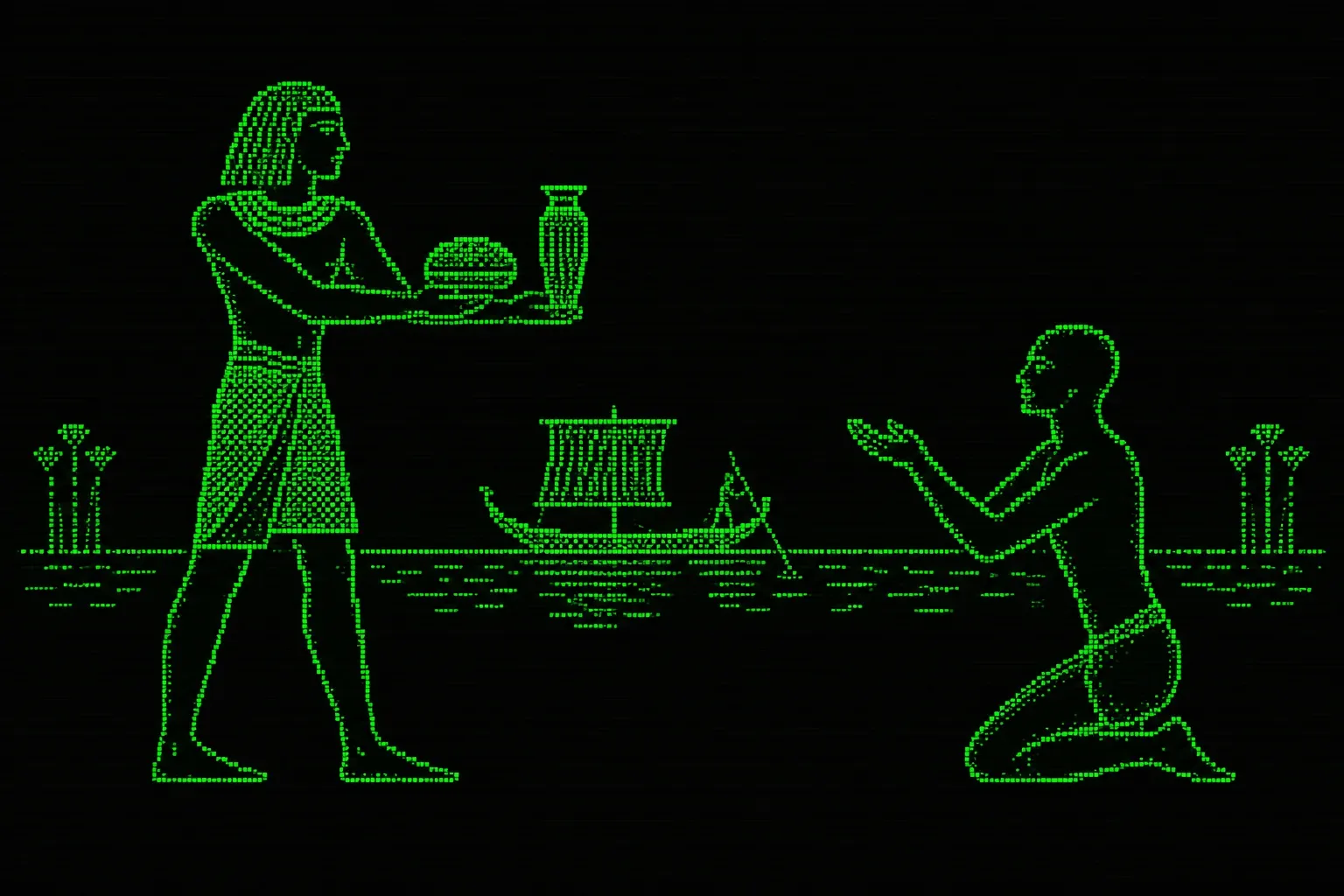
I gave bread and beer to the hungry, clothing to the naked.
- 8
zmꜣ-tꜣ =(j) m jw(,w)
I brought the boatless to land.
Note · Line 8
The verb, literally “to join the land,” means to reach the bank or put in to shore. It is also a common way of saying “to die and be buried.” - 9
qrs.n =(j) jw,tj zꜣ =f
I buried the man who had no son.
Note · Line 9
Burial was a son’s duty, so a man without a son risked going without a proper burial. - 10
jrj.n =(j) mẖn,t jw,tj mẖn,t =f
I made a ferryboat for the man who had no ferry.
- 11
snḏ.n =(j) jtj =(j) jmꜣ.n =(j) n mw,t =j šd.n =(j) ẖrd.w =sn
I revered my father, I was kind to my mother, I raised their children.
Note · Line 11
“Their children” are his own brothers and sisters. - 12
ḫru̯ =f rn =f nfr Ššj
So says he whose good name is Sheshi.
Note · Line 12
The “good name” was the short, familiar name a person went by in daily life, alongside a longer formal name. Right door jamb (second copy)
- 13
pri̯.n =(j) m nʾ,t =(j) hꜣi̯.n =(j) m spꜣ,t =(j) jrj.n =(j) mꜣꜥ,t n nb =s sḥtp.n =(j) sw m mrr!.t =f
I came out of my town and went down from my nome only once I had done what is right for its lord and pleased him with what he loves.
Note · Line 13
This is the opening of an “ideal autobiography”, a set of stock virtues that Old Kingdom officials had carved at their tombs. - 14
ḏd.n =(j) mꜣꜥ jrj.n =(j) mꜣꜥ,t
I spoke what was true; I did what was right.
- 15
ḏd.n =(j) nfr wḥm(.n) =(j) nfr
I said what was good and repeated what was good.
- 16
jṯi̯.n =(j) tp-nfr mri̯ =(j) nfr jm n r[(m)ṯ]
I acquired only in the proper way, for I wish people to fare well by it.
- 17
wp.n =(j) sn,wj r ḥtp =sn
I judged between two parties so that both were content.
- 18
nḥm.n =(j) mꜣr m-ꜥ wsr r =f sḫm.t.n =(j) jm
I rescued the wretched from the hand of one stronger than he, as far as it lay in my power.
- 19
rḏj.n =(j) tʾ ḥnq,t n ḥqr ḥbs 〈n〉 〈ḥꜣ,y〉
I gave bread and beer to the hungry, and clothing to the naked.
- 20
zmꜣ-tꜣ =(j) m jw(,w)
I brought the boatless to shore.
Note · Line 20
The Egyptian idiom is “to join to the land”, which means to ferry someone across the Nile. - 21
qrs.n =(j) jw,tj zꜣ =f
I buried the man who had no son.
Note · Line 21
Burying a parent was the son’s duty, so a man without a son risked going unburied. - 22
jrj.n =(j) mẖn,t jw,tj mẖn,t =f
I made a ferry for him who had no ferry.
- 23
snḏ.n =(j) jtj =(j) jmꜣ.n =(j) n mw,t =j šd.n =(j) ẖrd.w =sn
I revered my father and was kind to my mother, and I raised their children.
- 24
ḫrw =f rn =f nfr Ššj
So says he whose good name is Sheshi.