~/sacred-texts/royal-inscriptions-of-seti-i
Stela of Pharaoh Seti I: War Captives Enslaved for Amun
- Date
- Carved in Regnal Year 1 of Seti I, 19th Dynasty (c. 1290 BC)
- Language
- Egyptian · Hieroglyphic
- 1
[rnp,t-zp] [1] [ḫr] [Ḥr,w] [Kꜣ-nḫt-ḫꜥ-m-Wꜣs,t-sꜥnḫ-tꜣ,wj] [Nb,tj] [Wḥm-ms,wt]-sḫm-ḫpš-dr-⸢pḏ,wt-9⸣ [Ḥr,w-nbw] [Wḥm-ḫꜥ,w-wsr-pḏ,wt-m-tꜣ,w-nb,w] [nswt]-bj,tj Mn-Mꜣꜥ,t-Rꜥw-tj,t-Rꜥw [zꜣ-Rꜥw] [Stẖ,y-mr-n-Ptḥ]
Regnal year 1 under the Horus: Strong Bull who rises in Thebes and gives life to the Two Lands; the Two Ladies: He who renews births, strong of arm, who drives back the Nine Bows; the Golden Horus: He who renews his appearances, whose bows are mighty in every land; the King of Upper and Lower Egypt: Menmaatre, image of Ra; the Son of Ra: Seti, beloved of Ptah.
Note · Line 1
These are Seti I’s five royal names. The Two Ladies are the protector goddesses of Upper and Lower Egypt, the Two Lands. The Nine Bows stand for Egypt’s traditional enemies. - 2
[nṯr-nfr] Jmn zꜣ [...] ḥꜥ,pl m [...] sḫpr.n ⸢⸮Rꜥw?⸣ [šdi̯.n] [Ḥw,t-Ḥr,w] [msi̯.n] [Mw,t]
The perfect god, son of Amun …, body in …, whom Ra brought into being, whom Hathor reared, whom Mut bore.
- 3
⸢ḥqꜣ⸣ ⸢jṯi̯⸣ ⸢tꜣ⸣ nb [...] [⸮m?] [⸮pr?] [⸮Jmn?] n Jp,t[-s,wt] [...] m swḥ,t [jw] [ḥm] [=f] [tj] [sw] [m] [jnp,w]
Ruler who seizes every land … in the temple of Amun of Karnak … in the egg, when His Majesty was still a royal child.
Note · Line 3
“In the egg” means before birth: the inscription looks back to the king’s earliest beginnings. - 4
jst jr nṯr-nfr ꜥꜣ-pḥ,tj mj ⸢zꜣ⸣ [Nw,t] [...] [⸮Stẖ?] ḥr jmn,t =f Rꜥw ḥr jꜣb[,t] [=f] [...]
Now as for the perfect god, great in strength like the son of Nut … Seth to his west and Ra to his east …
Note · Line 4
The son of Nut here is Seth, a god famed for his strength. - 5
šmi̯ =f r swsḫ tꜣš =f ḥr =f [ꜥꜣi̯] [m] [ḫpš.fj] [=f]
He went forth to widen his frontier, his face bold in the strength of his two arms.
- 6
bw ꜥḥꜥ.n ḫꜣs,t r-ḥꜣ,t =f snḏ n šf,yt =f hmhm,t.pl =f ⸢pẖr⸣.n =s ḫꜣs,t.pl ⸢bꜣ,w⸣ ⸢=k⸣ m jb [pḏ,w]t,pl-9
No foreign land stood before him for dread of his majesty. His battle cries rolled through the foreign lands. Your might is in the heart of the Nine Bows.
Note · Line 6
The praise turns here from speaking about the king to addressing him directly. - 7
jy.n ḥm =f jb =f ꜣwi̯.w m wḏ,yt =f ⸢tp.jt⸣ ⸢⸮n.t?⸣ nḫt hd =f ḫpr ḥr ḫꜣs,t nb
His Majesty returned glad at heart from his first victorious campaign. His assault had fallen on every foreign land.
- 8
ḥꜣq.n =f ḫꜣs,t.pl bšt.pl m pḥ,tj jtj =f Jmn ⸢wḏ⸣ n =f qn,t nḫt
He plundered the rebellious lands by the might of his father Amun, who decreed valor and victory for him.
- 9
ḏi̯ =f sw r-ḥꜣ,t =f jb ⸢=f⸣ [ꜣwi̯] ḥr jri̯.t [_].t n zꜣ =f ḥr swḏ n =f Šmꜥ,w Mḥ,w jmn,tj jꜣb,t dmd tkk tꜣš =f r-ꜥ m ꜣmm =f nn ḫsf ꜥ [=f]
Amun set the king before him, glad at heart as he did … for his son and handed over to him Upper and Lower Egypt, west and east in their entirety. Whoever breaches his frontier is held fast in his fist; no one can stay his hand.
- 10
[jni̯] [wr.pl] [=sn] m sqr-ꜥnḫ jn,w.pl =sn ḥr psḏ =sn ḥr mz =sn n jtj =f šps,j Jmn ḥnꜥ Psḏ,t =f r ⸢mḥ⸣ [šnꜥ,w] =[sn] [m] [ḥm.pl] [ḥm,t.pl] ⸢m⸣ [ḥꜣ]q,t n.w ḫꜣs,t nb
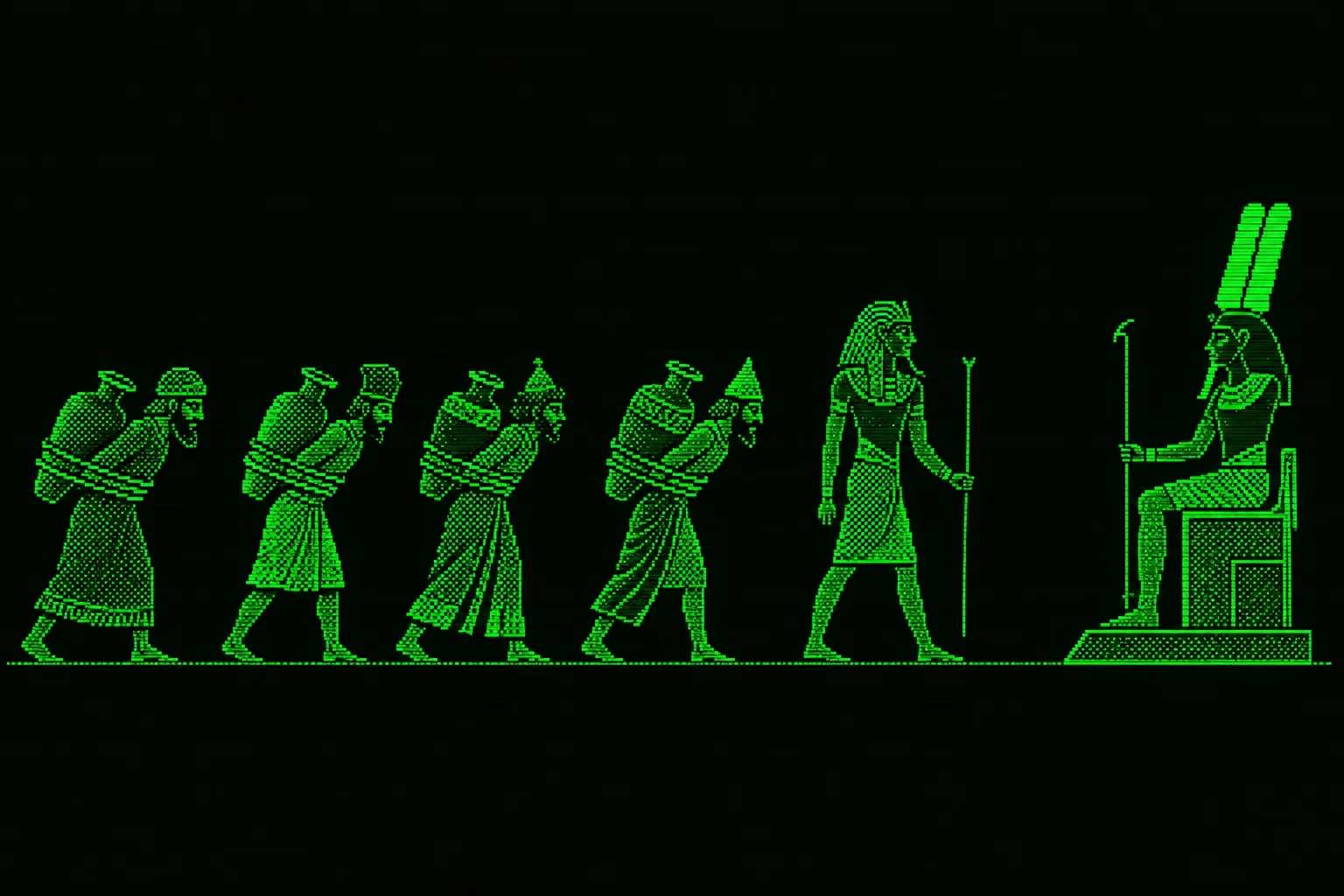
Their chiefs were brought in as prisoners of war, their tribute on their backs, and presented to his august father Amun and his Ennead, to fill their storehouse with men and women taken as slaves, the spoils of every foreign land.
Note · Line 10
An Ennead is a company of gods, traditionally nine. The captives are being handed over to serve the gods’ temple. - 11
jst ḥm =f r dmj [rs,j] [ḥr] [jri̯.t] ⸢ḥ⸣zz,t jtj =f Jmn-Rꜥw nb-⸢ns,t.pl-tꜣ,du⸣ [⸮Mw,t-wr,t?] [...] ḥtp [...] [Ptḥ] [nb-Mꜣꜥ,t] [ḥr,j-jb] [Wꜣs,t] [Ḥw,t-Ḥr,w] [nb,t-[_]] [nṯr.pl] [nṯr.y,t.pl] [nb.pl] [Jwn,w] [...]
Now His Majesty was in the Southern City, doing what pleased his father Amun-Ra, lord of the thrones of the Two Lands; Mut the Great … at peace …; Ptah, lord of Maat, who dwells in Thebes; Hathor, lady of …; and the gods and goddesses, lords of Heliopolis …
Note · Line 11
The Southern City is Thebes. Maat is the principle of truth, justice, and right order.