~/sacred-texts/ramesside-royal-inscriptions
Seti I at Speos Artemidos: Restoring Pakhet’s Temple
- Date
- Carved in regnal year 1 of Seti I, 19th Dynasty (c. 1290–1279 BC), on the east side of the entrance to the rock-cut temple of Pakhet at Speos Artemidos
- Found
- Speos Artemidos (Istabl Antar), near Beni Hasan, Middle Egypt (in situ)
- Language
- Middle Egyptian · Hieroglyphic
Carved in Seti I’s first regnal year, this dedication begins with royal praise. The king is the divine semen that came forth from Atum, suckled by Wadjet. His mother guards him as the cobra on his brow—She rests in her place between his brows—and drives back the foreign lands for him, while Seti kills the Libyans and restocks Egypt’s temples.
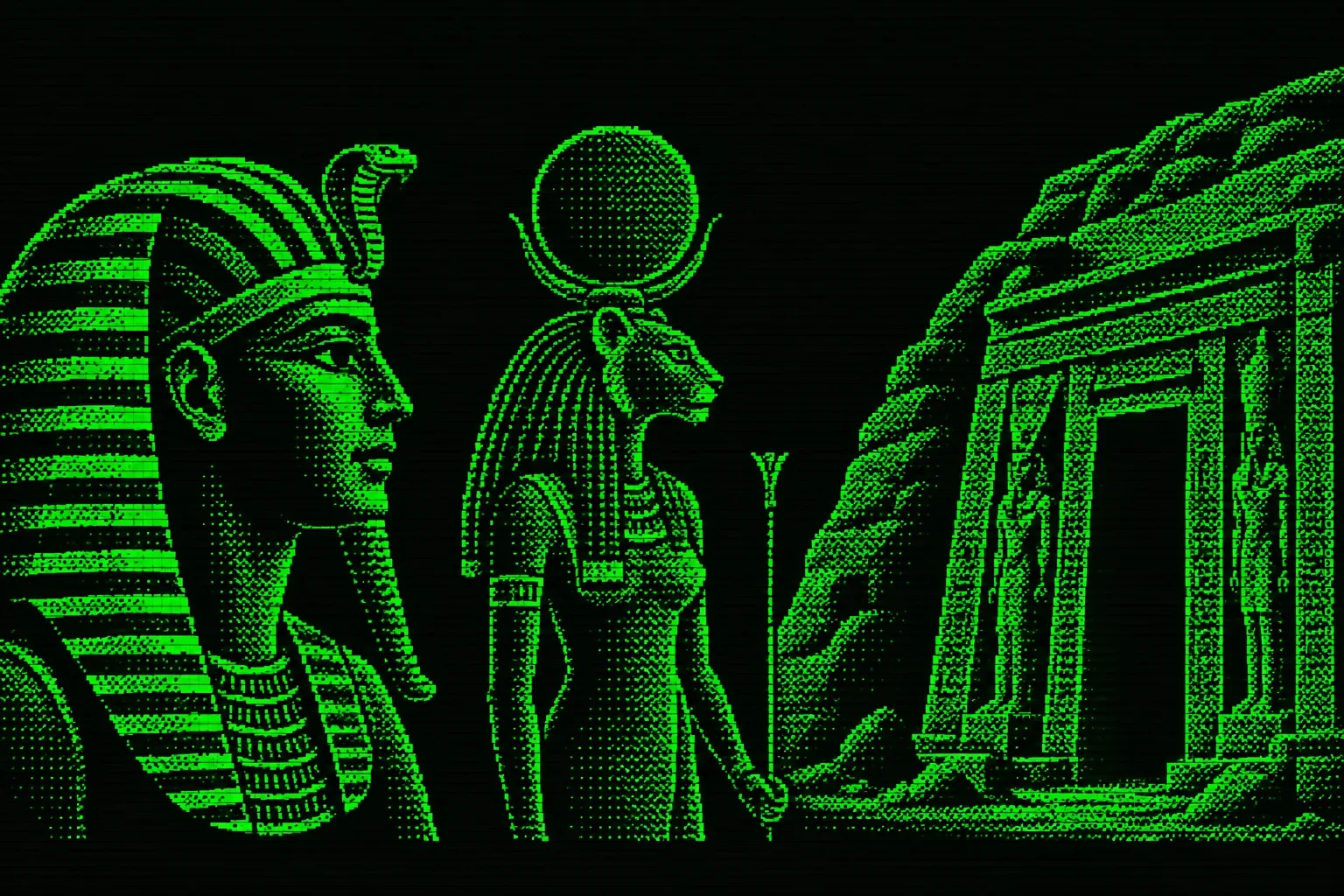
At Seret, Seti made her temple new again and fitted it with doors for the lioness goddess Pakhet. Pakhet calls Thoth—Come and see this monument, so great, so enduring—asking for victory, a bountiful Nile flood, and fodder as plentiful as locusts. Thoth establishes Seti as king of eternity.
- 1
rnp,t-zp 1 ḥꜣ,t r nḥḥ šzp ḏ,t jri̯,t ḥḥ.pl m Ḥꜣb-sd.pl ḥfn.pl m rnp,t.pl ḥtp,pl ꜥḥꜥ,w n ⸢Rꜥw⸣ [m] [p,t] [nsw],yt [n] [(J)tm,w] [m] [tꜣ] Ḥr,w Kꜣ-nḫt-sꜥnḫ-Tꜣ,wj nb,tj Sḫm-pḥ,tj-dr-pḏ,wt Ḥr,w-nbw Wsr-pḏ,wt-m-tꜣ,w-nb,w nswt-bj,tj nb-Tꜣ,du Mn-Mꜣꜥ,t-Rꜥw zꜣ-Rꜥw ⸢Stẖ,y-mr-n-Jmn⸣ ⸢ḏi̯⸣ ⸢ꜥnḫ⸣ ḏ,t nḥḥ mr,y Jmn-Rꜥw ⸢nswt-nṯr,pl⸣ [...] [ḫꜥi̯.w] [ḥr] [s,t] [Ḥr,w] [n.t] ꜥnḫ,w mj jtj =f Rꜥw rꜥw-nb
Regnal year one, the beginning of time without end, the threshold of eternity: millions of Sed jubilees to celebrate, hundreds of thousands of years of peace, the lifetime of Ra in heaven and the kingship of Atum on earth, for Horus, Strong Bull Who Gives Life to the Two Lands; the Two Ladies, Mighty in Strength, Who Drives Back the Bows; Horus of Gold, Mighty of Bow in Every Land; King of Upper and Lower Egypt, Lord of the Two Lands, Menmaatre; Son of Ra, Seti, Beloved of Amun, given life forever and ever, whom Amun-Ra, king of the gods, loves, … who appears each day on Horus’s throne of the living like his father Ra.
Note · Line 1
The Sed jubilee renewed the king’s power. All five royal names belong to Seti I. The Two Ladies are the vulture and cobra goddesses who protect the Two Lands, Upper and Lower Egypt. - 2
jst ḥm =f r dmj{,t} n Ḥw,t-kꜣ-Ptḥ ḥr jri̯.t ḥzz jtj =f Jmn-Rꜥw nb-ns,t.pl-Tꜣ,du ḫnt,j-Jp,t-s,t.pl (J)tm(,w) nb-ṯꜣ,du-Jwn,w Rꜥw-Ḥr,w-ꜣḫ,tj Ptḥ ꜥꜣ [rs,j-jnb≡f] [nb] [Ꜥnḫ-Ttꜣ,du] Pꜣḫ,t wr,t nb(,t)-Sr,t nb,t-p,t wr,t-ḥkꜣ,pl nṯr.pl nṯr.y,t nb.w.pl Tꜣ-mrj mj rḏi̯ =sn n =f ꜥḥꜥ,w n Rꜥw nsw,yt n (J)tm,w tꜣ nb ḫꜣs,t nb ⸢ẖb.t⸣ ẖr ṯbw,t.du =f r nḥḥ
Now His Majesty had come to the city of Memphis and was doing what won praise from his father Amun-Ra, lord of the thrones of the Two Lands, foremost in Karnak; from Atum, lord of the Two Lands and of Heliopolis; from Ra-Horakhty; from Ptah the Great, south of his wall, lord of Ankh-Tawy; from Pakhet the Great, lady of Seret, lady of heaven, great in magic; and from the gods and goddesses, lords of the Beloved Land, just as they have granted him the lifetime of Ra and the kingship of Atum, with every land and every foreign country subdued beneath his two sandals forever.
Note · Line 2
Ankh-Tawy was a sacred district of Memphis. The Beloved Land is Egypt. Pakhet was the lioness goddess worshipped at the rock-cut sanctuary near Beni Hasan where this inscription was carved. - 3
nṯr-nfr zꜣ Bꜣs,tt rnn Sḫm,t nb,t-p,t
The perfect god, son of Bastet, whom Sekhmet, lady of heaven, rears;
- 4
swḥ,t Rꜥw msi̯.n Pꜣḫ,t sḫpr.n wr,t-ḥkꜣ,pl
the egg of the sun, born of Pakhet, brought into being by the One Great in Magic;
Note · Line 4
The egg is the king himself. His birth and rearing are told through a succession of divine mothers. - 5
mw nṯr,j pri̯ m (J)tm,w šdi̯.n Wꜣḏ,yt m [...]
the divine semen that came forth from Atum, suckled by Wadjet with …;
Note · Line 5
In the creation story of Heliopolis, Atum engendered the first divine pair from his own semen. - 6
[...] pri̯ m [...] m šꜣ
… who came forth from … as one ordained;
- 7
nswt rs-tp jri̯ ꜣḫ,t zꜣ sms,w psḏ,t tm.tj
a watchful king who does what is good, eldest son of the whole Ennead;
Note · Line 7
The Ennead is the company of nine gods headed by Atum. - 8
qd ḥw,t.pl swsḫ jw⸢nn.pl⸣ ⸢w⸣n [wꜣi̯] [r] [ḥb]s ⸢m⸣ [zꜣṯ,w]
who builds temples and widens sanctuaries that earth was about to bury;
- 9
[...] rʾ-pr.pl rḏi̯.t ḥtp ꜥẖm.w m kꜣr =sn
… the temples, giving the images of the gods rest in their shrines;
- 10
sḏfꜣ ḫꜣw,t ꜥꜣi̯ ḥtp.pl n j[_] [...] ḥ[tp]-nṯr.pl [...]
who provisions the great altar and the offering tables for … divine offerings …;
- 11
[...] [_] =sn mn,w m nḫb m ṯnw r ḫpr ḏr-bꜣḥ
… their … monuments by decree, more in number than ever before.
- 12
wdḥ,w.pl =sn ꜥšꜣ.pl m nbw ḥḏ [...] [⸮mnj?] [=sn] [m] [nbw] [ḥḏ]
Their offering stands of gold and silver are many; … their … of gold and silver.
- 13
[šnw,t] [=sn] [sḫwd] m wꜣḥ,yt.pl pr-ḥḏ =sn ꜥrf.w ẖr špss
Their granaries have been made rich with grain;
their treasury lies buried beneath precious things. - 14
sꜥšꜣ =tw mrj.pl m rʾ-pr.pl ṯꜣz[,t.pl] [...]
The temple household servants have been increased in number, and the work crews …
- 15
[ꜣ]ḥ,[t.pl] ḫnt,j-š.pl r dmj{,t} [=sn] [...]
Fields and orchards reach to their town …
- 16
[...] nḥb m r(m)ṯ.pl smn jnr ḥr =st
… supplied with people who set stone firmly in place upon it.
- 17
rʾ-pr.pl ꜥpr m ḥꜣ,w ḥr nfr nn ḏd ḥꜣ n =j r =s ḥr[-tp] [ꜥnḫ-wḏꜣ-snb] ⸢nsw⸣t-[bj,t] Mn-⸢Mꜣꜥ,t⸣-[Rꜥw] zꜣ-Rꜥw ⸢Stẖ,y⸣-mr-n-Ptḥ ḏi̯ ꜥnḫ ḏ,t nḥḥ
The temples are stocked with good things to spare. No one says of it, “If only it were mine!” All for the life, prosperity and health of the King of Upper and Lower Egypt, Menmaatre, Son of Ra, Seti, Beloved of Ptah, given life forever and ever.
- 18
[...] [mṯn] [sw] mw,t =f m ḥꜣb-sd.pl rnp,t.pl ḥtp,pl ḥtp =s s,t =s r jm,w r jnḥ =f ẖr,t =st jm ꜥḥꜥ ḥr,t
… to whom his mother has allotted Sed jubilees and years of peace.
She rests in her place between his brows;
her portion is there for as long as heaven lasts.Note · Line 18
The mother goddess takes the form of the upright cobra on the king’s brow, poised to defend him. - 19
qꜥḥ =s ꜥ =s ḥnb =s n =f ḫꜣs,t.pl rtḥ =s n =f jb.pl pḏ,wt-9
She bends her arm and drives back the foreign lands for him;
for him she strikes fear into the hearts of the Nine Bows.Note · Line 19
The Nine Bows stand for the foreign peoples counted as Egypt’s enemies. - 20
ḥwi̯ =f Jwn,tw ẖdb =f ṯḥn,w jri̯ =f [...]
He strikes the nomads, he kills the Libyans, he makes …
- 21
[...] pri̯ ꜥ mn jb ḥr prj
… ready of arm, steady of heart on the battlefield;
- 22
ḫfꜥ mꜣj smꜣ ḥr-ꜥ ḫft-ḥr rḫ,yt dmḏ.t
the lion’s paw, who kills on the spot before the assembled people.
- 23
nn mꜣꜣ.n =tw m zẖꜣ,w.pl ḏr,tw nn [sḏd] mdw,t rʾ n rʾ [wpw]-ḥr ḥm =f ḥꜥ ⸢=f⸣
No one has seen the like in the writings of the ancestors;
no such tale has passed from mouth to mouth save from His Majesty himself. - 24
[...] [m] [km] ⸮n? ꜣ,t
… in the flicker of an eye.
- 25
nswt-bj,tj Mn-Mꜣꜥ,t-Rꜥw zꜣ-Rꜥw Stẖ,y-mr-n-Jmn mr,y Pꜣḫ,t nb,t-Sr,t
King of Upper and Lower Egypt, Menmaatre; Son of Ra, Seti, Beloved of Amun, whom Pakhet, lady of Seret, loves.
- 26
jst ḥm =f ḥr ḥjḥj ꜣḫ,t n mw,t =f Pꜣḫ,t nb,t-Sr,t ḥr ⸮smꜣ[ꜥ]? [...] n [nṯr.pl] [nb.pl] ⸢Sr,t⸣ qbb =sn m-ẖnw ḥw,t-nṯr =s
Now His Majesty sought to do good for his mother Pakhet, lady of Seret, setting … in order for all the gods of Seret so that they might cool themselves within her temple.
- 27
wn.jn ḥm =f ḥr smꜣ〈ꜥ〉 ḥw,t-nṯr =s m mꜣw smn ꜥꜣ.pl ḥr =st mj s,t wr.t nb.pl Sr,t
Then His Majesty made her temple new again and fitted it with doors as at the great seat of the lords of Seret.
- 28
ḏd.jn Pꜣḫ,t [nb,t-Sr,t] [n] [Ḏḥw,tj] [nb-mdpl-nṯr] [mj] [mꜣꜣ] [mn,w] [pn] ꜥꜣ wr rwḏ jri̯.n n =j zꜣ 〈=j〉 mr,y nb-tꜣ,du Mn-Mꜣꜥ,t-Rꜥw mj wḏ.n =k m zp-tp,j ḏd.n =k m rʾ =k ḏs =k
Then Pakhet, lady of Seret, said to Thoth, lord of divine words: “Come and see this monument, so great, so enduring, which my beloved son Menmaatre, Lord of the Two Lands, has made for me, just as you decreed in the First Time, just as you spoke with your own mouth.
Note · Line 28
The First Time is the time of creation. Pakhet tells Thoth, the divine scribe, that Seti’s work fulfills a decree already spoken then. - 29
jw zꜣ =j r ꜥḥꜥ ḥr s,t mn ḥr ns,t n ḏ,t zꜣ-Rꜥw Stẖ,y-mr-n-Jmn
My son will take his stand on the royal seat and endure on the throne of eternity—the Son of Ra, Seti, Beloved of Amun.
- 30
n⸢tf⸣ jrr =f mn,w n nṯr.pl mj ⸢wḏ⸣ ⸢n⸣ ⸢=f⸣ [nswt] [nḥḥ]
It is he who will build monuments for the gods, as the king of eternity has commanded him.
- 31
jw =f r sꜥḥꜥ mn,w n Pꜣḫ,t r msi̯ nṯr.pl nb.pl Sr,t
He will raise monuments for Pakhet to bring forth the gods, the lords of Seret.
Note · Line 31
Pakhet, a lioness goddess, speaks here on behalf of King Seti I. To “bring forth” the gods is to fashion their temple images; the Egyptian verb is also used of giving birth. - 32
jrr =f mj wḏ.n =k nswt nḥḥ
He will always do as you have commanded, O king of eternity.
- 33
jmi̯ n =f ꜥnḫ ḏd wꜣs ꜣw,t-jb nb ḫr =f
Grant him life, stability and dominion, and every joy at his side.
- 34
jmi̯ n =f nḥḥ mj ḥm =k ḏ,t wnn =k
Grant him eternity like that of Your Majesty, and the everlasting span in which you live.
Note · Line 34
The first eternity is time that renews itself; the second is time that endures without change. - 35
jmi̯ n =f nḫt ḥr nḫt mj ⸢Mnw⸣ [...]
Grant him victory upon victory like Min …
Note · Line 35
Min is a god of fertility and male potency. - 36
[...] ⸢ꜥꜣ⸣ bꜣk =sn n =f twt m jb wꜥ
… greatness; they work for him, all of one heart.
- 37
jmi̯ n =f mnmn(,t).pl ꜥšꜣ.t.pl snb snb sm,pl mj ṯnw.pl znḥm.pl
Grant him many herds, sound through and through, and fodder as plentiful as locusts.
- 38
jmi̯ n =f ḥꜥp.y wr nfr m (j)ḫ,t.pl nb.t
Grant him a great and bountiful Nile flood, with provisions of every kind.
Note · Line 38
The annual flood watered the fields and renewed their soil. - 39
jmi̯ n =f tꜣ.pl [...] jb =f m bw nb mri̯.n =f
Grant him fields … his heart in every place he has desired.
- 40
jmi̯ n =f nṯr.pl nb.pl stp =sn zꜣ =sn ḥꜣ =f m ꜥnḫ ḏd wꜣs m spr,t n zꜣ,t =k wr.t nn wzf.t ḏd.t =j
Grant him this: let all the gods spread their protection around him with life, stability and dominion, as your eldest daughter asks. Let nothing I have said go unheeded.”
- 41
ḏd-mdw jn Ḏḥw,tj nb-[mdw-nṯr] nfr.wj mdw,t =ṯ Pꜣḫ,t [nb,t-Sr,t] [smn] [=j] [zꜣ] [=j] nb-tꜣ,du Mn-Mꜣꜥ,t-Rꜥw zꜣ-Rꜥw sḥtp nṯr.pl nb-ḫꜥ,pl Stẖ,y-mr-n-Jmn m nswt nḥḥ ḥr jri̯.t mn,w n Mw,t =f Pꜣḫ,t [wr,t] [nb,t-Sr,t] r nḥḥ ḥnꜥ ḏ,t wnn =f [...]
Words spoken by Thoth, lord of divine words: “How fair are your words, Pakhet, Lady of Seret! I establish my son, the Lord of the Two Lands, Menmaatre, the Son of Ra who gladdens the gods, the Lord of Crowns, Seti beloved of Amun, as king of eternity, making monuments for his mother Pakhet the Great, Lady of Seret, for ever and ever. He shall be …”
Note · Line 41
Menmaatre is Seti’s throne name. The Two Lands are Upper and Lower Egypt.