~/sacred-texts/battle-reliefs-of-sety-i-at-karnak
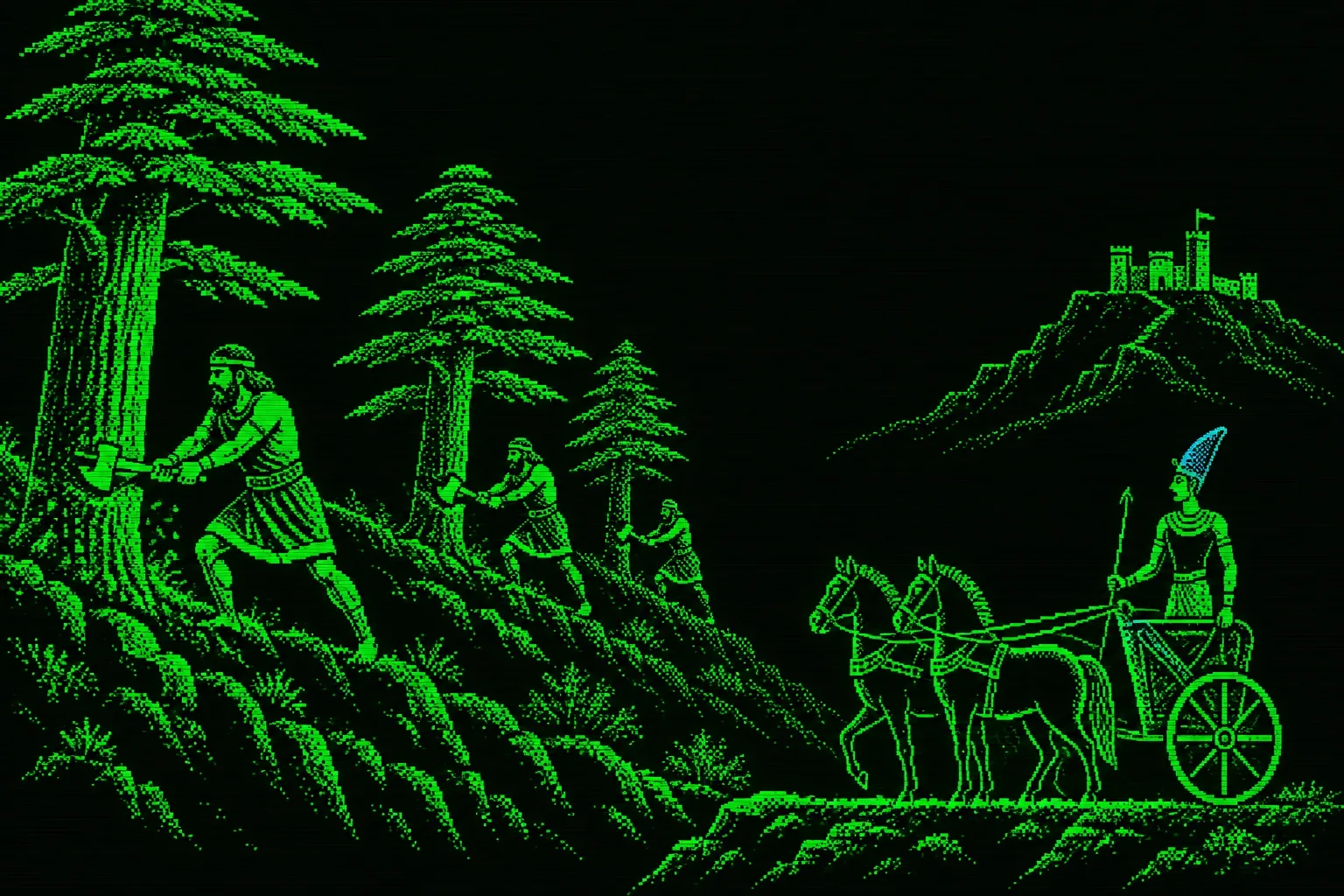
Seti I Karnak Relief: Lebanon’s Chiefs Cut Cedar for Egypt
- Date
- Carved in the reign of Sety I (about 1290–1279 BC), 19th Dynasty, on the north outer wall of the Great Hypostyle Hall at Karnak, Thebes
- Found
- East half of the north exterior wall of the Great Hypostyle Hall, Temple of Amun at Karnak, Luxor; still in place
- Language
- Egyptian · Hieroglyphic
- 1
[...] Rmnn šꜥd [...] wjꜣ ꜥꜣi̯ n tp jtr,w [...] m-mj,tt r nꜣ-n sn(,t).pl ꜥꜣ.pl n Jmn
… Lebanon, cutting … the great barque on the river … and likewise for the great flagstaffs of Amun.
Note · Line 1
The relief shows the chiefs of Lebanon felling trees for Egypt. - 2
[nswt-bj,tj] [Mn-mꜣꜥ,t-Rꜥw] [zꜣ-Rꜥw] [Stẖ,y-mr-n-Ptḥ] ḏi̯ ꜥnḫ
King of Upper and Lower Egypt Menmaatre, Son of Ra Sety Merenptah, given life.
Note · Line 2
The caption naming the king, Sety I (about 1290–1279 BC). Menmaatre is his throne name and Sety Merenptah his birth name. - 3
[...] ḫwi̯ =s [...] m ꜥnḫ wꜣs [...] Rꜥw rꜥw-nb
… she protects … with life and dominion … Ra, every day.
- 4
[ꜥnḫ] [Ḥr,w] [Kꜣ-nḫt-ḫꜥi̯-m-Wꜣs,t-sꜥnḫ-Tꜣ,wj] nb,tj Wḥm-msw,t-[Sḫm-ḫpš-dr-pd,wt-9] [Ḥr,w-nbw] Wḥm-ḫꜥ,w-wsr-pḏ,wt-m-tꜣ,w-nb,w [nswt-bj,tj] [Mn-mꜣꜥ,t-Rꜥw] [zꜣ-Rꜥw] Stẖ,y-mr-n-Ptḥ ḏi̯ ꜥnḫ
May the Horus live: Mighty Bull Appearing in Thebes, Who Keeps the Two Lands Alive; the Two Ladies: Renewing Births, Mighty of Arm, Who Drives Back the Nine Bows; the Golden Horus: Renewing Appearances, Mighty of Bows in Every Land; King of Upper and Lower Egypt Menmaatre, Son of Ra Sety Merenptah, given life.
Note · Line 4
This is Sety I’s full fivefold royal titulary. - 5
[...] ḥtp ḥr nḫt wrr [...] ḫpš [...] [_].pl =f [...]
… content with the victory, great … of arm … his …
- 6
[...] r hrw [...]
… more than the day …
- 7
[...] mꜣꜣ =f sk,w [...] ḥtp jb =f ḥr jri̯.t [...] tꜣš.pl Km,t
… when he sees the fray … and his heart is content at making … the borders of Egypt.
- 8
[...] [⸮ꜥꜣm.pl?] r mḥ šnꜥ,w [...] ꜥš
… the Asiatics, to fill the storehouse … cedar.
Note · Line 8
The Egyptian word, ash, names a prized conifer from the Lebanon mountains. It is usually rendered “cedar”, though it may have been a fir. - 9
ḏd jn ṯꜣ,y-ḫw-ḥr-wnm,j-nswt wšb,t =f n nṯr-nfr jri̯ =tw mj ḏd.t =k nb
Spoken by the fan-bearer on the king's right, in answer to the Good God: "It has been done according to all that you have said.
Note · Line 9
A high court official reports to the king. “Fan-bearer on the king’s right” was an honorary rank, and “the Good God” is a standard title of the living pharaoh. - 10
Ḥr,w sꜥnḫ tꜣ,wj tw=k mj Mnṯ,w ḥr ḫꜣs,t nb
O Horus who keeps the Two Lands alive, you are like Montu over every foreign land.
Note · Line 10
The king is addressed as Horus, the god he embodies on earth. Montu is the Theban war god. - 11
mꜣꜣ tw wr.pl Rṯn,w šf,t =k m ḥꜥ.pl =sn
The great ones of Retjenu see you, and the awe of you fills their bodies."
Note · Line 11
Retjenu is the Egyptian name for Syria and Palestine. - 12
wr.pl ꜥꜣi̯.pl n.w Rmnn ḏd =sn m dwꜣ,t nb-Tꜣ,du m sꜥꜣi̯ pḥ,tj =f mꜣꜣ.tw =k mj jtj =k Rꜥw ꜥnḫ =tw n ptr =k
The great chiefs of Lebanon speak in praise of the Lord of the Two Lands, magnifying his might: "You are seen as your father Ra is seen; we live by the sight of you."
Note · Line 12
The foreign chiefs compare the king to the sun god Ra, whose light gives life to all who see it. - 13
[_]n dmj n Qdr m pꜣ tꜣ n Hnm
… the town of Qader in the land of Henem.
Note · Line 13
Neither place can be located with certainty.