~/sacred-texts/karnak-war-reliefs-of-seti-i
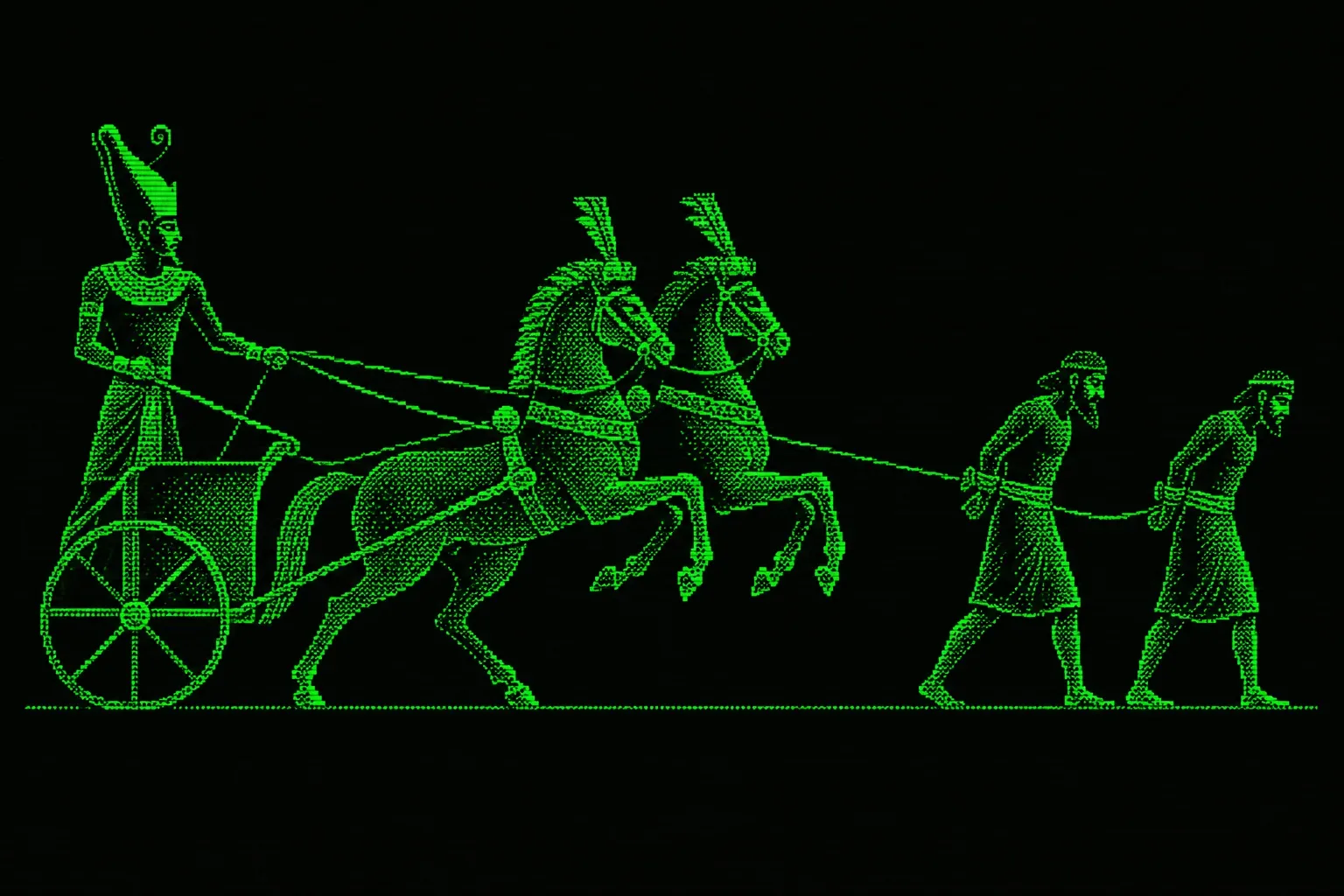
Seti I’s Karnak Relief: Return from Hatti with Captives
- Date
- Carved in the 19th Dynasty (1290–1279 BC) under Seti I on the north exterior wall of the Great Hypostyle Hall at Karnak
- Found
- West wing of the north exterior wall of the Great Hypostyle Hall, Temple of Amun-Re at Karnak, Luxor, Egypt
- Language
- Late Egyptian · Hieroglyphic
- 1
nṯr-nfr sḫm ḫpr(,w).pl pḥ,tj mj Mnṯ,w ḥr,j-jb-Wꜣs,t
The perfect god, mighty in his many forms, with the strength of Montu who dwells in the heart of Thebes.
Note · Line 1
These captions hail Seti I on his return with captives. Montu was the warrior god of the Theban region. - 2
kꜣ-r(n)p,j spd-ꜥb,wj mn-jb tjtj ḥfn,pl
The bull who renews his youth, his two horns sharp, his heart steadfast, who tramples hundreds of thousands.
- 3
mꜣj nḫt hbu̯ mṯn.pl štꜣ.pl n.w ḫꜣs,t nb
The strong lion who treads the hidden paths of every foreign land.
- 4
[zꜣb]-šmꜥ,wj wni̯ mz pẖr tꜣ pn n wnw,t ḥr ⸢ḥjḥj⸣ [ḫrw.pl] =f ḥr ḫꜣs,t nb
The jackal of Upper Egypt, who hastens, who runs, who circles this land in an hour, seeking his enemies in every foreign land.
Note · Line 4
Upper Egypt is the southern part of Egypt, upstream along the Nile. - 5
ꜥḥꜣ qn n sn,nw =f
The valiant fighter who has no equal.
- 6
pḏ,tj rḫ s,t ḏr,t =f wdi̯ bꜣ,w =f mj ḏw n ḥmt
The archer who knows just where to set his hand, who sets his might firm as a mountain of copper.
- 7
ḥtp =f tpj =sn ṯꜣw =f
When he is at peace, they breathe his breath.
Note · Line 7
Even the breath that keeps his enemies alive is his to give. - 8
jwi̯ n =f Rṯn,w m ks,w tꜣ Ṯḥ(n),j ḥr pꜣd.pl jr,y
Retjenu comes bowing to him, the land of Libya on its knees.
Note · Line 8
Retjenu was the Egyptian name for lands in the Levant, including parts of Syria and Palestine. - 9
wꜣḥ =f pr,t r ꜣbb =f m tꜣ pn ẖzj n Ḫt
He sows seed at will in this wretched land of Hatti.
Note · Line 9
“Seed” can also mean offspring. Hatti was the Hittite kingdom, Egypt’s rival in Syria. - 10
wr.pl =sn ḫr n dm,t =f ḫpr m tm wn
Their princes have fallen to his blade and are as though they had never been.
- 11
wr〈.wj〉 bꜣ,pl =f j:m =sn mj,tt ḫ,t sksk =f dmj.pl =s〈n〉
How great is his might among them! Like fire he lays waste their towns.
- 12
nswt nḫt wr pḥ,tj hmhm.t =f mj zꜣ Nw,t jy ḥꜣb.n [=f]
The strong king, great in might! His battle cry is like that of the son of Nut. He has returned and celebrated his triumph.
Note · Line 12
The son of Nut here is Seth, the storm god for whom Seti was named. - 13
sksk.n =f ḫꜣs,t.pl ptpt.n =f tꜣ n Ḫt
He has hacked the foreign lands to pieces; he has trampled the land of Hatti.
- 14
ḏi̯ =f qn bšt,pl bdš ḫꜣs,t nb ḫpr m ḥtp
He makes the rebels give up and every foreign land grow faint and fall quiet.
- 15
ḥr,yt ḥm =f ꜥq.tj m-j:m =sn jꜣd =f sḏ.n =s jb =sn
Terror of His Majesty has entered them; the ruin he brings has broken their hearts.
- 16
wr.pl ḫꜣs,t.pl znḥ.w r-ḥꜣ,t =f
The princes of the foreign lands are bound before him.
- 17
n ḫmt =f ḥfn.pl dmḏ.pl
He takes no account of hundreds of thousands, all told.
- 18
nb-Tꜣ,du Mn-Mꜣꜥ,t-Rꜥw nb-ḫꜥ,w ⸢Stẖ,y⸣-mr-n-Jmn
Lord of the Two Lands, Menmaatre; Lord of Crowns, Seti Merenamun.
Note · Line 18
The Two Lands are Upper and Lower Egypt. Menmaatre is Seti’s throne name; Merenamun means “beloved of Amun.” - 19
ḥtr ꜥꜣi̯ tp,j n ḥm =f Jmn-ḥr-ḏi̯.n⸢≡f⸣-⸢pꜣ-ḫpš⸣
His Majesty’s first great team of horses: “Amun Gave Him the Strong Arm.”
- 20
wr.pl ḫꜣs,t.pl ḫm.w Km,t jni̯.n ḥm =f m ⸢sqr-ꜥnḫ⸣ jn,w.pl =sn ḥr psḏ =sn ⸢m⸣ ⸢stp⸣ nb ⸢ḫꜣs,t.pl⸣ ⸢=sn⸣
The princes of foreign lands who do not know Egypt, whom His Majesty has brought as prisoners of war, their tribute on their backs: all the choicest things of their lands.