~/sacred-texts/karnak-war-reliefs-of-seti-i
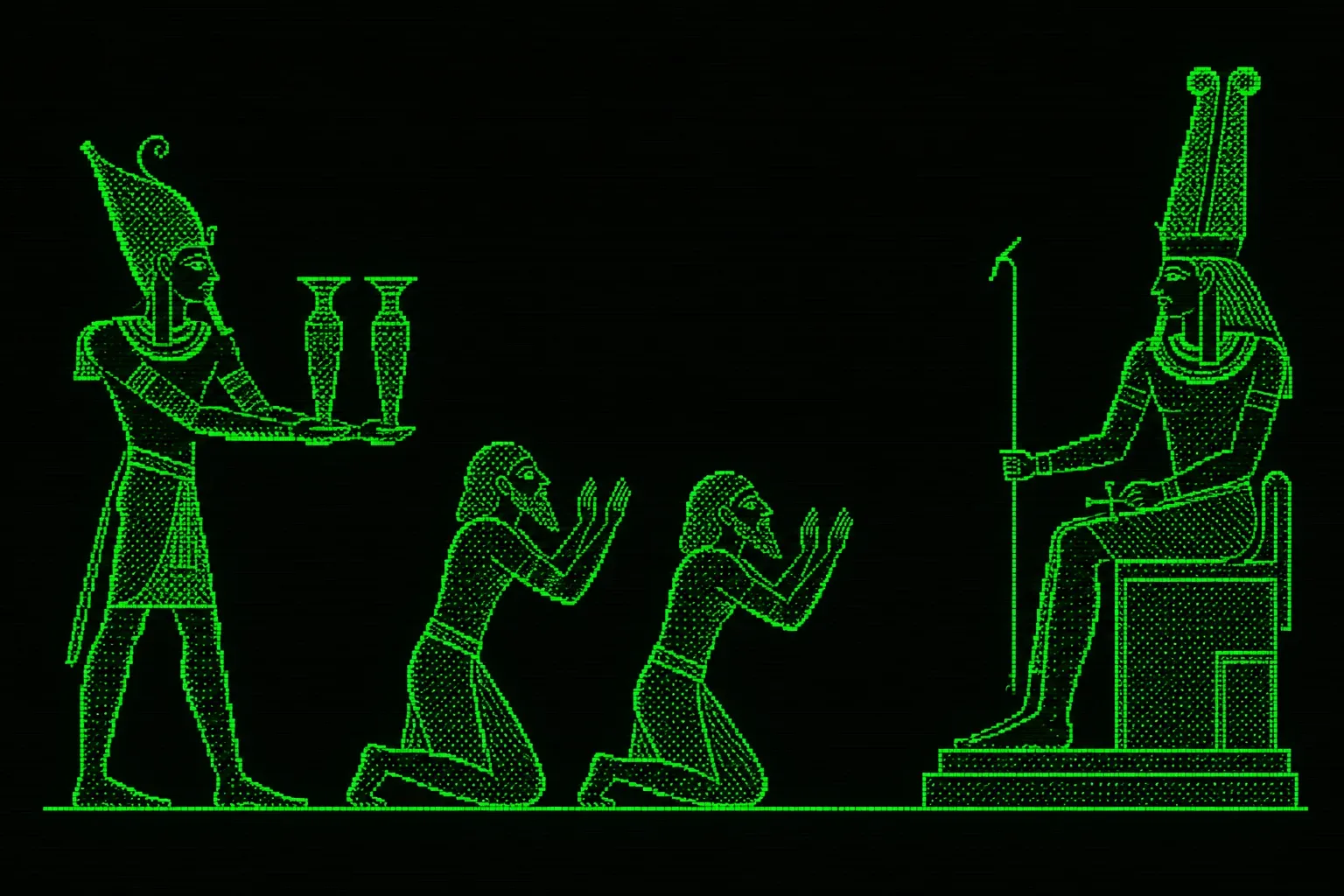
Seti I Karnak Relief: Captives Beg for Life Before Amun
- Date
- Carved in the 19th Dynasty under Seti I (c. 1290–1279 BC) on the north exterior wall of the Great Hypostyle Hall at Karnak
- Found
- In situ on the east wing of the north exterior wall of the Great Hypostyle Hall, Temple of Amun-Ra, Karnak (Luxor, Egypt)
- Language
- Late Egyptian · Hieroglyphic
- 1
[mz] jn,w.pl jn ⸢ḥm⸣ =f [n] [jtj] [=f] Jm[n] ḫft jwi̯ =f ḥr ḫꜣs,t Rṯ[n,w] ẖzi̯
His Majesty bringing tribute to his father Amun on his return from the foreign land of wretched Retjenu.
Note · Line 1
Retjenu was an Egyptian name for lands along the eastern Mediterranean, in Syria and Palestine. - 2
wr.pl ḫꜣs,t m [s]qr-⸢ꜥnḫ⸣ ⸢jn,w.pl⸣ ⸢=sn⸣ ḥr psd =sn m ḥnw nb sbq.t n.w ⸢ḫꜣs,t.pl⸣ ⸢=sn⸣ [m] [ḥḏ] ⸢nbw⸣ ⸢ḫsbd⸣ ⸢mꜣꜥ⸣ [m] [⸮qn,t?] ḏḏ =k [n] =j ḥr ḫꜣs,t nb
The chiefs of the foreign land as prisoners of war, their tribute on their backs: every fine henu vessel of their lands, in silver, gold and genuine lapis lazuli—all by the strength you give me over every foreign land.
Note · Line 2
A henu vessel held beer or wine. The king addresses Amun in the closing words. - 3
[nswt-bj,tj] nb-⸢tꜣ,du⸣ Mn-⸢Mꜣꜥ,t⸣-Rꜥw [zꜣ-Rꜥw] nb-ḫꜥ,w [Stẖ,y]-⸢mr-n-Jmn⸣
King of Upper and Lower Egypt, Lord of the Two Lands, Menmaatre; Son of Ra, Lord of Crowns, Seti, Beloved of Amun.
Note · Line 3
The Two Lands are Upper and Lower Egypt. Menmaatre was the throne name of Seti I. - 4
wr.pl ḫꜣs,t.pl ḫm.pl ⸢Km,t⸣ jni̯.n ḥm =f m nḫt,w =f ḥr ḫꜣs,t Rṯn,w ẖzi̯
The chiefs of foreign lands who do not know Egypt, whom His Majesty brought back by his victory over the foreign land of wretched Retjenu.
- 5
ḏd.n =sn m sꜥꜣi̯ ḥm =f m swꜣš nḫt,w =f j:nḏ ḥr =k ꜥꜣi̯.wj rn =k wsr.wj pḥ,tj =k
They spoke, exalting His Majesty and praising his might:
“Hail to you!
How great your name, how mighty your strength! - 6
rsu̯.wj ḫꜣs,t jri̯ ḥr mw =k bnd tktk tꜣš =k
How happy the foreign land that does your bidding!
Woe to whoever attacks your border!Note · Line 6
To act “on your water” is to be loyal to you. - 7
wꜣḥ kꜣ =k
May your ka endure!
Note · Line 7
The ka is a person’s vital force. - 8
n rḫ =n Km,t n ḫn[d].n s〈j〉 jtj.pl =n
We do not know Egypt;
our fathers never set foot there. - 9
jmi̯ 〈n〉 =n ṯꜣw n ḏḏ =k
Give us of the breath you give.”
Note · Line 9
The captives are asking the king to let them live. - 10
[pꜣ] [ḥꜣq] [jni̯.n] [ḥm] [=f] [m] [nꜣ] [Šꜣs,w] [ḫfꜥ.n] [ḥm] [=f] ⸢ḏz⸣ ⸢=f⸣ m rnp,t 1 wḥm-msw,t
The spoils His Majesty brought back from the Shasu, whom His Majesty himself seized in Year One of the Rebirth.
Note · Line 10
The Shasu were mobile herding peoples of the southern Levant. “Rebirth” evokes the renewal proclaimed at the start of Seti’s reign. - 11
[ḏd-mdw] [jn] ⸢Jmn-Rꜥw⸣ ⸢nb-ns,t.pl-Tꜣ,du⸣ [zꜣ] [=j] ⸢n⸣ ⸢ẖ,t⸣ mr,y nb-tꜣ,du Mn-mꜣꜥ,t-Rꜥw
Words spoken by Amun-Ra, Lord of the Thrones of the Two Lands: “My beloved son of my own body, Lord of the Two Lands, Menmaatre!
- 12
⸢ḏi̯⸣ ⸢=j⸣ ⸢snḏ⸣=k ḥr ⸢ḫꜣs,t⸣ ⸢nb⸣ ḥḏ ⸢=k⸣ ⸢ḥr-tp⸣ wr.pl =sn
I lay the fear of you on every foreign land,
and your mace over their chiefs. - 13
jwi̯ ⸢=sn⸣ ⸢n⸣ ⸢=k⸣ ⸢dmḏ⸣ ⸢m⸣ [⸮b(w)?] [⸮wꜥ?] ꜣtp ḥr psḏ ⸢=sn⸣ n ⸢hmh⸣m,t.pl =k
At your battle cries they come to you,
gathered in one place, burdens on their backs.”