~/sacred-texts/ramesside-royal-inscriptions
Seti I Karnak Relief: Slain Chiefs, Slaves, and War Spoils
- Date
- Carved in the 19th Dynasty (c. 1290–1279 BC) under Seti I on the exterior north wall of the Great Hypostyle Hall at Karnak
- Found
- Temple of Amun-Ra at Karnak, Luxor, Egypt (in situ)
- Language
- Ancient Egyptian · Hieroglyphic
- 1
mz jn,w.pl jn ḥm =f n jtj =f Jmn-Rꜥw m ḥḏ nbw ḫsbd mfkꜣ,t m ꜥꜣ,t nb šps,j m qn n ḏḏ =k n =j ḥr ḫꜣs,t nb
His Majesty presenting tribute to his father Amun-Ra: silver and gold, lapis lazuli and turquoise, and every splendid gemstone—“by the might you grant me over every foreign land.”
Note · Line 1
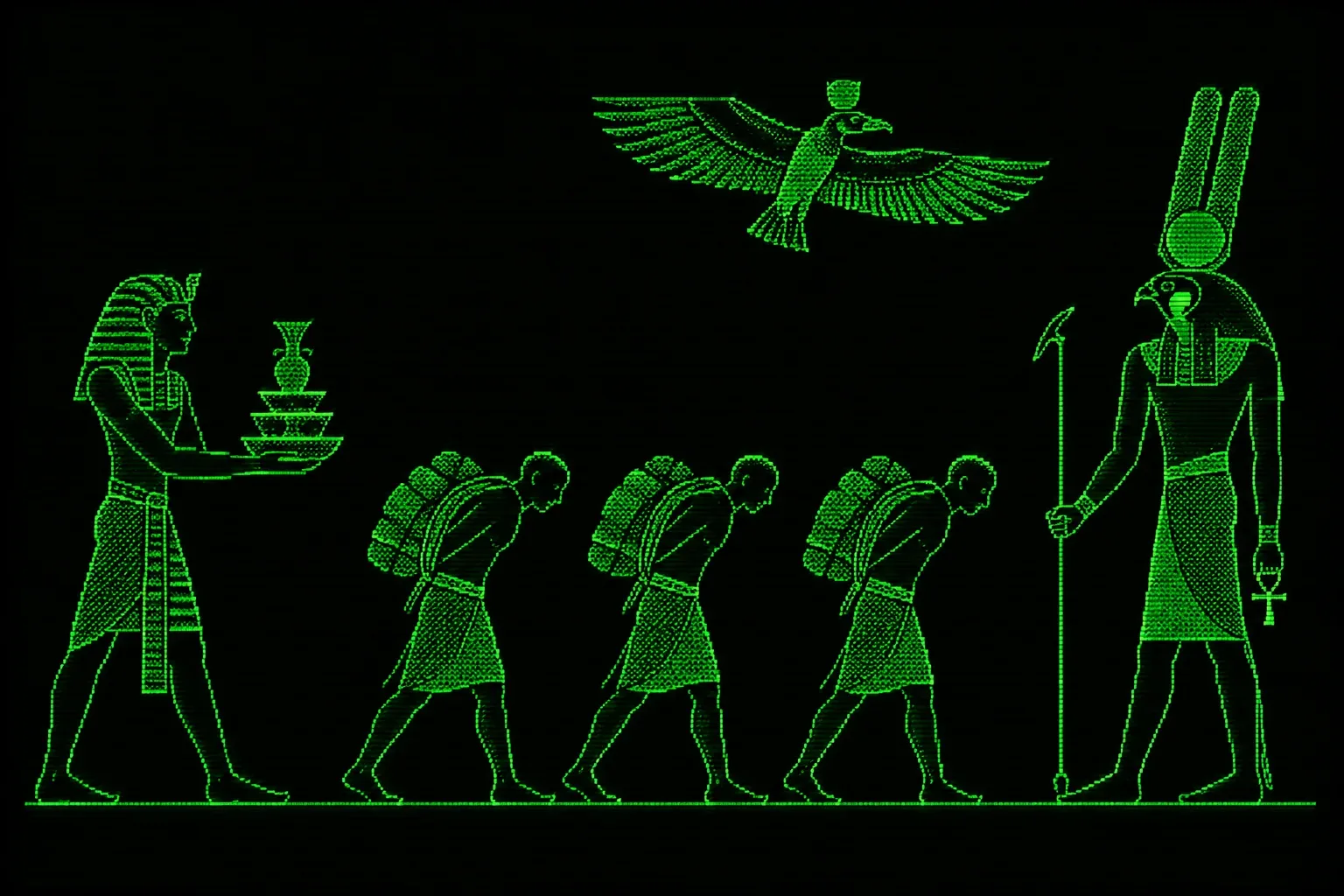
The inscription captions a scene of Seti I offering the spoils of war. In the closing words, the king addresses Amun-Ra directly. - 2
mz jn,w.pl jn nṯr-nfr n jtj =f Jmn m wr.pl bšt.pl n ḫꜣs,t.pl ḫm.pl Km,t jn,w.pl =sn ḥr psḏ =sn r mḥ šnꜥ nb m ḥm.pl ḥm,t.pl m nḫt,pl n ḏḏ =k n =j ḥr ḫꜣs,t nb
The perfect god presenting tribute to his father Amun: the rebel chiefs of foreign lands who know not Egypt, their tribute on their backs, to fill every storehouse with male and female slaves—“by the victories you grant me over every foreign land.”
Note · Line 2
“The perfect god” is the king. The captive chiefs both carry tribute and are themselves presented to Amun. - 3
jy.n ḥm =f ḥr ḫꜣs,t.pl ⸢m⸣ [hd] =f ḫpr
His Majesty returned from the foreign lands after his attack.
- 4
fḫ.n =f Rṯn,w smꜣ.[n] [=f] ⸢wr.⸣pl =sn
He had laid waste to Retjenu and slaughtered its chiefs.
Note · Line 4
Retjenu was an Egyptian name for lands along the eastern shore of the Mediterranean. - 5
ḏi̯ =f ḏd.w ꜥꜣm.pl ptr nw
He made the Aamu say, “Who is this?
Note · Line 5
The Aamu were peoples of western Asia. - 6
sw mj ḫ,t m pri̯.t =s n jni̯ mw
He is like fire when it breaks out, with no one to bring water.”
- 7
ḏi̯ =f qn bšt,pl nb ꜥbꜥb nb n rʾ =sn nḥm.n =f ṯꜣw =sn
He makes every rebel cease, till not a boast comes from their mouths:
he has taken their breath away. - 8
wr.pl ḫꜣs,t.pl n.w Ṯḥn,w [...]
The chiefs of the foreign lands of Libya …
- 9
nswt-bj,tj nb-jr,t-(j)ḫ,t Mn-Mꜣꜥ,t-Rꜥw zꜣ-Rꜥw nb-ḫꜥ,pl Stẖ,y-mr-n-Jmn ḏi̯ ꜥnḫ mj Rꜥw
King of Upper and Lower Egypt, lord of ritual, Menmaatre; son of Ra, lord of crowns, Seti Merenamun, given life like Ra.
Note · Line 9
Menmaatre is Seti I’s throne name; Merenamun means “beloved of Amun.” - 10
Nḫb,t ḥḏ,t-Nḫn ḏi̯ =s qn nb ḏi̯ =s ꜥnḫ ḏd wꜣs mj Rꜥw
Nekhbet, the White One of Nekhen: may she grant all strength; may she grant life, stability and dominion like Ra.
Note · Line 10
Nekhbet is the vulture goddess who protects the king. Nekhen was a city in Upper Egypt. - 11
ḏd-mdw jn Jmn-Rꜥw nb-ns,plt-tꜣ,du zꜣ n ẖ,t =j mr,y =j nb-Tꜣ,du Mn-Mꜣꜥ,t-Rꜥw
Words spoken by Amun-Ra, lord of the thrones of the Two Lands: “Son of my own body, whom I love, lord of the Two Lands, Menmaatre,
Note · Line 11
The Two Lands are Upper and Lower Egypt. - 12
jb =j ꜣwi̯ n mry(,t) =k ḥꜥi̯.k(wj) n mꜣꜣ n nfr.pl =k
my heart is glad for the love you inspire;
I rejoice at the sight of your perfections. - 13
ḏi̯ =j hmhm ḥm =k ḥr ḫꜣs,t nb [ḥḏ] [=k] ḥr-tp wr.pl =sn jwi̯ =[sn] n =k m bw wꜥ r [Tꜣ-mrj] ẖr (j)ḫ,t =sn nb ⸢ꜣṯp⸣ ḥr psḏ =sn
I make Your Majesty’s battle roar resound over every foreign land, your mace over the heads of their chiefs. They come as one to you in Egypt, all they own laden on their backs.”
- 14
Mw,t nb,t-Jšr,w nb,t-p,t ḥn,wt-nṯr,pl-nb,pl
Mut, lady of Asheru, lady of the sky, mistress of all the gods.
Note · Line 14
Asheru is the sacred lake at Mut’s temple at Karnak. - 15
[ḏi̯.n] [(=j)] [n] [=k] ⸢nḥḥ⸣ m nswt Tꜣ,wj ḫꜥi̯.t mj Rꜥw
“I have given you eternity as king of the Two Lands, for you have risen like Ra.”
- 16
Ḫns,w m Wꜣs,t Nfr-ḥtp Ḥr,w nb-ꜣw,t-jb
Khonsu in Thebes, the perfectly gracious one; Horus, lord of joy.
- 17
Ḏḥw,tj nb-Jp,t-s,wt
Thoth, lord of Karnak.
- 18
⸢ḏi̯⸣.n (=j) n =k qn,y r rs,j nḫt r mḥ,tt
“I have given you strength against the south,
victory against the north.” - 19
zꜣ,w ꜥnḫ ḏd wꜣs ḥꜣ =f nb mj Rꜥw
May all protection, life, stability and dominion stand behind him as they stand behind Ra.