~/sacred-texts/battle-reliefs-of-seti-i-at-karnak
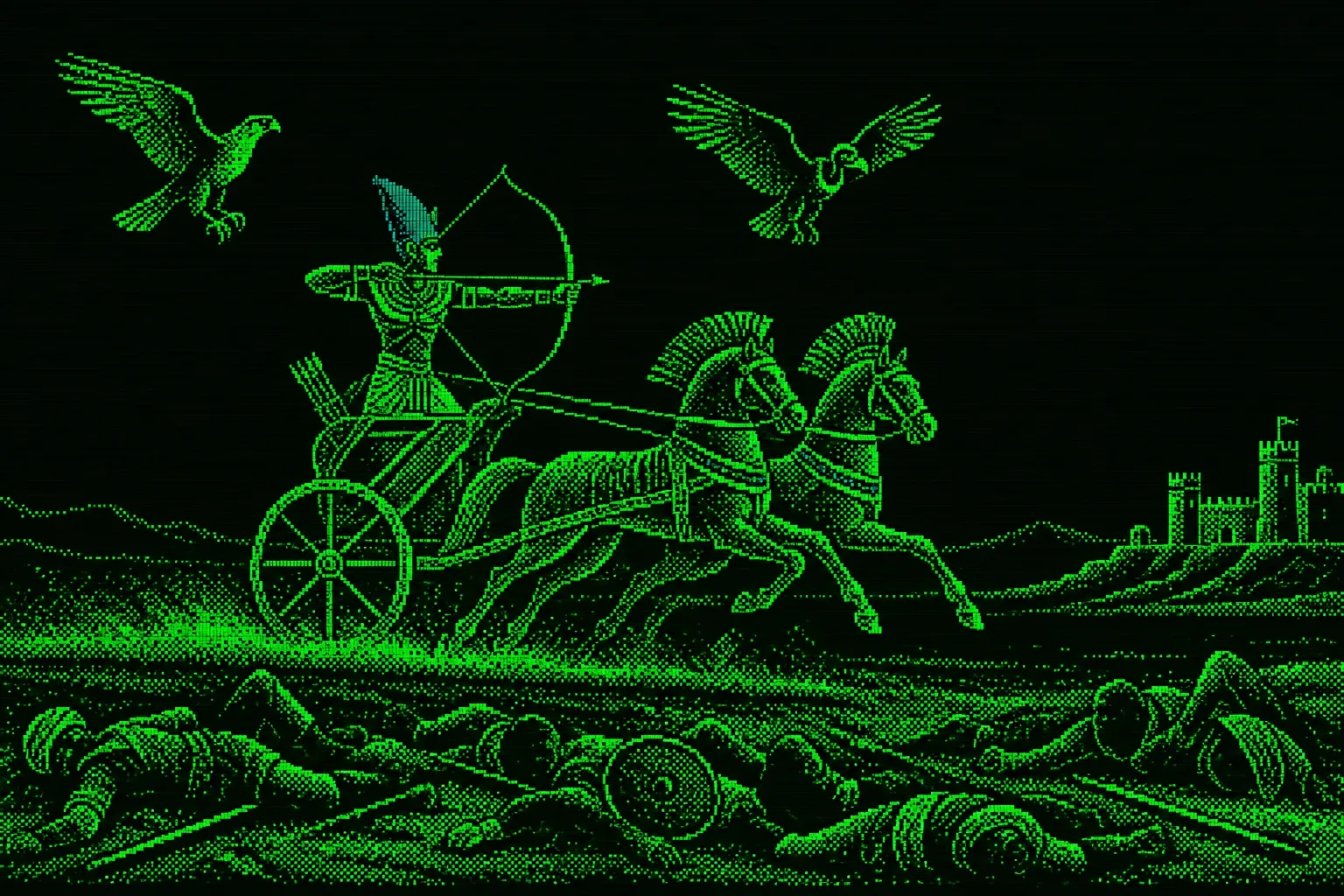
Seti I Karnak Battle Relief: Shasu Nomads Slaughtered
- Date
- Carved in the reign of Seti I (about 1290–1279 BC) to record his campaign of Year 1, on the north outer wall of the Great Hypostyle Hall at Karnak
- Found
- Karnak temple, Luxor (ancient Thebes): north outer wall of the Great Hypostyle Hall, east side, still in place
- Language
- Egyptian · Hieroglyphic
- 1
rnp,t-zp 1 nswt-bj,tj Mn-Mꜣꜥ,t-Rꜥw
Year 1 of the King of Upper and Lower Egypt, Menmaatre.
Note · Line 1
Menmaatre is the throne name of Seti I (ruled about 1290–1279 BC). - 2
pꜣ [⸮fḫ?] jri̯.n pꜣ ḫpš t〈n〉r n ⸢pr-ꜥꜣ⸣ ꜥnḫ-wḏꜣ-snb 〈n〉 [nꜣ]-n ḫr,pl n Šꜣs,w šꜣꜥ m pꜣ ḫtm n Ṯꜣr,w r Pꜣ-Knꜥn
The destruction that the strong arm of Pharaoh, life, prosperity, health!, wrought upon the Shasu foes, from the fortress of Tjaru as far as Pa-Canaan.
Note · Line 2
“Life, prosperity, health!” is a fixed blessing added after the word Pharaoh. Tjaru (Greek Sile) was the fortress on Egypt’s north-eastern border, guarding the coastal road to Palestine. Pa-Canaan, “the Canaan,” probably means Gaza, the gateway to Canaan. The Shasu were nomadic groups of Sinai and Palestine. - 3
⸢jw⸣ ⸢ḥm⸣ [=f] [ḥr] [sḫm] ⸢r⸣ ⸢=sn⸣ ⸢mjB⸣ ⸢mꜣj⸣ ḥsꜣ jri̯ =sn m ẖꜣ,yt ḫt jn,t =sn ⸢ḥdb⸣ ḥr zn[f] =sn mj n ḫpr
His Majesty prevailed over them like a savage lion; he made them heaps of corpses throughout their valley, sprawled in their own blood, as if they had never been.
- 4
whi̯ nb ḥr-tp ḏbꜥ.pl =f ḥr ḏd pḥ,tj =f n ḫꜣs,t.pl wꜣ.wpl m pḥ,tj jtj =f Jmn wḏ [n] [=k] qn nḫt ḥr ḫꜣs,t [nb]
Every one who slipped through his fingers said: "His might against the far-off foreign lands is the might of his father Amun, who has decreed for you valour and victory over every foreign land."
Note · Line 4
The survivors’ speech turns from talking about the king to addressing him directly as “you.” Calling Amun his “father” reflects the belief that the king was the god’s son. - 5
nswt-bj,tj [Mn-Mꜣꜥ,t-Rꜥw] ⸢zꜣ⸣-Rꜥw Stẖ,y-mr-n-Ptḥ ḏi̯ ꜥnḫ mj Rꜥw mr.y Mnṯ,w Ꜥztrt
King of Upper and Lower Egypt, Menmaatre, Son of Ra, Seti Merenptah, given life like Ra, beloved of Montu and Astarte.
Note · Line 5
This caption stands beside the king in his chariot. Montu was the Theban war god. Astarte was a Syrian warrior goddess who was worshipped in Egypt and had a special connection with horses and chariotry. - 6
bḥd,tj nb-[_] ḏi̯ =f ꜥnḫ ḏd wꜣs snb mj Rꜥw
The Behdetite, lord of …: may he give life, stability, dominion and health like Ra.
Note · Line 6
The Behdetite is Horus of Behdet (Edfu), shown as a falcon hovering over the king to protect him. - 7
Nḫb,t ḥḏ,t-Nḫn ḏi̯ =s ꜥnḫ
Nekhbet, the White One of Nekhen: may she give life.
Note · Line 7
Nekhbet is the vulture goddess of Upper Egypt, at home in Nekhen (Hierakonpolis). Like the falcon, she spreads her wings over the king. - 8
ḥtr tp,j n ḥm =f Nḫt,w-m-Wꜣs,t
The first team of His Majesty, "Victory-in-Thebes."
Note · Line 8
This label names the king’s lead pair of chariot horses. Royal horses were given proud names of their own. - 9
dmj n Pꜣ-Knꜥn
The town of Pa-Canaan.