~/sacred-texts/war-reliefs-of-seti-i-at-karnak
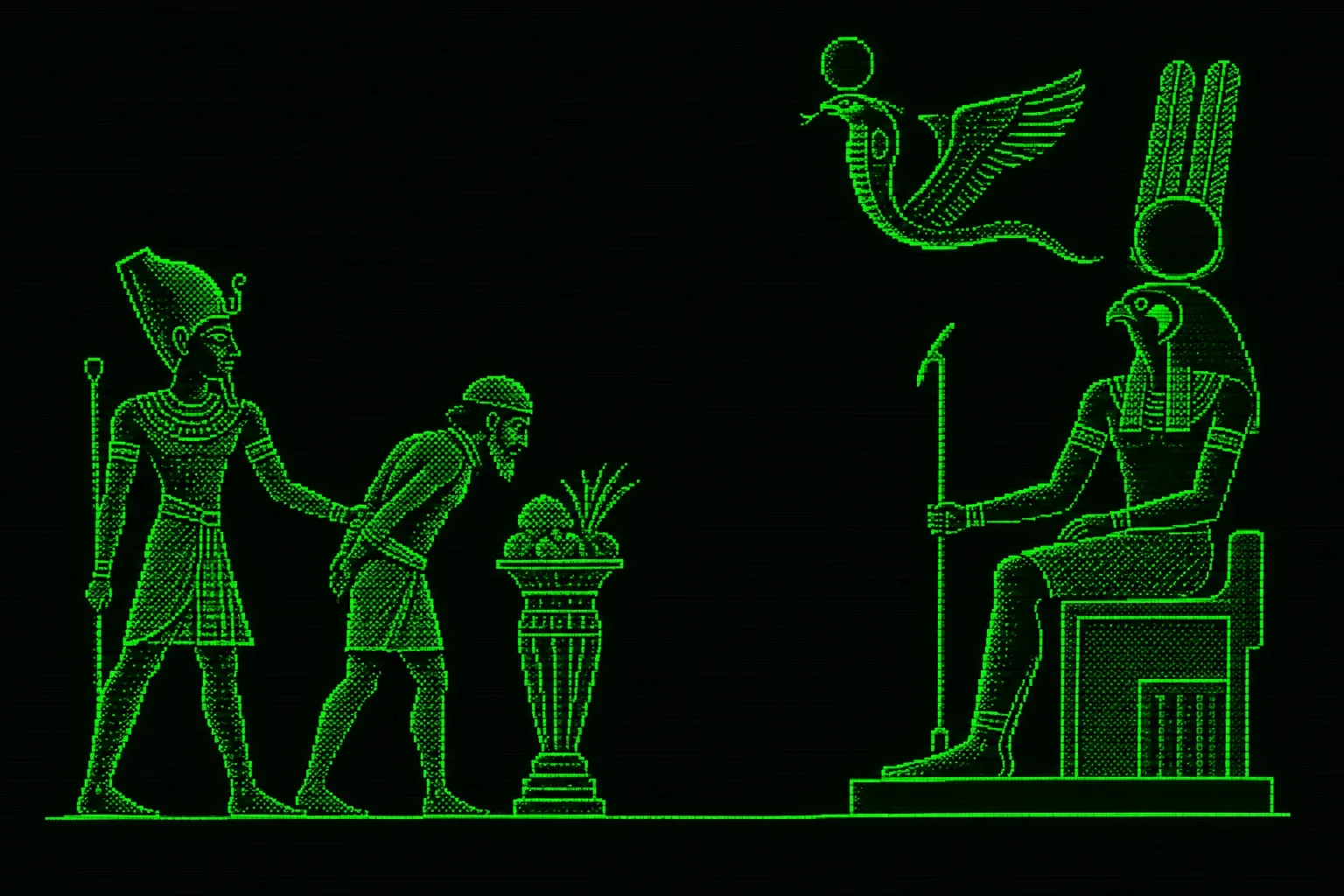
Seti I Karnak Relief: Hittite Captives and Booty for Amun
- Date
- Carved in the 19th Dynasty (c. 1290–1279 BC) on the north exterior wall of the Great Hypostyle Hall at Karnak
- Found
- In situ at the Precinct of Amun-Ra, Karnak (Luxor, Egypt)
- Language
- Middle Egyptian · Hieroglyphic
- 1
[mz] jn,w.pl jn nṯr-nfr n jtj =f Jmn-Rꜥw nb-⸢ns,t.pl-tꜣ,du⸣ ḫft jwi̯ =f ḥr ḫꜣs,t Ḫt ḥr sksk ḫꜣs,[t.pl] [bšt.pl] ḥr ptpt ꜥꜣm,w [m] ⸢s,t⸣ =sn m ḥḏ nbw ḫsbd mfkꜣ,t m [ꜥꜣ,t] [nb] šps,j.t mj wḏ ⸢=f⸣ ⸢n⸣ ⸢=f⸣ qn,t nḫt r ḫꜣs,t.pl nb
Tribute of silver, gold, lapis lazuli, turquoise and every kind of precious stone, brought by the perfect god to his father Amun-Ra, Lord of the Thrones of the Two Lands, on his return from the land of Hatti. He had crushed the rebellious foreign lands and trampled the people of Asia in their own homes, just as his father had decreed for him valor and victory over all foreign lands.
Note · Line 1
The “perfect god” is King Seti I. The Two Lands are Upper and Lower Egypt. Hatti was the Hittite kingdom. - 2
Wꜣḏ,t ḏi̯ [=s] ꜥnḫ [wꜣs] nswt-bj,tj Mn-Mꜣꜥ,t-Rꜥw zꜣ-Rꜥw Stẖ,y-[mr-n-Jmn] stp n Rꜥw [m] wjꜣ n [...]
May Wadjet give life and dominion to the King of Upper and Lower Egypt, Menmaatre, Son of Ra, Seti, beloved of Amun, chosen by Ra in the barque of …
Note · Line 2
Wadjet is the cobra goddess who protects the king. Menmaatre is Seti’s throne name. - 3
wr.pl ꜥꜣ.pl n.w Rṯn,w ẖzi̯ jni̯.n ḥm =f m ⸢nḫt⸣ =f ḥr ḫꜣs,t Ḫt mḥ šnꜥ [n] [jtj] [=f] šps Jmn-Rꜥw nb-ns,t.pl-tꜣ,du mj rḏi̯.n ⸢=f⸣ [q]n,t r rsj nḫt r mḥ,tt
The great chiefs of wretched Retjenu, whom His Majesty brought back by his victory over the land of Hatti to fill the storehouse of his august father Amun-Ra, Lord of the Thrones of the Two Lands, just as Amun-Ra had given him might over the south and victory over the north.
Note · Line 3
Retjenu was an Egyptian name for lands in the Levant. The chiefs are shown as captives destined for Amun’s temple estate. - 4
wr.pl ḫꜣs,t.pl ḏd =sn m swꜣš ḥm =f ꜥnḫ-wḏꜣ-s(nb) m sꜥꜣi̯ pḥ,tj =f j:nḏ ḥr =k nswt n Km,t rꜥw n psḏ,t-9
The chiefs of the foreign lands praise His Majesty—life, prosperity and health!—and extol his might, saying: “Hail to you, King of Egypt, sun of the Nine Bows!”
Note · Line 4
The Nine Bows stand for all Egypt’s traditional enemies. - 5
wr ⸢bꜣ,pl⸣ =k nb-nṯr,pl jni̯.n =k r-ꜥ ḫꜣs,t wꜥf =k sn ẖr rd.wj n zꜣ =k Ḥr,w sꜥnḫ Tꜣ,wj
Great is the power you have carried far into the foreign land, Lord of the Gods! You have bowed them down beneath the two feet of your son Horus, who gives life to the Two Lands.
Note · Line 5
The captives address Amun-Ra. His son Horus is the reigning king. - 6
wr bꜣ,pl =k nswt nḫt
Great is your power, mighty king!
- 7
ꜥꜣi̯.wj pḥ,tj =k
How great is your strength!
- 8
tw=k mj Mnṯ,w ḥr ḫꜣs,t nb wsr =k mj-qd =f
You are like Montu over every foreign land; you are mighty as he is.
Note · Line 8
Montu is a god of war. - 9
ḏd-mdw ḏi̯.n(=j) n =k qn nb nḫt nb
Words spoken: “I have given you all valor and every victory.”
Note · Line 9
Amun-Ra now speaks to Seti. - 10
ḏd-mdw ḏi̯.n (=j) n =k tꜣ.pl nb.pl ḫꜣs,t.pl nb ẖr ṯb(w),tj =k
Words spoken: “I have given you all lands and all foreign lands beneath your two sandals.”
- 11
ḏd-mdw ḏi̯.n (=j) n =k ꜥḥꜥ,w n Rꜥw rnp,t.pl n (J)tm
Words spoken: “I have given you the lifetime of Ra and the years of Atum.”
- 12
ḏd-mdw ḏi̯.n (=j) n =k nḥḥ m ḥꜣb.pl mj Rꜥw
Words spoken: “I have given you an eternity of festivals, like Ra.”
- 13
ḏd-mdw ḏi̯.n (=j) n =k ḥw,pl ḏfꜣ nb
Words spoken: “I have given you food and provisions of every kind.”
- 14
ḏd-mdw ḏi̯.n (=j) n =k ꜥnḫ ḏd wꜣs nb snb nb [Jm]n-Rꜥw [nb-ns,t.pl-Tꜣ,]du ḫnt,j-Jp,t-s,wt
Words spoken: “I have given you all life, stability and dominion, and all health.” Amun-Ra, Lord of the Thrones of the Two Lands, foremost in Karnak.
- 15
Mw,t [wr(,t)] [nb,t]-J⸢š⸣r,w Bꜣs,tt ⸢ḥn,wt⸣-Jp,t-s,wt nb,t-jmꜣ nḏm mrw,t
Mut the Great, Lady of Isheru; Bastet, Mistress of Karnak, Lady of Imau, whose love is sweet:
Note · Line 15
Mut and Bastet are named here as one goddess. Isheru is the sacred lake at Mut’s temple in Karnak. - 16
ḏi̯.n (=j) n =k [...] Gbb ꜥḥꜥ,w Rꜥw m p,t
I have given you … of Geb and the lifetime of Ra in the sky.
Note · Line 16
Geb is the earth god. - 17
⸢Ḫns,w⸣ ⸢m⸣ ⸢Wꜣs,t⸣ ⸢nfr-ḥtp⸣ ⸢Ḥr,w⸣ nb-⸢ꜣw,t-jb⸣
Khonsu in Thebes, the perfectly gracious one, Horus, Lord of Joy.
Note · Line 17
Khonsu is the moon god, son of Amun and Mut at Thebes. - 18
⸢ḏd⸣-mdw ⸢jn⸣ Mꜣꜥ,t ⸢zꜣ,t⸣-Rꜥw zꜣ =j n ẖ,t mr.y nb-Tꜣ,du nb-ḫpš Mn-Mꜣꜥ,t-Rꜥw ḏi̯.n (=j) n ⸢=k⸣ nḥḥ m ḥꜣb,pl mj Rꜥw
Words spoken by Maat, daughter of Ra: “My beloved son, born of my body, Lord of the Two Lands, Lord of Might, Menmaatre: I have given you an eternity of festivals, like Ra.”