~/sacred-texts/ramesside-royal-inscriptions
Gebel el-Silsila Stela of Seti I: Rations for 1,000 Men
- Date
- Carved in regnal year 6 of Seti I (19th Dynasty, c. 1285 BC) on a sandstone cliff at Gebel el-Silsila
- Found
- In situ on a sandstone cliff at Gebel el-Silsila (ancient Kheny), Upper Egypt
- Language
- Late Egyptian · Hieroglyphic
- 1
rnp,t-zp 6 ꜣbd 4 ꜣḫ,t sw 1 ḫr ḥm n Ḥr,w Kꜣ-nḫt-ḫꜥ-m-Wꜣs,t-sꜥnḫ-Tꜣ,wj Nb,tj [...] [Ḥr,w]-⸢nbw⸣ [Wḥm-ḫꜥ,w]-wsr-pḏ,wt-m-tꜣ,w-nb,w nswt-bj,t nb-Tꜣ,du Mn-Mꜣꜥ,t-Rꜥw zꜣ-Rꜥw nb-⸢ḫꜥ,pl⸣ [...]
Regnal year 6, fourth month of the Inundation, day 1, under the Majesty of Horus: Strong Bull who rises in Thebes and gives life to the Two Lands; the Two Ladies: …; the Golden Horus: He who rises anew, mighty of bow in all lands; the King of Upper and Lower Egypt, Lord of the Two Lands, Menmaatre; the Son of Ra, Lord of Crowns: …
Note · Line 1
The inscription opens with Seti I’s five royal names. The Two Ladies are the vulture goddess of Upper Egypt and the cobra goddess of Lower Egypt. - 2
[...] [tꜣ] m sḫr.pl =f ⸢mjni̯⸣ sw m zp.pl nfr.pl
… the land by his counsels, who brings it to harbor by good deeds;
- 3
jtn pri̯ ṯꜣ,pl [...] ḥꜣ,tj n jm,j Jwn,w
the rising sun disk, the breath of wind … the heart of him who dwells in Heliopolis;
Note · Line 3
Heliopolis was the great sanctuary of the sun god Ra. - 4
smn.n Mnṯ,w ḥr ns,t =f j:jri̯{.t} nswt =f ḥr-tp ⸢tꜣ⸣
he whom Montu has set on his throne, who exercises his kingship on earth;
- 5
mw nṯr.y [...] bꜣ,pl Jwn,w nfr =f
divine water … the spirits of Heliopolis fashioned his beauty.
Note · Line 5
“Water” can also mean semen: the image evokes the king’s divine descent. The spirits are the bas, the powers through which the gods make themselves present. - 6
hrw pn jst{w} ḥm =f ꜥnḫ-wḏꜣ-s(nb) m nʾ,t-rs,jt ḥr jri̯.t ḥzy sw jtj =f Jmn nswt-nṯr.pl sḏr rs ḥr ḥḥj ꜣḫ n nṯr.pl nb.w Tꜣ-mrj
On this day His Majesty (life, prosperity, health) was in Thebes, doing what won him praise from his father Amun, king of the gods. He spent the night awake, seeking what would benefit all the gods of the Beloved Land.
Note · Line 6
The Beloved Land is Egypt. “Life, prosperity, health” is a wish spoken at the mention of the king. - 7
sḥḏ tꜣ j:[_] ⸢sw⸣ ⸢ḫpr⸣ [...] jw ⸢wḏ⸣ [ḥm] [=f] ꜥnḫ-wḏꜣ-s(nb) rḏi̯.t jwi̯.t wpw,tj-nswt n ḥm ꜥnḫ-wḏꜣ-s(nb) ẖr tp-ꜥnḫ.pl n mšꜥ z ḫꜣ m-mj,tt [...] m jz,t.pl [...] r ẖn mn,w n jtj =f Jmn-Rꜥw Wsjr ḥnꜥ psḏ,t =f m jnr nfr rwḏ
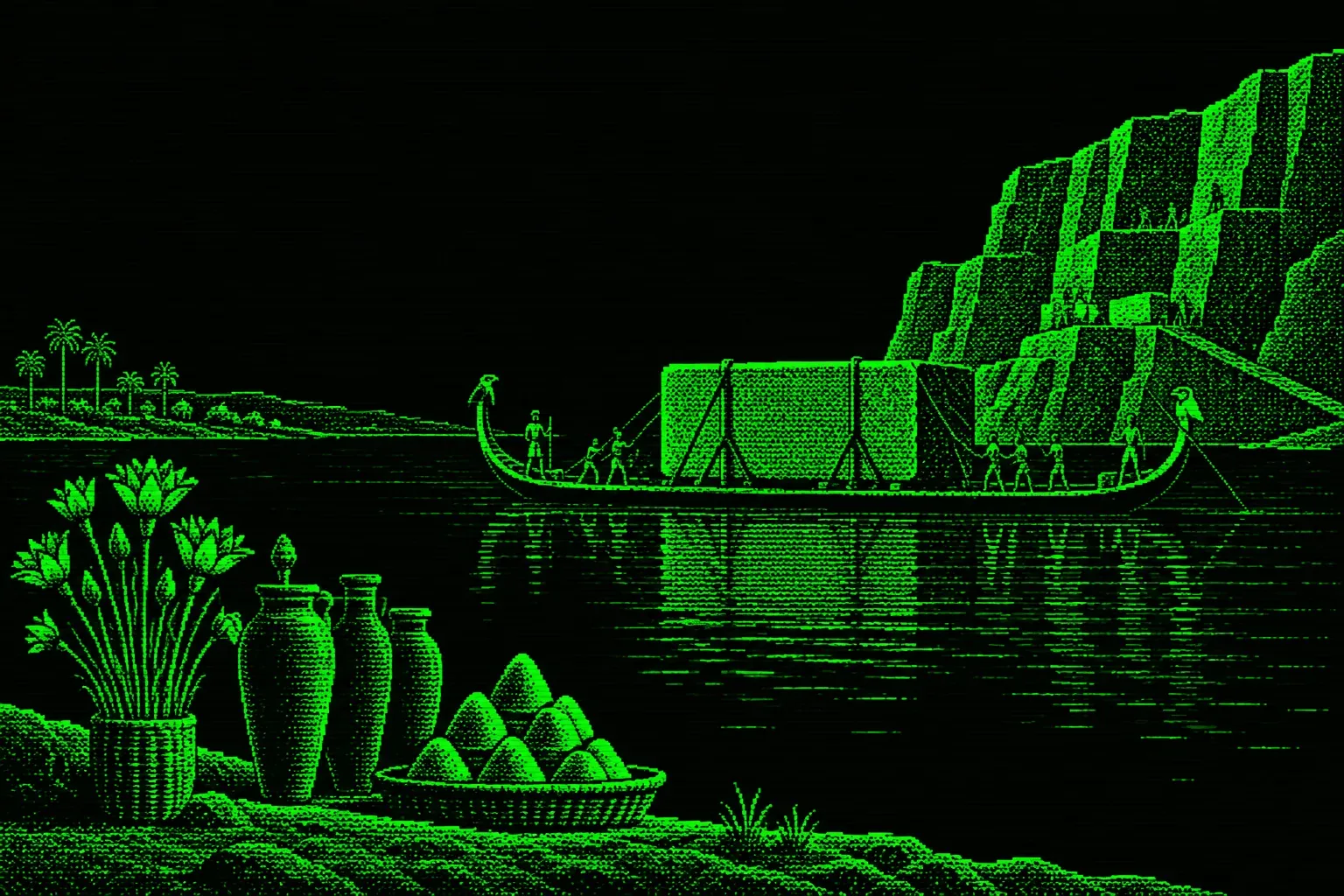
When the land grew light … and day had broken … His Majesty (life, prosperity, health) ordered that the royal envoy of His Majesty (life, prosperity, health) be summoned with a body of troops under his command, a thousand men, and likewise … in crews … to carry by boat monuments of fine hard stone for his father Amun-Ra and for Osiris with his Ennead.
Note · Line 7
An Ennead is a company of nine gods. - 8
jw rḏi̯.n ḥm =f ꜥnḫ-wḏꜣ-s(nb) ḥꜣ,w ḥr jri̯.yt n mšꜥ m sgnn jwf n jḥ tʾ ⸮wꜣḏ? sm,w qn(,w) nn rʾ-ꜥ =sn
His Majesty (life, prosperity, health) added to the troops’ usual provisions: oil, beef, fresh bread and vegetables in plenty, without limit.
- 9
jw z nb m-j:m =sn tʾ dbn 20 m-mn,t zp-2 sm,w ⸢⸮ḫnt?⸣ jwf ꜣš⸢r,t⸣ [sšr] ẖꜣr 2 n ꜣbd
Each man among them received twenty deben of bread day after day, along with vegetables and roast meat, and two sacks of grain a month.
Note · Line 9
Twenty deben weighed about 1.8 kilograms, or four pounds. - 10
bꜣk =sn m jb mrw n ḥm =f ꜥnḫ-wḏꜣ-s(nb)
They worked with love for His Majesty (life, prosperity, health) in their hearts.
- 11
bnr sḫr.pl =f m rʾ n tm,pl n,tj n wpw,tj-nswt n ḥm =f ꜥnḫ-wḏꜣ-s(nb) m [m-dj] [=f] [tʾ.pl] jwf jḥ jrp bꜣq nḏm nḥḥ ⸢⸮šdḥ?⸣ bj,t dꜣb jꜣrr,wt mḥ,yt sm,w rꜥw-nb
His provisions were sweet in the mouths of all who served the royal envoy of His Majesty (life, prosperity, health), for the envoy had loaves, beef, wine, sweet moringa oil, olive oil, shedeh wine, honey, figs, grapes, fish and vegetables every day.
- 12
m-mj,tt pꜣ ꜥnḫ ꜥꜣ n ḥm =f n,tj ḥr pri̯ n =f m pr Sbk nb-⸢H̱n,y⸣ ḥtr m-mn,t šsr ẖꜣr ⸢6⸣ ḥr pri̯ ḥr šnw,t 〈n〉 ṯꜣ,y-sry,t n mšꜥ =f m-mj,tt jr,j
There was also His Majesty’s great bouquet, issued to the envoy as a daily due from the temple of Sobek, lord of Kheny. Six sacks of grain were likewise issued from the granary for the standard-bearer of his army.
Note · Line 12
Kheny is Gebel el-Silsila, where sandstone was quarried on the banks of the Nile. Sobek was the local crocodile god. - 13
nswt-bj,t nb-Tꜣ,du Mn-Mꜣꜥ,t-Rꜥw zꜣ-Rꜥw nb-ḫꜥ,w.pl [St]y-[mr-n]-Ptḥ ḏi̯ ꜥnḫ ḏ,t nḥḥ
King of Upper and Lower Egypt, Lord of the Two Lands, Menmaatre; Son of Ra, Lord of Crowns, Seti, beloved of Ptah, given life for ever and ever.
- 14
m jtj =f Rꜥw [...] ⸢tꜣ.pl⸣ nb.w ḫꜣs,t ⸢nb⸣ ⸢ẖr⸣ ⸢ṯb(w)⸣ ⸢=f⸣
It is his father Ra who … all lands and every foreign country beneath his sandal.
Note · Line 14
Enemies were sometimes pictured on the soles of royal sandals: with every step the king trod them underfoot.