~/sacred-texts/semna-dispatches-papyrus-british-museum-ea-10752-dispatch-5
Semna Dispatches: Egypt Turns Back Starving Nubians
- Date
- Copied in hieratic in the 12th Dynasty, reign of Amenemhat III (c. 1850 BC), in a file of reports passed between the Egyptian fortresses on the southern frontier
- Found
- Found in 1896 in a tomb shaft beneath the Ramesseum at Thebes; now in the British Museum, London (EA 10752)
- Language
- Middle Egyptian · Hieratic
- 1
mj,t(j) n(,j) snn jni̯.t n =f m jn.yt m mn[,w] n(,j) Ꜣbw ⸢m⸣ ḏḏ mn,[w] [n] ⸢mn,w⸣
Copy of the document that was brought to him: what was brought from the fortress of Elephantine, as one fortress sends word to another.
Note · Line 1
This letter is one of a series of military reports from the Egyptian fortresses along the Nile in Nubia, copied onto a single papyrus. - 2
swḏꜣ jb =k snb.t(j) ꜥnḫ.t(j) r-n,tt m[ḏꜣ],y 2 mḏꜣ,yt 3 [ḥr(,j)-]ꜥ 2 hꜣ.w ḥr ḫꜣs,t m rnp,t-zp 3 ꜣbd 3 pr,t [sw] ⸢27⸣ ḏd.n =sn jy.n =n r bꜣk n pr pr-ꜥꜣ ꜥnḫ-wḏꜣ-s(nb)
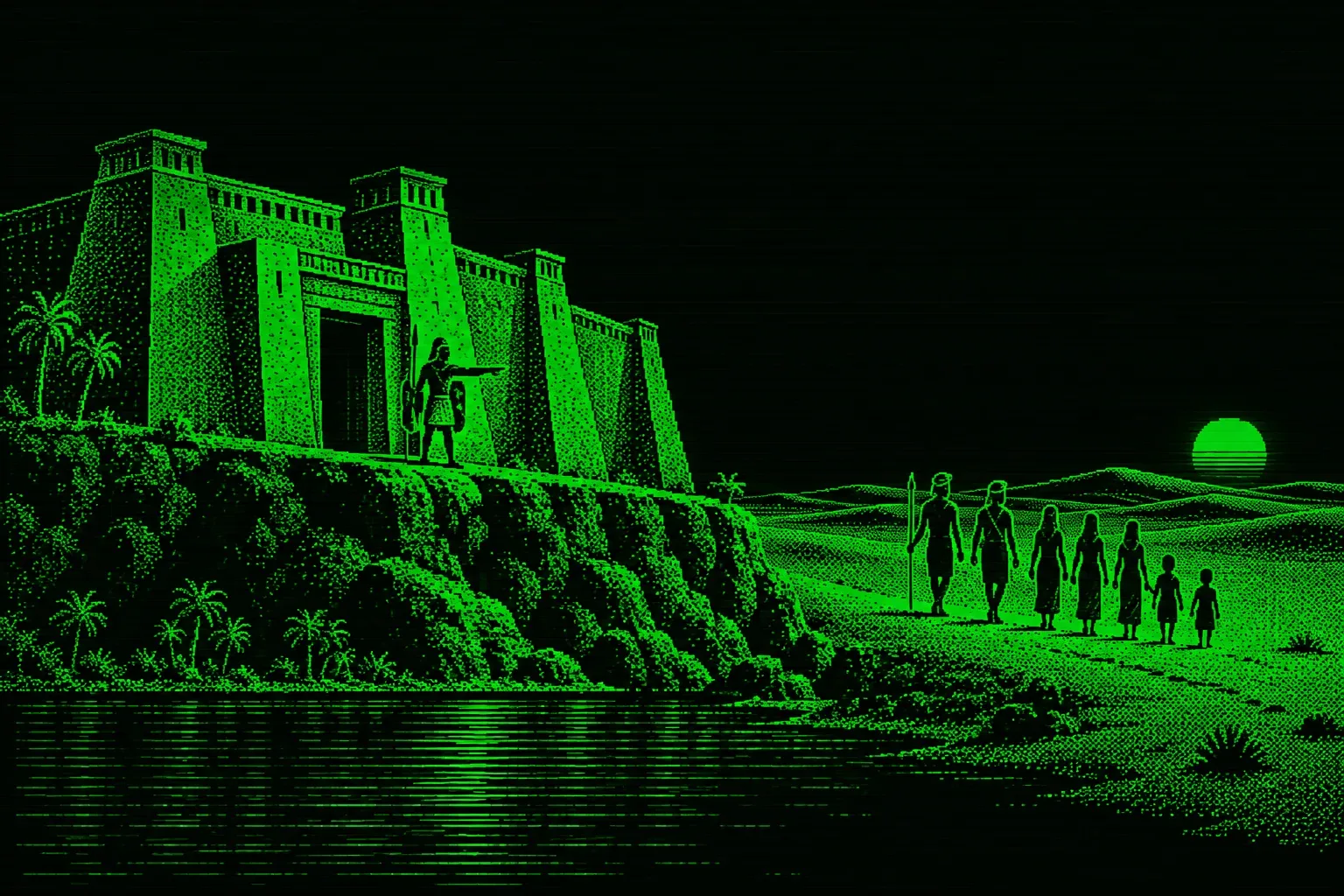
This is to inform you, may you be healthy and alive, that two Medjay men, three Medjay women and two boys came down from the desert in Year 3, third month of Peret, day 27. They said: "We have come to serve the house of the Palace, life, prosperity, health!"
Note · Line 2
The Medjay were a desert people of Nubia, closely watched by the Egyptian garrisons. - 3
⸢w⸣šd ḥr z[ḫr] ḫꜣs,t ꜥḥꜥ,n ḏd.n =sn n sḏm =n (j)ḫ,t.pl nb.t jw tꜣ ḫꜣs,t ḥr ⸢mw,t⸣ m-ꜥ ḥqr ḫru̯-fj s[t]
They were questioned about the state of the desert, and they said: "We have heard nothing. But the desert is dying of hunger." So they said.
Note · Line 3
The garrisons asked every arrival for news of the desert. These people claim they know nothing of the movements of other groups, and report only famine, which explains why they have come. - 4
⸢ꜥḥ⸣ꜥ,n rḏi̯.n bꜣk-jm hd =t(w) r ḫꜣs,t =sn m hrw pn
Then this servant had them turned back to their desert that very day.
Note · Line 4
“This servant” is the writer referring to himself with the usual humility of an official addressing a superior. The officer refused them entry. - 5
ꜥḥꜥ,n ḏd.n wꜥ,t m n⸢ꜣ⸣-n mḏꜣ,yt.pl ḥꜣ ⸢rḏi̯.t(w)⸣.n =j pꜣj =j mḏꜣ,y m [...] tn
Then one of these Medjay women said: "If only I had been given my Medjay man in this …"
- 6
ꜥḥꜥ,n [ḏd.n] pꜣ mḏꜣ,y jn jni̯ sw swn [...]
Then the Medjay man said: "Is it the one who brings himself in who does the trading …"