~/sacred-texts/ramesside-school-literature
The Satirical Letter of Hori: Your Chariot Rests on Your Shoulder
- Date
- Composed in the reign of Ramesses II (1279–1213 BC); the main copy, Papyrus Anastasi I, was written later in the 19th Dynasty, and schoolboys at Deir el-Medina copied excerpts onto ostraca
- Found
- Papyrus bought from Giovanni Anastasi in 1839, now in the British Museum (EA 10247); the ostraca with excerpts were found at Deir el-Medina, Thebes
- Language
- Late Egyptian · Hieratic
Hori, a scribe and groom of the royal stables, answers a letter from the army scribe Amenemope, whom he calls Mapu. After long greetings he turns on him: Your words are all twisted; they do not tie together. He sets problems a military scribe must solve: bricks for a ramp, men to haul an obelisk, rations for 5,000 troops.
Then Hori tests his claim to be a maher, a warrior who knows the roads of Syria and Canaan. Amenemope is robbed in his sleep, wrecks his chariot in a pass held by Shasu, and at Joppa meets the girl who guards the vineyards: She drew you to her as her lover.
- 1
zẖꜣ,w stp ḥꜣ,tj wꜣḥ nḏnḏ rʾ
The scribe of fine judgment, patient in counsel:
Note · Line 1
Hori opens his letter by praising himself. Only after listing his accomplishments does he give his name and greet his fellow scribe. - 2
ḥꜥꜥ =tw n ḫnw =f ḫ{t}f〈t〉 sḏm.tw =w
people rejoice at his words when they hear them.
- 3
ḥmw,w m mdw-nṯr nn 〈ḫm.n〉 =f
Skilled in the god’s words, he knows all there is to know.
Note · Line 3
“The god’s words” is an Egyptian name for hieroglyphic writing. - 4
pri̯-ꜥ pw m qn,t m kꜣ,t ={j} Sšꜣ,t
He is a champion in valor and in the work of Seshat,
Note · Line 4
Seshat is the goddess of writing and recordkeeping. - 5
ḥm{(,t)} n Nb-Ḫmn,w m jsj n zẖꜣ,w〈.pl〉
a servant of the Lord of Hermopolis in the chamber of records,
Note · Line 5
The Lord of Hermopolis is Thoth, patron god of scribes. - 6
sbꜣ,y{t} ẖr(,j)-ꜥ m ḫꜣ n zẖꜣ.pl
an assistant teacher in the records office,
- 7
tp,tj jr,j.pl =f ḥꜣ,t(j) m wnḏw(,t).pl =f
first among his fellows, foremost in his company,
- 8
ḥꜣ(,tj)-ꜥ n ḏꜣm.w.pl =f nn twt n =f
the prince of his generation. No one is his equal.
Note · Line 8
“Prince” here is a title of rank. Hori claims first place among his peers, not royal descent. - 9
j:jri̯ =tw mn,t j{w}〈m〉 =f n jḥwn,w nb
He is held up as a model for every boy.
- 10
pri̯ ḥr ḏr,t.ṱ =f sꜥꜣ ḏbꜥ.pl =f
By his own hand he rose; his fingers made him great.
- 11
ḫy stp.w jp{t} ḥr ḏ,t =f
A choice child, judged on his own merits,
- 12
ꜥrq.w sꜣr,t.pl sbꜣ〈q〉 ḥꜣ,t(j) ḥr-r-rʾ =sn
consummate in wisdom and keen of mind for all these things,
- 13
sꜣqꜣ sw 〈ḥr〉 bjꜣ,t.pl =f
he keeps himself in hand by force of character.
- 14
mry,tj m jb.pl nn jtn.w =f
He is dear to people’s hearts; no one stands against him.
- 15
ꜣbb =tw ḫnms =f nn ft ={f} jm =f
People want his friendship and never tire of him.
- 16
ꜣs sw m 〈s〉{r}〈pẖ〉r šw.pl
He is quick to fill blank sheets of papyrus with writing,
- 17
rnp,j sṯnj ꜣb,wt twt jmꜣ,w
a youth of striking figure and perfect charm,
- 18
wḥꜥ.w jtn.pl gn,w(t).pl mj jri̯{.t} sn
who untangles the knots in the annals as well as the man who wrote them.
- 19
pri̯ nb m rʾ =f tḫb(.w) m bj,t.pl srwd jb.pl jm =sn mj ḥr,w-ꜥ.pl
Every word that leaves his mouth is steeped in honey; hearts draw strength from his words as from a remedy that works at once.
- 20
mꜥ~rw~jꜣ n ḥm =f ꜥnḫ-(w)ḏꜣ-s(nb) šms,j n nb ꜥnḫ-(w)ḏꜣ-s(nb)
Groom to His Majesty—life, prosperity, health!—and retainer of the Lord—life, prosperity, health!—
Note · Line 20
Each mention of the king is followed by the customary wish for his well-being. - 21
sḫpr.w nfr.w.pl n.w j:ty
he rears the sovereign’s beauties.
Note · Line 21
The “beauties” are the royal horses. - 22
mny pw mꜥds n ⸢pꜣ⸣ jḥ
He is a first-rate farmhand in the stable.
- 23
ḥwi̯ =tw kḥkḥ ⸢jri̯⸣ =t〈w〉 mj-qd ={j}f
When the old man is beaten, it is done his way.
- 24
wḥꜥ.⸢w⸣ ⸢nḥb⸣ [Ḥr,j] zꜣ Wnn-nfr n ꜣbd,w mꜣꜥ,ty〈.pl〉 msi̯.n Tꜣ-Wsr(,t) m w n Bꜣrs,t ⸢šmꜥ⸣,y(t)-n-Bꜣs[,t] m Sḫ,t
He who loosens the yoke is Hori, son of Wenennefer of Abydos of the justified, born to Tausret of the district of Bubastis, singer of Bastet at Sekhet.
Note · Line 24
Abydos was sacred to Osiris; the “justified” are the dead found worthy in judgment. Sekhet means “Field” and names a place near Bubastis, the city of Bastet. - 25
nḏ =f ḫr,{w}〈t〉.pl n 〈ḫnms〉 =f sn =f [j]qr
He greets his friend, his able brother,
Note · Line 25
One scribe could call another “brother” without implying kinship. - 26
zẖꜣ,w-nsw-sḥn{,t}-n-mšꜥ-nḫt
the royal scribe of orders for the victorious army,
- 27
stp.w jb nfr bjꜣ,t.pl ꜥrq.w s[ꜣ]r,t
a man of fine judgment, good character and consummate wisdom.
- 28
nn-wn mj,tt =f m zẖꜣ,w nb
Among all the scribes there is none like him.
- 29
mrw,t〈j〉 n ḥr-nb.pl ꜥn ptrj
Beloved of all and fair to look upon,
- 30
〈jmꜣ〉 =f m[j] ⸢jḥ⸣,t ḥr jb n kꜣw,t.pl
his charm is like the ih-plant in the hearts of the people.
- 31
zẖꜣ,w m tnw nb nn ḫm〈.n〉 =f
A scribe versed in every reckoning: there is nothing he does not know.
Note · Line 31
In this school text, the scribe Hori writes to his fellow scribe Amenemope, whose learning he will put to the test. - 32
nḏnḏ =tw wšb,t =f r gmi̯(.t) 〈stp,w〉
People seek his answer when they want the best.
- 33
spd ḥr wꜣḥ jb mri̯ r(m)ṯ.pl
Keen-eyed and patient, he loves people.
- 34
ḥꜥꜥ n sp.pl n mꜣꜥ,t mkḥꜣ =f js{w}〈f〉(,t)
He rejoices in deeds of justice and turns his back on wrongdoing.
- 35
ꜥnḫ =k (w)ḏꜣ =k s(nb) =k sn =j j[qr] ꜥpr.tj ḏd.ṱ nn ḥꜣ~n,pl~rʾ n =k
May you live, may you be safe, may you be well, my able brother, well provided for and steadfast, with never an “If only!” on your lips.
Note · Line 35
“Brother” is how one colleague addresses another. - 36
ḫr,t.pl n =k m ꜥnḫ m kꜣ.pl ḏfꜣ.w.pl
Life is yours, and food and provisions are yours.
- 37
ꜣw,t-jb ṯḥḥ(,wt) zmꜣm m rʾ-wꜣ,ṱ =k
Joy and jubilation meet all around you.
- 38
pri̯.y =f n =k m ꜥḥꜥ,w =k [nn] jsj{.pl} rwy,ṱ =[k]
May it come out to meet you in your lifetime, and may your gatehouse suffer no harm.
- 39
[mꜣ]ꜣ =k mꜣw,t jtn sꜣi̯.y =k jm =⸢f⸣
May you see the radiance of the sun disk and take your fill of it.
- 40
[z]bi̯.y =k ꜥḥꜥ,w =[k] [m] ⸮[nḏm-jb]?
May you pass your lifetime with a glad heart.
- 41
⸮m? =⸮k? nṯr.pl =k ḥtp m-ꜥ =k nn qnd [r] =[k] ⸮[šz]p?.tw ḏbꜣ.w =k m-ḫt jꜣw,t
See, your gods are pleased with you and feel no anger toward you, so that your reward may be received when old age is past.
- 42
mrḥ{pl}〈.tw〉 =k m ḥꜣ,tj [mj] [mꜣꜥ],ty.pl
May you be anointed with the finest oil, like the righteous.
Note · Line 42
The righteous here are the dead who have been judged and found worthy. - 43
ꜥq =k r (m)ꜥḥꜥ,ṱ =k [n.t] [tꜣ]-⸢ḏsr⸣{,t}
May you enter your tomb in the Sacred Land.
Note · Line 43
The Sacred Land is the burial ground. - 44
šbn =k bꜣ.pl jqr[.pl] ⸮[wpi̯]〈.tw〉? =k jm =sn
May you mingle with the worthy bas and be judged among them.
Note · Line 44
A ba is the aspect of a being that can move freely; the ba of someone buried could leave the tomb and return. - 45
mꜣꜥ-ḫrw =k ⸢m⸣ Ḏd,w ḫr Wnn-nfr ḏd.ṱ m ꜣbd,w m-bꜣḥ ⸮sn.du? ⸮Šw-Jni̯-ḥr,t?
May you be vindicated in Busiris before Wennefer and abide in Abydos before the two brothers, Shu and Onuris.
Note · Line 45
Wennefer is a name of Osiris. Busiris in the Delta and Abydos in Upper Egypt were both centers of his worship. - 46
ḏꜣi̯.y =k [r] [W-pqr] ⸢m⸣ šms,w nṯr
May you cross over to U-Peqer in the god’s train.
Note · Line 46
U-Peqer was the destination of the procession to the place revered as Osiris’s tomb at Abydos. - 47
pẖr =k jꜣ,t ntr,j(t) m šms,w Skr
May you circle the sacred mound in Sokar’s train.
Note · Line 47
Sokar was a god of the burial ground. - 48
zmꜣm =k jz,t nšm,t nn šnꜥjw.t[w] =k
May you join the crew of the Neshmet bark and not be turned away.
Note · Line 48
The Neshmet was the sacred boat that carried Osiris in procession. - 49
mꜣꜣ =k jtn m p,t wpi̯{pl} =f rnp,t
May you see the sun disk in the sky as it opens the year.
- 50
ṯs n =k Jn[pw] tp =〈k〉 {t}〈r〉 qs =k
May Anubis bind your head to your bones for you.
Note · Line 50
Anubis, the god of embalming, makes the dead person’s body whole again. - 51
pri̯.y =k m w jmn nn ḥtm[.tw] =[k]
May you come forth from the hidden region without being destroyed.
- 52
[dgꜣ.y] =[k] wjwj m jmḥ,t sš =f ḥr =k
May you see the sun god’s glow in the underworld as he passes by you.
Note · Line 52
The sun god was believed to travel through the underworld at night. - 53
[b]ꜥ[ḥ] nw{t}〈n〉 m ḥw,ṱ =k tḫb =f wꜣ,ṱ =k ⸢jwḥ⸣ =f mḥ 7 r-gs jsj =k
May the primeval waters flood your estate, submerge your path and rise seven cubits beside your tomb.
Note · Line 53
The estate provided for the offerings at the tomb. Seven Egyptian cubits measure about twelve feet. - 54
ḥmsi̯ =kwj ḥr sp,t jtwr m jꜣ,t sḫn
May you sit on the riverbank, on the mound of repose.
- 55
yꜥi̯.w =kwj ḥr =k ḏr,t =k šzp =k ḥtp.wt
May you wash your face and your hand and receive offerings.
- 56
ḫnm fnd =k ṯ[ꜣw] [srq] =k ḥt[y,t] =k
May your nose draw in air, and may you let your throat breathe.
- 57
ḥbs.pl Tʾ[y,t] [...]
The garments of Tayet …
Note · Line 57
Tayet was the goddess of weaving, who supplied the linen for wrapping the dead. - 58
ḏi̯ n =k Npj tʾ Ḥw,t-Ḥr ḥ(n)q,t
May Nepri give you bread and Hathor beer.
Note · Line 58
Nepri was the god of grain. - 59
sn[q] =k [m] m[n]d[,t] n Sḫꜣy,t-[Ḥr]
May you suck at the udder of Sekhat-Hor.
Note · Line 59
Sekhat-Hor was a cow goddess who nourished the dead with her milk. - 60
wn〈.tw〉 〈n〉 =kwj ḥꜣ,tt
May the finest oil be unsealed for you.
- 61
ꜥq =k [_]f[_] [...] =kwj ḏi̯ =k sw ḥr s,ṱ =f
May you enter … beside your …, so that you may set him in his place.
Note · Line 61
Hori is wishing his fellow scribe well in the afterlife. - 62
šzp tw šꜣbw [...] [___].tw [...] ẖrj šꜥ m 〈jꜣb,tt〉 〈r〉 [jmn],tt
May the shabtis welcome you … as you come … carrying sand from east to west.
Note · Line 62
Shabtis were figures buried with the dead to work in their stead. Carrying sand from one bank to the other was one of the tasks named in the spell that called them to work. - 63
šfd.w =k [...] nhꜣ[,ṱ] =k
May you grasp … of your sycamore.
- 64
jwḥ =st [ḫ]ḫ,wj =k
May she moisten your throat.
Note · Line 64
The sycamore could appear as a goddess pouring water for the dead to drink. - 65
ḫsf =k [...]
May you ward off …
- 66
[...] [m] ⸢tꜣ⸣
May you be mighty on earth.
- 67
〈ꜣḫ〉 =k [...] ṯꜣw
May you be transfigured in … air.
- 68
mꜣꜥ{,t}-ḫrw{.pl} =k m ḥr,t
May you be vindicated in heaven.
- 69
⸢ḫꜣ⸣~bw~sꜣ [...]
May you shine …
- 70
hꜣi̯.y =k r ⸮[ḫ]bꜣ,t? nn ḥtm.tw =k
May you descend to the place of execution without being destroyed.
- 71
jri̯.y =k [ḫp]⸢r⸣,j =k m 〈mri̯〉.n =k m-mj,[t]t [b]n,w
May you take whatever form you wish, like the Bennu bird.
Note · Line 71
The Bennu was a sacred heron associated with the sun and with the renewal of life. - 72
qꜣj =k nb m nṯr ḫ{t}f〈t〉 [___] =k
Your every form is that of a god, just as you wish.
- 73
ky-ḏd r-n,tj
Now to another matter:
- 74
tꜣy =k šꜥ(,t) spr r =j m wnw,t n.t{j} 〈sḫn〉 n ꜥḥꜥ,y
Your letter reached me at noon, the hour of rest.
- 75
={j} ={k} 〈gmi̯〉 〈wj〉 〈wpw,tj〉 =〈k〉 jw =j snḏm.k(wj) ⸢r-gs⸣ pꜣ ssm,t n,tj m-ḏr,t =j
Your messenger found me sitting at ease beside the horse in my charge.
- 76
ḥꜥꜥ.k(wj) 〈ršu̯〉.k(wj) ḥr.k(wj) r ḫsf
I was jubilant, delighted, ready to reply.
- 77
ꜥ[q].k(wj) r tꜣy ={k} =〈j〉 šmm(,t) r mꜣꜣ šꜥ(,t) =k
I went into my stable to read your letter.
- 78
gmi̯ =〈j〉 bn st m ḥs(w),[t] bn st m {ḥ}s〈ḥ〉wrj
I found it was neither praise nor curse.
- 79
nꜣy =k ṯ(ꜣ)s.y (ḥr) šbn nn ḥr nfꜣj
Your lines mix this with that.
- 80
mdw,t.pl =k nb pnꜥ
Your words are all twisted;
- 81
bn st ṯ(ꜣ)s
they do not tie together.
- 82
sḫr.y(t) =k nb(.t) ⸮ḥ?[_]n [...]
Your whole bundle of papyrus rolls …
- 83
[...] ẖrj tp ⸮n? ḥꜣ,t =k
… with the best of your opening …
- 84
j[__] [...]
[gap in the text]
- 85
[...] [⸮šbn?] ḥr s{d}〈r〉(w)ḫ bj[n] ḥr stp,w tp,tj ḥr [...]
… mixed together in the telling: the bad with the choice, the best with …
- 86
[bn] tp,tj-rʾ.pl =k bjnr
Your sayings are not sweet,
- 87
bn st dḥrj
nor are they bitter.
- 88
[pri̯] [nb] [m] [rʾ] =[k] [m] [⸮ḥmꜣ,yt?] ḥr bj,t
Everything that comes out of your mouth is fenugreek and honey.
Note · Line 88
Fenugreek seeds have a bitter taste. - 89
jṯi̯.n =k šdḥ.w ꜣbḫ{t} ḥr pꜣ[wr]
You have taken shedeh wine mixed with pawer.
Note · Line 89
Shedeh was a prized drink; pawer was an inferior one. - 90
[...] h[ꜣb] =j n =k ḥr mtr.t =k mj ḫn[ms] [⸮ḥr?] ⸮[s]šm.w? ꜥꜣ r =f j[w] bn 〈sw〉 jqr
… I have written to instruct you, as a friend guides a man older than himself who lacks the skill.
- 91
ḫr-jr jnk m-ḏr ḏd.w =k [jw] =[j] [r] [ḫsf] =[st]
Now that you’ve had your say, I’ll give you my answer.
- 92
mdw(,t) qb(.t) nꜣy =k tp,t-rʾ
Cold words, those words of yours.
- 93
[jri̯.y] =[k] [mj] [n,tj] [⸮ḥr?] [šr]šr r snd.w =j
You acted like a man out to shake me, to make me afraid.
- 94
ḫr bw-p⸢w.y⸣ =j nrj r-ḥꜣ,ṱ =kwj
But I did not tremble before you.
- 95
rḫ.k(wj) qꜣj =k
I know your ways,
- 96
jb.ḫr =j jw =k r ḫsf ={f} =st wꜥi̯.t〈j〉 ḥr tp =k
so I expect you’ll answer this on your own, out of your own head.
- 97
jstw nꜣy =k mw〈n〉f.pl ḥr ꜥḥꜥ n-ḥ[ꜣ] =k
Yet look at your helpers lining up behind you!
- 98
nwi̯.y =k k(ꜣ)p.w ꜥšꜣ n ꜥw~ḏꜣ~jrʾ.pl mj nꜣ n,tj jw =k r qnb,t
You’ve gathered a whole company of assistants, the kind you’d take with you to court.
- 99
ḥr =k nꜣ~ḥꜣ ꜥḥꜥ.tj ḥr swnwn n psd.y{t}.pl r-ḏd
Your face is grim as you stand there flattering your backers:
- 100
mj-n r-ḥnꜥ =j ḏi̯ =tn n =j ḏr,t
“Come along with me and give me a hand.”
- 101
wꜣḥ =k n =sn bꜣ~jrʾ~kꜣ ḥr-tp-n(,j) z ⸢nb⸣ ḏ⸢d⸣ =⸢w⸣ [n] =k [s]mn jb =k
You’ve laid out a gift for each man so they’ll say to you, “Take heart!
- 102
jw =n r h(ꜣ)d =f
We’ll beat him.”
- 103
tw =k ꜥḥꜥ.ṱ šr[šr.tj] [...] [m]-bꜣḥ{w} =〈w〉
There you stand, shaken … before them.
- 104
st ḥmsi̯ ḥr wꜣwꜣ m pꜣ 6 zẖꜣ,w[.pl]
There sit the six scribes, laying their plans.
- 105
[tw] =[k] [ḥ]n.ṱ r-ḥnꜥ =⸢w⸣ [r] [pꜣ-n,tj]-7
You’ve hurried off with them to the seventh.
- 106
ḏi̯ =k sd,t 2 m-ḥr-n(,j) z nb skm =k tꜣy =k šꜥ,t ⸢n(.t)⸣ 1[4]
You’ve set each man two sections to write, so you can finish your letter of fourteen.
Note · Line 106
Hori’s joke is in the arithmetic: seven scribes do the writing, but his correspondent calls the letter his own. - 107
[⸮wn?] [wꜥ] ḥr ḥsi̯.y 2 〈ḥr〉 sḥ[wrj]
One was giving praise, two were hurling abuse.
- 108
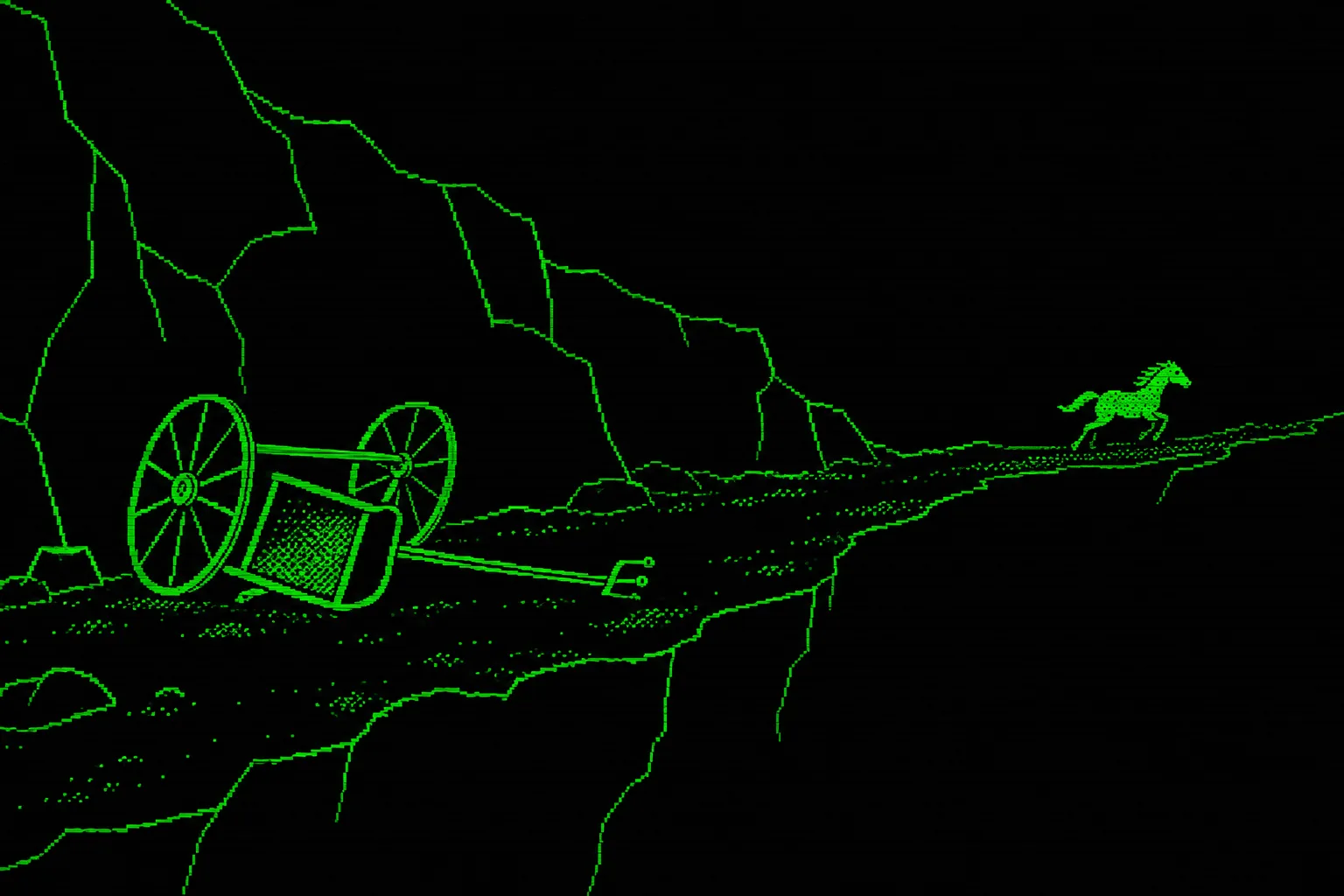
pꜣ k[y] ꜥḥꜥ ḥr mtr{.t} =w r pꜣ tp-r[d]
Another stood telling them what came in what order.
- 109
[pꜣ-n,tj-5] [ḥ]r ḏd m-jri̯ sḫꜣḫj
The fifth said, “Don’t hurry.
- 110
wꜣḥ jb =[tn] r =sst m jri̯ m[n]ḫ[,t]
Take your time over it, like a man who does fine work.”
- 111
pꜣ-n,tj-6 ḥn(.w) r ḫꜣi̯.y pꜣ [mr]
The sixth hurried off to measure the canal.
Note · Line 111
Surveying earthworks and reckoning army rations were both part of a scribe’s training. - 112
[⸮jfd?] =f sw m mḥ.pl r ḏi̯.t šd.tw =f
He multiplied its measure in cubits by four to have it dug out.
- 113
pꜣ-n,tj-7 ꜥḥꜥ r-gs ⸮ḥr? ⸮ꜥ? šzp pꜣ ḏi̯w n nꜣ r(m)ṯ-mšꜥ
The seventh stands by to receive the soldiers’ rations.
- 114
nꜣy =k 〈wp,t.pl〉 tḫtḫ
Your entries are so jumbled
- 115
bw jri̯ =w wḏꜥ =w
no one can tell them apart.
- 116
jri̯.y H̱r,j,pl≡f sḫ.y
Kheruef will play deaf.
- 117
bw jri̯ =f sḏm
He can’t hear a thing.
- 118
ꜥrq =f n ⸢Pt⸣ḥ r-ḏd
He swore by Ptah:
- 119
bn ḏi̯ =j ḏi̯ =f ḫt ḥr tꜣ šnw,t
“I won’t let him put the seal on the granary.”
Note · Line 119
Sealing the granary would mark the issue of grain as complete. - 120
sw pri̯.y ḥḏn
He went out in a temper.
- 121
tw =tw gꜣb.w m jḫ n(,j) ḥqꜣ(,t)
By what fraction of a heqat is one shortchanged?
Note · Line 121
A heqat was a grain measure of ten hin. Four heqat made an oipe. - 122
pꜣ ḫb~pꜣ 〈5〉 hꜣnw jm =st r tnw j[p,t]
The loss is five hin out of every oipe.
- 123
m =kj mntk zẖꜣ,w-sḥn{t}-mšꜥ
Look, you are the very scribe who writes the army’s orders.
- 124
sḏm =tw m j:ḏd.ṱ =k nn wni̯.ṱ =k
People heed what you say; no one passes you by.
- 125
tw =k sšsꜣw.ṱ m zẖꜣ,w
You are a seasoned scribe.
- 126
nn ḫm =k
There is nothing you do not know.
- 127
tꜣ[y] =k šꜥ,t sẖr-[ꜥ].ṱ r ḏi̯.t ⸢sḏm⸣.tw =st
Yet your letter is too poor to be given a hearing.
- 128
={k} 〈gꜣbi̯〉 =〈k〉 〈tw〉 m pꜣy =k [ḏmꜥ] qb
You have shortchanged yourself with that tepid sheet of papyrus.
- 129
bsy =k rḫ.ṱ ẖrj-ḥꜣ,t 〈r〉-ḏd bn nfr,t ⸢tm⸣ =k [ḏ]i̯.t jni̯.tw =st r-ḏd
If only you had known beforehand that it was no good! You would not have had it delivered, for
- 130
nꜣ bw~gꜣ[.pl] [wršu̯] =s[t] ḥr wꜣ~tm~tj ḥr-tp ḏbꜥ.pl =j mj mḏꜣ,t r mn,tj r ḫḫ.wj n(.j) m(ḥ)r
the charms cling to my fingers all day like a scroll against pain at a sick man’s throat.
Note · Line 130
A healing spell could be written on a small piece of papyrus and worn around the neck. Hori claims protection against his correspondent’s curses. - 131
wršu̯ =st m ⸮q?[__] =[j]
They spend the day on my shoulder.
- 132
bw jri̯ ={j} =〈st〉 bgꜣ snḥ.tj m pꜣ ḥsꜣ.w n pꜣy =j ḫtm.w
They never tire of being tied with the cord of my seal.
- 133
ḫsf =j n =k m mj,tt =st ḥr [⸮ꜥw,tj?] m-mꜣw,t r-šꜣꜥ-m qꜥḥ tp,tj r pꜣ qꜣ~[j]rʾ jw =st mḥ.tj m tp(,j)w~jrʾ.pl n.w sp,t〈j〉 =j n(,j) [q]mꜣm.n =j wꜥ.k(wj) ḥr tp =j nn ky ḥnꜥ =j
I shall answer you in kind on a fresh scroll. From the first sheet to the very end it is full of words from my lips, words I composed alone, out of my own head, with no one beside me.
- 134
wꜣḥ kꜣ n(,j) {Ḏdw-}Ḏḥw,tj ⸢jri̯⸣.n =j ḥr tp =j jw bw ꜥš =j n ⸢zẖꜣ,w⸣ ⸢r⸣ ḏi̯.t mtr{.t} =f
As surely as the ka of Thoth endures, I composed it myself. I called in no scribe to teach me.
Note · Line 134
The ka was the life force. Hori swears by that of Thoth, the god of writing. - 135
jw =j r ḏi̯.t n =k ḥꜣ,w ⸢m⸣ 20 n sp wḥm =j n =k j:ḏd.ṱ =k sp 〈nb〉 r s,t =f 14 n sd,t 〈ḥr〉 tꜣy =k šꜥ,t
I shall give you twenty cases more and repeat back to you what you said in the fourteen sections of your letter, each case in its place.
- 136
j:mḥ [...] j:mḥ [ḏr,t] =[j] [m] [ḏꜣ]~mꜣꜥ ḏd =⸢j⸣ ⸢n⸣ =⸢k⸣ qnw
Fill … Fill my hand with a sheet of papyrus, and I shall have much to tell you.
- 137
ṯtf =j n =k stp,w 〈mj〉 ḥwi̯ ḥꜥpj nw,yt bqꜣ(.t) [m] ꜣḫ,t jṯi̯.n =f jꜣd,t.pl [j]w mdw,t.pl =[j] nb(.t) bnr nḏm m ḏd
I shall pour out choice words for you as the Nile pours forth its bright waters in the flood season, once it has claimed the pastures. All my words are sweet, a pleasure to speak.
- 138
bn j:jri̯ =j mj-qd =k m-ḏr ⸮šni̯.y? =⸢k⸣
I shall not do as you did when you put your questions.
- 139
[š]ꜣꜥ =kwj r =j m sḥwrj m sp tp,tj
You opened your very first case with a curse against me.
- 140
bw nḏ =k ḫr,ṱ =j m ḥꜣ,t n(,j) šꜥ,t =k
You did not ask how I fared at the start of your letter.
- 141
wꜣww r =[j] j:[ḏd].t =k
May the things you said stay far from me!
- 142
nn ḫꜥ~mw =sn jw nṯr =j Ḏḥw,tj m 〈j〉km ḥꜣ =j
They will not come near me while my god Thoth stands as a shield behind me.
- 143
wꜣḥ kꜣ n(,j) Ptḥ nb-mꜣꜥ,t bn ḏ⸢d⸣ =〈j〉 [t]k⸢n⸣ =st
As surely as the ka of Ptah, lord of truth, endures, I will not say they have come near.
- 144
m =kj jri̯ j:ḏd.t =k st wꜣww r ḫpr.w
Look, do the things you spoke of! They are about to come to pass.
- 145
jri̯ p[r]i̯ nb m rʾ =k r ḫ{t}f〈t〉(,j) nb
Turn everything that came out of your mouth against every enemy!
- 146
={j} 〈qrs.tw〉 =〈j〉 m ꜣbw[dw] [m] s,t n.t jt =j
I shall be buried at Abydos, in my father’s resting place.
- 147
jnk zꜣ mꜣꜥ,t m nʾ,t nb(.t)
I am a son of truth in every town.
- 148
qrs.⸢tw⸣ =⸮⸢j⸣? m wnḏ,w(t) =〈j〉 m ḏw tꜣ-ḏsr
I shall be buried among my own people in the mountain of the sacred land.
- 149
btꜣ.w =j ḥr jb =k m jḫ
What, to your mind, is my offense?
- 150
kꜣ ṯꜣi̯.y =k sw
Then condemn it!
- 151
sḫꜣ =〈j〉 tw n mꜥw m 〈s〉ḫꜣ bjn
To whom have I ever recounted a bad memory of you?
Note · Line 151
Hori, a scribe, is answering a fellow scribe who has called both his strength and his skill into question. - 152
j:jri̯ =j n =k sḫy mj sḏꜣ,y-ḥr ḫpr.tj m sḫ{s}〈m〉ḫ-jb n ḥr-nb
When I put together a bundle of scrolls for your amusement, it ends up amusing everyone.
- 153
wḥm =k r-ḏd zꜣ(w)-ꜥ jw,t[j] pḥ,tj
You’ve said it again and again: “You weakling! Not a bit of strength in those arms!”
- 154
jri̯.y =k sẖrj-ꜥ =j m zẖꜣ,w
You’ve made light of me as a scribe.
- 155
ḏd =kw[j] bw rḫ =[f]
You said, “He knows nothing.”
- 156
n[n] ⸢jri̯⸣.[y] =j jꜣd,t r-gs =k [n] swnwn =((k)) r-ḏd [jri̯] =[k] [n] =[j] mw〈n〉f j[w] ky ḥr (j)ꜣdj =j
Have I ever spent a moment at your side flattering you, saying, “You must come to my aid,” while someone else was tormenting me?
- 157
wḏ nb nḫt [rn] =f w[sr] hꜣp.w.pl =f mn r(w)d mj Ḏḥw,tj
A decree of the victorious lord, whose name is mighty, whose laws endure and stand firm like those of Thoth:
Note · Line 157
Thoth is the god of writing and the patron of scribes. - 158
jnk psd.wy n h[ꜣ,w] =j nb
“I am the mainstay of everyone around me.”
- 159
ḏd =k hꜣi̯.y =k r =j ꜥn 〈ḥr〉 ⸮ḏ[r,t]? =k jw =j rḫ.k(wj) r(m)ṯ qn.w jw,tj pḥ,tj zꜣw-ꜥ.pl ⸢gꜣ⸣~bw~gꜣ~bw~y.pl jw,tj ḫpš =st jw =w swsr m pr =w m ḥw kꜣ
Again, of your own accord, you said of me, “You’ll fall!” Yet I know many who have no strength, weak-armed men and lame men with no power in their arms, who have food and provisions in plenty in their homes.
- 160
nn ḏd{t} =w ḥꜣ~n,pl~rʾ n n,[tj]-⸢nb⸣
They need never say “If only!” for want of anything.
- 161
mj sḏd =j n =k qꜣj n(,j) zẖꜣ,w Rʾy [...] ḏd n =f ((pꜣ)) mꜣq,w n tꜣ šnw,t
Come, let me tell you what the scribe Ray was like … the one they called “the Roasting Spit of the Granary.”
- 162
bw qmꜣm =f bw sḫsḫ =f n-ḏr ms(w),t =f
From the day he was born, he neither stirred nor ran.
- 163
bw,t =f [...] bw{t}〈i̯〉 =f kꜣ,t-pri̯-ꜥ
What he loathed was …; he loathed hard labor.
- 164
n{n} rḫ =f sw
He could not do it.
- 165
sw ḥtp 〈ḥr〉 jmn,tt jw ḥꜥ,t.pl =f wḏꜣ jw bn jni̯ sw ḥr,y(t) n(.t) nṯr-nfr
He rests in the West, his limbs intact, and the terror of the Perfect God will not come to claim him.
Note · Line 165
The West, where the sun sets, is the realm of the dead. “The Perfect God” is a title of the king. - 166
tw =k swgꜣ.ṱ r Kꜣ~sꜣ pꜣ ḥsb-jḥ,pl
You’re more foolish than Kasa the cattle counter.
- 167
ḥpt{ḫrw} jw ḏd =j n =k q[ꜣ]j =f tm =k ṯꜣ~n,pl~rʾ~ḥw
Hurry along, now that I’ve told you what he was like, so you won’t scoff.
- 168
nn bw sḏm =k rn n Jmn-wꜣḥ-sw wꜥ-n(,j) jꜣw n [pꜣ] pr-ḥḏ
Have you never heard the name of Amenwahsu, an old hand at the treasury?
- 169
jri̯.y =f [ꜥḥꜥ,w] =f m ꜥnḫ jw =f m r(w)d,ww m-ẖnw tꜣ ḥmw,t r-gs pꜣ ḫpš
He lived out his days as an inspector in the workshop beside the weapons forge.
- 170
m[j] 〈sḏd〉 =〈j〉 [n] =k Nḫt p(ꜣ)-n ꜥ[,t]-jrp
Come, let me tell you about Nakht, the man from the wine cellar.
- 171
ꜣḫ sw n =k r n[n] 10 n(,j) sp
He’s ten times as much use to you as the others.
- 172
ḏd =j n =k Pꜣ-ḥr,j-pḏ,t wn.w m Jwnw
Let me name another for you: Paheripedjet, who lived in Heliopolis.
- 173
m[ntf] [jꜣw] [n(,j)] pr-nswt ꜥnḫ-(w)ḏꜣ-s(nb)
He is an old hand at the royal palace—life, prosperity, health!
Note · Line 173
The three wishes are a customary blessing at the mention of the king or his household. - 174
šrj.w ⸢sw⸣ 〈r〉 my ꜥꜣ sw r g⸢fj⸣ jw =f m-šs m pr =f ḫr[,t] =[f] m-ꜥ =f
He’s smaller than a tomcat and bigger than a little monkey, yet he fares splendidly in his own house, with his belongings to hand.
- 175
wnn =k dj m pꜣ jḥ [r] ⸮[š]w(,t)? ⸮zp-2?
You’ll be there in the stable till you’re quite dried out.
- 176
sḏm =k rn n(,j) Ky-zp-⸢2⸣ ⸢tꜣ⸣ šꜣ~ḥw~qꜣ{~jr}
You’ve heard the name of Kiki, the Dust Mote?
- 177
j:šm{.j} =f ḥr jwtn nn 〈sjꜣ〉.tw =f šꜣ~jr〈ʾ〉~fj [m] ḥbs,w bꜣ~nd,w ḏrjw
He walks the earth unnoticed, his clothes all in disarray, though he’s wrapped up tight.
- 178
jr ptrj =k sw m rwhꜣ n pꜣ kk,w[j] ḫr ḏd.w =k ꜣpd,w r =f jw =f m snnj.y
If you see him in the dark of evening, you’ll say, “A bird!” as he goes by.
- 179
jm[m] sw r pꜣ ꜣwsw ptrj =k dns{mn} =f
Put him on the scales and see how heavy he is.
- 180
pri̯ =f n =k m 20 n(,j) dbn wjꜣ-tw jsj.y〈t〉
You’ll find he comes to twenty deben, not counting the rags.
Note · Line 180
Twenty deben weighed about four pounds (1. 8 kilograms). - 181
jr nfj =k r-gs =f jw =f m snnj j:jri̯ =f hꜣi̯.y wꜣ.ww mj gꜣb.w ḏb(ꜣ).w
If you breathe out beside him as he passes, he’ll land a long way off, like leaves on the wind.
- 182
jr ḏd =j n =k Wꜣḥ p(ꜣ)-n- nꜣ mḏ,wt jw =k r f(ꜣ)j.ṱ =〈j〉 m nbw n(,j) 3 sp
If I mention Wah of the cattle pens to you, you’ll give me my weight in thrice-refined gold.
- 183
⸢ꜥr⸣q.w =j n Nb-Ḫmn,w Nḥm,w-jni̯,yt r-ḏd
I’ll swear by the Lord of Hermopolis and by Nehmetawy:
Note · Line 183
Nehmetawy was his consort there. - 184
mntk nḫ[t]-ꜥ
“You’re a man with a strong arm.
- 185
jw =k r ḥdb =w
You’ll lay them low.”
- 186
ḏi̯.w =k sjp.[t]w =[⸮sn?] ⸮nfꜣ? ḥnꜥ n((n))
Have them put to the test, those over there and these here.
- 187
ḥwi̯.y =j st m qꜥḥ,t =j
I’ll strike them with my shoulder.
- 188
⸮[nn]? ⸮[rw]j? =j ꜥ.wj.du =j
I won’t draw back either arm.
- 189
M-pw pꜣy =j ḫnms ḫm ḏd ={j} =f ptrj wḥꜥ =j nꜣy =k jtn[.w] sq[sn] jri̯.y =j snḏm =w
Mapu, my friend who doesn’t know what he’s saying, look: I’ll untangle those knotty passages of yours. I’ll sweeten them.
Note · Line 189
The name Mapu sounds like the Egyptian question “Who is it?” - 190
tw =k jy.tj [ḥ]n.ṱ m štꜣ.w ꜥ[ꜣ].yw
You’ve come equipped with great mysteries.
- 191
ḏd.w =k n =j [w]ꜥ ⸢ṯ(ꜣ)s⸣ n(,j) Ḥr-ḏi̯ḏi̯≡f
You quoted me a verse of Djedefhor’s,
Note · Line 191
Djedefhor, a son of King Khufu, was remembered as the author of a book of wise instruction. - 192
bw rḫ =k ⸮[(j)n]? n[fr] [m]-rʾ-pw bjn
but you don’t know whether it’s good or bad.
- 193
jw~ṯꜣ ḥw,t r-ḥꜣ,t =f ⸮n{,t}j?-[m] [ḥr-sꜣ] =f
Which stanza comes before it? What comes after it?
- 194
mn[t]k sšsꜣ.w m-ḥꜣ,t jr,j.pl =f
You’re a man of experience, foremost among your fellows.
- 195
sbꜣy,t [šfd.w] ḫt.y.tj ḥr jb =k
The teaching of the scrolls is engraved on your heart.
- 196
sbqꜣ sw ns{,t} =k
Clever, that tongue of yours,
- 197
⸮wsḫ? =⸮{j}? mdw,t.pl =k
and your words range far.
- 198
pri̯ wꜥ ṯ(ꜣ)s m rʾ =k r 3 dbn
A single verse from your mouth outweighs three deben.
Note · Line 198
A deben was a unit of weight, about 91 grams. - 199
ḫꜣꜥ =kwj n =j ḫꜣ~n,pl~rʾ~fj r snd,w =j
You hurled insults at me till I was afraid.
- 200
jr,t.pl =j ḏdṱ ḥr j:jri̯.w =k
I stare with both eyes at what you’ve done.
- 201
tw =j qꜣ~fj.k(wj) m-ḏr ḏd.w =k
I’ve been dumbfounded ever since you said:
- 202
mḏ{w,t}.k[w]j m zẖꜣ,w r p,t r tꜣ r dwꜣ,t
“I’m a scribe whose knowledge runs deep in matters of heaven, earth and the underworld.
- 203
rḫ.k(wj) ḏw,w.pl m dbn m hꜣn
I know the mountains, their weight in deben, their bulk in hin.”
Note · Line 203
A hin was a measure of capacity, a little under half a liter. - 204
pr-mḏꜣ,t ḥꜣp.w
Yet the library is hidden.
- 205
nn ḫfy =f
No one can glimpse it.
- 206
psḏ,ṱ =f jmn.tj wꜣww.tj r [...]
Its Ennead is concealed, far from …
Note · Line 206
An Ennead is a company of nine gods. - 207
j:ḏd n =j rḫ =k
Tell me what you know.
- 208
kꜣ wšb{t} =j n =k
Then I’ll answer you.
- 209
zꜣw tw ={j} [t]kn ḏbꜥ.pl =k m mdw,pl-nṯr
Take care your fingers come nowhere near the god’s words!
- 210
j~nn.pl ẖr,j-ꜥ [...] =⸮[s]n? ḥr dndn mj snḏm [...] r ḥb{n}〈ꜥ〉 z[nnj]
If an assistant …, they rage as though … were settling down to play senet.
Note · Line 210
Senet was a board game played on thirty squares. - 211
ḏd.w =k n =j bn tw =k m zẖꜣ,w
You told me, “You are no scribe.
Note · Line 211
Hori opens by quoting his fellow scribe Amenemope’s taunt. - 212
bn tw =k m wꜥ[w]
You are no soldier.
- 213
jri̯.y{.tw} =k 〈tw〉 m [...] ḥr,j ḏs =k
You set yourself up as chief …,
- 214
bn tw =k ḥr ꜥw,tj
yet you are not on the roll.”
- 215
ḫr mntk zẖꜣ,w-n-nsw {sdn}〈spẖr〉 mšꜥ
But you are a royal scribe who keeps the army rolls.
Note · Line 215
Hori turns the taunt back on Amenemope: the very records he keeps can settle the question. - 216
[...] nb n.w p,t pwgꜣ m-bꜣḥ =k[wj]
All the … of heaven lie spread out before you.
- 217
ḥn =k r tꜣ s,t [⸮n?] [⸮nꜣ?] zẖꜣ,w.pl [...] [⸮zꜣu̯?]-zẖꜣ,w.pl ḏi̯ =w ptrj =k pꜣ pds n jm[,j-rn≡f]
Hurry to the archives … the keepers of the records will show you the chest that holds the list of names.
- 218
〈jr〉 ṯꜣi̯ =k [...] 〈j〉:ṯꜣi̯ =k ḥtp n Ḥw~jrʾ~šꜣ wn =f n =k ꜣs [⸮zp-2?] [pꜣ]y =j smj
If you take …, take a bouquet for Heresh, and he will open my file for you at once.
- 219
gmi̯ =k rn =j ḥr ꜥw,tj m w〈ꜥ,w〉 m pꜣ-jḥ-ꜥꜣ-n-{{Rꜥw}}-Sst-sw-Mri̯-Jmn-ꜥnḫ-(w)ḏꜣ-s(nb)
You will find my name on the roll as a soldier in the Great Stable of Sesu-Meriamun, life, prosperity and health!
Note · Line 219
Sesu is a short form of Ramesses II’s name; Meriamun means “beloved of Amun.” The words that follow wish the king well. - 220
mtr.wy =k ḥr pꜣ sḥn{,t} n pꜣ jḥ jw ḏꜣ~rʾ~wj m zẖꜣ,w ḥr rn =j
You can check the stable orders: an extra ration is entered under my name.
- 221
kꜣ jri̯.y =j w〈ꜥ,w〉 [...] ḫr jri̯.y =j ⸮zẖꜣ,w-dnj,t?
So I serve as a soldier … and I serve as a ration scribe.
- 222
kꜣ jri̯.y =j zẖꜣ,w
So I serve as a scribe.
- 223
nn nḫn n ḏꜣm,w =j sṯnj{t} =f r ḥꜥ{n}〈,w〉 =j
No lad of my generation stands above me.
- 224
nḏnḏ z m-ꜥ mw,t =f [...] ḥr,j =f
Ask a man’s mother about him … his superior.
- 225
jḥ{t} n nꜣy =j ḥw~tjw[.pl] ḏd{t} =w n =k smj =j
Off to my commanders, then! Let them give you their report on me.
- 226
wḥm =k ḏd r =j [...] n =j hꜣ-〈rw〉 qꜣ r-ḥꜣ,t.ṱ =k
Again you spoke against me … to me: “A high wooded mountain lies before you.
- 227
ꜥq tw m hꜣ{b}-〈rw〉 kh[ꜣ] nn rḫ =k sw
Go into that storm-swept mountain forest, though you do not know it!”
- 228
ꜥq =k jm r-ḥꜣ,t =j
You went in ahead of me.
- 229
jyi̯.n =j ḥr-sꜣ =k
I came after you.
- 230
hꜣn bw-pw.y =k ẖnj n =f jw bw ⸢tkn⸣ =⸢k⸣ ⸢s⸣w
If only you had not ventured into a place you never go near!
- 231
jr gmi̯ =k ẖnw =f jw =j ḫt[ḫt].kwj zꜣw tw r ḏi̯.t ḏr,t =j r šd =j r-bw~npl~rʾ
If you find your way to its heart when I have fallen back, mind you don’t lend me a hand to pull me out!
- 232
ḏd[.w] =k n =j bn tw =k m zẖꜣ,w jwnꜣ
You told me, “You are no scribe at all.
- 233
rn šw qb
An empty name, and a cold one.
- 234
ṯꜣi̯.y =k gstj m-ḏꜣjw,t jw bw dn =kwj
You took up the palette without a right to it: you were never appointed.”
Note · Line 234
A scribe’s palette held his ink and brushes; to take it up was to claim the work of a scribe. - 235
jnk ḫꜣ~jn~jw [⸮n?] [⸮gꜣw?] sbꜣ,y
So I am a fool for want of a teacher.
- 236
j:ḏd =j [...] j:ḏd 〈n〉 =j nꜣ-n ꜥnꜥn [...] ⸢rḫ⸣ pnq =〈w〉 ={j} [...] pnq.w =j
If I say …, tell me the tangled points … how to exhaust them … exhaust me.
- 237
nḥb{t} =k tw r =j ꜥn m ky sp
Once more you have put yourself in harness against me.
- 238
ṯs.pl =k sꜥḏꜣ =w
Your verses twist the truth.
- 239
bn jw =tw r sḏm =w
No one will listen to them.
- 240
jṯꜣ =tw nꜣy =k šꜥ,wt m-bꜣḥ Jni̯-ḥr,t wḏꜥ =f n =n pꜣ mꜣꜥ{,t} [...] mꜣꜥ,t〈j〉 tm =k qnd
Let your letters be brought before Onuris, that he may judge which of us is in the right … the just man, and that you may cease to rage.
Note · Line 240
Onuris is a warrior god. Hori proposes that the letters themselves be laid before him as evidence. - 241
ky ⸢ḏd⸣ m =ki̯ jyi̯ =k 〈mḥ〉 =k wj m jꜣw,t.ṱ =k
Another matter. Look, you’ve come to fill my ears with talk of your office!
Note · Line 241
He puts that boast to the test with problems a military scribe should be able to solve. - 242
ḏi̯ =j rḫ =k sḫr,w =k m-ḏr ḏd.w =k
I’ll show you what you’re like when you say:
- 243
jnk pꜣ zẖꜣ,w-sḥn-n-mnf,yt
“I’m the one who writes the orders for the infantry.”
- 244
ḏi̯ḏi̯ n =k wꜥ š r šd =f
You were given a lake to dig.
- 245
jyi̯{t} =k ⸢n⸣ =⸢j⸣ [r] nḏnḏ pꜣ ḏi̯.t ⸮ḏi̯(.y)? n nꜣ r(m)ṯ.pl-mšꜥ.pl
Yet you came to me to ask how much grain to issue to the soldiers.
- 246
ḏd.w =k n =j ḥ{b}s〈b〉 sw ḫꜣꜥ =kwj jꜣw,t.ṱ =k
“Work it out,” you told me, and left your duties to me.
- 247
[...] sbꜣ,yt =k r jri̯.t =s[t] hꜣi̯.y.ṱ ⸢ḥr⸣ ⸢nḥ⸣b,t =j
… teaching you how to do it has fallen on my neck.
Note · Line 247
The image is of a yoke: Hori has to bear the weight of teaching the man who claims to know the work. - 248
mj ḏd =j n =k ḥꜣ,w-ḥr j:ḏd.t.ṱ =k
Come, let me tell you more than you’ve told me.
- 249
ḏi̯ =j wn.w =k ḥꜣ~n,pl~rʾ~g[ꜣ].ṱ
I’ll make you lose heart.
- 250
wpi̯.y =j n =k sḥn n nb =k ꜥnḫ-(w)ḏꜣ-s(nb) mj mntk pꜣy =f zẖꜣ,w-nsw
I’ll lay out for you an order from your lord—may he live, prosper and be in health—since you are his royal scribe.
- 251
zbi̯.tw =k ẖr,j mnw.pl wr.pl n Ḥr,w nb-tꜣ,wj
You’ve been sent out in charge of great statues for Horus, Lord of the Two Lands.
Note · Line 251
Here Horus is the king. The Two Lands are Upper and Lower Egypt. - 252
m =ki̯ mntk pꜣ zẖꜣ,w sšsꜣ.w n,tj r-ḥꜣ,t mn〈f〉y,(t)
Look, you’re the seasoned scribe at the head of the infantry.
- 253
jri̯.w stꜣ.w n mḥ 730 wsḫ,t 〈n〉 mḥ 55 n 120 n rʾ~gꜣ~tj.pl 〈mḥ〉 m gꜣšj ḥr sꜣy m ḫy 〈n〉 mḥ 60 ḥr ḏꜣḏꜣ =f ḥr,j-{nw}〈jb〉 =f n mḥ 30 m j:sp 〈n〉 mḥ 15 tꜣy =f ns,t n mḥ 5
A ramp has been laid out, 730 cubits long and 55 cubits wide, with 120 compartments filled with reeds over beams. It rises 60 cubits at its head and 30 at its midpoint, with a slope of 15 cubits and a foundation of 5 cubits.
Note · Line 253
The ramp is for hauling the statues. The compartments matter because their filling takes the place of brick. A royal cubit was about 52 centimetres. - 254
jri̯.w nḏnḏ tꜣy =f ḫr,t db,t m-dj (j)m(,j)-r(ʾ)-mšꜥ
The general has been asked how many bricks the ramp will take.
- 255
nꜣ zẖꜣ,w.pl twt(.w) r-ḏr =w n gꜣ,w rḫ jm =sn
The scribes have all gathered for want of anyone among them who knows.
- 256
〈mḥ〉 =w jb =w jm =k r-ḏr =[w] r-ḏd
They’ve all put their trust in you, saying:
- 257
mntk zẖꜣ,w sšsꜣ.w
“You’re a seasoned scribe.
- 258
pꜣy =j ḫnms wḏꜥ n =n ꜣs
My friend, settle this for us, and be quick!”
- 259
m =ki̯ rn =kwj pri̯.y
Look, you’ve made a name for yourself.
- 260
gmi̯ =tw wꜥ m-ẖn tꜣ s,t r sꜥꜣi̯ ky 30
In this place one man has been found to make a name for thirty others.
- 261
m-jri̯ ḏi̯.t ḏd =tw {j}〈r〉 =k wn nkt m ḫm =k
Don’t let anyone say of you that there’s something you don’t know.
- 262
wšb{t} n =n tꜣy =f ḫr,t db,t
Give us your answer: how many bricks will it take?
- 263
ptrj nꜣy =f 〈ḫꜣy.pl〉 m-bꜣḥ =kwj
Look, its measurements are before you:
- 264
1-nb m nꜣy =f rʾ~gꜣ~tj[.pl] n mḥ 30 w〈s〉ḫ,t 〈n〉 mḥ 7
Each of its compartments is 30 cubits long and 7 cubits wide.
- 265
hꜣy Mꜥ-pw pꜣ ⸢zẖꜣ,w⸣ rs-tp n,tj r-ḥꜣ,t pꜣ mšꜥ sṯni̯ ꜥḥꜥ r rw,tj-wr,tj ꜥni̯ ḫꜣb.w ẖr,j sšd
Ho, Mapu, watchful scribe at the head of the army, so distinguished at your post by the great double gate, so graceful when you bow beneath the Window of Appearance!
Note · Line 265
The king showed himself to his subjects at the Window of Appearance. The name Mapu may also suggest “whoever you are.” - 266
wḫ[ꜣ] jwi̯.t m-[dj] pꜣ rpꜥ,t r r(ʾ)-ꜥ Kꜣ r snḏm jb n Ḥr,w-nbw r 〈stwh〉 mꜣj nšn.ṱ r-ḏd
A dispatch from the prince has reached the edge of the Ka Canal to gladden the heart of the Golden Horus and soothe the raging lion. It reads:
Note · Line 266
The Golden Horus and the raging lion are both the king. - 267
jri̯.w tḫn m-mꜣw,t ḫti̯.y ḥr rn ḥm =f ꜥnḫ-(w)ḏꜣ-s(nb) n mḥ 110 n jwn-n-fnḏ
“A new obelisk has been made, engraved with the name of His Majesty—may he live, prosper and be in health. It measures 110 cubits along its edge.
- 268
tꜣy =f db,yt n mḥ 10
Its pedestal measures 10 cubits.
- 269
pꜣ šn,w n pḥ,wj =f ḥr jri̯(.t) mḥ 7 ḥr wꜣ,t.ṱ =f nb.t
Around its lower end it measures 7 cubits on each side.
- 270
jwi̯{.ṱ} =f m j:sp r-ꜥ tp m mḥ 1 〈⸮ḏbꜥ?〉 〈⸮1?〉
It tapers by one cubit and one fingerbreadth from there to the tip.”
- 271
tꜣy =f brbr(,t) n mḥ 1 m ḫy
Its pyramidion is one cubit high.
Note · Line 271
The pyramidion is the small pyramid that crowns an obelisk. - 272
pꜣy =f ḥwy n ḏbꜥ 2
Its cap measures two fingerbreadths.
- 273
dmḏ.y rʾ =st r jri̯[.t] st m dnj,t.pl
Add up the parts and divide the work into shares.
- 274
ḏi̯.w =k z nb ẖrj jtḥ =w wḏi̯ =w r Ḏw-dš(r)
Put every man to work hauling them, so they may set out for Gebel el-Ahmar.
Note · Line 274
Gebel el-Ahmar, the “Red Mountain,” was a quartzite quarry near present-day Cairo. - 275
m =ki̯ swni̯ =tw n =s[n]
Look, people have been waiting for them.
- 276
[jm]m wꜣ,t n pꜣ rpꜥ,t
Make way for the prince!
- 277
ms.w jtn ẖn{t}(.w)
The child of the sun disk has drawn near.
- 278
wḏꜥ n =n tꜣ ḫr,t r(m)ṯ.pl n,tj jw =w r-ḥꜣ,t.ṱ =[f]
Work out for us how many men he is to command.
- 279
⸢m⸣-jri̯ ḏi̯.t wḥm =tw hꜣb j[w] pꜣ mnw{.pl} ⸢m⸣ tꜣ ẖꜣ[,t]
Do not make anyone send word a second time while the monument is in the quarry.
- 280
wšb{t} ꜣs
Answer quickly!
- 281
jmi̯ =k jntnt
Do not delay.
- 282
m =ki̯ mntk [w]⸢ḫꜣ⸣ḫ st n =k
Look, it was you who chose them for yourself.
- 283
j:mzi̯ tw n-ḥr =k
Get moving! Forward!
- 284
m =ki̯ mzi̯{.tw} =k 〈tw〉
Mind you, you are to get moving.
- 285
ḏi̯ =j ḫntš jb =k
I will gladden your heart.
- 286
wn =j ḥr [...] ẖrj-ḥꜣ,t mj-qd =k
At first I was … just like you.
- 287
ṯsi̯ =n sk,y.pl [n]-sp jw jb =j jp{t} ={j} ḏbꜥ.pl =j ḥr sḏm sšsꜣ.w =〈j〉 mj tnm =kwj
Let us muster the troops together. My heart has stood the test, my fingers obey: I know my way as surely as you lose yours.
Note · Line 287
Hori casts his contest with a fellow scribe as a battle. The fingers that obey him are his writing fingers. - 288
j:〈m〉zi̯ tw
Get moving!
- 289
m-jri̯ {ṯ}〈r〉mi̯{t}
Do not weep.
- 290
pꜣy =k ꜥw~ḏꜣ~jrʾ ḥꜣ =k
Your helper stands behind you.
- 291
ḏi̯ =j ḏd =k wn.w zẖꜣ,w-nsw m-dj Ḥr,w Kꜣ-nḫt
I will make you say, “Horus, the Strong Bull, has a royal scribe.”
Note · Line 291
Horus is the king in his divine office; “Strong Bull” is part of his royal title. The scribe Hori means is himself. - 292
s[ḥ]n =kwj r(m)ṯ.pl r jri̯.t pds,w r ḏi̯.t šꜥ,wt.pl r-r〈ʾ〉 =sn
Set men to making chests to hold letters.
- 293
wn.w =j j:hꜣb n =k m hꜣ~rʾ~ṯꜣ~ṯꜣ
I used to send you letters in secret.
- 294
m =ki̯ mntk wḫꜣḫ sn n =k
Look, it was you who chose them for yourself.
- 295
ḏi̯.w =k ꜥ.wj =〈j〉 ḏbꜥ.pl =j nsns mj kꜣ m ḥꜣb.pl r tnw ḥꜣb.pl n.t {f}〈ḏ,t〉
You have left both my hands and my fingers torn raw, like a bull at a feast, at every feast for all eternity.
- 296
ḏd =tw n =k sšwi̯ pꜣ mẖr.j n,tj ꜣtp(.w) m šꜥ,t.pl ẖr,j pꜣ mnw.pl n nb =k ꜥnḫ-(w)ḏꜣ-s(nb) jni̯.y{t} m Ḏw-dš(r)
You were told, “Empty the storehouse packed with sand beneath the statue of your lord—life, prosperity, health!—brought from Gebel el-Ahmar.”
Note · Line 296
The sand supports the statue. Letting it out a little at a time allows the stone to be lowered gradually. - 297
sw ḥr jri̯.t mḥ 30 pd(.w) ḥr jwtn.pl m w〈s〉ḫ,t 〈n〉 mḥ 20 snnj =〈f〉 m ⸮100? n šmm.pl 〈mḥ〉 m šꜥ,t.pl n.w wḏb.w
Stretched out on the ground, the statue measures thirty cubits long and twenty cubits across. It extends past a hundred chambers filled with sand from the riverbank.
- 298
nꜣ ḏꜣy.pl n nꜣ[y] =[⸮f?] šmm.pl m wsḫ,t (n) mḥ ⸮8? 4
The partition walls of its chambers are twelve cubits wide.
- 299
st m ḫy (n) mḥ 50 r-ḏr,w
Their total height is fifty cubits.
- 300
tw~ḥw m nꜣy =sn sgꜣ.ww.pl
There are discharge valves in their casings.
- 301
ḏi̯ḏi̯ m ḥr =k r rḫ n,tj jw =f m-bꜣḥ [...]
The task set before you is to find out what stands before …
Note · Line 301
Here he asks him to reckon the labor a job will take. - 302
jri̯ wr z 〈r〉 ḫmꜥ =f m 6 wnw,t.pl
How many men will tear it down in six hours?
- 303
ꜥqꜣ.y ḥꜣ,tj =w šrjw jb =w r ḫmꜥ.w =f jw bw jyi̯〈.t〉 ꜥḥꜥ,y
Their hearts are willing, but they lack the heart to tear it down before noon.
- 304
ḏi̯ =k srf n pꜣ mšꜥ〈.pl〉 šzp =w pꜣy =sn 〈šꜥ,yt〉
Give the troops a rest so they can receive their cakes.
- 305
smn =tw pꜣ mnw ḥr s,t.ṱ =f jb =tw r ptrj =f ꜥn(.w)
Once the statue is set in its place, they will want to see it in all its beauty.
- 306
pꜣ zẖꜣ,w spd-〈ḥr〉 wḥꜥ jb n〈n〉 ḫm.n =f rsj
O sharp-eyed scribe, discerning of heart—there is nothing he does not know!—
- 307
tkꜣ.w m kk.wj r-ḥꜣ,t mn〈f〉y,t.pl mtw =f sḥḏ n =sn
a torch in the dark at the head of the infantry, he gives them light.
- 308
tw =k z〈b〉i̯.ṱ m wpw.t r 〈Ḏ〉ꜣ~hꜣ~{nꜣ} r-ḥꜣ,t mšꜥ.pl nḫt r ptpt nfj bšd.pl ḏd =tw 〈n〉 =w Nꜣ~ꜥꜣ~rw~nꜣ.pl
You have been sent on a mission to Djahi at the head of a victorious army to trample those rebels they call the Naʿaruna.
Note · Line 308
Djahi lay in the southern Levant. Hori now puts Amenemope in command of an army he must feed on the march. - 309
pḏ,t.pl mšꜥ.pl n,tj r-ḥꜣ,t.ṱ =k ḥr jri̯(.t) 1900 Šꜣ~jrʾ~dꜣ~nꜣ.pl 520 Qꜣ~hꜣ~q.pl 1600 Mꜥ~šꜣ~wꜣ~šꜣ.pl _ Nḥsy.pl 880
The army units under your command number 1,900 men; the Sherden, 520; the Qeheq, 1,600; the Meshwesh, …; the Nubians, 880.
Note · Line 309
The surviving figures add up to 4,900, leaving 100 Meshwesh if the stated total is right. - 310
dmḏ 5000 r-ḏr,w wjꜣ-tw nꜣy =sn ḥw~tjw.pl
Total: 5,000 in all, not counting their commanders.
- 311
jni̯.y{t} n =k šꜣ~jrʾ~mꜥ~tj r-ḥꜣ,t.ṱ =k ꜥq.w.pl jꜣw,t.pl jrp.w.pl
A peace offering has been brought for you and lies before you: bread, sheep and goats, and wine.
- 312
tꜣ jp,t r(m)ṯ.pl ꜥšꜣ.tj r =k
The head count is too much for you,
- 313
ḫr pꜣ nkt šrj.w r-rʾ =sn
and the provisions are too scant for them:
- 314
kꜣ~mꜥ~ḥw bnr 300 jw~pꜣ~tj 1800 ꜥnḫ.pl šbn 120 jrp.w.pl 30
300 sweet kemah cakes, 1,800 ipet biscuits, 120 head of sheep and goats, 30 jars of wine.
- 315
pꜣ mšꜥ.pl ꜥšꜣ
The troops are many.
- 316
pꜣ nkt sẖrj-ꜥ mj nꜣ ṯꜣi̯ =k jm =[s]n
The provisions are scant, and so is what you took from them.
- 317
šzp =k st wꜣḥ m pꜣ j:hꜣy{t.pl}
You have received the supplies; they lie in camp.
- 318
mnfy,t ḥr(.tj) grg(.tj)
The infantry stands ready and equipped.
- 319
jri̯ st m dnj,t.pl ꜣs
Quick, divide the supplies into rations!
- 320
p(ꜣ)-n z nb r ḏr,t =f
Each man’s share into his own hand.
- 321
nꜣ 〈šꜣsw.pl〉 ḥr nwi̯ m-ṯꜣw,t
The Shasu nomads are watching for a chance to steal.
- 322
ṯw~pꜣ~jrʾ y~dj~ꜥꜣ mtr,t jwi̯(.w)
O wise scribe, noon has come.
Note · Line 322
Hori slips into a Semitic language to say “wise scribe,” a flourish suited to the foreign posting. - 323
pꜣ j:hꜣy{t.pl} šm
The camp is sweltering.
- 324
⸮ḏ〈d〉? =⸮tw? nw n fꜣi̯
The word has gone out: “Time to break camp!”
- 325
m-ḏy.t qnd pꜣ ṯ(ꜣ)z-pḏ,t
Don’t let the troop commander lose his temper.
- 326
qnw mꜥ~šꜥ r-ḥꜣ,t =n jnn
It is we who have all those marches ahead of us.
- 327
jḫ ⸮[b]⸢n⸣? ꜥq,w.pl m-k[f]ꜣ.w
What do you mean, “No bread at all”?
- 328
tꜣy =n sḏr,t wꜣ.ww.tj
Our camp for the night is still far off.
- 329
jḫ r =k Mꜥ~pw pꜣ sḫi̯.t =n jw mntk zẖꜣ,w sšsꜣ.w
What’s this, Mapu, beating us when you’re such an experienced scribe?
- 330
spr =kwj r ḏi̯.t pꜣ mꜥk.w.pl jw wnw,t ⸮{n}? [...] ⸮6? jwi̯(.w) m hrw n gꜣu̯ zẖꜣ,w m-dj pꜣ ḥqꜣ ꜥnḫ-(w)ḏꜣ-s(nb)
For want of a scribe from the ruler—life, prosperity, health!—you get round to issuing the rations only when the … sixth hour of the day has come.
Note · Line 330
“Life, prosperity, health” is the customary wish at the mention of the ruler. - 331
pꜣ jni̯.ṱ =k r sḫi̯.t =n nn nfr pꜣw
That you went so far as to strike us is no fine thing.
Note · Line 331
The blows he complains of are in the letter. - 332
Ms.w sḏm =f mtw =f hꜣb r ḥḏi̯ =k
Mose will hear of it and send word to do you harm.
- 333
tꜣy =k šꜥ,t ꜥšꜣ.tj m nꜣ~sꜣ~qw ꜣtp.ṱ m mdw,t.pl ꜥꜣ,yw.pl
Your letter bristles with barbs and is loaded with big words.
- 334
ptrj fqꜣ.w =〈w〉 tw m nꜣ wḫꜣḫ =w
Look, they will reward you with the very things they want.
- 335
ꜣtp.n =k r mri̯.n =k
You have loaded yourself down just as you wished.
- 336
jnk zẖꜣ,w mꜥ~hꜣ~jrʾ j.n =k ꜥn ḥr ḏd
“I am a scribe and a maher,” you went on to say.
Note · Line 336
A maher was an elite warrior. Hori tests the boast first against the demands of chariotry, then against the roads a warrior had to know. - 337
jnn wn.w mꜣꜥ,t m j:ḏd.ṱ =k mj r-bw~n,pl~rʾ sjp.tw =k
If there is truth in what you say, come out and be put to the test.
- 338
n[ḥ]b =tw n =k ssm,t.pl šꜣrš mj sꜣb,w [...] {s}ꜣb,w [d]š(r) msḏr =f jw =f mj ḏꜥ,w n ṯꜣ,w ḫf〈t〉 pri̯.y =f
They will harness a team for you, swift as a jackal … a red-eared leopard. It is like a storm wind when it races forth.
- 339
⸢wḥꜥ⸣ =k ḫn~pl,rʾ~y.pl ṯꜣi̯.y =k tꜣ pḏ,t mꜣꜣ =n j:jri̯.t ḏr,t =k
Loose the reins and take up the bow. Let us see what your hand can do.
- 340
wḥꜥ =j n =k qꜣj n mꜥ~hꜣ~jrʾ
I will tell you what a maher is.
- 341
ḏi̯ =j mꜣꜣ =k jri̯ n =f
I will show you what he has to do.
- 342
bw šmi̯.{t} =k r tꜣ n Ḫtꜣ
You have not been to the land of Hatti.
- 343
bw ptr[j] =k tꜣ n Jw~pꜣ
You have not seen the land of Upe.
- 344
Ḫꜣ-dw-mꜥ [bw] rḫ =k qꜣj =f Y~gꜣ~dj~y m-mj,tt
You do not know what Khadum looks like, or Yagadiya either.
- 345
sw mj jḫ pꜣ-Ḏꜣ~[m]ꜥ~j[r]ʾ-n-Ssj-sw-ꜥnḫ-(w)ḏꜣ-s(nb)
Simyra of Sesi—life, prosperity and health to him!—what is it like?
Note · Line 345
Sesi is a familiar name for Ramesses II. Even in a place-name, the king’s name draws the customary blessing. - 346
pꜣ dmj (n) Ḫj~rʾ~[bꜣ] ḥr tꜣy =f jw~ṯꜣ rw~jꜣ,t
On which side of it does the city of Aleppo lie?
- 347
pꜣy =f ḫd mj jḫ
What is its river like?
- 348
bw jri̯ =k wḏ,y(t) r Qdš,j ḥnꜥ Dw~bꜣ~ḫj
You have not journeyed to Kadesh and Tubikhi.
- 349
bw šmi̯.{t} =k r ⸮ꜥ〈y〉n?-šꜣsw.pl ẖr,j tꜣ pḏ,t.pl mšꜥ[.pl]
You have not gone with the troops to the Spring of the Shasu.
Note · Line 349
The Shasu were nomadic peoples of the Levant. - 350
[bw] d[g]ꜣs =k wꜣ,t r pꜣ-mꜣ~gꜣ~rʾ
You have not set foot on the road to Pa-Magara.
- 351
p,t ⸢kk⸣[w].tj m hrw
The sky is dark by day.
- 352
sw 〈rd〉 m ꜥwn,t.pl ḥr jwn~n,pl~rw~nꜣ.pl
The road is thick with awnet trees and oaks.
- 353
ꜥš〈.pl〉 pḥ{.wj} =w ḥr,t
The firs reach the sky.
- 354
ꜥšꜣ m[ꜣ]j.pl r ꜣby.pl ḥtm,t.pl
Lions outnumber leopards and bears.
- 355
j{w}nḥ.w m šꜣsw.pl ḥr wꜣ,t =f 〈nb.t〉
Shasu hem the place in on every side.
- 356
bw ṯ{n}〈s〉i̯ =k r ḏw-Šꜣ~wꜣ bw dgꜣs =k
You have not climbed Mount Shawe; you have not set foot on it.
- 357
ꜥ.wj.du =kwj wꜣḥ ḥr [rd.du] =[k]
Both your hands rest on your legs.
- 358
[wr]~jrʾ~y,t.ṱ =k [s]ḫi̯.tj m nwḥ.pl
Your chariot is lashed with ropes.
- 359
ssm,t.ṱ.pl =k m jtḥ
Your horses are the ones being pulled.
- 360
hꜣ m⸢j⸣ [...] m⸢y⸣ [ptrj] =[k] _~bꜣ~jrʾ~tj
Up! Come … so you can see …barati.
- 361
jri̯.y =k ḥw~fj~ḏꜣ [...] ḥ~f~ḏ pꜣy =st ṯsy jw ḏꜣi̯.y =k pꜣy =[st] ḫ[d] [ḥr]-r =f
You climbed … climbed its slope after crossing its stream to reach it.
- 362
ptrj =k dp(,t) mꜥ~hꜣ~jrʾ
You’ve had a taste of what it is to be a maher:
- 363
tꜣy =k mꜥ~jrʾ~kꜣ~〈bw~〉tj wꜣḥ.tj r [〈r〉mn].ṱ =k
your chariot rests on your shoulder.
- 364
pꜣy =k [ẖr,j-ꜥ] whꜣsj
Your helper is spent.
- 365
spr =kwj r wḥꜥ m rwhꜣ jw ḥꜥ{,t}.pl =k nb nḏ ⸢hdhd.ṱ⸣
By evening you manage to unhitch, your whole body rubbed raw and bruised.
- 366
[ꜥ,t].pl.ṱ =k wšꜣwšꜣ ⸢ṯnm⸣ =[k] tw m-dj q[d](,t)
Your limbs are battered. You’re so sleepy you lose your way.
- 367
nhs =k jw wn.w wnw,t p[ꜣ] f[ꜣi̯] m grḥ gꜣ~bw.y jw =k wꜥ.ṱ r nḥ[b]
You woke when it was time to set out after a wretched night, and you were alone to harness the horses.
- 368
bw jyi̯ sn n sn
No brother came to his brother’s aid.
- 369
tꜣ nhꜣ~rw~jw.pl ꜥq [r] [pꜣ] j:hꜣy{t.pl}
The band of prowlers has entered the camp.
- 370
pꜣ ssm,t.pl ⸢ṯ⸣t
The horse has been untied.
- 371
pꜣ [...] ḫtḫt.ṱ m grḥ
The … disappeared in the night.
- 372
jṯꜣ nꜣy =k [ḥb]s.pl
Your clothes were stolen.
- 373
pꜣy =k mꜥ~rw~jꜣ nhs m grḥ
Your groom woke in the night.
Note · Line 373
He was supposed to be keeping watch. - 374
[ꜥ]mꜣm =f m jri̯.n =f jṯi̯{.n} =f sp,yt
He realized what he’d done and took what was left.
- 375
sw ꜥq ⸢m⸣ nꜣ n,tj bjn
He’s joined the wrongdoers.
- 376
sw šbn m nꜣ mꜥ~hꜣ~jwt.pl Šꜣsw
He’s mingled with the Shasu clans.
- 377
jri̯.y =f sw m qꜣj n ꜥꜣm,w
He’s made himself look like a man of the Levant.
- 378
pꜣ ḫrw,y.pl jwi̯ r jri̯.t šꜣdꜣ m-ṯꜣw,t
The enemy came to plunder by stealth.
- 379
gmi̯{.tw} =〈w〉 〈tw〉 nni̯.ṱ
They found you worn out.
- 380
nhsi̯ =k bw gmi̯ =k ꜥ =sn
You woke and found no trace of them.
- 381
jri̯.y =w rmni̯ [ḫ],t.ṱ =k
They’d shouldered your gear and carried it off.
- 382
tw =k ḫpr.ṱ m mꜥ~hꜣ~jrʾ sdb[ḥ]
Now you’re a fully equipped maher!
- 383
mḥ =k [...] mḥ =k m msḏr =k
Take hold of … take hold of your ear!
- 384
sḏd =j n =k ky dmj štꜣ.w r-ḏd K(ꜣ)pw~nꜣ rn =f
Let me tell you of another mysterious city. Its name is Byblos.
- 385
sw mj jḫ tꜣy =s{n} nṯr,t
What is it like? And what is its goddess like?
Note · Line 385
The city’s patron goddess was known as the Lady of Byblos. Egyptians identified her with Hathor. - 386
ky sp bw dgꜣs =[k] ⸢sw⸣
Here’s another case: you’ve never set foot there!
- 387
mtr{t} =j my r Bꜣ~rw~tj r Ḏj~[d]w~nꜣ Ḏꜣ~jrʾ~p[w]~tj
Tell me, please, about Beirut, Sidon and Sarepta.
- 388
pꜣ ḫd n Nꜣ~ṯꜣ~nꜣ tnw
Where is the Litani River?
- 389
Jw~ṯw mj jḫ
What is Usu like?
Note · Line 389
Usu stood on the mainland opposite the island city of Tyre. - 390
st ḥr ḏd ky dmj m pꜣ yw~mꜥ
They speak of another city in the sea:
- 391
Ḏꜣ~jrʾ-n-mr,w rn =f
Tyre of the Harbor is its name.
Note · Line 391
Ancient Tyre stood on an island off the Phoenician coast. - 392
jṯꜣ.tw [...] j:ṯꜣi̯.tw 〈n〉 =f mw m nꜣ bꜣ~jrʾ~y.pl
They take …; they bring water to it in the cargo boats.
- 393
wsr sw m rm.w r šꜥ,t
It is richer in fish than in sand.
- 394
ḏd =j n =k ky tp-qsn pꜣ sš Ḏꜣ~jrʾ~ꜥw~mw
Let me tell you of another difficulty: getting past Djeraim.
Note · Line 394
Djeraim is the steep coastal pass known as the Ladder of Tyre. - 395
jw =k r ḏd [wb]d[t] sw r ḏdb.w
You will say, “It burns worse than a hornet’s sting!”
- 396
m(ḥ)r-wsj mꜥ~hꜣ~jrʾ
How the maher suffers!
- 397
mj ḏi̯.w =k 〈wj〉 ḥr tꜣ wꜣ,t [...] mj,t m-ḫnty r pꜣ ꜥ n ꜥk~nꜣ
Come, set me on the road … the track south to the district of Akko.
- 398
ḫpr pꜣ mtn n ꜥk~sꜣ~pw tnw r-rʾ jw~ṯꜣ dmj
Where does the road to Achshaph begin? Beside which town?
- 399
mtr{t} =j my r ḏw-n-Wsr
Tell me, please, about Mount User.
Note · Line 399
Mount User may be Mount Carmel. - 400
pꜣy =f rw~šꜣ~jw mj jḫ
What is its summit like?
Note · Line 400
Hori uses a local word for the summit, akin to the Hebrew word for “head.” - 401
ḫpr pꜣ 〈ḏw〉-n-Sꜣ~kꜣ~mꜣ tnw
Where does the mountain of Shechem begin?
- 402
nj~mꜥw r mḥ.ṱ =f [...] mḥ.ṱ =f
Who will fill it … fill it?
- 403
pꜣ mꜥ~hꜣ~jrʾ j:jri̯ =f mšꜥ r Ḥw~ḏꜣ~rw tnw
Which way does the maher march to Hazor?
- 404
pꜣy =f ḫd mj jḫ
What is its river like?
- 405
jmm wj 〈⸮ḥr?〉 pꜣ ꜥ n šm,t r Ḥꜣ~mꜣ~tj Dgꜣ~j[r]ʾ Dgꜣ~jrʾ~jꜣ~jrʾ tꜣ s,t swt{s}wt n pꜣ mꜥ~hꜣ~jrʾ nb
Set me on the road to Hamath, Deger and Deger-El, where every maher goes for a stroll.
- 406
mtr{t} =j my r [t]ꜣy =f mj,t
Tell me, please, which road he takes.
- 407
ḏi̯ =k p[t]rj =j Y~ꜥꜣ~n,pl
Let me see Yanu.
- 408
jr jw =tw ḥr mš{m,t}〈ꜥ〉 r Jw~dꜣ~mj~mj w[n]n ḥr r-tnw
On the march to Adummim, which way does one face?
- 409
m-jri̯ 〈ḥnḥn〉 r sbꜣ,yt.ṱ =k
Do not shrink from teaching.
- 410
sšm n ={n}n rḫ =sn
Pass on to us what you know of those towns.
- 411
mj ḏd =j n =k ktḫ dmj.pl n,tj ḥr,y =sn
Come, let me name some other towns that lie above them.
- 412
bw šmi̯{t.r} =k 〈r〉 tꜣ n Tj~[ḫ]j~sꜣ Kꜣ~wj~rʾ~mꜥ~jrʾ~rw~nꜣ Tj~mntjw Qdš,w Dpw~rw [...] Kꜣpw~[nꜣ] J~ḏꜣ~y Hꜣ~jrʾ~nmj{~tꜣ}
You have not been to the land of Takhsi, to Kur-Marrun, Taminta, Kadesh, Dapur, … Byblos, Idjay or Hermon.
- 413
bw ptrj =k Qꜣ~jrʾ~tj~ꜥn~bw m-dj Bꜣ~tj-Ṯw~pꜣ~jrʾ
You have not seen Kiriath-enab near Beth-sopher.
- 414
bw rḫ =k J~dw~rw~⸮[n]ꜣ? [...] [J~dw]~rw~ꜥꜣ Ḏj~dj~pw~tj m-mj,tt
You do not know Aduruna … Edrei, nor do you know Djedeputi.
- 415
bw rḫ =k [...] [g]mi̯ =k rn n Ḫꜣ~n,pl~rʾ~ḏꜣ n,tj m tꜣ n Jw~pꜣ kꜣ ḥr tꜣw~št.pl =f
You do not know … or find the name of Khalsu, which stands in the land of Upe, a bull on its borders.
Note · Line 415
Upe was the region around Damascus. Khalsu itself is the bull guarding the frontier. - 416
tꜣ s,t mꜣꜣ sk,y(t).pl n pri̯-ꜥ.pl nb
It is the place to see all the heroes in the thick of battle.
- 417
mtr{t} =j my r pꜣ 〈qꜣj〉 n Qj~y~nꜣ
Tell me, please, what Qina looks like.
- 418
ḏi̯.w =k rḫ =j Rʾ~ḥw~bw
Let me get to know Rehob.
- 419
wḥꜥ =kwj Bꜣ~y~tj-Šꜣ~jꜣ~[jr]ʾ ḥnꜥ Tj~jrʾ~qꜣ~jꜣ~jrʾ
Explain Beth-shean and Tereq-El.
- 420
pꜣ ḫd{.pl} n Y~jrʾ~dw~nꜣ ḏꜣi̯.y.tw =f mj jḫ
The River Jordan—how does one cross it?
- 421
ḏi̯ ={j} =〈k〉 rḫ =j pꜣ ꜥ n snnj r ((sš)) Mꜥk~tj n,tj ḥr-r =f
Show me the pass that leads past Megiddo, the one that lies above it.
Note · Line 421
He gives him an imaginary command. - 422
mntk mꜥ~hꜣ~jrʾ sšsꜣ.w m kꜣ,t pri̯-ꜥ-jb
You are a maher, well versed in deeds of daring.
Note · Line 422
Hori’s praise puts the scribe on the spot: such a man ought to know the way. - 423
gmi̯.tw mꜥ~hꜣ~jrʾ mj-qd =k r sꜣ~gꜣ r-ḥꜣ,t mšꜥ.pl
A maher of your stamp will be picked to march at the head of the troops.
- 424
pꜣ mꜥ~jrʾ~y~nꜣ n-ḥr =k r sti̯.t
Forward, maryannu, and shoot!
Note · Line 424
A maryannu was a noble chariot warrior in Syria and Canaan. - 425
m =ki̯ tꜣ ⸮mw~wj? [...] ⸮mw~〈rd〉? m šꜣ~dj~〈rw~〉tj n mḏ,wt 〈mḥ〉 2000 mḥ.ṱ m dḫ,wt ꜥꜣ~jrʾ~rw
Look at the descent … the descent lies in a ravine two thousand cubits deep, full of boulders and scree.
Note · Line 425
Two thousand Egyptian royal cubits would be just over a kilometre. - 426
jri̯.y =k sꜣ~wꜣ~bꜣ~bꜣ
You doubled back.
- 427
ṯꜣi̯ =k tꜣ pḏ,t
You seized the bow.
- 428
jri̯.y =k pꜣ~jrʾ~ṯꜣ ḥr smḥj =k
You made your move with your left hand.
- 429
ḏi̯.w =k mꜣꜣ nꜣ wr.w.pl nfr jr,t.ṱ =w gꜣnn [...] ⸮[gꜣ]u̯? ḥr ḏr,t =k
You made the chiefs look on, and their sight is keen: weakness … in your hand.
- 430
j~bꜣ~tʾ kꜣ~mꜥ jꜣ~jrʾ mꜥ~hꜣ~jrʾ nꜥ~mw
Like a lion you are, you splendid maher!
Note · Line 430
Hori slips into a whole string of foreign words, as if cheering the warrior on in the speech of Canaan. - 431
jri̯.y =k rn mꜥ~hꜣ~[jr]ʾ [...] [kꜣ~ṯꜣ]~nꜣ nb snnj.pl n.w Tꜣ-mrj
You have won the renown of a maher … of every chariot driver and of Egypt’s chariot fighters.
- 432
ḫpr rn =k mj Qꜣ~ḏꜣ~jrʾ~dj~y pꜣ wr n J~sꜣ~rw m-ḏr gmi̯ sw [...] gmi̯ =k tꜣ ḥtm,t m-ẖn pꜣ bꜣ~kꜣ~jw
Your name has become like that of Qedjerdy, chief of Asiru, ever since she found him … you found the she-bear in the balsam tree.
- 433
tꜣ gꜣw,t-⸮wꜣ,t? nꜣ~ḥꜣ.tj m šꜣsw.pl kꜣp.w ẖr,j nꜣ bꜣ~jꜣ.pl
The narrow pass is perilous: Shasu lie hidden under the bushes.
- 434
wn.w jm =sn n mḥ 4 n mḥ 5 f〈nḏ〉 =sn n 〈rd〉
Some of them measure four cubits, some five, from nose to foot.
- 435
[ḥ]sꜣ.y.pl ḥr〈.pl〉 [...] [ḥsꜣ,pl] jr,t bw ꜥn jb =sn
Fierce of face … fierce of eye, they have no gentleness in their hearts.
- 436
bw sḏm =w n swnwn jw =k wꜥi̯.tj
They will not listen to flattery, and you are alone.
- 437
bn 〈ꜥ〉~ḏꜣ~jrʾ r-ḥnꜥ =k
You have no helper beside you,
- 438
bn ḏꜣ~bꜣ~[jw] ḥꜣ =k
no army behind you.
- 439
bw gmi̯ =k pꜣ jw~rʾ~jw~rʾ jri̯.y =f n =k ꜥ n sš
You cannot find the guide to get you through.
- 440
wḏꜥ rʾ tw [...] wḏꜥ =〈k〉 rʾ.ṱ =〈k〉 m šm.t n-ḥr =k jw bw rḫ =k pꜣ mtn
Make up your mind! … You made up your mind to go on, though you did not know the way.
- 441
ṯꜣi̯.y{ḥr} =k pꜣ ḏꜣ~n,pl~nꜣ
You took on a hair-raising task.
- 442
ḏꜣḏꜣ =k šꜣ~n,pl~rʾ~fj
The hair on your head is all awry.
- 443
pꜣy =k bꜣ{w} wꜣḥ ḥr ḏr,t =k
Your ba lies in the palm of your hand.
Note · Line 443
Here the warrior is half dead with fright. - 444
wꜣ,t.ṱ =k mḥ.tj m dḫw,t ꜥꜣ~n,pl~rw
Your road is choked with boulders and scree.
- 445
bn sꜣḥ snnj rd{nw}.ṱ m js~bw~[jr]ʾ~rw ḥr qꜣ~ḏꜣ nꜣ~ḥꜣ tjwt-wnšj
There is no path through: juniper has overgrown it, with vicious thorn scrub and wolf’s-paw.
- 446
nꜣ šꜣ~dj~rw~tj.pl ḥr tꜣy =k wꜥ rw~jꜣ(,t)
On one side of you are the ravines;
- 447
pꜣ ḏw 〈ꜥḥꜥ〉 ḥr tꜣy =k k,ty
on the other stands the mountain.
- 448
j:šm =k m hꜣ~st~kꜣ~tj
You stumble on.
- 449
wr~jrʾ~y,t.ṱ =k ḥr {{rʾ-}}gs =st
Your chariot lies on its side.
- 450
sndw tw r mḏ{ꜥ}〈d〉 ssm,t.ṱ =k
You are afraid to follow your horse.
- 451
jr ḫꜣꜥ.tw =f r 〈dwꜣ,t〉 ⸮〈zꜣw〉? ⸮〈tw〉? tꜣy =k ḏr,t ḫꜣꜥ.tj kfꜣw.tj
If the horse is pitched into the abyss, look out! Your handpiece is left bare.
Note · Line 451
Hori, a scribe, is taking a fellow scribe on an imaginary chariot journey. The “handpiece” is a wooden chariot fitting; just which one is unknown. - 452
tꜣy =k kꜣ~wj~šꜣ~nꜣ hꜣi̯.y
Your saddlecloth has slipped off.
- 453
nt{w}〈f〉 =k pꜣ ḥtrj.pl r 〈smꜣwj〉 tꜣ ḏr,t m ḥr,w [...] ḥr(,j)-jb tꜣ gꜣw,t-⸮wꜣ,t?
You have to unhitch the team to mend the handpiece on top of … right in the middle of the narrow pass.
- 454
bn tw =〈k〉 jp.tj m qꜣj n mrw =st
You have no knack for binding it together.
- 455
bw rḫ =k gꜣ~wꜣ~tn{.ṱ} =st
You don’t know how to lace it up.
- 456
tꜣ jwn~n,pl~qf~qf ḫꜣꜥ{ḫ}.tj m s,t =st [...] [t]ꜣ [_]⸮ꜣ?~nj~nj hꜣi̯.y.tj ḥr jwt[n]
The inqefqef fitting is left where it lies … the …nini fitting has fallen to the ground.
- 457
pꜣ ḥtrj.pl dns{mn} r ꜣtp =st
The team is too weighed down to carry it.
- 458
ḥꜣ,tj =k ft
Your heart is sick of it.
- 459
fꜣi̯.y{.tw} =k 〈tw〉 r ṯnṯn [...] ṯjṯj
You’ve picked yourself up to trudge on … to trudge on.
- 460
tꜣ p,t wn(.tj)
The sky is open.
Note · Line 460
You are out of the brush now, with nothing overhead to hide you. - 461
jb.ḫr =k pꜣ ḫrw,y{.pl} n-ḥꜣ =k
Then you imagine the enemy at your back.
- 462
ṯꜣi̯ =k [...] ṯꜣi̯.y =k pꜣ y~sꜣ~dj~dj
You take … you take to trembling.
- 463
ḥꜣ~n,pl~rʾ n =k wꜥ-n j[n]b.w š[f]n ḏi̯.w =k sw ḥr tꜣ k,tj rw~[j]ꜣ(,t)
If only you had a hedge of brushwood to put on the other side!
Note · Line 463
The hedge would stand between you and the enemy you think is behind you. - 464
ẖ[ꜥ]qw [...] ẖꜥjw tw pꜣ ḥtr[j.pl] r nwy,t gmi̯ =k [s]ḏr,y(t)
Shaved … the team had stripped you bare by the time you found a place to sleep.
- 465
ptrj =k dp(,t) mḥr(.t)
You’ve had a taste of pain.
- 466
t[w] =k ꜥq.tj r Y~p[w]
You’ve entered Joppa.
Note · Line 466
Joppa is the Mediterranean port now called Jaffa. - 467
gmi̯ =k pꜣ šꜣ ꜣḫꜣḫ r trj =f
You found the meadow green in its season.
- 468
jri̯.y =k wtn n ⸮wnm? [...] ⸮jmw?
You made a breach to get at the food … cries of grief.
Note · Line 468
The breach is apparently in a garden wall. - 469
gmi̯ =k tꜣ šrj(,t) nfr.t n,tj ḥr zꜣw nꜣ kꜣmw.pl
You found the beautiful girl who guards the vineyards.
- 470
jri̯.y =st snsn =k n =sst r jr,w
She drew you to her as her lover.
- 471
ḏi̯ =sst n =k j〈w〉n n qnjw =st
She showed you the color of her lap.
Note · Line 471
Her “lap” is sexual here: she bares herself to him. - 472
sjꜣ.tw =k jw ḏd.w =k mtr{t}
You were recognized as you were giving advice.
- 473
wḏꜥ =tw m-dj mꜥ~hꜣ~jrʾ
They passed judgment on the maher.
Note · Line 473
Hori uses it for the man he is addressing. - 474
tꜣy =k mss n šmꜥ nfr sjn =k sw
That tunic of yours, the one of fine linen—you sold it.
- 475
ḏd n{ꜣ} =〈j〉 m〈j〉 sḏr =k r-tnw [r]whꜣ jw ꜥ n sꜣ~gꜣ ḥr-r =k
Tell me, how do you sleep each night with a scrap of sackcloth over you?
- 476
jri̯.y =k nꜣ~qd~dj~dj jw =k whꜣsj.tj
Worn out, you lay down to sleep.
- 477
jṯꜣ ḥmy [...] ḥmy tꜣy =k pḏ,t tꜣy =k sft n qnjw pꜣy =k ꜥ n js~pꜣ~tj
A coward stole … the chariot weapon, your bow, your belt knife and your quiver.
- 478
nꜣy =k ḫn~pl,rʾ.pl šꜥd m pꜣ kk,wj
Your reins were cut in the dark.
- 479
pꜣy =k ḥtrj.pl nꜥ =f
Your team has gone off.
- 480
ṯꜣi̯ mꜣ~rw~[j]ꜣ ḥr tꜣ ḫj~rʾ~qꜣ~tj~tj
The pace quickened on the slippery ground.
- 481
tꜣ my,t dwn.tj r-ḥꜣ,t =f
The road stretches out before the team.
- 482
jri̯.y =f wšꜣwšꜣ tꜣy =k mꜥ~jrʾ~kꜣ~b[w]~tj
It has smashed the body of your chariot,
- 483
jri̯.y =f pꜣy =k ⸮mpꜥ_?
and brought about your …
- 484
nꜣy =k ḫꜥ〈r〉w.pl hꜣi̯.y r jwtn
Your waterskins have fallen to the ground.
- 485
st tjm[s] m pꜣ šꜥ[,t]
They lie buried in the sand;
- 486
[s]t ḫpr m šw.yt
they have become a patch of dry ground.
- 487
dbḥ ꜥḏꜣ =k pꜣ [...] rʾ =k
Your lad begged for a cake … for your mouth:
- 488
j:ḏi̯.w =tn šbb ḥr mw [...] jw pḥ =j jw =j wḏꜣ.k(wj)
“Give me a bite to eat and some water … now that I’ve arrived safe and sound.”
- 489
jri̯.y =w sẖ ḥr
They played deaf.
- 490
bw jri̯ =w sḏm
They would not listen;
- 491
bw hꜣn =w nꜣy =k sḏd
they paid no heed to your words.
- 492
bsy =kwj bs(.tj) m-ẖn pꜣ ḫpš jw qdj tw ḥmw,wt.pl jw ḥmw,w.pl ṯb,w.pl m rʾ-wꜣ,t.ṱ =k jri̯.y =w 〈mri̯〉.n =k nb
If only you had got inside the armourers’ forge, with workshops all around you and carpenters and sandal makers close at hand! They would have done whatever you wished.
- 493
nwy =w tꜣy =k mꜥ~jrʾ~kꜣ~bw~tj rwj =st nn.tj
They would have tended to your chariot body till it shook off its weariness.
- 494
gꜣ~jrʾ~pw.tw pꜣy =k ꜥ m-mꜣw,t
Your chariot pole would have been planed smooth again,
- 495
wꜣḥ.tw nꜣy =f dby,wt
its yoke fittings set in place.
- 496
ḏi̯ =w mꜥ~šꜣ~y n tꜣy =k ḏr,t ḥꜣw
They would have fastened leather lashings to your handpiece and hau timber.
- 497
jri̯.y =w ꜥrꜥr pꜣy =k nḥb
They would have finished your yoke.
- 498
wꜣḥ =w pꜣy =k ḏbw ⸢m⸣ [ṯ]ꜣi̯ bꜣ~sꜣ~nt 〈n〉 nꜣ mꜥ~ḫj~⸢tj⸣
They would have mounted your engraved wooden frame on the metal fittings.
- 499
ḏi̯ =w ⸮jw?~ṯꜣ~mꜣ~y n pꜣy =k js~bw~jrʾ
They would have fitted a metal pommel to your whip handle
- 500
ṯs =w [n] =f mꜥ~tj~ḏꜣ~jw
and knotted the lashes to it.
- 501
pri̯.y =k ꜣs r ꜥḥꜣw ḥr pgꜣ r jri̯.t kꜣ,t pri̯-ꜥ-jb
Then you would have sped out to fight on the field of battle and do a deed of daring.
- 502
Mꜥ~pw pꜣ zẖꜣ,w stpw mꜥ~hꜣ~jrʾ rḫ ḏr,t =f [ḥ]ꜣw,tj n 〈Nꜣ~〉ꜥꜣ~rw~nꜣ.pl tp,tj n ḏꜣ~bꜣ~jw
O Mapu, choice scribe, maher who knows his craft, commander of the Nearin, foremost of the Zaba troops,
Note · Line 502
Hori heaps military honours on the scribe whose knowledge he is testing. - 503
[sḏd] =[j] [n] =k [ḫꜣs],t.pl pḥww n tꜣ (n) Pꜣ-Kꜣ~nꜥ~[nꜣ]
I have told you of the foreign lands at the farthest reaches of Canaan.
- 504
bw wšb =kwj n =j nfr bjn
You have given me no answer, good or bad.
- 505
bw (ꜥn) =k n =j smy
You have sent me no report.
- 506
mj sḏd =[j] [n] =k [q]nw
Come, let me tell you much more.
- 507
⸮r-rʾ? =k pꜣ ḫtm n Wꜣ[,t-Ḥr,w]
Turn your face toward the fortress of the Ways of Horus!
Note · Line 507
The Ways of Horus was the military road that led from Egypt across northern Sinai toward Canaan, with forts along the way. - 508
šꜣꜥ =j n =k m tꜣ-ꜥ,t-n-Ssj-sw-ꜥnḫ-(w)ḏꜣ-s(nb)
I’ll begin for you at the House of Sesi—life, prosperity and health to him!
Note · Line 508
The blessing follows the king’s name even when it forms part of a place name. - 509
bw dgꜣs =k sw m-kfꜣ.w
You have never so much as set foot there!
- 510
bw wnm =kwj rm.w n [...]
You have eaten no fish from …
- 511
bw wꜥb =kwj m-ẖn =st
You have not washed yourself in it!
Note · Line 511
He has just asked about a stretch of water along the way. - 512
hꜣnꜣ my sḫꜣ =j n =k Ḥw~ṯꜣ~y~nꜣ
If only I could remind you of Husayn!
Note · Line 512
The name means “little fort,” which gives the next question its point. - 513
pꜣy =st ḫtm tnw
Where is its fortress?
- 514
mj r =k r ꜥ-n-Wꜣḏ,yt-Ssj-sw-ꜥnḫ-(w)ḏꜣ-s(nb) m pꜣy =f Nḫ[t]-Wsr-mꜣꜥ,t-Rꜥ-ꜥnḫ-(w)ḏꜣ-s(nb) Sꜣ~[bꜣ~j]ꜣ~jrʾ ḥnꜥ Jb~sꜣ~qbw
Come, then, to the Domain of Wadjet of Sesi—life, prosperity, health!—to its Stronghold of Usermaatre—life, prosperity, health!—to Sebayel and Abisigub.
Note · Line 514
Wadjet is the cobra goddess of Lower Egypt. Each royal name draws the customary wish for the king’s well-being. - 515
sḏd =j n =k qꜣj n ꜥj~y~nj~nj
Let me tell you what Aynan looks like.
Note · Line 515
Aynan means “the two springs.” - 516
bw rḫ =k pꜣy =f tp-rd
You do not know its layout.
- 517
Nꜣ~ḫꜣ~sꜣ Ḥw~bw~rʾ~tj bw ptrj =k st m-ḏr ms,y(t) =k
Nakhasu and Habarat—you have not seen them since the day you were born.
- 518
pꜣ mꜥ~hꜣ~jrʾ s〈w〉 tnw Rʾ~pḥ
Tell me, maher, where is Raphia?
Note · Line 518
Hori gives his rival the title while testing whether he deserves it. Raphia is modern Rafah. - 519
pꜣy =f s〈b〉tt mj jḫ
What is its outer wall like?
- 520
sw ḥr jri̯.t wr n [j]twr m šm.t r-šꜣꜥ Qꜣ~ḏ[ꜣ~t]j
How many iteru is it on foot from there to Gaza?
Note · Line 520
An iteru was an Egyptian measure of distance, about ten and a half kilometres. - 521
[w]šb ꜣs
Answer quickly!
- 522
j:ḏd n =j s[m]y ḏd =j mꜥ~hꜣ~jrʾ r =k
Give me your report so I can call you a maher.
- 523
jri̯.y =j swhꜣ n kꜣ,wj m [r]n =k
I want to boast of your name before the others.
- 524
[...] ⸮[fꜣ]i̯? [...] [ꜣtp] jmi̯ =k [...]
… carry … load … You must not …
- 525
mꜥ~jrʾ~y~nꜣ kꜣ =j n =sn
“A maryannu,” I shall tell them.
- 526
qnd.ṱ =k m pꜣ ḏd j:[jri̯] =[j] n =k
You grew furious at what I said to you:
- 527
tw =j ={k} 〈jp.kwj〉 m jꜣw,t nb(.t)
“I have been tested in every office.”
- 528
sbꜣ wj jt =j rḫ =f
My father taught me what he knew.
- 529
mtrw =f ḥḥ n sp jw =j rḫ.k(wj) ṯꜣi̯.y ḫn~pl,rʾ~y m-ḥꜣw sšsꜣ,w =k m-rʾ-ꜥ
He schooled me a million times. I know how to handle the reins, too—better than you, for all your skill.
- 530
[...] ꜥḫ [...]
[gap in the text]
- 531
nn pri̯-ꜥ-jb sṯnj =f r ḥꜥ{,t}.pl =j wn.kwj 〈⸮ḥr?〉 m 〈wḏ〉 [...] 〈wḏ,yt〉 n Mntjw
No hero surpasses me. I have been initiated into the command … the campaign of Montu.
Note · Line 531
Montu is the Egyptian war god. - 532
ḥḏi̯.wsj pri̯ nb ḥr ns =k
How every word that comes off your tongue stings!
- 533
wjꜣwjꜣ.wsj ṯ(ꜣ)s.pl =k
How feeble your phrases are!
- 534
jyi̯ =k n =j bꜣdnw(.tj) m tḫtḫ ꜣtp.ṱ m ꜥḏꜣ =⸮w?
You came to me wrapped in errors, laden with their lies.
- 535
pḫꜣ =k mdw,t m ꜥq n-ḥr =k
You split words apart as you charged ahead.
- 536
nn ft =k r gmgm
You never tire of groping blindly for them.
- 537
tj~n,pl~rʾ tw
Be strong!
- 538
m-ḥr =k
On with you!
- 539
jmm 〈sḫs〉 [...] 〈j:mzi̯〉 ꜣs tw
Make haste … Come on, hurry!
- 540
bn hꜣi̯.y =k
You won’t fall!
- 541
sw mj jḫ ḫm pḥ.n =f
What is it like not to know where one has ended up?
- 542
ḫr pḥ [...] pḥ〈.wj〉 nn m jḫ
And how is … to reach the end of this?
- 543
={j} 〈bhꜣ〉 =〈j〉
I’ll turn back.
- 544
m =ki̯ tw =j spr.kwj
Look, I’ve arrived.
Note · Line 544
Hori speaks as a traveller: the end of the letter is the end of the road. - 545
hꜣn tw d{s}〈n〉s{mn} ḥꜣ,tj =k
Yield, so that your heart may carry weight.
- 546
jb =k smn
Your mind is steady.
Note · Line 546
Egyptian has two words for the heart. Hori uses one for the heart that carries weight, the other for the mind that holds steady. - 547
m-jri̯ ḥḏn{nꜣ} ⸮sj~y? n ⸮wnm? [...] ⸮jmw?
Do not fret … over food … a cry of distress.
- 548
ẖꜥq.w =j n =k pḥ〈,wj〉 n šꜥ,t.ṱ =k
I have shaved the end of your letter for you.
Note · Line 548
The word for “end” also means “backside”: Hori gives the letter’s backside a shave. - 549
ḫsf{f} =j n =k j:ḏd.t =k
I have answered you back on what you said.
- 550
nꜣy =k sḏd sḥw{t}w{t} ḥr ns =j mn ḥr-tp sp,t =j jw =w tḫtḫ m sḏm
Your tales are gathered on my tongue and stay on my lip, tangled though they sound.
- 551
bn ꜣꜥꜥ.w wḥꜥ =f st
No interpreter can unravel them.
- 552
st mj mdw,t n z j[d]ḥw ḥnꜥ z n ꜣbw
They are like the talk of a man from the Delta marshes with a man from Elephantine.
Note · Line 552
The marshes lay in the far north of Egypt, Elephantine at its southern frontier. The joke turns on how differently the two men speak. - 553
ḫr mntk zẖꜣ,w-n-rw,tj-wr,du smj ḫr,t n tꜣ.pl
And yet you are a scribe of the Great Double Gate, reporting on the affairs of the lands!
- 554
nfr [t]w ꜥn tw [n] p[tr]j st tm =k ḏd ḫnš =k rn =j n kꜣ,wj.pl ḥr-nb{t}.pl
You are fine, you are fair in the eyes of anyone who looks, so you cannot say to the people, to one and all, “You have made my name stink.”
- 555
ptrj ḏd =j n =k qꜣj n mꜥ~hꜣ~jrʾ
Look, I have told you what it is to be a maher.
Note · Line 555
Knowing the roads an army had to travel was part of his calling. - 556
pẖr =j n =k 〈R〉tnw [...] pẖr.ww n =k mtn[.pl]
I have travelled through Retjenu for you … travelled the roads for you.
Note · Line 556
Retjenu was the Egyptian name for a region of the eastern Mediterranean that included parts of Syria and Palestine. - 557
sšm =j n =k ḫꜣs,t.pl m-bw-wꜥ [d]mj〈.pl〉 r pꜣy =sn tp-rd
I have shown you the foreign lands all together and the towns in their order.
- 558
hꜣn ={n}n ptrj =k st qb〈.tj〉 gmi̯.tw =k r sḏd =w ḫpr =k m-dj =n [m] [_]s~jrʾ wꜣ.w [...]
Let us agree, so that you may look at them with a cool head, be found fit to describe them, and become for us a … far off …
- 559
[...] [hꜣn] my p[t]r[j] =k st qb.w [...] [gmi̯.tw] =[k] [r] sḏd.t =w ḫpr =k m-dj =n m [...] [⸮wpw,tj?] ⸮n? pr-ḥḏ m-ḏr ⸮[jwi̯]? =⸮[k]? m tꜣ.du wꜣ.ww
… If only you would look at them with a cool head … so that you might be found fit to describe them and become for us a … messenger of the Treasury, now that you have returned from the distant lands.
- 560
⸮ḏi̯? =⸮k? [...] __ =f m ꜥšꜣ jp [...] ꜥq,w
May you give … in abundance, count … provisions.
- 561
⸮b[w]? ⸮[dp]? =f tʾ ꜣ[_] [...]
He does not taste bread …
- 562
[...] ⸢jꜣd,t⸣ [...]
… a moment …
- 563
[...] zẖꜣ,w [...] pr-ḥḏ r-ḏbꜣ,w [...]
… scribe … the Treasury, in payment for …
- 564
mj sḏd =j n =k ky tp-rʾ [...]
Come, let me tell you another saying …
- 565
[...] m nꜣy =[_] [...] n rʾ =k
… in … of your mouth.
- 566
nhs =k jw wn [wnw,t] [...]
You woke when it was the hour of …
- 567
[...] n =f [_]wt r tꜣ pḏ,t [...]
… for him … to the bow …