~/sacred-texts/old-kingdom-tomb-inscriptions
Egyptian Tomb Biography of Rehuerausen: Bread for the Hungry
- Date
- Carved in the late Old Kingdom (c. 2300–2150 BC) beside an offering-table scene with offering bearers in a tomb chapel
- Found
- The Akhmim region of Upper Egypt, the town of Min, whom the tomb owner names as his god
- Language
- Egyptian · Hieroglyphic
- 1
smr-[wꜥt] r[ḥw]-r-[ꜣw]=sn ḏd=f
The Sole Companion Rehuerausen says:
Note · Line 1
“Sole Companion” is a courtly rank of the Old Kingdom. It marks a man of standing at court rather than an actual friendship with the king. - 2
jj.n m nʾt hꜣ.n m spꜣt jr.n mꜣ{n}ꜥt n mrr s sḥtp.n nṯr m mrrt=f
"I have come from my town, I have gone down from my nome, having done what is right for the one who loves it, and having pleased the god with what he loves.
Note · Line 2
A nome is one of the provinces of Egypt. - 3
jnk wnnt [ḏd] [nfrt] wḥm nfrt jṯw ḫ[t] [n] tp-nfr mr nfr n jm ḫr nṯr wn jmꜣ[ḫ] [ḫr] ⸢rmṯ⸣ mry n [jt=f] ḥzy n mwt=f
I was indeed one who spoke good and repeated good, who acquired property in the proper way, wishing that it might go well for me thereby with the god, and that I might be honoured among people; one beloved of his father, praised by his mother.
Note · Line 3
“Honoured” renders imakh, the standing of a man provided for in death by king, god and the living. - 4
jw rḏ.n tʾ n ḥqr [ḥbs] [n] [ḥ]ꜣy
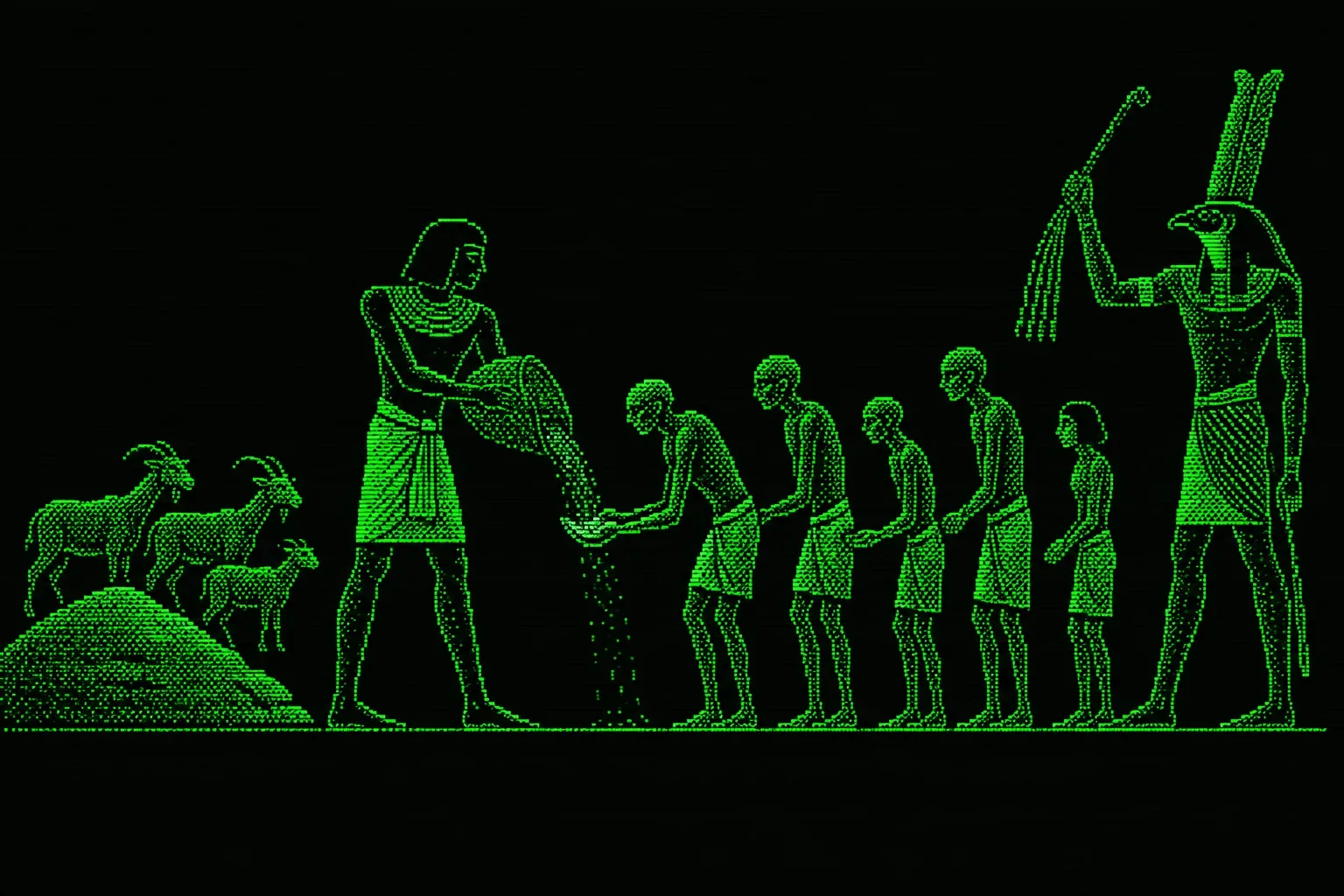
I gave bread to the hungry and clothes to the naked.
- 5
jw [jr.n] rmṯ r-wr ꜥnḫt r-wr jt-šmꜥ n rḫt
I acquired people in great number, goats in great number, and southern barley beyond count.
Note · Line 5
The “people” are dependants and labourers attached to his household and estate. “Southern barley” is the Upper Egyptian variety. - 6
[jw] [r]ḏ.n r sꜥnḫ.n z nb n spꜣt tn dbḥ m-ꜥ sk wrw [zbj] n kꜣw=sn
I gave it out, and so kept alive every man of this nome who asked it of me, at a time when the great had gone to their kas.
Note · Line 6
The ka is a person’s life-force, which lives on after death; to “go to one’s ka” means to die. - 7
jr.n nn m-mꜣꜥt n ḏd ⸢grg⸣ [jm]
All this I did in truth; I tell no lie about it.
- 8
jgr z nb jj r dbḥ ḫt m-ꜥ [j]w rḏ.n m ḥbsw _ šs
Moreover, every man who came to ask something of me, I made him one clothed … alabaster.
Note · Line 8
A gap breaks the sentence. “Alabaster” here is the Egyptian calcite stone used for fine vessels, often for oils and ointments. What he gave in alabaster is lost. - 9
n jgr jr.n js nn m wp[t] hꜣbt [r] ḥm nswt ⸢jr.n⸣ [nn] m [mrwt] mnw nb-jpw
Nor did I do this as a commission sent to a servant of the king: I did this out of love for Min, lord of Akhmim.
Note · Line 9
He stresses that his charity was his own initiative, not an official duty laid on him by royal order.