~/sacred-texts/late-egyptian-stories
Ramesses III’s Libyan War Story: Six Hundred Meshwesh Plundering
- Date
- Copied in the 20th Dynasty, in the reign of Ramesses III or Ramesses IV (about 1184–1148 BC), in hieratic on papyrus, with black ink and red verse points
- Found
- Findspot unrecorded; in the Musée du Louvre, Paris (Papyrus Louvre N 3136), inventoried by 1857
- Language
- Late Egyptian · Hieratic
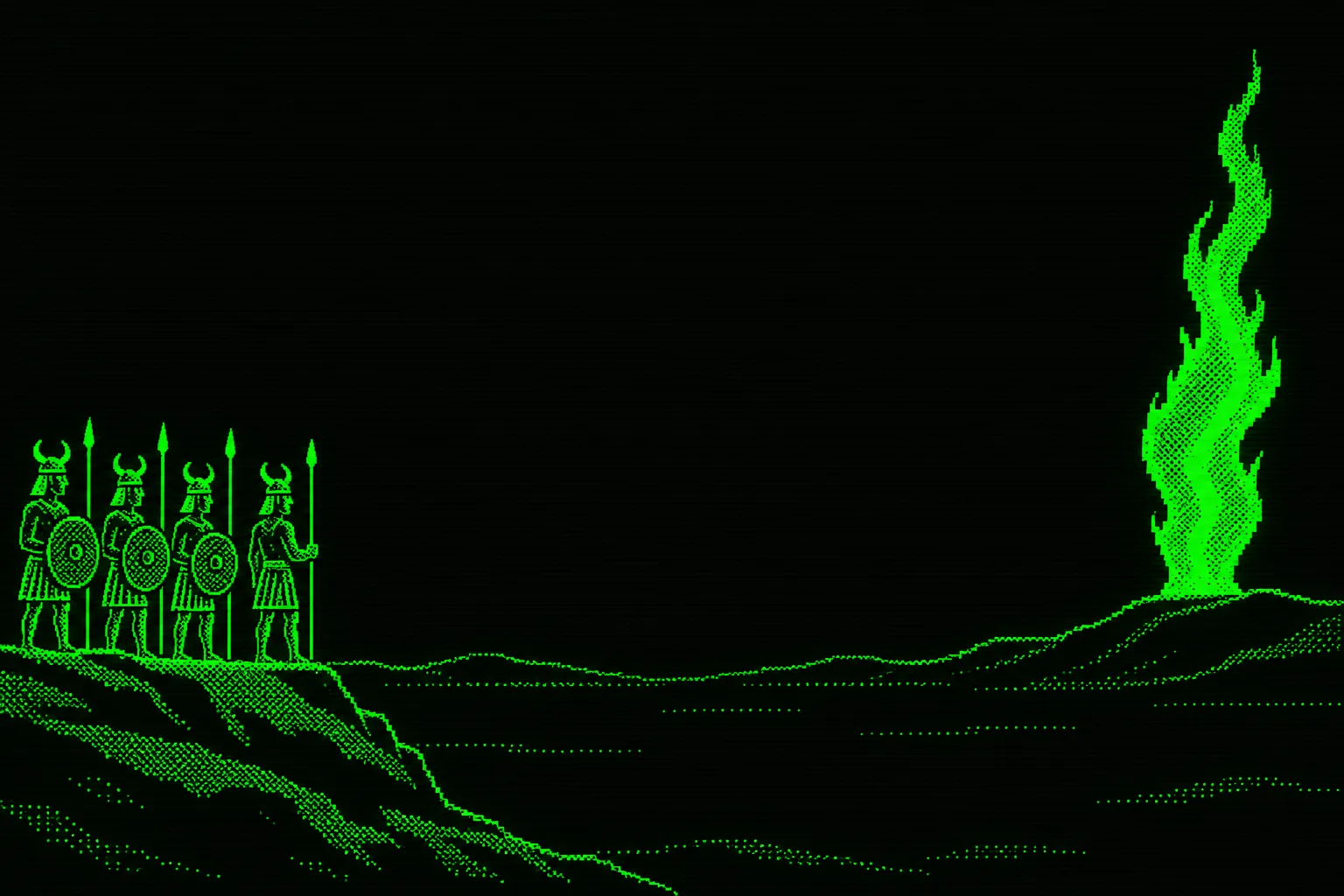
A soldier tells the war as “we”. The fragments open at court: His Majesty brings an enemy chief before a god, who decrees “Victory belongs to the ruler!” Then the invasion: the Meshwesh, Libu and Hasa foes come and found the land united and ready. They go down to the field of Per-ir, where Pharaoh keeps a supply depot, and there they caught sight of a flame: the king in battle.
Egypt’s own line is manned by foreigners. Then we sent out a hundred of the Peleset, and with them Two hundred of the Sherden of the great fortresses, posted high to watch. The papyrus breaks off at Then we found six hundred of the Meshwesh plundering.
- 1
… 𓂋 𓋴𓈖𓏥𓇋𓇋𓏛𓏥 𓈖𓄿𓇋𓇋 𓏲 … 𓇥𓂋𓇋𓏲𓏛𓏥
[...] ⸮[__],t? ⸮r? =⸮sny? nꜣy =⸮w? [...] ⸢ḏr⸣j.w.pl
… to them; their strong …
- 2
𓇋𓏲 𓏏𓏲 𓏎𓈖 𓁷𓏤 𓋹𓍑𓋴
jw =tw (ḥr) jni̯ _ ḥr ((⸮[ꜥḥ(,t)]?)) ((⸮[2]?)) ((⸢ꜥnḫ-(w)ḏꜣ-s(nb)⸣))
Then … was brought from the double sanctuary—life, prosperity and health!
Note · Line 2
This blessing follows the name of Pharaoh and can also honor a royal or sacred place. - 3
[...] [__].pl
[gap in the text]
- 4
𓇋𓏲 𓏎 𓅯𓄿𓇋𓇋 𓏲𓏫 … 𓇓𓏲 𓅯𓄿
jw ⸮ḥm? =⸮f? (ḥr) jni̯ pꜣy =w ⸢⸮wr?⸣ [...] 〈j:wḏ〉 sw pꜣ ⸢nḫt⸣ [n] [pꜣ] [ḥqꜣ]
Then His Majesty brought their chief … who decrees this: “Victory belongs to the ruler!”
Note · Line 4
It is apparently a god who decrees the king’s victory; his name is lost. - 5
… 𓉺𓏌𓊖𓅆𓀭 𓋹𓍑𓋴 𓂋 𓏎𓈖𓈖 𓇾𓏤𓈇 𓎟 … 𓂋𓈙𓏲𓏏𓂉𓏛𓏥 …
[...] ⸮Jwn,w(j)? ꜥnḫ-(w)ḏꜣ-s(nb) r {{jni̯.n}} tꜣ nb [...] rš,wt r-q[ꜣy-n] [...]
… the Heliopolitan—life, prosperity and health—to every land … joy among …
Note · Line 5
“The Heliopolitan” is a title of Atum, the creator god of Heliopolis. - 6
… 𓇛𓅓𓏭𓏛 𓄂𓏏𓏭𓄣𓏤𓏫 𓅓𓍱𓏤𓏛 𓊗 𓇋𓅓 𓈖 𓆣𓂋𓏲
[...] [__] nḏmj ḥꜣ,tj.pl m-sšr zp-2 jm n ⸮[jri̯.n]? =⸮⸢f⸣? ḫpr.w
… hearts are glad indeed at this, for his work has borne fruit.
- 7
𓏏𓄿 𓉥𓂝𓉐𓅆𓀭𓅆 𓋹𓍑𓋴 𓀼 …
tꜣ ꜥḥ(,t) 2 ꜥnḫ-(w)ḏꜣ-s(nb) šps(.t) [...]
The august double sanctuary—life, prosperity and health—…
- 8
… 𓅯𓂋𓂝𓇳𓅆𓅃𓅆𓈌𓏏𓏭𓉐𓉐𓅆𓅆 𓅯𓄿𓇋𓇋 𓆑 𓇋𓏏𓆑𓅆 𓄤𓏤𓅆 𓂝𓈎𓄿𓌙𓌙𓏛 𓊗 𓅓 𓏏𓄿 𓆼𓇋𓇋 …
[...] [P]ꜣ-Rꜥ-Ḥr,w-ꜣḫ,tj.du pꜣy =f jt nfr ꜥqꜣ zp-2 m tꜣ ḫꜣy[b,t] [...]
… Ra-Horakhty, his father, perfect indeed, as the shade …
Note · Line 8
Ra-Horakhty is Ra as Horus of the Two Horizons, east and west. A god’s shade could shelter the king. - 9
… 𓅯𓄿 𓇾𓏤𓈇 𓈖 𓆎𓐛𓏏𓊖 𓁷𓏤 … 𓉻𓉐𓉐𓅆𓅆 𓋹𓍑𓋴 𓅯𓄿𓇋𓇋 𓏲𓏫 𓈙𓂋𓇋𓏲𓀔 𓆄𓆗 … 𓂸𓏏𓂋𓏲𓌙𓌙𓏛𓀁𓏫
[...] pꜣ tꜣ n Km,t ḥr [...] pr-ꜥꜣ ꜥnḫ-(w)ḏꜣ-s(nb) pꜣy =w šrjw Mꜣꜥ,t [...] ⸢mtr⸣.w.pl
… the land of Egypt was … Pharaoh—life, prosperity and health—their son; Maat … witnesses.
Note · Line 9
Maat is truth and right order personified as a goddess. - 10
𓈖𓄿𓇋𓇋𓏫 𓆑 𓇋𓊪𓏏𓏛 … 𓏇𓇋𓐪𓂧𓏌𓏲𓏛 𓈖𓄿𓏫 𓅯𓄿𓂋𓂝𓇳𓅆𓅃𓅆 …
nꜣy =f jp,t [...] mj-qd nꜣ(-n) Pꜣ-Rꜥ-Ḥr,w-[ꜣḫ,tj.du] [...]
His accounts … like those of Ra-Horakhty …
- 11
… 𓉻𓉐𓉐𓅆𓅆𓋹𓍑𓋴 𓍇𓏌𓏲
[...] [___]j [...] pr-ꜥꜣ ⸢⸮nwꜣ?⸣
… Pharaoh—life, prosperity and health—looked.
- 12
𓅜𓐍𓏲𓏫 𓎟 𓂋 𓁹𓂋 𓏲𓏥
⸮sḏm? ꜣḫ,w(t).pl nb(.wt) r jri̯ =w
Hear of all the good deeds, that you may do them!
- 13
𓅓 …
-GN- m [...]
The god … is in …
- 14
𓈖𓄿𓏫 𓊹𓏫 𓁹𓂋 𓏲𓏥 𓈖 𓉻𓉐𓉐𓅆𓅆 𓋾𓈎𓅆 𓉻𓏛 𓈖 𓇾𓏤𓈇 𓎟 𓇋𓏲 𓃀𓏲 𓁹𓂋𓏲 𓏏𓏲 …
nꜣ nṯr.pl (ḥr) jri̯ =w n pr-ꜥꜣ [ꜥnḫ-(w)ḏꜣ-s(nb)] [pꜣ] ḥqꜣ ꜥꜣ n tꜣ nb jw bw jri̯ =tw [...]
The gods did them for Pharaoh—life, prosperity and health—the great ruler of every land, while no one did …
- 15
… 𓅯𓄿𓇋𓇋 𓏲𓏫 𓈙𓂋𓇋𓏲𓀔𓅆 𓄤𓏤𓅆 … 𓂋𓏤𓀁𓏫 𓅜𓐍𓏲𓏛𓏥 𓄤𓆑𓂋 …
[...] pꜣy =w šrjw nfr ꜥnḫ-(w)ḏꜣ-s(nb) [...] rʾ.pl ꜣḫ.w.pl nfr[.w.pl] [...]
… their perfect son—life, prosperity and health—… sayings both potent and beautiful …
- 16
𓅯𓄿 𓉐𓏤𓌳𓄿𓉐 𓈖 𓉻𓉐𓉐𓅆𓅆 𓋹𓍑𓇐 𓅓 𓈖 𓏏𓏲 𓈖𓀼𓊖 𓇋𓏲 𓈖𓄿 𓂋𓍿𓀀𓁐𓏥 𓈖 𓁷𓏭𓌔𓏏𓏤𓀀 …
pꜣ pr-mꜣ n pr-ꜥꜣ ꜥnḫ-(w)ḏꜣ-s(nb) m [Pr-j:]jr ⸮n? ((⸮[__]?tw)) ((n)) jw nꜣ r(m)ṯ.pl n ḥr,j-⸢pḏ,t⸣ [...]
The supply depot of Pharaoh—life, prosperity and health—is at Per-ir … while the men under the commander of the archers …
- 17
… 𓇋𓏲 𓃀𓏲𓊪𓏲𓇋𓇋𓏭𓏛 … 𓅓 𓍑𓄿𓍑𓄿𓁶𓏫𓄹 𓈖 𓌡𓂝𓏤
[...] [__]j jw bw-pwyj [...] m ḏꜣḏꜣ.pl n wꜥ j[__]
… after … had not … with the heads of a …
- 18
𓂝𓈙𓀁 𓄂𓏏𓏤 𓈖 𓅯𓄿 𓇾𓏤𓈇 𓈖 𓆎𓐛𓏏𓊖 …
ꜥš ḥꜣ,t n pꜣ tꜣ n Km,t [...]
Summoning the foremost men of the land of Egypt …
- 19
… 𓂋𓆷𓄿𓂝𓏛 𓅯𓄿 𓂧𓏇𓇋𓇋𓏏𓈇𓏤𓊖 𓈖𓏏𓏭
[...] r-šꜣꜥ Nꜣy-Rꜥ-msi̯-sw-mri̯.w-Jmn[-ꜥnḫ-(w)ḏꜣ-s(nb)] pꜣ dmy{,t} ⸢n,tj⸣ [ḥr] [pꜣ] 〈rwḏ〉 jmn,t(j){.t}
… as far as Nay-Ramesses-Meryamun—life, prosperity and health—the town on the west bank.
Note · Line 19
The town bears the king’s name, Ramesses, Beloved of Amun. - 20
𓇋𓏲 𓏏𓏲 𓁷𓏤 𓂞𓏏 𓎔𓏛 𓈖𓄿𓇋𓇋 𓏲𓏫 𓀸𓄿𓇋𓇋𓏲𓏏𓏫𓀀𓏥
jw =tw ḥr ḏi̯.t mḥ =〈w〉 nꜣy =⸢w⸣ ⸢zꜣy,wt⸣.pl
Then they were made to seize their guards.
- 21
𓇋𓏲 𓏏𓏲 𓂞𓏏 𓆣 …
jw =tw (ḥr) ḏi̯.t ḫpr [...]
Then … was brought into being.
- 22
… 𓐍𓂋𓏲𓏱𓏥 𓈖 𓂋𓃀𓏲𓌙𓀀𓏥 𓉔𓄿𓐠𓏤𓌙𓀀𓏥 𓇍𓇋𓇋𓏭𓂻 𓅓 … 𓐍𓂋𓏲𓏱𓏥 𓏇𓇋𓐪𓂧𓏌𓏲𓏛 𓏲𓏫
[...] ḫr,w.pl n [Mꜥ~]šꜣ~wꜣ~šꜣ~.pl Rbw.pl Hꜣ~sꜣ~.pl jyjj m [...] ḫr,w.pl mj-qd =w
… the Meshwesh, Libu and Hasa foes who came from … the foes, every one of them.
Note · Line 22
The Meshwesh and Libu were peoples from west of Egypt. - 23
𓇋𓏲 𓏫 𓅠𓅓𓏛 𓅯𓄿 𓇾𓏤𓈇 𓌻𓂋𓏲𓂷𓂡 𓂝𓂋𓂝𓂋𓏴 … 𓏏𓆑𓇋𓇋𓏴𓂻 𓅓 𓈖𓄿 𓂧𓏇𓇋𓇋𓏏𓈇𓏤𓊖𓏫
jw =w (ḥr) gmi̯ pꜣ tꜣ mr.w ꜥrꜥr(.w) [...] [__].pl tfy m nꜣ dmy{,t}.pl
Then they found the land united and ready … driven from the towns.
- 24
𓇋𓏲 𓏫 𓉔𓄿𓇋𓇋𓏭𓂻 𓂋 𓏏𓄿 𓇏𓏏𓈇 𓈖
jw =w (ḥr) hꜣy r tꜣ sḫ,t n Pr-j:jrw
They went down to the field of Per-ir.
- 25
… 𓅓 𓅯𓄿 𓉐𓏤𓌳𓄿𓅱𓏏𓏛𓏤𓉐 𓈖 𓉻𓉐𓉐𓅆 𓋹𓍑𓋴
[...] m pꜣ pr〈-mꜣ〉 n pr-ꜥꜣ ꜥnḫ-(w)ḏꜣ-s(nb)
… in the supply depot of Pharaoh—life, prosperity and health.
- 26
𓇋𓏲 𓏫 𓊪𓏏𓂋𓇋𓇋𓁻 𓌡𓂝𓏤 𓋴𓏏𓍔𓄿𓏲𓊮 …
jw =w (ḥr) ptry wꜥ stꜣw [...]
Then they caught sight of a flame …
- 27
… 𓉐𓏤 𓎟𓏏𓇏𓏏𓈇𓆗 𓂋𓁷𓂋𓏭𓇯
[...] [__] pr Nb,t-sḫ,t r-ḥr,j
… the temple of the Lady of the Field, upward.
- 28
𓇋𓏲 𓈖𓏥 𓂞𓏏 𓉐𓂋𓇋𓇋𓏭𓂻 𓍢 𓈖 … 𓅯𓄿 𓋴𓋴𓋴𓏲𓇳
jw =n (ḥr) ḏi̯.t pry 100 n Pw~jrʾ~sꜣ~tj~[.pl] [...] pꜣ sw
Then we sent out a hundred of the Peleset … that day.
Note · Line 28
The Peleset are generally identified with the Philistines. They and the Sherden named next are among the groups now called the Sea Peoples. - 29
𓍢𓍢 𓈖 𓆷𓄿𓏭𓂋𓂧𓈖𓌙𓀀𓏥 𓈖 𓈖𓄿 𓈖𓆱𓐍𓏏𓀜𓉐𓏫 …
200 n Šꜣ~jrʾ~dn.pl n nꜣ nḫt.pl ꜥꜣ⸢y.pl⸣ [...]
Two hundred of the Sherden of the great fortresses …
- 30
… 𓂞𓏏 𓈖𓏥 𓅓𓂝𓈎𓄿𓌙𓌙𓏛 𓈖𓏥 𓂋𓁷𓂋𓏭𓇯 𓂋𓂝𓈎𓄿𓌙𓌙𓏏𓏛 𓏏𓄿 𓋴𓏏𓍔𓄿𓏲𓊮𓏥 𓂋 …
[...] ḏi̯.t =n m-ꜥqꜣ =n r-ḥr,j r-⸢ꜥ⸣qꜣ{.t} tꜣ stꜣw r ptr [...]
… whom we posted up high, facing us, facing the flame, to watch …
- 31
… 𓄖𓏥𓂻
[...] pḥ.pl
… reached.
- 32
𓇋𓏲 𓈖𓏥 𓅠𓅓𓏛 𓈖 𓅓𓂝𓆷𓄿𓍯𓄿𓆷𓄿𓌙𓀀𓏥 𓅷𓄿𓇋𓇋𓂷𓂡 …
jw =n (ḥr) gmi̯ ⸢600⸣ n Mꜥ~šꜣ~wꜣ~šꜣ~.pl ṯꜣi̯.y [...]
Then we found six hundred of the Meshwesh plundering …
Note · Line 32
The Meshwesh were a Libyan people from west of Egypt.