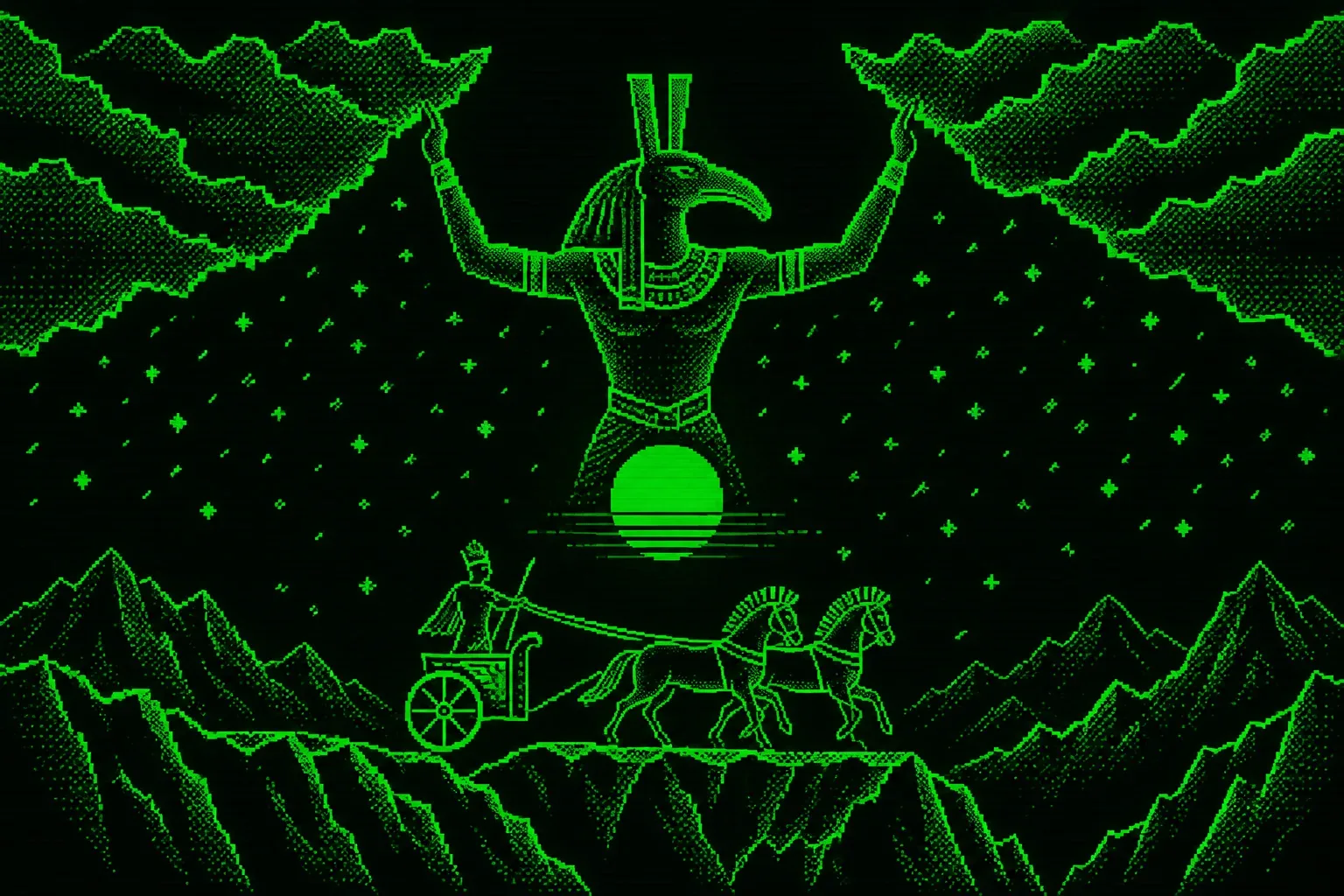
~/sacred-texts/ramesside-royal-inscriptions
Marriage Stela of Ramesses II: A Hittite Princess for Peace
- Date
- Carved in the 19th Dynasty, after regnal year 34 of Ramesses II (c. 1245 BC), at Karnak, Abu Simbel, Amara West and Elephantine
- Found
- Karnak, Ninth Pylon (base text); Abu Simbel, Great Temple facade; Amara West, temple outer court; Elephantine, blocks reused in the Roman quay wall
- Language
- Late Egyptian · Hieroglyphic
Ramesses II had the story of his Hittite marriage carved in temples from Thebes to Nubia. Four copies are in the open edition, and this page reads them as one text. The base is the copy at Karnak, on the Ninth Pylon of the Temple of Amun. Where Karnak is broken, the words come from the others: the best-kept copy on the facade of the Great Temple at Abu Simbel, the copy in the outer court of the temple at Amara West in Nubia, and blocks from Elephantine later built into the Roman quay wall. A line that survives only in another copy carries that copy’s name under its number. Where Karnak’s words are filled in, or the copies disagree, the note says so.
The text opens in year 34 with a hymn to the king: the divine semen of every god, whose flesh is gold, his bones silver, every limb of his is iron from the sky. Every foreign land bows to him except Hatti, and Ramesses swears, I shall bring the land of Hatti to its end. After years of war and drought the Hittite king tells his court, Our lord Seth is angry with us, and sends tribute with my eldest daughter at the head of it all.
When winter snow threatens her mountain crossing, Ramesses prays to Seth: send no rain, no chill wind, no snow. Seth grants summer days in winter. Egyptian and Hittite troops march together, of one heart, like brothers. At Pi-Ramesses the king sees her, fair of face, foremost among women, loved her more than anything else, and names her King’s Wife Maathorneferure. A shortened version of the same story, on an alabaster stela from Karnak, has its own page.
- 1Abu Simbel
rnp,t-sp 34 ḫr ḥm n Ḥr,w Kꜣ-nḫt-mri̯-Mꜣꜥ,t-[nb]-ḥb.pl-sd-mj-jtj≡f-Ptḥ-Tꜣ-ṯnn Nb,tj Mki̯-Km,t-wꜥf-ḫꜣs,t.pl-〈Rꜥw-ms-nṯr.pl-grg-Tꜣ.du〉 [nswt]-bj,tj Wsr-Mꜣꜥ,t-Rꜥw-stp.n-Rꜥw sꜣ-Rꜥw Rꜥw-[msi̯-sw]-mri̯.y-Jmn [di] ꜥnḫ Ḥr,w-nbw Wsr-rnp,t.pl-ꜥꜣ-[nḫ]t.t jṯi̯ tꜣ.pl nb.w m qn nḫt sḫꜣ ḫꜣs,t.pl wꜣ.w m pꜣy =f nḫt,w
Regnal year 34, under the Majesty of Horus: Strong Bull, Beloved of Maat, Lord of Sed Festivals like his father Ptah-Tatenen; the Two Ladies: Protector of Egypt, Subduer of Foreign Lands, Ra who bore the gods and founded the Two Lands; the King of Upper and Lower Egypt, Usermaatre-Setepenre; the Son of Ra, Ramesses-Meryamun, given life; the Golden Horus: Mighty in Years, Great in Victories, who seizes all lands by valor and might, whose victories distant lands remember.
Note · Line 1
Horus, the Two Ladies and Golden Horus introduce three of the king’s five royal names. - 2Abu Simbel
ḥr,yt =f m jb-nb.pl r ḏ,t nswt-bj,tj Wsr-Mꜣꜥ,t-Rꜥw-stp.n-Rꜥw sꜣ-Rꜥw Rꜥw-msi̯-sw-mri̯.y-Jmn di ꜥnḫ
Dread of him is in every heart forever: the King of Upper and Lower Egypt, Usermaatre-Setepenre, the Son of Ra, Ramesses-Meryamun, given life.
Note · Line 2
Usermaatre-Setepenre is his throne name; Ramesses is his birth name, here followed by Meryamun, “beloved of Amun.” - 3
[...] [nswt]-⸢bj,tj⸣ nb-[Tꜣ.du] Wsr-Mꜣꜥ,t-Rꜥw-stp.n-Rꜥw [...]
… the King of Upper and Lower Egypt, Lord of the Two Lands, Usermaatre-Setepenre …
Note · Line 3
The Two Lands are Upper Egypt in the south and Lower Egypt in the north. - 4Abu Simbel
nb n Km,t ḥqꜣ dšr jty Tꜣ.du mj Jtm,w sbtj n ds m-rk Tꜣ-mrj šdi̯ mšꜥ =f tꜣ-n,t-ḥtr =f nḫ n tꜣ hj n Km,t snḫt =f s r tꜣ nb nfr ḥr ꜥn m ḫprš spd-ḥr m Šmꜥ,w-s Mḥ,w-s
Lord of the Black Land, ruler of the Red Land, sovereign of the Two Lands like Atum; a wall of flint around the Beloved Land. He saves his army and his chariotry. Protector of the land, husband of Egypt, he makes her strong against every land. Fair of face, graceful in the Blue Crown, he keeps watch in the crowns of Upper and Lower Egypt.
Note · Line 4
The Black Land is the dark soil of the Nile valley; the Red Land is the desert. The Beloved Land is Egypt, and the Two Lands are its southern and northern kingdoms. - 5Abu Simbel
smꜣ.n =f Tꜣ.du m ḥtp,w mj jtj =f Ḥr,w-Tꜣ-ṯnn rdi̯.n sw Rꜥw ḥr ns,t =f r ḫwi̯ tꜣ pn n jb =f ꜥꜣ rn ḏsr nḫb
He united the Two Lands in peace like his father Horus-Tatenen, after Ra had set him on his own throne to guard this land as Ra desired. Great is his name, sacred his royal titles.
- 6Abu Simbel
nn nṯr nb mj,tt =f stp mdw,t mꜥr sḥ jp jb ṯs tꜣ m sḫr.pl =f nswt-bj,tj Wsr-Mꜣꜥ,t-Rꜥw-stp.n-Rꜥw sꜣ-Rꜥw nb-ḫꜥ.pl Rꜥw-msi̯-sw-mri̯.y-Jmn di ꜥnḫ
No god is his equal. He chooses his words, excels in counsel, understands the heart and binds the land together with his plans: the King of Upper and Lower Egypt, Usermaatre-Setepenre, the Son of Ra, Lord of Crowns, Ramesses-Meryamun, given life.
- 7Abu Simbel
ḥꜣ,t-ꜥ-m mn,w pn mnḫ.pl n sꜥꜣi̯ pḥ,t n nb-ḫpš sqꜣi̯ qn swhꜣ nḫt,w bjꜣ.pl ꜥꜣi̯.pl štꜣ.ypl ḫpr.pl ḫr nb-Tꜣ.du
Here begins this splendid monument, to magnify the might of the Lord of Strength, to exalt his valor, to proclaim his victories and the great, mysterious wonders wrought by the Lord of the Two Lands.
- 8Abu Simbel
Rꜥw m ḥꜥ.pl =f r nṯr nb pri̯ m ẖ,t wḏ n =f qn nswt-bj,tj Wsr-Mꜣꜥ,t-Rꜥw-stp.n-Rꜥw sꜣ-Rꜥw nb-ḫꜥ.pl Rꜥw-msi̯-sw-mri̯.y-Jmn di ꜥnḫ
Ra dwells in his limbs more than any other god. He came forth from the body of the one who ordained strength for him: the King of Upper and Lower Egypt, Usermaatre-Setepenre, the Son of Ra, Lord of Crowns, Ramesses-Meryamun, given life.
- 9Abu Simbel
ḥqꜣ rs-tp nswt ṯnr sꜣ Swtḫ mri̯.y Mnt,w sbꜣ n tꜣ jꜥḥ n Km,t Rꜥw n tꜣ sḥḏ n =sn jtn ṯḥn.t n rḫy.pl ꜥnḫ =sn m mꜣꜣ =f qꜥi̯ rnp,t.pl ꜥꜣi̯ nsw,yt wr ḥb.pl-sd ꜥšꜣ bjꜣ.pl
Watchful ruler, mighty king, son of Seth, whom Montu loves; star of the land, moon of Egypt, sun of the land who shines for its people; radiant sun disk for the common folk, who live by the sight of him. Long are his years, great his kingship, splendid his Sed festivals, many his wonders.
- 10Abu Simbel
bꜥḥ.n ḏfꜣ.pl =f Jdb.du špss =f Šmꜥ,w Mḥ,w kꜣ.pl m-ꜥ.du =f rsf.pl ẖr rd.du =f ḥw ḥtp ẖr tbw.du =f
His provisions have flooded the Two Banks, his treasures Upper and Lower Egypt. The harvest is in his hands, the catch of fish and fowl beneath his feet; food rests beneath the soles of his sandals.
Note · Line 10
The Two Banks are the banks of the Nile. The king’s abundance floods Egypt as the river does. - 11
[...] mry,tj m ẖ,t n [rm]ṯ [...]
His name is fair in the hearts of the gods; men and women love him in their very flesh. They rejoice when they see him like Ra shining on the horizon: the King of Upper and Lower Egypt, Usermaatre-Setepenre, the Son of Ra, Ramesses-Meryamun, given life.
Note · Line 11
Broken at Karnak; the missing words come from the Abu Simbel copy. - 12Abu Simbel
wsr ns,t šps ḥqꜣ,t nsw,yt =f ꜣbḫ.tj m rš,w qꜣi̯ rn pḥ.n =f ḥrj mj Rꜥw jr m sp-tp,j nfr sḫr.pl mnḫ sbꜣ.pl qd ḥr ṯꜣ,w ṯnr m sꜥnḫ nswt-bj,tj Wsr-Mꜣꜥ,t-Rꜥw-stp.n-Rꜥw sꜣ-Rꜥw Rꜥw-msi̯-sw-mri̯.y-Jmn di ꜥnḫ
Mighty is his throne, splendid his crook, his kingship steeped in joy. High is his name; it has reached the sky like Ra. Fashioned in the First Time, perfect in his plans, excellent in his teachings, he creates with a breath and is mighty in giving life: the King of Upper and Lower Egypt, Usermaatre-Setepenre, the Son of Ra, Ramesses-Meryamun, given life.
Note · Line 12
The First Time is the dawn of creation. The crook is the curved scepter of kingship. - 13Abu Simbel
jst ḥm =f ꜥnḫ-(w)ḏꜣ-s(nb) m ḥqꜣ pḏ,t.pl-9 m nb ꜥꜣi̯ n tꜣ.pl nb.pl
Now His Majesty—life, prosperity and health be his!—is ruler of the Nine Bows and great lord of all lands.
Note · Line 13
The Nine Bows stand for all the foreign peoples over whom the king claims dominion. - 14Abu Simbel
ktkt.n p,t mnmn.n tꜣ ḏr ḥqꜣ.n =f nsw,y{n}t Rꜥw
Heaven trembled and earth shook when he assumed the kingship of Ra.
- 15Abu Simbel
šsp.n =f ḫꜥ.du Jtm,w
He received the two crowns of Atum.
- 16Abu Simbel
jꜥr nb-r-ḏr ḥr tp =f
The uraeus of the Lord of All was on his head.
Note · Line 16
The uraeus is the rearing cobra worn at the king’s brow for protection. The Lord of All is Atum. - 17Abu Simbel
ẖkr.pl Nb,wj dmḏ ḥꜥ.pl =f
The regalia of the Two Lords were joined to his limbs.
Note · Line 17
The Two Lords are Horus and Seth, once rivals for the throne. In the king their powers are joined. - 18Abu Simbel
nḫt,w =sn psš =sn ḫr =f
Their strength was his, and each lord’s half of the land was his.
- 19
[...] [mḥ],tjw jmn,tt ⸢jꜣb,tt⸣ [...]
He conquered south and north as west and east bowed their heads.
Note · Line 19
Broken at Karnak; the missing words come from the Abu Simbel copy. - 20Abu Simbel
mw nṯr n nṯr nb msi̯.n nṯr,t nb rnn.n jtj =f Bꜣ-nb-Ḏd,t m ꜥḥ,t wr.t n Jwn,w nswt-bj,tj Wsr-Mꜣꜥ,t-Rꜥw-stp.n-Rꜥw sꜣ-Rꜥw Rꜥw-msi̯-sw-mri̯.y-Jmn di ꜥnḫ
He is the divine semen of every god. Every goddess bore him; his father, the Ram of Mendes, raised him in the Great Palace of Heliopolis: the King of Upper and Lower Egypt, Usermaatre-Setepenre, the Son of Ra, Ramesses-Meryamun, given life.
- 21Abu Simbel
ḫpr.n =f m Ḫmn,yw 〈q〉mꜣ =sn sw mj Ḫpr,j
He came into being from the Eight, who fashioned him like Khepri.
Note · Line 21
The Eight are the primeval gods of Hermopolis. Khepri is the rising sun; his name echoes the words “come into being.” - 22
[...] ⸢r⸣ ⸢ṯs⸣ tꜣ m rʾ.pl-pr.pl
He appeared like Shu and Tefnut on the two arms of Horus-Tatenen, to found Egypt as ordained and bind the land together with temples: the King of Upper and Lower Egypt, Usermaatre-Setepenre, the Son of Ra, Lord of Crowns, Ramesses-Meryamun.
Note · Line 22
Broken at Karnak; the missing words come from the Abu Simbel copy. - 23
twt ꜥnḫ [...]
Living image of Ra, offspring of him who dwells in Heliopolis: his flesh is gold, his bones silver, every limb of his is iron from the sky.
Note · Line 23
Broken at Karnak; the missing words come from the Abu Simbel copy. - 24Abu Simbel
sꜣ Stẖ mhr.j ꜥnṯj kꜣ-nḫt mj Stẖ Nbw,tj bjk nṯr,j mri̯ rmṯ nṯr-ꜥꜣ m-m nṯr.pl ḫwi̯ Km,t mki̯ Jdb.du jri̯ tꜣš.pl =f r{r} mri̯.pl =f
Son of Seth, warrior of Anat, strong bull like Seth of Ombos, divine falcon who loves humankind, great god among the gods. He guards Egypt, protects the Two Banks and sets his borders where he pleases.
Note · Line 24
Anat is a warrior goddess. Ombos was a center of Seth’s worship. - 25Abu Simbel
ḫꜣs,t nb ẖr.ı͗ ḥtp,w nn-wn bšt m-ḫt =f spd-ḥr m wḏ,yt.ṱ =f nb.t jwi̯.t =f j:m jw hꜣd =f ḫpr nswt-bj,tj Wsr-Mꜣꜥ,t-Rꜥw-stp.n-Rꜥw sꜣ-Rꜥw Rꜥw-msi̯-sw-mri̯.y-Jmn di ꜥnḫ
Every foreign land is at peace; no rebels remain in his wake. He keeps watch on every campaign and returns from each having struck his blow: the King of Upper and Lower Egypt, Usermaatre-Setepenre, the Son of Ra, Ramesses-Meryamun, given life.
- 26Abu Simbel
nb kꜣ.pl sḏfꜣ Tꜣ-{r-}mrj špss.ı͗pl pꜥ,t rḫ,yt
Lord of food, he feeds the Beloved Land and richly provides for nobles and common folk alike.
- 27Abu Simbel
jwi̯ mw ṯꜣw m Sḫy,t
Water and wind come through Sekhet.
Note · Line 27
Sekhet is the goddess of the fields. - 28Abu Simbel
ḥꜥpj.pl ={f} nb.pl ẖr ḥw ḥb{d.t}
All the Nile floods come laden with food and the catch of fish and fowl.
- 29Abu Simbel
msi̯.{n} n =f ꜣḫ,t ḏfꜣ
For him Akhet, the fertile land, gives birth to food.
- 30Abu Simbel
ꜣḫꜣ〈ḫ〉 n =f šn.w nb.t nswt-bj,tj Wsr-Mꜣꜥ,t-Rꜥw-stp.n-Rꜥw sꜣ-Rꜥw Rꜥw-msi̯-sw-mri̯.y-Jmn di ꜥnḫ
For him every tree grows green: the King of Upper and Lower Egypt, Usermaatre-Setepenre, the Son of Ra, Ramesses-Meryamun, given life.
- 31
[...] m mꜣꜣ =f
He brings good to Upper Egypt and is loved by Lower Egypt. Everyone rejoices at the sight of him.
Note · Line 31
Broken at Karnak; the missing words come from the Abu Simbel copy. - 32
nfr,w.pl =f [m] [ẖ,t] =⸢w⸣ ⸢mj⸣ ⸢mw⸣ ṯꜣw
his beauty in their bodies like water and breath,
- 33
mrw,t =f mj tʾ ḥbs.pl [...]
whose love is like bread and clothing,
father and mother to this whole land,
light of the Two Banks.Note · Line 33
Broken at Karnak; the missing words come from the Abu Simbel copy. - 34
[...] tm,w twt ⸢mj⸣ ⸢wꜥ⸣ [ḥr] ⸢ḏ⸣d n Rꜥw [...]
The Two Lands and all humankind speak as one to Ra at his rising:
Note · Line 34
Broken at Karnak; the missing words come from the Abu Simbel copy. - 35Abu Simbel
jmj n =f nḥḥ m nsw,yt psd.pl =f n =n m-mn.t mj-qd =k
“Grant him eternity as king,
that he may shine for us each day as you do. - 36Abu Simbel
jmj rnpi̯ =f n =n mj jꜥḥ ꜣḫꜣ〈ḫ〉 =f mj sbꜣ.pl n.w p,t
Let him grow young again for us like the moon god;
let him sparkle like the stars of heaven. - 37
[...] sꜣ =[k] Stẖ n,[t]j m wjꜣ-n-ḥḥ.w
Grant him a name that lasts forever, like that of your son Seth aboard the Barque of Millions.”
Note · Line 37
This is the sun god’s boat. Seth stands aboard it to defend Ra against the serpent that threatens his passage. Broken at Karnak; the missing words come from the Abu Simbel copy. - 38
rꜥw ꜥnḫ nfr n nbw ḏꜥm n nṯr.pl mḥ Tꜣ.du [...] sms,w n Ptḥ-Tꜣ-Tnn wtt n =f [...]
The King of Upper and Lower Egypt, Usermaatre-Setepenre, the Son of Ra, Ramesses-Meryamun, given life; the living sun, perfect in gold, the electrum of the gods; he who fills the Two Lands with the victories of his sickle-sword and with treasures wrought by his own two hands; eldest son of Ptah-Tatenen, who begot the people for him; the King of Upper and Lower Egypt, Lord of the Two Lands, Usermaatre-Setepenre, the Son of Ra, Ramesses-Meryamun, given life.
Note · Line 38
Electrum is an alloy of gold and silver. Ptah-Tatenen is the creator god of Memphis. Broken at Karnak; the missing words come from the Abu Simbel copy. - 39
[...] [spr,t].pl =[f] nb
Now this perfect god, son of Atum, heir of Ra, august image of him who dwells in Heliopolis, came to be of one body with Ra as Ra rose each day on the horizon to hear the king’s every plea.
Note · Line 39
Broken at Karnak; the missing words come from the Abu Simbel copy. - 40
ḫr =f ḏd =f n =f jtnw ḫꜥꜥ =f
And so, each time he appeared, he said to him:
Note · Line 40
Ra is speaking to Ramesses. - 41
jḫ m jb =k
“What is in your heart?
- 42
jri̯ =j st ḫr =k nswt-[bj,tj] [Wsr-Mꜣꜥ,t-Rꜥw-stp.n-Rꜥw] [sꜣ-Rꜥw] [Rꜥw-msi̯-sw-mri̯.y-Jmn] [di] [ꜥnḫ]
I will do it for you, King of Upper and Lower Egypt, Usermaatre-Setepenre, Son of Ra, Ramesses-Meryamun, given life.”
- 43
[...] [⸮sḏ?]m.tw m p,t
… heard in heaven,
- 44
ḥḏ [...]
whose … shines,
- 45Abu Simbel
jw tp =f m p,t m sḫr n nṯr ḏs =f
his head in heaven like that of the god himself;
- 46Abu Simbel
wbꜣ jb mj Rs,j-jnb≡f
keen of mind like Him Who Is South of His Wall.
Note · Line 46
“Him Who Is South of His Wall” is a title of Ptah at Memphis. - 47Abu Simbel
šsꜣ pw mj ḥm n Ḏḥw,tj nswt-bj,tj Wsr-Mꜣꜥ,t-Rꜥw-stp.n-Rꜥw sꜣ-Rꜥw [Rꜥw-msi̯-sw]-mri̯.y-[Jmn] di ꜥnḫ mj Rꜥw
He is as learned as the Majesty of Thoth, the King of Upper and Lower Egypt, Usermaatre-Setepenre, the Son of Ra, Ramesses-Meryamun, given life like Ra.
Note · Line 47
Thoth is the god of writing and learning. - 48
[...] ḏꜥr ẖ,t.pl mj Rꜥw nb-p,t
He knows hearts like Sia,
and tends bodies like Ra, lord of heaven.Note · Line 48
Broken at Karnak; the missing words come from the Abu Simbel copy. - 49
jn nrw.w =f s[ꜥꜣi̯] [...]
It is dread of him that makes people great;
Note · Line 49
Broken at Karnak; the missing words come from the Abu Simbel copy. - 50Abu Simbel
šf,ytt =f ḥr sḥtp ḏw.pl
his authority brings peace to the mountains.
- 51
[...] [ḥ]b n nḫt,w =f ꜣ[d].n =f tꜣ.pl nb.pl m pḥ,tj =f nswt-bj,tj Wsr-Mꜣꜥ,t-Rꜥw-stp.n-Rꜥw sꜣ-Rꜥw [Rꜥw-msi̯-sw-mri̯.y-Jmn] di ꜥnḫ
… a feast for his victories, after he had attacked every land in his might: the King of Upper and Lower Egypt, Usermaatre-Setepenre, Son of Ra, Ramesses-Meryamun, given life.
Note · Line 51
The Abu Simbel copy begins This land keeps festival for his victories and has the Two Lands where Karnak has every land. - 52
ꜥḥꜥ [...] ⸢wr.pl⸣-ꜥ[ꜣ.pl] [n] [tꜣ] nb [...] pn štꜣ [n] ḥm =f
Then the great princes of every land heard of this hidden nature of His Majesty.
Note · Line 52
Broken at Karnak; the missing words come from the Abu Simbel copy. - 53
wn.j[n] =sn tnbẖ snḏ.w ḥr,yt 〈n〉 ḥm =f ḥr jb =sn
Then they were bewildered and afraid, the dread of His Majesty upon their hearts.
- 54
jst [sn] [s]wꜣš [n] [bꜣ,w.pl] =f ḥr rdi̯ jꜣ,w n ḥr =f nfr
They revered his divine power and gave praise to his beautiful face.
- 55
ṯjrr n [...] ḥr ḥnk n =f m ms.pl =sn m nb.pl ꜥꜣ.pl n Rṯn,w ḫꜣs,t.pl štꜣ.pl jw bw rḫ.tw =w r sḥtp jb n [kꜣ]-⸢nḫt⸣ r d[b]ḥ ḥw.pl ḥtp,w ḫr =f
… and the great lords of Retjenu and of remote foreign lands no one knows offered him their children, to appease the heart of the Strong Bull and ask him for food and peace.
Note · Line 55
Retjenu was the Egyptian name for a region of the Levant. The Strong Bull is Ramesses himself. - 56
ḥꜣq.n =w st m jḫ,t =w ḏs =w ḥtr ḥr bꜣk,pl =sn n ẖr rnp,t
They stripped themselves of their own possessions, bound to pay their dues year by year,
- 57
ẖrd.pl =sn m-ḥꜣ,t jn,w =sn m jꜣw ḥr ḥfꜣ [n] [r]⸢n⸣ =⸢f⸣
their children at the head of their tribute, praising his name and doing it homage.
- 58
wn.jn ḫꜣs,t nb m wꜣḥ tp ẖr rd.du n nṯr-nfr
Then every foreign land laid its head beneath the two feet of the perfect god.
Note · Line 58
The “perfect god” is the king: the posture is one of submission to him. - 59
jri̯ =f tꜣš.pl =f r mri̯.n =f
He set his borders wherever he wished.
- 60
[n]n ḫsf ꜥ =〈f〉 ḥr,w-ḥr pf n tꜣ pn n Ḫt
No one stayed his arm but that man of this land of Hatti;
Note · Line 60
The unnamed man is the Hittite king, whose realm was centred in Anatolia. - 61
n stwt =f nn wr.pl
he did not do as these princes did.
- 62
ḏd.jn ḥm =f
Then His Majesty said:
Note · Line 62
The speaker is Ramesses II. - 63
ḥsi̯ wj jtj =j Rꜥw r nḥḥ m ḥqꜣ Tꜣ.du wbn =j mj jtn psd =j r-mn p,t ḥr sḫn,t.pl =s 4 jw =j r jni̯ pḥ.wj n tꜣ n Ḫt
“As surely as my father Ra will praise me forever as ruler of the Two Lands, as surely as I shall rise like the sun disk and shine as far as the sky on its four pillars, I shall bring the land of Hatti to its end.
Note · Line 63
Hatti was the Hittite kingdom, centered in Anatolia. The Abu Simbel copy has my father Atum for my father Ra; the Amara West copy has the king rise like Amun. - 64
ẖbt =st ẖr rd.du ={k}j r nḥḥ [nswt]-bj,tj Wsr-Mꜣꜥ,t-Rꜥw-stp.n-Rꜥw sꜣ-Rꜥw Rꜥw-msi̯-sw-mri̯.y-Jmn di ꜥnḫ
It shall be cast down forever beneath my two feet—the feet of the King of Upper and Lower Egypt, Usermaatre-Setepenre, the Son of Ra, Ramesses-Meryamun, given life.
- 65
di =j ḫti̯.y =sn ꜥḥꜣ ḥr pgꜣ wꜣḥ =sn ꜥbꜥ.w m tꜣ =sn
I shall make them give ground as they fight on the battlefield, so that they give up their boasting in their own land.
- 66
jw =j rḫ.kw wḏ n jtj =j Swtḫ nḫt,w r tꜣ nb snḫt.n =f ḫpš =j r qꜣw n p,t pḥ,tj =j r wsḫ n tꜣ
For I know that my father Seth has decreed victories for me over every land. He has strengthened my arm to the height of the sky, my might to the breadth of the earth.”
- 67
ꜥḥꜥ.n spd.n ḥm =f mšꜥ =f n,t-ḥtr.pl =f wdi̯ =[sn] [r] tꜣ n Ḫt
Then His Majesty equipped his army and his charioteers, and they set out against the land of Hatti.
- 68
ḥꜣq.n =f st wꜥi̯.w ḥr-tp =f ḫft-ḥr mšꜥ =f r-ḏr =f
He seized it, standing alone on its soil before his whole army.
- 69
jri̯.y =f n =f rn r nḥḥ m-ẖnw =f nswt-bj,tj Wsr-Mꜣꜥ,t-Rꜥw-stp.n-Rꜥw sꜣ-Rꜥw Rꜥw-msi̯-sw-mri̯.y-Jmn di ꜥnḫ sḫꜣ =sn m nḫt,w ḫpš =[f]
In the midst of his army he made a name for himself forever—the King of Upper and Lower Egypt, Usermaatre-Setepenre, the Son of Ra, Ramesses-Meryamun, given life—so that they would remember the victories of his sickle-sword.
Note · Line 69
The curved sword is called a khepesh, the same word used for the king’s arm when he speaks of the strength Seth gave him. - 70
sp ḥr ḏr,t =f jri̯.y =f sḥjwr =sn bꜣ,w.pl =f j:m =sn mj tkꜣ ḥr nbi̯
He cursed those who survived his hand. His divine power was in them like a burning flame.
- 71
bw smn wr ḥr tꜣy =sn jsb,t
No prince could remain on their throne.
- 72
bw [...]
Nor …
- 73
ḫr-jr m-ḫt skm =sn rnp,t.pl ꜥšꜣ jw tꜣ =sn ꜣq ꜣd m ẖnn rnp,t n rnp,t m bꜣ,w.pl n nṯr-ꜥꜣ ꜥnḫ nb-Tꜣ.du ḥqꜣ pḏ,t.pl-9
Now after they had spent many years with their land in ruins, wretched with strife year after year under the divine power of the living great god, Lord of the Two Lands, ruler of the Nine Bows,
Note · Line 73
The living great god is Ramesses himself. The Nine Bows stand for all the foreign peoples the Egyptian king claimed to rule. - 74
ꜥḥꜥ.n pꜣ wr-ꜥꜣ-n-Ḫt [ḥr] [sḥt]p ḥm =f ḥr sꜥꜣi̯ bꜣ,w.pl =f sqꜣi̯ nḫt,w =f m-ḏd
the Great Prince of Hatti appeased His Majesty, magnifying his divine power and exalting his victories in these words:
Note · Line 74
“Great Prince” is the Egyptian court’s title here for the Hittite king. - 75
wn ḏbꜥ.w =k
“Set aside your reproach!
- 76
sfḫ qn =k [...]
Turn aside your ill will!
Note · Line 76
Broken at Karnak; the missing words come from the Abu Simbel copy. - 77Abu Simbel
di =k tpj =n pꜣ ṯꜣw n ꜥnḫ
May you let us draw the breath of life.
- 78
[...] šrj n Sw[tḫ] [...] pꜣ tꜣ n Ḫt
You are indeed the son of Seth. He has granted you the land of Hatti.
Note · Line 78
Broken at Karnak; the missing words come from the Abu Simbel copy. - 79
ḥtr =n ḥr mri̯.[⸮_?] =[⸮k?] fꜣi̯ =n st r ꜥḥ =k šps,j
Whatever things you desire, we shall pay them in tribute and carry them to your splendid palace.
- 80
m =k n ẖr rd.du =k nswt-nḫt
See, we are beneath your two feet, mighty king.
- 81
jri̯ [n] =[n] [m] w[ḏ].n =k nb
Act for us according to all you have decreed!”
- 82
wn.jn pꜣ wr-ꜥꜣ-n-Ḫt ḥr [...] ḥm =f rnp,t n rnp,t nswt-bj,tj Wsr-Mꜣꜥ,t-Rꜥw-stp.n-Rꜥw sꜣ-Rꜥw Rꜥw-msi̯-sw-mri̯.y-Jmn mj Rꜥw [...]
Then the Great Prince of Hatti sent word year after year to appease His Majesty, the King of Upper and Lower Egypt, Usermaatre-Setepenre, the Son of Ra, Ramesses-Meryamun, like Ra …
Note · Line 82
Broken at Karnak; sent word … to appease comes from the Abu Simbel copy. - 83Abu Simbel
nn-sp sḏm =f n =sn
but not once did he listen to them.
- 84
ḫr-jr m-ḫt [...] ẖr bꜣ,w.pl nḫt n.w Nb-Tꜣ.du
Now when they saw their land in such dire straits under the great divine power of the Lord of the Two Lands, the King of Upper and Lower Egypt, Usermaatre-Setepenre, Son of Ra, Ramesses-Meryamun, given life,
Note · Line 84
Broken at Karnak; the missing words come from the Abu Simbel copy. - 85
ꜥḥꜥ.n ḏd.n pꜣ wr-ꜥꜣ-n-Ḫt [...]
the Great Prince of Hatti said to his army and his high officials:
Note · Line 85
Broken at Karnak; the missing words come from the Abu Simbel copy. - 86
pẖr,yt nꜣ.w
“What times these are!
- 87
jw tꜣ =n fḫ
Our land is undone.
- 88
nb =n Sw[tḫ] špt.w m-ꜥ =n
Our lord Seth is angry with us.
Note · Line 88
The inscription uses the name of the Egyptian storm god, Seth, for the storm god worshipped in Hatti. - 89
n di.n p,t mw m-ꜥq =n
The sky gives us no rain.
- 90
ḫꜣs,t nb m ḫrw,y [...] twt
All foreign lands are our enemies; together they fight against us.
Note · Line 90
Broken at Karnak; the missing words come from the Abu Simbel copy. - 91
ḥꜣq =n m jḫ,t =n nb
Let us strip ourselves of all we own,
- 92
jw sꜣ,t wr.t m-ḥꜣ,t =sn
with my eldest daughter at the head of it all.
Note · Line 92
The Hittite king is proposing a royal marriage. His daughter will go to Egypt to marry Ramesses, binding two courts that had already made peace by treaty. - 93
fꜣi̯ =n bꜣ~rʾ~kꜣ n nṯr-nfr di =f n ḥtp,w ꜥnḫ =n nswt-bj,tj Wsr-Mꜣꜥ,t-Rꜥw-stp.n-Rꜥw sꜣ-Rꜥw Rꜥw-msi̯-sw-mri̯.y-Jmn di ꜥnḫ
Let us carry gifts to the perfect god, that he may give us peace and we may live.” The King of Upper and Lower Egypt, Usermaatre-Setepenre, the Son of Ra, Ramesses-Meryamun, given life.
- 94
ꜥḥꜥ.n rḏi̯.n =f jni̯.tw sꜣ,t =f wr.t jn,w šps,j ḥr-ḥꜣ,t =s m nbw ḥḏ [...] ꜥšꜣ ḥm.[pl] ḥtr.pl n rʾ-ꜥ =sn [...] sjw.pl m ḏbꜥ.pl
Then he had his eldest daughter brought, with costly tribute going before her: gold, silver, copper in abundance, servants and teams of horses without end, bulls, he-goats and rams by the tens of thousands.
Note · Line 94
Her father is Hattusili III, king of Hatti. She is going to Egypt to marry Ramesses II. Broken at Karnak; the missing words come from the Abu Simbel copy. - 95
n ḏr [...] =sn
There was no end to the goods they brought the King of Upper and Lower Egypt, Usermaatre-Setepenre, Son of Ra, Ramesses-Meryamun, given life.
Note · Line 95
Broken at Karnak; the missing words come from the Abu Simbel copy. - 96
jwi̯.j[n] =[tw] [...] jb n ḥm =f m-ḏd
Then they came to gladden His Majesty’s heart, saying:
Note · Line 96
Broken at Karnak; the missing words come from the Abu Simbel copy. - 97
m =k rḏj.n pꜣ wr-ꜥꜣ-[n-Ḫt] [...] jn,w [...]
“Look, the great prince of Hatti has had his eldest daughter brought with a wealth of tribute of every kind.
Note · Line 97
Broken at Karnak; the missing words come from the Abu Simbel copy. - 98
⸢ḥbs⸣ [...] wr{-ꜥꜣ.t}-[n]-[Ḫt] [...]
They cover their … . With the tribute come the Great Lady of Hatti and the high dignitaries of the land of Hatti.
Note · Line 98
Broken at Karnak; the missing words come from the Abu Simbel copy. - 99
sš =sn ḏw.pl štꜣ.ypl gꜣ-wꜣ.wypl qsn.t.pl nswt-bj,tj Wsr-Mꜣꜥ,t-Rꜥw-stp.n-Rꜥw sꜣ-Rꜥw Rꜥw-msi̯-sw-mri̯.y-Jmn di ꜥnḫ
They have crossed mysterious mountains and difficult passes, O King of Upper and Lower Egypt, Usermaatre-Setepenre, Son of Ra, Ramesses-Meryamun, given life.
- 100
[⸮_?] =sn tꜣš.pl ḥm =k
and they have reached His Majesty’s borders.
Note · Line 100
Broken at Karnak; the missing words come from the Abu Simbel copy. - 101
jmi̯ [...] mšꜥ sr.pl r šsp =w
Send the army and the dignitaries out to receive them, O King of Upper and Lower Egypt, Usermaatre-Setepenre, Son of Ra, Ramesses-Meryamun, given life!”
Note · Line 101
Broken at Karnak; the missing words come from the Abu Simbel copy. - 102
wn.[jn] [...] [rš,w] [...] ꜥḥ m ꜣw,t-jb m-〈ḫt〉 sḏm =f sḫr.w pn mnḫ n,tj n rḫ.tw =f ḥr Km,t ḏr-rsj
Then His Majesty rejoiced … the palace was glad, once he had heard of these mysterious events, wholly unknown in Egypt.
Note · Line 102
Broken at Karnak; the missing words come from the Abu Simbel copy. - 103
sbi̯.jn =f mšꜥ sr.pl r šsp ḥꜣ,t =sn ꜣs nswt-bj,tj Wsr-Mꜣꜥ,t-Rꜥw-stp.n-Rꜥw sꜣ-Rꜥw Rꜥw-msi̯-sw-mri̯.y-Jmn di ꜥnḫ
Then the King of Upper and Lower Egypt, Usermaatre-Setepenre, Son of Ra, Ramesses-Meryamun, given life, sent the army and the dignitaries to meet the head of the procession without delay.
- 104
ꜥḥꜥ.n wꜣwꜣ.n ḥm =f sḥ.pl [...] m-ḏd
Then His Majesty took counsel with his own heart, saying:
Note · Line 104
Broken at Karnak; the missing words come from the Abu Simbel copy. - 105
jw =w mj m nn hb.n =j šy.pl m wpw,t r Ḏꜣ~hj m nꜣ.w hrw.pl n ḥwy,t s~r~q ḫpr.pl m pr,t
“How fare those I sent, who went on a mission to Djahy in these days of rain, when snow has fallen in the season of Peret?”
Note · Line 105
Djahy lay along the eastern Mediterranean, on the route to Egypt. Peret was the Egyptian growing season, roughly winter. - 106
ꜥḥꜥ.n smꜣꜥ.n =f ꜥꜣb,t ꜥꜣ.t n jtj =f Swtḫ spr.n =f ḥr =f m-ḏd
Then he presented a great offering to his father Seth and petitioned him about it, saying:
Note · Line 106
Seth was a lord of storms. The king turns to him to spare the travelers the winter weather. - 107
p,t ẖr-ꜥ.du =k
“The sky is in your hands;
- 108
tꜣ ẖr rd.du =k
the earth is beneath your feet.
- 109
wḏ.t =k pw ḫpr [...] [t]m =k jri̯.t ḥwy,t qbjw s~r~q r spr n =j bjꜣ,yt wḏ =k n =j
All that comes to pass is what you have decreed. So send no rain, no chill wind, no snow, until the wonders you ordain for me reach me, the King of Upper and Lower Egypt, Usermaatre-Setepenre, Son of Ra, Ramesses-Meryamun, given life.”
Note · Line 109
Broken at Karnak; the missing words come from the Abu Simbel copy. - 110
ꜥḥꜥ.n sḏm.n ={j} jtj =f Swtḫ ḏd.n =f nb.t
Then his father Seth heeded all he had said.
- 111
wn.ḫr p,t m [...] [hr]w.pl š[m,w] [...]
The sky was at peace, and summer days came in winter.
Note · Line 111
Shemu was the warm harvest season that followed Peret. Broken at Karnak; the missing words come from the Abu Simbel copy. - 112
[...] ḥꜥ.pl =sn pd jb =sn m rš,wt nswt-bj,tj nb-Tꜣ.du Wsr-Mꜣꜥ,t-Rꜥw-stp.n-Rꜥw sꜣ-Rꜥw nb-ḫꜥ.pl [Rꜥw-msi̯-sw-mri̯.y-Jmn] [di] [ꜥnḫ]
His army and the dignitaries set out, light of limb, their hearts swelling with joy. — The King of Upper and Lower Egypt, Usermaatre-Setepenre, Son of Ra, Ramesses-Meryamun, given life.
Note · Line 112
Broken at Karnak; the missing words come from the Abu Simbel copy. - 113
[...] ⸢wr⸣-[ꜥꜣ-n-Ḫt] [...] mšꜥ r Km,t
The daughter of the great prince of Hatti was on her way to Egypt,
Note · Line 113
Broken at Karnak; the missing words come from the Abu Simbel copy. - 114
jw mšꜥ n,t-ḥtr.pl sr.pl 〈n〉 ḥm =f m šms =s
with His Majesty’s army, chariot warriors and dignitaries following her.
- 115
jw =w m šbn ḥr mšꜥ n,t-ḥtr.pl sr.pl n Ḫt
They mingled with the army, chariot warriors and dignitaries of Hatti.
- 116
[j]w =[sn] m twh~r.tj mj mnfy,t nswt-bj,tj nb-Tꜣ.wj Wsr-Mꜣꜥ,t-Rꜥw-stp.n-Rꜥw sꜣ-Rꜥw nb-ḫꜥ.pl Rꜥw-msi̯-sw-mri̯.y-Jmn di ꜥnḫ mj n,t-ḥtr.pl =f
Among them were the tuher-warriors as well as the infantry of the King of Upper and Lower Egypt, Lord of the Two Lands, Usermaatre-Setepenre, Son of Ra, Lord of Crowns, Ramesses-Meryamun, given life, and his chariot warriors too.
Note · Line 116
Tuher was a term for warriors from western Asia. - 117
rmṯ nb.t n tꜣ n Ḫt m šbn ḥr 〈n〉ꜣ.w Km,t
All the people of the land of Hatti mingled with those of Egypt.
- 118
wnm =sn [s]wrj =[sn] [...]
They ate and drank together,
Note · Line 118
Broken at Karnak; the missing words come from the Abu Simbel copy. - 119
jw =w m jb wꜥ mj sn.pl
They were of one heart, like brothers.
- 120
n kni̯.n wꜥ r sn,nw =f
Not one complained of his fellow.
- 121
ḥtp,w.pl snsn r-jmj,tw =sn m sḫr.pl n nṯr ḏs =f
There was peace and brotherhood between them, according to the plans of the god himself.
- 122
wn.jn wr.pl-{nm}〈ꜥꜣ〉.pl n tꜣ nb swꜣ =sn [ḥr] =[sn] tnbẖ ꜥnw bdš [...] [mꜣꜣ] =sn rmṯ n ⸢tꜣ⸣ [...] [⸮_?] =s[n] m mšꜥ n nswt nswt-bj,tj nb-Tꜣ.du jty nḫt ḫpš mki̯ Km,t Wsr-Mꜣꜥ,t-Rꜥw-stp.n-Rꜥw sꜣ-Rꜥw nb-ḫꜥ.pl Rꜥw-msi̯-sw-mri̯.y-Jmn di ꜥnḫ
Then the great princes of every land they passed were dismayed and lost heart after seeing all the people of Hatti join the army of the king, the King of Upper and Lower Egypt, Usermaatre-Setepenre, the Son of Ra, Ramesses-Meryamun, given life.
Note · Line 122
Broken at Karnak; the missing words come from the Amara West copy. - 123
[wn].ḫ[r] wꜥ ḥr ḏ[d] n sn,[nw] =[f] m nn [n] wr.pl-ꜥꜣ.[pl]
Then one of these great princes would say to another:
- 124
[...] ḥm =[f]
“How true it is, what His Majesty said!
Note · Line 124
Broken at Karnak; the missing words come from the Amara West copy. - 125
[m]⸢s⸣[⸮_?] [...] [Sw]tḫ
… Seth.
- 126
ꜥꜣ-wj st nn [...] ptr =n m ḥr =n ḏs =n
How great are these wonders we have seen with our own eyes!
Note · Line 126
Broken at Karnak; the missing words come from the Amara West copy. - 127
ḫꜣs,t nb m-dj =[f] m bꜣk [...] m jb wꜥ ḥn[ꜥ] [...] nswt-bj,tj Wsr-Mꜣꜥ,t-Rꜥw-stp.n-Rꜥw sꜣ-Rꜥw Rꜥw-msi̯-sw-mri̯.y-Jmn di ꜥnḫ
All foreign lands are his servants, … of one heart with …, O King of Upper and Lower Egypt, Usermaatre-Setepenre, Son of Ra, Ramesses-Meryamun, given life!”
- 128
pꜣ n,tj wn =f 〈m〉 pꜣ [...] Km,t sbi̯,tw p,t
The one who is in the land of Hatti—look, he is in the king’s hand, as are Egypt and even the sky.
Note · Line 128
Broken at Karnak; the missing words come from the Elephantine copy. - 129
sw ḥr ḏbꜥ,ywt.ṱ =f
He is under his seal.
Note · Line 129
The prince of Hatti is said to be under the pharaoh’s seal, an image of royal authority. Egypt and Hatti were in fact treaty partners. - 130
jri̯ =s m mri̯.n =f nb
She does whatever he wishes.”
Note · Line 130
The Elephantine copy reads They do all that he has commanded, with the king’s names. - 131
jr-m-[ḫt] [...] [⸮_?] spr r pr-Rꜥw-msi̯-sw-mri̯.y-Jmn𓊇 [jri̯.n] =f ḥbn.tw n =w ⸮〈n〉? bjꜣ,yt ꜥꜣ.t n qn,t nḫt,w m rnp,t-sp 3[4] [...] [nswt]-[bj,tj] [Wsr-Mꜣꜥ,t-Rꜥw-stp.n-Rꜥw] sꜣ-Rꜥw Rꜥw-msi̯-sw-mri̯.y-Jmn di ꜥnḫ
Afterward … reached Pi-Ramesses, and he held a feast for them to celebrate the great wonder of valor and victories in regnal year 34 … of the King of Upper and Lower Egypt, Usermaatre-Setepenre, Son of Ra, Ramesses-Meryamun, given life.
Note · Line 131
Pi-Ramesses was the king’s residence in the eastern Nile Delta. The occasion was the arrival of a Hittite princess to marry him. The Elephantine copy gives the date in full: regnal year 34, the third month of Peret, the winter season. - 132
wn.jn =tw ḥr sṯꜣ sꜣ,t{t} 〈n〉 pꜣ wr-ꜥꜣ-n-Ḫt [...] m-[bꜣḥ] ḥm =f jn,w ꜥꜣ wr ḥr-sꜣ =s
Then they led the daughter of the Great Prince of Hatti … before His Majesty, with lavish gifts following in her train.
- 133
n ḏr,w =w m [...]
There was no end to them. They consisted of …
- 134
ꜥḥꜥ.n mꜣ.n st ḥm =f m nfr.t ḥr tp[,j.t] [...]
Then His Majesty saw her, fair of face, foremost among women.
Note · Line 134
Broken at Karnak; the missing words come from the Amara West copy. - 135
jst rf ḫn.w ꜥꜣ š[tꜣ] bjꜣ,yt sbq
Now this great and mysterious affair was an auspicious wonder.
- 136
n rḫ.tw =s
No one had known of it.
- 137
n sḏm.tw =f m rʾ n rʾ
No one had heard the tale pass from mouth to mouth.
- 138
[...] ḏr[,tjw]
nor recalled in the writings of the kings of old.
Note · Line 138
Broken at Karnak; the missing words come from the Elephantine copy. - 139
sꜣ,t{t} 〈n〉 [pꜣ] [wr]-ꜥꜣ-[n-Ḫt] [...] Km,t nswt-bj,tj Wsr-Mꜣꜥt-Rꜥw-stp.n-Rꜥw sꜣ-Rꜥw Rꜥw-msi̯-sw-mri̯.y-Jmn di ꜥnḫ
The daughter of the Great Prince of Hatti … Egypt, the King of Upper and Lower Egypt, Usermaatre-Setepenre, Son of Ra, Ramesses-Meryamun, given life.
- 140
wn.jn =s nfr.tj ḥr jb n ḥm =f
Then in His Majesty’s heart she was perfect.
- 141
mri̯.n =f st r jḫ,t nb.t m sp mꜥr [...]
He loved her more than anything else for the happy outcome …
- 142
rdi̯.t n [...] m [...]
Giving … her … as the King’s Wife Maathorneferure, may she live, daughter of the …
Note · Line 142
Broken at Karnak; the missing words come from the Elephantine copy. - 143Amara West
[...] sꜣ,t 〈n〉 pꜣ wr-ꜥꜣ-n-Ḫt sꜣ,t 〈n〉 [tꜣ] [wr,t-ꜥꜣ,t-n-Ḫ]t
… “Daughter of the Great Prince of Hatti, Daughter of the Great Princess of Hatti.”
- 144Amara West
rdi̯.t ḥtp =s m ꜥḥ,t pr-nswt ḥr šms jty rꜥw-nb
She was settled in the palace of the royal house, where she attended the sovereign every day.
- 145Amara West
nḫb.w rn =s m tꜣ [...]
Her name was established in the land …
Note · Line 145
As queen in Egypt, the Hittite princess bore the name Maathorneferure. - 146Amara West
[...] bḫn.pl wr.pl [n].w rn [...] [⸮_?].pl =s m Tꜣ.du
… great strongholds bearing the name … her … from the Two Lands.
- 147Amara West
wn.jn mšꜥ tꜣ-n,t-ḥtr.pl sr.pl šny,t.pl mri̯.y [...] sꜣ-Rꜥw Rꜥw-msi̯-sw-mri̯.y-Jmn di ꜥnḫ
Then the army, the chariotry, the dignitaries and the courtiers wished … the Son of Ra, Ramesses-Meryamun, given life.
- 148
[...] sr.pl ꜥnḫ.pl-[n.w]-nʾ,t.[pl] [⸮s?]wr [...]
… the dignitaries and the townspeople drank …
- 149Amara West
wn.jn tꜣ n Ḫt tꜣ pn [⸮nḫt?] mj ḏ,t m [...] rʾ-pw ⸮m? [...] [⸮_?]n.pl tꜣ pn [⸮nḫt?] mj [...]
Then the land of Hatti and this mighty land were like serfs in … or in … this mighty land like …
- 150
[...] ḥꜣ jb =sn n ꜥꜣ 〈n〉 nḫt,w ḥm =f ꜥnḫ-wḏꜣ-snb
No fear hung over their hearts, so great were the victories of His Majesty—life, prosperity, health!
Note · Line 150
The opening words, No fear, are broken at Karnak and come from the Amara West copy.