~/sacred-texts/ramesside-royal-inscriptions
Ramesses II Pylon Inscription: A Well on the Gold Road
- Date
- Inscribed in the 19th Dynasty during the reign of Ramesses II (1279–1213 BC) on a temple pylon
- Language
- Late Egyptian · Hieroglyphic
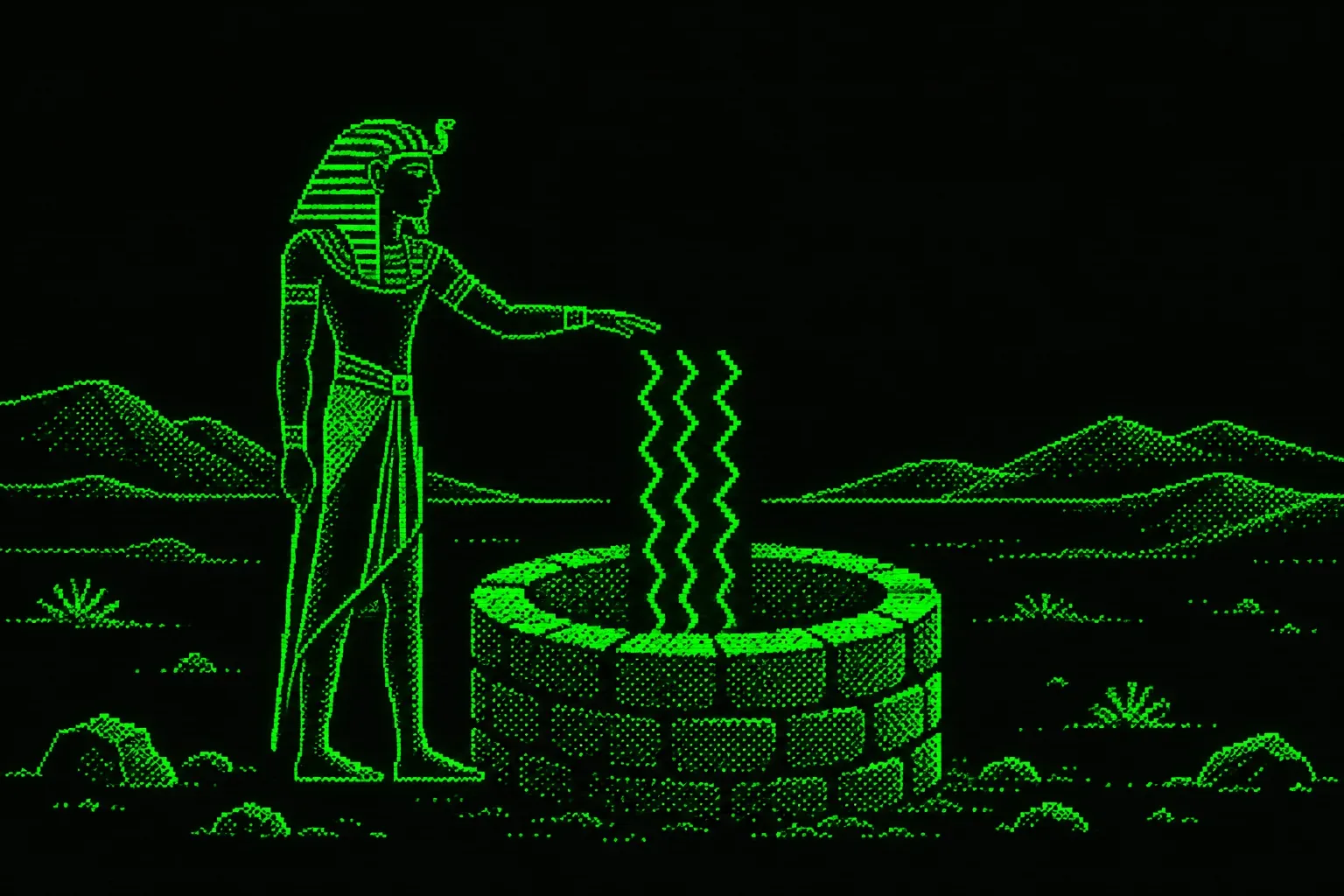
After Ramesses II’s royal titles and a broken speech by Amun, this inscription turns to the desert road to Iket, where no gold was brought from the foreign lands. Courtiers praise the king—Sia is in your heart—and report an earlier failure: The well was abandoned along the way. No water came up.
Ramesses II answers: It is I who will dig a well there. They respond by kissing the ground and throwing themselves down on their bellies, and he instructs the overseer of the royal scribes to send word to Nubia, where the flocks of the deserts thirst. The final line names the finished well The Well of Ramesses-Meriamun, Strong in Life.
- 1
[...] mki̯-Km,t-wꜥ⸢f⸣-ḫꜣs,t.pl Ḥr,w-[nbw] [...]
… Protector of Egypt, Subduer of Foreign Lands; the Golden Horus …
Note · Line 1
“Protector of Egypt, Subduer of Foreign Lands” is Ramesses II’s Two Ladies name, which invokes the guardian goddesses of Upper and Lower Egypt. His Golden Horus name follows. - 2
[...] nṯr-nfr nb-Tꜣ-šmꜥ,w Ḥr,w-sꜣb-šw,t [...]
… the perfect god, lord of Upper Egypt, Horus of many-colored plumage …
Note · Line 2
The king himself is called Horus here. - 3
[...] Rꜥw
… Ra.
- 4
Jmn ḥr 〈ḏd〉
Amun says:
- 5
jnk [...]
I …
- 6
[...] Rꜥw-msi̯-s(w)-mri̯-[Jmn] di ꜥnḫ ḏ,t [nḥḥ] mj jtj =f Rꜥw rꜥw-nb
… Ramesses, beloved of Amun, given life for ever and ever like his father Ra, day after day.
- 7
jst [...]
Now …
- 8
[...] ⸢jn⸣i̯.tw nbw ḥr ḫꜣs,t.pl [...]
… no gold was brought from the foreign lands …
Note · Line 8
The road to the Nubian goldfields crossed the desert. A well would give travelers water on the journey. - 9
[...] ẖnm,t ḥr wꜣ,t =s [...]
… a well on the road there …
- 10
[...] [⸮tm.n?] =k ⸢ḫnd⸣
… where you have not set foot.
- 11
[...] sni̯ [...]
… has passed …
- 12
[...] ẖr dbn,t
… wearing the sidelock.
Note · Line 12
A lock of hair worn at the side of the head marked the king as still a child. - 13
bw jy mn,w [...]
No monument came into being …
- 14
[jr] ⸢ḏd⸣ =⸢k⸣ [n] ⸢mw⸣
If you say to the water,
- 15
⸢mj⸣ [...]
“Come …!”
- 16
[sjꜣ] m jb =k
Sia is in your heart.
Note · Line 16
Sia is divine insight personified. For the Egyptians, the heart was the seat of thought. - 17
s,t [ns] =k kꜣr [...]
The seat of your tongue is the shrine …
- 18
[...] [jt]y ꜥnḫ-wḏꜣ-snb nb =n
… O sovereign—life, prosperity, health!—our lord.
Note · Line 18
“Life, prosperity, health!” is a blessing spoken after mention of the king. - 19
[j]r [ḫꜣs,t] J~[kꜣy~tꜣ] [...]
As for the desert land of Iket …
- 20
[...] jbi̯
… thirst.
- 21
jw [ꜣb]i̯.yw [...]
… wished …
- 22
[ḫꜣꜥ].ntw =s ḥr wꜣ,t
The well was abandoned along the way.
- 23
bw pr[i̯] mw [...]
No water came up …
- 24
[...] [sḏd.t] ḥr-n,tt mrr tw ⸢jtj⸣.pl =k [...]
… to tell, for your fathers love you …
- 25
jnk wbꜣ ẖnm,t j:m [...]
It is I who will dig a well there …
Note · Line 25
The king now speaks for himself. - 26
jw r rdi̯.t ḏd.y =tw m [tꜣ] n [...]
I shall have it told in the land of …
- 27
[...] [⸮nb?] =s[n] ḥr sn tꜣ ḥr r[ḏi̯.t] [ḥr] [ẖ,t] [...]
… their lord, kissing the ground and throwing themselves down on their bellies …
- 28
[ḏd].⸢jn⸣ ḥm =f ꜥnḫ-wḏꜣ-snb n jm,j-rʾ-sẖꜣ,w-nswt [rʾ]-ꜥ n [...]
Then His Majesty—life, prosperity, health!—told the overseer of the royal scribes how matters stood with …
- 29
jw hb =k r ḏd nn [...]
You send word to say this …
- 30
[...] Nḥs,y ḥnꜥ [...]
… the Nubians and …
- 31
[...] ḥm =f ꜥnḫ-wḏꜣ-snb ḫpr jw =f [...]
… His Majesty (life, prosperity, health) had come to pass while he …
Note · Line 31
The three wishes are a customary blessing after a mention of the king, here Ramesses II. - 32
[...] ḥr šms jb =f m-mr,t [...] nb [...]
… following his heart so that … every …
- 33
[...] [⸮_?]w ꜥw,t ḫꜣs,t.pl [⸮jbi̯?] [...]
… the flocks of the deserts thirst …
- 34
[...] [jt]y nb [...] nb.t
… O sovereign, my lord, … every …
- 35
[...] j:m =s [...]
… in it …
- 36
[...] wr [...]
… the chief …
- 37
[...] mꜣ tꜣ ẖnm,t [⸮jri̯.t?]n [...]
… to see the well that … had made
- 38
[...] sf
… yesterday.
- 39
šdi̯.y[n] =[f] [...]
He read …
- 40
[...] [⸮mnḫ?] sḫr.pl [...]
… whose plans are excellent …
- 41
[...] [Tꜣ-ẖnm,t]-Rꜥw-msi̯-s(w)-[mri̯]-[Jmn]-qn-[m]-[ꜥnḫ] [...]
… “The Well of Ramesses-Meriamun, Strong in Life” …
Note · Line 41
Meriamun means “beloved of Amun.”