~/sacred-texts/ramesside-royal-inscriptions
Ramesses II and Maathorneferure: The Short Marriage Stela
- Date
- Carved in the 19th Dynasty, after regnal year 34 of Ramesses II (c. 1245–1213 BC), on an alabaster stela
- Found
- First Pylon of the Temple of Mut, South Karnak, Thebes
- Language
- Late Egyptian · Hieroglyphic
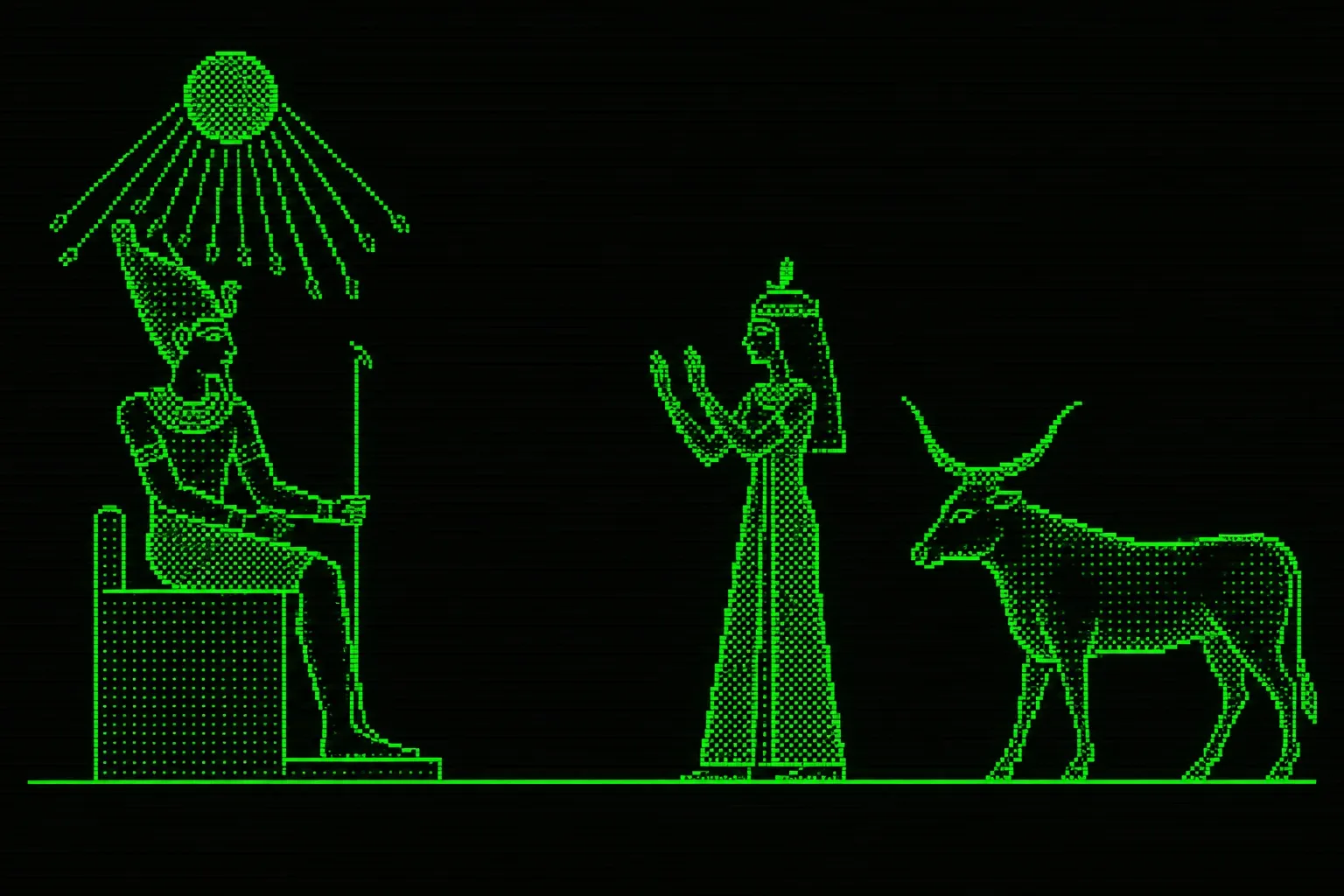
The stela praises Ramesses II in the third person, calling him the divine semen of every god, whom every goddess bore, whose flesh was gold, bones were silver, and every limb of his was iron. Each dawn Ra asks him, “What is in your heart? I will do it for you.”
With foreign princes beneath his two sandals, the Great Prince of Hatti sends his eldest daughter with gold, silver, copper, horses, and tens of thousands of livestock. In his heart His Majesty found her beautiful, naming her Maathorneferure; peace follows so travelers reach Hatti with no fear gripping their hearts.
This is the short version of the Marriage Stela, cut down to a single slab of alabaster for the precinct of Mut at Karnak. The full text, read from four copies, is on its own page.
- 1
Ḥr,w Kꜣ-nḫt-mri̯.y-Mꜣꜥ,t-nb-ḥb.pl-sd-mj-jtj≡f-Ptḥ-Tꜣ-ṯnn Nb,tj Mki̯-Km,t-wꜥf-ḫꜣs,t.pl-Rꜥw-msi̯-nṯr.pl-grg-Tꜣ.du Ḥr,w-nbw Wsr-rnp,t.pl-ꜥꜣ-nḫt,w nswt-bj,tj Wsr-Mꜣꜥ,t-Rꜥw-stp.n-Rꜥw sꜣ-Rꜥw Rꜥw-msi̯-sw-mri̯.y-Jmn di ꜥnḫ
Horus: Strong Bull, Beloved of Maat, Lord of Jubilees like his father Ptah-Tatenen; Two Ladies: Protector of Egypt, who subdues foreign lands, Ra who begot the gods and founded the Two Lands; Golden Horus: Mighty in Years, Great in Victories; King of Upper and Lower Egypt, Usermaatre Setepenre; Son of Ra, Ramesses Meryamun, given life.
Note · Line 1
These are the king’s five royal names. The Two Ladies are the patron goddesses of Upper and Lower Egypt. The jubilees are Sed festivals, at which the king ritually renewed his powers. - 2
jty sꜣ Tꜣ-ṯnn mj Jtm,w ṯs Tꜣ.du m nsw,yt =f mj Nb-r-ḏr jṯi̯ tꜣ.pl nb.w.pl m qn,t nḫt nswt-bj,tj Wsr-Mꜣꜥ,t-Rꜥw-stp.n-Rꜥw sꜣ-Rꜥw Rꜥw-msi̯-sw-mri̯.y-Jmn di ꜥnḫ
The sovereign, son of Tatenen like Atum, who binds the Two Lands together by his kingship like the Lord of All, who seizes all lands by valor and strength: the King of Upper and Lower Egypt, Usermaatre Setepenre, the Son of Ra, Ramesses Meryamun, given life.
Note · Line 2
The Lord of All is Atum, the creator god. - 3
mhr.j ꜥnṯ kꜣ-nḫt mj Stẖ Mnṯ,w sꜣ Mnṯ,w hd pḏ,t.pl-9 ḥqꜣ qn,j rs tp mj ꜣḫ,tj Rꜥw n tꜣ jꜥḥ n Km,t jṯn ṯḥn n rḫ,yt ꜥnḫ =sn m mꜣꜣ sṯw,t =f qꜣi̯ rnp,t.pl ꜥꜣ nsw,yt wr ḥb-sd.pl ꜥšꜣ.t bjꜣ,jt ꜣḫ n Šmꜥ,w mri̯.y Mḥ,w sꜥnḫ Tꜣ.du m kꜣ.pl =f nswt-bj,tj Wsr-Mꜣꜥ,t-Rꜥw-stp.n-Rꜥw sꜣ-Rꜥw Rꜥw-msi̯-sw-mri̯.y-Jmn di ꜥnḫ
Anat’s warrior, a strong bull like Seth,
Montu, son of Montu, who faces the Nine Bows;
valiant ruler, watchful as the Dweller on the Horizon;
sun of the land, moon of Egypt,
sun disk shining for the people, who live by the sight of his rays;
long in years, great in kingship, rich in jubilees, abounding in wonders;
who works for the good of Upper Egypt, whom Lower Egypt loves,
who keeps the Two Lands alive with his food:
the King of Upper and Lower Egypt, Usermaatre Setepenre, the Son of Ra, Ramesses Meryamun, given life.Note · Line 3
Anat and Montu are war gods. The Nine Bows stand for the foreign peoples Egypt counted as its enemies. - 4
jsṯ ḥm =f m ḥqꜣ pḏ,t.pl-9 m nb ꜥꜣ n tꜣ.pl nb.w.pl
Now His Majesty is ruler of the Nine Bows and great lord of all lands.
- 5
ktkt.n p,t mnmn.〈n〉 tꜣ ḏr ḥqꜣ.n =f n[sw,yt] n Rꜥw
The sky trembled and the earth shook when he took up the kingship of Ra.
- 6
nswt-bj,tj Wsr-Mꜣꜥ,t-Rꜥw-stp.n-Rꜥw sꜣ-Rꜥw Rꜥw-msi̯-sw-mri̯.y-Jmn di ꜥnḫ mw nṯr n nṯr nb msi̯.n nṯr,t nb rnn.n {w}〈jtj〉 =f [...] m Ḥw,t-ꜥꜣ.t wr.t n Jwn,w
The King of Upper and Lower Egypt, Usermaatre Setepenre, the Son of Ra, Ramesses Meryamun, given life: the divine semen of every god, whom every goddess bore, whom his father … reared in the great temple of Heliopolis.
Note · Line 6
Heliopolis was a center of the worship of Ra. - 7
pri̯.n =f m ẖ,t wḏ n =f qn,t smꜣ n =f psš Nb,wj
When he came forth from the womb, valor was decreed for him, and the shares of the Two Lords were joined for him.
Note · Line 7
The Two Lords are Horus and Seth. Their shares are the two halves of Egypt, united under one king. - 8
ḥꜥ.w.pl =f m nbw
His flesh was gold,
- 9
qs.pl =f m ḥḏ
his bones were silver,
- 10
ꜥ,t.pl =f nb m bjꜣ-[n]-p[,t]
and every limb of his was iron.
Note · Line 10
The Egyptian word for iron here means “metal of the sky.” - 11
jst jr nṯr-nfr pn sꜣ Jtm,w jwꜥ,w Rꜥw
Now as for this perfect god, son of Atum and heir of Ra:
- 12
wbn =f m ꜣḫ,t rꜥw-nb r sḏm spr,t.pl =f nb nswt-bj,tj Wsr-Mꜣꜥ,t-Rꜥw-stp.n-Rꜥw sꜣ-Rꜥw Rꜥw-msi̯-sw-mri̯.y-Jmn di ꜥnḫ ḏd.n n =f Rꜥw tnw psd =f
each day when Ra rose on the horizon to hear his every petition—the petitions of the King of Upper and Lower Egypt, Usermaatre Setepenre, the Son of Ra, Ramesses Meryamun, given life—Ra would say to him, each time he shone:
- 13
jḫ m jb =k
“What is in your heart?
- 14
jri̯.y =j st ḫr =k
I will do it for you.”
- 15
wn.ḫr mdwi̯ =f m tꜣ sḏm =tw m ḥr,t
So the king would speak on earth, and in heaven he was heard.
- 16
j.ḏd.w =f nb m mꜣꜥ-ḫrw nswt-bj,tj Wsr-Mꜣꜥ,t-Rꜥw-stp.n-Rꜥw sꜣ-Rꜥw Rꜥw-msi̯-sw-mri̯.y-Jmn di ꜥnḫ
Everything said by the King of Upper and Lower Egypt, Usermaatre Setepenre, the Son of Ra, Ramesses Meryamun, given life, came out in his favor.
- 17
wšb njs =f m wjꜣ-n-ḥḥ.w
His call was answered aboard the Barque of Millions,
Note · Line 17
The barque is the boat in which Ra crosses the sky. - 18
spr,t.pl =f nb m ꜣw,t-jb
and all his petitions were a joy.
- 19
rs,jt m ḫdi̯
The south sails north.
Note · Line 19
The Nile flows north: the south is sailing downstream, the north upstream. - 20
mḥ,tj.t m ḫnti̯
The north sails south.
- 21
jmn,tt jꜣb,tt m hms
West and east come in humility.
- 22
ḫꜣs,t.pl bšt.w jwi̯ m ḥtp,w
The rebellious foreign lands come in peace.
- 23
wr.w =sn ẖr ṯbw,t.du =f sbi̯,tw pꜣ tꜣ n Ḫt
Their princes are beneath his two sandals, and even the land of Hatti lies there.
Note · Line 23
Hatti was the Hittite kingdom. The image of enemies beneath the king’s sandals proclaims his dominion. - 24
nꜣ jr,j.pl-n-ꜥḥꜣ n Km,t st ḫpr m-dj =f m bꜣk.pl m jb wꜥ mj,tt Tꜣ-mrj nswt-bj,tj Wsr-Mꜣꜥ,t-Rꜥw-stp.n-Rꜥw sꜣ-Rꜥw Rꜥw-msi̯-sw-mri̯.y-Jmn di ꜥnḫ
Egypt’s adversaries have become his servants, of one heart like the Beloved Land of the King of Upper and Lower Egypt, Usermaatre Setepenre, the Son of Ra, Ramesses Meryamun, given life.
Note · Line 24
The Beloved Land is Egypt itself. - 25
hꜣb wr.pl =sn ḥr sḥtp ḥm =f ḏr sḏm.n =f wsr rn =f
Their princes sent word to appease His Majesty once the ruler of Hatti had heard how mighty the king’s name was.
- 26
rdi̯.n =f jni̯.tw sꜣ,t{t} =f wr.t jn,w ꜥꜣ ꜥšꜣ ẖr-ḥꜣ,t =s m nbw ḥḏ ḥmt qn.w ḥm.pl ḥtr.pl n rʾ-ꜥ =sn kꜣ.pl ꜥnḫ.pl sjw.pl m ḏbꜥ.pl jḫ,t tꜣ =f n ḏr.w.pl =w n nswt-bj,tj Wsr-Mꜣꜥ,t-Rꜥw-stp.n-Rꜥw sꜣ-Rꜥw Rꜥw-msi̯-sw-mri̯.y-Jmn di ꜥnḫ
He had his eldest daughter brought to the King of Upper and Lower Egypt, Usermaatre Setepenre, the Son of Ra, Ramesses Meryamun, given life. Great and plentiful gifts went before her: gold, silver, copper in abundance, servants and teams of horses without number, bulls, goats and sheep by the tens of thousands, goods of his land without end.
- 27
ꜥḥꜥ.n sṯꜣ sꜣ,t{t} 〈n〉 pꜣ wr-ꜥꜣ-n-Ḫt m-bꜣḥ ḥm =f
Then the daughter of the Great Prince of Hatti was led before His Majesty.
- 28
wn.jn =s nfr.tj ḥr jb n ḥm =f
In his heart His Majesty found her beautiful.
- 29
rdi̯.n ḥm =f jri̯.y =tw rn =s m ḥm,t-nswt Mꜣꜣ,t-Ḥr,w-nfr,w-Rꜥw sꜣ,t{t} 〈n〉 pꜣ wr-ꜥꜣ-n-Ḫt sꜣ,t{t} 〈n〉 tꜣ wr,t-ꜥꜣ.t-n-Ḫt
His Majesty had her named “King’s Wife Maathorneferure, daughter of the Great Prince of Hatti, daughter of the Great Princess of Hatti.”
- 30
jst rf bjꜣ štꜣ n rḫ =s ḫpr.tj ḥr Km,t
Thus a mysterious wonder, until then unknown, came to pass in Egypt.
- 31
jn jtj =f Ptḥ-Tꜣ-ṯnn j.wḏ s m nḫt,w ḥr rn =f
It was his father Ptah-Tatenen who decreed it as a victory to his name.
Note · Line 31
The decree concerns the wonder just recounted. Ptah-Tatenen is the creator god of Memphis, named here as the king’s father. - 32
wn.jn tꜣ n Ḫt m jb wꜥ ẖr rd.du ḥm =f nswt-bj,tj Wsr-Mꜣꜥ,t-Rꜥw-stp.n-Rꜥw sꜣ-Rꜥw Rꜥw-msi̯-sw-mri̯.y-Jmn di ꜥnḫ
Then the land of Hatti was of one heart beneath the two feet of His Majesty, the King of Upper and Lower Egypt, Usermaatre Setepenre, the Son of Ra, Ramesses Meryamun, given life.
Note · Line 32
The two royal names are the throne name and birth name of Ramesses II. - 33
wn.ḫr jr wḏꜣ ꜥḥꜣ,wtj s-ḥm,t rʾ-pw m wpi̯.w =sn r Ḏꜣ~h pḥ =sn r tꜣ n Ḫt nn snḏ ḥꜣ jb =sn n ꜥꜣ.w 〈n〉 nḫt,w ḥm =f
Whenever a man or a woman set out for Djahy on their errands, they would reach the land of Hatti with no fear gripping their hearts, so great were His Majesty’s victories.
Note · Line 33
Djahy was an Egyptian name for a region of the southern Levant, on the way from Egypt to Hatti.