~/sacred-texts/ramesside-royal-inscriptions
Ramesses II’s Abydos Inscription: Finishing Seti I’s Temple
- Date
- Carved in the 19th Dynasty (reign of Ramesses II, c. 1279 BC) on the portico wall of the Temple of Seti I at Abydos
- Found
- In situ on the southern half of the outer portico wall of the Temple of Seti I at Abydos, Egypt
- Language
- Late Egyptian · Hieroglyphic
In his first year, Ramesses II visits Abydos and finds the royal tombs crumbling ("Not a brick embraced its fellow") and his father Seti I’s temple unfinished, its statue on the ground. Before courtiers sliding on their bellies in praise, Ramesses recalls Seti crowning him as a boy and vows to finish the sanctuary and endow it with ships, herds, and priests.
Ramesses then addresses his dead father: “Awake! Turn your face to the sky that you may see Ra, my father Merenptah, you who are a god!” Seti replies from the underworld, accepting bread, water, and breath, promising millions of years, and calling Ramesses “the divine semen of Ra, from whom you came forth.”
- 1
ḫpr swt sꜣ nḏ ḥr jtj =f mj Ḥr,w nḏ =f Wsjr qd qd sw msi̯ msi̯ sw sꜥnḫ rn n wtṯ sw nswt-bj,tj Wsr-Mꜣꜥ,t-Rꜥw-stp.n-Rꜥw sꜣ-Rꜥw mri̯.y =f nb-ḫꜥ,w Rꜥw-msi̯-s(w)-[mri̯]-Jmn di ꜥnḫ mj Rꜥw ḏ,t mri̯.y Wsjr nb-ꜣbḏw
Now there arose a son who defended his father as Horus defended Osiris, who fashioned the one who fashioned him, who begot the one who begot him, who kept alive the name of the one who sired him: the King of Upper and Lower Egypt, Usermaatre-Setepenre, the Son of Ra whom Ra loves, the Lord of Crowns, Ramesses-Meryamun, given life like Ra forever, beloved of Osiris, lord of Abydos.
Note · Line 1
The son is Ramesses II; his father is Seti I. Like Horus tending to his dead father Osiris, Ramesses gives his father life again by making his images and keeping his name in use. - 2
ꜥḥꜥ.n nb-Tꜣ.du m nswt r jri̯.t nḏ,tj ḥr jtj =f ḫft rnp,t-sp 1 m wḏ,yt =f tp.t r Wꜣs,t
The Lord of the Two Lands rose as king to be his father’s defender, in the first year of his reign, on his first voyage to Thebes.
- 3
msi̯.yn =f sšm,w.pl n.w jtj =f nswt [p]w Mn-Mꜣꜥ,t-Rꜥw wꜥ m Wꜣs,t ky m Ḥw,t-kꜣ-Ptḥ m ḥw,t-nṯr qd.n =f n =sn 〈m〉-ḥꜣ,w-[ḥr] nfr n n,tj m Tꜣ-wr ꜣbḏ,w spꜣ,t mri̯.n =f ꜣbi̯.t jb =f ḏr wn =f tp tꜣ sꜣṯ,w n Wnn-nfr
Then he fashioned cult images of his father, King Menmaatre: one at Thebes, another at Memphis, each in the temple his father had built for them. This was in addition to the good he did for him who dwells in the Thinite province, at Abydos, the district he had loved, the place his heart had longed for ever since he was on earth, the very soil of Wennefer.
Note · Line 3
Menmaatre is Seti I’s throne name. Wennefer is Osiris, whose worship had a principal seat at Abydos. - 4
wḥm.n =f smꜣwi̯ mn,w n jtj =f jm,j ẖr,t-nṯr sꜥnḫ rn =f msi̯.t sšm.pl =f di.[t] ḥtp.pl mn.tj n kꜣ =f špsi̯ pr =f sḏfꜣ ḫꜣw,t.pl =f šrj wš m ḥw,t mri̯.n =f ḫwsi̯ jwn.pl m rʾ-pr =f nmꜥ jnb.pl =f smn sbꜣ.pl =f sꜥḥꜥ wꜣs m s,t tn n [jtj] =[f] [m] [spꜣ,t] [Ws]jr [...] rw,tj jri̯.w m-ẖnw m jrr.t nb ꜥꜣ nḫt,w nswt-bj,tj Wsr-Mꜣꜥ,t-Rꜥw-stp.n-Rꜥw sꜣ-Rꜥw Rꜥw-msi̯-s(w)-mri̯-Jmn di ꜥnḫ ḫr jtj =f Wsjr nswt Mn-[Mꜣꜥ,t]-[Rꜥw] mꜣꜥ-[ḫrw]
Once again he renewed the monuments of his father who dwells in the necropolis. He kept his name alive, fashioned his cult images, made offerings endure for his ka, adorned his house, stocked his offering tables, filled the gaps in the temple his father had loved, built pillars in his sanctuary, faced its walls, secured its gates and raised up what had fallen in this place of his father in the district of Osiris … a double gate made within, among all the works of him who is great in victories, the King of Upper and Lower Egypt, Usermaatre-Setepenre, the Son of Ra, Ramesses-Meryamun, given life in the presence of his father, the Osiris King Menmaatre, justified.
Note · Line 4
The ka is the life force that receives a person’s offerings after death. Seti is called Osiris because the dead king was identified with that god; “justified” declares him vindicated after death. - 5
[⸮wꜣḥ?].n =f n =f ḫ,t ꜥpr m ḏfꜣ n rn.pl =f jm,jwpl nswt.[y]pl [jb] =f jꜣm n wtṯ sw ḥꜣ,tj =f pẖr n mnꜥ sw
He settled property on his father, stocked with provisions for his names among the names of the kings. His heart was tender toward the one who sired him; his heart turned toward the one who reared him.
- 6
wꜥ m nn hrw ḫpr.w m rnp,t-sp 1 ꜣbd 3 ꜣḫ,t sw 23 m [šmi̯] jwi̯ [ḥm] =[f] ḥr-sꜣ sḫnti̯ Jmn r Jp,t
It happened on one of those days, in regnal year one, on the twenty-third day of the third month of the Inundation, as His Majesty was coming and going after taking Amun upstream to Luxor.
Note · Line 6
At the Opet festival, Amun’s cult image traveled from Karnak to Luxor Temple. Both temples stood in Thebes. - 7
pri̯.n =f ḥsi̯.y m qn,t nḫt ḫr Jmn-Jtm,w m Wꜣs,t [f]qw.n =f sw m ḥḥ.pl [n] rnp,t.pl r ꜥḥꜥ,w n Rꜥw m ḥr,t [⸮_?]m [...] mtnw m nḥḥ ḥr ḏ,t
He came forth graced with valor and might by Amun-Atum in Thebes. The god had rewarded him with millions of years to match the lifespan of Ra in the sky … endowed with eternity upon eternity.
- 8
fꜣi̯ =f ꜥ =f ẖr sḥtp,y r ꜣḫ,t n Jm,j-[ꜥ]nḫ [jri̯] =[f] ꜥꜣb,t =f ꜣḫ.tj šsp.tj [n] [jtj] =f nb-mrw,t
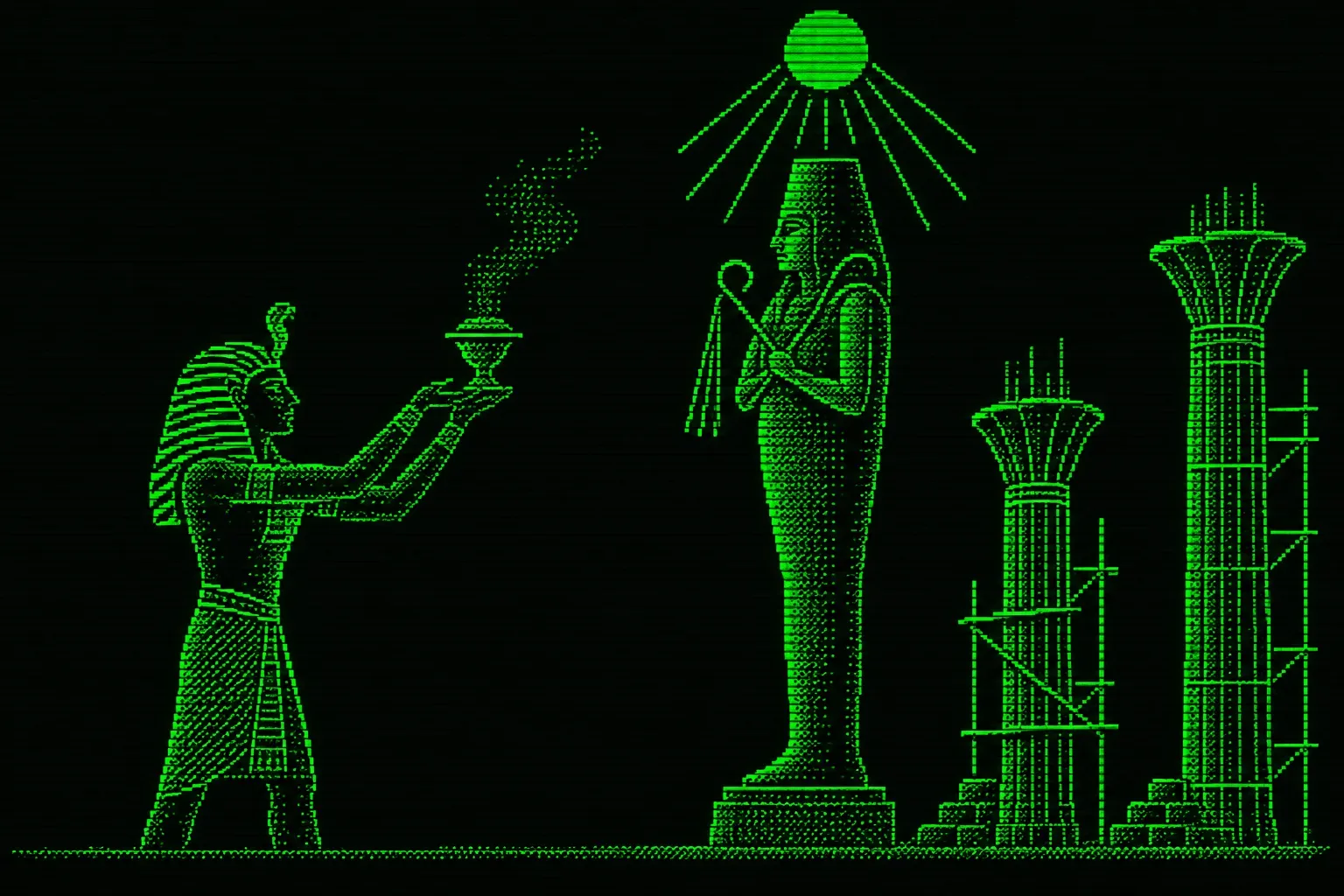
He raised his arm, censer in hand, toward the horizon of Him Who Is in Life. He made his offering; it took effect and was received by his father, the lord of affection.
- 9
jyi̯ ḥm =f m Nʾ,t-rsj.t [...] Rꜥw
His Majesty’s departure from the Southern City … Ra.
Note · Line 9
The Southern City is Thebes. - 10
šsp tp wꜣ,t
Setting out on the journey;
- 11
jri̯.t sqd,yt wjꜣ.pl nswt ḥr sḥḏ nwy
making the voyage, the royal barques lighting up the flood;
- 12
di.t ḥr m ḫdi̯ r s,t qn pr-Rꜥw-msi̯-s(w)-mri̯-Jmn-ꜥꜣ-nḫt.w
turning his face downstream toward the Place of Victory, the House of Ramesses-Meryamun, Great in Victories;
Note · Line 12
This is Pi-Ramesses, the royal residence in the eastern Nile Delta. - 13
ꜥq ḥm =f r mꜣ jtj =f
His Majesty entering to see his father;
- 14
ẖn n,t mr n Tꜣ-wr r wꜣḥ ḫ,t n Wnn-nfr m bw-nfr mrr.t kꜣ =f r wšd [...] =f sn =f Jni̯-ḥr,t sꜣ-Rꜥw m [m]ꜣꜥ,t mj-qd =f
rowing the waters of the canal of the Thinite province to lay down offerings for Wennefer, good things his ka desires, and to greet his …, his brother Onuris, truly a son of Ra like himself.
- 15
gm.n =f ḥw,t.pl n.w Tꜣ-ḏsr n nswt.ypl jm,j.w.pl ḥꜣ,t.pl mꜥḥꜥ.w.pl =sn jm,j[.pl] ꜣbḏ,w wꜣw.w r ḫpr m tp-šw
He found the temples of the kings of old in the Sacred Land, their tombs at Abydos, on the verge of ruin.
Note · Line 15
The Sacred Land is the cemetery. - 16
gs =sn jr,j m rʾ-ꜥ-[kꜣ,t.pl]
Half of them were still under construction,
- 17
[...] m sꜣ[ṯ],w
… on the ground,
- 18
jnb.pl =[s]n [...] ḥr wꜣ,t nn ḥpt.n db,t sn,[nw]t =s
their walls … on the road. Not a brick embraced its fellow.
- 19
wn ḥr msḫn ḫpr n jwtn
What had stood on the site had turned to earth.
- 20
nn qd.n [⸮_?] [⸮_?] =f n,t[j] m rdi̯.[t] wꜣḥ m sḫr.pl =f ḏr pꜣi̯.n nb.pl =sn r p,t
… had not built his …, which was to give lasting form to his plans, since their lords had flown to the sky.
- 21
nn-[wn] sꜣ smꜣwi̯ mn,w n jtj =f n,tj m ẖr,t-nṯr
There was no son to renew the monuments of his father who dwelt in the necropolis.
- 22
jst ḥw,t Mn-Mꜣꜥ,t-Rꜥw ḫft-ḥr ={{s}}[[st]] ḥꜣ ={{s}}[[st]] m rʾ-ꜥ-kꜣ,t.pl ꜥq.n =f r p,t
As for the temple of Menmaatre, both front and back were still under construction when he entered the sky.
- 23
nn mnq.[tw] mn,w ={{s}}[[st]]
Its monuments had not been finished.
- 24
nn sꜥḥꜥ jwn.pl ḥr rjwd ={{s}}[[st]]
No pillars had been raised on its steps.
- 25
sšm,w =st r tꜣ nn msi̯.ntw =f m rḫ.t-n≡f n.w ḥw,t-nbw
Its cult statue lay on the ground; it had not been fashioned into a divine image of the House of Gold.
Note · Line 25
The House of Gold was the temple workshop where sacred images were fashioned. - 26
ꜣb,w ḫpr.w m ḥtp-nṯr ={{s}}[[st]] wnw,t-ḥw,t-nṯr mj,tt
Offerings to its god had ceased, and the temple priests no longer served their shifts.
- 27
jṯi̯.t jni̯.t ḫft ꜣḥ,t.pl =s nn smn.tw tꜣš.pl =sn m tꜣ
Its fields were taken away and given back; their boundaries had not been fixed on the ground.
- 28
ḏd.jn ḥm =f n ḫtm,tj-bj,tj n,tj r gs =f
Then His Majesty said to the seal-bearer of the King of Lower Egypt who stood at his side:
- 29
ḏd =k njs šny,t šps,w.pl-nswt jm,j.pl-rʾ-mnf,yt mj-qd =w jm,j.pl-rʾ-kꜣ,t.pl mj ꜥšꜣ =sn ḥr,j.pl-tp n.w pr-mḏꜣ,t
“Give the order: ‘Summon the court, the royal nobles, the infantry commanders to a man, the overseers of works, however many there are, and the chiefs of the House of Books.’”
Note · Line 29
The House of Books was the archive. - 30
sṯꜣ.jntw =w m-bꜣḥ ḥm =f
Then they were brought before His Majesty.
- 31
fnḏ.pl =sn ḫꜥm.w m sꜣṯ,w
Their noses touched the ground,
Note · Line 31
The men summoned before Ramesses II are paying homage to the king. - 32
pd.pl =sn ḥr tꜣ m hꜣy sn-tꜣ
their knees were on the earth as they shouted for joy and kissed the ground,
- 33
ꜥ.du =sn m jꜣwj.pl n ḥm =f
and both their arms were raised in praise of His Majesty.
- 34
dwꜣ =s[n] nṯr pn nfr m sꜥꜣi̯ nfr.pl =f m-bꜣḥ
They worshipped this perfect god, magnifying his perfections in his presence.
- 35
ḏd =sn smj mj jri̯.tn =f
They gave an account of his deeds just as he had done them.
- 36
stwt =sn pḥ,tj.pl =f mj ḫpr
They extolled his feats of strength just as they had come to pass.
- 37
mdw,t nb pri̯ m rʾ =[s]n jrr.t nb-Tꜣ.du m mꜣꜥ,t
Every word that came from their mouths was something the Lord of the Two Lands had truly done.
Note · Line 37
The Two Lands are Upper and Lower Egypt. - 38
wn.jn =sn ḥr ẖ,t.pl =sn ḥr ḥbnbn ḥr tꜣ m-bꜣḥ ḥm =f m ḏd
Then they slid along the ground on their bellies before His Majesty, saying:
- 39
jyi̯ =[n] ḫr =k nb-p,t nb-tꜣ Rꜥw ꜥnḫ n tꜣ mj-qd =f nb-ꜥḥꜥ,w rwd-pẖr,yt Jtm,w n ḥnmm,t nb-šꜣ.y sḫpr rnn,t H̱nm,w msi̯ rḫ,yt dd! ṯꜣw r fnḏ-nb.pl sꜥnḫ psḏ,t tm{m}.tj wḫꜣ n p,t sꜣy n tꜣ smj.tj sꜥqꜣ Jdb.du nb kꜣ.pl ꜥšꜣ wꜣḥy,t
“We have come to you, lord of heaven, lord of earth,
living Ra of the whole land,
lord of the span of life, long in years,
Atum to humankind,
lord of fate, who brings prosperity into being,
Khnum, who gives birth to the people,
who gives breath to every nose and life to the whole Ennead,
pillar of heaven, beam of earth,
leader who guides the Two Banks aright,
lord of food, rich in grain,Note · Line 39
Atum and Khnum are creator gods; Khnum was pictured shaping human beings on a potter’s wheel. - 40
rnn,t m s,t db,t.du =f jri̯ sr.pl qd nmḥ.pl sḫpr.n mdw,t =f ḏfꜣ.pl nb šps rs tp ḥr-nb nmꜥ nḏ.n pḥ,tj.du =f Km,t ṯnr ḥr ḫꜣs,t.pl jyi̯ ḥbi̯.n =f mki̯.yn ḫpš =f Tꜣ-mrj.pl mri̯.y Mꜣꜥ,t ꜥnḫ =f j:m =s m hp.pl =f ḫwi̯ Jdb.du wsr rnp,t.pl ꜥꜣ nḫt,w dr.n ḥr,yt =f ḫꜣs,t.pl
with prosperity wherever his two feet tread;
maker of nobles, shaper of the poor,
whose word has brought forth food;
glorious lord, who keeps watch while everyone sleeps,
whose might has guarded Egypt;
mighty in foreign lands, who returns in triumph,
whose sickle-sword has guarded the Egyptians;
beloved of Maat, by whom he lives through his laws,
guardian of the Two Banks,
mighty in years, great in victories,
whose terror has driven back the foreign lands!Note · Line 40
Maat is truth and right order personified as a goddess. The king upholds her through his laws. - 41
jty =n nb =n Rꜥw =n ꜥnḫ Jtm,w ḥr mdw,t m rʾ =f
Our sovereign, our lord, our living Ra!
Atum speaks through his mouth. - 42
m =k n ꜥꜣ m-bꜣḥ ḥm =[k]
See, we are here before Your Majesty!
- 43
wḏ =k n =n ꜥnḫ n dd! =k
May you decree life for us as your gift!
- 44
pr-ꜥꜣ ꜥnḫ-(w)ḏꜣ-s(nb) pꜣ ṯꜣw n fnḏ =n ꜥnḫ ḥr-nb wbn =f n =sn
Pharaoh—life, prosperity, health!—is the breath in our nostrils.
All live when he rises for them.”Note · Line 44
The wish for life, prosperity and health is a customary blessing after the king’s title. Like Ra, the sun god, the king is said to rise for his people. - 45
ḏd.jn ḥm =f n =sn
Then His Majesty said to them:
- 46
m =tn rdi̯.n =j ꜥš =tw n =tn ḥr sḫr n,tj ḫft-ḥr =j
“See, I have had you summoned about a plan that lies before me.
- 47
jw mꜣ.n =j ḥw,t.pl Tꜣ-[ḏsr] [m]ꜥḥꜥ,t.pl jm,j.w.pl ꜣbḏ,w
I have seen the temples of the Sacred Land, the tombs at Abydos.
Note · Line 47
Abydos was a center of the worship of Osiris, ruler of the dead. - 48
kꜣ,t.pl j:m =sn m rʾ-[ꜥ]-bꜣk ḏr hꜣw nb.pl =sn [r]-mn hrw pn
From the days of their lords to this very day, the work on them has stood unfinished.
- 49
jr ꜥḥꜥ sꜣ m s,t jtj =f nn smꜣwi̯ mn,w wtt sw
‘Even when a son took his father’s place, the monuments of the man who begot him were not renewed,’
- 50
ḫru̯ =j ḥr mdwi̯ ḥnꜥ jb =j
I said, speaking with my heart.
- 51
sp mꜥ{d}〈r〉 smnḫ swꜣi̯.yt
‘To make good what has gone before would be a deed well done.
- 52
ꜣḫ nꜥi̯.[⸮t?]
Compassion does good.
- 53
nfr ꜣms-jb sꜣ pẖr =f ḥꜣ,tj m-sꜣ jtj =f
Fine is the care of a son who turns his heart toward his father.’
- 54
jb =j ḥr ḫrp =j ḥr jri̯.〈t〉 ꜣḫ,t.pl n Mri̯.n-Ptḥ
My heart urges me to do good for Merenptah.
Note · Line 54
Merenptah, ‘beloved of Ptah,’ is part of the name of Ramesses’ father, Seti I. His temple at Abydos was left unfinished at his death. - 55
di =j ḏd.y =tw r nḥḥ ḏ,t
I will have it said for ever and ever:
- 56
jn sꜣ =f sꜥnḫ rn =f
‘It was his son who kept his name alive.’
- 57
{{ḥsi̯}} [[kꜣ]] [[ḥsi̯]] (w)j jtj Wsjr m ꜥḥꜥ,w ꜥꜣ [⸮n?] sꜣ =f Ḥr,w mj jnk jri̯ jri̯.t[n] =[f]
Then my father Osiris will favor me with the long life of his son Horus, for I am one who does what he did.
Note · Line 57
Ramesses takes the part of Horus, who acted for his dead father Osiris. In doing good for Seti, Ramesses does as Horus did. - 58
ꜣḫ.n =j mj ꜣḫ =f n msi̯ wj
I have been of service, as he was, to the one who begot me.
- 59
pri̯.n =j m Rꜥw [ḫ]r [⸮jw?] ḏd =tn
I came forth from Ra, yet you say:
- 60
m Mn-Mꜣꜥ,t-Rꜥw mnꜥ wj
‘It was Menmaatre who reared me.’”
Note · Line 60
Ramesses names Ra as his divine father and Seti as the father who raised him. - 61
sꜥꜣi̯.n wj nb-r-ḏr ḏs =f jw =j m ẖrd.w r-mn ḥqꜣ =j
The Lord of All himself raised me to greatness, from childhood until I came to rule.
Note · Line 61
The speaker is Ramesses II. At Abydos he recalls what his father, Seti I, did for him and tells what he will do for his father in return. - 62
di.n =f n =j tꜣ jw =j m swḥ,t
He gave me the land while I was still in the egg.
Note · Line 62
“Still in the egg” means before birth: Ramesses claims that Egypt was his to rule even then. - 63
sr.pl ḥr sn tꜣ n-ḥr =j jw =j bs.k[w] [m] [sꜣ] smsw m jr,j-pꜥ,t [ḥr] [ns],t Gb
The dignitaries kissed the ground before me, for I had been installed as eldest son and crown prince on the throne of Geb.
Note · Line 63
Geb, the earth god, was reckoned among the first kings. The throne of Geb is the kingship of Egypt. - 64
jw ={j} smj =j [ḫr,t] T[ꜣ.du] m ḥr,j-[tp] mnfy,t n,t-ḥtr.pl
As commander of the infantry and the chariotry, I reported on the affairs of the Two Lands.
- 65
wn ḫꜥꜥ! jtj =j n kjwy.pl jw =j m sfj jm,wtj qnj =[f] ḏ[d.n] =[f] r =j
When my father was brought forth before the people, with me still a boy in his arms, he said of me:
- 66
sḫꜥi̯ sw m nswt [mꜣ] =j nfr =f jw =j ꜥnḫ.kw
“Bring him forth as king, that I may see his perfection while I still live.”
- 67
[rdi̯.n] =[f] [ꜥš] =[tw] [n] jm,j.[pl]-ḫnt.pl r smn.t ḫꜥ,w ḥr wp,t =j
He had the chamberlains summoned to set the crowns firmly on my head.
- 68
jmi̯ n =f Wr,t ḥr tp =f j.n =f r =j m wn =f tp tꜣ
“Set the Great One on his head,” he said of me while he was still on earth,
Note · Line 68
The Great One is the rearing cobra worn on the king’s brow to protect him. - 69
ṯs =f tꜣ pn nwi̯.y =[f] [...] di =f ḥr n ḥnmm,t
“that he may bind this land together, care for … and command the people.”
- 70
ḏ[d.n] =[f] [...] [rm].yt n wr mrw,t =j m ẖ,t =f
He spoke … weeping, so great was the love he bore me in his body.
- 71
grg.n =f wj m pry,t.pl jp,t-nswt m-sn,t nfr,t.pl ꜥḥ
He provided me with women of the royal household, women of the harem like the beauties of the palace.
- 72
stp =f ḥm,t.pl ḫt [⸮tꜣ?] [⸮ḥr?] ṯꜣ.t ḫnr.pl n [...] [⸮_?]t =f šdd! pr-ḫnr.pl ḫnms,t
He chose women throughout the land, taking women of the harem for … his … The women of the harem were brought up as companions.
- 73
m =k wj m Rꜥw ḥr,j rḫ,yt
Look, I am Ra, ruler of the people.
- 74
šmꜥ,w-mḥ,wj ẖr ṯb,t.du =j [...] [⸮_?]
The people of Upper and Lower Egypt are beneath my two sandals …
- 75
jnk st r [⸮Rꜥw?] [...] [ms]i̯.yṱ =j jtj =j m nbw m mꜣw,t m rnp,t tp.t n ḫꜥꜥ! =j
I am … Ra … I fashioned my father anew in gold in the first year of my appearing as king.
- 76
wḏ.n =j spd rʾ-pr =f
I ordered his temple to be equipped.
- 77
smn.n =j ꜣḥ,t.pl =f [...]
I secured his fields …
- 78
[wꜣḥ] =j n =f ḥtp [n] [kꜣ] =[f] [...] jrp snṯr dq,t nb.t rnp,yt [nb.t] mnw.pl rwd n =f
I set out an offering for him, for his ka: … wine, incense, every kind of fruit, all manner of fresh produce, and trees grown for him.
Note · Line 78
Offerings to Seti’s ka sustained him after death. - 79
m =k wn ḥw,t =f r ḫt =j
Look, his temple was in my charge,
- 80
kꜣ,t.pl =s nb.t ẖr-s,t-ḥr =j ḏr wn [...]
and I oversaw all its works from the time when …
- 81
jst wj m ẖrd [...] n.t jtj =j
I was then a child … of my father.
- 82
sꜥꜣ =j s m [s]mꜣwi̯.t mn,w
I will make it great by renewing its monuments.
- 83
nn mkḥꜣ =j s,t =f mj nfꜣ.w ẖrd.pl ḫm.y ḥr jtj =[sn]
I will not neglect his place like those children who know nothing of their father.
- 84
[...] r [...] ḏ[d].y =[tw] [...]
… so that … it will be said …
- 85
[ntf] sꜣ jri̯ ꜣḫ.pl
“He was a son who did good.”
- 86
nꜣy =j tnr n jtj =j m ẖrd mnq =j st jw =j m nb-Tꜣ.du
The feats I undertook for my father as a child I will see through, now that I am Lord of the Two Lands.
- 87
grḥ =j j:m =sn m-šs-mꜣꜥ [...]
I will bring them to a splendid finish …
- 88
[n]mꜥ =j jnb.pl m ḥw,t-nṯr n pꜣ wtt =j
I will face the walls in the temple of the one who begot me.
- 89
di =j m-ḥr s n stp =j r ḫrp kꜣ,t.pl tn j:m =[s]
I will appoint a man of my choosing to direct this work there.
- 90
šrj =j wš [n,tj] m jnb.pl =st
I will fill the gaps in its walls.
- 91
[...] ⸢b⸣[ḫ]⸢n⸣.t.pl =s m [...]
“… its pylons of …
Note · Line 91
Ramesses II is speaking of work on his father’s temple at Abydos. A pylon is a gateway flanked by two great towers. - 92
ḥbs =j pr =f
I shall roof his temple.
- 93
špi̯ =j jwn.pl =f
I shall raise its pillars.
- 94
di =j jnr.pl m s,t.pl snṯ,t
I shall lay the stones in their places in the foundation.
- 95
nfr jri̯.t mn,w ḥr mn,w
It is good to build monument upon monument.
- 96
ꜣḫ,[t].pl sn.tj m sp wꜥ jw =w ḥr rn =j ḥr rn jtj =j
Two benefits come of a single deed when the monuments bear my name and my father’s name.
- 97
ḫy sꜣ [nfr] [ḫy] ⸢msi̯⸣ sw
As the perfect son is, so is he who begot him.”
- 98
ḏd.jn smr.pl nswt wšb =sn n nṯr-nfr
Then the king’s companions spoke in answer to the perfect god:
Note · Line 98
The companions are royal courtiers. “The perfect god” is the king himself. - 99
ntk Rꜥw ḏ,t =k ḏ,t =f
“You are Ra. Your body is his body.
- 100
bw ḫpr ḥqꜣ mj-qd =k
No ruler like you has ever arisen.
- 101
ntk wꜥ mj ⸢sꜣ⸣-Ws[jr] jri̯.n =k twt n sḫr.pl =f
You are unique, like the son of Osiris; your deeds have matched his designs.
Note · Line 101
Horus, son of Isis and Osiris, upheld his dead father’s cause and succeeded him as king. - 102
⸢nn⸣ [⸮_?]s [...] ꜣs,t nsw[t] ḏr Rꜥw wpw-ḥr =k ⸢ḥ⸣nꜥ ⸮sꜣ? =s
Not since the days of Ra has Isis … any king but you and her son.
- 103
wr jri̯.n =k r jri̯.tn =f ḏr ḥqꜣ =f m-sꜣ Wsjr
What you have done is greater than what he did from the time he took the throne after Osiris.
- 104
hp.w n tꜣ jwi̯ r ꜥḥꜥ,w[.pl] =[f]
The law of the land is back in its place.
- 105
sꜣ ḥr nꜥi̯.tꜣ n jri̯ sw
The son shows kindness to the one who made him.
- 106
mw [nṯr,j] [⸮ḥr?] [...] [n] qmꜣ s[w]
The divine seed … for the one who fashioned him.
Note · Line 106
The seed is the father’s semen, an image for the royal son who sprang from him. The egg in the next line likewise stands for the child. - 107
s[⸮wḥ,t?] pẖr =s n mnꜥ,t =s
The egg turns back to its nurse.
- 108
bw jri̯ wꜥ jrr.[t.pl] [Ḥr,w] [n] jtj =f r-mn hrw pn wpw-ḥr ḥm =k mri̯ [⸮Mꜣꜥ,t?]
To this day no one but Your Majesty, beloved of Maat, has done what Horus did for his father.
- 109
rdi̯.n =k ḥꜣ,w ḥr jri̯.yt
You have given far beyond what was done before.
- 110
jṯ sp n ꜣḫ,t w[⸮ḫꜣ?] =[⸮n?] [⸮sw?] [...] [sšmi̯] =n sw r ḏd.ṱ =f m-bꜣḥ
What deed of worth could we seek out … and bring forward to name before you?
- 111
[j]nm [j]w[i̯] [sḫ]ꜣ =f sšmi̯.n =k
Who will come to recall what you have directed?
- 112
rdi̯.n =k ḫm m-rw,t.du [...]
You have set the one who does not know outside …
- 113
[...] [⸮ḥꜣ,tj?] =[⸮k?] sfn jb =k jmꜣ n jtj =k Mn-Mꜣꜥ,t-Rꜥw jtj-nṯr [m]ri̯.y-nṯr [Stẖ.y]-[mri̯.n]-Ptḥ mꜣꜥ-ḫrw
… your heart is gentle, your heart is kind toward your father Menmaatre, the god’s father, beloved of the god, Seti Merenptah, justified.
Note · Line 113
“God’s father” is a priestly title; “justified” marks Seti as one of the blessed dead. - 114
ḏr rk nṯr nswt ḥr ḫꜥi̯.yt nn-pw ky ḫpr mj-qd =k
Since the time of the god, king after king has appeared, but no other like you has arisen.
Note · Line 114
“The time of the god” is the age when the gods themselves ruled Egypt. - 115
nn mꜣꜣ m ḥr nn sḏm =tw m ḏ[d].[⸮t?]
No one has seen the like with his own eyes or heard tell of it.
- 116
[nn] sꜣ ḥr wḥm mn,w n jtj =f
No son has raised monument after monument for his father.
- 117
nn ꜥḥꜥ wꜥ nḏ =f ḥr jtj =f
Not one has risen to his father’s aid.
- 118
jri̯ n =f s-nb ḥr rn =f wpw-ḥr =k ḥn[ꜥ] ⸢Ḥr,w⸣ pw
Every man acted for himself, in his own name, except you and this Horus.
- 119
ḫy ntk ḫy sꜣ-Wsjr
As you are, so is the son of Osiris.
- 120
m =k ꜣ tw m jwꜥ,w nfr mj-[qd] =f
See, you are as perfect an heir as he.”
- 121
nsw,yt =f jri̯ =k st m-⸢mj⸣,[tt]
You wield his kingship just as he did.
Note · Line 121
The king is addressed as the successor of Horus, the divine king. - 122
jr jrr jri̯.tn nṯr wnn n =f ꜥḥꜥ,w jri̯.t n =f
Whoever does what a god has done shall have the span of life allotted to that god.
- 123
Rꜥw m ḥr,t jb =[f] [⸮ꜣ?]wi̯
Ra is in heaven, his heart glad.
- 124
psḏ,t =f m ršrš
His Ennead exults.
Note · Line 124
The Ennead is the company of nine gods. - 125
nṯr.pl ḥtp n Km,t ḏr ḫꜥi̯.y =k m nswt Tꜣ.du
The gods have looked with favor on Egypt since you appeared as king of the Two Lands.
- 126
nfr [...] [⸮_?]p =[k]
Perfect is … your …
- 127
[ꜣḫ] [mꜣ]ꜥ,t.du =k [pḥ].n =s ḥr,t
Your twofold truth has power; it has reached heaven.
- 128
sḫr.pl =k ꜥqꜣ ḥr jb n Rꜥw
Your plans accord with the heart of Ra.
- 129
Jtm.w ḫntš [⸮ḥr?] =[k]
Atum delights in you.
- 130
[Wn]n-nfr m nb mꜣꜥ-ḫrw ḥr jrr.t ḥm =f n kꜣ =f
Wenennefer is lord of vindication through what His Majesty does for his ka.
Note · Line 130
Wenennefer is Osiris, whose claim to kingship was upheld before the gods. His ka is his life force, sustained by offerings. - 131
sw ḥr ḏd
He says:
- 132
[...] [n] =[k] ꜥḥꜥ,[w] n p,t.du =fj
“… to you the lifespan of his two heavens.”
- 133
nṯr.pl štꜣ.y[pl] n dwꜣ,t ḥr 〈ḏd〉
The hidden gods of the underworld say:
- 134
wnn! =k tp tꜣ mj jṯn
“You shall be on earth like the sun disk.
- 135
nḏm jb n Mri̯.n-Ptḥ rn =f ḫpr.w m wḥm ꜥnḫ
Merenptah’s heart rejoices; his name has come into being as ‘He Who Lives Again.’
- 136
msi̯.yw =k sw m nbw ḥr ꜥꜣ,t [mꜣꜥ] [...] [⸮_?] =⸢f⸣ n ḏꜥm [...]
You fashioned him in gold and genuine gemstones, … his … of electrum …
Note · Line 136
The king has made an image of Merenptah. Electrum is an alloy of gold and silver. - 137
qd =k sw m mꜣw ḥr rn =k
You shaped him anew in your name.
- 138
nswt nb ⸢n⸣,tj m ḥr,t ḥw,t.pl =sn m rʾ-ꜥ-bꜣk.pl
The temples of all the kings in heaven are building sites.
Note · Line 138
The kings in heaven are the reigning king’s dead predecessors. - 139
nn-pw sꜣ jri̯.t jri̯.tn =k ḏr Rꜥw r-m[n] [hrw] [pn]
From the time of Ra to this day, no son has done what you have done.
- 140
[...] sw ḥm =k
Your Majesty … him.
- 141
jrr! =f sḫꜣ.n =k wn =s m ḫm
You remembered what he did when it lay forgotten.
- 142
wḥm.n =k mn,w m Tꜣ-ḏsr
You have renewed monuments in the Sacred Land.
- 143
sḫr.pl nb wn mkḥꜣ sḫpr.n =k st m-šs-mꜣꜥ ⸢wn⸣ [...]
Every plan that lay neglected you have brought to splendid fulfillment, when …
- 144
[...] ḥr sbi̯.t
… is passing away,
Note · Line 144
The contrast is likely between one generation and the next. - 145
k,t ḥr ḫpr
another is coming into being,
- 146
jw ḥm {nb}=〈k〉 m nswt m bj,tj mj ntk jri̯ ꜣḫ,t
while Your Majesty reigns as king of Upper Egypt and king of Lower Egypt, for it is you who do what is good.
- 147
jb =k ḥtp ḥr jri̯.t mꜣꜥ,t.pl
Your heart finds contentment in doing what is right.
- 148
nꜣ jri̯.yt m-hꜣw nṯr.pl ⸮sḏm?.tw =w [...] m ṯs.[⸮t?] [⸮n?] p,t
The deeds done in the days of the gods were heard … at the lifting up to heaven.
- 149
nfr.pl =k sjꜥr r ꜣḫ,t
Your perfection has been raised to the horizon.
- 150
jr,du ḥr mꜣꜣ! sp.pl =k nfr.pl ḫft-ḥr nṯr.pl rmṯ
Both eyes behold your perfect deeds before gods and men.”
- 151
ntk jri̯ =k
“It is you who will act.
Note · Line 151
The courtiers are addressing Ramesses II about the temple of his late father, Seti I, at Abydos. - 152
ntk wḥm =k mn,w ḥr mn,w n nṯr.pl mj w[ḏ.t]n jtj =k Rꜥw
It is you who will add monument to monument for the gods, as your father Ra commanded.
- 153
[...] ⸢rn⸣ =k m tꜣ nb šꜣꜥ-m rs,j Ḫnt-ḥn-nfr mḥ,tj m pds,t n.t š r-mn-rʾ-ꜥ ḫꜣs,t.pl Rtn,w m wḥ,t.pl nḫt,w.pl n nswt dmj.pl grg.w ꜥpr m rmṯ [...] [⸮_?]t nb.t
… your name in every land, from Khent-hen-nefer in the south to the shores of the sea in the north, as far as the foreign lands of Retjenu, in the king’s settlements and fortresses, in towns founded and peopled … every …
Note · Line 153
Khent-hen-nefer was in Nubia, upriver from Egypt; Retjenu lay to the northeast, in the Levant. - 154
tw≡[k] m nṯr n bw-nb
You are a god to everyone.
- 155
nhs=tw r rdi̯ n =k snṯr m wḏ.tn jtj =k Jtm,w
People wake to offer you incense, as your father Atum commanded.
- 156
rdi̯.t-dwꜣ tw Km,t ḥnꜥ Dšr,t
The Black Land and the Red Land worship you.”
Note · Line 156
The Black Land is Egypt’s dark, fertile floodplain; the Red Land is the desert. - 157
jr-m-ḫt [...] ⸢nn⸣ tp,t-rʾ.pl [jri̯.t]n sr.pl pw ⸢m⸣-⸢bꜣḥ⸣ nb =sn
After … these words that these courtiers had spoken before their lord,
- 158
ꜥḥꜥ.n wḏ.n ḥm =f rdi̯.t m-ḥr-n jm,j-rʾ.pl-kꜣ,t.pl
His Majesty ordered that instructions be given to the overseers of works.
- 159
jwd.n =f mšꜥ kꜣ,wtj.pl ḫti̯.yw m mḏꜣ,t [...] [⸮_?]wm.pl m qd.pl jꜣw,t nb.t n ḥm,w.pl r ḫwsi̯ ḫm n jtj =f r sꜥḥꜥ wꜣs.t m Tꜣ-ḏsr m ḥw,t jtj =f mꜣꜥ-ḫrw
He detailed soldiers, workmen, carvers who worked with chisels, … together with draftsmen and craftsmen of every trade, to build a shrine for his father and raise up what had fallen into ruin in the Sacred Land and in the temple of his father, the justified.
Note · Line 159
To call the dead king “justified” is to say that he has been vindicated before the gods. - 160
jst [šꜣ]ꜥ.n =f msi̯.t sšm.w =f m rnp,t-sp 1
In the first year of his reign he began to fashion his father’s cult image,
- 161
ḥtp.pl qꜣb.tj m-bꜣḥ kꜣ =f
with the offerings doubled before his father’s ka
- 162
ḥw,t-nṯr =f sḏfꜣ.tj m-šs
and his father’s temple richly provisioned.
- 163
jri̯.y =f ẖr,t =f smn =f ḥꜣb,t =f m ꜣḥ,[t.pl] mrj,t mnmn,t
He supplied what his father needed and endowed the rites of his festival calendar with fields, dependent workers, and herds.
- 164
[...] [dh]n.n =f wꜥb.pl ḥr ḥn,t =sn ḥm-nṯr r rmni̯ =f
… He appointed wab-priests to their duties and a priest to carry the image.
Note · Line 164
Wab means “pure.” These priests observed ritual purity for temple service; the cult image was carried in procession. - 165
[...] [⸮wnw,tj?].w.pl =f ẖr [...] [ḫ]rp ḫ,t =⸢sn⸣ ḫr =f
… his hour-watchers bearing … bringing their goods before him.
Note · Line 165
The hour-watchers kept time for the temple rites. - 166
šnw,t.pl =f ꜥšꜣ m šs
His granaries were rich in grain.
- 167
[...] [⸮_?] ḫ,t =f wr.w m Šmꜥ,w Mḥ,w ẖr-s,t-ḥr-n jm,j-rʾ-pr =f m jri̯.[tn] nswt-bj,tj Wsr-Mꜣꜥ,t-Rꜥw-stp.n-Rꜥw sꜣ-Rꜥw ⸢Rꜥw⸣-msi̯-[s]-mri̯-Jmn,w [di] ⸢ꜥnḫ⸣ mj Rꜥw ḏ,t nḥḥ n jtj =f nswt Mn-Mꜣꜥ,t-Rꜥw mꜣꜥ-ḫrw [ẖr]-[s,t]-ḥr-n Wnn-nfr
… His great holdings in Upper and Lower Egypt were under his steward’s eye. This was the work of the King of Upper and Lower Egypt, Usermaatre Setepenre, son of Ra, Ramesses Meryamun, given life like Ra for ever and ever, for his father, King Menmaatre, justified, under the eye of Wenennefer.
Note · Line 167
Usermaatre Setepenre is the throne name of Ramesses II; Menmaatre is that of Seti I. - 168
wḥm.n =f jri̯.t n kꜣ =f m Wꜣs,t Jwn,w Ḥw,t-kꜣ-Ptḥ
He did the same for his father’s ka in Thebes, Heliopolis, and Memphis,
Note · Line 168
After death it receives the offerings made to that person. - 169
ẖn,tj.pl =f ḥtp.w ḥr s,t =sn m ḫny,t =f nb.t n sḫ,t
and his father’s statues rested in their places at all his resting stations in the fields.
- 170
jw mdwi̯.n nswt-bj,tj Wsr-Mꜣꜥ,t-Rꜥw-stp.n-Rꜥw sꜣ-Rꜥw nb-ḫꜥ,w Rꜥw-msi̯-s(w)-mri̯-Jmn,w di ꜥnḫ [ḥr] [sjꜥ]r jri̯.tn =f [n] [jt]j =f Wsjr nswt Mn-Mꜣꜥ,t-Rꜥw mꜣꜥ-ḫrw ḏd =f
The King of Upper and Lower Egypt, Usermaatre Setepenre, son of Ra, lord of crowns, Ramesses Meryamun, given life, spoke as he offered up what he had done for his father, the Osiris King Menmaatre, justified. He said:
Note · Line 170
Calling the dead king “the Osiris” identifies him with that god. - 171
nhs tw
“Awake!
- 172
ḥr =k r p,t mꜣꜣ! =k Rꜥw jtj =j Mri̯.n-Ptḥ [n],tj m nṯr
Turn your face to the sky that you may see Ra,
my father Merenptah, you who are a god!Note · Line 172
Merenptah, “beloved of Ptah,” is part of Seti I’s name. - 173
m =k wj ḥr sꜥnḫ rn =k
Look, I am giving life to your name.
- 174
nḏ.n =j tw
I have cared for you.
- 175
di =j ḥr n rʾ-pr =k
I turn my face toward your temple;
- 176
[p]ꜣw,t =k mn.tj
your offering of bread endures.
- 177
tw≡k ḥtp.tj m dwꜣ,t mj Wsjr
You rest in the underworld like Osiris,
- 178
jw =j ḫꜥi̯.kw m Rꜥw n rḫ,yt tj wj ḥr ns,t wr.t n.t Jtm,w mj Ḥr,w sꜣ-ꜣs,t nḏ-ḥr-jtj≡f
while I have risen as Ra for the people.
Here I sit on the great throne of Atum,
like Horus, son of Isis, who cares for his father. - 179
[nfr]-wj jri̯ =j n =k ⸢wr⸣.w.pl sp-2
How good, how very good, is what I have done for you!
- 180
jy.tj m wḥm ꜥnḫ
Welcome, you who live again!”
- 181
msi̯.ywn =j tw
I brought you forth.
Note · Line 181
By completing his father’s temple and providing for his cult, the son gives life to the father. - 182
qd =j ḥw,t mri̯.tn =k
I built the temple you loved,
- 183
sšm,w =k j:m =s m Tꜣ-ḏsr ꜣbḏ,w spꜣ,t nḥḥ
with your cult image in it, in the Sacred Land of Abydos, the district of eternity.
Note · Line 183
The offerings were presented to Seti’s image there. - 184
wꜣḥ =j ḥtp-nṯr.pl [n] [sn]n.pl =k
I established divine offerings for your likenesses,
- 185
jmn.yt ḥr mꜣꜥ n =k
with the daily offering laid before you.
- 186
jw jri̯.n =j pꜣ sp whꜣ ḥr =k
Indeed, I did what had been left undone for you.
- 187
jri̯.wy =j sw ḫr =k
I did it in your presence,
- 188
ḫr,t-jb =k nb.t ꜣḫ ḥr rn =k
and every wish of your heart serves your name.
- 189
ḥtr =j n =k mꜣd,yw [r] fꜣi̯.t n kꜣ =k r sti̯ n =k ḥr tꜣ m tʾ ḥnq,t
I bound food-bearers to your service, to carry offerings to your ka and pour libations for you on the ground, with bread and beer.
- 190
jyi̯.kw ḏs =j sp-2 r mꜣ ḥw,t-nṯr =k r-gs Wnn-nfr sr-nḥḥ
I came in person to see your temple beside Wennefer, prince of eternity.
- 191
grḥ =j kꜣ,t.pl j:m =[s]
I finished the work within it.
- 192
nmꜥ.n =j tꜣ
I paved the floor.
- 193
[rḫ].kw mri̯.tn =k jri̯
I know what you wished to do.
- 194
ḥw,t =k nb.t smn =j r[n] =[k] j:m =s n ḏ,t
In every temple of yours I made your name endure forever.
- 195
jw jri̯.〈n〉 n [Mꜣ]ꜥ,t.pl r-ḏd
I acted for Maat, saying,
- 196
rwd =s
“May she flourish.”
- 197
di.w =j n =k rs,j.pl ḥr ḫrp r ḥw,t-nṯr =k mḥ,tyw [ḥr] [di.t] jn,w n ḥr =k nfr
I gave you the people of the south to bring gifts to your temple and the people of the north to present tribute to your fair face.
- 198
sḥwi̯.n =j ḫrp,t =k dmḏ m bw wꜥ rdi̯ r-ḫt ḥm-nṯr n rʾ-pr =k (r) rdi̯.t ḫpr ḫ,t =k mn ḥr ḥꜥ.pl wꜥ ḥr stꜣ [r] ⸢ḥw,t⸣-⸢nṯr⸣ =k ḫntı͗ nḥḥ
I gathered those who owe you tribute together in one place and put them under the priest of your temple, so that your estate might endure as one body, bringing offerings to your temple for all eternity.
- 199
špss.n =j pr-ḥḏ =k mḥ m ḫ,t m ḫr,t-jb rdi̯.y =j n =k ḥnꜥ ḥtr.pl =k
I richly furnished your treasury. It is full of the things your heart desires, which I gave you along with the dues owed to you.
- 200
di.w =j n =k mnš ẖr sb.t tp Wꜣḏ-wrj stꜣ n =k [...] ꜥ[ꜣ] [⸮n?] [⸮Tꜣ-nṯr?]
I gave you a cargo ship laden with freight on the Great Green, bringing you great … from the God’s Land.
Note · Line 200
The Great Green is the sea. The God’s Land was an Egyptian name for regions to the east and southeast, including Punt. - 201
⸢šw⸣y,tı͗pl ḥr jri̯.t šwy,t ẖr ḥn,t =sn
The traders ply their trade on commission.
- 202
bꜣk.pl =[s]n jrj m nbw ḥḏ bjꜣ
The proceeds of their work are gold, silver and copper.
- 203
jri̯.yw =j n =k jp,w.pl m ꜣḥ,t.pl wn m rʾ md,t.pl [...] ḥr qꜣ[.pl] jp m ꜥḥ,t.pl
I drew up registers for you of fields until then known only by word of mouth … on high ground, reckoned as cultivated fields.
- 204
ꜥpr =j [s]t m rwd,w.w.pl ḥnꜥ ꜥḥ,wtj.pl r jri̯.t šs.pl r ḥtp-nṯr =k
I staffed them with overseers and field hands to grow grain for your divine offerings.
- 205
di.w =j n =k qꜣwr.pl ẖr js,(t)
I gave you barges with their crews,
- 206
ḥmw.pl ḥr mḏḥ [r] [t]m jri̯.t ꜣbw m ẖni̯ r pr =k
with craftsmen hewing timber so that shipments to your house would never cease.
- 207
ṯs =j n =k mnmn,t m ꜥw,t nb.t r sḏfꜣ ḥtp,t.pl =k m wn-mꜣꜥ
I assembled for you a herd of every kind of small livestock to keep your offerings duly supplied.
- 208
ḥtr =j n =k ꜣpd.pl m šꜣ n grg k.t-ḫ,t [...] rʾ.pl ꜥnḫ.pl ḥr šdi̯ sms.pl
I assigned you birds in the marshes for trapping, and others …, with live greylag geese rearing their broods.
- 209
di.w =j wḥꜥ.pl ḥr n,t ḥr swn,w nb r sḫpr n =k bꜣk.pl m sb.t mnš.pl
I stationed fishers and fowlers on the waterways and at every fishpond to furnish you with their catch as freight for the cargo ships.
- 210
spdd.n =j rʾ-pr =k m jꜣw,t nb.t [...] [⸮ḫ?]ꜥꜥ ḥm =j
I staffed your temple with every office … My Majesty was made manifest.
- 211
wnw,t-ḥw,t-nṯr =k mḥ.tj m tp,j.pl
Your temple priesthood is filled with the finest men.
Note · Line 211
These priests served in rotating shifts. - 212
mr.w ḥtr ḥr sš.pl r mnḫ,t =k
Your bonded servants are bound to supply linen for your garments.
- 213
smd,t =k n.t sḫ,t.pl m w nb
Your field hands are in every district,
- 214
s-nb ḥr fꜣi̯ [bꜣk].pl =sn r mḥ pr =k
each bearing the fruits of their labor to fill your temple.
- 215
m =k tw ꜥq.tj m ḥr,[t]
See, you have entered heaven.
- 216
šms =k Rꜥw ꜣbḫ.tj m sbꜣ.pl ḥnꜥ jꜥḥ
You follow Ra, mingled with the stars and the moon.
- 217
tw≡k ḥtp.tj m dwꜣ,t mj jm,j.w =s r-gs Wnn-nfr nb-ḏ,t
You rest in the Duat like its inhabitants, beside Wenennefer, lord of eternity.
Note · Line 217
The Duat is the realm through which the sun passes at night. - 218
[ꜥ].du =k ḥr stꜣ Jtm,w m p,t m tꜣ mj jḫm-wrd.pl jḫm-sk.pl
Your two arms tow Atum in heaven and on earth, as do the Unwearying Stars and the Imperishable Stars.
Note · Line 218
Atum is the sun god in his evening form. The stars help tow his boat; the Imperishable Stars are those that never sink below the horizon. - 219
jw =k m jm,j-ḥꜣ,t n wjꜣ n ḥḥ.pl
You pilot the Barque of Millions.
- 220
wbn Rꜥw m ḥr,t jr,t.du =kj ḥr nfr =f
When Ra rises in the sky, both your eyes are on his beauty.
- 221
[ꜥq] Jtm,w m [tꜣ] wn.tj m šms,w =f
When Atum enters the earth, you are in his train.
- 222
ꜥ[q].n =k ꜥ,t jmn.t m-bꜣḥ nb =s{j}
You have entered the Hidden Chamber, into the presence of its lord.
Note · Line 222
The chamber is in the underworld; its lord is Osiris. - 223
nmt,t =k wsḫ.tj m-ẖnw dwꜣ,t
Your stride is long within the Duat.
- 224
snsn.n =k psḏ,t n.t ẖr,t-nṯr
You have joined the Ennead of the necropolis.
- 225
m =k wj (ḥr) [n]ḥ.t ṯꜣw.pl n fnd =k šps,j
See, I ask for breath for your noble nose.
- 226
dm =j rn =k ꜥšꜣ m ẖr,t-hrw
I speak your name again and again, as each day requires.
- 227
jw =j [⸮ḥr?] jtj =j ⸢m⸣ j[⸮yi̯?] m ṯz [...]
I am over my father as I come, tying …
- 228
[sw]hꜣ =j m nꜣy =k tnr jw =j ḥr ḫꜣs,t
I praise your feats of strength when I am on foreign soil.
- 229
tw≡j ḥr wꜣḥ n =k ḫ,t ꜥ =j ẖr ḥtp.pl n rn =k n kꜣ =k m s,t =k nb.t
I lay gifts before you, my arm laden with offerings for your name, for your ka, in every place of yours.
Note · Line 229
Offerings sustain it after death. - 230
jḫ ḏd =k n Rꜥw [...] [⸮di?] =⸢f⸣ ꜥnḫ n sꜣ =f
May you say to Ra, “…” so that he may give life to his son.
- 231
Wnn-nfr m jb mrr! jmj ꜥḥꜥ,w ḥr ꜥḥꜥ,w dmḏ.w m ḥb.pl-sd n Wsr-Mꜣꜥ,t-Rꜥw-stp.n-Rꜥw di ꜥnḫ
Wenennefer, with loving heart, grant lifetime upon lifetime, joined with Sed festivals, to Usermaatre Setepenre, given life.
Note · Line 231
At a Sed festival the king ritually renewed his power to rule. - 232
nfr n =k wnn =j m nswt r nḥḥ [⸮ꜥnḫ?] =k jn sꜣ nfr sḫꜣ jtj =f
It is good for you that I am king forever.
You live through a good son who remembers his father. - 233
jw =j ḥr nḏnḏ pr =k m ẖr,t-hrw ḥr sḫr.pl n kꜣ =k m ḫ,t nb.t
Each day I consult your temple about the plans for your ka in every matter.
- 234
jr sḏm =j gꜣb [w]ꜣww =f r ḫpr wḏ =j rwi̯ =f ḥr-ꜥ m ḫ,t nb.t
If I hear of trouble about to arise, whatever the matter, I order it put right at once.
- 235
tw≡k mj n,tj ꜥnḫ.tj jw =j ḫꜥi̯.kw
You are as one who lives, now that I have appeared as king.
- 236
bw bꜣg.n =j ḥr pr =k n.w rꜥw-nb [š]ꜣꜥ.wn =j ḥꜣ,tj =j pẖr ḫr =k
Not for a day have I neglected your temple since first I turned my heart toward you.
- 237
jri̯.wy =j nḏ,tj [ḥr] rn =k jw =k m dwꜣ,t
I serve as guardian of your name while you are in the Duat.
- 238
ꜣḫ.t.pl sp-2 n =k wnn =j jw [Rꜥw]-[m]si̯-s-[mri̯]-[Jmn,w] di ꜥnḫ mj Rꜥw [m] Rꜥw ꜥnḫ
What a boon, what a boon to you that I live, that Ramesses Meryamun, given life like Ra, is the living Ra!
- 239
wn.jn nswt Mn-Mꜣꜥ,t-Rꜥw m mꜣꜥ-ḫrw m bꜣ mnḫ mj [Ws]jr ḥꜥi̯.w ḥr jrr.t nb.t ⸢sꜣ⸣ =[f] ⸢jri̯⸣ ꜣḫ,t.pl nswt-bj,tj ḥqꜣ [pḏ,t.pl]-[9] nb-Tꜣ.du Wsr-Mꜣꜥ,t-Rꜥw-stp.n-Rꜥw [sꜣ]-[Rꜥw] nb-ḫꜥ,w Rꜥw-msi̯-s(w)-mri̯-Jmn,w di ꜥnḫ mj Rꜥw ḏ,t nḥḥ ḥr swhꜣ m nfr.pl =f nb n Rꜥw-Ḥr,w-ꜣḫ,t.du n nṯr.pl jm,j.w.pl dwꜣ,t
Then King Menmaatre, vindicated in death, an excellent ba like Osiris, praised his son’s every virtue before Ra-Horakhty and the gods who dwell in the Duat. He rejoiced in all that his son had done—his son the benefactor, King of Upper and Lower Egypt, ruler of the Nine Bows, lord of the Two Lands, Usermaatre Setepenre, Son of Ra, lord of crowns, Ramesses Meryamun, given life like Ra forever and ever.
Note · Line 239
The ba was the aspect of a person that could move freely after death. The Nine Bows stand for Egypt’s traditional enemies. - 240
tj sw ḥr mdw.t m ḥw-n,y-r-ḥr [mj] mdwi̯ jtj tp tꜣ ḥnꜥ sꜣ =f ḏd =f
He spoke face to face, as a father on earth speaks with his son. He said:
- 241
nḏm jb =k wr.t sꜣ =j mri̯.y =j Wsr-Mꜣꜥ,t-Rꜥw-stp.n-Rꜥw di ꜥnḫ
Let your heart rejoice greatly, my son whom I love, Usermaatre-setepenre, given life!
Note · Line 241
The dead king Seti I addresses his son Ramesses II by his throne name, “Mighty is the justice of Ra, chosen of Ra.” - 242
m =[k] ⸢ꜣ⸣ Rꜥw ḥr di.t n =k [ḥḥ.pl] n ⸢rn⸣p,t.pl ḏ,t ḥr s,t Ḥr,w n.t ꜥnḫ.pl
See now, Ra is giving you millions of years, forever on the throne of Horus over the living.
Note · Line 242
The living king of Egypt was identified with Horus. - 243
dbḥ.w n =k Wsjr ꜥḥꜥ,w n p,t wbn =k mj Rꜥw j:m =s tp-dwꜣ,yt
Osiris asks for you a life as long as the sky’s, that you may rise in it like Ra at dawn.
- 244
ꜥnḫ wḏꜣ ḫr =k [mri̯.y] Mꜣꜥ,t
Life and well-being are with you, beloved of Maat.
- 245
wsr.pl ꜣw,t-jb n wsr rnp,t.pl
Might and joy of heart belong to him who is mighty in years.
- 246
j⸢w⸣ n =k qn,t nḫt ⸢ꜥꜣ⸣ nḫt,w
Valor and victory are yours, you whose victories are many.
- 247
snb n ꜥ,t.pl =k mj Rꜥw m p,t
Health belongs to your limbs as it belongs to Ra in the sky.
- 248
nḏm-jb ṯḥḥw,t r s,t =k nb.t nswt mki̯ Km,t wꜥf ḫꜣs,t.pl
Gladness and shouts of joy fill every place of yours,
O king who shields Egypt and lays the foreign lands low. - 249
jri̯ nḥḥ n ꜥḥꜥ,w =k m nswt m bj,tj mj rwḏ Jtm,w m wbn ḥtp
Live out an eternity as king of Upper Egypt and king of Lower Egypt,
as Atum endures in his rising and setting. - 250
m =k wj ḥr ḏd n Rꜥw m jb mrr!
See, I speak to Ra with a loving heart:
- 251
jmj n ={k}〈f〉 nḥḥ tp tꜣ mj Ḫpr,j
“Give him eternity on earth like Khepri!”
Note · Line 251
Khepri is the sun in its form as a scarab, born anew each morning. - 252
wḥm =j n Wsjr ꜥq =j m-bꜣḥ =f
I say it again to Osiris when I enter his presence:
- 253
qꜣb =k n =f pꜣ ꜥḥꜥ,w n sꜣ =k Ḥr,w
“May you grant him twice the lifespan of your son Horus.”
- 254
m =k ꜣ Rꜥw ḥr ḏd m ꜣḫ,t n.t p,t
See now, Ra speaks on the horizon of the sky:
- 255
jmm nḥḥ ḏ,t ḥḥ.pl m ḥb-sd.pl [n] sꜣ-Rꜥw n ẖ,t =f mry,tı͗ Rꜥw-msi̯-s(w)-mri̯-Jmn,w di ꜥnḫ jri̯ ꜣḫ,t.pl
“Grant eternity and everlastingness, and millions of Sed festivals,
to the Son of Ra, born of his own body, the beloved Ramesses-Meryamun,
given life, who does what is good.”Note · Line 255
The two words for eternity evoke time that renews itself and time that abides. At the Sed festival the king ritually renewed his power to rule. - 256
wḏ n =k Jtm,w ꜥḥꜥ,w =[f] m nswt
Atum allots you his own lifetime as king.
- 257
jw qnt nḫt,w dmḏ.w m-ḫt =k
Valor and victories stand united behind you.
- 258
jw Ḏḥwtj ḥr sẖꜣ =w r-gs nb-r-ḏr
Thoth writes them down beside the Lord of All.
Note · Line 258
Thoth is the scribe of the gods. - 259
psḏ,t ꜥꜣ.t ḥr (ḏd)
And the Great Ennead says:
Note · Line 259
The Great Ennead is the company of nine gods headed by Atum. - 260
tj-wj
“Yes.”
- 261
twti̯ n =f st Rꜥw jm,j-wjꜣ≡f nb-skt,t
Ra, who is in his barque, lord of the night barque, gathers it all for him.
Note · Line 261
The night barque is the boat in which the sun travels through the underworld between sunset and dawn. - 262
jr,t.du =f ḥr mꜣꜣ! jri̯.tn =k m šs-mꜣꜥ
His two eyes see what you have done so well
- 263
ḏꜣi̯.y =f p,t m mꜣꜥ,w m ẖr.ı͗-hrw
as he crosses the sky on the wind each day.
- 264
rš,wt ꜥꜣ.t m-ḫt =f n sḫꜣ =f nfr =k r ḥtp Jtm,w m tꜣ-jmn,tjt
Great joy follows in his wake, for he remembers your perfection until Atum sets in the west.
- 265
mrw,t =k m ẖ,t =f n.w rꜥw-nb
Love for you is in his body every day.
- 266
m =k ꜣ Wnn-nfr m nb-mꜣꜥ-ḫrw ḥr jrr.t n =f ḥm =k m bw-[⸮n?]-mꜣꜥ
See now, Wennefer is lord of vindication through what Your Majesty does for him in truth.
Note · Line 266
His vindication is his triumph over his murderer, Seth, before the divine tribunal. - 267
snhsi̯.n sw Ḥr,w m sḫꜣ.t nfr =k
Horus has roused him by recalling your goodness.
- 268
jb =j m ršrš ḥr nḥḥ wḏ =f n =k
My heart rejoices in the eternity he has decreed for you.
- 269
m =k wj ḥr šsp ḫ,t rdi̯.n =k n =j tʾ =j mw =j m nḏm-jb ṯꜣw [n] [fnḏ] =j ḥr jrr.t.pl sꜣ sbq ḥꜣ,tj nḏ,tj šw 〈m〉 mkḥꜣ rḫ ꜥnwnꜣ
See, I receive with a glad heart what you have given me: my bread, my water.
There is air for my nose through the deeds of a son wise of heart,
a protector who neglects nothing and knows beauty.Note · Line 269
Bread and water sustained the dead through offerings; breath, too, was a gift of life. - 270
wḥm.w =k mn,w ḥr mn,w n Wsjr ẖr-s,t-ḥr =j m [⸮rpꜥ,t?] [m]-[ẖ]nw Tꜣ-wr
You have raised monument upon monument for Osiris under my eye, as crown prince in the province of Thinis.
Note · Line 270
The province included Abydos, a principal sanctuary of Osiris. - 271
tw≡j sꜥꜣ.kw ḥr jri̯.tn =k nb.t ḫr =j
I have been made great by all you did for me.
Note · Line 271
Seti I, speaking from the realm of the dead, addresses his son Ramesses II. The honors his son has paid him on earth have raised his standing among the gods. - 272
rdi̯.kw m jm,j-ḥꜣ,t n ẖr,t-nṯr
I have been set at the head of the necropolis.
- 273
ḫpr.kw nṯr.kw ḥꜣ,[w]-[ḥr] ⸢nfr⸣ =j ḏr pẖr n =j jb =k jw =j m [dw]ꜣ,t
I have come into being and grown divine beyond my former perfection, ever since your heart turned to me while I was in the underworld.
- 274
jnk jtj =k mꜣꜥ n,tj m nṯr
I am your true father, now a god.
- 275
šbn.kw m nṯr.pl ḥr šms jṯn
I am mingled with the gods as I follow the sun disk.
- 276
w⸢n.kw⸣ [ḥr] [rḫ] jm,j-wjꜣ≡[f] [...] mj wꜥ ꜣ[⸮_?]t [...] n.t [...] r j[⸮_?] [...] [⸮_?]m ḏr sḏm[.n] =[j] [sḫ]⸢ꜣ⸣ =⸢f⸣ nfr =⸢k⸣ [...] n [...]
I know him who is in his barque … like one … of … to …, ever since I heard that he remembers your perfection … of …
Note · Line 276
The god in the barque is Ra, who sails across the sky by day and through the underworld by night. - 277
m =k ꜣ tw m ꜥḥꜥ,w ꜥꜣ wḏ n =k Rꜥw n [⸮tr?] ḏ,t mj [...]
See now, yours is the long life Ra decreed for you, for the span of eternity, like …
- 278
ntk [⸮_?] ꜥnḫ n Jtm,w
You are the living … of Atum.
- 279
mdw,t =k nb.t ḥr ḫpr mj nb-r-ḏr
All your words come to pass like those of the Lord of All.
Note · Line 279
The Lord of All here is Ra. What the king says comes to pass just as surely as what the god says. - 280
ntk swḥ,t sbq.t n Ḫpr,j mw nṯr,j [n] [Rꜥw] [pri̯] m-ḫnt =f
You are the wise egg of Khepri, the divine semen of Ra, from whom you came forth.
Note · Line 280
The egg and the semen name the king as the sun god’s offspring. - 281
msi̯ =k pw jri̯.tn Rꜥw ḏs =f ḏd =f n =k
Ra himself brought you to birth, saying to you:
- 282
[...] m [jri̯.n] [...] mnꜥ,t
“… as … made … wet nurse.”
- 283
jyi̯.tj m Rꜥw ꜥnḫ n rḫ,yt
Welcome, living Ra for the people!
- 284
Tꜣ-Šmꜥ,w Tꜣ-Mḥ,w [dmḏ] [⸮ẖr?] rd.du =k
Upper and Lower Egypt are united beneath your two feet,
- 285
jw [di] [...] ḥḥ.pl m ḥb-sd.pl n Wsr-Mꜣꜥ,t-Rꜥw-stp.n-Rꜥw ꜥḥꜥ,w n nb-r-ḏr m wbn =[f] [ḥtp] =[f] [ḏ,t] [r] [nḥḥ]
while … grants Usermaatre Setepenre millions of Sed festivals and the lifetime of the Lord of All as he rises and sets from eternity to eternity.