~/sacred-texts/pyramid-texts
Pyramid Texts Utterance 677: Pepi II Rises from Death
- Text
- Pyramid Texts, Utterance 677
- Date
- Carved in the late 6th Dynasty, under Pepi II (c. 2278–2184 BC), on the north wall of the burial chamber of his pyramid at Saqqara
- Found
- Pyramid of Pepi II, South Saqqara; still in place in the burial chamber
- Language
- Old Egyptian · Hieroglyphic
- 1

ḏ(d)-mdw
Words to be spoken:
Note · Line 1
A standard heading telling the priest that what follows is to be recited aloud. - 2
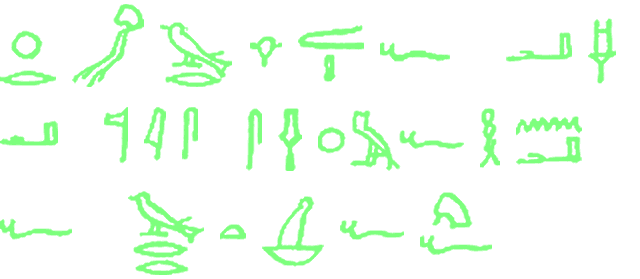
ḫr wr ḥr gs =f ꜥḥꜥ nṯr js sḫm =f ḥnꜥ =f wrr,t =f tp =f
The Great One has fallen on his side,
yet he stands up, a god,
his sceptre with him, his Great Crown upon him.Note · Line 2
Lying on one’s side is the posture of the dead in the grave; the spell turns that collapse into rising. - 3
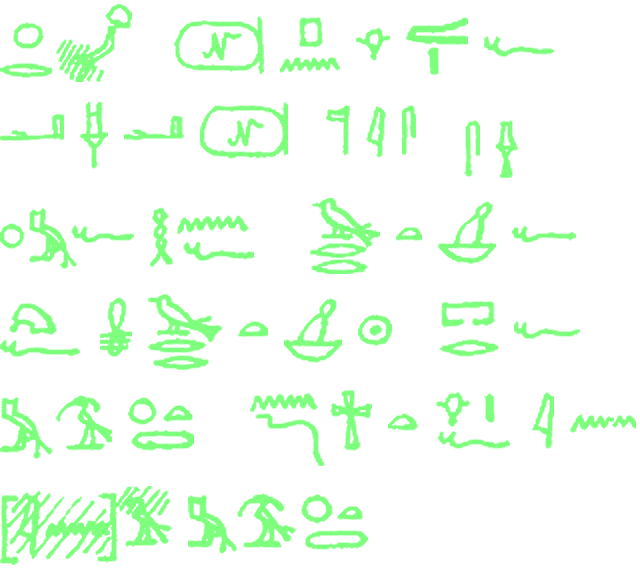
ḫr Ppy Nfr-kꜣ-Rꜥw pn ḥr gs =f ꜥḥꜥ Ppy Nfr-kꜣ-Rꜥw nṯr js sḫm =f ḥn〈ꜥ〉 =f wrr,t =f tp =f mj wrr,t Rꜥw pri̯ =f m ꜣḫ,t nḏ.t ḥr =f jn Ḥr,w m ꜣḫ,t
This Pepi Neferkare has fallen on his side,
but Pepi Neferkare shall stand up, a god,
his sceptre with him, his Great Crown upon him
like the Great Crown of Ra when he comes forth from the horizon
and is greeted by Horus in the horizon.Note · Line 3
Pepi Neferkare is King Pepi II of the Sixth Dynasty, in whose pyramid this spell was carved. - 4

hꜣ Ppy Nfr-kꜣ-Rꜥw pw
O Pepi Neferkare!
- 5

ṯzi̯ ṯw
Raise yourself up!
- 6
šzp n =k sꜥḥ =k jri̯.n n =k psḏ,t.du wn =k ḥr ns,t (W)sr(,w) m s,tj Ḫnt(,j)-Jmn,t(j)w
Take your rank, which the Two Enneads have made for you,
that you may be on the throne of Osiris as deputy of Foremost of the Westerners.Note · Line 6
The Enneads are councils of nine gods. - 7
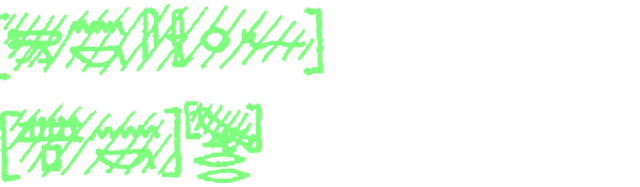
[jṯi̯] [n] =[k] [sḫm] =[f] [ḫnp] [n] =[k] [w]rr,t =f
Take for yourself his sceptre, seize for yourself his Great Crown!
- 8

h[ꜣ] Ppy Nfr-kꜣ-Rꜥw
O Pepi Neferkare!
- 9
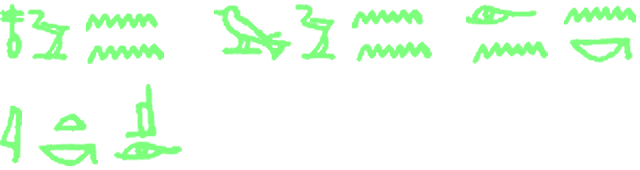
nfr =w(j) nn wr =w(j) nn jri̯.n n =k jt(j) =k (W)sr(,w)
How fine this is, how great this is, which your father Osiris has done for you!
- 10
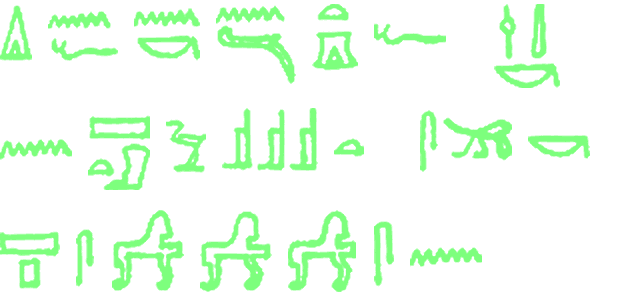
ḏi̯.n =f n =k ns,t =f wḏ =k mdw n štꜣ,w-s,tpl sšmi̯ =k šps(,w).pl =sn
He has given you his throne,
that you may command Those of the Hidden Places
and lead their noble ones.Note · Line 10
“Those of the Hidden Places” is a name for the dead, whose dwellings are secret and out of sight. - 11
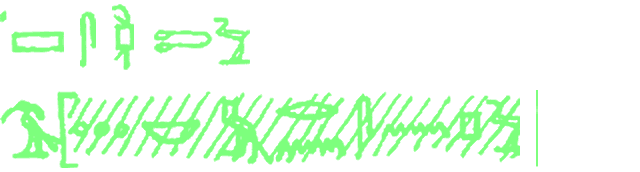
š(m)s ṯw ꜣḫ[.pl] [nb] [m] [rn] =[sn] [pw] [n(,j)] [m(w)t.pl]
All the spirits shall follow you, in this their name of "the Dead."
- 12
〈hꜣ〉 〈Ppy〉 〈Nfr-kꜣ-Rꜥw〉
O Pepi Neferkare!
Note · Line 12
This call is missing from the wall and is supplied from the repeated pattern of the spell. - 13
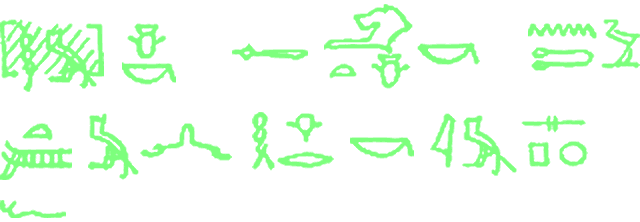
⸢nḏm⸣ jb =k ꜥꜣi̯ ḥꜣ,t(j) =k n(,j)-ṯw tm ḥri̯ =k jm zp =f
Let your heart be glad, let your heart be proud,
for you belong to him whose deeds you never stand apart from. - 14
njs ṯw Rꜥw m rn =k pw snḏ n =f ꜣḫ.pl nb šꜥ,t =k r jb [nṯr.pl] mj [...]
Ra calls you by this your name, which all the spirits dread,
and terror of you lies on the hearts of the gods, like … - 15
[hꜣ] Ppy Nfr-kꜣ-Rꜥw pw sštꜣ jr,w =f Jnp,w js ḥr(,j)-ẖ,t≡f šzp.n =k ḥr n(,j) z(ꜣ)b
O Pepi Neferkare, whose form is hidden like Anubis, He-who-is-upon-his-Belly:
you have received the face of a jackal.Note · Line 15
Anubis, god of embalming and guardian of the dead, was shown as a jackal lying flat on its belly, watching over the tomb. - 16
ṯzi̯ ṯw
Raise yourself up!
- 17
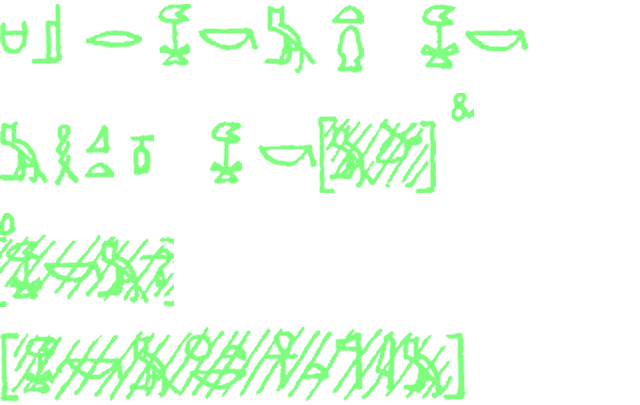
ꜥḥꜥ ḥmsi̯ r ḫꜣ =k m tʾ ḫꜣ =k m ḥ(n)q,t ḫꜣ =k [m] [jḥ] [ḫꜣ] =[k] [m] [ꜣpd] [ḫꜣ] =[k] [m] [(j)ḫ,t] [nb.t] [ꜥnḫ.t] [nṯr] [jm]
Stand up, sit down to your thousand of bread,
your thousand of beer, your thousand of oxen,
your thousand of fowl, your thousand of every thing a god lives on.Note · Line 17
Pepi is told to rise from death and take his seat at the offering meal. “A thousand of” each item is the standard formula of the funerary offering, meaning a limitless supply. - 18

[hꜣ] Ppy Nfr-kꜣ-Rꜥw p
O Pepi Neferkare!
Note · Line 18
Neferkare is the throne name of Pepi II, the king in whose pyramid these spells are carved. - 19
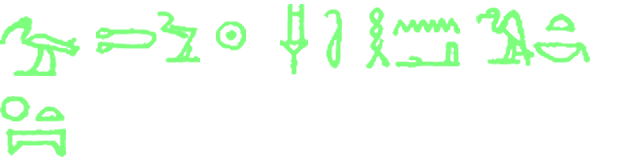
wꜥb gmi̯ ṯw Rꜥw ꜥḥꜥ.tj ḥnꜥ mʾw,t =k Nw,t
Be pure, that Ra may find you standing with your mother Nut.
Note · Line 19
Nut is the sky goddess, mother of the dead king, who is reborn from her. - 20
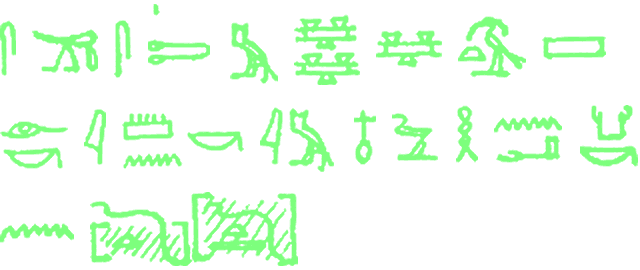
sšmi̯ =s ṯ(w) m wꜣ,t.pl ꜣḫ,t jri̯ =k jmn =k jm nfr.w ḥnꜥ kꜣ =k n-ḏ[,t-ḏ,t]
She will lead you on the roads of the Horizon,
and there you shall make your dwelling, and it will be good,
with your ka, for ever and ever.