~/sacred-texts/pyramid-texts
Pyramid Texts Utterance 675: Pepi II Suckled by a Wild Cow
- Text
- Pyramid Texts, Utterance 675
- Date
- Carved in the 6th Dynasty, in the reign of Pepi II Neferkare (c. 2278–2184 BC), on the walls inside his pyramid at South Saqqara
- Found
- Pyramid of Pepi II, South Saqqara, Egypt
- Language
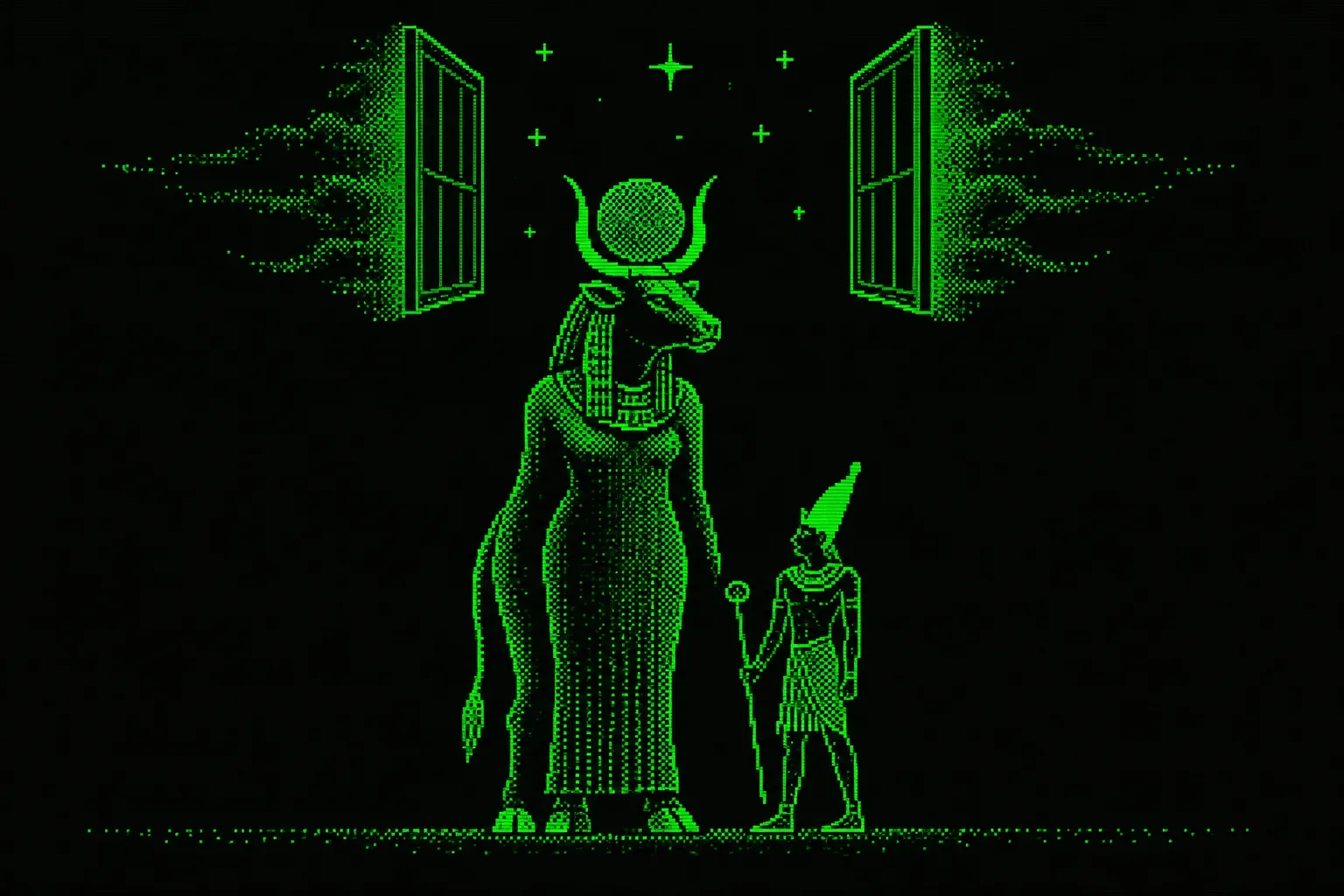
- Egyptian (Old Egyptian) · Hieroglyphic
- 1

ḏ(d)-mdw
Words to be spoken:
Note · Line 1
A heading that marks what follows as a spell to be recited aloud. - 2
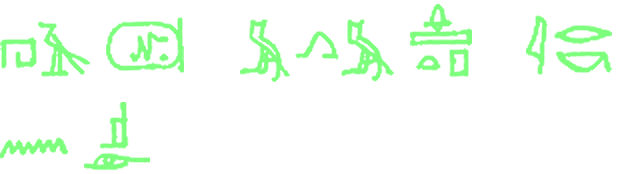
hꜣ Ppy Nfr-kꜣ-Rꜥw m(j) m ḥtp(,w) jr =k n (W)sr(,w)
O Pepi Neferkare, come in peace to Osiris!
Note · Line 2
Neferkare is the throne name of Pepi II, the king for whose pyramid this spell was carved. The dead king is sent on his way to Osiris, lord of the dead. - 3
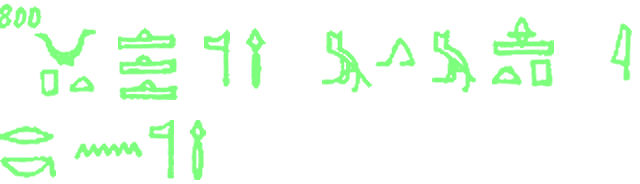
〈wp(w),t(j)〉 nṯr-ꜥꜣ m(j) m ḥtp(,w) jr =k n nṯr-ꜥꜣ
Messenger of the great god, come in peace to the great god!
Note · Line 3
The scribe left out the word “messenger,” and it is supplied here. The king is cast as the great god’s own envoy, returning to his master. - 4
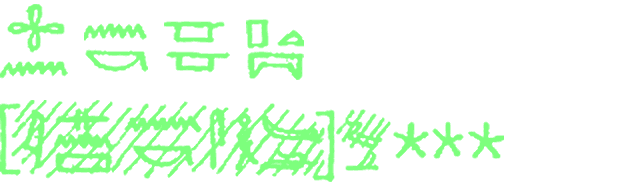
wn n =k ꜥꜣ.du p,t [jzn] [n] =[k] [sḥd].w
The double doors of the sky are opened for you,
the starry expanse is thrown open for you. - 5
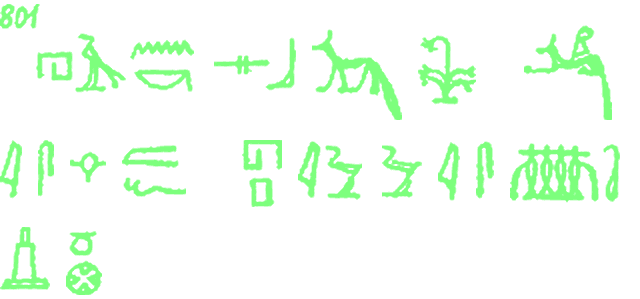
hꜣi̯ n =k z(ꜣ)b-šmꜥ(,wj) Jnp,w js ḥr(,j) gs =f hpj,w{w} js ḫnt,j Jwn,w
The Jackal of Upper Egypt comes down to you,
as Anubis lying on his side,
as Hepiu at the head of Heliopolis.Note · Line 5
Anubis, the jackal god of embalming, is often shown as a jackal lying stretched out on a shrine. - 6
rḏi̯.n ḥwn,(w)t wr.t ꜥ.du =s jr =k ḥr.t-jb Jwn,w
The Great Maiden who dwells in Heliopolis has held out her two arms to you.
Note · Line 6
The Great Maiden is a title of a goddess, applied to Isis, Hathor and others. She receives the king as a child is taken up. - 7

hꜣ Ppy [Nfr-kꜣ-Rꜥw] [pw]
O Pepi Neferkare!
- 8
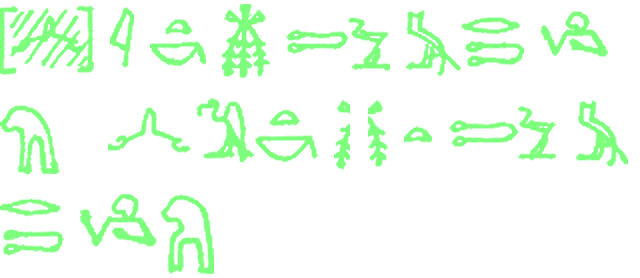
[n] jt(j) =k msi̯ ṯw m r(m)ṯ n mʾw,t =k msi̯.t ṯw m r(m)ṯ
You have no father among men who begot you,
you have no mother among men who bore you. - 9
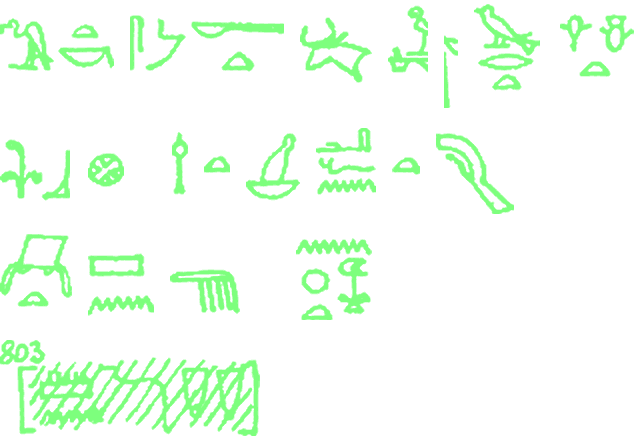
mʾw,t =k smꜣ,t-wr,t ḥr.t-jb Nḫb ḥḏ.t ꜥfn,t ꜣwi̯.t šn(j) nḫꜣ.t [mnḏ.du]
Your mother is the Great Wild Cow who dwells in Nekheb,
white of headcloth, long of hair, heavy and hanging of breasts.Note · Line 9
Nekheb (modern Elkab) was the seat of the vulture goddess Nekhbet, patron of Upper Egypt. - 10
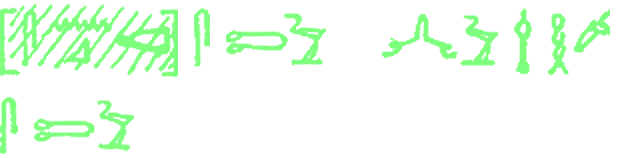
[snq] =s ṯw n wḏḥ =s ṯw
She will suckle you and never wean you.
- 11

ṯzi̯ ṯw r =k Ppy Nfr-kꜣ-Rꜥw pw
Raise yourself up, Pepi Neferkare!
- 12
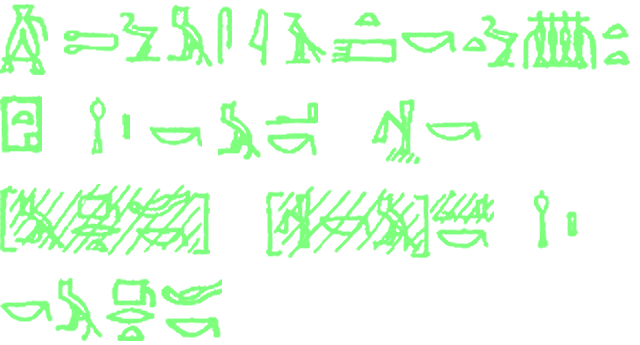
ḏbꜣ ṯw m sjꜣ,t =k tw ḫnt.t ḥw,t ḥḏ =k m ꜥ =k ꜣms =k [m] [ḏr,t] =[k] [ꜣms] =[k] [m] ⸢ꜥ⸣ =k ḥḏ =k m ḏr,t =k
Dress yourself in this fringed cloth of yours that stands before the Mansion,
your mace in your arm, your ames-sceptre in your hand,
your ames-sceptre in your arm, your mace in your hand. - 13
ꜥḥꜥ.t(j) ḫntj jtr,t.du wḏꜥ+ =k +mdw nṯr.pl
Standing at the head of the Two Shrines, may you judge the gods.
Note · Line 13
The Two Shrines are the ancient national sanctuaries of Upper and Lower Egypt, standing for the whole land. The king presides over them as judge of the gods’ disputes. - 14

hꜣ Ppy Nfr-kꜣ-Rꜥw p
O Pepi Neferkare!
- 15
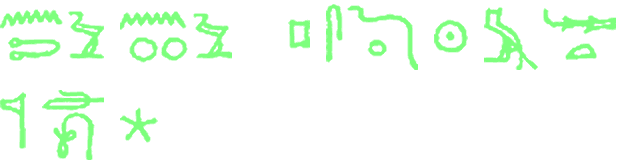
n(,j)-ṯw nḫḫ.w psḏ hrw m-ḫt nṯr-dwꜣ(,wj)
You belong to the Enduring Ones who shine by day in the train of the Morning God.
Note · Line 15
The Enduring Ones seem to be stars that never vanish. The Morning God is the morning star, which goes before the sunrise. The king joins this escort of light. - 16
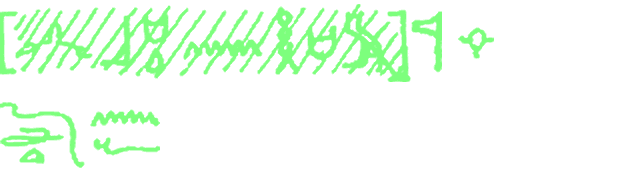
[ꜥjꜥj] [n] [ḥmi̯.w] nṯr ḥr ḏd.t.n =f
… The god will not go back on what he has said.
Note · Line 16
The opening word is restored and its meaning is unknown. The closing line seals the promises above: the god’s word stands. - 17
jri̯ =f n =k ḫꜣ =k m tʾ ḫꜣ =k m ḥ(n)q,t ḫꜣ =k m jḥ ḫꜣ =k m ꜣpd ḫꜣ =k m (j)ḫ,t nb(.t) ꜥnḫ.t nṯr jm
He will prepare for you your thousand of bread,
your thousand of beer,
your thousand of cattle,
your thousand of fowl,
your thousand of everything a god lives on.Note · Line 17
The “thousand of” each good is the standard wording of the offering formula used for the dead: bread, beer, cattle and fowl, each counted by the thousand.