~/sacred-texts/pyramid-texts
Pyramid Texts Utterance 600: Atum Sneezes Out the First Gods
- Text
- Pyramid Texts, Utterance 600
- Date
- Carved in the Sixth Dynasty (c. 2200 BC) on the walls of the pyramid of Pepi II Neferkare at Saqqara
- Found
- Pyramid of Pepi II, South Saqqara, Egypt; still on the walls of the pyramid
- Language
- Egyptian (Old Egyptian) · Hieroglyphic
- 1

ḏ(d)-mdw
Words to be spoken:
- 2

(J)tm(,w) Ḫprr
Atum-Khepri!
Note · Line 2
Atum, “the Complete One,” is the creator god of Heliopolis. Khepri, the scarab beetle, is the sun at the moment of becoming and rising. The spell addresses them as a single god. - 3

qꜣi̯.n =k m qꜣꜣ
You grew high as the High Mound,
- 4
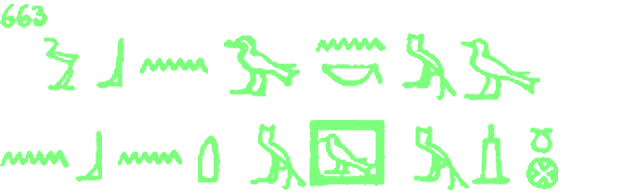
wbn.n =k m bnbn m Ḥw,t-bn,w m Jwn,w
you rose as the Benben in the Mansion of the Phoenix in Heliopolis.
- 5
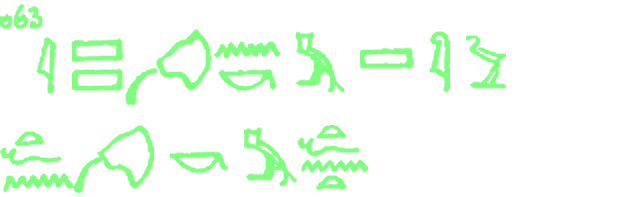
jšš.n =k m Šw tfn.(n) =k m Tfn,t
You sneezed out Shu, you spat out Tefnut,
- 6
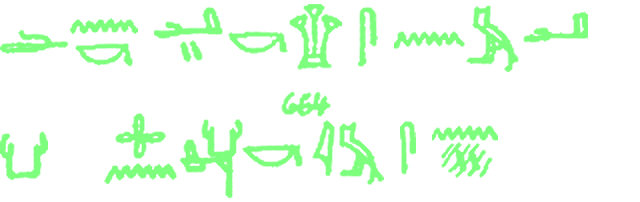
di̯.n =k ꜥ.du =k ḥꜣ =sn(j) m ꜥ kꜣ wn kꜣ =k jm =sndu
and you put your arms around them as the arms of a ka,
so that your ka would be in them.Note · Line 6
The ka is the life-force passed from parent to child. Its hieroglyph is a pair of raised arms, so an embrace both is the ka-sign and passes the ka on. - 7
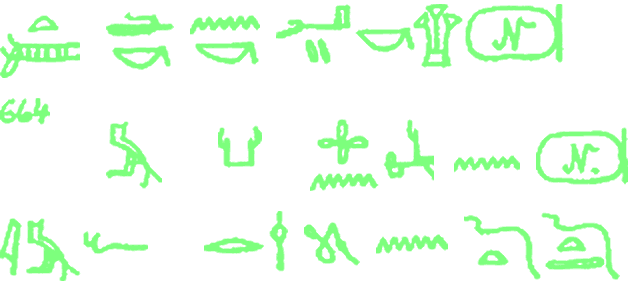
(J)tm(,w) di̯ =k n =k ꜥ.du =k ḥꜣ Ppy Nfr-kꜣ-Rꜥw m ꜥ kꜣ wn kꜣ n(,j) Ppy Nfr-kꜣ-Rꜥw jm =f rwḏ n-ḏ,t-ḏ,t
Atum, may you put your arms around Pepi Neferkare as the arms of a ka,
so that Pepi Neferkare's ka may be in him, enduring for ever and ever.Note · Line 7
Pepi Neferkare is King Pepi II of the Sixth Dynasty. This spell is carved in his pyramid, and the prayer now turns the creation story toward him. - 8

hꜣ (J)tm(,w)
O Atum!
- 9
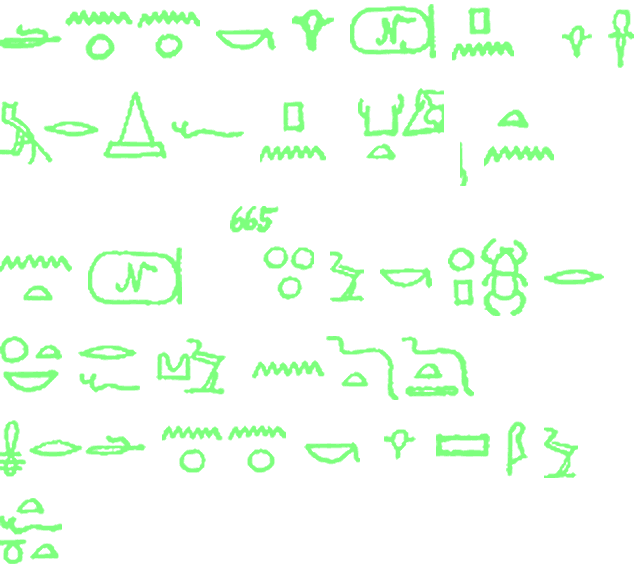
dnḫnḫ =k ḥr Ppy Nfr-kꜣ-Rꜥw pn ḥr mḥr =f pn kꜣ,t tn n.t Ppy Nfr-kꜣ-Rꜥw ḫwi̯ =k ḫpr (j)ḫ,t nb(.t) r =f ḏwi̯ n-ḏ,t-ḏ,t mr dnḫnḫ =k ḥr Šw Tfn,wt
May you shelter this Pepi Neferkare, this pyramid of his, this construction of Pepi Neferkare;
may you keep anything from turning out ill for him for ever and ever,
just as you sheltered Shu and Tefnut.Note · Line 9
The king, his pyramid and the building are protected together, as if they were a single body. - 10
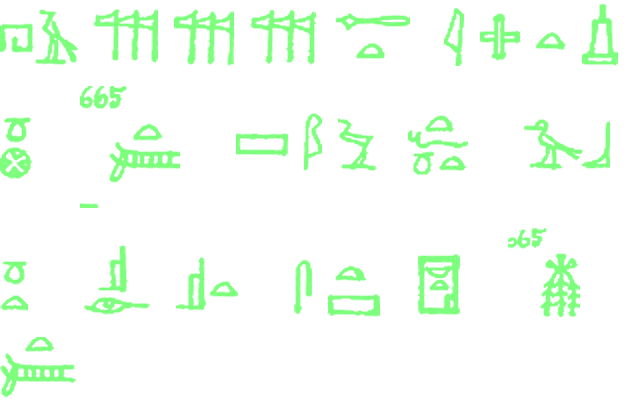
hꜣ psḏ,t-ꜥꜣ.t jm.t Jwn,w (J)tm(,w) Šw Tfn,wt Gbb Nw,t (W)sr(,w) (Ꜣ)s,t Stš Nb,t-ḥw,t ms (J)tm(,w)
O Great Ennead that is in Heliopolis, Atum, Shu, Tefnut, Geb, Nut, Osiris, Isis, Seth, Nephthys, children of Atum!
Note · Line 10
The Ennead is the “group of Nine,” the family of gods descended from Atum through Shu and Tefnut, then Geb (earth) and Nut (sky), and their four children. - 11
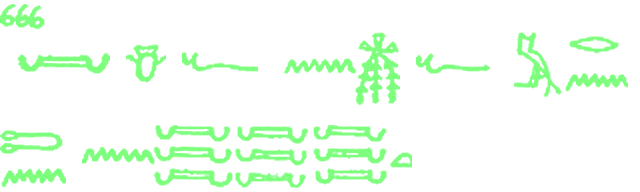
pḏ jb =f n ms =f m rn =tn n(,j) psḏ,t-pḏ,wt
His heart is stretched wide for his children in your name of the Nine Bows.
Note · Line 11
“Heart stretched wide” means joy. - 12
jmi̯ psḏi̯.wt =f jm =ṯn jr (J)tm(,w) j:nḏ =f Ppy Nfr-kꜣ-Rꜥw pn j:nḏ =f mḥr pn n(,j) Ppy Nfr-kꜣ-Rꜥw j:nḏ =f kꜣ,t{t} =f tn m-ꜥ nṯr.pl nb m-ꜥ m(w)t.pl nb ḫwi̯ =f ḫpr (j)ḫ,t nb(.t) jr =f ḏwi̯ n-ḏ,t-ḏ,t
Let none of you turn his back on Atum
while he protects this Pepi Neferkare,
while he protects this pyramid of Pepi Neferkare,
while he protects this construction of his from all gods and from all the dead,
keeping anything from turning out ill for him for ever and ever. - 13

hꜣ Ḥr,w
O Horus!
- 14

(W)sr(,w) pw Ppy Nfr-kꜣ-Rꜥw pn
This Pepi Neferkare is Osiris;
Note · Line 14
The dead king becomes Osiris, the murdered god-king who lives again in the underworld. - 15
(W)sr(,w) pw mḥr pn n(,j) Ppy Nfr-kꜣ-Rꜥw kꜣ,t{t} =f tn
this pyramid of Pepi Neferkare is Osiris, this construction of his.
- 16
j:mz kw r =f
Go to him!
Note · Line 16
Horus, son of Osiris, is the model of the dutiful son who comes to care for his dead father. Because king and pyramid are both Osiris, Horus is sent to tend both. - 17
m ḥri̯ jr =f m rn =f n(,j) mḥr
Do not keep far from him in his name of "Pyramid."
Note · Line 17
The speaker is addressing the god Horus. - 18
km.t wr.t m rn =k n(,j) Ḥw,t-Km-wr
You are black and great in your name of "Mansion of the Great Black One."
- 19
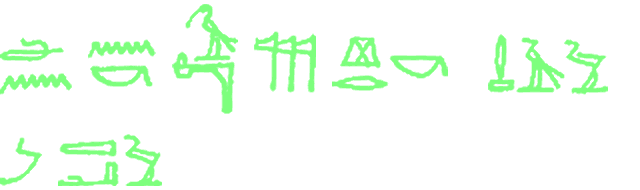
di̯.n n =k Ḏḥw,tj nṯr.pl ẖr =k ḏꜣi̯.w mꜣꜥ.w m dḏꜣ m dmꜣꜥ
Thoth has set the gods beneath you, ferried across in Dedja, guided in Demaa.
Note · Line 19
Dedja and Demaa are otherwise unknown names. - 20
Ḥr,w m jt(j) =k (W)sr(,w) m rn =f n(,j) Ḥw,t-jt(j)
Horus, here is your sire Osiris in his name of "Mansion of the Sire."
Note · Line 20
The Egyptian word jtj means both “father” and “sovereign,” so the shrine called “Mansion of the Sovereign” is also the “Mansion of the Father.” - 21
ḏi̯.n n =k Ḥr,w nṯr.pl sjꜥ.n =f n =k sn m ꜥr.w sḥḏ =sn ḥr =k m ḥḏ.pl
Horus has given you the gods; he has raised them to you as reeds, that they may make your face shine white in the White Chapels.