~/sacred-texts/pyramid-texts
Pyramid Texts Utterance 578: Stars and Demons Bow to Pepi I
- Text
- Pyramid Texts, Utterance 578
- Date
- Carved in the 6th Dynasty, in the reign of Pepi I (c. 2332–2283 BC), on the walls of his pyramid at Saqqara
- Found
- Pyramid of Pepi I, South Saqqara, where the inscribed walls survive in place
- Language
- Old Egyptian · Hieroglyphic
- 1
ḏ(d)-mdw
Recitation:
- 2
(W)sr(,w) Ppy jmi̯ =k zy m tꜣ.pl jpw jꜣb,t(j).w
Osiris Pepi, you shall not go into those eastern lands;
Note · Line 2
Pepi I, a king of the Sixth Dynasty, is addressed as “Osiris” because in death the king becomes one with Osiris, ruler of the dead. - 3
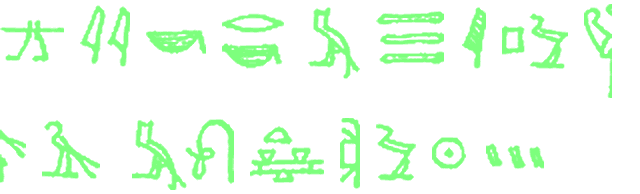
zi̯.y =k r =k m tꜣ.pl jpw jmn,t(j).w m wꜣ,t šms,w.pl Rꜥw
you shall go into those western lands, by the road of the followers of Ra.
- 4
zi̯ jn(,w).pl =k sjn sjn.pl =k ntꜣi̯ tp(,j).w-ꜥ.w =k sjw =sn ṯw n Rꜥw m ḏsr rmn jꜣb(,j)
Your messengers go, your runners run, your forerunners race,
that they may announce you to Ra as one whose left arm is raised. - 5
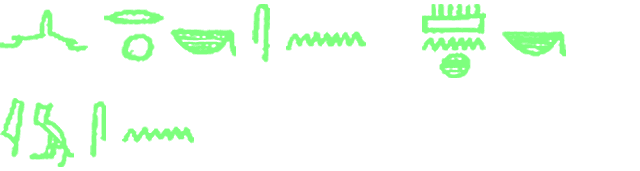
n rḫ =k sn mnḫ =k jm =sn
You do not know them, but you will prosper through them.
- 6
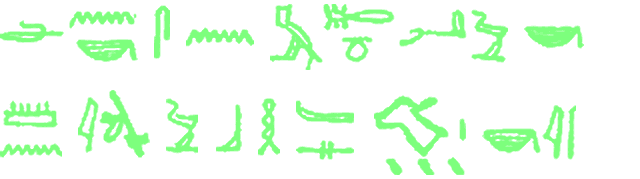
di̯ n =k sn m-ẖnw ꜥ.w =k mnj,w bḥz.pl =k js
Put them within your arms, as the herdsman of your calves.
Note · Line 6
The dead king is cast as a herdsman gathering his calves into his embrace. - 7
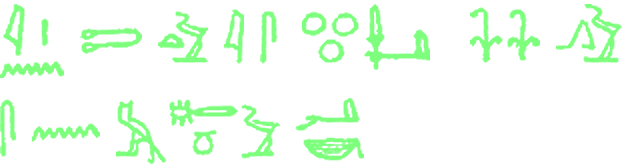
jn ṯwt js ḫ(w)i̯ nni̯.w =sn m-ẖnw ꜥ =k
For it is you who keep them from growing weary within your arms.
- 8
pri̯ =k r =sn bꜣ.tj spd.t mstt mstt m rn =k pw n(,j) Spd,w
You go out to them potent as a ba, and sharp, mesetet mesetet, in this your name of Sopdu, the Sharp One.
- 9
nḫꜣḫꜣ m ꜥ =k mks =k ḥꜣ ꜥ =k
The flail is in your hand, your mekes-sceptre behind your hand.
- 10
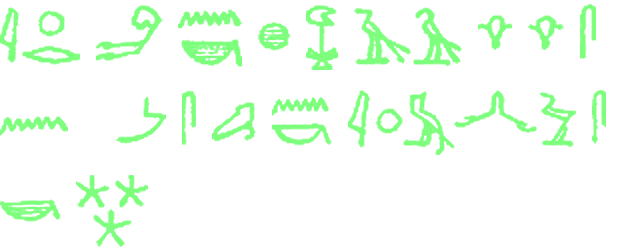
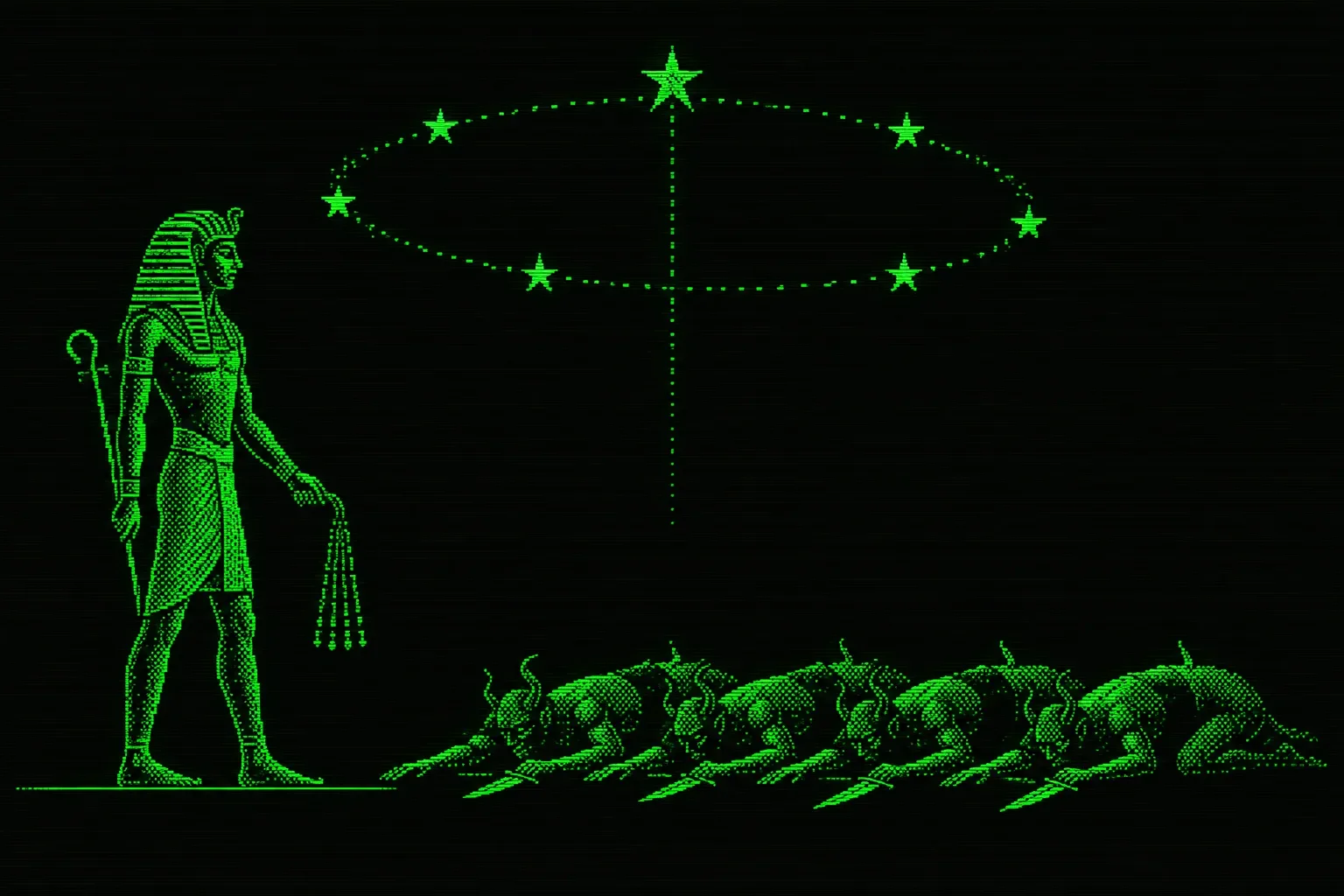
j:ḫr n =k ḫꜣ,t(j).w ḥr ḥr =sn mꜣs n =k J:ḫm.w-sk
The Slaughterers fall on their faces before you, the Imperishable Stars kneel to you.
Note · Line 10
The Slaughterers (Khatyu) are knife-wielding demons. The Imperishable Stars are the stars circling the pole that never set, and the dead king hoped to join them. - 11
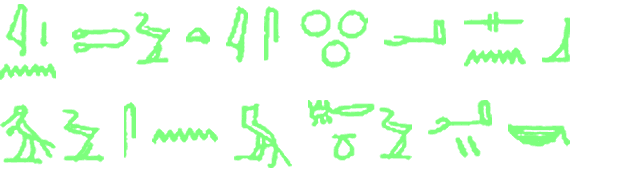
jn ṯwt js ḫ(w)i̯ znbꜣ.w =sn m-ẖnw ꜥ.du =k
For it is you who keep them from slipping out of your arms.
- 12
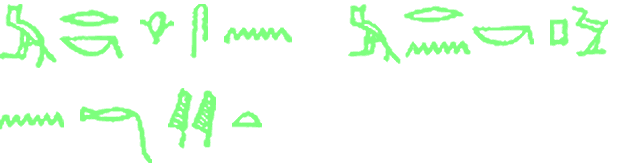
m r =k ḥr =sn m rn =k pw n(,j) mḥ,yt
Come upon them in this your name of Mehyt.
Note · Line 12
Mehyt is a lioness goddess of This in Upper Egypt. Her name seems to be taken as “the one who seizes”, which suits the command to fall upon them. - 13
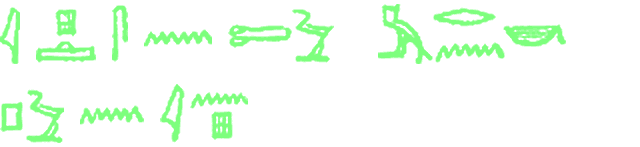
jp =sn ṯw m rn =k pw n(,j) Jnp(,w)
They recognize you in this your name of Anubis.
Note · Line 13
“Recognize” (jp) echoes the name Anubis (Jnpw). Anubis is the jackal god of embalming and the necropolis. - 14
n hꜣi̯.w nṯr.pl r =k m rn =k pw n(,j) Jꜣ,t
The gods shall not come down upon you in this your name of Iat.
- 15
ꜥḥꜥ =k r =k m-ḫnt nṯr.pl zꜣ sms,w j{j}〈s〉 j(w)ꜥ,w js ḥr(,j) ns,t Gbb js
Rather, you shall stand at the head of the gods, as the eldest son, as the heir, as the one upon the throne of Geb.
Note · Line 15
Geb, the earth god, is the father of Osiris. His throne stands for the kingship of Egypt, which passed from father to eldest son.