~/sacred-texts/pyramid-texts
Pyramid Texts Utterance 576: The Dead King Will Not Rot
- Text
- Pyramid Texts, Utterance 576 (PT 576)
- Date
- Carved in the 6th Dynasty, in the reign of Pepi I (c. 2321–2287 BC), on the walls of his burial chamber at Saqqara
- Found
- Pyramid of Pepi I, South Saqqara: west wall of the burial chamber, where it was carved
- Language
- Old Egyptian · Hieroglyphic
The spell opens over a corpse: Osiris has been laid on his side by his brother Seth. Then the dead god stirs, Ra lifts his head, and the priest calls him awake with the temple’s morning greeting. Everything said of Osiris is then claimed for the king: Pepi is your semen, Osiris, and a refrain comes back again and again: Pepi will not rot, he will not decay.
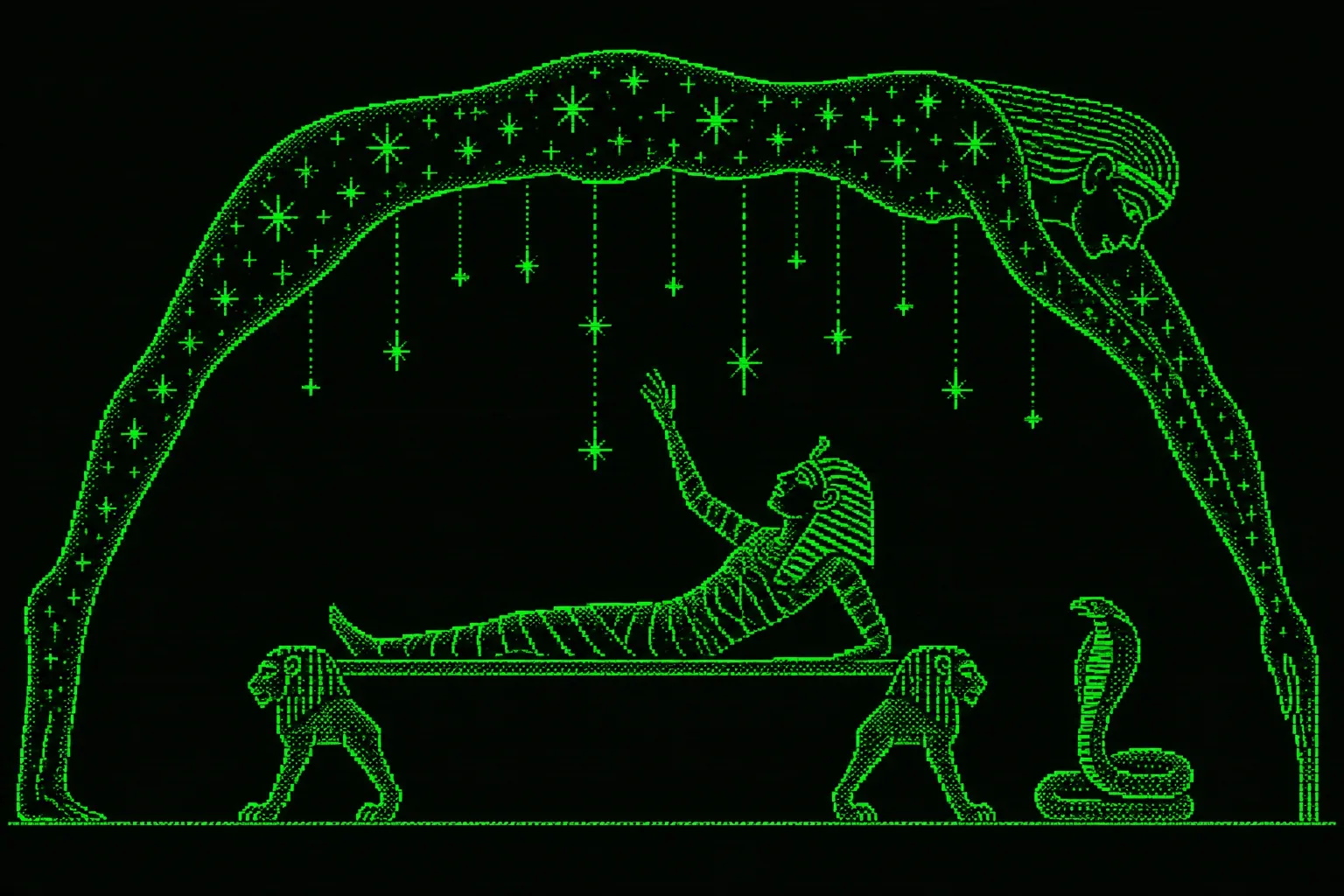
Pepi joins the four sons of Geb who live on figs and drink wine. His bones are joined again, and he asks the sky-goddess Nut to let the stars hang down for him before he rises to stand at the head of those whose scent is sweet.
- 1

ḏ(d)-mdw
Recitation:
Note · Line 1
This marks what follows as words to be spoken aloud. - 2
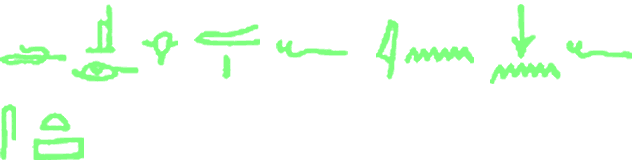
di̯ (W)sr(,w) ḥr gs =f jn sn =f Stš
Osiris has been laid on his side by his brother Seth.
Note · Line 2
This is the murder of Osiris. Seth struck him down, and lying on the side is the posture of a corpse. - 3

nmnm jm(,j) Ndj,t
He who is in Nedit stirs.
Note · Line 3
Nedit is the place where Osiris was struck down and lay dead, traditionally near Abydos. - 4

ṯzi̯ tp =f jn Rꜥw
His head has been lifted by Ra.
Note · Line 4
Raising the head of someone lying down is the first step in getting him back on his feet, a recurring image of resurrection. - 5
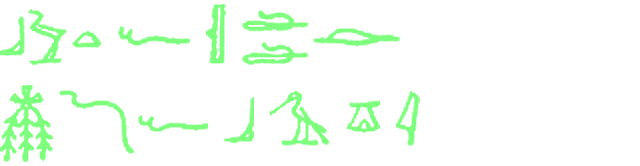
bw,t =f qdd msḏi̯ =f bꜣgj
Sleep is what he abhors; weariness he hates.
Note · Line 5
For the dead, “sleep” and “weariness” are veiled words for death itself. - 6
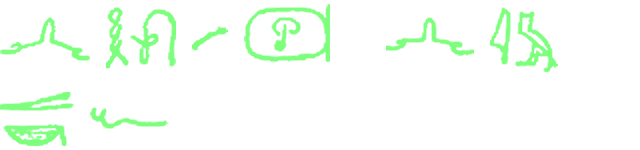
n ḥwꜣ Ppy n jmk =f
Pepi will not rot, he will not decay.
Note · Line 6
Pepi is King Pepi I, in whose pyramid this spell is carved. The two verbs are near-synonyms for the decomposition of the body. - 7
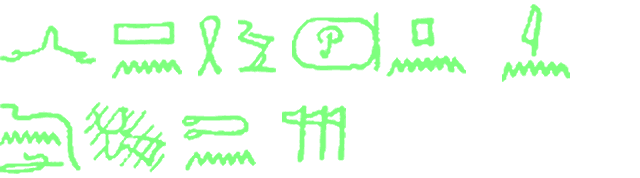
n šni̯.w Ppy pn jn ḏnd =ṯn nṯr.pl
This Pepi will not be cursed by your rage, you gods.
Note · Line 7
The verb means to work a spell on someone, here a hostile one: the gods’ anger cannot bind him with magic. - 8

rs =k m ḥtp(,w)
May you wake in peace!
Note · Line 8
“Wake in peace” is the formula used each morning in temples to rouse a god’s image. It is addressed here to the dead Osiris, and through him to the king. - 9

rs (W)sr(,w) m ḥtp(,w)
May Osiris wake in peace!
- 10

rs jm(,j) Ndj,t m ḥtp(,w)
May he who is in Nedit wake in peace!
- 11

ṯzi̯ tp =f jn Rꜥw
His head has been lifted by Ra.
- 12

sṯ(j) =f [m] [Jḫ,t]-wt,t
His scent is the scent of Ikhet-utet.
Note · Line 12
Ikhet-utet is a divine serpent. A sweet smell marks a god’s presence, the opposite of the stench of decay. - 13
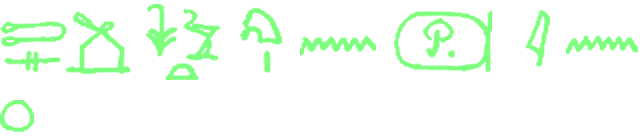
ṯzi̯ swt tp n(,j) Ppy jn Rꜥw
And Pepi's head too has been lifted by Ra.
Note · Line 13
Everything said of Osiris is now claimed for Pepi: the dead king becomes Osiris and shares his revival. - 14

sṯ(j) Ppy m Jḫ,t-wt,t
Pepi's scent is the scent of Ikhet-utet.
- 15
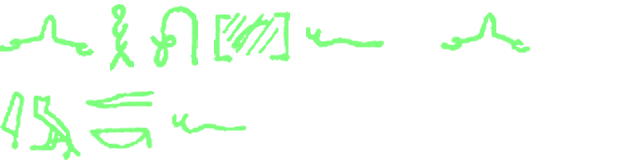
n ḥwꜣ =f n jmk =f
He will not rot, he will not decay.
- 16
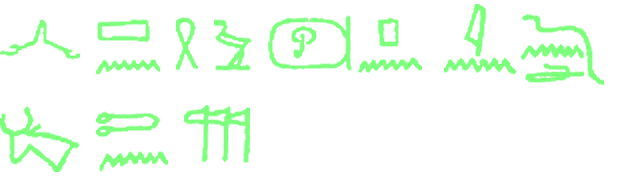
n šni̯.w Ppy pn jn ḏnd =ṯn nṯr.pl
This Pepi will not be cursed by your rage, you gods.
- 17
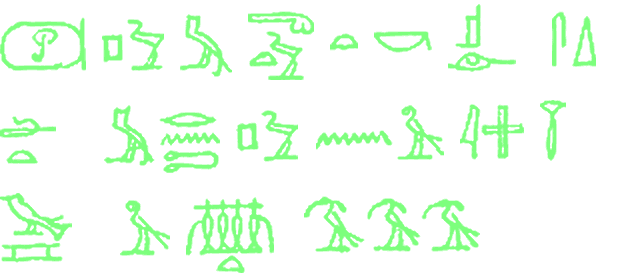
Ppy pw mtw,t =k (W)sr(,w) spd.t m rn =ṯ pw n(,j) Ḥr,w jm(,j) wꜣḏ-wr Ḥr,w ḫnt(,j) ꜣḫ.pl
Pepi is your semen, Osiris, semen made sharp in this name of yours, O semen: "Horus in the Great Green," "Horus Foremost of the Akhs."
Note · Line 17
The speaker addresses Osiris, god of the dead, and then turns to the semen itself: “this name of yours” is said to the semen (feminine in Egyptian), not to Osiris. - 18
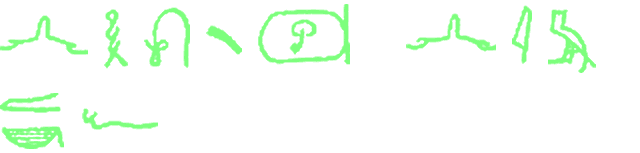
n ḥwꜣ Ppy n jmk =f
Pepi shall not rot; he shall not putrefy.
- 19
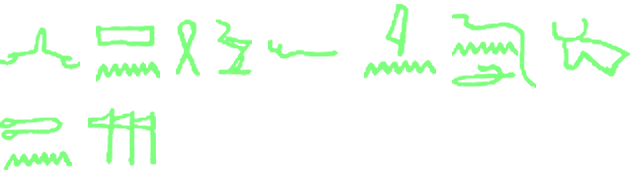
n šni̯.w =f jn ḏnd =ṯn nṯr.pl
He shall not be cursed by your rage, you gods.
- 20
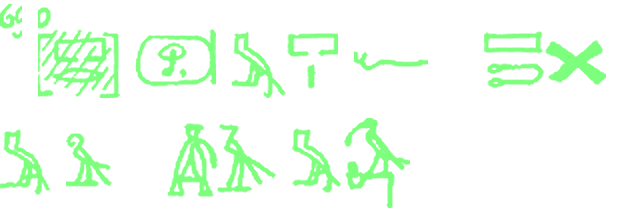
[pri̯] Ppy m pr =f šṯ m Ḥr,w ḏbꜣ m Ḏḥw,tj
Pepi goes forth from his house clothed as Horus, adorned as Thoth.
Note · Line 20
Thoth is the ibis-headed god of writing and wisdom, often paired with Horus in rites of purification and dressing. - 21
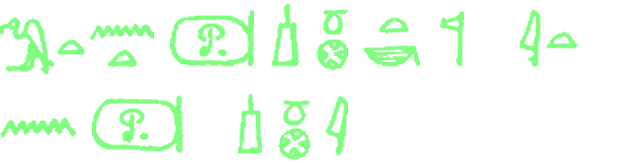
mʾw,t n.t Ppy jwn,w(j).t =k nṯr jt(j) n(,j) Ppy jwn,wj
Pepi's mother is your Heliopolitan, O god; Pepi's father is a Heliopolitan.
Note · Line 21
Heliopolis (Egyptian Iunu), near modern Cairo, was the great cult centre of the sun god Ra. Being born of Heliopolitan parents makes Pepi a native of the sun’s own city. - 22

Ppy ḏs =f jwn,w(j) =k nṯr
Pepi himself is your Heliopolitan, O god.
- 23
jwr Ppy n Rꜥw msi̯ =f n Rꜥw
Pepi was conceived for Ra; he was born for Ra.
- 24
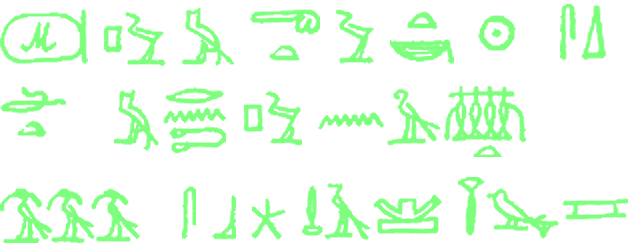
Mri̯.y-Rꜥw pw mtw,t =k Rꜥw spd.t m rn =ṯ pw n(,j) Ḥr,w ḫnt(,j) ꜣḫ.pl sbꜣ ḏꜣi̯ wꜣḏ-wr
Meryre is your semen, Ra, semen made sharp in this name of yours, O semen: "Horus Foremost of the Akhs," the star that crosses the Great Green.
Note · Line 24
Meryre (“Beloved of Ra”) is Pepi I’s throne name. The refrain addressed to Osiris now repeats with Ra, so the king is claimed as offspring of both gods. - 25
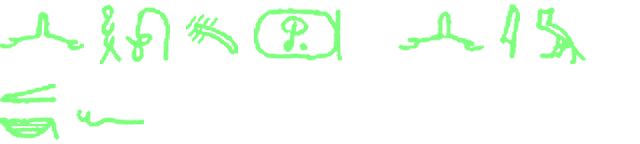
n ḥwꜣ Ppy n jmk =f
Pepi shall not rot; he shall not putrefy.
- 26
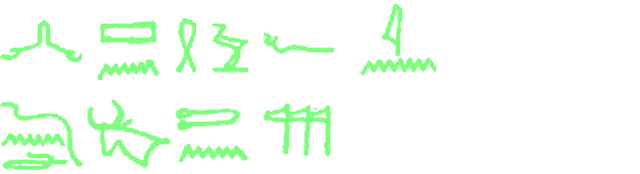
n šni̯.w =f jn ḏnd =ṯn nṯr.pl
He shall not be cursed by your rage, you gods.
- 27
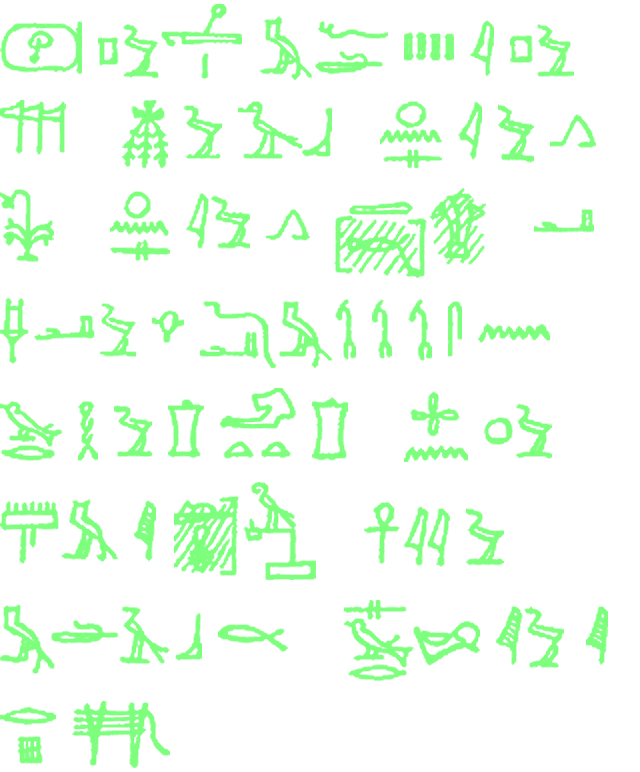
Ppy pw wꜥ m fd jpw nṯr.pl msi̯.w Gbb ḫnz.jw Šmꜥ,w ḫnz.jw Tꜣ-mḥ,w ꜥḥꜥ.w ḥr ḏꜥm.pl =sn wrḥ.w ḥꜣ,tt wnḫ.w m j[dm,j] ꜥnḫ.yw m dꜣb zwr.jw jrp
Pepi is one of these four gods whom Geb begot,
who roam through Upper Egypt, who roam through Lower Egypt,
who stand upon their djam-sceptres,
who are anointed with the finest oil, who are clothed in fine red linen,
who live on figs and drink wine.Note · Line 27
Geb is the earth god. - 28
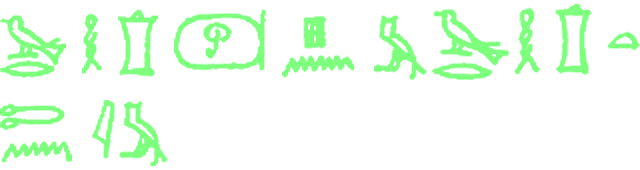
wrḥ Ppy pn m wrḥ.t =ṯn jm
This Pepi anoints himself with what you anoint yourselves with;
- 29
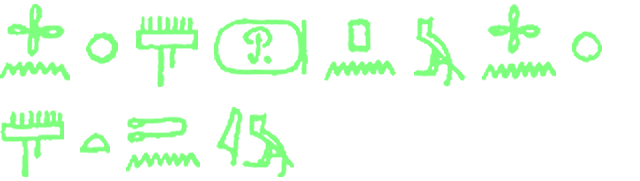
wnḫ Ppy pn m wnḫ.t =ṯn jm
this Pepi clothes himself in what you clothe yourselves in;
- 30
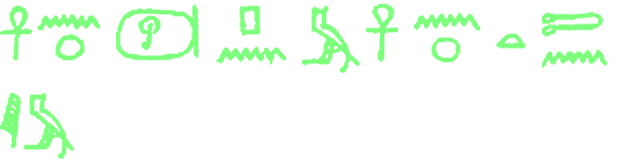
ꜥnḫ Ppy pn m ꜥnḫ.t =ṯn jm
this Pepi lives on what you live on;
- 31
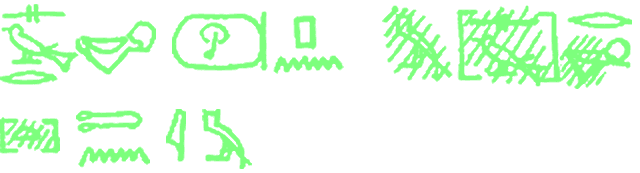
zwr Ppy pn m [zw]r.[t] =ṯn jm
this Pepi drinks of what you drink.
- 32
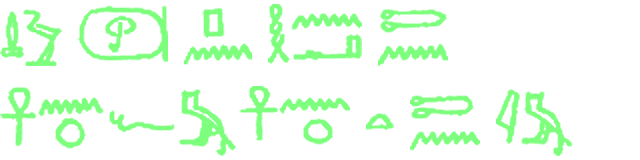
wḏꜣ Ppy pn ḥnꜥ =ṯn ꜥnḫ =f m ꜥnḫ.t =ṯn jm
This Pepi is safe and whole with you, living on what you live on.
- 33
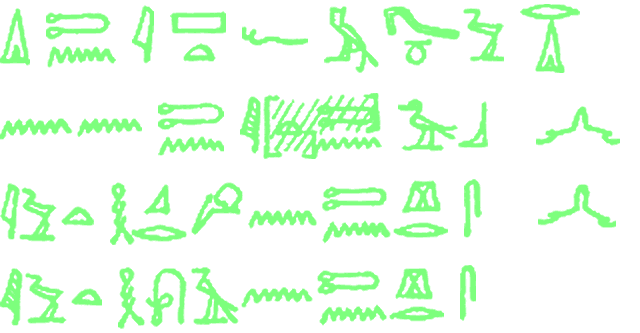
ḏi̯ =ṯn jš,t =f m nw rḏi̯.n n =ṯn j[t](j) =[ṯ]n Gbb jw,t(j) ḥqr.n =ṯn ẖr =s jw,t(j) ḥwꜣ.n =ṯn ẖr =s
May you give him his meal from what your father Geb has given you, that under which you never go hungry, that under which you never rot.
Note · Line 33
The “you” are gods, here the children of the earth-god Geb, who share his food. Pepi asks for a place at their table. That food keeps hunger and the body’s decay away. - 34
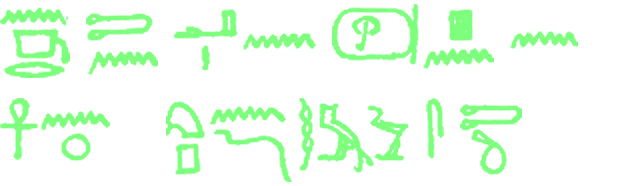
nḏri̯ =ṯn ꜥ n(,j) Ppy pn n ꜥnḫ tp nḏm.w sṯ(j)
Take this Pepi by the hand, for life, at the head of those whose scent is sweet.
Note · Line 34
“Those whose scent is sweet” are the blessed dead and the gods. Divine bodies were thought to be fragrant, the opposite of a rotting corpse. - 35
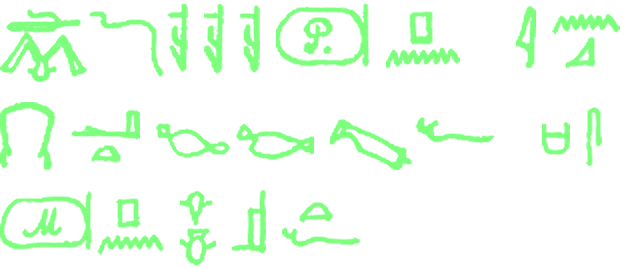
dmḏ qs.pl Ppy pn jnq ꜥ,t.pl =f ḥmsi̯ Mri̯.y-Rꜥw pn ḥr-jb s,t =f
The bones of this Pepi are joined, his limbs are gathered together, and Meryre shall sit in the midst of his seat.
Note · Line 35
Both names refer to the same king, whose scattered body is put back together like that of the god Osiris. - 36
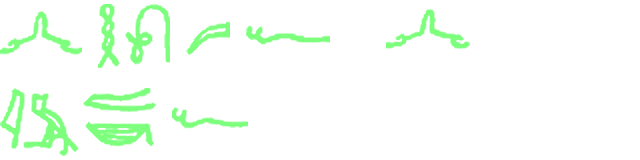
n ḥwꜣ =f n jmk =f
He does not rot,
he does not decay. - 37
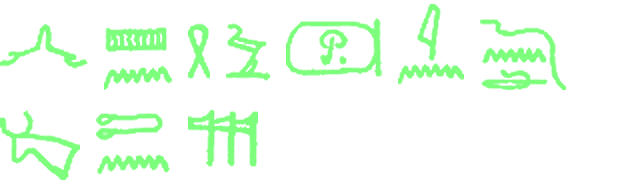
n šni̯.w Ppy jn ḏnd =ṯn nṯr.pl
Pepi shall not be cursed by your fury, you gods.
- 38
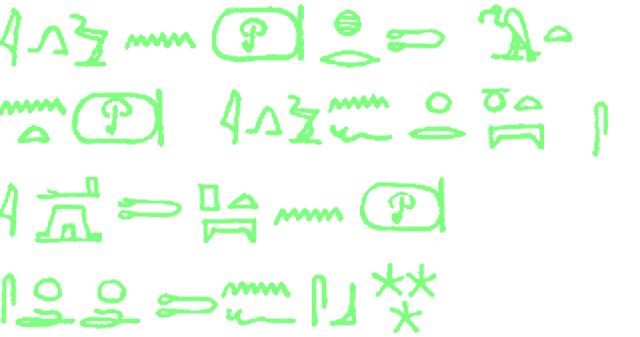
jwi̯.n Ppy ḫr =ṯ mʾw,t n.t Ppy jwi̯.n =f ḫr =〈ṯ〉 Nw,t sjꜥ =ṯ p,t n Ppy sḫdḫd =ṯ n =f sb(ꜣ).pl
Pepi has come to you, mother of Pepi;
he has come to you, Nut,
that you may lift the sky up to Pepi
and let the stars hang down for him.Note · Line 38
Nut is the sky-goddess, pictured arching her body over the earth. The verb for the stars hanging down means literally “to set upside down”: she tips the heavens toward the king. - 39
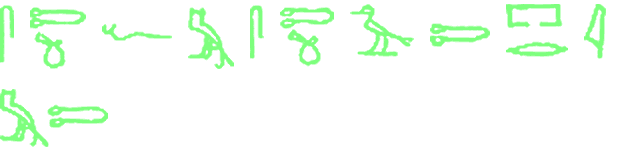
sṯ(j) =f m sṯ(j) zꜣ =ṯ pri̯ jm =ṯ
His scent is the scent of your son who came forth from you.
- 40
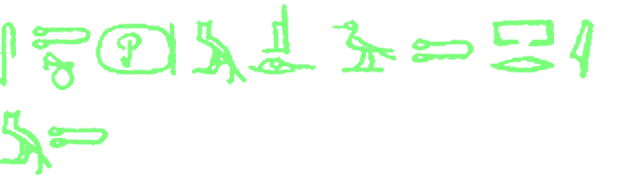
sṯ(j) Ppy m (W)sr(,w) zꜣ =ṯ pri̯ jm =ṯ
Pepi's scent is the scent of Osiris, your son who came forth from you.
Note · Line 40
Osiris, king of the dead, was Nut’s son. The dead king is identified with him, and his fragrance is proof that his body does not decay. - 41
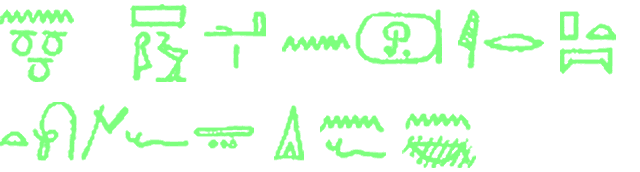
Nw,w šwi̯ ꜥ n(,j) Ppy jr p,t twꜣ =f tꜣ ḏi̯.n =f n =k
O Nun, the arm of Pepi rises to the sky as he braces himself on the earth he gave to you.
Note · Line 41
Nun is the primeval ocean, the endless water out of which the world arose and which still surrounds it. - 42
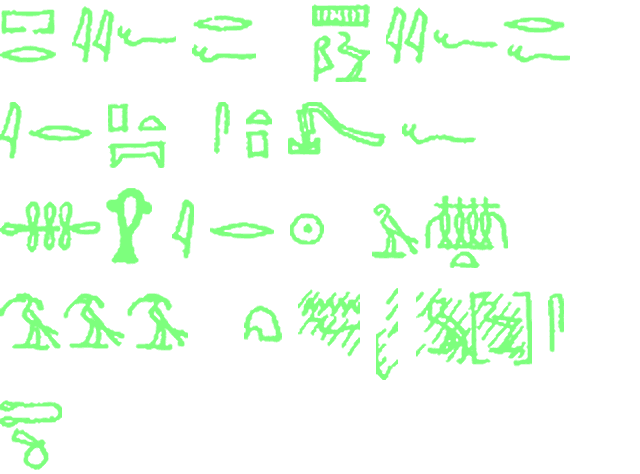
pri̯.y =f r =f šwi̯.y =f r =f jr p,t stp =f zꜣ jr Rꜥw Ḥr,w ḫnt(,j) ꜣḫ.pl tp(,j) nḏm.[w] sṯ(j)
So he will go forth, so he will rise to the sky, to spread his protection over Ra, as Horus, foremost of the akhs, at the head of those whose scent is sweet.
Note · Line 42
The akhs are the “transfigured” or “radiant” dead, the spirits who have passed fully into divine life. - 43
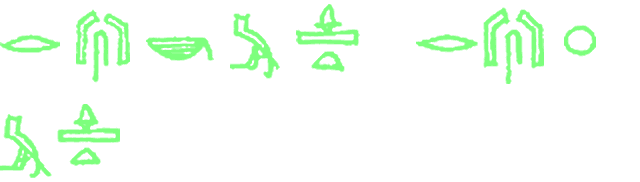
rs =k m ḥt(p,w) rs Rꜥw m ḥt(p,w)
Wake in peace, you!
May Ra wake in peace!Note · Line 43
“Wake in peace” opens the hymn sung each morning to rouse a god in his temple. Here it greets the rising sun. - 44
rs =k m ḥt(p,w) rs Mdj m ḥt(p,w)
Wake in peace, you!
May Medji wake in peace! - 45
di̯ =f zẖꜣ n(,j) Ppy pn jr ꜥ =f tp nḏm.w sṯ(j)
May he set the writ of this Pepi in his register, at the head of those whose scent is sweet.
Note · Line 45
The king’s document is to be entered on the god’s roll at the very top, among the fragrant blessed.