~/sacred-texts/pyramid-texts
Pyramid Texts Utterance 573: A Dead King Flies to the Sun
- Text
- Pyramid Texts, Utterance 573
- Date
- Carved in the 6th Dynasty, in the reign of Pepi I (c. 2321–2287 BC), on the walls of his burial chamber at Saqqara
- Found
- Pyramid of Pepi I, South Saqqara, Egypt
- Language
- Egyptian (Old Egyptian) · Hieroglyphic
- 1

ḏ(d)-mdw
Words to be spoken:
Note · Line 1
A cue to whoever recites the spell. The text is carved on the walls of King Pepi’s burial chamber, so that the words would go on working for him after death. - 2
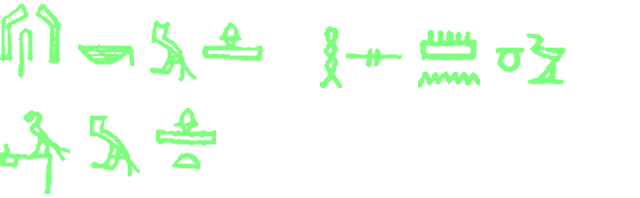
rs =k m ḥtp(,w) ḥzmn,w m ḥtp(,w)
May you wake in peace, Hesmenu, in peace!
Note · Line 2
The four names in this opening chant are titles of the morning sun, greeted as it rises. - 3
rs =k m ḥtp(,w) Ḥr,w-jꜣb(,tj) m ḥtp(,w)
May you wake in peace, Eastern Horus, in peace!
- 4
rs =k m ḥtp(,w) bꜣ-jꜣb,t(j) m ḥtp(,w)
May you wake in peace, Eastern Ba, in peace!
Note · Line 4
The ba is the mobile, visible power of a being, the part that can move about and show itself. Here it is the sun’s ba appearing in the east. - 5
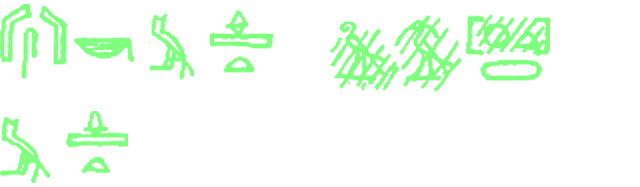
rs =k m ḥtp(,w) Ḥr,w-ꜣḫ,t(j) m ḥtp(,w)
May you wake in peace, Horakhty, in peace!
Note · Line 5
Horakhty means “Horus of the Horizon,” the sun god as he rises. - 6
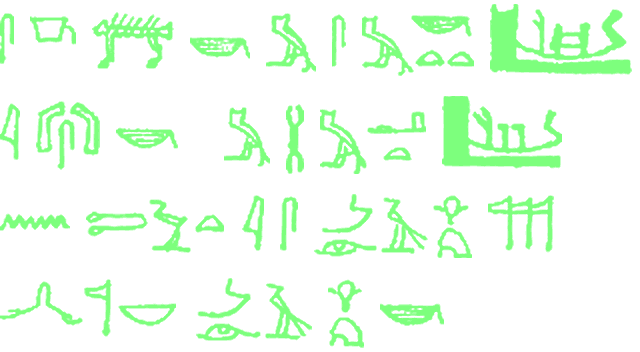
sḏr =k m msk,tt j:rs =k m mꜥnḏ,t n ṯwt js mꜣ ḥr-tp nṯr.pl n nṯr nb mꜣ ḥr-tp =k
You spend the night in the Evening Bark,
you wake in the Morning Bark,
for you are the one who looks down on the gods,
and there is no god who looks down on you.Note · Line 6
The sun crosses the sky by boat. One bark (sacred boat) carries him into the night and another carries him out again at dawn. - 7
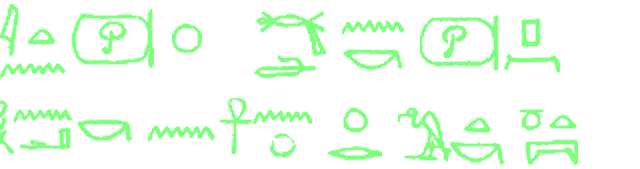
jt(j) n(,j) Ppy Rꜥw šdi̯ n =k Ppy pn ḥnꜥ =k n ꜥnḫ ḫr mʾw,t =k Nw,t
Father of Pepi, Ra, take this Pepi with you, for life, to your mother Nut!
Note · Line 7
Nut is the sky goddess. Each evening she swallows the sun, and each morning she gives birth to him again. The king hopes to share that rebirth. - 8
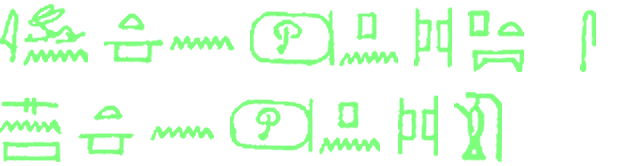
j:wn.t n Ppy pn ꜥꜣ.du p,t szn.t n Ppy pn ꜥꜣ.du qbḥ(,w)
May the double doors of the sky be opened for this Pepi,
may the double doors of the Cool Waters be flung wide for this Pepi. - 9
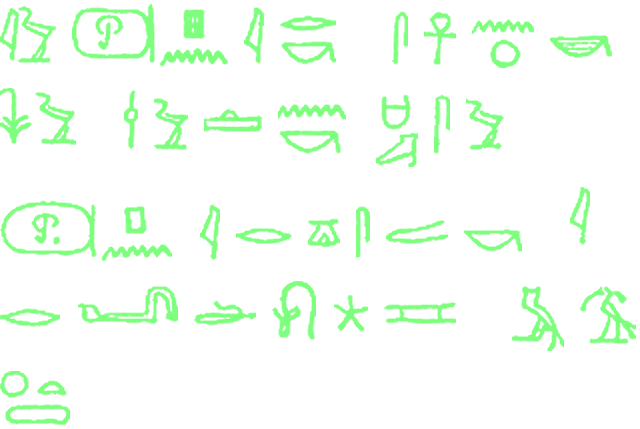
jw Ppy pn jr =k sꜥnḫ =k sw wḏ.n =k ḥmsi̯.w Ppy pn jr-gs =k jr-rmn Dwꜣ(,w) m ꜣḫ,t
This Pepi is bound for you, that you may give him life,
for you have commanded that this Pepi sit at your side,
beside Duau, in the Akhet. - 10
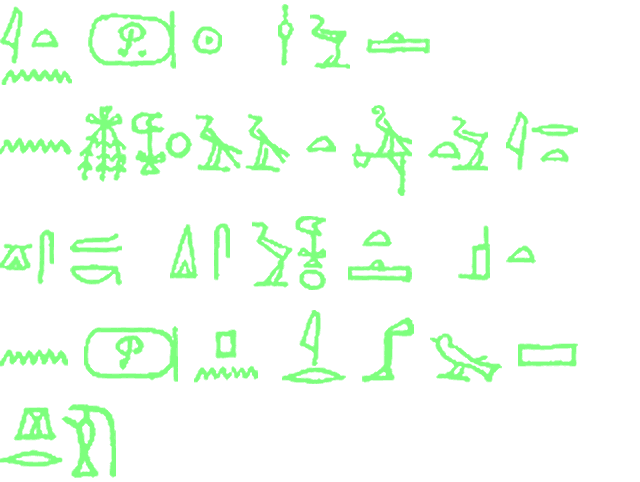
jt(j) n(,j) Ppy Rꜥw wḏ n msḫꜣꜣ,t tw jr.t gs =k ḏi̯ =s wḫꜣ.t s,t n Ppy pn jr rwd-wr ẖr qbḥ(,w)
Father of Pepi, Ra, command Meskhaat, she who is at your side,
to have a seat shaken clear for this Pepi
at the Great Stairway beneath the Cool Waters. - 11
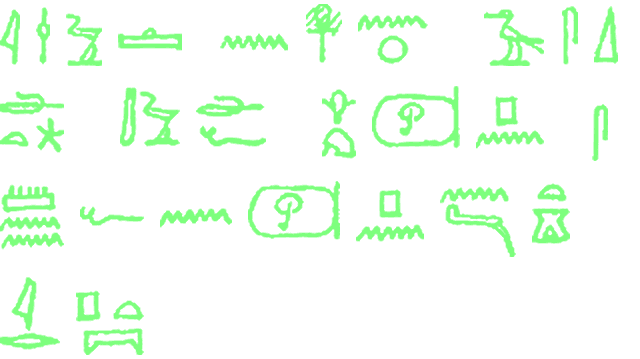
j:wḏ n Ꜥnḫ zꜣ Spd,t mdwi̯ =f ḥr-tp Ppy pn smnn =f n Ppy pn ns,t jr p,t
Command the Living One, son of Sothis,
to speak on behalf of this Pepi
and establish for this Pepi a throne in the sky. - 12
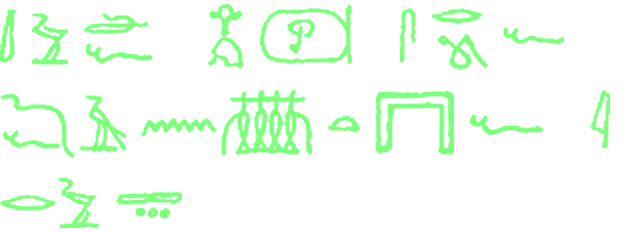
wḏ Ppy pn n Wr(,w)-šps(,w)≡f mri̯,y Ptḥ zꜣ Ptḥ mdwi̯ =f ḥr-tp Ppy srwḏ =f ḏfꜣ n(,j) ḫnt =f jr(,j).w tꜣ
Commit this Pepi to Great-in-his-Dignity, beloved of Ptah, son of Ptah,
that he may speak on behalf of Pepi
and secure the food of his offering table from those who belong to the earth.Note · Line 12
Great-in-his-Dignity is an obscure god tied to Ptah, the great god of Memphis. The point of the line is that the living must keep supplying the dead king’s offering table. - 13
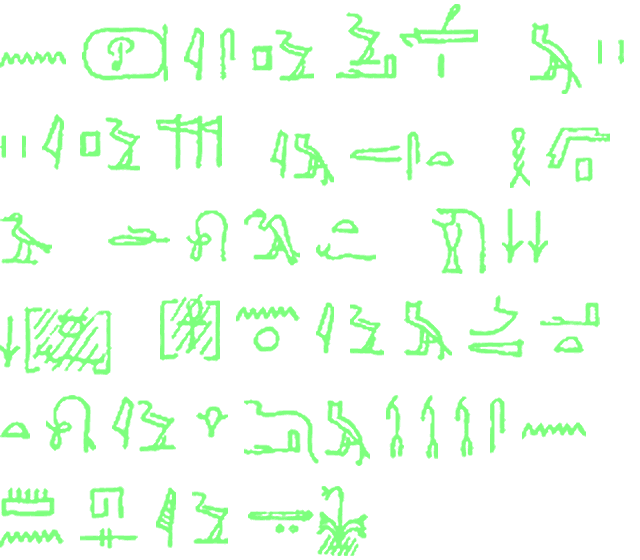
n Ppy js pw wꜥ m 4 jpw nṯr.pl Jms,t(j) Ḥjp(,w) Dwꜣ-mʾw,t≡f Qbḥ-sn.w≡f ꜥnḫ.jw m mꜣꜥ,t twꜣ.jw ḥr ḏꜥm.pl =sn mnhz.jw Tꜣ-šmꜥ(,w)
For this Pepi is one of these four gods,
Imsety, Hapy, Duamutef, Qebehsenuef,
who live on Maat,
who lean on their djam-scepters,
the guardians of Upper Egypt. - 14
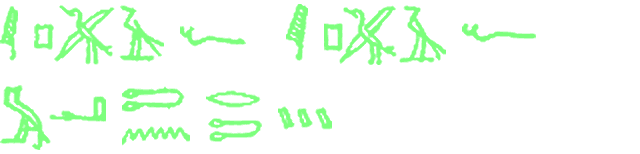
j:pꜣ =f j:pꜣ =f m-ꜥ =ṯn rmṯ.pl m ꜣpd.pl
He flies off, he flies off from you, you people, like birds.
- 15
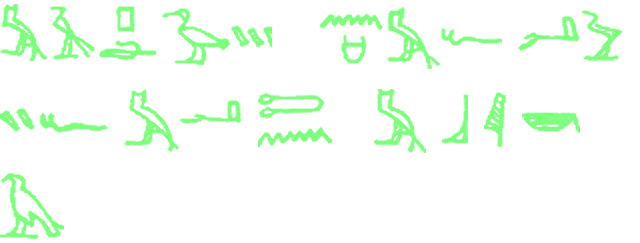
nḥm =f ꜥ.wdu =f m-ꜥ =ṯn m bjk jṯi̯.n =f ḏ,t =f m-ꜥ =ṯn m ḏr,t
He snatches his arms from you as a falcon;
he has wrested his body from you as a kite.Note · Line 15
His arms are now wings. - 16
nḥm Ppy pn m-ꜥ jm(,j)-rd jm(,j) tꜣ
This Pepi is snatched away from the adversary on earth.
- 17
sfḫ Ppy pn m-ꜥ jm(,j)-ꜥ =〈f〉
Loose this Pepi from the grip of his grappler!
Note · Line 17
The plea is most likely addressed to the god this spell calls on, usually taken to be the sun god, asking him to free the dead king from a hostile power that has hold of him.