~/sacred-texts/pyramid-texts
Pyramid Texts Utterance 539: The King’s Body Parts as Gods
- Text
- Pyramid Texts, Utterance 539 (PT 539)
- Date
- Carved in the 6th Dynasty, under Pepi I (c. 2321–2287 BC), on the walls of his pyramid at Saqqara
- Found
- Inside the pyramid of Pepi I at South Saqqara
- Language
- Old Egyptian · Hieroglyphic
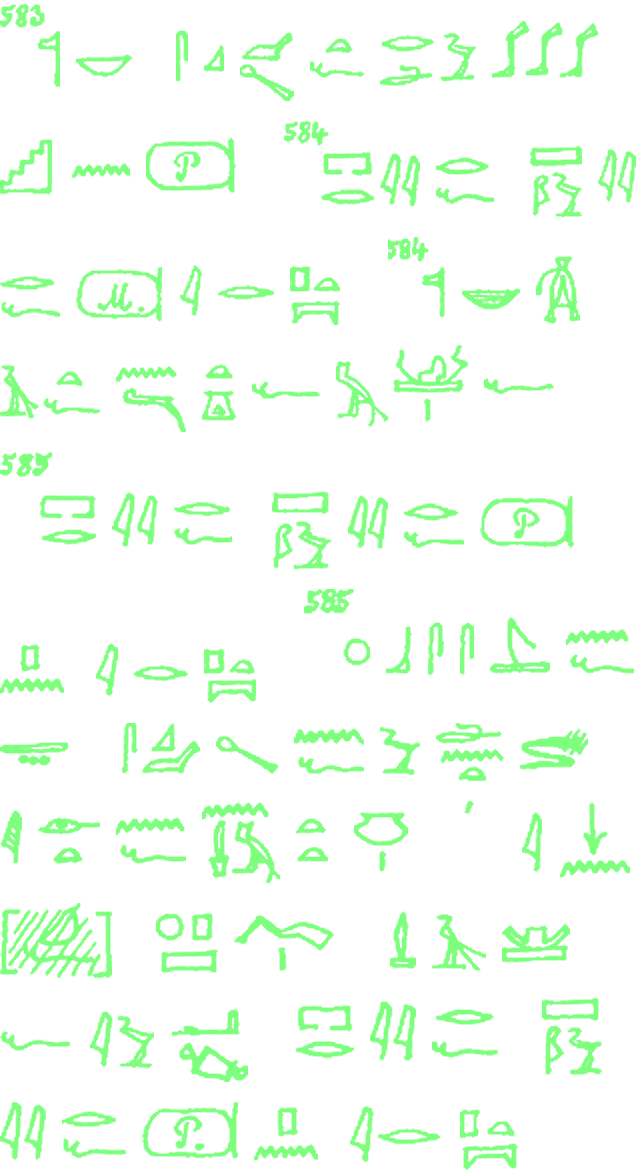
The tomb’s ritual voice works down the dead king’s body from head to toes. It names a god for each part and after each one chants So he shall go up; so he shall rise to the sky. The head of this Meryre is a vulture; The nose of this Pepi is Thoth; The penis of this Pepi is Apis; his buttocks are the sun’s night and day boats.
Then the spell turns on the gods. Any god who will not lay the king a stairway goes without food: he shall have no wafer-bread, he shall not sniff a foreleg. The king disowns the threat: it is Magic who says this to you, gods.
- 1

ḏ(d)-〈mdw〉
Recitation:
Note · Line 1
This is a “deification of the limbs” spell from the pyramid of Pepi I: part by part, the dead king’s body is declared to be a god or a divine thing, and after each part a refrain sends him up into the sky. - 2

tp n(,j) Mr,y-Rꜥw pn m ꜣ bjk
The head of this Meryre is a vulture.
Note · Line 2
Meryre (“Beloved of Ra”) is Pepi I’s throne name; the spell switches freely between it and his birth name, Pepi. - 3
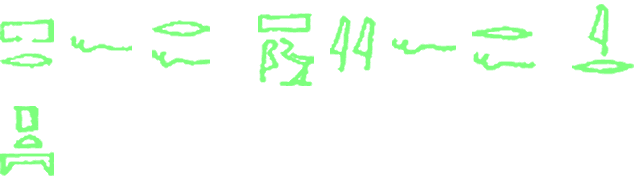
pri̯ =f r =f šwi̯.y =f r =f jr p,t
So he shall go up; so he shall rise to the sky.
- 4
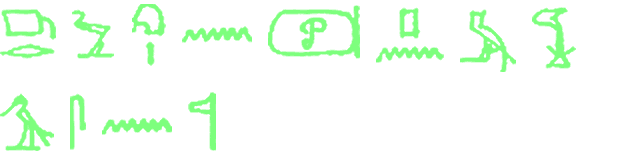
ḏrw(,w) tp n(,j) Ppy pn m ḫꜣ-bꜣ≡s n(,j) nṯr
The sides of this Pepi's head are the stars of the god.
- 5
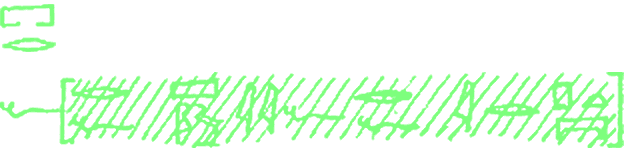
pri̯.⸢y⸣ =[f] [r] =[f] [šwi̯.y] =[f] [r] =⸢f⸣ [jr] p,[t]
So he shall go up; so he shall rise to the sky.
- 6

⸢msḏr.du⸣ Ppy pn m N⸢w⸣[_] [ḥ]nꜥ Nw,w
The ears of this Pepi are … and Nun.
- 7
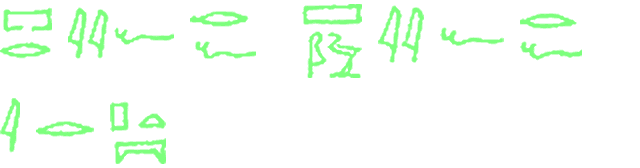
pri̯.y =f r =f šwi̯.y =f r =f jr p,t
So he shall go up; so he shall rise to the sky.
- 8
ḥr n(,j) Ppy pn m Wpi̯-wꜣ,t.pl
The face of this Pepi is Wepwawet.
Note · Line 8
Wepwawet, a jackal god, is the “Opener of the Ways”, who goes ahead to clear the road. He fits the face, the part of the body that leads. - 9
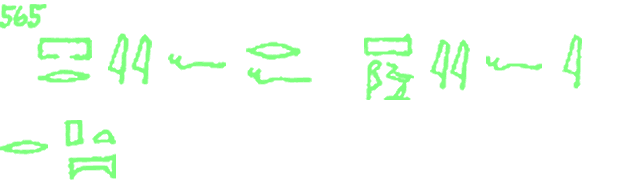
pri̯.y =f r =f šwi̯.y =f jr p,t
So he shall go up; so he shall rise to the sky.
- 10
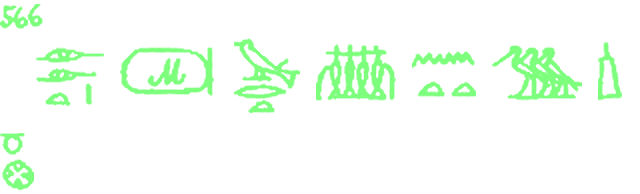
jr,t.du Mr,y-Rꜥw wr,t ḫnt.t Bꜣ,w-Jwn,w
The eyes of Meryre are the Great One at the head of the Bas of Heliopolis.
- 11
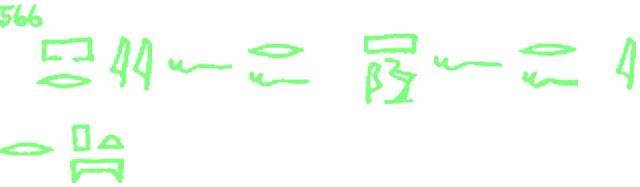
pri̯.y =f r =f šwi̯ =f r =f jr p,t
So he shall go up; so he shall rise to the sky.
- 12

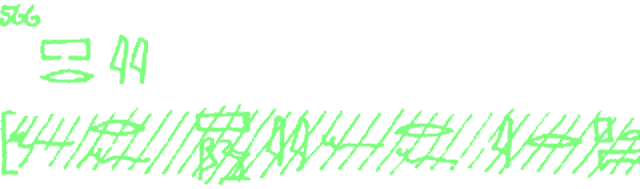
fnḏ n(,j) Ppy pn m Ḏḥw,tj
The nose of this Pepi is Thoth.
Note · Line 12
Thoth is the ibis-headed god of writing and reckoning. The ibis’s long bill may suggest the nose. - 13
pri̯.y =f r =f šwi̯.[y] =f r =f jr p,t
So he shall go up; so he shall rise to the sky.
- 14

rʾ n(,j) Mr,y-Rꜥw pn m ḫns-wr
The mouth of this Meryre is Khenes the Great.
Note · Line 14
Khenes-wer is an obscure god. The name seems to mean “the Great One who crosses over” and may be related to Khonsu, the moon god who travels across the sky. - 15
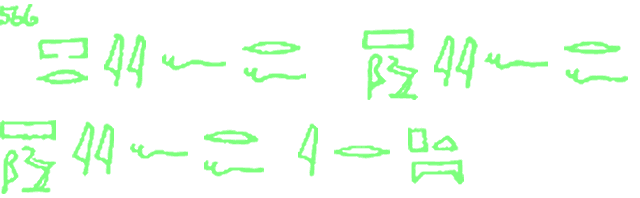
pri̯.y =f r =f šwi̯.y =f r =f ={f} ={f} jr p,t
So he shall go up; so he shall rise to the sky.
- 16
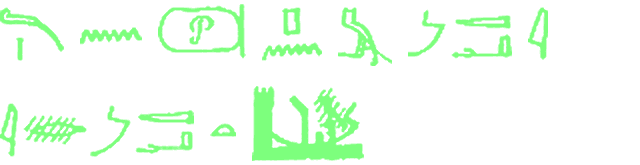
ns n(,j) Ppy pn m Mꜣꜥ,j jr(,j) mꜣꜥ,t
The tongue of this Pepi is the Pilot who belongs to the bark of Maat.
Note · Line 16
Maat, “Rightness”, is here the name of the sun god’s boat. - 17
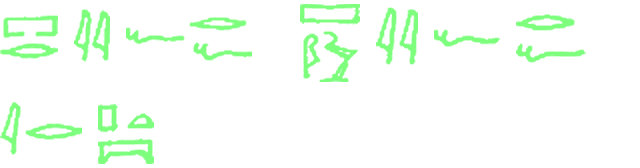
pri̯.y =f r =f šwi̯.y =f r =f jr p,t
So shall he go up, so shall he rise to the sky.
Note · Line 17
This spell carries the dead king Pepi I up to the sky. - 18

jbḥ.pl Ppy pn bꜣ.pl
The teeth of this Pepi are the Bas.
Note · Line 18
The Bas are a company of gods, the embodied powers of a place or of a deity. Here they are named with no place attached. - 19
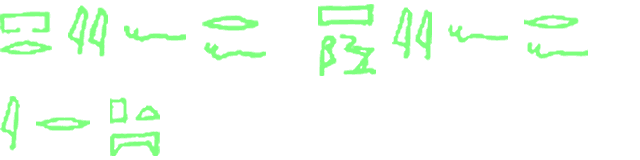
pri̯.y =f r =f šwi̯.y =f r =f jr p,t
So shall he go up, so shall he rise to the sky.
- 20

sp,t.du [Mr,y-Rꜥw] [m] [Šw] ḥnꜥ Tfn,t
The lips of Meryre are Shu and Tefnut.
Note · Line 20
Meryre (“Beloved of Ra”) is Pepi I’s throne name, and the spell alternates between his two names. - 21
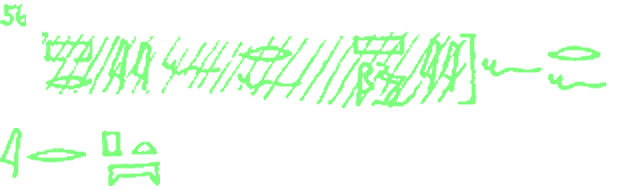
pri̯.y =f r =f šwi̯.y =f r =f jr p,t
So shall he go up, so shall he rise to the sky.
- 22
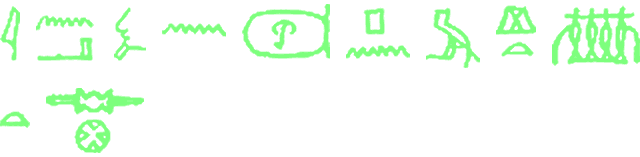
jnꜥ n(,j) Ppy pn m H̱r,t(j) ḫnt(,j) Ḫm
The chin of this Pepi is Kherty, foremost of Letopolis.
Note · Line 22
Kherty is a ram-headed god of the earth and of the dead, worshipped at Letopolis in the Delta. - 23
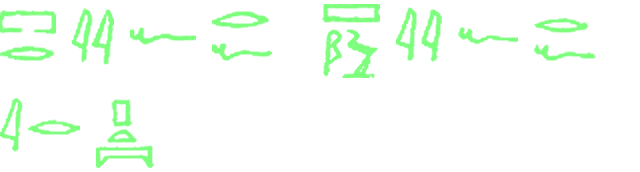
pri̯.y =f r =f šwi̯.y =f r =f jr p,t
So shall he go up, so shall he rise to the sky.
- 24

ṯ(ꜣ)z n(,j) Ppy pn m smꜣ
The spine of this Pepi is the Wild Bull.
Note · Line 24
The word means the vertebrae, especially those of the neck. The bull’s massive neck and back are the image of strength. - 25
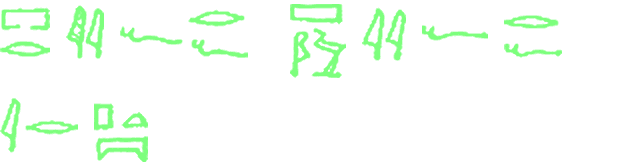
pri̯.y =f r =f šwi̯.y =f r =f jr p,t
So shall he go up, so shall he rise to the sky.
- 26

rmn.du Ppy pn m Stš
The shoulders of this Pepi are Seth.
Note · Line 26
Seth is the god of brute force and storm, the strongest of the gods. His power fills the king’s shoulders and upper arms. - 27
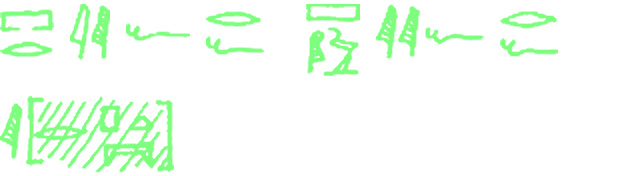
pri̯.y =f r =f šwi̯.y =f r =f j[r] [p,t]
So shall he go up, so shall he rise to the sky.
- 28

[_] Mr,y-Rꜥw ⸢pn⸣ m ⸢_⸣
The … of this Meryre are …
- 29

pri̯.y =⸢f⸣ [r] =[f] [šwi̯.y] =[f] [r] =[f] [jr] [p,t]
So shall he go up, so shall he rise to the sky.
- 30

[_] Ppy m Bꜣ{j}bw〈j〉
The … of Pepi is Babi.
Note · Line 30
Babi is a savage baboon god, famed for violent virility. The lost word is most likely the penis, which is elsewhere identified with him. - 31

pri̯.y =f šwi̯.y =f jr p,t
He shall go up, he shall rise to the sky.
- 32

ḥꜣ,t(j) n(,j) Mr,y-Rꜥw pn m Bꜣs,tt
The heart of this Meryre is Bastet.
Note · Line 32
Bastet is a goddess in lioness or cat form, protective and fierce. - 33
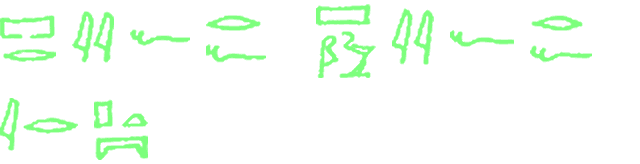
pri̯.y =f r =f šwi̯.y =f r =f jr p,t
So he shall come forth, so he shall rise to the sky.
Note · Line 33
This line is the refrain of the spell. - 34

ẖ,t n.t Mr,y-Rꜥw pn m Nw,t
The belly of this Meryre is Nut.
Note · Line 34
Meryre (“Beloved of Ra”) is the throne name of Pepi I, the king buried in this pyramid; the spell switches freely between his two names. - 35
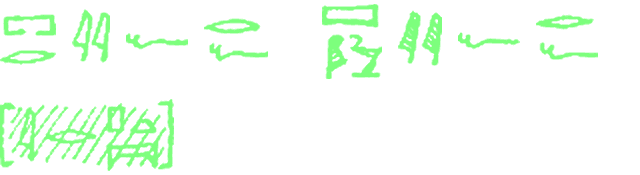
pri̯.y =f r =f šwi̯.y =f r =f [jr] [p,t]
So he shall come forth, so he shall rise to the sky.
- 36
[pri̯.y] =[f] [r] =[f] [šwi̯.y] =[f] [r] =[f] [jr] [p,t]
So he shall come forth, so he shall rise to the sky.
- 37
[_] [Ppy] pn m psḏ,t.du
The … of this Pepi is the Two Enneads.
Note · Line 37
The body part is lost. An Ennead is a company of nine gods. The Two Enneads together stand for the whole assembly of the gods. - 38
[pri̯].y =f r =f šwi̯.y =f r =f jr p,t
So he shall come forth, so he shall rise to the sky.
- 39

pḥ(,wj) Ppy pn m Ḥq,t
The backside of this Pepi is Heqet.
Note · Line 39
Heqet is a frog goddess linked to birth and renewal. - 40
pri̯.y =f r =f šwi̯.y =f r =f jr p,t
So he shall come forth, so he shall rise to the sky.
- 41
ḫpd.du Mr,y-Rꜥw pn m msk,tt ḥnꜥ mꜥnḏ,t
The buttocks of this Meryre are the Evening Bark and the Morning Bark.
Note · Line 41
These are the two boats in which the sun god crosses the sky, one by night and one by day. The king’s two buttocks match the pair of boats, so he rides on both. - 42
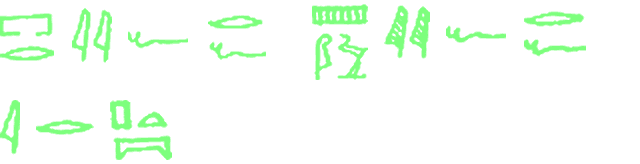
pri̯.y =f r =f šwi̯.y =f r =f jr p,t
So he shall come forth, so he shall rise to the sky.
- 43
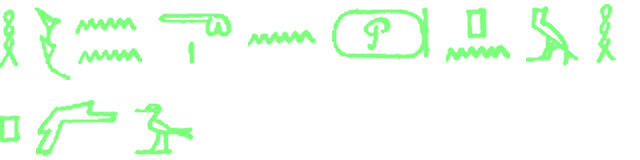
ḥnn n(,j) Ppy pn m Ḥjp(,w)
The penis of this Pepi is Apis.
Note · Line 43
Apis is the sacred bull of Memphis, an emblem of potency and fertility. - 44
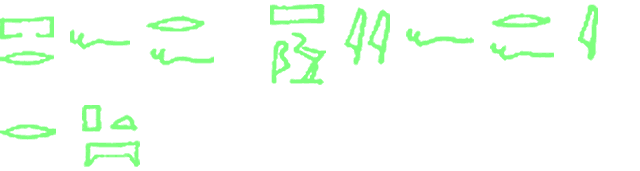
pri̯ =f r =f šwi̯.y =f r =f jr p,t
So he shall come forth, so he shall rise to the sky.
- 45
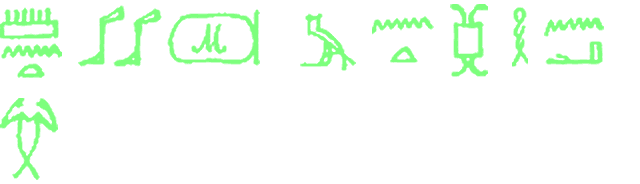
mn,t.du Mr,y-Rꜥw m N(j),t ḥnꜥ Srq(,t)
The thighs of Meryre are Neith and Selket.
Note · Line 45
Neith and Selket are protective goddesses, often paired as guardians of the dead. - 46
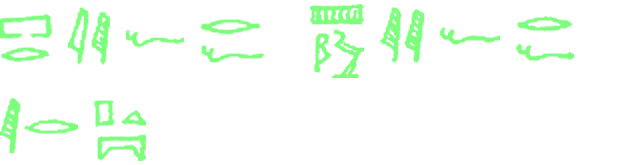
pri̯.y =f r =f šwi̯.y =f r =f jr p,t
So he shall come forth, so he shall rise to the sky.
- 47
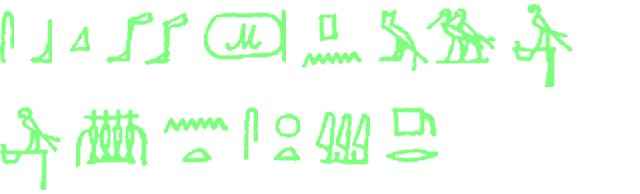
sbq.du Mr,y-Rꜥw pn m bꜣ.du ḫnt(,j) sḫ,t ḏr
The shins of this Meryre are the Two Bas who preside over the Djer Field.
Note · Line 47
A ba is a divine or spirit power, often a god’s mobile, manifest form; the Two Bas here are a pair of gods. The place-name (Egyptian ḏr) is not securely understood and is left untranslated. - 48
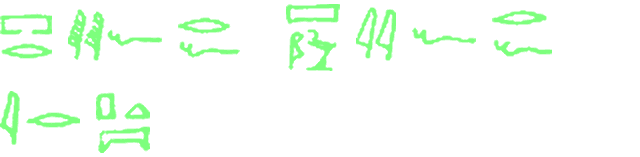
pri̯.y =f r =f šwi̯.y =f r =f jr p,t
So he shall come forth, so he shall rise to the sky.
- 49
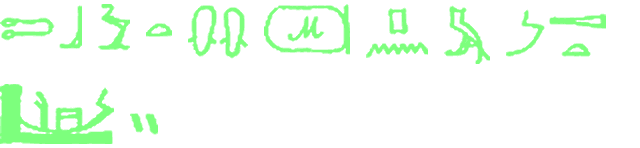
ṯbw,t.du Mr,y-Rꜥw pn m mꜣꜥ,t.du
The soles of this Meryre's feet are the two Maat-barks.
Note · Line 49
The speaker is the ritual voice of the tomb, spoken over the dead king Pepi I. - 50
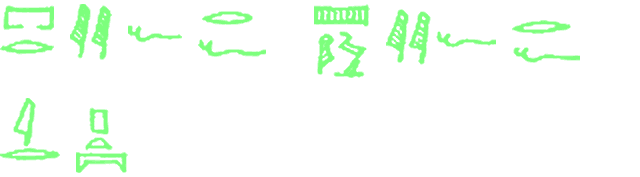
pri̯.y =f r =f šwi̯.y =f r =f jr p,t
So he shall go up,
so he shall rise to the sky.Note · Line 50
This refrain follows every statement. The verbs say what will happen, almost as a decree: each claim about the king’s divine nature becomes a fresh guarantee of his ascent. - 51

sꜣḥ.pl Ppy m Bꜣ,w-Jwn,w
Pepi's toes are the Bas of Heliopolis.
- 52
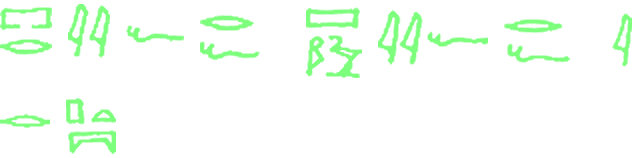
pri̯.y =f r =f šwi̯.y =f r =f jr p,t
So he shall go up,
so he shall rise to the sky. - 53

Ppy pw jr(,j) nṯr zꜣ nṯr
Pepi is a god's companion, a god's son.
- 54
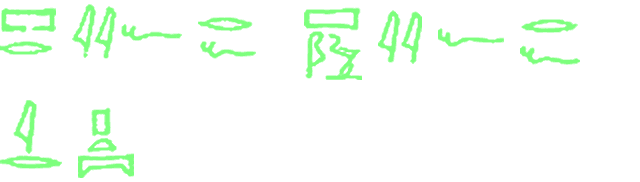
pri̯.y =f r =f šwi̯.y =f r =f jr p,t
So he shall go up,
so he shall rise to the sky. - 55

Mr,y-Rꜥw zꜣ Rꜥw mri̯.y =f
Meryre is Ra's son, the one he loves.
Note · Line 55
The line plays on the king’s own name: Meryre means “Beloved of Ra,” and he is said to be Ra’s beloved. - 56
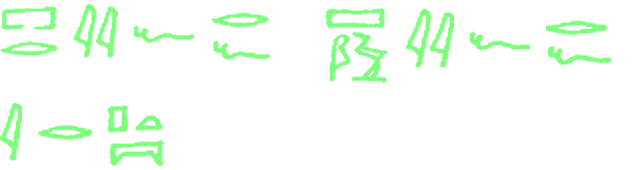
pri̯.y =f r =f šwi̯.y =f r =f jr p,t
So he shall go up,
so he shall rise to the sky. - 57

wtṯ Mr,y-Rꜥw n Rꜥw
Meryre was begotten for Ra.
Note · Line 57
This line and the next two run through the whole of birth: begetting, conception, delivery. All of it took place for the sun god. - 58
pri̯.y =f r =f šwi̯.y =f r =f jr p,t
So he shall go up,
so he shall rise to the sky. - 59

jwr Ppy n Rꜥw
Pepi was conceived for Ra.
- 60
pri̯.y =f r =f šwi̯.y =f r =f jr p,t
So he shall go up,
so he shall rise to the sky. - 61

msi̯ Ppy n Rꜥw
Pepi was born for Ra.
- 62
pri̯.y =f r =f šwi̯.y =f r =f jr p,t
So he shall go up,
so he shall rise to the sky. - 63
ḥkꜣ pn jr =f jm(,j) ẖ,t n.t Mr,y-Rꜥw
This magic belongs to him, the magic that is in Meryre's belly.
Note · Line 63
“Magic” (heka) is the divine power that makes words and rites effective. The Pyramid Texts often picture it as a substance the king carries in his belly, as if he had swallowed it. - 64
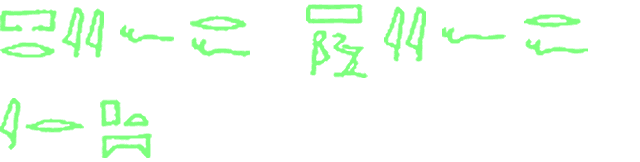
pri̯.y =f r =f šwi̯.y =f r =f jr p,t
So he shall go up,
so he shall rise to the sky. - 65
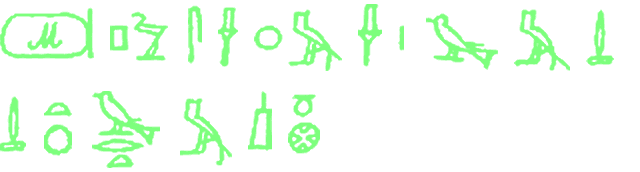
Mr,y-Rꜥw pw Sḫm-wr m ḏꜣḏꜣ,t wr.t m Jwn,w
Meryre is the Great Power in the great tribunal in Heliopolis.
Note · Line 65
Meryre (“Beloved of Ra”) is the throne name of King Pepi I. - 66
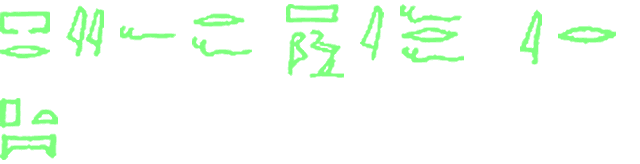
pri̯.y =f r =f šwi̯.j =f r =f jr p,t
So let him go up, so let him rise up to the sky!
Note · Line 66
It is a wish or demand that the dead king ascend, and it is repeated again and again like a chant. - 67

ẖnn,w
Uproar!
Note · Line 67
A lone exclamation. It seems to announce commotion in the heavens as the king approaches. - 68
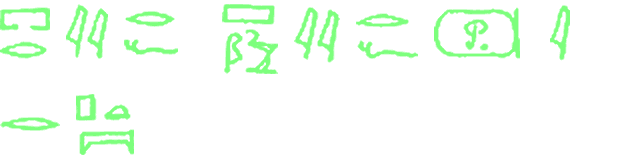
pri̯.y =[f] r =f šwi̯.y =f r =f Ppy jr p,t
So let him go up, so let Pepi rise up to the sky!
- 69

Ḥr,w nḫn(,w) ẖrd
Horus the infant, the child!
Note · Line 69
The king is likely being identified with the young Horus, the son and heir. The phrase stands without a verb. - 70
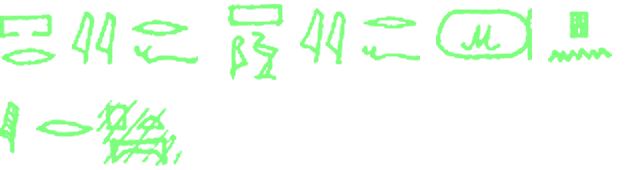
pri̯.y r =f šwi̯.y r =f Mr,y-Rꜥw pn r p,t
So let this Meryre go up, so let him rise up to the sky!
- 71
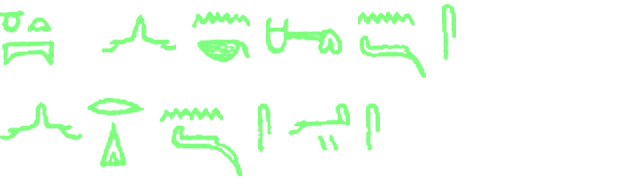
Nw,t n nk.n =s n rḏi̯.n =s ꜥ.du =s
Nut: she cannot have sex, she cannot hold out her arms.
Note · Line 71
Nut is the sky-goddess, the wife of the earth-god Geb. - 72
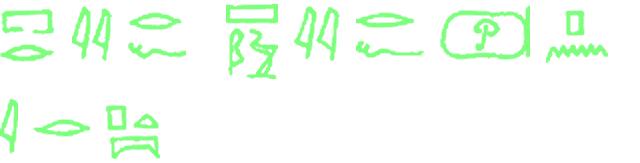
pri̯.y r =f šwi̯.y r =f Ppy pn jr p,t
So let this Pepi go up, so let him rise up to the sky!
- 73

Gbb n sṯp.n =f jb,t =f
Geb: he cannot mount his ibet.
Note · Line 73
Geb is the earth-god, Nut’s husband. - 74
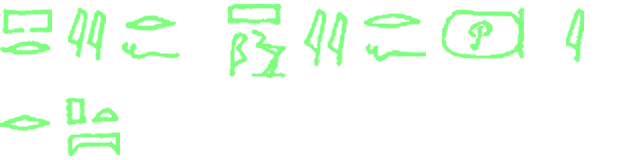
pri̯.y r =f šwi̯.y r =f Ppy jr p,t
So let Pepi go up, so let him rise up to the sky!
- 75
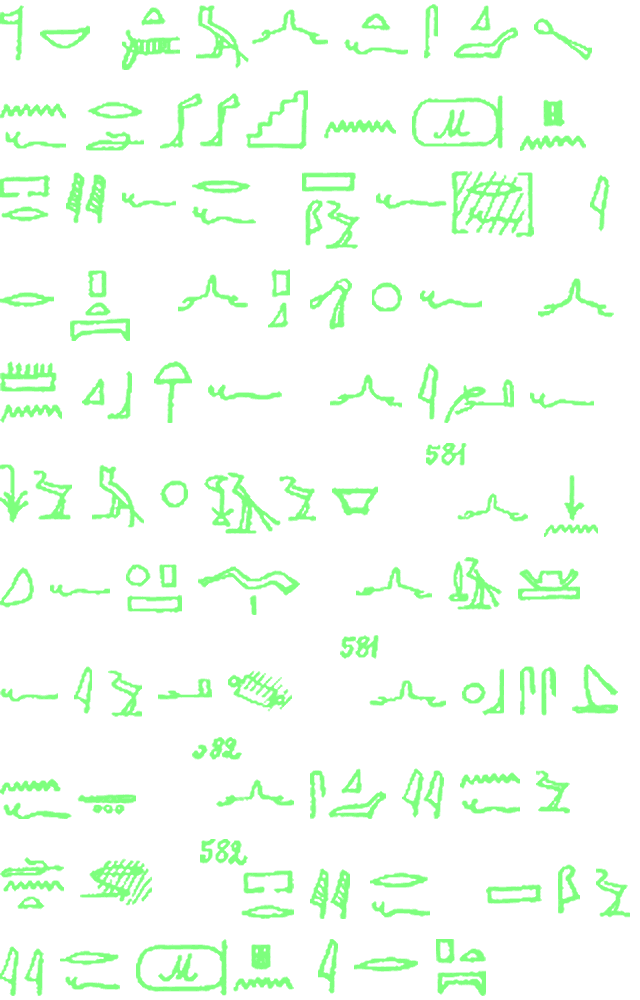
nṯr nb tm.t =f sq(r) ={f} r(w)d n Mr,y-Rꜥw pn pri̯.y =f r =f šwi̯ =f [r] =[f] jr p,t n p(ꜣ)q(j) =f n mnqb =f n jꜥi̯ =f sw m ḫꜣ,w n sn =f ḫpš n ḏꜣi̯ =f jwꜥ n ḫbss n =f tꜣ n sqjj n =f wdn,t pri̯.y r =f šwi̯.y r =f Mr,y-Rꜥw pn jr p,t
Any god who will not lay a stairway for this Meryre (so let him go up, so let him rise up to the sky!):
he shall have no wafer-bread,
he shall have no sunshade,
he shall not wash himself from a basin,
he shall not sniff a foreleg,
he shall not raise a haunch to his mouth;
no earth shall be hacked for him,
no offering shall be laid for him.
So let this Meryre go up, so let him rise up to the sky!Note · Line 75
The threat to gods who refuse to help: they lose every offering. - 76
n jn js Ppy pn ḏd nn jr =ṯn nṯr.pl jn ḥkꜣ ḏd nn jr =ṯn nṯr.pl
It is not this Pepi who says this to you, gods: it is Magic who says this to you, gods.
Note · Line 76
Magic (Heka) was a power, and also a god, by which the world was made and set in motion. The king disowns the threats and puts them in Magic’s mouth. - 77
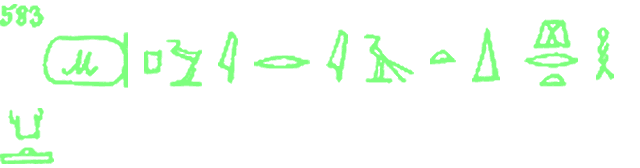
Mr,y-Rꜥw pw jr(,j) jꜣ,t ẖr.t ḥkꜣ
Meryre is one who belongs to the Iat laden with magic.
- 78
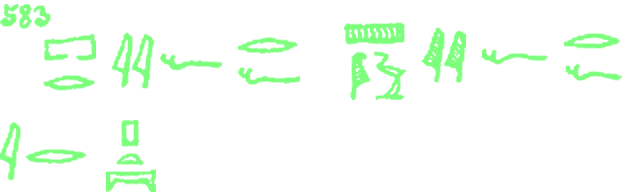
pri̯.y =f r =f šwi̯.y =f r =f jr p,t
So let him go up, so let him rise up to the sky!
- 79
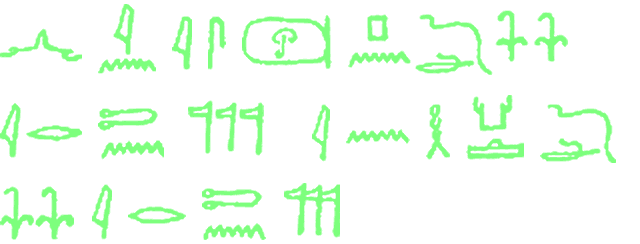
nṯr nb sq(r).t =f rwd n Ppy pri̯.y r =f šwi̯.y r =f Mr,y-Rꜥw jr p,t nṯr nb ḏbꜣ.t =f ns,t =f m wjꜣ ꜥꜣ pri̯.y r =f šwi̯.y r =f Ppy pn jr p,t ḫbss n =f tꜣ sq(r) n =f wdn,t jri̯.t n =f nmt,t j:sn =[f] ḫpš ḏꜣi̯ =f jwꜥ pri̯.y r =f šwi̯.y r =f Ppy pn jr p,t
Any god who lays a stairway for Pepi (so let Meryre go up, so let him rise up to the sky!),
any god who furnishes his seat in the great bark (so let this Pepi go up, so let him rise up to the sky!):
for him the earth shall be hacked,
for him an offering shall be laid,
for him a nemtet shall be made ready;
he shall sniff a foreleg,
he shall raise a haunch to his mouth.
So let this Pepi go up, so let him rise up to the sky! - 80
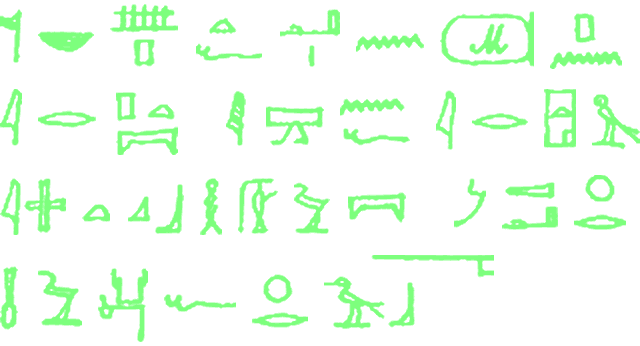
nṯr nb šzp.t =f ꜥ n(,j) Mr,y-Rꜥw jr p,t j:šm n =f jr ḥw,t Ḥr,w jm.t qbḥ,w mꜣꜥ-ḫrw kꜣ =f ḫr Gbb
Any god who takes Meryre's arm to the sky, so that he may go to the House of Horus in the cool waters of heaven: his ka shall be true of voice before Geb.
Note · Line 80
The ka is a person’s or god’s vital force.