~/sacred-texts/pyramid-texts
Pyramid Texts Utterance 534: Gods Barred from Pepi’s Tomb
- Text
- Pyramid Texts, Utterance 534 (PT 534)
- Date
- Carved in the 6th Dynasty, in the reign of Pepi I (c. 2321–2287 BC), on the walls of the burial apartments of his pyramid at Saqqara
- Found
- Pyramid of Pepi I, South Saqqara
- Language
- Old Egyptian · Hieroglyphic
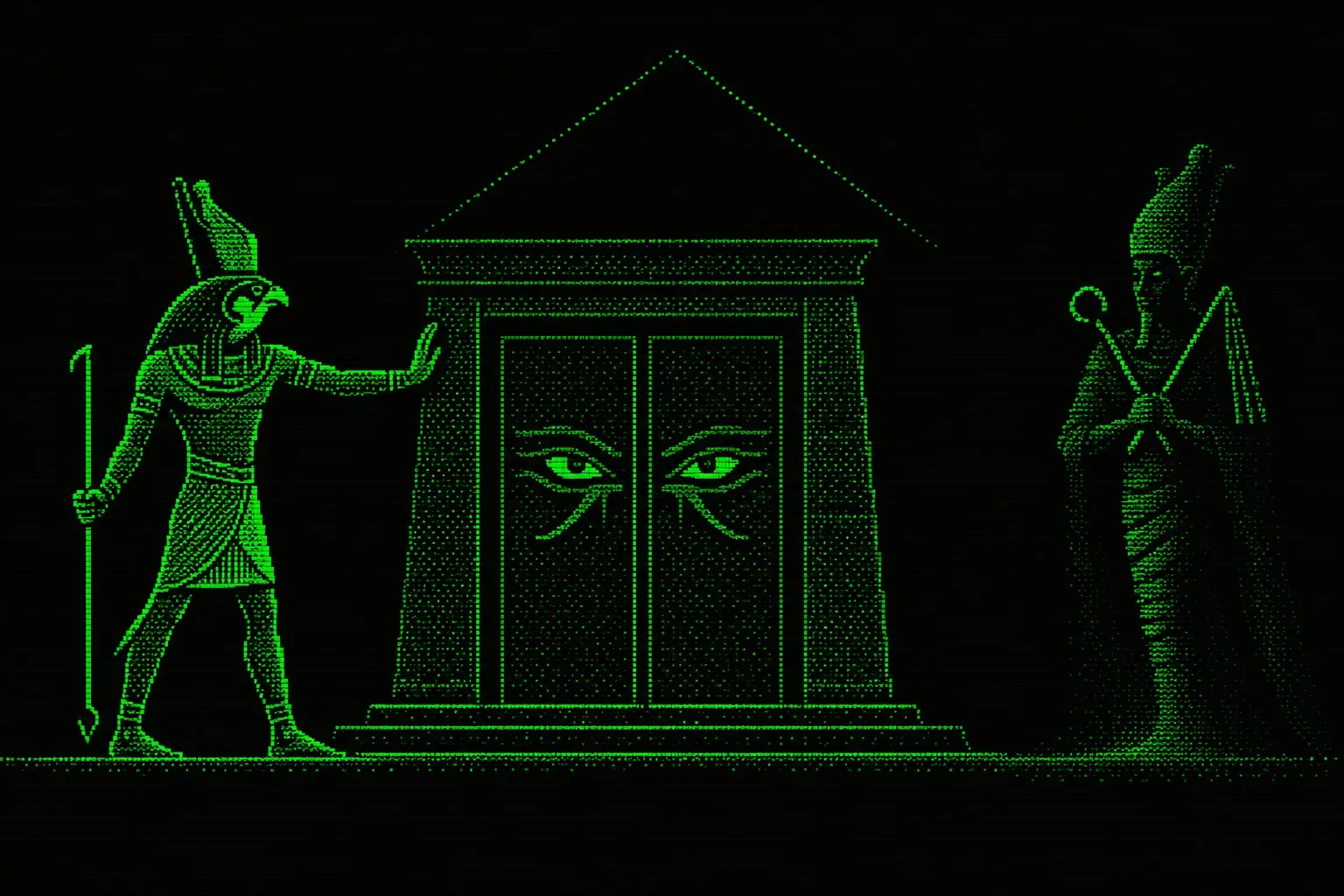
Horus speaks at the door of King Pepi’s pyramid. Every god who comes in that evil coming of his is turned away. To Osiris, Horus, Seth, Thoth, Isis and Nephthys in turn the order is the same: Do not open your arms to him. Each is given an insulting name and sent off to a distant town. Isis is called “Wide-with-Rot.” Nephthys is called “Stand-In-Who-Has-No-Vulva.”
Only the king himself is let in: Should this Pepi come with his ka, open your arms to him, open the door of his gods! The spell then claims the pyramid and its temple for Pepi. It curses whoever lays a finger on them: Accursed is that one; that one is one who eats his own body.
- 1

ḏ(d)-mdw jn Ḥr,w ḥtp-ḏi̯ Gbb
Words spoken by Horus. An offering that Geb gives.
Note · Line 1
The speaker is Horus, son of Osiris and guardian of the dead king. - 2

j:ḥm ḥri̯.t
Back! Keep far away!
Note · Line 2
The commands are aimed at an unwelcome visitor approaching the tomb. Line 15 reveals who it is. - 3

twr w(j) Ḥr,w mki̯ w(j) Stš
May Horus respect me, may Seth protect me.
Note · Line 3
The gods come in pairs, and even Seth, the enemy and murderer of Osiris, is called on as a protector. - 4

j:ḥm ḥri̯.t
Back! Keep far away!
- 5

twr w(j) (W)sr(,w) mki̯ w(j) H̱r,tj
May Osiris respect me, may Kherty protect me.
Note · Line 5
Kherty is a ram-shaped god of the dead from Letopolis, sometimes a dangerous one. - 6

j:ḥm ḥri̯.t
Back! Keep far away!
- 7

twr w(j) (Ꜣ)s,t mki̯ w(j) Nb,t-ḥw(,t)
May Isis respect me, may Nephthys protect me.
Note · Line 7
Isis and Nephthys are the sisters who mourned and guarded the dead Osiris. - 8

ḥri̯.t ḥr-tp
Keep far away, up there!
- 9

twr w(j) (J)m(,j)-ḫnt-jr,tj mki̯ w(j) Ḏḥw,tj
May Mekhenti-irti respect me, may Thoth protect me.
Note · Line 9
Mekhenti-irti is a falcon god of Letopolis, a form of Horus. His name concerns his two eyes, the sun and moon. Thoth is the ibis god of wisdom and the moon. - 10

j:ḥm ḥri̯.t
Back! Keep far away!
- 11
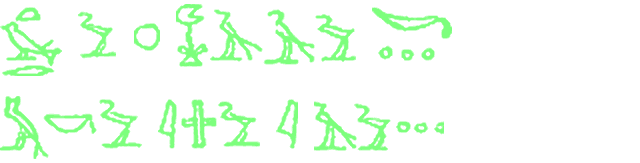
twr w(j) ḫꜣ,t(j).w mki̯ w(j) jm(,j).w jꜣ,w
May the Slaughterers respect me, may Those in Adoration protect me.
Note · Line 11
The Slaughterers are knife-wielding demons. “Those in Adoration” are beings who live in a state of praise. This pair sets the terrible against the worshipful. - 12
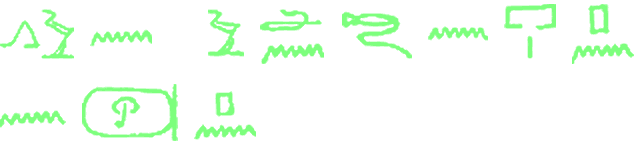
jwi̯.n =(j) wdn.n =(j) pr pn n Ppy pn
I have come and dedicated this house to this Pepi.
Note · Line 12
The “house” is King Pepi’s pyramid tomb. - 13

wꜥb wsḫ,t nn jr qbḥ(,w)
Pure is the broad court here, purer than the cool waters of the sky.
- 14
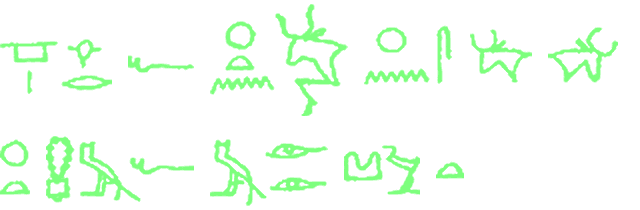
ꜥꜣ ḥr(,j) =f ḫtn ḫns ḫtm =f m jr,t.du ḏw.t
The door upon it is kheten khenes; its seal is a pair of evil eyes.
Note · Line 14
The words ḫtn and ḫns cannot yet be identified, so they are left untranslated. The whole line is obscure. - 15
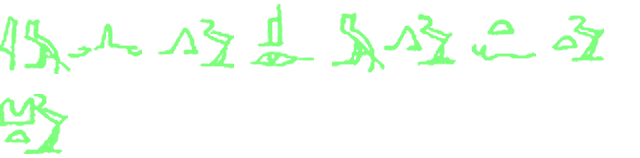
jmi̯ jwi̯ (W)sr(,w) m jw.t =f tw ḏw.t
Osiris shall not come in this evil coming of his.
Note · Line 15
The intruder is Osiris himself, the dead god, arriving in a harmful form. The tomb is closed even to him when he comes for evil. - 16

m wn =k ꜥ.w(j) =k n =f
Do not open your arms to him.
Note · Line 16
The door is addressed. Its two leaves are imagined as arms that could open in welcome. The Egyptian word for a door leaf, ꜥꜣ, sounds close to ꜥwj, “arms”. - 17

ḫsf j:zj jr Ndj,t
Driven off! Go to Nedit!
Note · Line 17
This spell guards the dead king’s tomb against gods who may come to it with hostile intent. - 18

mḥ j:zj jr Ꜥḏꜣ
Seized! Go to Adja!
Note · Line 18
Adja (Ꜥḏꜣ) is a place-name not otherwise known. - 19
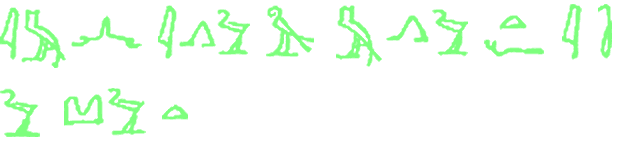
jmi̯ jwi̯ Ḥr,w m jw.t =f jtw ḏw.t
Horus shall not come in that evil coming of his.
- 20

m wn =k ꜥ.du =k n =f
Do not open your arms to him.
Note · Line 20
The “you” is the tomb and its door, which must not embrace the visitor or let him in. - 21
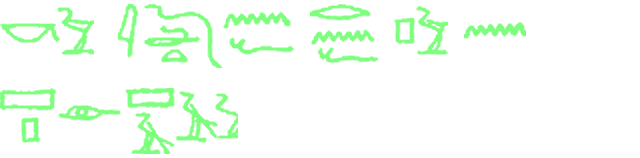
kw j:ḏd.t n =f rn =f pw n(,j) šp-šꜣꜣ,w
Rather, let this name of his be said to him: "Blind Shaau."
- 22

j:zj jr Ꜥnp,t
Go to Mendes!
Note · Line 22
Mendes, a city in the Delta, is here called by its old name Anepet. - 23

mḥ j:zj jr Nṯr(,w)
Seized! Go to Netjeru!
Note · Line 23
Netjeru is a town in the Delta, later the site of a great temple of Isis. - 24
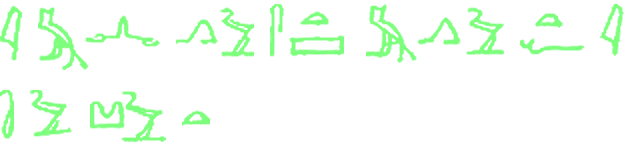
jmi̯ jwi̯ Stš m jw.t =f jtw ḏw.t
Seth shall not come in that evil coming of his.
- 25

m wn =k ꜥ.du =k n =f
Do not open your arms to him.
- 26

kw j:ḏd.t n =f rn =f pw n(,j) sšꜥ
Rather, let this name of his be said to him: "Sesha."
- 27
j:zj jr =k r ḏw(,t).pl km.wt
Go off, then, to the Black Mountains!
- 28

mḥ j:zj r Tꜣḫb,t(j)
Seized! Go to Takhebet!
Note · Line 28
Takhebet is a place known only from myth. - 29
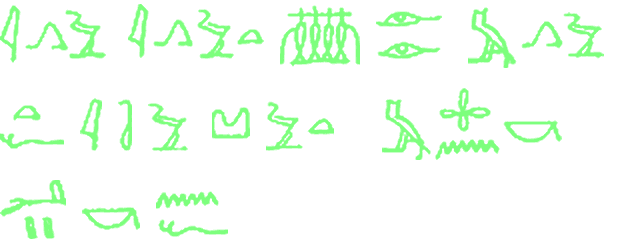
jwi̯ jw.t Ḫnt-jr,t.du m jw.t =f jtw ḏw.t m wn =k ꜥ.du =k n =f
If Khenti-irti comes in that evil coming of his, do not open your arms to him.
Note · Line 29
Khenti-irti, “Foremost of the Two Eyes”, is a falcon god related to Horus. The Egyptian stresses the act: literally “comes a coming in that evil coming of his”. - 30
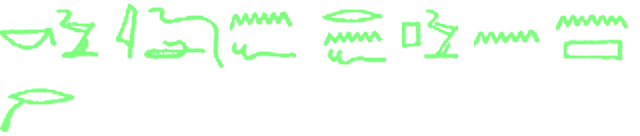
kw j:ḏd n =f rn =f pw n(,j) nš
Rather, let this name of his be said to him: "Spittle."
- 31
j:zj r =k jr Ddn,w
Go off, then, to Dedenu!
Note · Line 31
Dedenu appears to be the name of an estate; nothing more is known of it. - 32

gmi̯.w =k n =sn m nwr
You will be found trembling before them.
- 33
mḥ j:zj jr Ḫm
Seized! Go to Letopolis!
Note · Line 33
This ends the ward against Khenti-irti begun in line 29. Letopolis was his cult centre, so the repulsed god is sent back to his own town. - 34
jwi̯ jw.t Ḏḥw,tj m jw.t =f jtw ḏw.t m wn =k ꜥ.du =k n =f
Should Thoth come in that evil coming of his, do not open your arms to him.
Note · Line 34
The person addressed (“you”) is never named. - 35
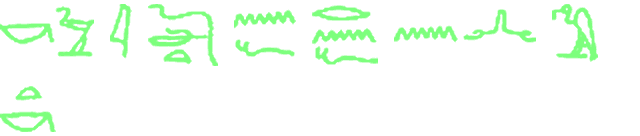
kw j:ḏd.t n =f rn =f n(,j) N-mʾw,t≡k
Rather, let this his name be said to him: "You-Have-No-Mother."
Note · Line 35
To speak a being’s name is to have power over it. - 36
j:zj ḫsf jr jnt.w(j) =k
Go, Repulsed One, to your two valleys!
- 37
j:zj jr Pj jr H̱r(,j)-Ḏḥw,tj
Go to Pe, to the Place of Thoth!
Note · Line 37
Pe was one half of the twin city of Buto in the northwestern Delta. - 38
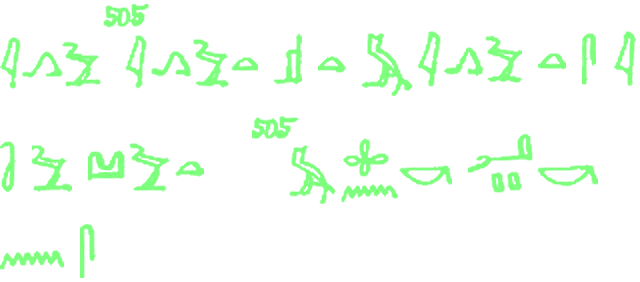
jwi̯ jw.t (Ꜣ)s,t m jw.t =s jtw ḏw.t m wn =k ꜥ.du =k n =s
Should Isis come in that evil coming of hers, do not open your arms to her.
- 39
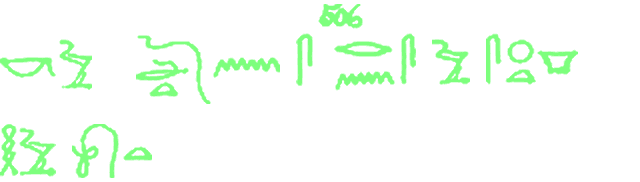
kw ḏd.t n =s rn =s wsḫ,t-ḥwꜣ.t
Rather, let her name be said to her: "Wide-with-Rot."
Note · Line 39
The insult turns Isis’s role against her. As wife and mourner of Osiris she tended his corpse, and here she is mocked as reeking of its decay. - 40
ḫsf j:zj jr pr.pl mꜣn,w
Repulsed One, go to the houses of the Western Mountain!
Note · Line 40
The Western Mountain (Manu) is the range where the sun sets, the far edge of the world and the land of the dead. - 41
mḥ j:zj jr Ḥḏb,t jr bw ḥ(w)i̯.y =ṯ jm
Seized! Go to Hedjebet, to the place where you were beaten!
Note · Line 41
Hedjebet is an unidentified place. - 42
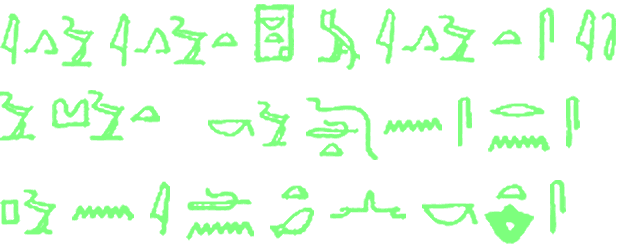
jwi̯ jw.t Nb,t-ḥw(,t) m jw.t =s jtw ḏw.t kw ḏd.t n =s rn =s pw n(,j) jdn,t-n-k(ꜣ),t≡s
Should Nephthys come in that evil coming of hers, let this her name be said to her: "Stand-In-Who-Has-No-Vulva."
Note · Line 42
Nephthys, sister of Isis, shared her mourning for Osiris and often stood in for her. - 43
j:zj r =ṯ jr Ḥw,t.pl Srq,t r bw pw ḥ(w)i̯.y =ṯ jm ꜥnn,t =ṯ [...] ꜥnn mn,t.du =ṯ
Go, then, to the Houses of Selket, to that place where you were beaten on your buttocks … where your thighs were bound!
Note · Line 43
Selket is the scorpion goddess. Her “houses” may be the places where she is worshipped. - 44
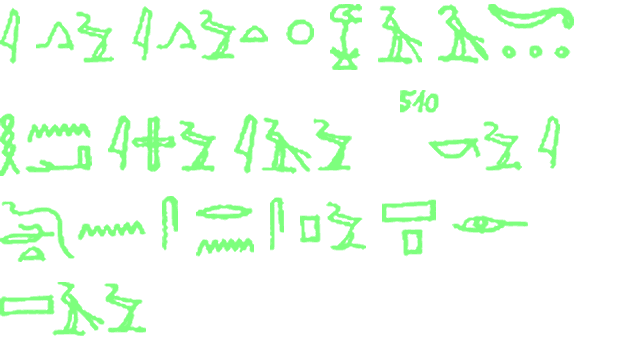
jwi̯ jw.t ḫꜣ,t(j).w ḥnꜥ jm(,j).w jꜣw kw j:ḏd.t n =s rn =s pw šp(.w)-šꜣ(ꜣ),w
Should the Slaughterers come together with Those in Praise, let this their name be said to them: "Blind-of-Shaau."
- 45
j:zj jr ///ṯw,t
Go to …!
- 46
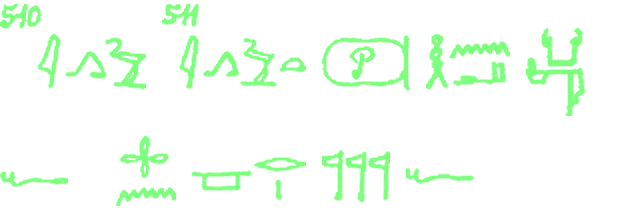
jwi̯ jw.t Ppy ḥnꜥ kꜣ =f wn rʾ nṯr.pl =f
Should Pepi come with his ka, open the door of his gods.
Note · Line 46
At last the right visitor arrives: King Pepi I, for whom this pyramid was built. - 47
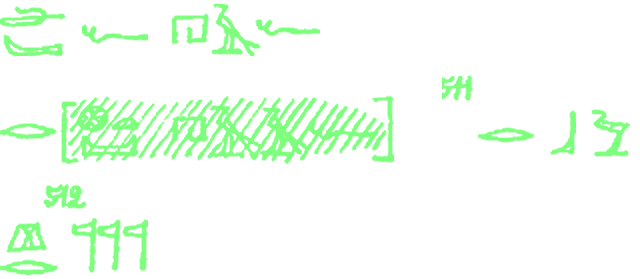
dbḥ =f hꜣi̯ =f r ⸢nn,t⸣ [hꜣꜣ] =[f] r bw ẖr(,j) nṯr.pl
Should he ask to descend to the Lower Sky, he descends to the place where the gods are.
Note · Line 47
The Lower Sky (Nenet) is the counter-heaven beneath the earth. The sun travels through it by night. - 48
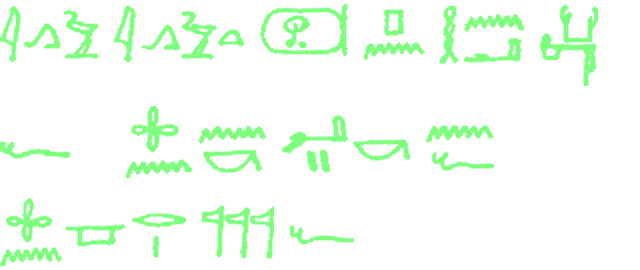
jwi̯ jw.t Ppy pn ḥnꜥ kꜣ =f wn n =k ꜥ.du =k n =f wn rʾ nṯr.pl =f
Should this Pepi come with his ka, open your arms to him, open the door of his gods!
- 49

dbḥ =f pri̯ =f jr p,t prr =f
Should he ask to go up to the sky, up he goes.
Note · Line 49
“He” is the dead king Pepi, whom this spell protects and on whose behalf it speaks. - 50

jwi̯.n =(j) wpw,w js
I have come as the Wepu.
- 51

ḥt(p)-ḏi̯.w Gbb (J)tm(,w)
An offering which Geb and Atum give:
Note · Line 51
This is the opening of the standard offering formula, here placed in the mouths of Geb, god of the earth, and Atum, the creator god. - 52
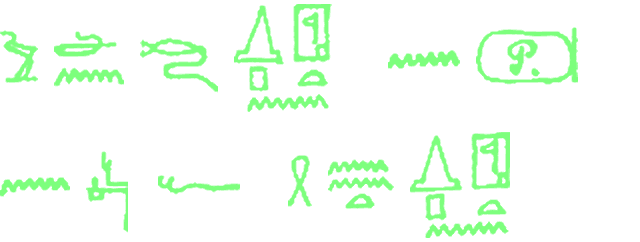
wdn mḥr pn ḥw(,t)-nṯr t〈〈n〉〉 n Ppy n kꜣ =f šnn.t mḥr pn ḥw(,t)-nṯr t〈〈n〉〉 n Ppy n kꜣ =f
the founding of this pyramid and this god's temple for Pepi and for his ka; what this pyramid and this temple enclose belongs to Pepi and to his ka.
Note · Line 52
The ka is the life-force that survives death and receives offerings. The “god’s temple” is the cult complex attached to the pyramid. - 53
wꜥb jr,t-Ḥr,w tw
Pure is this Eye of Horus.
Note · Line 53
Offerings to the dead were called the “Eye of Horus,” after the eye that Horus lost to Seth and had restored. - 54
ḥw nḫḫ n(,j)
Oh, may it endure for them!
- 55
rḏi̯.t =f ḏbꜥ =f jr mḥr pn ḥw(,t)-nṯr t〈〈n〉〉 n.t Ppy n.t kꜣ =f rḏi̯.n =f ḏbꜥ =f r ḥw,t Ḥr,w m qbḥ,w
Whoever lays his finger on this pyramid and this temple of Pepi and of his ka has laid his finger on the Mansion of Horus in the Cool Waters.
Note · Line 55
The Cool Waters are the waters of the sky. Laying a finger on the king’s tomb is the same as an assault on Horus’s own house in heaven. - 56
šꜣs n =f Nb,t-ḥw(,t) s,t nb.[t] // =f Gbb
Nephthys shall traverse for him every place of his … Geb.
- 57
sḏm mdw =f jn psḏ,t
His case shall be heard by the Ennead.
Note · Line 57
The Ennead is the council of nine great gods who sit in judgement. - 58
n ẖr(,j) =f n ẖr(,j) pr =f
There is nothing beneath him, nothing beneath his house.
Note · Line 58
These closing lines seem to turn back on the trespasser of P-55: nothing holds up him or his household. - 59
nꜣš.w pw wn(m) ḏ,t =f pw
Accursed is that one; that one is one who eats his own body.