~/sacred-texts/pyramid-texts
Pyramid Texts Utterance 524: Taking Horus’s Eye from Seth
- Text
- Pyramid Texts, Utterance 524
- Date
- Carved in the 6th Dynasty (c. 2321–2287 BC) on the walls of the pyramid of King Pepi I at Saqqara
- Found
- Inner chambers of the pyramid of Pepi I, South Saqqara, Egypt
- Language
- Old Egyptian · Hieroglyphic
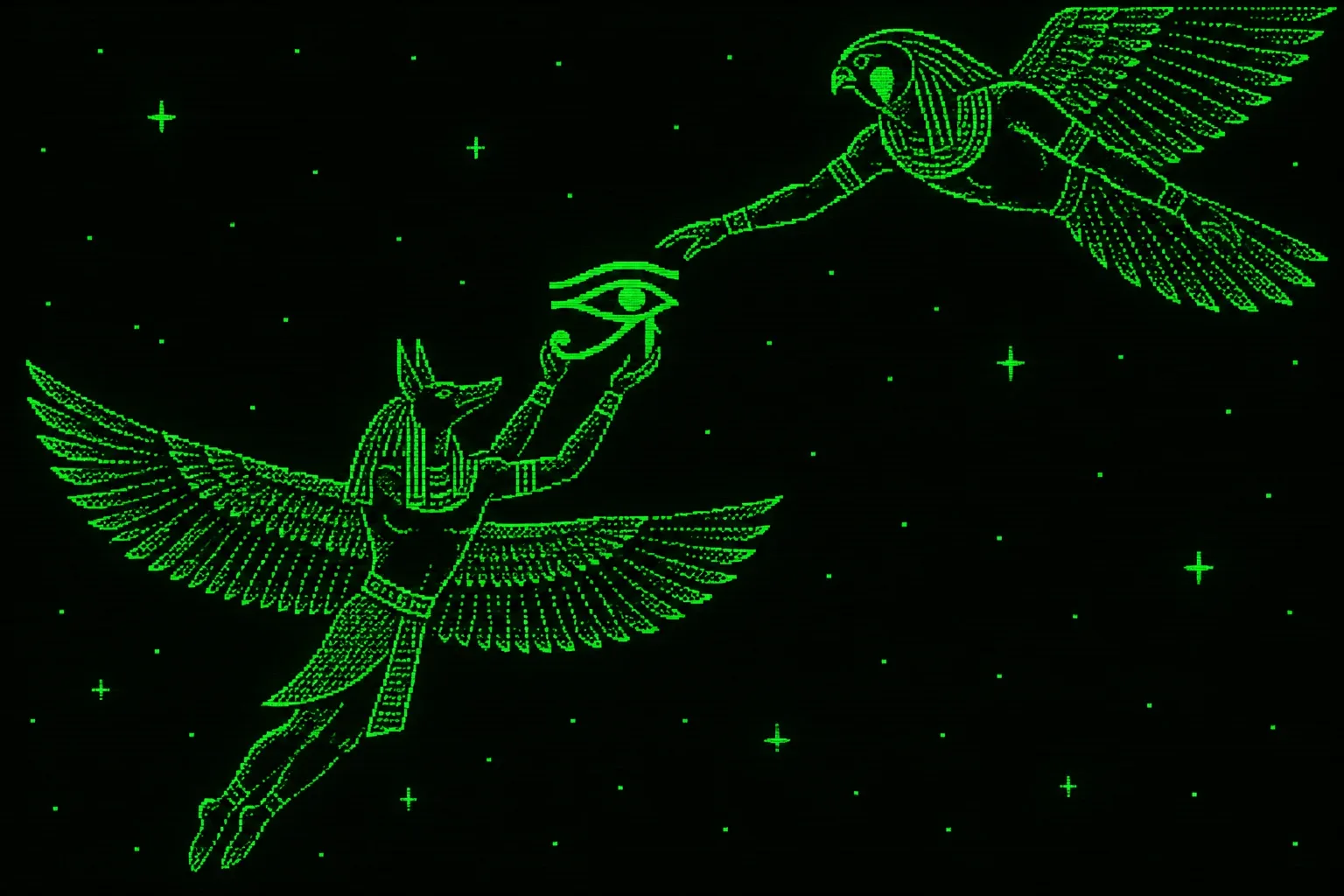
This spell is recited for the dead King Pepi I. The king is made Thoth, the god who healed Horus’s torn-out eye: Pepi is not Seth, who took it away. He is given a body built for flight: The face of this Pepi is a jackal’s. The arms of this Pepi are a falcon’s. He cuts through the frontier of the hostile dead, slips past the messengers of Osiris and flies up to the sky.
There he recovers the eye: This Pepi took it from the head of Seth, in that place where they fought. He fastens it back on Horus’s head and takes his seat on the gods’ throne, Pepi’s shoulder against Atum, with the scent of the Eye on his flesh.
- 1
ḏ(d)-mdw
Recitation:
- 2
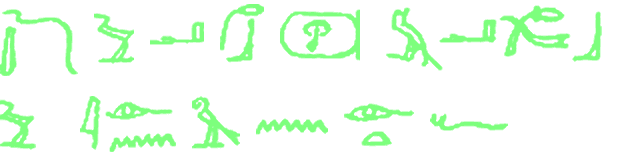
wꜥb Ppy m ꜥb,w jri̯.n Ḥr,w n jr,t =f
Pepi is pure with the purification that Horus made for his Eye.
Note · Line 2
Horus’s eye was torn out by his rival Seth and later healed. - 3
Ppy pw Ḏḥw,tj nḏ ṯn
Pepi is Thoth, who protects you.
Note · Line 3
“You” is the Eye itself, addressed directly. Thoth, the ibis-headed god of wisdom, was the one who found and healed the wounded Eye. - 4

n Ppy js pw Stš jṯi̯ s(j)
Pepi is not Seth, who took it away.
- 5

nḥn.y nṯr.pl
Rejoice, you gods!
- 6
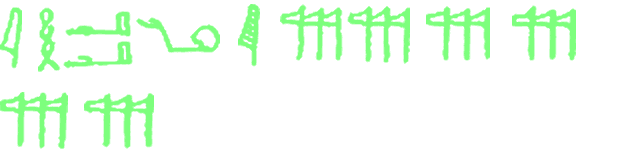
j:ḥꜥꜥ.j psḏ,t.du
Exult, you two Enneads!
- 7
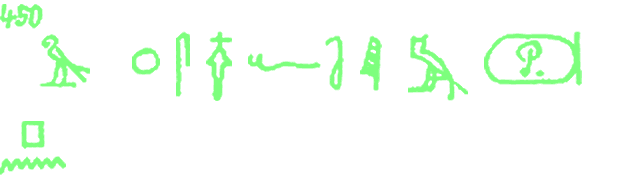
Ḥr,w ḫsf.tj m Ppy pn
Horus is come to meet this Pepi.
- 8
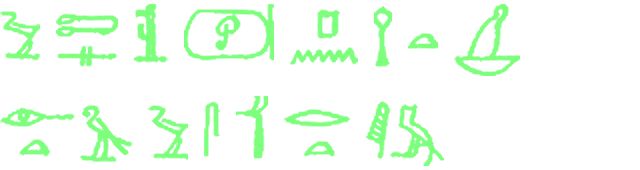
wṯz Ppy pn ḥḏ,t jr,t-Ḥr,w wsr.t jm
This Pepi wears the White Crown, the Eye of Horus, through which one is made mighty.
Note · Line 8
The White Crown of Upper Egypt is here identified with the Eye: wearing it, the king takes on the Eye’s power. - 9

j:ḥꜥꜥ.j nṯr.pl ḥr =(j) prj =j
Exult, you gods, over me when I come forth!
Note · Line 9
Here the voice shifts for a moment to the first person, as if the dead king himself were speaking. - 10
ḥr n(,j) Ppy pn m zꜣb
The face of this Pepi is a jackal's.
- 11

ꜥ.y Ppy pn m b(j)k
The arms of this Pepi are a falcon's.
- 12

tp,t-ḏnḥ,pl Ppy pn m Ḏḥw,tj
The wing-feathers of this Pepi are Thoth's.
Note · Line 12
The king is pictured as a composite creature, built from the animals of the gods so that he can rise to the sky. - 13

j:spꜣ Gbb Ppy pn jr p,t šdi̯ Ppy pn jr,t-Ḥr,w n =f
Geb sends this Pepi flying up to the sky, so that this Pepi may bring the Eye of Horus to him.
Note · Line 13
Geb is the earth god. He lets the king go up from the earth, and the king returns the Eye to its owner. - 14
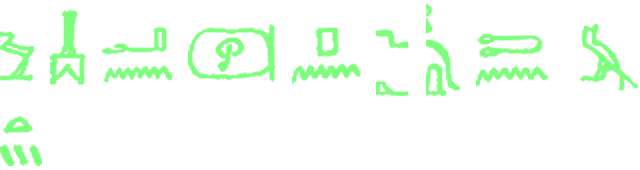
wḏꜥ.n Ppy pn ṯn(,w) =ṯn m(w)t.pl
This Pepi has cut through your frontier, you dead.
Note · Line 14
“The dead” here are the ordinary, hostile dead, who might bar the king’s way. The king breaks through the border of their realm. - 15
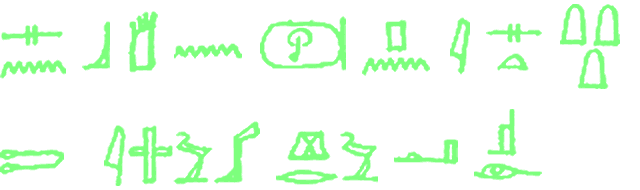
znb.n Ppy pn jz,t.pl =ṯ〈n〉 jm(,j).w-rd ẖr(,j).w-ꜥ (W)sr(,w)
This Pepi has scaled your boundary stones, you followers and subordinates of Osiris.
- 16
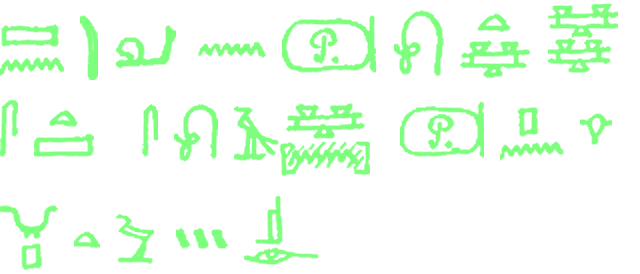
šn.n Ppy wꜣ,t.pl Stš swꜣ.[n] Ppy pn ḥr wpw,t(j).pl (W)sr(,w)
Pepi has shunned the roads of Seth, and this Pepi has passed by the messengers of Osiris.
Note · Line 16
Osiris is the dead king of the underworld. His messengers fetch the dead to his realm, but Pepi slips past them, bound for the sky rather than the netherworld. - 17

n nṯr nḏri̯ Ppy pn
There is no god who can lay hold of this Pepi.
Note · Line 17
These are spells carved inside the pyramid of King Pepi I to carry him safely into the sky after death. They speak of him by name, “this Pepi,” throughout. - 18
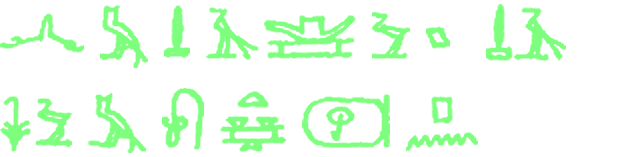
n mḏꜣ,w ḏꜣi̯ sw m wꜣ,t Ppy pn
There is no thwarter to thwart this Pepi on his way.
- 19

Ppy pw Ḏḥw,tj nḫt nṯr.pl
This Pepi is Thoth, the mighty one among the gods.
Note · Line 19
Thoth is the god of writing and wisdom. In myth it is he who restored Horus’s injured eye, the deed this spell gives to the king. - 20
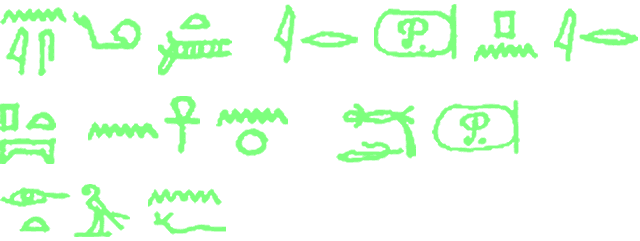
njs (J)tm(,w) jr Ppy pn jr p,t n ꜥnḫ šdi̯ Ppy jr,t-Ḥr,w n =f
Atum summons this Pepi to the sky, for life,
so that Pepi may fetch the Eye of Horus for him.Note · Line 20
Atum is the creator god of Heliopolis. - 21

Ppy pw zꜣ H̱nm(,w)
Pepi is the son of Khnum.
Note · Line 21
Khnum is the ram-headed god who shaped beings on his potter’s wheel. - 22

n ḏw,t jri̯.t.n Ppy
There is no wrong that Pepi has done.
- 23
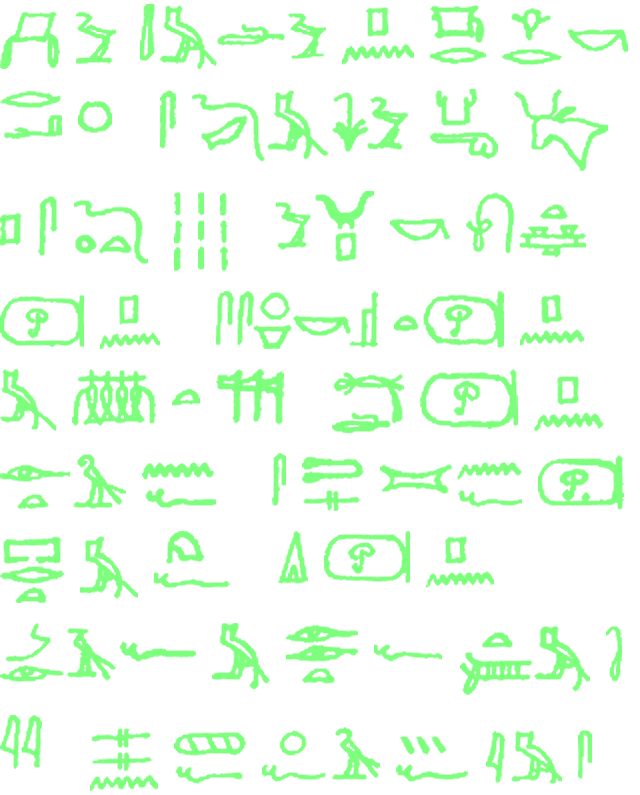
ꜣwi̯ mdw pn ḏr ḥr =k Rꜥw sḏm sw kꜣ-psḏ,t wpi̯ =k wꜣ,t n Ppy pn ssḫ =k s,t Ppy pn m-ḫnt nṯr.pl šdi̯ Ppy pn jr,t-Ḥr,w n =f sṯ(ꜣ)z n =f Ppy pri̯.t m tp =f ḏi̯ Ppy pn mꜣ =f m jr,t.du =f tm.tjj zz.n =f ḫft(,j).w =f jm =s
Hold this speech up before your face, Ra;
hear it, Bull of the Ennead!
Open the way for this Pepi,
make wide the seat of this Pepi at the head of the gods,
so that this Pepi may fetch the Eye of Horus for him,
so that Pepi may fasten back on for him what came out of his head,
so that this Pepi may make him see with both his eyes made whole,
having punished his enemies with it.Note · Line 23
The Ennead is the company of nine great gods of Heliopolis, and “Bull of the Ennead” is a title of Ra as their strongest. - 24
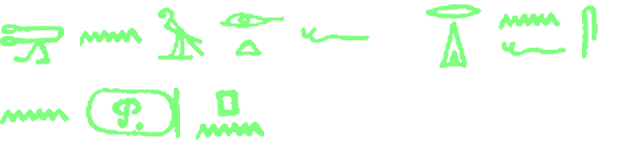
jṯi̯.n Ḥr,w jr,t =f rḏi̯.n =f s(j) n Ppy pn
Horus has taken his eye and given it to this Pepi.
- 25
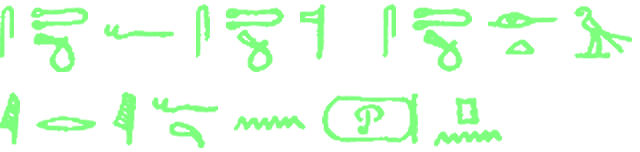
sṯ(j) =f sṯ(j) nṯr sṯ(j) jr,t-Ḥr,w jr j(w)f n(,j) Ppy pn
His scent is the scent of a god:
the scent of the Eye of Horus is on this Pepi's flesh.Note · Line 25
The Eye of Horus also stood for offerings of oil and incense, so the king is fragrant with it as a god is. - 26
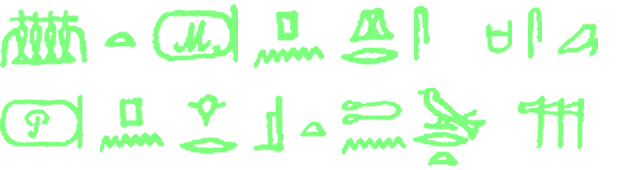
ḫnti̯ Mri̯.y-Rꜥw ẖr =s ḥmsi̯ Ppy pn ḥr s,t =ṯn wr.t nṯr.pl rmn Ppy jr (J)tm(,w) jm,wt(j) sḫm.w(j)
Meryre takes the lead by it,
and this Pepi sits on your great throne, gods,
Pepi's shoulder against Atum, between the two sekhem-sceptres.Note · Line 26
Meryre, “Beloved of Ra,” is Pepi I’s throne name. The sekhem sceptre, whose name means “power,” was a symbol of authority. - 27
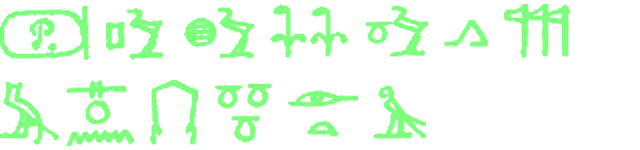
Ppy pw ḫwi̯ nn.w nṯr.pl m zḫn.w jr,t-Ḥr,w
Pepi is the one who keeps the gods from turning back in the search for the Eye of Horus.
Note · Line 27
The verb for “turning back” may also mean “growing weary.” - 28
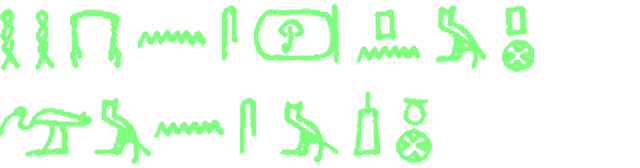
ḥḥ.n s(j) Ppy pn m Pj gmi̯.n =〈f〉 s(j) m Jwn,w
This Pepi sought it in Pe and found it in Heliopolis.
Note · Line 28
Pe, later called Buto, was an ancient royal town in the Nile Delta. Heliopolis, near modern Cairo, was the great cult centre of Ra and Atum. - 29
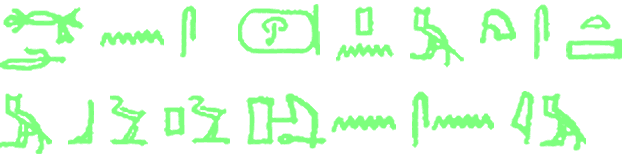
šdi̯.n s(j) Ppy pn m tp Stš m bw pw ꜥḥꜣ.n =sn jm
This Pepi took it from the head of Seth, in that place where they fought.
Note · Line 29
Seth is Horus’s enemy and the god who tore out his eye. Here the king takes the eye back from Seth’s head on the battlefield. - 30

Ḥr,w jmi̯ ꜥ =k n Ppy pn
Horus, give this Pepi your arm.
- 31
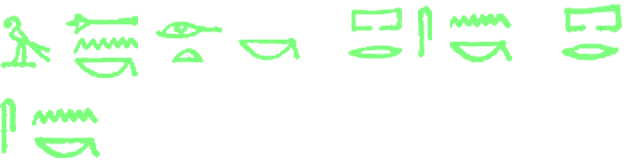
Ḥr,w m n =k jr,t =k pri̯ =s n =k pri̯ =s n =k
Horus, take your eye for yourself:
let it come forth to you, let it come forth to you! - 32
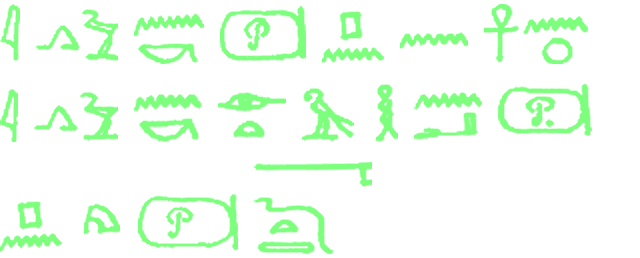
jwi̯ n =k Ppy pn n ꜥnḫ jwi̯ n =k jr,t-Ḥr,w ḥnꜥ Ppy pn tp Ppy ḏ,t
When this Pepi comes to you for life,
the Eye of Horus comes to you with this Pepi, upon Pepi, forever.