~/sacred-texts/pyramid-texts
Pyramid Texts Utterance 519: Pepi I Sails to the Stars
- Text
- Pyramid Texts, Utterance 519
- Date
- Carved in the 6th Dynasty (c. 2300 BC) on the walls of the burial chamber of the pyramid of Pepi I at Saqqara
- Found
- Burial chamber of the pyramid of Pepi I at South Saqqara, where it remains
- Language
- Old Egyptian · Hieroglyphic
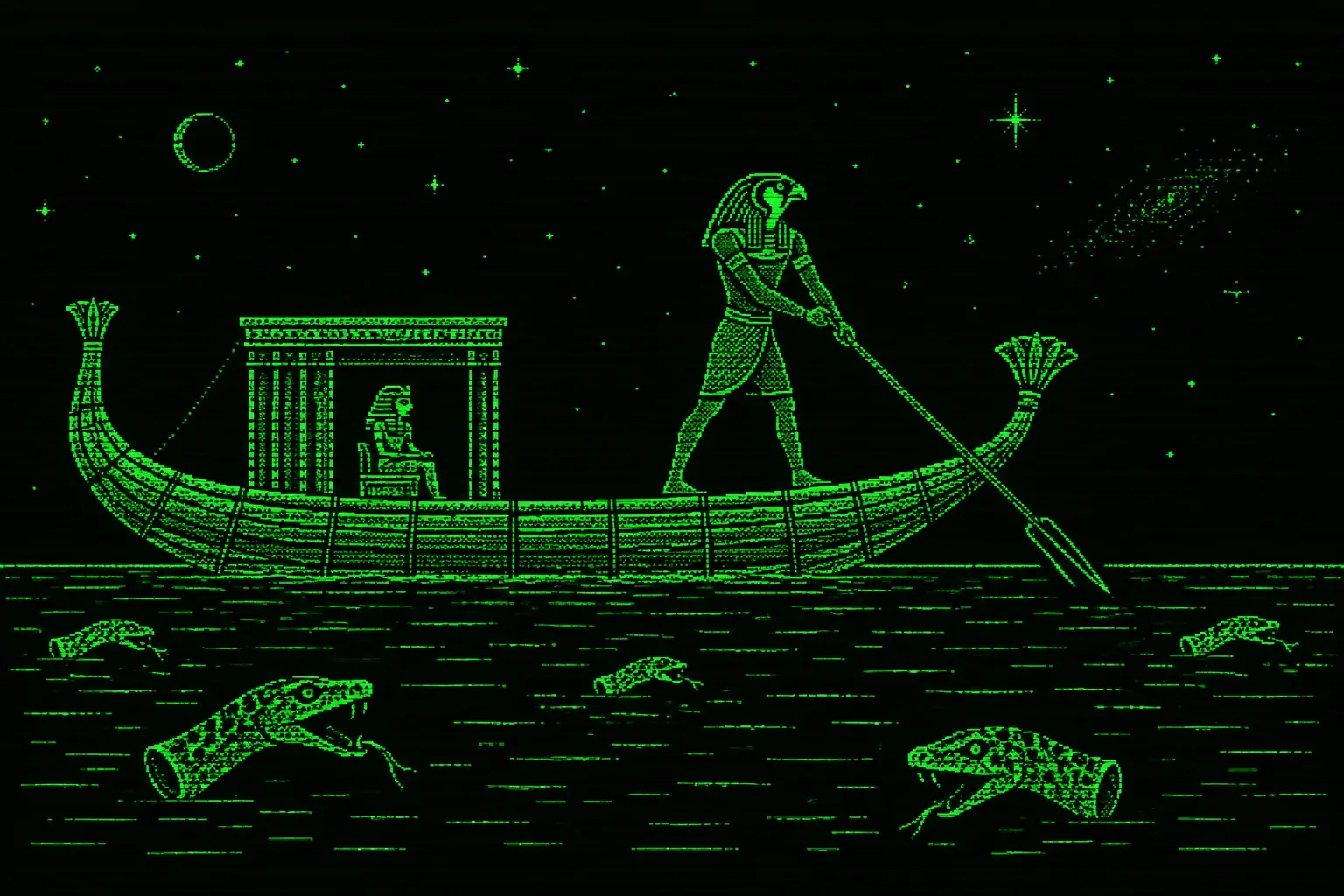
Pepi I claims a place in the sky. He was born on that day when the heads of the speckled snakes were cut off, and he asks the Morning Star for his harpoon, whose two barbs are the claws of Mafdet: With it Pepi cuts off their heads, the heads of the adversaries who are in the Field of Offerings.
The ferryman Face-Behind is asked to fetch Osiris’s boat, the sky’s channels flood, and the god is asked to carry Pepi in a boat seven hundred and seventy cubits long. Pepi orders the sea, Bow your head, bend your arms, Great Green!, and claims his share of divine food: This Pepi shall eat of what you eat.
- 1

ḏ(d)-mdw ḏdi̯
Words to be spoken, without pause:
- 2
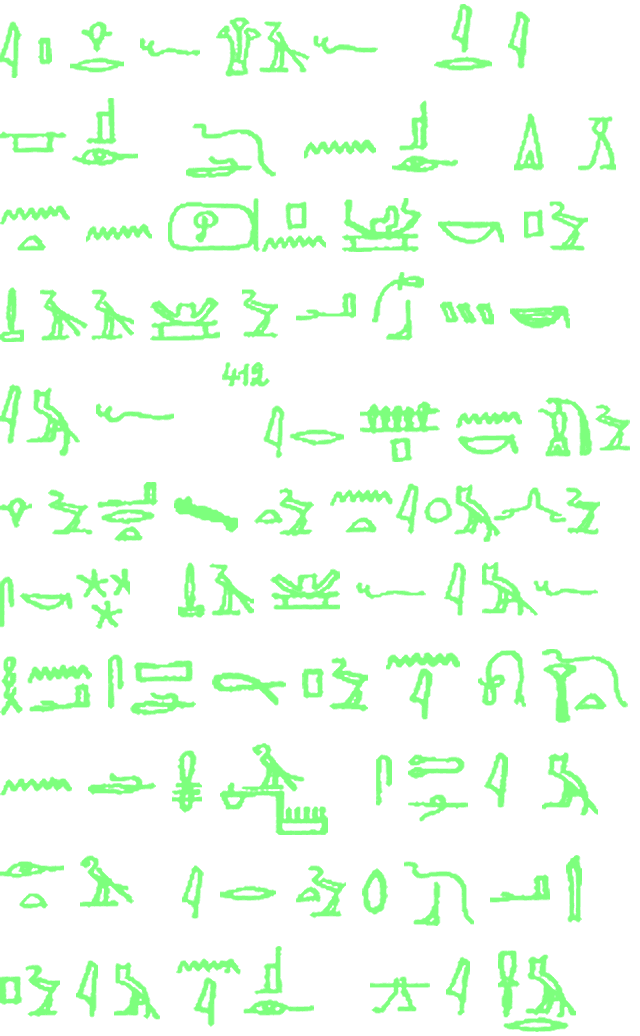
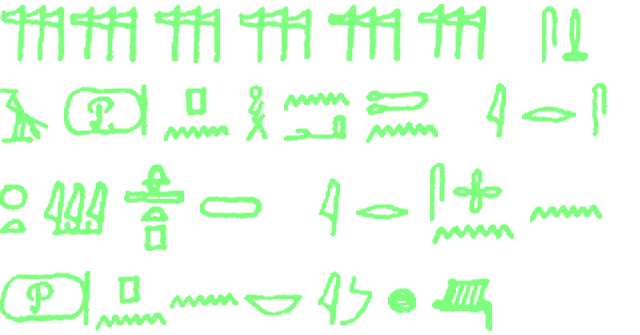
j Ḥr≡f-ḥꜣ≡f jr,j-ꜥꜣ (W)sr(,w) ḏd n (W)sr(,w) jmi̯ jnt.(t) n Ppy pn wjꜣ =k pw ḏꜣꜣ wꜥb.pl =k jm =f jr šzp n =k qbḥ,w ḥr wꜥr,t tw n.t J:ḫm.w-sk ḏꜣi̯ =f jm =f ḥnꜥ sšd pw n,j wꜣḏ,t n(,j) (j)dm.j sṯ(ꜣ).j m jr,t-Ḥr,w jr wt ḏbꜥ pw jm n,j (W)sr(,w) zj mr
O Face-Behind, gatekeeper of Osiris, say to Osiris: "Have that boat of yours brought to this Pepi, the boat in which your pure ones cross over to receive the cool water for you on that shore of the Imperishable Stars, so that he may cross in it with that bandage of green and red linen, spun from the Eye of Horus, to bind that finger of Osiris which has gone sick."
Note · Line 2
“Face-Behind” is the celestial ferryman, so called because he looks backwards as he poles his boat. - 3
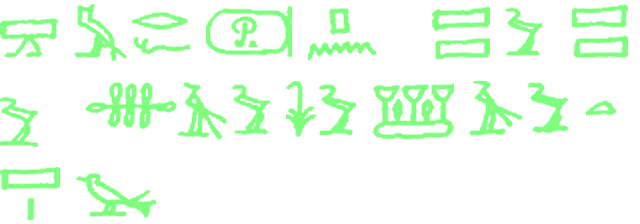
šmi̯ r =f Ppy pn šš.w šš.w zꜣw sw šꜣw,t šj wr
So this Pepi shall go sheshu, sheshu, and the shallows of the Great Lake will keep him safe.
- 4
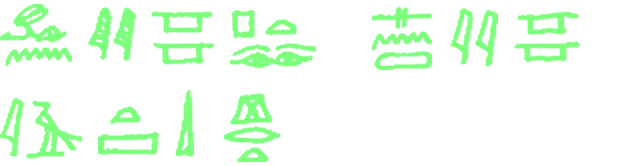
wn.y ꜥꜣ.du pt(r.wj) zn.y ꜥꜣ.du jꜣ,t ẖr.t
The double doors of the Viewing-Place are opened,
the double doors of the Lower Mound swing wide.Note · Line 4
The Viewing-Place, literally “the two who look”, is a region of the sky imagined as windows or gates. The doors of the sky open to let the king through. - 5
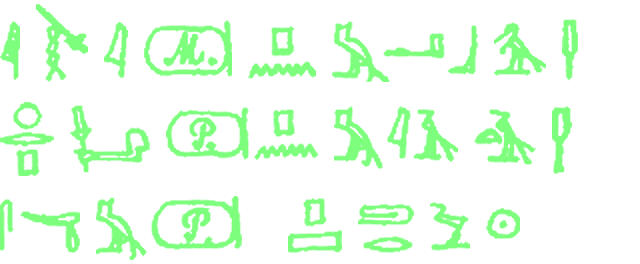
psḏ,t.du sḏꜣ Ppy pn ḥnꜥ =ṯn(j) jr sḫ,t-ḥtp jr swn n(,j) Ppy pn n(,j) nb jmꜣḫ(,w)
You two Enneads, take this Pepi with you to the Field of Offerings, as befits the standing of this Pepi, a lord of honour.
Note · Line 5
An Ennead is a company of nine gods. - 6
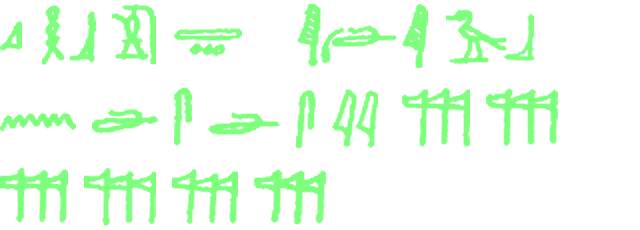
j:ḥj Mri̯.y-Rꜥw pn m ꜥbꜣ ḫrp Ppy pn m jꜣꜣ,t sšmi̯ Ppy pšr.w Rꜥw
This Meryre will strike with the aba-scepter,
this Pepi will take command with the rod,
Pepi will lead those who circle around Ra.Note · Line 6
Meryre (“Beloved of Ra”) is Pepi I’s throne name, used alternately with his personal name. - 7
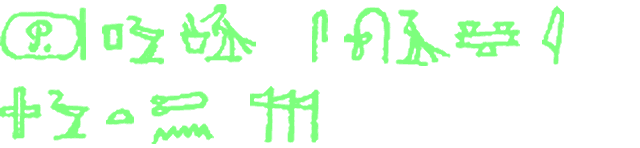
qbḥ tꜣ jdj Gbb ndsds.y psḏ,t.du
Pour cool water, Earth! Make offering, Geb! You two Enneads, nedsedes!
Note · Line 7
Geb is the earth god, so the first two commands address the same power twice. - 8
Ppy pw bꜣ swꜣ jm,wt(j) =ṯn nṯr.pl
Pepi is a ba, passing among you, gods.
Note · Line 8
The ba is the aspect of a person that can move about freely after death, often pictured as a bird with a human head. - 9
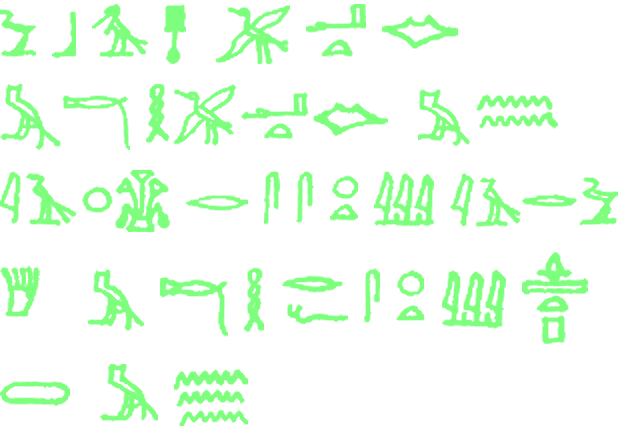
wbꜣ pꜣꜥ,t mḥi̯ pꜣꜥ,t m mw jꜣḫi̯ r =s sḫ,t-jꜣr.w mḥi̯ r =f sḫ,t-ḥtp m mw
Opened is the Paat, flooded is the Paat with water;
so the Field of Reeds is in flood,
so the Field of Offerings is brimming with water.Note · Line 9
The Paat is a celestial waterway. Once the channels of the sky are full, they can be sailed. The Field of Reeds is, like the Field of Offerings, a watery paradise in the eastern sky. - 10
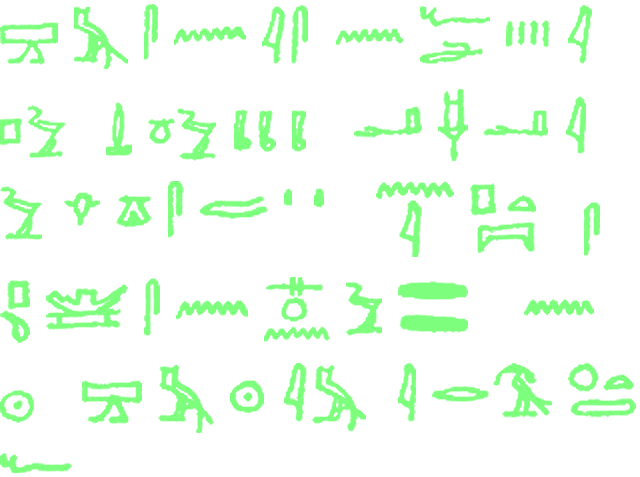
šmi̯ =sn js n fd jpw ḏꜣn,w.pl ꜥḥꜥ.jw ḥr gs jꜣb(,j) n(,j) p,t spi̯ =sn zḫn.w(j) n Rꜥw šmi̯ Rꜥw jm jr ꜣḫ,t =f
And they go to those four youths who stand on the eastern side of the sky, who lash together the two reed-floats for Ra, so that Ra may go on them to his horizon.
Note · Line 10
The reed-floats are bundles of reeds bound together into a raft, the simplest Nile craft. On them the sun crosses the sky’s waters to the place where he rises. - 11
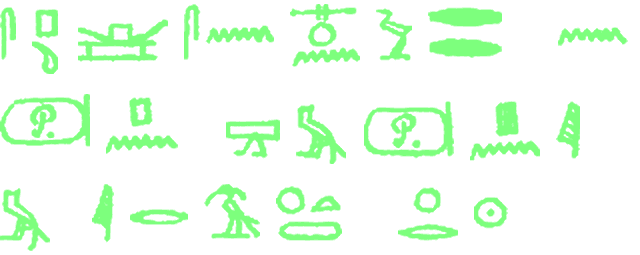
spi̯ =sn zḫn.w(j) n Ppy pn šmi̯ Ppy pn jm jr ꜣḫ,t ḫr Rꜥw
They will lash together the two reed-floats for this Pepi, so that this Pepi may go on them to the horizon, to Ra.
- 12
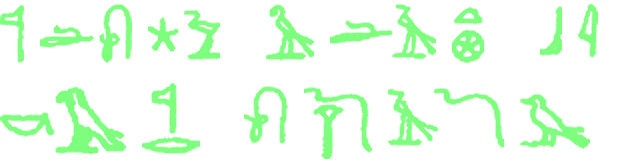
nṯr-dwꜣ,w(j) Ḥr,w-d(w)ꜣ,t(j) bjk-nṯr(,j) wꜣḏꜣḏ msi̯.w p,t
Morning God, Horus of the Duat, Divine Falcon, wadjadj-bird, you whom the sky bore!
Note · Line 12
These are titles of the Morning Star, the star that heralds sunrise. - 13
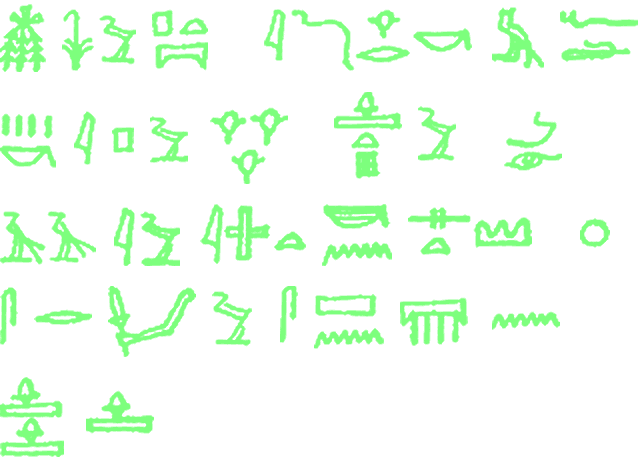
j:(n)ḏ ḥr =k m fd =k jpw ḥr.pl ḥtp.w mꜣꜣ.jw jm.t Knz,t ḫsr.w sšn n ḥtp,w
Hail to you, in these four faces of yours, faces at peace, which look on what is in Kenzet, which drive away the storm for the sake of peace.
Note · Line 13
Kenzet is a remote region of the sky. The Egyptian uses the same word for the “peaceful” faces and the “peace” they bring. - 14
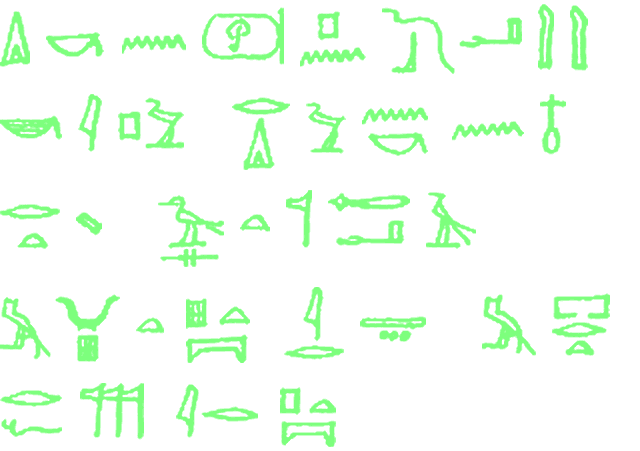
ḏi̯ =k n Ppy pn ḏbꜥ.du =k jpw rḏi̯.w.n =k n nfr,t zꜣ,t nṯr-ꜥꜣ m wp.t p,t jr tꜣ m pr.t r =f nṯr.pl jr p,t
May you give this Pepi those two fingers of yours that you gave to the Beautiful One, daughter of the Great God, when the sky was parted from the earth, when the gods went up to the sky.
Note · Line 14
The god’s two fingers are a hand reached down to haul the climber up. - 15
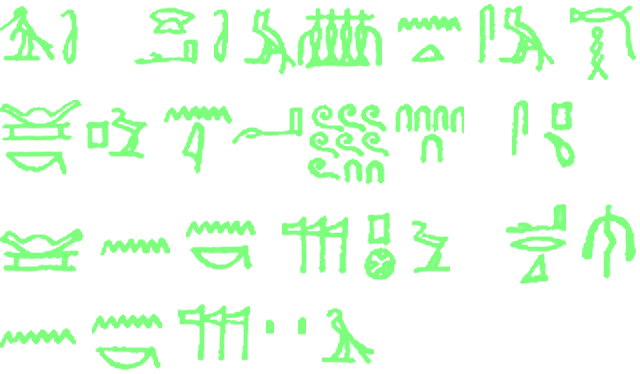
bꜣ.tj ḫꜥi̯.tj m-ḫnt smḥ =k pw n,j mḥ 770 spi̯.n n =k nṯr.pl p.w ꜥrq.n n =k nṯr.pl jꜣb,t(j).w
Ba-mighty are you, risen in glory at the head of that smeh-boat of yours, seven hundred and seventy cubits long, which the gods of Pe lashed together for you, which the eastern gods bent into shape for you.
- 16
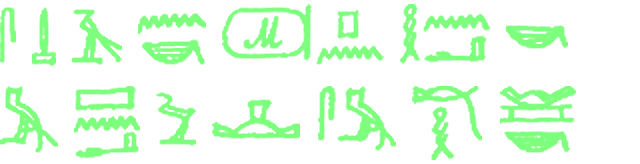
sḏꜣ n =k Mri̯.y-Rꜥw pn ḥnꜥ =k m šnꜥ,w smḥ =k
Carry this Meryre along with you in the cabin of your smeh-boat.
- 17
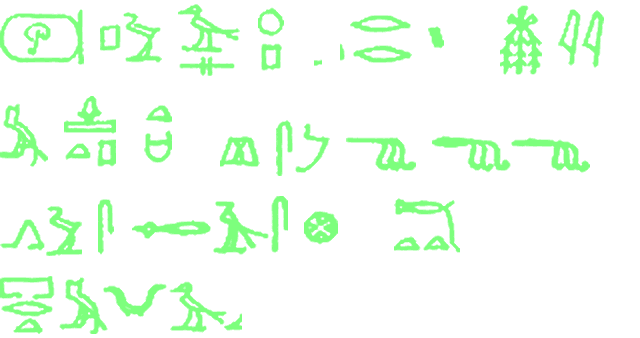
Ppy pw zꜣ Ḫprr msi̯.y m ḥtp,t ẖr smꜣ.pl Jwi̯≡s-ꜥꜣi̯≡s mḥ,t.t 〈Jwn,w〉 pri̯.t m wp(,t) Gbb
Pepi is the son of Khepri, born in Hetepet beneath the temple-locks of Iusaas, north of Heliopolis, she who came forth from the crown of Geb's head.
Note · Line 17
Khepri is the sun god as a scarab, the newborn sun of morning. - 18
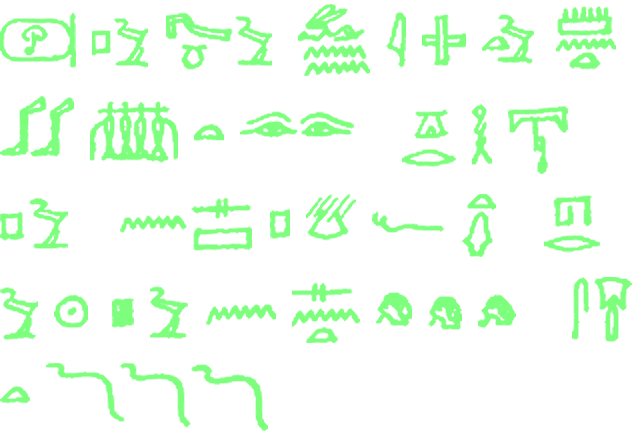
Ppy pw nw wnn jm,wtj mn,t.du Ḫnt(,j)-jr,t.du grḥ pw n(,j) zšp =f tʾ hrw pw n(,j) zni̯.t tp.pl sꜣb,t.pl
Pepi is what lies between the thighs of Khenty-irty, on that night when he smoothed the bread, on that day when the heads of the speckled snakes were cut off.
Note · Line 18
Khenty-irty is a falcon god of Letopolis. - 19
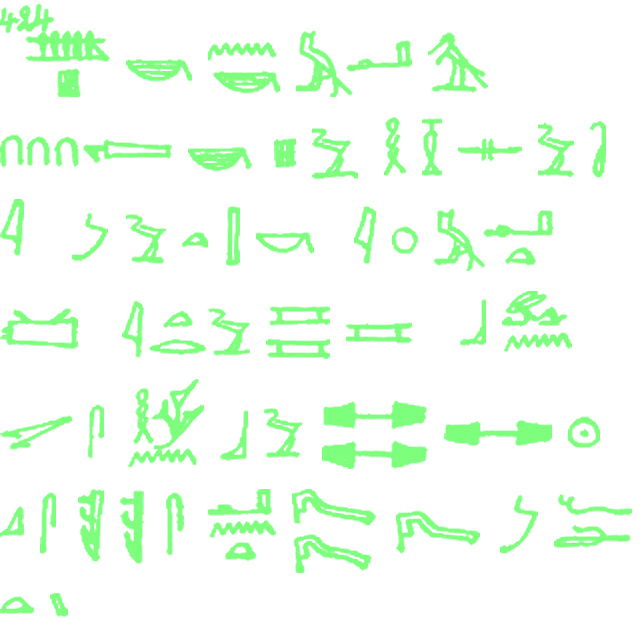
šzp =k n =k mꜥbꜣ =k pw ḥzw,tj mꜣw,t =k j:ḫmꜥ.t jtr.w.pl bwn =s ḥnb.w Rꜥw qs.du =s ꜥn,t.pl Mꜣfd,t
May you take up this favourite harpoon of yours, your shaft that grips the rivers, whose two points are the rays of Ra, whose two barbs are the claws of Mafdet.
Note · Line 19
The “you” addressed throughout is the god this spell invokes, the Morning Star, a falcon form of Horus. Mafdet is a feline goddess whose claws kill snakes and evildoers. - 20
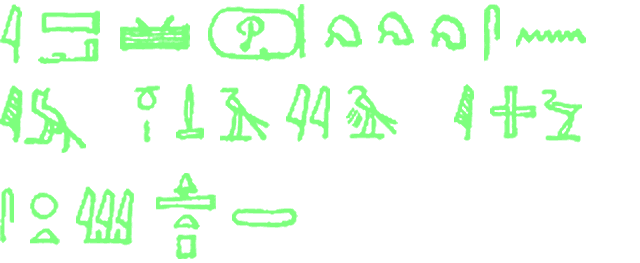
j:šꜥ Ppy tp.pl =sn jm n(,j).w ḏꜣy.t(j)w jm(,j).w sḫ,t-ḥtp
With it Pepi cuts off their heads, the heads of the adversaries who are in the Field of Offerings.
Note · Line 20
The Field of Offerings is a fertile land in the sky where the blessed dead live on abundant food. - 21

hꜣi̯.n =f ḥr wꜣḏ-wr
He has gone down upon the Great Green.
Note · Line 21
The Great Green is the sea, here a body of water in the beyond that has to be crossed. - 22
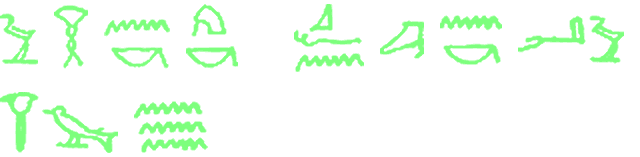
wꜣḥ n =k tp =k qfn n =k ꜥ.w(j) wꜣḏ-wr
Bow your head, bend your arms, Great Green!
Note · Line 22
The sea is ordered to make the gesture of submission. - 23
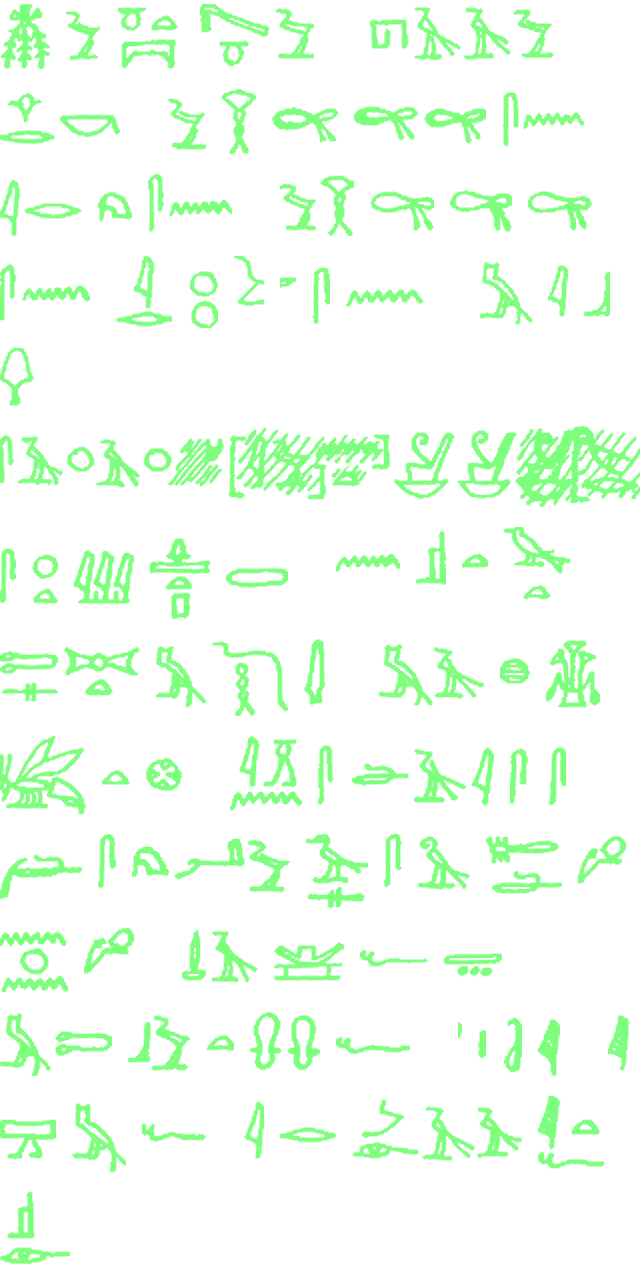
ms.w Nw,t nw hꜣꜣ.w ḥr =k wꜣḥ.pl =sn jr tp =sn wꜣḥ.pl =sn jr ḫḫ =sn m jb sꜣḫꜣḫ.[jw] ⸢n,t⸣.pl ⸢mr.w⸣ sḫ,t-ḥtp n (Ꜣ)s,t wr.t ṯ(ꜣ)z.t mḏḥ m Ꜣḫ-bj,t jni̯ =s dꜣj =s jdi̯ =s tp-ꜥ.w(j) zꜣ =s Ḥr,w ẖ(r)d nḫn ḏꜣi̯ =f tꜣ m ṯbw,t.du =f ḥḏ.tj j:šm =f jr mꜣꜣ jt(j) =f (W)sr(,w)
These are the children of Nut who have come down upon you, garlands on their heads, garlands about their throats, of ib-leaves, they who make the waters and canals of the Field of Offerings grow green for Isis the Great, who tied the headband in Chemmis as she brought her linen cloth and burned incense before her son Horus, the little child, that he might cross the land in his white sandals and go to see his father Osiris.
Note · Line 23
The children of Nut, the sky goddess, are stars and gods. - 24
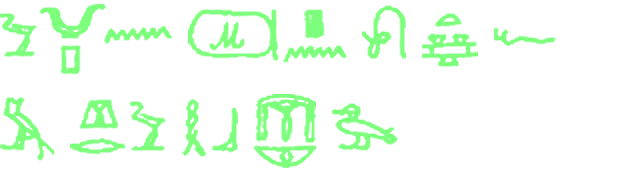
wpi̯.n Mri̯.y-Rꜥw pn wꜣ,t =f m ẖr(,j).w ḥ(ꜣ)b
This Meryre has opened his way among those who hold the catch.
Note · Line 24
Meryre (“Beloved of Ra”) is Pepi I’s throne name. “The catch” is fish and fowl taken in the marshes, so these are the well-fed of the beyond. - 25

snbb.n Ppy pn ḥnꜥ nb.w kꜣ.pl
This Pepi has exchanged greetings with the lords of kas.
Note · Line 25
The ka is a person’s vital force, sustained by food offerings. The lords of kas are beings rich in that life and nourishment. - 26
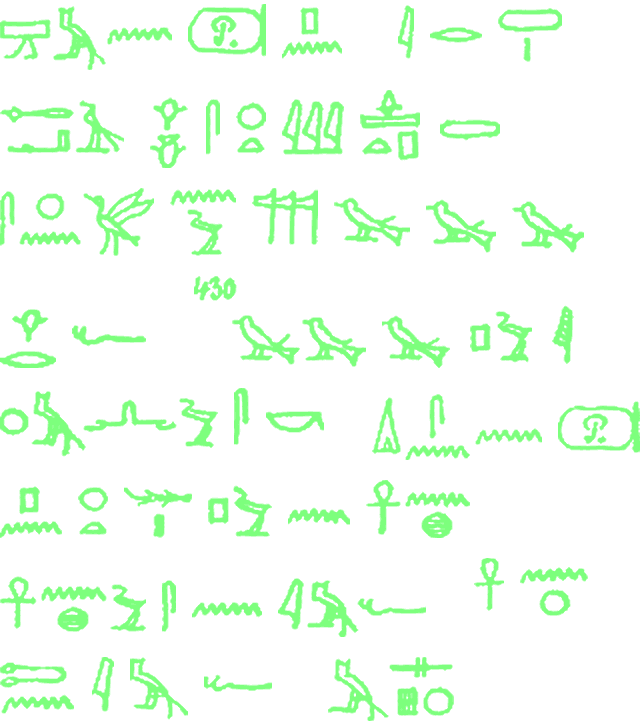
šmi̯.n Ppy pn jr jw ꜥꜣ ḥr(,j)-jb sḫ,t-ḥtp sḫnn.w nṯr.pl wr.pl ḥr =f wr.pl pw j:ḫm.w-sk ḏi̯ =sn n Ppy pn ḫt pw n(,j) ꜥnḫ ꜥnḫ.w =sn jm =f ꜥnḫ =ṯn jm =f m-zp
This Pepi has gone to the great island in the midst of the Field of Offerings, on which the gods make the swallows alight (the swallows are the Imperishable Stars), and they will give this Pepi that tree of life by which they live, that you may all live by it together.
Note · Line 26
The Imperishable Stars are the circumpolar stars, which never set, the company the dead king hopes to join forever. - 27
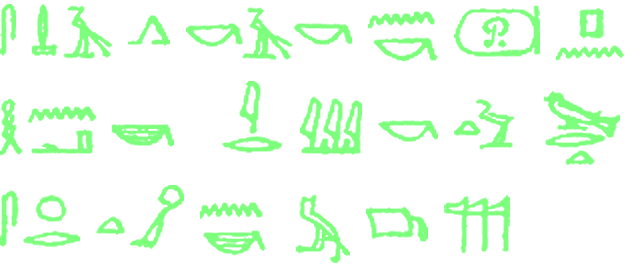
sḏꜣ.kꜣ =k n =k Ppy pn ḥnꜥ =k jr sḫ,t =k tw wr.t sḫr.t n =k m ḏr nṯr.pl
Then you shall take this Pepi with you to that great field of yours, laid out for you in the domain of the gods.
- 28
wn(m).[t] =k m ḫꜣw j:ḥḏ =sn mḥ.t m Ḥw
What you eat by night, when they grow bright, is filled with Hu.
Note · Line 28
Hu is sustenance personified as a god. The line is obscure, and “they” may be the stars brightening toward dawn. - 29

wn(m) Ppy pn m wn(m).t =k jm
This Pepi shall eat of what you eat.
- 30
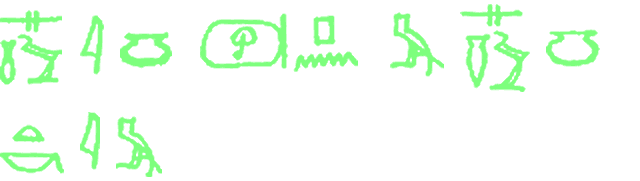
zwj Ppy pn m zw(r).t =k jm
This Pepi shall drink of what you drink.
- 31
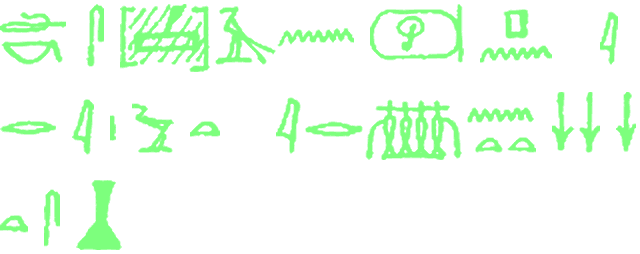
di̯ =k sꜣ(,w) n Ppy pn jr jw,t jr ḫnt.t sn,t.pl =s
May you give this Pepi his fill at the post, the one that stands at the front of its flagstaffs.
Note · Line 31
Flagstaffs stood before the gateways of Egyptian temples. The “post” is an object not securely identified. - 32
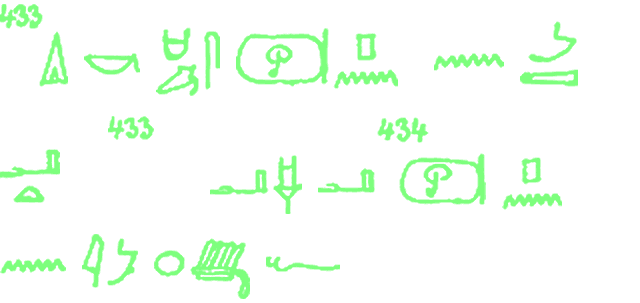
ḏi̯ =k ḥmsi̯ Ppy pn n mꜣꜥ,t =〈f〉 ꜥḥꜥ Ppy pn n jmꜣḫ =f
May you let this Pepi sit down by right of his truth and rise up by right of his honour.
Note · Line 32
“Truth” is Maat, right order and justice. “Honour” is the revered state of one who is provided for in death. - 33
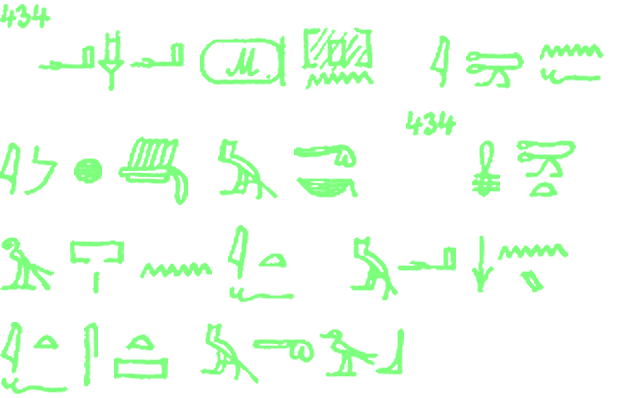
ꜥḥꜥ Mri̯.y-Rꜥw [p]n jṯi̯.n =f jmꜣḫ m-bꜣḥ =k mj jṯ.t Ḥr,w pr n(,j) jt(j) =f m-ꜥ sn jt(j) =f Stš m-bꜣḥ Gbb
Meryre stands up, having taken his honored place in your presence, as Horus took his father's house from his father's brother Seth in the presence of Geb.
Note · Line 33
The “you” is the Morning Star, the god addressed earlier in this spell. - 34
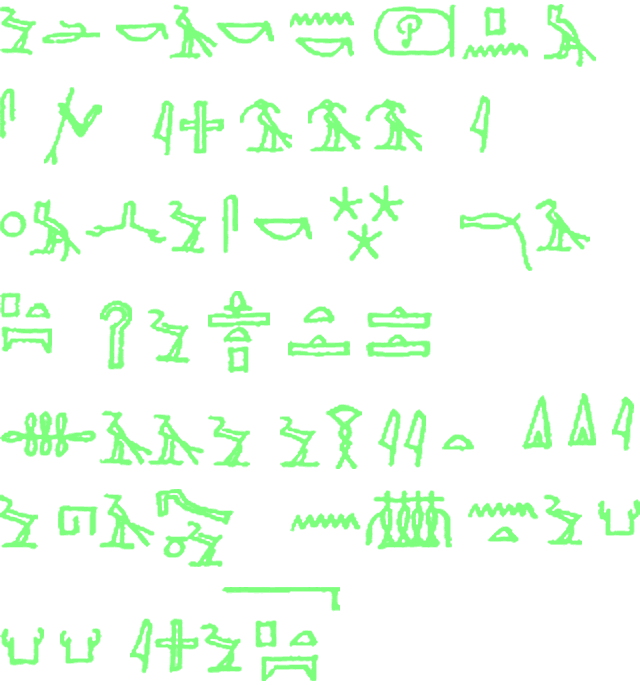
wdi̯.kꜣ =k n =k Ppy pn m sr jm(,j) ꜣḫ.pl j:ḫm.w-sk mḥ,t(j).w p,t ḥqꜣ.w ḥtp,t.pl zꜣꜣ.w wꜣḥ.yt ḏḏ.jw hꜣi̯ nw n ḫnt(,j).w kꜣ.pl jm(,j).w p,t
So you shall set this Pepi for yourself as a magistrate among the spirits, the Imperishable Ones of the northern sky, who rule the offerings, who guard the provisions, who make this come down to the foremost of the kas in the sky.
Note · Line 34
The “spirits” are the akhs, the transfigured dead who have reached their glorified state.