~/sacred-texts/pyramid-texts
Pyramid Texts Utterance 509: Pepi I Ascends to the Stars
- Text
- Pyramid Texts, Utterance 509
- Date
- Carved in the 6th Dynasty (c. 2321–2287 BC) inside the pyramid of King Pepi I (Meryre) at Saqqara
- Found
- Pyramid of Pepi I at South Saqqara
- Language
- Old Egyptian · Hieroglyphic
- 1
ḏ(d)-mdw
Recitation:
- 2
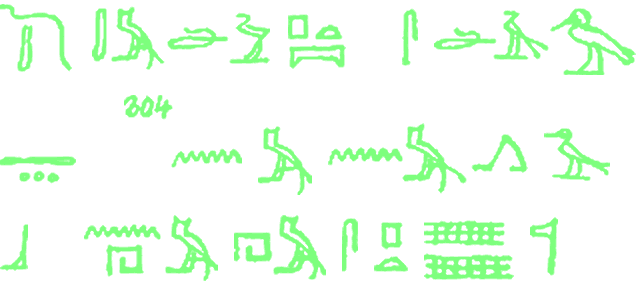
mdwi̯ p,t sdꜣ tꜣ nmnm Gbb nhmhm sp(ꜣ),t.du nṯr
The sky speaks, the earth quakes,
Geb shudders, the god's two provinces roar.Note · Line 2
Geb is the earth god, so “Geb shudders” restates the earthquake with the god’s name. - 3
ḫbs tꜣ sq(r) wdn,t tp-ꜥ.wdu Mr,y-Rꜥw pn ꜥnḫ ḏdi̯
The earth has been hoed, an offering has been laid before this Meryre, living and enduring.
Note · Line 3
Hoeing the earth was a ritual act performed at funerals and foundations. Meryre (“Beloved of Ra”) is the throne name of King Pepi I, for whose pyramid this spell was carved. - 4
pri̯ =f r =f jr p,t ḏꜣi̯ =f bjꜣ n ꜥnḫ wꜣs ⸢n⸣mj =f ḥzꜣ,w sšn znb,t.pl Šw
So he shall go up to the sky, cross the metal waters for life and dominion,
and row across the hesau, breaking down the walls of Shu.Note · Line 4
The “metal waters” (bia) are the firmament, imagined as a sky-sea of gleaming metal. - 5
pri̯ =f r =f jr p,t tp.t-ḏnḥ.pl =f m {m}〈ꜣ〉pd ꜥꜣ
So he shall go up to the sky, his plumage like a great bird's.
- 6
jꜥj mẖt.pl =f jn Jnp,w
His entrails have been washed by Anubis.
Note · Line 6
Anubis is the jackal god of embalming. Washing the entrails is a step in mummification, the treatment Anubis first gave the dead Osiris. - 7
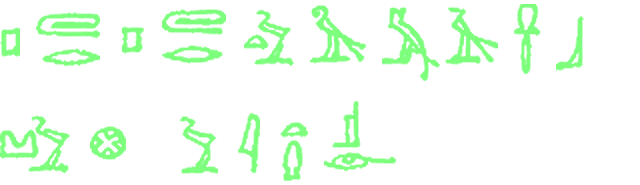
pẖr pẖr.w,t Ḥr,w m Ꜣbḏ,w wjt (W)sr(,w)
The rounds of Horus have been made in Abydos, the wrapping of Osiris.
Note · Line 7
Abydos was the chief cult centre of Osiris, the murdered king of the dead. - 8
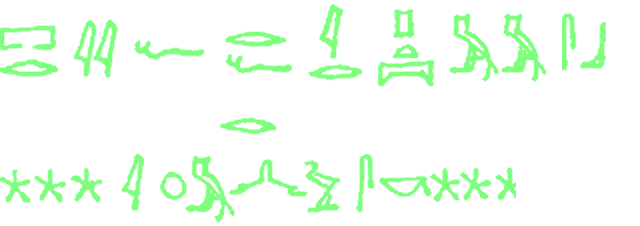
pri̯.y =f r =f jr p,t mm sb(ꜣ).pl Jḫm.w-sk
So he shall go up to the sky among the stars, the Imperishable Ones.
Note · Line 8
The Imperishable Ones are the circumpolar stars, which never set below the horizon. The dead king hopes to join them in their undying life. - 9
sn,t =f Spd,t sšm,w =f nṯr-dwꜣ(,wj) nḏri̯ =sndu ꜥ =f jr sḫ,t-ḥtp
His sister is Sothis, his guide the Morning God; the two of them shall take his arm to the Field of Offerings.
Note · Line 9
Sothis is Sirius, the star whose dawn rising heralded the Nile flood. The Morning God is the morning star. The Field of Offerings is a heavenly region of abundance. - 10
ḥmsi̯ ={jr}f r =f ḥr ḫnd,w =f{j} pf bjꜣ,j n,tj ḥr.pl =f m mꜣ(j)-ḥzꜣ.pl rd.pl =f m ꜥꜣg,t.pl smꜣ wr
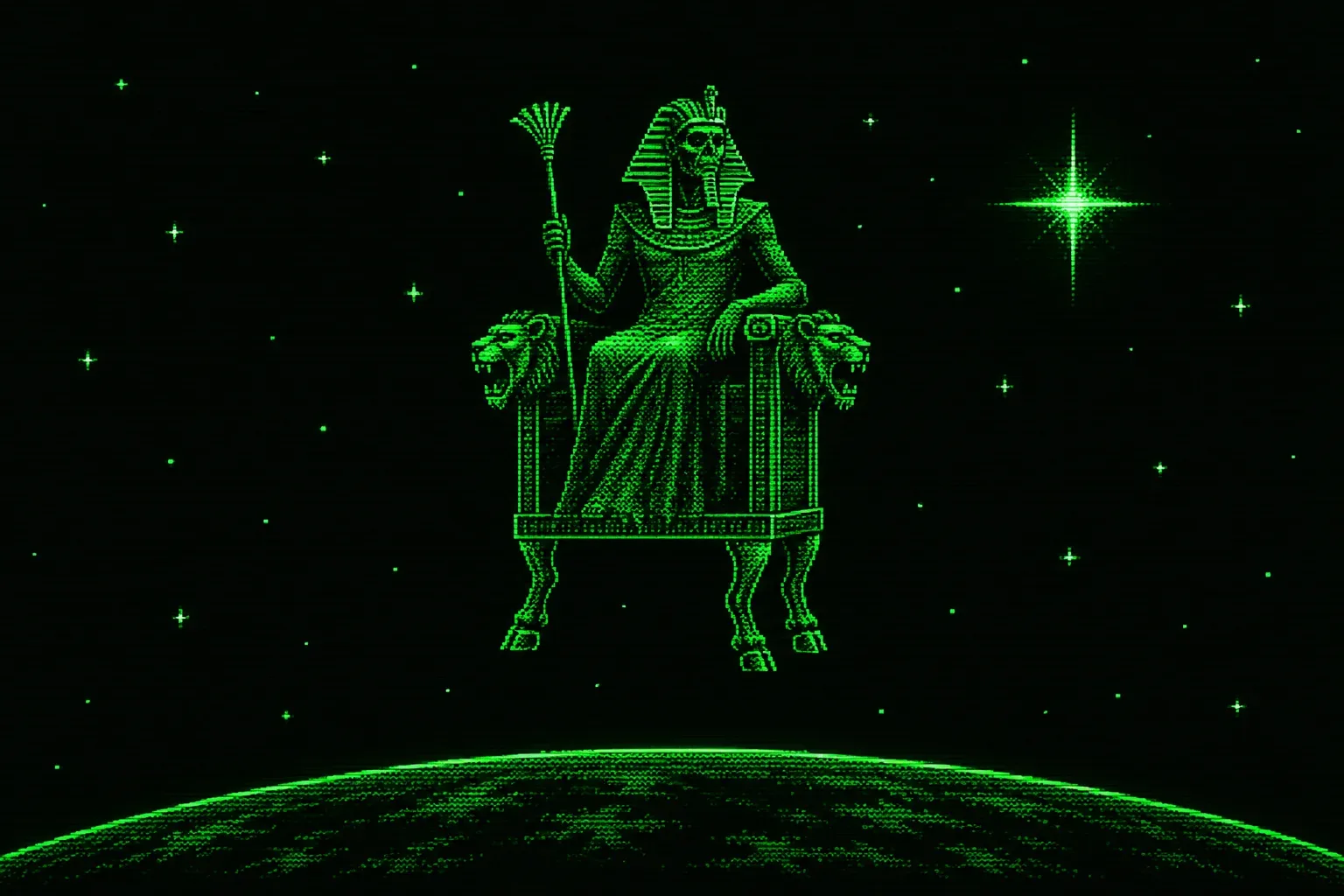
So he shall sit on that bronze throne of his, whose faces are fierce lions and whose feet are the hooves of a great wild bull.
Note · Line 10
The throne is described like real royal furniture, with lion heads on the frame and legs ending in bull’s hooves. - 11
ꜥḥꜥ ={j}f r ={j}〈f〉 m s,t =f šwi̯.t n,t.t jm,wtj nṯr.du ꜥꜣ.w(j) ꜥbꜣ ={j}f mnḥ,j m ꜥ =f fꜣj ={j}〈f〉 ꜥ =f jr ḥnmm,t
So he shall stand in his empty place between the two great gods, his papyrus-headed aba scepter in his hand,
and lift his hand to the Henmemet.Note · Line 11
The aba is a scepter, here with a papyrus-shaped head. The Henmemet (ḥnmm.t) are a class of beings, either humankind or a people of the sky, often linked with the sun god. Raising the hand to them is a gesture of greeting and of command. - 12
jwt n =f nṯr.pl m ks,w
The gods shall come to him, bowing.
- 13
rs nṯr.du ꜥꜣ.w(j) ḥr gs =sn(j) gmi̯ =sn(j) sw m psḏ,t.du ḥr wḏꜥ-mdw
The two great gods shall wake on their sides and find him in the two Enneads, sitting in judgment.
Note · Line 13
The two great gods, lying on their sides like sleepers, wake to find the king already presiding. An Ennead is a council of nine gods. The “two Enneads” are the great assemblies of heaven. - 14
sr pw sr nb ḫru̯ =sn(j) jr =f wdn.n =sn(j) Ppy m psḏ,t.du
"This is the magistrate over every magistrate," they shall say of him, when they have installed Pepi in the two Enneads.
Note · Line 14
Pepi is the personal name of the same king called Meryre earlier in the spell.