~/sacred-texts/pyramid-texts
Pyramid Texts Utterance 484: Pepi I Carried into the Sky
- Text
- Pyramid Texts, Utterance 484
- Date
- Carved in the 6th Dynasty, in the reign of Pepi I (c. 2330–2280 BC), on the walls of his burial chambers in his pyramid at Saqqara
- Found
- Pyramid of Pepi I, South Saqqara, Egypt
- Language
- Old Egyptian · Hieroglyphic
- 1
ḏ(d)-mdw
Words to be spoken:
- 2
Ppy pw wr pri̯ jr p,t Ḫprr pri̯ jr [...]
Pepi is the Great One who goes up to the sky, Khepri who goes up to …
- 3
Ppy pw jꜥꜣ nbw ḥr [...] [_]⸢j⸣[_] [...]
Pepi is the golden cloak upon …
- 4
[...] [j].t(j) jn Nw,t
"…," says Nut.
Note · Line 4
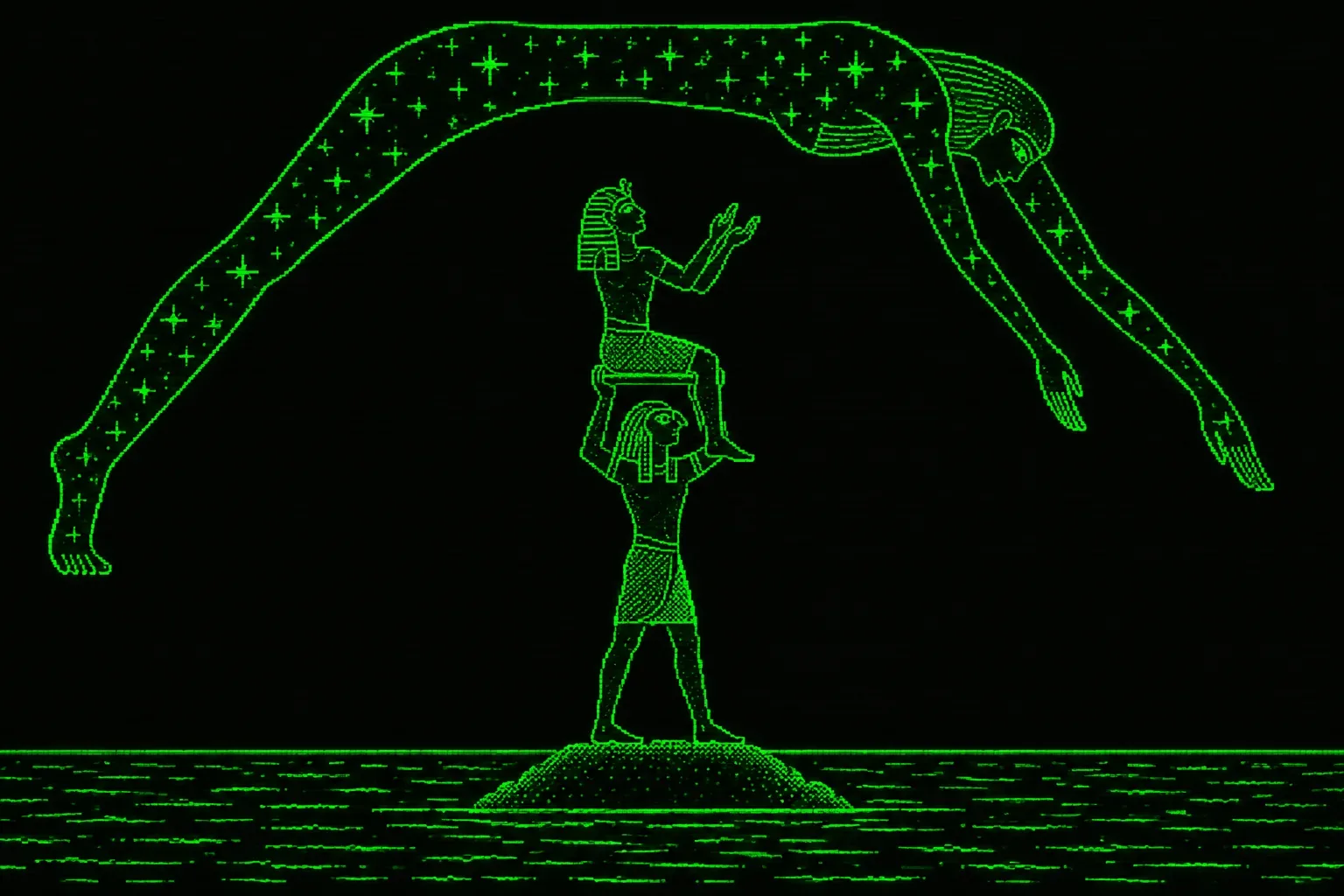
Nut is the sky goddess, mother of the gods and here of the dead king, who is reborn from her. - 5
nw ⸢sḏꜣ⸣ m ḥtp(,w) j.t(j)
"This one has gone in peace," she says.
- 6
jy.n zꜣ =(j) m ḥtp(,w) j.t(j) jn Nw,t ny ḫr.n ḏḥꜥ ḥr sꜣ =f ny ḫr ḫ,t ḏw.t ḥr ꜥ =f
"My son has come in peace," says Nut, "and no leather strap has fallen on his back, and nothing evil has fallen on his arm.
Note · Line 6
The leather is a whip or lash, the mark of a servant or prisoner. The king passes into the sky unbeaten and unharmed. - 7
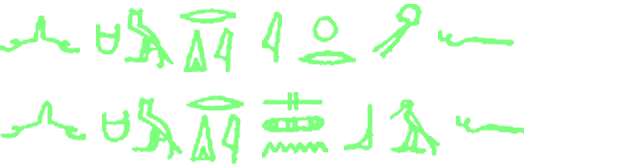
n ḥm rḏi̯ =j j:ḫr =f n ḥm rḏi̯ =j znbꜣ =f
I will not let him fall, I will not let him slip."
- 8
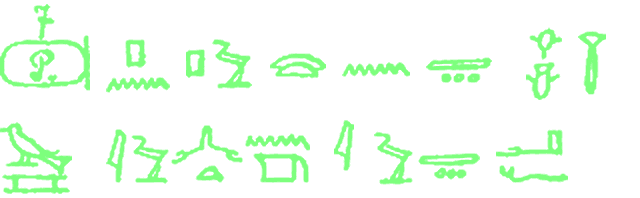
Ppy pn pw ḫꜥ n(,j) tꜣ ḥr(,j)-jb wꜣḏ-wr jw,tj nḏri̯ jr(,j).w tꜣ ꜥ =f
This Pepi is the mound of earth amid the Great Green, whose arm the earthbound cannot grasp.
Note · Line 8
The Great Green is the vast expanse of water, the sea. The mound recalls the first hill that rose from the primeval waters at creation. - 9
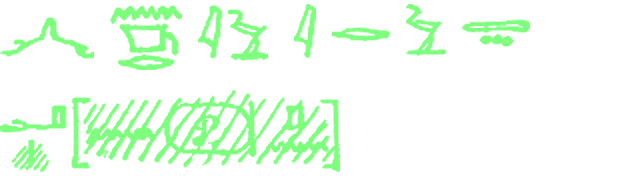
n nḏrj.w jr(,j).w tꜣ ꜥ n(,j) [Ppy] pn j:nḏr.n [jr(,j).w] p,t ꜥ =f
The earthbound shall not grasp the arm of this Pepi, for those of the sky have grasped his arm.
- 10
jn ḥm jr(,j).w p,t nḏri̯.w =s[n] ⸢ꜥ⸣ =⸢f⸣ wpw-jr tꜣ jr(,j).w tꜣ
It is those of the sky, truly, who shall grasp his arm, not the earth, not the earthbound.
- 11
Šw m-ḏr tꜣ ẖr ⸢rd.du⸣ =f
Shu is on the ground beneath his feet;
Note · Line 11
Shu is the god of air and light. He stands on the earth and holds the sky up, and so he can lift the king upward. - 12
Ppy [pn] ḥr rmn.du =f
this Pepi is upon his shoulders.
- 13
jri̯.[t].n =f [p]w n [s]n,t =f wpi̯ =f ⸢s⸣i [j]r sn =[f]
This is what he did for his sister: he parted her from his brother.
Note · Line 13
This refers to the myth of creation, in which Shu pushed the sky goddess Nut apart from her brother Geb, the earth, so that sky and land became separate. - 14
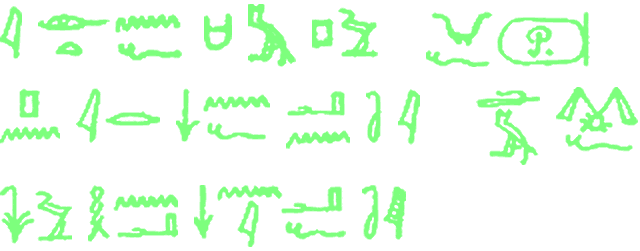
jri̯.t.n =f ḥm pw wpi̯ =f Ppy pn jr sn =f ꜥnt,j dmḏ =f sw ḥnꜥ sn ={j} =〈f〉 ꜥft,j
And this, truly, is what he has done: he has parted this Pepi from his brother Anti and joined him to his brother Afti.
Note · Line 14
Anti is a falcon god of Middle Egypt. - 15

ꜥnḫ rn =f ḥr nṯr(,j).pl nṯr(,j) pw
His name lives by the natron: he is divine.
- 16
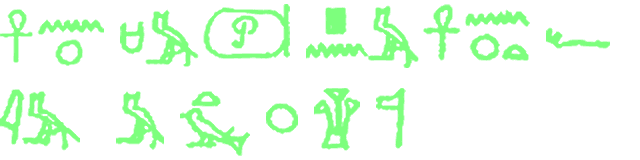
ꜥnḫ ḥm Ppy pn m ꜥnḫ.t =f jm m tʾ-wr ḥꜣ nṯr
Truly this Pepi shall live on what he lives on there, on the great loaf behind the god.
Note · Line 16
The “great loaf” is a kind of offering bread set before a god. The king shares in the food given to the gods. - 17
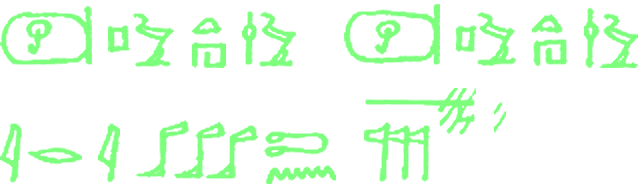
Ppy pw thi̯ wḏ(,w) Ppy pw thi̯ wḏ(,w) jr,j rd.pl =ṯn nṯr.pl
This Pepi is one who oversteps the decree,
this Pepi is one who oversteps the decree
that belongs to your feet, you gods.Note · Line 17
Pepi is Pepi I, the Old Kingdom king in whose pyramid this spell was carved.