~/sacred-texts/pyramid-texts
Pyramid Texts Utterance 478: A Dead King’s Ladder to the Sky
- Text
- Pyramid Texts, Utterance 478
- Date
- Carved in the 6th Dynasty, in the reign of Pepi II (c. 2278–2184 BC), on the inner walls of his pyramid at Saqqara
- Found
- Pyramid of Pepi II, South Saqqara; still in place
- Language
- Old Egyptian · Hieroglyphic
- 1

ḏ(d)-mdw
Recitation:
- 2

j:(n)ḏ ḥr =ṯ mꜣq,t nṯr
Hail to you, Ladder of the God!
Note · Line 2
The spell greets the ladder by which the dead king climbs to the sky. The Egyptian addresses it as “you” in the feminine, because the word for ladder is feminine. - 3

j:nḏ ḥr =ṯ mꜣq,t Stš
Hail to you, Ladder of Seth!
- 4

j:(n)ḏ ḥr =ṯ mꜣq,t 〈Ḥr,w〉
Hail to you, Ladder of Horus!
Note · Line 4
The scribe left out the name here; the pattern of the spell requires Horus. - 5

ꜥḥꜥ mꜣq,t nṯr
Stand up, Ladder of the God!
- 6

ꜥḥꜥ mꜣq,t Stš
Stand up, Ladder of Seth!
- 7
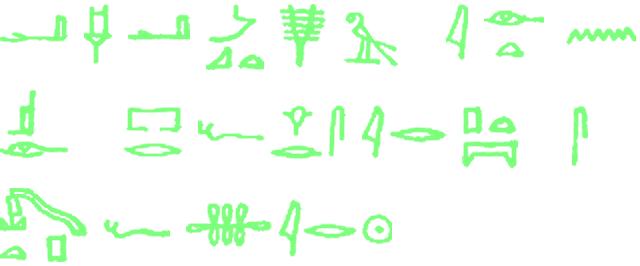
ꜥḥꜥ mꜣq,t Ḥr,w jri̯.t n (W)sr(,w) pri̯ =f ḥr =s jr p,t stp =f zꜣ jr Rꜥw
Stand up, Ladder of Horus, made for Osiris, so that he may climb on you to the sky and stand guard for Ra!
Note · Line 7
“Stand guard for Ra” renders an expression for keeping protective watch. The ascended dead serve as escort and protection for the sun god on his daily journey. - 8
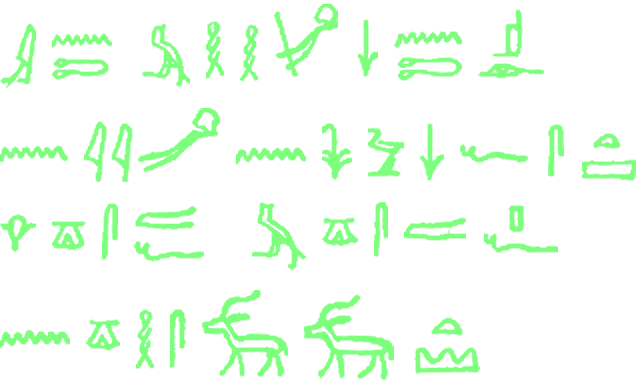
jy.n =ṯ m ḥḥ sn =ṯ (W)sr(,w) ny.n sw sn =f Stš ḥr gs =f m gs pf n(,j) Gḥs,tj
You came in search of your brother Osiris, when his brother Seth had thrown him down on his side, on that side of Gehesty.
Note · Line 8
Seth murdered his brother Osiris. - 9
jy r =f Ḥr,w ꜣ(,t) =f tp =f ḫsf ḥr =f m jt(j) =f Gbb
So Horus comes, his might upon him, his face set toward his father Geb:
Note · Line 9
Geb is the earth god and the father of Osiris; here he is called the father of Horus. - 10

Ppy Nfr-kꜣ-Rꜥw pw zꜣ =k Ppy Nfr-kꜣ-Rꜥw pw Ḥr,w
"This Pepi Neferkare is your son; this Pepi Neferkare is Horus.
Note · Line 10
Pepi Neferkare is Pepi II, the king for whom this copy of the spell was carved inside his pyramid. - 11
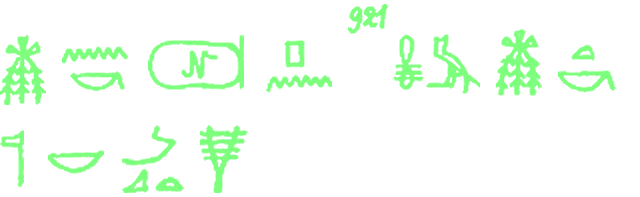
msi̯.n =k Ppy Nfr-kꜣ-Rꜥw pn mj msi̯.t =k nṯr nb mꜣq,t
You fathered this Pepi Neferkare as you fathered the god, lord of the ladder.
- 12
rḏi̯.n =k n =f mꜣq,t nṯr rḏi̯.n =k n =f mꜣq,t Stš pri̯ =f ḥr =s jr p,t stp =f zꜣ jr Rꜥw
You gave him the Ladder of the God, you gave him the Ladder of Seth, so that he might climb on it to the sky and stand guard for Ra.
- 13
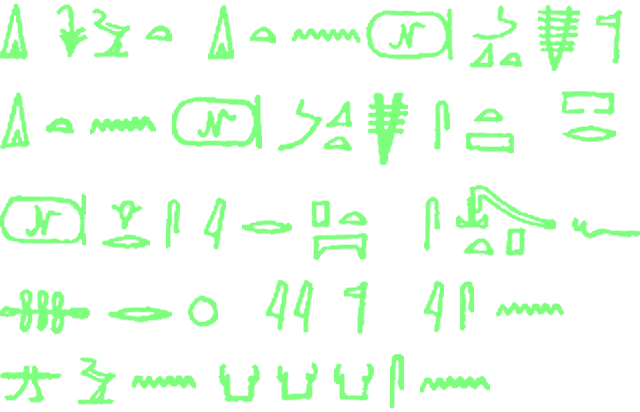
jmi̯ swt ḏi̯.t n Ppy Nfr-kꜣ-Rꜥw mꜣq,t nṯr ḏi̯.t n Ppy Nfr-kꜣ-Rꜥw mꜣq,t Stš pri̯ Ppy Nfr-kꜣ-Rꜥw ḥr =s jr p,t stp =f zꜣ r Rꜥw 〈nṯr.pl〉 js n(,j)〈.w〉 zbi̯.w n kꜣ.pl =sn
So have the Ladder of the God given to Pepi Neferkare, have the Ladder of Seth given to Pepi Neferkare, so that Pepi Neferkare may climb on it to the sky and stand guard for Ra, like the gods who have gone to their kas."
Note · Line 13
The ka is a person’s life-force. “Going to one’s ka” is an Egyptian way of saying that someone has died. - 14
nbḏbḏ jr,t-Ḥr,w tp ḏnḥ Ḏḥw,tj m gs jꜣb(,j) n(,j) mꜣq,t nṯr
The Eye of Horus leaps up onto the wing of Thoth, on the east side of the Ladder of the God.
Note · Line 14
The Eye of Horus was torn out by Seth and restored, and it stands for whatever is made whole again. - 15

r(m)ṯ ḏwi̯,wt jr p,t
People! The cobra—to the sky!
Note · Line 15
The cobra is the Eye of Horus in the form of the rearing serpent on the royal brow. The cry announces her rising. - 16
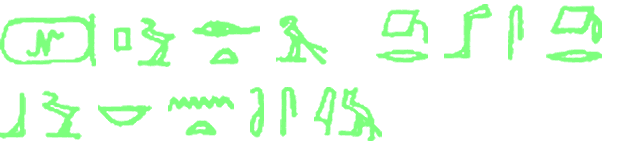
Ppy Nfr-kꜣ-Rꜥw pw jr,t-Ḥr,w ḏr rd =s ḏr bw nb n,tj =s jm
Pepi Neferkare is the Eye of Horus: where her foot reaches, there is the bound of every place she is in.
Note · Line 16
The Eye is feminine, so it is “her.” The king, now identified with the Eye, cannot be held back: wherever she sets foot, her reach extends. - 17

šmi̯ Ppy Nfr-kꜣ-Rꜥw šmi̯ m jr,t-Ḥr,w
Pepi Neferkare is going, going as the Eye of Horus.
Note · Line 17
The Eye of Horus, torn from the god in his fight with Seth and later restored to him, stands for every offering and every restored whole. - 18
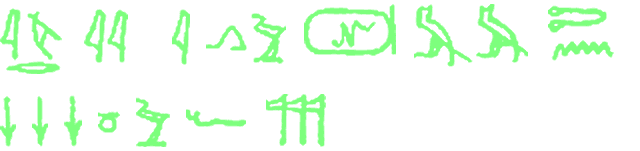
j:mri̯.y jwi̯ Ppy Nfr-kꜣ-Rꜥw mm =ṯn sn.w =f nṯr.pl
Long for Pepi Neferkare to come among you, you gods, his brothers!
- 19
j:ḥꜥi̯.y m ḫsf.w Ppy Nfr-kꜣ-Rꜥw sn.w Ppy Nfr-kꜣ-Rꜥw nṯr.pl jmr ḥꜥi̯.t Ḥr,w m ḫsf.w jr,t =f ḏi̯ n =f jr,t =f m-bꜣḥ jt(j) =f Gbb
Rejoice at the coming of Pepi Neferkare, you gods, brothers of Pepi Neferkare, as Horus rejoiced at the coming of his Eye, when his Eye was given back to him before his father Geb.
Note · Line 19
Geb presides here as the judge before whom Horus’ claim was settled. - 20
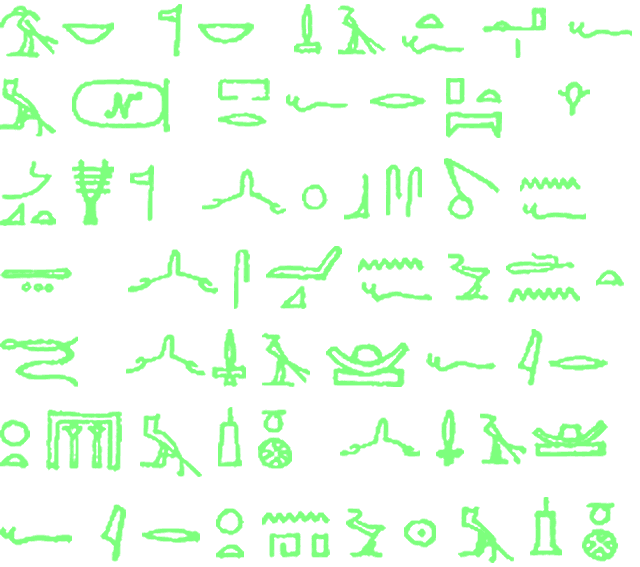
ꜣḫ nb nṯr nb ḏꜣi̯.t =f ꜥ =f m Ppy Nfr-kꜣ-Rꜥw pri̯ =f r p,t ḥr mꜣq,t nṯr n ḫbss n =f tꜣ n sq n =f wdn,t n ḏꜣi̯ =f jr ḫ,t-ḫꜣwj m Jwn,w n ḏꜣi̯ =f jr ḫ,t-nhp,w m Jwn,w
Every akh, every god who would cross his arm against Pepi Neferkare as he goes up to the sky on the ladder of the god: no earth shall be hoed for him, no offering laid down for him; he shall not cross over to the evening meal in Heliopolis, he shall not cross over to the morning meal in Heliopolis.
Note · Line 20
An akh is a dead person transfigured into a spirit of light. - 21
zꜣꜣ sw ḥw.n sw mꜣꜣ.t =f sḏm.t =f pri̯.t =f jr p,t ḥr mꜣq,t nṯr ḫꜥi̯ m jꜥr,t jm.t wp,t Stš
He shall guard him and announce him, whoever sees, whoever hears him going up to the sky on the ladder of the god, risen as the uraeus on the brow of Seth.
Note · Line 21
The uraeus is the rearing cobra worn on the forehead of gods and kings, which spits fire at their enemies. - 22
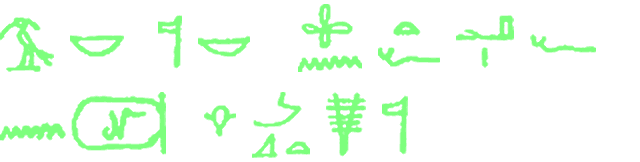
ꜣḫ nb nṯr nb wn.t =f ꜥ =f n Ppy Nfr-kꜣ-Rꜥw ḥr mꜣq,t nṯr 〈_〉
Every akh, every god who opens his arm to Pepi Neferkare on the ladder of the god …
Note · Line 22
To open one’s arm to someone is to reach out a helping hand, the opposite of the hostile arm in the curse above. - 23
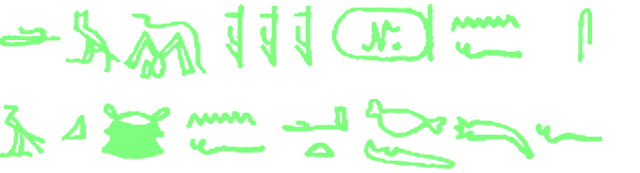
dmḏ qs.pl Ppy Nfr-kꜣ-Rꜥw n =f sꜣq n =f ꜥ,t.pl =f
The bones of Pepi Neferkare have been gathered for him, his limbs have been knit together for him.
Note · Line 23
Like Osiris, whose scattered body was reassembled, the dead king is made whole again before his ascent. - 24
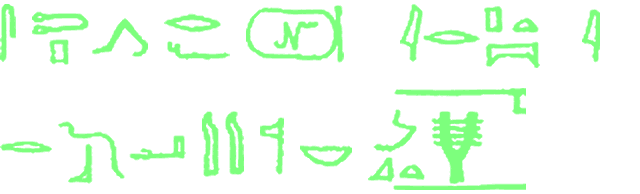
sṯp r =f Ppy Nfr-kꜣ-Rꜥw jr p,t jr ḏbꜥ.du nṯr nb mꜣq,t
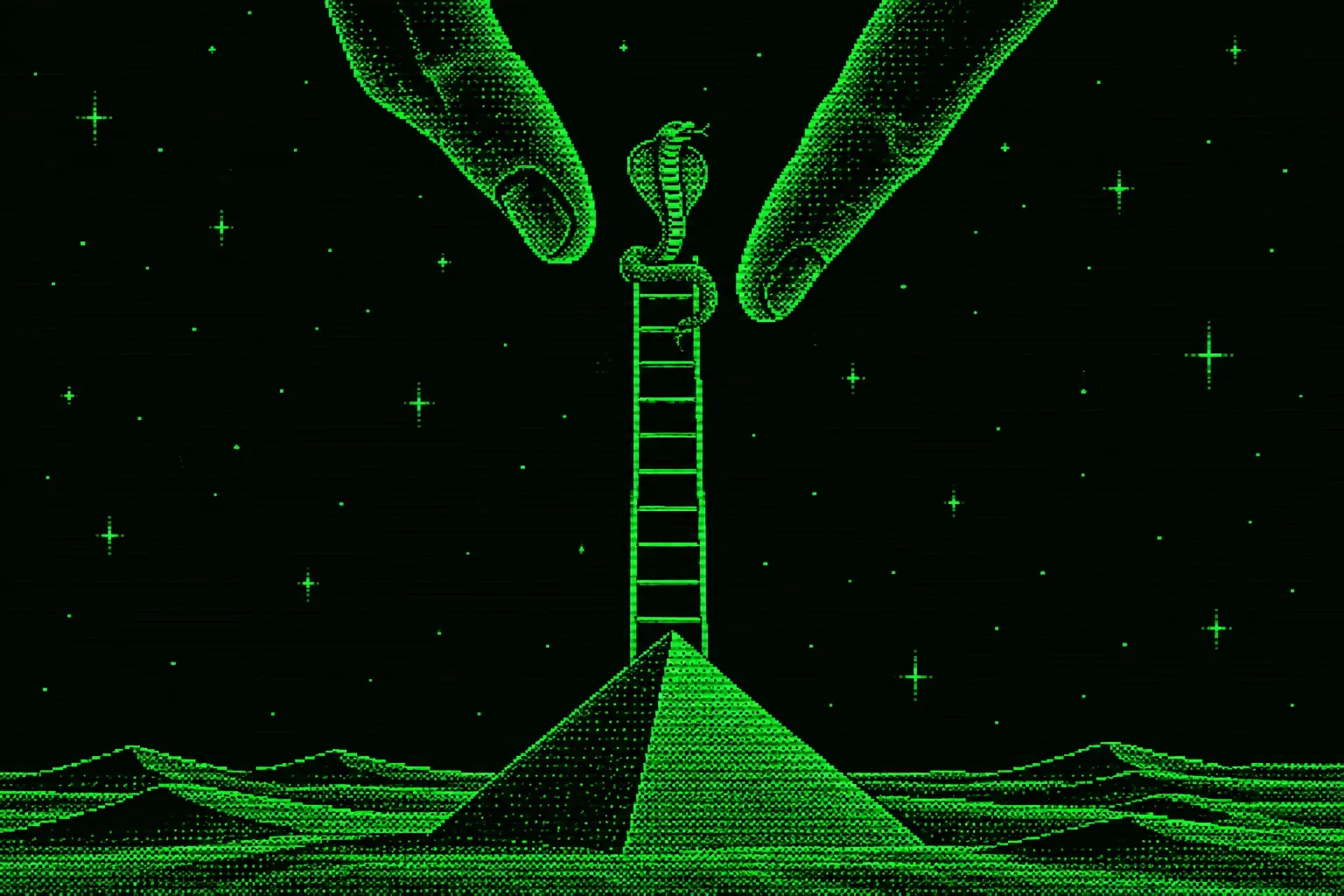
So Pepi Neferkare shall leap up to the sky, onto the two fingers of the god, the Lord of the Ladder.
Note · Line 24
The god’s two fingers are the helping hand that grips the king and pulls him up the last rungs into the sky.