~/sacred-texts/pyramid-texts
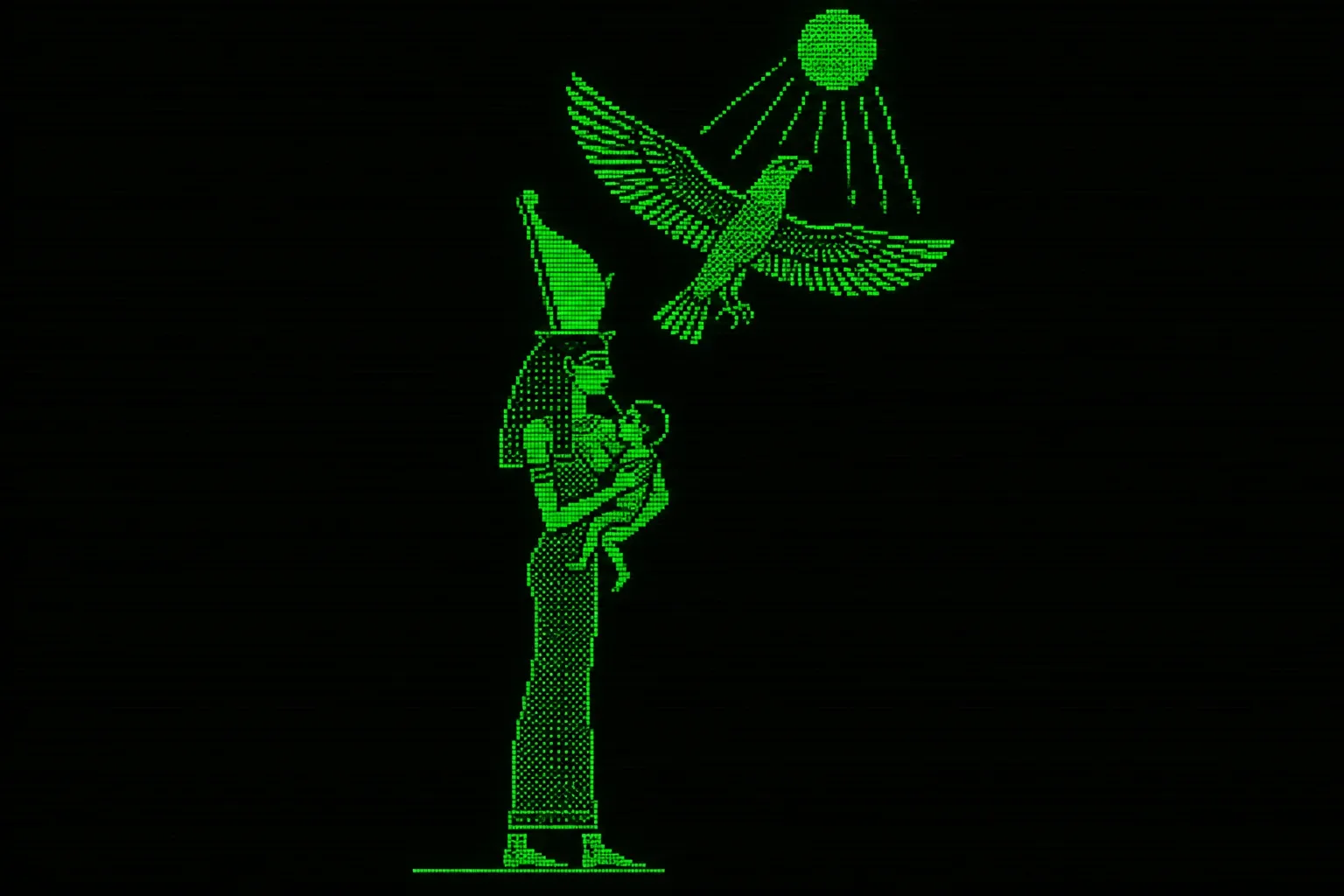
Pyramid Texts Utterance 470: The King Breastfed by a Goddess
- Text
- Pyramid Texts, Utterance 470
- Date
- Carved in the 6th Dynasty, in the reign of Pepi II (c. 2278–2184 BC), inside his pyramid at Saqqara
- Found
- Pyramid of Pepi II, South Saqqara, Egypt; the inscribed walls remain in place
- Language
- Old Egyptian · Hieroglyphic
- 1

ḏ(d)-mdw
Recitation:
- 2
j:rḫ Ppy Nfr-kꜣ-Rꜥw mʾw,t =f n ḫm Ppy Nfr-kꜣ-Rꜥw mʾw,t =f ḥḏ,t sšp.t wmt.t ḥr.t-jb Nḫb nb,t pr-wr nb,t tꜣ sm,j nb,t tꜣ štꜣ nb,t sḫ,t wḥꜥ.pl nb,t jn,t ḥtp,t(j)w ṯms.t dšr.t nb,t jdb.w Dpw
Pepi Neferkare knows his mother; Pepi Neferkare does not fail to know his mother: the White Crown, the Shining One, the Stout One who dwells in Nekheb, mistress of the Per-wer, mistress of the land of herbs, mistress of the hidden land, mistress of the field of the fishers and fowlers, mistress of the valley of the offering-bringers, the Ruddy One, the Red One, mistress of the riverbanks of Dep.
Note · Line 2
The king’s divine mother is the crowns of Egypt in person. - 3

mʾw,t =(j) j.j jn Ppy Nfr-kꜣ-Rꜥw
"My mother!" says Pepi Neferkare.
- 4
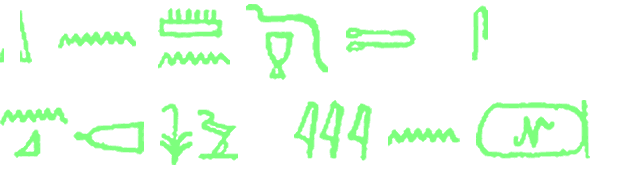
jmi̯ n =(j) mnḏ =ṯ snq =(j) sw j.j jn Ppy Nfr-kꜣ-Rꜥw
"Give me your breast, so that I may suck it," says Pepi Neferkare.
- 5

zꜣ =(j) j.t jr Ppy Nfr-kꜣ-Rꜥw
"My son!" she says to Pepi Neferkare.
- 6

m n =k mnḏ =(j) snq sw j.t
"Take my breast and suck it," she says.
- 7

ꜥnḫ =k nḏs =k j.t
"May you live, may you be little," she says.
Note · Line 7
To be small again and nursed by the goddess means rebirth: the dead king becomes a newborn who will grow up in the next world. - 8
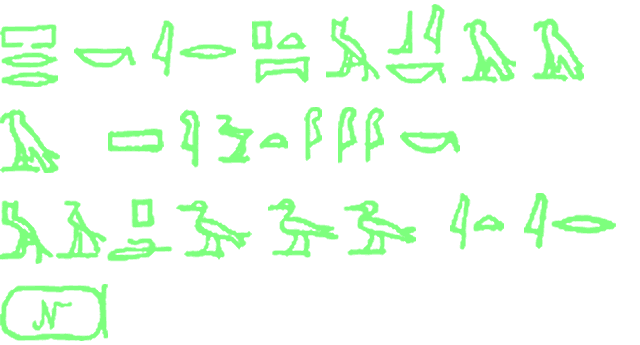
prr =k jr p,t m bjk.pl šw,t.pl =k m ꜣpd.pl j.t jr Ppy Nfr-kꜣ-Rꜥw
"You shall go up to the sky as falcons do, your feathers the feathers of birds," she says to Pepi Neferkare.
- 9
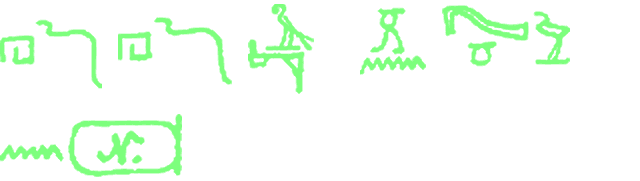
hḏhḏ jni̯ nw n Ppy Nfr-kꜣ-Rꜥw
"Hedjhedj, bring this to Pepi Neferkare!
- 10

jnk Ppy Nfr-kꜣ-Rꜥw smꜣ-wr
I, Pepi Neferkare, am the Great Wild Bull.
- 11
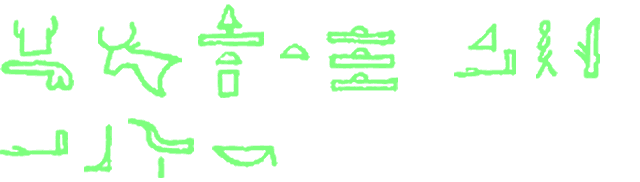
kꜣ-ḥtp,t,pl qꜥḥ ꜥb =k
Bull of Offerings, bend your horn!
Note · Line 11
A bull guards the way to the sky. By bending his horn aside he would let the king through. - 12
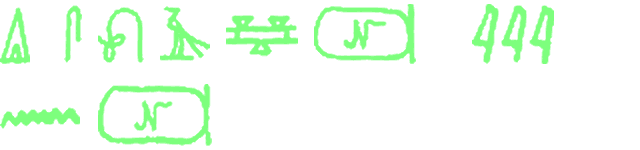
jmi̯ swꜣ Ppy Nfr-kꜣ-Rꜥw j.j jn Ppy Nfr-kꜣ-Rꜥw
Let Pepi Neferkare pass!" says Pepi Neferkare.
- 13

šmi̯ =k ṯnj{j}
"Where are you going?"
Note · Line 13
The guardian of the way now questions the king. - 14
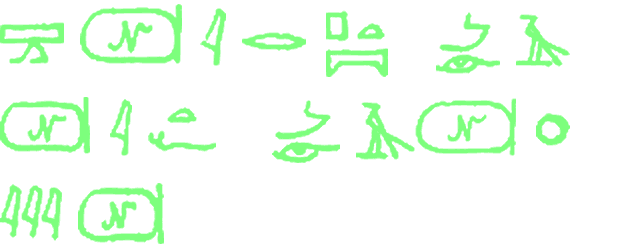
šmi̯ Ppy Nfr-kꜣ-Rꜥw jr p,t mꜣ Ppy Nfr-kꜣ-Rꜥw jt(j) =f mꜣ Ppy Nfr-kꜣ-Rꜥw Rꜥw j.j jn Ppy Nfr-kꜣ-Rꜥw
"Pepi Neferkare is going to the sky, so that Pepi Neferkare may see his father, so that Pepi Neferkare may see Ra," says Pepi Neferkare.
- 15
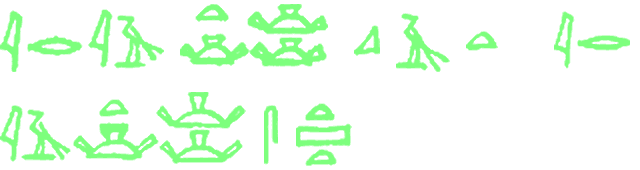
jr jꜣ,t.pl qꜣi̯.t jr jꜣ,t.pl stš.t
"To the high mounds, or to the mounds of Seth?"
- 16
rḏi̯ sw jꜣ,t.pl qꜣj.t n jꜣ,t.pl stš.t n nh,t tf qꜣ.t jꜣb,tt p,t qrqr.tj ḥmsi̯.t nṯr.pl tp =s n Ppy Nfr-kꜣ-Rꜥw Ḥtp wbꜣ qbḥ,w n Ppy Nfr-kꜣ-Rꜥw ḥm,w ꜥꜣ ẖni̯ ḫtꜣ.du p,t n Ppy Nfr-kꜣ-Rꜥw js wr ṯb(w) wsḫ nmt,t
"The high mounds will hand him on to the mounds of Seth, to that tall sycamore in the east of the sky, kerker, on which the gods sit;
for Pepi Neferkare is the Contented One who opens up the waters of the sky;
for Pepi Neferkare is the great steering oar that rows the two khata of the sky;
for Pepi Neferkare is great of sole and wide of stride." - 17
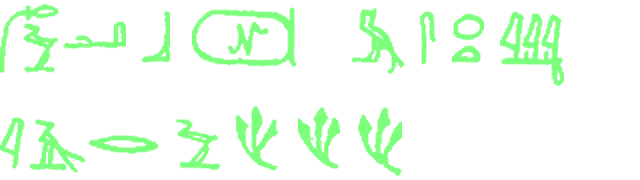
wꜥb Ppy Nfr-kꜣ-Rꜥw m sḫ,t-jꜣr,w
Pepi Neferkare is made pure in the Field of Reeds;
Note · Line 17
Pepi Neferkare is Pepi II, a king of the late Old Kingdom. - 18
wnḫ Ppy Nfr-kꜣ-Rꜥw m sḫ,t Ḫprr
Pepi Neferkare is clothed in the Field of Khepri;
Note · Line 18
Khepri, “He who comes into being”, is the sun god as a scarab beetle at sunrise. His field lies in the east, where the sun is reborn each morning. - 19

gmi̯ Ppy Nfr-kꜣ-Rꜥw Rꜥw jm
Pepi Neferkare finds Ra there.
- 20
prr Rꜥw m jꜣb,t gmi̯ =f Ppy Nfr-kꜣ-Rꜥw jm
When Ra comes forth in the east,
he finds Pepi Neferkare there; - 21
jwi̯ Rꜥw jr jmn(,t) gmi̯ =f Ppy Nfr-kꜣ-Rꜥw jm
when Ra comes to the west,
he finds Pepi Neferkare there; - 22
bw.du nfr j:šm Rꜥw jm gmi̯ =f Ppy Nfr-kꜣ-Rꜥw jm
the two fair places where Ra walks:
he finds Pepi Neferkare there.Note · Line 22
The Egyptian puts “places” in the dual: there are exactly two of them.