~/sacred-texts/pyramid-texts
Pyramid Texts Utterance 467: Pepi II Flies Up as a Locust
- Text
- Pyramid Texts, Utterance 467
- Date
- Carved in the 6th Dynasty, under Pepi II (c. 2278–2184 BC), on the west gable of the burial chamber of his pyramid at Saqqara
- Found
- Burial chamber of the pyramid of Pepi II, South Saqqara
- Language
- Old Egyptian · Hieroglyphic
- 1

ḏ(d)-mdw
Recitation:
Note · Line 1
The standard heading for a passage meant to be spoken aloud. This spell was carved on the west gable of the burial chamber in the pyramid of Pepi II, whose throne name was Neferkare. - 2

wy Rꜥw
O Ra!
- 3
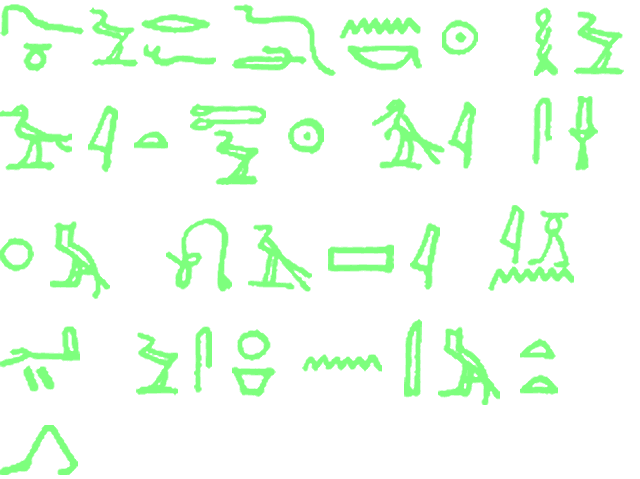
nw r =f ḏd.n =k Rꜥw ḥw zꜣ =(j) j.t ṯw Rꜥw bꜣ.j sḫm wꜣš.j jni̯ ꜥ.du wsḫ nmt,t
This, now, that you said, Ra:
"Oh, for a son of mine," you said, Ra,
"ba-mighty, powerful, honoured,
with arms that fetch and a wide stride!"Note · Line 3
The dead king quotes back to the sun god Ra a wish Ra once made for a son, then claims to be its fulfilment. - 4

m =k Ppy Nfr-kꜣ-Rꜥw Rꜥw
Look, here is Pepi Neferkare, Ra!
- 5

Ppy Nfr-kꜣ-Rꜥw pw zꜣ =k
Pepi Neferkare is your son.
- 6
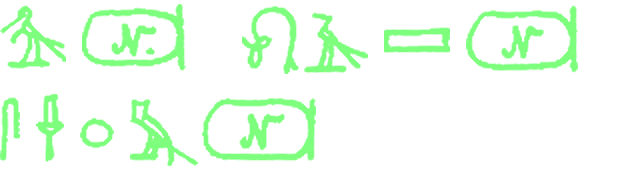
bꜣ Ppy Nfr-kꜣ-Rꜥw wꜣš Ppy Nfr-kꜣ-Rꜥw sḫm Ppy Nfr-kꜣ-Rꜥw
Ba-mighty is Pepi Neferkare,
honoured is Pepi Neferkare,
powerful is Pepi Neferkare; - 7
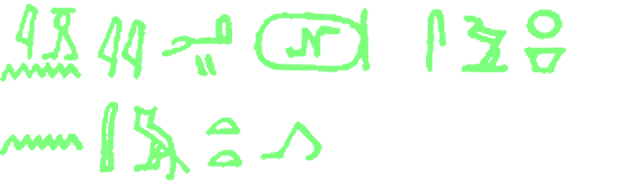
jni̯.y ꜥ.du Ppy Nfr-kꜣ-Rꜥw wsḫ nmt,t
the arms of Pepi Neferkare fetch, wide is his stride.
- 8
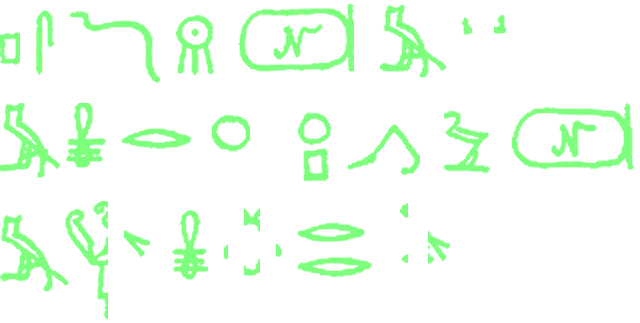
psḏ Ppy Nfr-kꜣ-Rꜥw m jꜣb(,w) mr Rꜥw ḫpi̯.w Ppy Nfr-kꜣ-Rꜥw m jmn(,t) mj Ḫprr
Pepi Neferkare shines in the east like Ra,
Pepi Neferkare goes his way in the west like Khepri.Note · Line 8
Khepri is the sun as a scarab beetle, the sun that comes into being anew. - 9
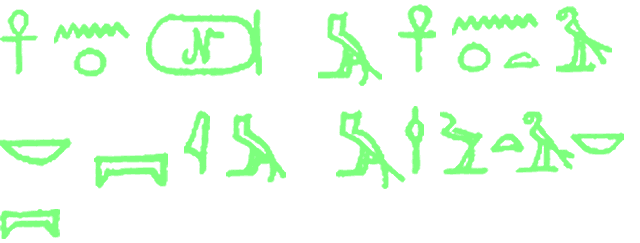
ꜥnḫ Ppy Nfr-kꜣ-Rꜥw m ꜥnḫ.t Ḥr,w nb p,t jm m wḏ.t Ḥr,w nb p,t
Pepi Neferkare lives on what Horus, lord of the sky, lives on, by command of Horus, lord of the sky.
- 10

wꜥb Ppy Nfr-kꜣ-Rꜥw Rꜥw
Pepi Neferkare is pure, Ra.
- 11
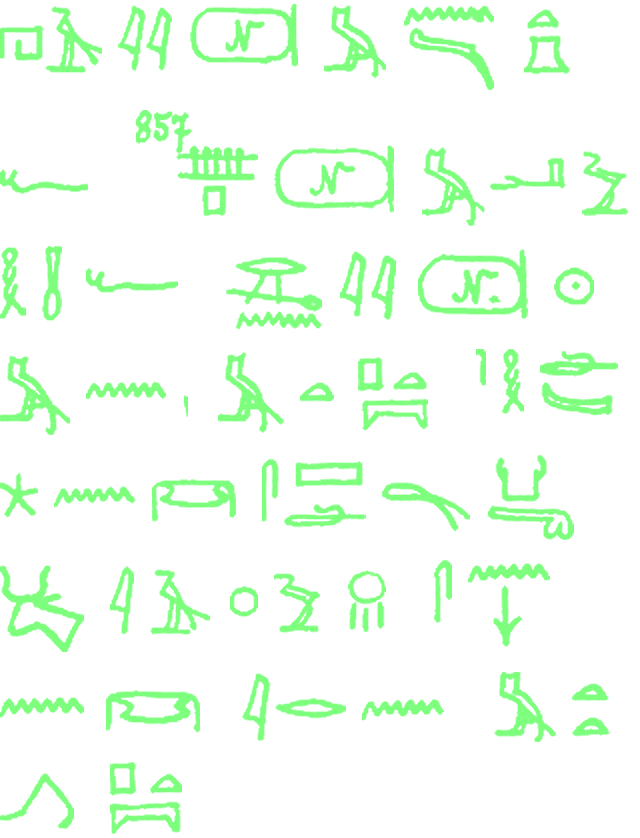
hꜣi̯.y Ppy Nfr-kꜣ-Rꜥw m ns,t =f šzp Ppy Nfr-kꜣ-Rꜥw mꜥwḥ =f ẖni̯.y Ppy Nfr-kꜣ-Rꜥw Rꜥw m nmt p,t sḥd n(,j) nbw sšd kꜣ-jꜣḫ,w sn n(,j) nbw jr(,j) nmt,t p,t
Pepi Neferkare will go down into his seat,
Pepi Neferkare will take up his oar,
Pepi Neferkare will row Ra as he strides across the sky:
he is a star of gold, the lightning of the Bull of Radiance,
the two-pronged spear of gold that belongs to the sky-strider.Note · Line 11
The king takes his place as an oarsman in the boat in which the sun god crosses the sky each day. - 12
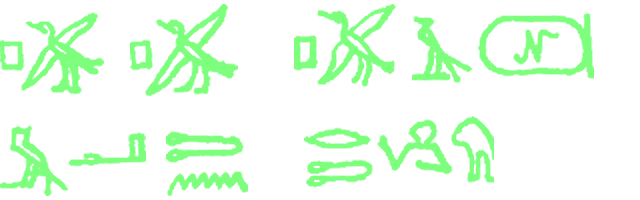
pꜣ pꜣ pꜣ Ppy Nfr-kꜣ-Rꜥw m-ꜥ =ṯn r(m)ṯ
The flier flies! Pepi Neferkare flies away from you, you people!
- 13
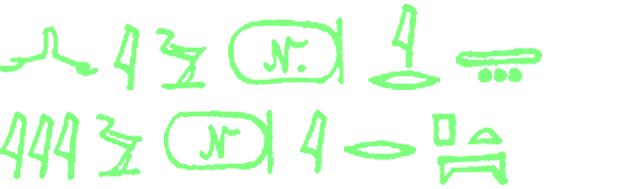
n Ppy Nfr-kꜣ-Rꜥw jr tꜣ jw Ppy Nfr-kꜣ-Rꜥw jr p,t
Pepi Neferkare is not for the earth; Pepi Neferkare is for the sky.
- 14
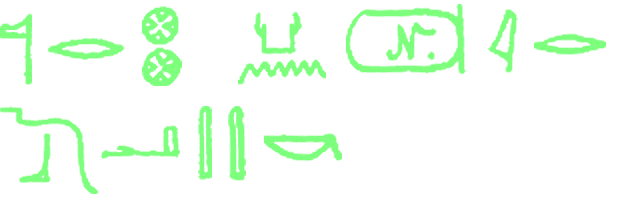
nṯr-nʾ,tj kꜣ n(,j) Ppy Nfr-kꜣ-Rꜥw jr ḏbꜥ.du =k
O town god, the ka of Pepi Neferkare is in your two fingers.
Note · Line 14
The ka is the life-force that stays with the tomb and receives offerings. As the king flies off, the local god of the town holds it in his keeping. - 15
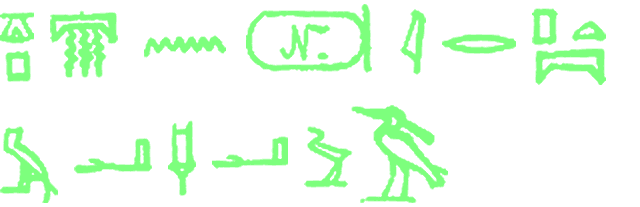
gp.n Ppy Nfr-kꜣ-Rꜥw jr p,t m ꜥḥꜥ,w
Pepi Neferkare has gone up to the sky like a cloud, as a heron.
- 16
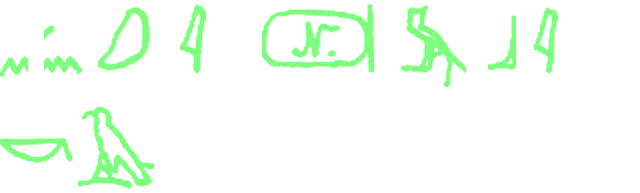
sn Ppy Nfr-kꜣ-Rꜥw 〈p,t〉 m bjk
Pepi Neferkare will kiss the sky as a falcon.
- 17
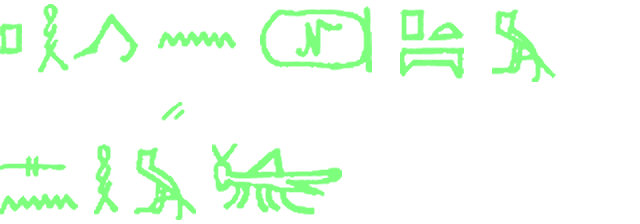
pḥ.n Ppy Nfr-kꜣ-Rꜥw p,t m znḥm
Pepi Neferkare has reached the sky as a locust.
Note · Line 17
Pepi Neferkare is the throne name of Pepi II, the late Old Kingdom king in whose pyramid this spell was carved. - 18

〈n〉 ni̯.y Rꜥw
Ra does not turn him away.
Note · Line 18
Ra is the sun god, lord of the sky the king has just reached. The negative “not” is missing in the carving and has been supplied. - 19
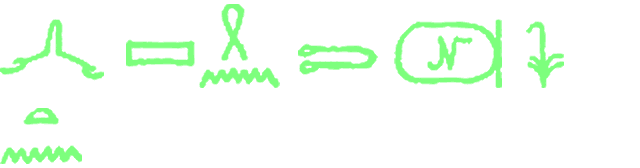
n šnṯ Ppy Nfr-kꜣ-Rꜥw nzw
Pepi Neferkare does not revile the king.
Note · Line 19
This and the next two lines are a string of denials. - 20
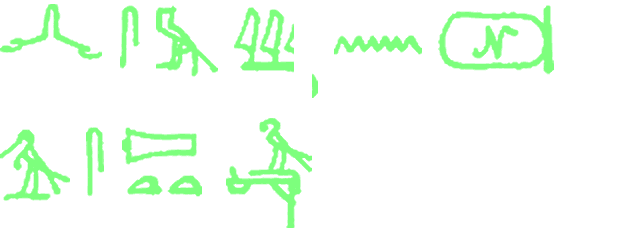
n sm.n Ppy Nfr-kꜣ-Rꜥw Bꜣs,tt
Pepi Neferkare cannot help Bastet.
Note · Line 20
Bastet is a goddess in lioness or cat form. Why the king claims he cannot help her is obscure. - 21
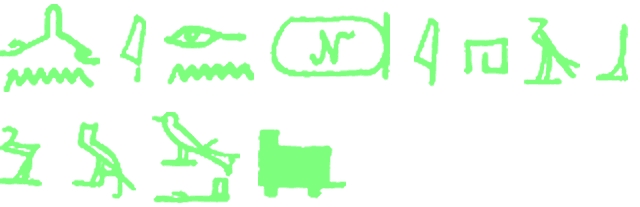
n jri̯.n Ppy Nfr-kꜣ-Rꜥw jhꜣb.w m wr-ꜥ
Pepi Neferkare cannot dance dances as one carried in the palanquin.
Note · Line 21
The phrase may also mean that he does not dance while riding in the palanquin. Either way, the dances and the carried chair belong to ceremonies that the king says he takes no part in. - 22
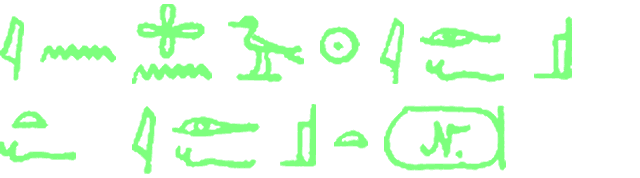
jn wn zꜣ Rꜥw jri̯ =f s,t =f jri̯ =f s,t Ppy Nfr-kꜣ-Rꜥw
If there is a son of Ra whose place Ra makes ready, he will make ready the place of Pepi Neferkare.
Note · Line 22
The king claims to be the sun god’s son. Whatever Ra grants a son of his, he must grant to Pepi. - 23
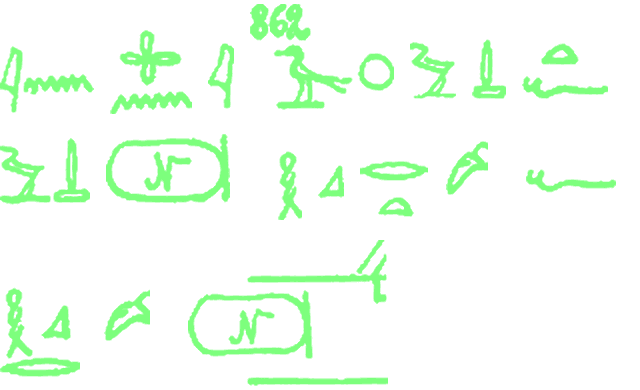
jn wn{j} zꜣ Rꜥw wḏꜣ.t =f wḏꜣ Ppy Nfr-kꜣ-Rꜥw ḥqr.t =f ḥqr Ppy Nfr-kꜣ-Rꜥw
If there is a son of Ra: when he is well, Pepi Neferkare will be well; when he goes hungry, Pepi Neferkare will go hungry.
Note · Line 23
The king binds his fate to that of Ra’s son, sharing his well-being and his want alike.