~/sacred-texts/pyramid-texts
Pyramid Texts Utterance 437: A Dead King Rises to Orion
- Text
- Pyramid Texts, Utterance 437
- Date
- Carved in the 6th Dynasty (c. 2300 BC) on the walls of the burial chamber in the pyramid of Pepi I at Saqqara
- Found
- Pyramid of Pepi I, South Saqqara, Egypt, where the inscribed chamber walls remain
- Language
- Old Egyptian · Hieroglyphic
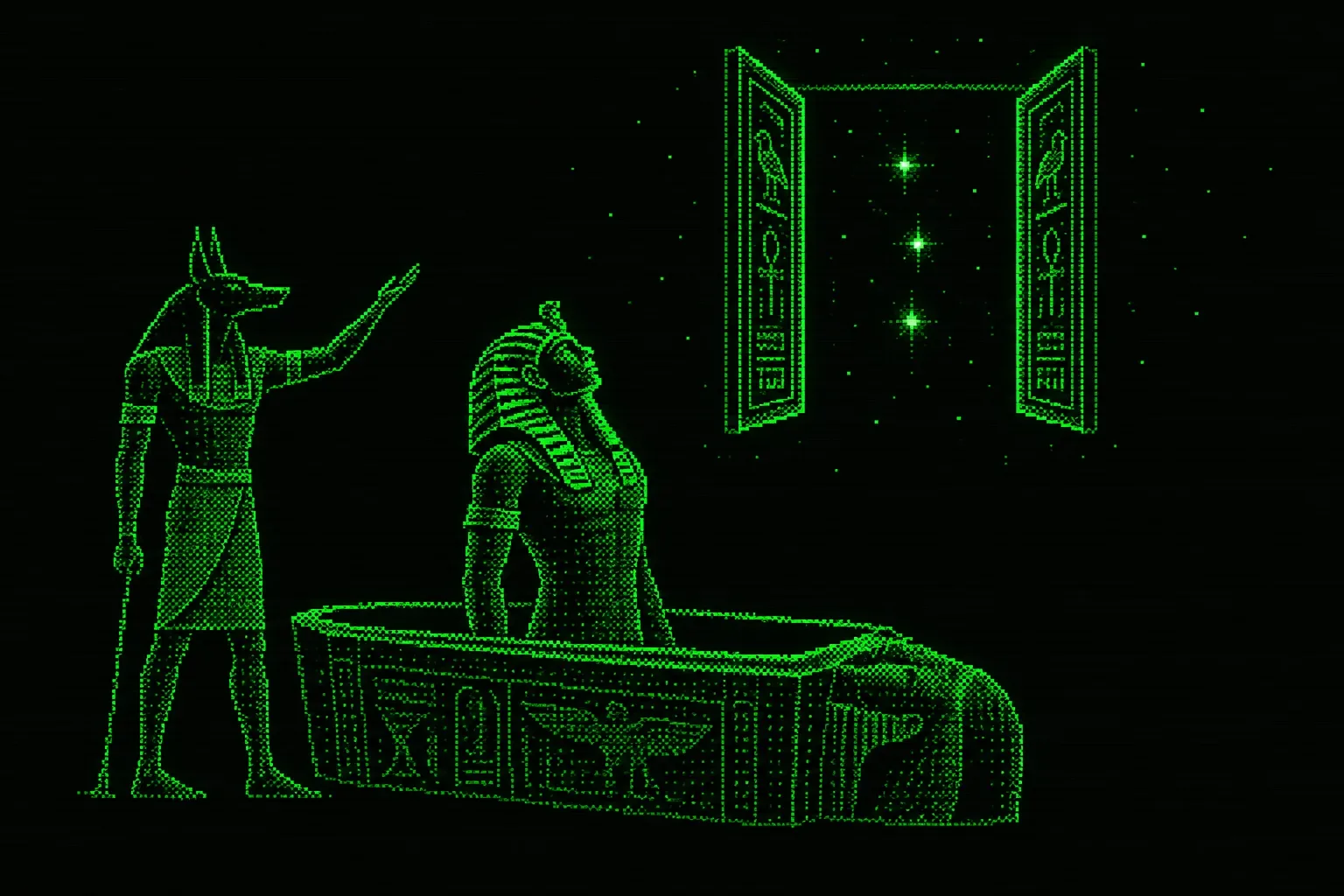
A priest wakes the dead king in his burial chamber: Wake up for Horus! Stand up against Seth! Then the Earth itself speaks: Open for you are the double doors of Aker, unbolted for you are the double doors of Geb. Anubis transfigures the king, and he climbs into the sky, where even his old enemy relents: Seth’s heart will turn brotherly toward you. The Duat leads him to the place where Orion is.
The spell ends with the offering formula: a thousand of bread, of beer, of oxen, and white oryx calves from the desert which come to you with heads bowed.
- 1

ḏ(d)-mdw
Recitation:
- 2
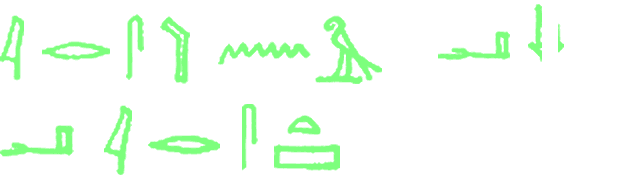
j:rs n Ḥr,w ꜥḥꜥ jr Stš
Wake up for Horus! Stand up against Seth!
Note · Line 2
Horus and Seth were rival gods. Seth murdered his brother Osiris, and Horus, Osiris’ son, avenged him. The dead king is addressed throughout and is roused to take Osiris’ part. - 3
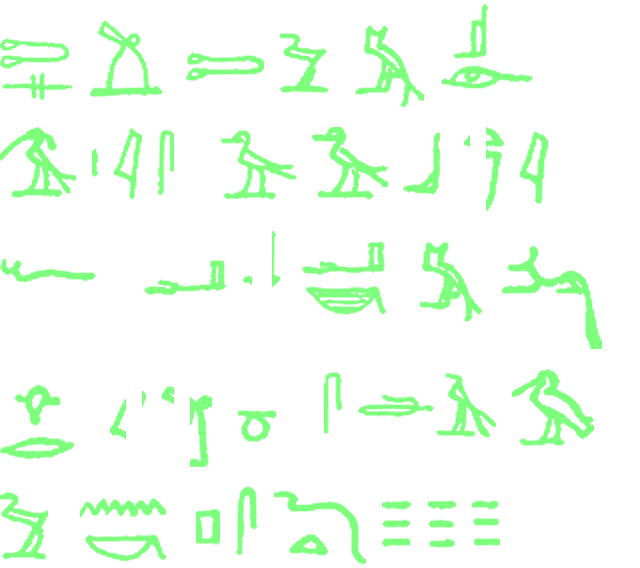
ṯzi̯ ṯw m (W)sr(,w) ꜣḫ js zꜣ Gbb tp,j =f ꜥḥꜥ =k m Jnp,w ḥr(,j) mnj,w sdꜣ.w n =k psḏ,t
Raise yourself as Osiris, the akh, the son of Geb, his firstborn!
You stand up as Anubis, he who is over the shrine; the Ennead trembles before you.Note · Line 3
An akh is a transfigured spirit: the dead person turned into an effective, radiant being. Geb is the earth god, father of Osiris. - 4
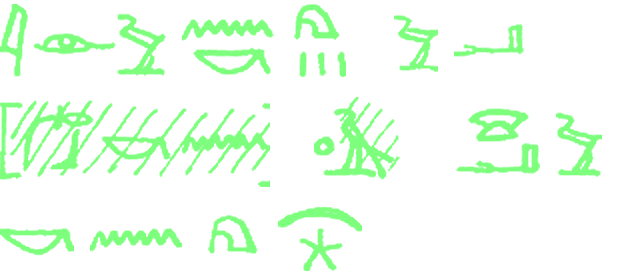
jri̯.w n =k tp-3 wꜥ[b] =[k] ⸢n⸣ psḏn,tw ḫꜥi̯.w =k n tp(,j)-ꜣbd(,w)
The festival of the First of Three Days will be held for you; you will be made pure at the New Moon festival and rise in glory at the festival of the First of the Month.
Note · Line 4
These are recurring feasts of the lunar calendar, at which offerings were made to the dead. “Rise in glory” is the word for the sun rising and for a king appearing in state. - 5
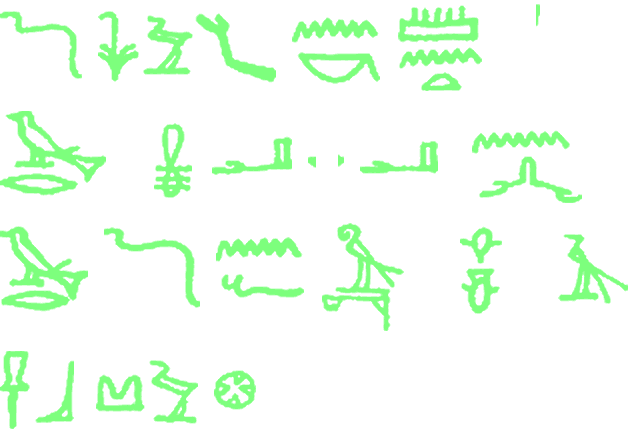
ḏsw n =k m(j)n(j),t-wr.t mj Ꜥḥꜥ-n-wrḏ,n≡f ḥr(,j)-jb Ꜣbḏ,w
The Great Mooring Post will call to you, as to Him Who Stands Unwearied, who dwells in Abydos.
Note · Line 5
The Great Mooring Post is a title of Isis, Osiris’ wife. “Him Who Stands Unwearied” is Osiris, whose chief cult centre was Abydos. - 6

sḏm nn ḏd.n nṯr.pl
Hear this, which the gods have said!
- 7
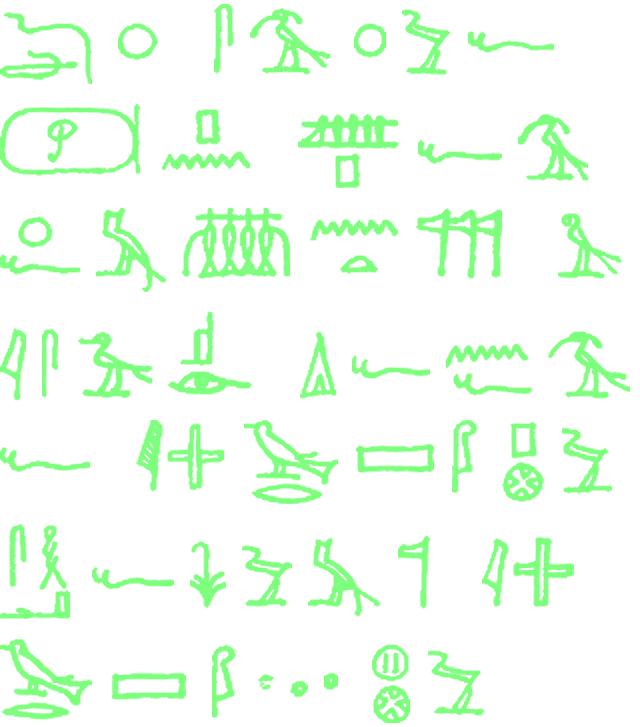
ḏd Rꜥw sꜣḫ.w =f Ppy pn šzp =f ꜣḫ(,w) =f m-ḫnt nṯr.pl Ḥr,w js zꜣ (W)sr(,w) ḏi̯ =f n =f ꜣḫ(,w) =f jm(,j) wrš,w(w)-pj(,j)w sꜥḥ =f sw m nṯr jm(,j) wrš,w(w)-nḫn(,j)w
Ra says he will transfigure this Pepi, that he may take up his akh-power at the head of the gods as Horus, son of Osiris, giving him his akh-power that is among the Watchers of Pe and distinguishing him as a god who is among the Watchers of Nekhen.
Note · Line 7
Pepi is the king for whom the spell was carved. - 8

mdwi̯ tꜣ
The Earth speaks:
- 9
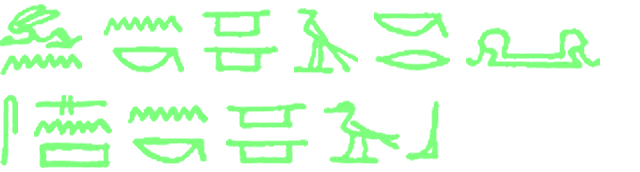
wn n =k ꜥꜣ.du ꜣkr szn n =k ꜥꜣ.du Gbb
Open for you are the double doors of Aker, unbolted for you are the double doors of Geb.
Note · Line 9
Aker is an earth god who guards the gateway between the land of the living and the underworld. - 10
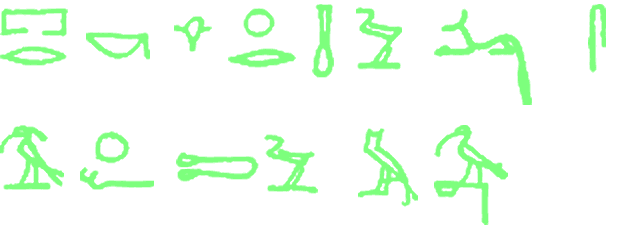
pri̯ =k ḥr ḫrw Jnp,w sꜣḫ =f ṯw m Ḏḥw,tj
You go out at the voice of Anubis, and he transfigures you as Thoth.
Note · Line 10
Anubis, the embalmer god, performs the rites that make the dead an akh. Thoth is the god of wisdom and of the moon. - 11
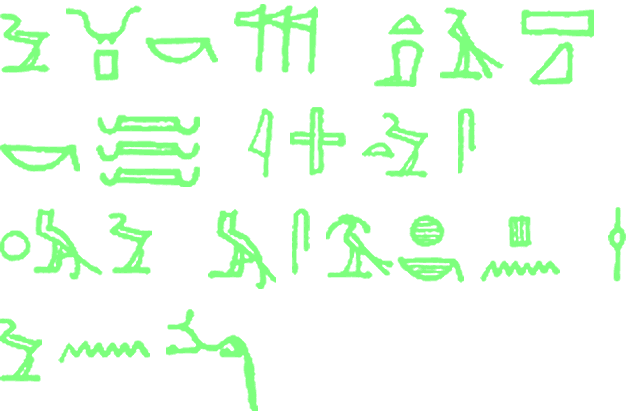
wpi̯ =k nṯr.pl tꜣš =k pḏ,t.pl jmw,t(j) sḫm.wdu m sꜣḫ =k pn wḏ.n Jnp,w
You judge the gods, you mark out the bounds of the sky's expanses between the two sceptres, in this your transfiguration that Anubis has ordained.
- 12
j:šm =k j:šm Ḥr,w
When you walk, Horus walks.
- 13
mdwi̯ =k mdwi̯ Stš
When you speak, Seth speaks.
Note · Line 13
The king unites in himself the two rival gods, as kings did in life. - 14
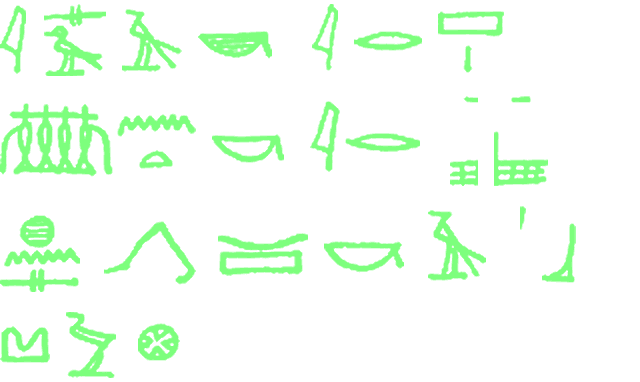
j:zꜣ =k jr šj ḫnti̯ =k jr Tꜣ-wr ḫnz =k Ꜣbḏ,w
You go to the lake, you sail upstream to the Thinite nome, you pass through Abydos.
Note · Line 14
The Thinite nome, called Ta-wer, is the province that contains Abydos, Osiris’ holy city. - 15
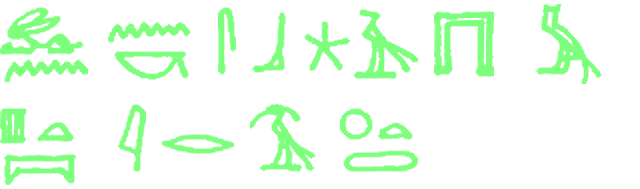
wn n =k sbꜣ m p,t jr ꜣḫ,t
A gate is opened for you in the sky, toward the horizon.
- 16
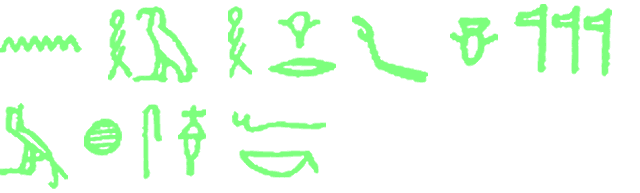
nḥ(r)ḥr jb nṯr.pl m ḫsf(,w) =k
The gods' hearts rejoice at your approach.
- 17
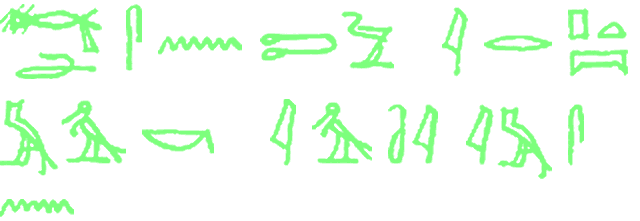
šdi̯ =sn ṯw jr p,t m bꜣ =k j:bꜣ.tj jm =sn
They take you up to the sky as your ba, ba-mighty among them.
Note · Line 17
The ba is the aspect of a person that can move about freely after death, often pictured as a human-headed bird. - 18
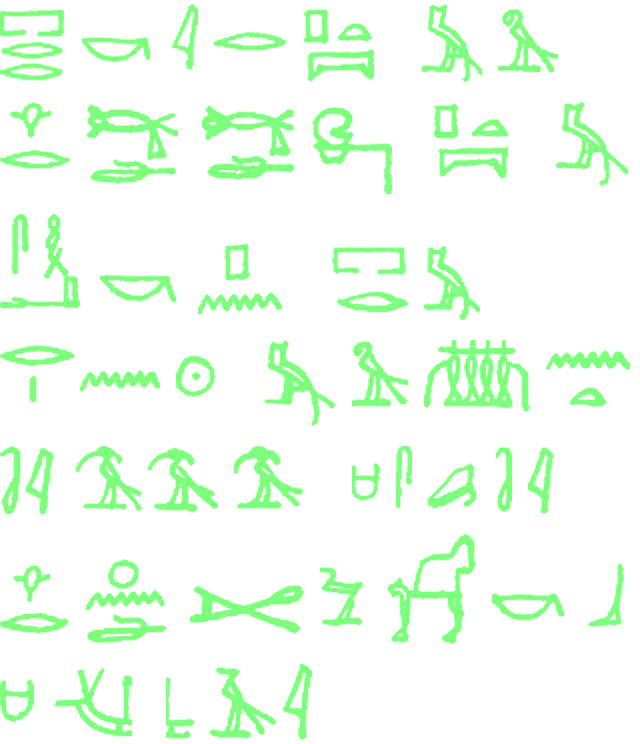
prr =k jr p,t m Ḥr,w ḥr(,j) šdšd p,t m sꜥḥ =k pn pri̯ m rʾ n(,j) Rꜥw m Ḥr,w ḫnt,j ꜣḫ.pl ḥmsi̯.tj ḥr ḫnd,w =k bjꜣ,j
You go up to the sky as Horus upon the sky's shedshed, in this your dignity that came forth from the mouth of Ra, as Horus foremost of the akhs, seated on your iron throne.
Note · Line 18
The shedshed is the bulb-shaped object on the front of the jackal standard of Wepwawet. Here it serves as the support on which the king rises to the sky. - 19
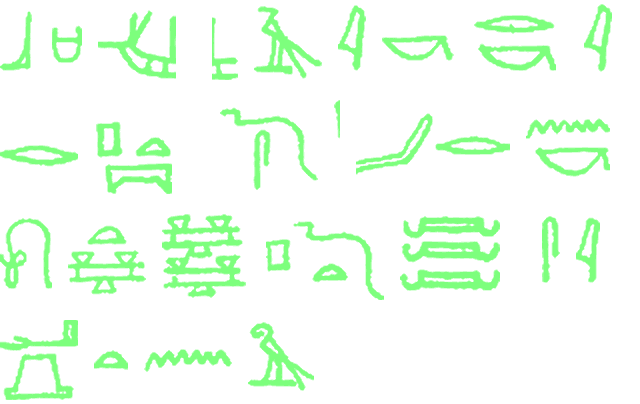
bjꜣj =k r =k jr p,t ḏsr n =k wꜣ,t.pl pḏ,t.pl sjꜥ.t n Ḥr,w
So take yourself off to the sky, for the roads of the Expanses that lead up to Horus have been cleared for you.
Note · Line 19
The Expanses are the stretched-out reaches of the sky. The verb for “take off” (bjꜣ) sounds like the word for the throne’s metal in the line before. - 20
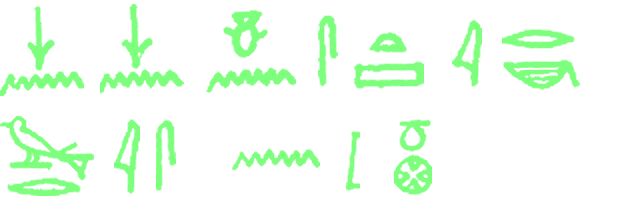
snsn jb n(,j) Stš jr =k wr js n(,j) Jwn,w
Seth's heart will turn brotherly toward you, as the Great One of Heliopolis.
Note · Line 20
Seth murdered his brother Osiris, with whom the dead king is identified. Here the old enemy is reconciled to him. The verb snsn, “to fraternize,” echoes sn, “brother.” - 21
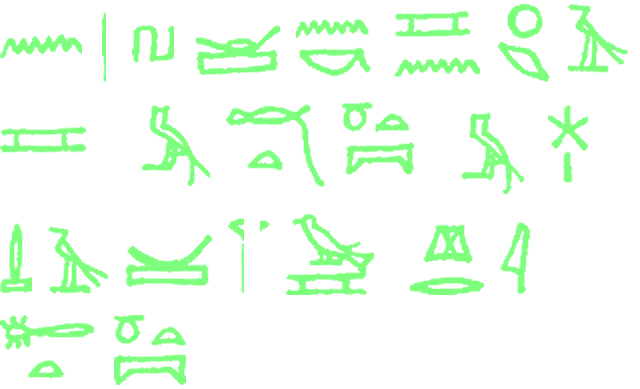
nm.n =k mr-n(,j)-ḫꜣ mḥ,t Nw,t m sbꜣ ḏꜣi̯ wꜣḏ-wr ẖr,j ẖ,t Nw,t
You have sailed the Knife Canal north of Nut, as the star that ferries across the Great Green beneath Nut's belly.
Note · Line 21
Nut is the sky goddess, whose arched body forms the heavens. - 22
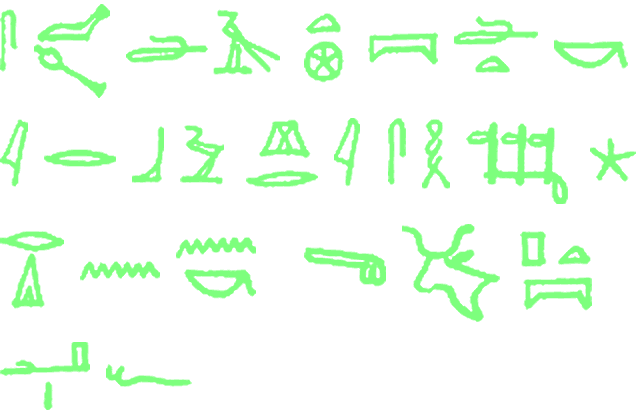
sq d(w)ꜣ,t ḏr,t =k jr bw ẖr,j S(ꜣ)ḥ rḏi̯.n n =k kꜣ p,t ꜥ =f
The Duat will take you by the hand to the place where Orion is, for the Bull of the Sky has given you his arm.
Note · Line 22
The Duat is the hidden realm of the dead, located in or under the sky. - 23
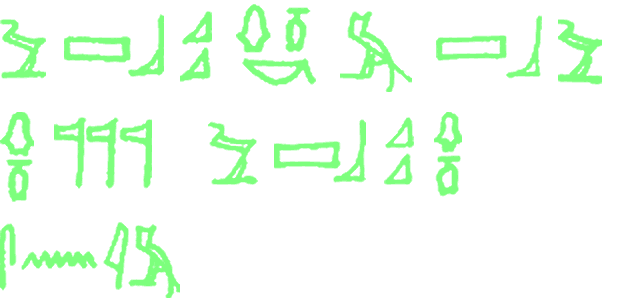
wšb =k m šb,w nṯr.pl wšb =sn jm
You will feed on the meal of the gods, the meal they feed on.
- 24
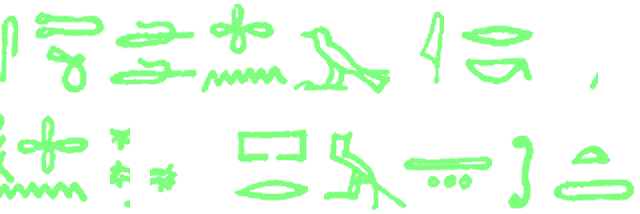
sṯ(j) Ddwn jr =k ḥwn šmꜥ,w pri̯ m Tꜣ-zt(j)
The scent of Dedun is on you, the Upper Egyptian youth who comes from Ta-Seti.
Note · Line 24
Dedun is a god of Nubia, the land south of Egypt that was the source of incense. Ta-Seti, “Land of the Bow,” is a name for Nubia. - 25
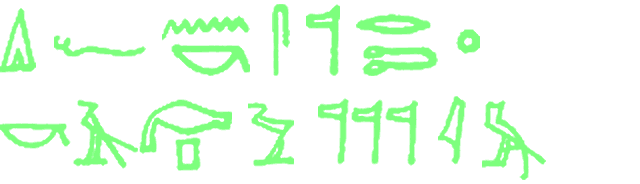
ḏi̯ =f n =k snṯr kꜣp.w nṯr.pl jm
May he give you the incense with which the gods are censed.
Note · Line 25
The Egyptian word for incense, snṯr, contains the word for “god” (nṯr) and suggests “what makes divine,” so it chimes with “the gods” here. - 26
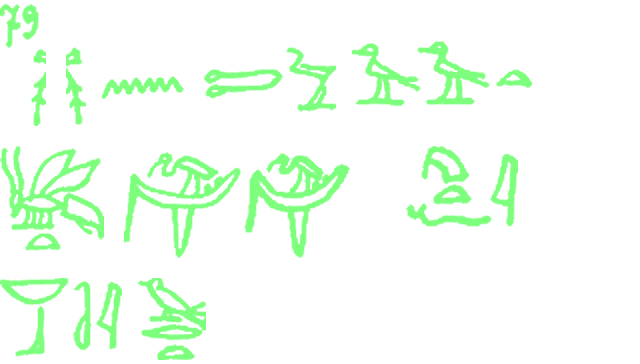
msi̯.n ṯw zꜣ,tdu-bj,tj tp,tj =f nb,tj wr.t
The king's two daughters who sit at his head, the great Two Ladies, have given you birth.
Note · Line 26
The Two Ladies are Nekhbet and Wadjet, the vulture and cobra goddesses of Upper and Lower Egypt. They rise from the king’s brow as his crowns and protective serpents. - 27
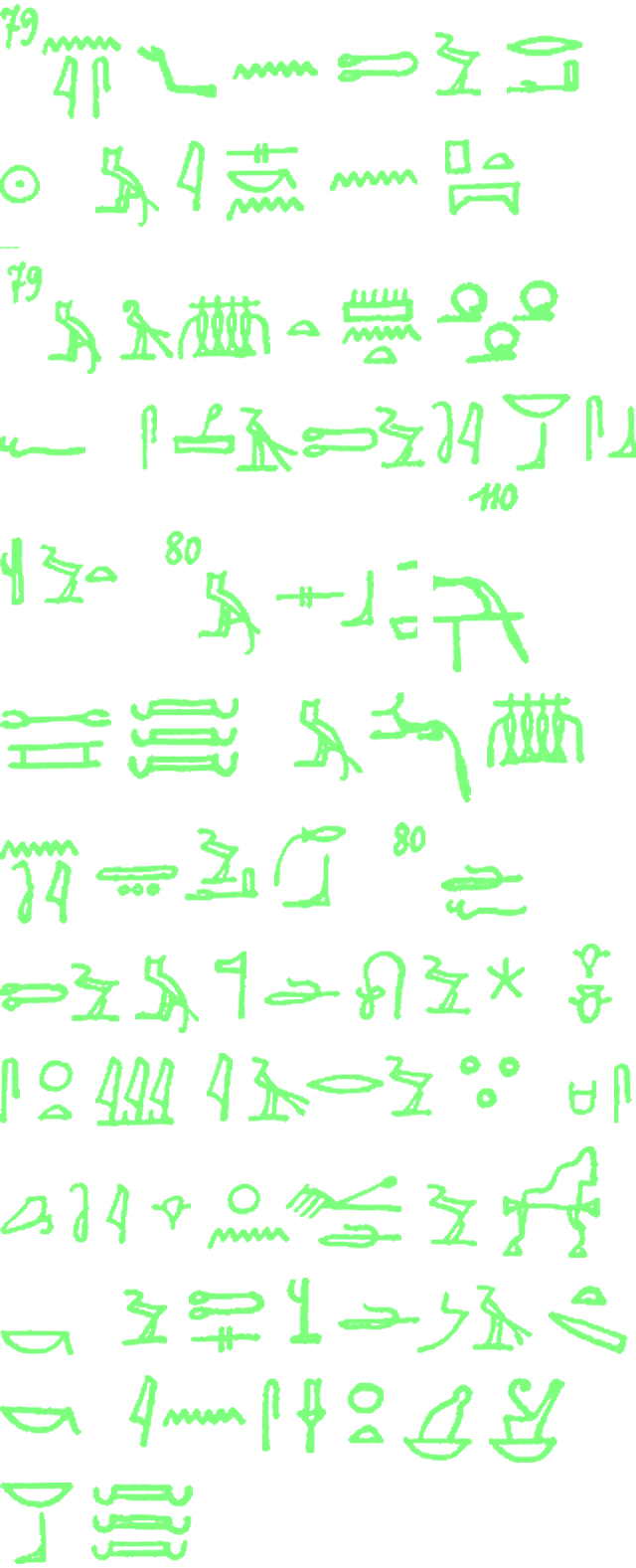
njs.n ṯw Rꜥ(w) m jzkn n(,j) p,t m Ḥr,w ḫnt(,j)-mn,t.pl≡f sꜣṯ,wtj nb-Sbj,wt m z(ꜣ)b ꜥḏ-mr pḏ,t.pl m Jnp,w ḫnt,j tꜣ wꜥb di̯ =f ṯw m nṯr-dwꜣ,w(j) ḥr-jb sḫ,t-jꜣr,w ḥmsi̯.tj ḥr ḫnd,w =k wṯz dmꜣ,t =k jn sḫm,tj nb pḏ,t.pl
Ra has summoned you in the Iseken of the sky, as Horus Foremost of His Pegs, Satjuti, Lord of Sebjut, as the jackal, governor of the Expanses, as Anubis foremost of the Pure Land, that he may set you as the Morning God in the midst of the Field of Reeds, seated on your throne, your wings lifted up by the Double Crown of the Lord of the Expanses.
- 28
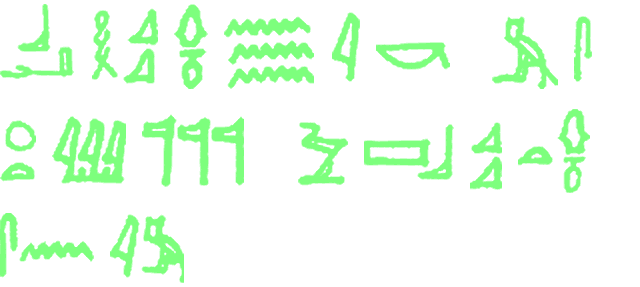
bꜥḥj =k m sḫ,t nṯr.pl wšb.t =sn jm
You will be awash in the field of the gods with what they feed on.
- 29
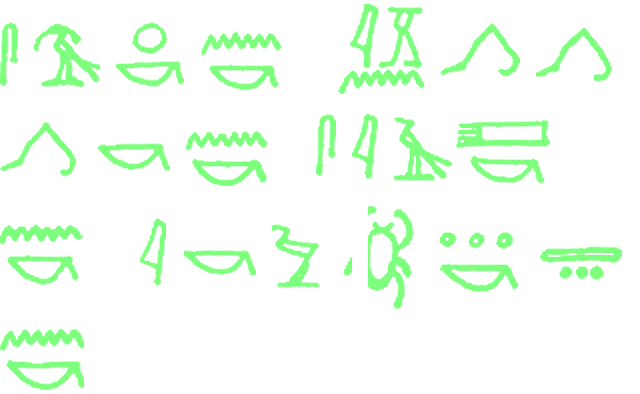
sꜣḫ =k n =k jn.pl =k n =k sjꜣ =k n =k jkw =k tꜣ n =k
Your transfiguration is yours, your messengers are yours, your understanding is yours, your earth-diggers are yours.
Note · Line 29
Transfiguration (sꜣḫ) is the process, carried out by spells like this one, that turns the dead into an akh, a blessed spirit. - 30
ḥtp-ḏi̯-nzw ḥtp-ḏi̯ Jnp,w ḫꜣ =k m rn n(,j) mꜣ-ḥḏ ḫr z(mj),t.pl jwi̯ =sn n =k m wꜣḥ tp
An offering that the king gives, an offering that Anubis gives: your thousand of white oryx calves from the desert, which come to you with heads bowed.
Note · Line 30
This is the standard offering formula: the king, and here Anubis, grant the dead a share of the offerings. - 31
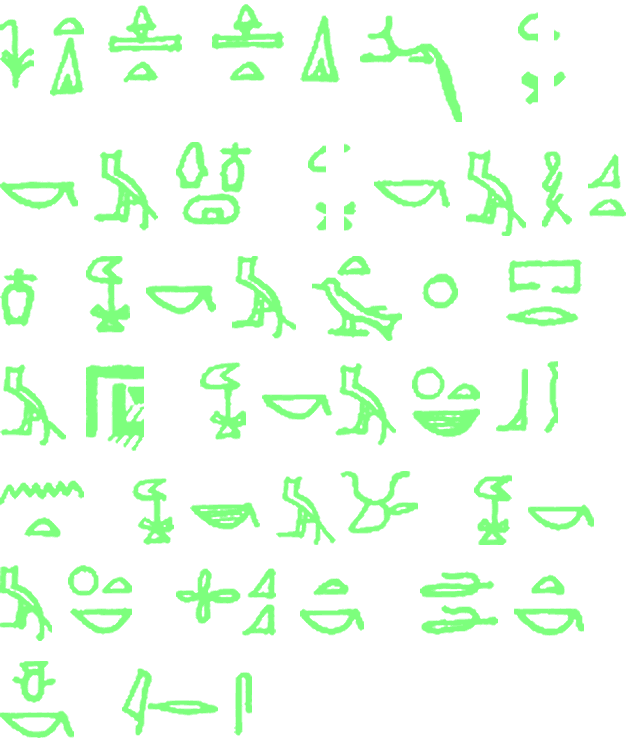
ḥtp-ḏi̯-nzw ḥtp-ḏi̯ Jnp,w ḫꜣ =k m tʾ ḫꜣ =k m ḥ(n)q,t ḫꜣ =k m tʾ-wr pri̯ m wsḫ,t ḫꜣ =k m (j)ḫ,t nb(.t) bn.t ḫꜣ =k m kꜣ ḫꜣ =k m (j)ḫ,t nb(.t) wn(m).t =k dd.t =k jb =k jr =s
An offering that the king gives, an offering that Anubis gives: your thousand of bread, your thousand of beer, your thousand of great-loaf that comes from the broad hall, your thousand of every sweet thing, your thousand of oxen, your thousand of everything you would eat and have set your heart on.
Note · Line 31
The “great-loaf” (tʾ-wr) is a particular kind of offering bread, issued from the broad hall of the temple or palace. - 32
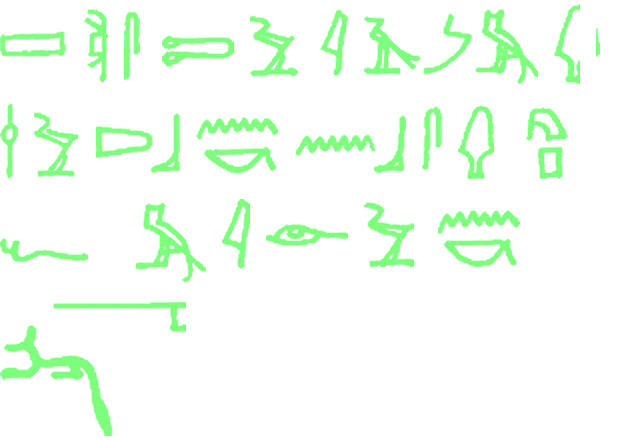
šms ṯw jꜣmꜣm wḏb n =k nbs tp =f m jri̯.w n =k Jnp,w
The iam-tree follows you, the jujube turns its head to you: this is what Anubis has done for you.