~/sacred-texts/pyramid-texts
Pyramid Texts Utterance 302: King Unas Flies to the Sky
- Text
- Pyramid Texts, Utterance 302 (PT 302)
- Date
- Carved in the 5th Dynasty, in the reign of Unas (c. 2375–2345 BC), on the north wall of the king's burial chamber in his pyramid at Saqqara
- Found
- Pyramid of Unas, Saqqara; still in place in the burial chamber
- Language
- Old Egyptian · Hieroglyphic
- 1
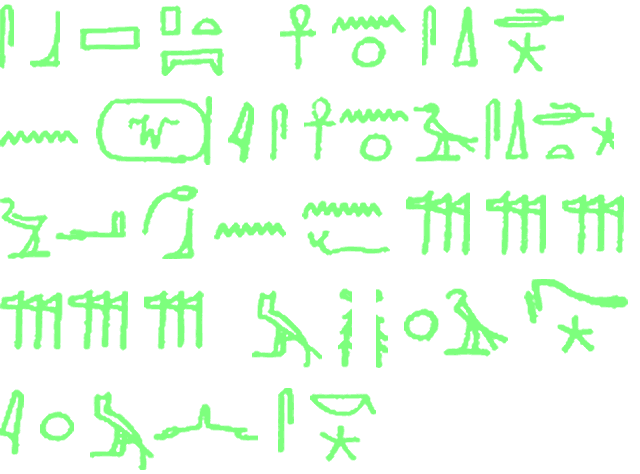
sbš p,t ꜥnḫ Spd(,t) n Wnjs js ꜥnḫ zꜣ Spd,t wꜥb.n n =f psḏ,t.du m msḫt,w j:ḫm-sk
The sky is clear, Sothis lives, for Unas is a living one, the son of Sothis, for whom the Two Enneads have cleansed themselves in the Great Bear, the Imperishable.
Note · Line 1
Sothis is the star Sirius, worshipped as a goddess. - 2

n ski̯ pr Wnjs (j)r(,j) p,t
Unas's house in the sky shall not perish;
- 3
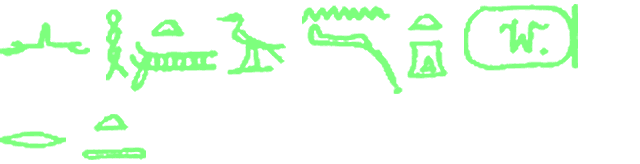
n ḥtm ns,t Wnjs (j)r.t tꜣ
Unas's throne on earth shall not be destroyed.
- 4
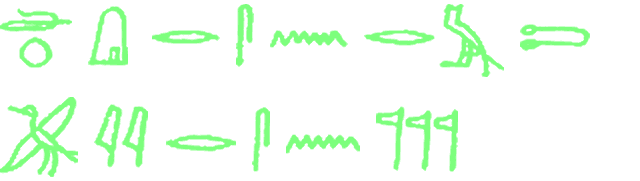
dḫ r =sn rmṯ pꜣ.y r =sn nṯr.pl
People may hide, but the gods take wing.
- 5
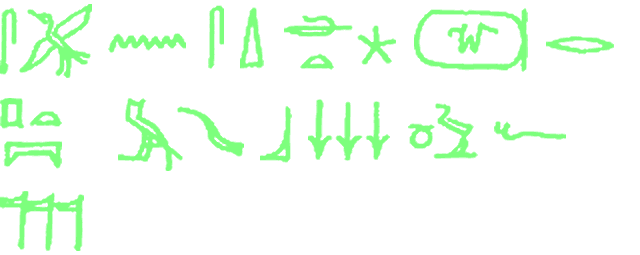
spꜣ.n Spd,t Wnjs r p,t m-ꜥb sn,w.pl =f nṯr.pl
Sothis has made Unas fly up to the sky among his brothers, the gods.
- 6
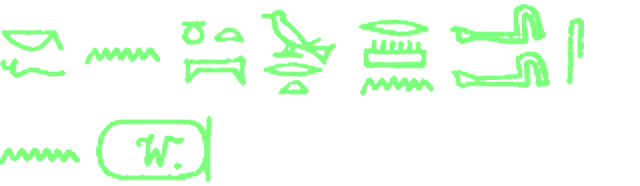
kfi̯.n Nw,t wr,t rmn.du =s n Wnjs
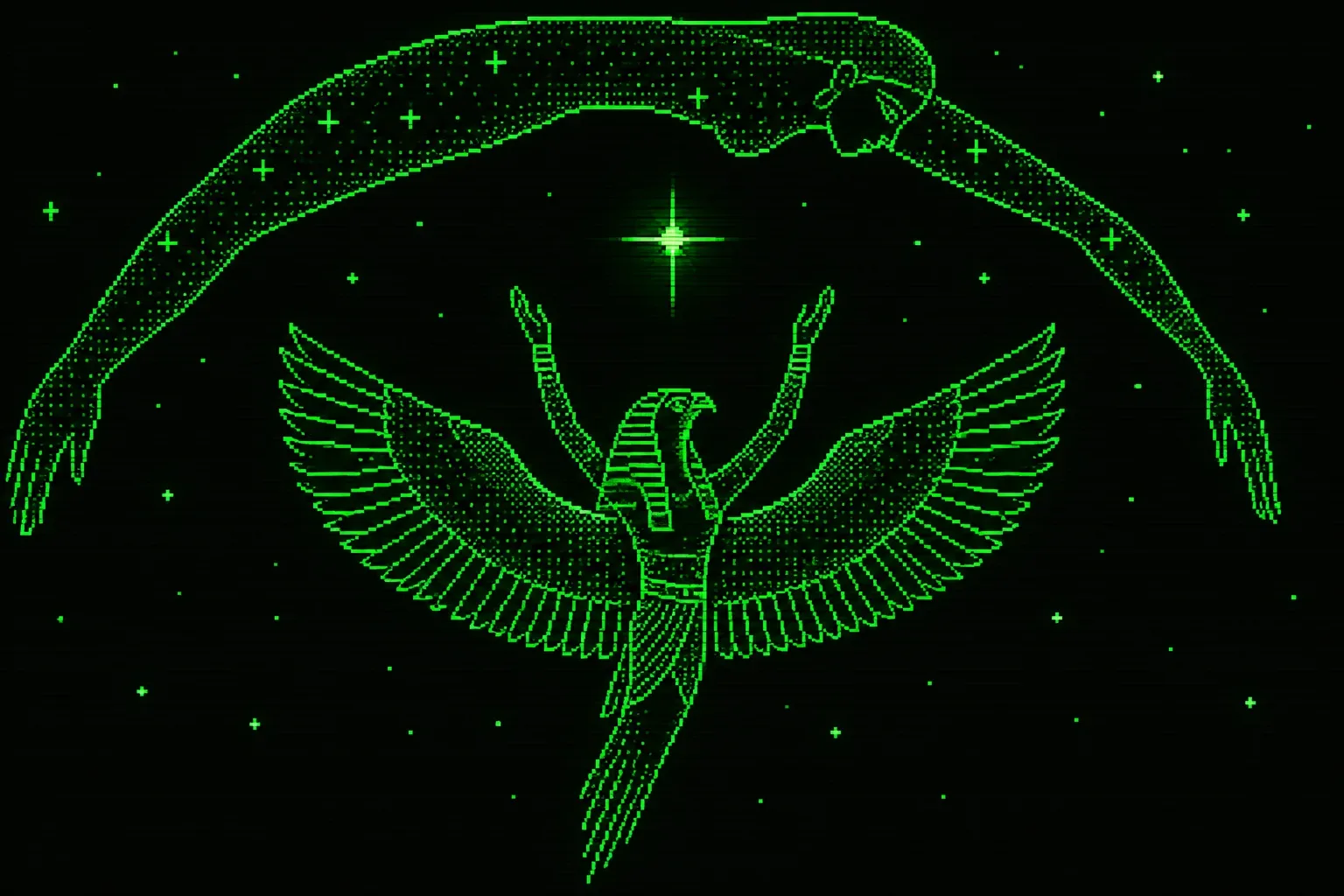
Nut the Great has bared her arms for Unas.
Note · Line 6
Nut is the sky goddess. She uncovers her arms to take the king into her embrace. - 7
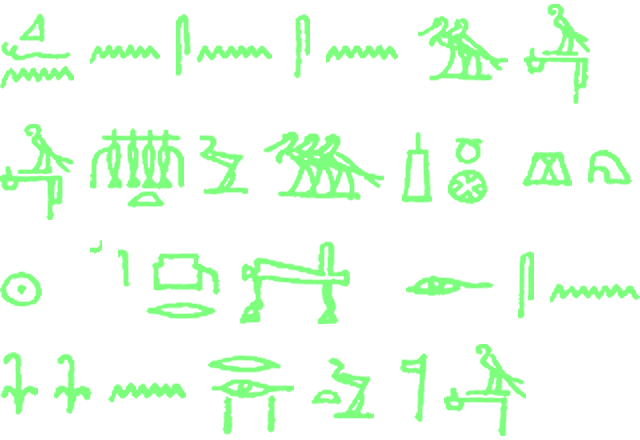
qfn.n sn.du bꜣ.du ḫnt.w bꜣ.pl-Jwn,w ẖr tp hrw sḏr jri̯ =sn nn n(,j) rm,wt nṯr
The two Bas at the head of the Bas of Heliopolis have bowed down at daybreak,
the two who lay through the night making this lament for the god.Note · Line 7
The Bas of Heliopolis are the divine powers of the sun-god’s holy city. - 8

ns,t Wnjs ḫr =k Rꜥw
Unas's throne is with you, Ra;
- 9

n rḏi̯ =f s(j) n kj.j nb
he will give it to no one else.
- 10
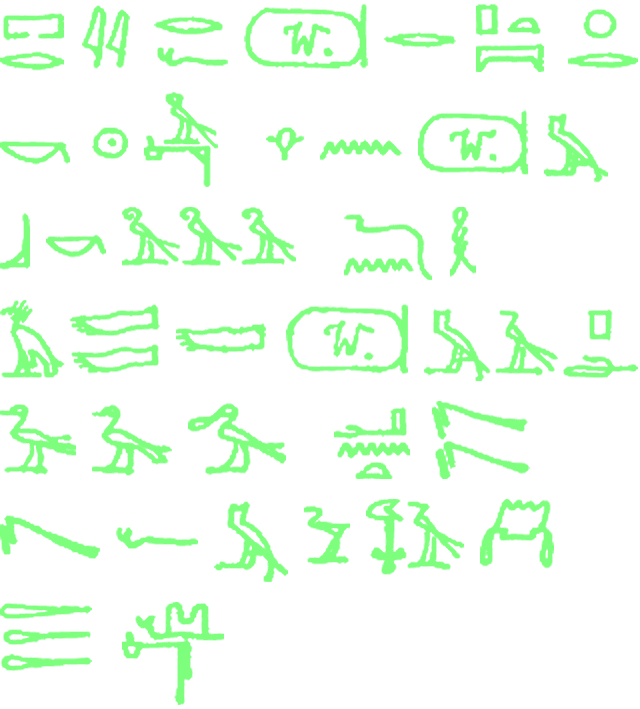
pri̯.y r =f Wnjs r p,t ḫr =k Rꜥw ḥr n(,j) Wnjs m b(j)k.pl ḏnḥ.pl Wnjs m ꜣpd.pl ꜥn,t.pl =f m wḫꜣ.wpl Jtꜣ(,tj)
So Unas shall go up to the sky, to you, Ra, Unas's face the face of falcons, Unas's wings the wings of birds, his nails the talons of Him of Atfet.
Note · Line 10
The Egyptian word for “face” (ḥr) sounds like the name of the falcon god Horus (Ḥr), so the falcon’s face carries a pun. - 11
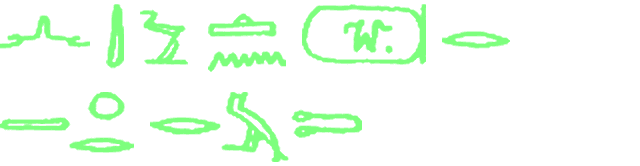
n mdw n(,j) Wnjs r tꜣ ḫr rmṯ
There is no word against Unas on earth among people;
- 12
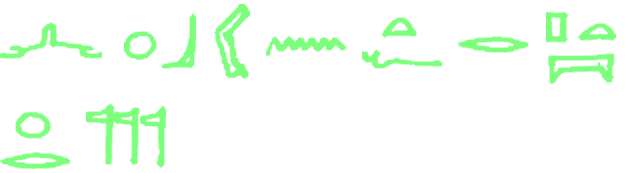
n ḫbn,t =f r p,t ḫr nṯr.pl
there is no charge against him in the sky among the gods.
- 13
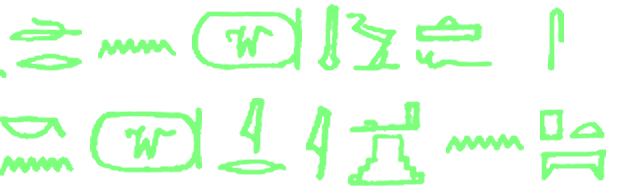
dr.n Wnjs mdw =f ski̯.n Wnjs jr jꜥ n p,t
Unas has driven off the word against him, Unas has made it perish, so as to rise to the sky.
- 14
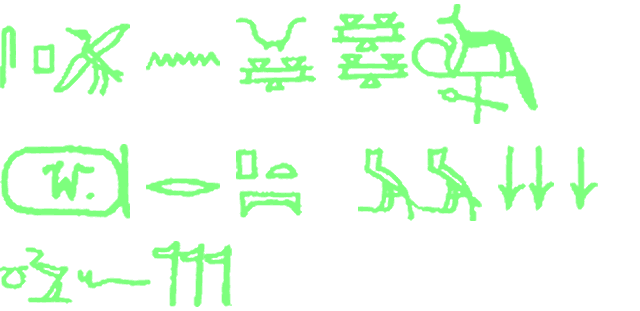
spꜣ.n Wpi̯-wꜣ,t.pl Wnjs r p,t mm sn,w.pl =f nṯr.pl
Wepwawet has made Unas fly up to the sky among his brothers, the gods.
Note · Line 14
Wepwawet, “Opener of the Ways,” is a jackal god who goes before the king and clears his path. - 15
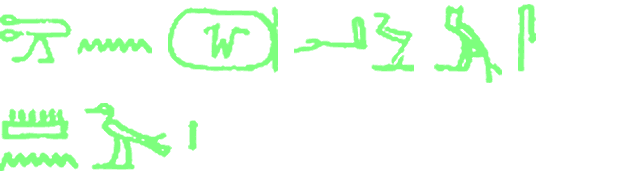
jṯi̯.n Wnjs ꜥ.w m smn
Like a goose, Unas has plied his arms;
- 16
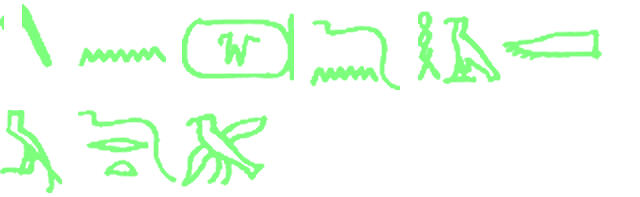
ḥwi̯.n Wnjs ḏnḥ m ḏr,t
like a kite, Unas has beaten his wing.
Note · Line 16
The Egyptian word for kite (ḏr,t) also means “mourning woman.” Isis and Nephthys were imagined as two kites wailing over Osiris, which links this line to the lament of P-07. - 17
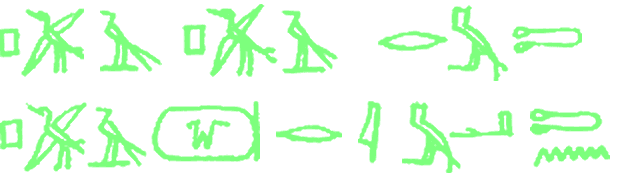
pꜣ pꜣ rmṯ pꜣ 〈r〉 =〈f〉 Wnjs ={j} m-ꜥ =ṯn
The flier has flown, O people:
Unas has flown away from you.Note · Line 17
Unas is the king for whom this pyramid was built; the spell, carved on a wall inside his pyramid, announces his flight up to the sky like a bird, leaving the living behind.